Walk through almost any office, warehouse suite, clinic, or training center in Sterling and you will pass dozens of surfaces that are already paid for and doing nothing. Corridor drywall. Conference room glass. Entry doors. Elevator cabs. Lobby flooring. Fixed display panels. Adhesive vinyl graphics give each of those surfaces an assignment, whether that assignment is screening a sightline, pointing someone toward the right suite, naming a department, recognizing a team, or putting brand identity where visitors actually look. The productive question is never whether vinyl will stick. It is what that surface should be doing for you once the graphic is on it.
Heritage Signs & Displays is a veteran-owned, family-led company that plans, prints, and installs adhesive vinyl applications for workplace interiors and event environments across Loudoun County and Northern Virginia. Frosted vinyl and privacy film can shield offices and meeting rooms while borrowed daylight keeps reaching interior desks. Cut vinyl can carry suite numbers, department names, or a logo sized correctly for the wall it lives on. Printed window graphics can put messaging on glass facing a lobby, a shared corridor, or a Route 28 parking lot. Floor and elevator graphics can deliver direction and branded content in the exact spots where people walk, pause, and wait. When a wall should become the dominant visual moment through mural-scale imagery, company history, or storytelling, Wall Wraps is the architectural-scale member of the same adhesive vinyl family.
Good outcomes start with audience and intent. What should an employee, client, patient, member, or attendee notice, understand, or do in that space? Our environmental graphic designers work backward from that answer to set scale, coverage, viewing distance, privacy level, and the relationship between each graphic and the signage around it. Wide expanses of clear glass may also call for distraction markers, which are decorative or branded vinyl elements that make an otherwise invisible pane easier to see. They can serve privacy and identity at once, though applied vinyl is never presented as evidence of building-code or safety-glazing compliance.
Sterling projects also tend to involve more coordination than the graphics themselves suggest. A tenant build-out near Dulles Town Center, a leased flex suite off Shaw Road, a medical office in Countryside, and a corporate floor along the Dulles Technology Corridor can each come with different property rules, certificate of insurance requirements, badge procedures, and approved work hours. One dedicated Project Manager keeps approved artwork, verified field measurements, material choices, production schedules, and installation logistics tied together so you are never repeating yourself to three different vendors. The required site survey gives us firsthand knowledge of your property before anything goes to print.
Field and installation support for Sterling comes from Heritage resources in Arlington, Virginia and Washington, DC, with Mid-Atlantic production and fabrication handled at our facility in Waldorf, Maryland. Discovery, field verification, installation planning, production, and professional installation all stay inside one accountable process instead of bouncing between unrelated suppliers. Founded in 1977, Heritage brings practical judgment, careful craftsmanship, and dependable follow-through to every project we accept.
Adhesive vinyl is a category, not a single product. The right system depends on the substrate, the look you want, how long the graphic needs to last, foot traffic, cleaning routines, exposure, and what has to happen when the graphic eventually comes down.
Painted walls raise questions about wall condition, texture, primer, paint chemistry, cure status, and the strength of a bond you cannot see beneath the finish coat. Glass brings a different checklist: desired privacy level, views worth keeping, daylight, existing tint or low-e coatings, which side people view from, and whether the product is applied dry or wet. Floors demand materials and protective laminates rated for that flooring type and that traffic volume. Elevators add moving panels, seams, edges, code clearances, constant hand contact, and aggressive cleaning schedules.
We use those distinctions to narrow the recommendation instead of defaulting to one generic decal for every location. It is also why a single coordinated branding program across a Sterling facility may legitimately call for several different vinyl systems and installation methods.
Adhesive graphics look effortless once they are on the surface. Getting there depends on accurate dimensions, honest substrate assessment, smart material selection, precise printing and cutting, building access, sequencing, and the hands of the crew doing the work. Heritage removes that complexity by keeping the information and the people connected, rather than asking you to translate decisions between a designer, a printer, and an installation sub.
Our One Dedicated Project Manager System links environmental graphic design, field knowledge, production, fabrication, scheduling, and full-time Heritage installers through one shared project history. That matters in Sterling, where a single job might involve a facilities manager, a marketing director, a landlord, and a general contractor all working from different calendars.
When your requested date is realistically achievable, your Project Manager drives toward it. When it is not, you hear that early along with a workable alternative, such as phasing the scope, resequencing installation, swapping an application or material, or completing the highest-visibility areas first.
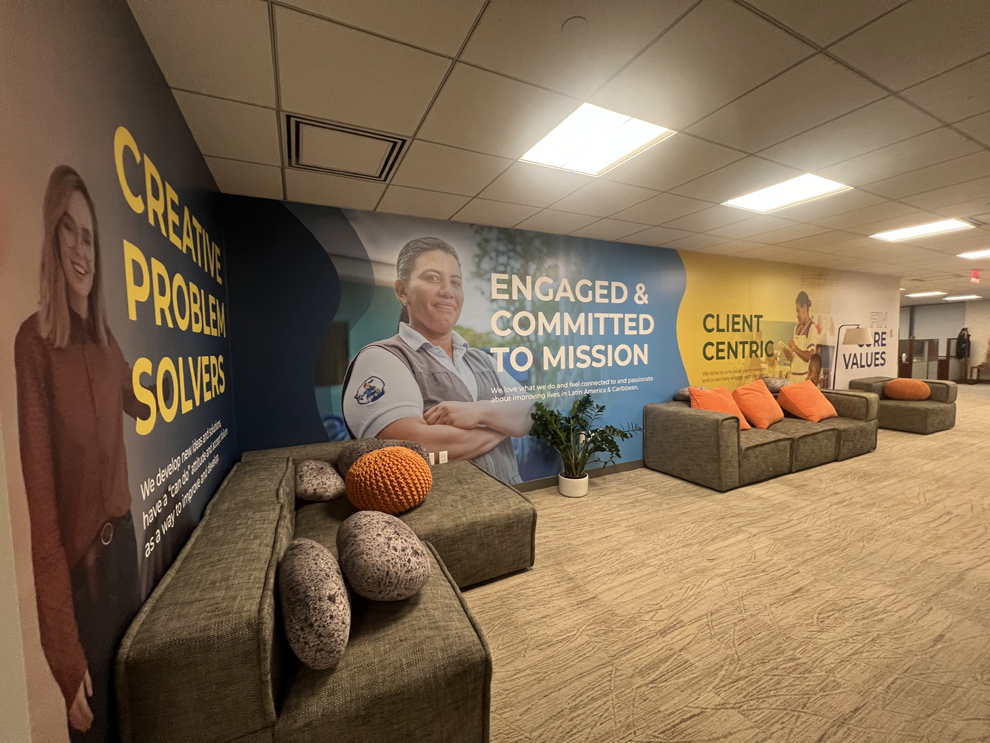
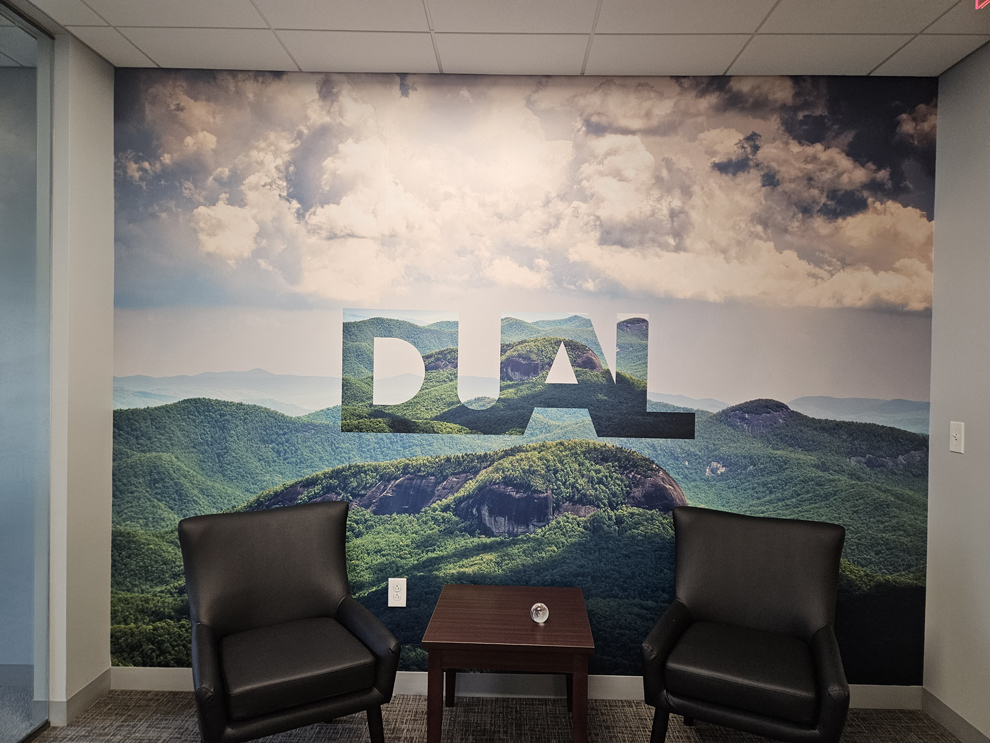
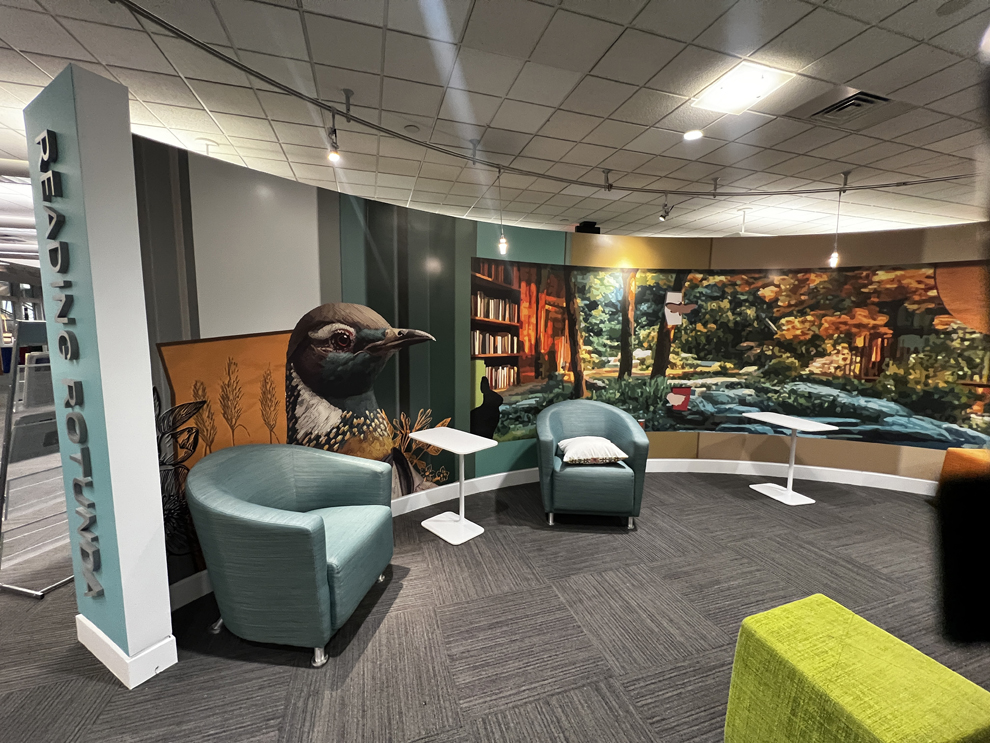
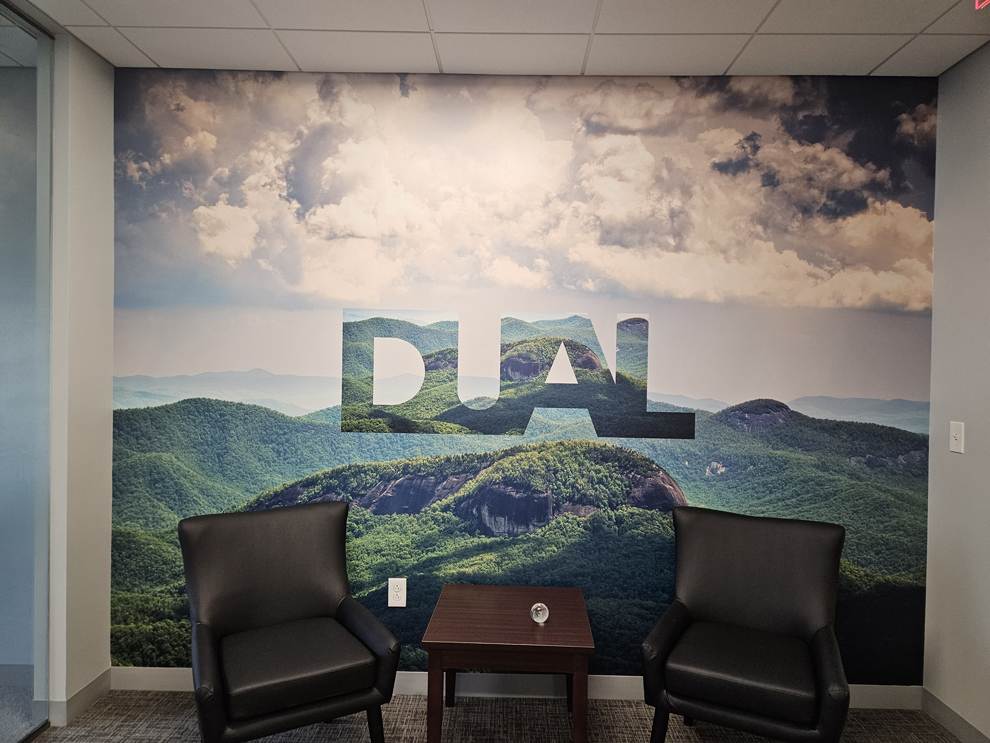
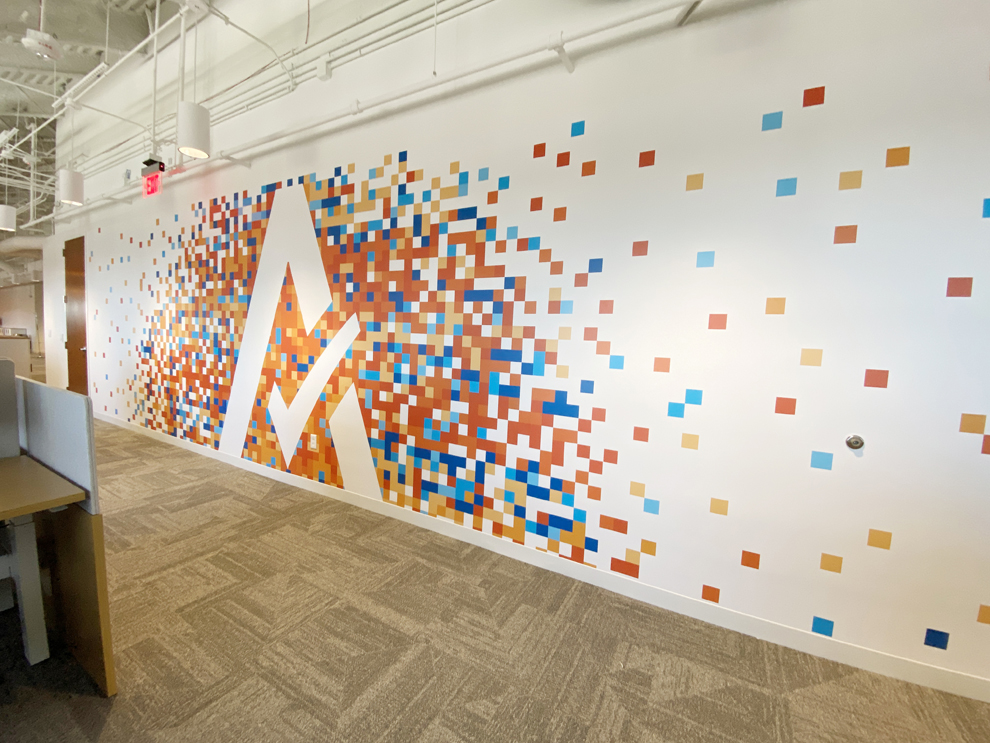
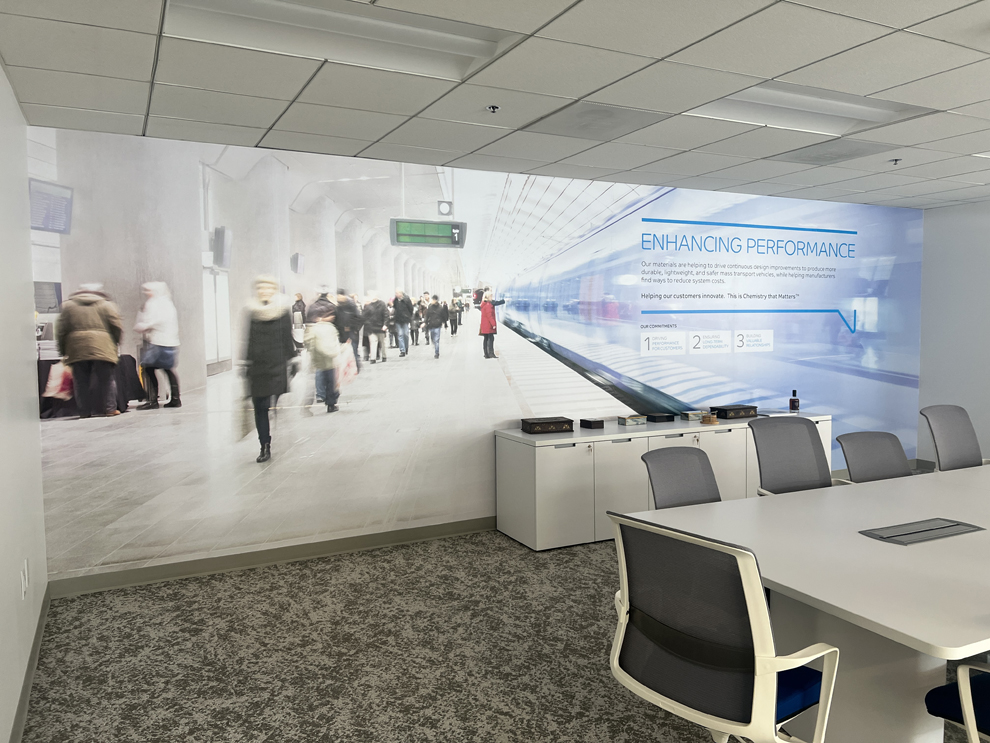
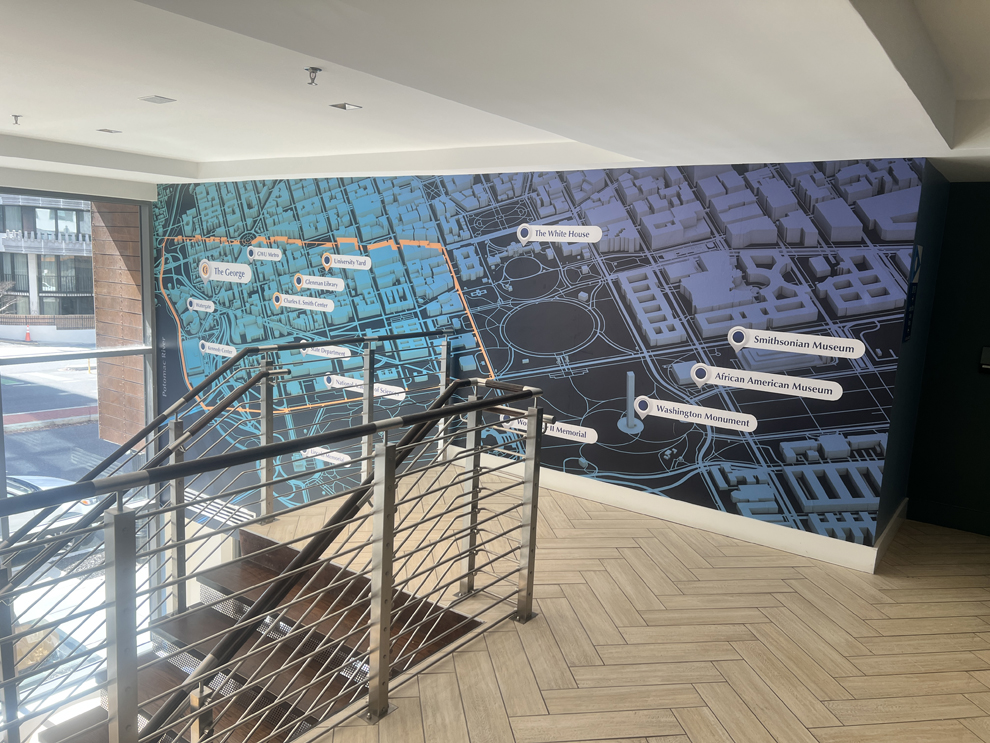
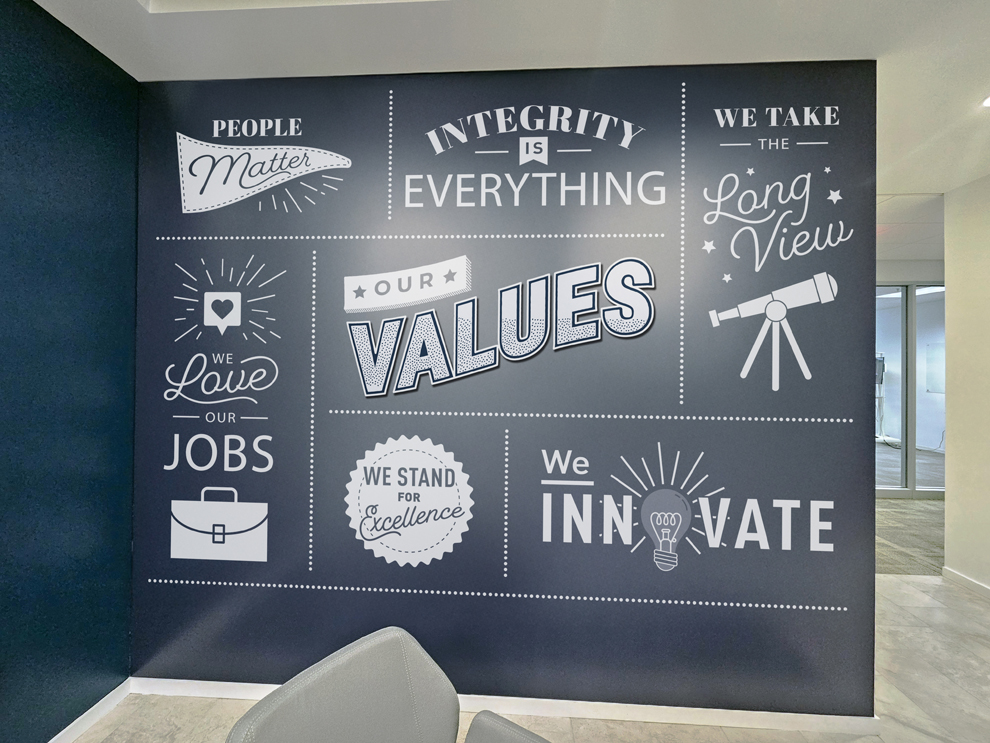
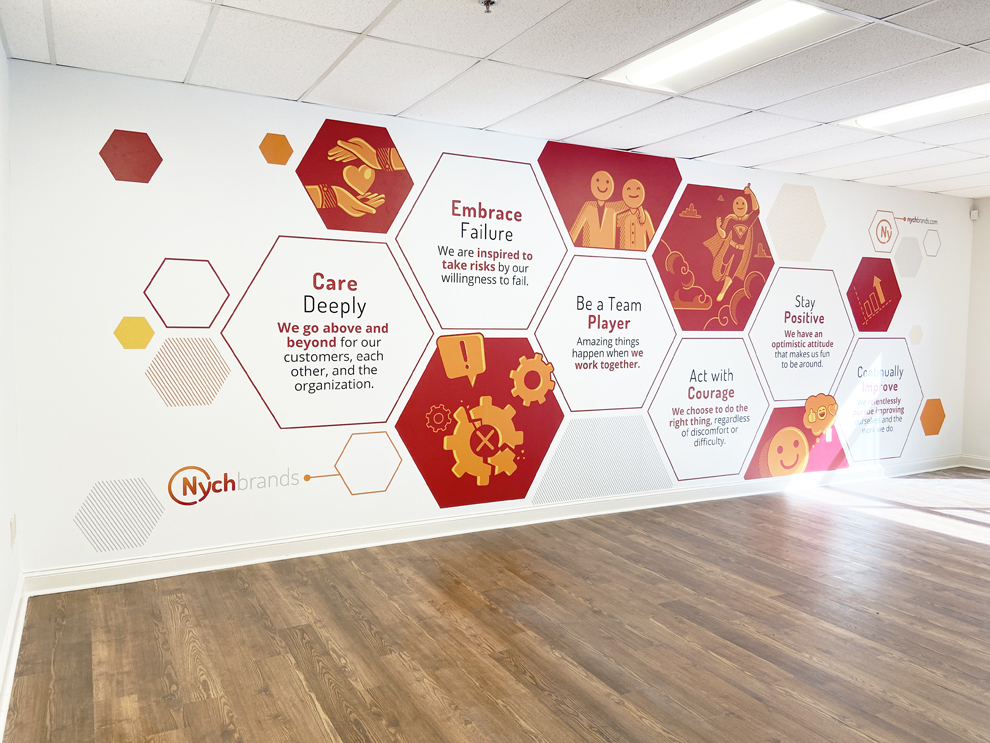
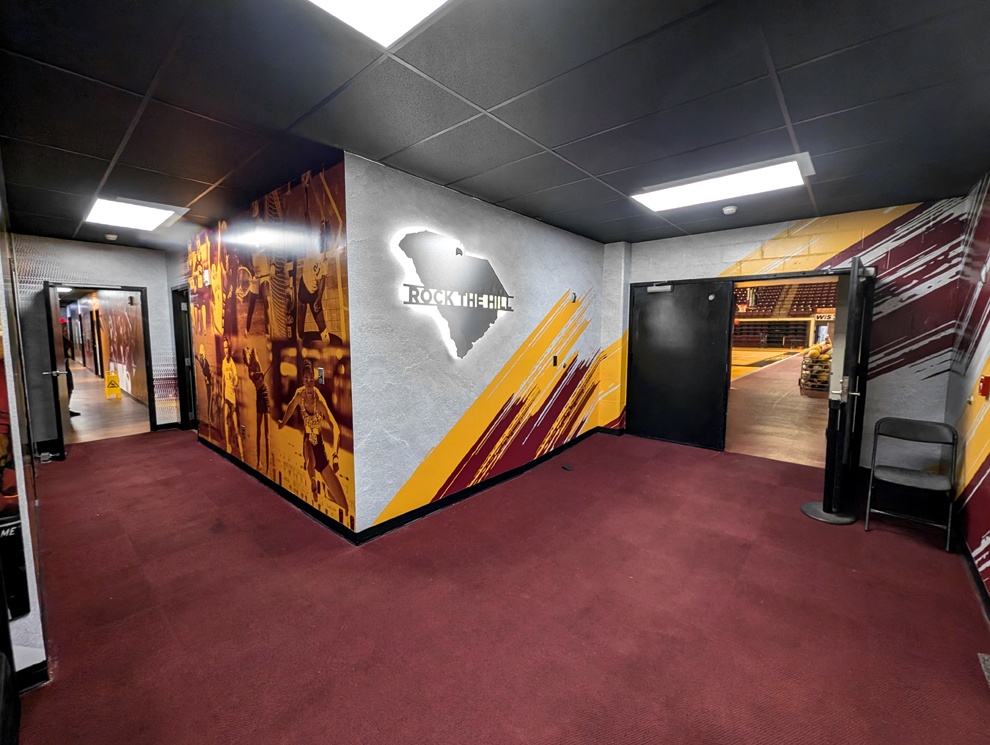
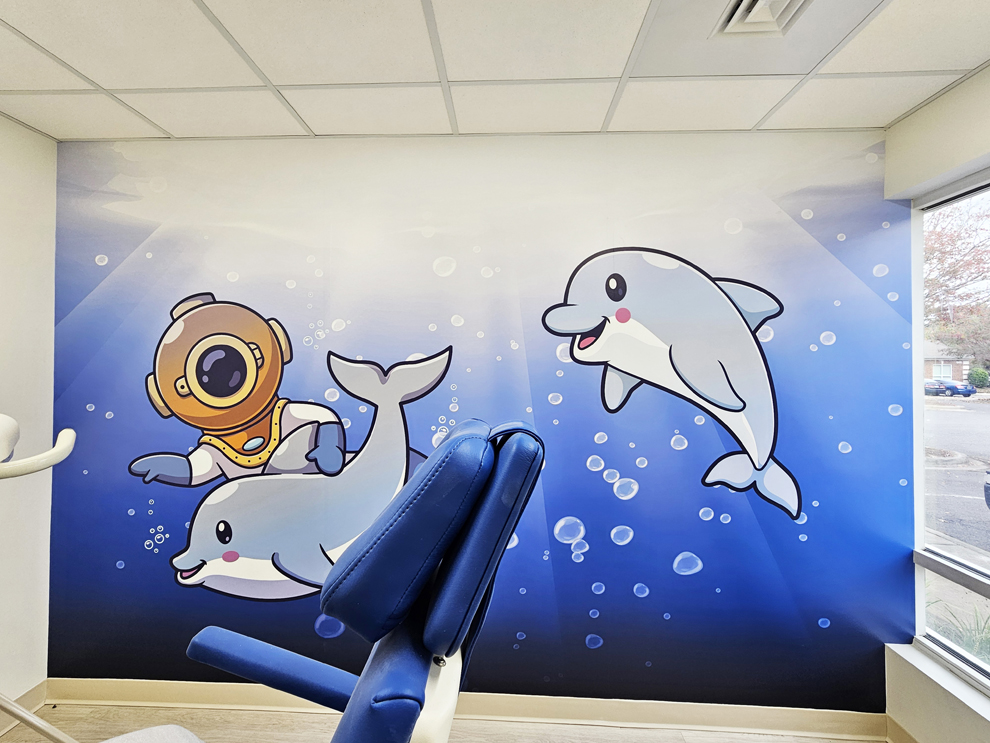
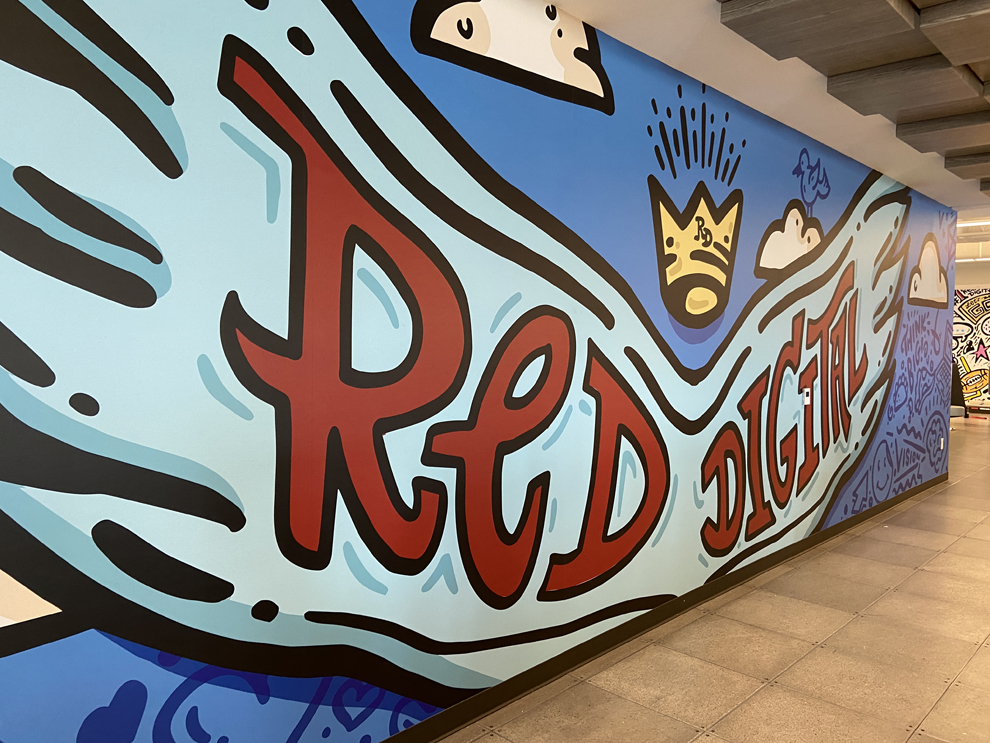
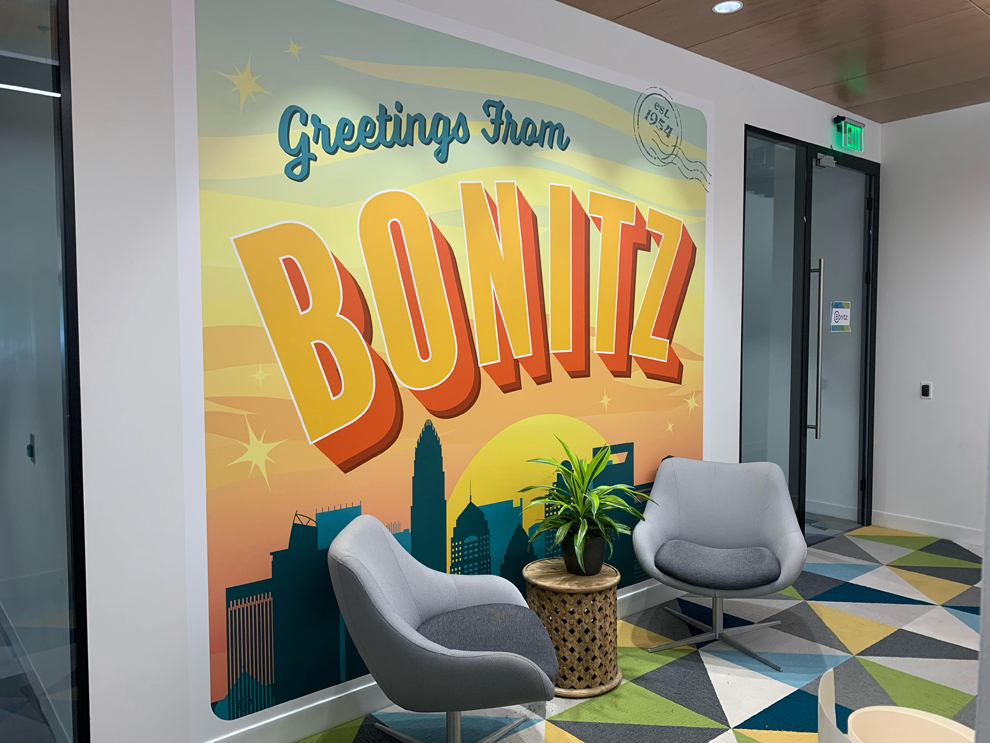
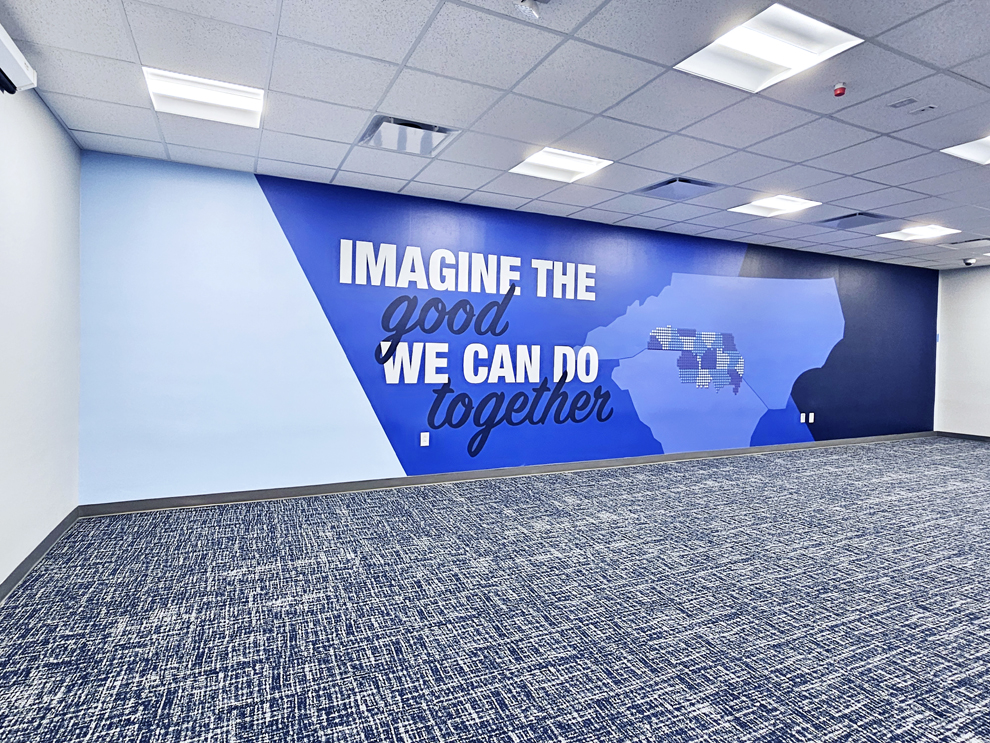
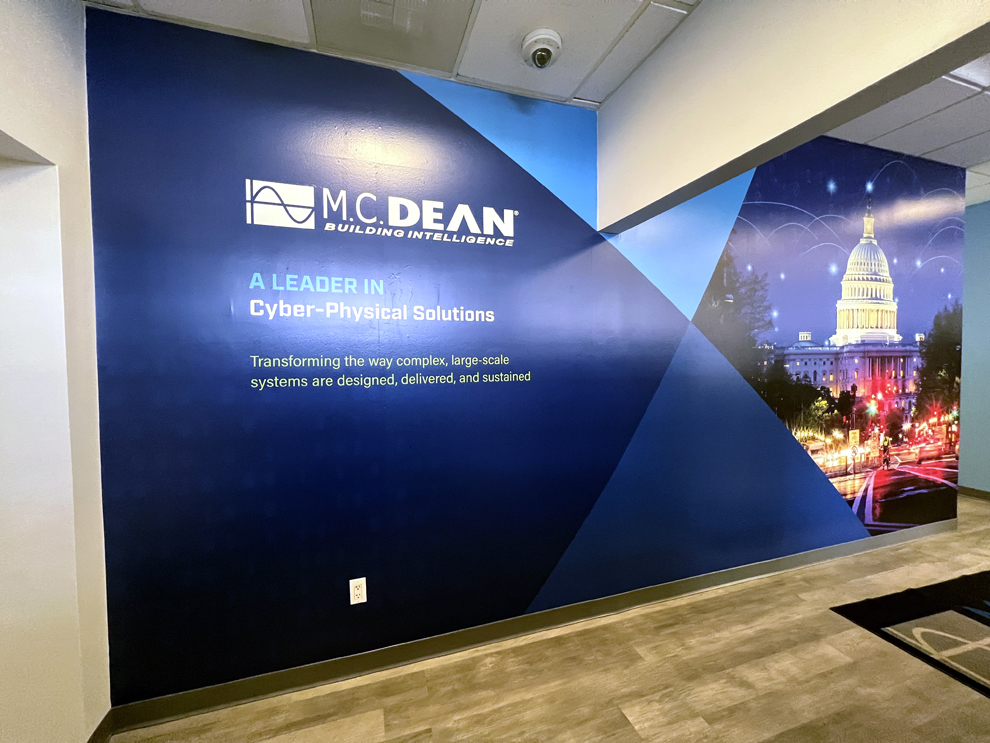
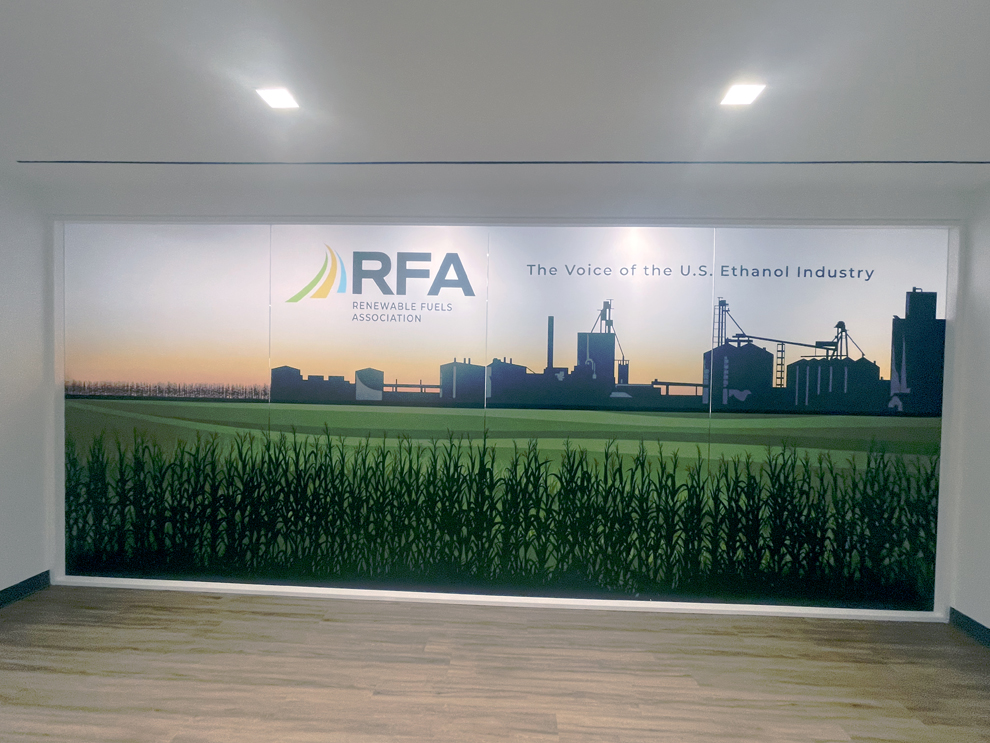
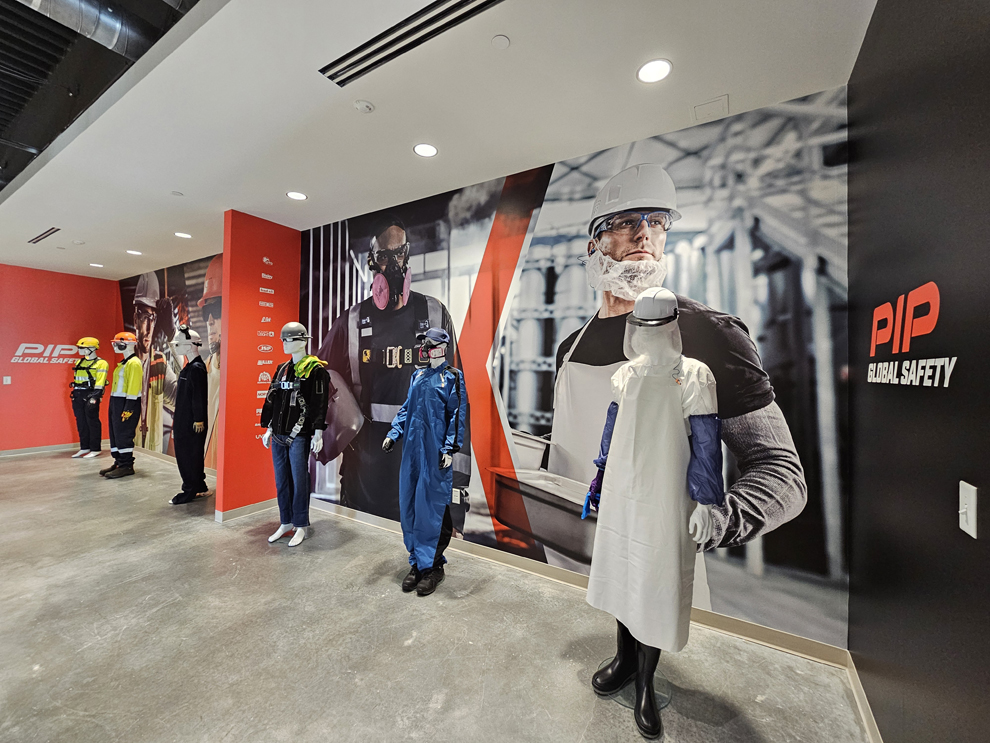
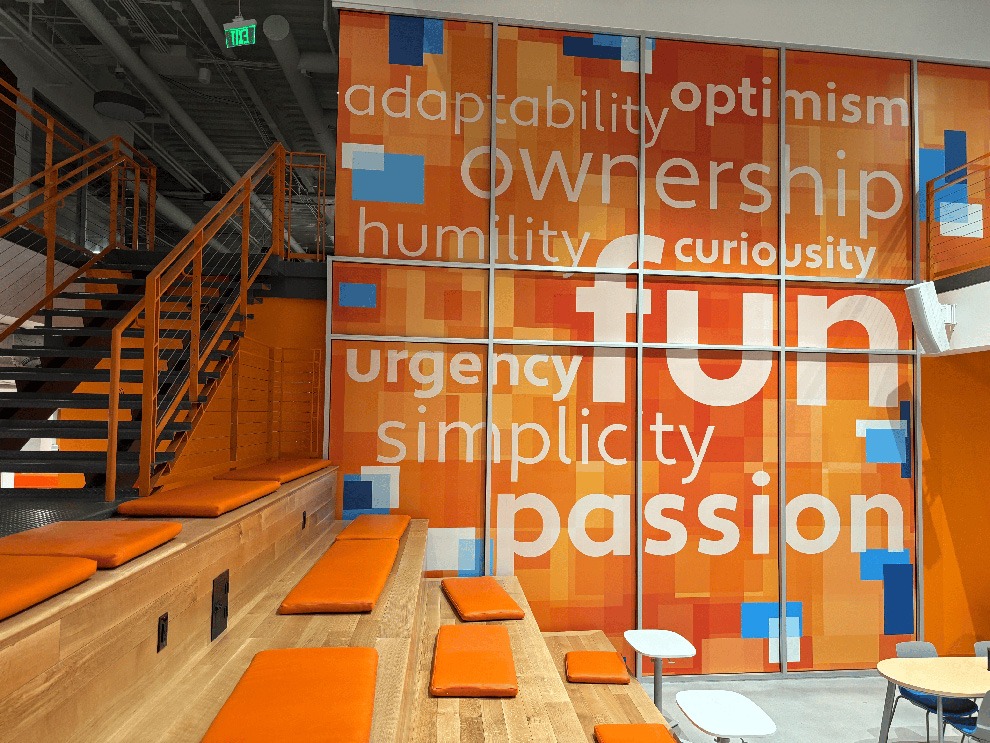
Wall Wraps make sense when a wall should carry the primary story through broad coverage, mural-scale imagery, culture, history, or recognition. Panel layout, seam placement, image resolution at arm's length, and wall prep drive the planning at that scale.
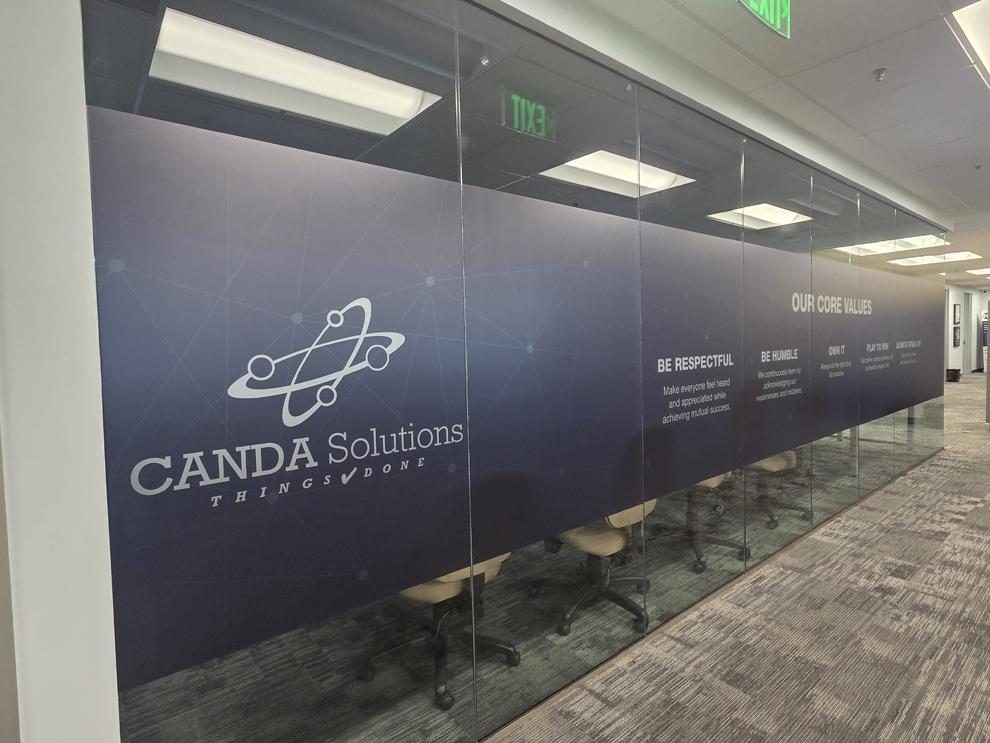
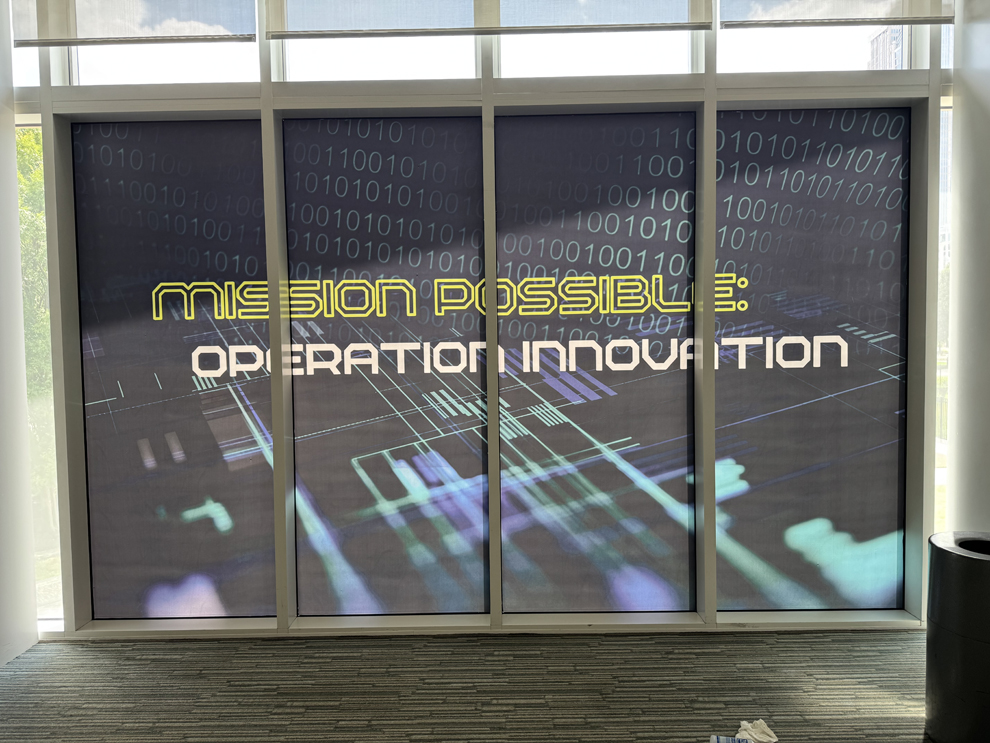
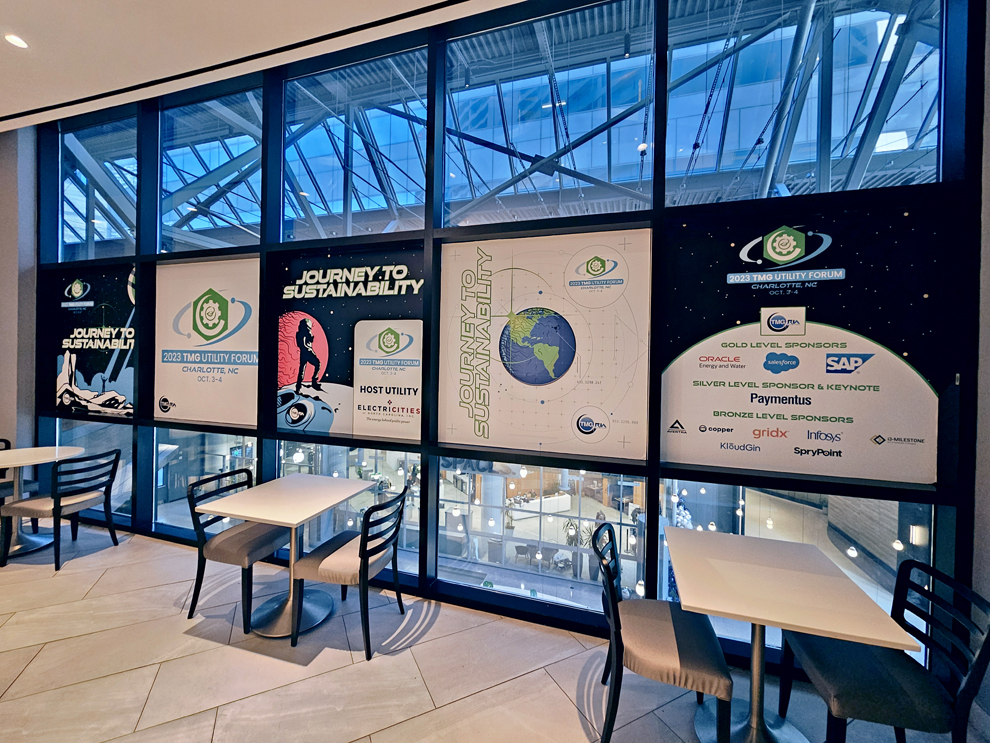
Window Graphics give glass a defined role in identity, messaging, visibility, and controlled views. Coverage percentage, viewing direction, daylight, glass condition, and the choice between printed, cut, or perforated approaches shape what the finished window says.
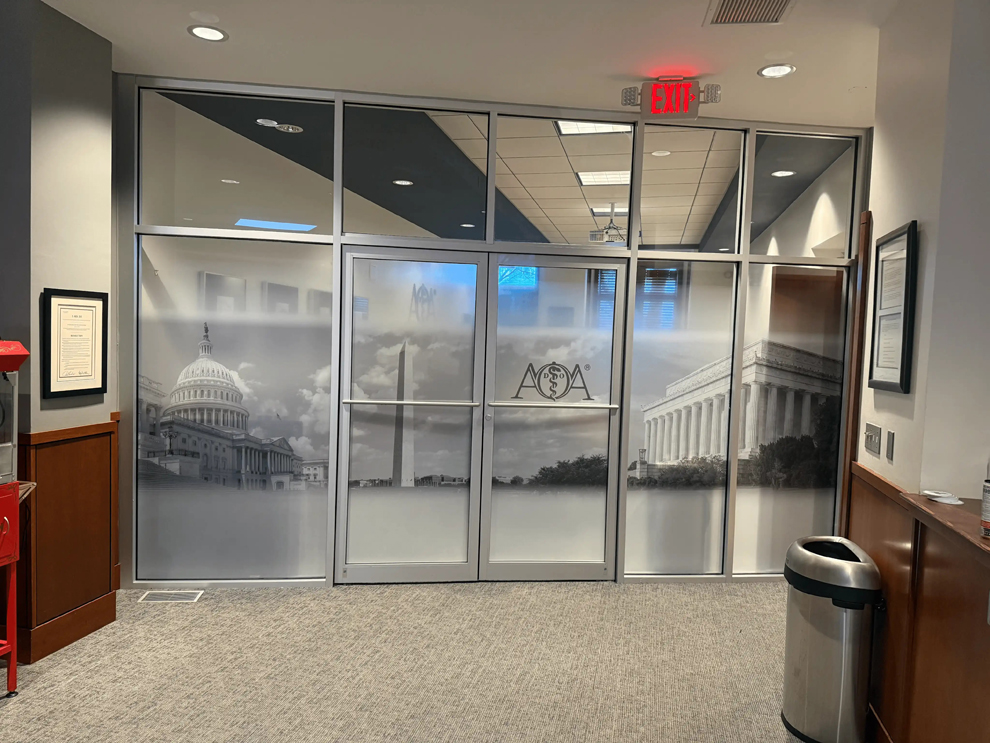
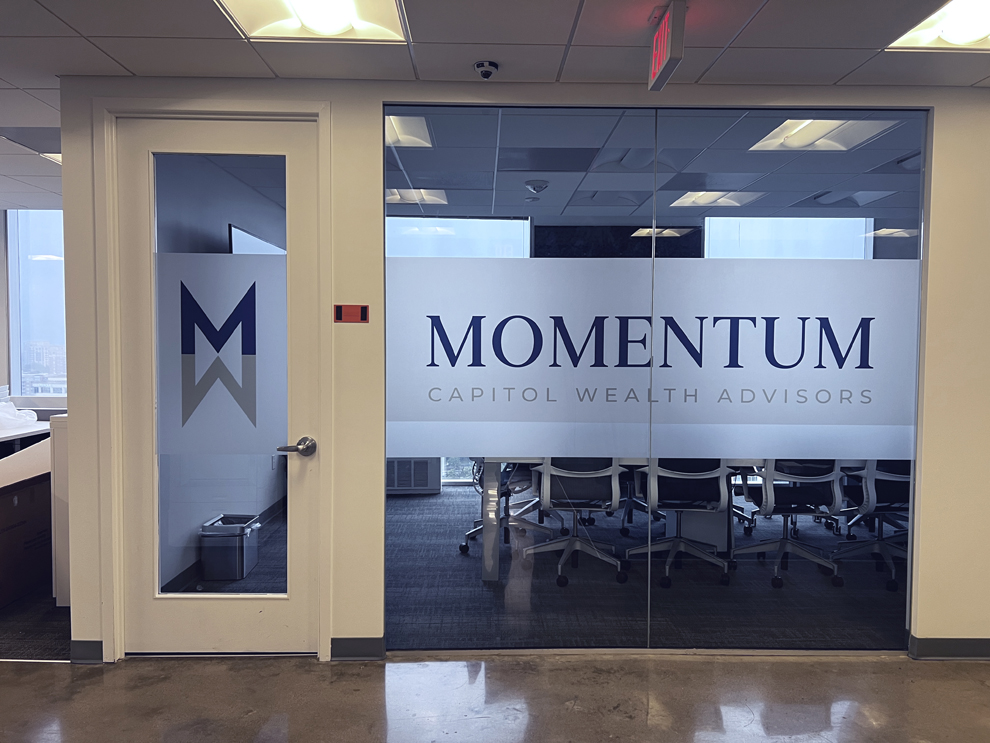
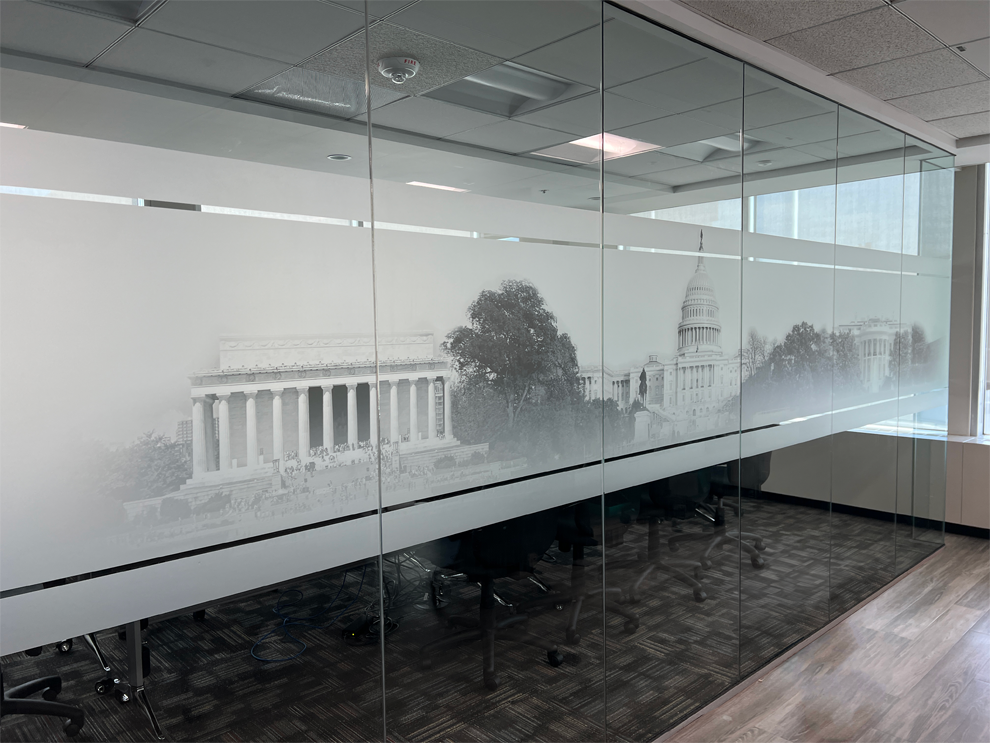
Frosted vinyl and privacy film help Sterling offices separate spaces visually while keeping interior areas bright. Seated and standing sightlines, band height, pattern density, cleaning routines, and wet versus dry application all inform the recommendation.
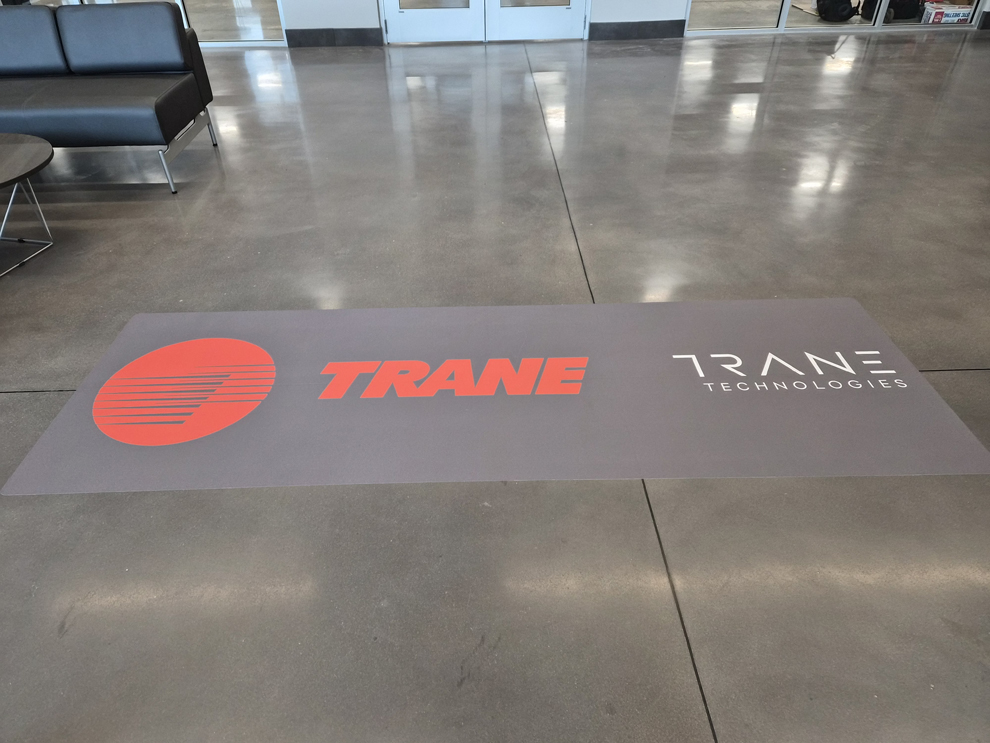
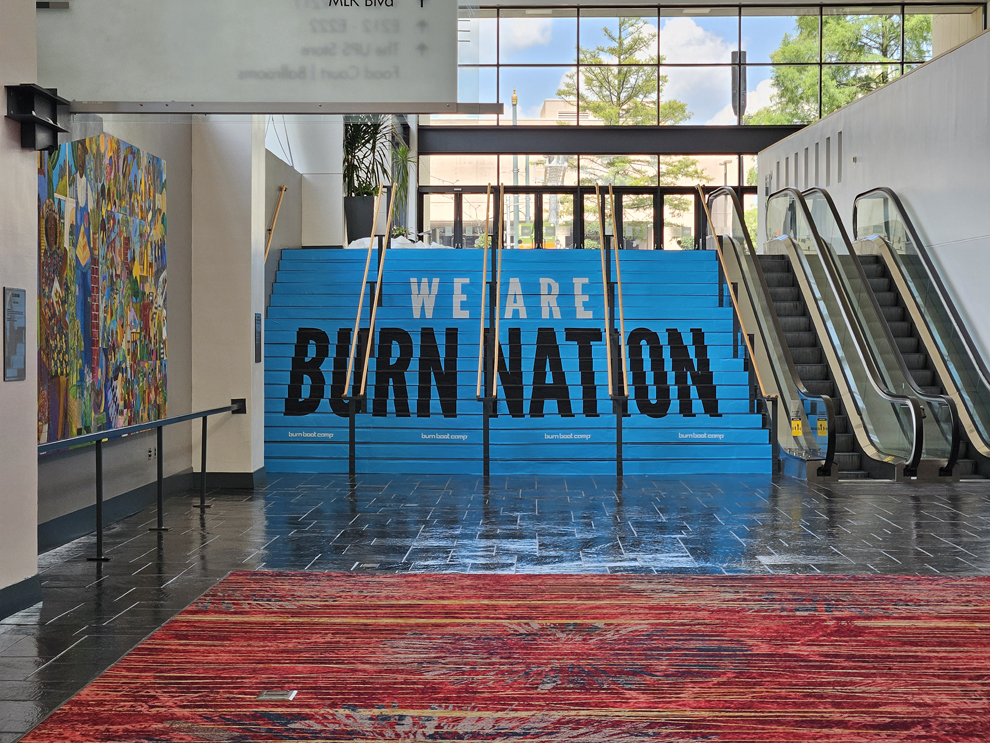
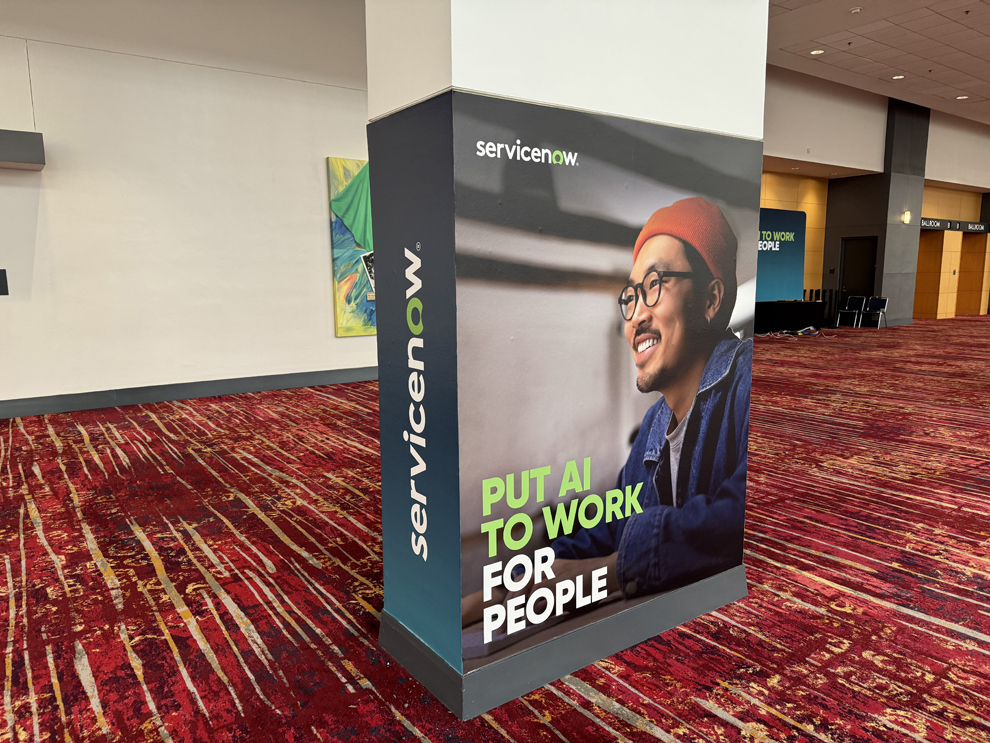
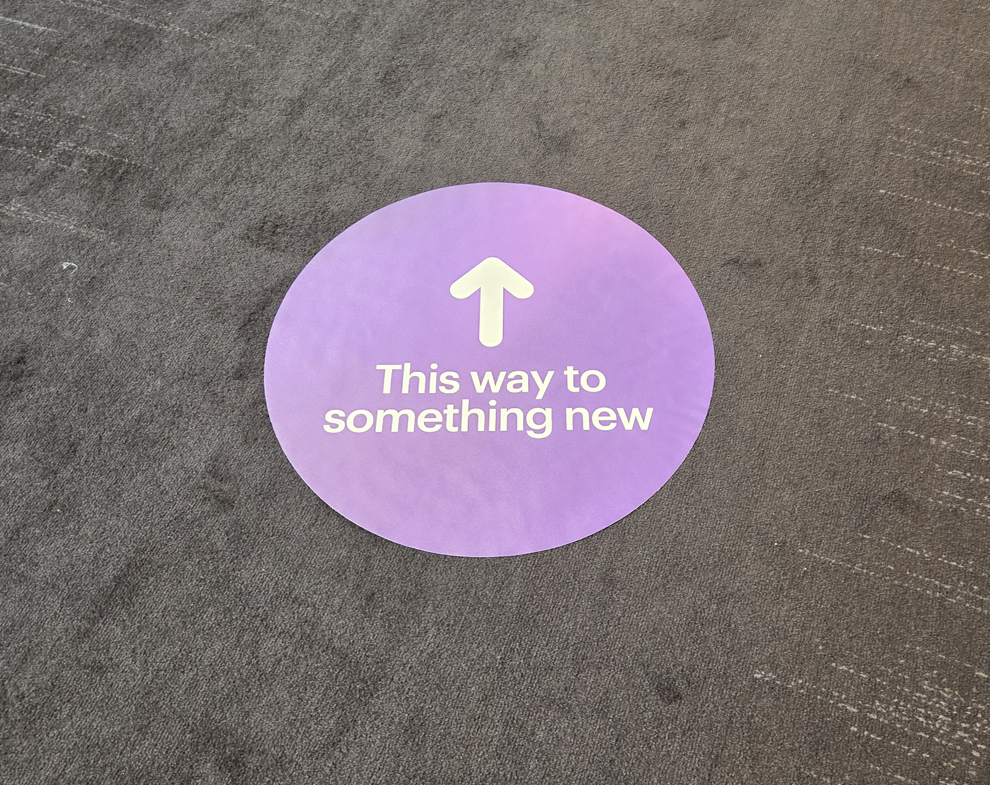
Floor Graphics put direction, branding, sponsor recognition, or event messaging directly along the paths people already travel. Flooring type, texture, traffic volume, cleaning chemicals, laminate selection, and intended service life determine whether a floor application belongs there at all.
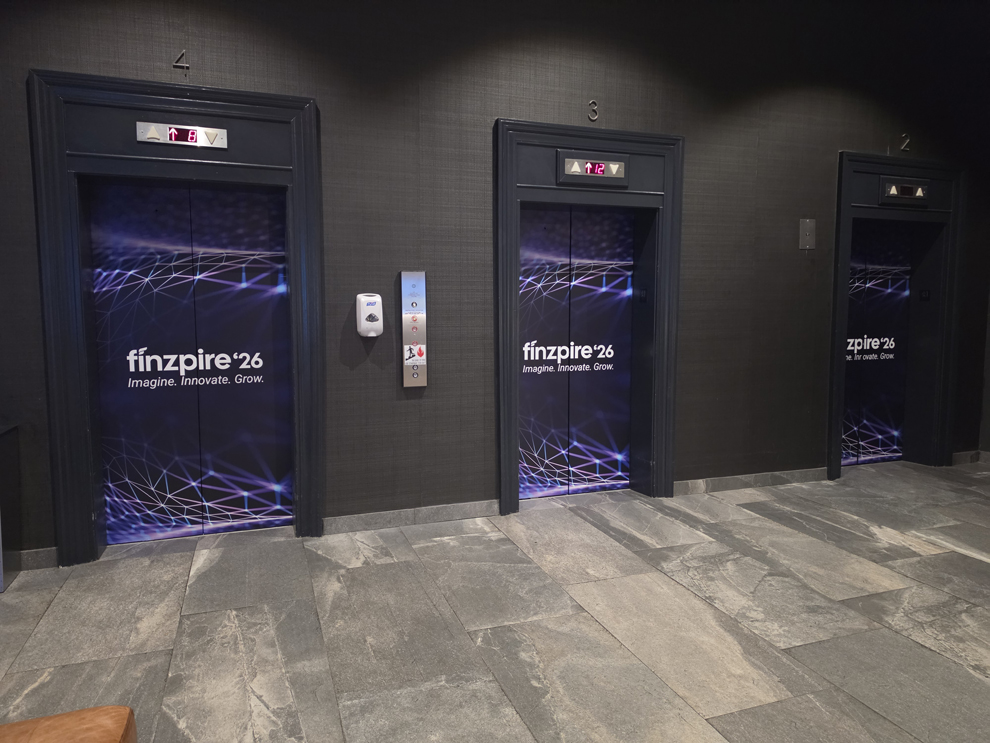
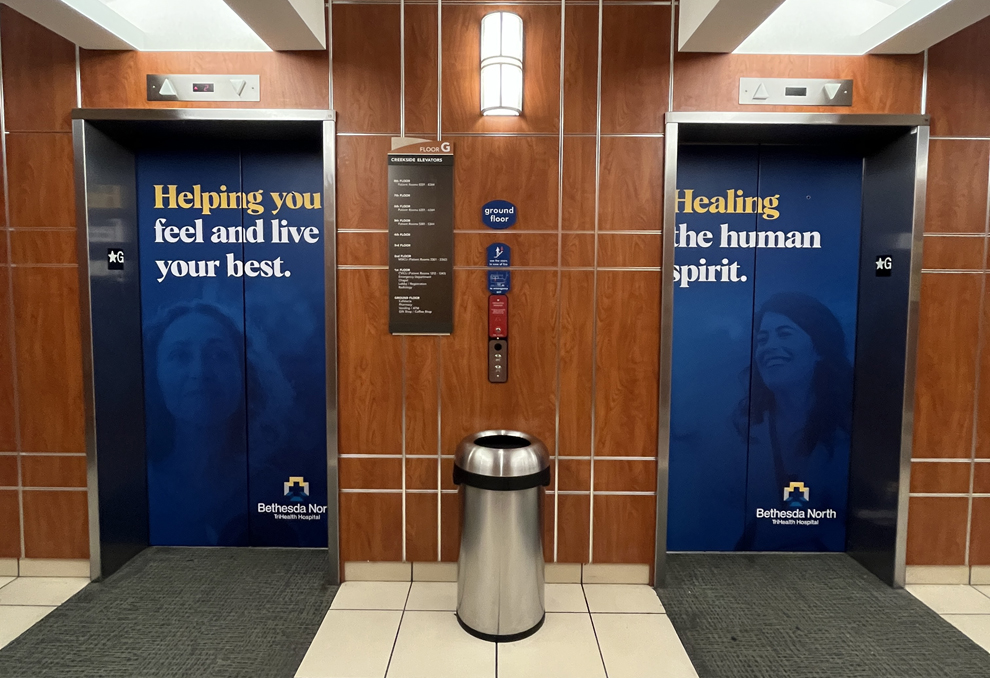
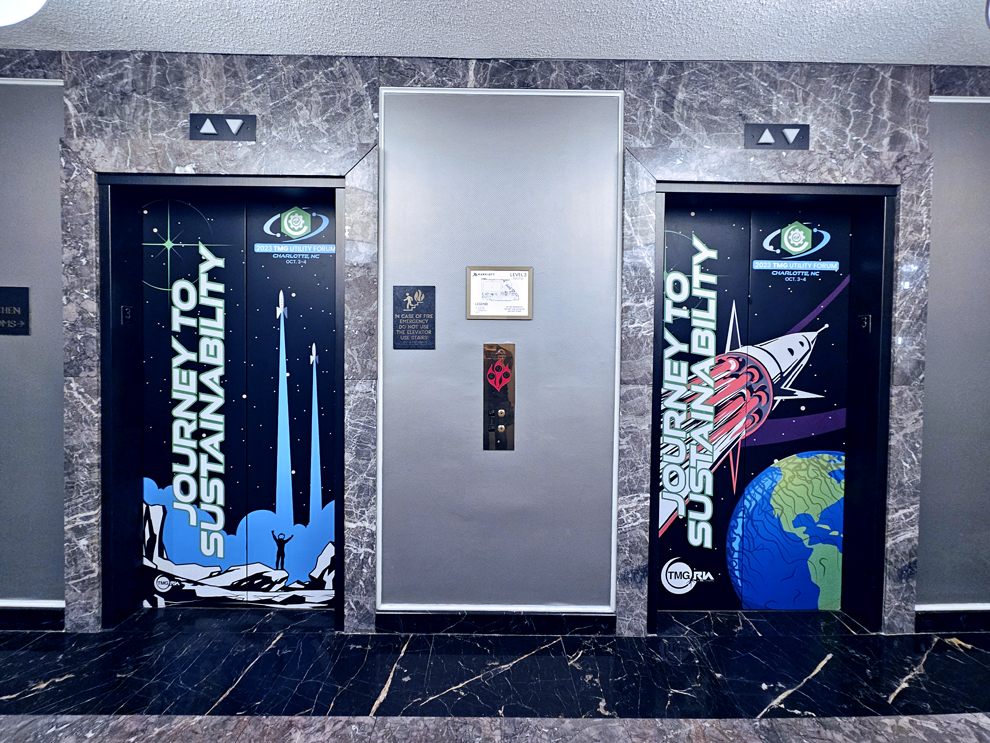
Elevator Wraps turn doors, selected cab surfaces, and adjacent transition walls into branded moments during a pause nobody can avoid. Panel movement, seams, edges, code clearances, repeated contact, cleaning frequency, and building access windows govern how the design is built and installed.
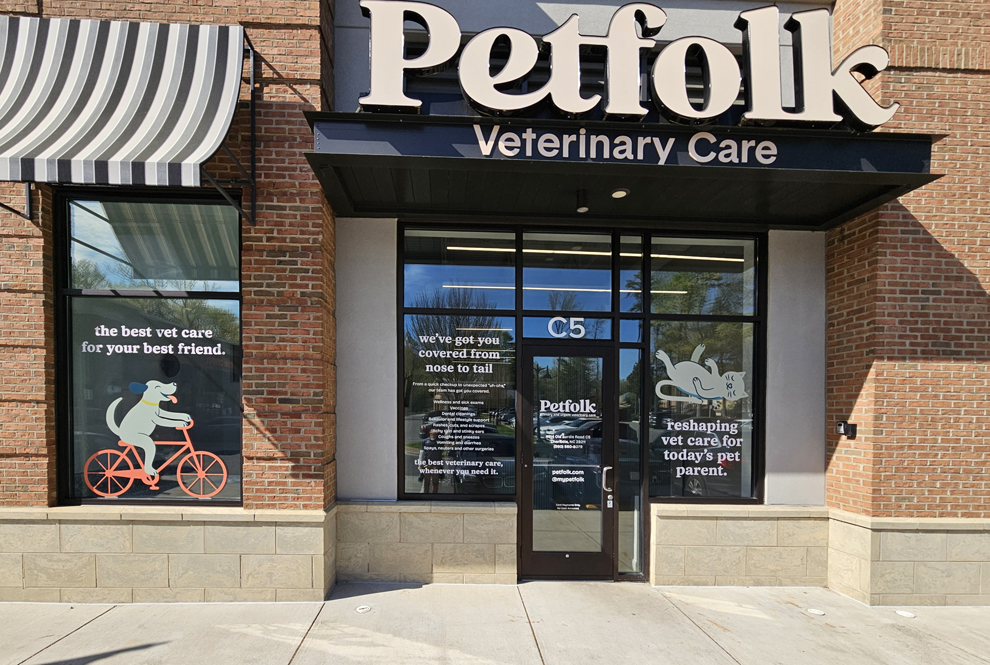
Storefront Graphics are the stronger choice when entrance glass, doors, and selected exterior-facing surfaces should read as one arrival experience. Exterior exposure, protective film laminate, property approvals, and coordination with interior graphics guide that program.
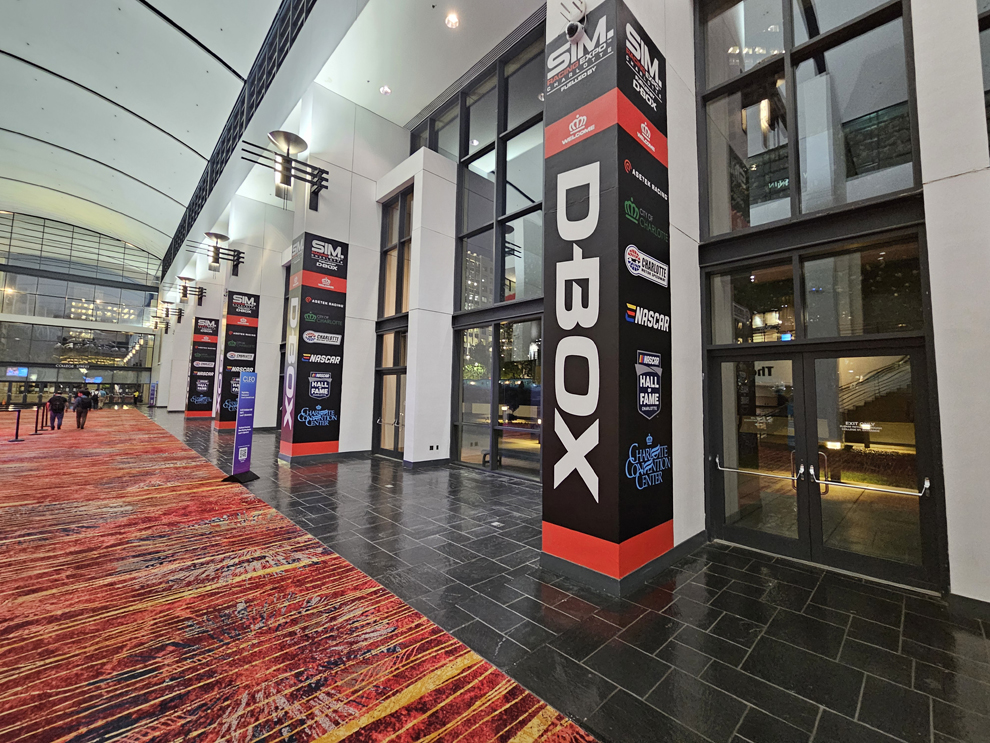
Event Signs & Graphics place temporary vinyl applications inside a larger branded environment that may include displays, sponsor recognition, and directional elements. Venue rules, load-in and load-out windows, surface permissions, and clean removal requirements drive material and schedule decisions.
Sterling clients work with Heritage field and installation resources based in Arlington, Virginia and Washington, DC, both inside the same metro area. Those teams handle discovery conversations at your facility, site surveys, field coordination, installation planning, professional installation, and follow-through after the work wraps.
Local presence matters because adhesive graphics have to fit a real building, not a rendering. Suites in Sterling Park, Cascades, Countryside, Sugarland Run, and the flex and industrial parks along Route 28 and Old Ox Road often come with dock scheduling, badge and escort procedures, elevator reservations, evening or weekend work windows, and property management approvals that no floor plan will ever show you. Walking the space lets us confirm dimensions, substrates, and access before production is finalized instead of discovering a surprise on installation day.
Production and fabrication for Northern Virginia work are supported by our Waldorf, Maryland facility, which is staffed by production team members only and is not a sales office or showroom. Organizations with multiple Loudoun County or Mid-Atlantic locations can keep one dedicated Project Manager while each site receives graphics adapted to its own conditions.
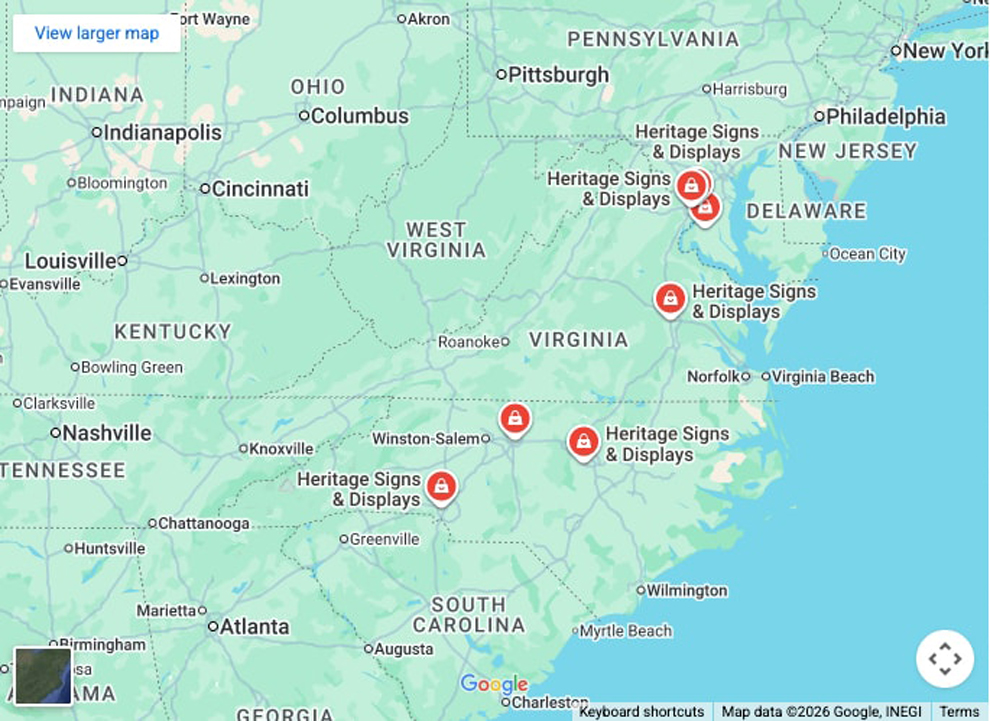
Environmental graphic design starts with a communication goal, not a material. We ask what people should notice when they arrive, what they should understand as they move through the building, and what you want them to remember afterward. A conference room may need separation without feeling sealed off. A long corridor may need clearer handoffs between departments. A shared lobby may need identity that reads from the front door. A two-day conference may need graphics that command attention and then come down cleanly.
Some Sterling clients arrive with approved artwork and locked brand standards. Others ask us to develop the approach alongside their internal stakeholders. We also collaborate with architects, interior designers, branding agencies, environmental graphic designers, and experiential firms who already own the creative direction.
Then design meets physics. Scale, image resolution, sightlines, coverage height, cut and panel requirements, and surface transitions get resolved before production so the approved concept actually performs on the real substrate. Our scope stays focused on environmental graphic design and the physical branded elements we produce and install.
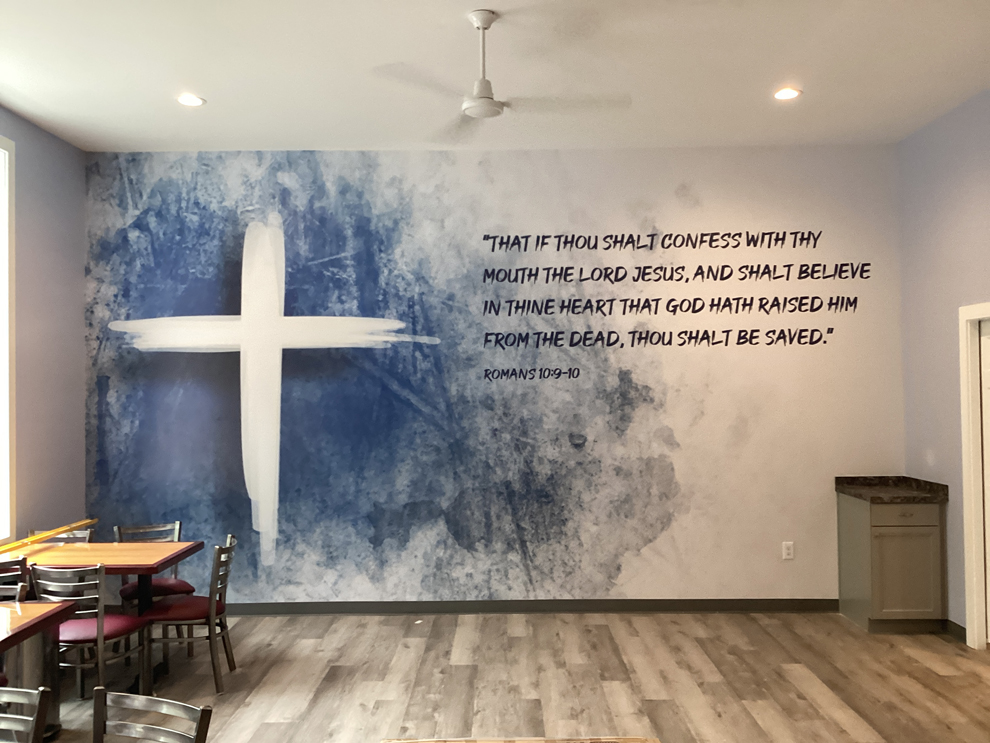
Every Heritage adhesive vinyl project that includes professional installation begins with a site survey, and that visit does double duty. It is client discovery, covering goals, audiences, priorities, and the outcome the graphics need to support. It is also field verification, covering dimensions, substrate condition, access routes, existing graphics, building restrictions, and the practical mechanics of the install.
Your dedicated Project Manager carries every survey finding straight into production and scheduling, so our installers show up in Sterling already briefed on the approved design, the specified material, the install sequence, and the building's house rules. Once the crew is on the floor, quality shows up in the details: accurate placement, tight alignment and registration, disciplined handling of seams and edges, protection of adjacent finishes, tidy staging areas, and as little interruption as possible for the people still working around us.
When actual field conditions do not match what we documented, we stop. We walk the client through what the crew is seeing and decide the right next step together instead of forcing an application that no longer makes sense for that surface. We are after two outcomes every time: a clean graphic and a property we leave in better shape than we found it.
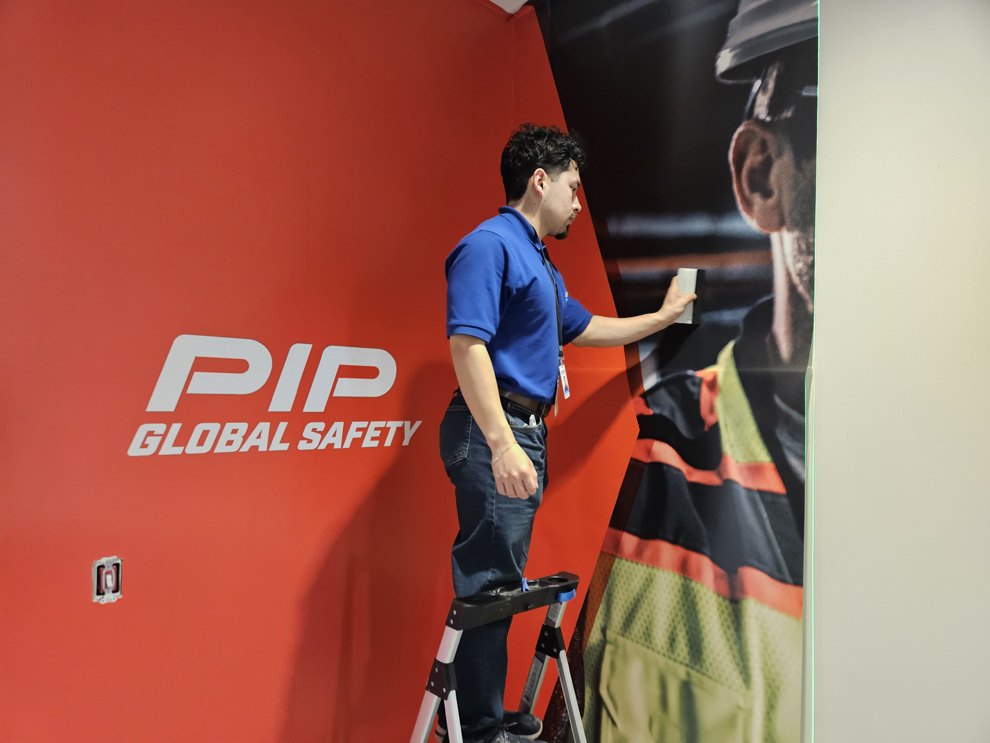
A wall graphic is only as reliable as the wall behind it. Drywall needs to be sound, smooth, clean, dry, and properly patched. Primer and paint need to be applied correctly, and that finish coat has to be fully cured, not just dry to the touch. Paint still curing continues to outgas, and those vapors get trapped beneath vinyl applied too soon, which is how bubbles, blisters, lifting, and early adhesion failure start. Moisture, surface contamination, a weak paint bond, substrate condition, and the wrong material choice can all pile on too. Four weeks is a reasonable planning window for many paints, but the manufacturer's cure specification and the real conditions inside your Sterling space are what actually determine readiness.
An adhesion test tells us how vinyl behaves against the painted surface you can see. It cannot tell us how well the paint and primer are gripping the drywall behind it. Routine repositioning during installation often exposes that hidden weakness, and if paint starts to release, we stop rather than compound the damage. Repair, priming, repainting, and full cure are arranged and paid for by the client or property owner, and we come back once the surface is ready. Prepared correctly, painted drywall is still an excellent home for adhesive vinyl.
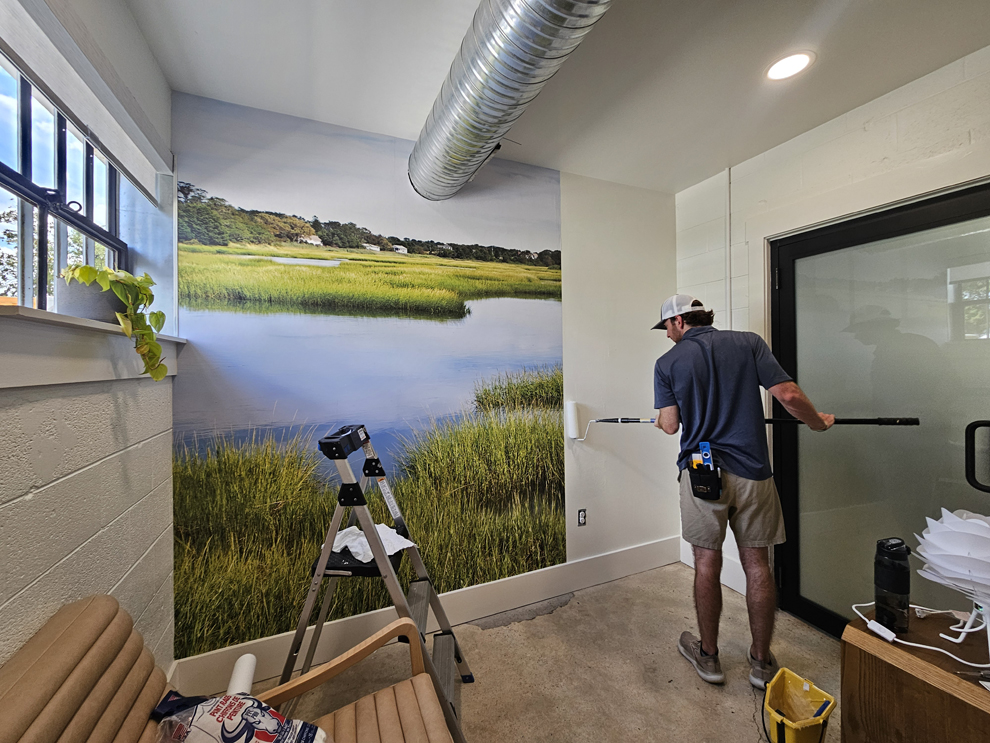
Good planning connects the result you want to scope, priorities, phasing, the target date, site readiness, stakeholder sign-offs, surface conditions, and the anticipated overall project investment. We begin by sorting what has already been decided from what is still open, because one unresolved wall condition, a pending landlord approval, or an unconfirmed loading dock window will move your schedule more than production time ever will.
Scale and timing get evaluated side by side. Many of our projects that include production and professional installation land between $10,000 and more than $200,000, and where yours falls depends on scope, environmental graphic design, materials, fabrication, surfaces, access, and installation requirements.
Fit also comes with a starting threshold. To protect the responsiveness and coordinated support our clients count on, we are accepting new workplace interior and event environment projects in Sterling and across the Mid-Atlantic with an anticipated overall project investment of at least $6,000. Select exterior-facing window or wall graphics are possible where the substrate and exposure support them. Sign permits and property approvals stay with the client, the property owner or manager, or the general contractor.
Tell us what the graphics need to do and when they need to be finished. Use Get Started Now to share your Sterling project location, the anticipated overall investment, photographs, approximate dimensions, artwork or brand standards, how long the graphics need to last, and any building or access requirements you already know about. If the work supports an office opening, a relocation, a conference at a nearby venue, a leadership visit, or any other fixed date, say so up front. You do not need every material or field decision settled first. One dedicated Project Manager will review fit, timing, and next steps.
Properly prepared painted walls, interior and exterior-facing glass, glass and solid doors, select flooring, elevator doors and cab interiors, display panels, and other compatible substrates. We qualify suitability one surface at a time. Texture, paint condition, glass coatings, moisture, building movement, foot traffic, cleaning chemicals, sun exposure, and the intended service period all factor into whether a given vinyl and adhesive system belongs there.
The survey gives our team firsthand knowledge of your Sterling property before we lock production. We verify dimensions, substrate condition, access routes, existing graphics, elevator and dock procedures, and approved work hours, and we use that same visit to talk through what the graphics need to accomplish.
Everything we learn stays with one dedicated Project Manager and flows into design decisions, material selection, production, scheduling, and the installation plan. Planning from verified conditions beats planning from a floor plan or a phone photo every time.
Frosted vinyl and privacy film create visual separation while daylight keeps moving through the glass. Full coverage is rarely the answer. A band set at seated and standing sightlines, a graduated pattern, a logo treatment, or partial coverage on a few select panels usually delivers the privacy people actually asked for.
We look at how each room gets used, how much openness your team wants to keep, how the glass is cleaned, and how the treatment should relate to nearby branding before we recommend coverage.
Because paint that feels dry can still be curing. During that stretch the coating keeps outgassing, and vapors trapped under new vinyl lead to bubbles, blisters, lifting, and early adhesion failure.
We schedule installation around the paint manufacturer's full-cure requirement, not the moment the wall feels dry. Roughly four weeks is a workable planning assumption for many paints, though the paint and primer system, application method, temperature, humidity, ventilation, and wall prep all shift the real timeline.
No. A test gives us useful information about how the proposed vinyl interacts with the visible painted surface, but it cannot inspect the bond between paint, primer, and drywall underneath. That hidden layer is where most wall damage begins.
Testing reduces uncertainty and sharpens material selection. It is not a promise about what happens during repositioning, installation, or removal years down the road.
The installer stops. Vinyl is routinely lifted and repositioned to achieve correct alignment, and that normal step can expose a weak bond between paint, primer, and drywall. Pushing forward only widens the damage.
The installer notifies your dedicated Project Manager, who explains the condition to the client or property representative. Repair, priming, repainting, and full cure are arranged and paid for by the client or property owner, and we return once the wall is ready. Because that cycle takes weeks, any wall tied to a hard date should be evaluated early.
Only when conditions call for it. Plenty of printed interior wall graphics go up without laminate and hold up fine. We add protection when repeated cleaning, abrasion, physical contact, or floor traffic will work against the printed surface.
Printed exterior wall graphics are a different story and receive protective film laminate as standard practice, which adds UV protection against fading and helps the print stand up to rain and weather.
Yes. Temporary campaigns, seasonal messaging, sponsor recognition, conference branding, short-run wayfinding, window graphics, and floor applications are everyday uses for adhesive vinyl. We select material and adhesive around the surface, the intended run time, the look you want, the exposure, and the removal plan so the graphic behaves predictably when it comes down.
Painted walls still need proper preparation and realistic removal expectations, and no professional installer can guarantee a painted wall comes through removal unchanged.
We are currently accepting new workplace interior and event environment projects in Sterling and the Mid-Atlantic with an anticipated overall project investment of at least $6,000. That number covers the complete Heritage-managed scope, not the price of a single graphic.
Treat the threshold as a starting point for fit rather than a typical project size. Many of our projects involving production and professional installation range from $10,000 to more than $200,000, shaped by design, materials, fabrication, surface conditions, access, and installation requirements. Share your goals, location, timing, and budget range through Get Started Now and we can assess fit quickly.
Tell us right away. Fixed dates like a suite opening, a board meeting, a conference, an office move, or an executive visit tend to land on your desk with far less runway than anyone wants.
Your dedicated Project Manager starts by separating what absolutely has to be finished by that date from what can follow, then checks approvals, artwork readiness, material availability, site readiness, access windows, and production and installation capacity. If the full scope cannot be delivered responsibly, we propose the strongest achievable plan, which might mean phasing the work, adjusting an application or material, simplifying part of the scope, or completing the most visible areas first.
We would rather build a plan that holds than promise a date we cannot responsibly hit.
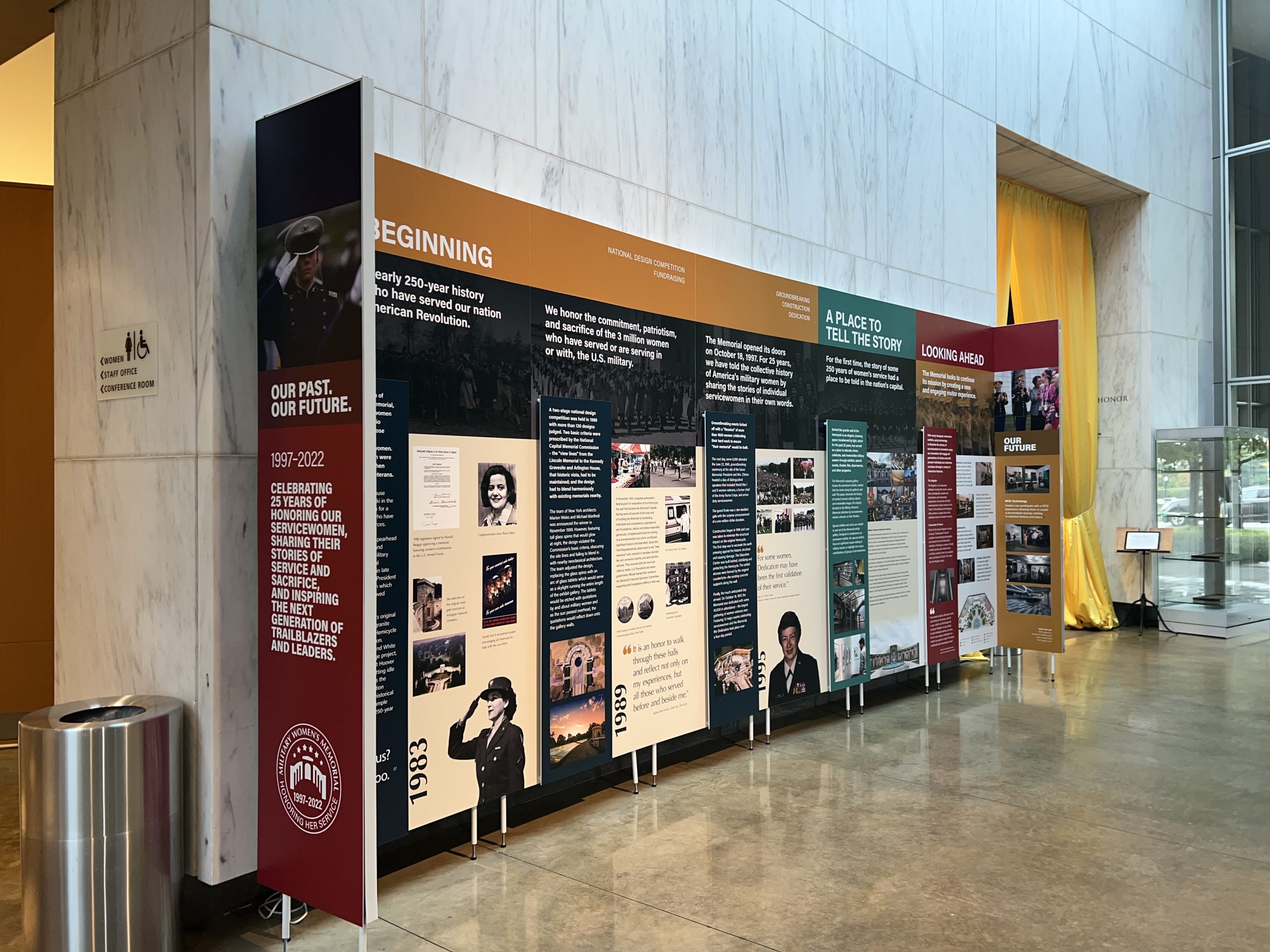
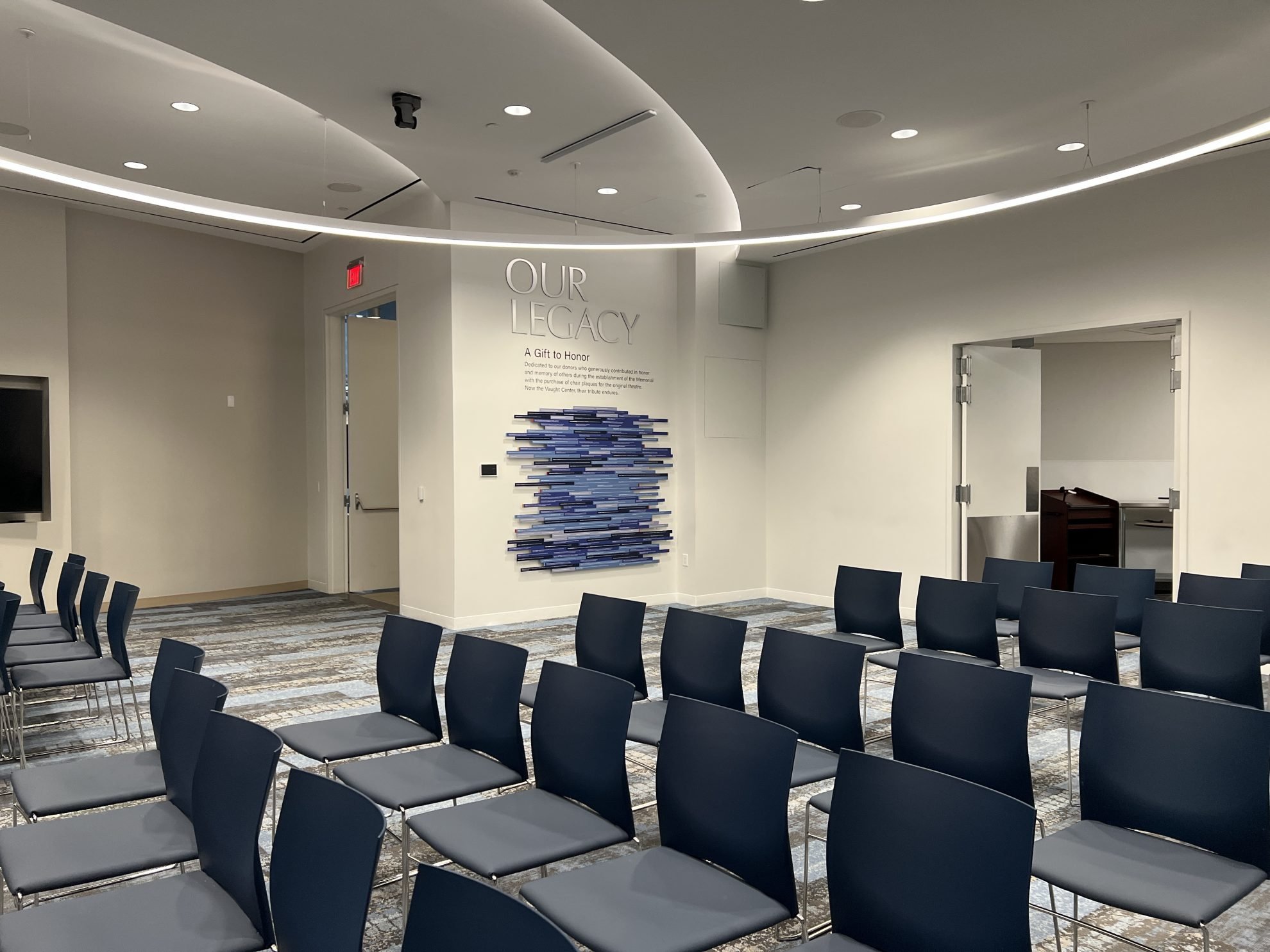
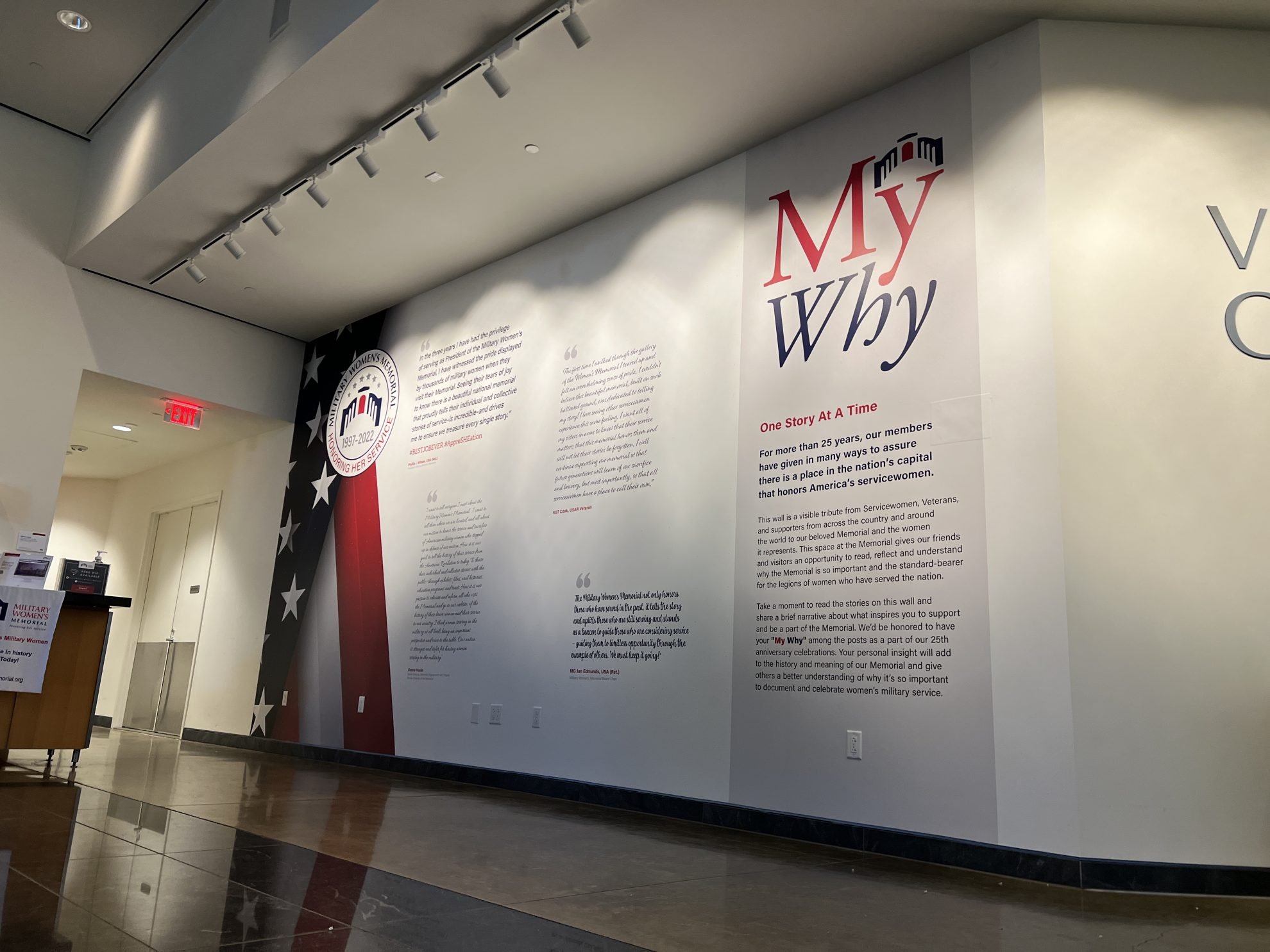
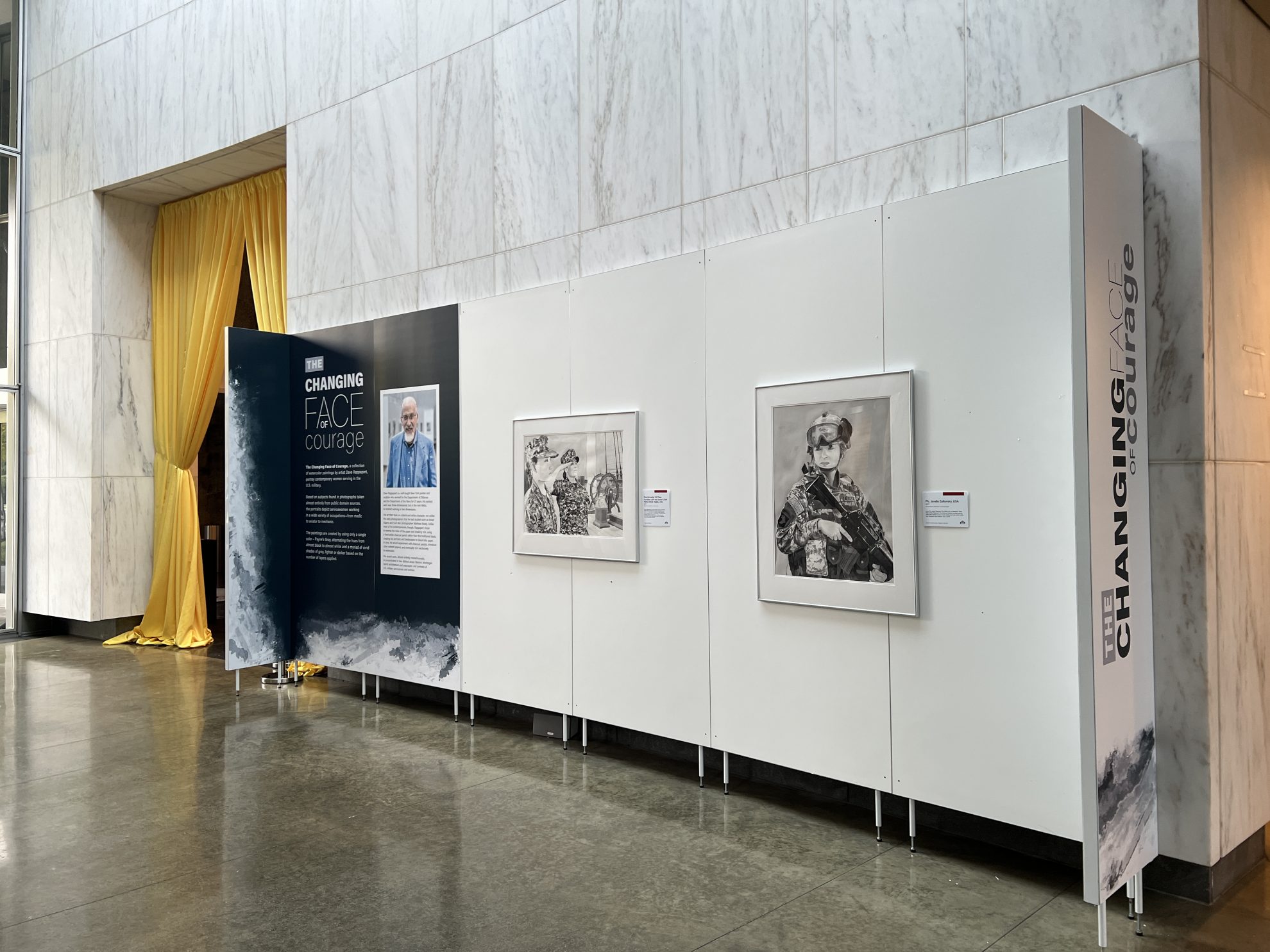
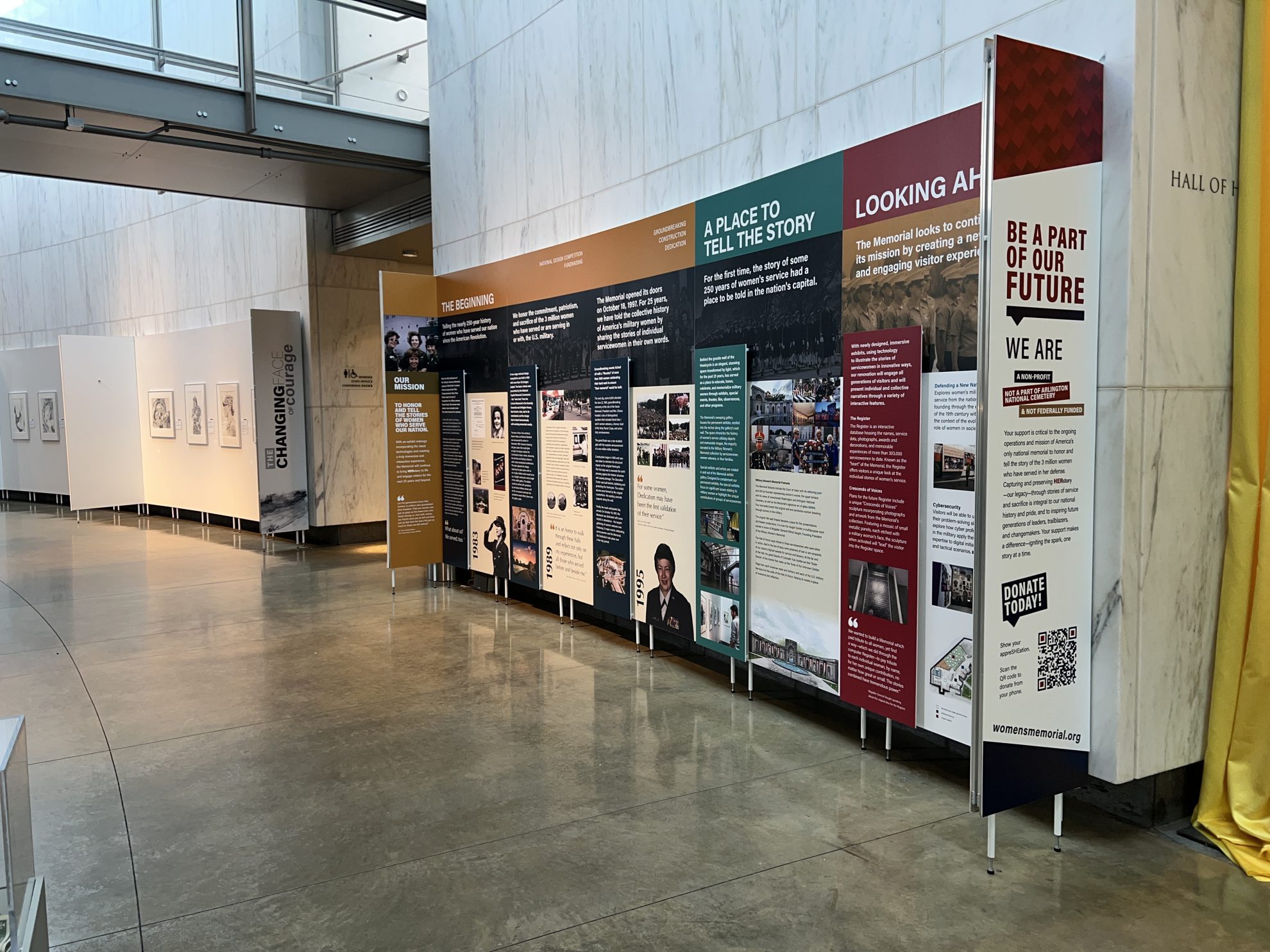
Heritage Signs & Displays created new museum signage for the Military Women’s Memorial in Arlington, VA. The project included custom signs, wall wraps, dimensional letters, and standoff-mounted displays to honor the legacy of U.S. servicewomen and the donors who supported the memorial. The updated interior features impactful designs, including a "Our Legacy" wall display and panels showcasing historical contributions and artwork, creating a transformative tribute to women in the U.S. Armed Forces.
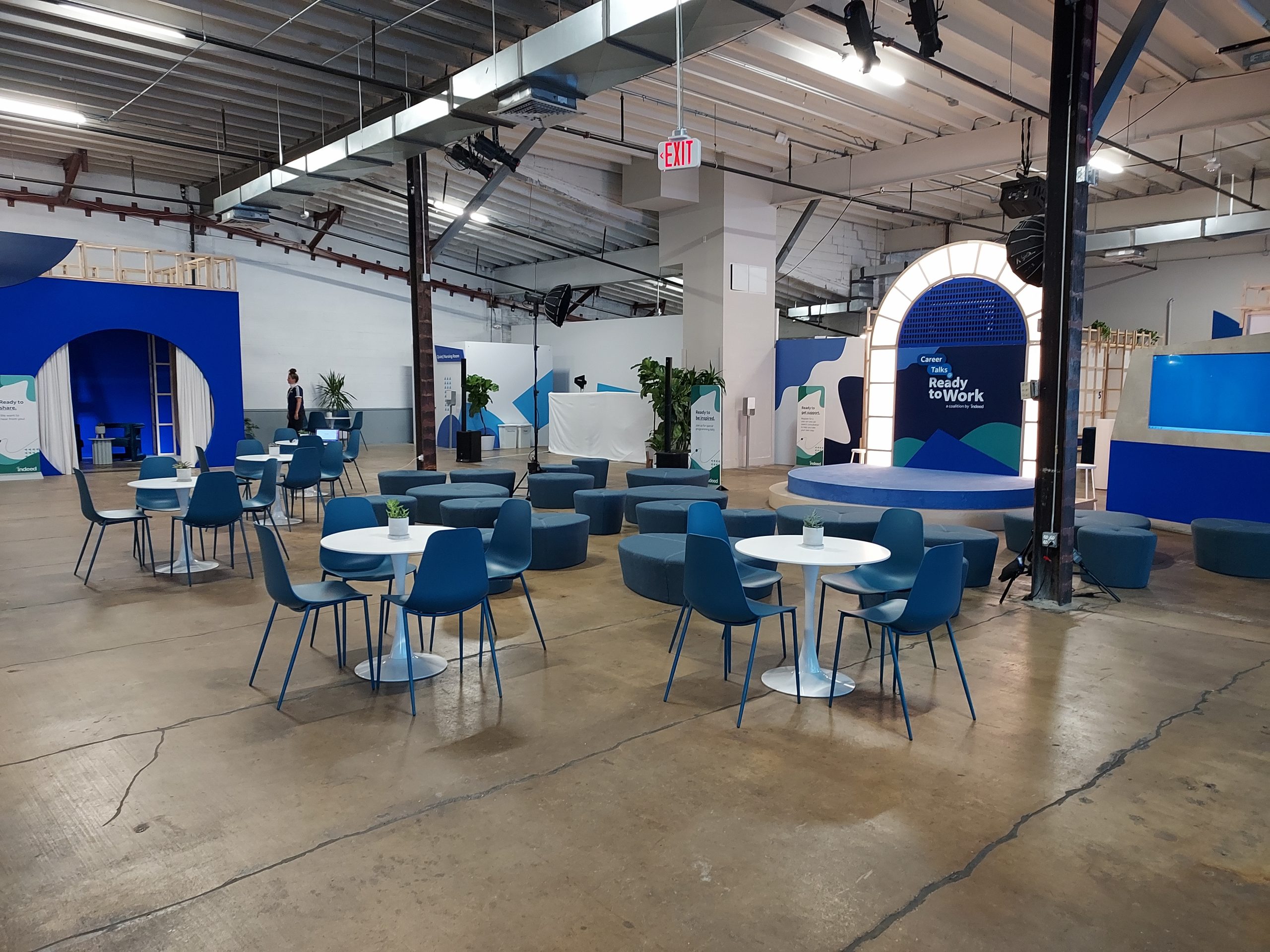
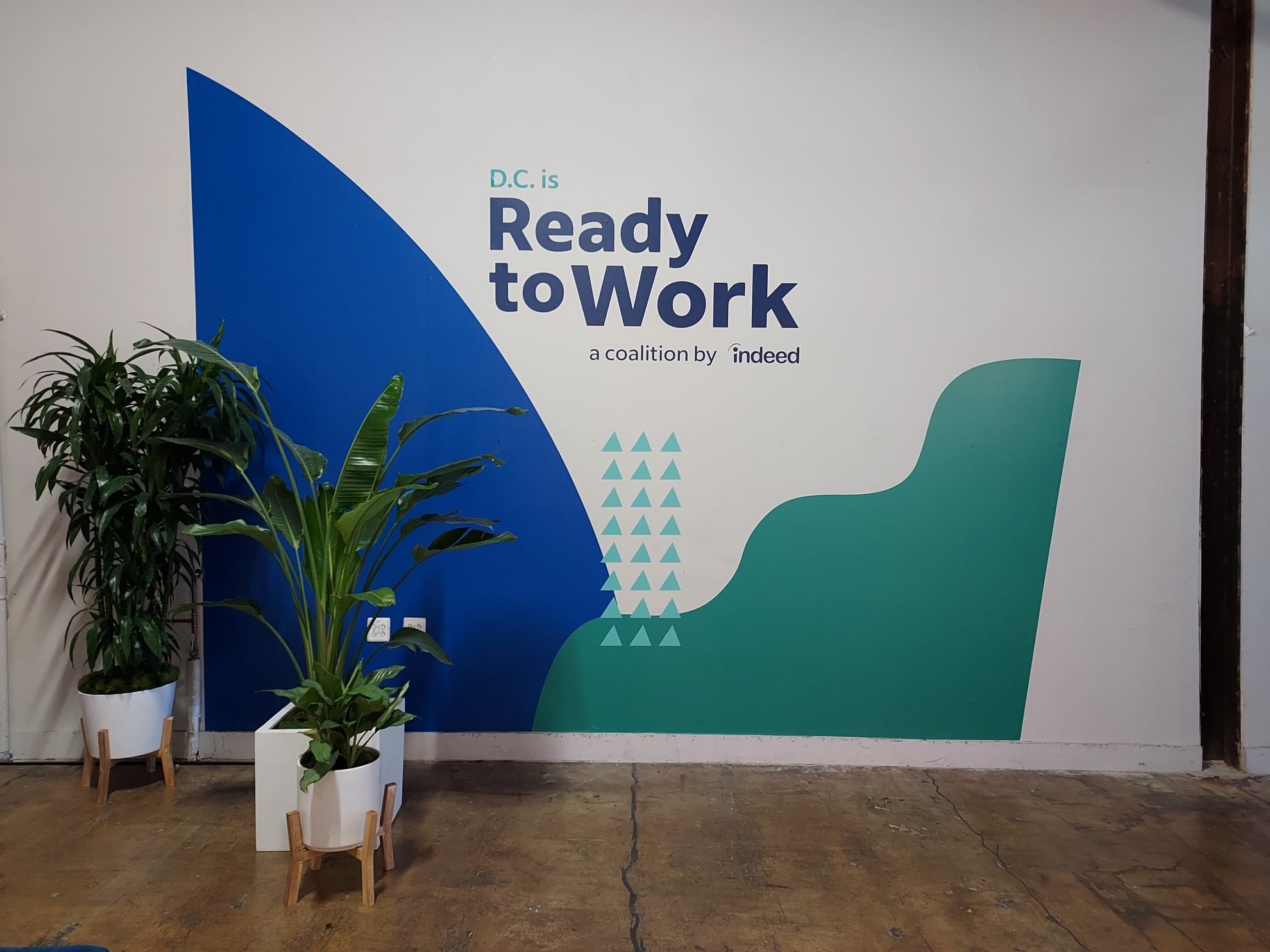
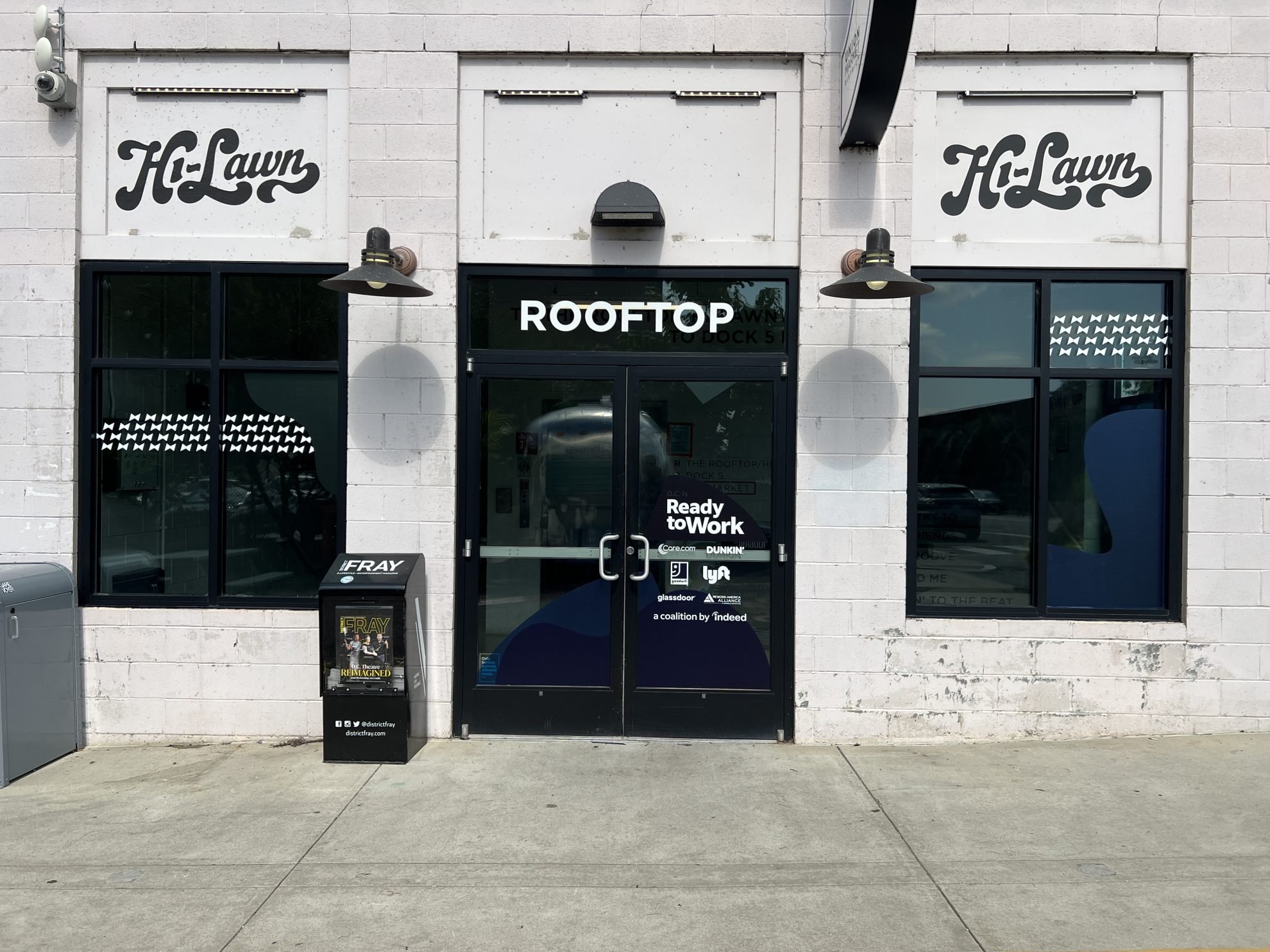
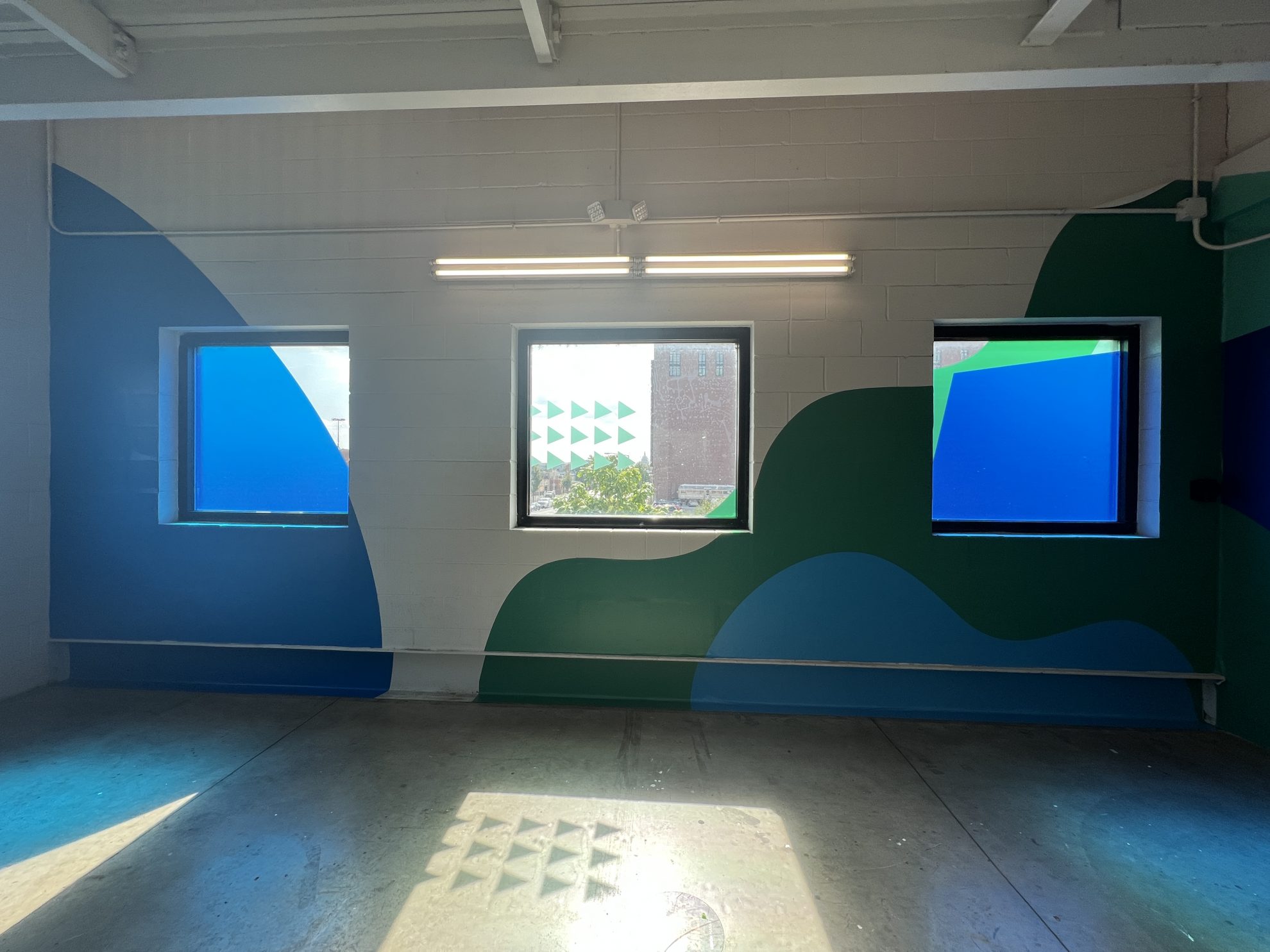
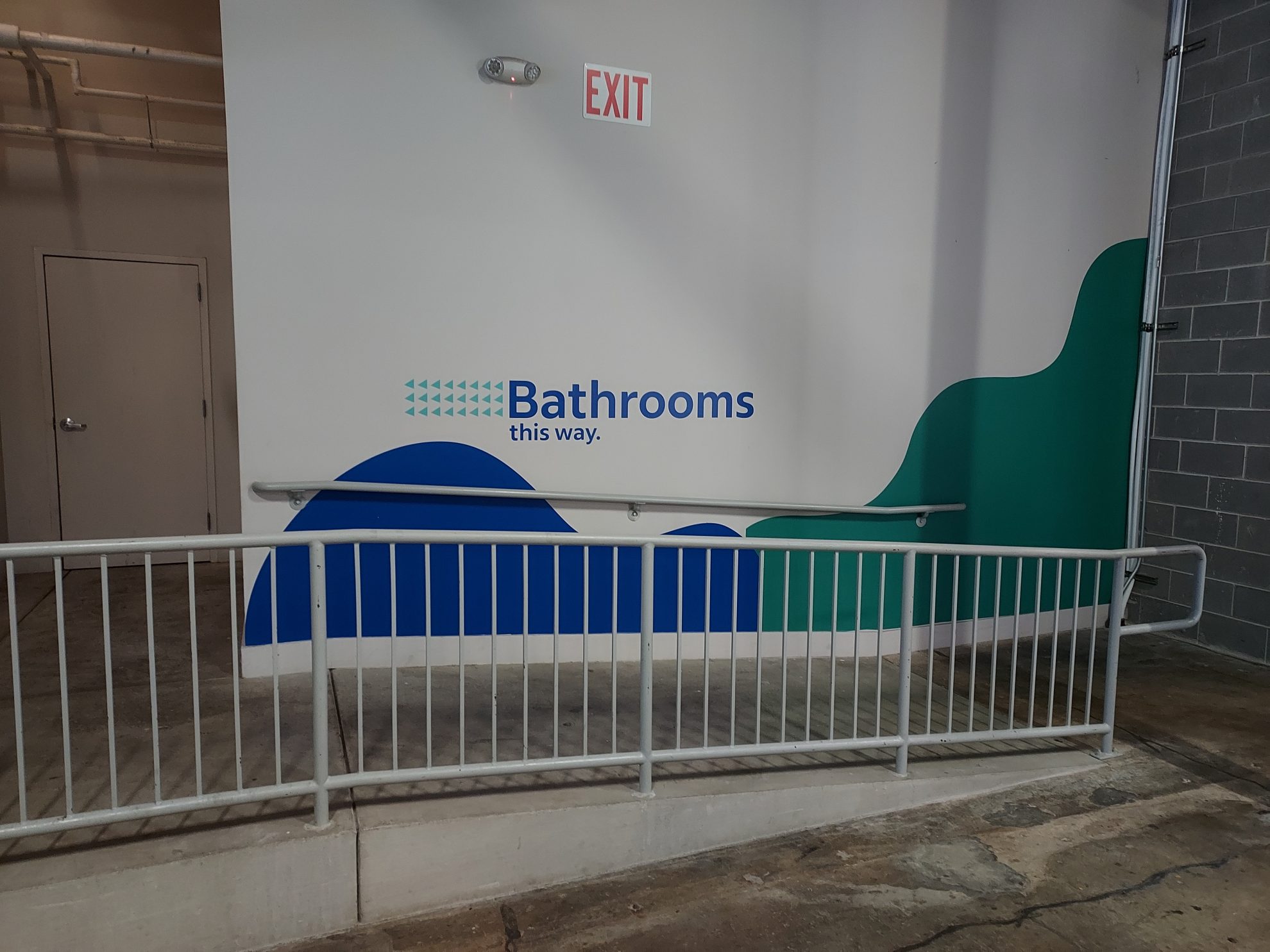
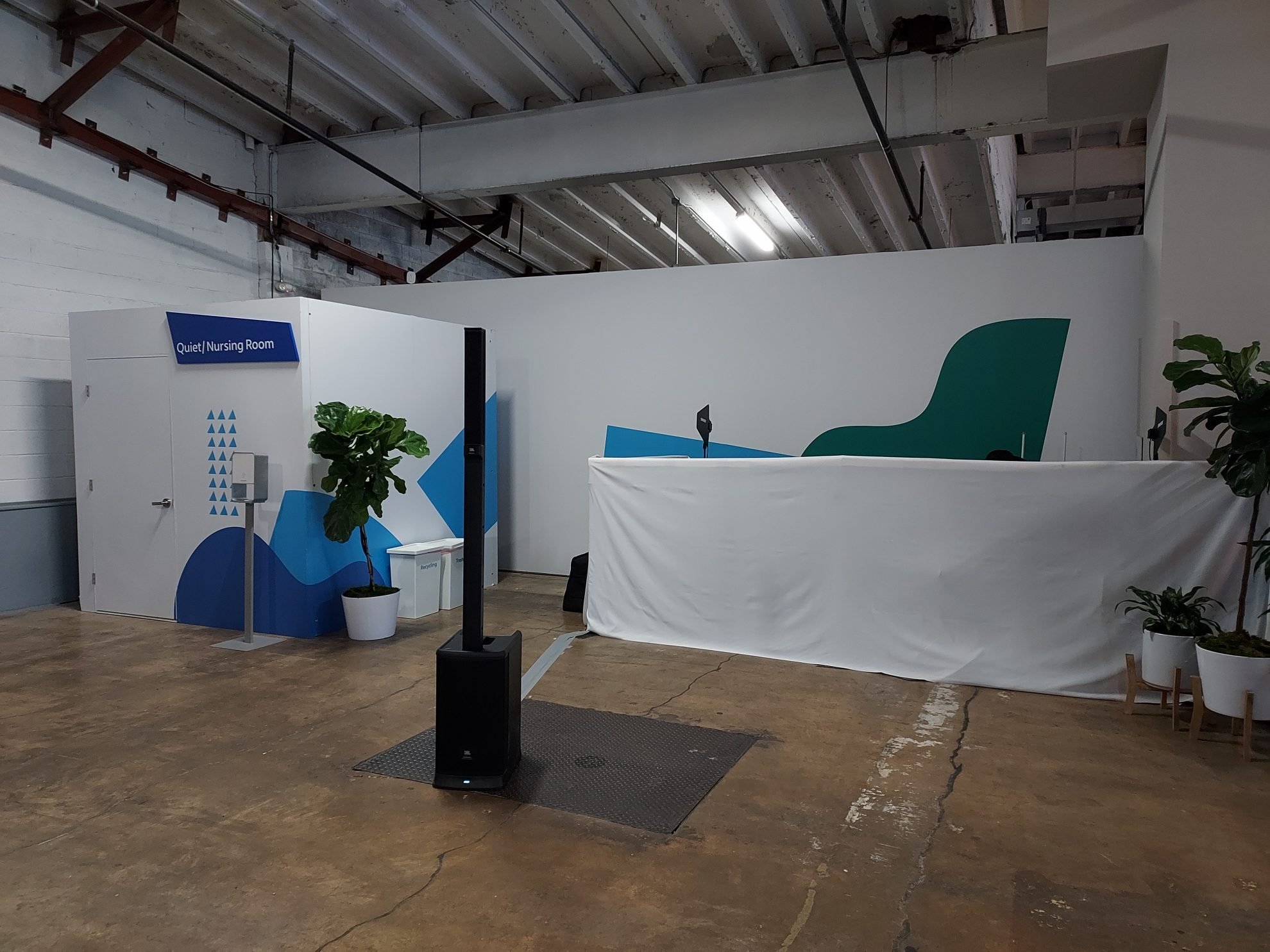
Heritage Signs & Displays' collaboration with The Gathery to brand Union Market in Arlington, VA, for Indeed's "Ready to Work" job fair. The project included custom event displays, wall graphics, window graphics, and wayfinding signs, creating an immersive and visually appealing environment. The branding enhanced the venue, reflected the event's mission, and provided a seamless experience for attendees.