
Turn Workplace and Event Goals into a Coordinated Physical Experience
The strongest workplace and event environments make it easier for people to understand who you are, where to go, what matters, and why the experience feels intentional. Heritage Signs & Displays helps Washington, DC organizations turn those goals into coordinated signs, graphics, displays, and branded features planned around the people, spaces, messages, and moments that matter most.
Washington, DC projects often involve several decision-makers at once. Brand leaders, facility teams, property representatives, architects, commercial interior designers, event teams, executives, security personnel, and venue contacts may all influence the finished result. Heritage brings those moving parts into one accountable process. Environmental graphic design establishes how the message and visual direction can work in the environment. One dedicated Project Manager preserves project knowledge and keeps communication connected. Site surveys, production, fabrication, and professional installation carry the approved direction through to the finished space.
Heritage is a veteran-owned, family-led sign company founded in 1977. We are best suited to organizations that value thoughtful planning, responsive coordination, and accountable execution for workplace interiors, public-facing facilities, and event environments.
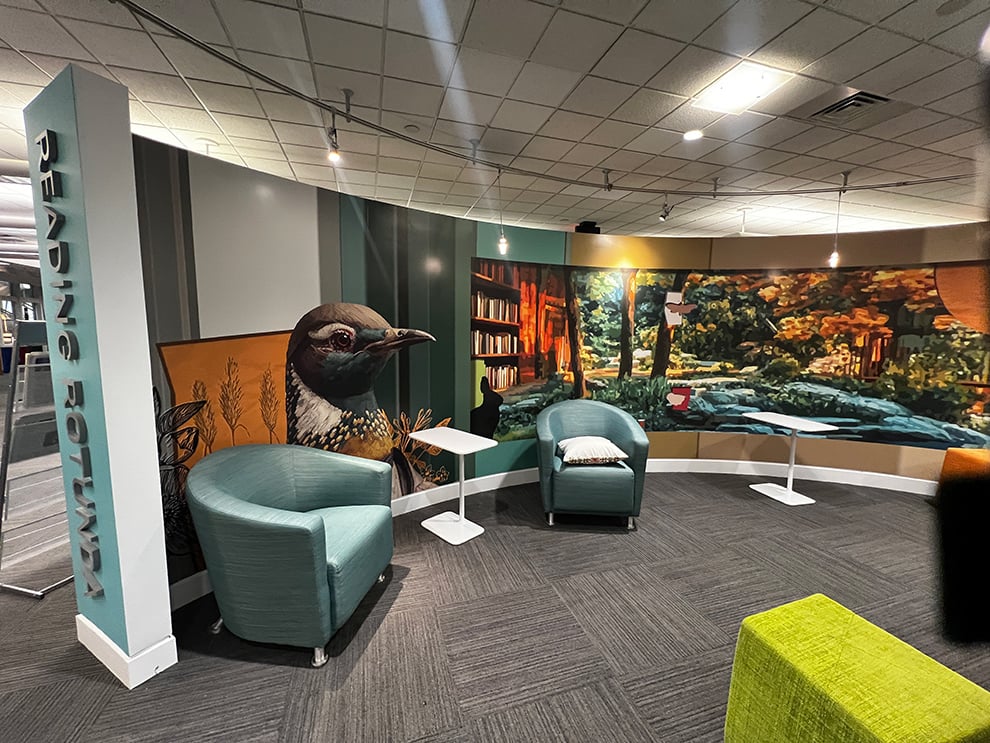
Some clients come to Heritage knowing exactly which signs or graphics they need. Others know that an entrance feels unfinished, employees are disconnected from the organization's story, visitors struggle to navigate the space, donors deserve better recognition, or an upcoming event needs to look and function more professionally. Both are good starting points.
Heritage begins by clarifying the result the environment needs to support. A workplace may need stronger identity at arrival, privacy on glass, clearer direction, visible culture, recognition, or information that can change over time. An event may need sponsor visibility, registration communication, stage presence, directional support, and a cohesive visual experience that works for a few hours or several days.
That is why Heritage treats individual products as parts of a broader communication system when the project calls for it. The question is not simply what can we make. It is what should this environment communicate, which physical features can carry those messages effectively, and how should they work together so the finished result feels intentional rather than assembled one purchase at a time.
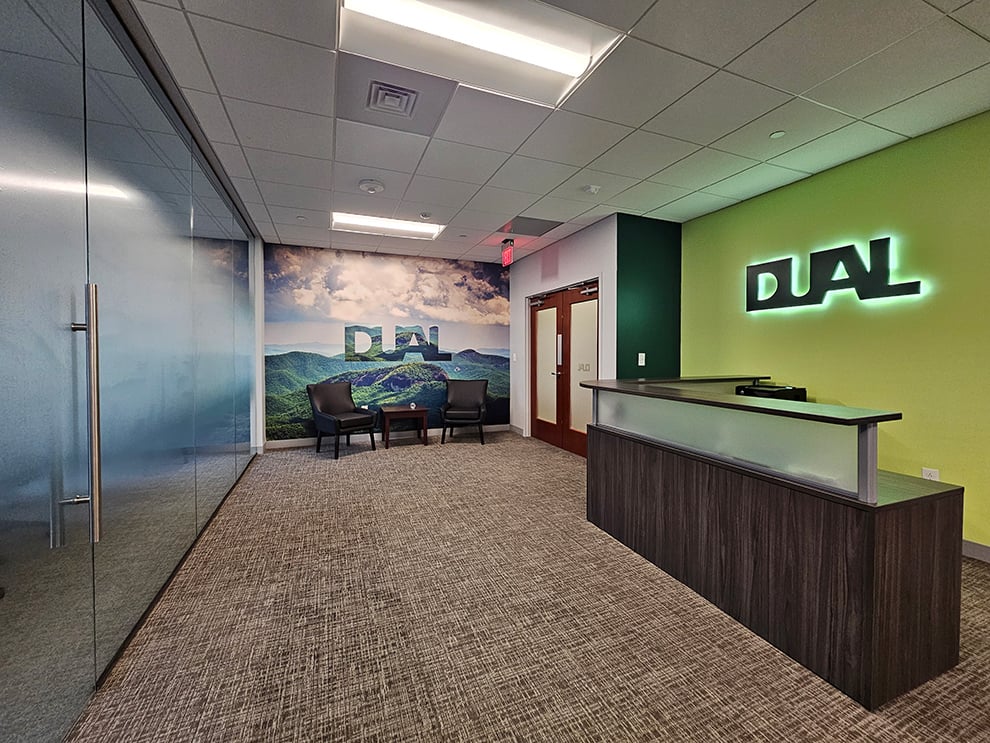
Washington, DC workplaces often serve several audiences at once. Employees may share the same environment with members, clients, donors, recruits, public officials, visiting executives, community partners, or international guests. The physical space needs to communicate professionalism without losing the organization's personality, culture, and purpose.
Heritage helps create workplace interiors in which lobby features, dimensional lettering, wall graphics, window graphics, privacy treatments, office signs, wayfinding, backlit signs, recognition displays, and other branded elements perform different jobs while supporting one visual direction. The strongest solution may be bold at the entrance and intentionally restrained in conference rooms or executive areas. Employee spaces may emphasize culture and belonging while visitor areas prioritize orientation and credibility.
Environmental graphic design helps determine where visual communication should carry the most weight. Heritage then connects one dedicated Project Manager, site information, production, fabrication, and professional installation so those choices can become a coordinated physical result. The goal is not to cover every surface. It is to make the important parts of the workplace communicate more clearly.
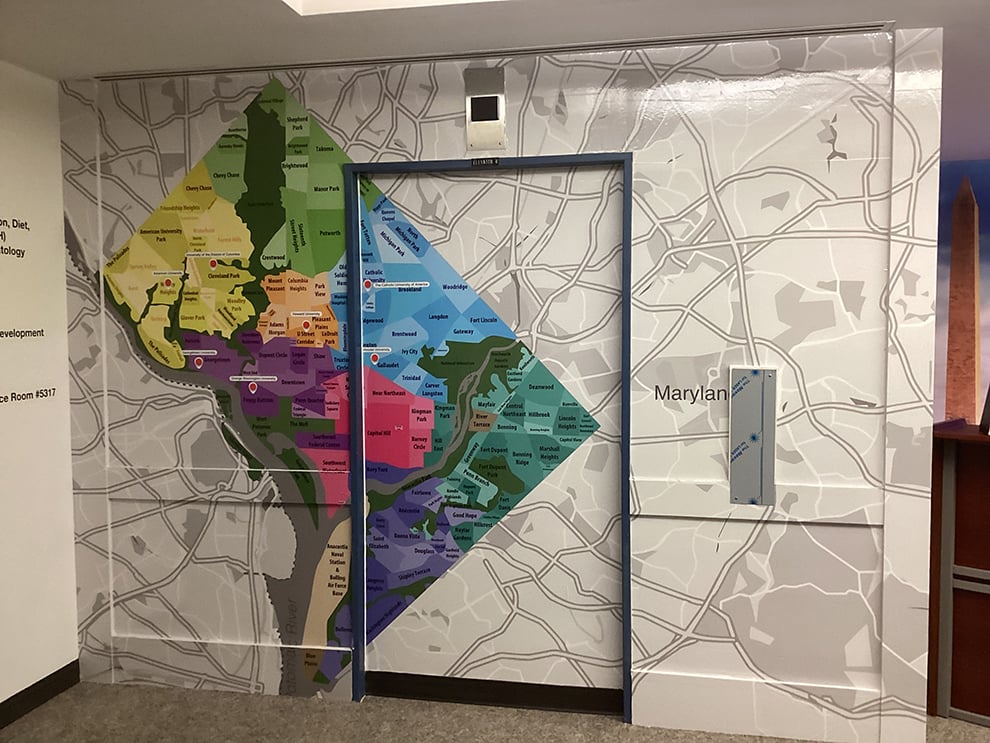
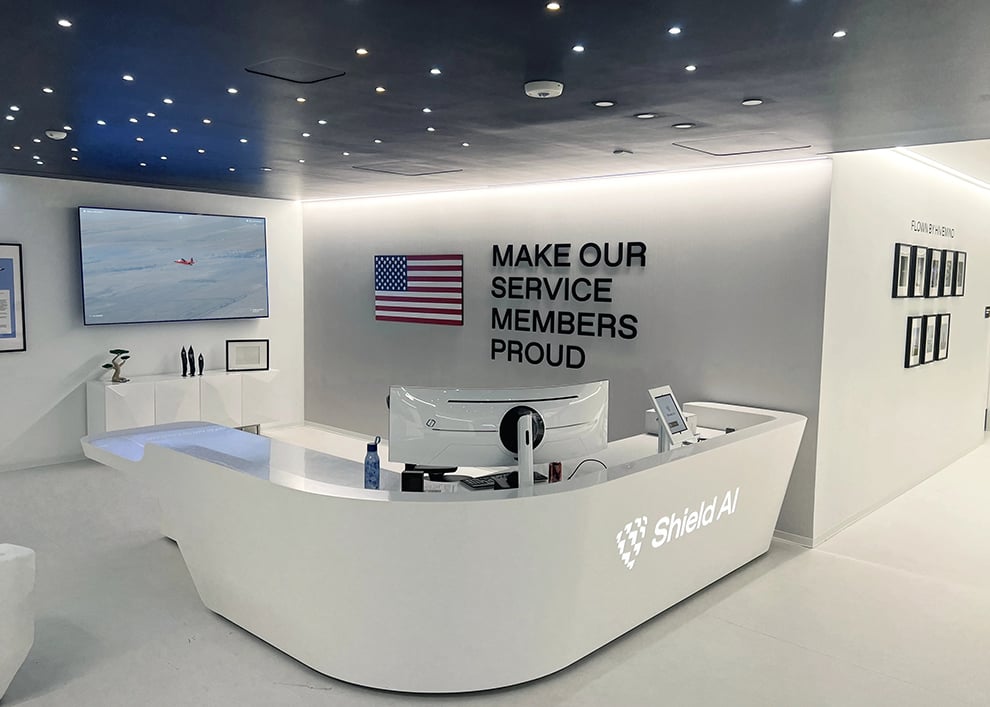
Interior signs help DC offices, institutions, associations, and professional environments identify destinations, support navigation, and communicate with visitors who may be unfamiliar with the space.
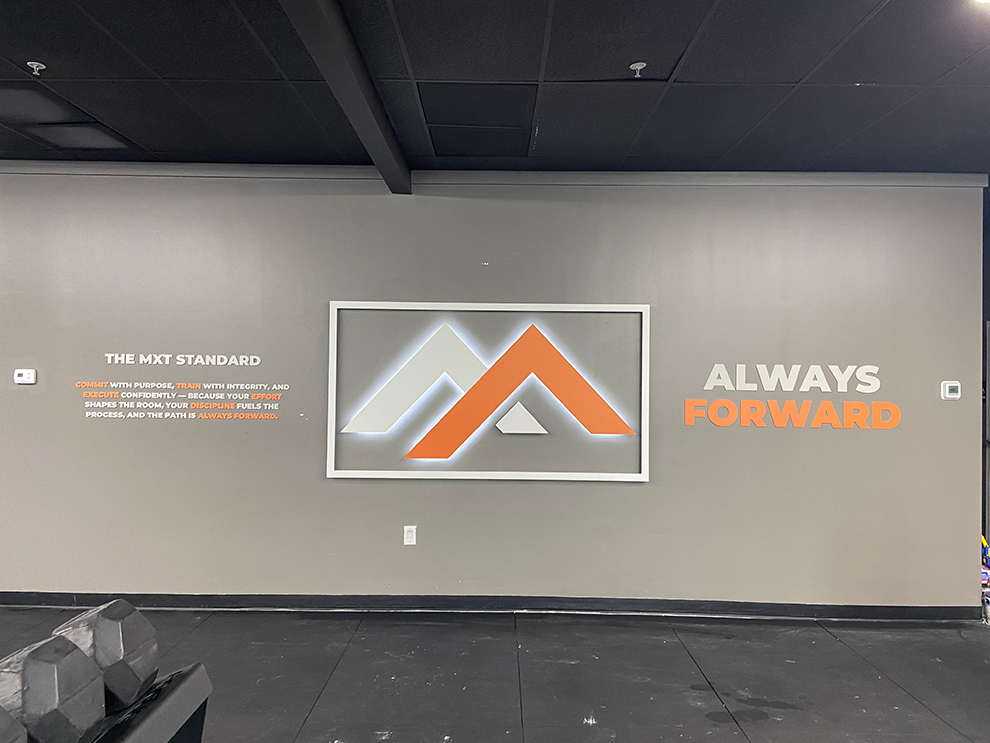
Office signs help departments, meeting rooms, suites, shared areas, and employee spaces feel organized, consistent, and aligned with the organization’s professional identity.
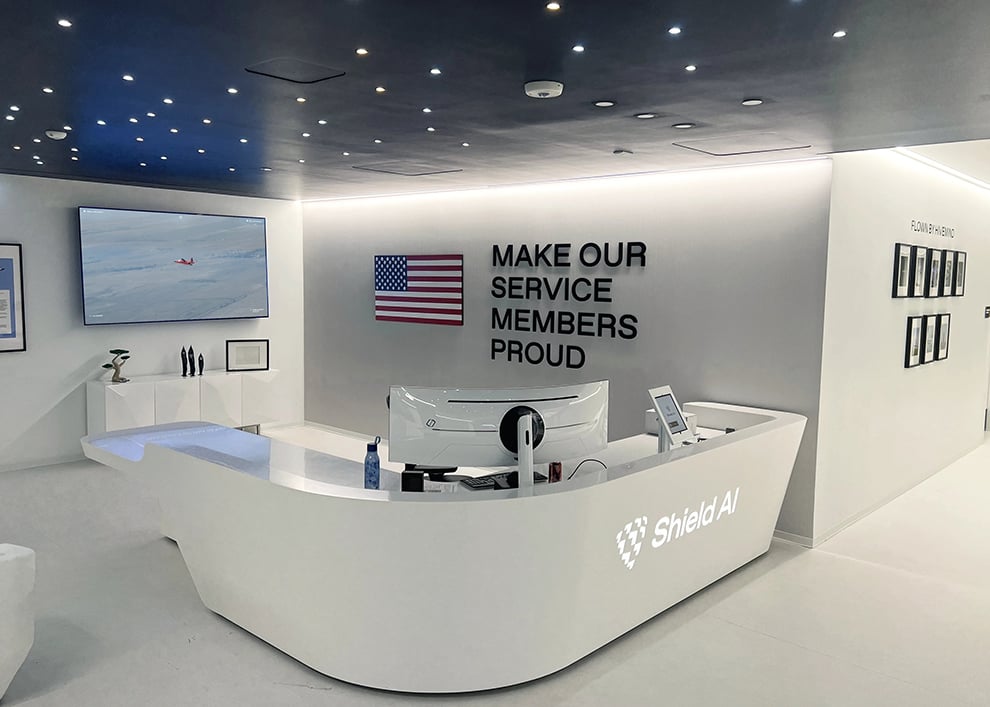
Lobby signs help Washington, DC organizations establish credibility in reception areas, headquarters, member centers, executive offices, and public-facing workplace interiors.
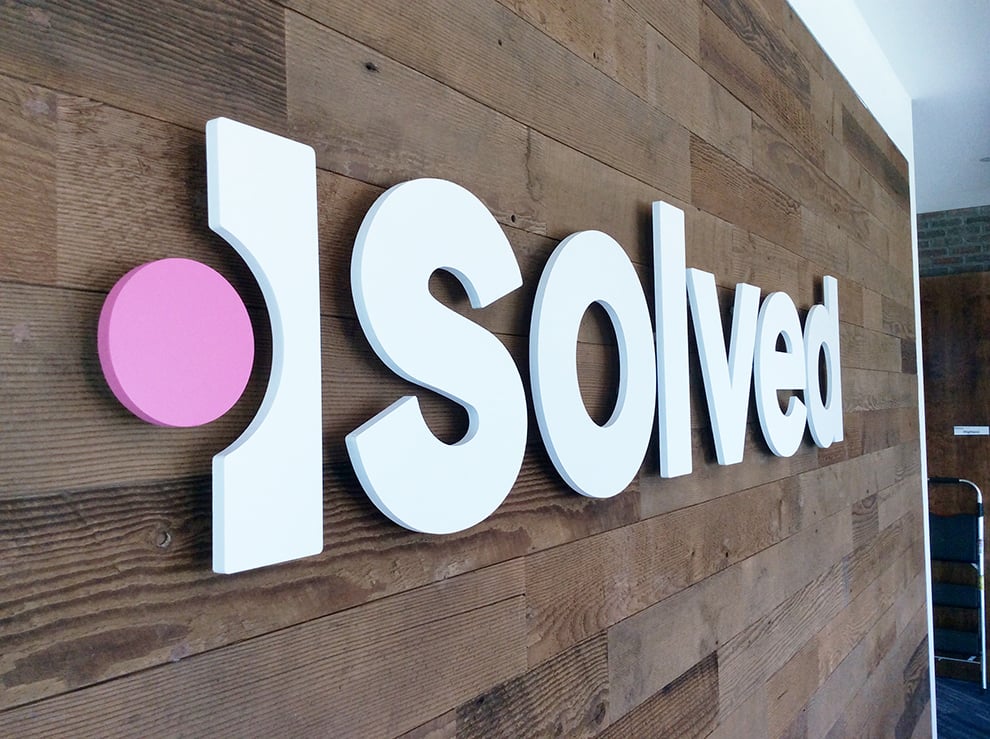
Dimensional letters add depth and architectural emphasis to logos, department names, donor spaces, conference rooms, and prominent branded walls.
Backlit signs create an elevated visual presence for lobbies, reception areas, event spaces, branded feature walls, and polished stakeholder-facing interiors.
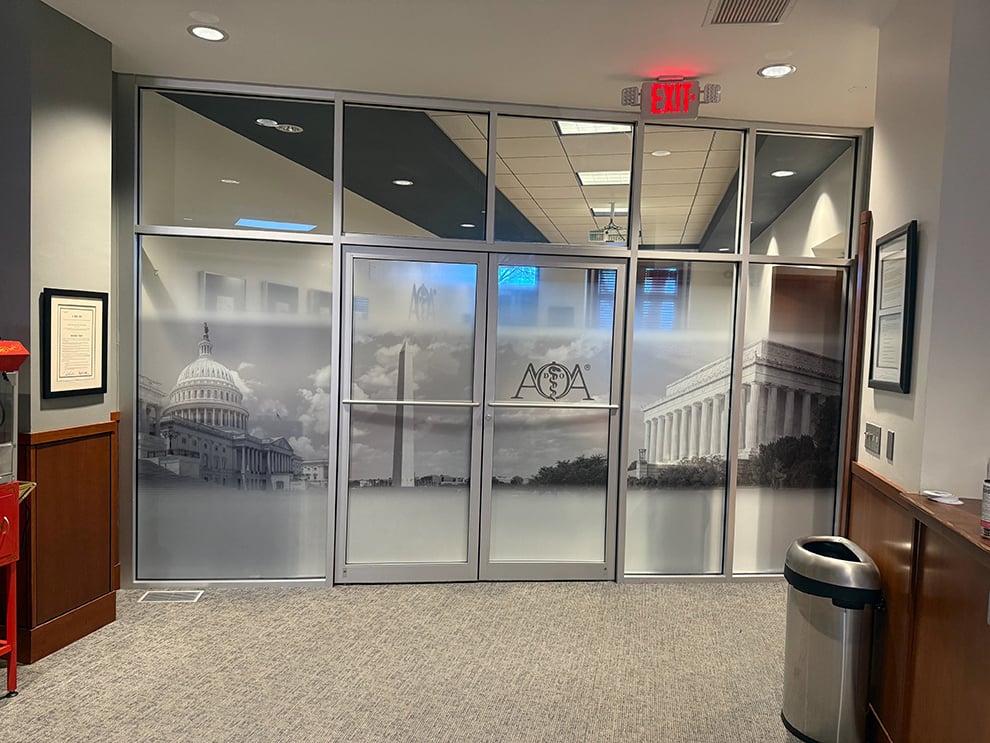
Privacy vinyl supports confidentiality, visual consistency, and refined glass wall design inside offices, conference rooms, meeting areas, and collaborative environments.
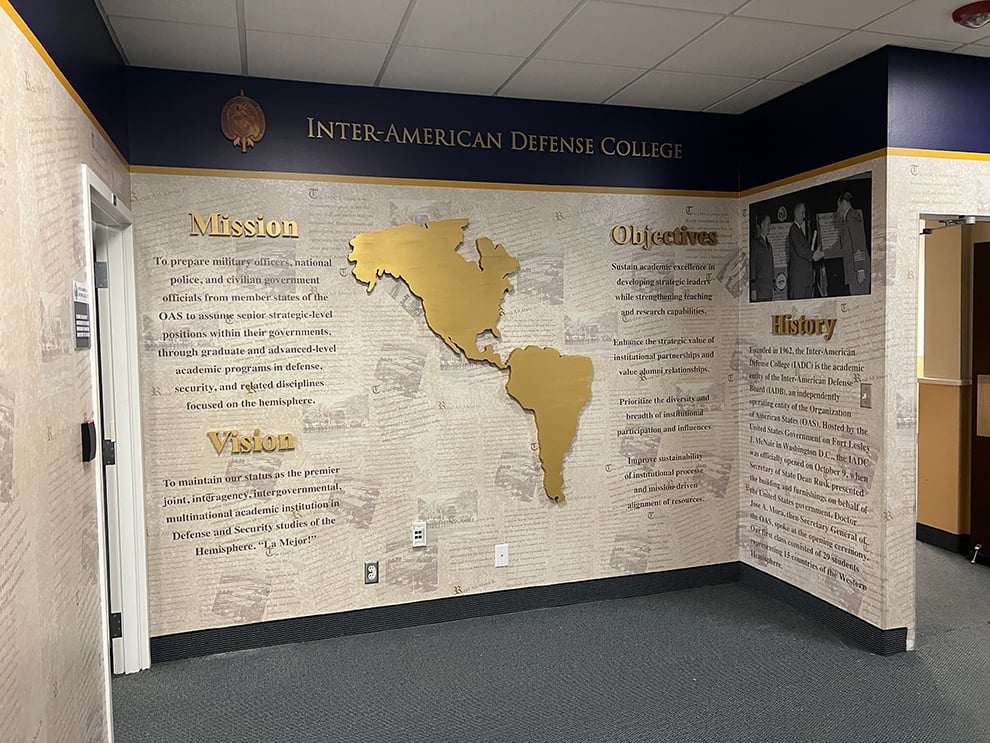
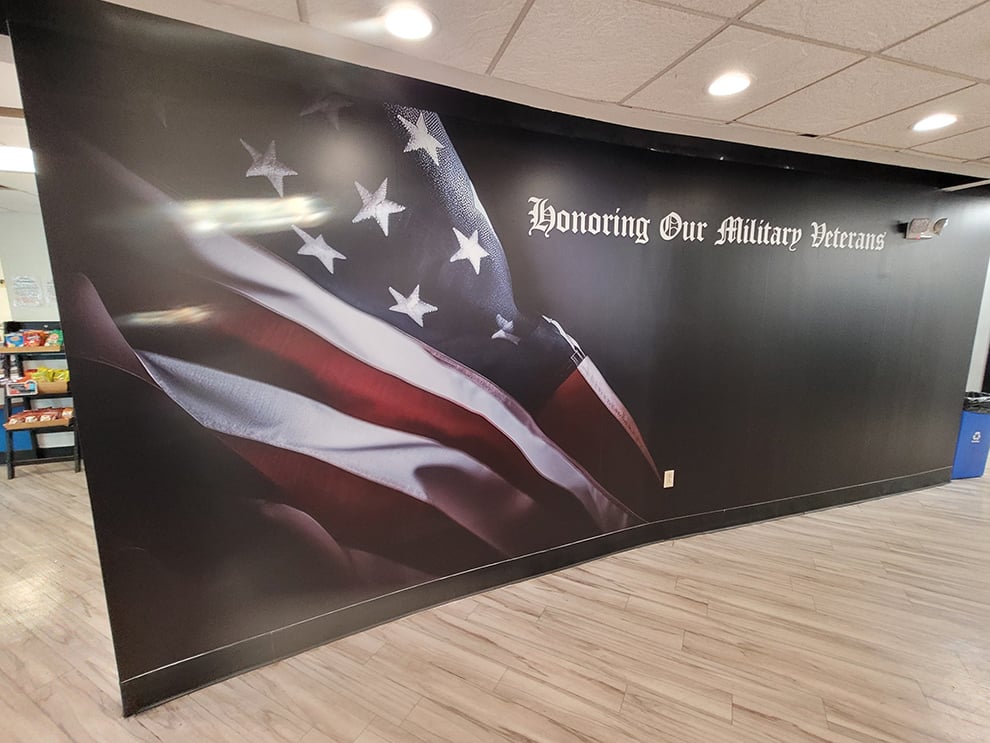
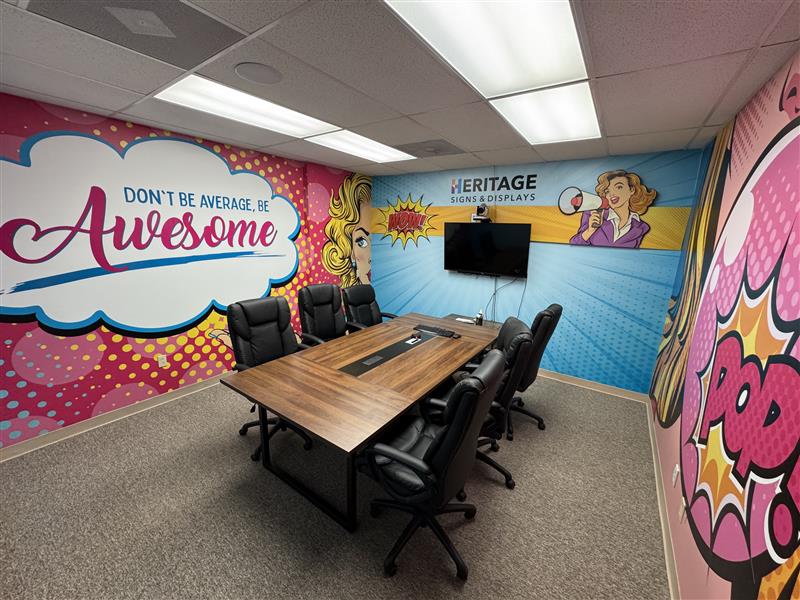
Wall wraps bring mission messaging, history, imagery, wayfinding, or brand storytelling into corridors, gathering areas, office interiors, and institutional spaces.
An organization's most meaningful messages should not have to live only in an employee handbook, annual report, website, or presentation. Workplace environments can make purpose, values, history, achievement, and gratitude visible every day.
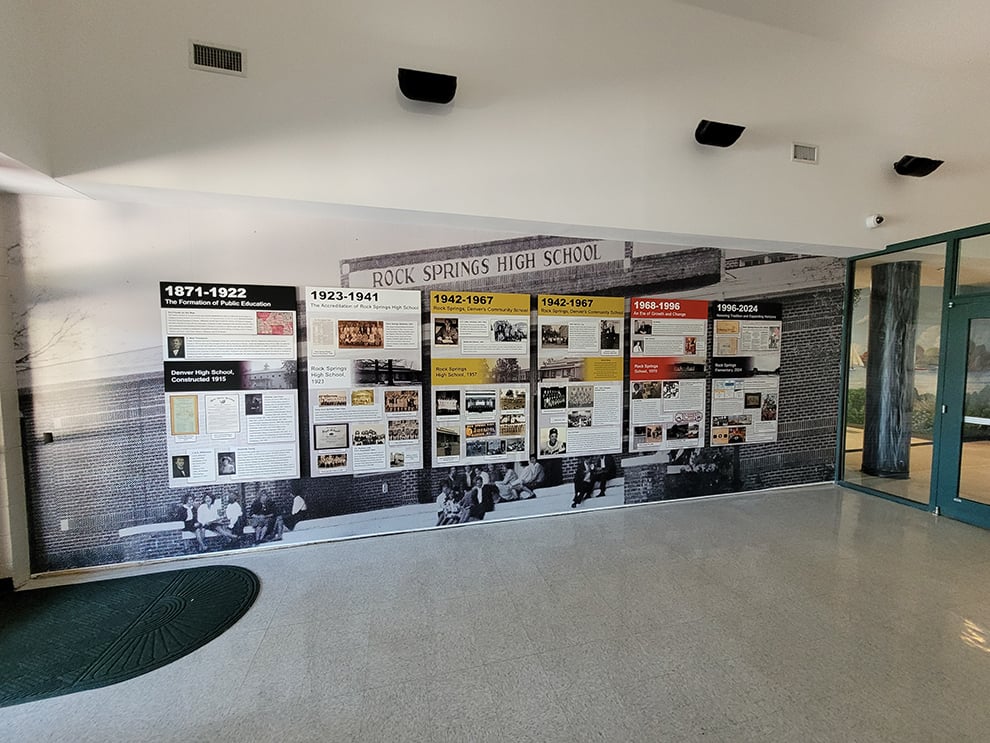
Heritage creates timeline wall displays, donor and sponsor recognition, mission statement and core values presentations, milestone features, historical displays, recognition systems, dimensional graphics, photographs, printed panels, and other storytelling elements for organizations that want their spaces to carry more meaning. These projects can help longtime employees remember where the organization came from, new employees understand what it stands for, donors see the impact of their support, and visitors appreciate the people and work behind the organization.
The goal is not to cover a wall with information. Heritage helps organize content into a physical experience people can understand at the distance, pace, and sequence in which they actually encounter it. Thoughtful hierarchy, scale, materials, imagery, dimensionality, and placement can turn important organizational information into something people notice and remember while leaving room for content that may need to change later.
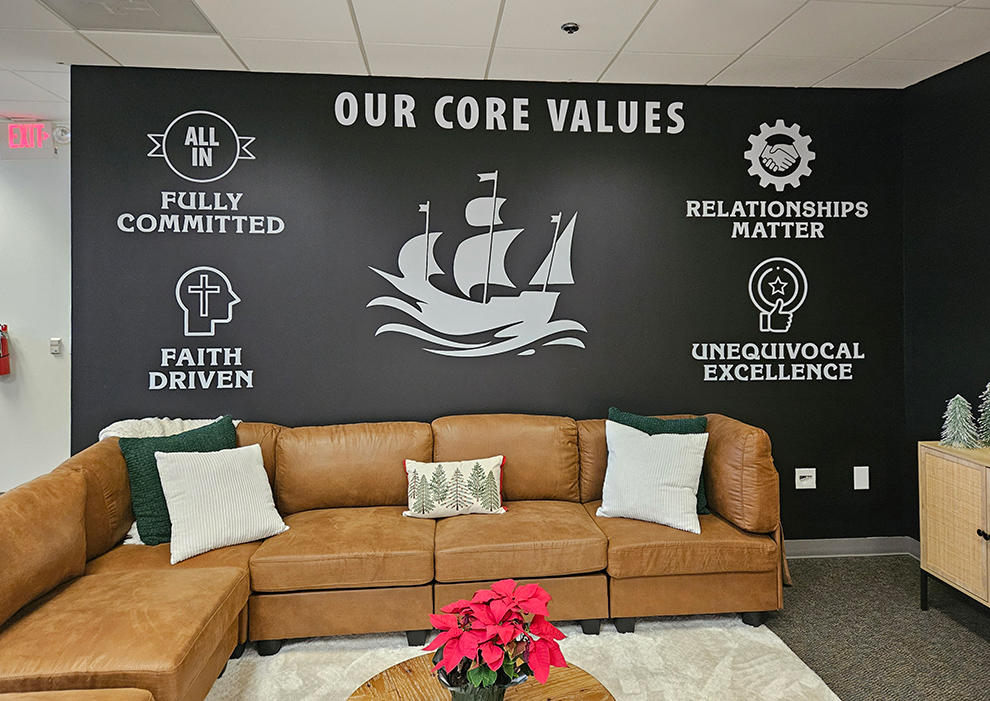
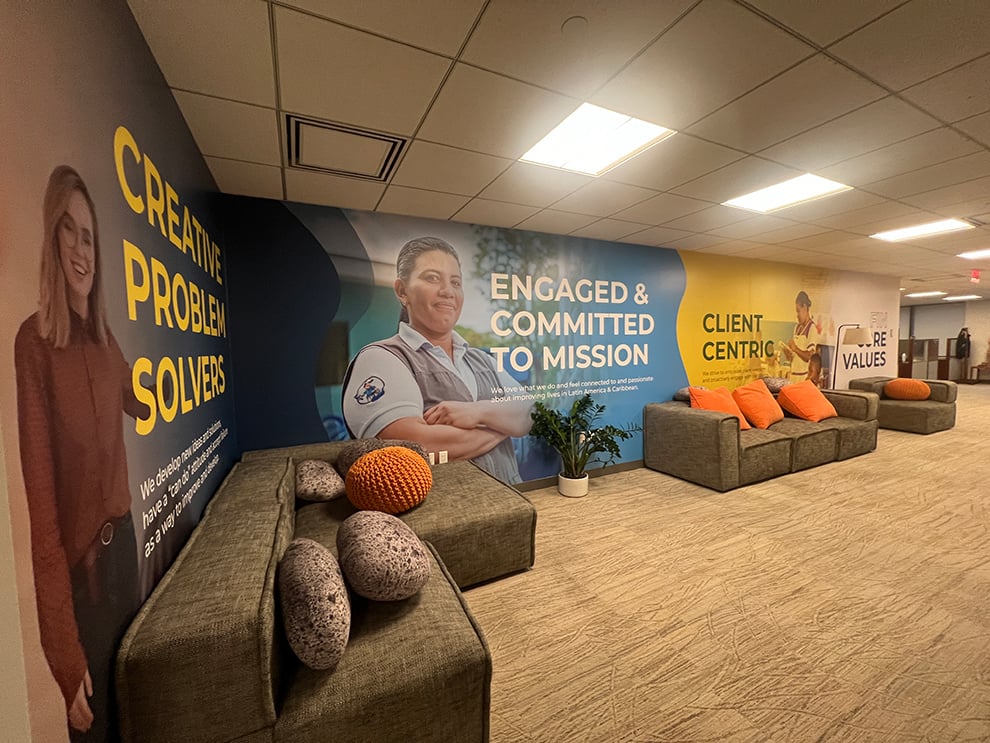
Mission statement walls help associations, nonprofits, contractors, schools, and institutions make purpose visible in shared spaces and visitor-facing environments.
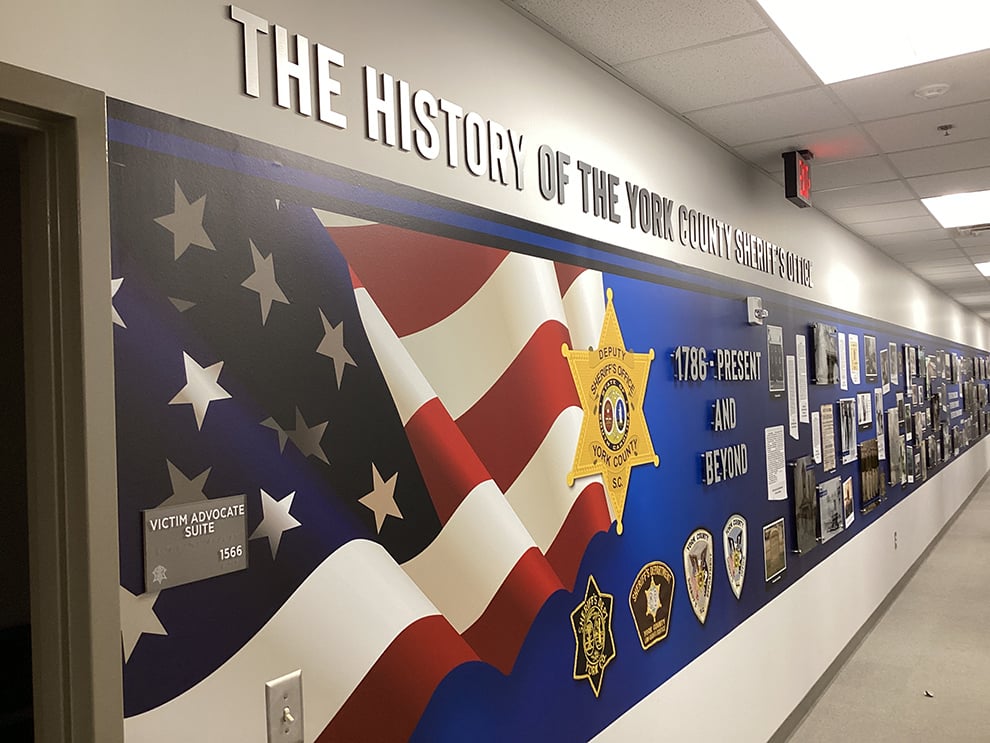
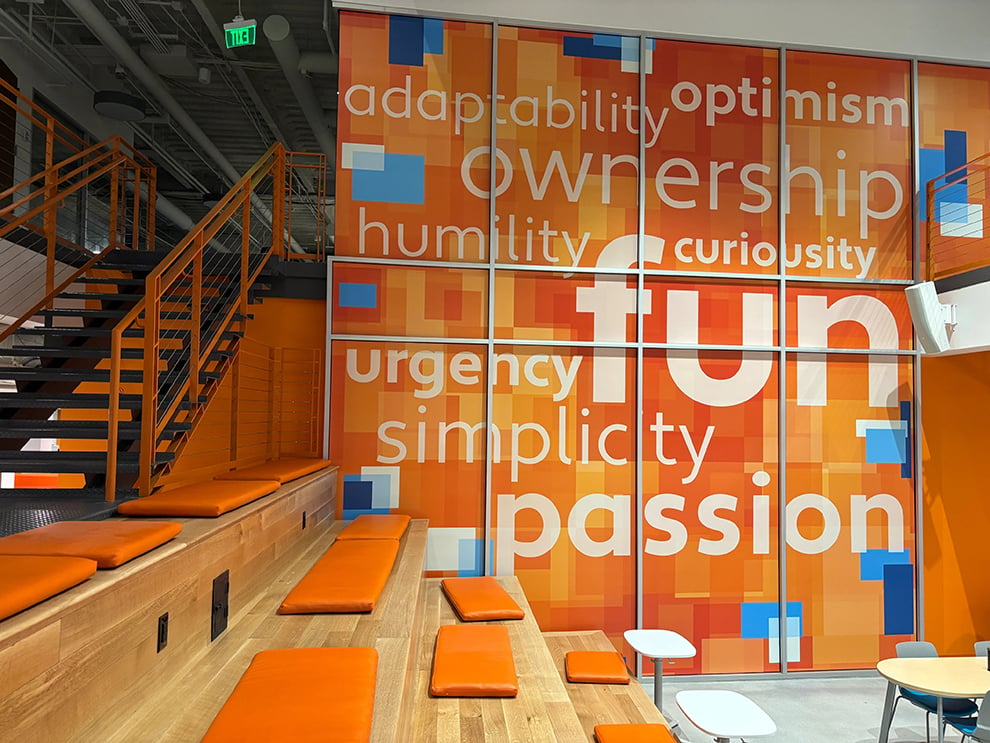
Core values walls translate guiding principles into branded interior graphics that support culture, leadership communication, and employee alignment.
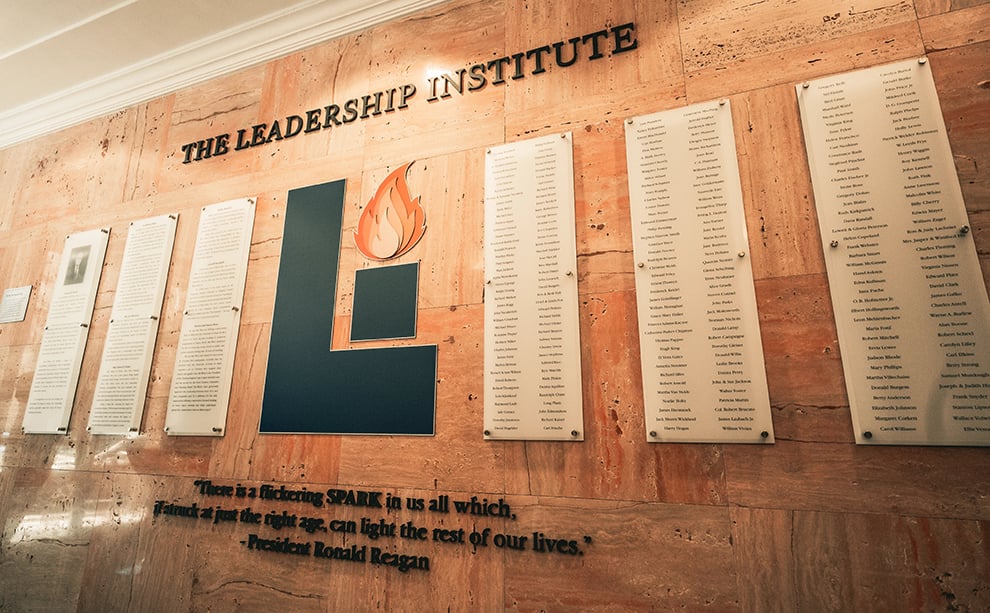
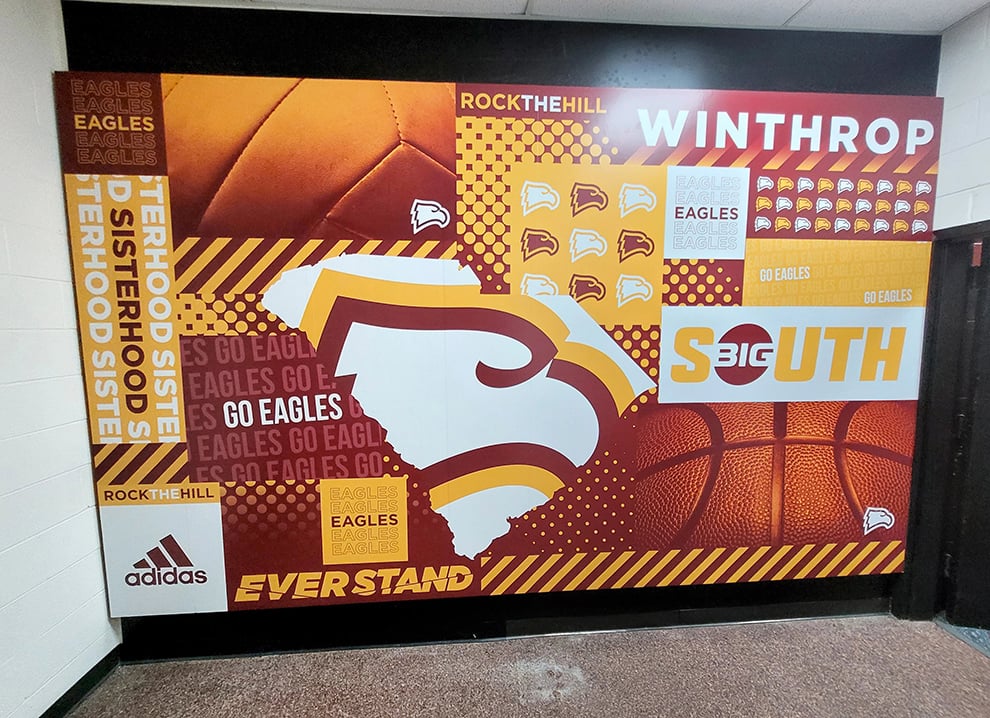
Inspiration walls use quotes, photography, mission language, and branded design to create thoughtful environments for staff, members, students, or visitors.
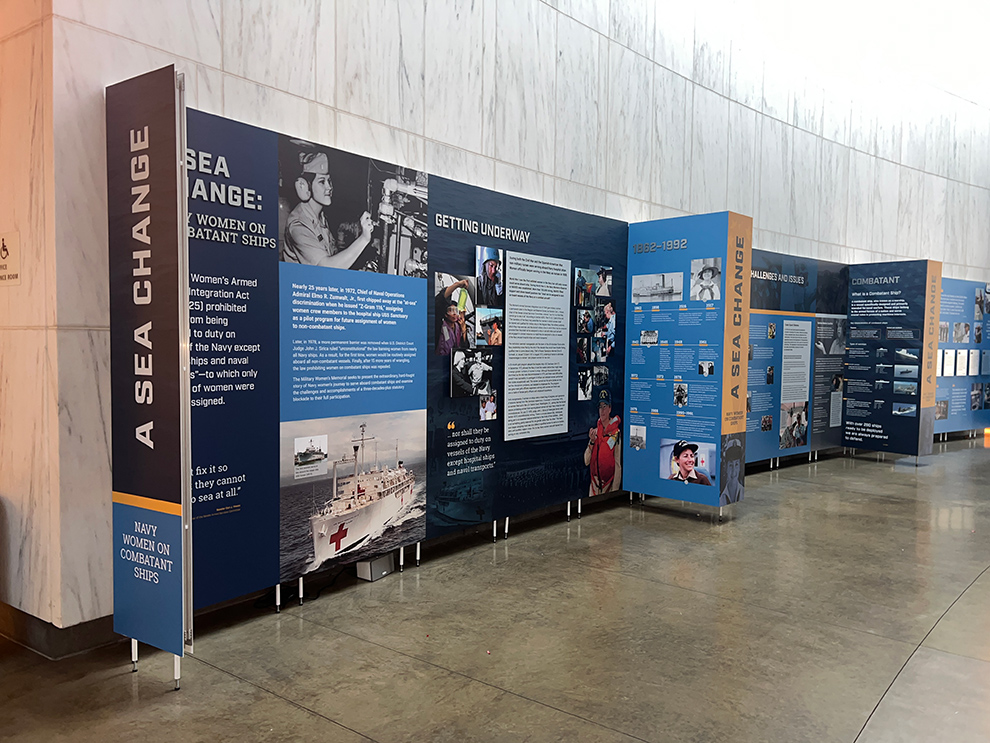
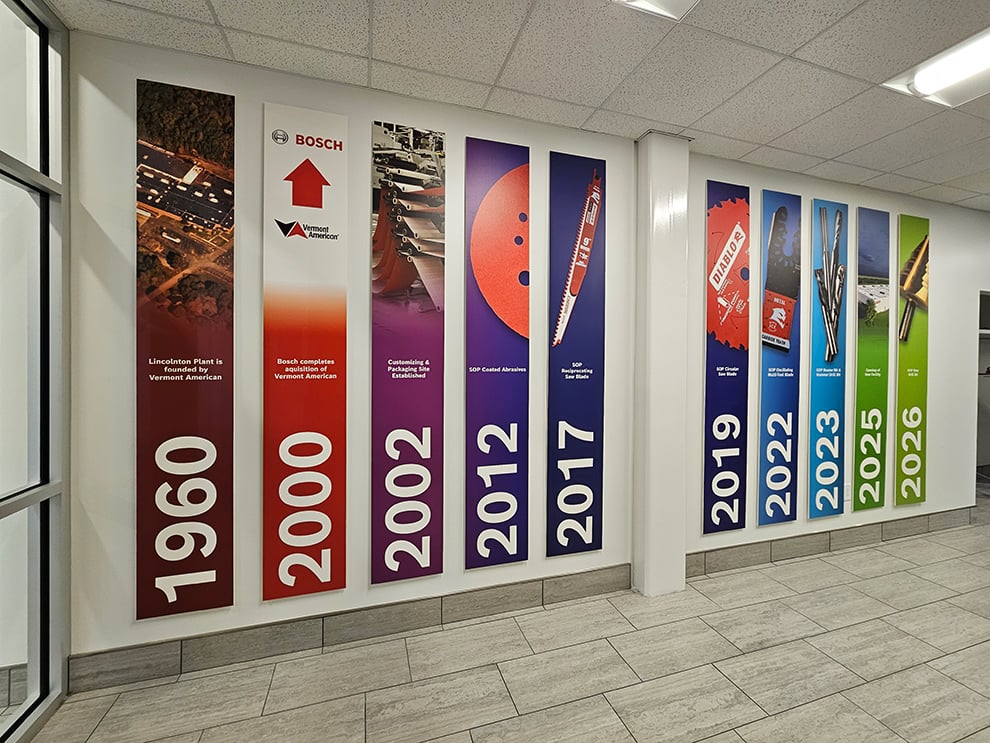
Timeline walls help organizations present founding stories, milestones, campaigns, achievements, leadership moments, and institutional history in a visual format.
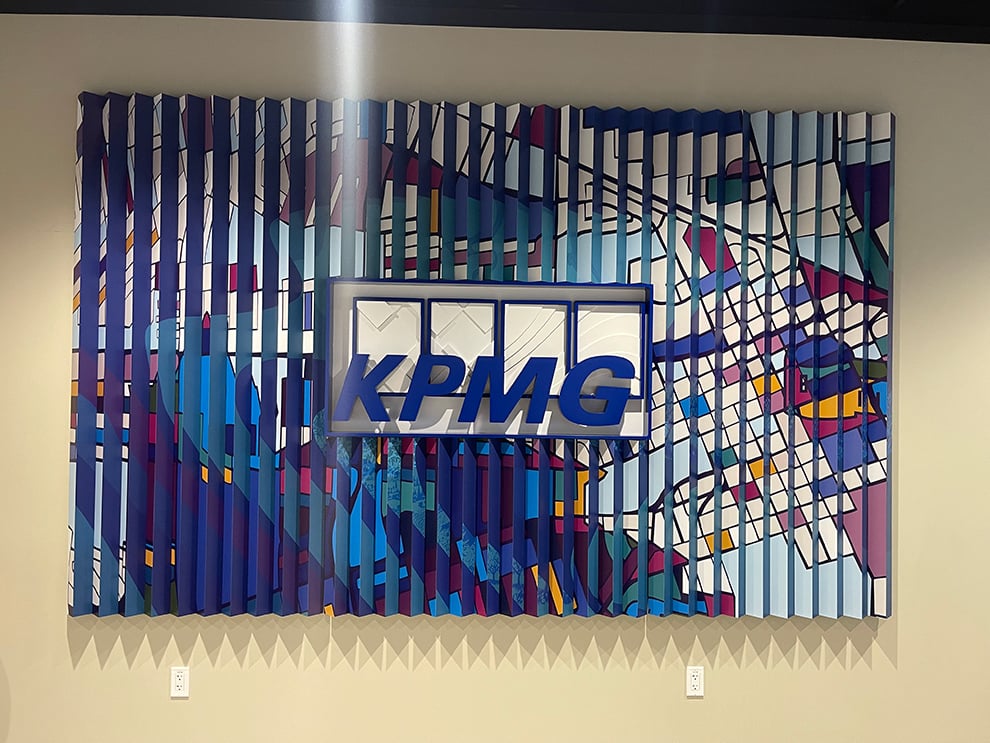
Donor recognition displays honor generosity in nonprofit, educational, healthcare, museum, faith-based, and community-focused spaces.
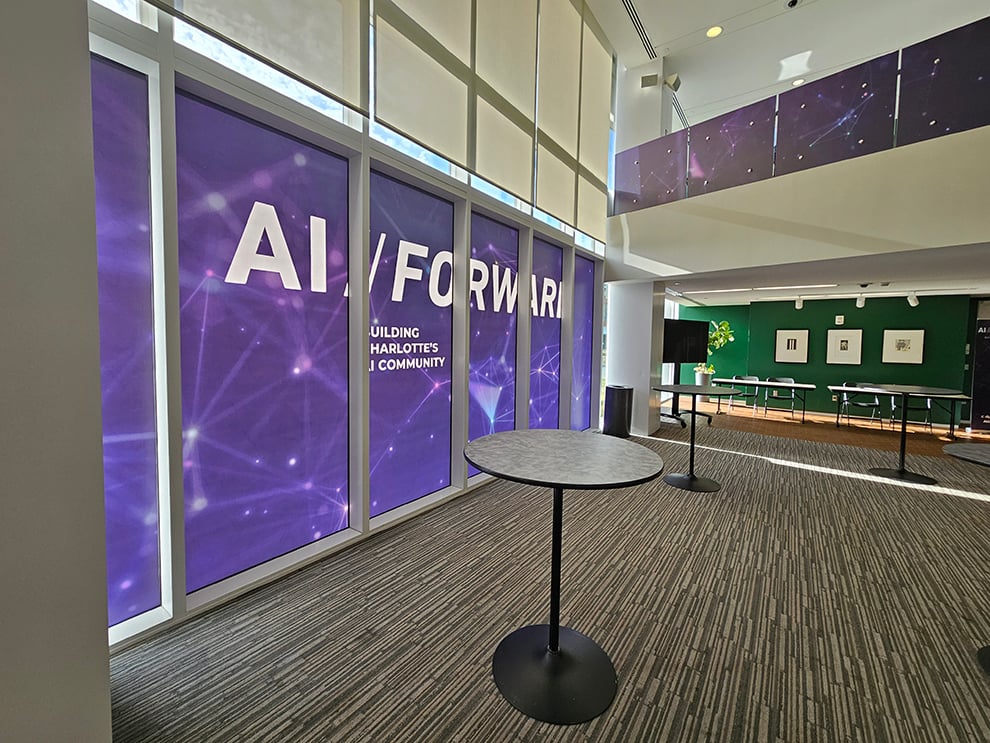
Museum and exhibit displays combine interpretive graphics, dimensional elements, printed panels, and storytelling design for educational and cultural environments.
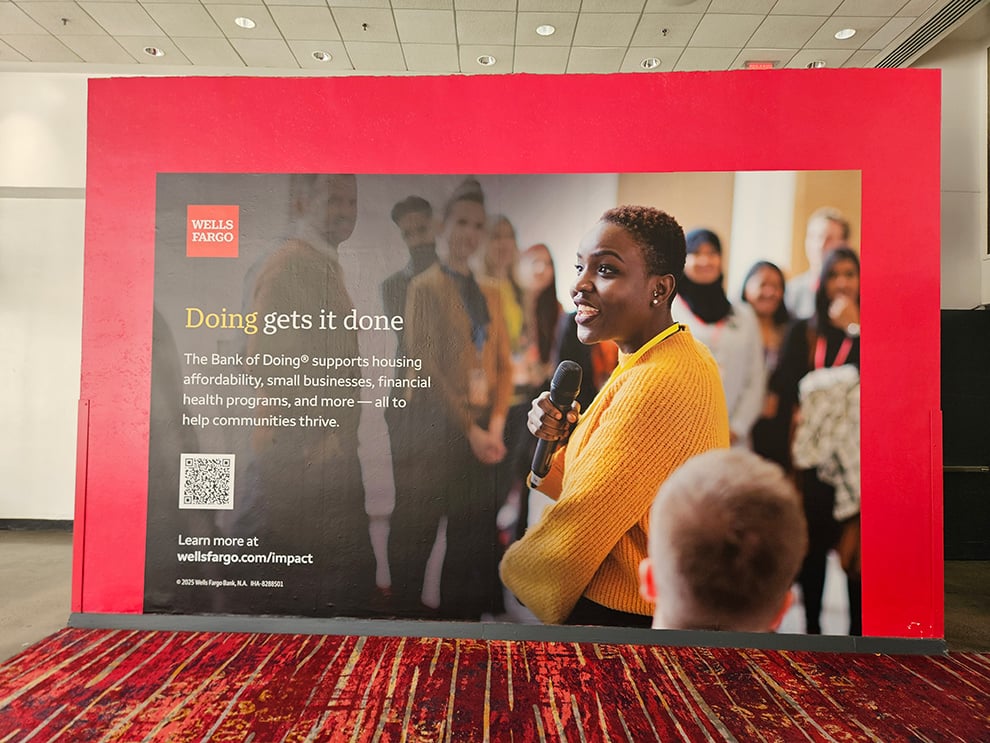
Lenticular displays create interactive visual interest where movement, changing imagery, or surprise can strengthen the visitor experience.
Washington, DC hosts conferences, annual meetings, leadership gatherings, association programs, university events, nonprofit galas, diplomatic gatherings, corporate meetings, awards programs, and other events where presentation and timing matter. The signs and graphics may be temporary, but the impression they create is not.
Heritage develops and produces physical event branding that can support arrival, registration, wayfinding, sponsor recognition, stages, panel discussions, photo areas, presentations, breakout rooms, and attendee communication. Depending on the event, that may include backdrops, meter boards, retractable banner stands, directional signs, sponsor displays, wall or window graphics, dimensional elements, and other coordinated branded features.
Event work also rewards realistic problem-solving. Sponsor information changes. Venue requirements affect access and installation. Approvals arrive late. A deadline can become difficult quickly. Heritage intentionally preserves capacity for schedule-sensitive projects. When the requested date is realistically achievable, we work proactively toward it. When the complete scope cannot responsibly be completed in time, we communicate early and help identify the strongest practical alternative through phasing, resequencing, prioritization, or another workable adjustment.
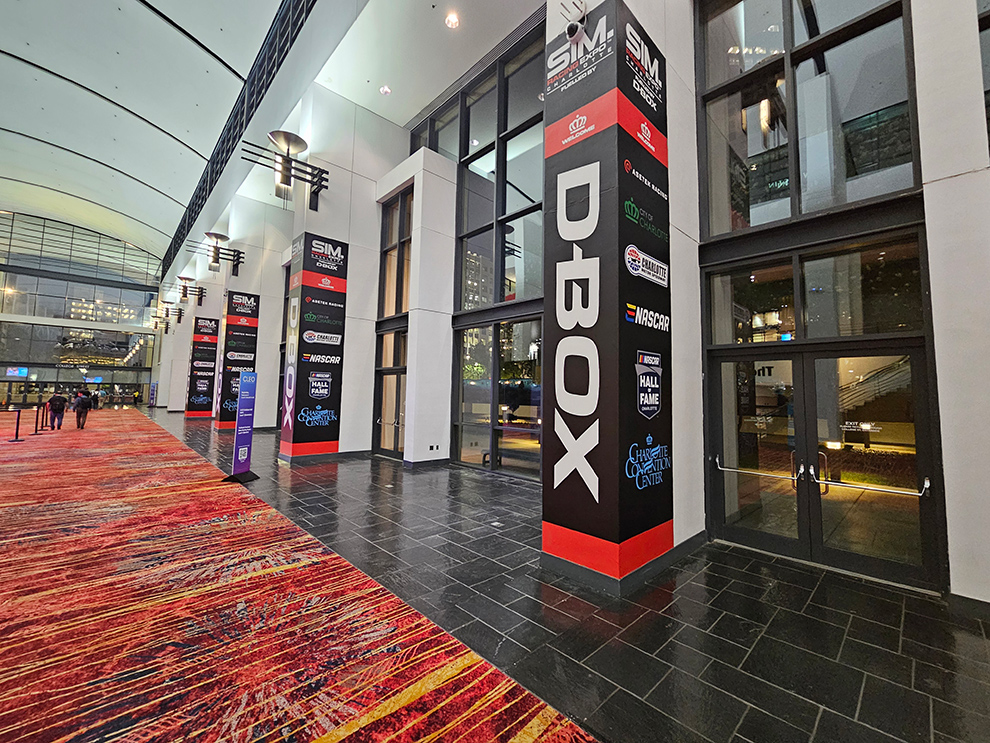
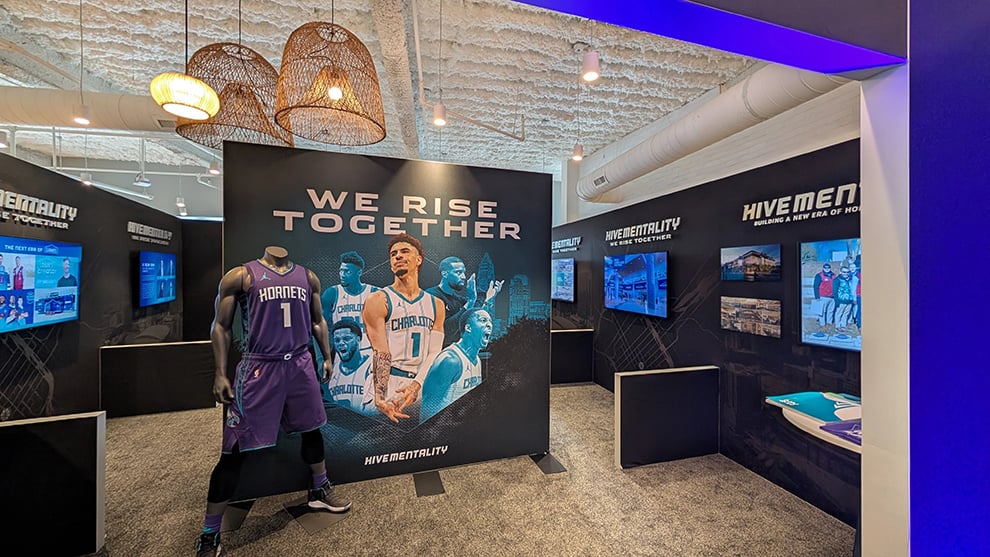
Event backdrops provide branded focal points for stages, panels, press moments, receptions, sponsor photos, leadership presentations, and high-visibility event settings.
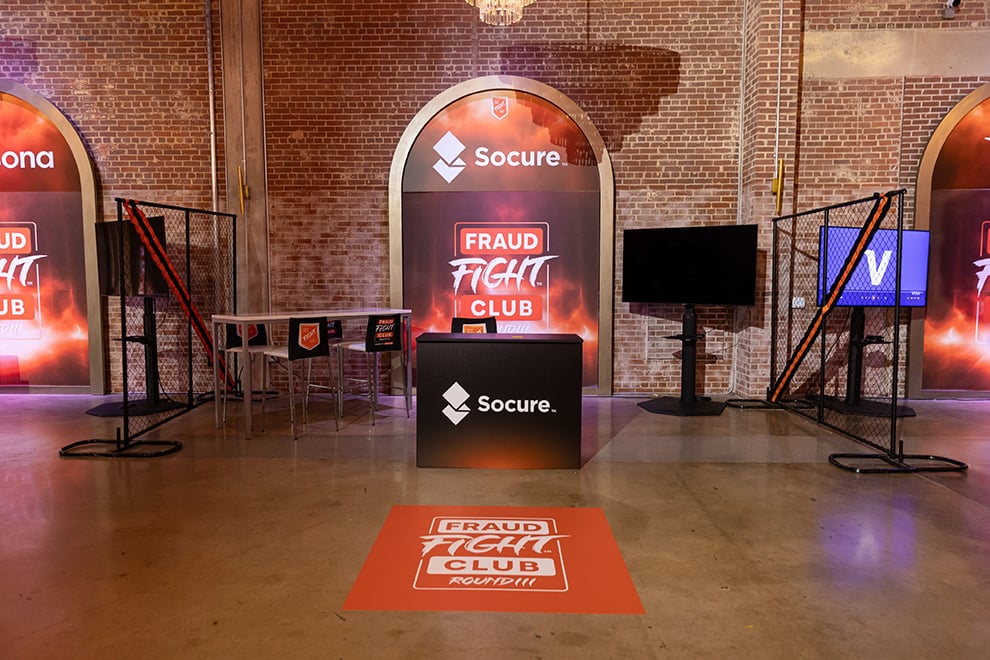
Retractable banner stands support portable messaging for conferences, briefings, registration zones, breakout rooms, annual meetings, and recurring organizational events.
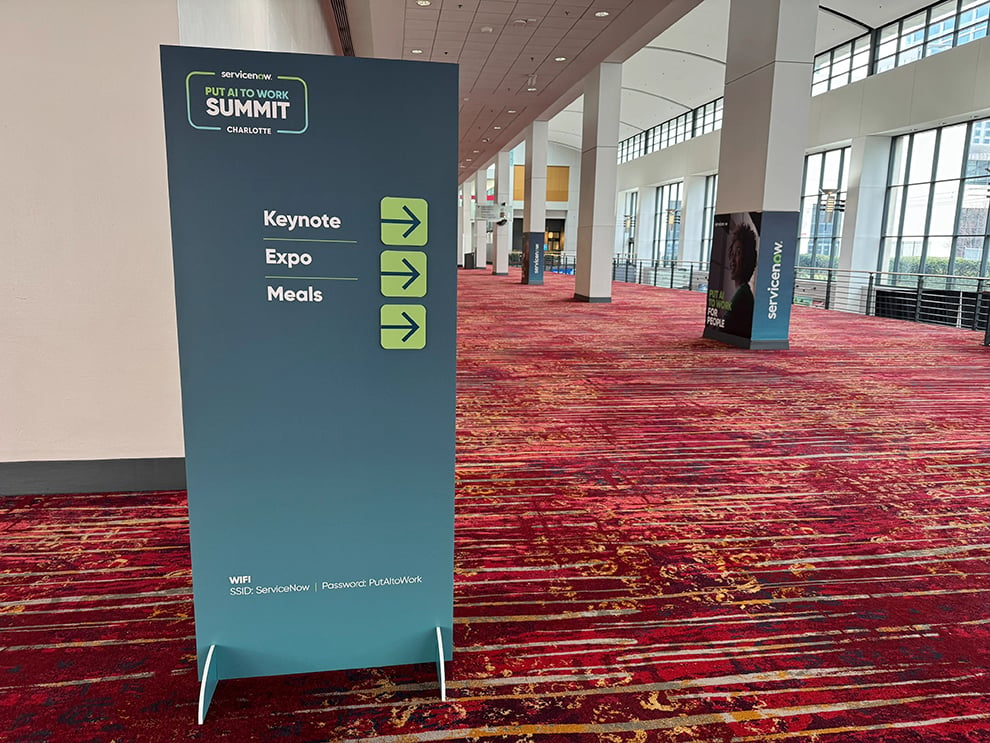
Step and repeat banners create professional photo opportunities for galas, fundraisers, embassy receptions, association events, media moments, and sponsor recognition.
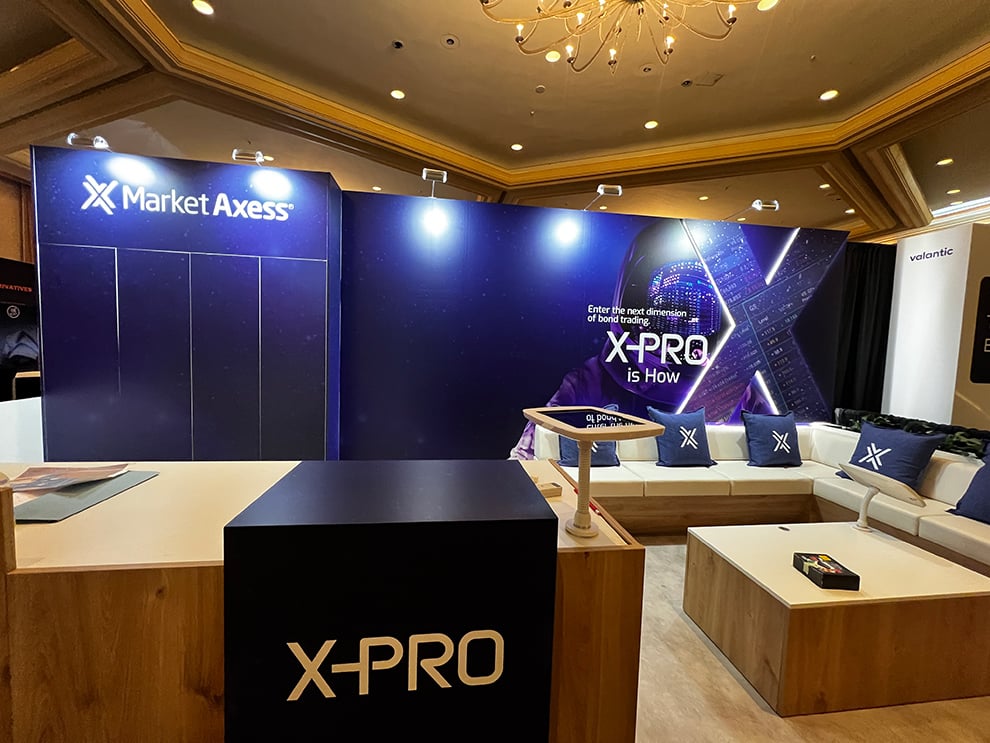
Meter boards communicate agendas, sponsors, directions, maps, welcome messages, speaker information, and event details in freestanding formats.
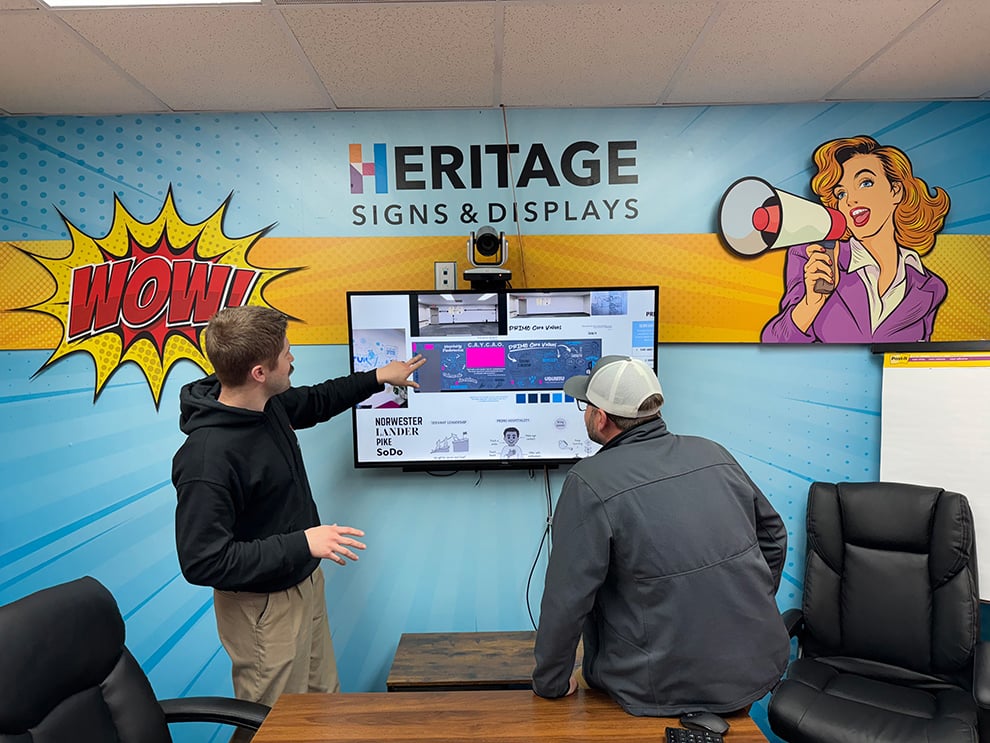
Directional signs help attendees navigate hotels, museums, campuses, venues, office buildings, and multi-room event environments with greater confidence.
Sponsor recognition displays give supporters appropriate visibility while preserving the professionalism, tone, and visual hierarchy of the event.
Environmental graphic design bridges the gap between what an organization wants to communicate and what people will actually experience in the physical environment. Heritage may begin with an established brand system and clear architectural direction, or work with client stakeholders to develop a visual approach for a new workplace, recognition feature, storytelling display, or event environment.
The work can address hierarchy, layout, scale, placement, imagery, typography, material possibilities, color, visibility, privacy, direction, and the relationship among multiple branded elements. Those decisions are tested against production, fabrication, site conditions, access, and professional installation so the approved direction can become a successful physical result rather than remain an attractive concept.
Heritage also collaborates with architects, commercial interior designers, branding agencies, workplace consultants, facility leaders, marketing teams, and other professional partners. When another firm establishes the broader architectural, interior, or brand direction, Heritage protects and implements that approved intent through the signs, graphics, displays, production, fabrication, project management, and professional installation within our scope. Heritage does not replace the architect, engineer, commercial interior designer, accessibility or code professional, or other regulated professional whose responsibilities extend beyond Heritage's scope.
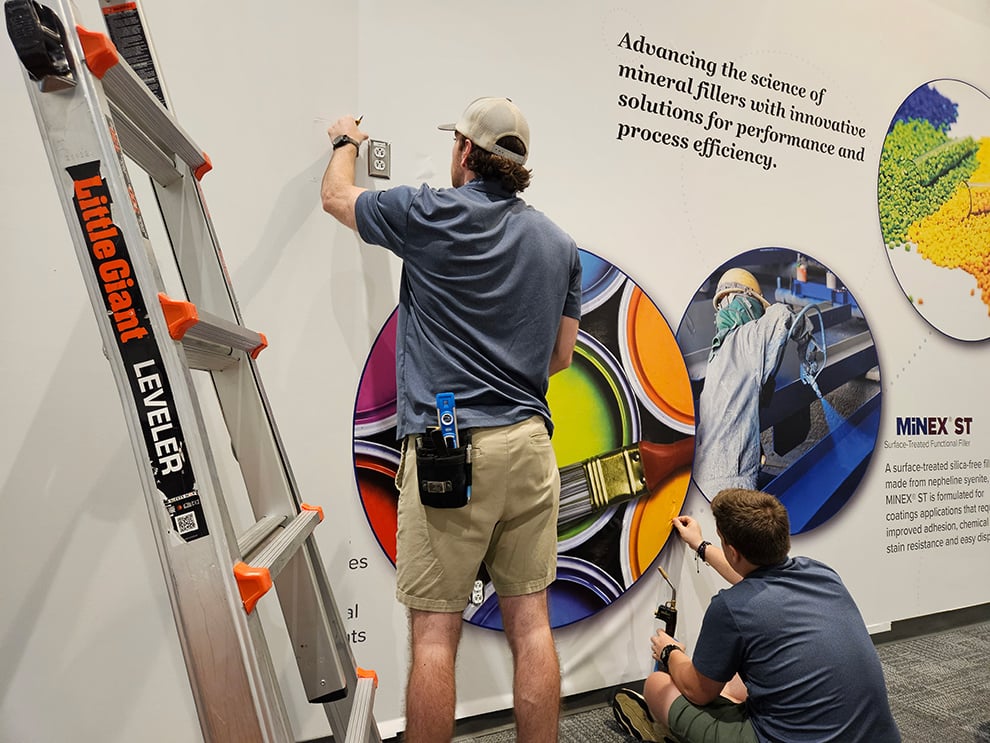
Complex projects become difficult when information is scattered across too many handoffs. Heritage's One Dedicated Project Manager System gives the client one primary Heritage relationship while connecting the people and resources needed to complete the project.
Your dedicated Project Manager develops an understanding of the objectives, approved direction, stakeholders, site findings, production requirements, schedule, installation planning, and decisions that accumulate as the work progresses. That continuity matters when a project includes several products, multiple approvals, property requirements, a difficult deadline, or more than one location.
The benefit is larger than convenience. Preserved project knowledge helps reduce repeated explanations, contradictory instructions, and details lost between departments. Environmental graphic design, site information, production, fabrication, delivery, and professional installation remain connected to the same project history. For multi-location organizations, the same Project Manager can preserve approved brand standards and client expectations while Heritage teammates address the practical conditions and requirements of each individual site. Fewer handoffs give the client a clearer path for decisions and give Heritage better context for accountable execution.
A design can look right on a screen and still fail if the physical site has not been understood. Projects that ultimately include Heritage professional installation require a Heritage site survey so planning can move from assumptions to verified field information.
The survey combines client discovery with field verification. Heritage reviews the areas involved, confirms reasonably observable dimensions and surfaces, considers placement, access, mounting conditions, work areas, and installation requirements, and gathers the information needed to plan production and installation more responsibly. The visit also helps identify visible conditions or property requirements that could affect the proposed solution before those issues become installation-day surprises.
A site survey cannot reveal every concealed condition inside a wall, ceiling, finished surface, or building system. Its value is in documenting what can reasonably be observed and creating a shared site record for the Project Manager, design, production, fabrication, and installation teams. For Washington, DC projects, early attention to loading, security, building access, installation hours, elevators, staging, and other property constraints can be especially valuable.
Heritage professionally installs the signs, graphics, displays, and branded elements Heritage produces, fabricates, procures, or manages within a Heritage project. Installation is not an afterthought added after production. It is part of the planning that begins much earlier.
Our full-time professional installers work from the approved project information and site findings so placement, alignment, mounting, application, fit, finish, and field decisions remain connected to what the client approved. They protect surrounding finishes, work carefully in occupied workplaces and event spaces, and communicate when actual conditions differ materially from the project record. If a condition creates a meaningful safety, property, fit, or installation concern, Heritage can pause the affected work, explain what was found, and determine the appropriate next step rather than continue blindly.
That connected responsibility is also why Heritage does not provide installation-only service for customer-provided signs or graphics. When Heritage controls the measurements, materials, production quality, fabrication, and installation planning, we have a much stronger ability to remain accountable for the completed work and respond when something needs attention.
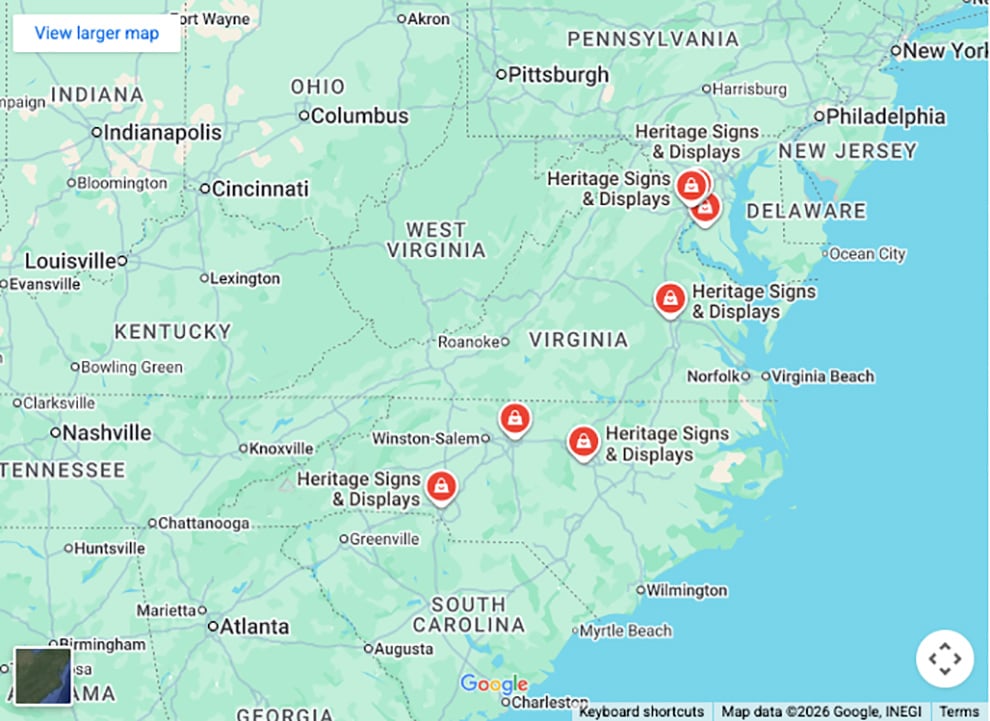
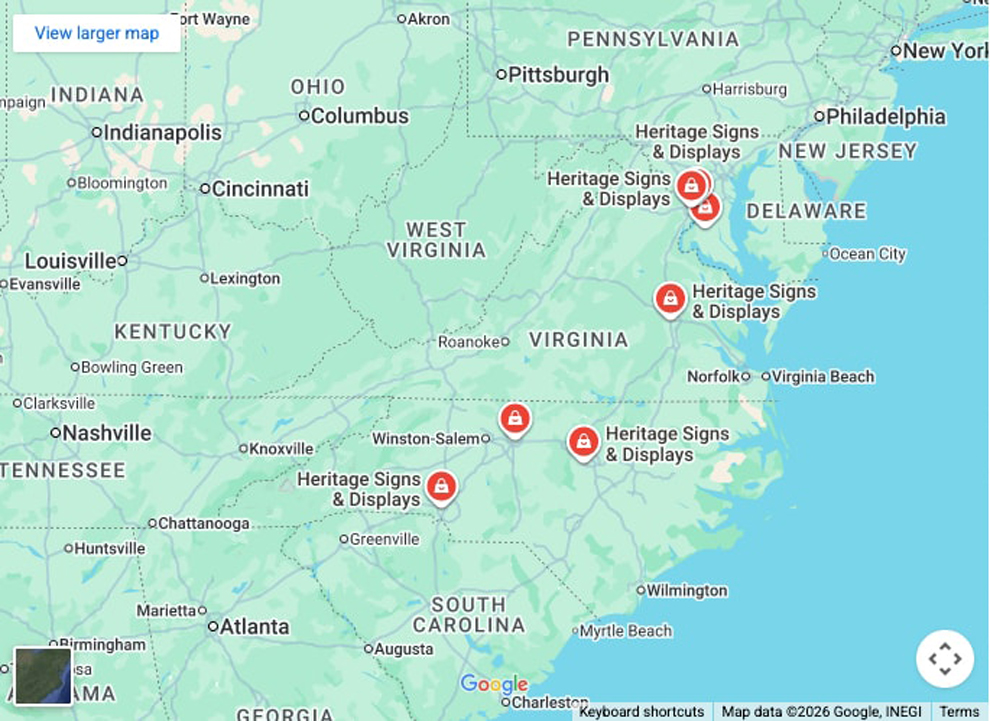
Washington, DC projects begin with genuine local and close-in field support. Heritage's Washington, DC location supports discovery, site surveys, field coordination, installation planning, professional installation, follow-through, and nearby support in the DC metro area. Arlington provides additional local field and installation capability for Northern Virginia and the Washington, DC region.
Behind that local presence is a coordinated Mid-Atlantic operating system. Heritage's Waldorf, Maryland production facility is a primary production resource supporting Washington, DC, Northern Virginia, Maryland, Baltimore, and wider regional work. Waldorf is a production facility staffed by production team members rather than a client-facing sales office or showroom. Richmond provides local field support for Central Virginia and helps extend Heritage capability toward Hampton Roads and Tidewater.
Production does not have to occur in the same city where a project is sold. Heritage can use the facility, equipment, expertise, capacity, and workflow best suited to the work while preserving local field coordination and one dedicated Project Manager. Clients gain local support first, then regional capability, with the broader Heritage network available when additional scale or specialization is useful.
Organizations with several locations often want one brand experience without managing a different sign company and a new learning curve in every market. Heritage can support client locations across the Mid-Atlantic and Carolinas by connecting local offices and teammates through one coordinated project model.
The objective is consistency, not identical physical execution. A Washington, DC headquarters, Richmond office, Northern Virginia facility, and Carolinas location may have different architecture, dimensions, access, surfaces, audiences, schedules, and property requirements. The branded solution should adapt to those realities while protecting the approved design intent, material expectations, production standards, and client experience.
One dedicated Project Manager helps preserve the history of the program from site to site. Local Heritage resources can address discovery, site surveys, field verification, installation planning, professional installation, and site-specific coordination while the broader Heritage network contributes the production or fabrication resources best suited to the work. That combination gives a multi-location client one relationship and one body of project knowledge, with local execution adjusted intelligently for each property rather than forced into a one-size-fits-all template.
Heritage is best suited to project-oriented work where planning, design coordination, production, fabrication, site understanding, and professional installation create meaningful value. That may be one substantial branded feature, a coordinated workplace interior, an event graphics package, a recognition or storytelling installation, or a multi-location program. Early fit also protects planning time and production capacity on both sides.
For new workplace interior and event environment opportunities in Washington, DC and the Mid-Atlantic markets Heritage serves, clients should plan for an anticipated overall project investment of at least $6,000. The amount applies to the complete Heritage-managed engagement. That clarity helps both sides evaluate fit before significant design and field planning begins.
Heritage also has the people, systems, production resources, and installation capability to manage much larger scopes. Many Heritage projects involving production and professional installation range from $10,000 to more than $200,000. Sharing the location, desired result, target date, approximate scope, photographs, drawings, and anticipated investment early helps Heritage determine whether the opportunity is a strong fit and what the most practical next step should be.
Heritage specializes in workplace interiors, event environments, storefront graphics, and related branded signs, graphics, displays, and features. That focus includes selected exterior-facing work when it fits the real project. Heritage produces and installs non-illuminated exterior window graphics, exterior wall graphics, dimensional lettering, sign panels, and related storefront elements when the application and site support the use.
Heritage does not produce or install monument signs, pylon signs, channel letters, or illuminated exterior signs. We do not provide vehicle wraps or fleet graphics, and we do not provide installation-only service for customer-provided signs or graphics.
Required sign permits and property approvals are handled by the client, property owner or property manager, general contractor, or other responsible project party. Heritage does not determine whether a sign permit is required or act as the client's permitting agent. When building electrical service is required for an illuminated interior feature, the responsible property team provides code-compliant power through qualified electrical resources. Heritage also does not replace the architect, engineer, accessibility consultant, code consultant, commercial interior designer, or other regulated professional when those services are required.
You do not need every product, dimension, or material figured out before contacting Heritage. Start with the result you need, the location, who will use the space, and the date that matters. Photographs, drawings, brand standards, existing artwork, or approximate dimensions help when available.
A Heritage Project Manager can review the opportunity, identify what still needs confirmation, and explain the most practical next step. Projects moving forward to professional installation include the required site survey so the approved direction connects to the actual property.
Use Get Started Now to tell us what you are trying to accomplish.
Heritage connects the disciplines and resources needed to turn a physical branding idea into a finished result. Depending on the project, that can include discovery, environmental graphic design, one dedicated Project Manager, a required site survey for installed work, production, fabrication, delivery, and professional installation.
The value is not that every project uses the same steps. It is that the applicable parts remain connected through one accountable Heritage process so the approved direction, site information, schedule, and execution do not become fragmented through unnecessary handoffs.
Heritage is strongest on professionally managed workplace interior and event environment projects where design decisions, multiple branded elements, site conditions, stakeholders, production, or installation coordination matter.
That can range from one substantial lobby, recognition, or storytelling feature to a larger office branding program, event environment, museum or interpretive display, or multi-location rollout. Heritage is a specialized sign company rather than an all-purpose provider for every sign category, so project fit is based on the complete opportunity and the value our managed process can create.
Yes. Heritage uses environmental graphic design to help organizations translate identity, culture, recognition, history, direction, privacy, and other communication goals into physical signs, graphics, displays, and branded features.
The work can include concept development, layout, scaling, placement, material recommendations, and production-ready artwork. Heritage carries the approved direction into production, fabrication, and professional installation. We do not represent this work as licensed architecture, engineering, commercial interior design, lighting design, accessibility consulting, code consulting, or another regulated professional service.
Yes. Heritage regularly works within broader project teams. Architects, commercial interior designers, branding agencies, environmental graphic designers, workplace consultants, facility leaders, marketing teams, and other professionals may establish parts of the wider direction.
Heritage can develop environmental graphic design concepts directly with client stakeholders or translate approved intent into physical signs, graphics, displays, production details, fabricated components, and professional installation. Clear roles help protect the original design direction while each responsible party retains the professional decisions that belong to its scope.
It gives the client one primary point of Heritage coordination while preserving the knowledge that accumulates throughout the project. Your dedicated Project Manager stays connected to objectives, approvals, site information, production requirements, schedule, installation planning, and communication history.
That reduces unnecessary handoffs and repeated onboarding. The advantage becomes especially important when several stakeholders, multiple products, several sites, or a difficult schedule are involved because the client and Heritage team can work from one current project record instead of rebuilding context at every stage.
Yes. Projects that ultimately include Heritage professional installation require a Heritage site survey. The survey combines client discovery with field verification of reasonably observable dimensions, surfaces, placement, access, mounting conditions, work areas, and other installation considerations.
It is more than a measurement visit because the goal is to connect the desired result to the actual property before final production and installation planning. Concealed conditions within walls, ceilings, finished surfaces, or building systems cannot always be discovered visually, but the survey replaces many avoidable assumptions with verified field information.
Yes. This is one of the situations where Heritage's project-oriented model creates the most value.
A workplace may combine lobby signage, commercial interior graphics, wall wraps, window graphics, privacy treatments, recognition displays, dimensional lettering, backlit signs, wayfinding, and other branded elements. Heritage helps determine how those components should divide the communication work and relate visually and practically. The objective is not to make every feature identical. It is to create a workplace in which each element has a clear purpose and the overall environment feels intentional.
Yes. Heritage can support client locations across the Mid-Atlantic and Carolinas through local offices and teammates connected by one dedicated Project Manager.
The goal is consistent brand standards, project knowledge, production expectations, and client experience without forcing identical physical solutions onto different buildings. Site dimensions, architecture, audiences, access, surfaces, schedules, and property conditions can vary. Heritage preserves the approved direction while local and regional resources adapt the physical execution and installation planning to the needs of each property.
Heritage's Washington, DC location provides local discovery, site surveys, field coordination, installation planning, professional installation, follow-through, and nearby support for the DC metro area. Arlington provides additional close-in field and installation support for Northern Virginia and the Washington, DC region.
Those local resources connect to Heritage's broader Mid-Atlantic production and operating system when a project requires additional capacity, specialized production, fabrication, or regional coordination. Local support leads; the broader network adds scale and continuity rather than replacing genuine site-level presence.
Production location depends on the project. Heritage's Waldorf, Maryland production facility is a primary production resource for Washington, DC, Northern Virginia, Maryland, Baltimore, and wider Mid-Atlantic work.
Other Heritage production resources may participate when their equipment, expertise, capacity, schedule, or workflow is the better fit. Waldorf is a production facility rather than a client-facing sales office or showroom. Local discovery, field support, site surveys, installation planning, and professional installation are separate from the question of where a particular component is physically produced.
Yes, when the site's requirements can be planned and accommodated. Washington, DC-area projects may involve security desks, loading rules, restricted work hours, escorts, freight routes, elevator procedures, controlled floors, parking limitations, or other access requirements.
The client or responsible property team should identify known restrictions early and arrange the access or approvals within its control. Heritage uses discovery, the site survey, and installation planning to incorporate those requirements into delivery, crew scheduling, equipment, sequencing, and field execution rather than discovering avoidable restrictions after finished work reaches the property.
Yes. Heritage is particularly valuable when a client needs an experienced team to determine what is realistically achievable under schedule pressure.
We evaluate the requested date against scope, approvals, site readiness, materials, production and fabrication requirements, access, transportation, and installation capacity. If the date can be met responsibly, we work proactively toward it. If the complete scope cannot fit the available time, we communicate early and help identify practical alternatives such as prioritizing key elements, phasing installation, resequencing work, adjusting materials or applications, or revising scope.
Heritage evaluates the condition rather than continuing blindly. If a material difference affects safety, property, fit, mounting, installation quality, or the agreed result, Heritage may pause the affected work, explain what was found, and work with the client or responsible property team on the appropriate next step.
Depending on the condition, additional verification, repair, a qualified trade, revised materials, or an adjusted installation plan may be required. The purpose of stopping is to avoid turning an unexpected field condition into a larger problem for the property, schedule, or finished work.
Changes are manageable, but they can affect cost and timing. A change to approved artwork, quantities, dimensions, materials, finishes, placement, mounting, access, phasing, or schedule may require additional design, project management, production, fabrication, or installation work.
Heritage communicates material additional cost or schedule impact before performing material additional work whenever practical and documents significant changes through a revised proposal, change order, written approval, or another clear project record. Clear authorization helps the client and Heritage keep the current scope and expectations aligned.
Heritage's own full-time professional installers install the signs, graphics, displays, and branded elements Heritage produces, fabricates, procures, or manages within a Heritage project.
They receive the site information, approved design direction, production and fabrication details, access requirements, sequence, and schedule developed earlier in the engagement. That transferred knowledge matters because installation quality depends on more than field labor alone. Keeping installers inside the same Heritage process supports property protection, accurate placement, fit and finish, communication, judgment, and accountability through completion.
No. Heritage does not provide installation-only service for customer-provided signs or graphics.
The reason is accountability for the finished installation. Measurements, material selection, production quality, fabrication, fit, mounting requirements, packaging, and replacement response are interconnected. By installing signs, graphics, displays, and branded elements Heritage has produced, fabricated, procured, or managed within the engagement, our team can remain more accountable for quality, coordination, schedule, and the completed result instead of inheriting unknown specifications or production history from another provider.
Heritage provides selected non-illuminated exterior capabilities, especially where exterior and interior branding work together. These can include exterior window graphics, exterior wall graphics, dimensional lettering, sign panels, and related storefront elements when the product and site support the application.
Heritage does not produce or install monument signs, pylon signs, channel letters, or illuminated exterior signs, and does not provide vehicle wraps or fleet graphics. The client, property owner or property manager, general contractor, or other responsible project party handles required sign permits and property approvals. Heritage does not determine whether a sign permit is required, prepare or submit permit applications or documents, communicate with permitting authorities for the client, pay permit fees, pursue variances, or obtain governmental approvals.
Heritage creates and professionally installs applicable illuminated interior sign components, but Heritage is not the building electrician.
When a sign or branded feature requires building power, the client or property team is responsible for having the required code-compliant electrical connection available at the correct location through qualified electrical resources. Heritage can coordinate installation timing with the client's electrical contractor when that coordination is part of the project. Heritage does not provide building wiring, circuits, permanent electrical modifications, licensed electrical work, or electrical code consulting.
Yes. These are strong applications for Heritage's environmental graphic design, production, fabrication, and installation capabilities.
A project may use photographs, dimensional lettering, printed graphics, panels, architectural hardware, removable recognition components, wall graphics, or other elements to communicate history, a mission statement, core values, achievement, or gratitude. Heritage helps organize the content and physical presentation so people can understand the story as they move through the environment rather than encountering a dense collection of information with no visual hierarchy.
Yes. Heritage creates physical event branding for sponsor recognition, registration, stages, photo areas, directional communication, meetings, conferences, and other event needs.
Sponsor-heavy projects benefit from strong version control, clear approval responsibility, and early communication about changing names, logos, or messages. Heritage can evaluate late changes and determine what remains realistically achievable within the production, venue, delivery, and installation schedule. When timing becomes compressed, the team focuses on protecting the most important outcome rather than making a promise that the available execution path cannot support.
No. Heritage's event role is the physical branded environment.
We can develop, produce, fabricate, manage, deliver, and professionally install signs, graphics, displays, sponsor recognition, wayfinding, stage-related branded elements, and other visual components within our scope. The client, event planner, venue, agency, or other responsible partners retain event strategy, programming, guest management, media, catering, entertainment, and other services outside Heritage's sign and display work. Clear roles let Heritage concentrate on making the physical visual experience cohesive and executable.
Yes. Phasing can be useful when construction reaches areas at different times, an occupied workplace cannot release every space at once, approvals arrive in stages, a budget is allocated across periods, or several locations are part of a controlled rollout.
Heritage can help establish what should be completed first while protecting the larger approved direction. Planning the phases as one program reduces the risk that short-term scheduling decisions create inconsistent materials, messaging, mounting, or visual standards that become difficult to reconcile later.
Yes. A project does not have to fill an entire building.
A significant lobby feature, donor recognition display, timeline wall, branded conference area, backlit sign installation, or another substantial element may benefit from the same environmental graphic design, production, fabrication, site verification, project management, and professional installation discipline as a larger program. The important question is whether the overall opportunity is a good fit for Heritage's project-oriented model, current investment requirements, and the value created by a professionally managed approach.
New workplace interior and event environment opportunities in Washington, DC and the Mid-Atlantic markets Heritage serves should plan for an anticipated overall project investment of at least $6,000. The amount applies to the complete Heritage-managed engagement.
Many Heritage projects involving production and professional installation range from $10,000 to more than $200,000. Final investment depends on the actual scope, design development, materials, quantities, fabrication, site requirements, production, schedule, transportation, and installation involved in the project.
Consistent brand standards do not require identical physical installations. One office may have glass walls, another painted drywall, another a large lobby, and another a compact entrance.
Dimensions, architecture, audience, access, existing conditions, and property requirements can also vary. Heritage preserves approved brand standards, design intent, production expectations, and client experience while adapting scale, materials, placement, mounting, privacy, and installation planning so each location works properly in its own environment. The result should feel like the same organization without pretending every property is the same.
Start with the project location, what you want the environment to accomplish, who will use it, the date that matters, and your anticipated overall investment.
Photographs, drawings, floor plans, brand standards, existing artwork, approximate dimensions, content, venue or property information, and examples of what you are considering are helpful when available. You do not need every detail solved before reaching out. Heritage can use the initial information, discovery, and the required site survey for installed work to identify what still needs to be confirmed.
Earlier involvement is especially useful when several branded elements, stakeholders, site conditions, or schedule constraints need to work together.
Heritage does not need to arrive before every architectural or brand decision has been made, but bringing the team in before individual signs and graphics are fully finalized allows environmental graphic design, site information, production, fabrication, access, and installation realities to influence the plan while changes are still easier to make. Early involvement can reduce late redesign and help stakeholders evaluate one more complete execution path.
The site needs to be safe, accessible, and sufficiently ready for the agreed work.
Depending on the project, that may include clear work areas, completed surfaces, required security arrangements, loading or elevator access, building permissions, an available authorized representative, and code-compliant building power for illuminated components. The client, property owner, general contractor, venue, or other responsible site party handles the conditions and approvals within its control. Heritage uses the site survey and project planning process to identify known requirements early and coordinate the installation around them.
Heritage coordinates the sign, graphic, display, production, fabrication, and installation work within its scope against the requirements established by the responsible project parties.
A general contractor may control construction sequencing, facilities may manage access, a property manager may establish building procedures, and qualified trades may provide electrical, structural, or other regulated work. One dedicated Project Manager keeps Heritage's current project information aligned with those confirmed requirements. The goal is coordinated execution without shifting another party's professional, property, construction, or licensed responsibilities to Heritage.
Yes. Updatable content can be planned into recognition displays, timelines, donor systems, campaign features, employee communications, photographs, schedules, milestones, and other branded presentations.
The important decision is identifying early which parts should remain permanent and which information is likely to change. Heritage can help separate the durable branded structure from components designed for future updates so the client does not have to rebuild an entire display every time names, images, achievements, or messages change.
Yes. Removal may be included as part of a new Heritage production and installation project when it is appropriate to the scope.
Removal should be planned early because the condition behind an existing sign or graphic may not be fully known until the item is removed. Painted-wall graphics require particular care because paint, primer, prior repairs, or drywall facing can be affected. Heritage removes graphics carefully to limit avoidable damage, but cannot guarantee damage-free removal from a painted wall. The client or property owner is responsible for arranging and paying for any needed repair, proper priming, repainting, restoration, and full cure when the underlying wall system requires it. For replacement graphics, remove the existing graphics early enough to allow that work and full cure before Heritage returns for installation.
No. Heritage can produce and install physical signs, graphics, displays, directional elements, and branded features that implement approved requirements within our scope, but Heritage does not act as the client's architect, engineer, accessibility or ADA consultant, code consultant, or compliance certifier.
When a regulated requirement applies, the client and the appropriate responsible professional establish the requirement, design direction, engineering, or specification. Heritage then coordinates its production, fabrication, and installation work against that approved information.
Production and fabrication are connected parts of every Heritage-managed sign and display project.
After the approved visual direction and site information are settled, Heritage converts the work into the printed, cut, dimensional, illuminated, mounted, or otherwise constructed components required for the finished result. The degree of fabrication varies by project, but it is not treated as an optional add-on. Heritage can assign production to the facility, equipment, expertise, capacity, and workflow best suited to the work while one dedicated Project Manager keeps the project record connected.
Yes. Many Heritage installations occur in workplaces, institutions, venues, and other facilities that remain active while the work is being completed.
Heritage plans access, work areas, sequencing, equipment, and timing around the known site conditions, then our installers protect surrounding finishes and work to limit avoidable disruption. The client or property team remains responsible for access, building procedures, and conditions within its control. Clear planning is especially important when employees, visitors, security requirements, other trades, or limited work windows share the same space.

