
We meet with clients by scheduled appointment during our regular business hours of 7:30 AM to 5:00 PM, Monday through Friday. Appointments may take place by phone, by video, or through a site survey at the office, workplace, venue, campus, facility, or event location being branded. This helps our team better understand the space, project goals, timeline, site conditions, approval requirements, and installation details before recommending the best next step.
The earlier Heritage understands the goal, the space, the decision-makers, and the date that matters, the better we can help you build a workable path forward. Washington, DC and Mid-Atlantic projects often involve more than choosing a sign or graphic. Board or leadership visibility, property requirements, security procedures, loading and access windows, event schedules, stakeholder approvals, and multi-location coordination can all influence what should be designed, produced, and installed.
Use the Get Started Now form to share what you want the environment to accomplish, who needs to experience or approve it, where the work will take place, and when it needs to be ready. Include any information already available, such as photographs, floor plans, brand standards, renderings, drawings, measurements, event layouts, content, or reference images. You do not need every detail resolved before contacting Heritage. Our job is to understand the opportunity, identify the critical planning questions, confirm project fit, and recommend a responsible next step without making you solve the project before the first conversation.
Tell us about your project: Describe the result you need and the conditions surrounding it. Include the site or venue, audience and decision-makers, target date, approximate scope, and any known security, loading, property, construction, or approval requirements.
Anticipated Project Investment: Pick the range that best represents the complete opportunity. Heritage uses it with the project goals, site conditions, timing, and scope to evaluate fit and organize a realistic next step. For new website-generated workplace interior and event environment opportunities in Washington, DC and the Mid-Atlantic, please plan for an anticipated overall project investment of at least $6,000.
A target date is most useful when Heritage also understands what must happen before that date. An office opening, conference, board meeting, donor event, rebrand, facility milestone, or leadership presentation can involve approvals, content, design decisions, site readiness, production sequencing, building access, and installation windows that all affect the path.
After your form is submitted, a Heritage team member reviews the requested result, scope, audience, location, available files, approval path, and timing. Follow-up questions may come before a recommendation because a reliable plan depends on more than the finished appearance. When the requested date is realistically achievable, Heritage works proactively to make it happen. When the complete scope cannot responsibly fit the schedule, we communicate that early and collaborate on the strongest practical alternative, which may include phasing, resequencing, priority changes, or another suitable material or application. The objective is to protect the important date without creating a plan that depends on approvals, access, production, fabrication, or installation time that simply does not realistically exist.
If a project ultimately includes Heritage professional installation, a Heritage site survey is required. For Washington, DC and Mid-Atlantic work, that survey can be especially valuable when the property has security procedures, freight or loading restrictions, limited work windows, elevators, tenant rules, venue requirements, or other conditions that affect field execution.
The survey combines client discovery with technical verification. Heritage may document dimensions, surfaces, existing conditions, placement, visibility, access, work areas, and installation requirements while confirming what the audience needs to notice, understand, or experience. Those findings become part of the project record used by environmental graphic design, production, fabrication, scheduling, and installation teams.
If conditions change materially after the survey, additional verification may be needed. The purpose is not to create another hurdle. It is to identify practical constraints early enough to protect the schedule, the client’s property, and the finished result. It also gives the Project Manager and installers a shared record of site conditions so field execution does not depend on assumptions passed through several people.
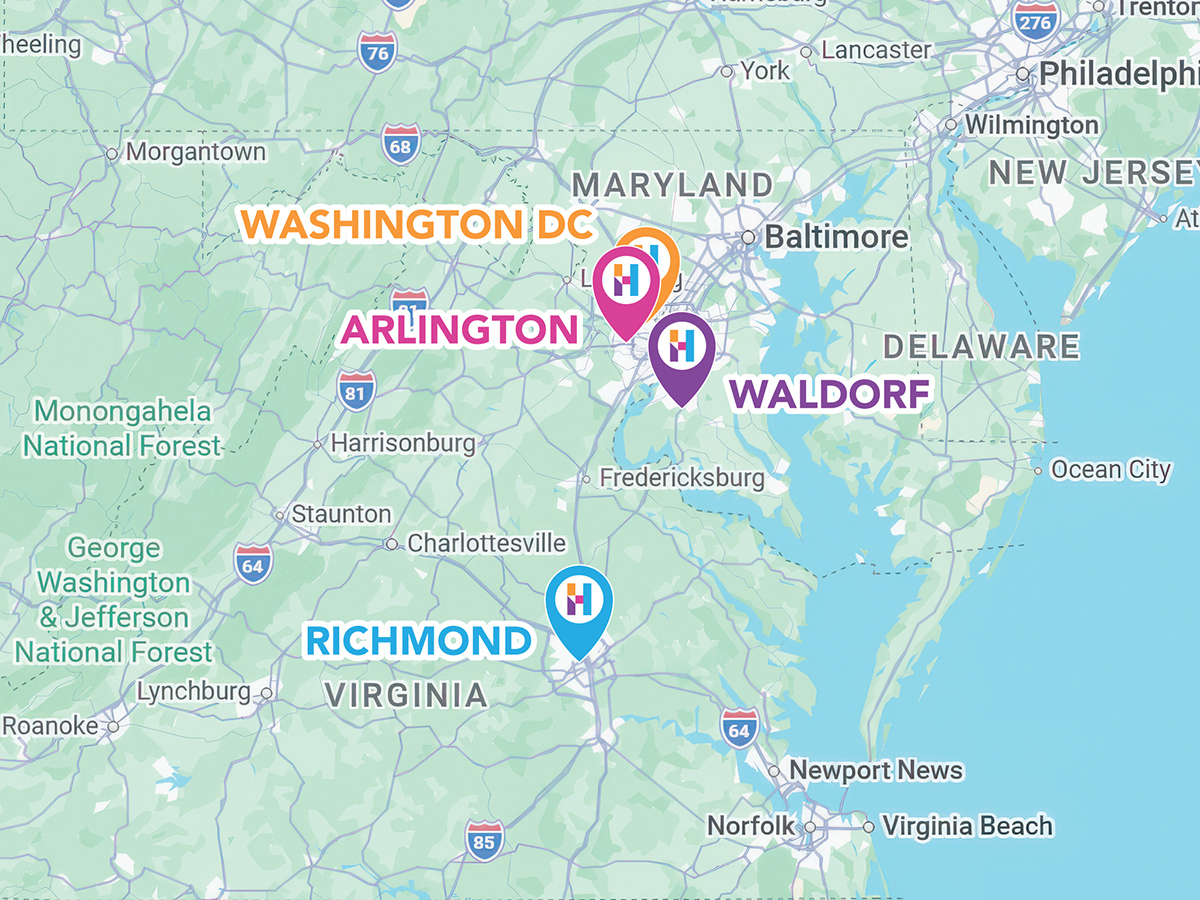
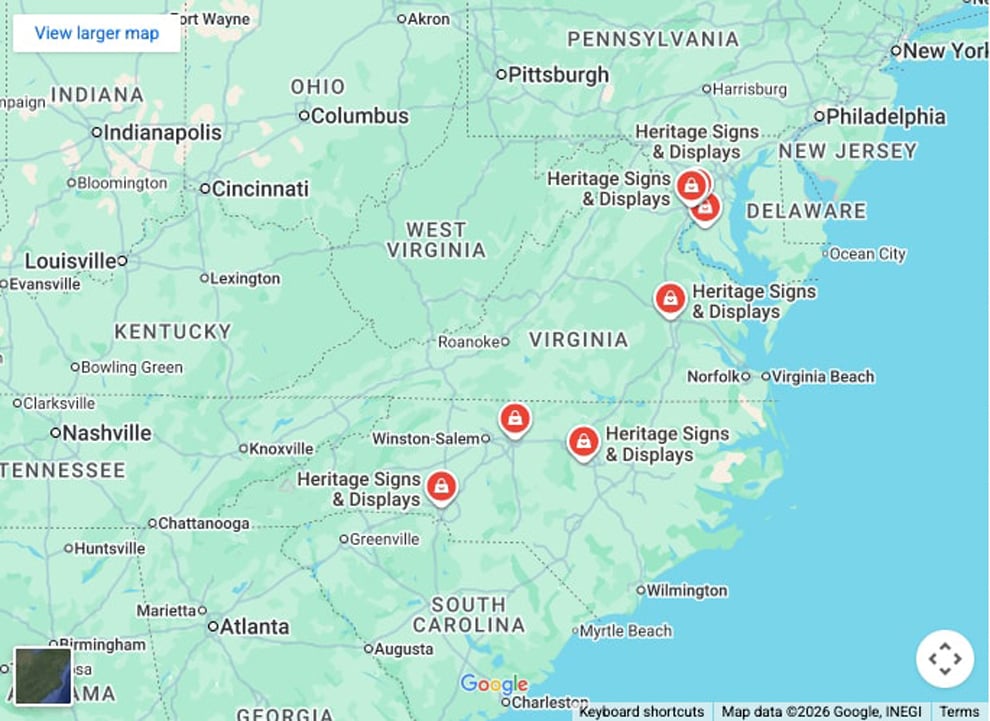
Heritage serves Washington, DC and the DC metro through local client and field support, with Arlington strengthening Northern Virginia coverage and Richmond providing local field presence for Central Virginia. Broader Heritage resources extend support through Maryland, Baltimore, Hampton Roads and Tidewater, and aligned Mid-Atlantic markets.
For organizations managing several offices, campuses, venues, or facilities, Heritage’s One Dedicated Project Manager System provides continuity from the first conversation through design, production, fabrication, and professional installation. One Project Manager preserves the communication history, approved standards, schedule, site findings, and production expectations while local Heritage teammates address the practical requirements of each property.
That structure is especially useful when different locations have different access rules, dimensions, audiences, approval paths, or installation conditions. Heritage can preserve the brand and project intent without pretending every site should receive the same physical solution. Production may be assigned to the Heritage facility best suited to the work, while local field support remains focused on the practical needs of each property. That separation gives multi-location clients regional capacity without sacrificing site-level accountability.
Complete the Get Started Now form with the clearest project information available today. Tell us the outcome, location, audience, timeline, anticipated investment, approval requirements, and any site conditions or files that could affect the plan. A Heritage team member will review the submission during normal business hours and identify the next useful step, whether that is a conversation, file review, design discussion, site survey, or project-planning decision. The goal is to move from uncertainty to a responsible path forward without asking you to solve the entire project before contacting us.
Describe the desired result, site or venue, target date, audience, decision-makers, and approximate scope. Include known security procedures, property requirements, loading or freight conditions, work-hour limits, approval paths, and other access factors. Photographs, plans, brand standards, measurements, renderings, drawings, event layouts, and content can help the team understand the opportunity before follow-up begins.
Give Heritage the date, explain what must be completed by then, and identify approvals or site conditions that could affect the sequence. The team evaluates materials, production, fabrication, access, site readiness, and installation capacity before committing. If the complete scope cannot fit responsibly, Heritage will communicate that early and help identify a strong alternative.
Yes. When Heritage will professionally install the project, a Heritage site survey is required. The visit connects client discovery with field and technical verification of dimensions, surfaces, placement, existing conditions, access, and installation requirements. For properties with security, loading, elevator, tenant, or venue rules, documenting those conditions early can be especially important.
New website-generated workplace interior and event environment opportunities should plan for an anticipated overall project investment of at least $6,000. Many Heritage projects involving production and professional installation range from $10,000 to more than $200,000. Scope, design development, materials, fabrication, access, site conditions, scheduling, locations, and phasing determine the appropriate investment.
Yes. One dedicated Project Manager can maintain the project record, approved brand standards, communication history, schedule, and production expectations while Heritage teammates address the field needs of each location. The physical solution can change from site to site without losing the program’s brand continuity.
No. Heritage does not offer installation-only service for customer-provided signs or graphics. The team’s accountability for installation quality and schedule depends on controlling measurements, material selection, production quality, fit, production accuracy, and replacement responsiveness within the Heritage engagement.
Heritage can produce and install non-illuminated exterior window graphics, exterior wall graphics, dimensional lettering, sign panels, and related storefront elements when the product and site support them. Heritage does not produce or install monument signs, pylon signs, channel letters, or illuminated exterior signs. Required sign permits and property approvals are handled by the client, property owner or property manager, or general contractor.
A Heritage team member reviews the result you need, location, scope, files, timing, approvals, and site conditions, then identifies the next useful action. That may be a phone or video discussion, file review, environmental graphic design conversation, site survey, or another planning step. The goal is to resolve the decisions that could materially affect the recommendation before custom work moves forward.

