Most offices in Reston are not short on surfaces. They are short on surfaces that have been given an assignment. Corridor walls, conference room glass, suite doors, elevator panels, selected floor areas, and display faces sit unused every day while teams look for better ways to guide visitors, protect privacy, and reinforce identity. Adhesive vinyl graphics solve that without demolition, new millwork, or pulling a floor out of service. The first real question is never which vinyl to buy. It is what each surface should accomplish for the people walking past it, and which material system can hold that assignment for as long as the organization needs it.
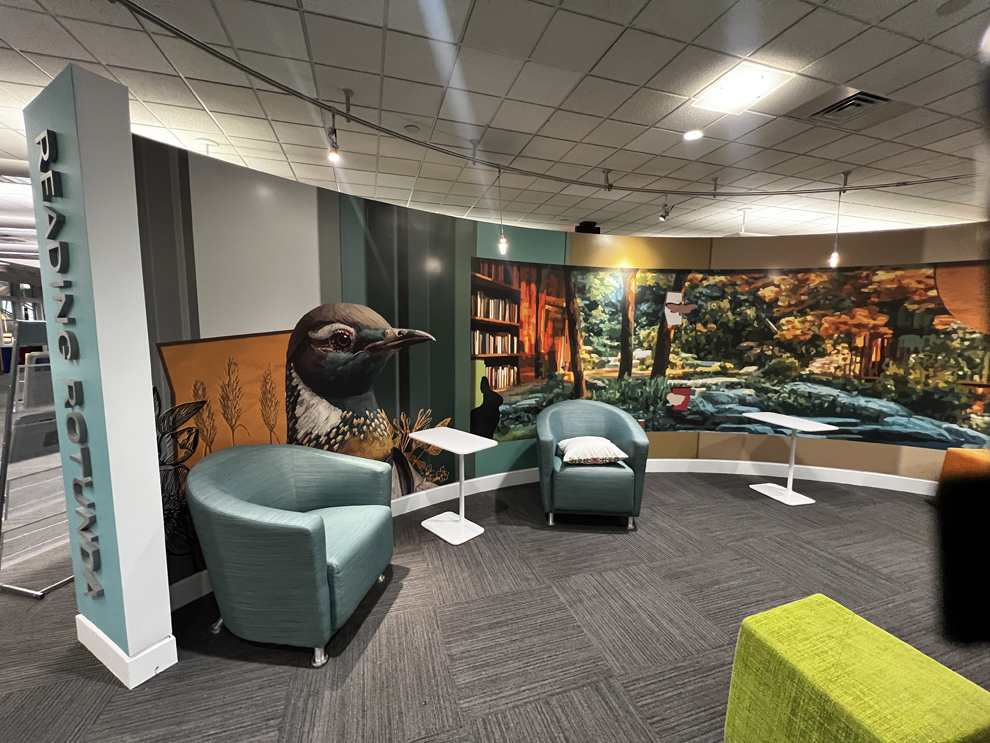
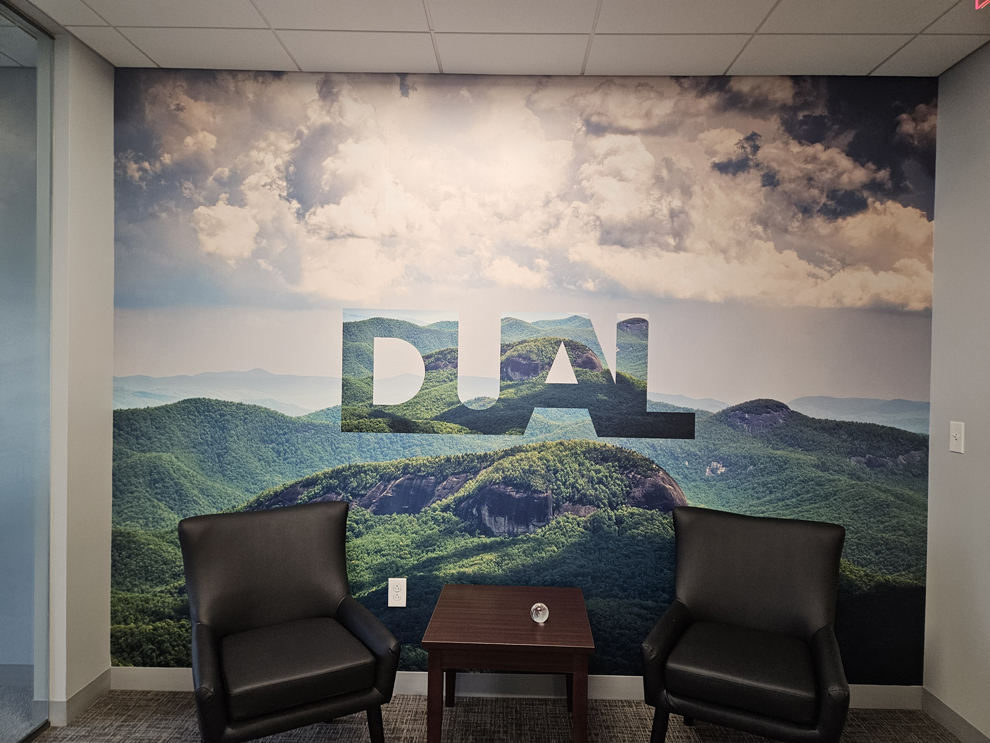
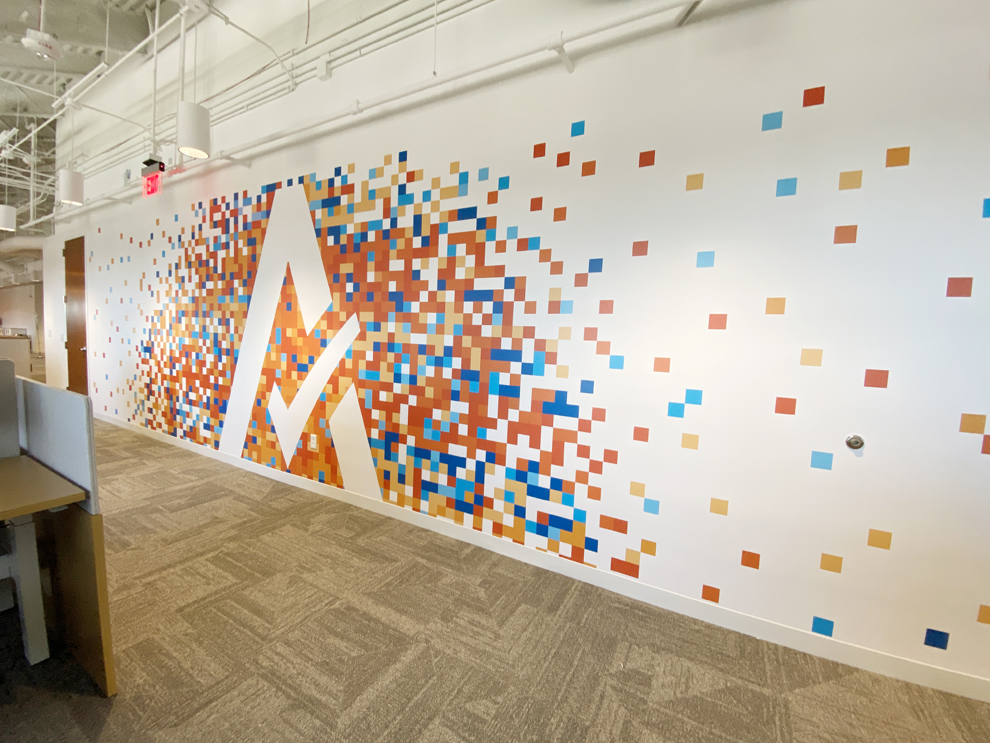
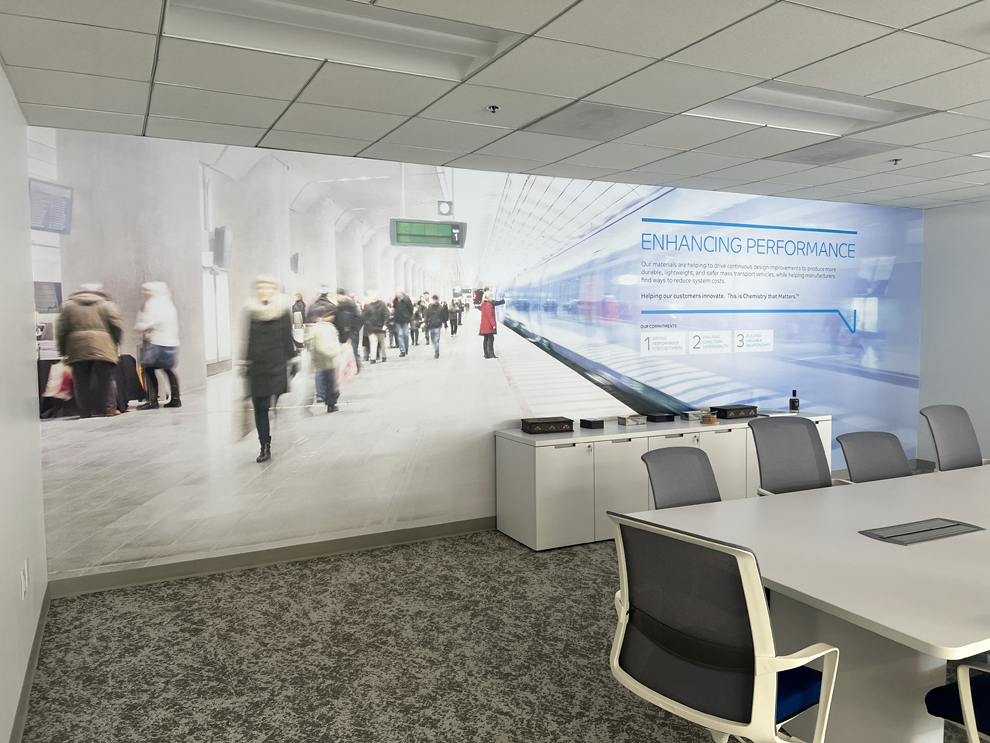
Heritage Signs & Displays is a veteran-owned, family-led company that helps Reston organizations use adhesive vinyl throughout workplace interiors and event environments. The scope can be a single glass wall or a coordinated program across an entire floor plate. Frosted vinyl and privacy film give offices and meeting rooms visual separation while daylight still reaches interior workstations. Cut vinyl handles lettering, logos, and clean room identification. Printed window graphics carry a message through glass at a suite entrance or along a shared corridor. Floor and elevator graphics put wayfinding, campaign content, or recognition where foot traffic already flows. When the wall itself needs to become the visual centerpiece through mural-scale imagery or storytelling, Wall Wraps is the architectural-scale application within the same adhesive vinyl family.
Strong results start with behavior, not artwork. What should an employee, a visitor, a member, or an attendee notice, understand, or do? Heritage environmental graphic designers use that answer to set scale, coverage, privacy height, visibility, and how the vinyl relates to nearby signs and displays. Expansive clear glass often benefits from distraction markers, which are decorative or branded vinyl elements applied to make the glass easier to see. They can deliver privacy and identity in the same treatment, though Heritage does not present applied vinyl as evidence of building-code or safety-glazing compliance.
Work in Reston tends to come with its own conditions. Multi-tenant buildings near Reston Town Center, Reston Station, Plaza America, and the Sunrise Valley and Sunset Hills corridors bring landlord standards, building engineers, badge access, freight elevator reservations, and after-hours work windows into the conversation. Associations, technology firms, government contractors, professional services groups, and healthcare organizations frequently need several internal reviewers to sign off on artwork before anything reaches production. One dedicated Project Manager keeps the approved direction, field measurements, production requirements, scheduling, and installation plan connected so no one on the client side repeats the same details to three different vendors. The required site survey gives Heritage direct knowledge of the property before production is locked, which matters most when a lease commencement or event date is already fixed.
That continuity pays off when multiple graphics share a single deadline or when the suite has to stay occupied while installers work. Instead of treating every surface as a separate order, Heritage can sequence privacy treatments, identification, wayfinding, and brand messaging so they advance one objective while each material and installation method stays specific to its substrate. Reston clients receive field and installation support from Heritage's Arlington, Virginia office, with Mid-Atlantic production support from the Waldorf, Maryland facility. Founded in 1977, Heritage brings practical judgment, craftsmanship, and dependable follow-through to every project it accepts.
Adhesive vinyl is a family of engineered materials, not a single product that behaves identically everywhere. Substrate, appearance, expected service life, foot traffic, cleaning routine, exposure, and the eventual removal plan all narrow the specification long before anything is printed.
Painted walls raise questions about drywall condition, texture, primer, paint chemistry, and cure status hidden beneath the visible finish. Interior glass involves privacy height, seated and standing sightlines, daylight, existing films or coatings, viewing direction, and whether the chosen product is applied wet or dry. Floors demand materials and protective systems matched to the flooring type and the traffic the area truly receives. Elevator work has to account for moving panels, seams, edges, clearances, aggressive cleaning chemicals, and daily contact from carts, luggage, and passengers.
Heritage uses those distinctions to narrow the material choice rather than treating every application as a generic decal. The goal is straightforward: specify an adhesive vinyl system suited to the actual substrate and use, produce the intended appearance, and give the client accurate expectations for installation, maintenance, service life, and removal. Two graphics inside the same brand program may legitimately require different materials or different installation methods.
Adhesive graphics look effortless once they are on the wall, but dimensions, substrate condition, material selection, production accuracy, building access, timing, and installation technique all shape what the client actually sees. Heritage reduces that complexity by keeping the people, the field information, and the approved decisions inside one accountable structure instead of asking the client to translate details between vendors.
The Heritage One Dedicated Project Manager System links environmental graphic design, site knowledge, production, fabrication, scheduling, and full-time Heritage installers through shared project history. That structure earns its keep in Reston, where one project can involve a property manager, a building engineer, a marketing reviewer, a facilities lead, and a date that will not move.
When a requested date is realistically achievable, Heritage works proactively toward it. When the original scope cannot be completed responsibly in that window, the Project Manager says so early and builds the strongest workable alternative through phasing, a revised sequence, adjusted priorities, a different application, or a change in material. Local field support from Arlington keeps approved decisions moving toward production and installation with fewer handoffs and clearer accountability.
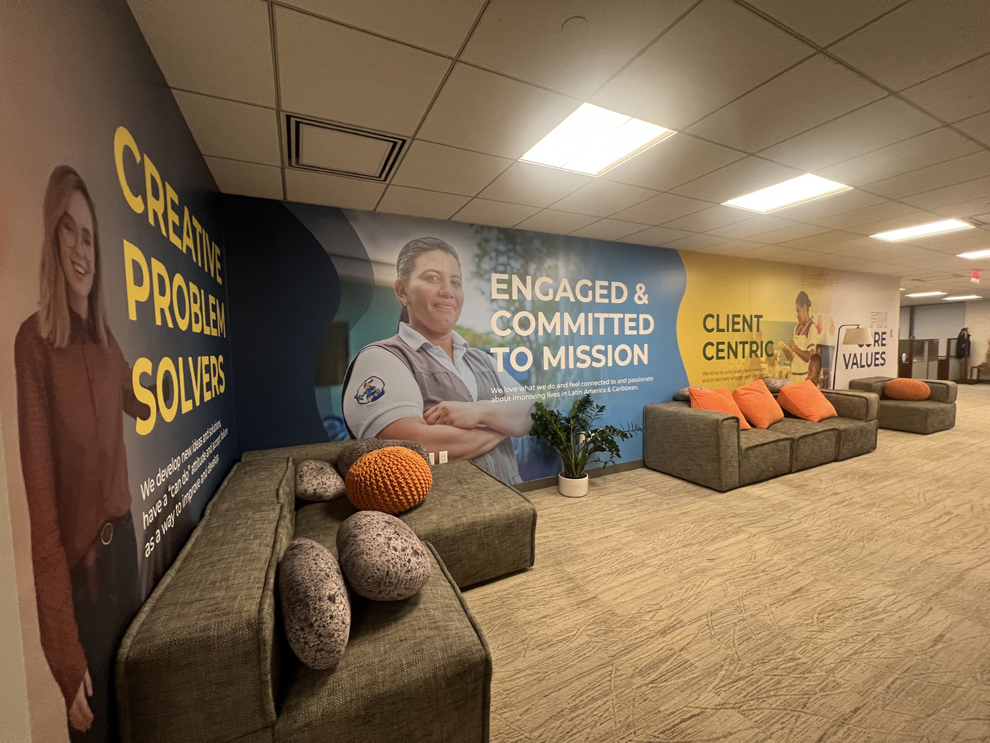
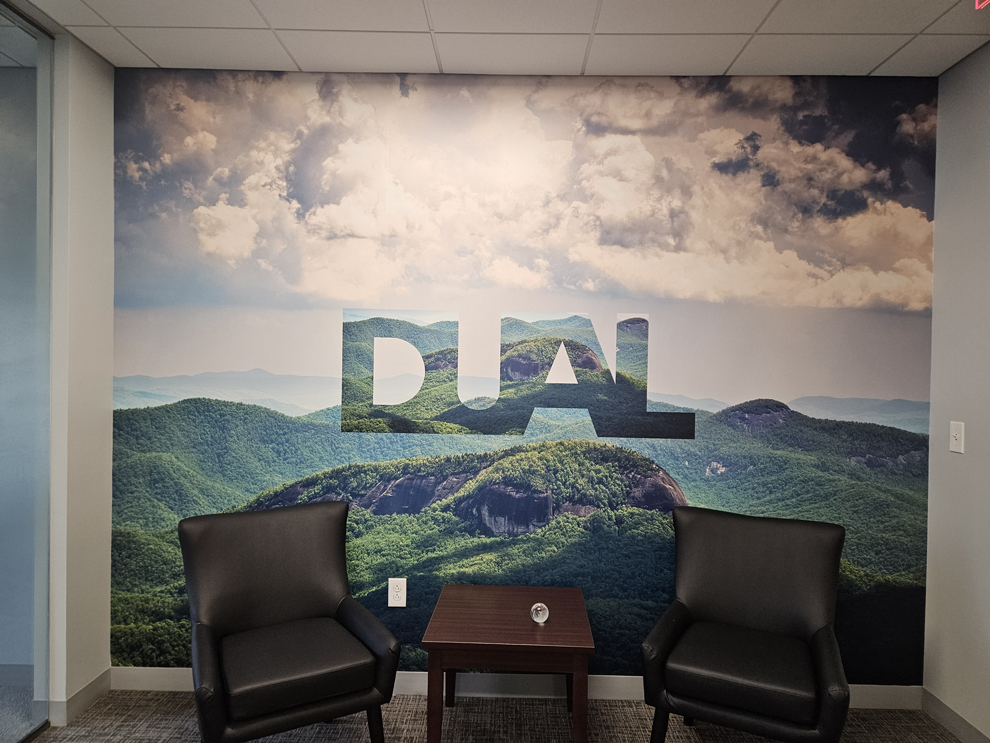
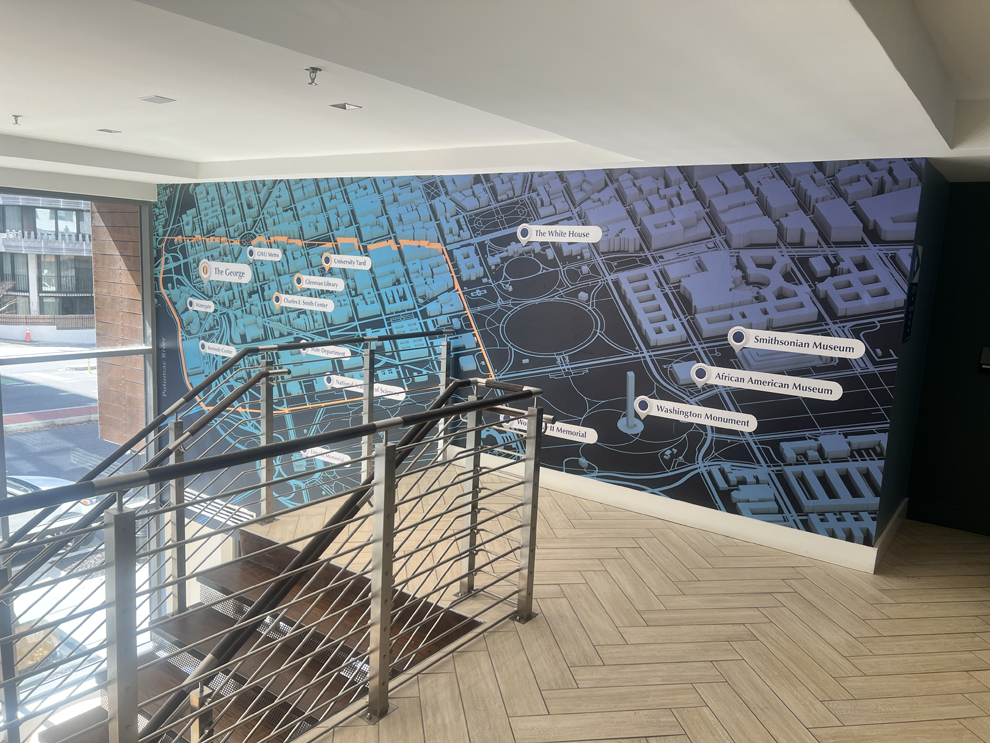
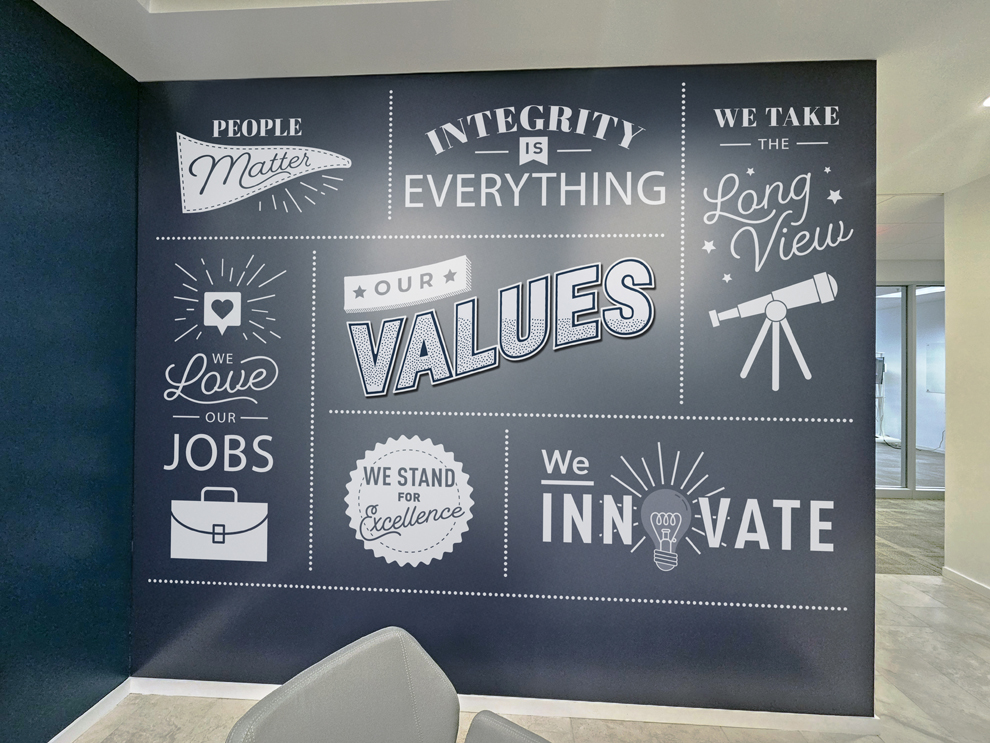
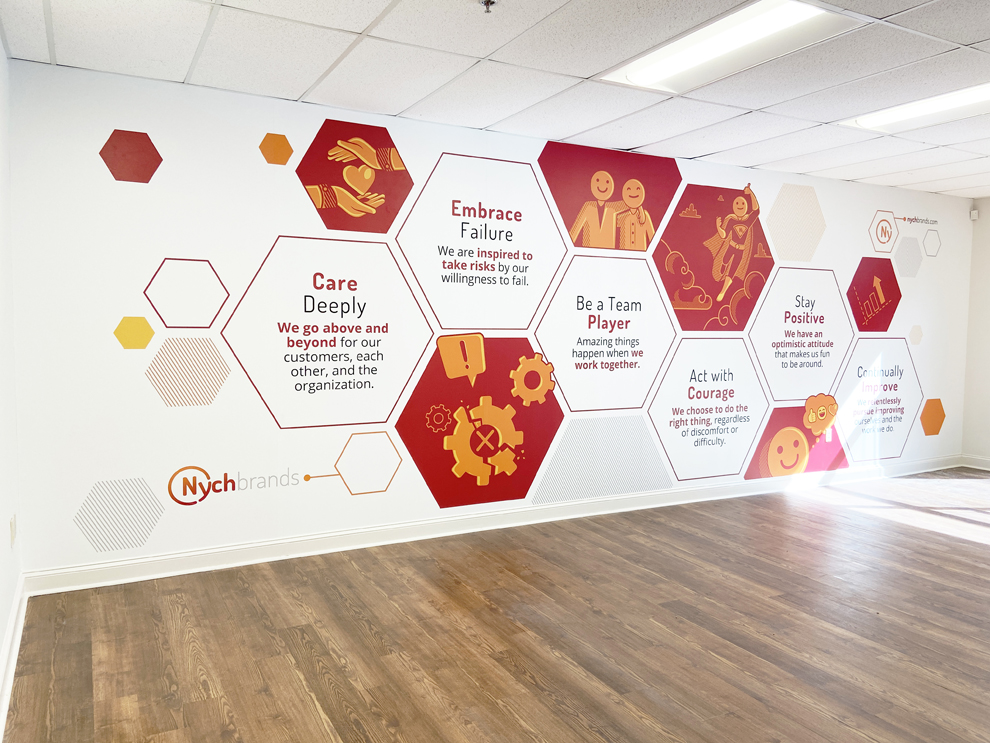
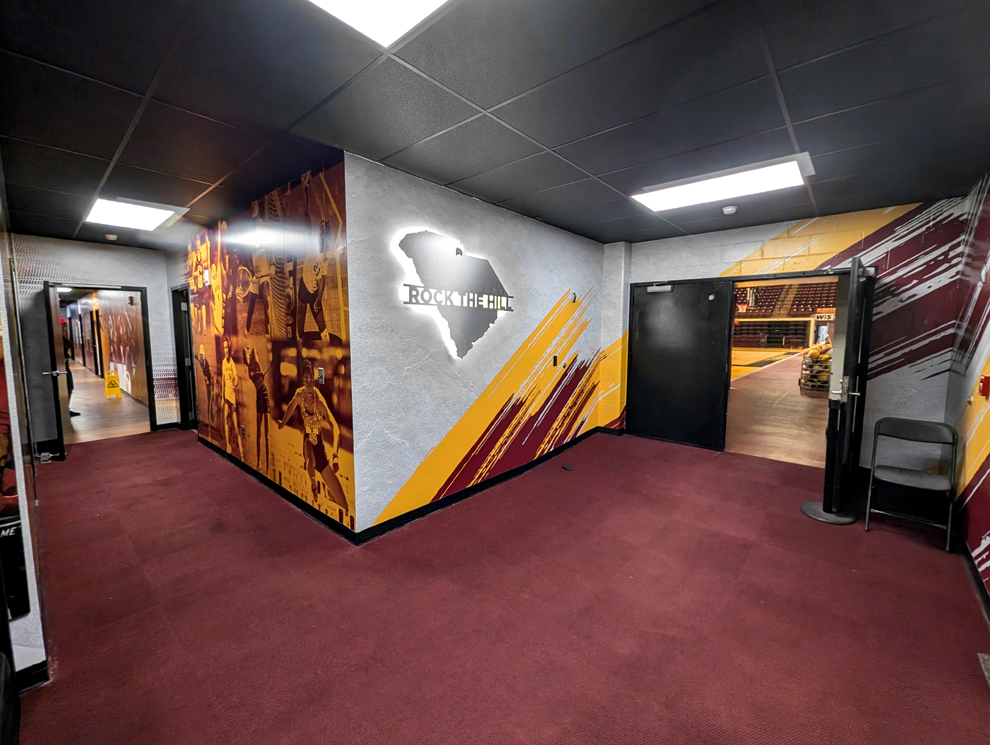
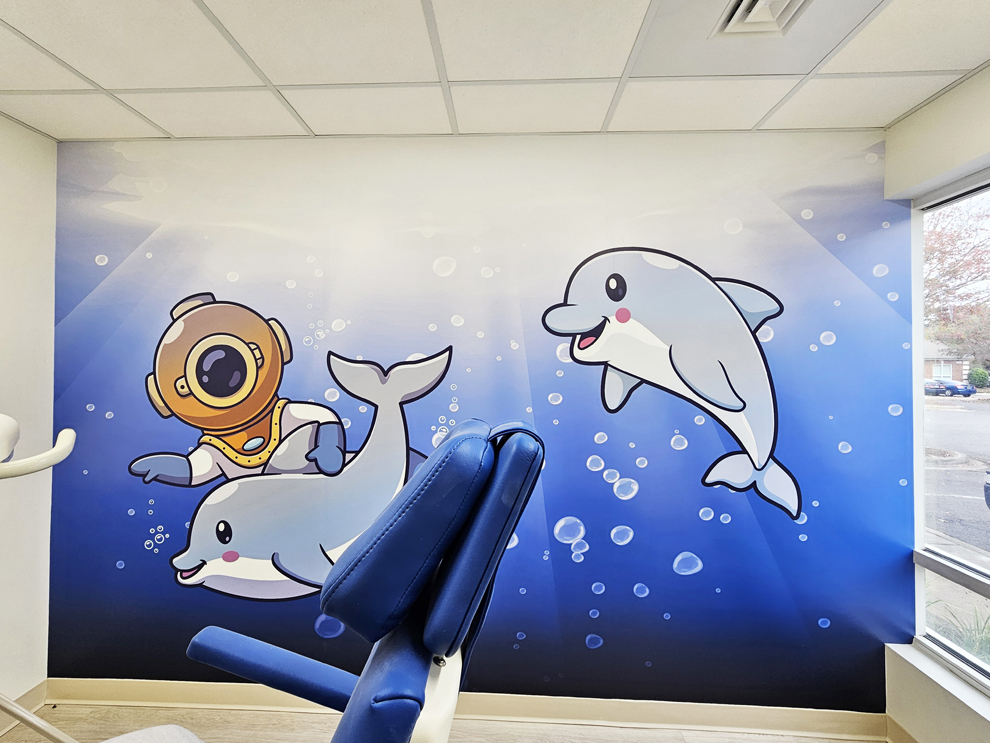
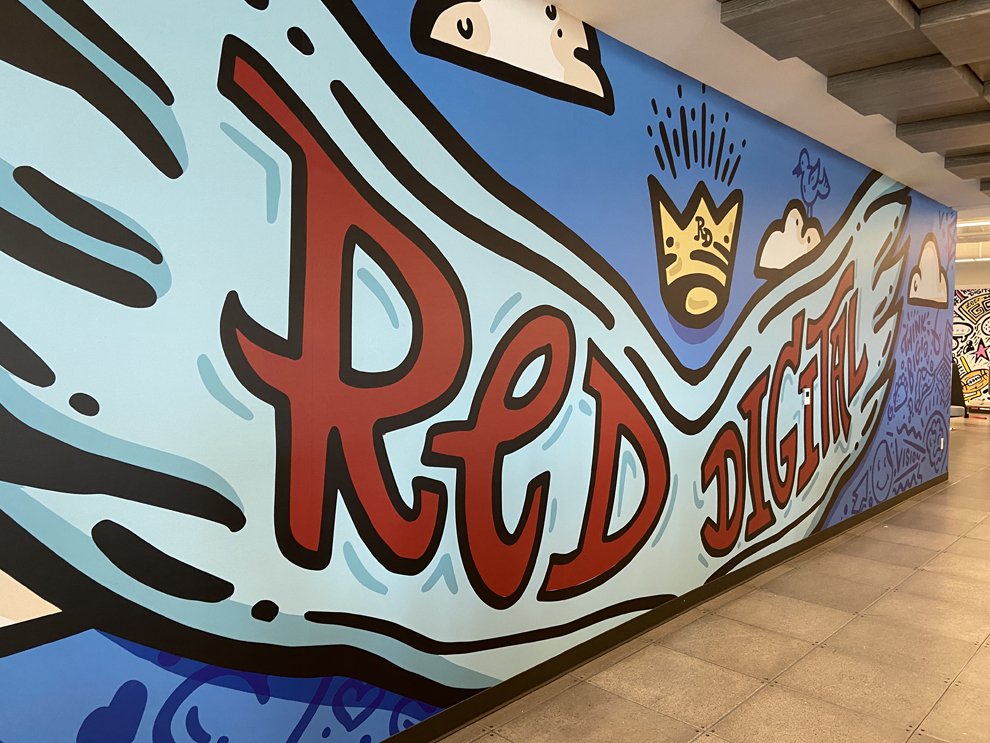
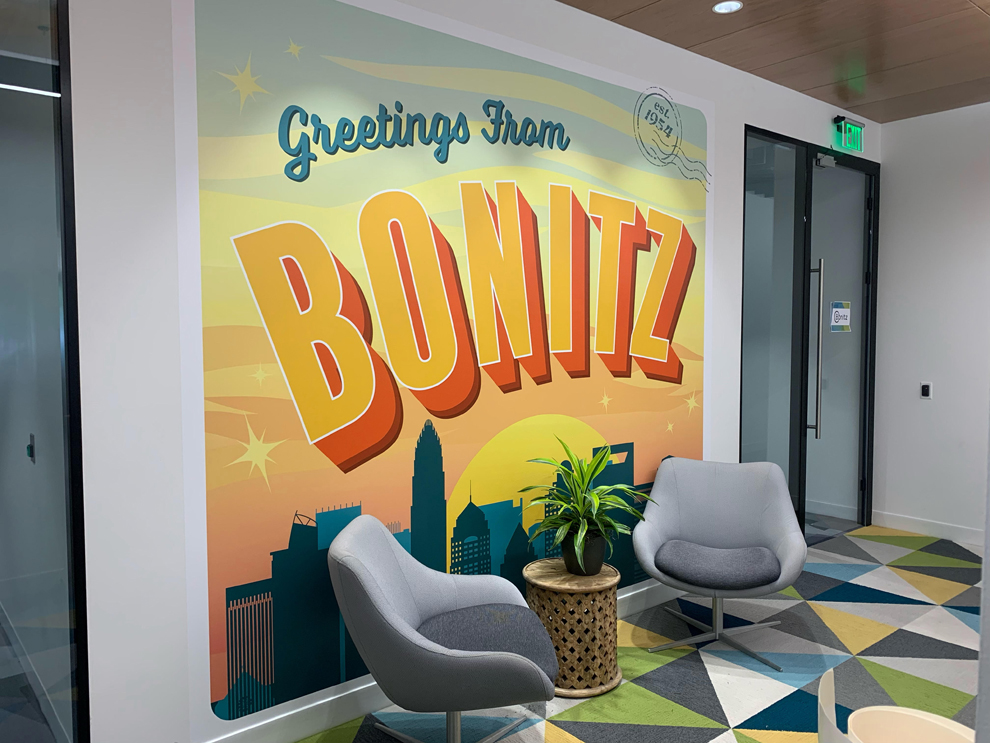
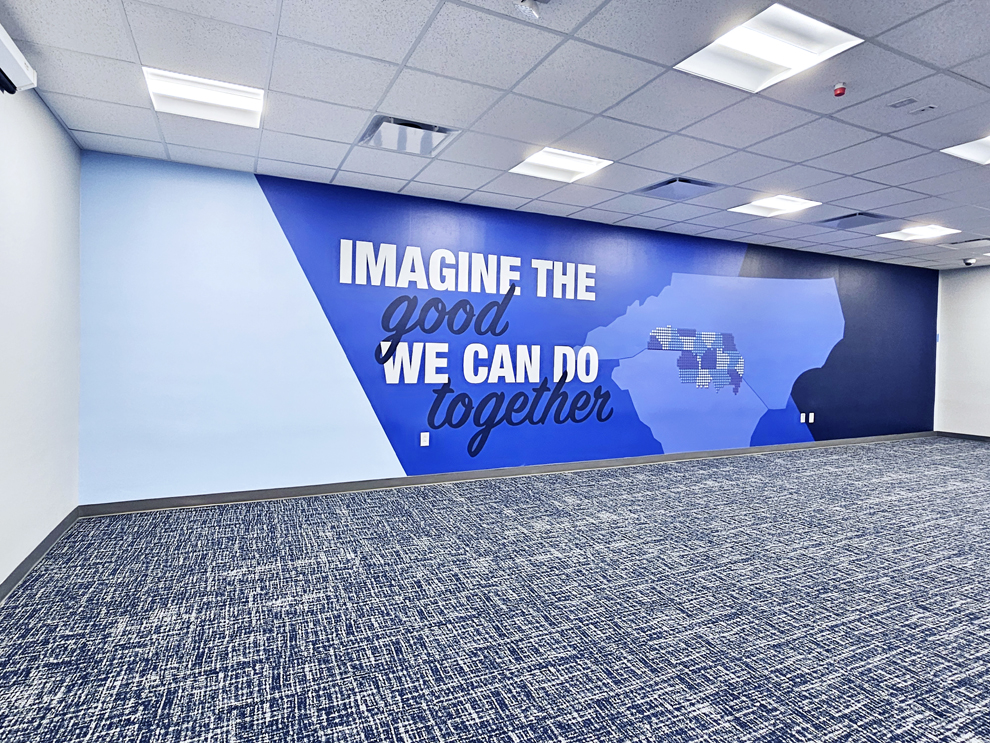
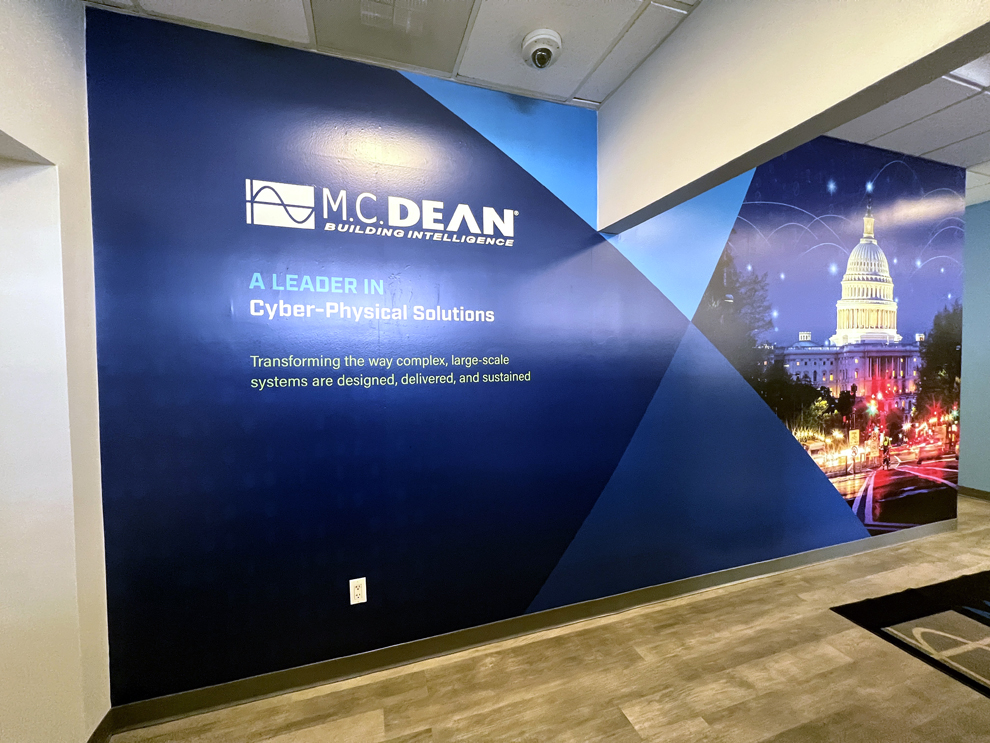
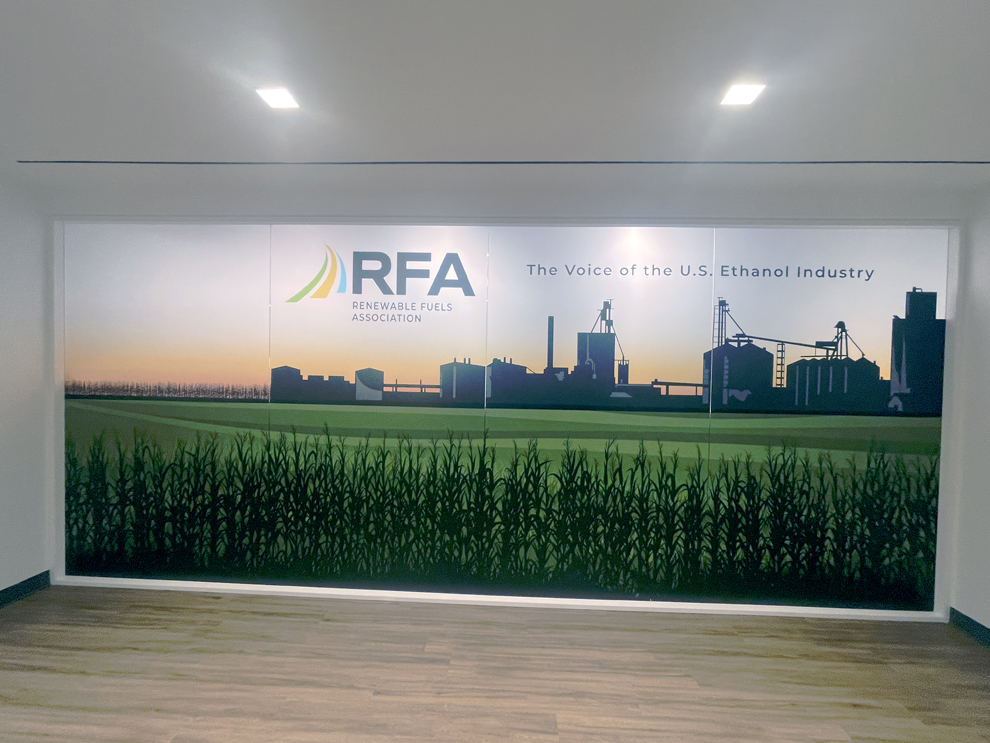
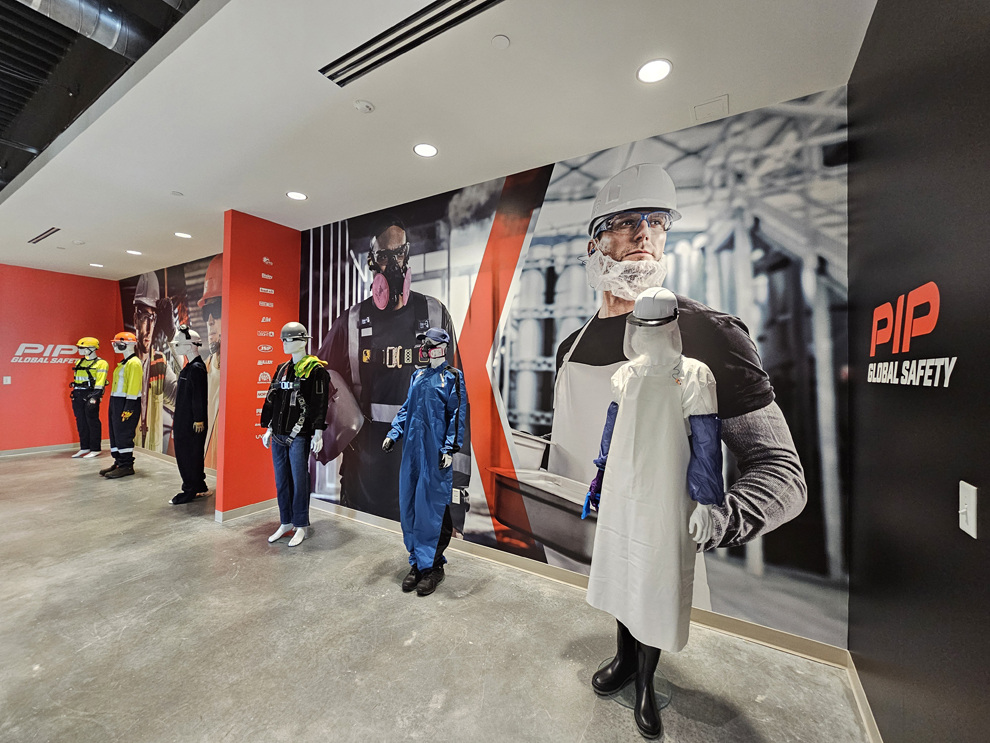
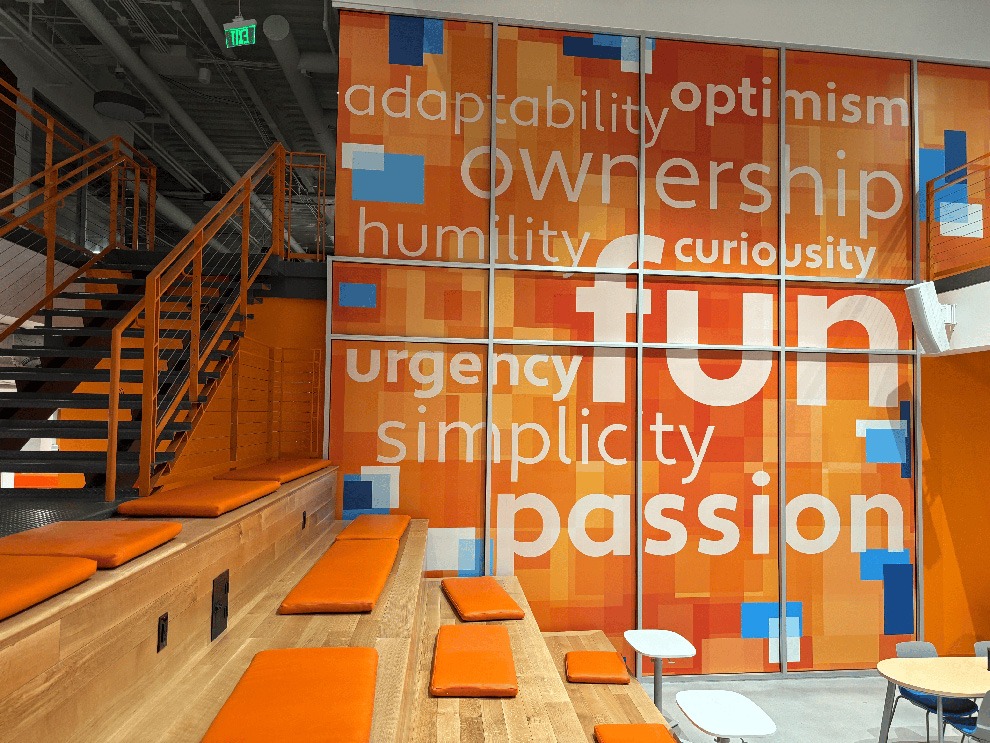
Wall Wraps is the better fit when a wall should carry the primary visual story through mural-scale imagery, brand color, company history, culture, or recognition content. Panel layout, seams, wall texture, lighting, and viewing distance drive the planning at that scale.
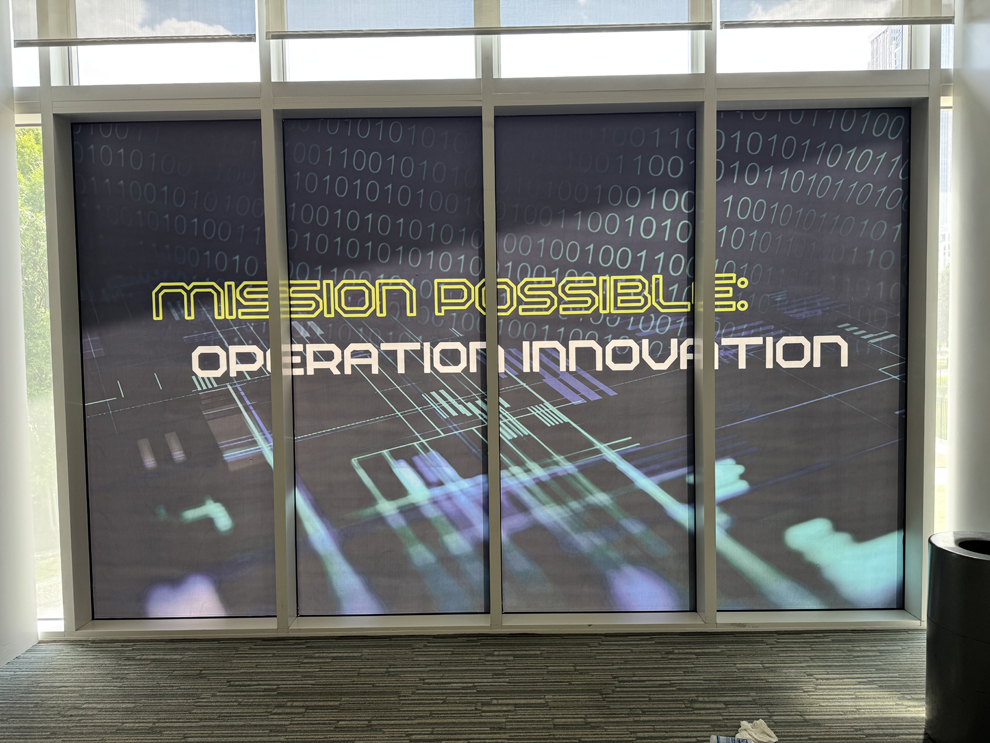
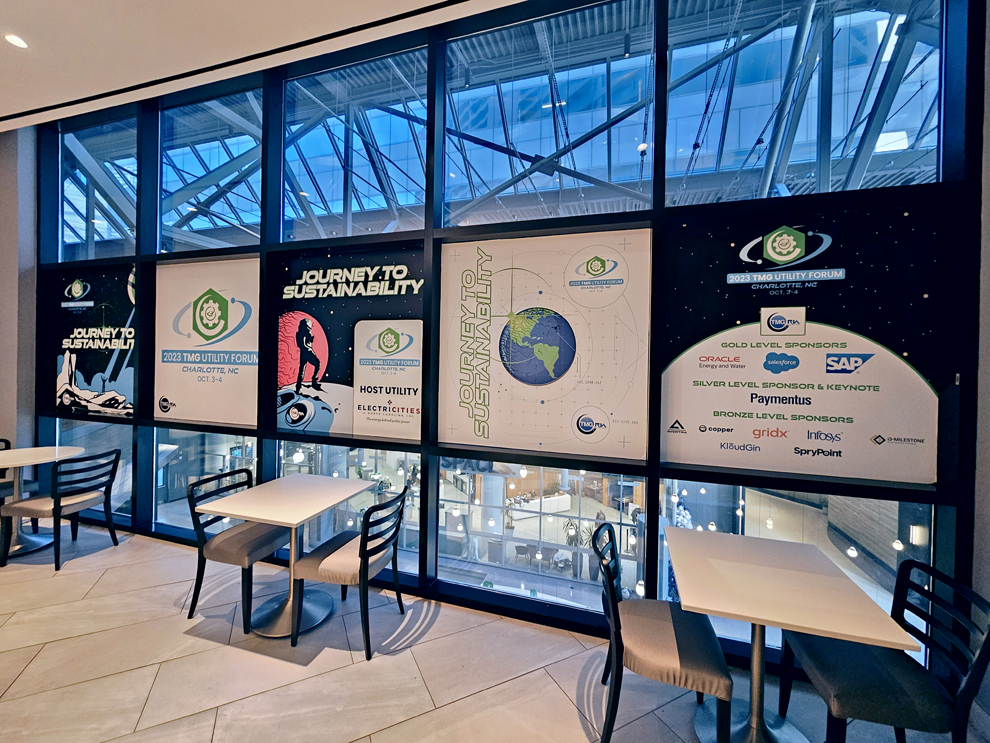
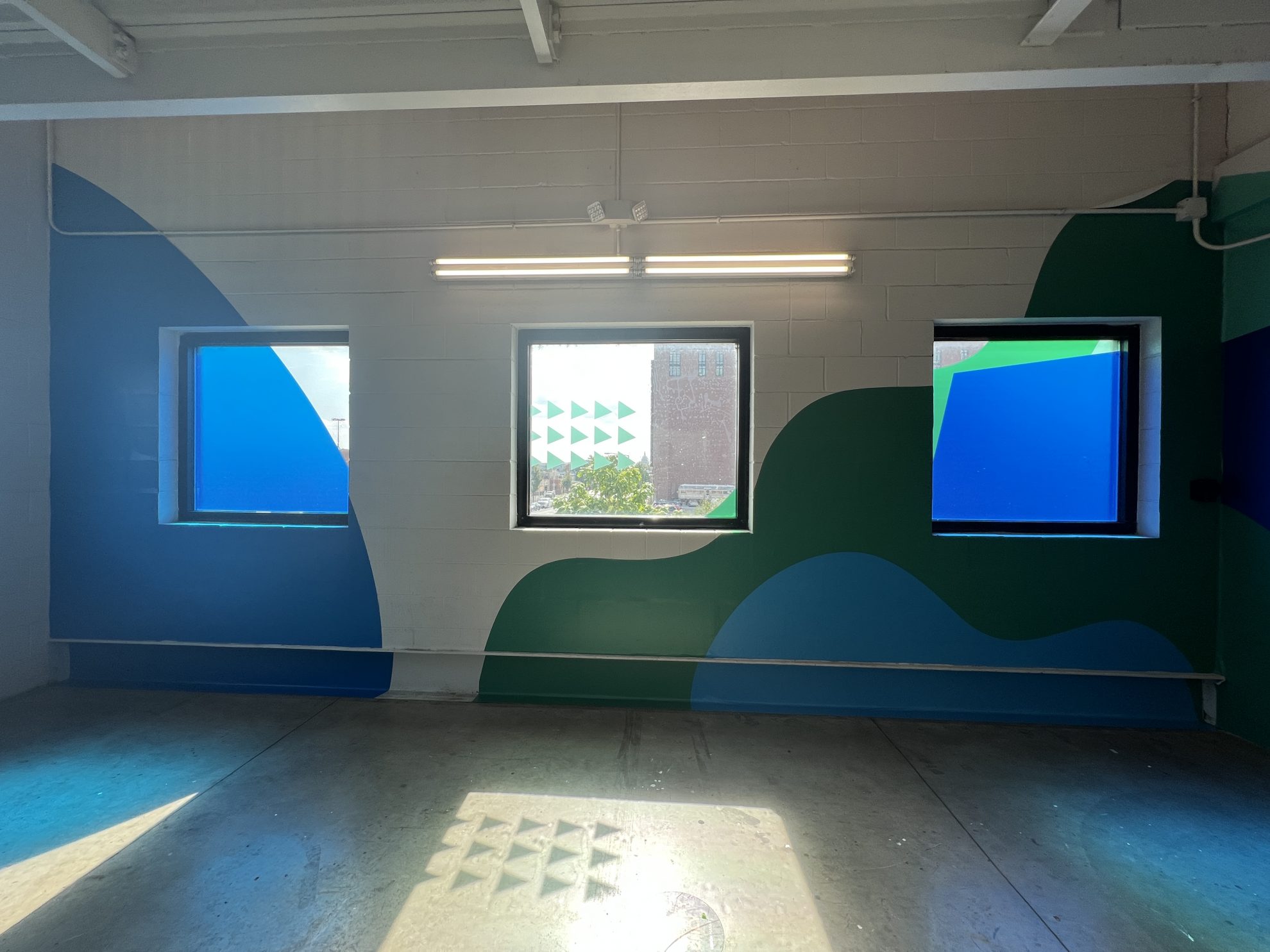
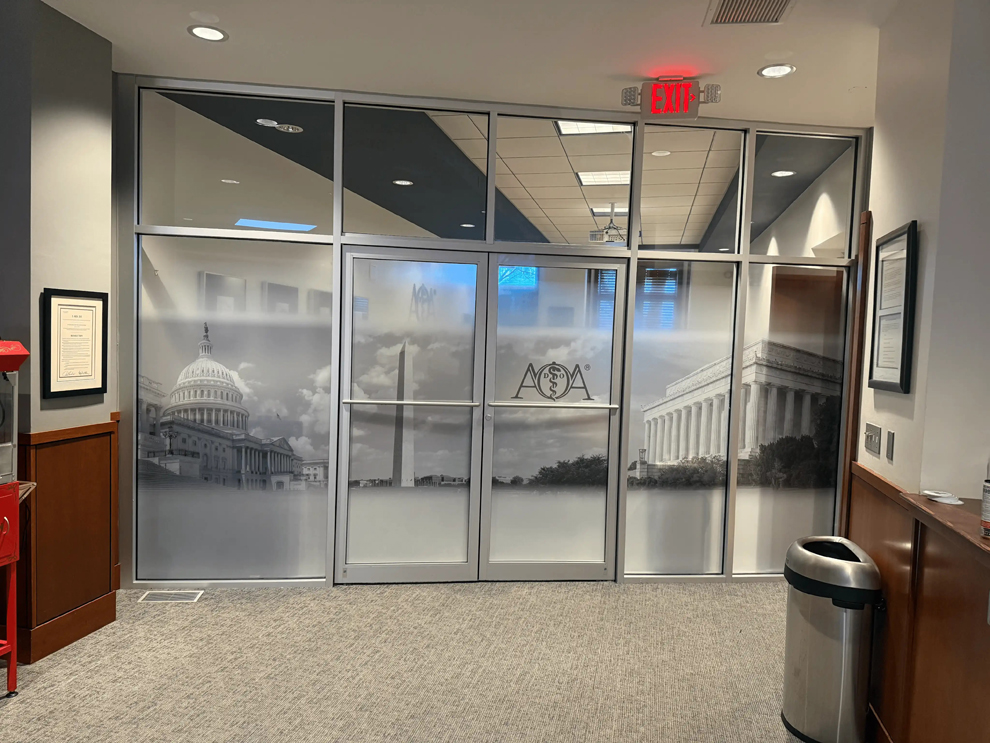
Window Graphics gives glass a defined role in identity, messaging, visibility, and selective views. Coverage, viewing direction, daylight, existing glass coatings, and the choice between printed, cut, or perforated materials determine the approach.
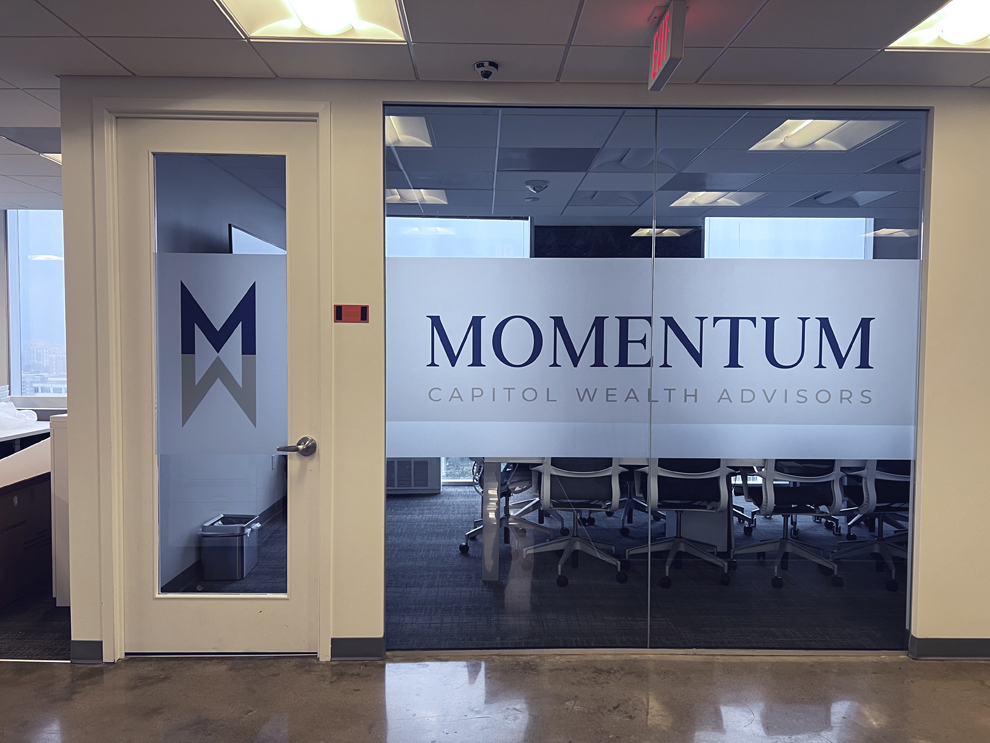
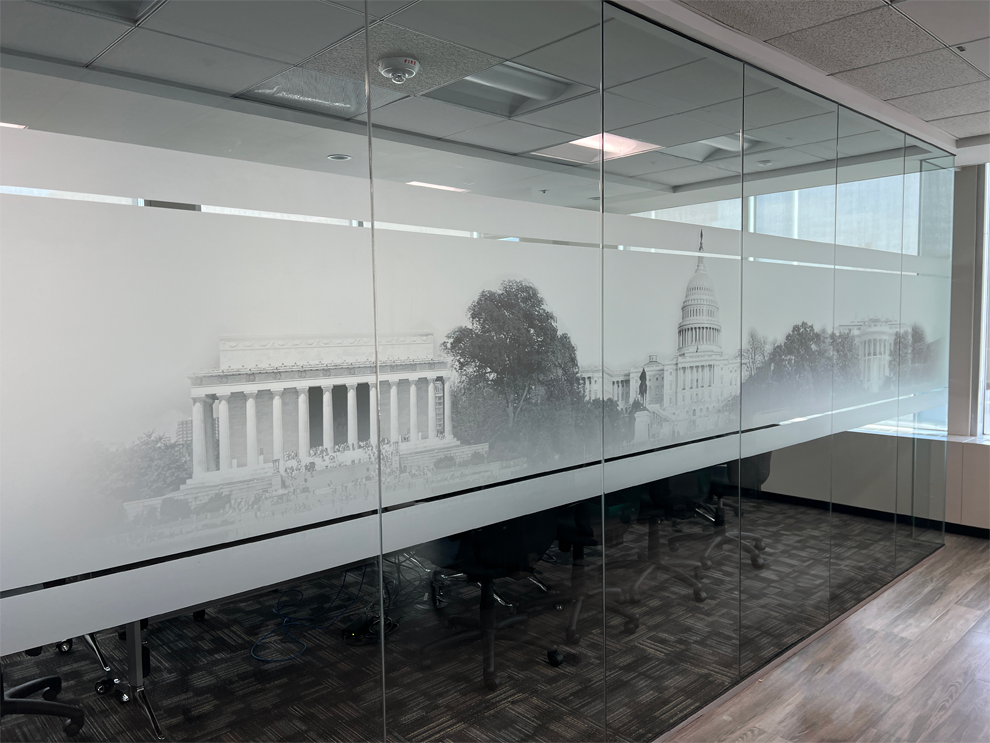
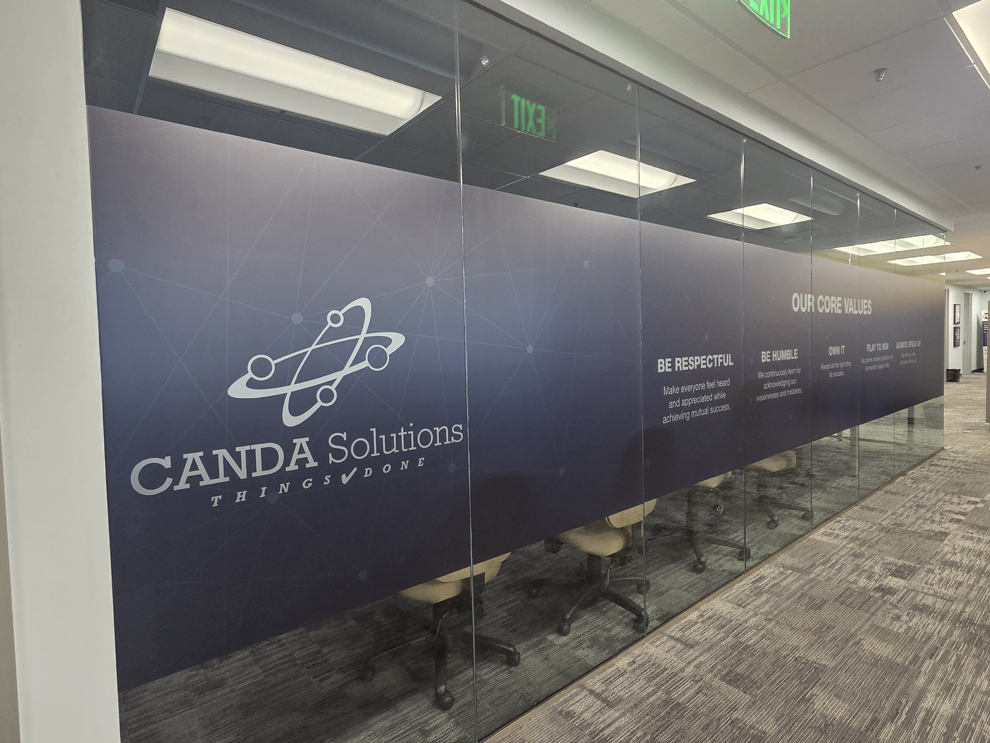
Frosted vinyl and privacy film suit offices and conference rooms that need visual separation while daylight keeps moving through the interior. Coverage height, room use, seated sightlines, pattern selection, and cleaning practices guide the specification.
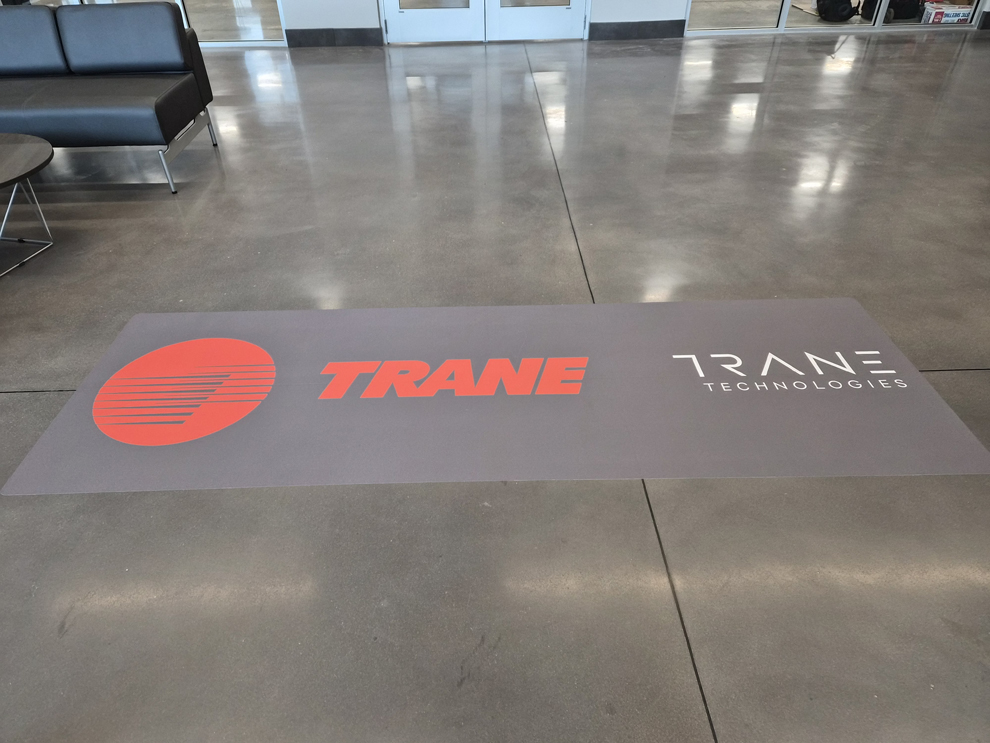
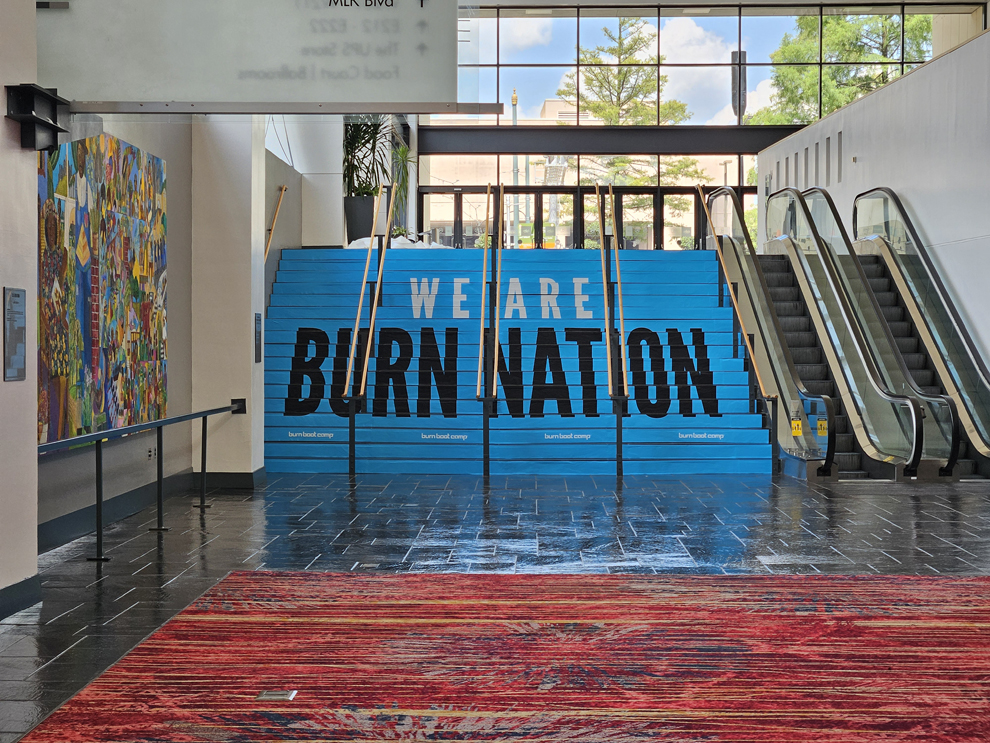
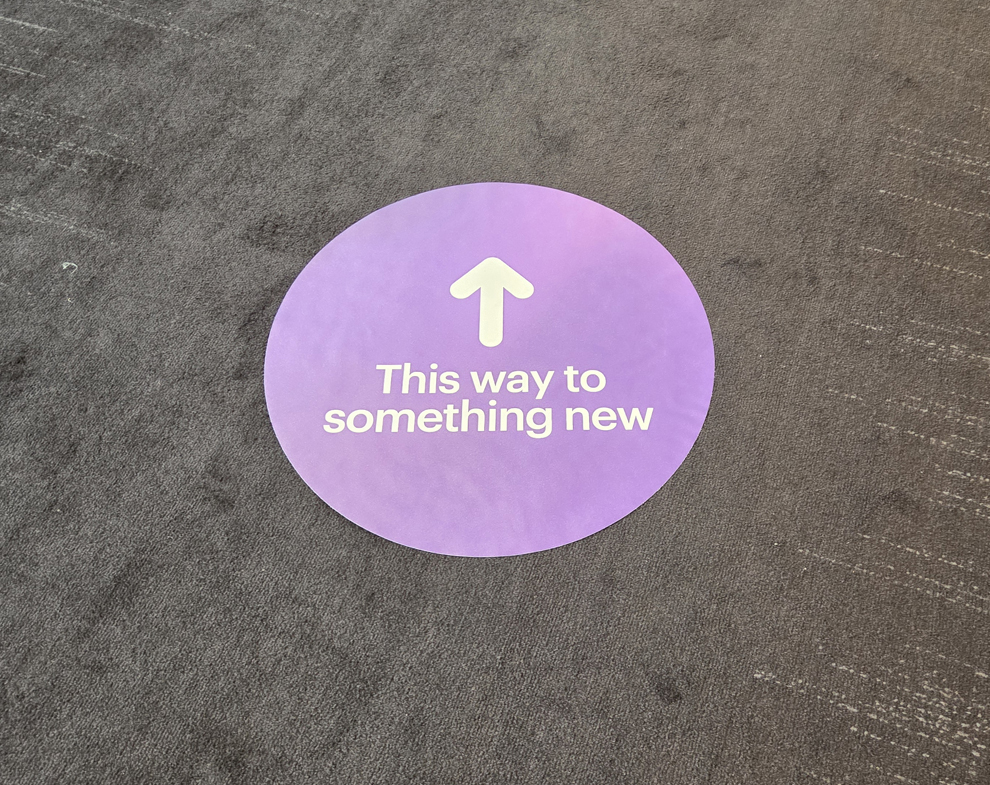
Floor Graphics places wayfinding, sponsor recognition, or campaign messaging directly along the routes people already walk. Flooring type, traffic volume, cleaning equipment, protective laminate, and intended duration decide whether an application is appropriate.
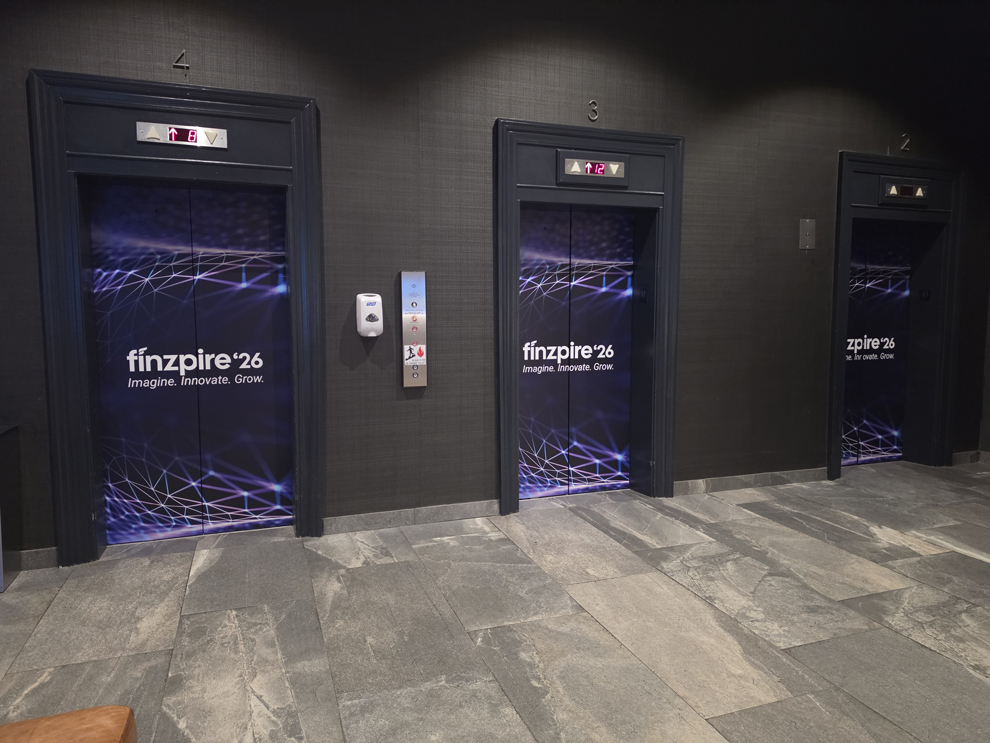
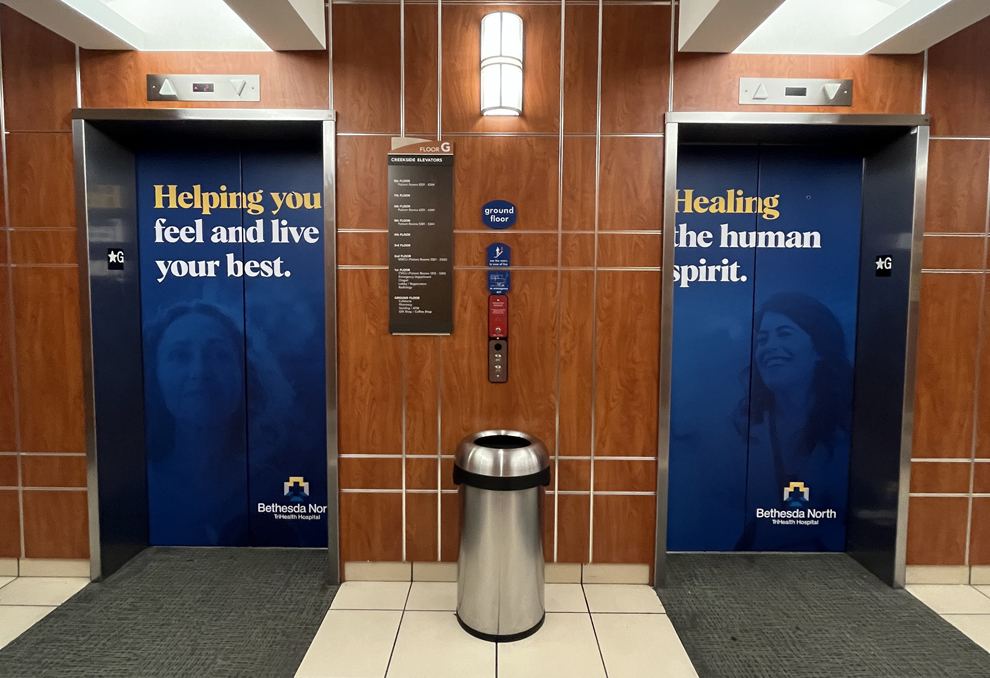
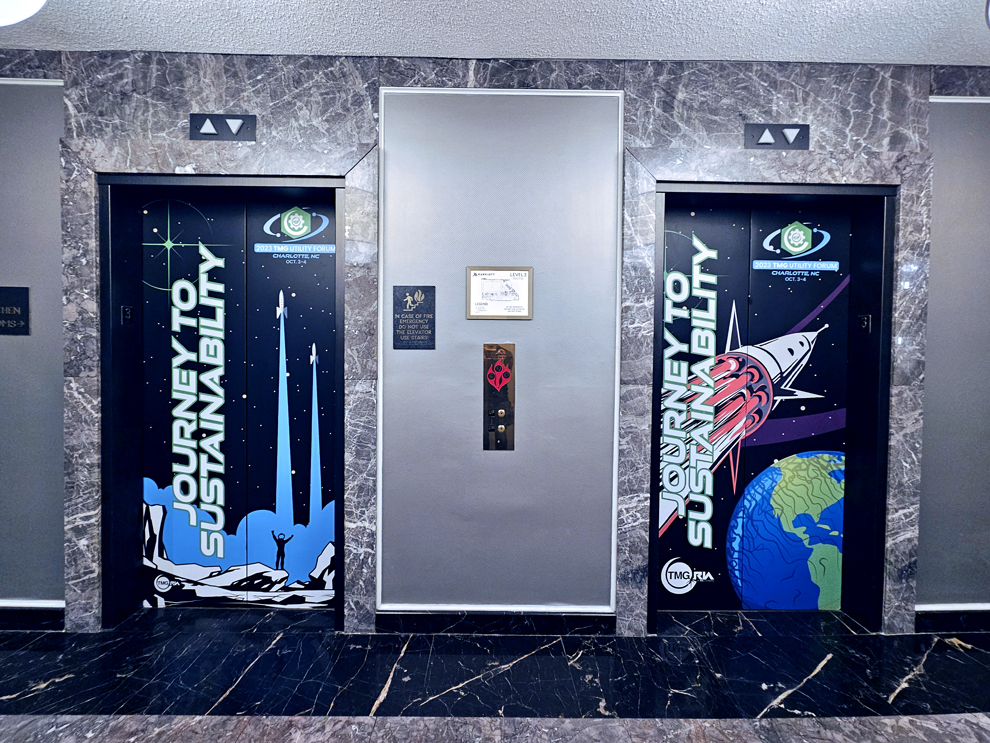
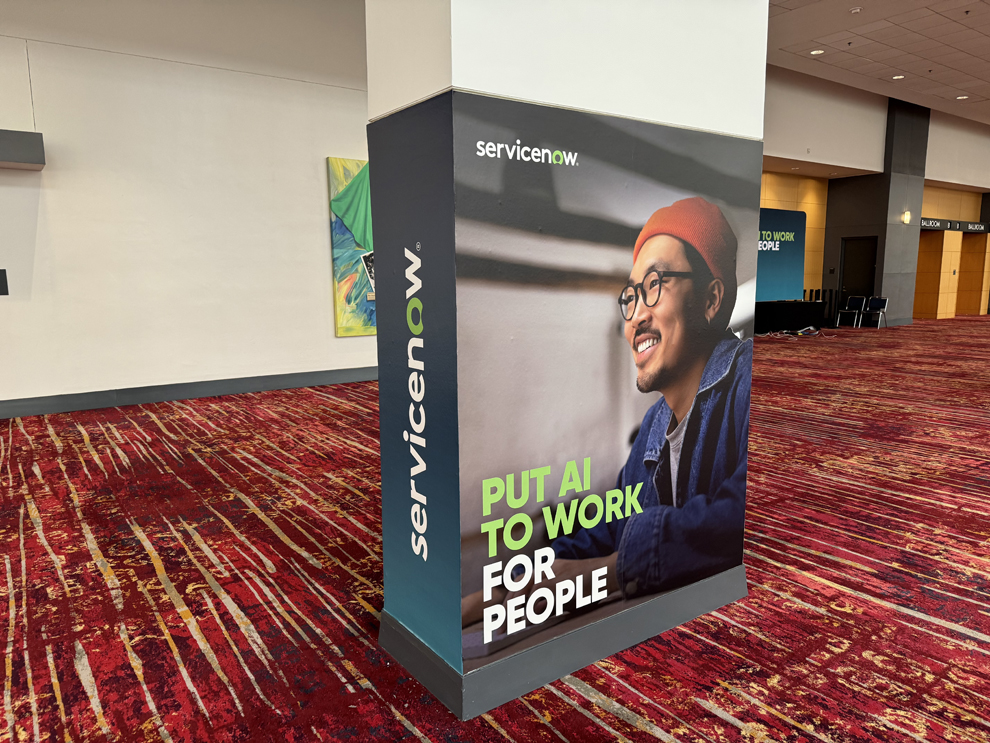
Elevator Wraps turn doors, selected cab panels, and lobby transition areas into branded touchpoints in buildings where every occupant passes through daily. Movement, seams, clearances, edges, repeated contact, and reserved access windows shape both the design and the installation.
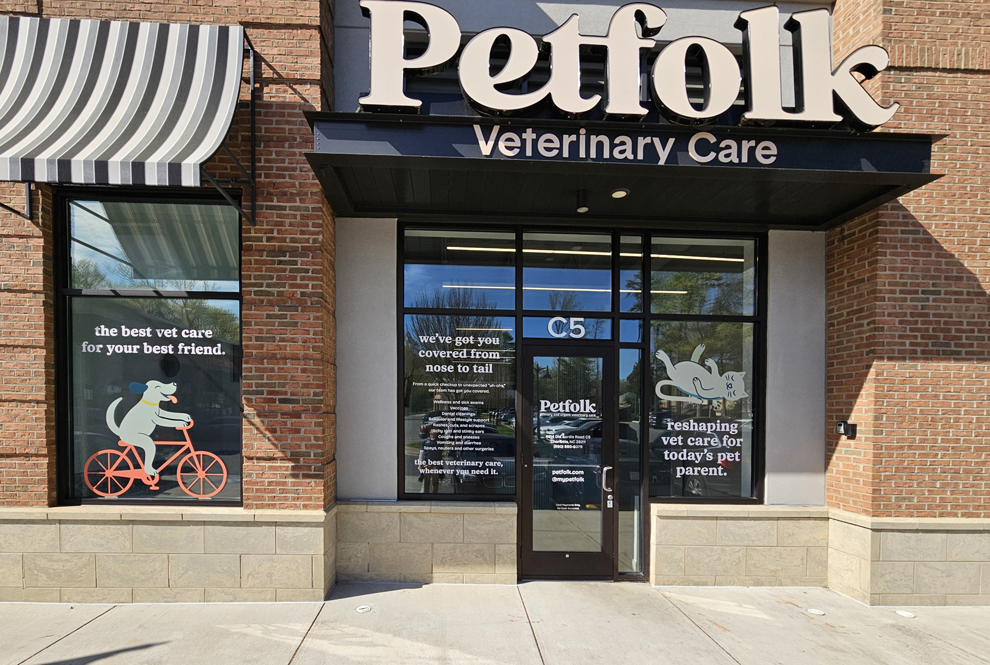
Storefront Graphics is the stronger choice when entrance glass, doors, and exterior-facing surfaces should communicate as one coordinated arrival experience. Exposure, property approvals, sign permits handled by the client or property representative, and coordination with interior signs govern that scope.
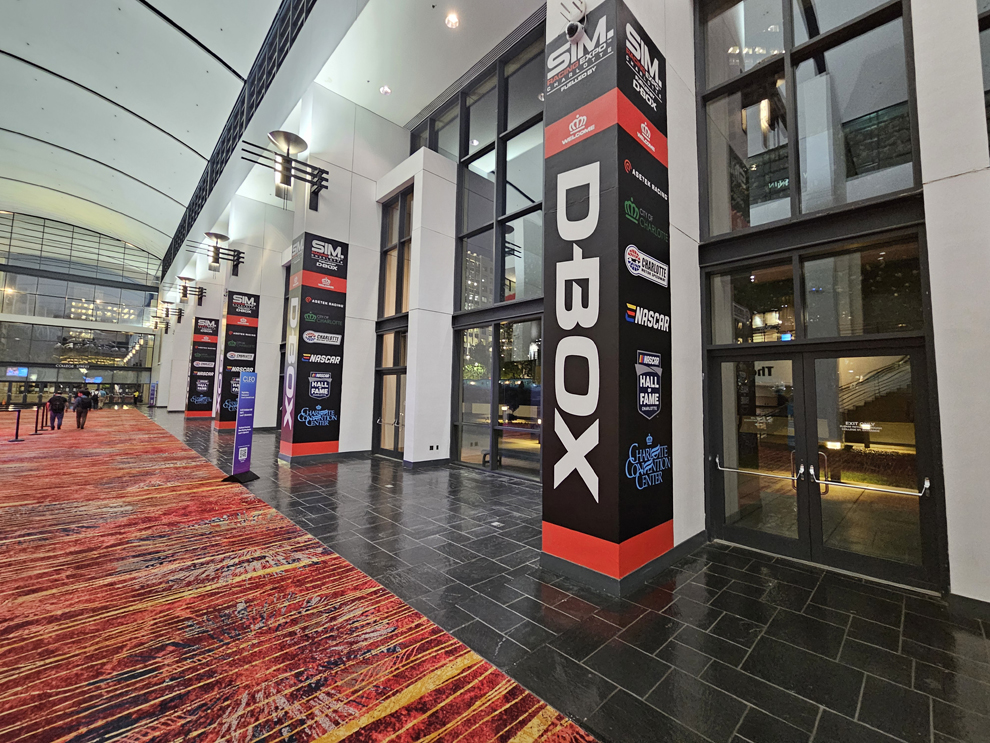
Event Signs & Graphics places adhesive vinyl inside a larger temporary branded system that may include sponsor recognition, directional signs, and displays. Venue rules, load-in windows, installation and removal timing, and surface restrictions control what is possible.
Reston clients work with Heritage field and installation resources based in Arlington, Virginia, supported by the client-facing Heritage location in Washington, DC for projects that reach across the metro area. Those resources cover discovery meetings at client facilities, site surveys, field verification, installation planning, professional installation, and follow-through once the work is finished.
Local presence matters because adhesive vinyl has to fit a real building, not a drawing. A site survey lets Heritage inspect the actual glass, evaluate wall conditions, confirm dimensions and access routes, document existing graphics, and understand loading dock rules, badge procedures, elevator reservations, and permitted work hours before production is finalized. In the multi-tenant properties clustered around the Silver Line stations at Wiehle-Reston East and Reston Town Center, those procedural details often drive the installation schedule more than the graphics themselves.
Production and fabrication for Northern Virginia work are supported by the Heritage facility in Waldorf, Maryland, which is staffed only by production team members and is not a sales office or showroom. Organizations with locations in Reston, Herndon, Sterling, and Tysons can keep one dedicated Project Manager while each site receives graphics adapted to its own dimensions, substrates, and building requirements.
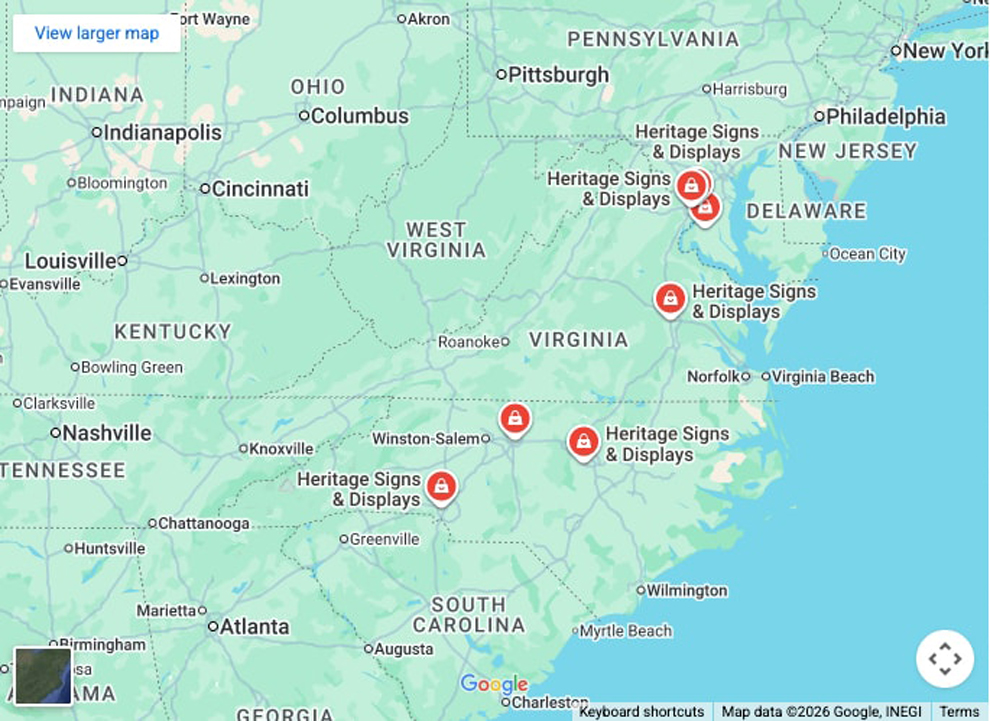
Environmental graphic design begins with what people should notice, understand, or do inside a space. A conference room may need privacy without feeling sealed off. A long corridor may need clearer direction. A reception area may need a stronger first expression of identity. An event space may need messaging that performs for a defined window and then leaves cleanly.
Some Reston organizations arrive with approved artwork and complete brand standards. Others need Heritage to develop the environmental graphic approach alongside internal stakeholders from marketing, facilities, and leadership. Heritage also collaborates with architects, interior designers, branding agencies, environmental graphic designers, and experiential design firms when those partners hold the broader creative direction.
Then design meets physical reality. Scale, image resolution, sightlines, coverage percentage, cut paths, panel layout, surface transitions, outlet and switch locations, and installation constraints get resolved before production is finalized, which cuts down on avoidable changes in the field. Heritage's scope remains environmental graphic design and related physical branded elements rather than licensed architecture, general interior design, engineering, lighting design, or code consulting.
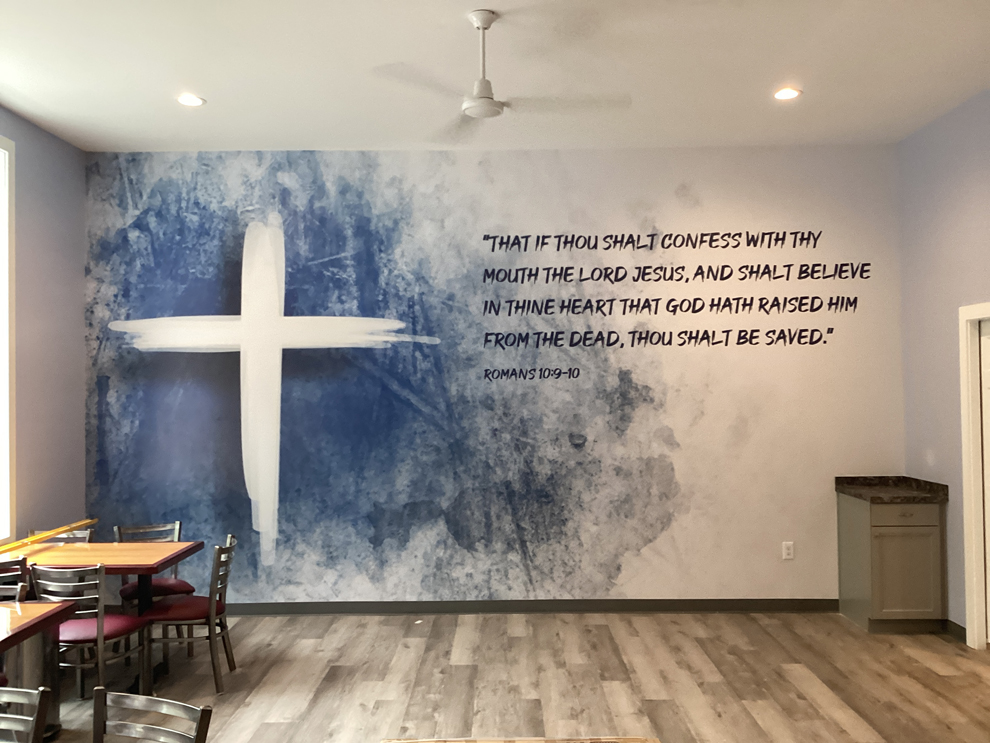
Every Heritage adhesive vinyl project that includes professional installation begins with a site survey. The survey does two jobs at once. It is client discovery, clarifying goals, audience, and priorities, and it is field verification, documenting dimensions, substrates, access, existing conditions, and installation requirements. One dedicated Project Manager carries that verified information into production so installers arrive already understanding the approved design, materials, sequence, and building rules.
Craftsmanship in the field is specific and observable. Heritage installers work toward accurate placement, level alignment, correct registration between panels, disciplined treatment of seams and edges where relevant, protection of adjacent finishes and flooring, and an orderly work area that can be returned to normal use at the end of the shift. Different substrates call for different techniques, and those decisions are settled before the crew mobilizes.
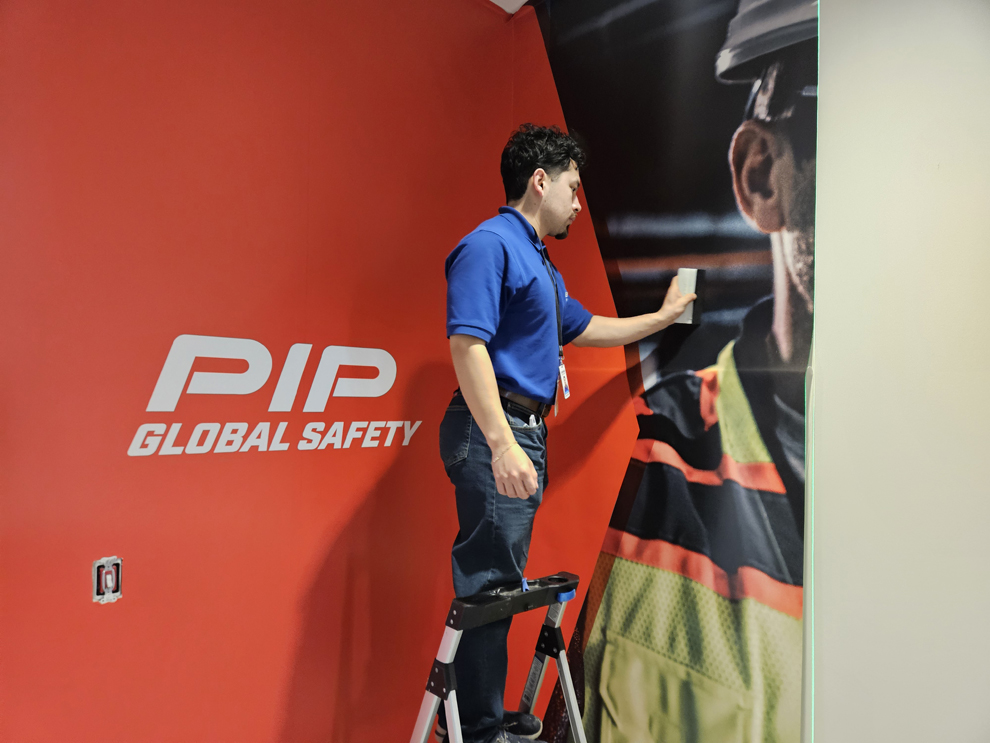
What happens on a painted wall is decided by what sits under the graphic. The drywall needs to be solid, smooth, clean, dry, and patched correctly. Primer and paint need to be applied the right way, and the topcoat has to reach a full cure, not just feel dry when you touch it. Paint that is still curing continues to release gases and vapors. Install vinyl over it too soon and that outgassing gets trapped, which shows up later as bubbling, blistering, edge lift, or adhesive that lets go early. Trapped moisture, dust or residue on the surface, a weak paint bond, the condition of the substrate itself, the wrong material choice, and poor installation conditions all play a part too.
Roughly four weeks is a reasonable number to build into a schedule for many paints, but the paint manufacturer's cure specification and the real conditions inside the building are what actually determine readiness. An adhesion test shows how a specific vinyl reacts to the painted surface you can see. It cannot look underneath and confirm how well the paint, primer, and drywall are bonded to each other. Installers routinely need to lift and reposition material as they work, and if paint starts to peel or pull during that process, Heritage stops instead of making a bad wall worse, then documents exactly what happened.
Repair, priming, repainting, and cure time are arranged and paid for by the client or property owner, and Heritage comes back once the wall is ready to go. A properly prepared wall is still a great surface for adhesive vinyl.
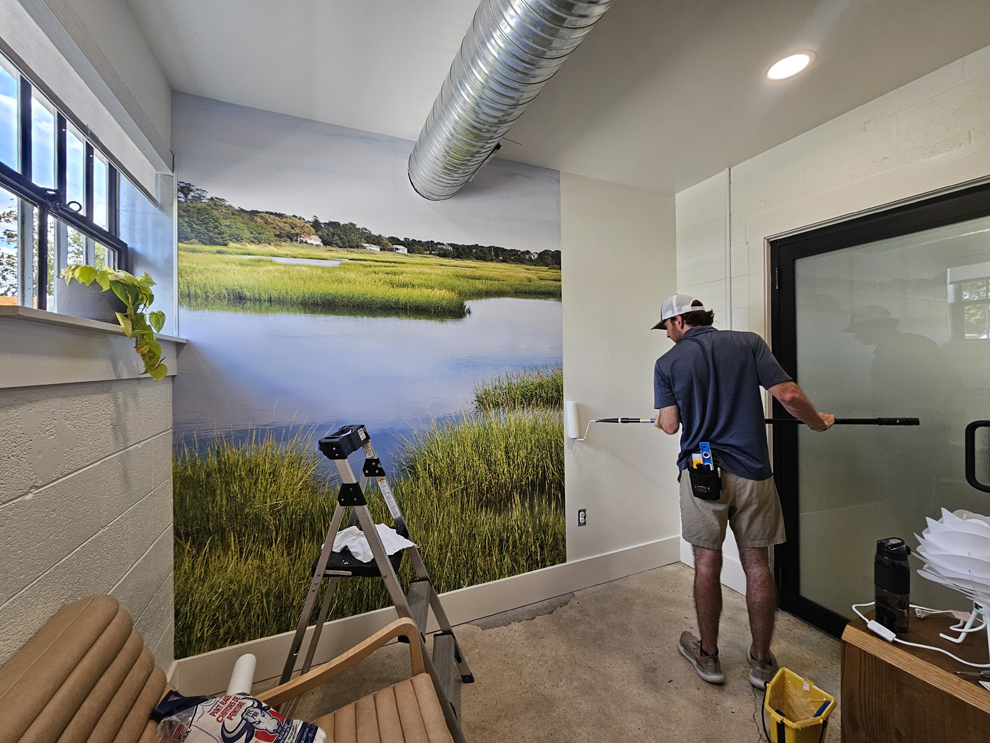
Planning starts by connecting the outcome you want to the scope, the priorities, any phasing, the target date, site readiness, approval chains, substrate conditions, and the anticipated overall project investment. From there it becomes clear which decisions are still open. Heritage would rather find those gaps in week one, when changing course costs almost nothing.
Size and schedule get evaluated side by side. Many Heritage projects that include production and professional installation land between $10,000 and more than $200,000, and the Project Manager weighs approval timelines, material lead times, building access windows, production and install capacity, and which elements matter most when the calendar is tight. When the full scope cannot be delivered responsibly by the requested date, Heritage proposes the strongest version that can be, rather than agreeing to something unrealistic.
Fit includes budget. To protect the responsiveness, communication, and coordination clients rely on, Heritage is taking on new workplace interior and event environment projects in Reston and across the Mid-Atlantic with an anticipated overall project investment starting at $6,000. For select exterior-facing graphics, Heritage assesses physical suitability while the client, property owner or manager, or general contractor secures sign permits and property approvals.
Tell us what the graphics need to do and when they need to be up. Use Get Started Now to send the Reston project address, your anticipated overall investment, photos, rough dimensions, artwork or brand standards, how long the graphics need to last, and any building or access requirements you already know about. If the work is tied to a grand opening, an event, an office relocation, a board meeting, or a visit from leadership, flag that date right away. You do not need every material or field question answered first. One dedicated Project Manager will review fit, timing, and next steps with you.
Frosted vinyl and privacy film break up sightlines while light keeps moving through the glass. You rarely need to cover the whole panel. Bands, patterns, gradients, logos, or partial coverage can sit exactly at the heights where seated and standing sightlines need screening. Heritage looks at how the room is used, what is visible from the entrance, which workstations sit nearby, how the glass gets cleaned, and the personality of the brand before recommending a coverage approach for each wall or door.
Because paint that feels dry underneath your hand can still be curing. While it cures, it releases gases and vapors that get trapped under adhesive vinyl applied too early, and that trapped outgassing turns into bubbles, blisters, lifting edges, or adhesion that fails ahead of schedule.
Heritage builds the install date around the paint manufacturer's full-cure requirement instead of the moment the wall feels dry. Around four weeks works as planning guidance for many paints, but the real timeline depends on the paint and primer system, how it was applied, temperature, humidity, wall prep, and conditions on site. Reston projects tied to a move-in or opening date are much easier to protect when paint schedules get confirmed early.
They are printed or cut visual elements made from vinyl systems engineered to bond to specific compatible surfaces. They handle identity, privacy, wayfinding, room identification, campaigns, events, and longer-term workplace messaging. The right product depends on the substrate, the look you want, coverage, how long it needs to last, exposure, cleaning routines, installation conditions, and what you expect the surface to look like when the graphics eventually come down.
If field conditions turn out to be materially different from what was documented, Heritage pauses, tells the client or property representative what was found, and decides on the right next step instead of forcing an application that no longer makes sense. The goal is a clean, deliberate install with as little disruption as possible to an occupied workplace.
Perforated window graphics fit when you want a printed image on glass while keeping some ability to see through it. How well it works depends on the perforated vinyl itself, the lighting on both sides of the glass, how much of the image covers the window, and which direction people are looking from. Heritage evaluates whether that trade-off genuinely serves your branding, daylight, and outward view goals before recommending it.
No. A test tells you useful things about how a proposed vinyl behaves on the painted surface you can see. It cannot inspect the bond hidden beneath that paint, so it cannot promise that paint or primer will stay put during repositioning, installation, or removal down the road. Testing reduces uncertainty and guides material selection. It does not turn an unknown wall condition into a guarantee.
The survey puts the team inside the building before production is locked in. Heritage confirms dimensions, substrates, access routes, existing graphics, work-hour restrictions, and other field realities while talking through what the graphics are meant to accomplish. Those findings travel with one dedicated Project Manager to the production plan and the installers assigned to your job, which cuts down on field surprises and rework.
Removal is done slowly and deliberately, using methods matched to the material and the substrate. Even so, the condition of the paint, primer, and drywall underneath drives the result, and no professional installer can promise that every painted wall will come through removal untouched. If paint, primer, or drywall facing starts to release, Heritage stops and explains what is happening rather than pushing forward.
On replacement projects, the best protection is scheduling removal early enough that any restoration needs surface before the new graphics are due. The client or property owner arranges and pays for repair, priming, repainting, and cure time. Heritage stays accountable for careful removal and straight communication.
No. Heritage does not offer installation-only service for client-supplied graphics. Install quality is determined long before a crew shows up, by measurements, material selection, production accuracy, fit, and the ability to reprint quickly if something needs correcting. Keeping all of that inside the Heritage engagement is what allows the team to stand behind the schedule, the workmanship, and the finished result.
Plan on an anticipated overall project investment of at least $6,000 for new workplace interior and event environment projects in Reston and the Mid-Atlantic. That number covers the complete Heritage-managed scope, not the cost of a single graphic.
It is a starting point for project fit, not an average. Many Heritage projects that include production and professional installation run from $10,000 to more than $200,000, and the actual number moves with environmental graphic design, materials, production, fabrication, substrates, site conditions, access, and professional installation. Sharing your goals, location, timing, and anticipated investment through Get Started Now lets Heritage assess fit accurately.
Reach out anyway, because feasibility can usually be assessed fast. Deadlines are often locked by a lease date, an executive visit, a conference, or an event that was on the books long before anyone thought about graphics. Heritage starts by sorting out what absolutely has to be ready, what can realistically be produced and installed in the time available, and which areas deliver the most value.
One dedicated Project Manager then ties together environmental graphic design, production, fabrication, field requirements, scheduling, and professional installation.
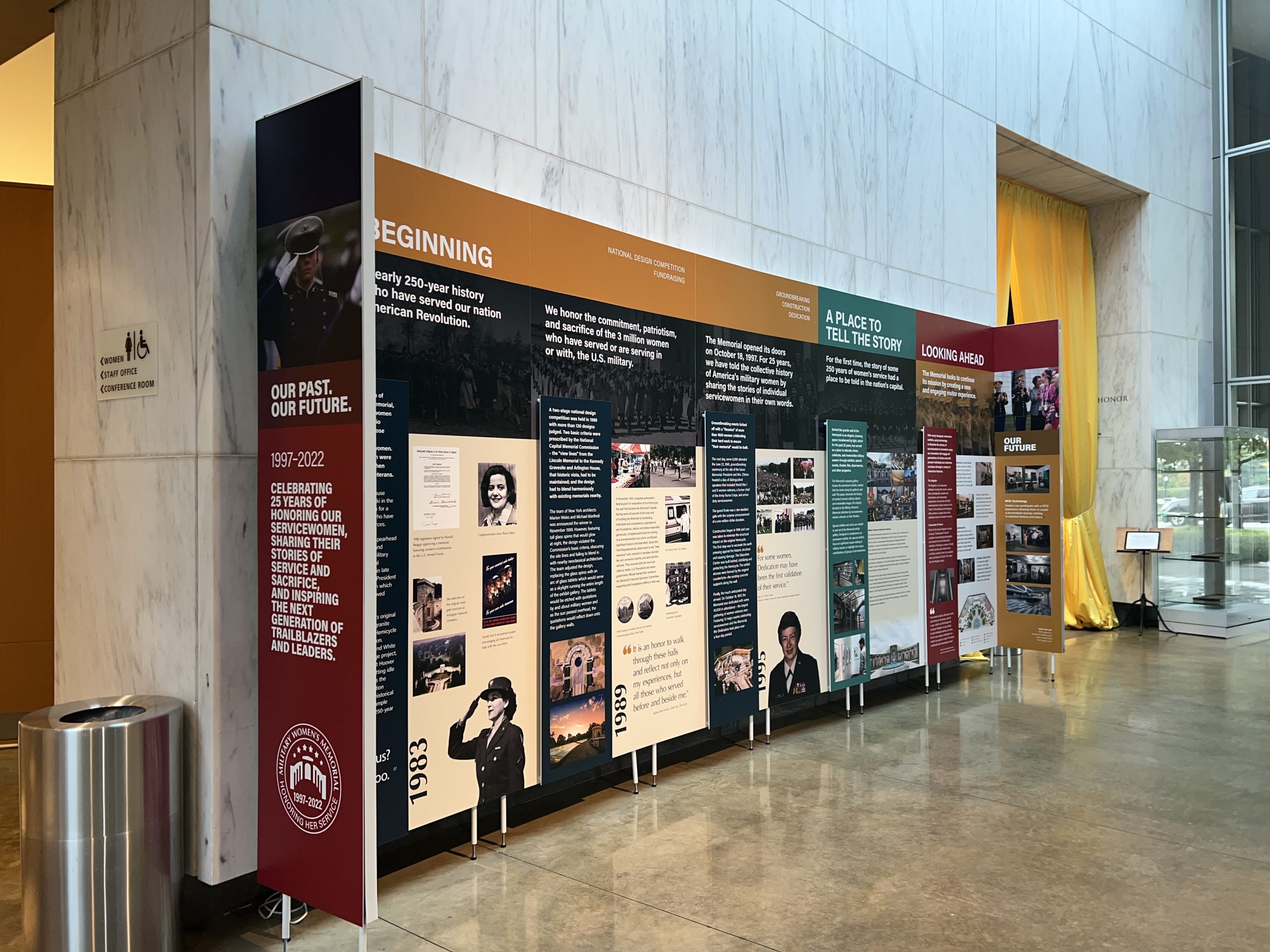
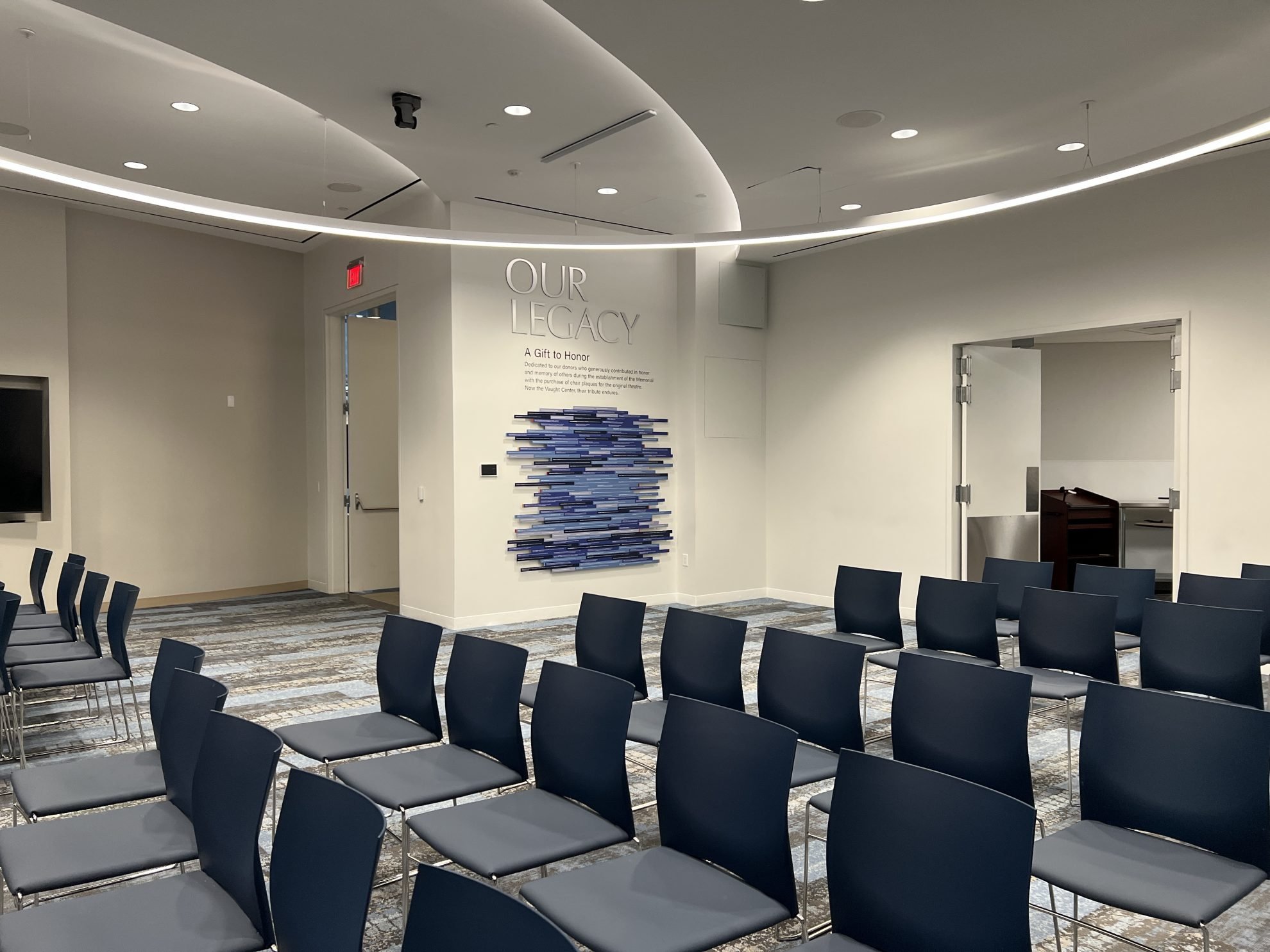
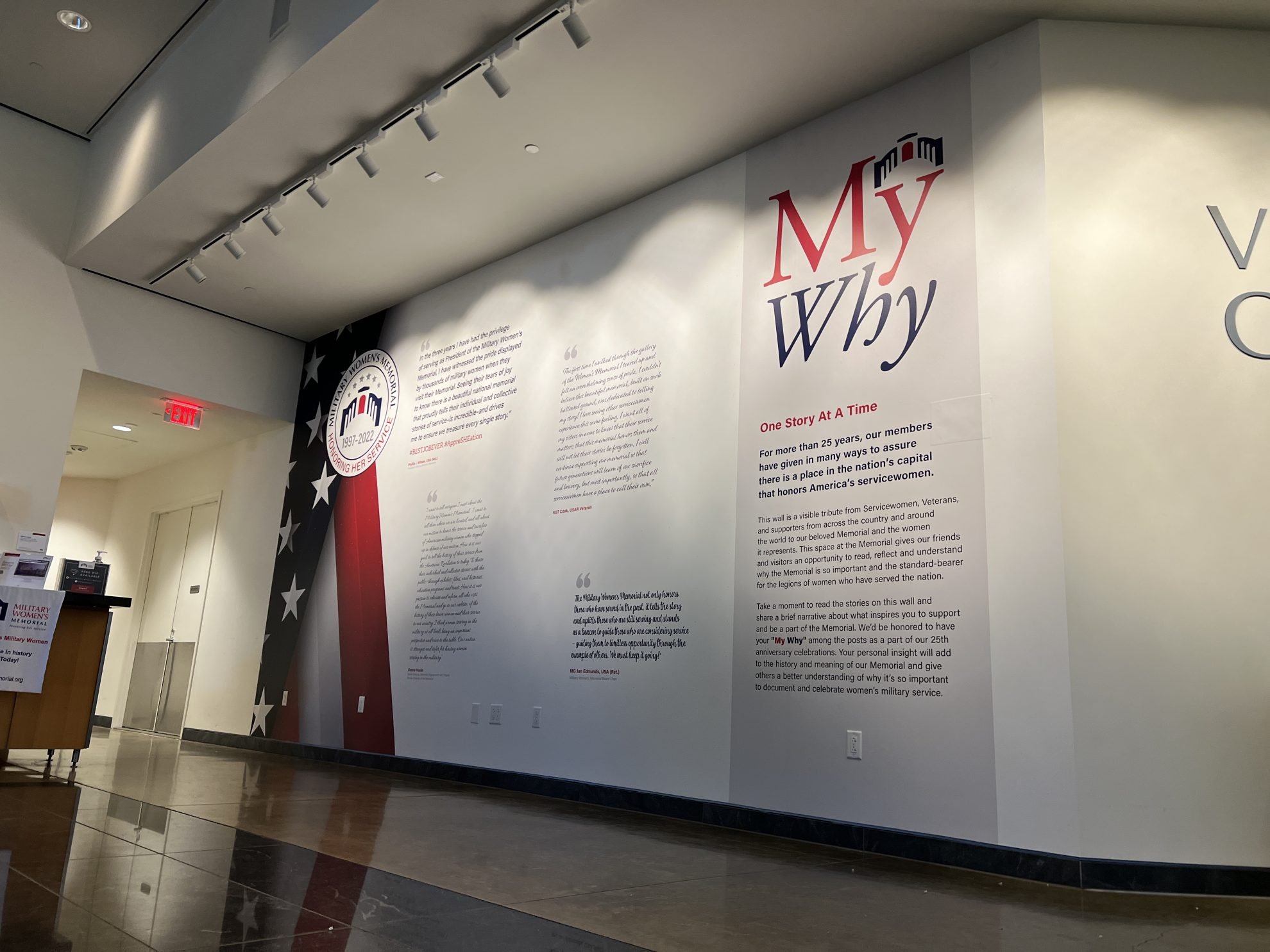
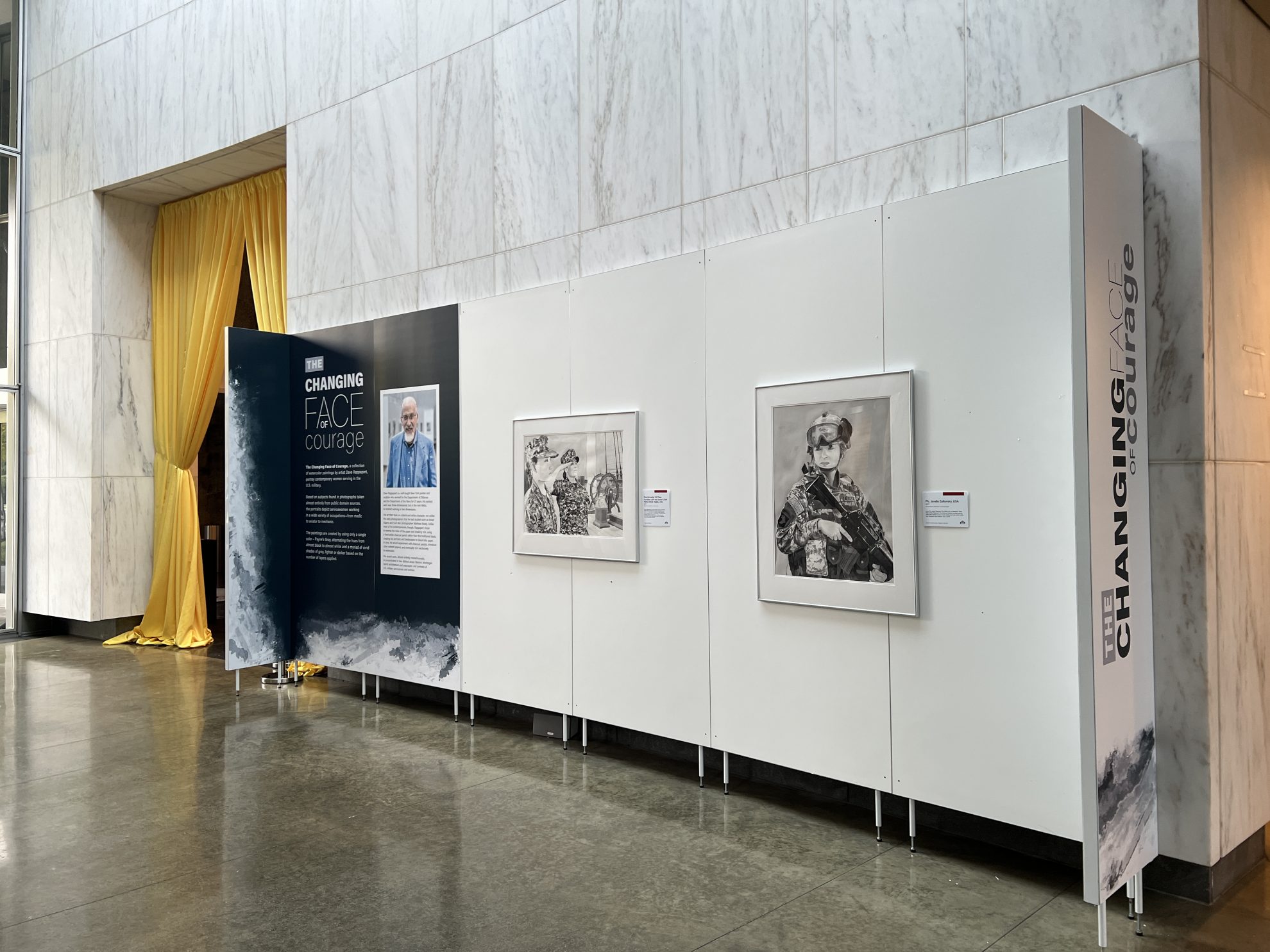
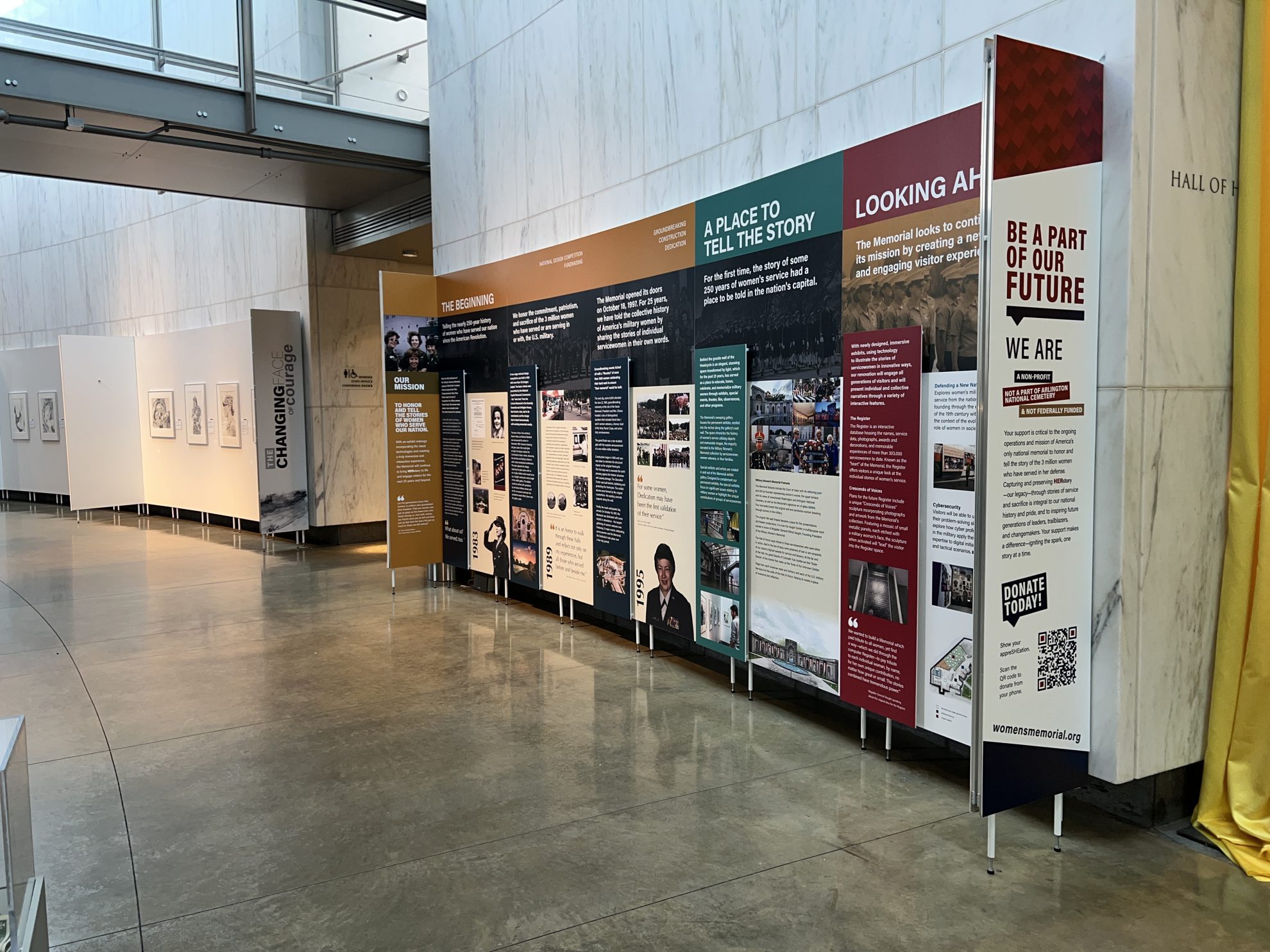
Heritage Signs & Displays created new museum signage for the Military Women’s Memorial in Arlington, VA. The project included custom signs, wall wraps, dimensional letters, and standoff-mounted displays to honor the legacy of U.S. servicewomen and the donors who supported the memorial. The updated interior features impactful designs, including a "Our Legacy" wall display and panels showcasing historical contributions and artwork, creating a transformative tribute to women in the U.S. Armed Forces.
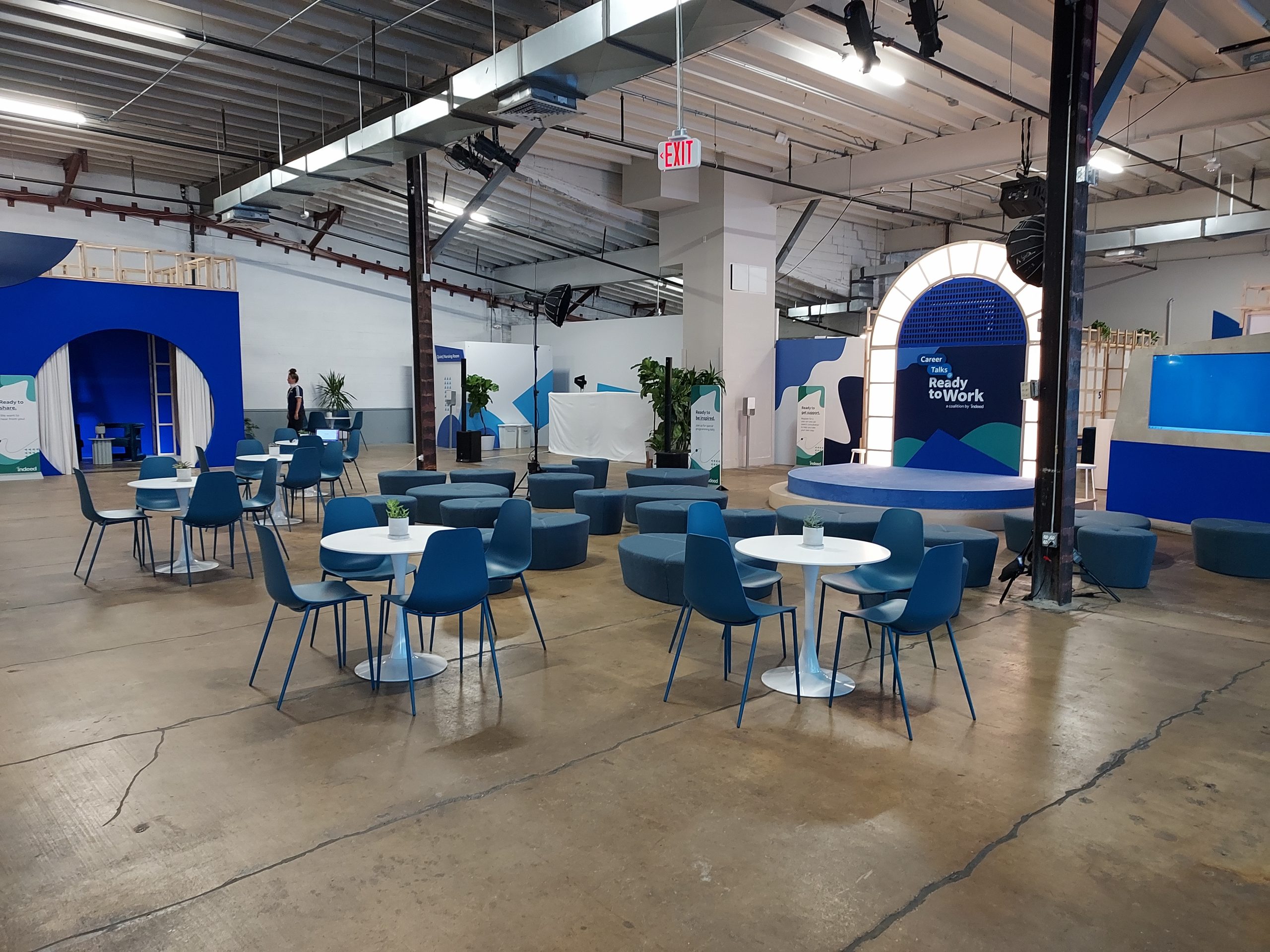
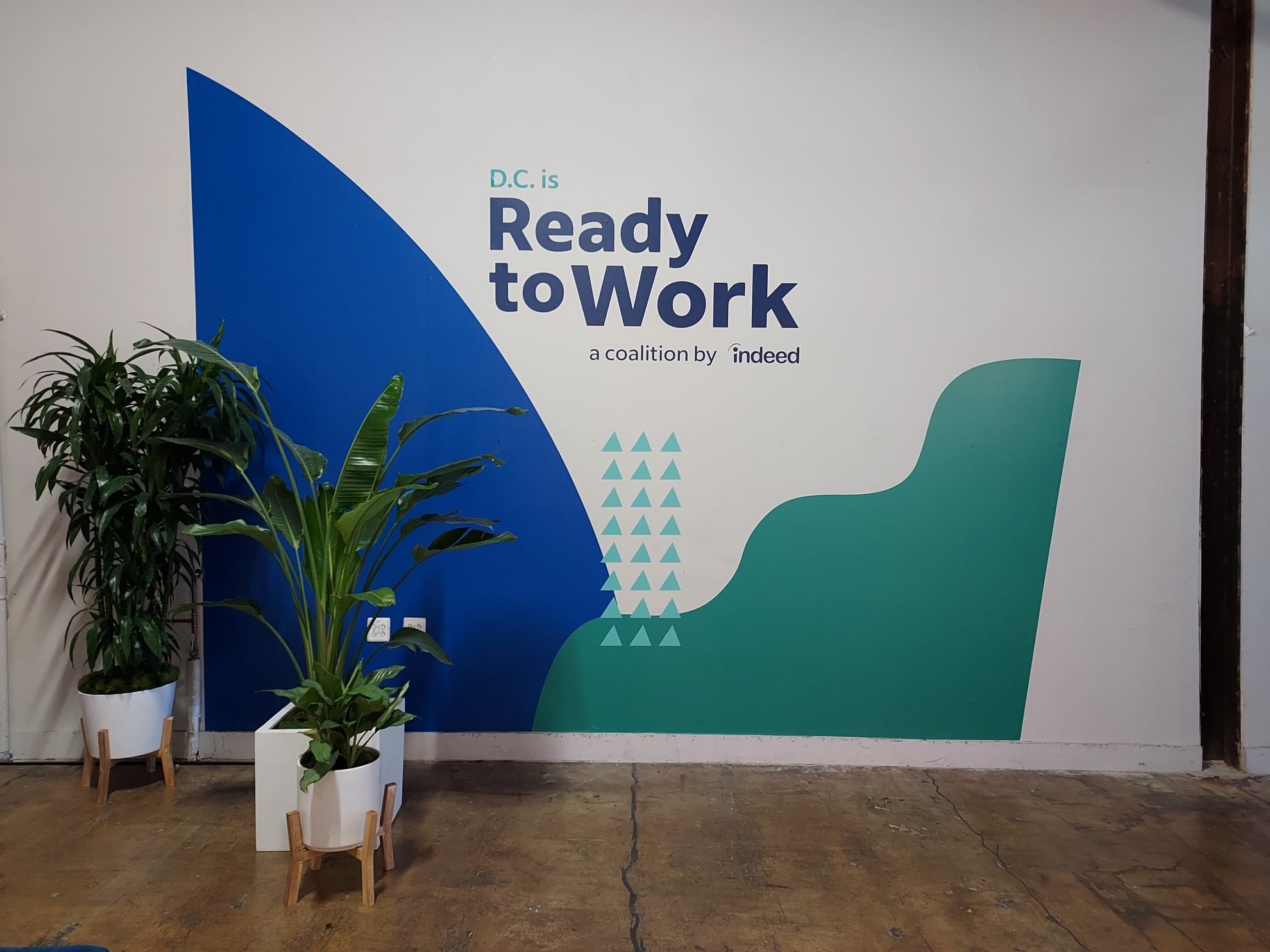
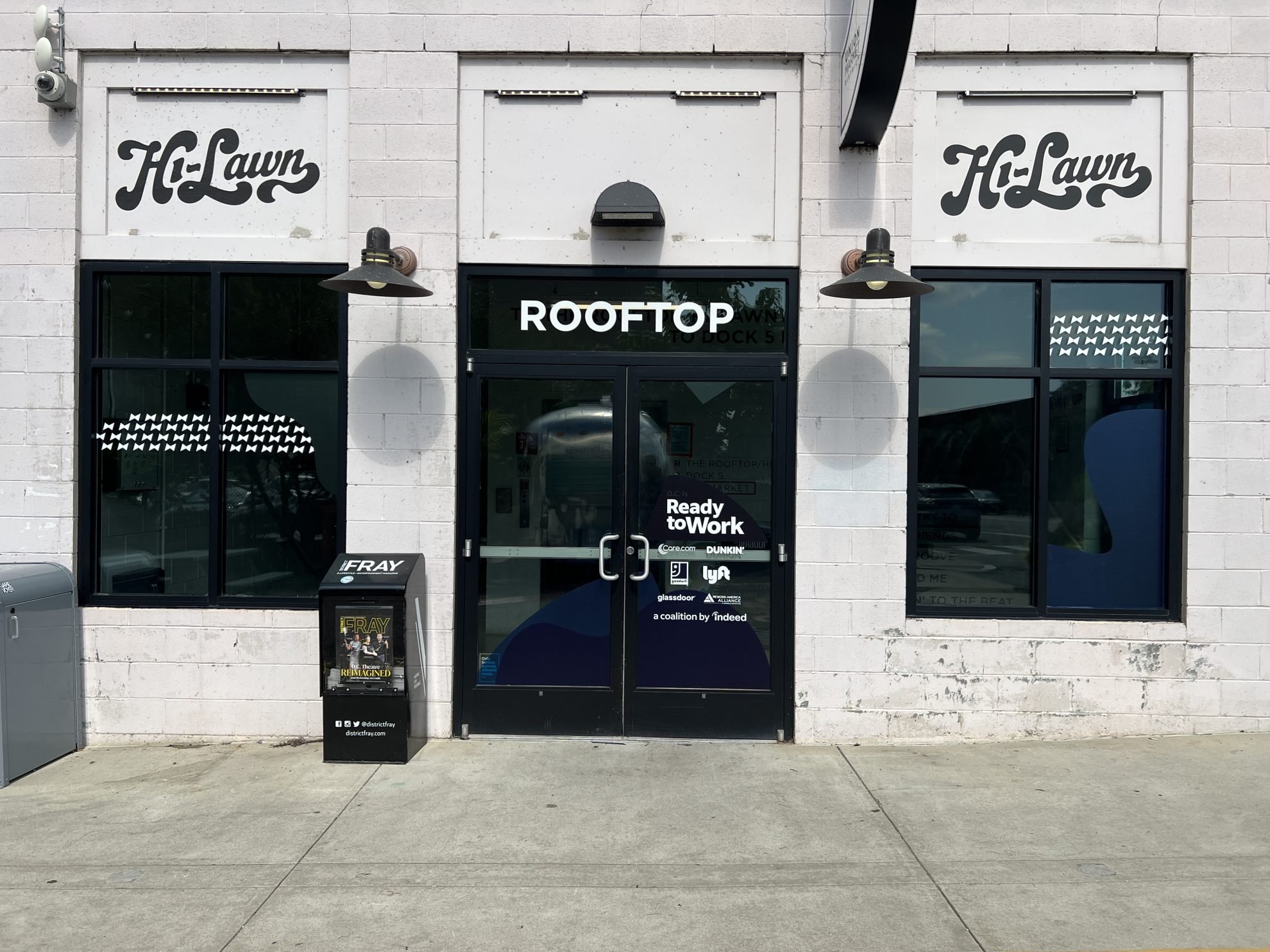
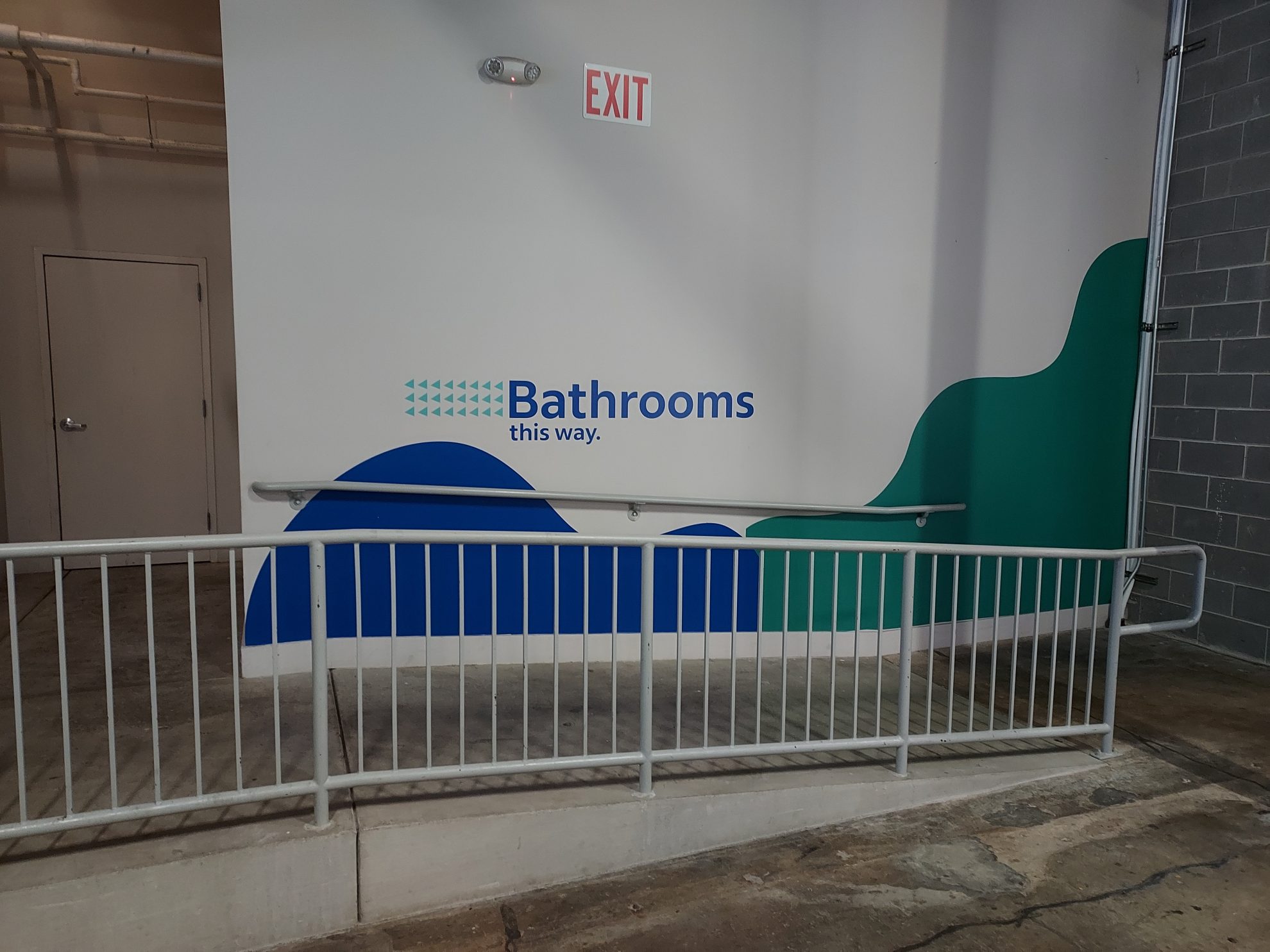
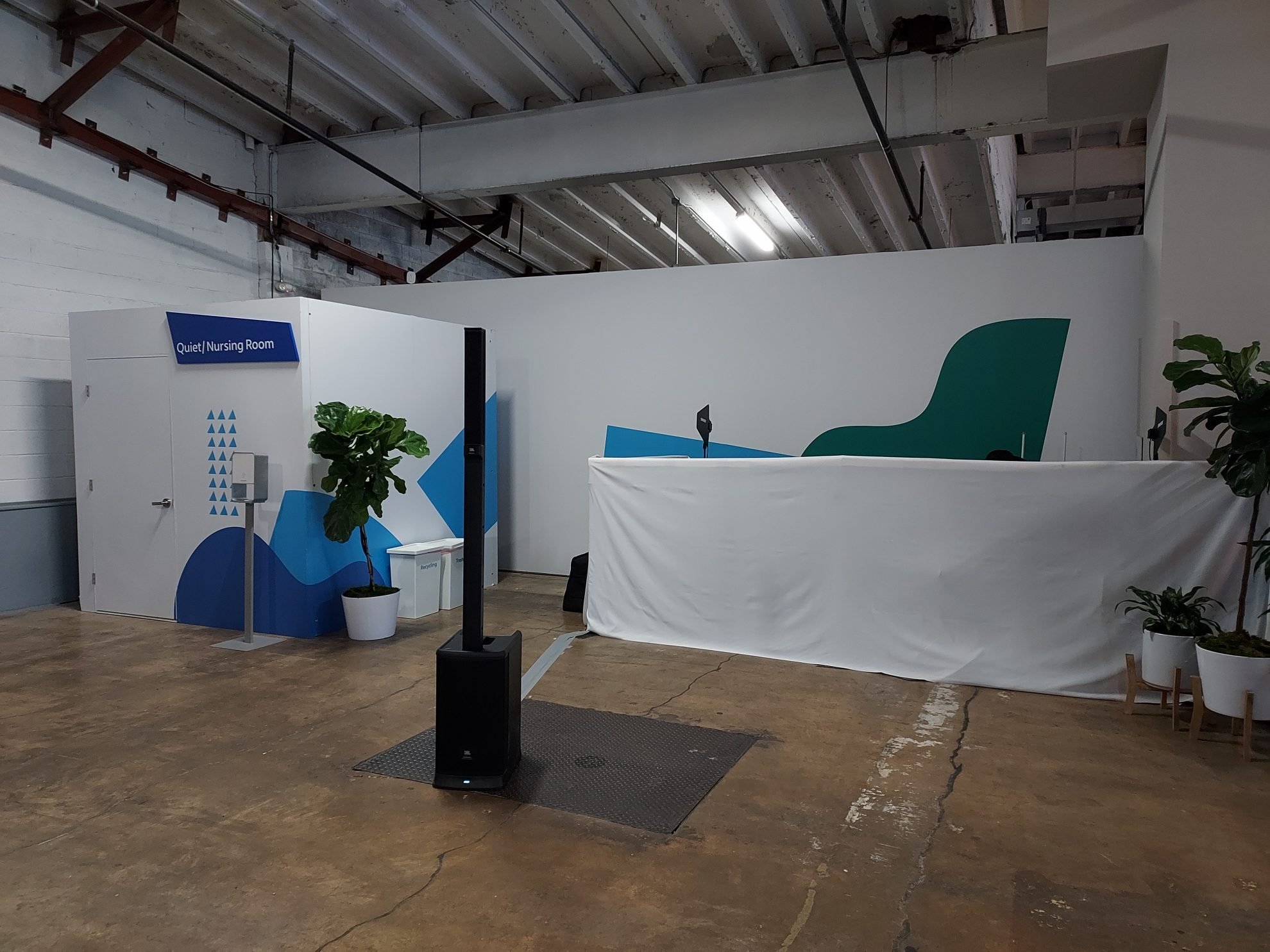
Heritage Signs & Displays' collaboration with The Gathery to brand Union Market in Arlington, VA, for Indeed's "Ready to Work" job fair. The project included custom event displays, wall graphics, window graphics, and wayfinding signs, creating an immersive and visually appealing environment. The branding enhanced the venue, reflected the event's mission, and provided a seamless experience for attendees.