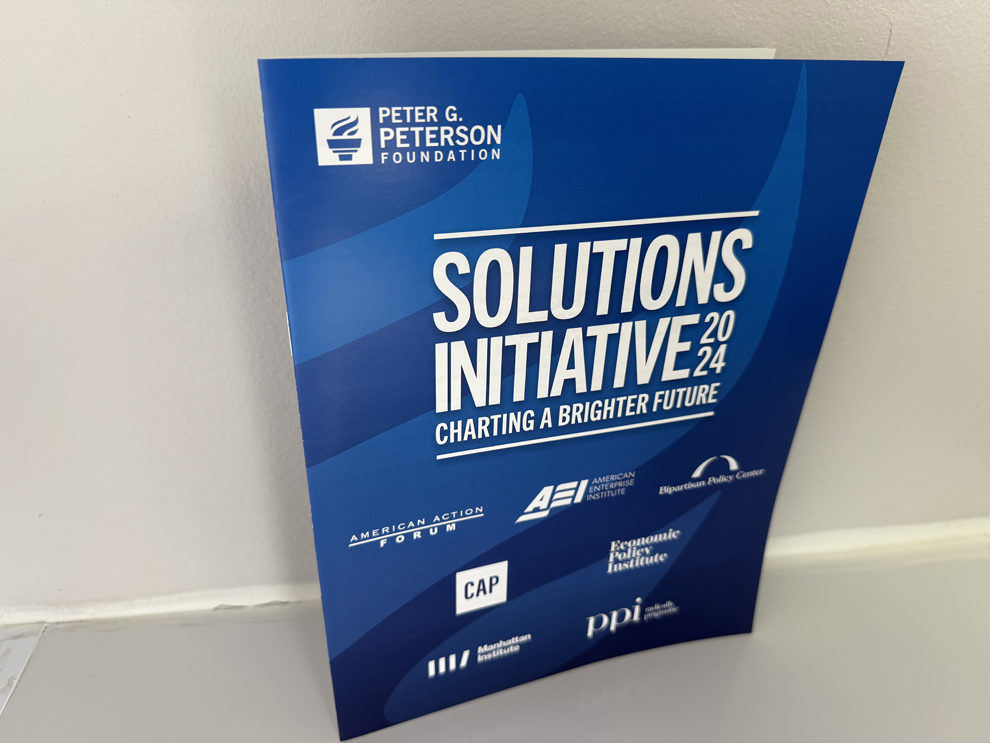
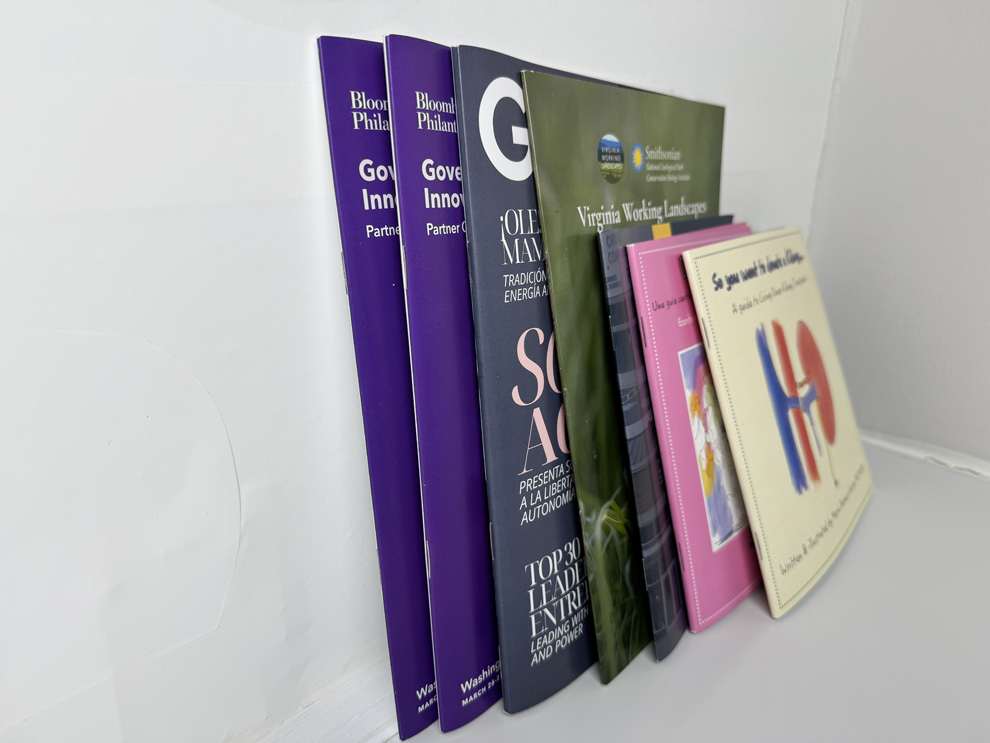
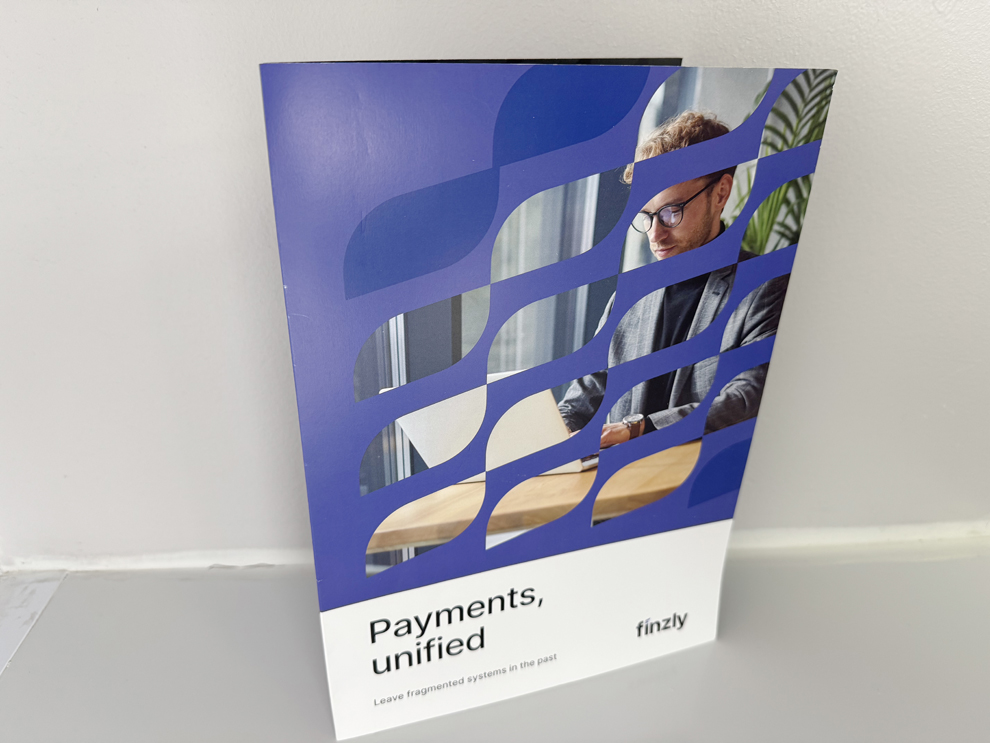
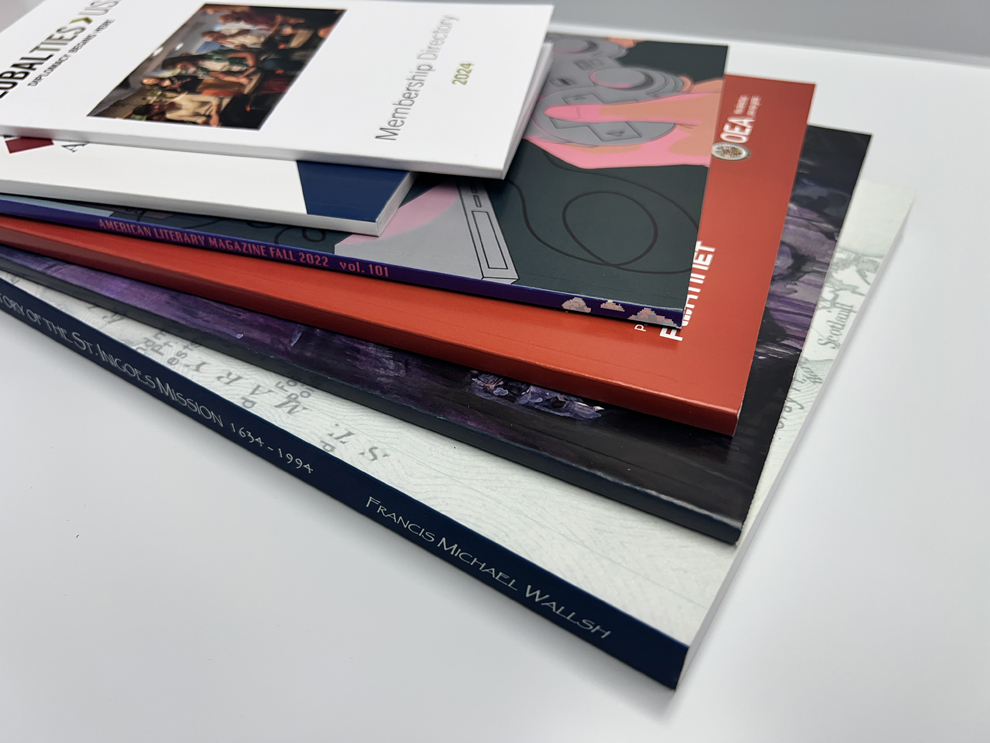
A report asks readers to do more than turn pages. They may need to compare results, understand a recommendation or decide whether your organization offers the right capabilities. A printed booklet should help them find the relevant information and return to it easily when questions arise.
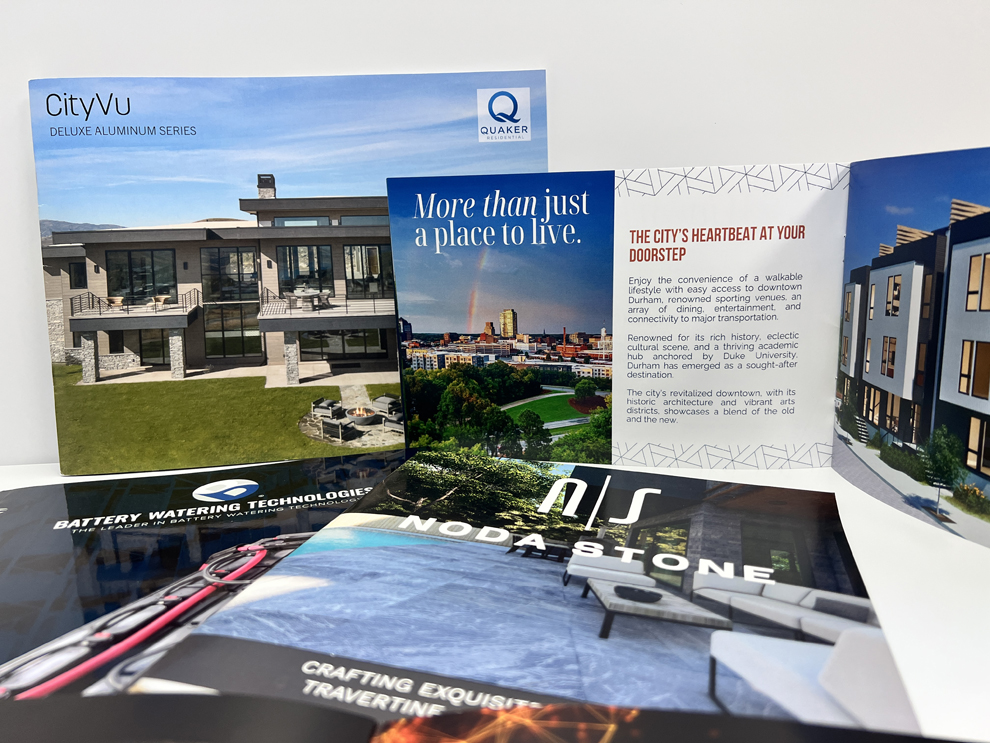
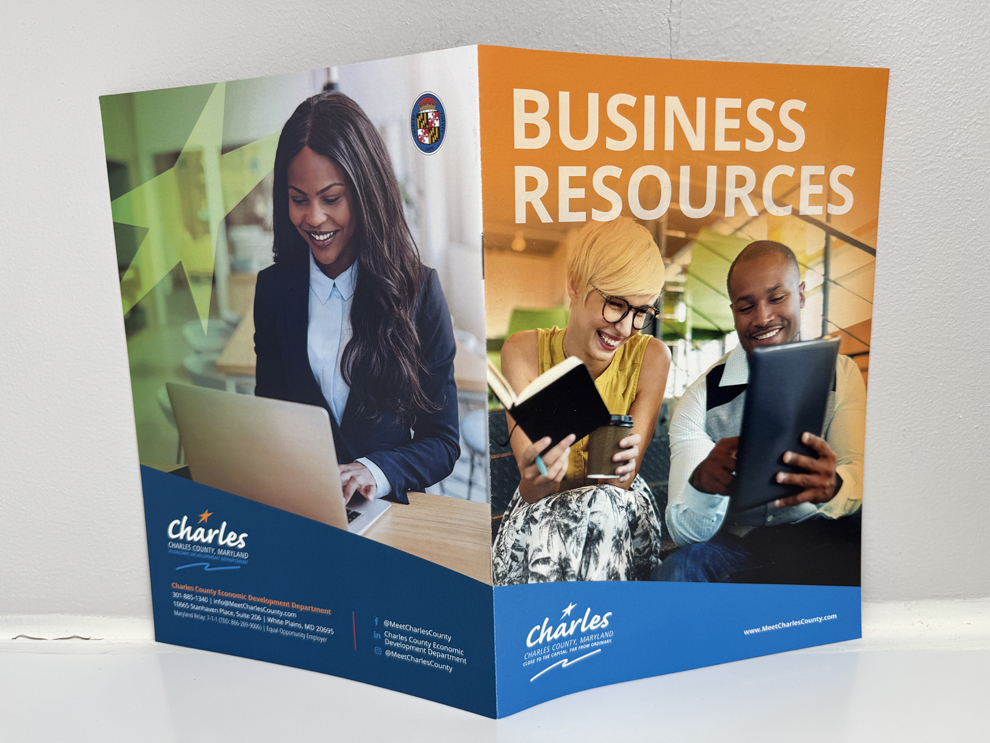
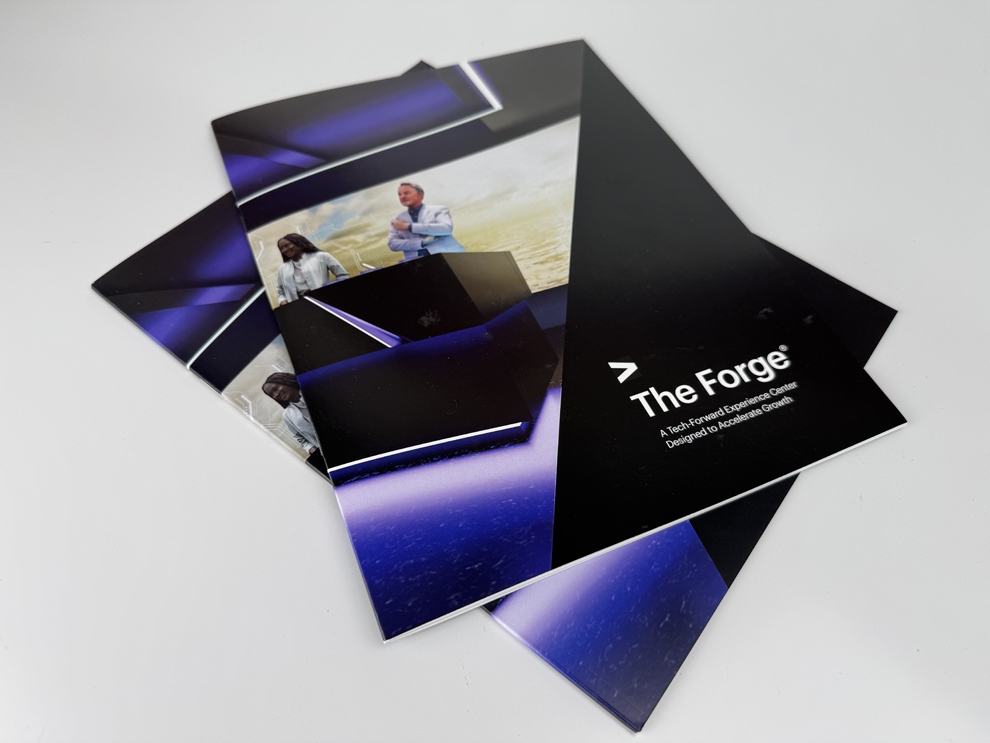
Heritage Signs & Displays produces booklets for Falls Church organizations presenting annual results, explaining services, communicating with members and introducing new initiatives. Capability publications, catalogs, reports, newsletters, magazines, event programs and training guides each organize information for a particular audience. Their physical specifications should serve that audience, too. A concise overview may need a compact, lightweight format. A substantial report may benefit from a book-like construction that is easy to keep with other reference materials.
Paper, cover, binding, dimensions and color all contribute to that experience. Distribution matters as well, especially when some copies will be handed out and others mailed.
Heritage's Commercial Printing experience began in 1977. We bring production knowledge, disciplined color management and direct communication to the process of turning prepared content into finished publications for Falls Church clients.

An updated table can change pagination. A longer introduction can add pages. Replacing a cover may require a different file setup. Publications often evolve as contributors review them, and those revisions need to remain connected to the specifications for the finished piece.
Heritage is a veteran-owned, family-led company guided by a purpose to honor God by serving clients and communities with excellence. For Falls Church organizations, that commitment includes careful file review, measured color control and clear discussion of production requirements. Identifying the quantity, binding, paper and delivery needs early gives everyone a better basis for planning the remaining work.
For qualifying Custom Quote projects, an assigned Project Coordinator becomes your direct phone-and-email contact after the quote is accepted and the order assigned. That person follows the publication's specifications and production requirements, keeping relevant details available as questions arise. Established clients may continue with their coordinator on appropriate repeat orders.
This familiarity can be especially useful when a revised edition carries forward prior choices while introducing new content, quantities or distribution needs.

Explore these related products when your Falls Church publication is part of a broader set of communications.

Arrange schedules, contributor information and acknowledgments in a publication attendees can follow.

Establish a consistent printed presentation for an ongoing editorial or member publication.

Explore dedicated book production for longer works that need a substantial bound format.

Prepare organized instructional content for readers learning procedures or developing new skills.

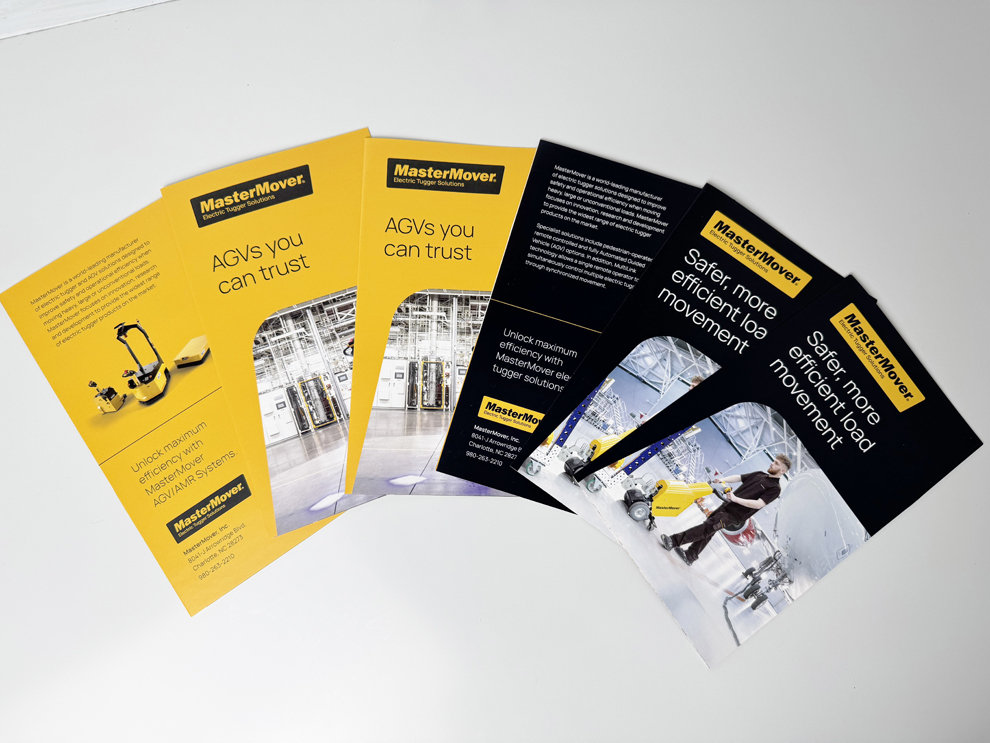
Introduce key services or findings in a shorter piece that complements the full booklet.

Include addressing and mailing coordination when those services belong to the accepted project.

Connect the publication's message with supporting sales sheets, handouts and other printed pieces.

Gather the booklet and its accompanying documents into an orderly presentation for your audience.
Explore current booklet configurations and posted prices. When your PDF is print-ready and an available product meets your requirements, place your order online.
A binding should suit the amount of content and the way readers will handle it. Compare these three formats alongside your paper, cover and finished-size decisions.
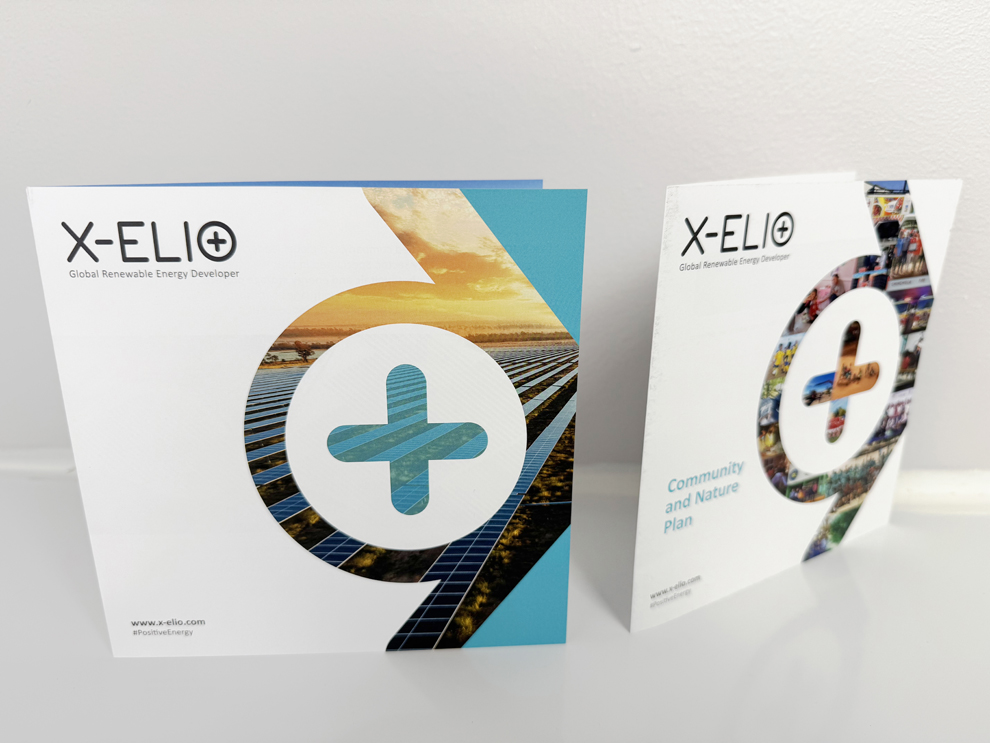
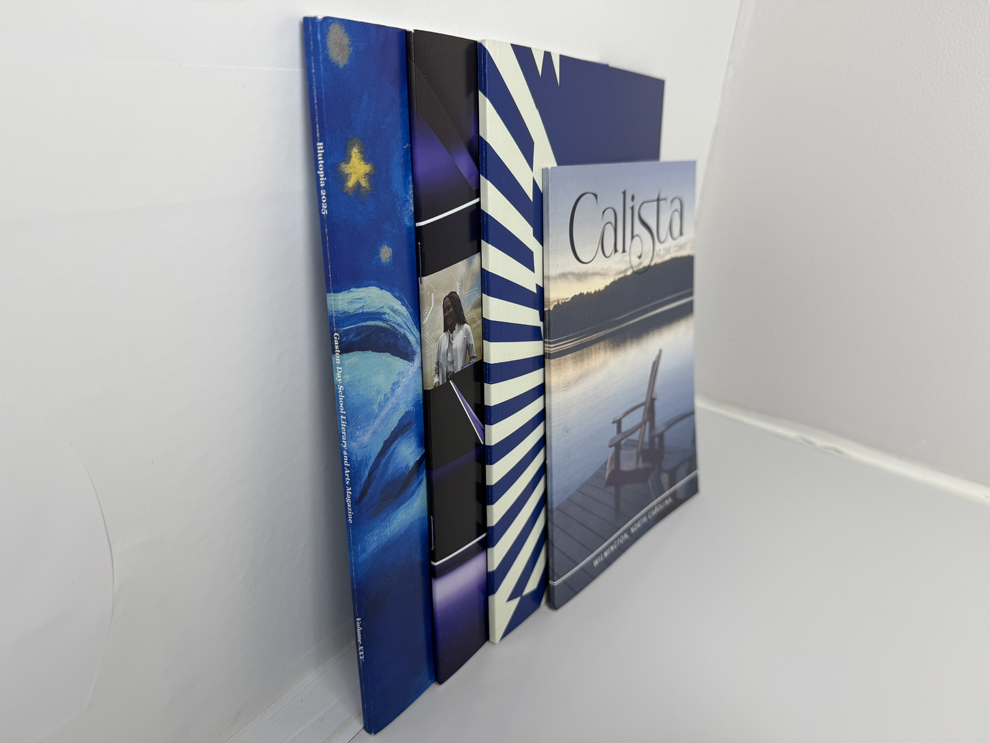
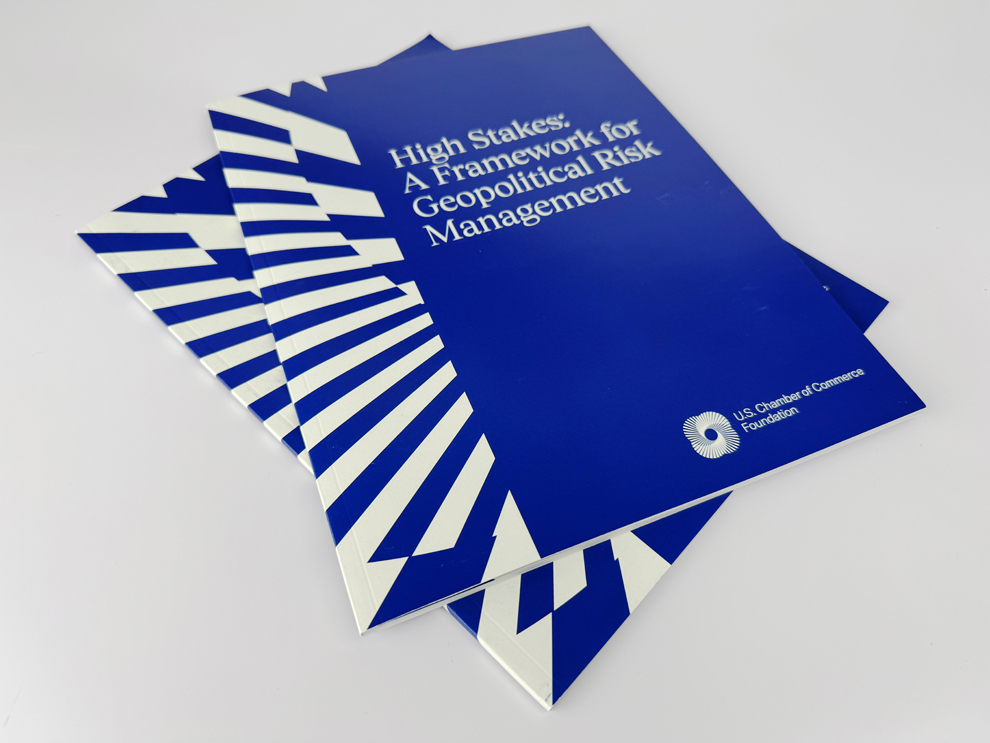
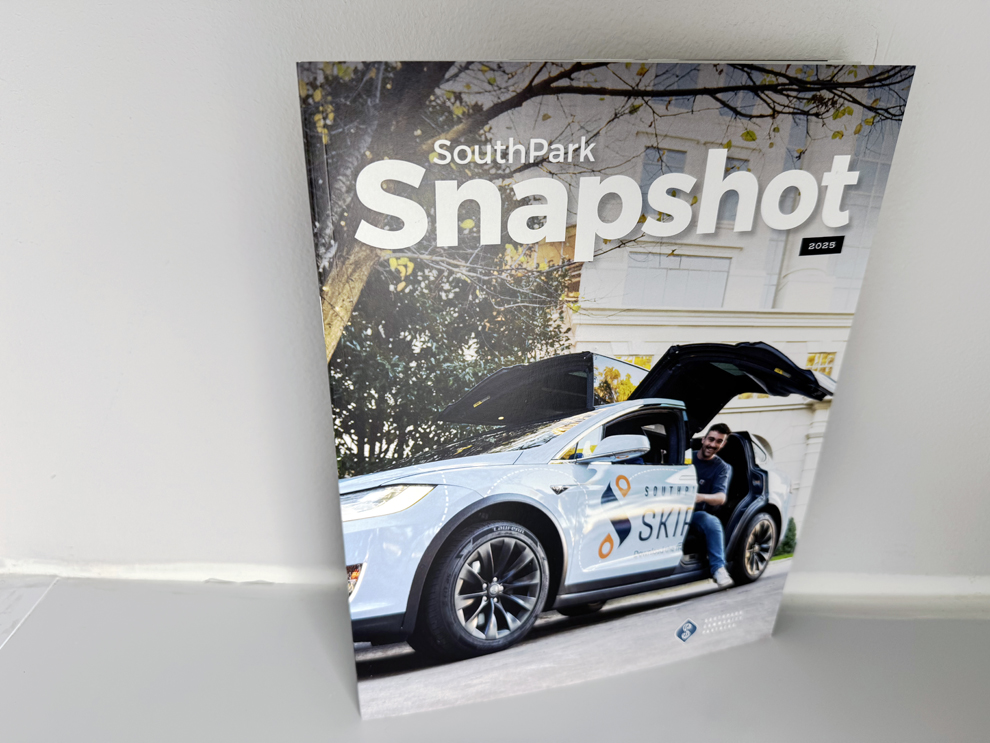
Saddle-Stitched Booklets: With saddle stitching, folded sheets nest inside one another and are fastened along the fold. The resulting compact, economical format often works well for summary reports and shorter programs. Build the page plan in multiples of four and account for the paper stock: heavier sheets reduce the number of pages that can close comfortably.
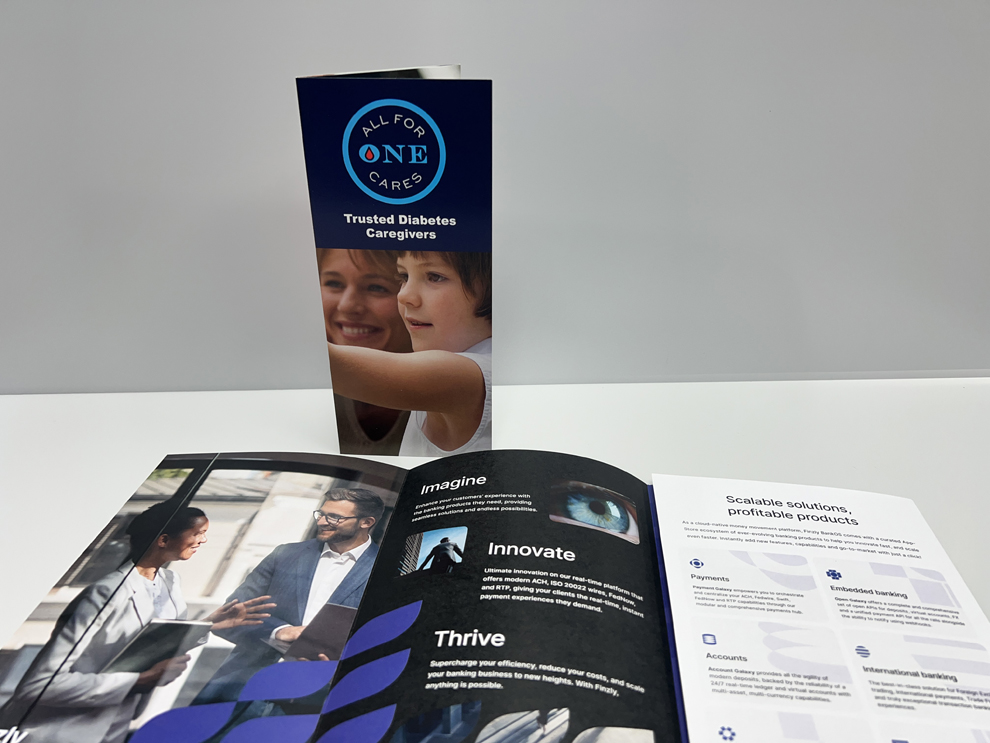
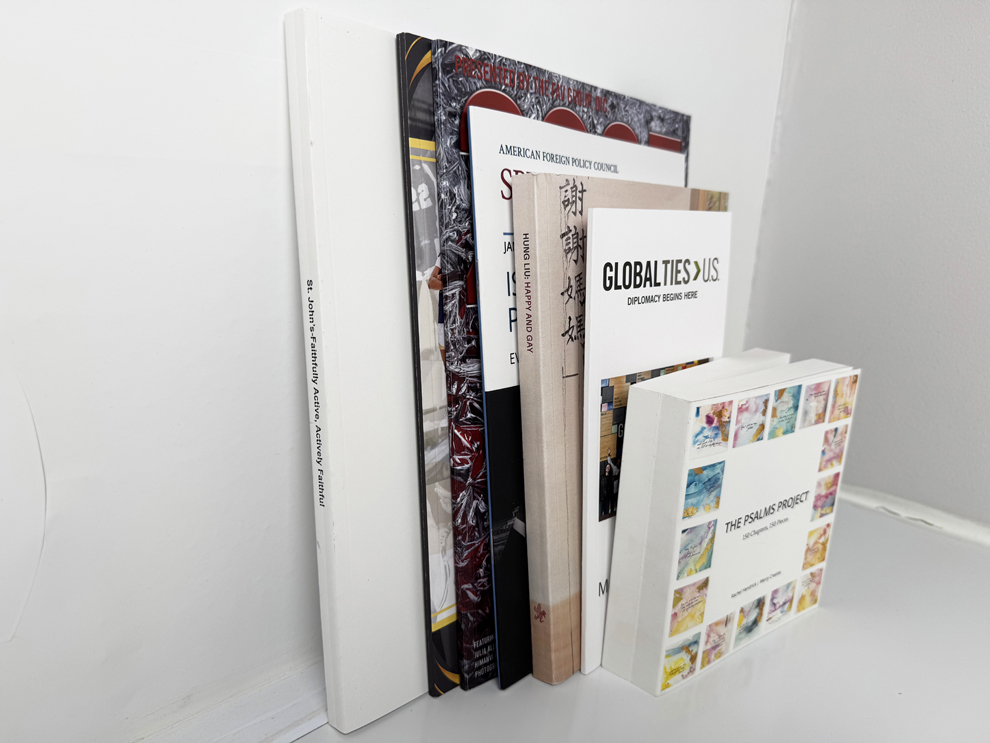
Perfect Bound Booklets: Pages are secured along one edge with adhesive inside a wraparound cover, creating the squared spine associated with a paperback book. A longer capability publication, annual report or reference guide may suit this format when the paper and page count provide sufficient spine thickness.
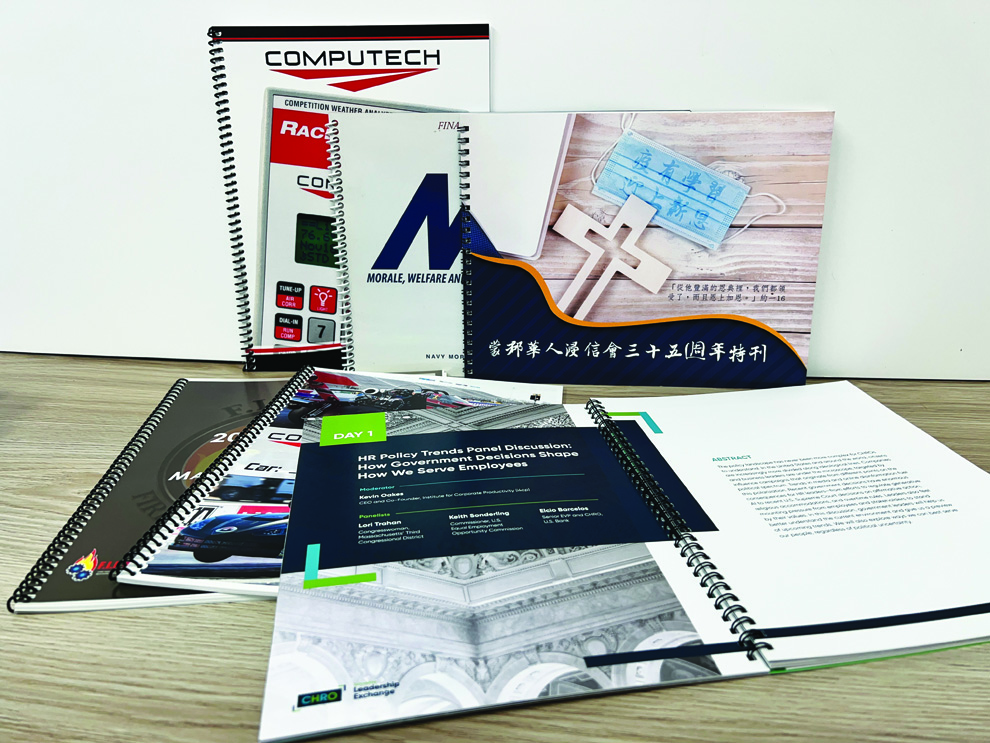
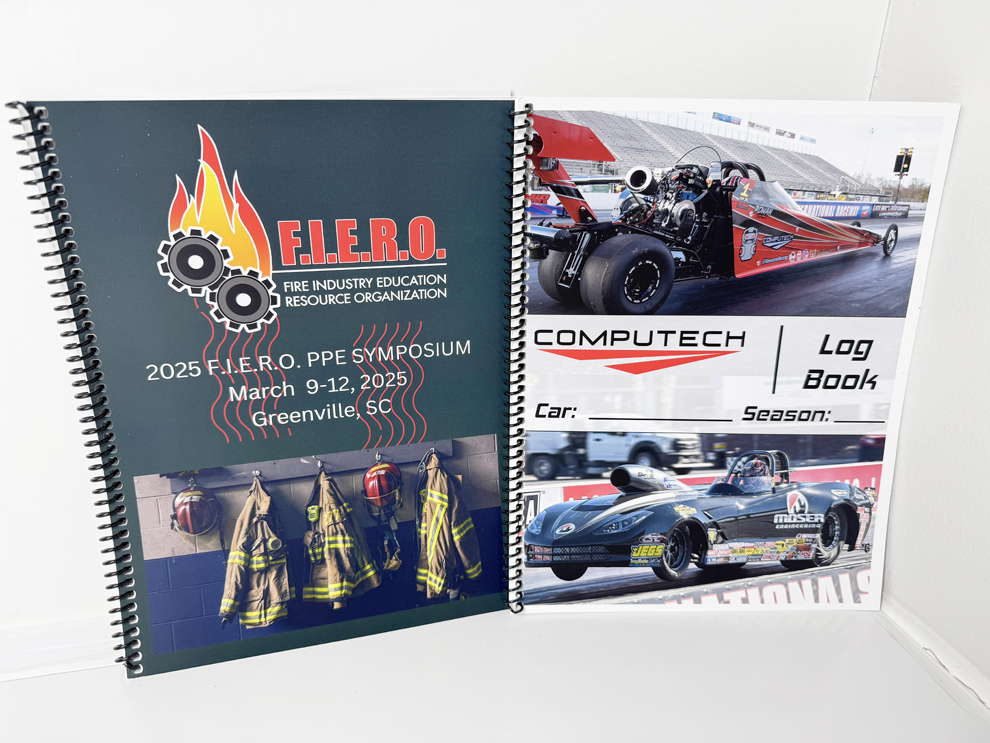
Plastic Coil / Spiral-Bound Booklets: A continuous plastic coil connects pages through holes along their edge. Readers can leave the booklet open or turn pages fully back, which is useful when consulting instructions or making notes during a session. Consider its practical handling alongside the presentation expected for the publication.
Images crossing facing pages, cover weight and mailing arrangements can also affect the choice. Heritage can review the connected specifications within qualifying Custom Quote work before those decisions are finalized.

Falls Church buyers can select available booklets independently or request production support for qualifying work. Every booklet order receives an electronic proof for review and approval before printing. The appropriate purchasing route depends on the live configuration, readiness of the artwork and assistance required.
Self-Directed Online Store: Select the offered page count, paper, cover and binding, then upload a finished, print-ready PDF and purchase at the posted price. Store products offer Heritage's lowest available pricing. Every new Commercial Printing opportunity has a $750 minimum, and eligible Store products can be combined to reach it. Store purchases do not include layout work, an assigned Project Coordinator or physical color proofing.
Storefront Custom Quote: Approved Commercial Printing opportunities of $2,000 or more may use this form-based intake when production-related support is needed. That can include file adjustments, paper and binding guidance, color-critical decisions, mailing or coordinated delivery within the accepted scope. The amount alone does not require the Custom Quote route. After quote acceptance and order assignment, a Project Coordinator provides direct phone-and-email contact. Appropriate repeat orders for established clients may continue with their assigned coordinator.

Consider the depth of the content and how the recipient will review it. A concise overview may work well as a saddle-stitched booklet, perhaps with a heavier cover. A detailed capability booklet or proposal volume can use perfect binding if its paper and page total support an adequate spine. Account for any page restrictions and whether copies will be delivered in person or shipped.
It is included with every Heritage booklet order, through both the Store and accepted Custom Quote work. Printing follows your review and approval. Examine the text, images, covers, page sequence and production notes carefully, including revisions made since an earlier version. The electronic proof confirms content and layout. It cannot serve as a physical color standard or guarantee the finished printed color.
Paper bulk is a major factor. Although pages normally come in multiples of four, a thicker stock reaches the practical limit sooner because the folded sheets become harder to close. Inner pages can also move outward toward the trim as the bundle grows. Check the live Store listing's page ranges for the chosen paper. Perfect binding may suit a publication that has outgrown saddle stitching.
A perfect-bound construction can give a substantial report a squared edge and printable spine for identification on a shelf. It requires enough combined paper and pages to form a suitable spine. Short summaries and programs often remain better suited to saddle stitching for their lightweight, economical construction. Consider retained use, presentation, mailing and page count together before selecting the format.
Follow the exact selected product's instructions. Most workflows call for single pages in reading order, rather than imposed printing spreads. Extend bleed beyond the trim, keep live text within safe margins, embed fonts and use adequate image resolution. For perfect-bound covers, the spine width may depend on the final paper and page count. Confirm that setup before exporting the complete PDF.
A Digital Hard Copy Proof is available by request for qualifying Commercial Printing Custom Quote work of $2,000 or more. Also called a Physical Production Color Proof, it is made on the intended production printer using the intended paper or material. The service adds cost and time. Approval makes it the controlling physical color standard unless otherwise agreed. This option is unavailable through the Self-Directed Online Store.
Pricing reflects the whole configuration, including quantity, total pages, trim dimensions, cover and interior stock, binding, color coverage and finishing. Delivery or mailing arrangements also contribute. Changing page count affects production differently from changing copy quantity. Compare posted prices for eligible Store configurations, or use Storefront Custom Quote for qualifying $2,000+ opportunities whose requirements call for additional production support.
No. Choose the Store when its configuration fits and your files are print-ready. The $750 minimum applies to every new Commercial Printing opportunity; eligible Store items may be combined. Qualifying work of $2,000 or more may use Custom Quote when production guidance or coordination is needed. Contact Our Team handles ordinary Store questions and questions about existing orders.
Choose coil when readers need an open page to remain available while they work, take notes or follow a procedure. Punched pages turn back around the coil, allowing convenient handling at a desk. This working format may be less appropriate for a formal stakeholder report or a large mailing. Compare the reader's practical needs with the desired appearance and packing requirements.
Provide the required date and anticipated approval schedule early. Heritage must evaluate the actual artwork, specifications, quantity, binding, delivery needs and available capacity before committing to completion. Late editorial changes can affect that assessment. If the requested schedule is not achievable, Heritage can explain available alternatives, which may include simplifying finishing. A meeting date alone does not establish a production commitment.
An accepted Custom Quote for qualifying Commercial Printing work of $2,000 or more may include production file preparation within its scope. Examples include correcting trim size, adding bleed, resolving pagination or building a perfect-bound cover around the correct spine width. This assistance is not broad creative design. Store files must be complete and print-ready when uploaded. Submit existing files and timing needs for assessment.
A self-cover publication uses the same paper throughout and may suit a short, lightweight booklet with economical production and mailing requirements. A separate, heavier cover can add substance when readers will keep the piece or carry it to meetings. The additional thickness changes the finished bulk, so consider its effect on binding capacity, how neatly the booklet closes and distribution.
Supply vector logos, properly converted images and consistent swatch definitions. Heritage uses spectrophotometric calibration and verification with production-specific profiles. PMS references are targets, not guaranteed matches across papers, inks and finishes. Screens and electronic proofs cannot establish final physical color. For qualifying $2,000+ Commercial Printing Custom Quote projects, an additional-cost Physical Production Color Proof may be requested for critical-color evaluation.
Mailing can be coordinated within the accepted Commercial Printing scope, including addressing and handoff to USPS. Provide accurate address data that you are authorized to use and explain the desired delivery window early. Publication size and weight affect mailing preparation. USPS establishes acceptance requirements and controls delivery after receiving the mailing, so its performance remains outside Heritage's production commitments.
Previously approved paper, dimensions, binding and color specifications can carry forward while the updated artwork and quantities undergo review. Clearly identified differences also allow multiple audience versions within a project. For appropriate directly managed repeat work, established clients may continue with the Project Coordinator familiar with earlier editions. Confirm current requirements so new content and distribution needs are reflected in the order.
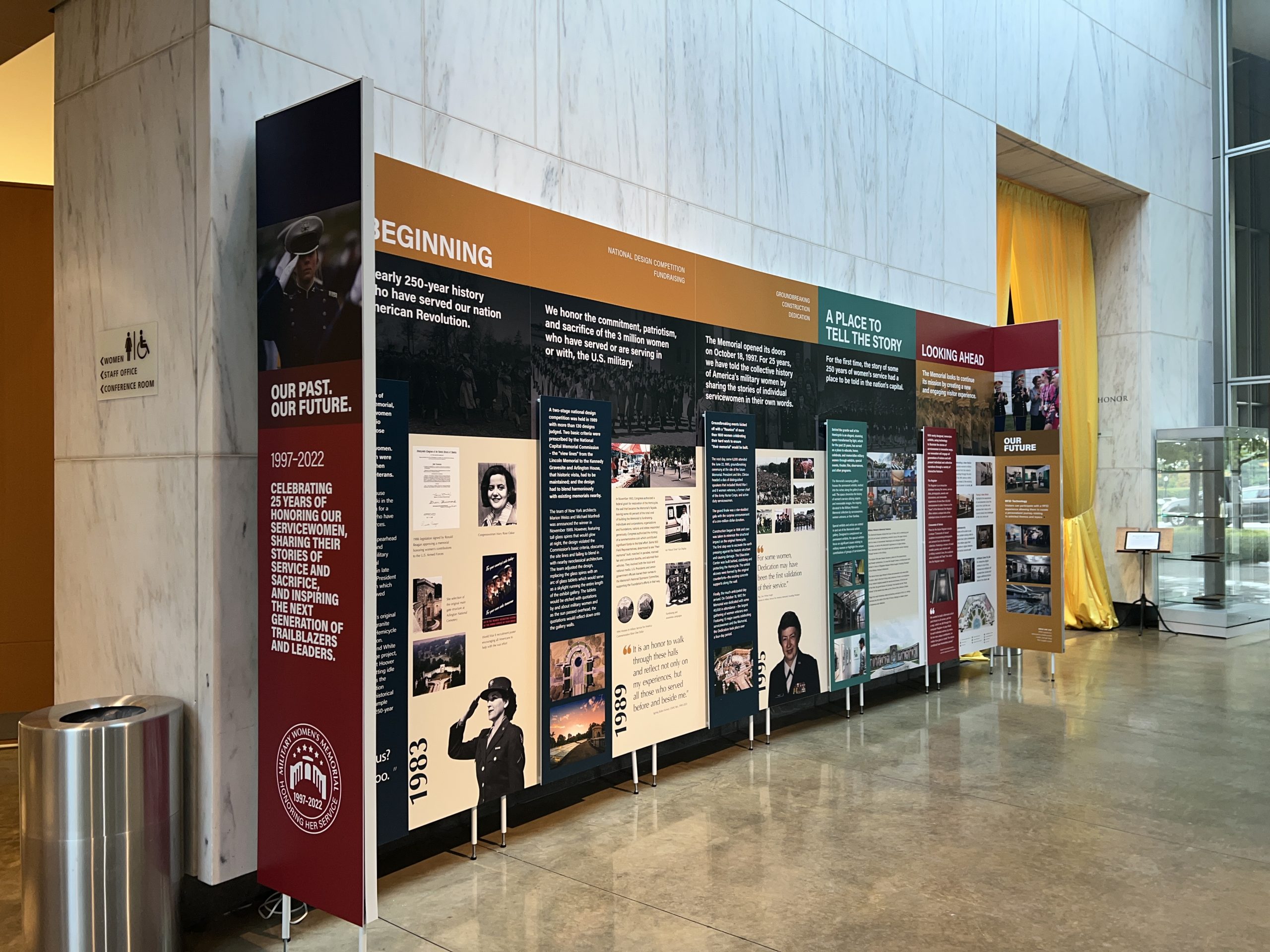
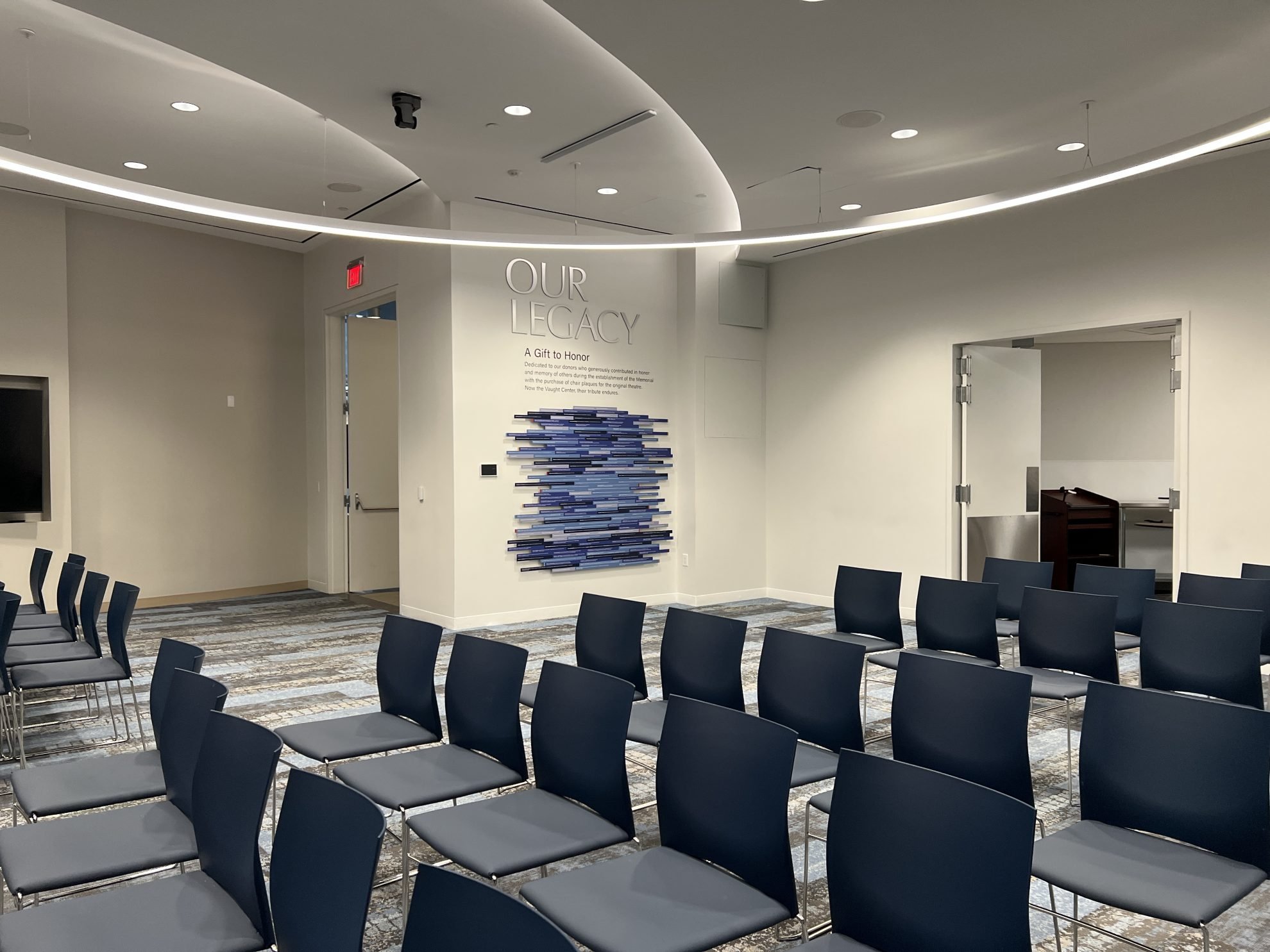
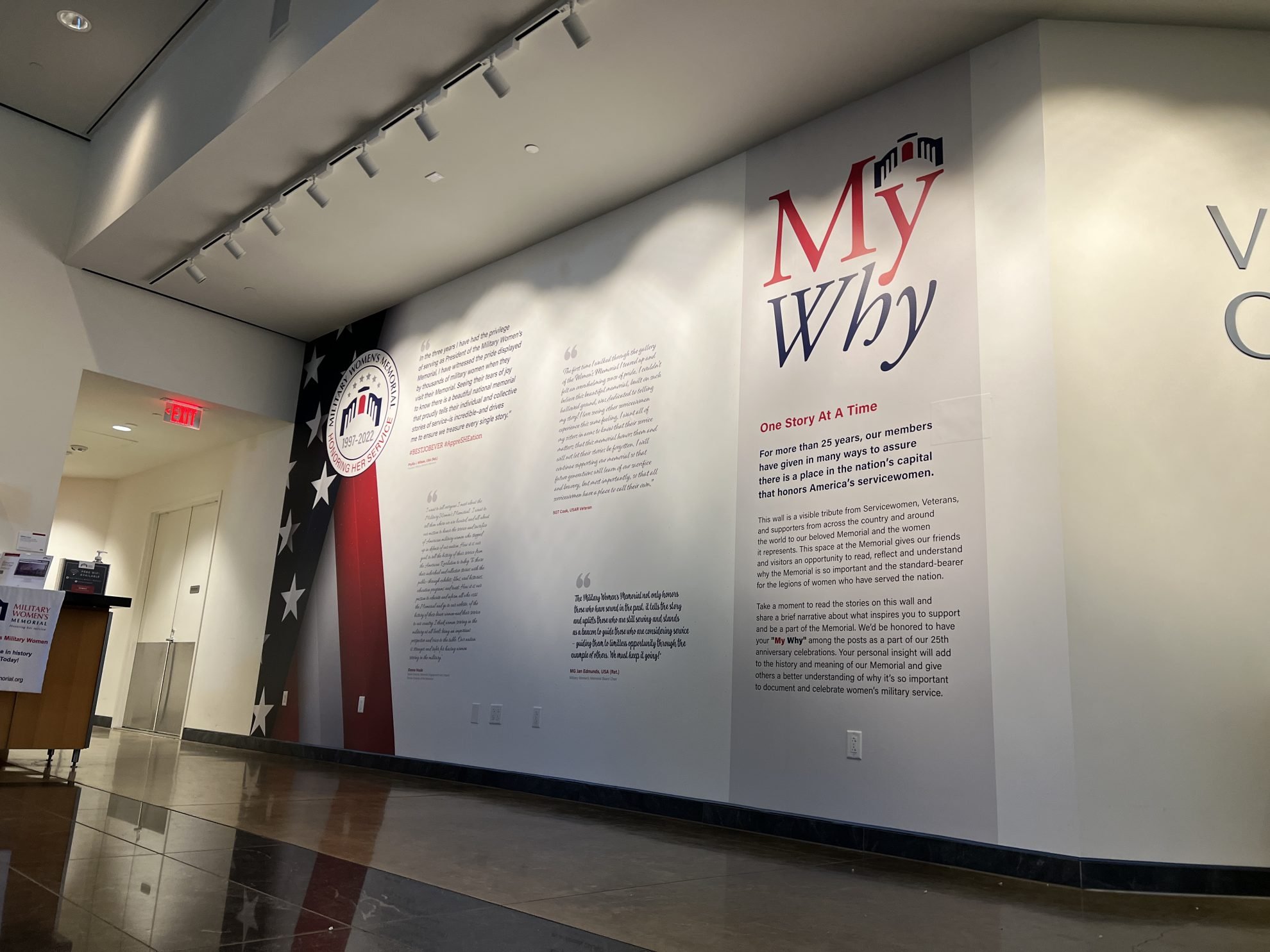
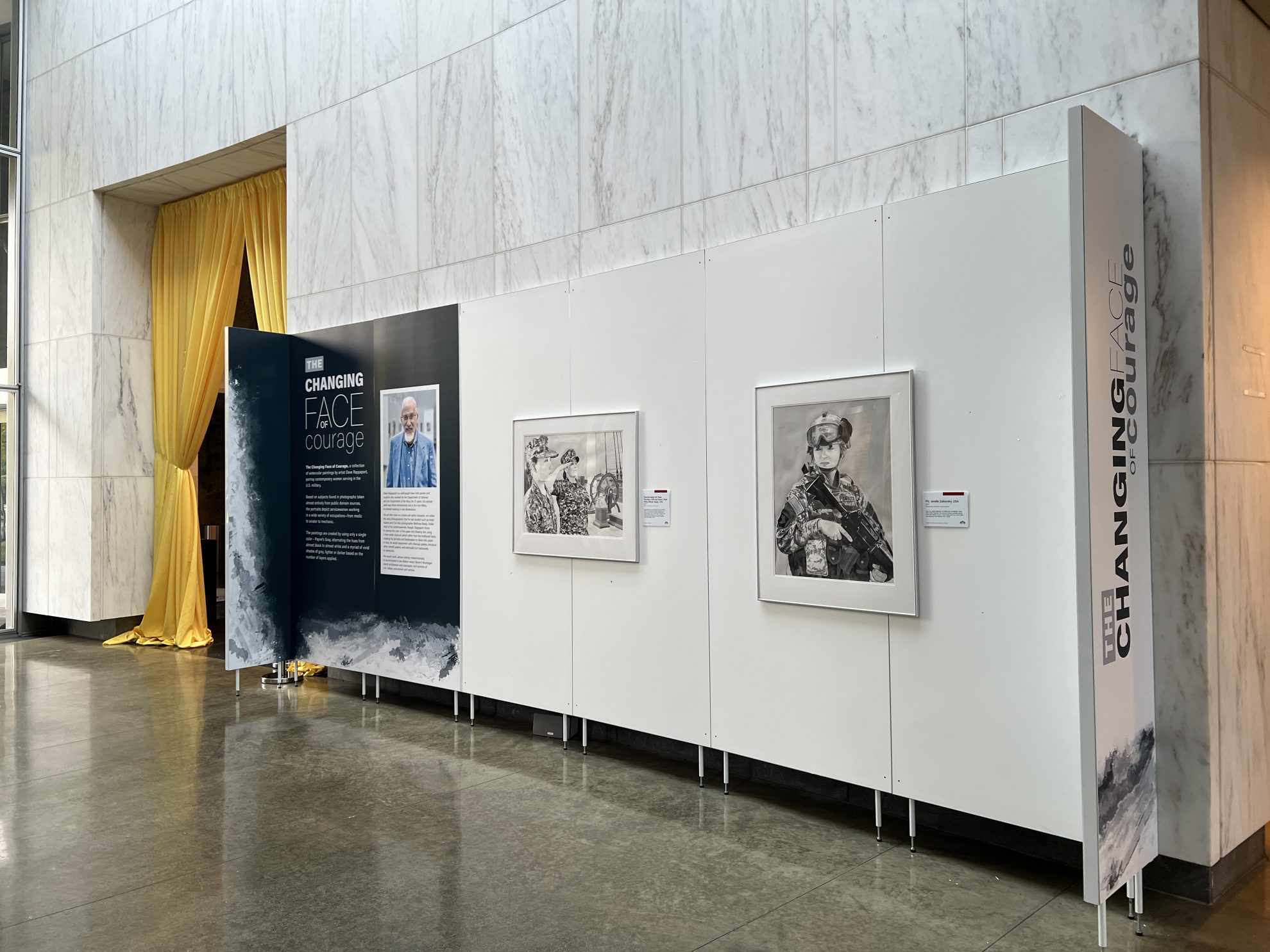
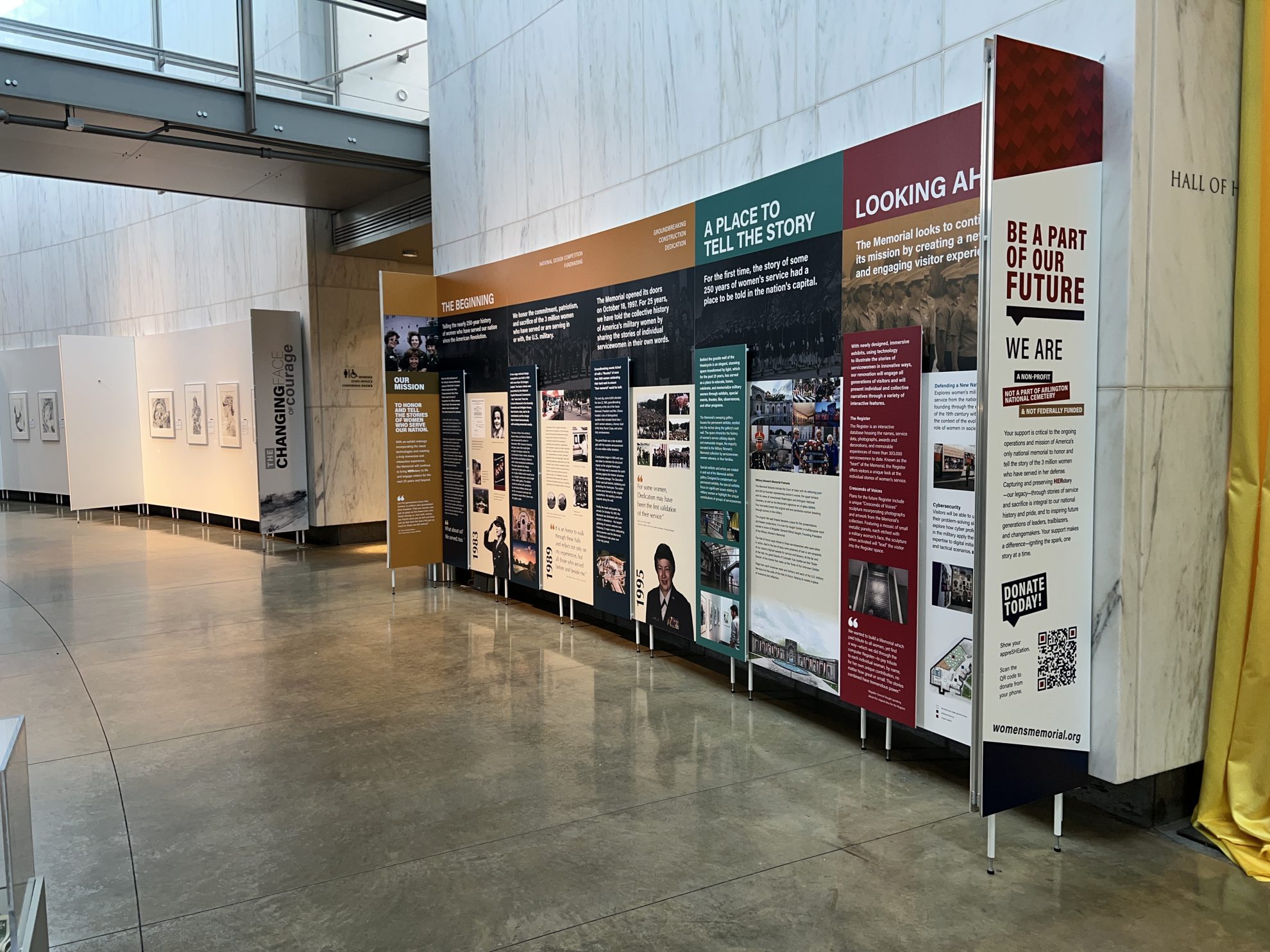
Heritage Signs & Displays created new museum signage for the Military Women’s Memorial in Arlington, VA. The project included custom signs, wall wraps, dimensional letters, and standoff-mounted displays to honor the legacy of U.S. servicewomen and the donors who supported the memorial. The updated interior features impactful designs, including a "Our Legacy" wall display and panels showcasing historical contributions and artwork, creating a transformative tribute to women in the U.S. Armed Forces.
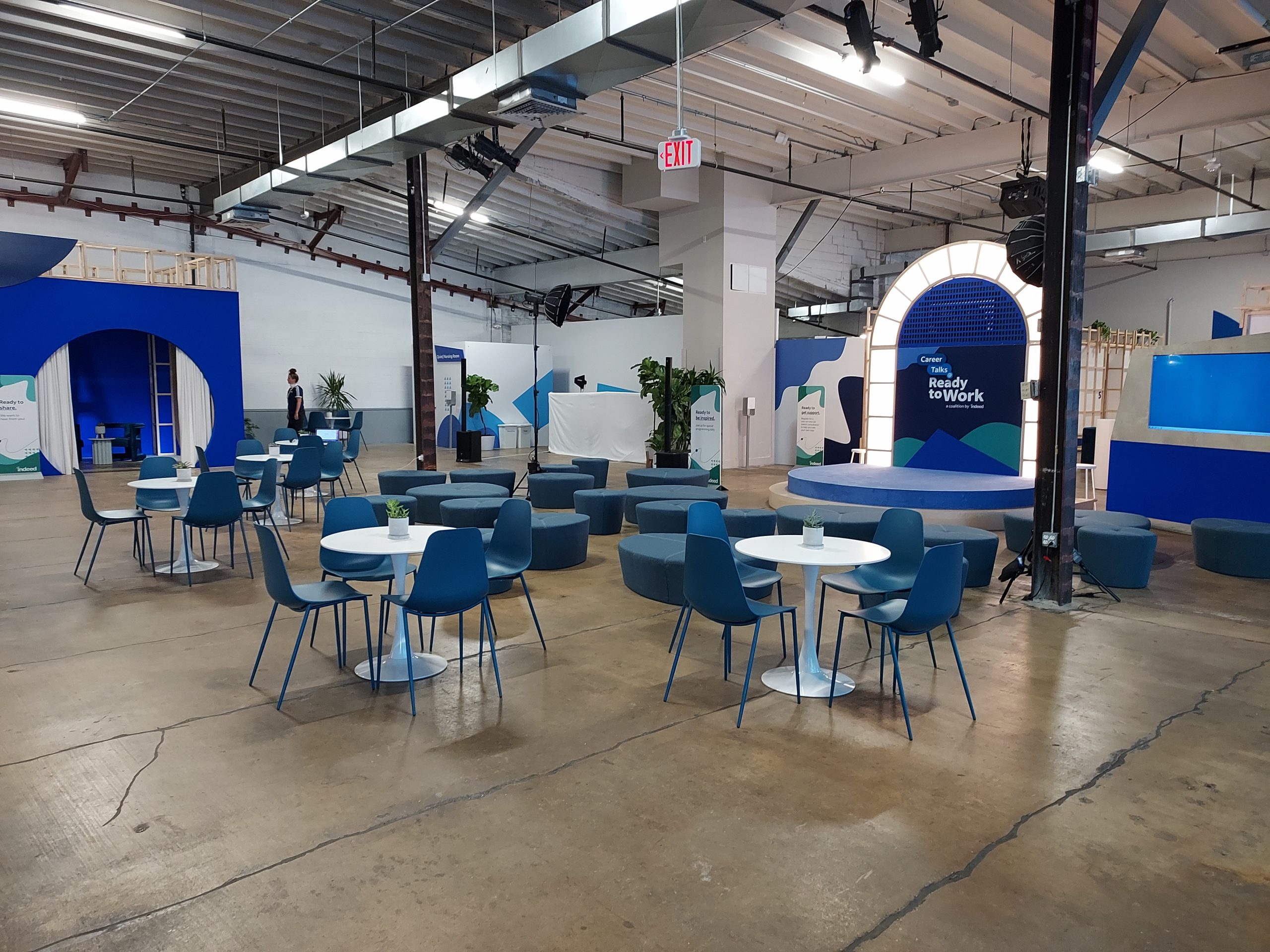
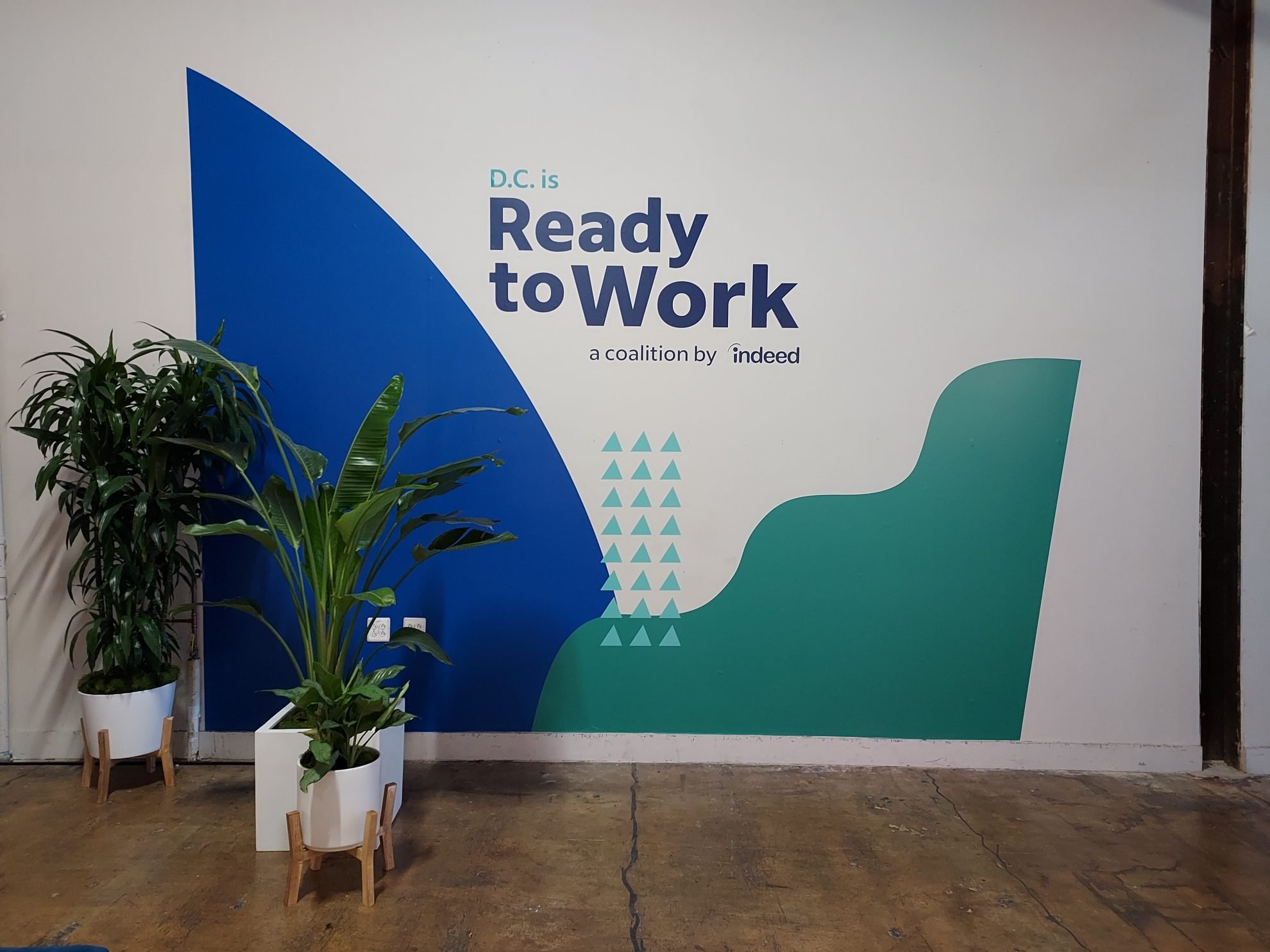
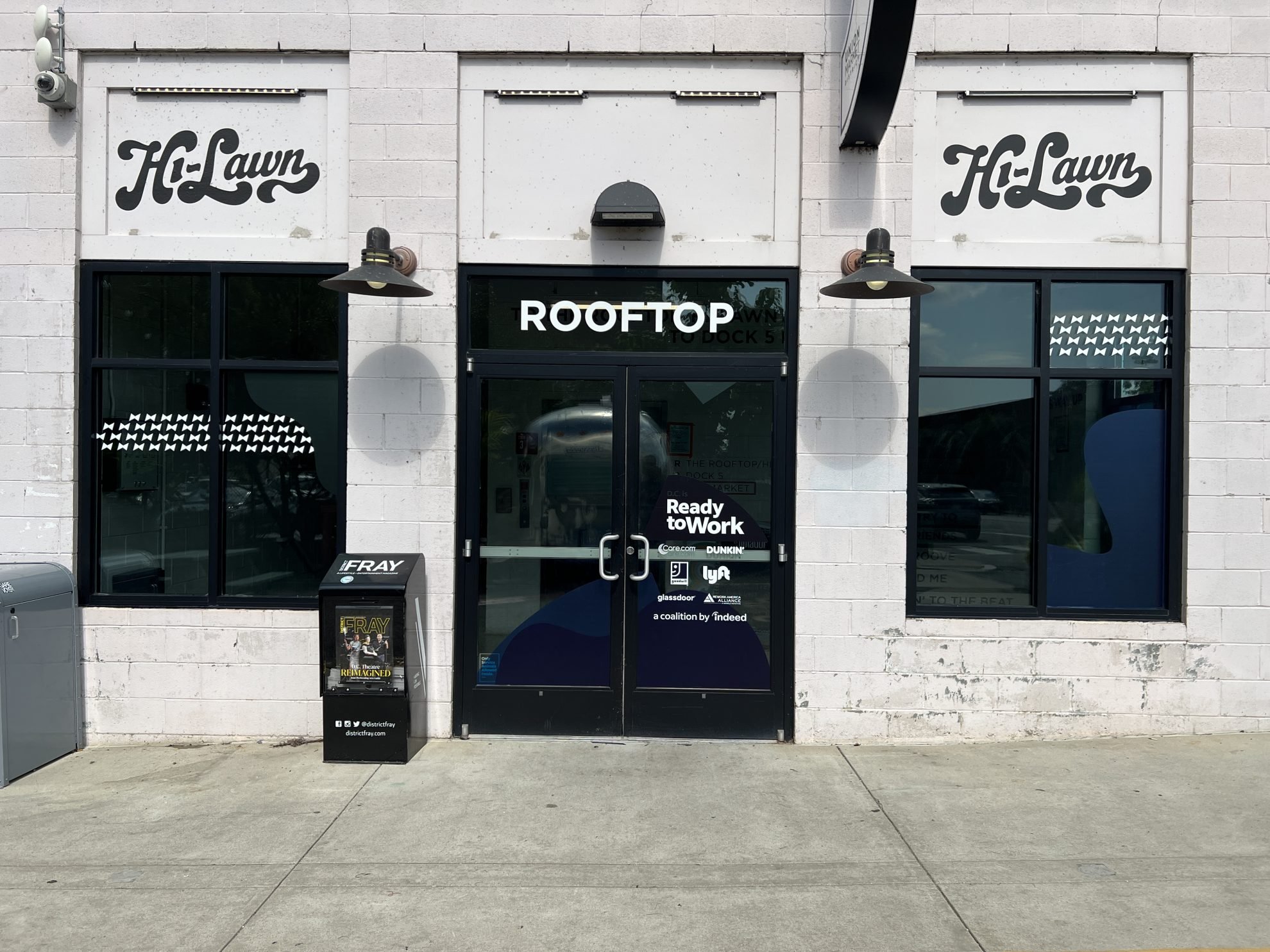
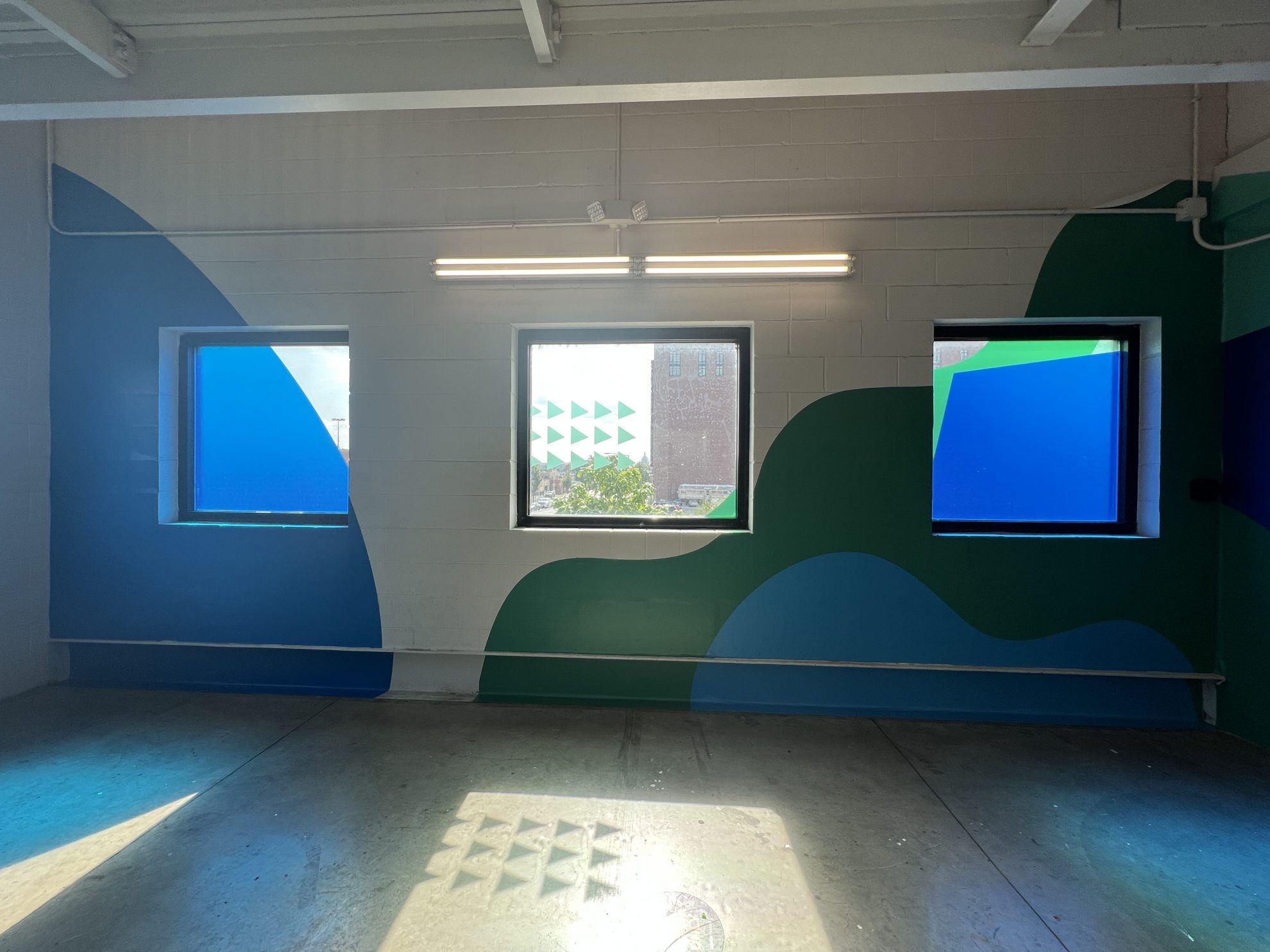
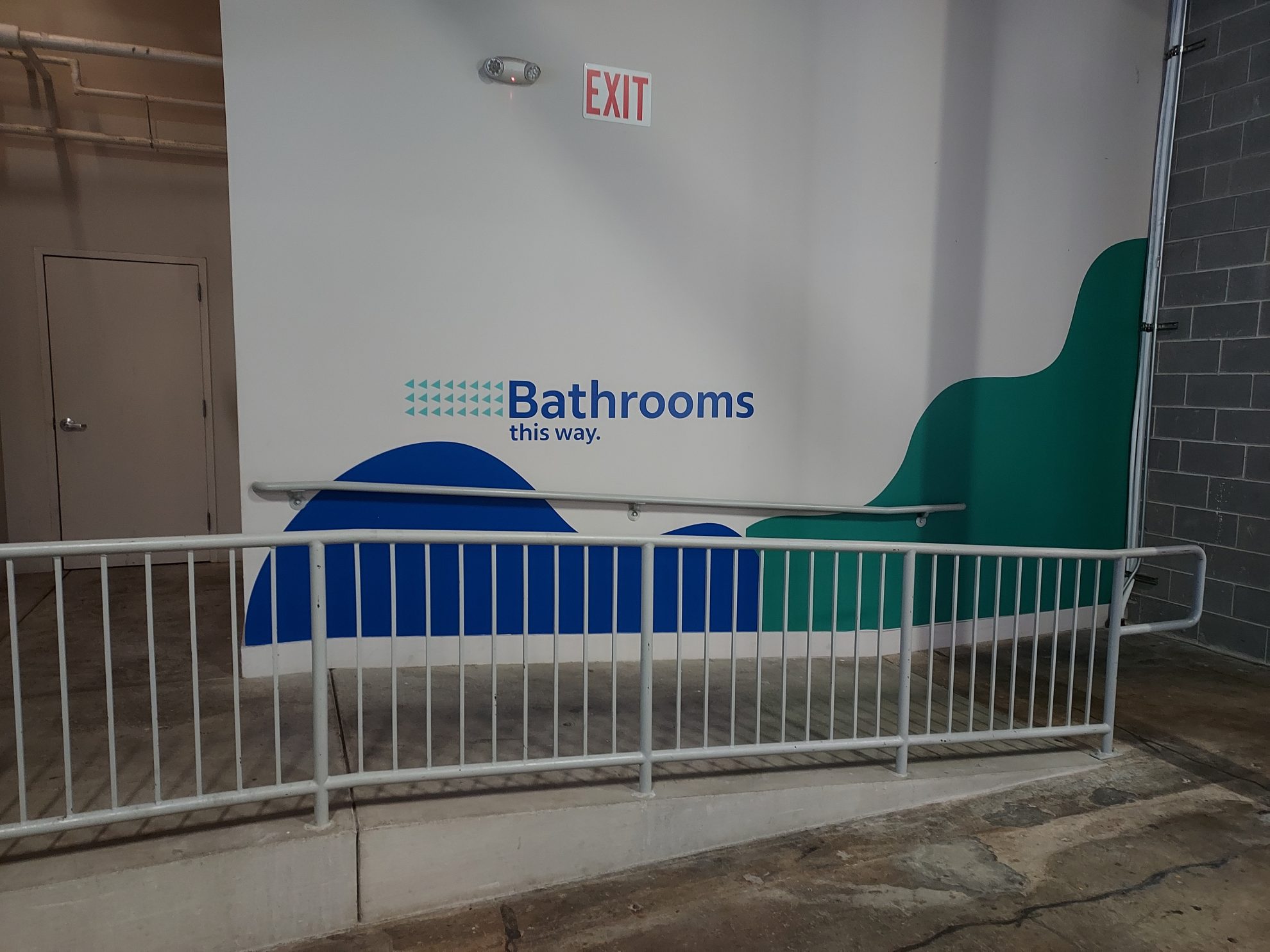
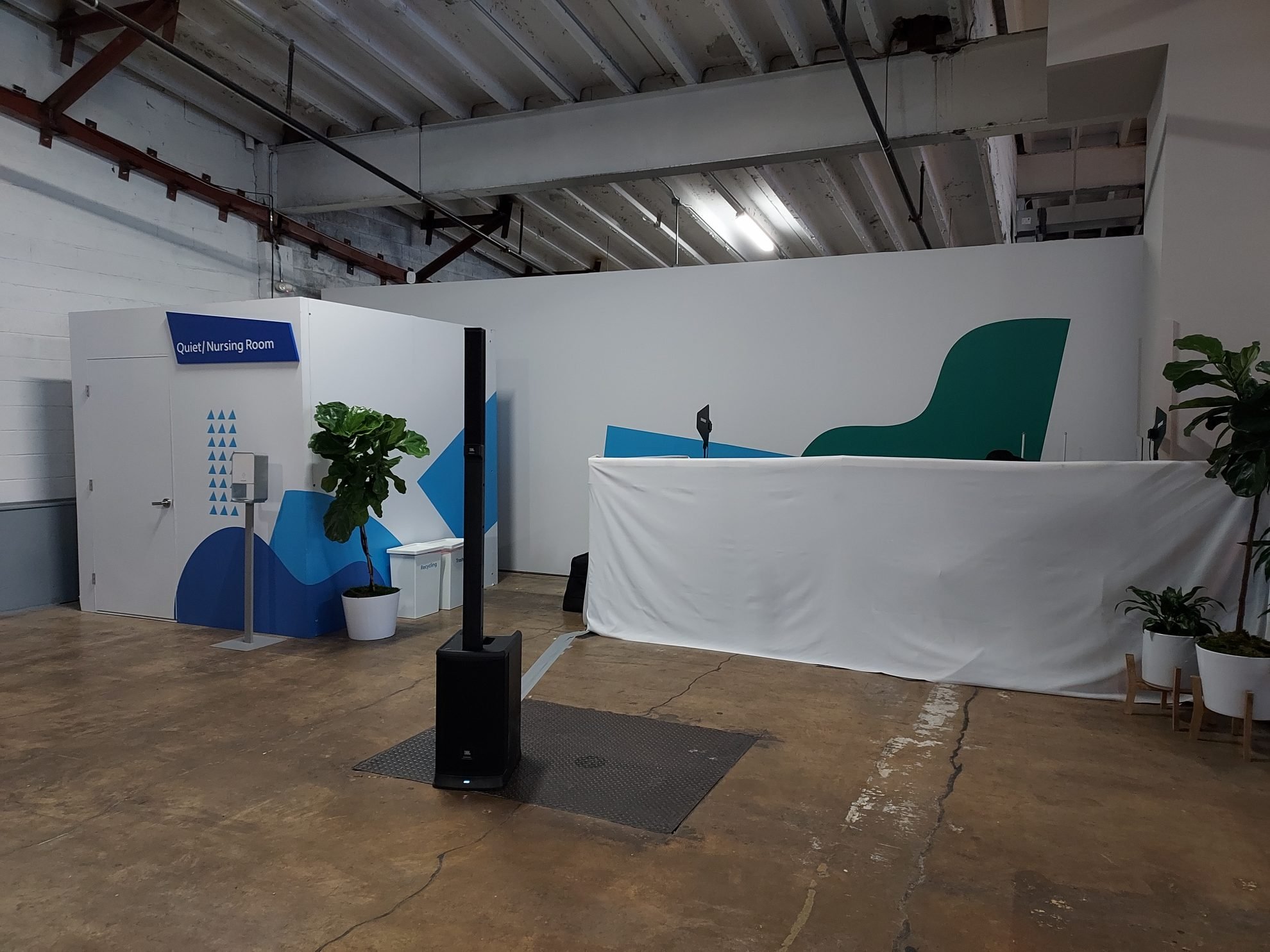
Heritage Signs & Displays' collaboration with The Gathery to brand Union Market in Arlington, VA, for Indeed's "Ready to Work" job fair. The project included custom event displays, wall graphics, window graphics, and wayfinding signs, creating an immersive and visually appealing environment. The branding enhanced the venue, reflected the event's mission, and provided a seamless experience for attendees.