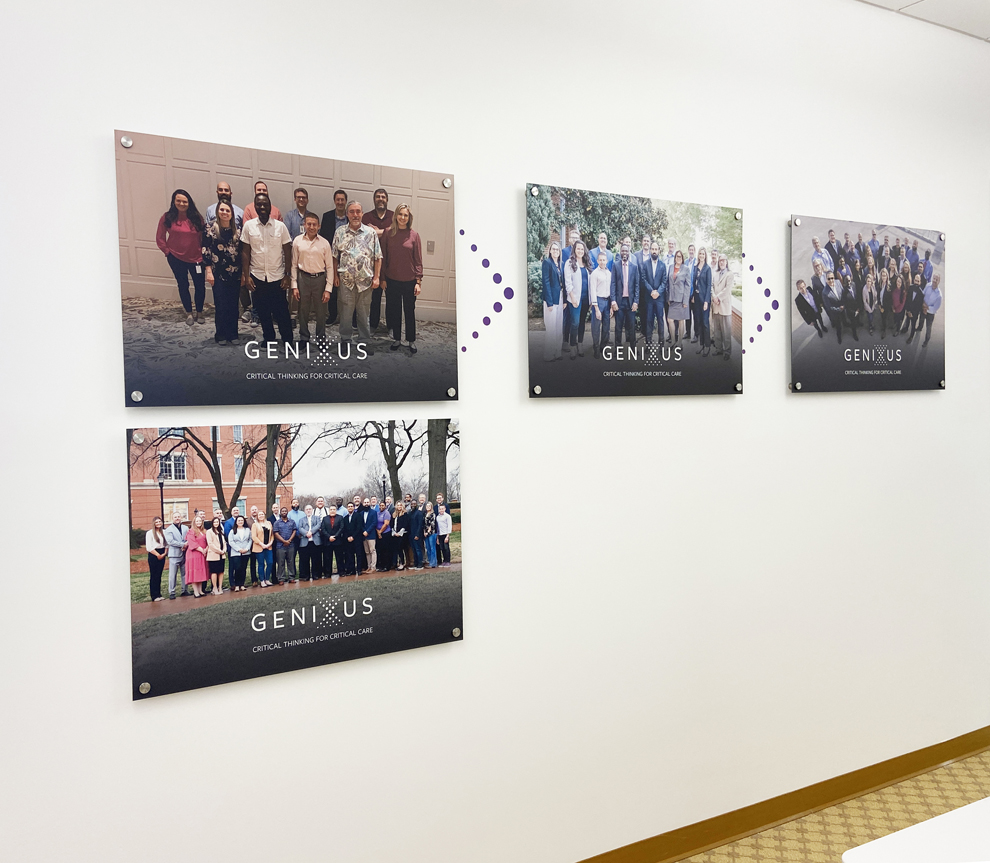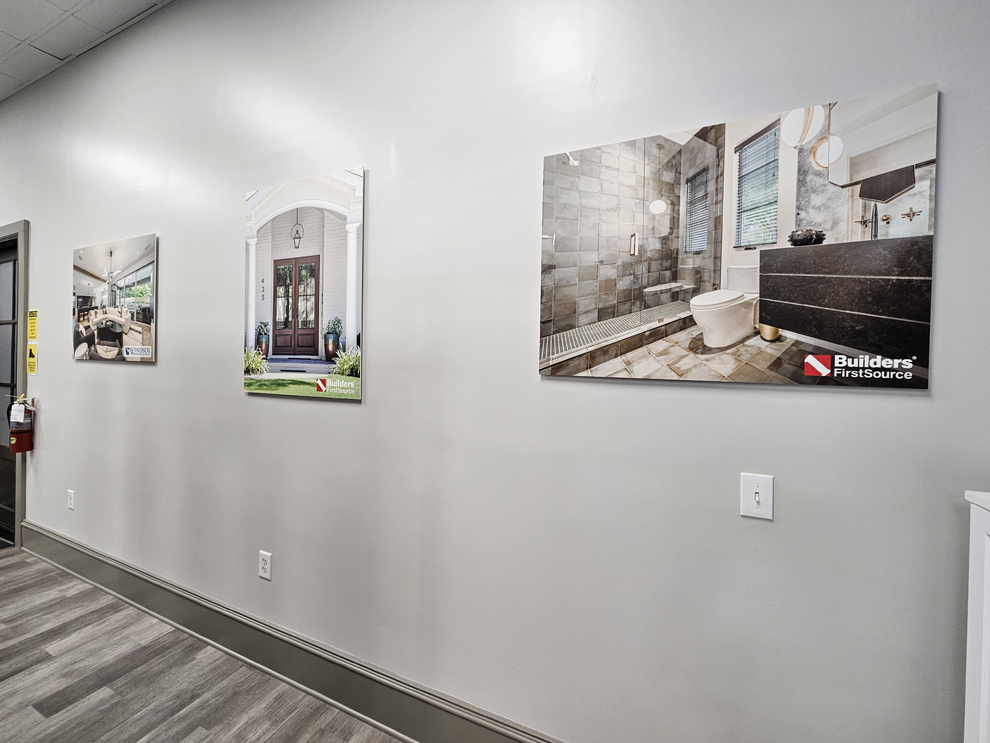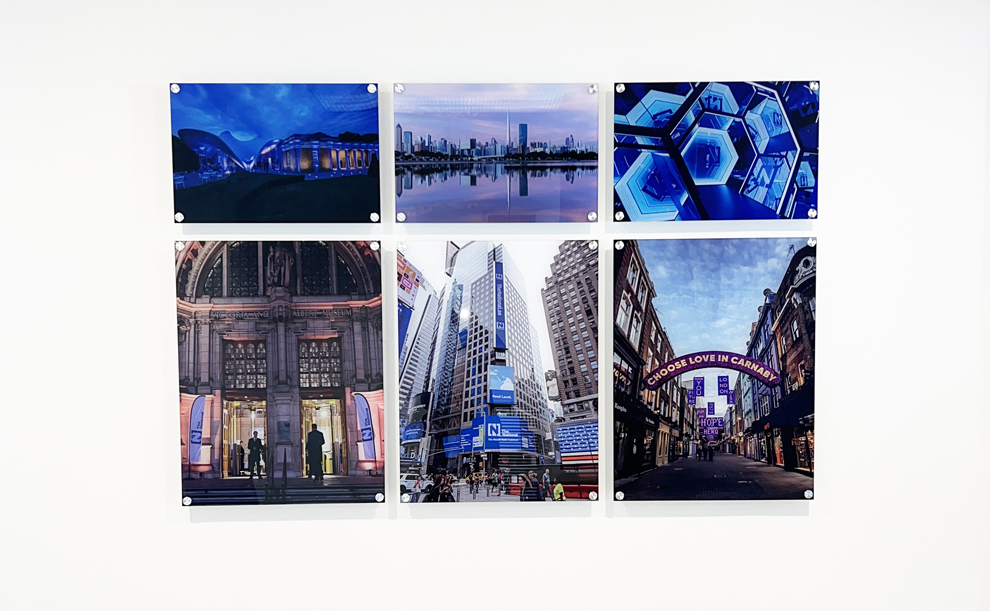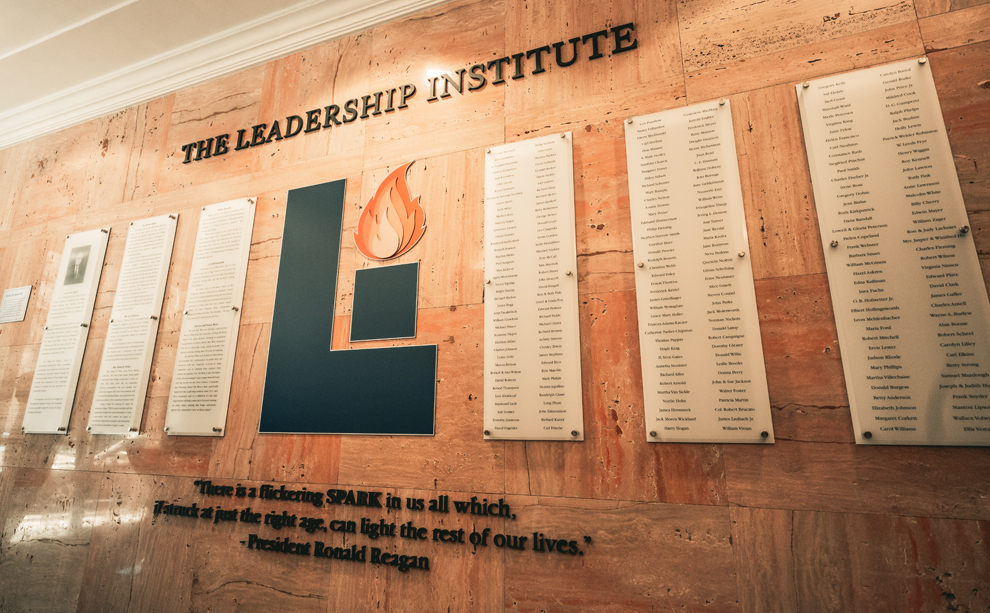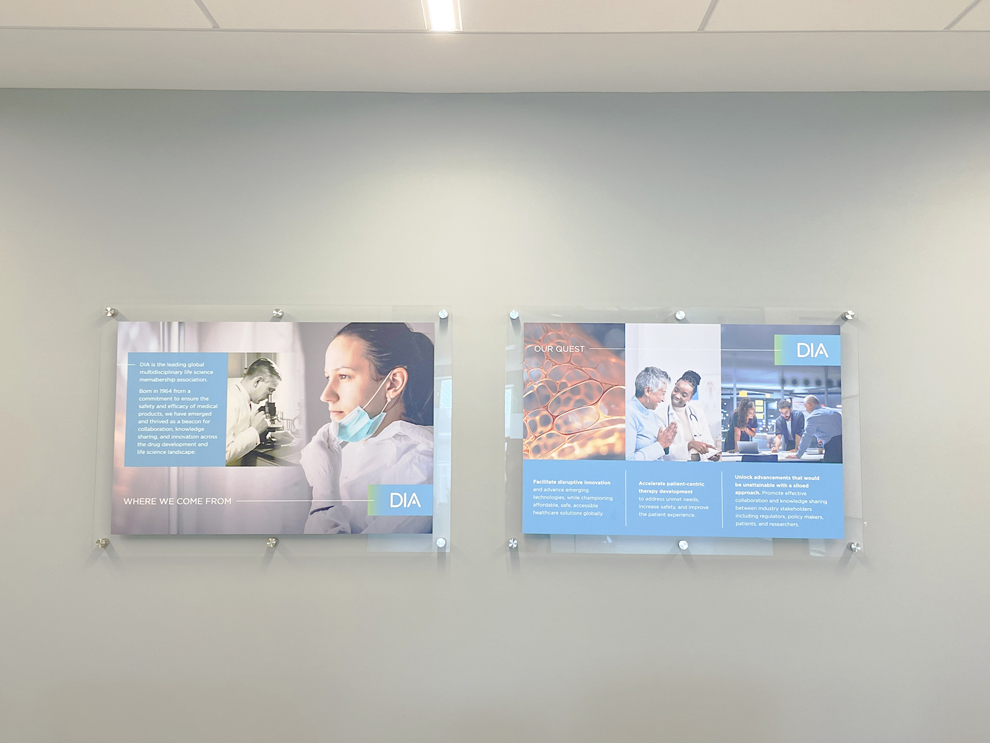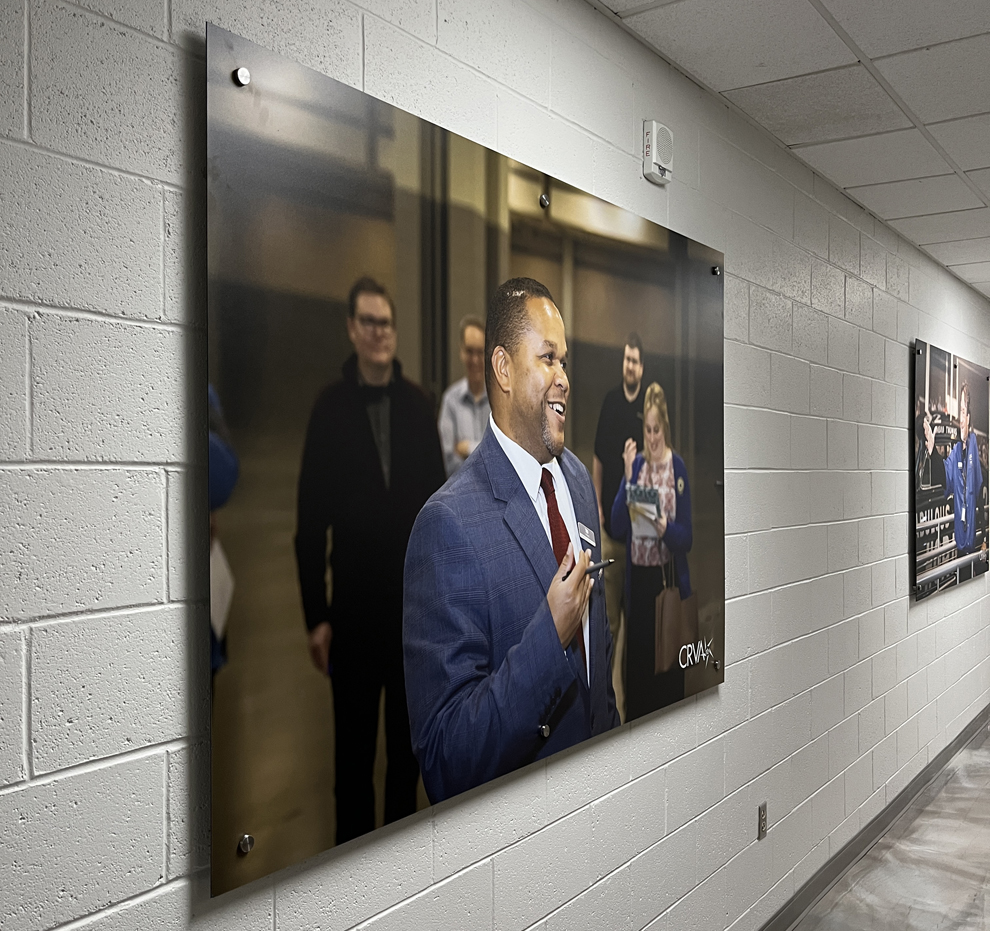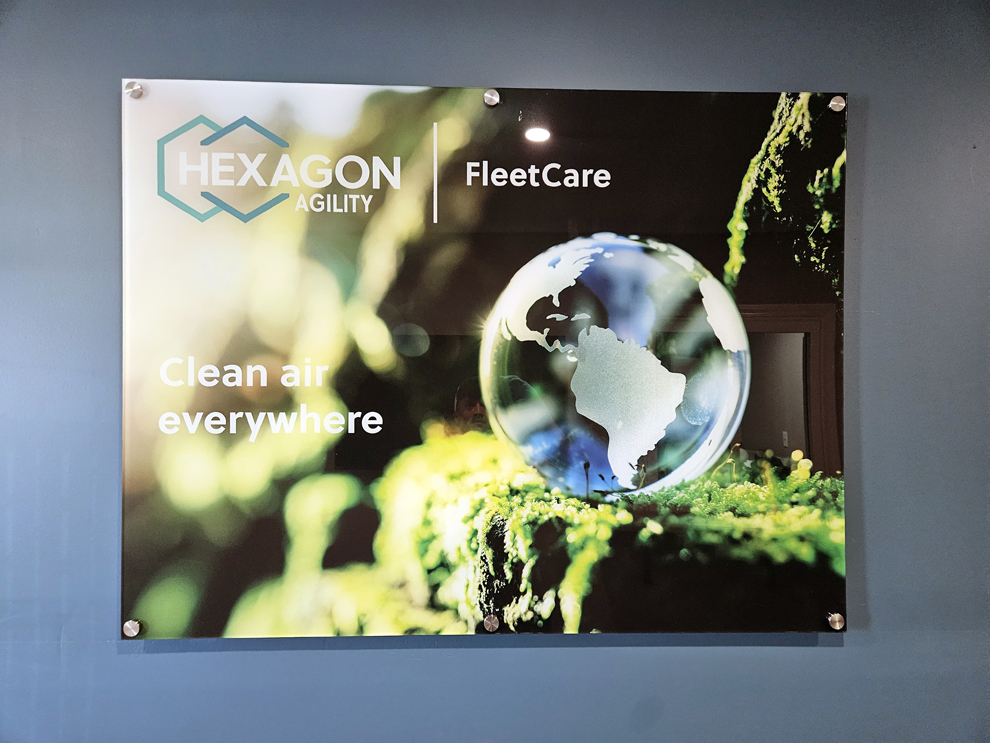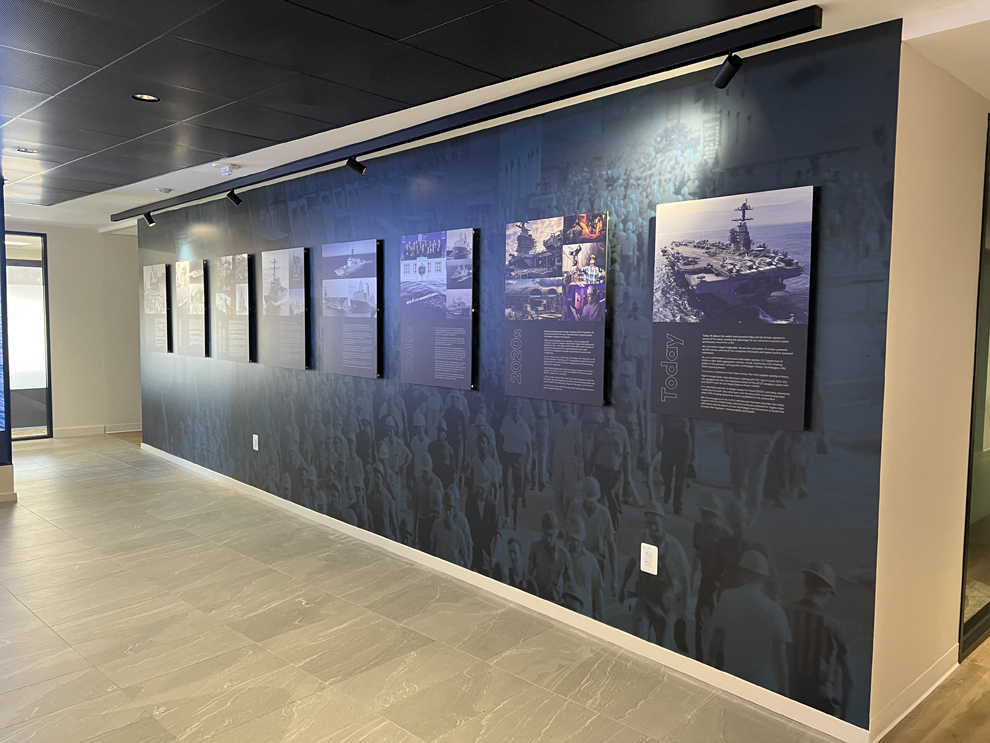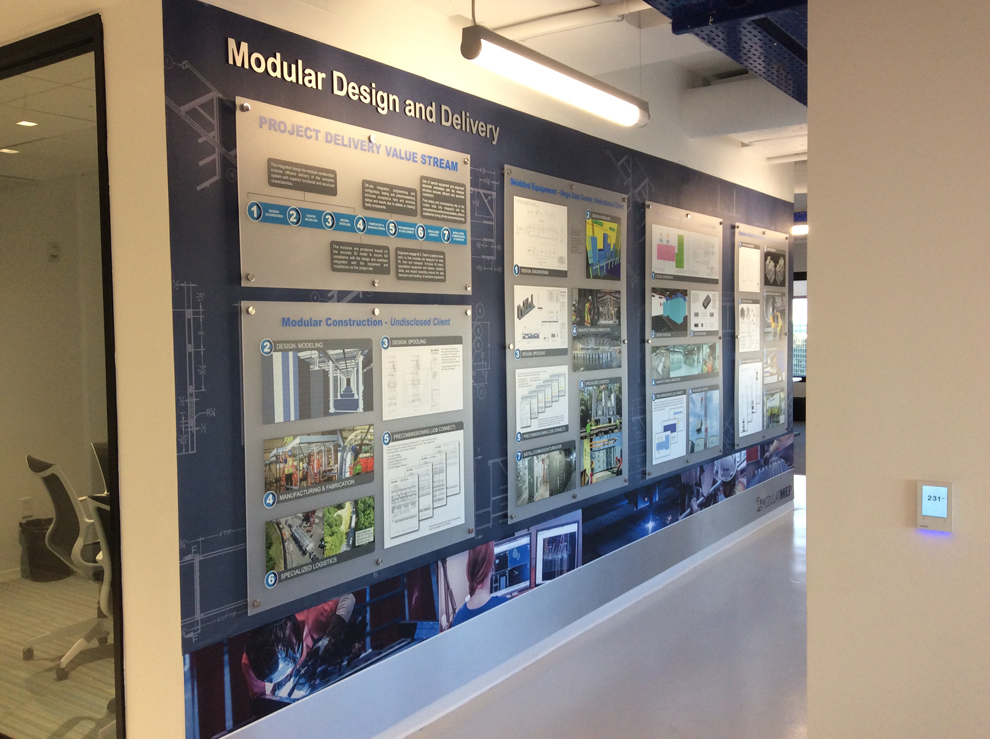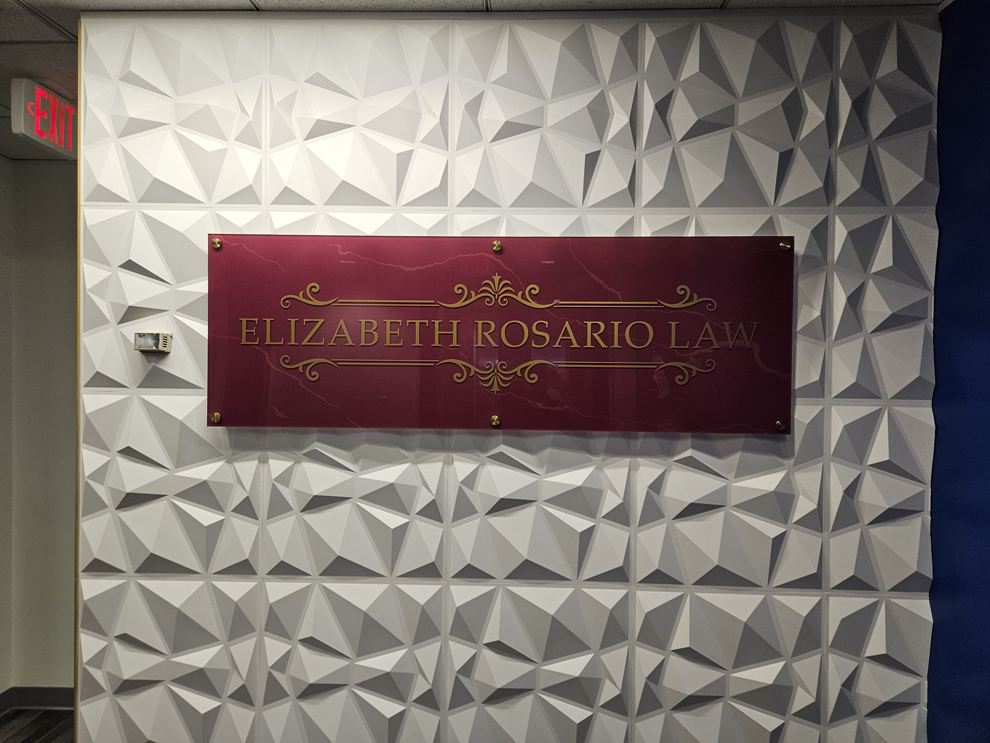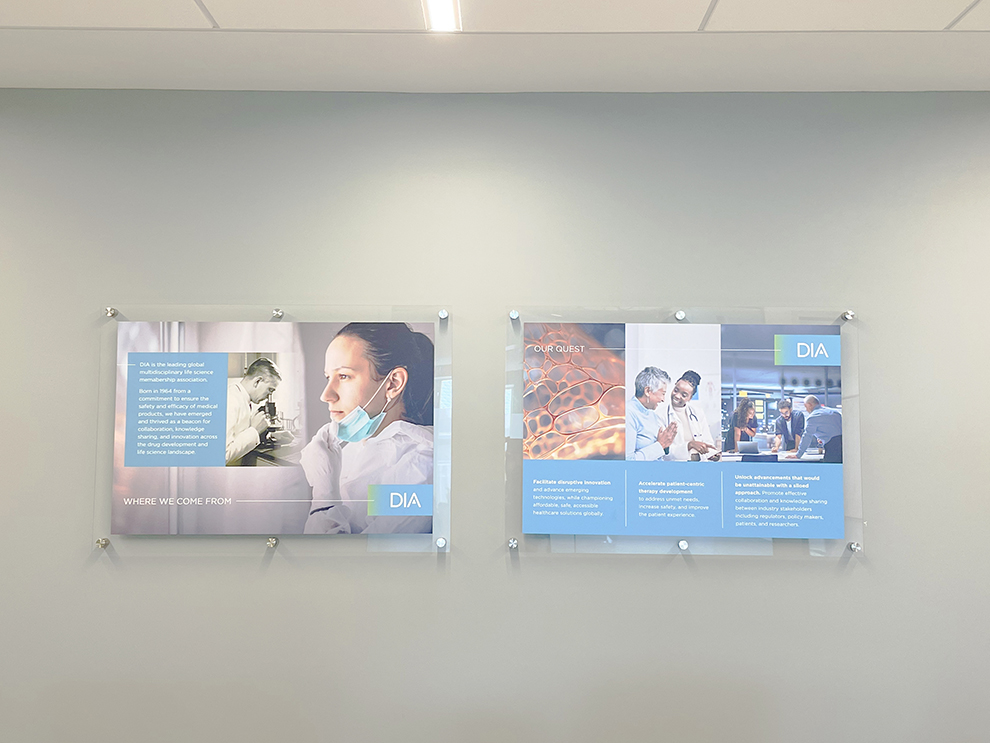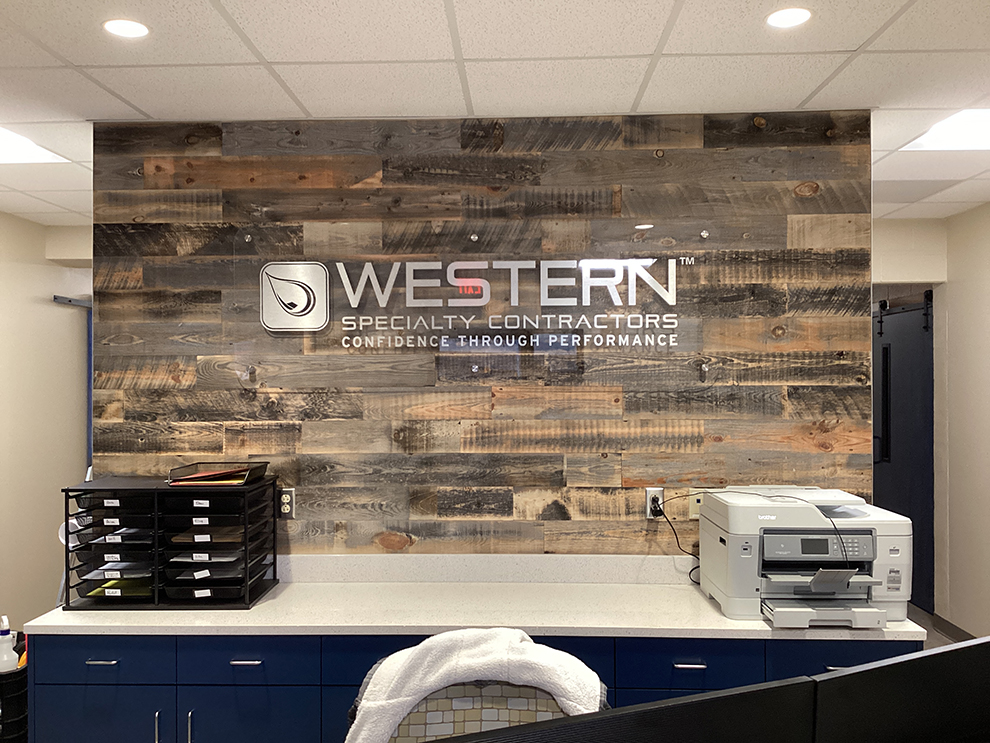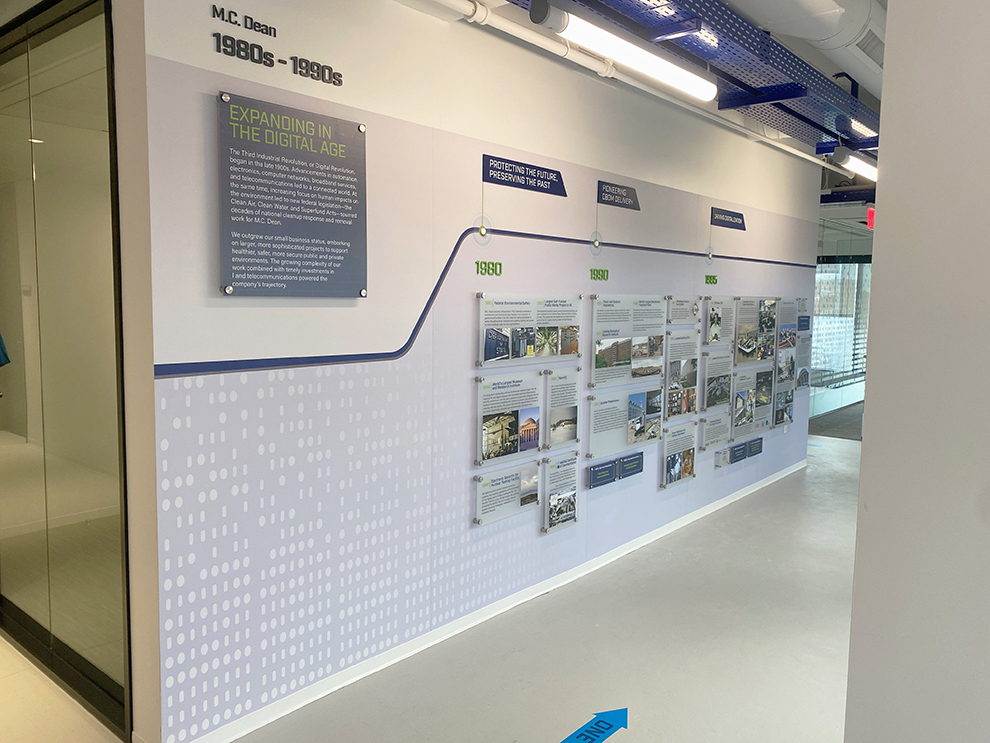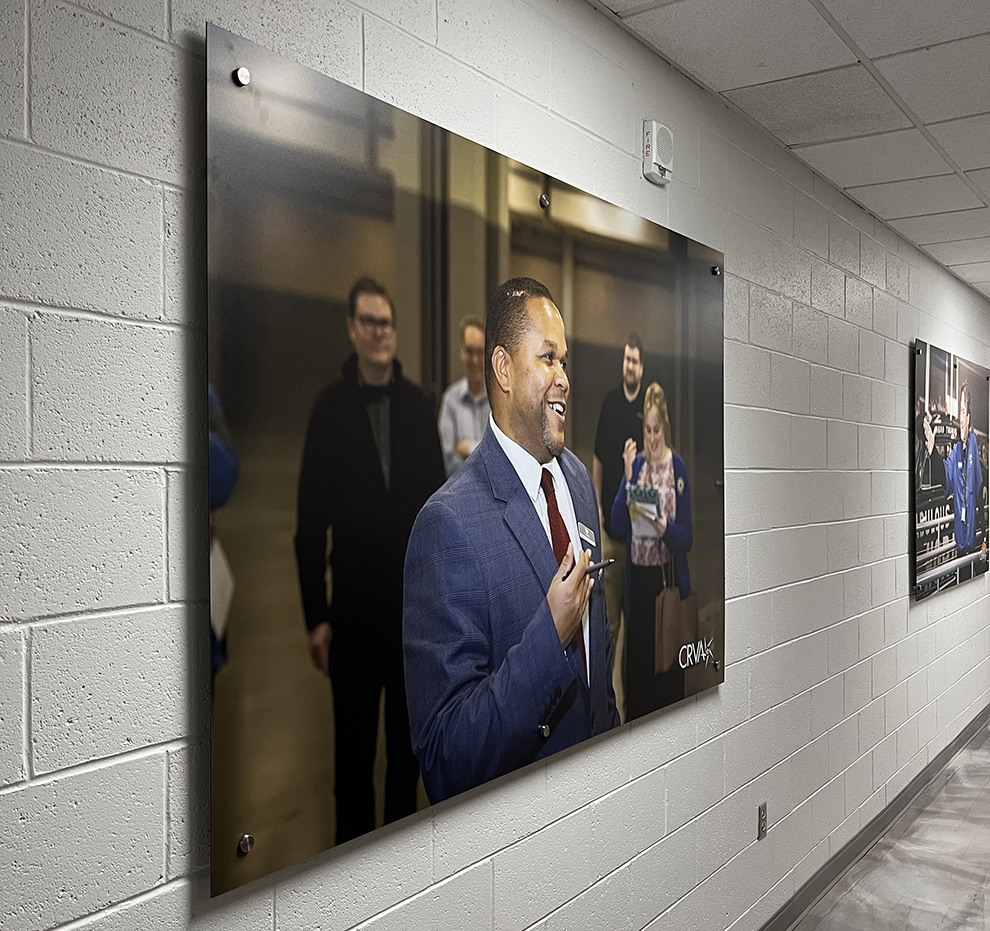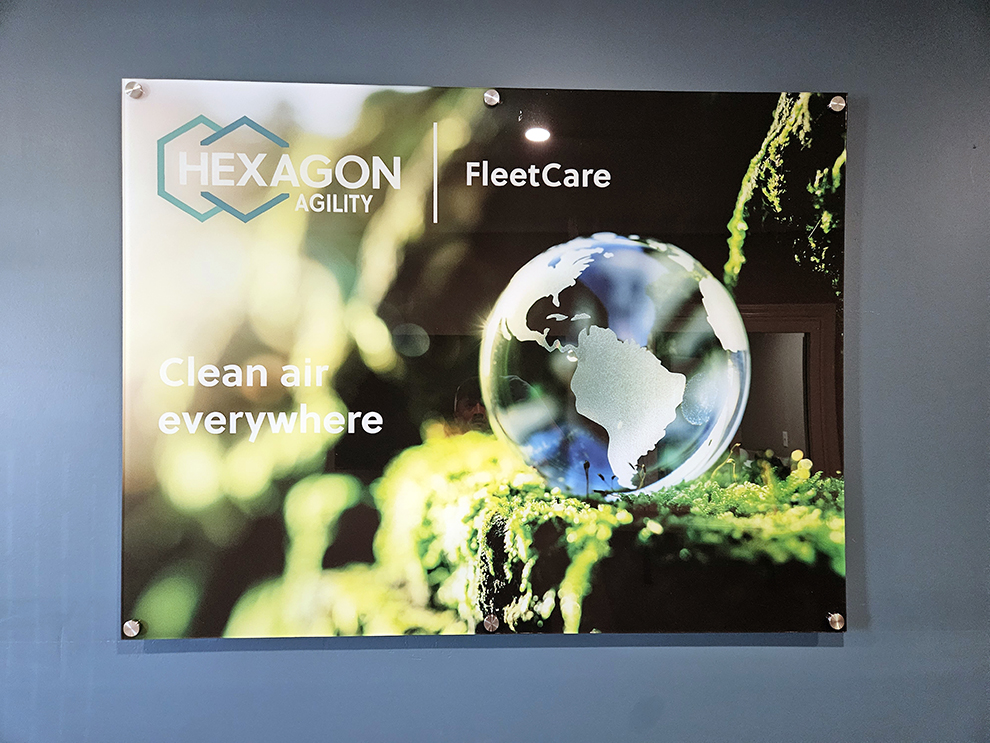
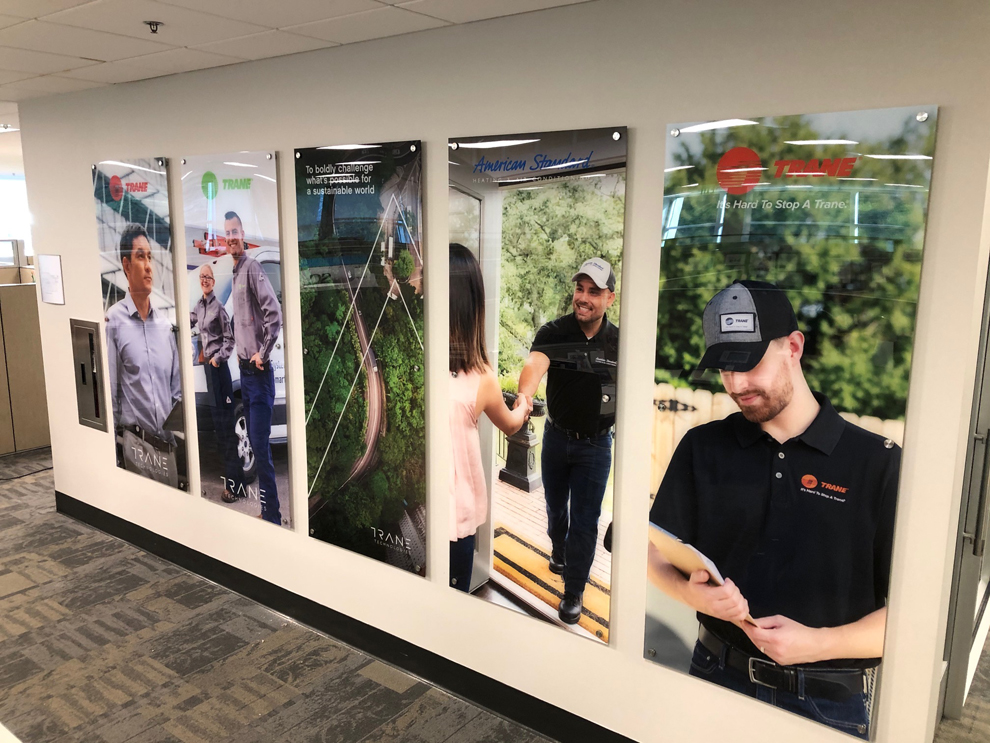
Some interior signs need to communicate more than a name or decorative message. They may present an organization’s mission, recognize donors, document company milestones, identify departments, or display a dimensional logo. Standoff mounted signs position the finished panel away from the wall with visible barrels and caps, creating depth, clean shadow lines, and an architectural appearance. This polished presentation is well suited to corporate offices, technology companies, government contractors, healthcare providers, hotels, associations, and institutional facilities throughout Reston, VA.
Heritage Signs & Displays is an award-winning, veteran-owned, family-operated company established in 1977. We serve clients in Reston, Northern Virginia, Washington, DC, and nearby Maryland communities through an integrated process that includes environmental graphic design, project management, production, fabrication, and professional installation. Each project is guided by a dedicated Heritage project manager who coordinates goals, stakeholder feedback, field measurements, material choices, approvals, schedules, building requirements, and installation details.
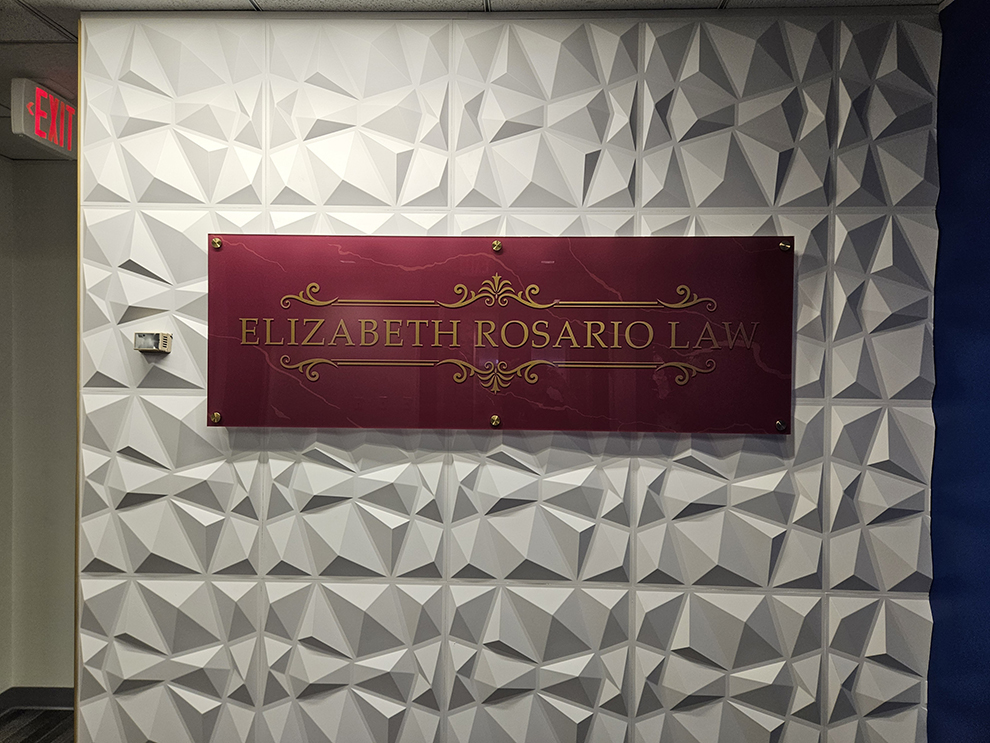
A standoff sign is defined by its mounting system, not by a particular panel material. The assembly typically includes barrels, caps, fasteners, wall anchors, and a planned projection depth. These components secure the sign face at a consistent distance from the wall. The face may be made from acrylic, aluminum composite material, printed rigid material, layered graphics, dimensional lettering, or a system with replaceable inserts. Acrylic is one possible face material, while standoff refers specifically to the way the sign is supported and projected.
The expected lifespan of the installation should be discussed early. Authentic wall-mounted standoff signs require drilled mounting locations and fasteners selected for the wall type, sign weight, hardware configuration, and anticipated contact. Adhesive by itself cannot create a true standoff mounting system. Removing the display will usually leave holes that must be patched and refinished, making this solution better suited to permanent or semi-permanent applications than temporary displays.
Reston properties can also introduce detailed access and scheduling requirements. Projects near Reston Town Center, Lake Anne, Wiehle-Reston East, and the Dulles Toll Road corridor may require vendor registration, certificates of insurance, loading-area coordination, freight-elevator reservations, escorted access, or work outside normal business hours. Occupied offices and fixed dates for meetings, openings, or recognition events can further restrict the schedule. Heritage identifies these conditions before production so panel dimensions, templates, hardware, and installation sequencing reflect the realities of the property.
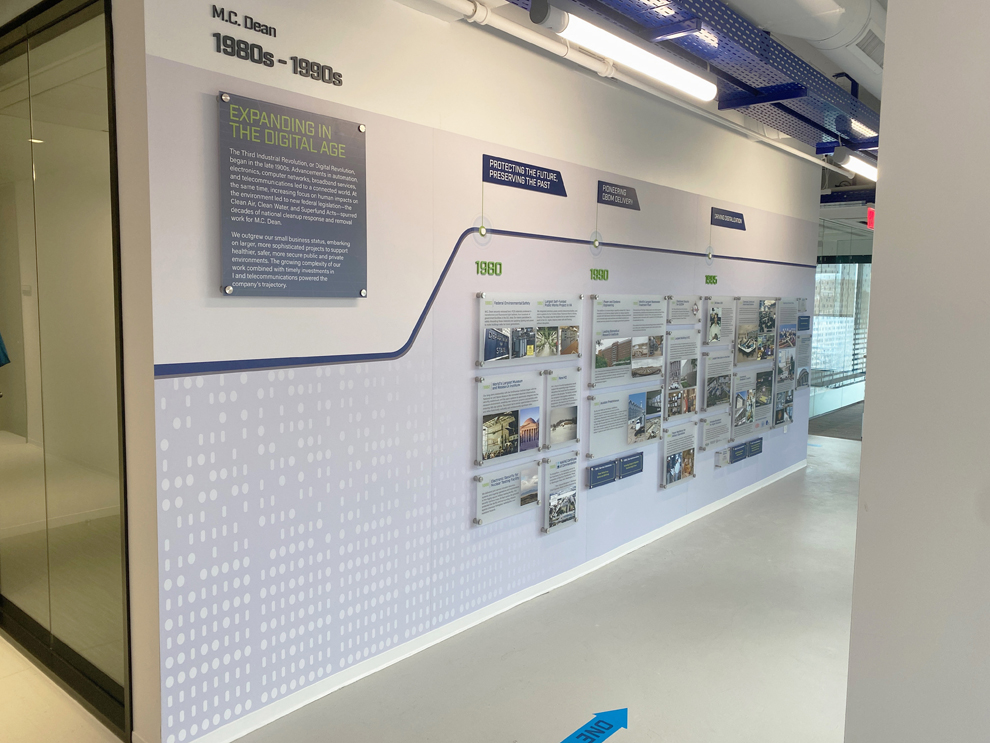
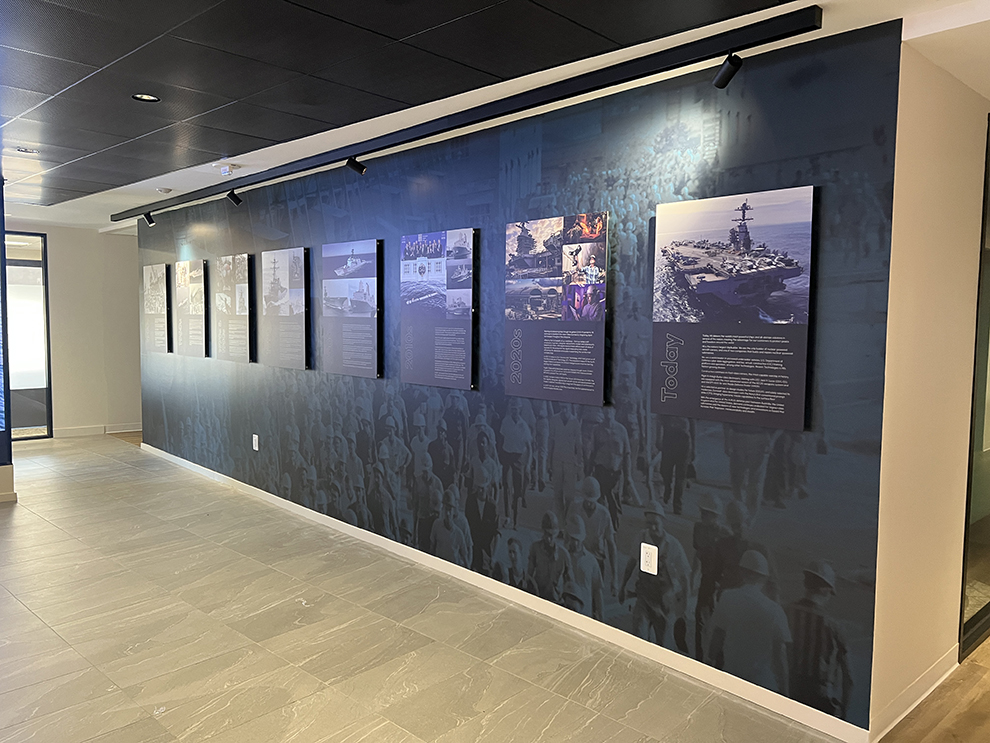
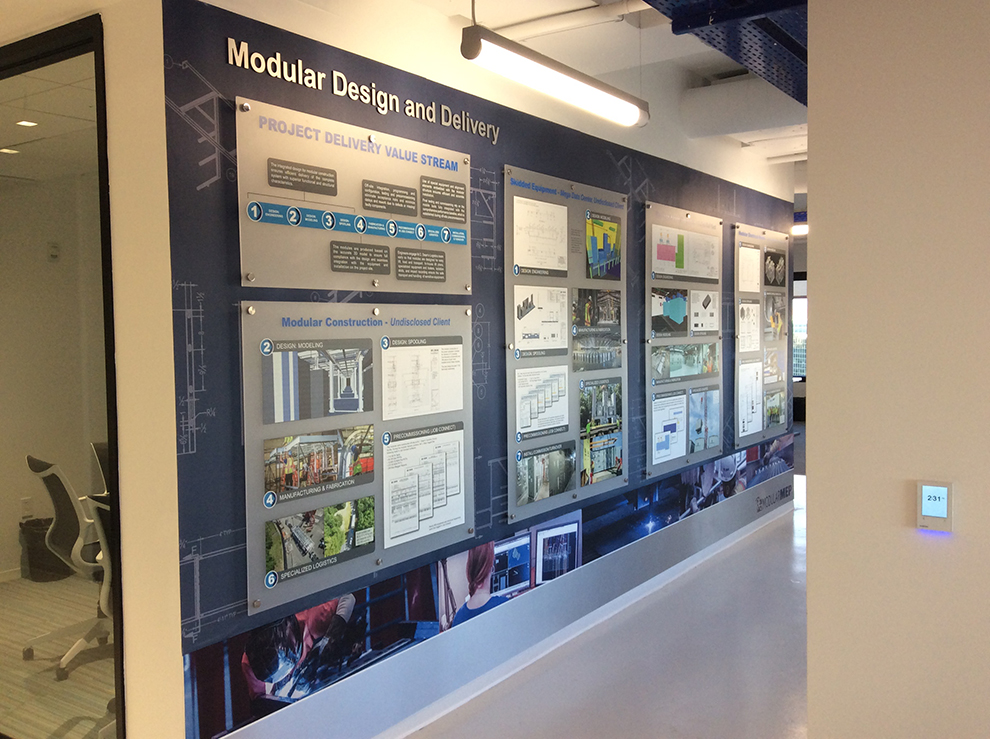
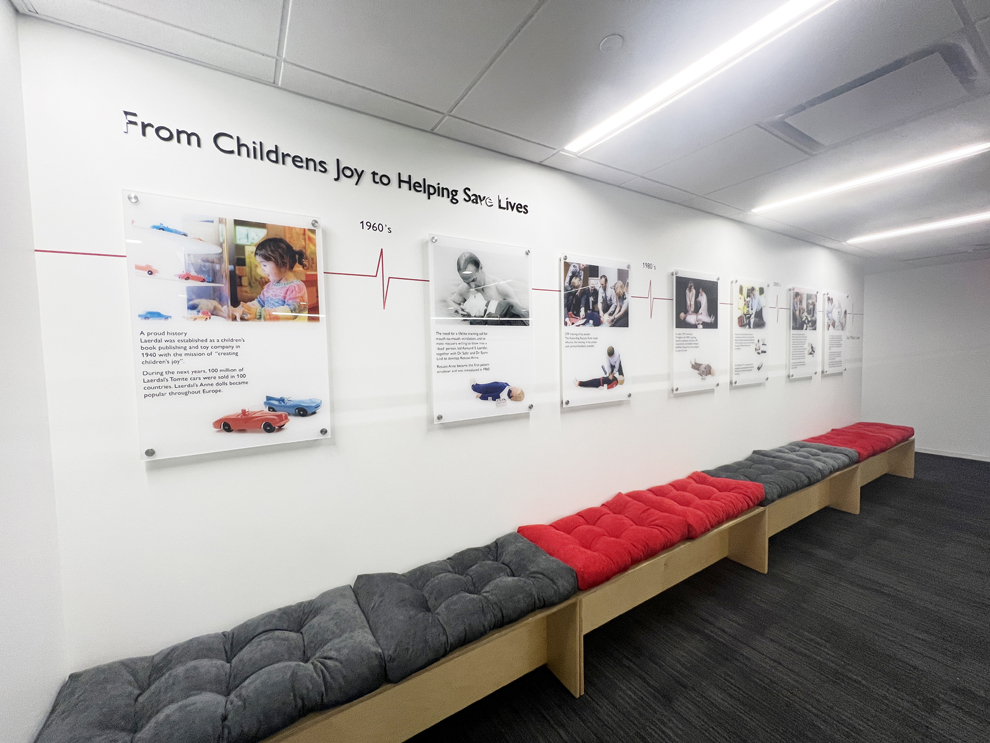
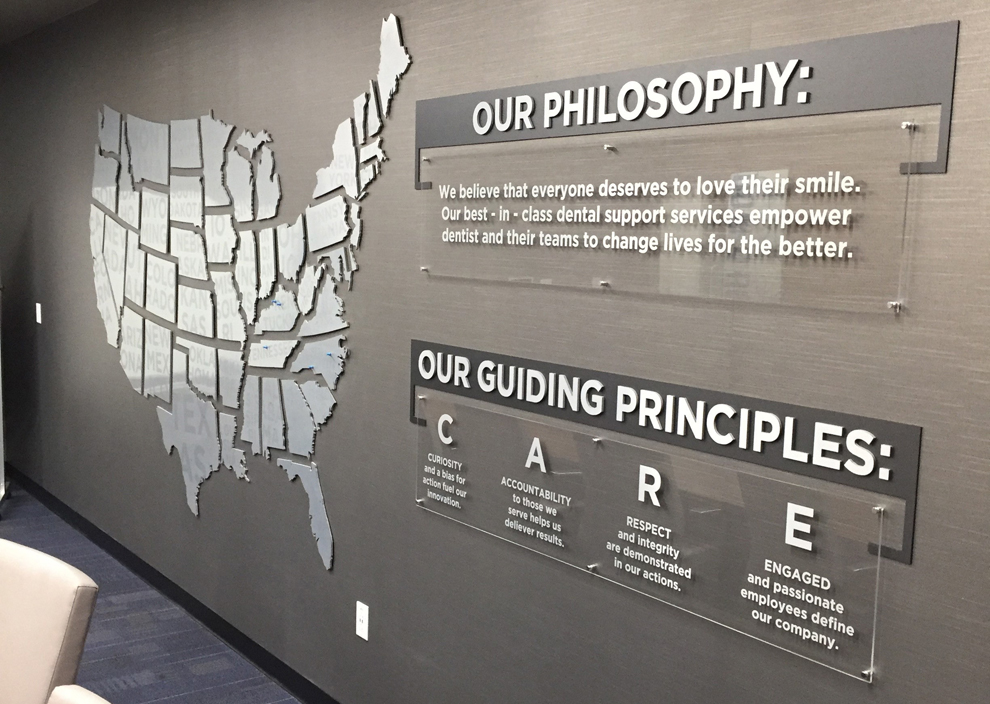
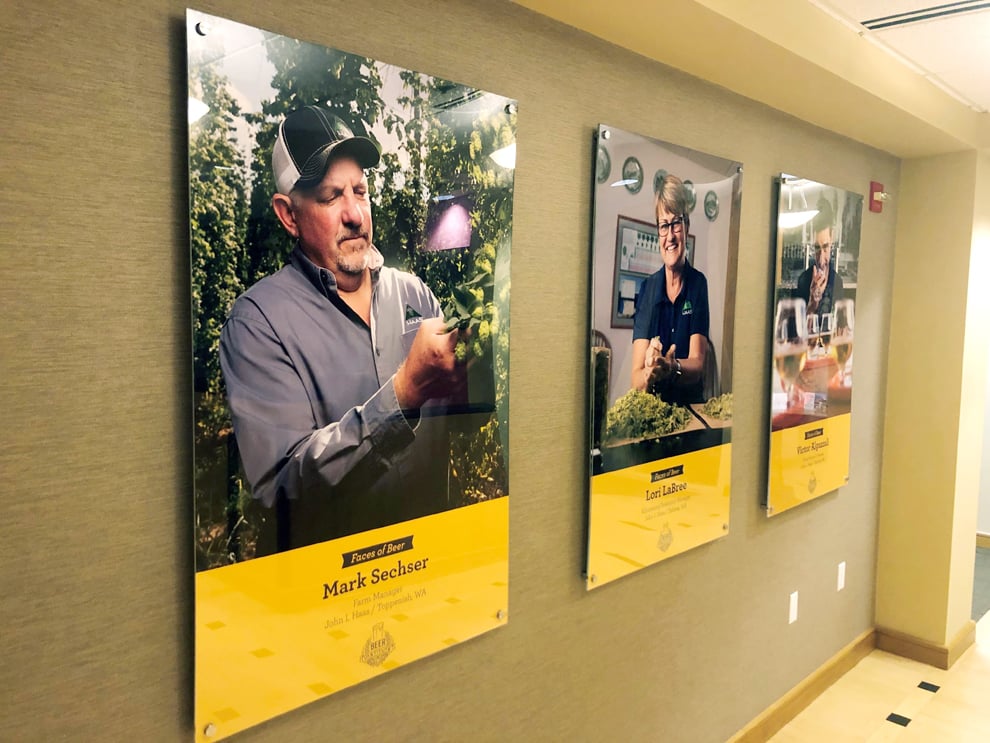
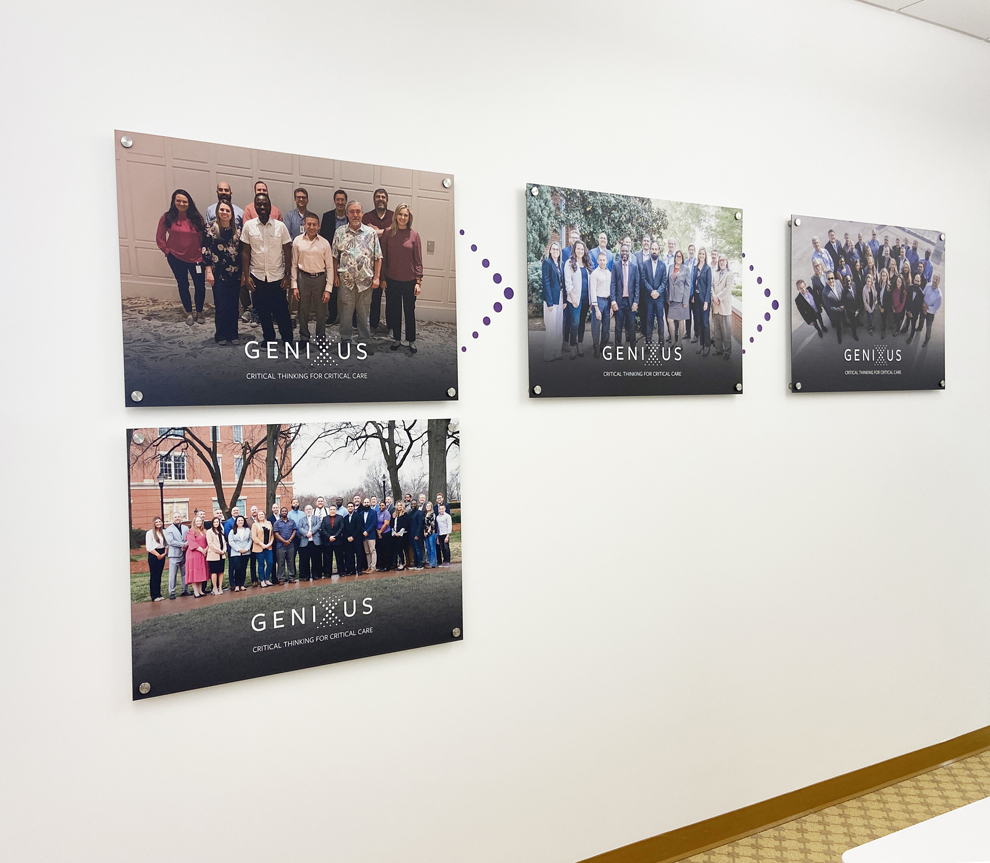
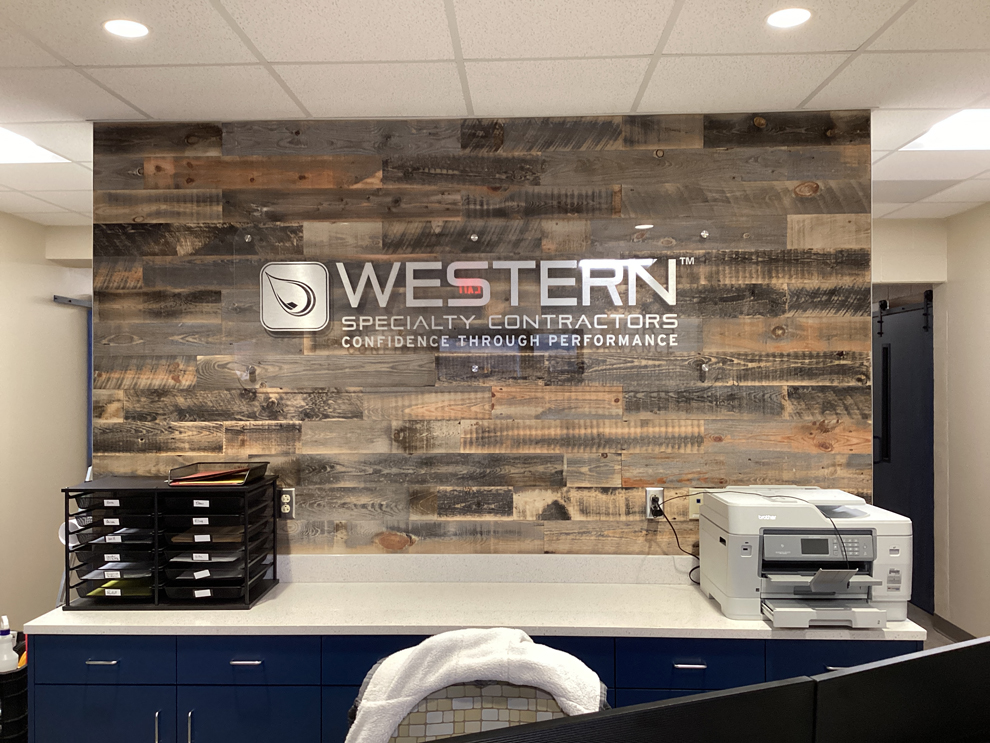
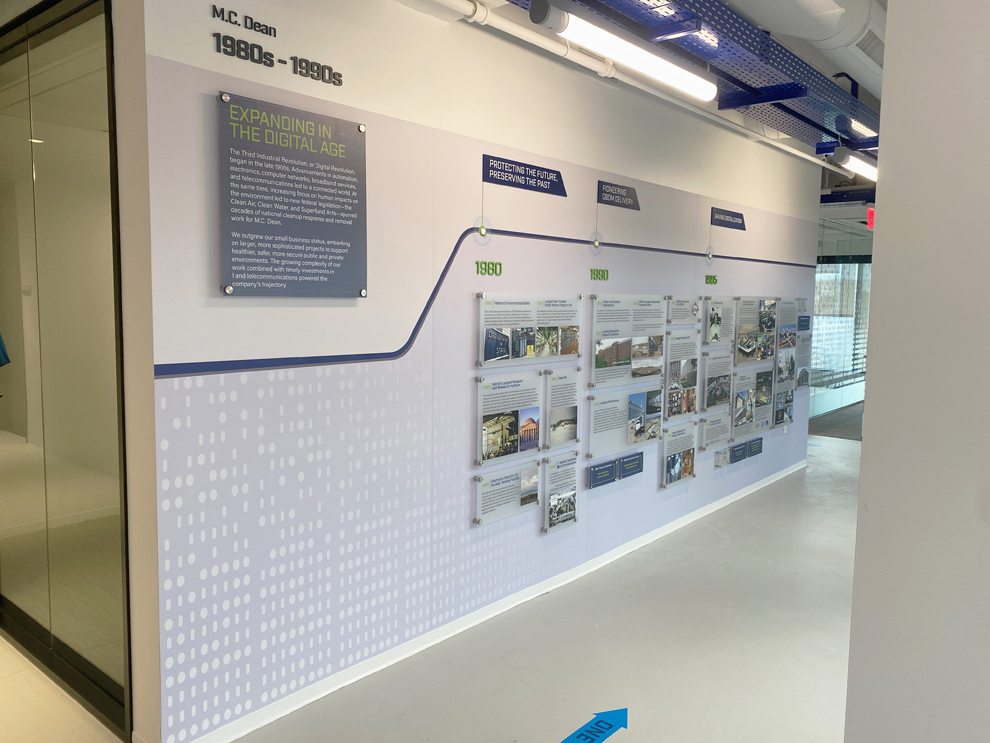
Standoff hardware can also function as one component within a larger branded environment. Timeline walls, donor displays, core values installations, dimensional logo arrangements, office directories, and corporate storytelling features may use multiple projected panels to divide and organize information. Those broader applications belong within the Wall Displays category. This page focuses on standoff-specific considerations such as drilling, projection depth, mounting hardware, substrate compatibility, fabrication tolerances, long-term placement, and installer access.
As a veteran-owned company, Heritage seeks to be a valued resource that honors God by serving clients and communities with excellence. For organizations in Reston, VA, that commitment is demonstrated through careful discovery, straightforward evaluation of wall conditions, responsible material recommendations, respect for security protocols, accurate production documentation, and dependable follow-through through final installation.
A completed standoff sign may look visually simple, but its precision depends on a carefully coordinated group of details. Barrel diameter, panel thickness, projection depth, anchor type, edge clearance, cap size, hole placement, maintenance access, and alignment with surrounding architecture must work together. Even a minor error in the mounting template can become immediately noticeable when multiple caps are intended to create a straight, evenly spaced line.
The wall surface determines much of the installation strategy. Drywall with suitable backing, concrete, masonry, wood, tile, and certain specialty finishes require different anchors, drilling techniques, and clearances. The weight of the panel and the likelihood of accidental contact also affect the mounting plan. Concealed wiring, plumbing, framing, or unknown backing conditions may need to be investigated before drilling begins.
Exterior applications require additional evaluation. Moisture, direct sunlight, wind, temperature changes, corrosion, hardware durability, and ongoing maintenance all affect whether a standoff system is appropriate outside. Each proposed exterior installation should be reviewed individually rather than treated as a standard extension of an interior mounting method.
Heritage connects verified site information with design and fabrication before a project enters production. This process supports accurate mounting patterns, suitable hardware, confirmed access requirements, and an installation plan based on measured conditions. It distinguishes a properly planned architectural display from a panel mounted with components selected primarily for appearance.
Technology companies, government contractors, consulting firms, nonprofits, healthcare practices, educational organizations, hotels, and professional service providers in Reston often need wall features that appear established, polished, and credible. Heritage Signs & Displays brings decades of experience to these projects as an award-winning, veteran-owned, family-operated company founded in 1977.
A dedicated Heritage project manager coordinates the entire process, beginning with discovery and environmental graphic design and continuing through site verification, production, fabrication, and installation by full-time team members. This connected approach helps protect brand standards, messaging, panel dimensions, hardware placement, stakeholder approvals, building procedures, and schedule requirements. Installers receive the context and documentation behind the approved design instead of encountering the project as an isolated task.
Heritage resources in Washington, DC, Arlington, Virginia, and Waldorf, Maryland connect regional production and field support with projects in Reston and throughout Northern Virginia. This structure can support a single office feature or a coordinated program spanning multiple facilities. Each site is still reviewed individually because wall construction, audiences, access procedures, and approval requirements can vary significantly.
Heritage approaches excellence as an act of service. That commitment is reflected in honest recommendations, careful planning, respect for occupied workplaces, and accountability from the first conversation through final placement.
Several related sign and display products can complement a standoff mounted sign within a Reston workplace, campus, hotel, or institutional facility. Each category solves a different communication or branding need while standoff signs remain focused on visible hardware, controlled projection, wall penetration, and permanent installation.
Wall wraps transform large interior surfaces with printed colors, patterns, photographs, and branded imagery. They are ideal for Reston organizations seeking broad visual impact across an entire wall rather than a single projected panel.
Window graphics add branding, promotional messages, decorative patterns, and privacy treatments to glass. Their purpose centers on visibility and transparency rather than the drilled mounting system and architectural depth associated with standoff signs.
Lobby signs identify an organization and establish its presence at the point of arrival. Standoff hardware is one of several construction methods that can be used to create a professional lobby display.
Frosted vinyl provides privacy and subtle branding for conference rooms, office fronts, and glass partitions. It can complement a standoff sign without replacing the depth and permanence of a projected wall feature.
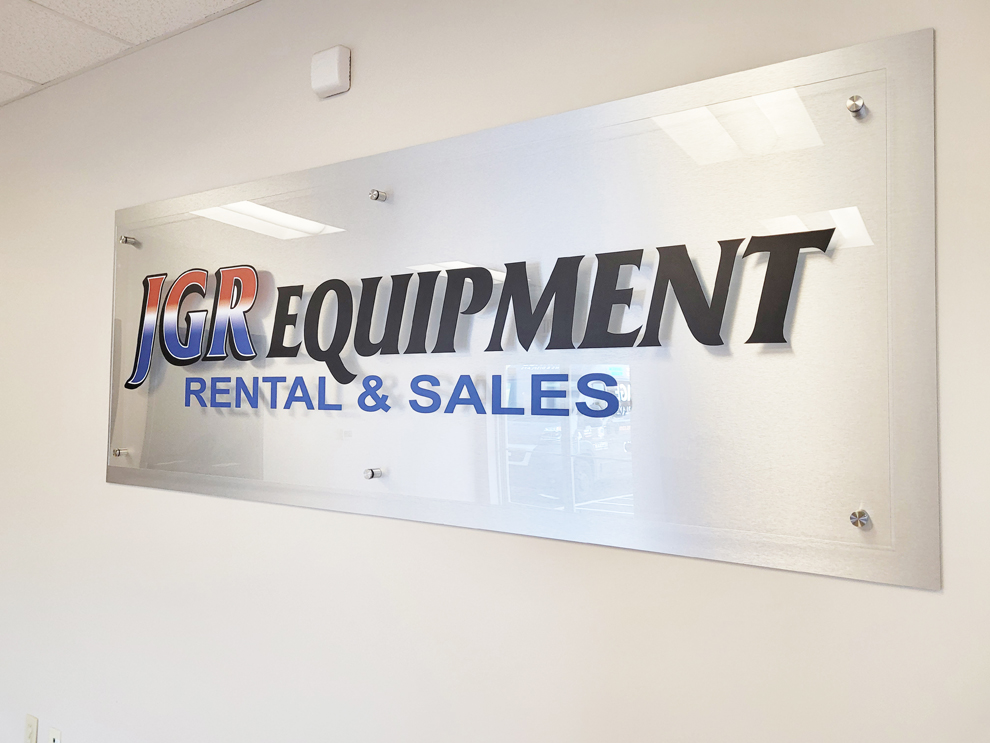
Elevator wraps carry branded imagery onto elevator doors, surrounding walls, or cab interiors. They can reach employees and visitors in buildings where wall space near elevator banks is limited.
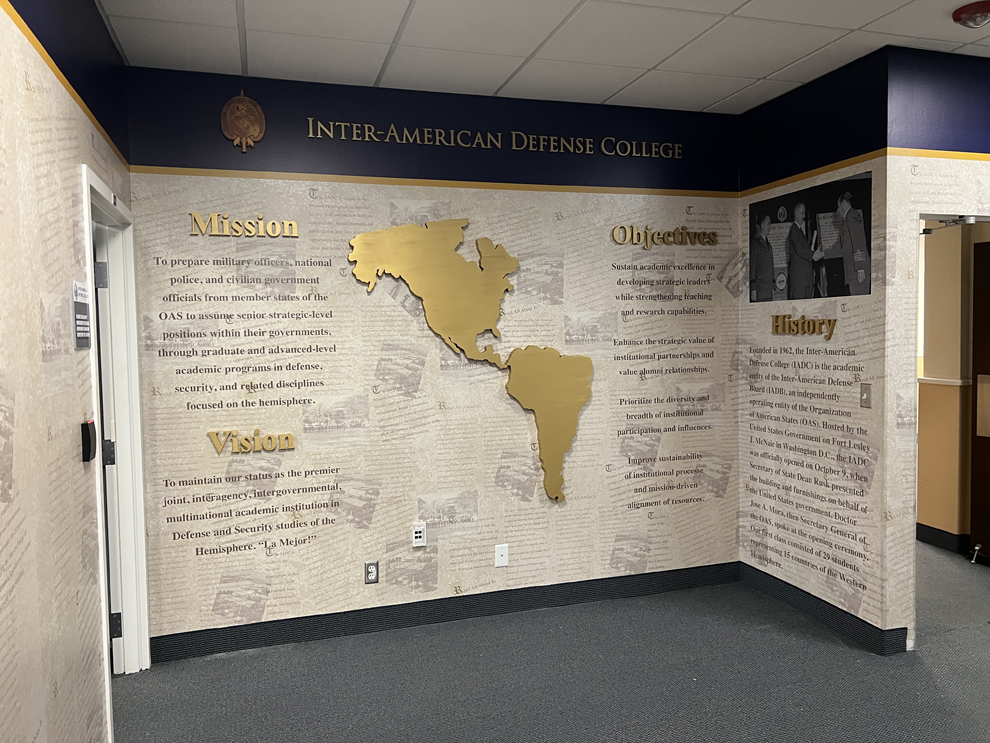
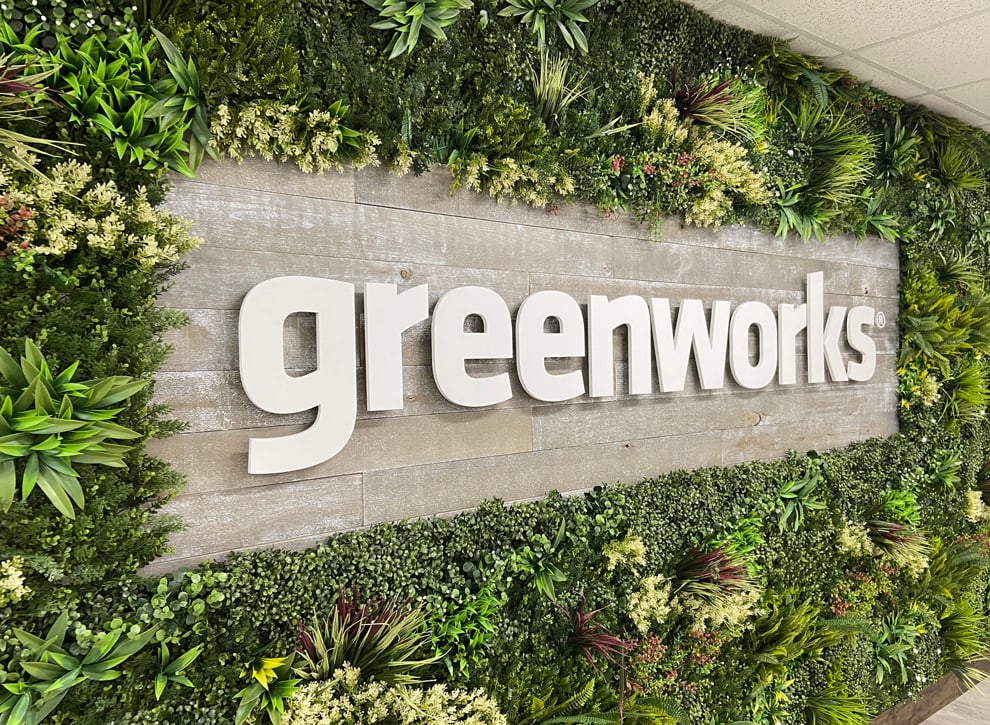
Dimensional letters create depth through individually mounted characters or logos. They may be installed above, beside, or between projected panels as part of a larger branded composition.
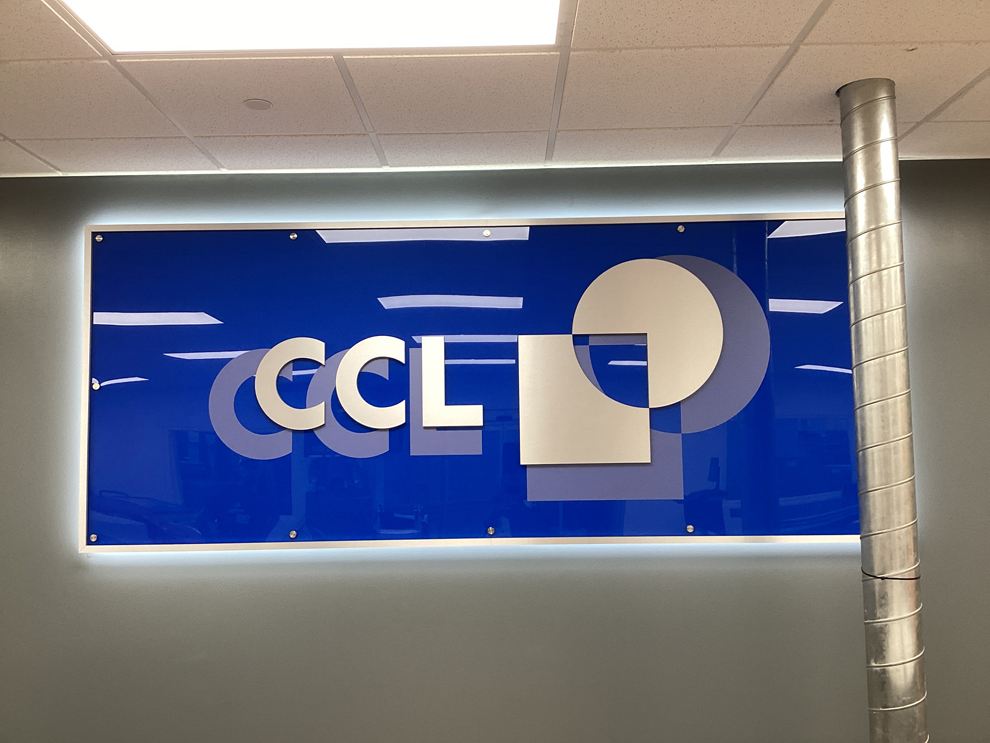
Acrylic signs are defined by their face material. They may be clear, frosted, opaque, printed, layered, routed, flush mounted, suspended, or installed with standoff hardware.
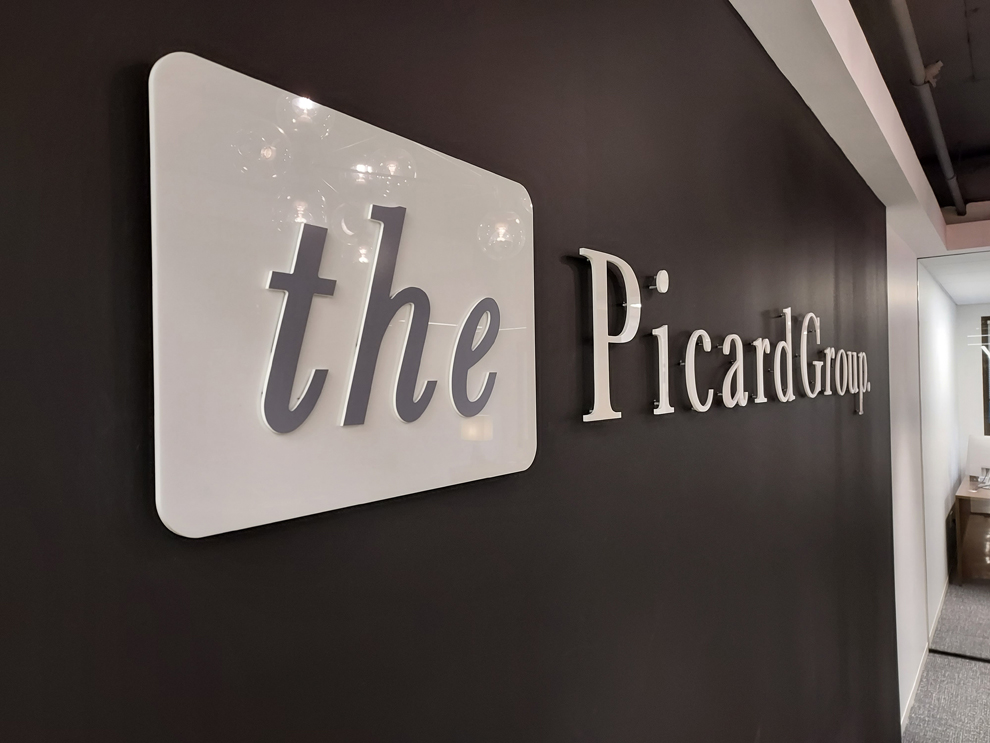
Wall displays include larger mission, history, values, recognition, and corporate storytelling installations. Standoff panels may be incorporated as one structural or visual element within these broader displays.
Contact Heritage Signs & Displays while your message, wall selection, stakeholder approvals, and building procedures can still be evaluated together. Use the Get Started Now form to share the project objective, intended audience, Reston-area address, desired completion date, brand standards, photographs, drawings, approximate measurements, known wall conditions, access restrictions, expected future updates, and anticipated overall scope.
A Heritage project professional will review the proposed application, identify information that may require verification, and recommend a practical next step for moving the project forward.
Heritage supports projects in Reston through regional resources in Washington, DC, Arlington, Virginia, and Waldorf, Maryland. These capabilities connect site verification and project management with production, fabrication, and installation planning. Service also extends to nearby communities such as Herndon, Vienna, Tysons, Fairfax, Chantilly, Sterling, Ashburn, Arlington, and Washington, DC.
A regional branding program might connect a corporate office near Reston Town Center with locations in Herndon, Tysons, Arlington, or Ashburn. One Heritage project manager can coordinate panel styles, typography, colors, materials, hardware finishes, production records, and installation standards across the program. Each property still receives a separate review of its measurements, wall surfaces, access restrictions, audience, and physical environment.
Even nearby Reston buildings may have very different requirements. Wall construction, building security, loading access, approved work hours, elevator availability, and stakeholder expectations can change from one property to the next. Heritage separates shared brand standards from site-specific execution so organizations receive a consistent visual system without relying on assumptions about individual facilities.
Heritage environmental graphic designers begin by considering the audience, message, and physical space. Hardware is selected later. Content hierarchy, typography, headline size, line length, wall color, viewing distance, mounting height, and panel arrangement determine whether visitors can understand the display quickly. A well-designed message placed on the wrong wall may still fail to reach its intended audience.
Material recommendations follow the communication concept and site requirements. Panel weight, transparency, edge appearance, printed color, surface durability, cleaning needs, and compatibility with nearby finishes help determine whether the display should use acrylic, aluminum composite material, printed rigid panels, applied vinyl, layered components, or replaceable inserts. Reston offices that anticipate leadership, tenant, or departmental changes may benefit from modular panels that can be updated without rebuilding the entire display.
Projection depth and hardware finish should support the design without distracting from it. Heritage evaluates panel proportions, cap spacing, content margins, wall texture, daylight, artificial lighting, reflections, nearby doors, cabinetry, and cleaning clearance behind the panel. Considering fabrication and installation feasibility during design helps prevent concepts that cannot be produced, transported, handled, or mounted as intended.
Installing a standoff sign in the Washington, DC metro area involves more than choosing a convenient date. Reston properties may require advance vendor registration, certificates of insurance, security approval, loading-dock reservations, freight-elevator scheduling, escorted access, restricted tools, or evening and weekend work. Public lobbies, occupied suites, active healthcare environments, and fixed event dates may further limit the available installation window.
Heritage identifies these requirements while there is still time for the design and fabrication plan to respond. Drawings, photographs, field measurements, wall construction, finish condition, existing features, installer access, staging space, floor protection, furniture protection, and debris removal all inform the installation strategy. A site survey may be recommended when available documentation cannot confirm critical conditions.
Heritage team members install the signs and displays produced, fabricated, or procured within a Heritage-managed project. We do not offer installation-only service for products manufactured by outside providers. Panel tolerances, mounting templates, hardware specifications, and design assumptions directly affect the installation, so retaining responsibility across the complete process gives Reston clients one accountable partner from concept through final alignment.
Heritage is best suited to organizations seeking a coordinated signage project rather than an individual panel selected primarily by price. A project may include one prominent lobby feature or a combination of projected panels, dimensional elements, graphics, and branded wall displays. The strongest results occur when discovery, environmental graphic design, site evaluation, fabrication, project management, and installation operate as one connected process.
Heritage-managed projects in Reston, VA begin with a total project investment of $5,000. This starting threshold applies to the overall scope, not to each panel, letter, barrel, or cap. Final pricing is influenced by dimensions, content development, design time, material selections, hardware finishes, fabrication requirements, wall conditions, access limitations, approval cycles, installation scheduling, and related signage.
Most standoff projects completed by Heritage are intended for interior environments. An exterior application may be considered when the wall substrate, panel graphics, anchors, hardware, weather exposure, applicable codes, and expected lifespan make the system appropriate. Each exterior opportunity requires an individual review.
Heritage does not specialize in channel letters, monument signs, pylon signs, or conventional exterior sign programs. Confirming service fit early helps protect the design process, schedule, and client experience.
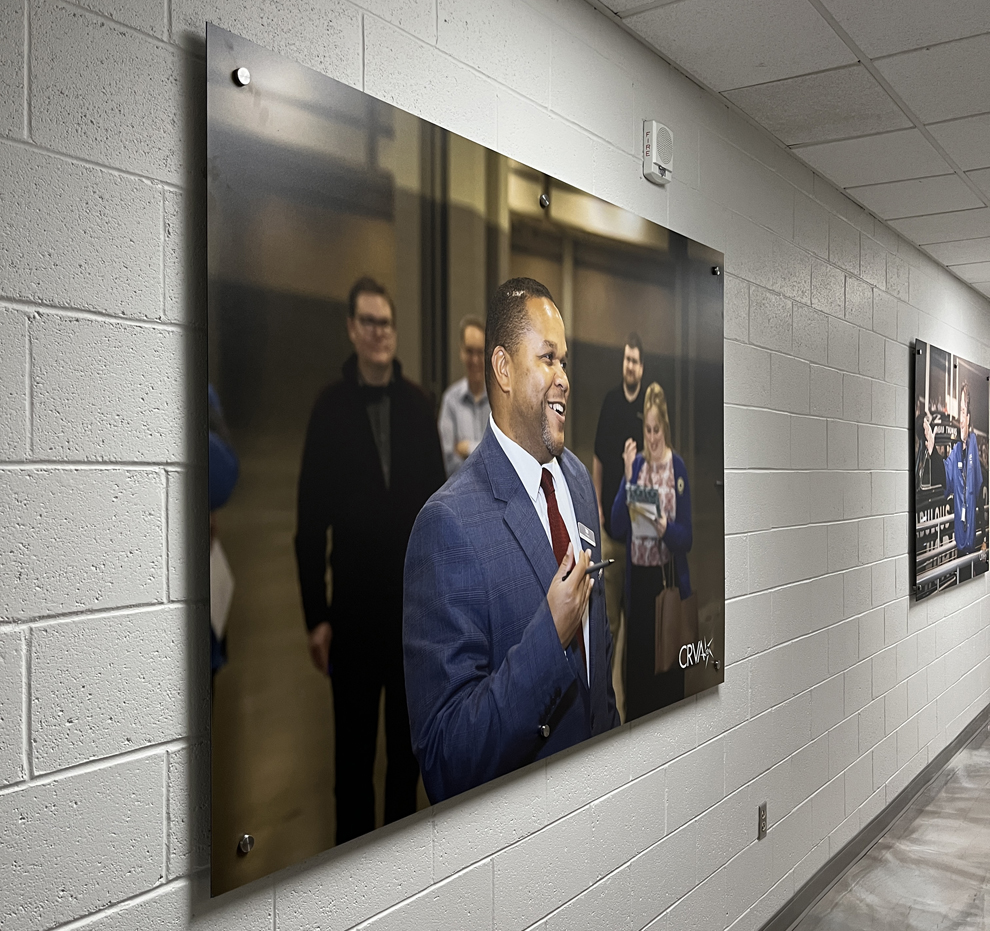
A standoff mounted sign is defined by its attachment system. Hardware projects the finished face a controlled distance from the wall. An acrylic sign is defined by the material used to create its face.
Acrylic can be printed, routed, layered, suspended, adhered, flush mounted, or attached with standoffs. Likewise, a standoff system can support acrylic, aluminum composite material, printed rigid panels, or layered dimensional components. One term explains how the sign is mounted, while the other identifies what the panel is made from.
Heritage identifies property requirements during the planning stage. These may include vendor registration, certificates of insurance, security approval, freight-elevator reservations, loading restrictions, escorted access, tool limitations, occupied-suite protection, and approved working hours.
The project manager coordinates these requirements with production and installation. This helps ensure that installers arrive with current site contacts, approved materials, accurate templates, and a realistic work window.
Yes. A recognition display can incorporate replaceable panels, removable inserts, modular sections, reserved expansion space, or controlled templates for future updates. These systems can accommodate additional names, milestones, leadership changes, or program information.
Update requirements should be identified during the initial design stage because they affect panel divisions, content hierarchy, hardware placement, and production records. Adding flexibility after installation is usually more disruptive and expensive than planning for it at the beginning.
Yes. A genuine wall-mounted standoff system requires drilled mounting points and anchors or fasteners selected for the wall construction and panel load. Adhesive alone does not create a standoff installation because mechanical hardware must support the sign face at a fixed distance from the wall.
The drilled pattern must align accurately with the fabricated panel. Precise placement keeps the sign level, secure, and consistently projected across its full surface.
Heritage-managed projects in Reston begin with an overall project investment of $5,000. This amount applies to the complete scope rather than each individual panel, letter, barrel, or cap.
Project size, content development, design requirements, material selections, hardware finishes, fabrication complexity, wall conditions, access restrictions, approval schedules, installation requirements, and related graphics all affect the final investment.
Standoff signs work well in corporate lobbies, reception areas, boardrooms, conference corridors, donor recognition areas, executive offices, healthcare waiting rooms, educational facilities, association headquarters, and government contractor workplaces.
The chosen wall should provide suitable visibility while allowing the sign’s size, hardware, and shadow depth to fit the surrounding environment. A quiet corridor may be more appropriate for a detailed history display, while a concise mission statement or logo may perform better near a primary entrance.
Possible surfaces include drywall with dependable backing, concrete, brick, concrete block, wood, tile, and selected specialty wall systems. Compatibility depends on the wall’s construction, condition, load capacity, finish, and concealed conditions.
Each substrate requires appropriate drilling methods, fasteners, and clearances. Fragile finishes, uncertain backing, hidden conduit, plumbing, or limited installer access may require additional investigation before the mounting plan can be finalized.
Cleaning methods depend on the panel material, applied graphics, hardware finish, and environmental exposure. A soft, nonabrasive cloth and a cleaner approved for the finished surface are often appropriate. Cleaner should generally be applied to the cloth rather than sprayed toward the gap behind the panel.
Abrasive pads, harsh solvents, excessive pressure, and trapped moisture can scratch hardware, dull acrylic, or damage printed and applied graphics. Project-specific care guidance should be followed when specialty finishes are used.
A site survey is valuable when photographs or drawings cannot confirm measurements, wall construction, backing, finish condition, concealed utilities, sightlines, lighting, access routes, or building procedures.
Verified field information supports accurate layouts, mounting templates, anchor selection, fabrication details, staging plans, and installation schedules. Large panel arrangements, prominent lobby features, unusual substrates, and walls with uncertain construction are more likely to require a survey.
Yes. A dedicated project manager can coordinate approved panel systems, materials, typography, colors, hardware finishes, and production documentation across offices, campuses, or regional facilities.
Every location still requires its own measurements, wall review, audience assessment, and access plan. Consistent design standards protect the organization’s brand, while site-specific planning accounts for the physical and operational differences between buildings.
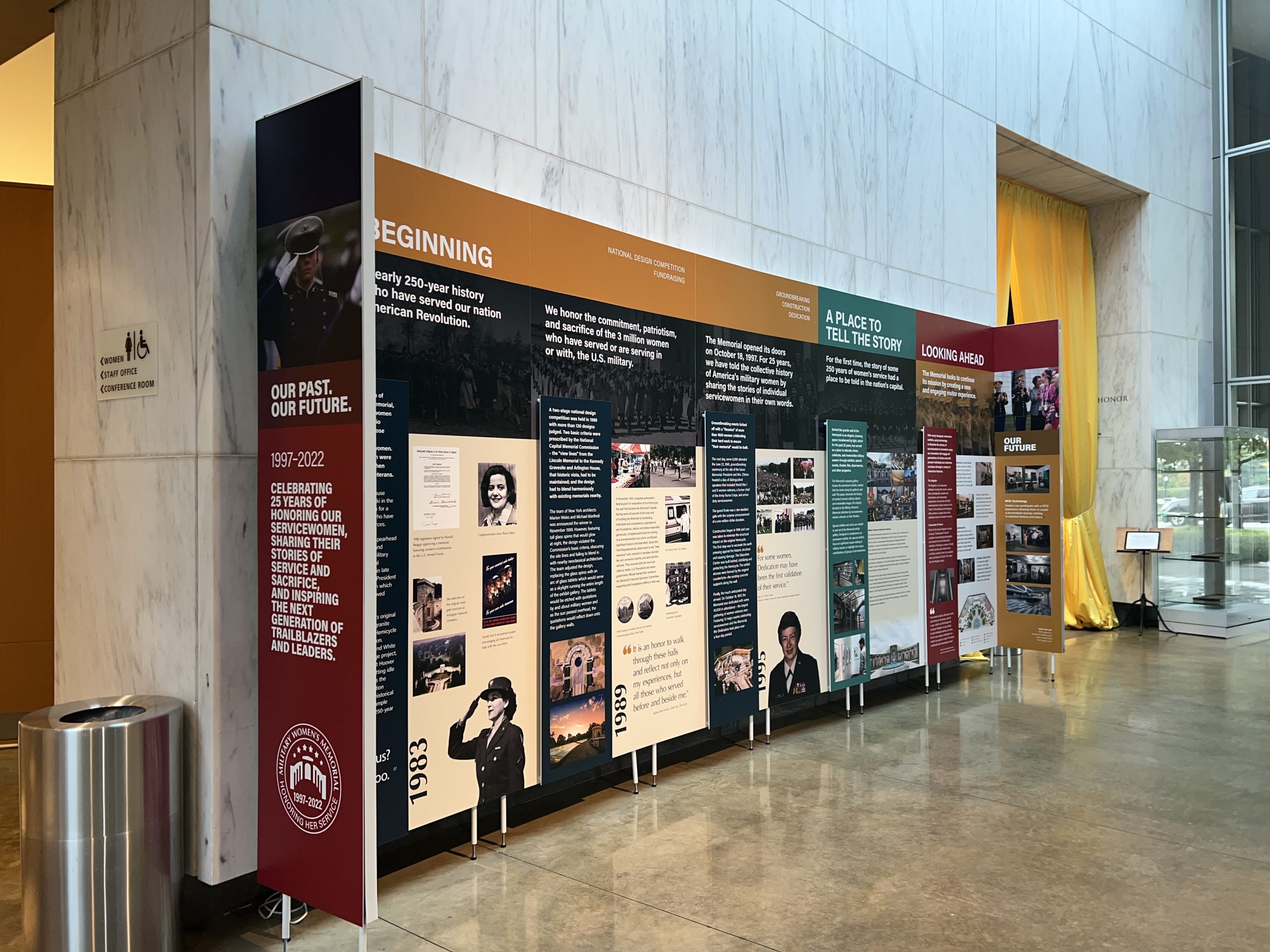
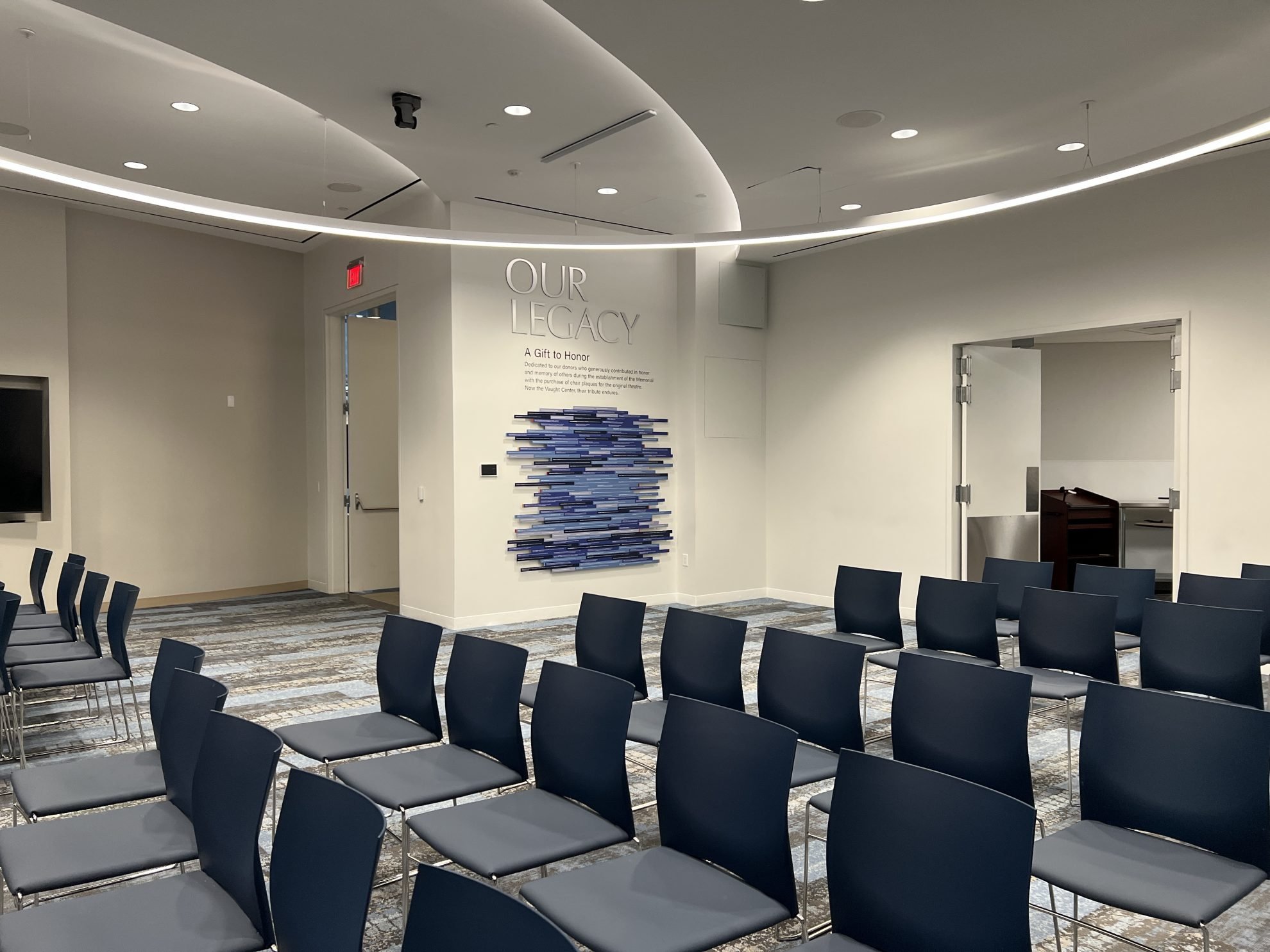
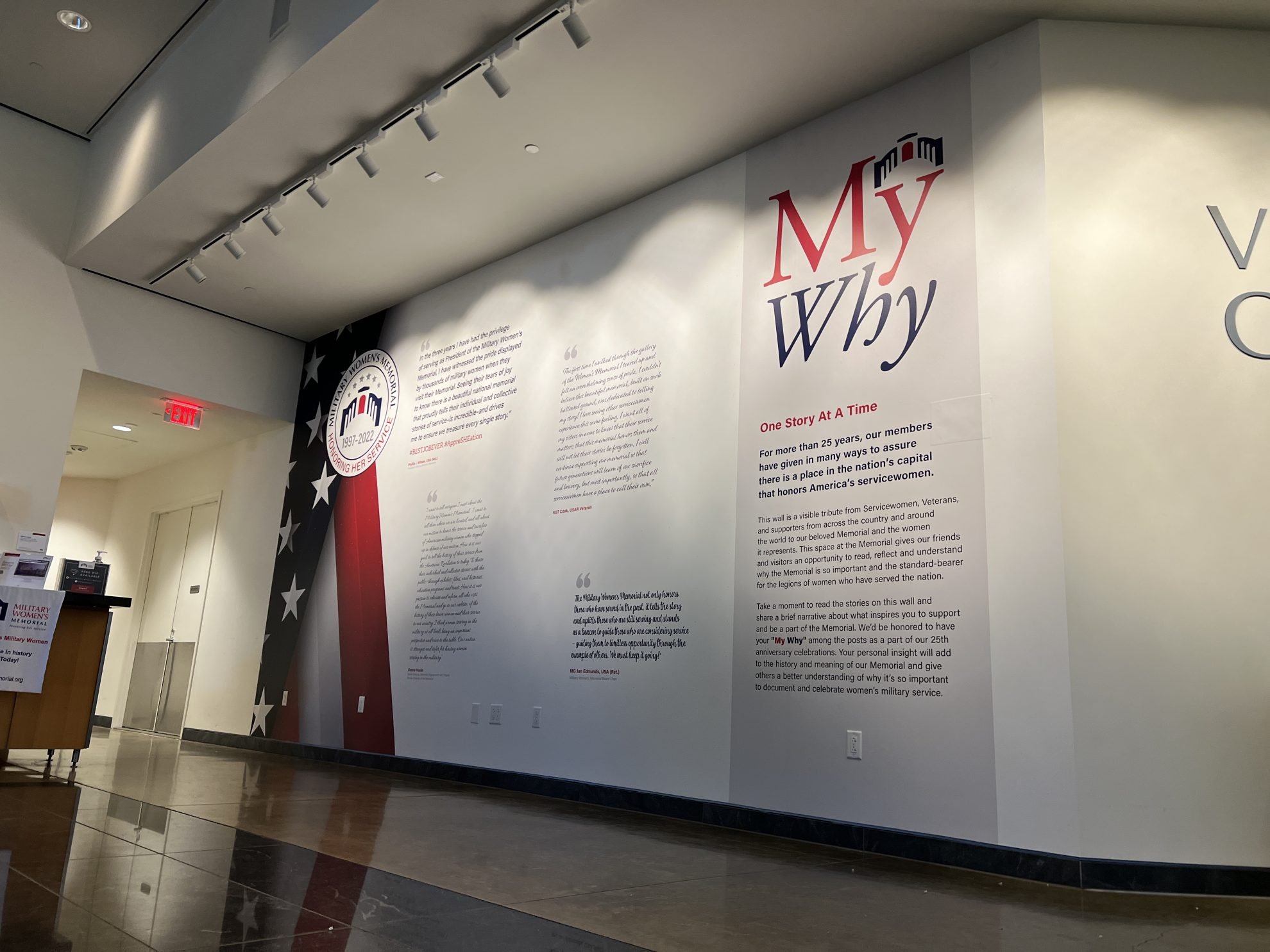
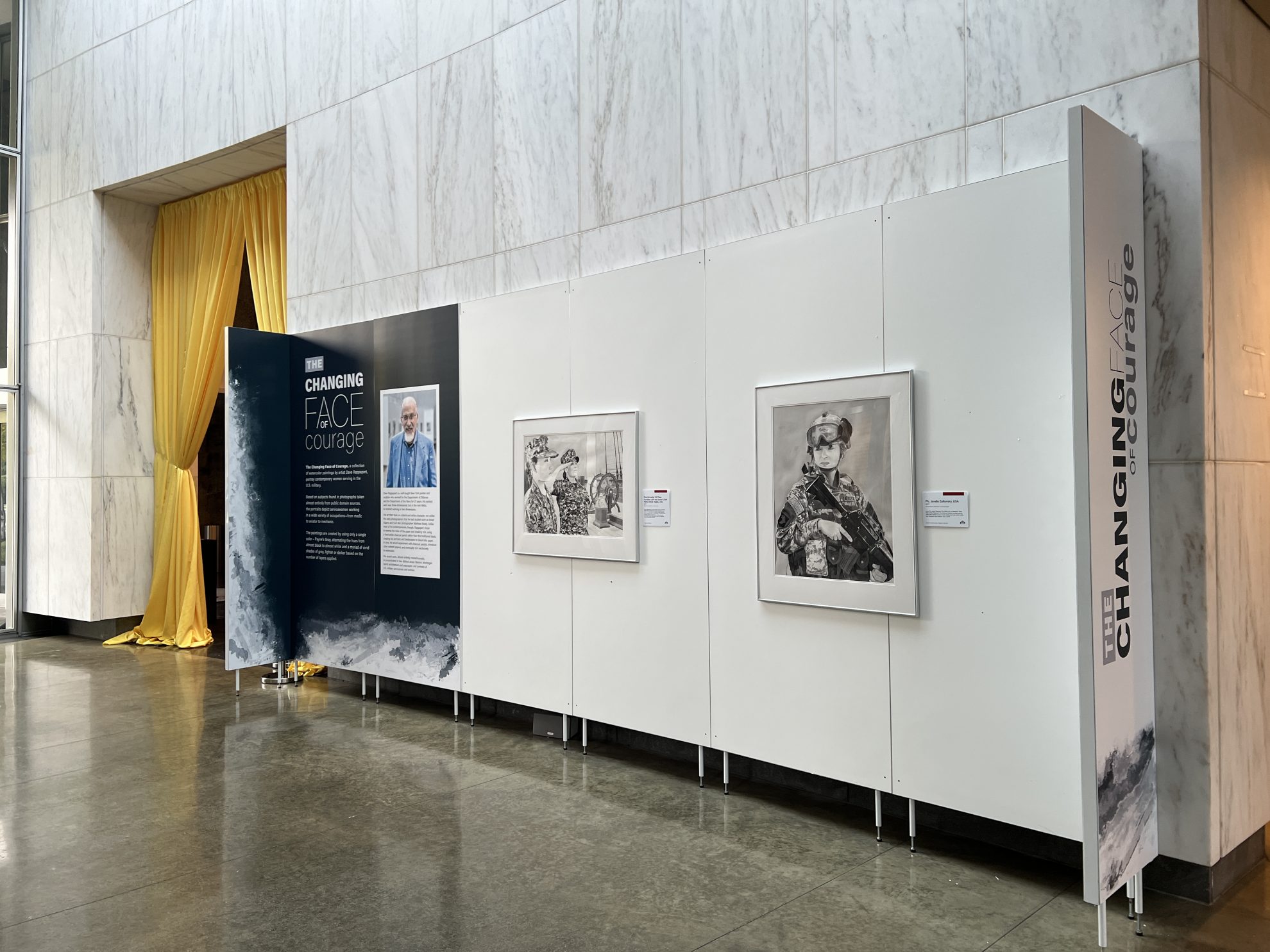
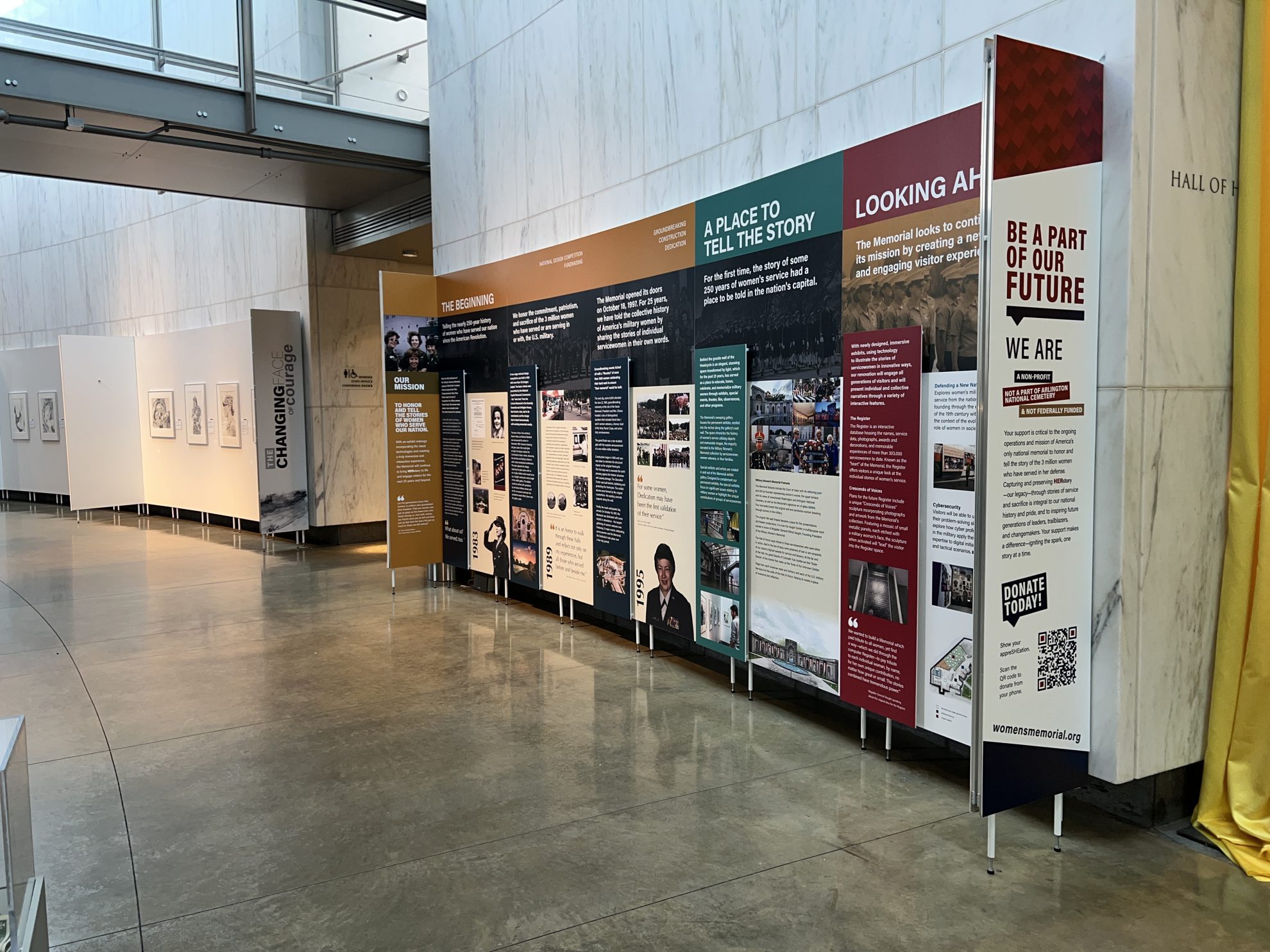
Heritage Signs & Displays created new museum signage for the Military Women’s Memorial in Arlington, VA. The project included custom signs, wall wraps, dimensional letters, and standoff-mounted displays to honor the legacy of U.S. servicewomen and the donors who supported the memorial. The updated interior features impactful designs, including a "Our Legacy" wall display and panels showcasing historical contributions and artwork, creating a transformative tribute to women in the U.S. Armed Forces.
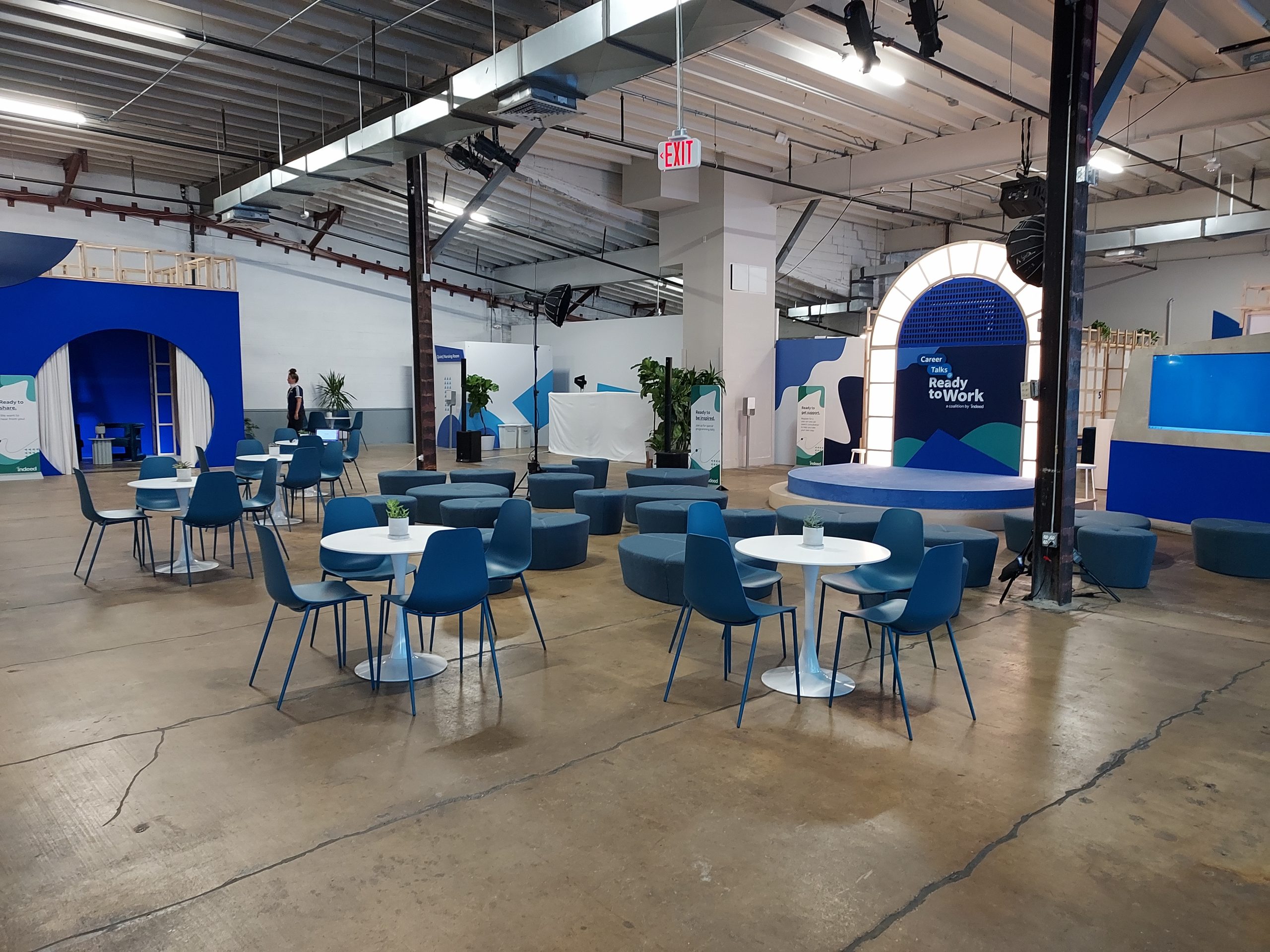
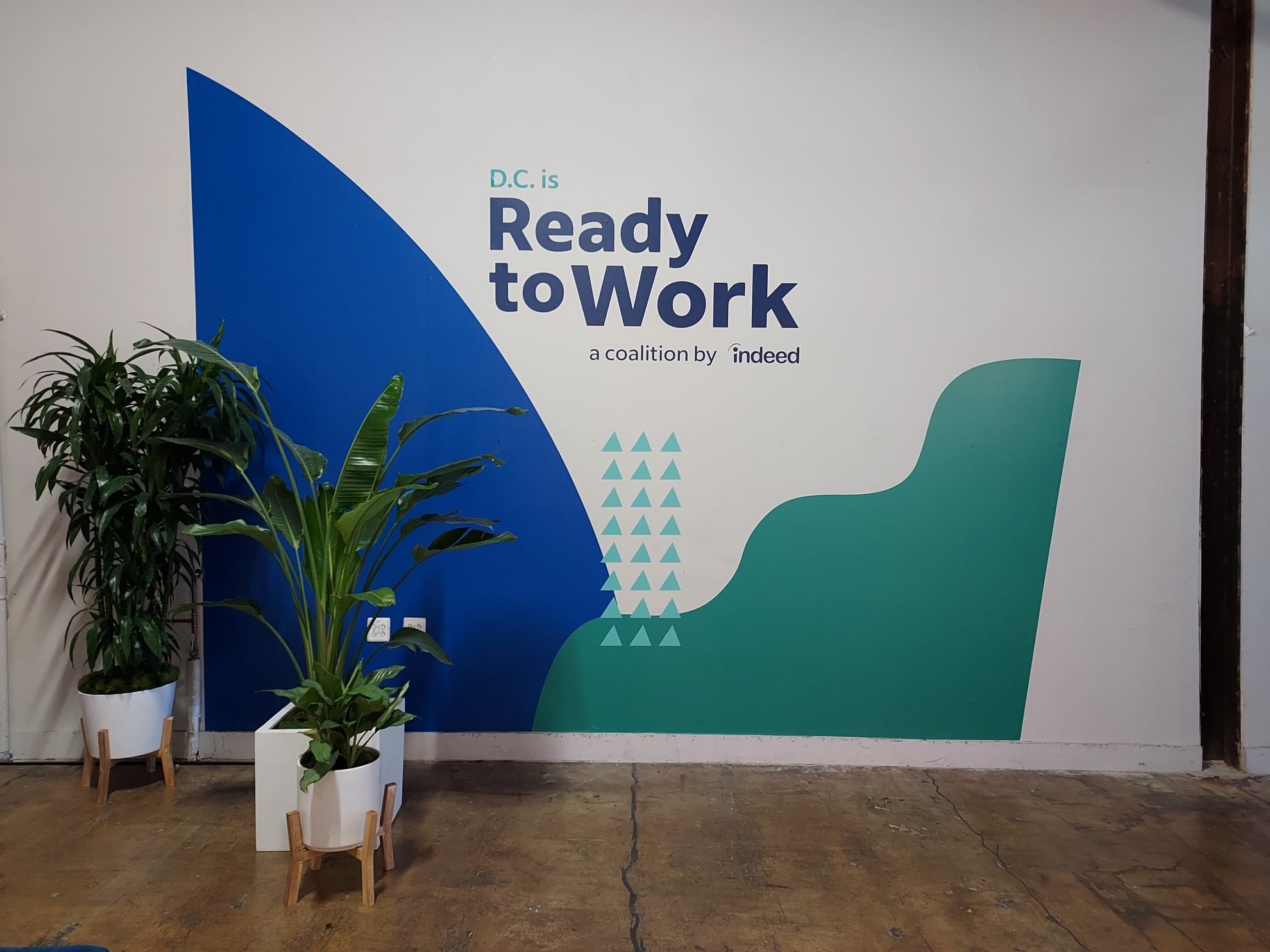
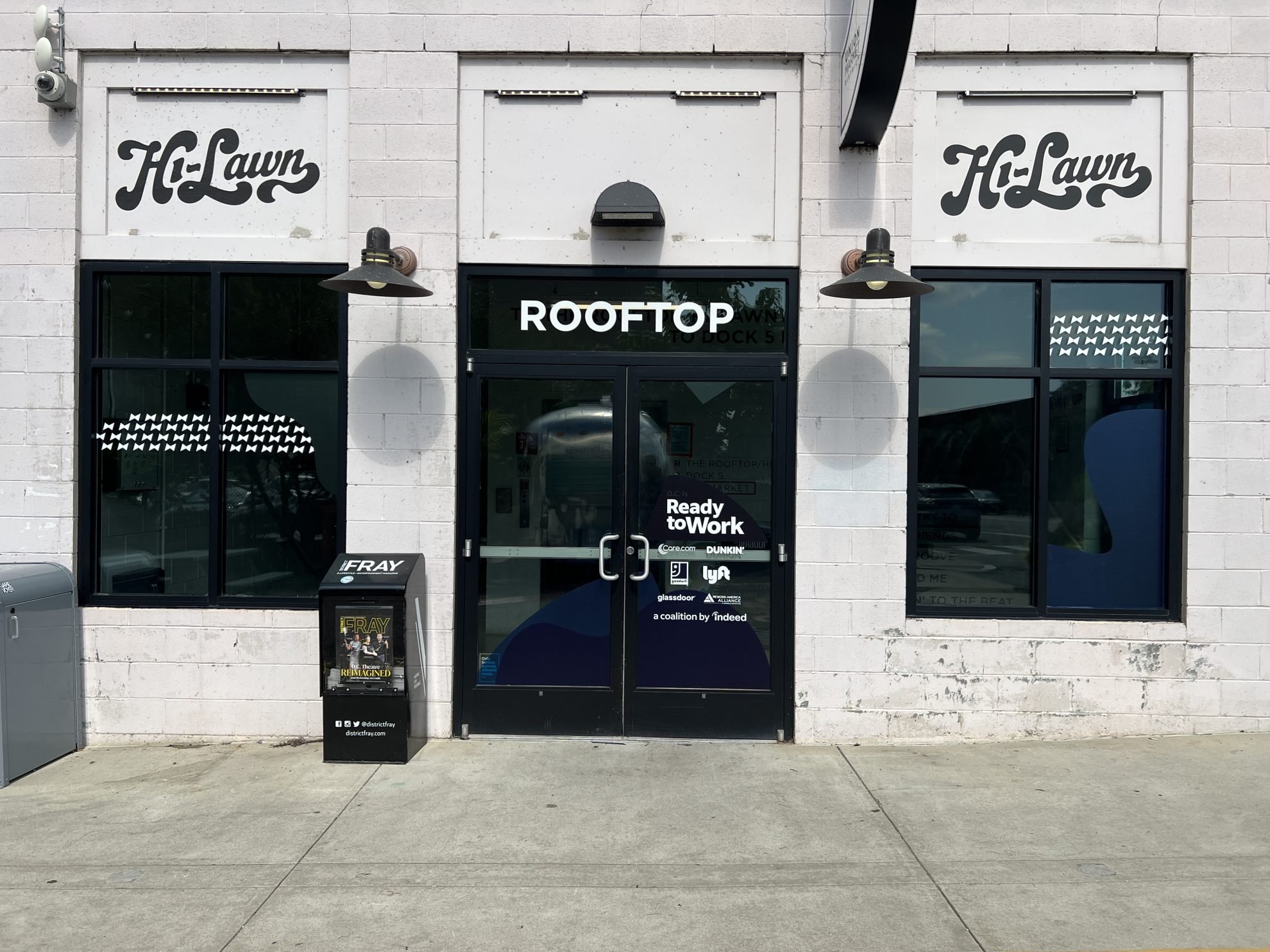
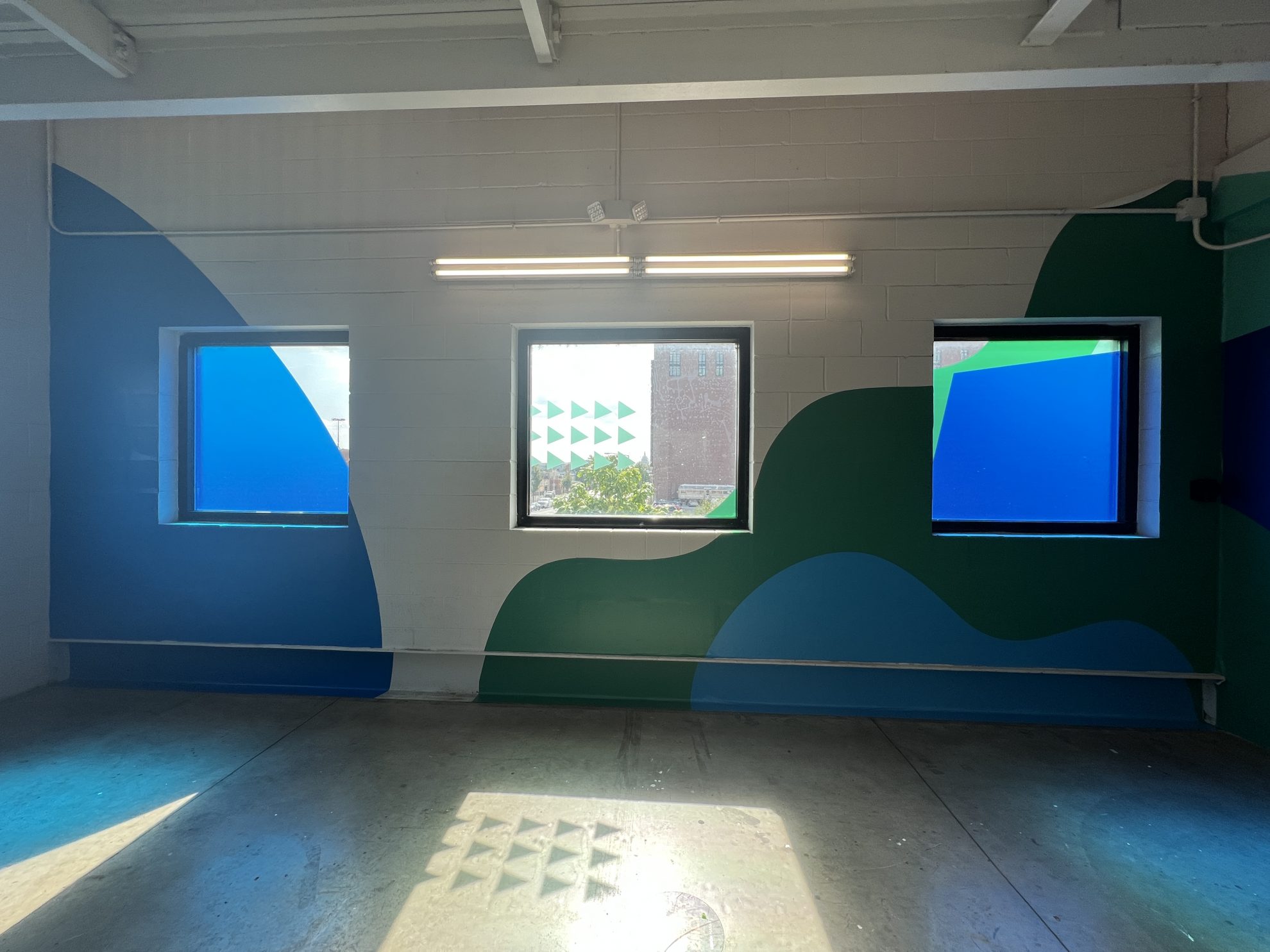
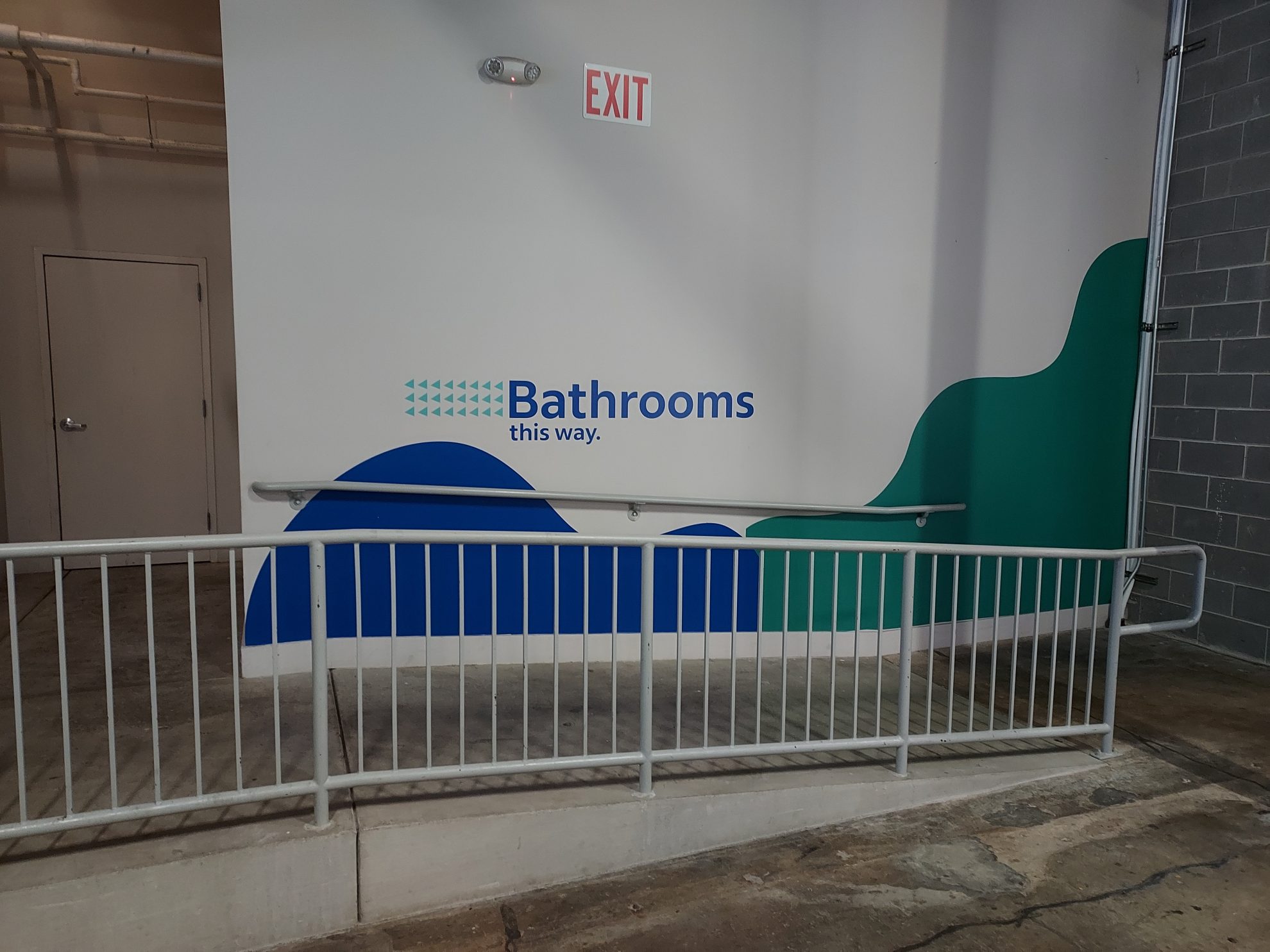
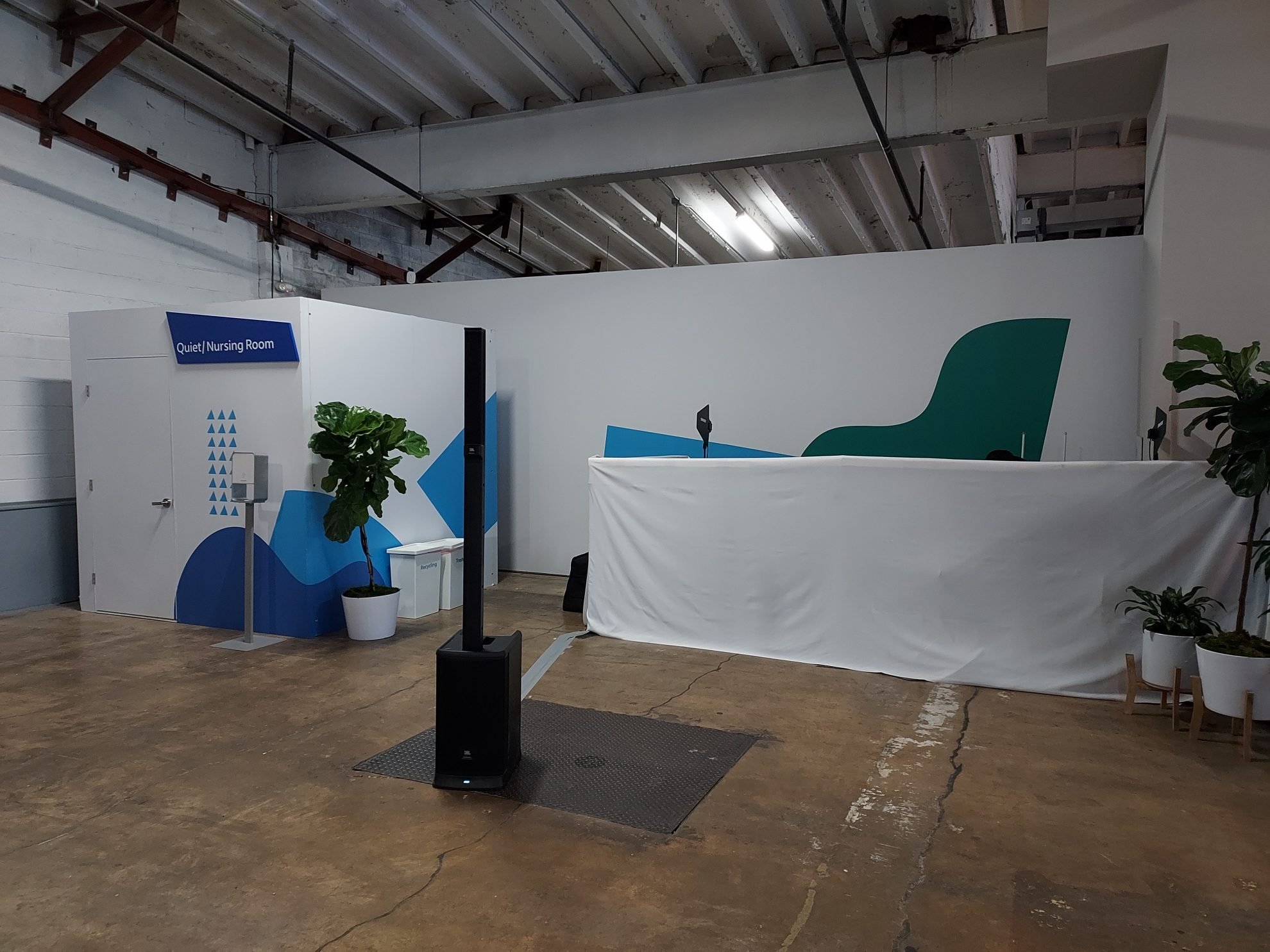
Heritage Signs & Displays' collaboration with The Gathery to brand Union Market in Arlington, VA, for Indeed's "Ready to Work" job fair. The project included custom event displays, wall graphics, window graphics, and wayfinding signs, creating an immersive and visually appealing environment. The branding enhanced the venue, reflected the event's mission, and provided a seamless experience for attendees.