

What Are Custom Signs and How Are They Created?
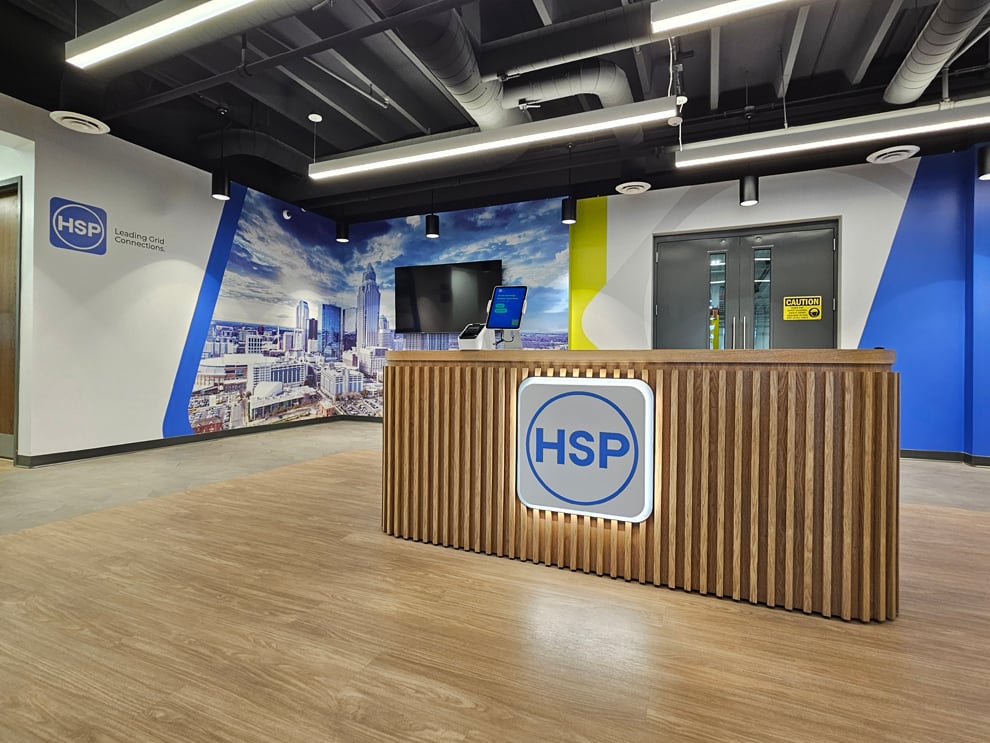
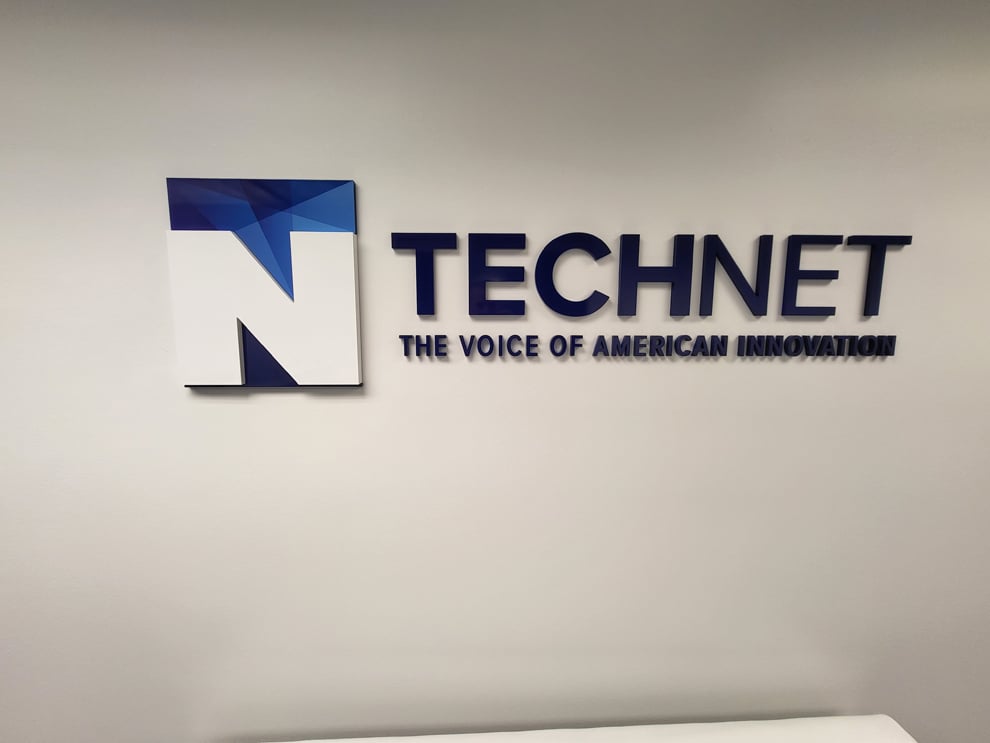
A custom sign is created for a particular organization, message, space, audience, and visual objective rather than selected as a standard off-the-shelf product. That simple distinction creates an enormous range of possibilities. A custom sign might be a dimensional logo welcoming visitors into a corporate lobby, an acrylic panel identifying an office, a backlit sign creating a focal point in a reception area, a standoff mounted display recognizing donors, or dimensional lettering integrated into a larger wall graphic.
Custom signs can also become components of more complex wall displays that combine graphics, photographs, text, dimensional elements, mounting hardware, lighting, and other materials to communicate an organization’s identity, history, culture, people, or achievements. For Heritage Signs & Displays, custom signage is primarily part of a broader specialty: creating signs, graphics, and displays for workplace interiors and event environments.
Custom Signs Begin with Communication, Not Materials
It can be tempting to begin a custom sign project by choosing acrylic, wood, vinyl, or another substrate. A stronger process begins by determining what the sign needs to accomplish. Who will see it? What should they understand? How far away will they be? Is the sign identifying an organization, communicating direction, recognizing someone, reinforcing culture, or creating a visual focal point? What other signs and graphics are nearby? How does the sign relate to the architecture and brand standards of the space?
Those questions help determine appropriate scale, materials, colors, dimensional depth, lighting, mounting, imagery, and fabrication methods. Environmental graphic design applies this thinking across the larger workplace or event environment. It helps determine how signs, graphics, displays, messages, surfaces, and visual elements can work together instead of treating every sign as an independent object.
Acrylic Signs
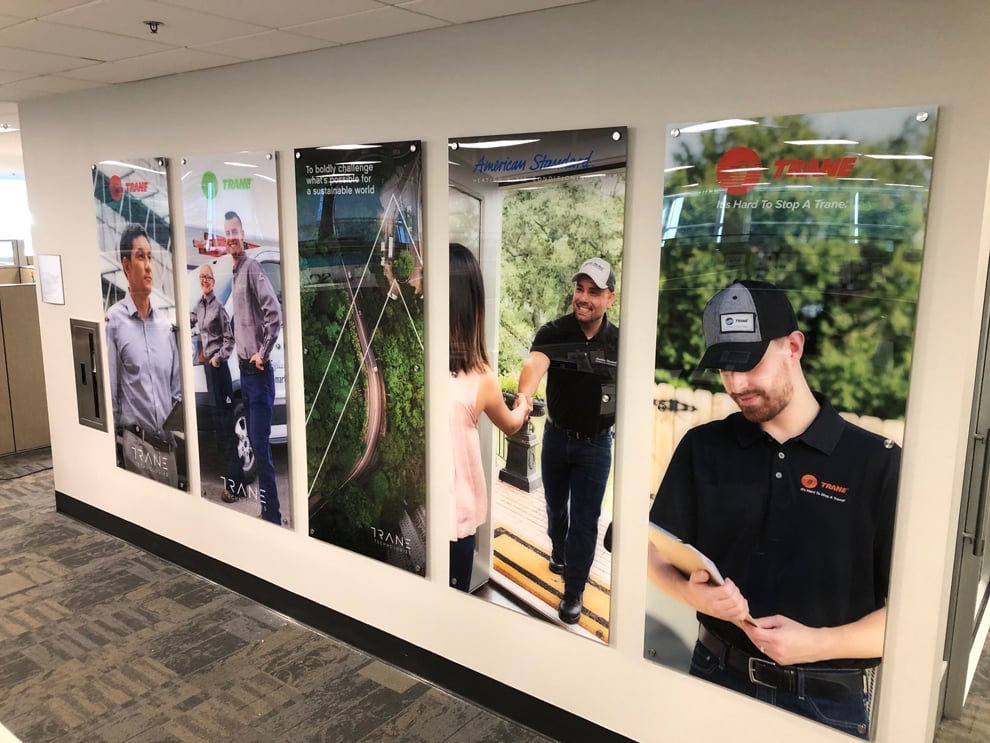
Acrylic is widely used for polished interior signage because it can provide a clean, contemporary appearance and can be fabricated in many forms. Clear, frosted, painted, printed, or layered acrylic components may be incorporated into lobby signs, office signs, wayfinding systems, recognition displays, standoff mounted signs, and branded wall features.
Acrylic can also work with dimensional lettering, graphics, mounting hardware, or illumination to create additional visual depth. The appropriate thickness, finish, mounting system, and fabrication method depend on the design, intended use, surrounding surfaces, and installation conditions.
Aluminum Composite Material (ACM)
Aluminum composite material, commonly called ACM, is another useful substrate for custom signs and displays. ACM typically consists of thin aluminum skins bonded to a lightweight core. It can provide the professional appearance associated with a metal surface without the weight of a comparable solid-metal panel. It can be printed, cut, shaped, or incorporated into layered interior signs and wall displays.
ACM can work particularly well for printed panels, dimensional compositions, history walls, recognition displays, informational panels, and other interior applications where a clean, finished appearance and relatively lightweight construction are valuable. Heritage may also use or source actual metal hardware, fasteners, standoffs, and other manufactured components as part of the completed sign or display.
PVC and Other Rigid Sign Materials
PVC can be useful for dimensional lettering, routed elements, backing components, printed signs, and other fabricated interior applications. Its relatively light weight and fabrication versatility allow it to be cut, painted, printed, layered, or incorporated with other materials. Depending on the project, foam-based boards and display substrates may also be useful for event displays, dimensional components, temporary directional information, or other short-term applications.
No material is universally right for every sign. Appearance, rigidity, weight, durability, installation method, expected service life, surrounding surfaces, and overall design all influence the selection. The material should support the communication goal rather than become the starting point for the entire project.
Wood Can Add Warmth and Character
Wood can provide visual warmth, texture, and character that work particularly well in certain branded interiors. Depending on the design, wood may be stained, painted, engraved, routed, printed, or used as a dimensional backing surface. It can provide a contrasting natural element when combined with acrylic, dimensional lettering, graphics, lighting, or architectural hardware.
Wood can be especially effective when an organization wants its workplace to communicate craftsmanship, heritage, warmth, authenticity, or a connection to natural materials. As with any substrate, the specific material and fabrication approach should reflect the intended interior application and installation requirements.
Dimensional Lettering Creates Depth
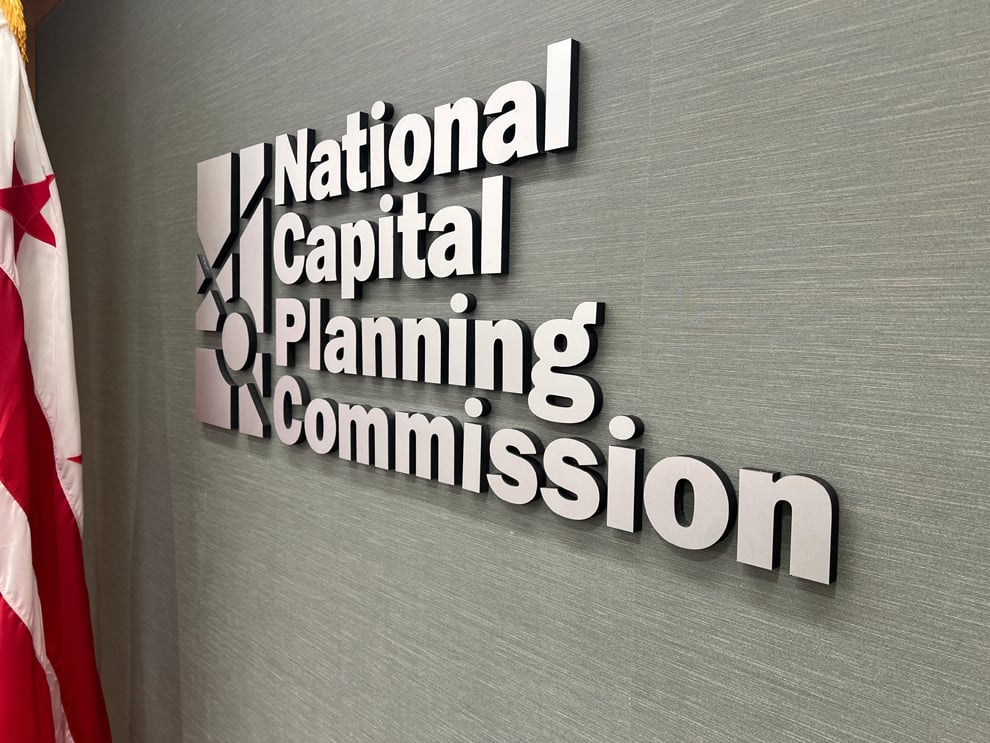
Dimensional lettering allows names, logos, values, department identifiers, and other messages to project physically from the wall or background surface. Letters can vary in material, thickness, finish, spacing, mounting, and dimensional depth. They may be mounted directly to a wall, positioned over a wall graphic, incorporated into a lobby sign, or combined with other elements to create a complete wall display.
Because shadows, lighting, viewing angle, surrounding graphics, and wall finishes affect how dimensional letters appear, they are often most effective when considered as part of the larger wall rather than simply fabricated as individual letters. Dimensional lettering can create emphasis without requiring an entire wall to become visually complex.
Backlit Signs Add Controlled Illumination
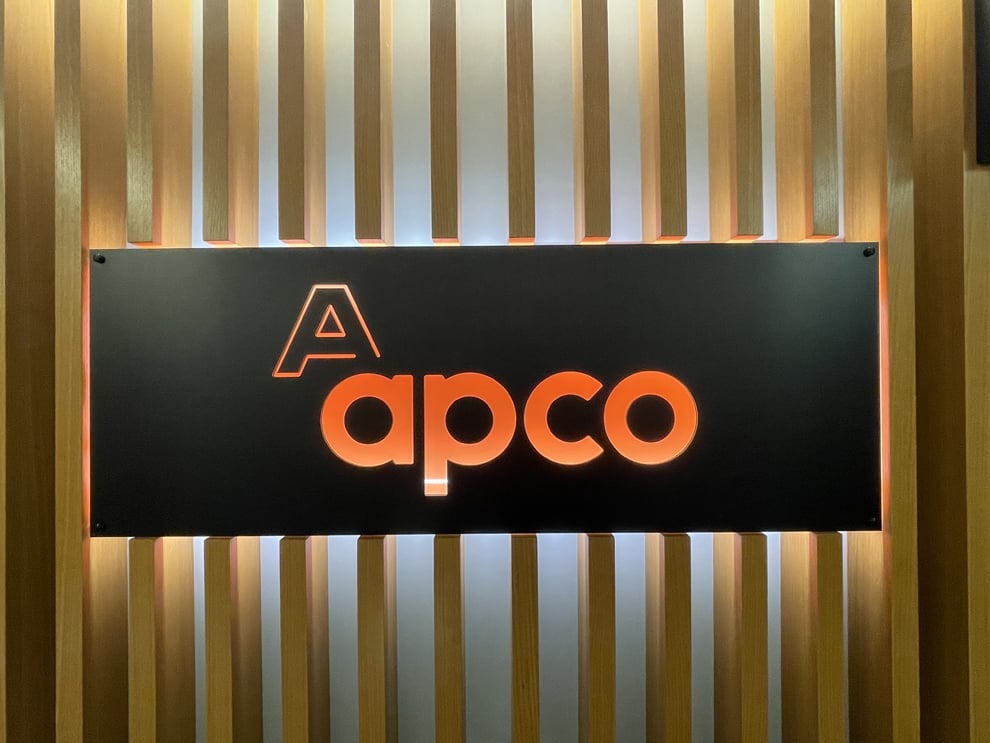
Lighting can give selected interior signs greater visual emphasis. Backlit signs can use LED illumination to create halo effects, edge lighting, illuminated letters, glowing graphic panels, or other visual treatments. The sign’s construction, electrical access, lighting intensity, materials, mounting, wall condition, and surrounding ambient light all influence the appropriate approach.
Inside reception areas, conference spaces, corporate offices, hospitality areas, event environments, and other branded interiors, illumination can create an attractive focal point while helping a logo or message stand apart from the surrounding wall. Heritage focuses on interior backlit signs and related illuminated features for workplace interiors and event environments rather than conventional exterior channel-letter or illuminated storefront sign programs.
Custom Signs Often Work Best with Graphics and Displays
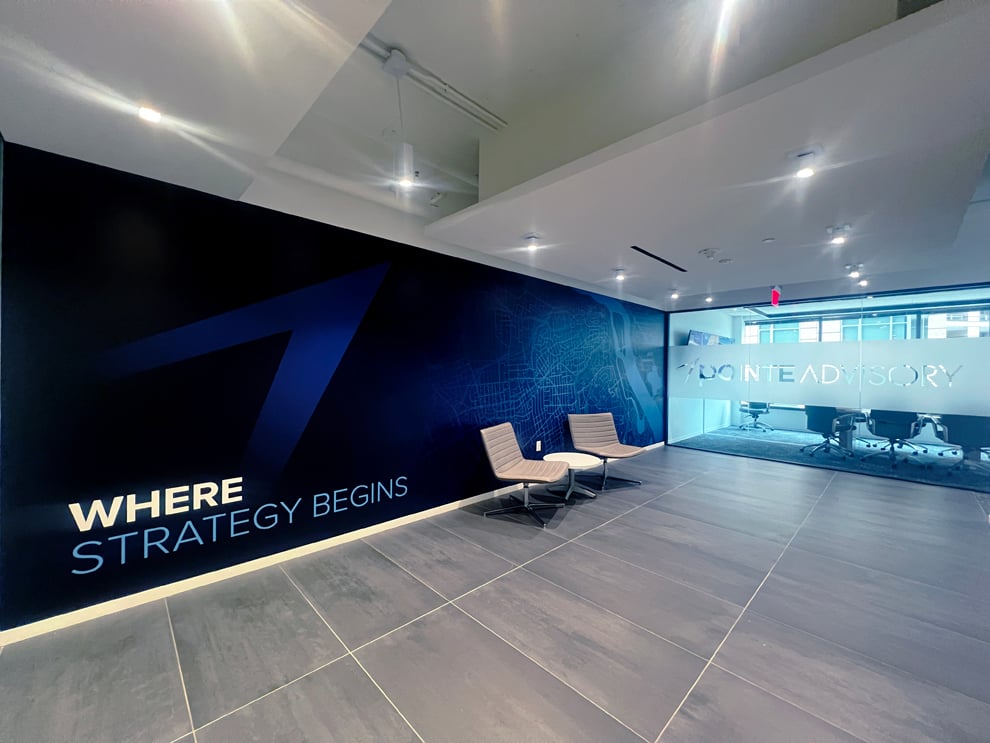
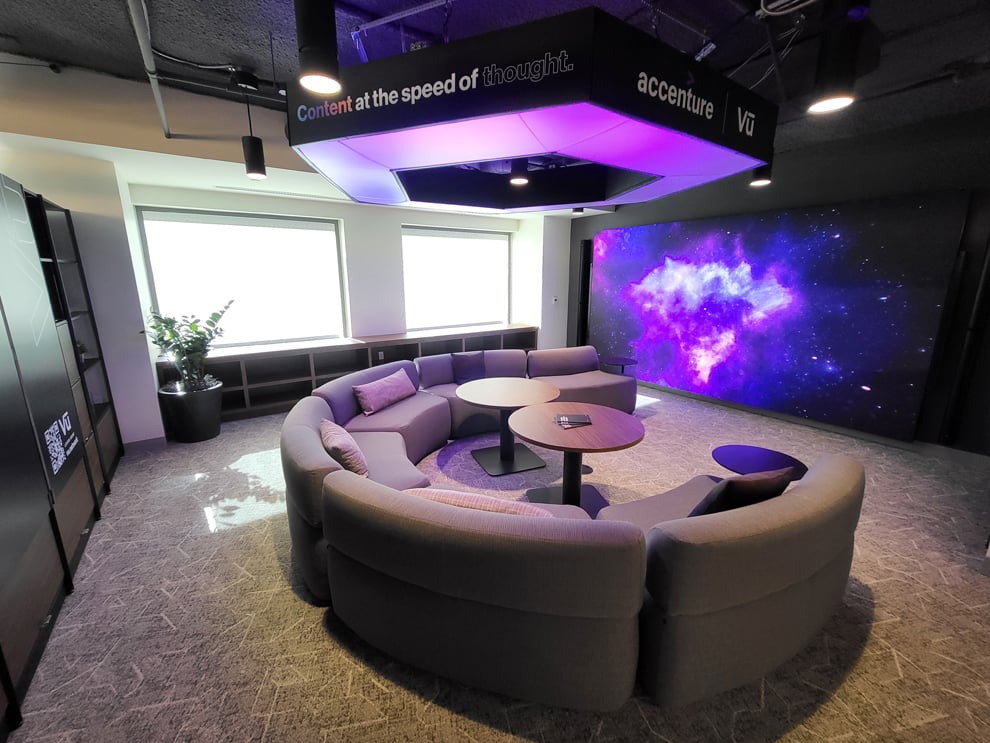
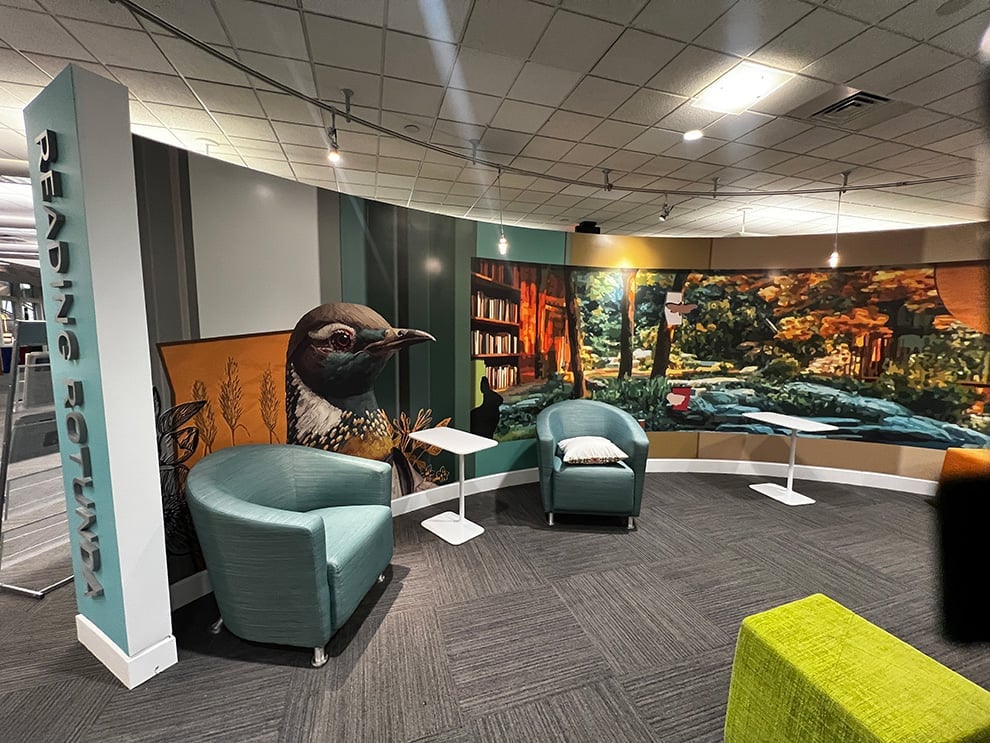
Some of the strongest branded interiors combine multiple visual elements. A dimensional logo might sit over a wall wrap. Acrylic panels can display photographs or recognition content. Standoff mounted signs can add layers to a history wall. Frosted vinyl can extend branding onto conference-room glass. Wayfinding signs can carry the same typography and visual language throughout the workplace. Wall displays can combine photographs, text, graphics, panels, dimensional letters, lighting, and hardware into one coordinated presentation.
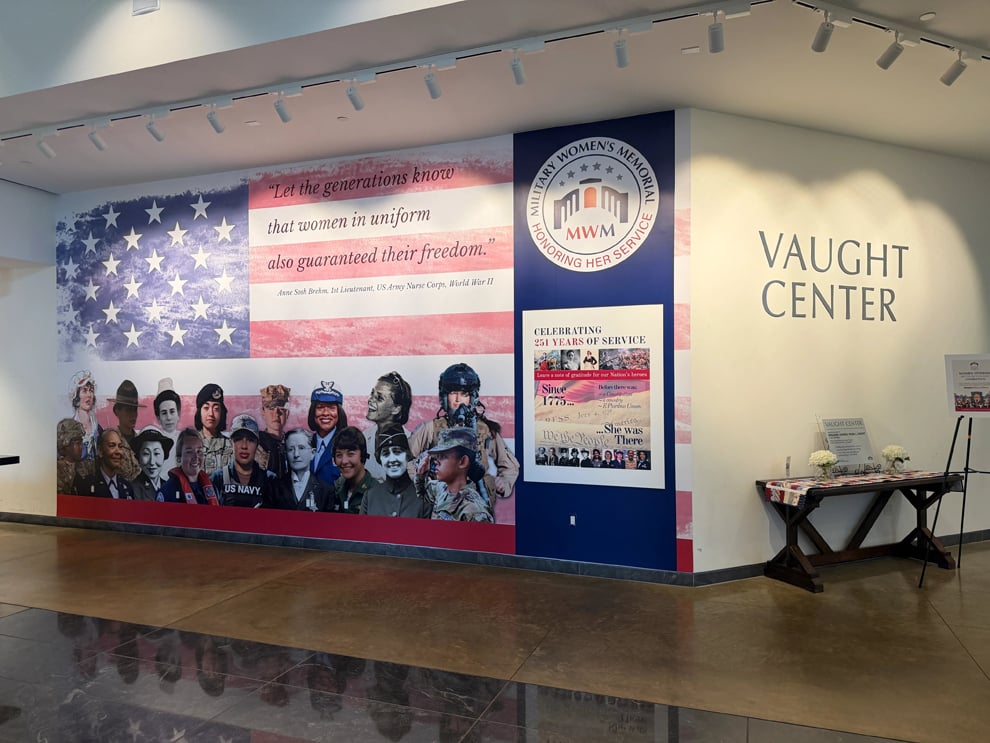
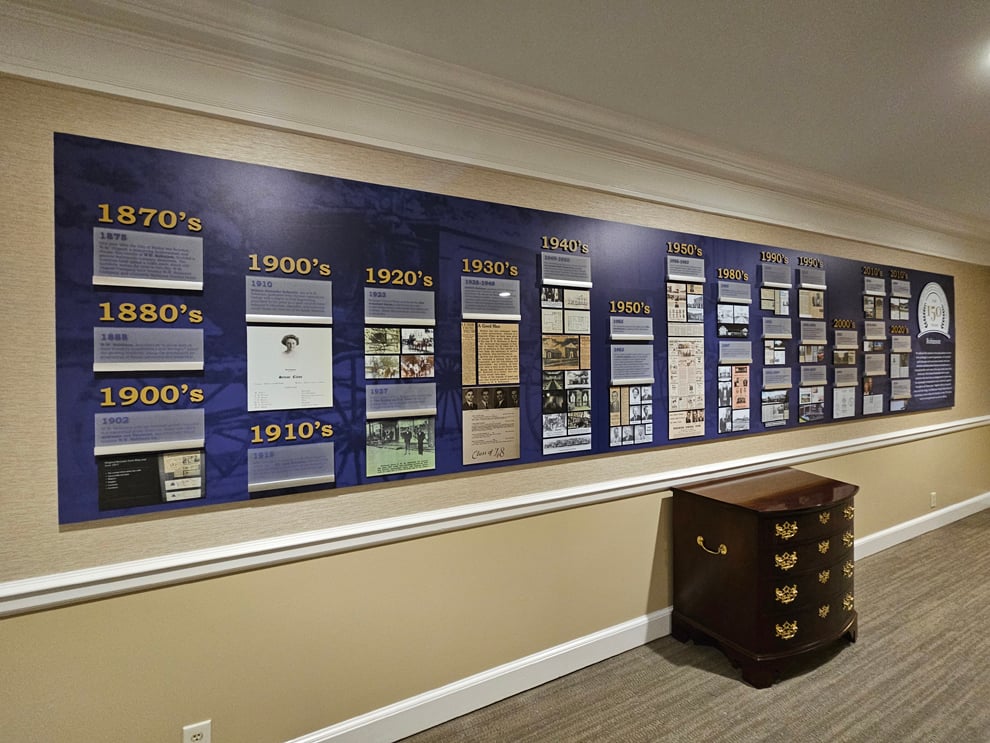
A company history display might use archival photography and wall graphics as its visual foundation while dimensional lettering highlights milestones. A donor wall could combine printed imagery with mounted panels and names. A lobby feature might connect a dimensional logo with a larger graphic composition. Considering these elements together can transform individual signs into a coordinated visual experience.
What Custom Sign Work Does Heritage Focus On?
Heritage Signs & Displays specializes in custom signs, graphics, and displays used primarily for workplace interiors and event environments. Our work can include client discovery, site surveys, environmental graphic design, one assigned project manager, production, fabrication, and professional installation by Heritage team members for Heritage-managed projects. This connected approach helps keep creative direction, site information, production requirements, scheduling, and installation planning within one accountable process.
Heritage does not produce or install monument signs, pylons, channel letters, conventional exterior sign programs, or fleet graphics. Suitable non-illuminated exterior signs, dimensional lettering, sign panels, window graphics, or wall graphics may sometimes be included when they appropriately support a broader Heritage-managed project that includes interior signs, graphics, and displays and when the product and site conditions support the application. Heritage also does not provide installation-only service for customer-provided signs or graphics.
Custom Means the Solution Fits the Organization
The real value of a custom sign is not simply that it has been manufactured in a unique shape, size, or color. It is that the finished piece belongs in the space, communicates the right message, represents the organization’s identity, and works with the surrounding signs, graphics, architecture, and audience.
Heritage Signs & Displays is a veteran-owned and family-led company founded as a printing business in 1977. Custom signs, interior graphics, workplace branding, and event environment solutions became a defining focus beginning in 2009. Today, Heritage supports organizations throughout Washington, DC, Northern Virginia, Maryland, and the broader Mid-Atlantic through environmental graphic design, project management, production, fabrication, and professional installation.
Our purpose is to honor God by serving our clients and communities with excellence, and we seek to demonstrate that purpose through collaboration, responsible recommendations, craftsmanship, accountability, and care for the finished result. If your organization is considering custom signs as part of a workplace branding or event environment project, Get Started Now and tell us about the space, goals, location, timing, and message you want to communicate.