Five Decisions to Consider for Branding Your DC Workplace in 2027
In Washington, DC, Your Workplace Should Do More Than Look Impressive
By Joe Gass, President & CEO, Heritage Signs & Displays
Five decisions to build visitor confidence, communicate purpose, and make signs, graphics, and displays work together.
In Washington, DC, a lobby can tell different stories to people walking through it. A donor may look for evidence that commitments are being honored. A member may want to feel represented. A new employee needs to understand the principles behind the work. A visiting leader may be judging whether the organization is prepared for its next chapter. Those people do not arrive with the same questions, yet they share the same space.
I’ve learned that a workplace refresh succeeds when leaders decide which questions the environment should answer. A thoughtful reception statement, a recognition display, clear directions, or purposeful graphics can communicate something meaningful across an office already in daily use. Renovation is not always necessary, and more imagery does not automatically mean better communication. What matters is whether the experience matches the organization’s promises to people.
If your team is preparing a Washington, DC workplace refresh for 2027, here are five decisions I would encourage you to make before discussing finishes or products. They address trust, changing information, the spaces different people use, responsible investment, and the accountability required to finish well.
Decision 1: Define the Trust Your Workplace Should Build
A workplace can make a promise without saying a word. For an association, that promise may concern service to members. For a nonprofit, it may be responsible stewardship of resources entrusted to it. A professional firm may want clients to see sound judgment and discretion. Those priorities are not interchangeable, which is why I would avoid beginning with a list of attractive features.
Ask your leadership team to agree on one central idea people should recognize on arrival, along with two or three supporting truths worth discovering deeper inside. A formal mission statement belongs where it can be understood. History, community impact, employee contributions, or recognition may be better expressed as a series of quieter moments. When messages compete, visitors can leave without remembering the one that matters most.
I would also listen beyond the executive team. Employees know where an office feels welcoming or disconnected, while member-facing and donor-facing colleagues hear visitors’ questions. Their observations help reveal what the environment needs to communicate. A space earns trust when its visible claims are supported by the way the organization actually treats people.
Decision 2: Separate Enduring Identity from Information That Changes
Many organizations around Washington, DC need their workplace to honor a lasting purpose while remaining current with programs, leadership, partners, and recognition. That creates an important decision before anyone chooses materials: which messages should endure for years, and which may need revision? If the team treats every statement as permanent, even a modest update can become unnecessarily disruptive.
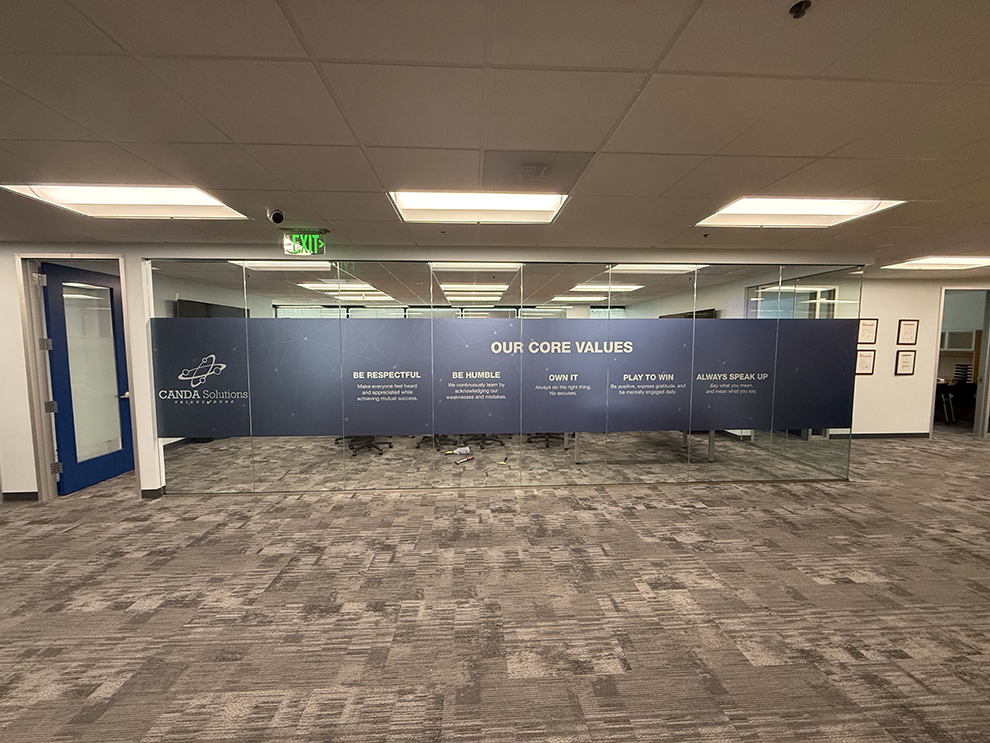
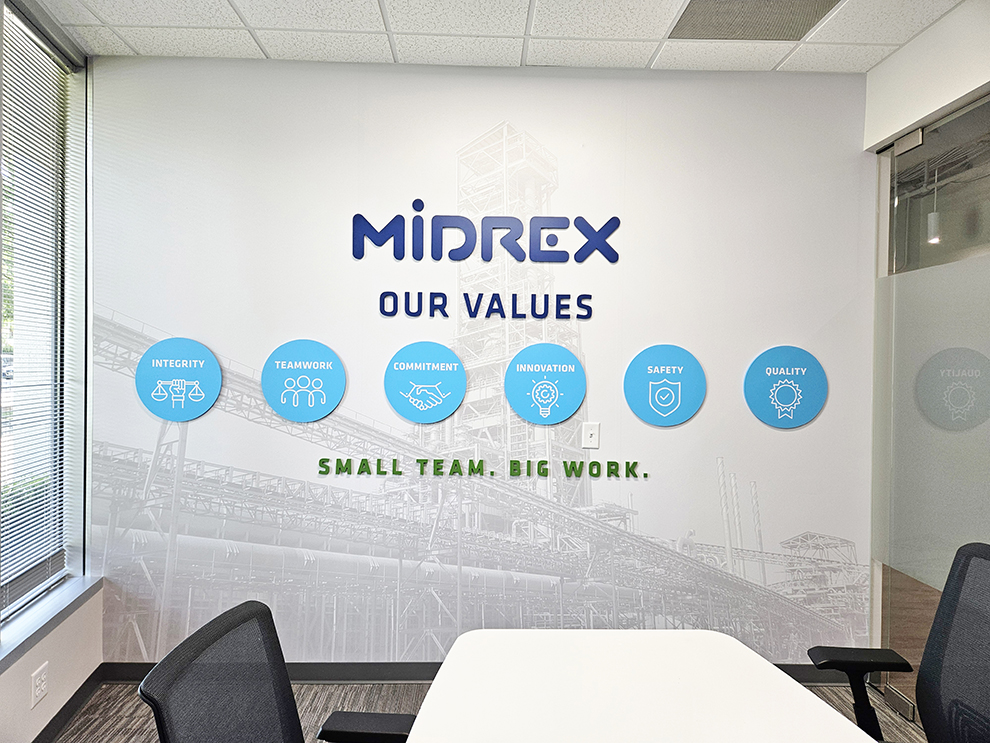
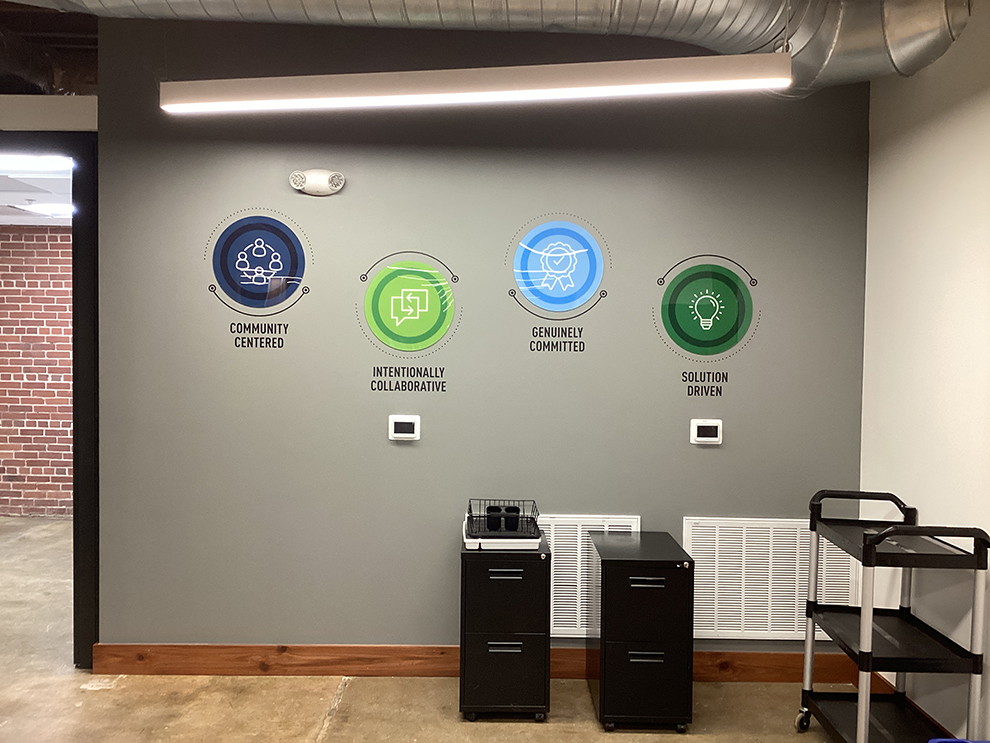
Your enduring elements might include organizational identity, core values, a founding story, or the principles behind your work. More changeable content may include donor recognition, recent accomplishments, campaign highlights, or people serving in current roles. The design can accommodate both. Certain displays may use permanent dimensional features while others allow selected names, panels, or information to be replaced without rebuilding the entire presentation.
This matters to me as a business owner because a useful investment should keep serving people after the opening photographs are taken. I would rather have the conversation about foreseeable changes at the beginning than see an organization replace an otherwise effective display simply because one important part of its story has moved forward.
Decision 3: Give Different Spaces Different Jobs
Walk into your office as someone unfamiliar with the building. Which route takes a visitor from reception to the room where important conversations happen? Where might someone need reassurance that they’ve arrived in the right place? Which areas let employees work and connect without being surrounded by messages intended for guests? Those questions can reveal priorities that an empty-wall survey misses.
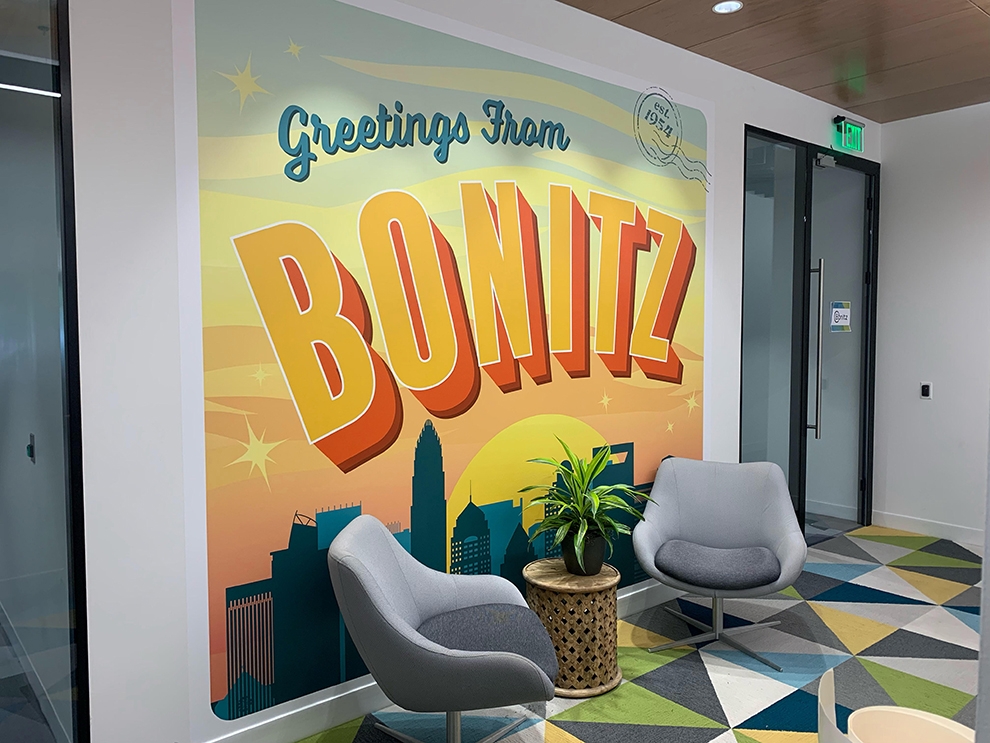
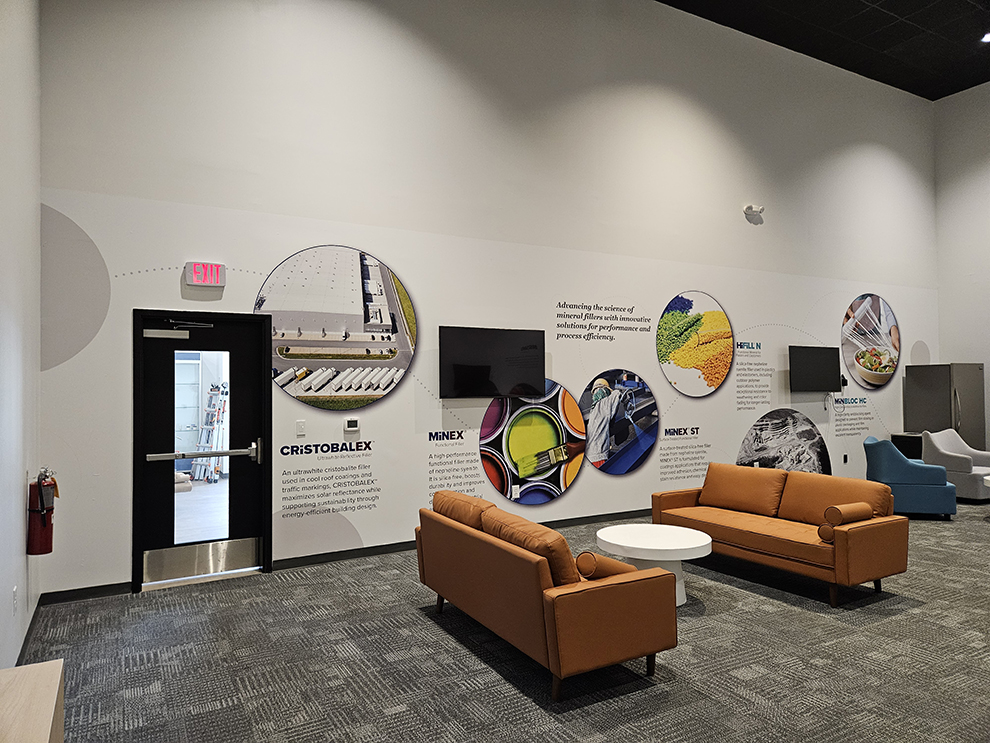
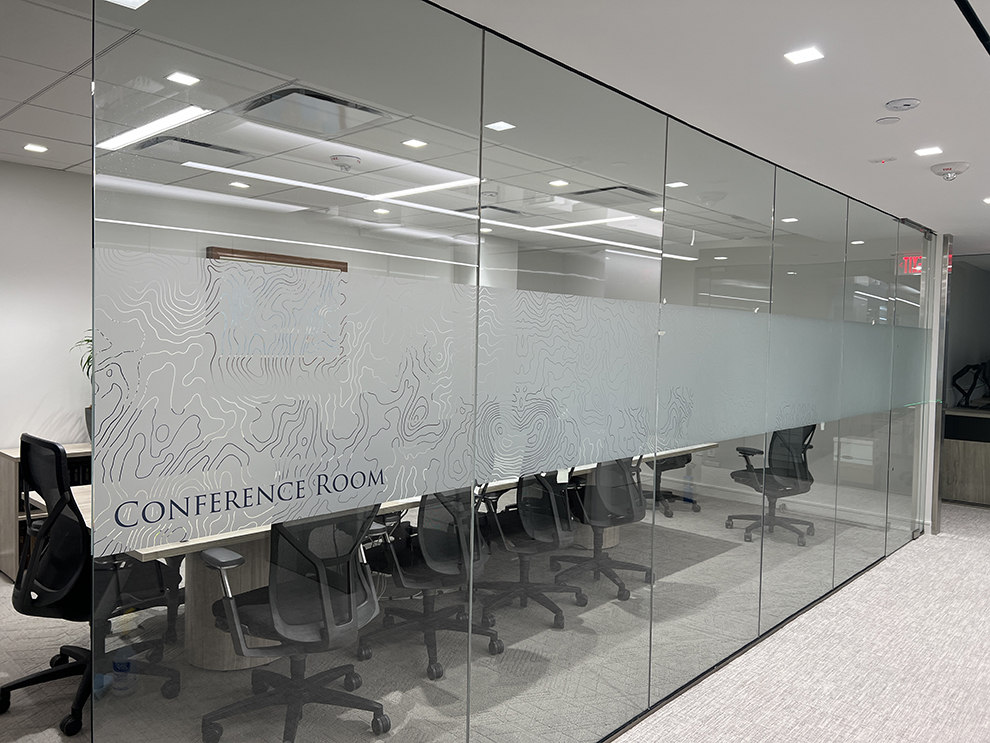
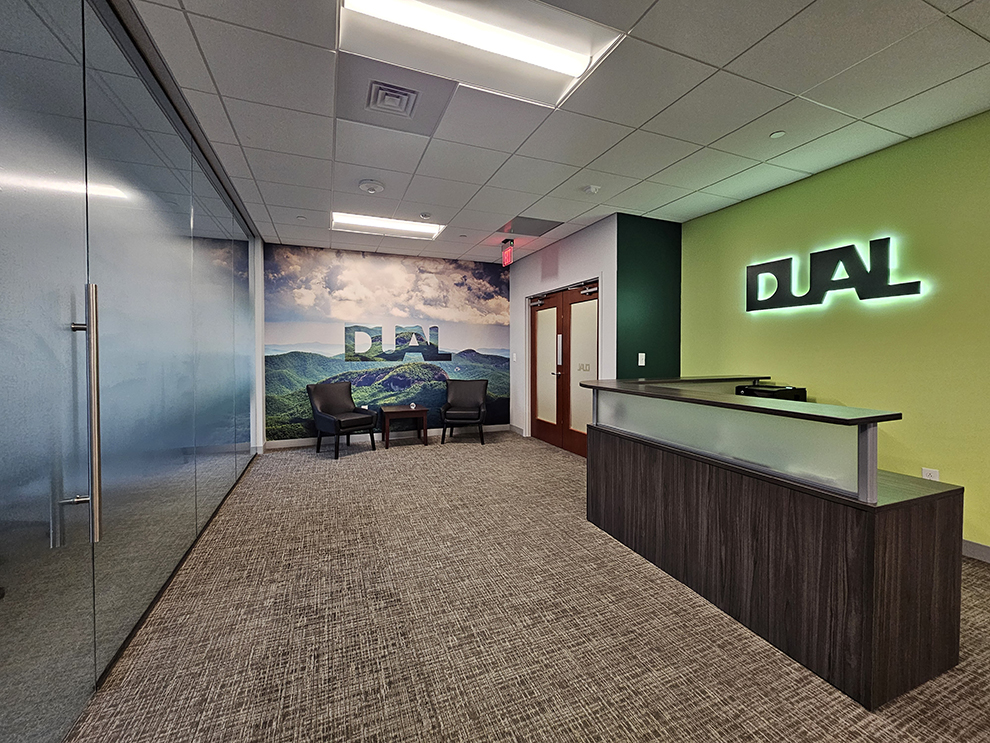
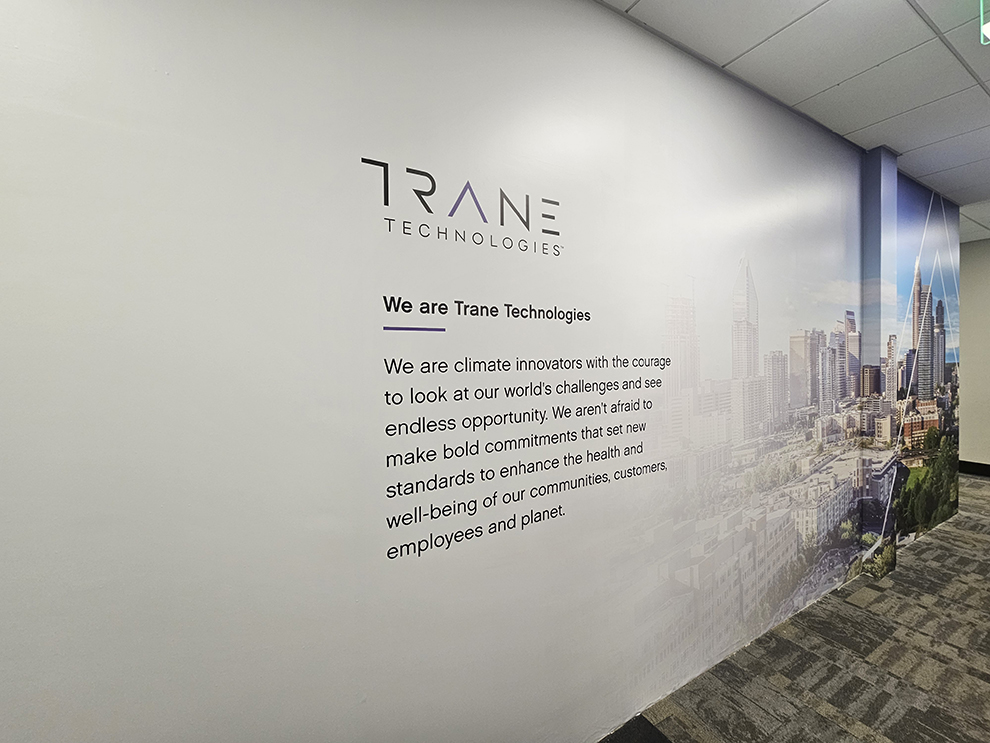
A Washington, DC organization may host board meetings, donor conversations, member visits, and everyday work in the same property. The entry may call for a concise introduction to purpose. Hallways can carry a story that unfolds as people move. Conference rooms may benefit from thoughtful visual privacy and clear identification. Shared employee areas can make culture visible in a more personal way.
The answer is rarely to fill every surface. Follow the routes, listen to people who use them, and rank improvements by how much they strengthen understanding, comfort, and daily function. An expressive gathering area and a restrained meeting room can still feel like parts of one organization.
Consistency comes from intentional choices, not identical graphics everywhere.
Decision 4: Make the Investment Support One Coherent Plan
Workplace investment should begin with a responsible question: what will be better for the people who use this place when the work is finished? A striking feature is not automatically the most valuable one. Better navigation, a meaningful expression of community impact, or an employee area that reflects shared purpose may deserve attention before an elaborate entrance display.
Agree on priorities and an anticipated overall investment before asking a design team to develop every possibility. The budget needs to account for environmental graphic design, production, fabrication, professional installation, site conditions, and the building’s access requirements. A coordinated plan allows leaders to compare the benefits of different approaches. It also helps decide which elements should be completed together and which can become a later phase without losing visual continuity.
I’ve learned that a responsible decision is not always the most exciting one in the room. Sometimes restraint protects the strongest idea. When everyone understands what the improvement is meant to accomplish, spending becomes a conversation about outcomes rather than a competition between features. That is a better foundation for good stewardship.
Decision 5: Know Who Can Approve the Work and Protect the Date
In the Washington, DC area, even a carefully planned workplace improvement may pass through several sets of hands. Brand leaders approve language, executives or boards may review prominent messages, facilities teams coordinate access, and landlords can establish building requirements. A project moves more reliably when those responsibilities are understood before the production schedule is committed.
Identify one person authorized to consolidate feedback, clarify which decisions require broader review, and confirm the date that actually matters. For Heritage-managed projects that include professional installation, a site survey is required to verify dimensions, surface conditions, placement, and access. Security procedures, elevator reservations, work windows, and properly prepared and fully cured painted walls can affect the installation sequence. These are planning facts, not problems to discover when a crew arrives.
I value urgency, but it has to be accompanied by sound judgment. Once a Heritage-managed project is accepted and assigned, one dedicated Project Manager keeps the approved direction, technical findings, production, fabrication, and professional installation connected. If the preferred timing cannot be achieved responsibly, the right response is to communicate that early and develop a workable alternative.
What the Greater Washington Community Foundation Project Demonstrates
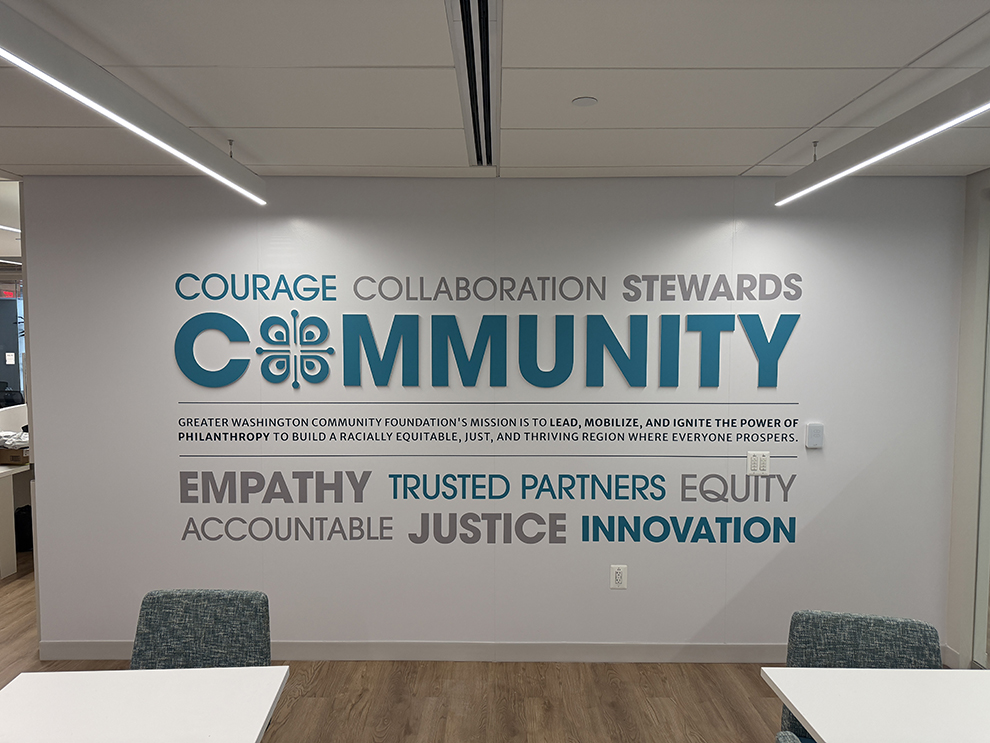
One project that brings these principles together is Heritage’s work for the Greater Washington Community Foundation at its H Street NW headquarters. The Foundation serves communities throughout the DC region, and the workplace needed to make that purpose visible to employees, donors, partners, and visitors. The goal was not to repeat the same design on every wall, but to communicate one identity across different experiences.
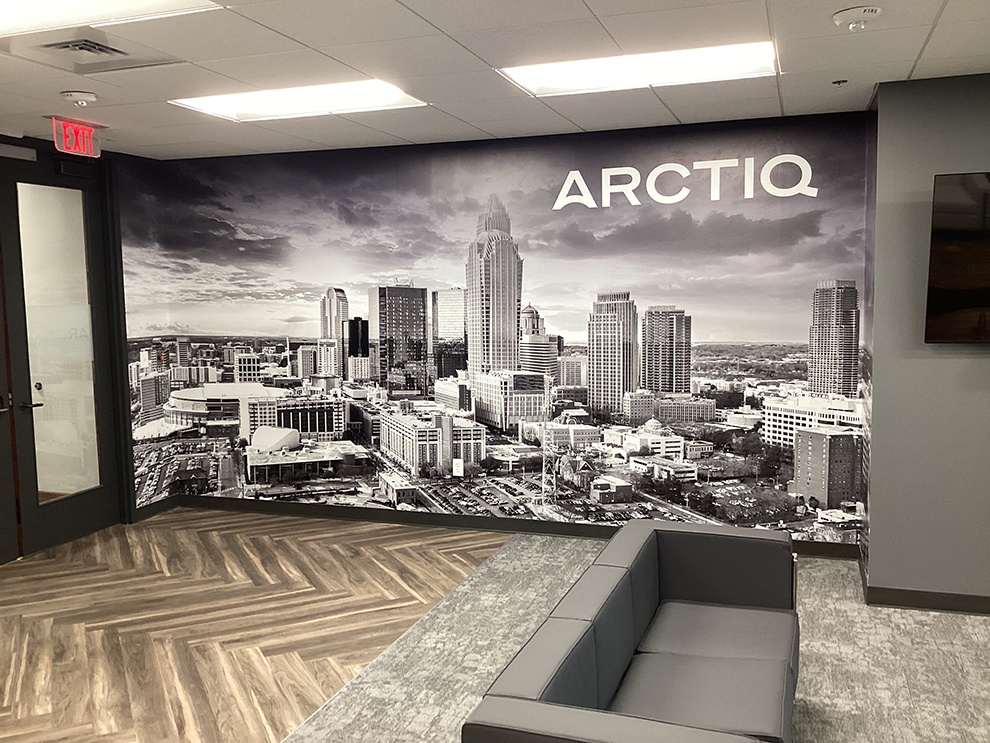
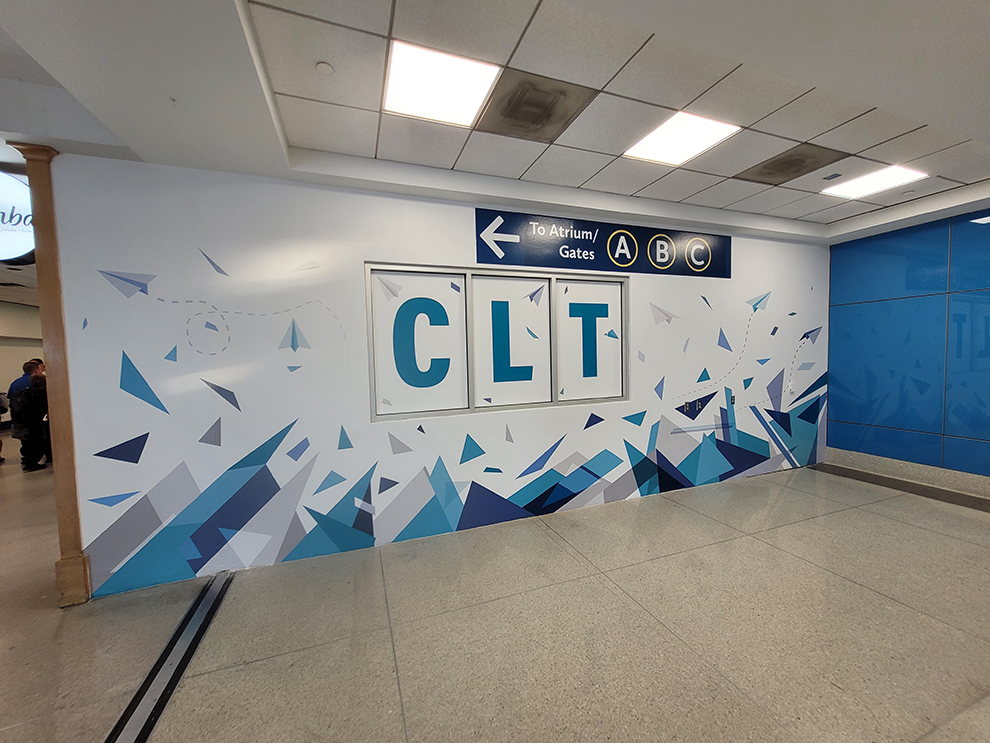
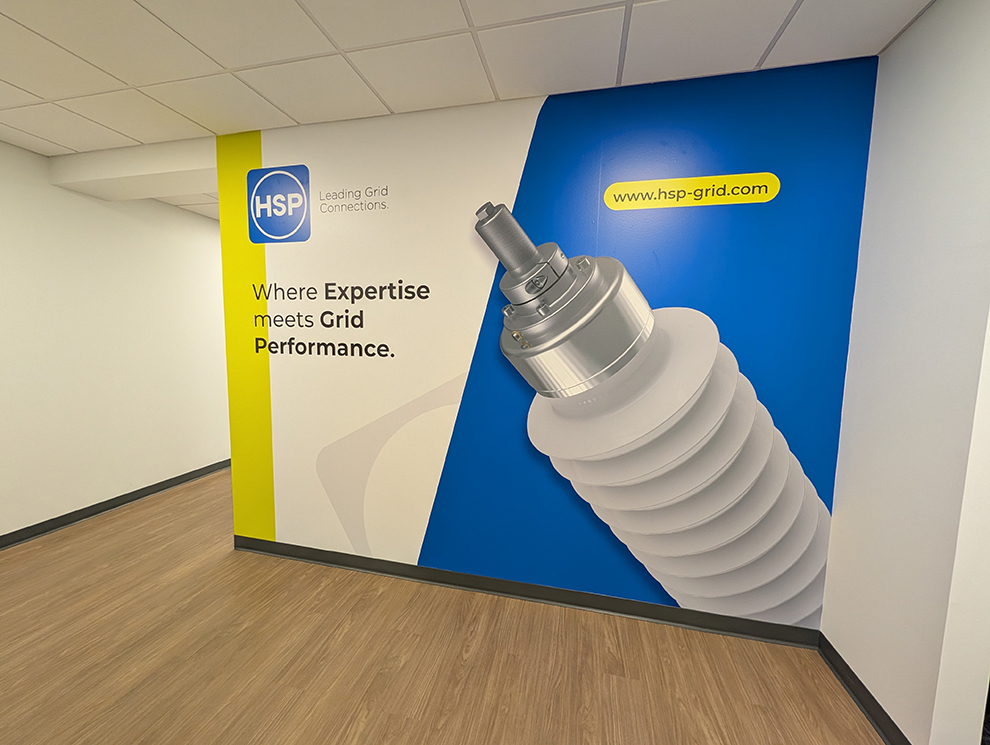
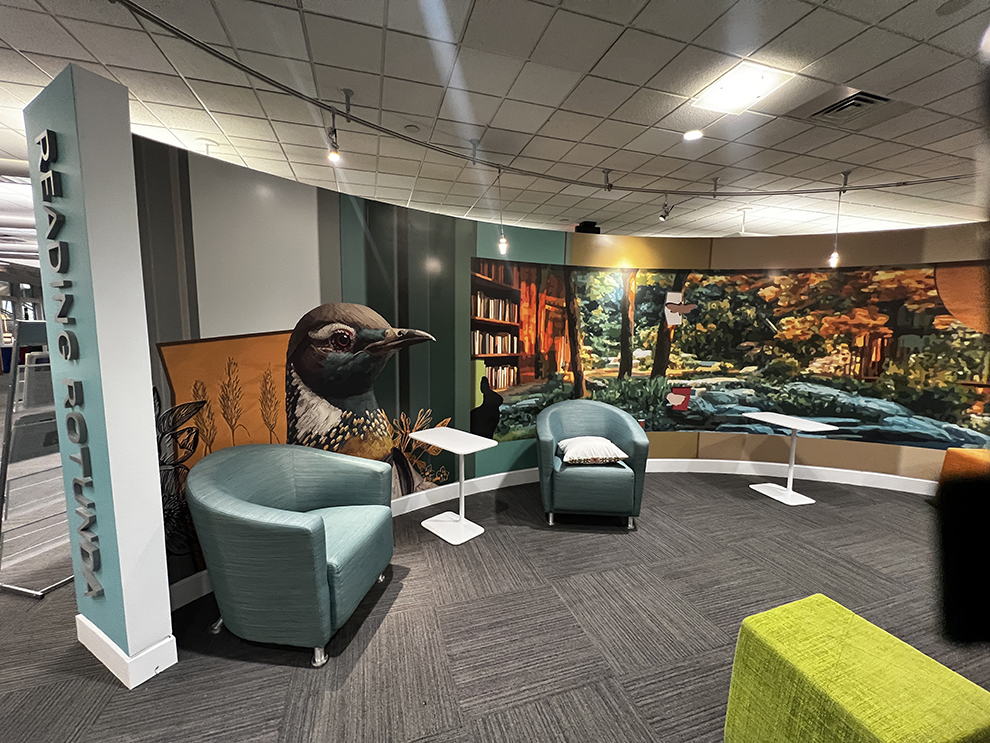
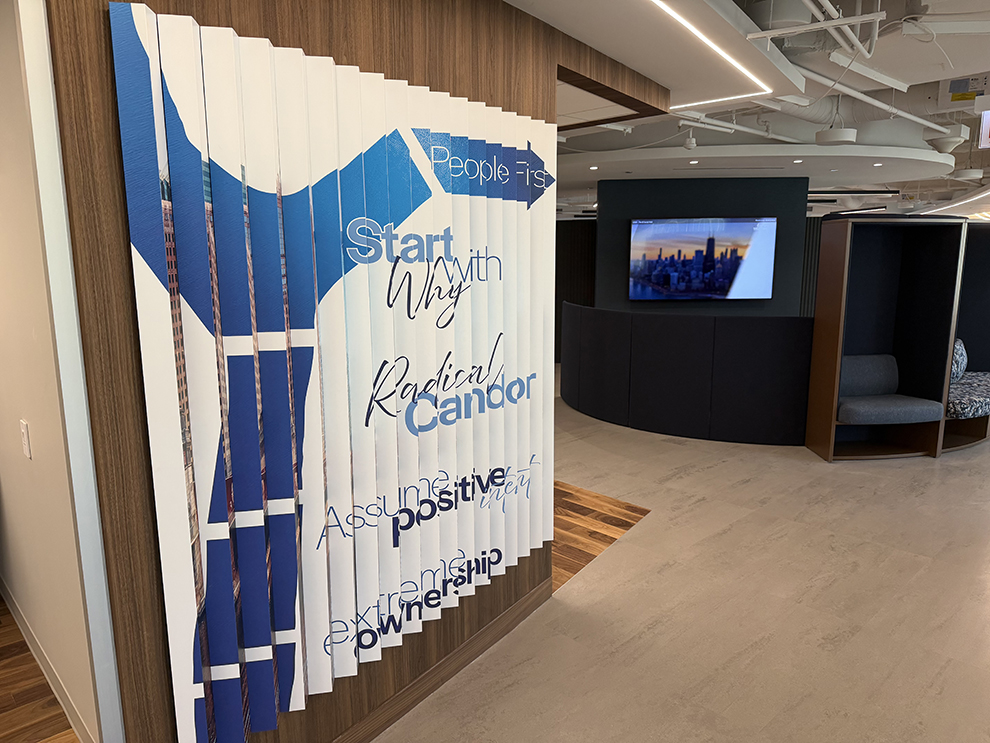
The environmental concepts came from Michael Marshall Design. Heritage conducted the site survey, translated the approved direction into production files and three-dimensional mockups, then fabricated and installed the graphics and dimensional elements. Reception lettering introduces the Foundation’s philanthropic purpose. Layered, petal-like forms add depth to hallways, while simpler cut vinyl serves the open office. A full wall wrap gives the break lounge its own character. Selected hallway components can be updated as information changes.
I appreciate the restraint in that solution. The creative work respects the Foundation’s identity, and each part of the environment has a job to do. It illustrates why good collaboration and careful execution matter as much as the visual idea itself.
Make Your 2027 Workplace Refresh Worthwhile for the People It Serves
Useful workplace improvements begin with understanding whom an organization serves, what it stands for, and how people experience that commitment. You may be welcoming new leadership, refreshing headquarters, or improving a leased office. You do not need to change every surface to make a meaningful difference.
For 2027, start by deciding what trust looks like for your audiences. Distinguish the messages that must endure from those that will change. Give each part of the workplace an appropriate role. Invest where the result will matter, and put approvals, site readiness, and the schedule in capable hands.
Those choices provide a stronger foundation than beginning with a catalog of graphics.
If you’re considering a Washington, DC or Mid-Atlantic workplace refresh, use Heritage’s Get Started Now form to share your goals, location, anticipated investment, target date, and plans, photographs, or brand materials. You’ll receive an email acknowledgment of your submission. An experienced Heritage Project Manager will review that context and contact you personally during normal business hours to discuss your priorities. I’d welcome the chance to help create a workplace that reflects the people and commitments behind it.

President & CEO, Heritage Signs & Displays
Joe Gass
About the Author
Joe Gass is President and CEO of Heritage Signs & Displays, a veteran-owned, family-led company founded in 1977 as a printing business. Since joining the family business full time in 1988, Joe has helped guide its growth and evolution into a specialized sign company providing turnkey branding solutions for workplace interiors and event environments. Before joining Heritage, Joe served six years in the United States Navy. His service included a 1988 Mediterranean deployment with Special Boat Unit 20 in support of SEAL Team 2. In 2023, he was recognized as one of the Charlotte Business Journal’s Most Admired CEOs for his leadership and commitment to developing people and serving the community. Joe also serves as Executive Director of Faith Seen International, a nonprofit dedicated to identifying and developing emerging leaders in South Asia and the United States who can make a meaningful difference in their communities. Joe writes about organizational culture, core values, business strategy, stewardship, and business as ministry. His leadership philosophy helps shape Heritage’s commitment to creating branded workplace interiors and event environments that communicate identity, strengthen organizational culture, and engage, inspire, and transform the people who experience them.
Frequently Asked Questions About a Washington, DC Workplace Refresh
1. How can leaders agree on a workplace message when stakeholders have different priorities?
Begin with the one thing the organization needs visitors and employees to understand. Ask a small decision-making group to approve that central message, then place supporting stories where they are most useful. Gather perspectives from member-facing, donor-facing, and employee teams, but establish who has final approval. That prevents valuable input from becoming an endless design cycle.
2. How should an association or nonprofit present member, donor, or community impact in its office?
Choose the experience first: welcome, gratitude, understanding, or a clearer sense of shared purpose. Reception can introduce the organization, while recognition displays and story walls add detail elsewhere. Consider who needs to see each message and whether names or program information will change. A coordinated approach lets the workplace communicate appreciation and impact without asking every wall to carry everything.
3. Can donor recognition and other workplace displays be updated later?
Often, yes, if future changes are considered during design. Some displays can use replaceable panels, names, or dimensional elements alongside more permanent graphics. The Greater Washington Community Foundation project included selected hallway components designed for future updates. The appropriate system depends on the information, materials, installation conditions, and how often changes are expected. Plan for that need before fabrication rather than assuming every installed element is interchangeable.
4. Can Heritage work from our branding agency’s or architect’s approved creative direction?
Yes. Heritage can coordinate with the branding agency, architect, or interior design team responsible for your organization’s approved concepts. We help translate that direction into signs, graphics, and displays through field verification, production and fabrication planning, and professional installation. Heritage can also contribute environmental graphic design when that work is included in the accepted scope. We do not provide licensed architectural or general interior design services.
5. Can a Washington, DC workplace refresh happen while the office remains occupied?
Often, with appropriate planning. The installation sequence depends on the spaces involved, required access, building work hours, security procedures, and whether staff need to temporarily avoid certain areas. Heritage’s required site survey for installed projects helps identify those conditions. We coordinate the accepted work with client and property representatives and identify any temporary access restrictions early so employees can plan around them.
6. Who handles property approvals and access for graphics in a leased office?
The client or responsible property representative secures required landlord and property permissions and provides building rules, security requirements, and access arrangements. Heritage can explain the practical needs of the agreed installation and coordinate with authorized contacts. Confirming those responsibilities before production helps prevent schedule disruptions, particularly in multi-tenant buildings with freight, elevator, or restricted work-window requirements.
7. How should an organization prioritize investment across several Mid-Atlantic workplaces?
Start with the outcome and audience at each location, then identify which brand standards should remain consistent. Different properties may need different signs, graphics, or display sizes because their uses and conditions differ. Heritage can coordinate accepted multi-location work through one dedicated Project Manager, preserving approved direction while evaluating site-specific needs. Phasing should support the overall program without promising identical solutions everywhere.
8. What happens after we submit our Washington, DC workplace refresh information?
Heritage sends an email acknowledgment after your Get Started Now submission. An experienced Project Manager reviews your goals, site, anticipated investment, timing, and supporting files, then contacts you personally during normal business hours. Submitting the form does not automatically mean the project is accepted. Once accepted and assigned, one dedicated Project Manager becomes your direct contact and carries the approved requirements through design, production, fabrication, and included professional installation.