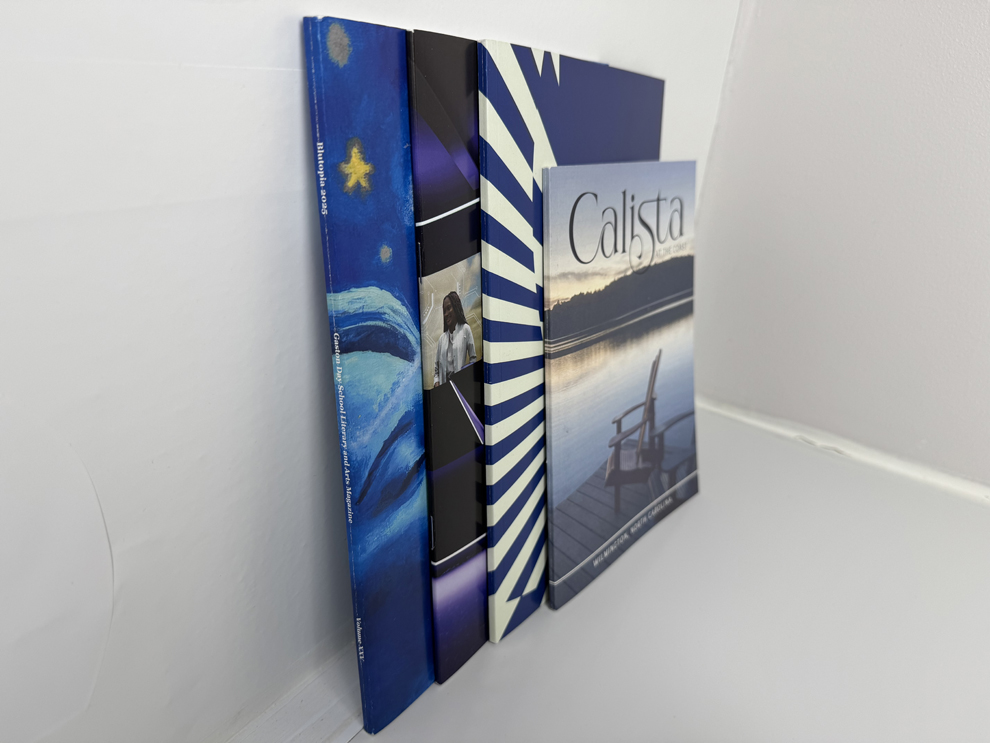
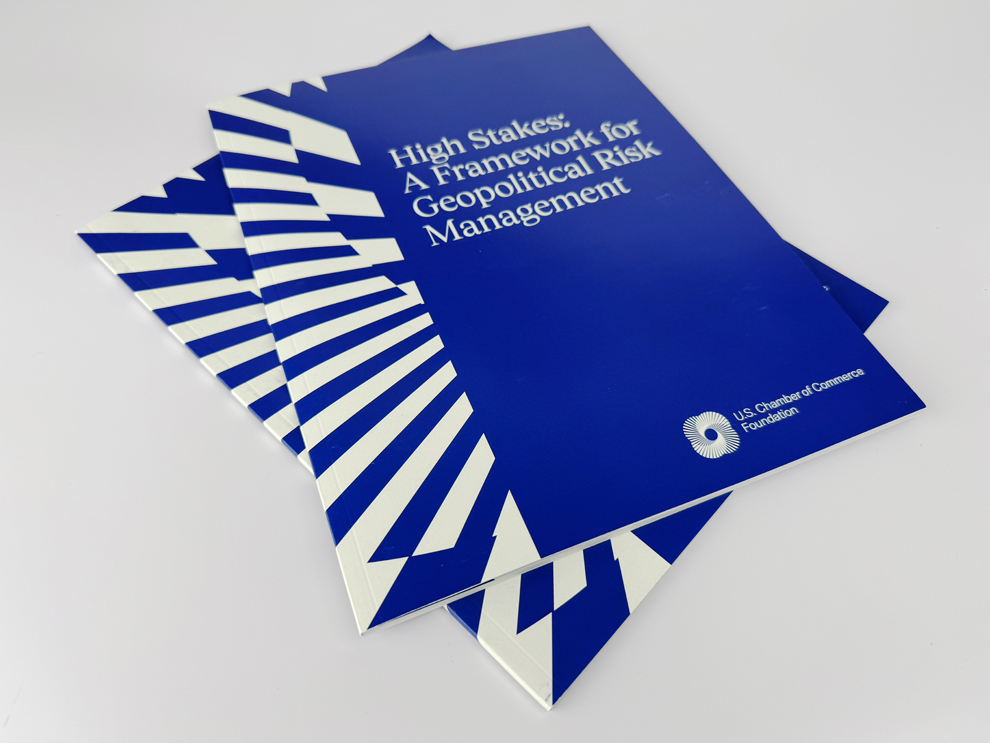
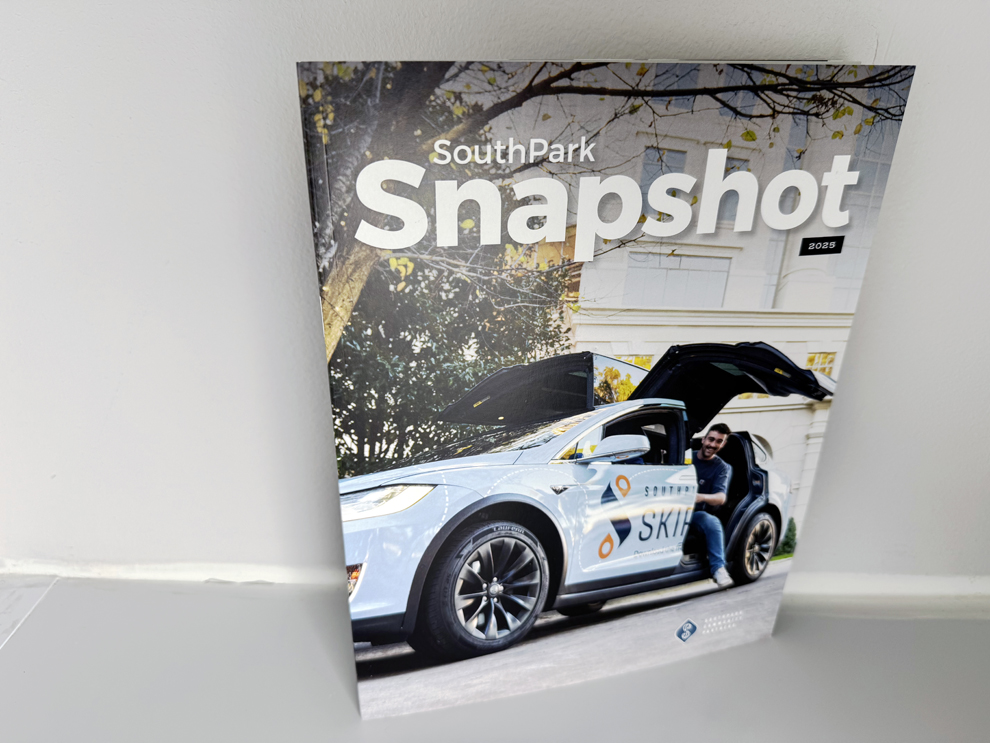
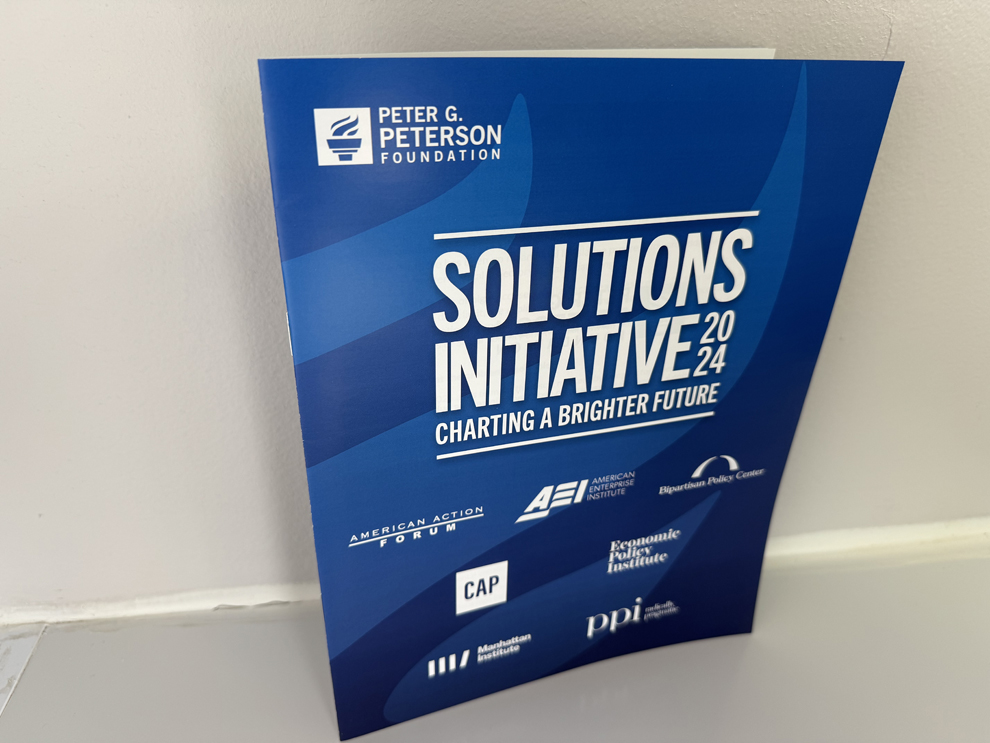
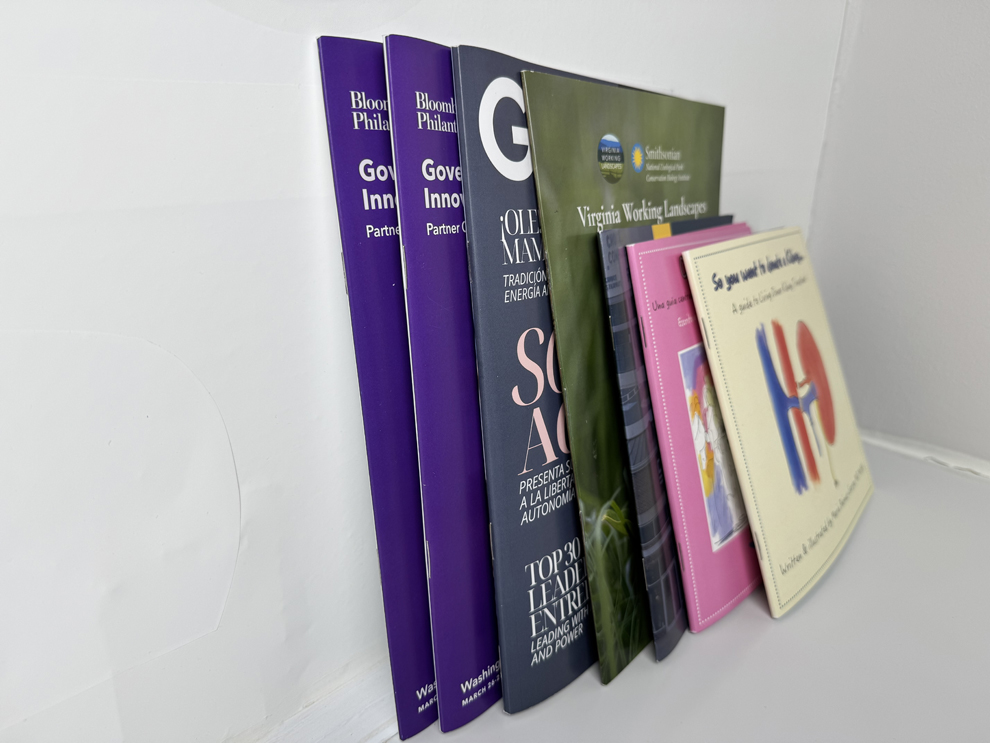
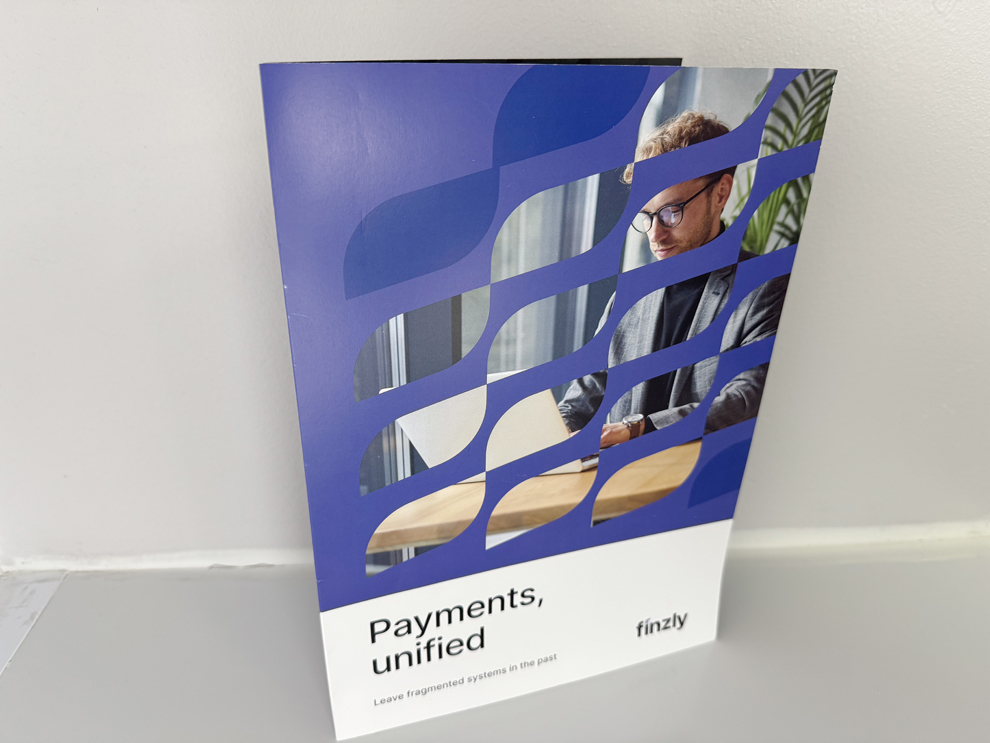
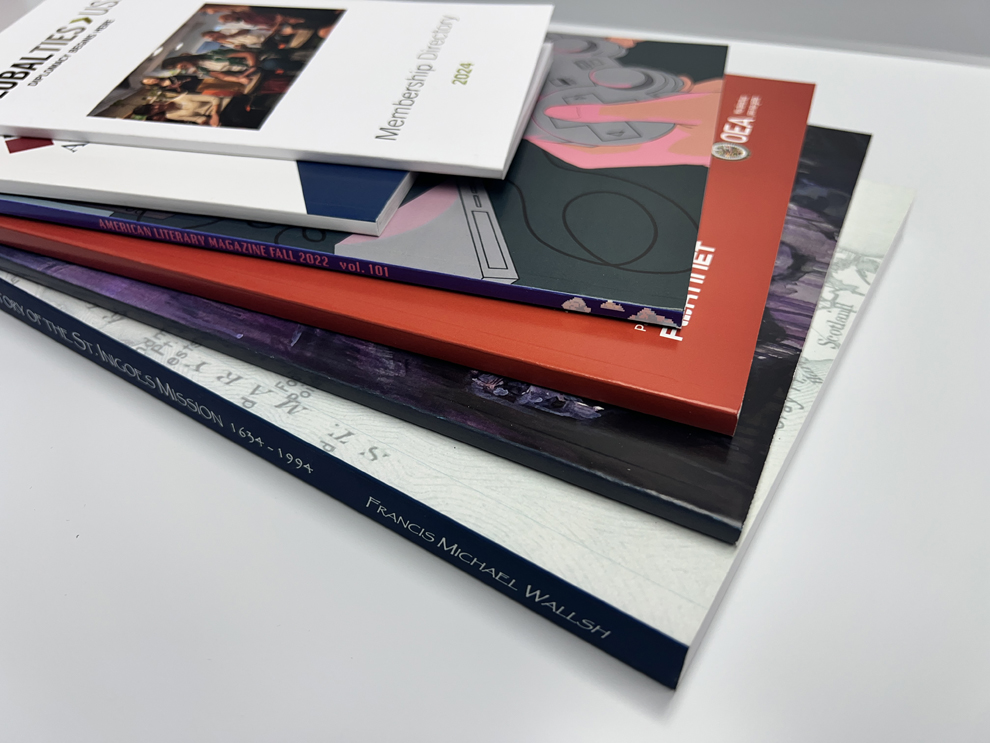
A quarterly board review, a client briefing at a Tysons headquarters, or an orals presentation for a federal contract often has a date set weeks before the content is final. The booklet placed in front of that audience has to be accurate, easy to follow, and consistent with the way your organization presents itself.
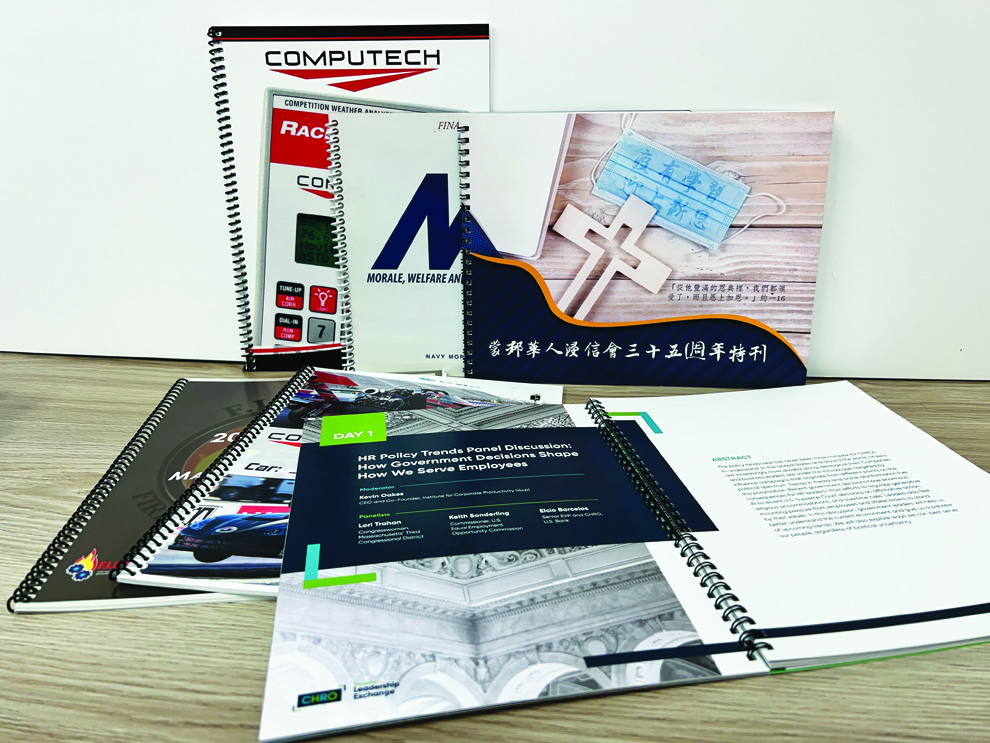
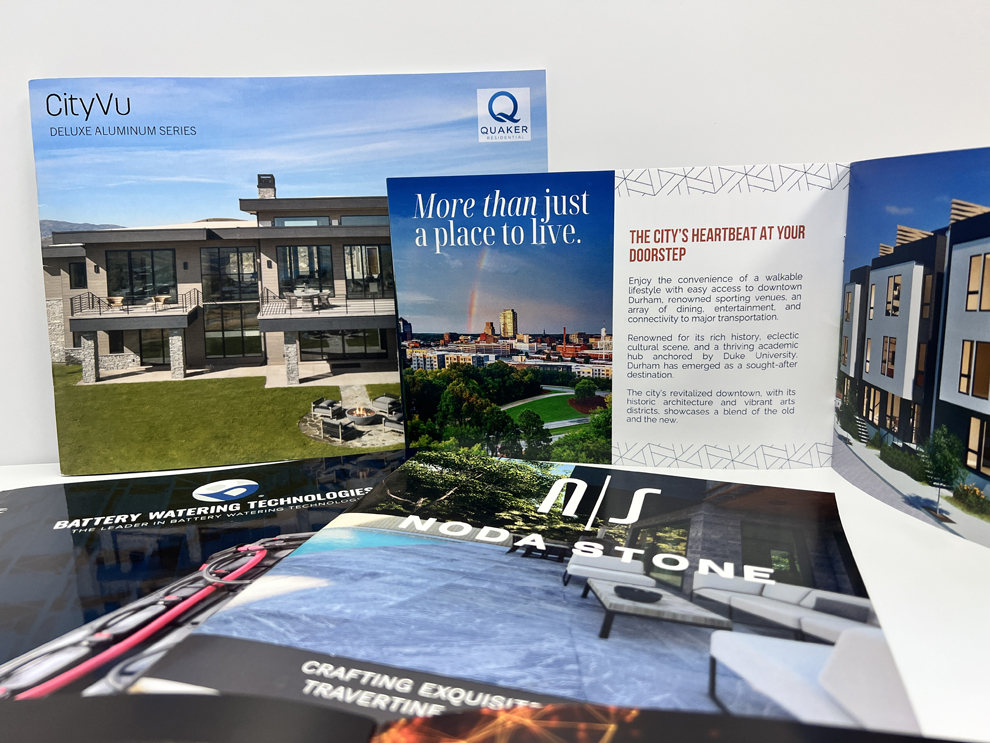
McLean organizations use booklets as corporate annual reports, capability statements for business development, investor and donor summaries, conference programs, onboarding guides, and product catalogs. Page count determines whether staples or a glued spine are realistic, paper weight changes how the piece feels and mails, and cover choice affects durability in a briefcase or on a conference table. Color handling matters most when charts, photography, and brand marks must look the same across every copy.
Heritage has produced Commercial Printing since 1977 and supports McLean clients as part of its Northern Virginia and DC metro coverage, backed by broader Mid-Atlantic production resources. We review files carefully, manage color with discipline, and communicate plainly so the publication is complete before the meeting begins.

Corporate and contractor publications in McLean rarely have a single owner. Finance supplies the numbers, legal reviews the language, marketing guards the brand standards, and an executive signs off last, often close to the date the booklet is needed. Heritage asks for specifications, quantities, and delivery requirements early so that production time is understood before the final round of edits arrives.
Heritage is a veteran-owned, family-led company whose Commercial Printing work began in 1977. We are guided by a purpose to honor God by serving clients and communities with excellence, and that purpose shows in ordinary practice: measured color control, a second look at pagination before approval, and prompt answers when questions are raised. Northern Virginia clients work with Heritage directly while production draws on the company's wider Mid-Atlantic capacity.
When a qualifying Custom Quote is accepted and the order is assigned, a Project Coordinator becomes your phone-and-email contact for that booklet. One person who already knows the trim size, paper, binding, and delivery plan can answer a late question without reconstructing the job. Established clients may keep that coordinator for appropriate repeat editions.

A booklet often travels with other printed pieces, and these related products follow the same production discipline.

For agendas, speaker lists, and sponsor pages at conferences and galas.

For recurring member or stakeholder publications with consistent specifications.

Explore longer bound publications that call for a squared, printed spine.

For instructional guides that must lie flat during onboarding sessions.

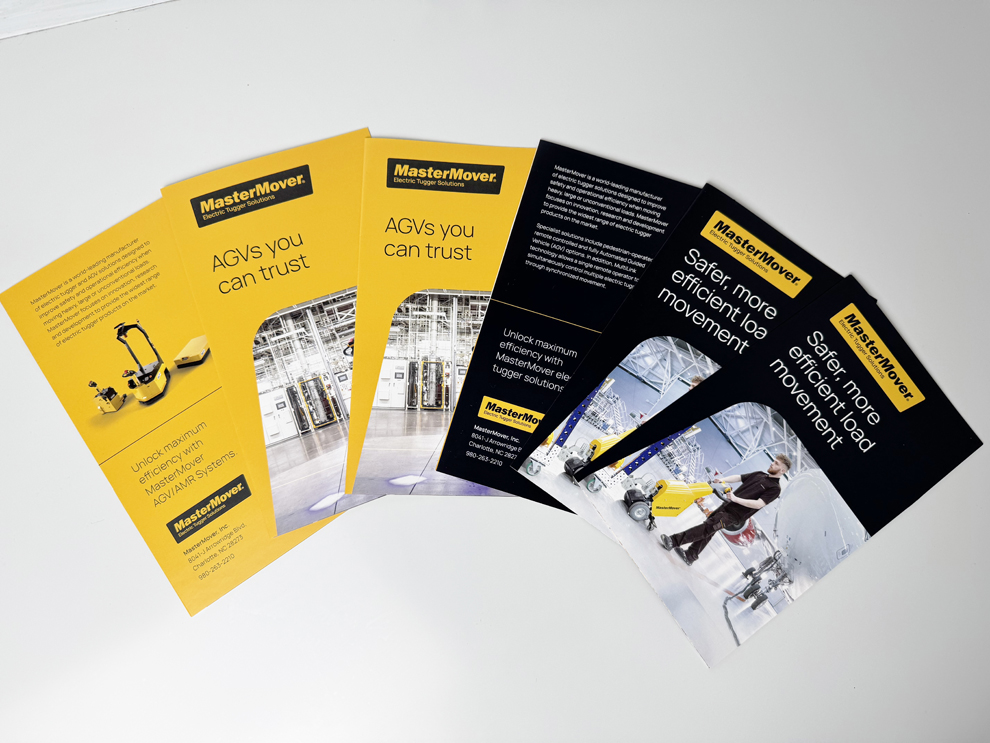
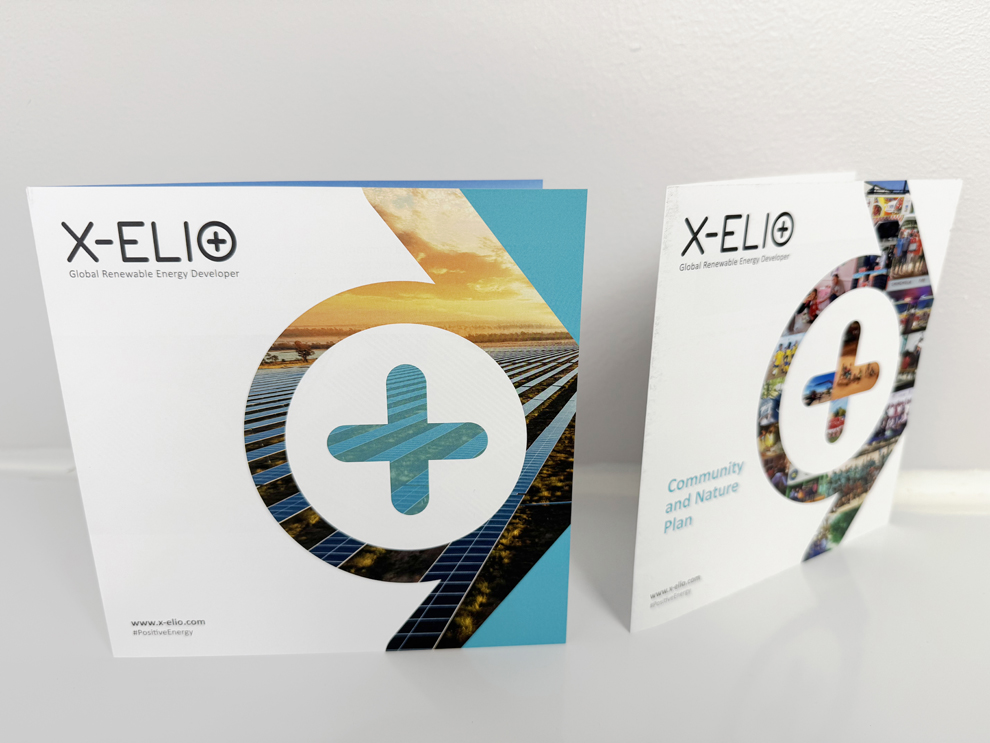
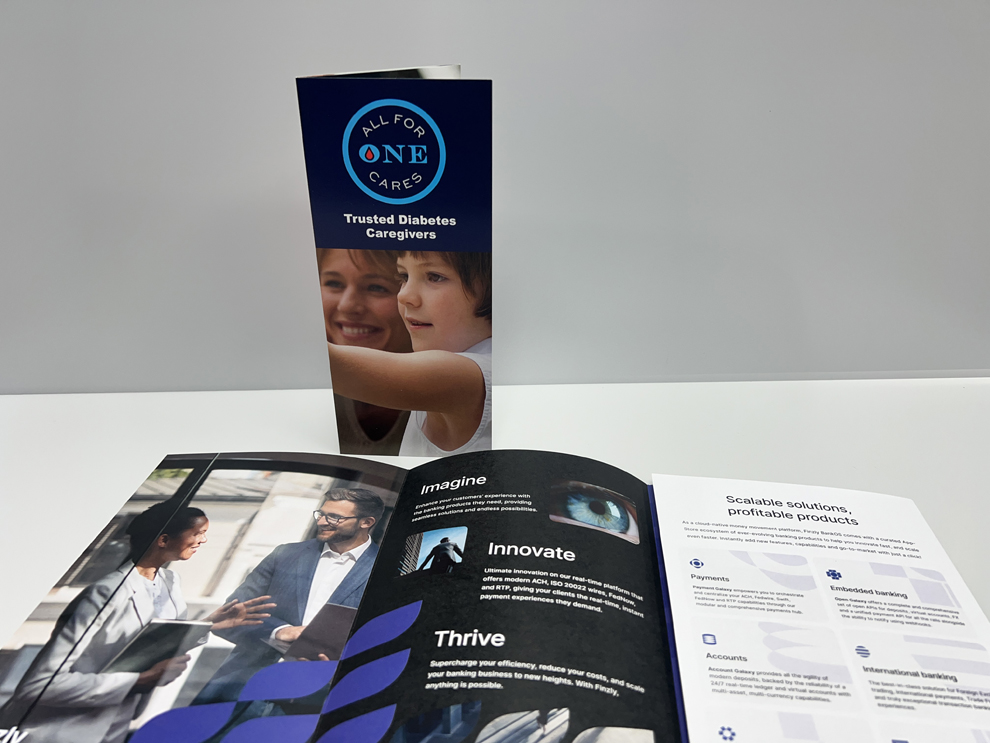
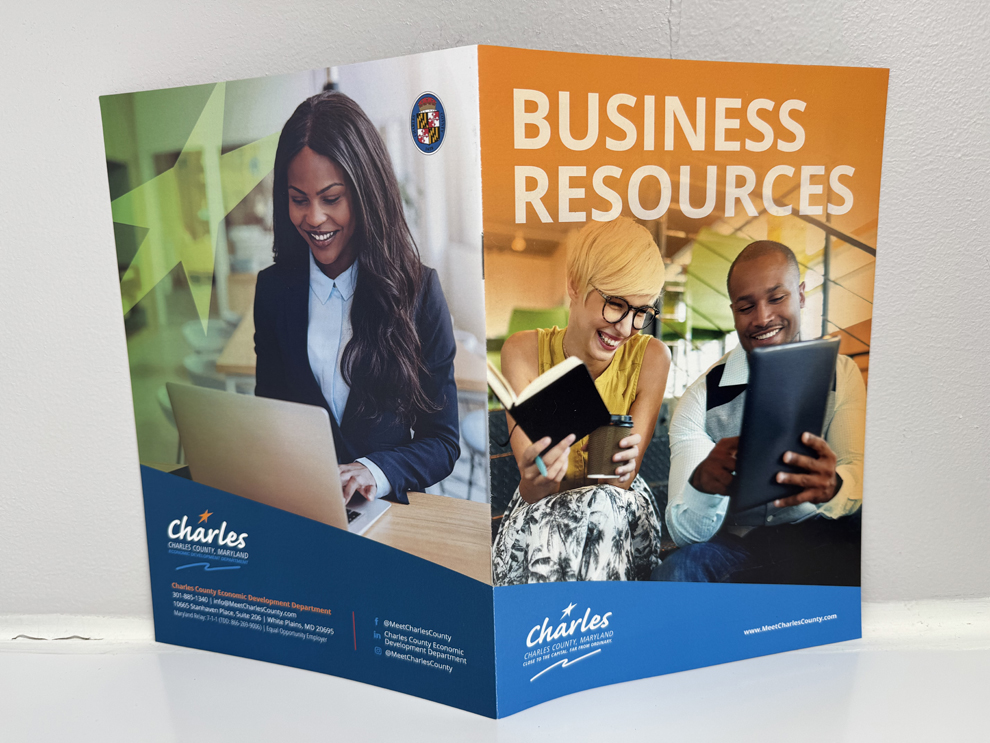
Present a summary version of your capabilities in a folded piece.

Coordinate addressed delivery of reports or programs within an accepted project.

Keep sales sheets and handouts consistent with the booklet they accompany.

Keep proposal booklets, inserts, and business cards organized for client meetings.
Review live booklet configurations, binding options, and posted pricing, then order online when your print-ready PDF is finished.
Binding determines whether a booklet lies flat, survives a briefcase, or presents like a bound volume. Three methods cover most McLean reports, guides, and programs.
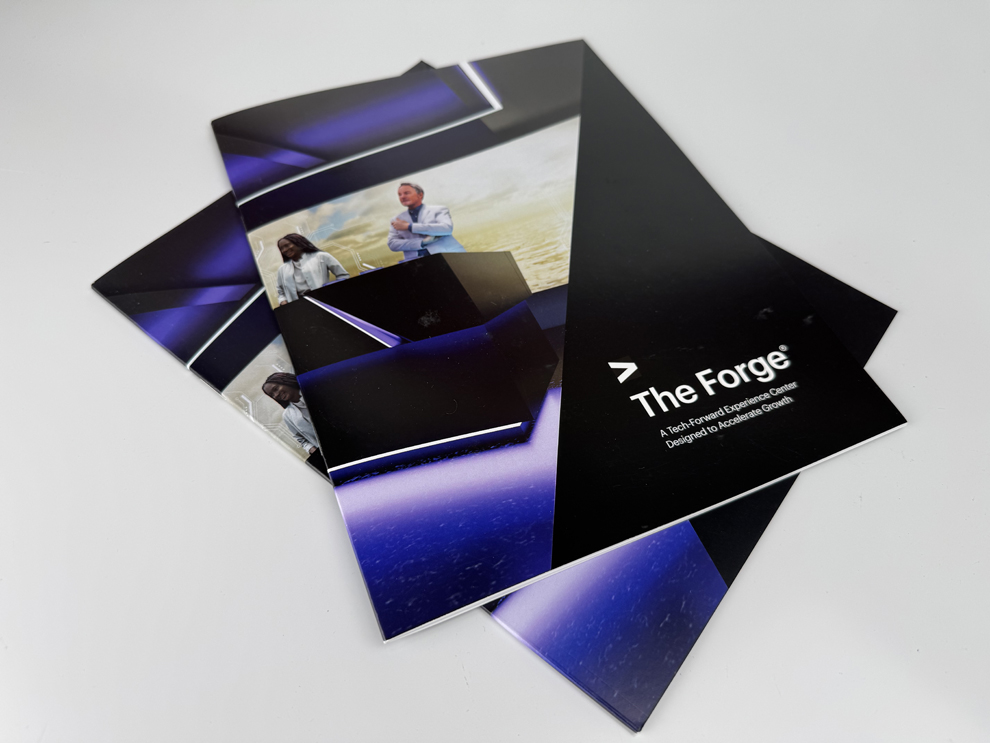
Saddle-Stitched Booklets: Folded sheets are nested and stapled through the spine, producing a slim, economical booklet. Page totals normally fall in multiples of four, and heavier stocks reduce how many pages will close neatly, so brief programs and summary reports fit best.
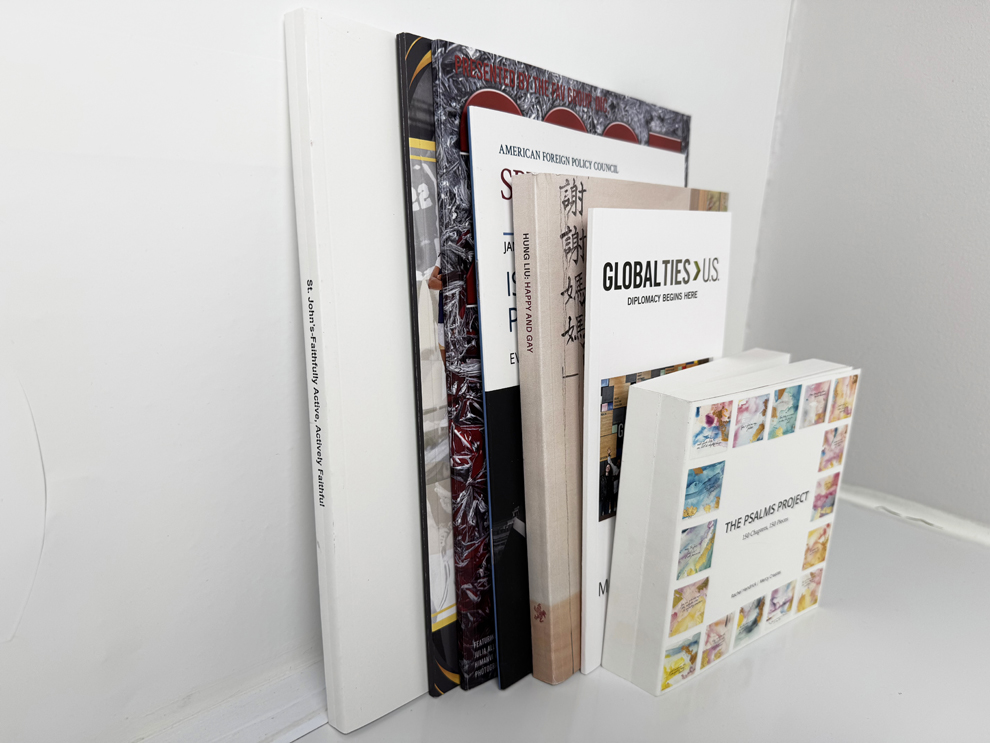
Perfect Bound Booklets: Interior pages are ground along one edge and glued into a wraparound cover, giving the squared spine of a paperback book. This suits annual reports, capability books, and longer guides when page count and paper thickness create enough bulk for a sound spine.
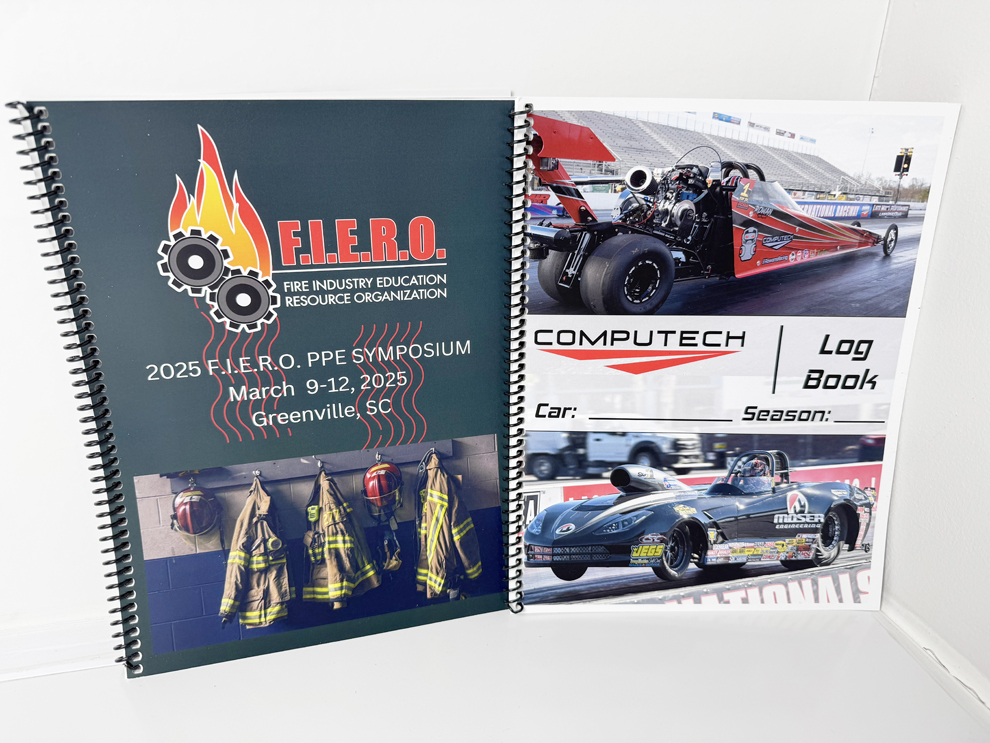
Plastic Coil / Spiral-Bound Booklets: Pages are punched along one edge and threaded with a continuous plastic coil, so the booklet opens flat or folds back on itself. Training workbooks and onboarding guides benefit most, though a coil spine reads as a working format rather than a formal one.
Finished dimensions, cover weight, images that cross spreads, and mailing versus hand delivery also affect which method is practical. For qualifying Custom Quote work, Heritage can review these connected decisions before the specification is finalized.

McLean clients can place a booklet order independently through the Self-Directed Online Store or request directly managed production support for qualifying work. Both routes include an electronic proof for your approval before anything is printed. The choice depends on file readiness and how much coordination the job needs.
Self-Directed Online Store: When a live booklet configuration matches your needs, choose the page count, paper, cover, and binding, upload a finished print-ready PDF, review the posted price, and complete the purchase. Store products carry Heritage's lowest available pricing, and eligible items can be combined to reach the $750 minimum order. This path does not include layout work, an assigned Project Coordinator, or physical color proofing.
Storefront Custom Quote: Approved Commercial Printing opportunities of $2,000 or more may use this form-based intake when the job genuinely needs production-oriented file adjustments, paper and binding guidance, color-critical decisions, mailing, or coordinated delivery. Reaching that threshold does not require it. Once the quote is accepted and the order assigned, a Project Coordinator becomes your direct phone-and-email contact, and established clients may continue that relationship for appropriate repeat work.

A perfect-bound booklet is usually the stronger choice when a capability statement or proposal volume has enough pages and paper bulk to support a glued spine and will sit alongside other submissions. A slimmer capability overview handed out at an industry day often works well saddle stitched with a heavier cover. Consider how evaluators will handle the piece, whether a page limit applies, and whether copies ship to a contracting office or are hand delivered.
Yes. Every true Commercial Printing order from Heritage, whether purchased through the Self-Directed Online Store or placed through an accepted Custom Quote, receives an electronic proof for client review and approval before printing. Check text, images, page order, covers, and production notes carefully. The electronic proof confirms content and layout; it is not a physical color standard and does not guarantee finished color.
The practical limit depends on paper thickness more than on the page number alone. Saddle-stitched booklets are assembled in multiples of four pages, and as the stock gets heavier the folded bundle resists closing and the inner pages creep outward at the trim. A lighter text stock allows more pages than a heavy coated sheet. Check the live Store configuration for the page ranges offered with each paper, and treat perfect binding as the alternative once a saddle-stitched piece stops closing cleanly.
Perfect binding becomes the better choice when the publication needs a printable spine, a squared edge for shelving, or more bulk than staples can hold, which is common for annual reports and reference guides. Saddle stitching remains sensible for short programs and summaries where a flat, lightweight piece is easier to mail and less costly to produce. The deciding factors are page count, paper thickness, expected shelf life, and how formal the piece should appear.
Upload a single complete PDF prepared to the exact instructions for the Store product you select. In most workflows that means single pages in reading order rather than imposed spreads, with bleed extended past the trim, live text held inside the safe margin, fonts embedded, and images at adequate resolution. Cover files for perfect-bound booklets may need a spine width calculated from the final page count and paper, so confirm those requirements before exporting.
Yes, for qualifying Commercial Printing Custom Quote work valued at $2,000 or more. A Physical Production Color Proof, also called a Digital Hard Copy Proof, is produced on the intended production printer using the intended paper or material, carries an additional cost, and adds time to the schedule. Once approved it serves as the controlling physical color reference unless otherwise agreed. It is not offered through the Self-Directed Online Store.
Quantity, page count, trim size, paper and cover stock, binding method, color coverage, finishing such as coating, and delivery or mailing arrangements all contribute to the price. Doubling a page count affects cost differently from doubling a quantity, and a separate heavy cover adds material and a binding step. The Self-Directed Online Store shows current prices for eligible configurations, while qualifying $2,000+ opportunities with more involved requirements may be priced through Storefront Custom Quote.
Use the Online Store when your artwork is finished, a live configuration matches your specification, and you are comfortable selecting options and paying posted prices without an assigned Project Coordinator. Heritage's $750 minimum applies to every new Commercial Printing opportunity, and eligible Store products can be combined to reach it. Consider Storefront Custom Quote for qualifying opportunities of $2,000 or more that need file adjustments, color-critical decisions, mailing, or coordinated delivery. Contact Our Team handles ordinary questions about Store products and existing orders.
Coil binding is chosen when a document has to stay open without being held, such as a training workbook used at a desk, a procedures manual followed step by step, or a facilitator guide used during a session. The punched pages turn fully back on themselves. It is less appropriate for a formal report or a booklet mailed in quantity, where a stapled or glued spine presents better and packs flatter.
Heritage can commit to a date only after evaluating the actual files, specifications, quantity, binding, and delivery requirements against available capacity. Share the meeting date and the expected approval timeline as early as possible, including when final edits are likely to land. If the requested date cannot responsibly be met, Heritage will explain what is possible and suggest alternatives such as a simpler finishing specification.
Files for Self-Directed Online Store orders must be complete and print-ready as uploaded. For qualifying Commercial Printing opportunities of $2,000 or more, an accepted Storefront Custom Quote may include production-oriented adjustments such as adding bleed, correcting page size, preparing a perfect-bound cover with the correct spine, or resolving pagination problems. This is production file preparation, not broad creative design. Send the files you have along with the required date so Heritage can assess the work involved.
A separate cover on heavier stock is worth considering when the booklet will be handled repeatedly, carried to meetings, or needs to feel substantial in a client's hands. A self-cover booklet, which uses the same paper throughout, suits short programs and lightweight mailings and keeps cost and postage lower. A heavier cover also changes overall bulk, which can affect whether saddle stitching still closes properly and how the piece mails.
Brand colors can be reproduced consistently within the limits of the chosen paper, ink, and finish, but they cannot be matched to a screen or an electronic proof. Heritage applies professional color management, including spectrophotometric calibration, verification, and production-specific profiles, and treats PMS values as targets rather than guarantees. Supply vector logos, properly converted images, and consistent swatch definitions throughout the file. For color-critical McLean projects within qualifying Custom Quote scope, a Physical Production Color Proof can be requested.
Yes, within an accepted Commercial Printing project scope. Heritage can print the booklets and coordinate addressing and the handoff to USPS, keeping production, finishing, and mailing preparation under one accountable process. Provide accurate, authorized address data and the target delivery window early, since booklet size and weight influence how a piece mails. USPS sets acceptance requirements and controls delivery once it receives the mailing.
Yes. Recurring publications such as quarterly investor reports, annual compliance guides, or semester program booklets can reuse approved trim, paper, binding, and color specifications while Heritage reviews the updated files and quantities for the new edition. Multiple audience versions can be produced within the same project when the differences are clearly identified. For appropriate directly managed repeat orders, established clients may continue working with the Project Coordinator already familiar with the publication.
Heritage Signs & Displays created new museum signage for the Military Women’s Memorial in Arlington, VA. The project included custom signs, wall wraps, dimensional letters, and standoff-mounted displays to honor the legacy of U.S. servicewomen and the donors who supported the memorial. The updated interior features impactful designs, including a "Our Legacy" wall display and panels showcasing historical contributions and artwork, creating a transformative tribute to women in the U.S. Armed Forces.
Heritage Signs & Displays' collaboration with The Gathery to brand Union Market in Arlington, VA, for Indeed's "Ready to Work" job fair. The project included custom event displays, wall graphics, window graphics, and wayfinding signs, creating an immersive and visually appealing environment. The branding enhanced the venue, reflected the event's mission, and provided a seamless experience for attendees.