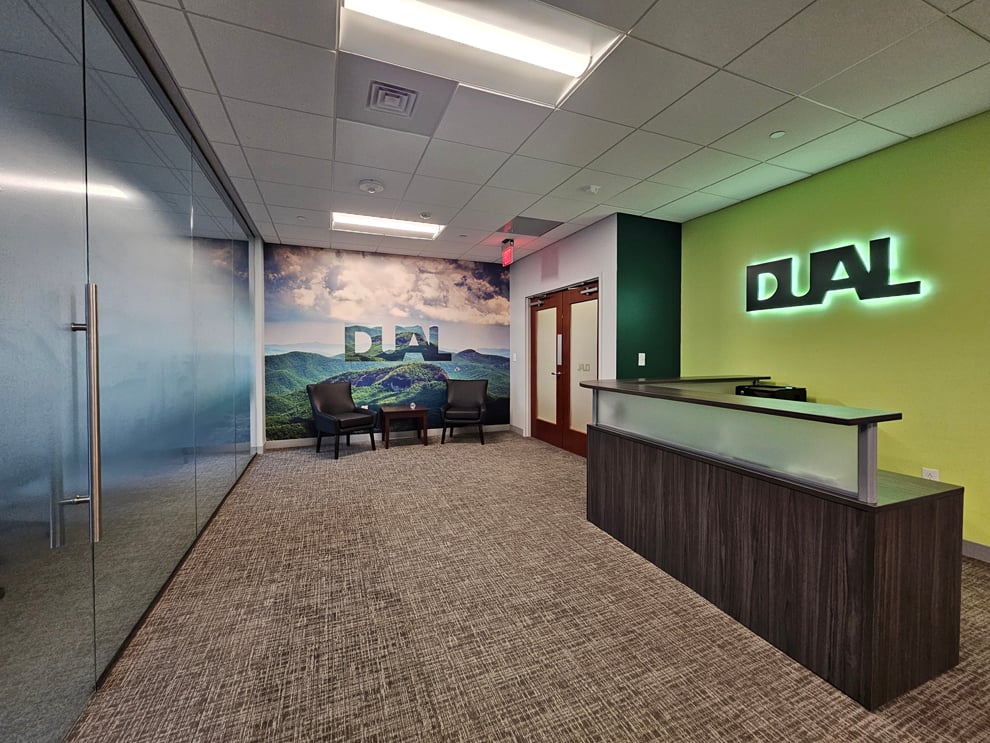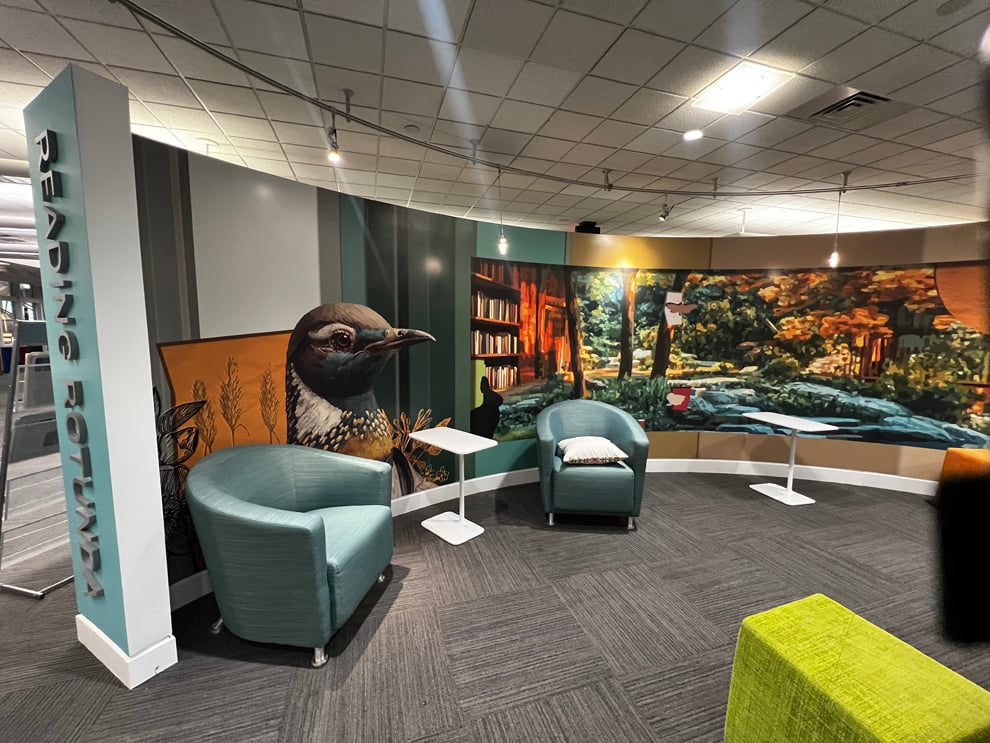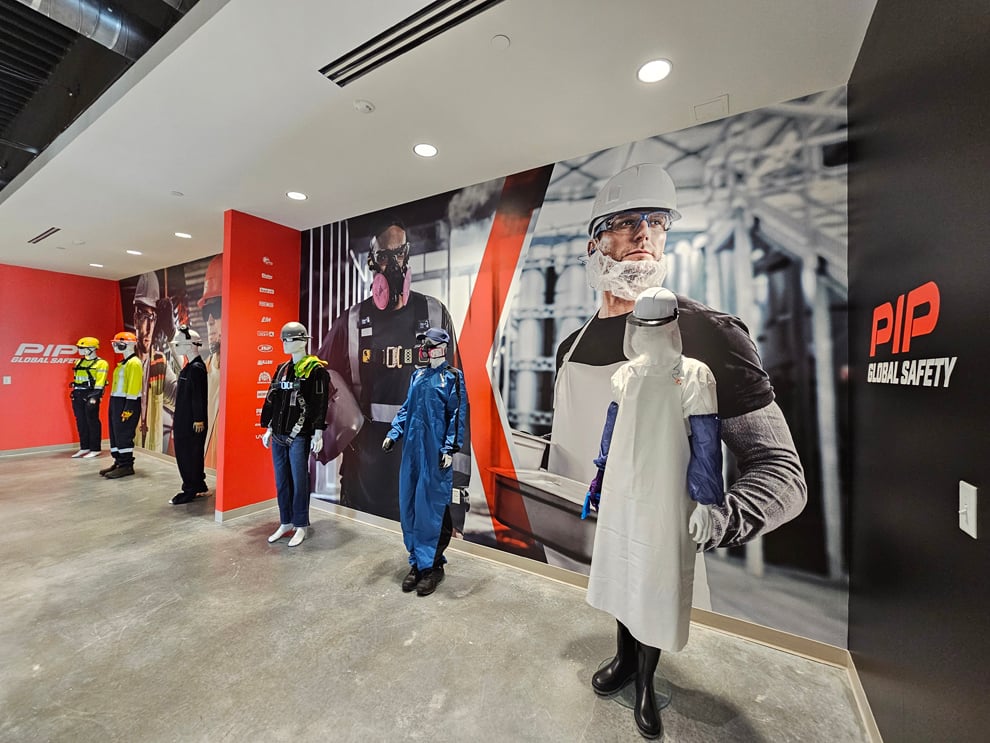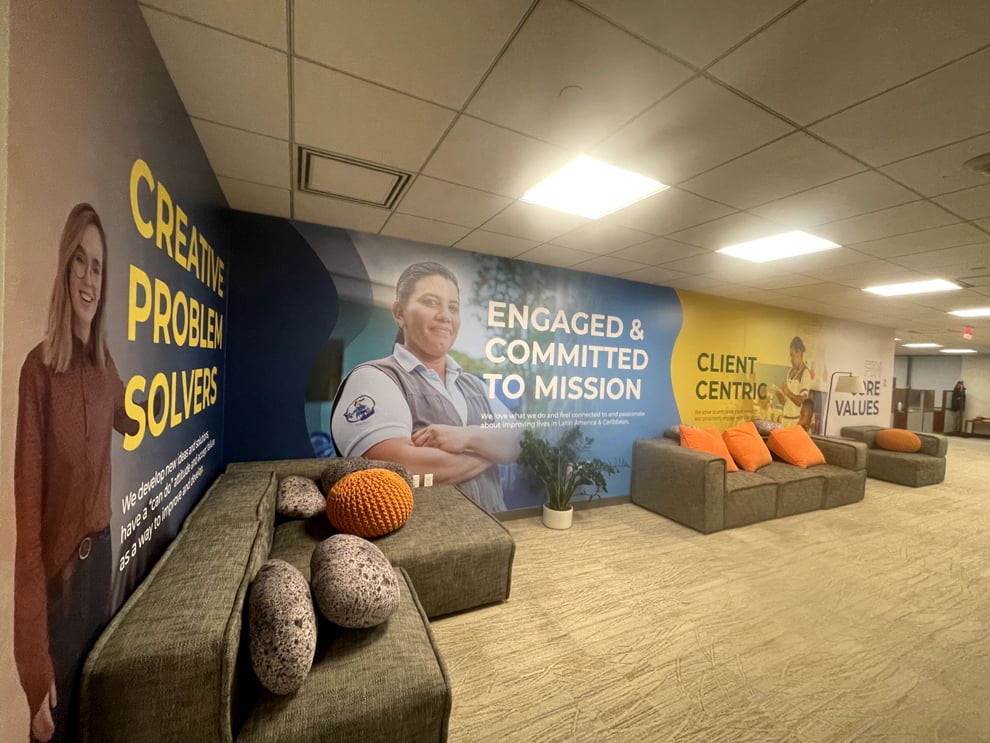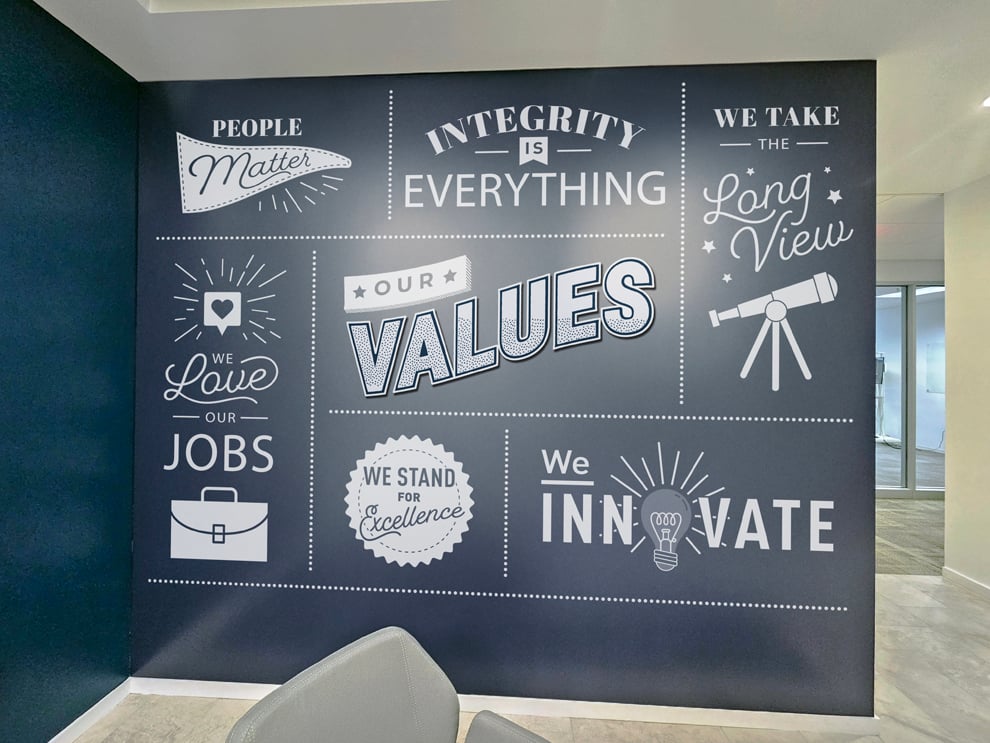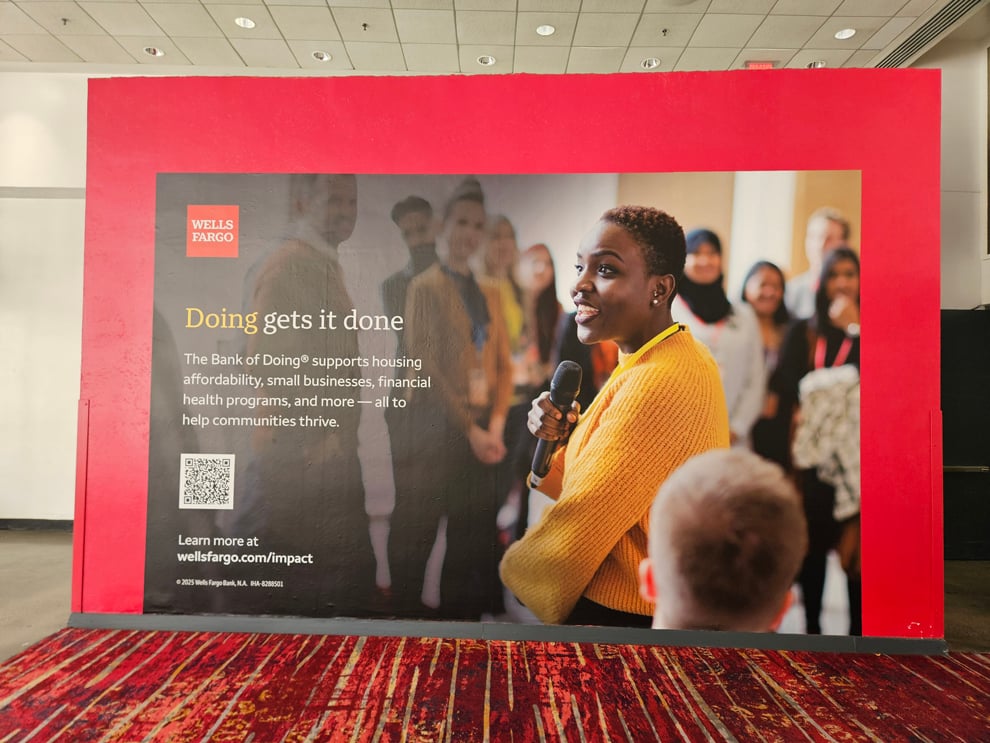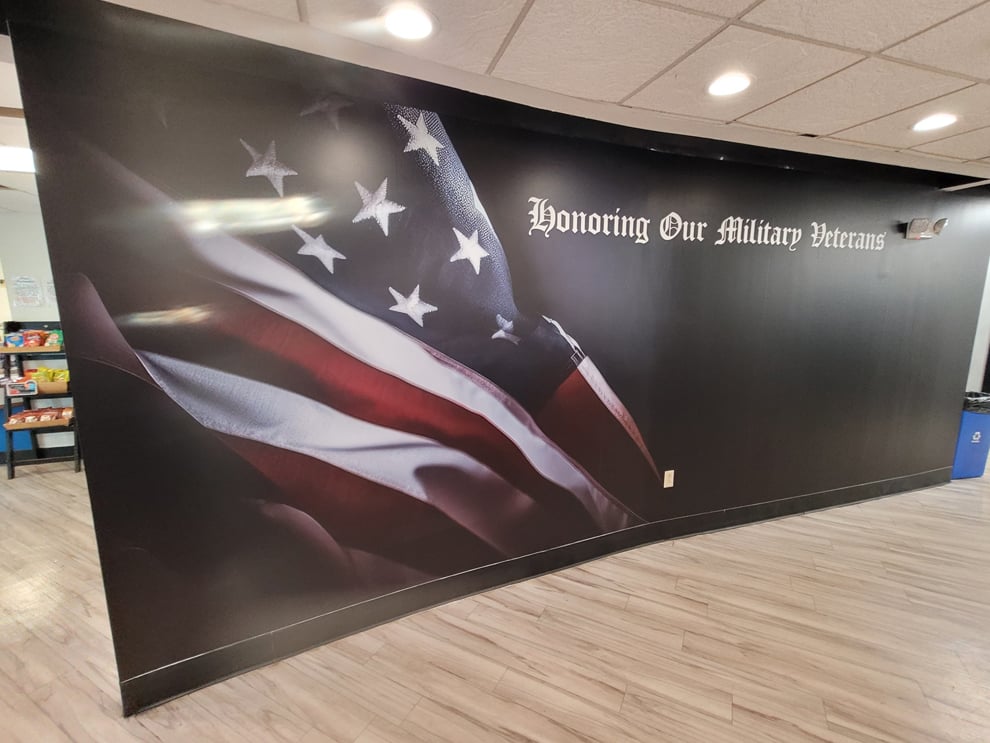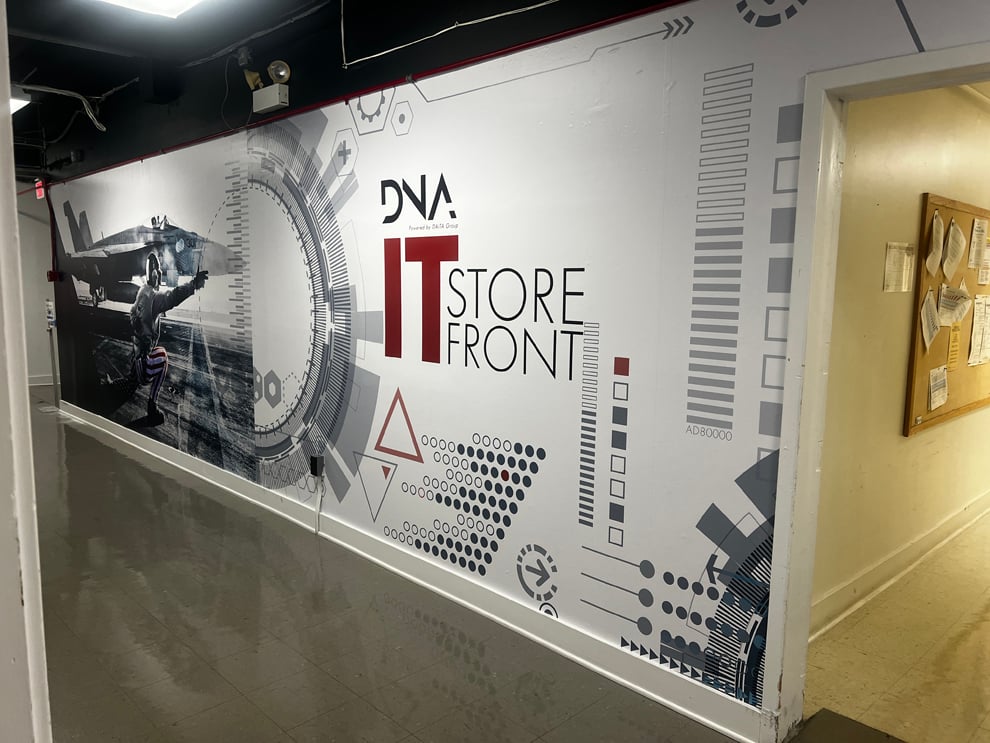
A prominent wall can help a Norfolk organization establish a stronger arrival, explain its purpose, connect employees with shared values, or help visitors understand the people and work behind the institution. Wall wraps create this opportunity at architectural scale, using imagery, typography, color, and carefully structured content across a continuous surface. Instead of distributing an important message among several small signs, an organization can use one feature wall, corridor, or gathering area to communicate a complete visual idea with greater continuity.
Heritage Signs & Displays develops wall graphics for corporate workplaces, universities, healthcare settings, nonprofits, professional firms, manufacturing operations, research organizations, and other stakeholder-facing properties in Norfolk. Environmental graphic design begins with the intended outcome and the audience that will encounter the wall. Heritage considers message hierarchy, viewing distance, circulation, architecture, image quality, lighting, furnishings, wall condition, and nearby signs or displays before translating approved content into a producible composition.
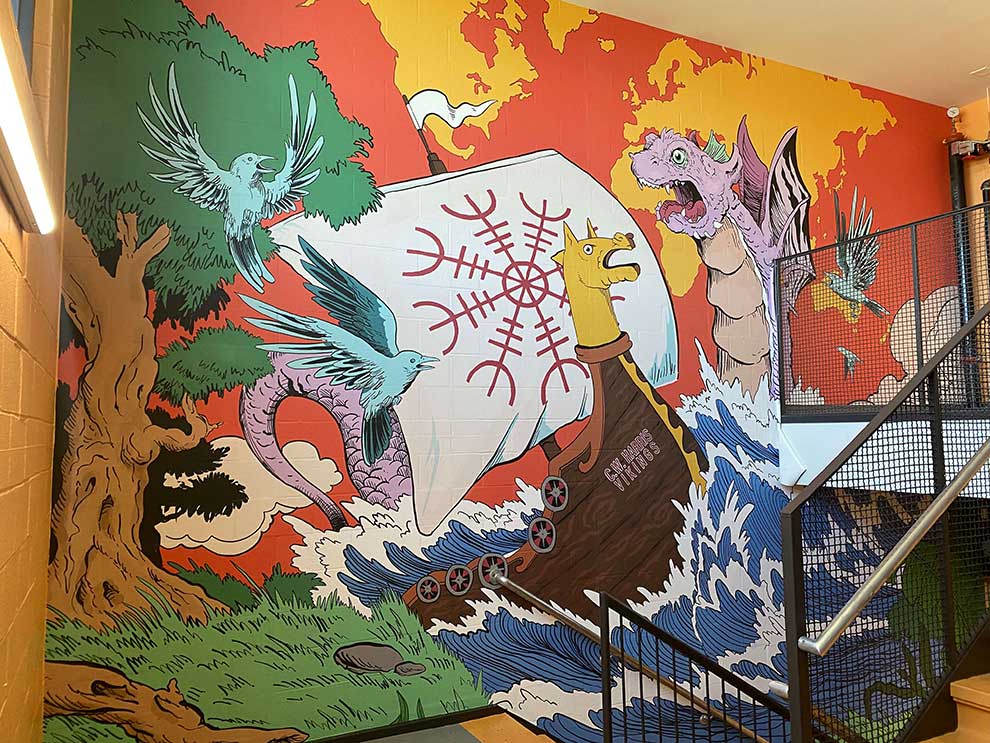
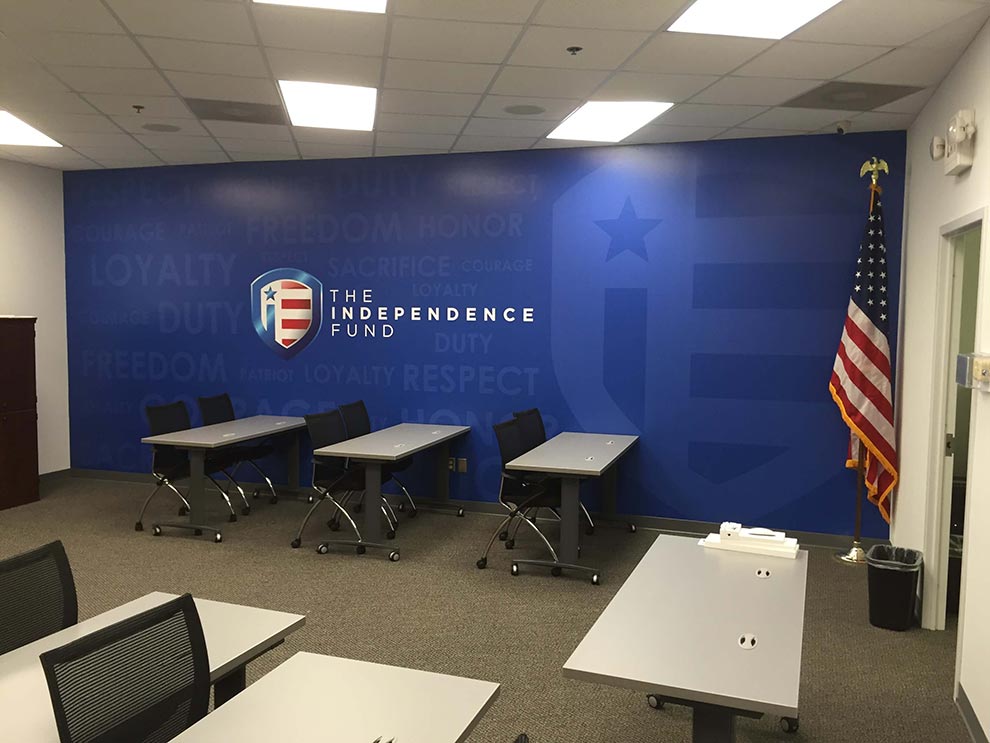
A Norfolk wall wrap may support a history timeline, mission statement display, culture feature, donor recognition program, research story, branded corridor, educational mural, or event environment. Photography, illustration, archival material, typography, maps, and branded patterns can organize the primary wall surface. Dimensional letters, acrylic panels, mounted photographs, recognition elements, or selected illuminated interior components may add depth when the concept calls for layering. Those additions support the wall wrap rather than taking ownership of the experience.
Projects inside active buildings may involve several stakeholders, restricted access, property requirements, production deadlines, or installation windows coordinated around normal operations. Heritage connects discovery, the required site survey, environmental graphic design, production, fabrication, pre-install planning, and professional installation through Heritage's One Dedicated Project Manager System. One consistent point of coordination preserves site information, approved design intent, material decisions, schedule requirements, and installation planning as the project moves from discussion to execution.
Heritage began in 1977 as a printing business. Nearly five decades later, the award-winning company remains veteran-owned and family-led, while custom signs, interior graphics, workplace branding, and event-environment work have been a defining focus since 2009. Heritage seeks to honor God by serving clients and communities with excellence. For Norfolk organizations, that purpose is reflected in measured communication, documented planning, accountable production, and careful installation intended to make the finished wall feel integrated with its setting.
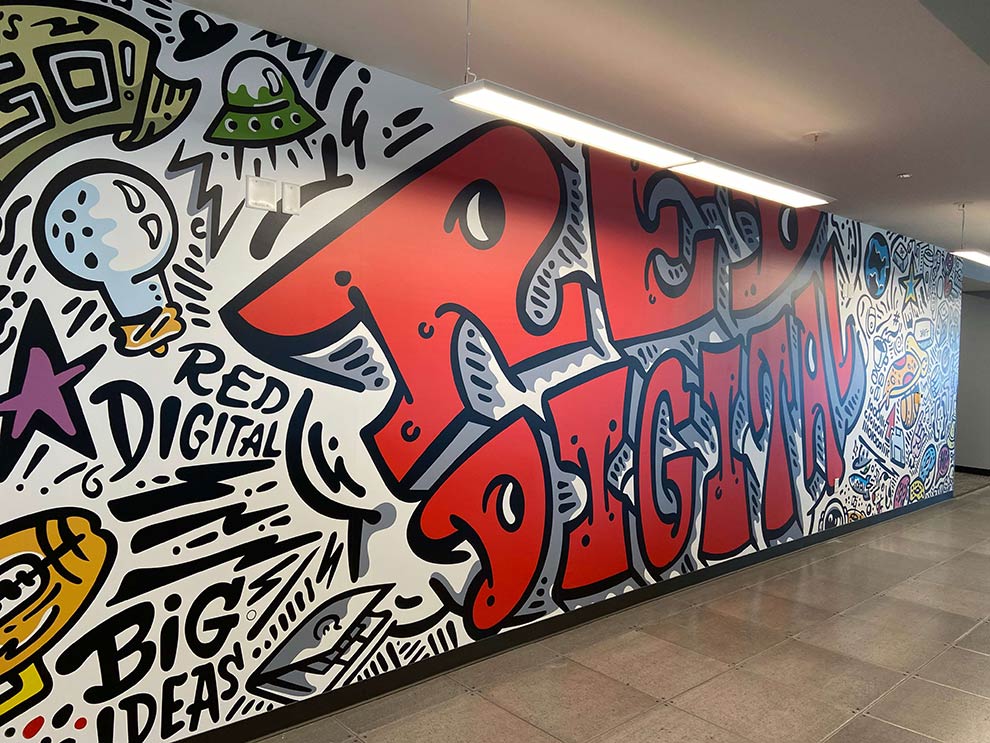
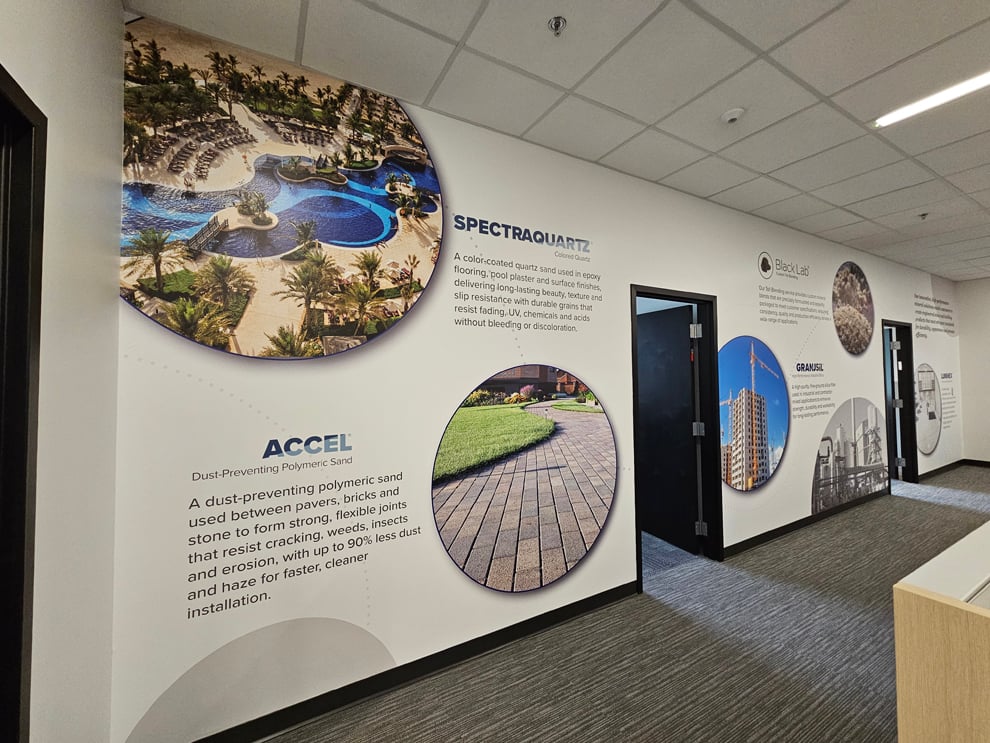
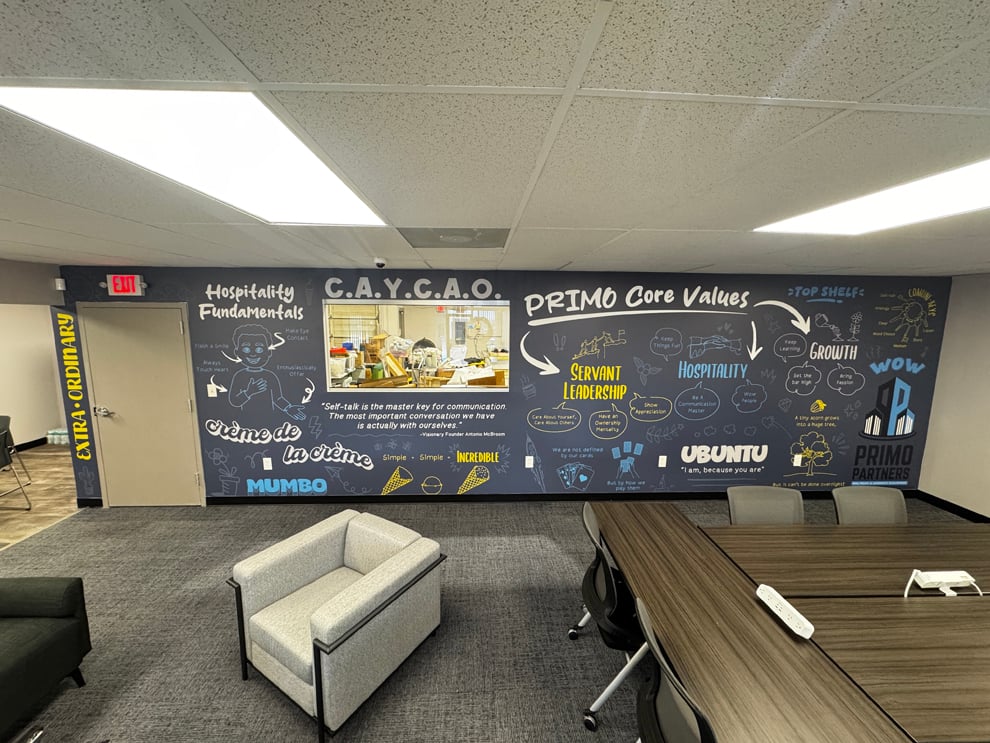
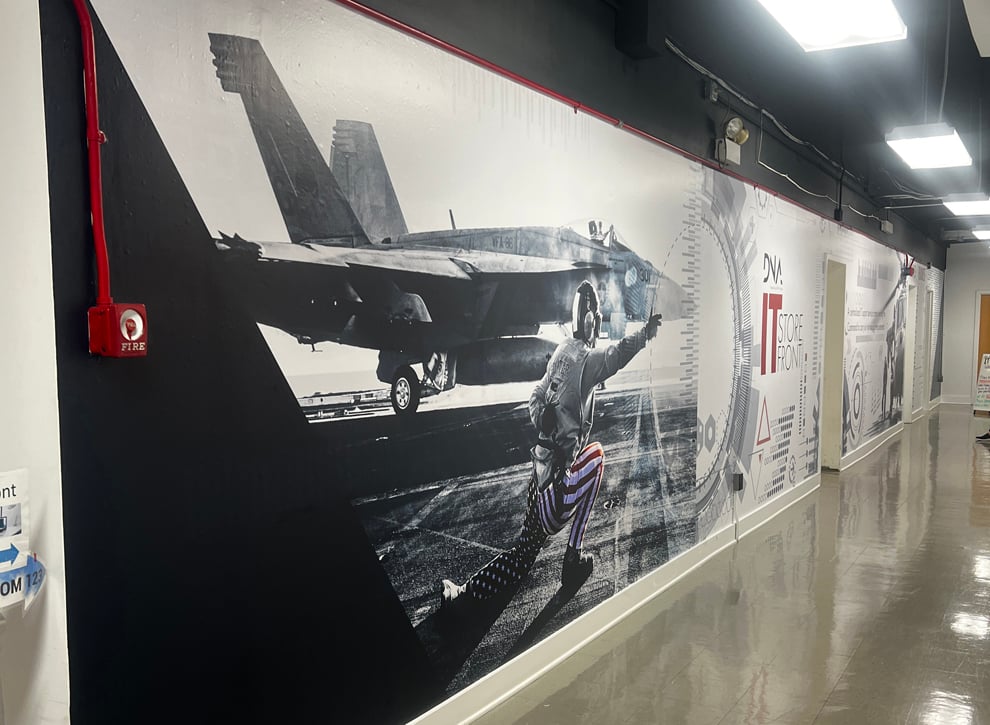
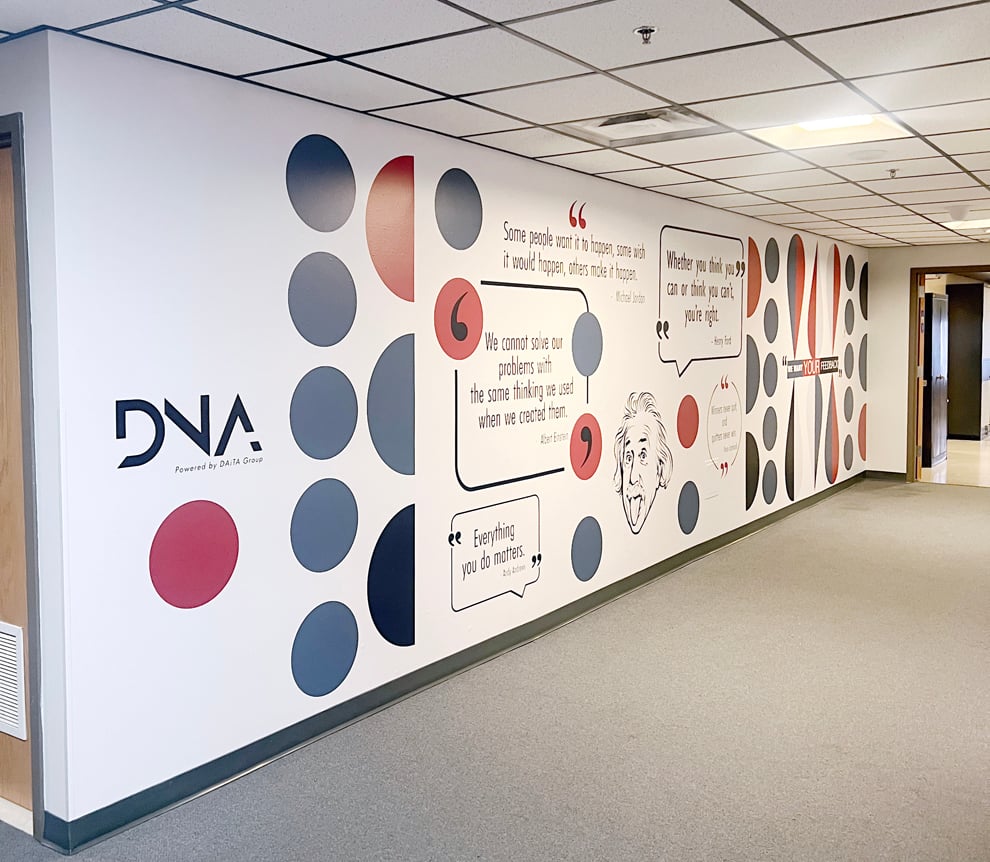
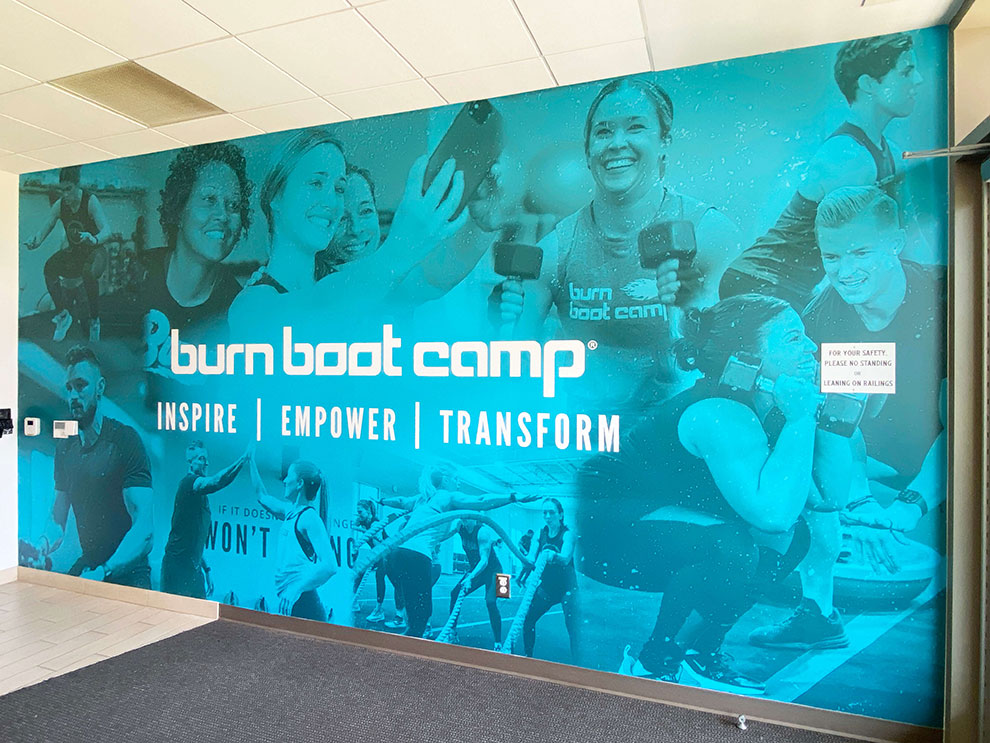
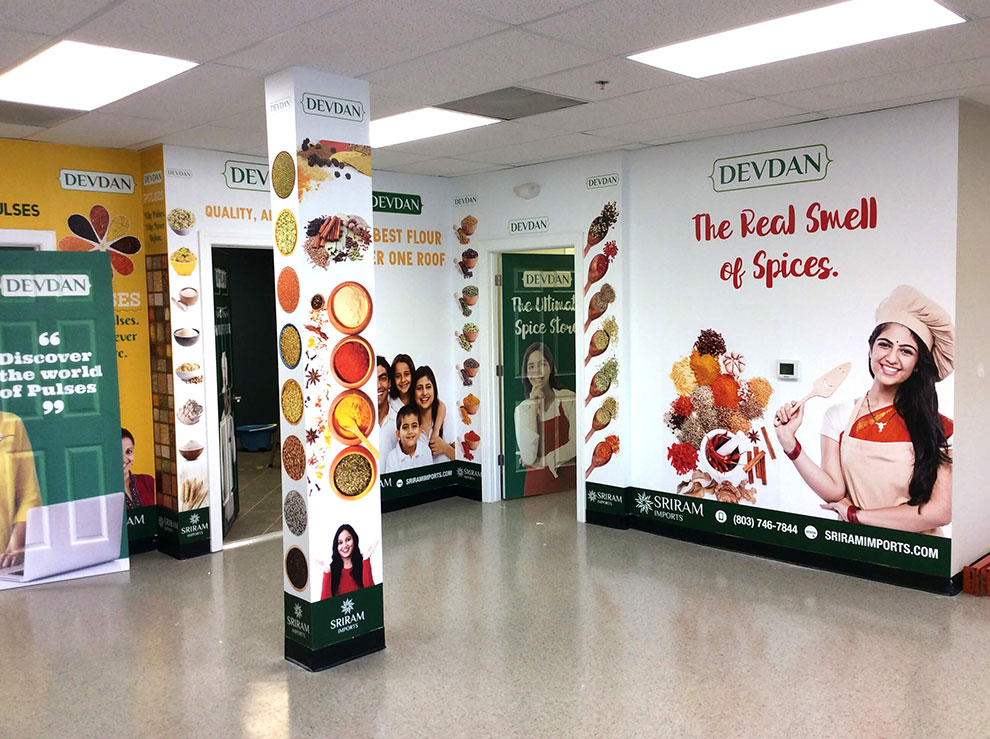
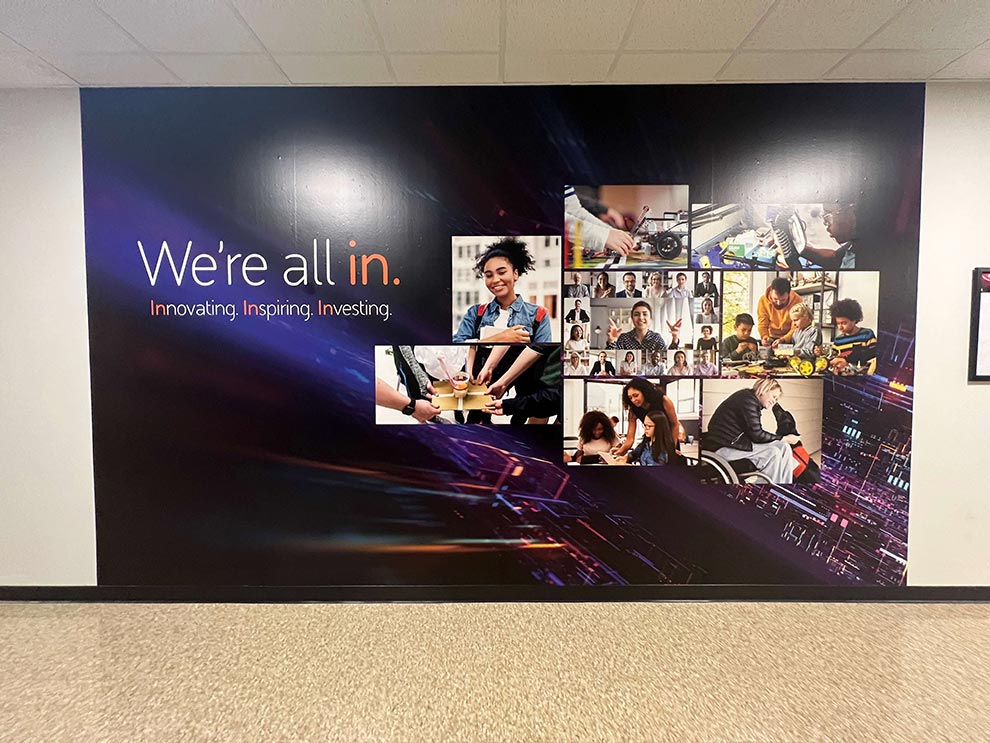
Wall wraps can communicate across an area that individual signs cannot address with the same visual continuity. A long workplace corridor may become a chronological history, while a university common area can connect academic achievements, student experiences, and institutional values. A manufacturing facility may use large photography and concise typography to explain capabilities, safety priorities, or the relationship between employees and the products they create.
Heritage evaluates whether the desired result calls for full coverage, a partial mural, cut wall graphics, or a printed foundation supporting dimensional components. Viewing distance, pedestrian movement, doors, corners, fixtures, furnishings, and architectural interruptions influence where major images and messages should appear. Full coverage is not always necessary.
A successful treatment should use the available wall area with discipline. Large imagery can establish context from across a room, while secondary content rewards closer viewing. Typography, panel breaks, seams, and layered elements are planned so the wall reads as one coordinated feature rather than a collection of unrelated graphics.
Choosing Heritage allows a Norfolk organization to keep design development, field information, production, fabrication, and installation within one accountable project structure. That continuity matters because a strong wall-wrap concept can be compromised by incomplete measurements, unsuitable artwork, poorly placed seams, inappropriate materials, or installation conditions that were not understood before production.
One dedicated Project Manager carries project knowledge through stakeholder discussions, the required site survey, environmental graphic design, approvals, production, fabrication, and pre-install planning. Measurements, image resolution, color expectations, wall information, panel planning, access requirements, and installation sequencing remain connected instead of being transferred among unrelated providers at each stage.
Heritage also accounts for how fabricated elements interact with the graphic surface. Mounting points, dimensional lettering, acrylic panels, openings, corners, and nearby signs can affect both artwork and installation order. The client gains a coordinated process in which the same Heritage team remains responsible for turning approved intent into a professionally installed wall-wrap experience.
Wall displays can place photographs, milestones, recognition content, or changeable information above a printed wall-wrap foundation. Heritage coordinates mounting locations, content hierarchy, graphic contrast, and fabrication so the display adds depth without disrupting the larger wall narrative.
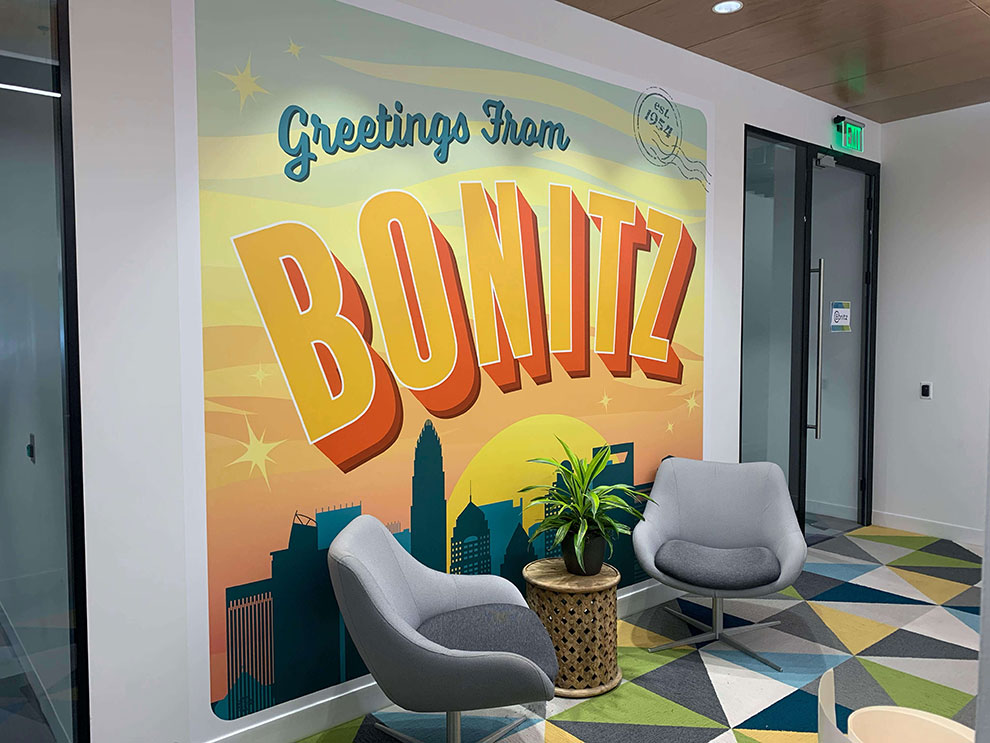
A lobby sign can provide primary identification while a surrounding wall mural establishes context, imagery, and brand character. Heritage plans the sign and wall graphics together so scale, sightlines, color, mounting, and illumination remain appropriate for the arrival experience.
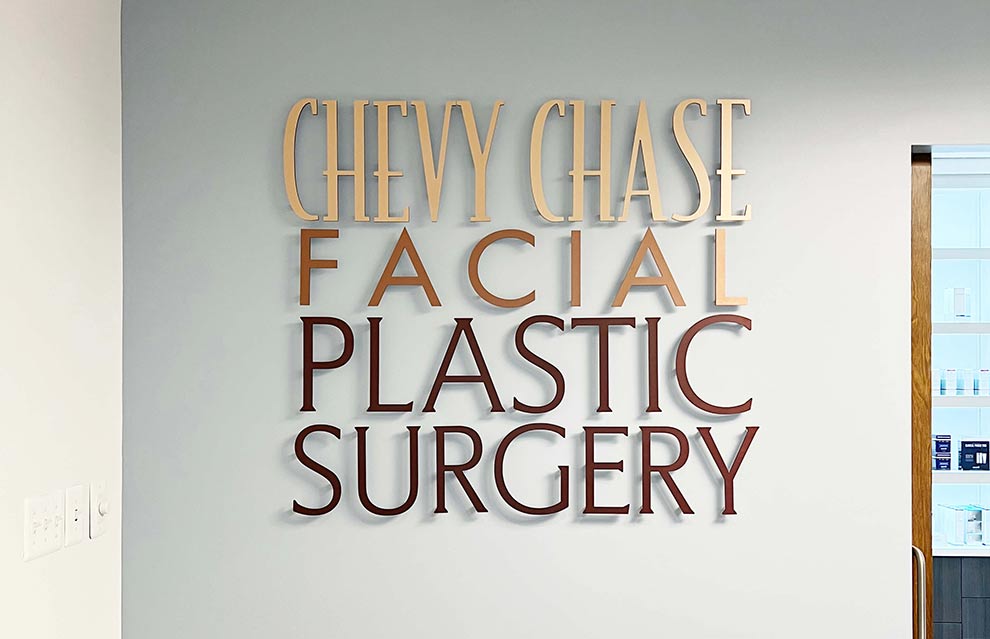
Dimensional letters can emphasize a name, mission statement, core values, or another high-priority message over a wrapped wall. Heritage coordinates spacing, contrast, projection, mounting points, and surrounding imagery so the lettering remains legible within the complete composition.
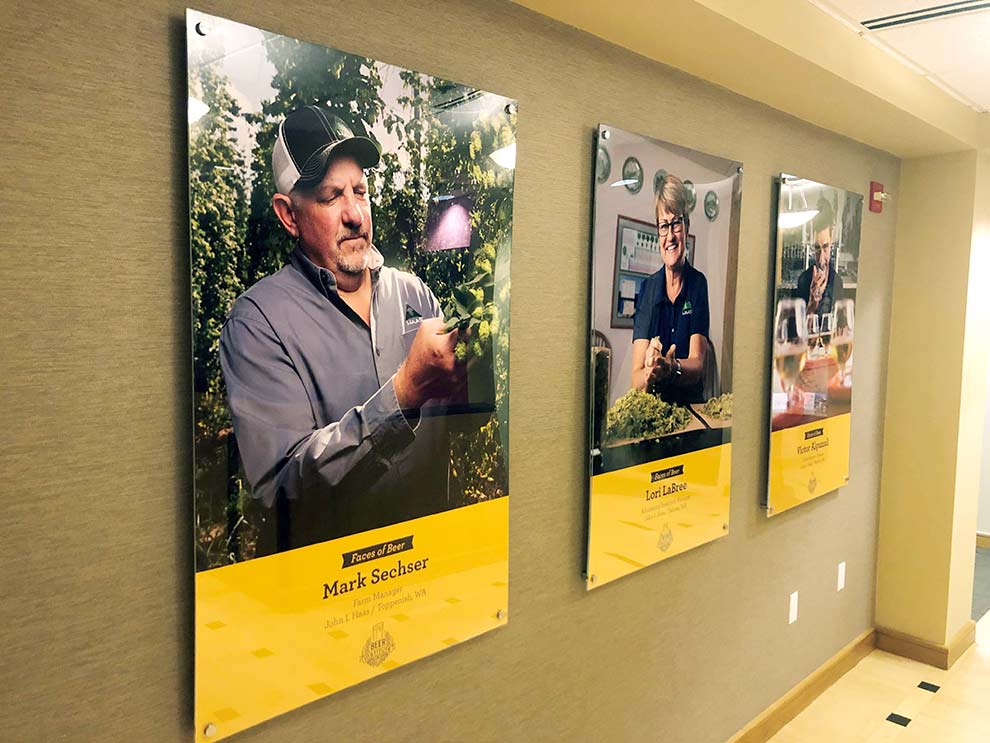
Standoff mounted signs can separate recognition, donor, educational, or historical content from the printed graphic behind it. Heritage plans panel dimensions, projection, hardware, placement, and background contrast so important information remains readable and visually connected to the wall wrap.
A backlit sign can anchor a Norfolk lobby or feature wall when illumination is appropriate for the architecture and operating conditions. Heritage plans brightness, scale, mounting, electrical coordination, sightlines, and surrounding graphics so the illuminated component remains part of one controlled presentation.
Elevator doors and selected cab surfaces can extend a wall-graphics program into high-use circulation areas. Heritage coordinates artwork, seams, operating clearances, sightlines, and adjacent wall treatments so the elevator application supports the broader environmental graphic design.
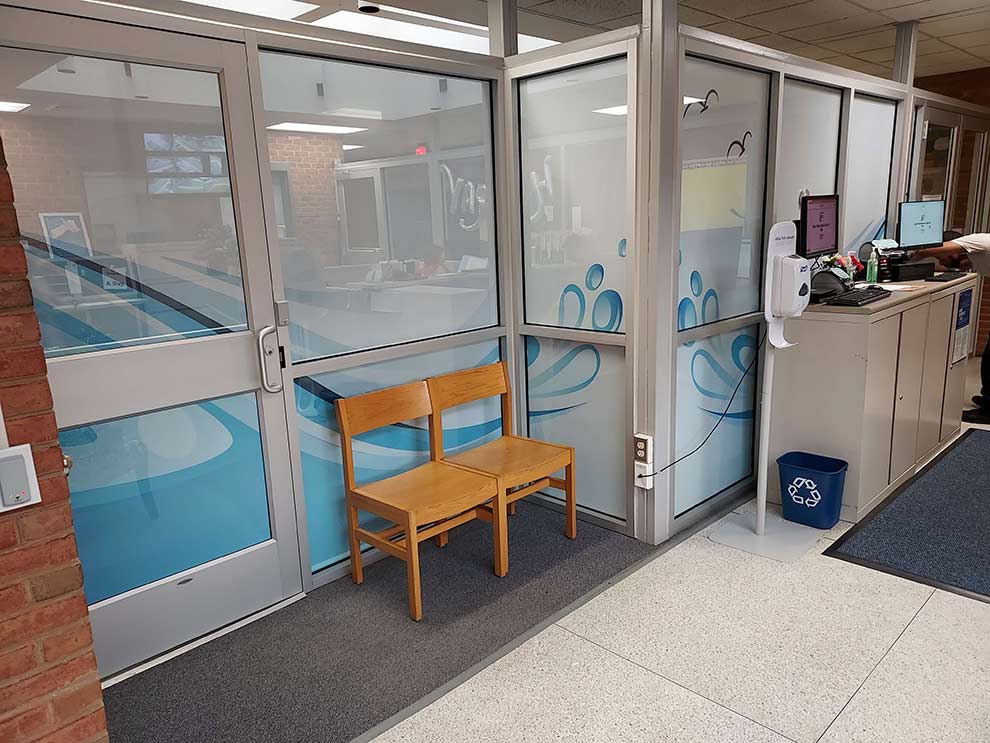
Window graphics can continue selected patterns, colors, or messaging from a nearby feature wall while addressing visibility or privacy. Heritage coordinates the glass and wall applications around daylight, transparency, circulation, viewing direction, and the intended hierarchy of each surface.
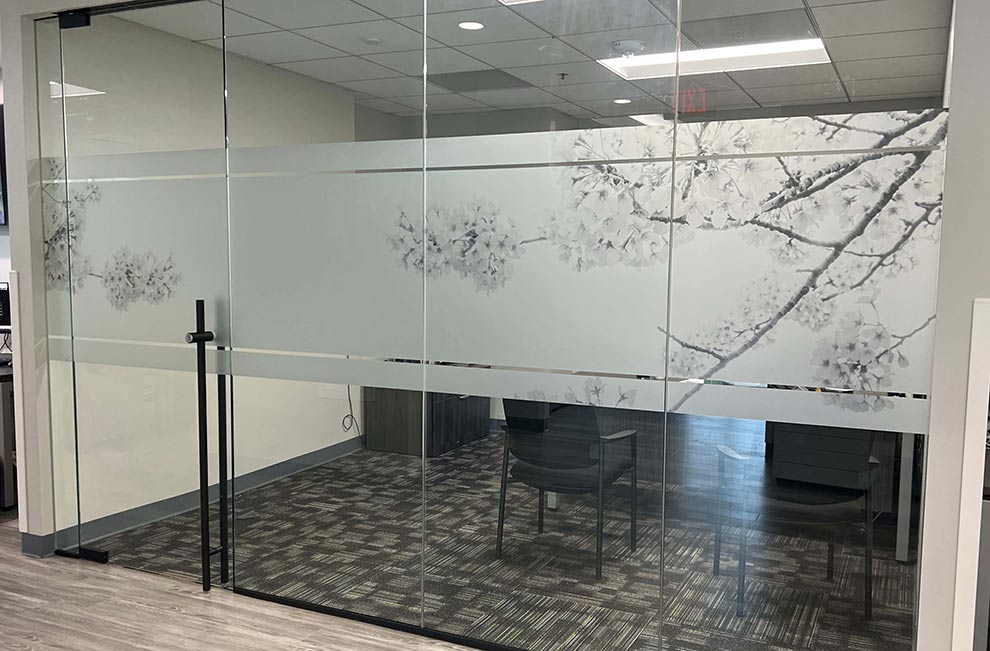
Frosted vinyl can provide measured privacy on conference-room or office glass adjacent to a wrapped wall. Heritage aligns patterns, bands, logos, and clear areas with the surrounding graphics so the glass treatment supports the environment without competing with the primary mural.
Use Get Started Now to introduce the property, desired result, primary audience, target completion date, anticipated overall investment, available photographs, approximate dimensions, brand standards, artwork, and known wall, paint, or access information. Complete documentation is not required at the initial stage. One dedicated Project Manager can identify the next appropriate discovery steps, determine what requires field verification, and coordinate the Heritage resources responsible for environmental graphic design, production, fabrication, pre-install planning, and professional installation.
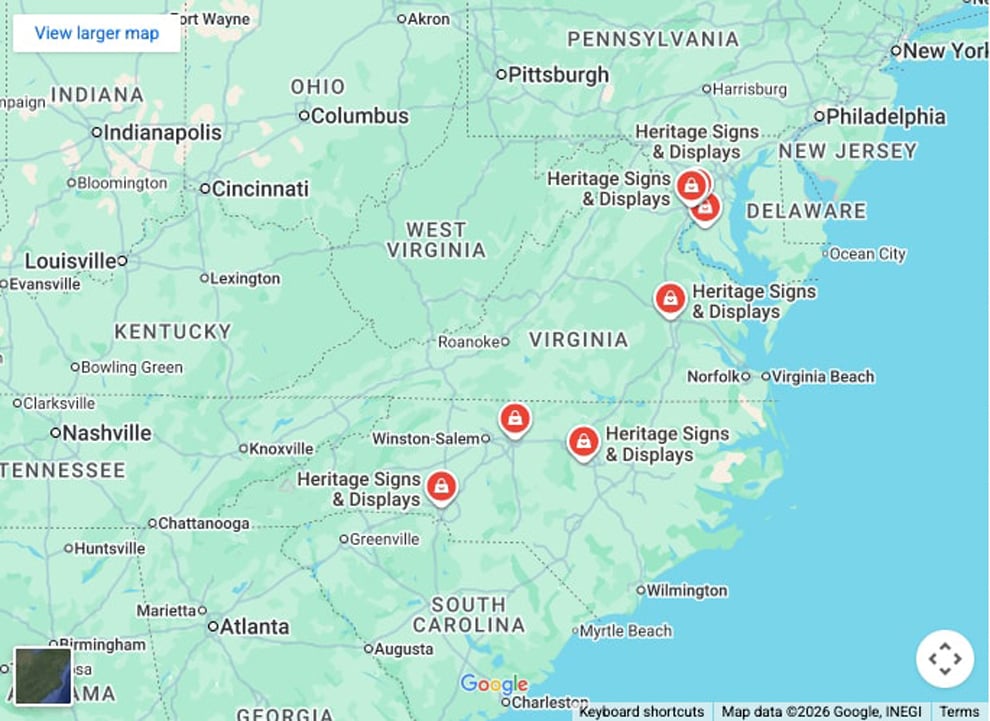
Heritage provides client-facing and local field support from Norfolk, including discovery at client facilities, site surveys, field verification, installation planning, professional installation, follow-through, and nearby project support. This local presence helps the project team understand the property before graphics enter production, including wall dimensions, surface conditions, loading arrangements, access routes, work-hour restrictions, and stakeholder requirements.
That preparation is relevant throughout Norfolk and Northern Virginia, where wall-wrap projects may support corporate offices, universities, healthcare institutions, manufacturing workplaces, nonprofit organizations, professional firms, and public-facing facilities. Each setting can introduce different audiences, review structures, operating schedules, security procedures, and installation constraints.
For regional or multi-location programs, one dedicated Project Manager can preserve brand standards, approved content, production expectations, and project history while each property is adapted to its own dimensions, architecture, audience, access, and operating conditions. Norfolk field resources connect with Heritage capabilities across North Carolina, the Mid-Atlantic, and the wider Heritage network when broader coordination is required.
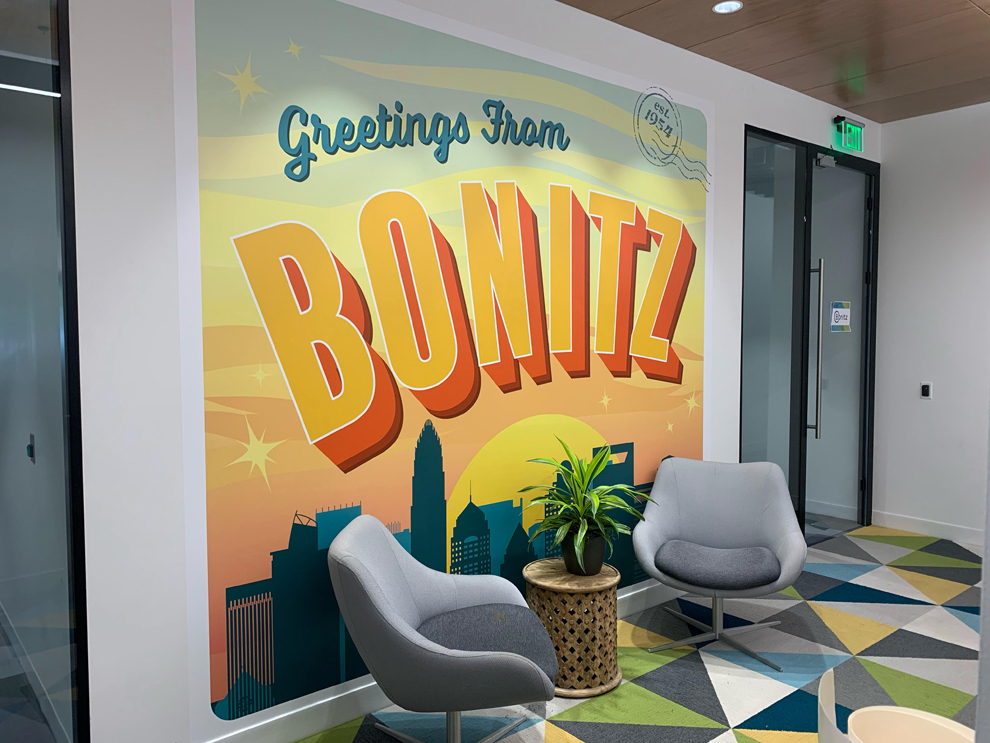
Environmental graphic design can turn a Norfolk wall into a purposeful arrival feature, history timeline, recognition display, research narrative, mission statement presentation, or culture-focused workplace experience. Heritage begins with what the organization needs people to understand, then considers how content should unfold across the wall as employees, visitors, students, members, donors, or other stakeholders move through the setting.
Heritage can develop concepts directly with client stakeholders, work from approved brand standards, or prepare production from finished artwork. Heritage also collaborates with architects, interior designers, branding agencies, marketing teams, and environmental graphic designers when another professional partner controls the broader creative or architectural direction.
The implementation process translates approved intent into workable dimensions, panel breaks, seams, image files, typography, openings, corners, and mounting relationships. Heritage does not provide architecture, engineering, general interior design, lighting design, or code consulting. Its role is to develop or implement environmental graphics and fabricated features that can be produced and installed within the verified conditions of the property.
Professional installation should begin with the wall, building, artwork, and operating requirements already understood. Heritage requires a site survey for wall-wrap projects that include professional installation. That survey combines client discovery with field verification, documenting dimensions, wall condition, corners, openings, fixtures, access routes, installation hours, loading conditions, and other information that may affect production or execution.
The dedicated Project Manager keeps those findings connected to environmental graphic design, panel planning, production, fabrication, and pre-install planning. Installation personnel receive the approved artwork, material specifications, panel sequence, seam strategy, property requirements, and schedule before arriving at the site. This preparation can reduce avoidable disruption inside occupied offices, campuses, healthcare facilities, and other active properties.
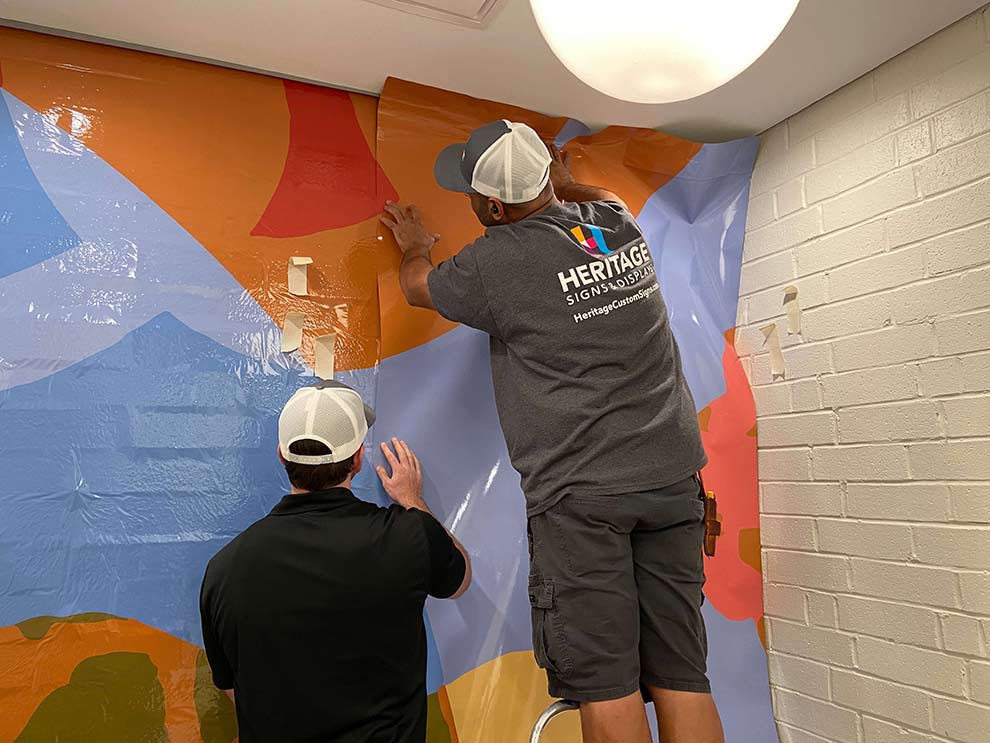
Once installation begins, Heritage installers manage registration, alignment, seam placement, transitions, corners, doors, outlets, fixtures, and nearby finishes while following approved access requirements. If a changed field condition affects the plan, the connected Heritage team can review the issue before work proceeds in a way that could compromise the result.
Wall graphics perform best when drywall is sound, smooth, clean, dry, properly repaired, and finished with correctly applied primer and paint. Finish paint must be fully cured, not merely dry. About four weeks may be useful planning guidance for many paints, but manufacturer requirements, humidity, temperature, application conditions, and the actual property environment control readiness.
Washable, scrubbable, stain-resistant, low-VOC, zero-VOC, and other challenging paints may require cleaning, adhesion testing, or another compatible vinyl and adhesive approach. Testing shows how vinyl behaves on the visible painted surface, but it cannot determine how well the paint, primer, and drywall are bonded underneath. Normal lifting or repositioning may occur while installers establish alignment.
If paint peels during testing or normal repositioning, Heritage stops. The client or property owner arranges and pays for wall repair, proper priming, repainting, full cure time, and related restoration before Heritage returns. Heritage does not perform or pay for that work. Future removal carries separate risk. Heritage removes graphics carefully, but damage-free removal cannot be guaranteed. Paint, primer, or drywall facing may release, and restoration remains the client or property owner's responsibility.
Effective planning aligns the desired result, audience, project scope, stakeholder approvals, phasing, schedule, site conditions, wall readiness, anticipated overall investment, and the decisions needed before production. These factors should be discussed early because a large mural, layered history wall, or multi-location graphics program may involve substantially different coordination than a single feature wall.
Useful starting information includes the installation address, photographs, approximate measurements, approved messaging, brand standards, artwork, known paint information, target completion date, and property access requirements. The required site survey then verifies conditions that photographs, floor plans, or preliminary dimensions cannot fully document.
Heritage is best suited for professionally managed projects involving environmental graphic design, production, fabrication, and professional installation. Many Heritage projects involving production and professional installation range from $10,000 to more than $200,000. Final investment depends on graphic coverage, design needs, materials, fabricated elements, access, surface condition, installation windows, schedule, and coordination demands. Use Get Started Now to confirm the current anticipated overall investment for Norfolk and provide enough information for Heritage to evaluate project fit responsibly.
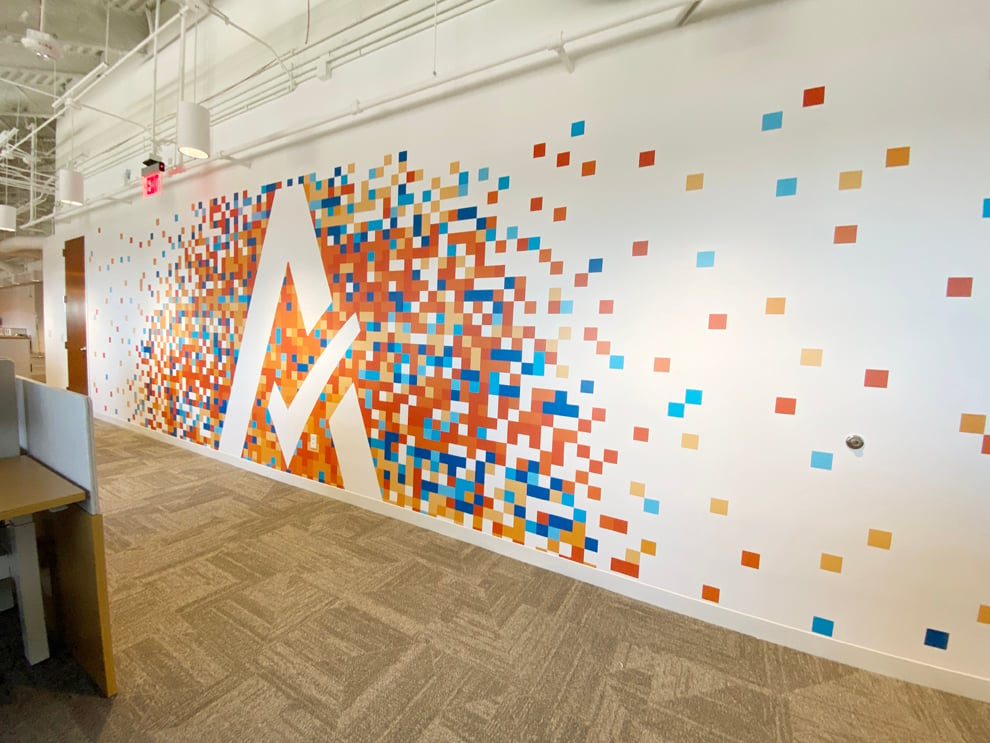
Wall wraps are adhesive graphics produced in panels and installed directly across an interior or selected exterior wall surface. They can use photography, illustration, typography, branded patterns, archival content, maps, or other approved artwork to make the wall itself the primary communication surface.
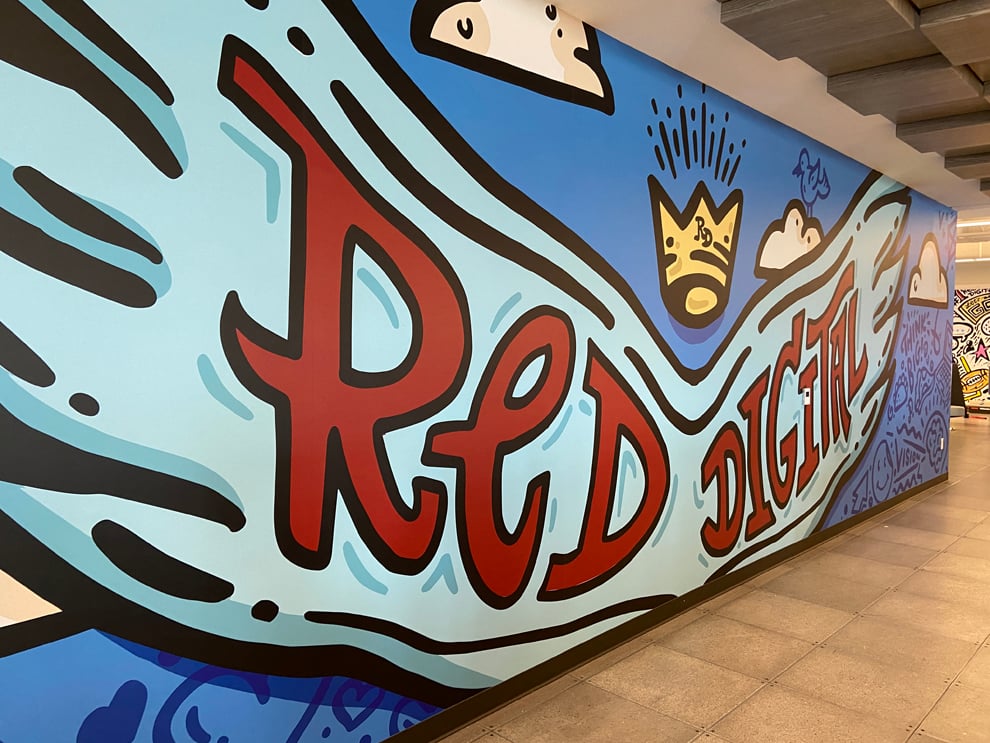
The terms wall mural and wall graphics are often used for related applications. The appropriate description depends on the amount of coverage, visual purpose, material system, and relationship between the printed wall and any dimensional or mounted components.
Sound, smooth, clean, dry, properly repaired drywall generally provides the most predictable surface. Primer and finish paint should be applied correctly, and the finish paint must be fully cured before installation.
Texture, moisture, contamination, unstable paint, prior repairs, and incompatible finishes can affect appearance or adhesion. Heritage reviews these conditions during the required site survey and may recommend cleaning, testing, another material approach, or a mounted display when the wall is not a suitable wrapping surface.
Finish paint must cure completely rather than simply feel dry. About four weeks can be useful planning guidance for many paint systems, but it is not a universal guarantee of readiness.
The paint manufacturer's requirements and actual building conditions control the schedule. Temperature, humidity, wall preparation, primer compatibility, paint chemistry, and application thickness may affect cure time, so painting and graphics installation should be coordinated early.
Some may. Washable, scrubbable, stain-resistant, low-VOC, zero-VOC, and similar finishes can create challenging adhesion conditions, but the paint label alone does not determine the correct vinyl.
Depending on the wall, Heritage may recommend cleaning, adhesion testing, or a different compatible vinyl and adhesive approach. Not every low-VOC or zero-VOC wall requires a high-tack product, and material selection should reflect the actual finish and intended service period.
An adhesion test provides information about how a particular vinyl behaves on the visible painted surface. It can help identify obvious compatibility concerns and inform material or installation decisions.
The test cannot measure the concealed bond among the paint, primer, and drywall. A successful result therefore reduces uncertainty without certifying the underlying wall system, guaranteeing installation performance, or predicting damage-free removal later.
Heritage stops rather than making the painted wall worse. Installers may need to lift or reposition vinyl normally while establishing panel alignment, registration, and seam placement, and that movement can reveal a weak paint, primer, or drywall bond.
The client or property owner arranges and pays for wall repair, proper priming, repainting, full cure time, and related restoration before installation resumes. Heritage does not perform or pay for those repairs or restoration costs.
Yes. Heritage removes graphics slowly and carefully to limit avoidable damage, but damage-free removal cannot be guaranteed. Paint or primer may release, and the drywall facing can sometimes be affected.
Removable describes intended adhesive behavior, not a promise that the wall will remain unchanged. The client or property owner is responsible for arranging and paying for repair, priming, repainting, cure time, and any other restoration after removal.
Yes. A site survey is required for Heritage wall-wrap projects that include professional installation. It combines client discovery with field verification so design, production, and installation decisions reflect the actual property.
The survey may document dimensions, wall condition, paint information, openings, corners, fixtures, access routes, loading, elevators, installation hours, security procedures, and property requirements. This record follows the project through planning and execution.
Yes. Heritage can develop environmental graphic design concepts with stakeholders, work from approved brand standards, or prepare finished client artwork for production. Design decisions may address content hierarchy, imagery, typography, viewing distance, circulation, panel breaks, architectural interruptions, and layered fabricated elements.
Heritage can also collaborate with architects, interior designers, marketing teams, branding agencies, and environmental graphic designers. When another professional controls the concept, Heritage can implement the approved intent within verified production and installation conditions.
Some mild textures can work with specialty materials and installation techniques, provided the expected appearance and service period remain realistic. Texture may remain visible through the graphic and can reduce the adhesive contact area.
Deep texture, porous block, rough masonry, irregular concrete, moisture, or unstable paint may make a direct wall wrap impractical. Heritage may recommend a mounted panel, standoff display, or another fabricated solution when the substrate cannot support the intended result.
Not automatically. Most printed interior wall graphics are normally unlaminated when they will remain in a controlled setting without frequent contact or cleaning.
Protective film laminate may be appropriate in high-contact areas or where repeated cleaning creates a meaningful need for added print protection. Printed exterior wall graphics receive protective film laminate as standard practice because sunlight, moisture, and weather exposure create different performance requirements.
Yes. Dimensional letters, acrylic panels, mounted photographs, standoff signs, recognition components, and selected illuminated interior elements may be installed above or beside wall graphics when layering supports the communication goal.
Heritage coordinates artwork, mounting locations, contrast, hardware, fabrication, and installation sequencing so the added components remain legible and structurally separate while the wall wrap continues to carry the larger visual narrative.
Yes. One dedicated Project Manager can preserve approved brand standards, project decisions, production expectations, and schedule history across a multi-location program.
Each property still requires individual planning for dimensions, architecture, wall condition, audience, access, operating schedules, and installation requirements. Consistent branding does not require identical physical treatments, and each wall-wrap solution should respond to the site where it will be installed.
No. Heritage does not provide installation-only services for customer-provided wall graphics. Heritage installs graphics that Heritage produces, fabricates, procures, or manages as part of the complete engagement.
This boundary allows Heritage to remain accountable for measurements, materials, image quality, panel construction, replacements, installation planning, and the finished result. Problems created during outside production can be difficult to correct within a scheduled installation window.
Heritage connects Norfolk field support with one dedicated Project Manager, the required site survey, environmental graphic design, production, fabrication, pre-install planning, and professional installation. That operating model keeps site information, approved artwork, panel strategy, access requirements, and installation sequencing within one accountable project structure.
Heritage began in 1977 and remains veteran-owned and family-led. The practical distinction for Norfolk clients is a process designed to understand the building and stakeholder requirements before graphics are produced and delivered for installation.
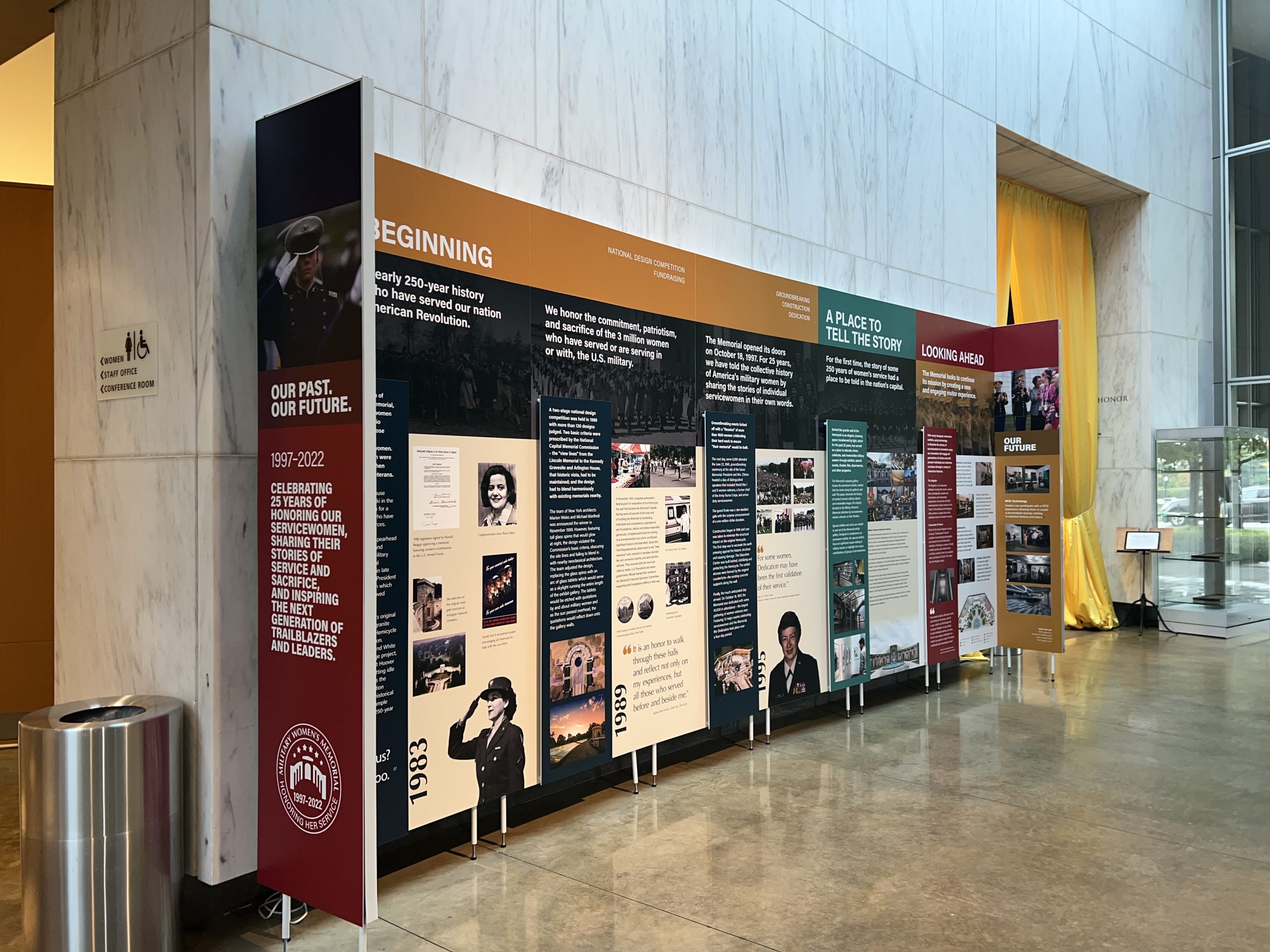
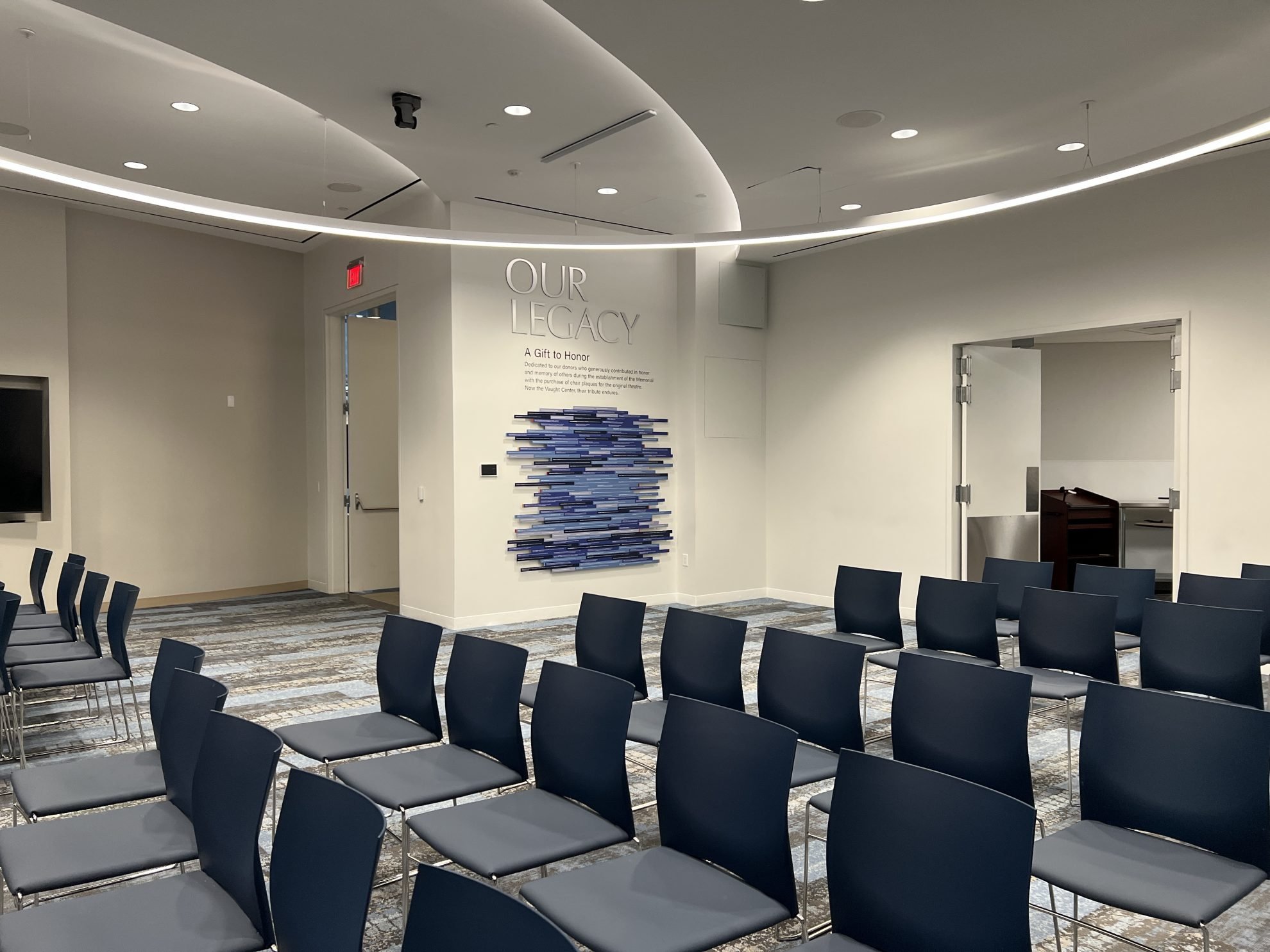
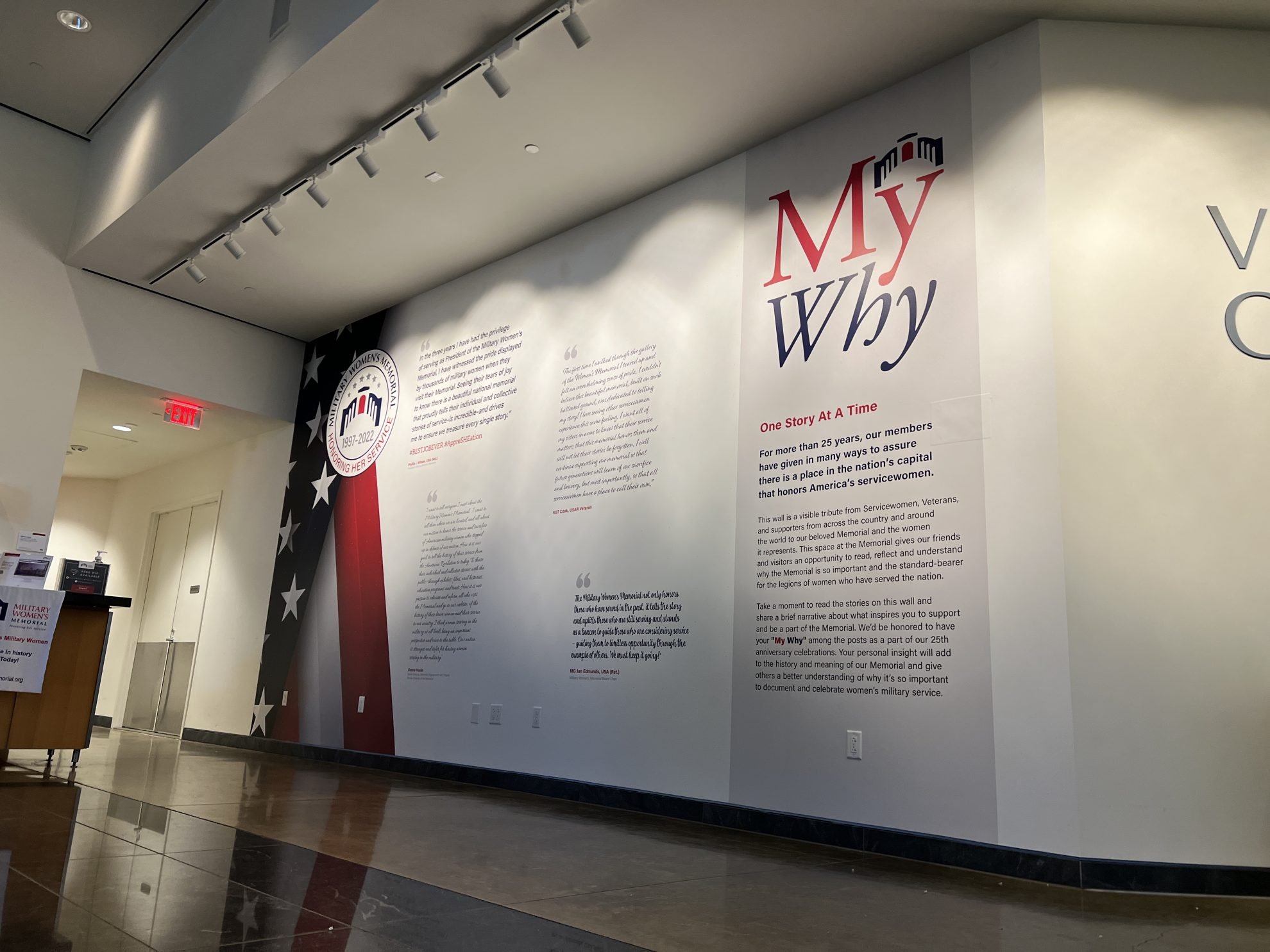
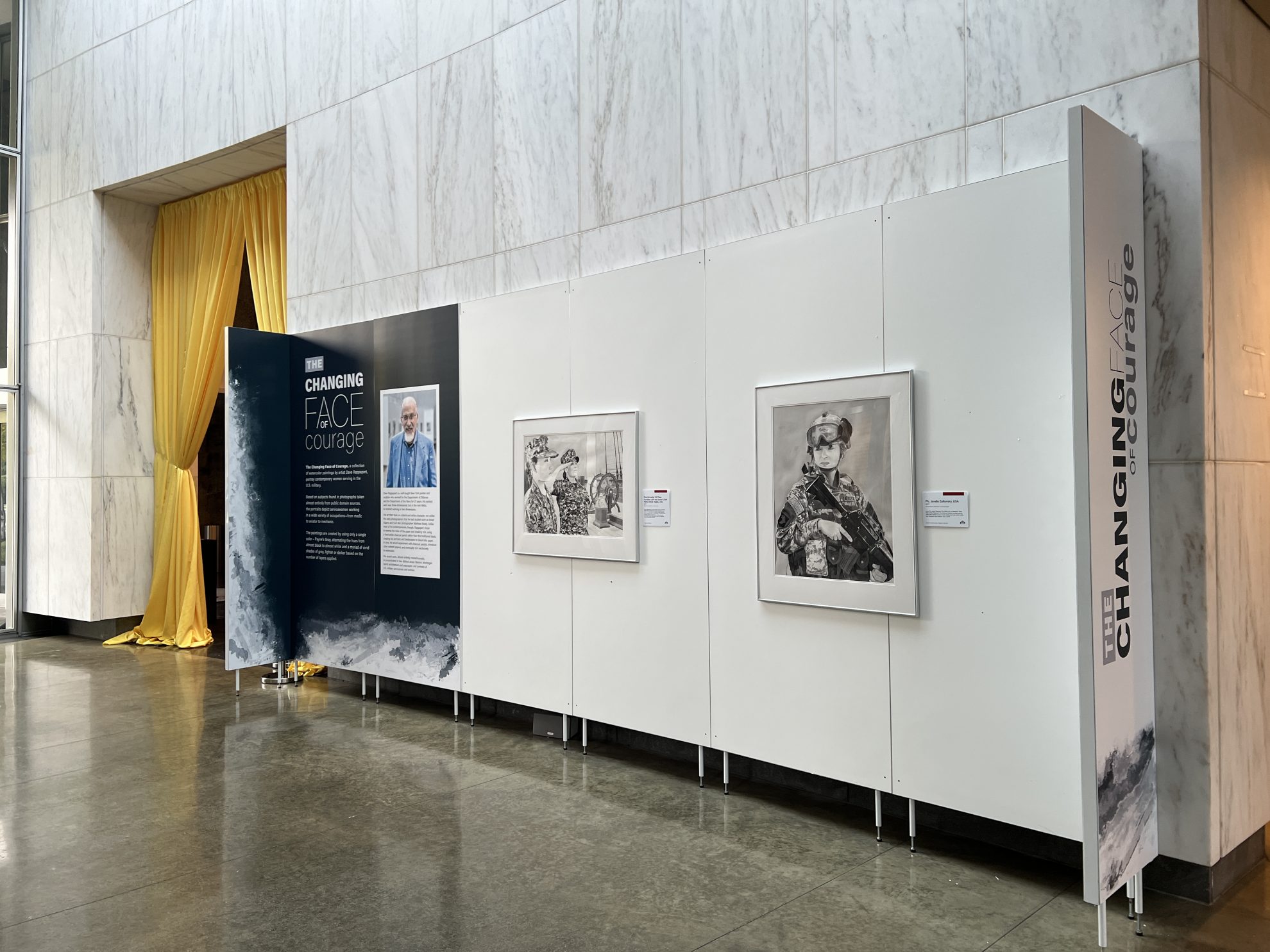
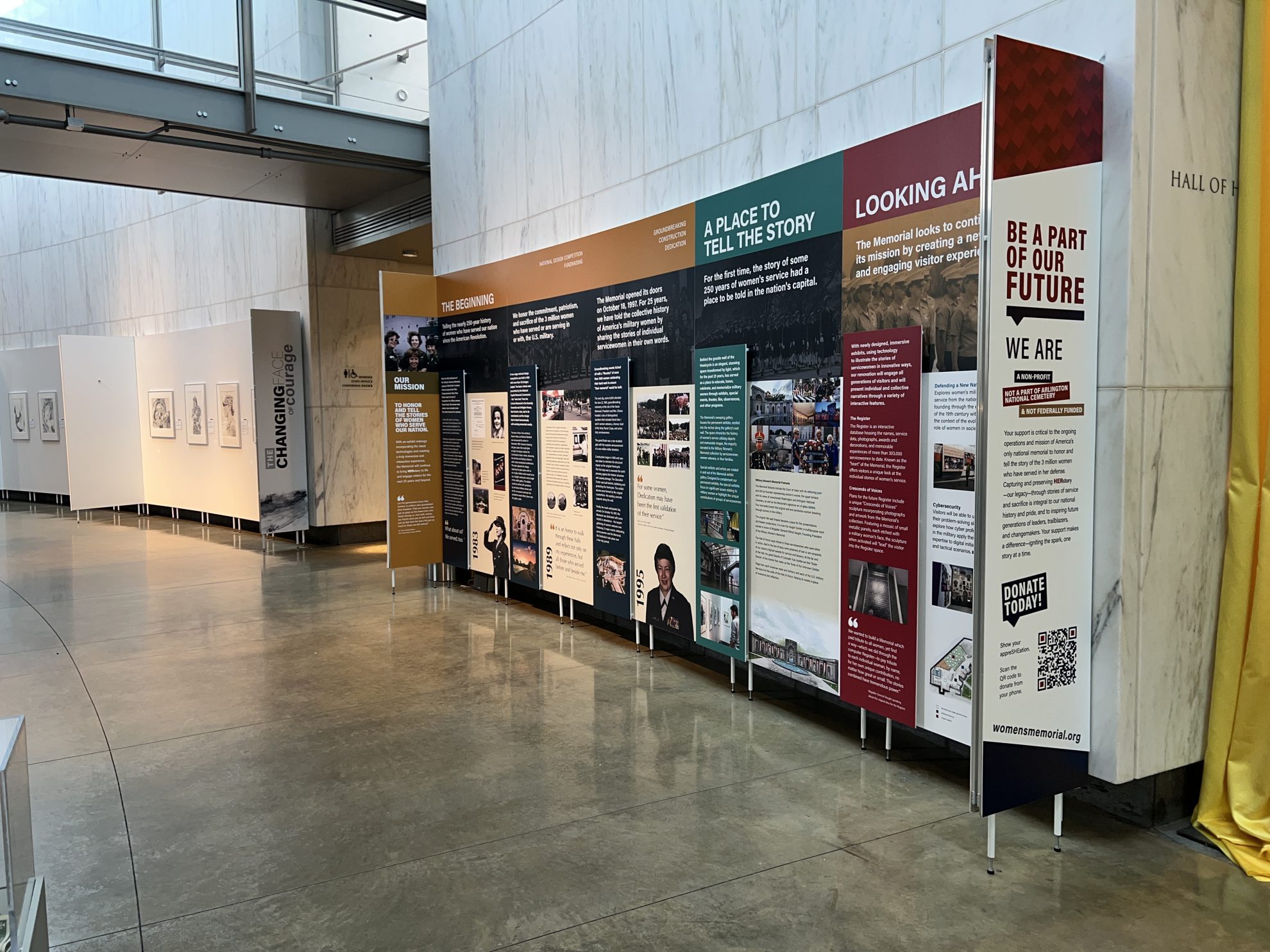
Heritage Signs & Displays created new museum signage for the Military Women’s Memorial in Arlington, VA. The project included custom signs, wall wraps, dimensional letters, and standoff-mounted displays to honor the legacy of U.S. servicewomen and the donors who supported the memorial. The updated interior features impactful designs, including a "Our Legacy" wall display and panels showcasing historical contributions and artwork, creating a transformative tribute to women in the U.S. Armed Forces.
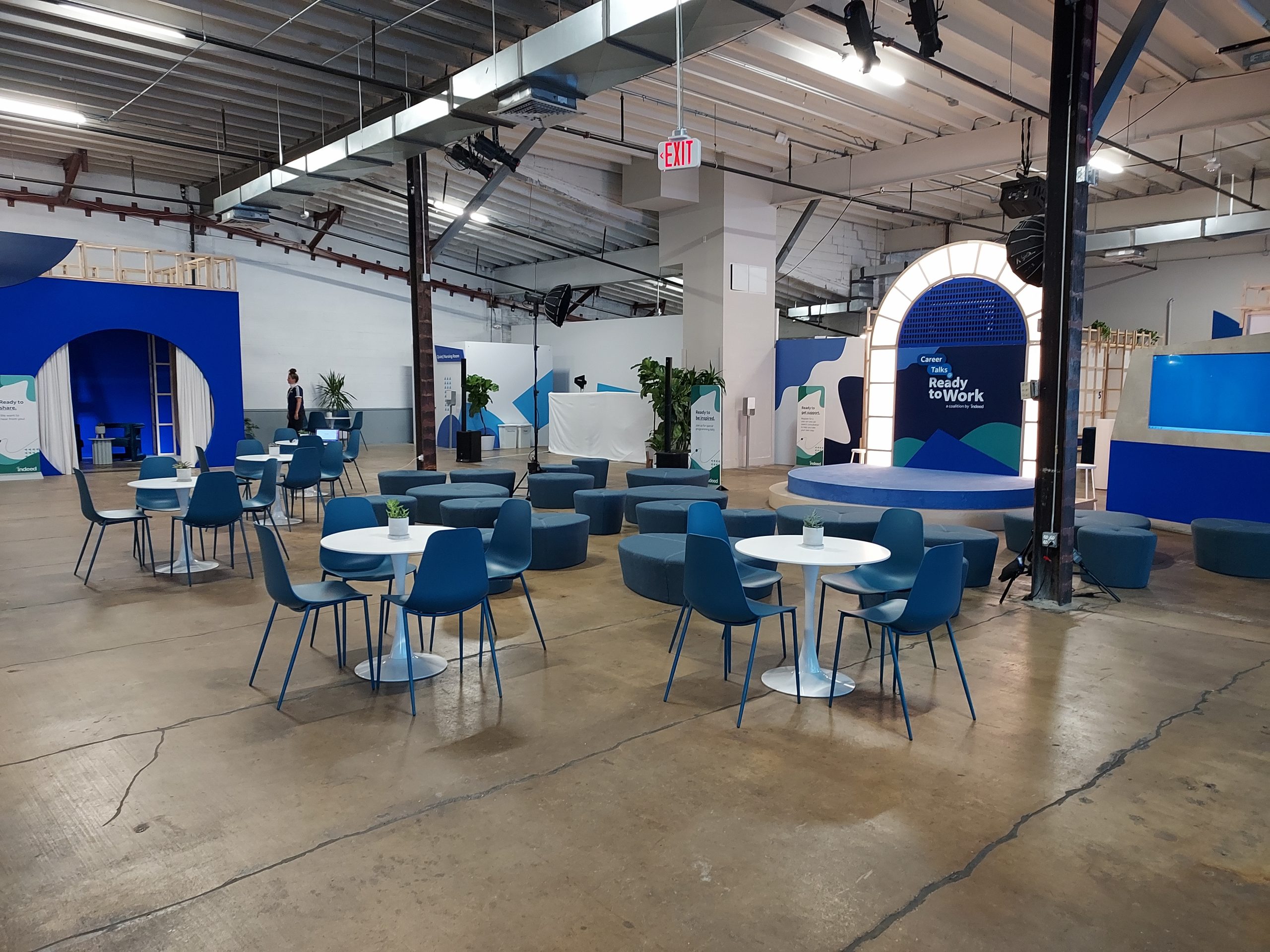
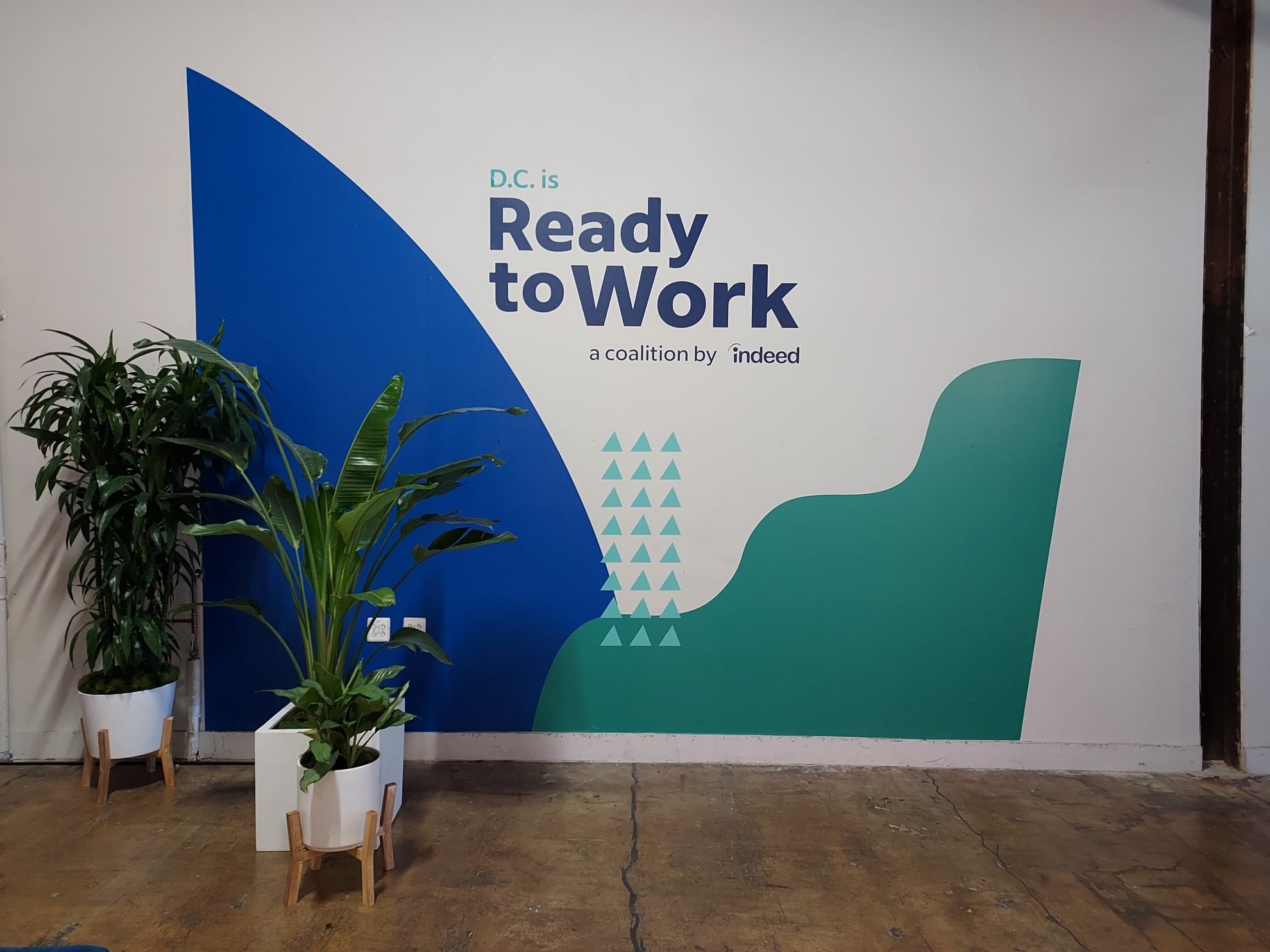
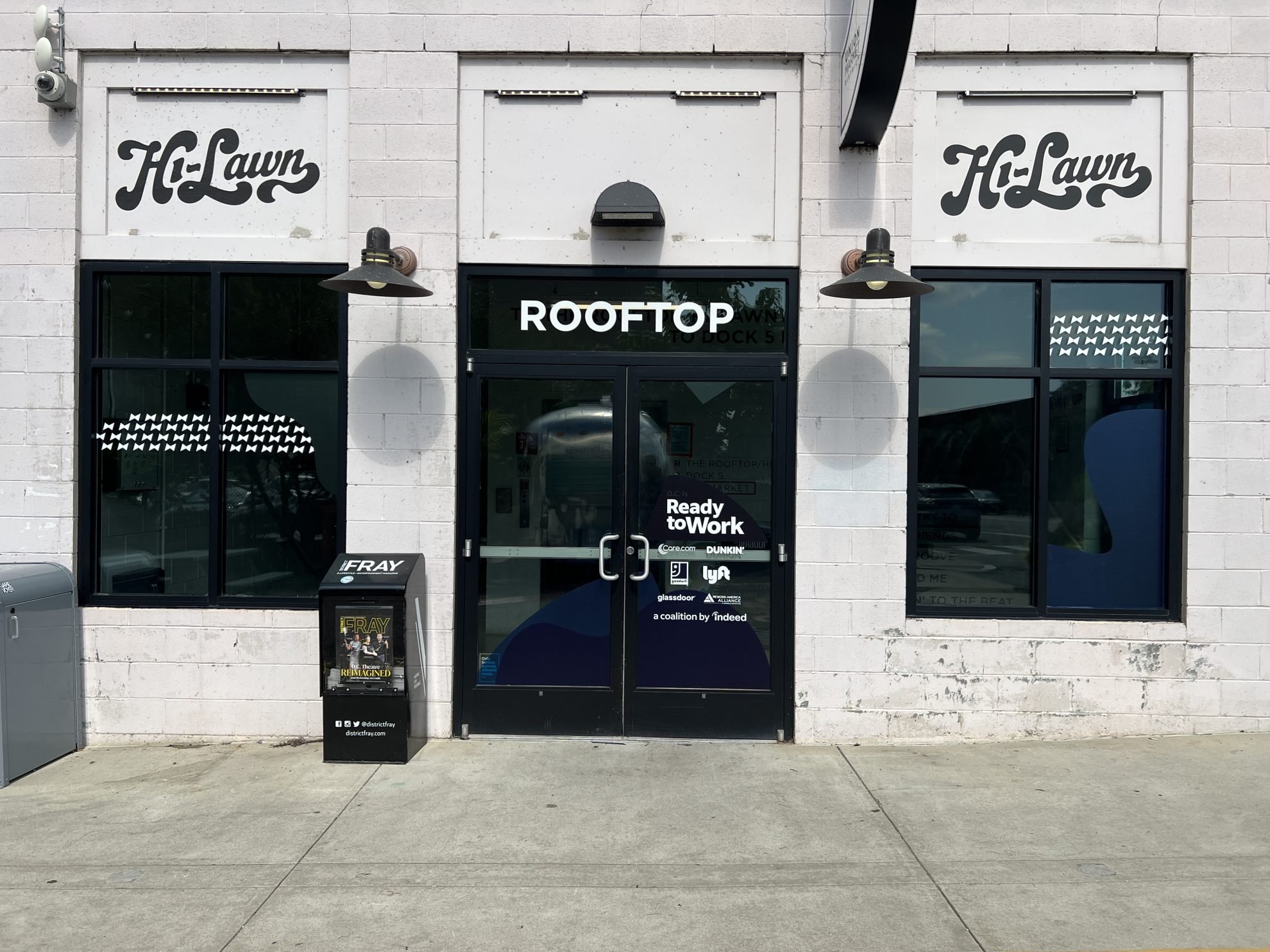
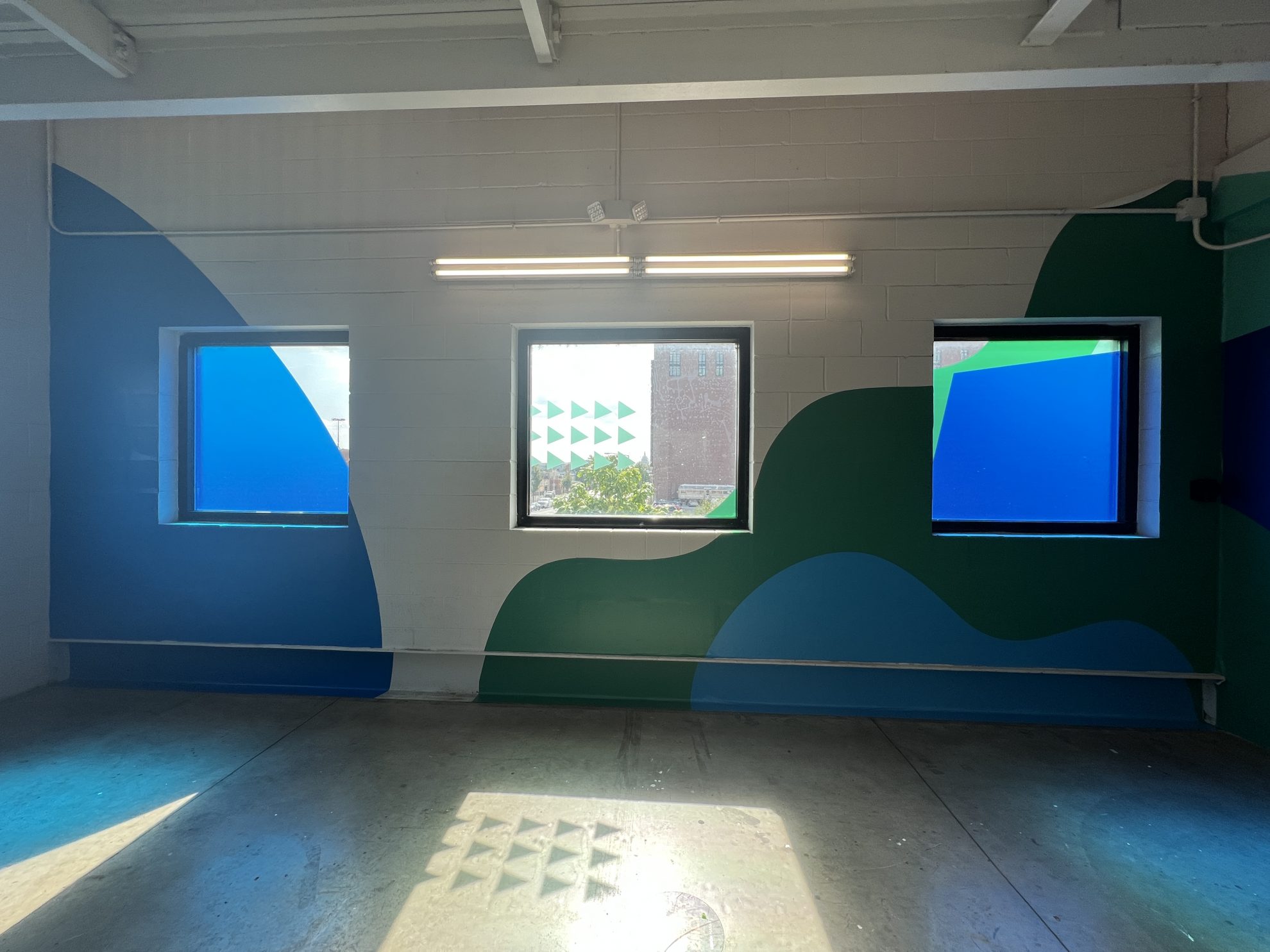
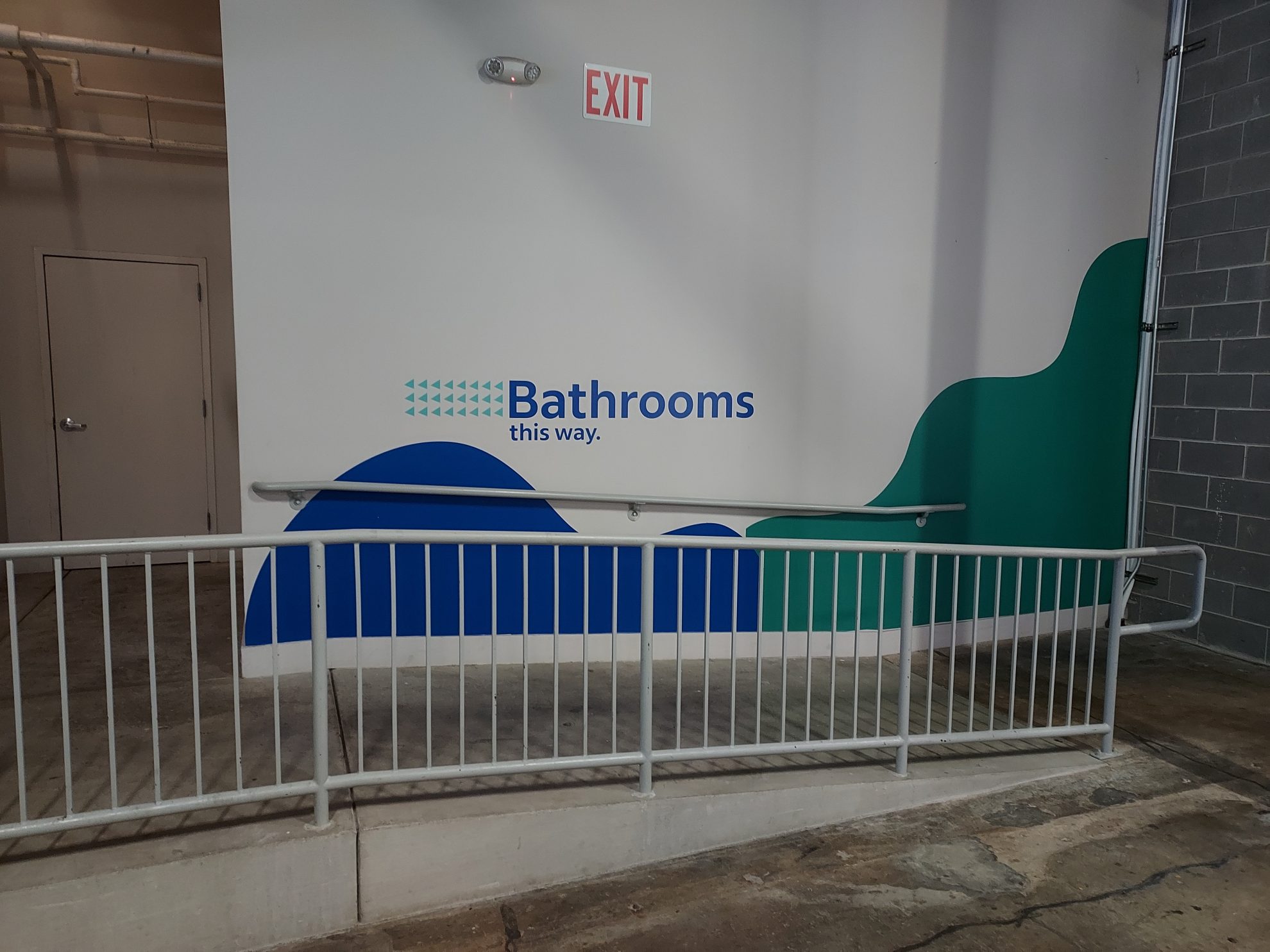
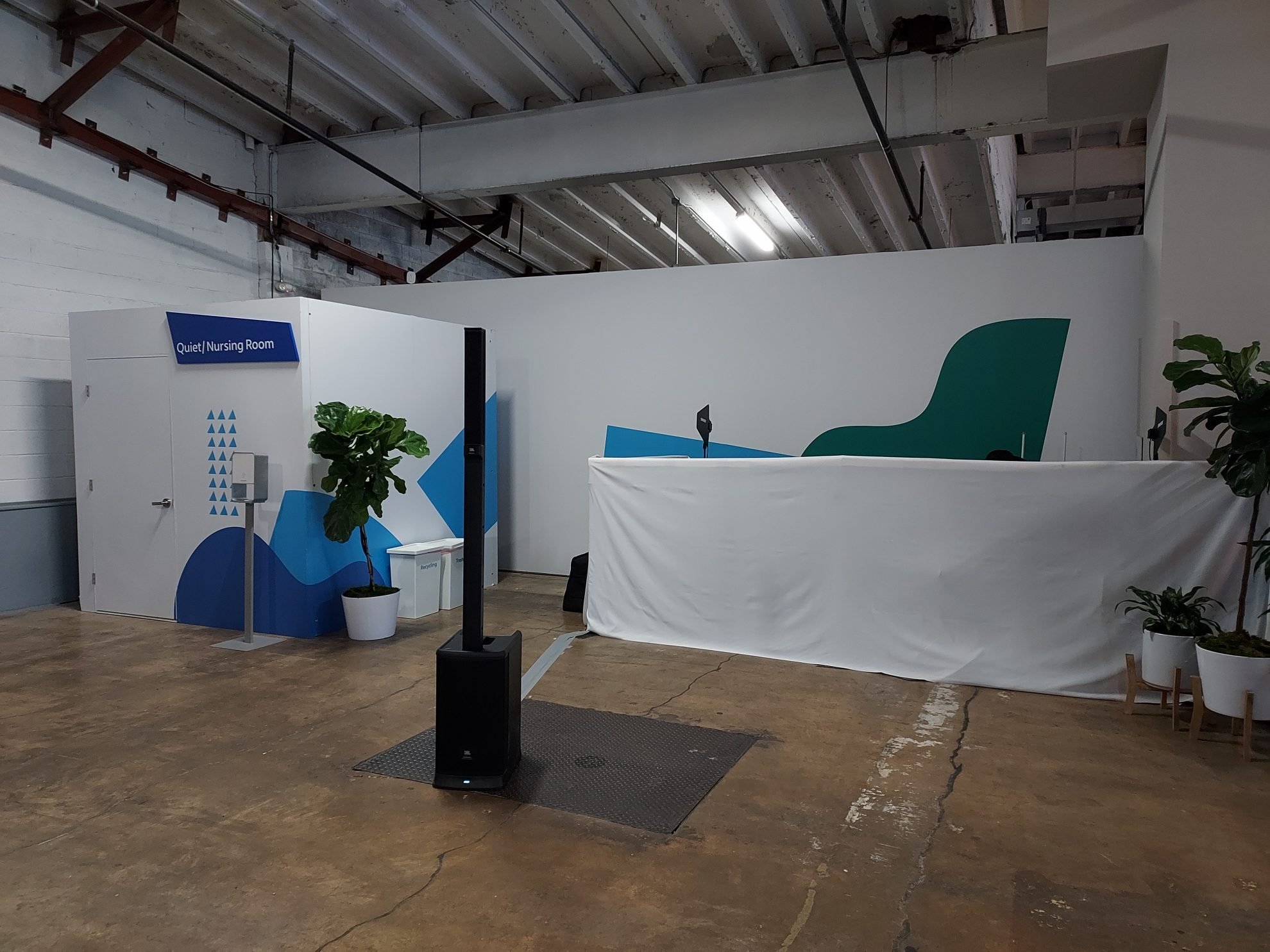
Heritage Signs & Displays' collaboration with The Gathery to brand Union Market in Arlington, VA, for Indeed's "Ready to Work" job fair. The project included custom event displays, wall graphics, window graphics, and wayfinding signs, creating an immersive and visually appealing environment. The branding enhanced the venue, reflected the event's mission, and provided a seamless experience for attendees.