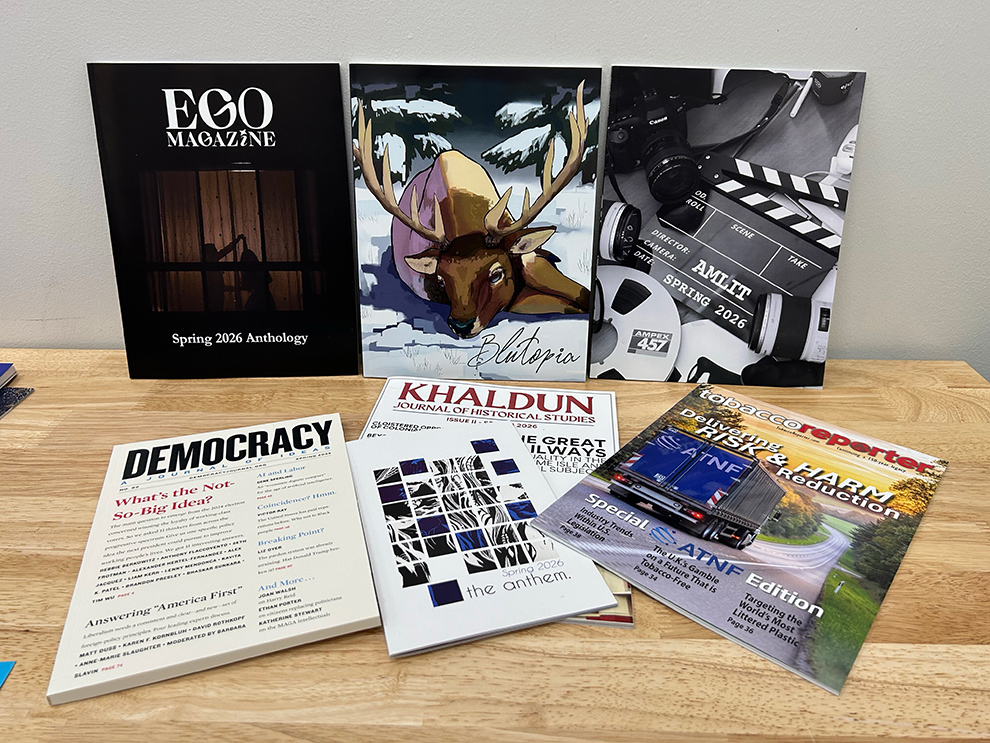
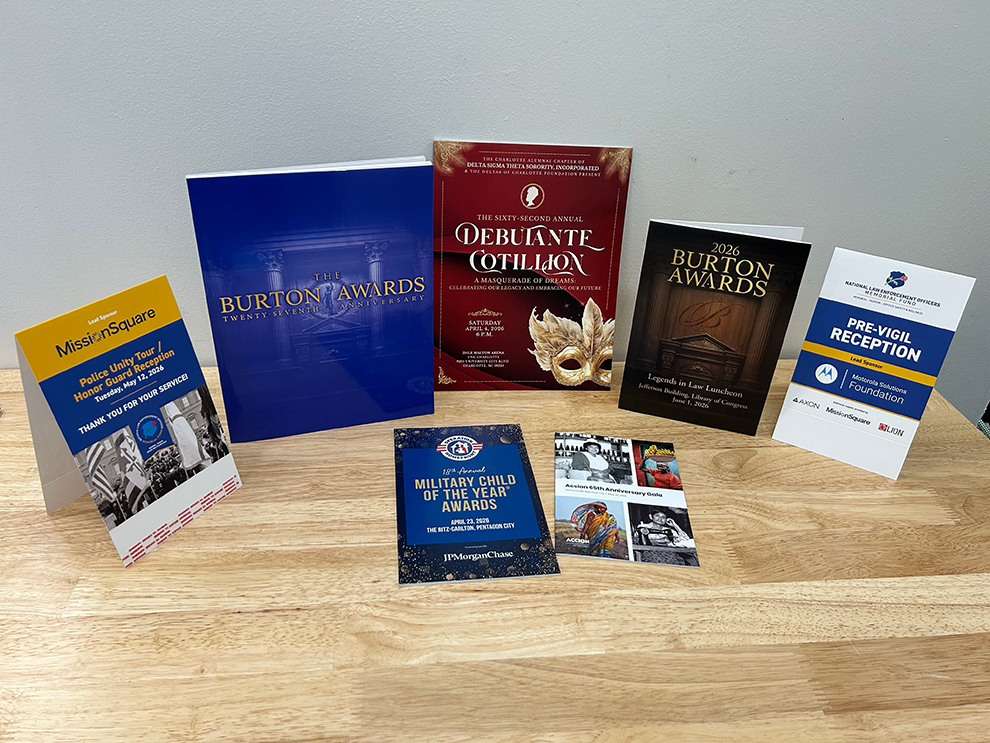
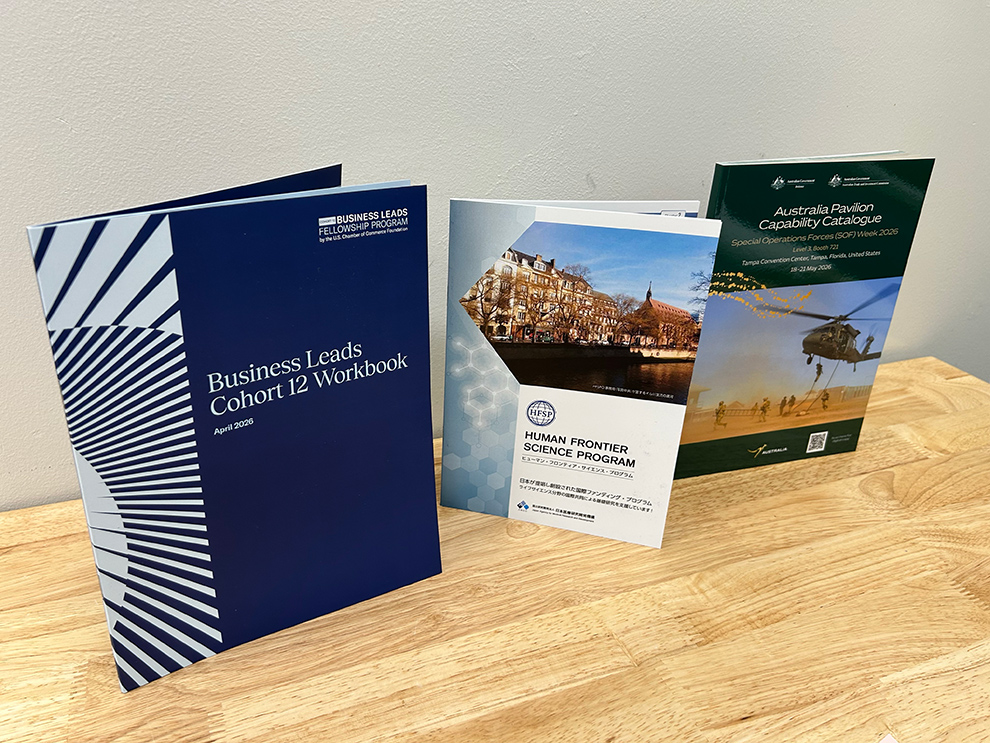
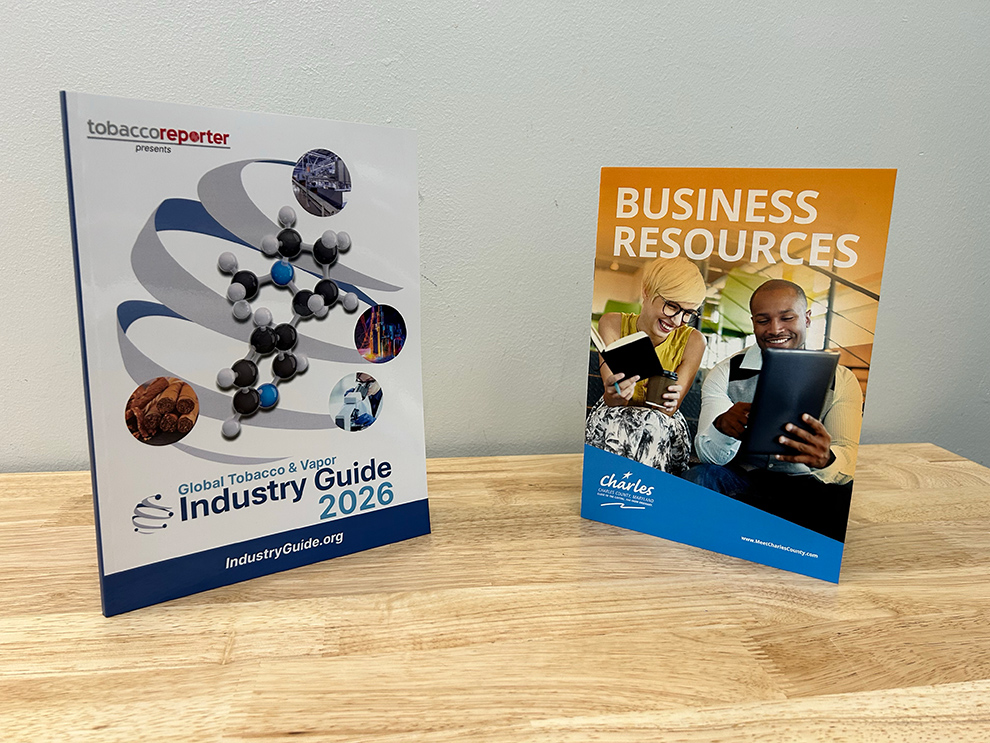
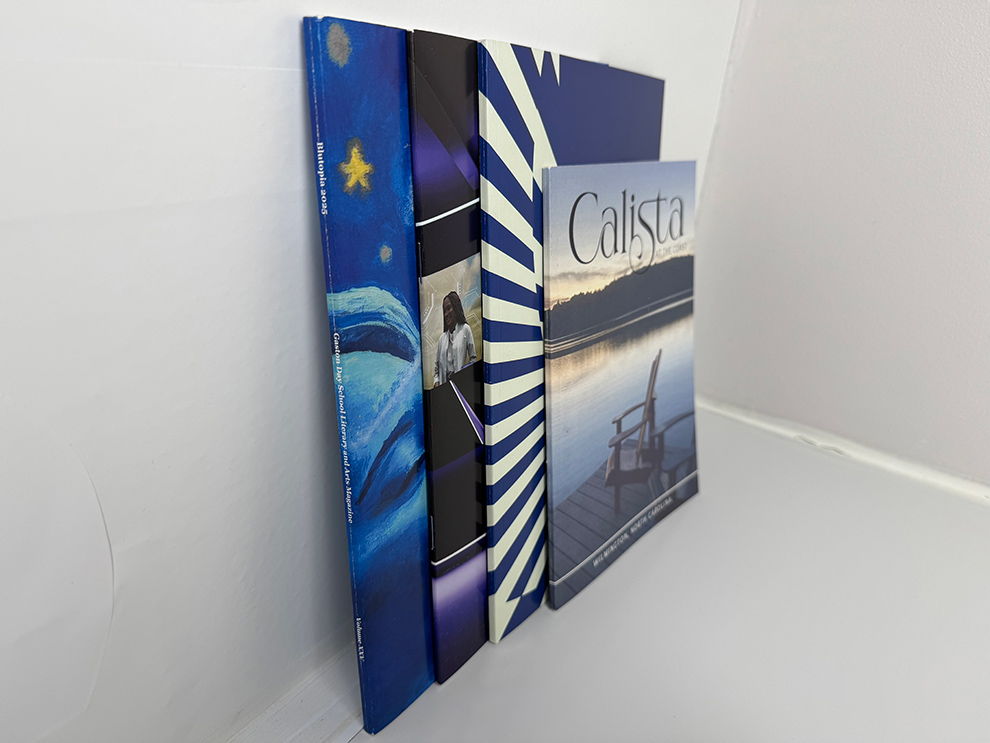
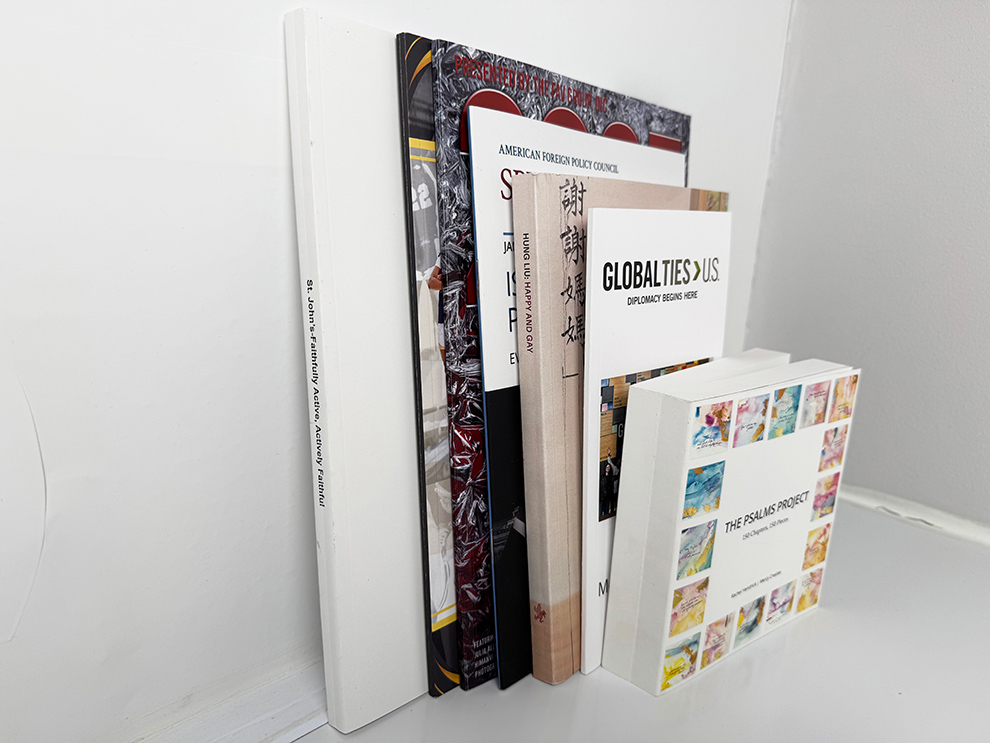
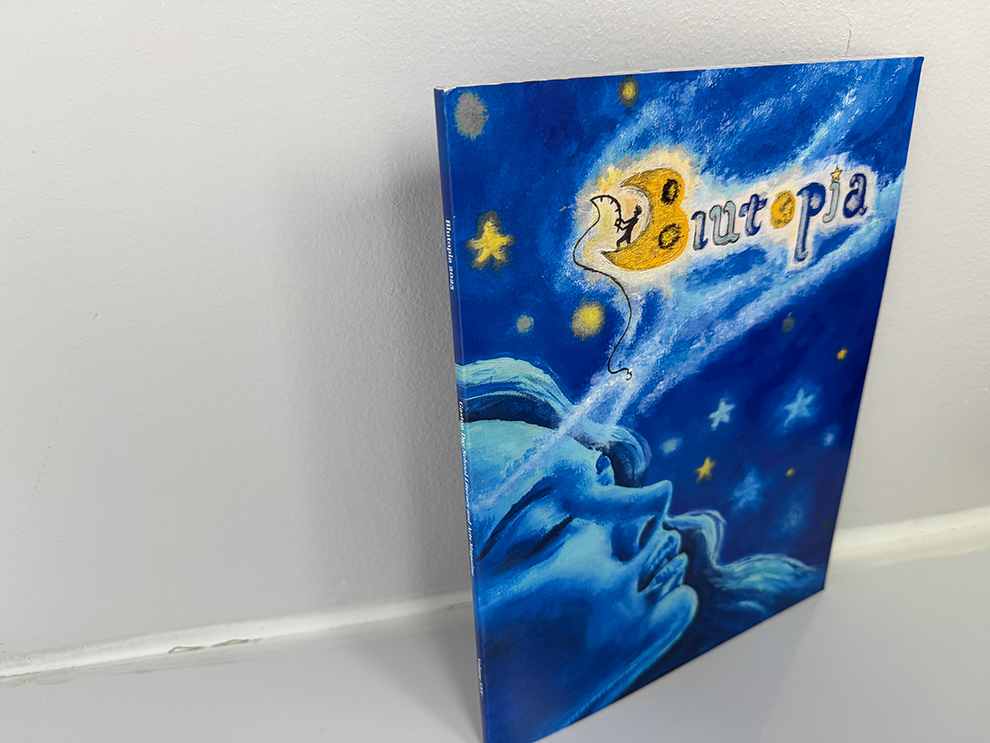
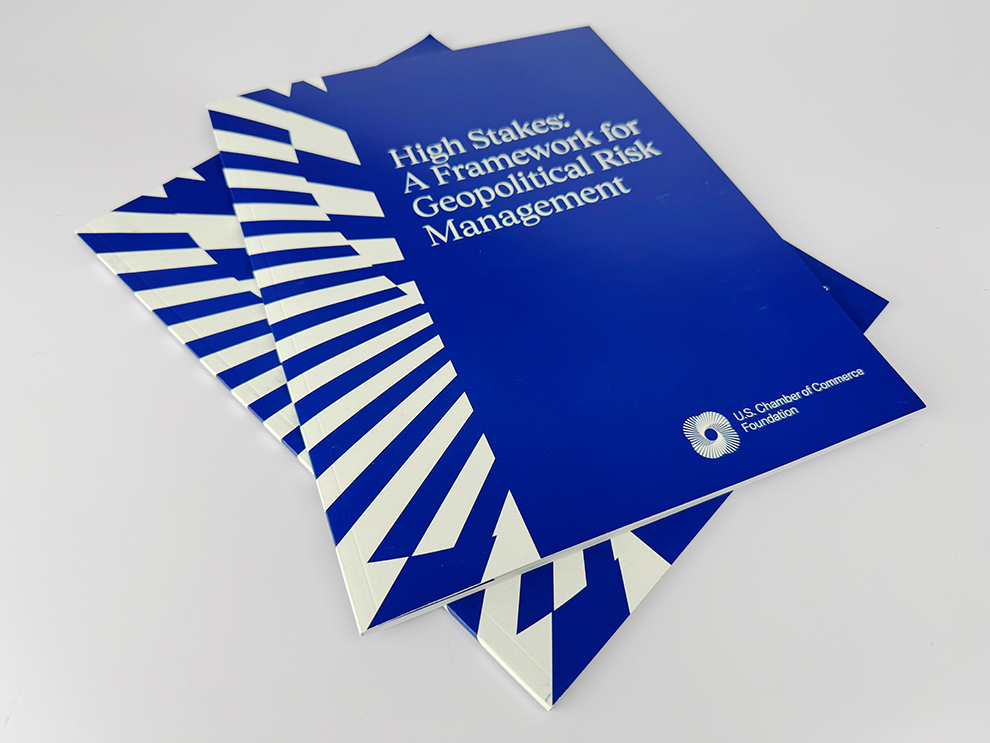
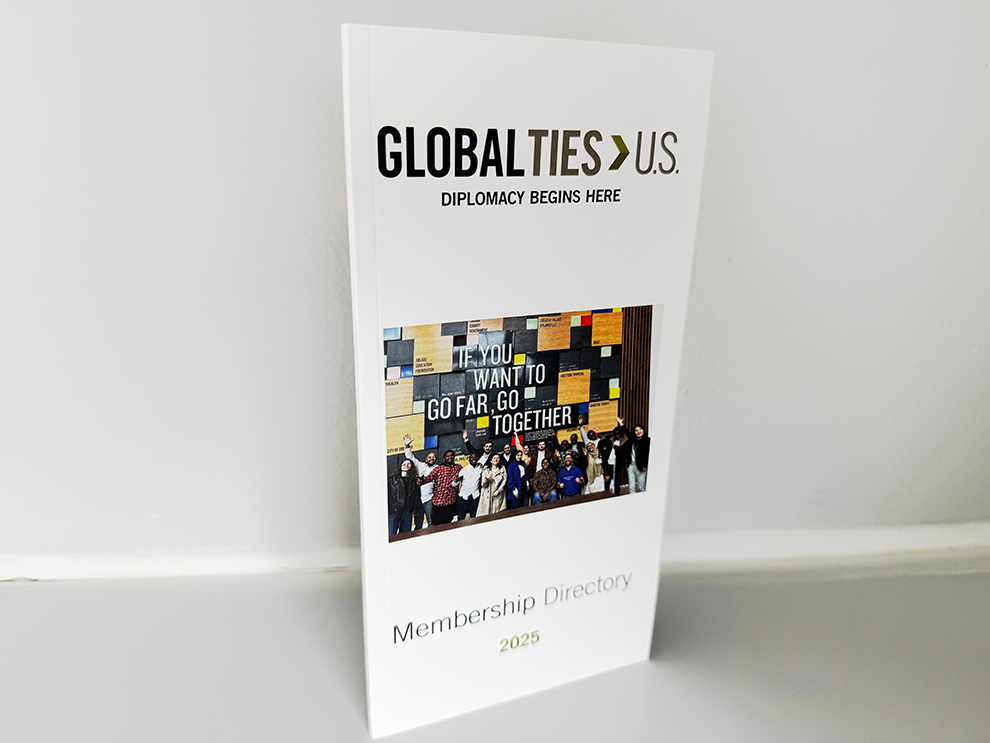
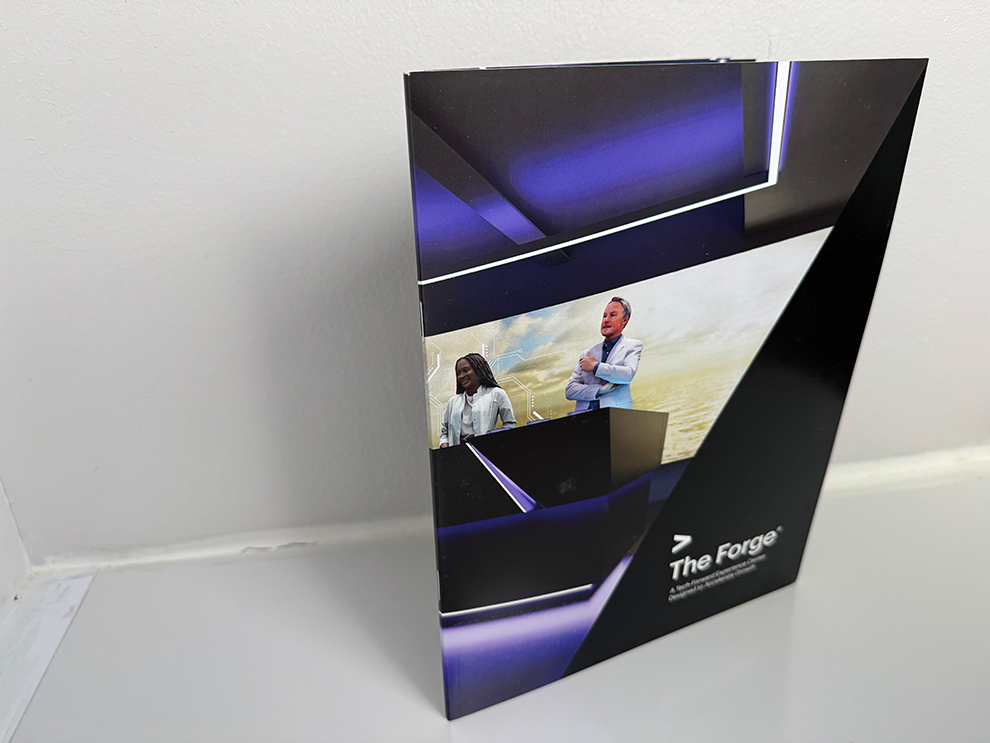
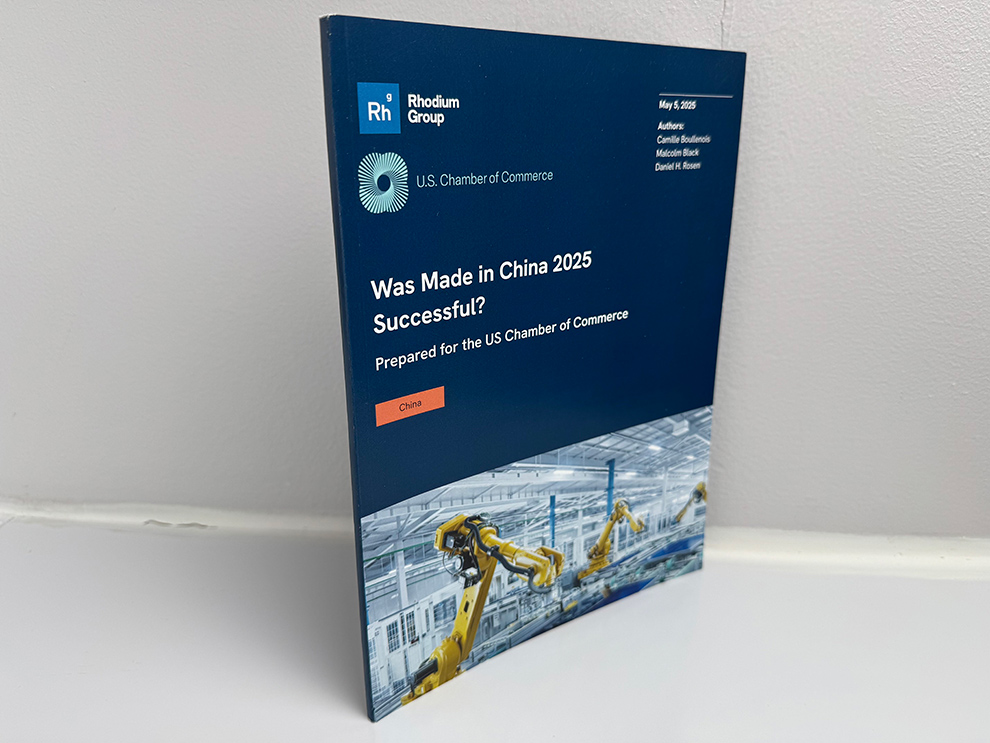
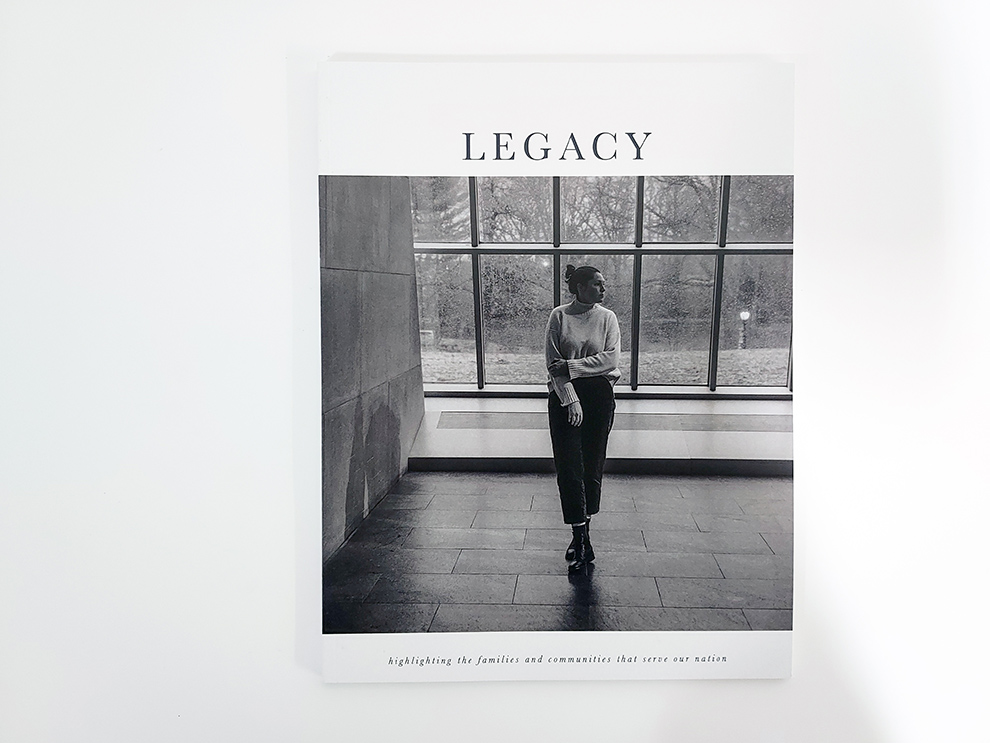
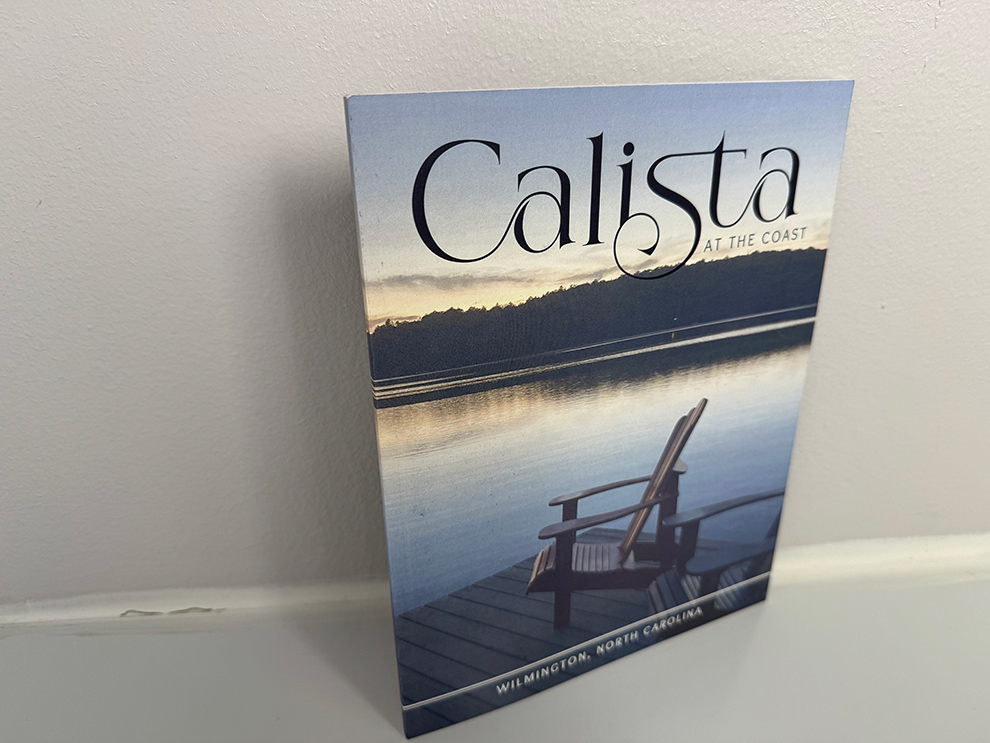
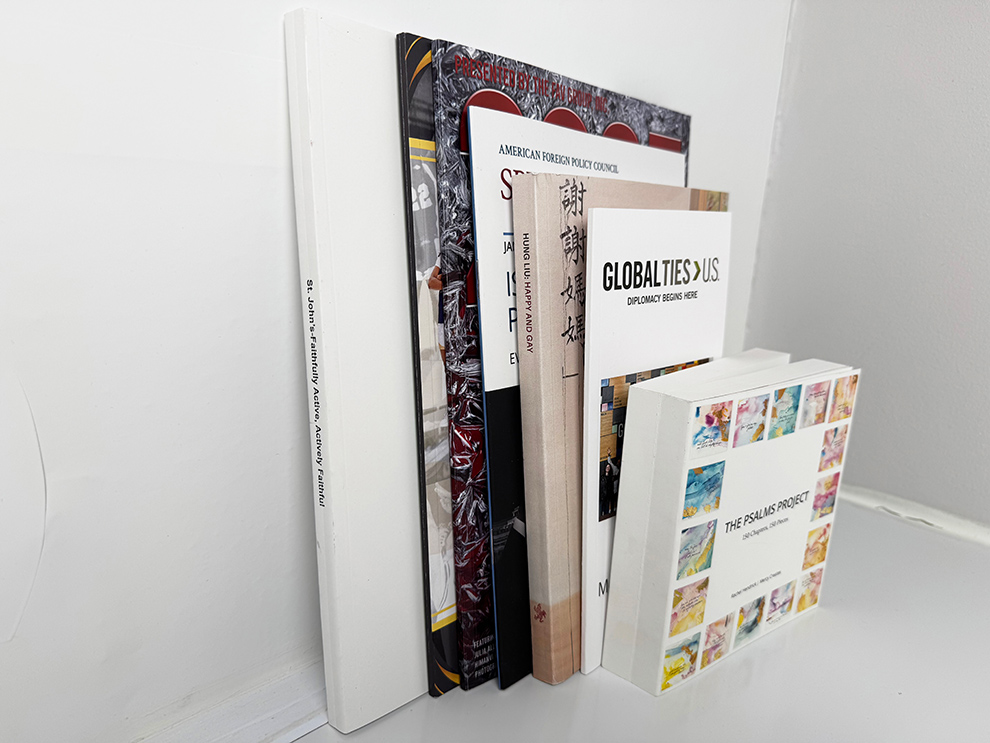
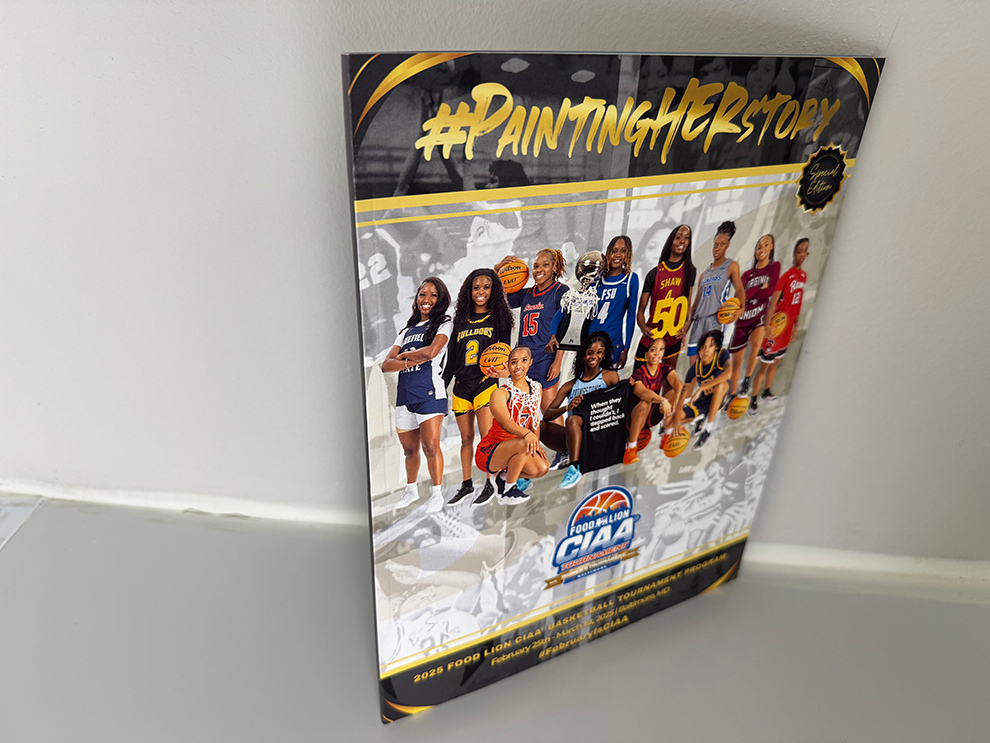
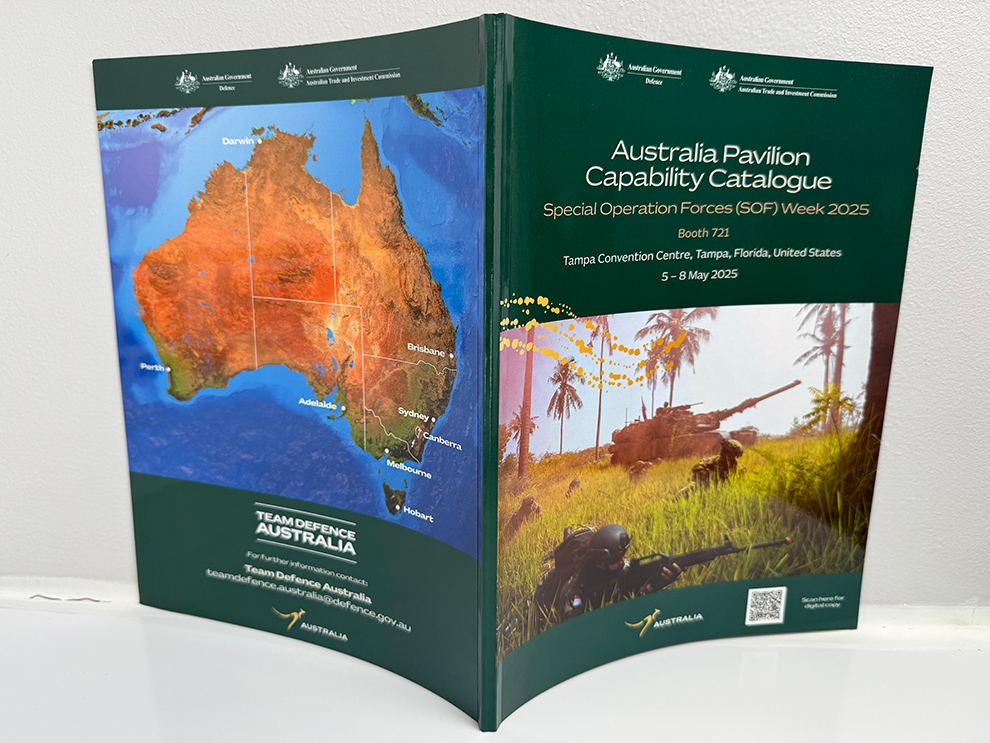
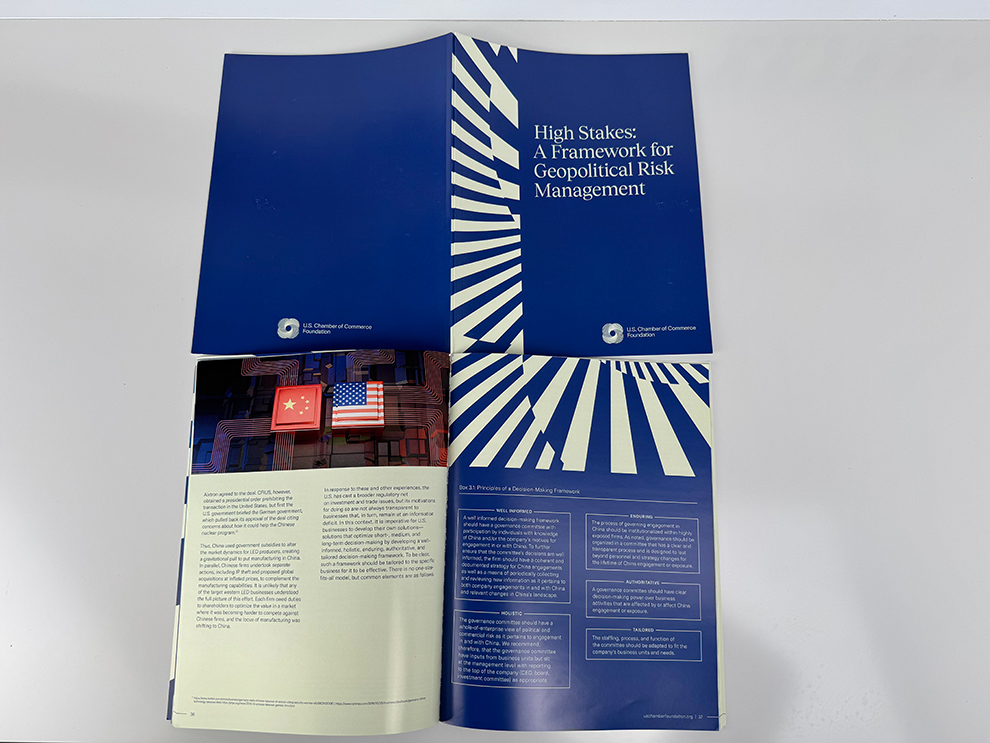
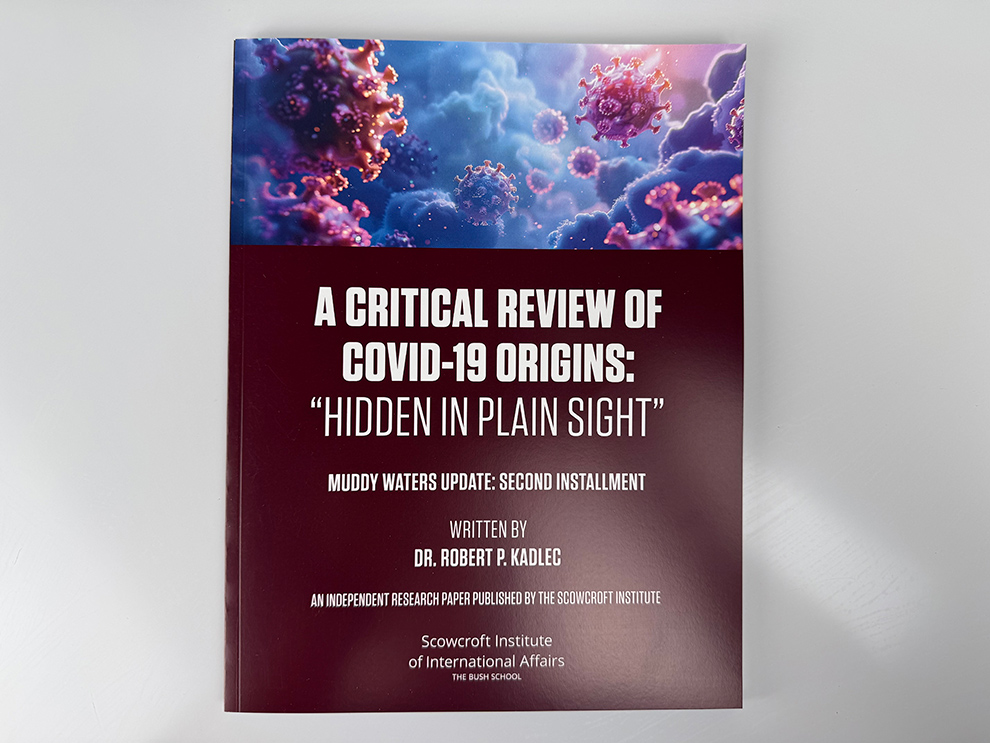
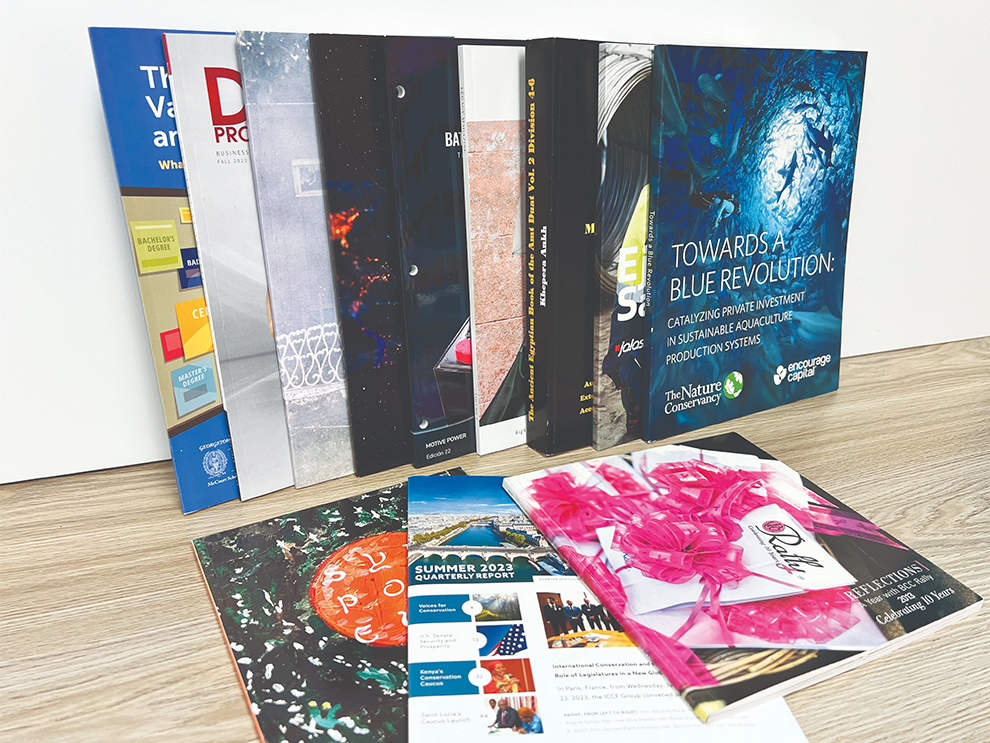
A catalog, annual report, or program guide often reaches its audience during a handoff: a board meeting packet, a conference registration table, or a welcome kit for new members. The reader forms an impression from the cover and the way the piece sits in the hand before any content registers. Perfect bound books support that first impression with a flat square spine, trimmed edges, and a wraparound cover that reads as a complete publication rather than a stapled handout.
Heritage produces perfect bound books for Alexandria, VA organizations: associations preparing member directories, consulting and contracting firms assembling capability books, schools and nonprofits publishing annual reports, and businesses creating product catalogs or commemorative volumes.
Not every document fits the format. A thin interior may not build enough thickness for the construction, while a long document may call for a different paper to control bulk. Heritage reviews page count, trim size, paper, cover stock, and the intended use together, so the publication is built as one coordinated piece. The sections below cover suitability, cover and interior planning, and the correct purchasing route.
Heritage began as a printing company in 1977, well before the business expanded into signs and displays, and perfect bound production still draws on that foundation. A bound book is assembled from many dependent decisions: pagination, paper, cover stock, spine measurement, color, trimming, adhesive binding, proofing, and delivery. Experience with that sequence helps Heritage recognize early when one choice will affect another.
Alexandria, VA clients work with a veteran-owned, family-led company that treats accepted commitments as obligations. Production quality control and professional color management protect the finished result, and every order receives an electronic proof for client review before printing. When a required date is tight, Heritage evaluates the actual steps involved rather than offering a reflexive promise, and it raises constraints early so an alternative can be arranged while options still exist.
Continuity matters on multi-reviewer publications. For qualifying Custom Quote orders, a Project Coordinator becomes the direct phone-and-email contact once Heritage has accepted the quote and assigned the work. That single point of contact helps keep approved specifications intact from the first proof through delivery, and retained job details simplify the next edition.
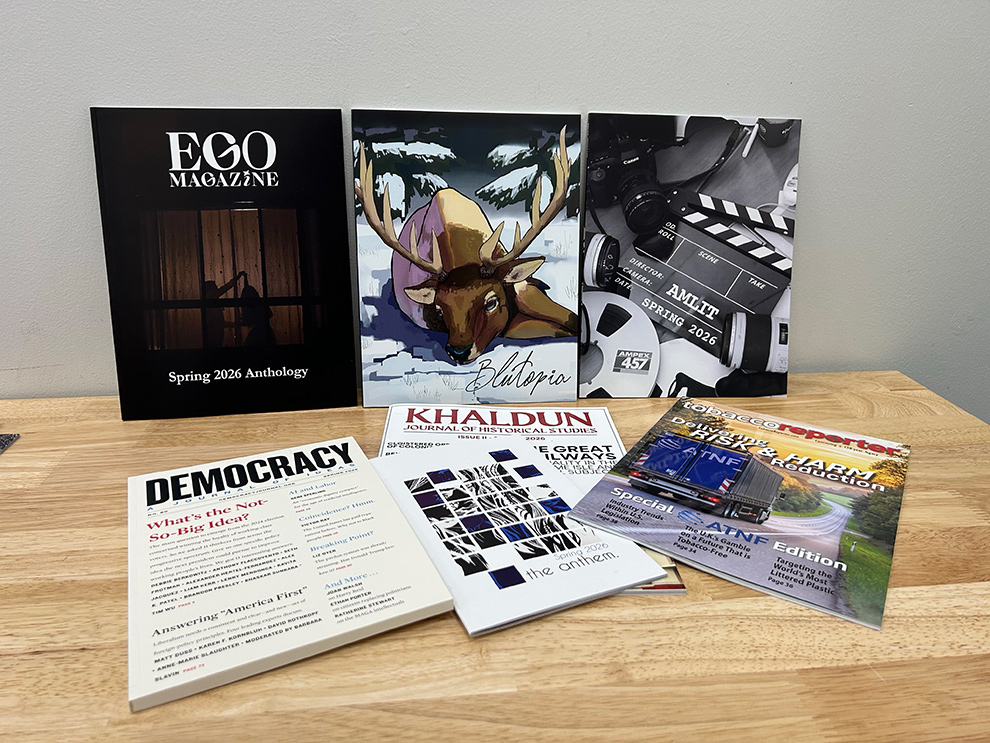
Perfect binding earns its place when a publication will be displayed, shelved, handed across a table, or kept for reference. The glued square spine and wraparound cover give the piece a book profile that stacks neatly and signals permanence. For a member directory, a capability book, or a commemorative volume, that profile is usually what the buyer is after.
Other uses point elsewhere. A field manual that a technician props open on a workbench, or a workbook that attendees write in during a session, is better served by plastic coil, which lets pages lie flat and fold back. A short program or a newsletter is often a saddle-stitching candidate, since those sheets fold and fasten through the center without needing a spine.
The deciding factors are page count, paper thickness, finished size, and handling. An interior that is too thin may not give the adhesive enough surface to hold a clean spine. Spine lettering is conditional: it can finish the look when width allows, but a narrow spine may be better left blank. Choose the construction after the specifications are known, not before.
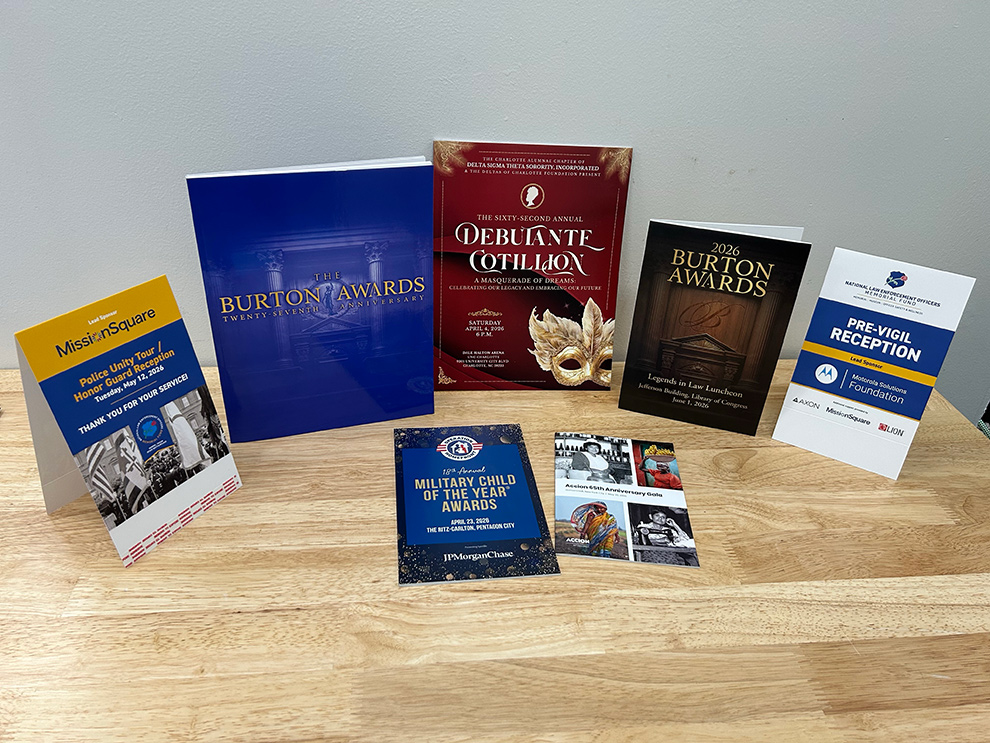
Many bound publications travel with companion pieces. The capabilities below help Alexandria, VA organizations round out a meeting, a mailing, or an outreach program when a perfect bound book is only part of the plan.
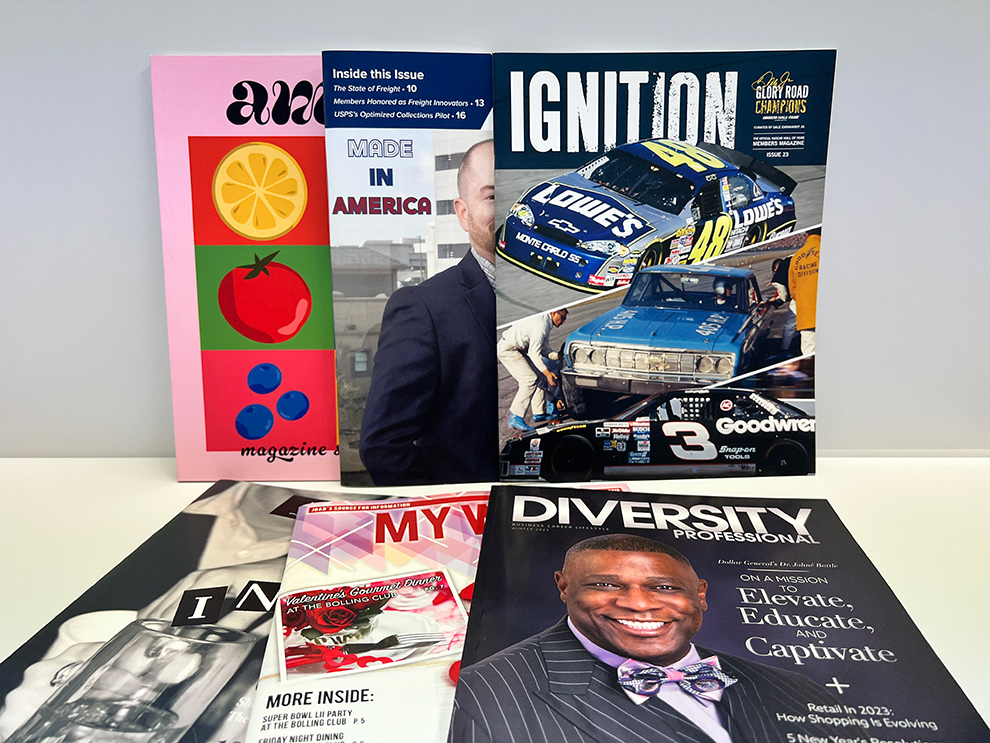
Fits periodic member or stakeholder issues that need the same look and feel each time they appear.
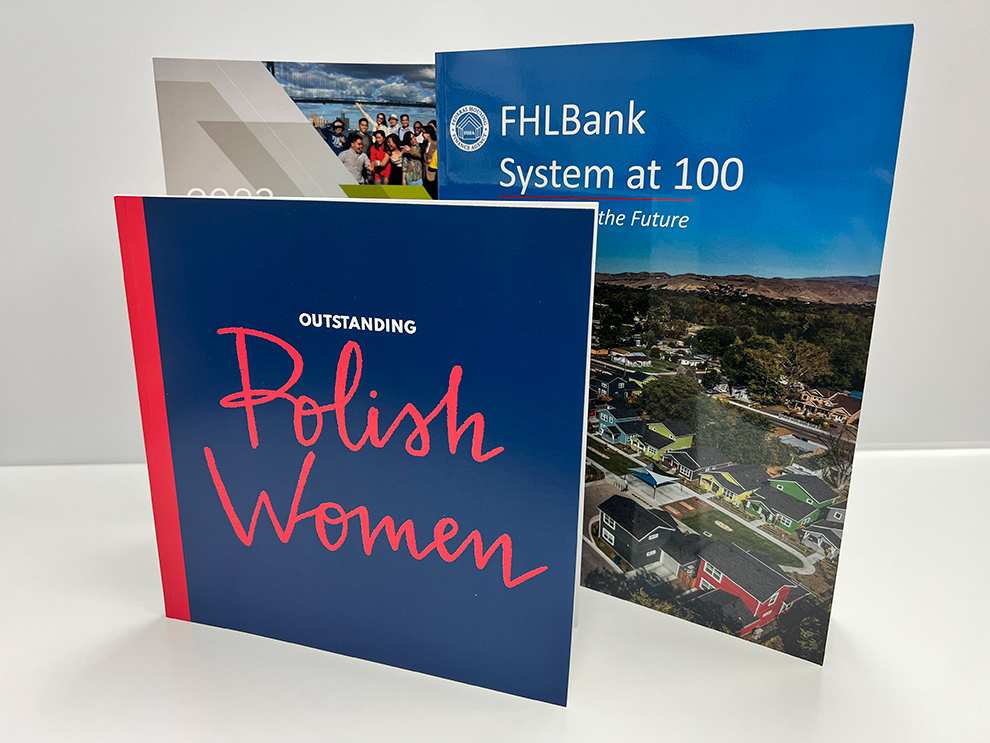
A practical alternative when a shorter page count or lighter handling makes a glued spine unnecessary.
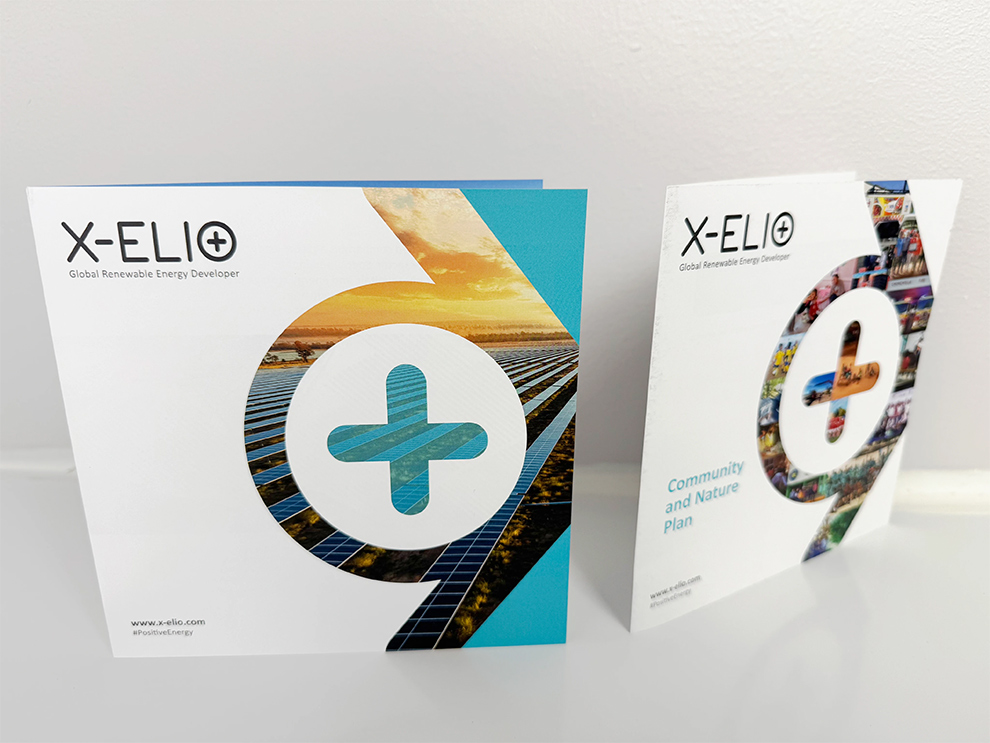
Hold loose inserts, proposals, and briefing sheets alongside the bound book for meetings and site visits.
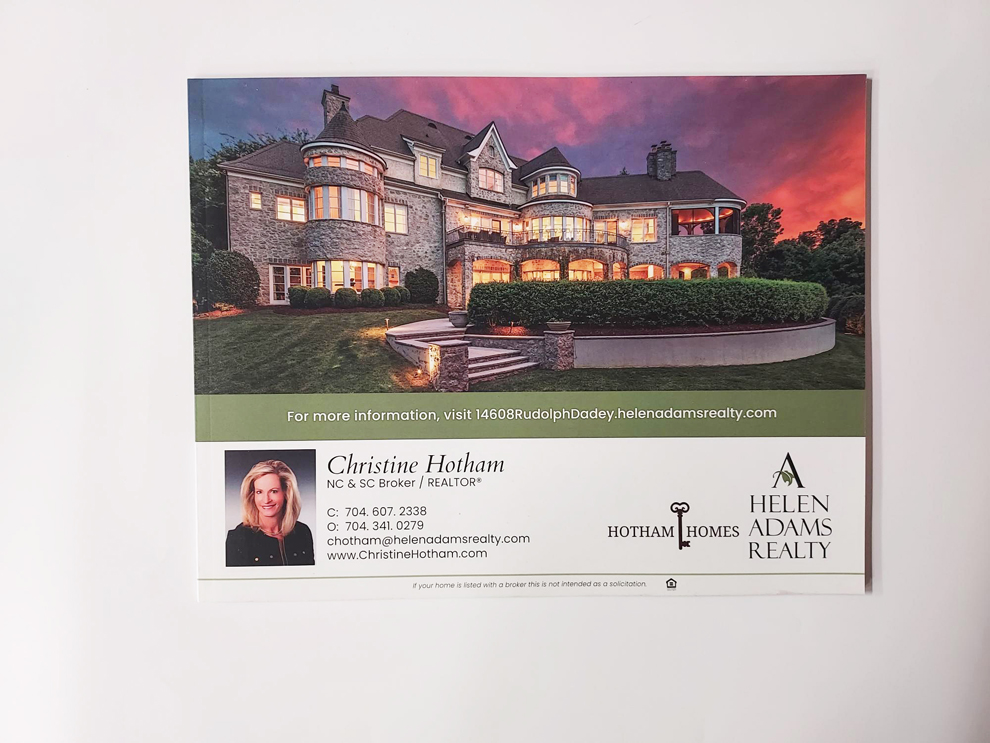
Coordinate addressing and postal preparation when finished books must reach members or customers by mail.
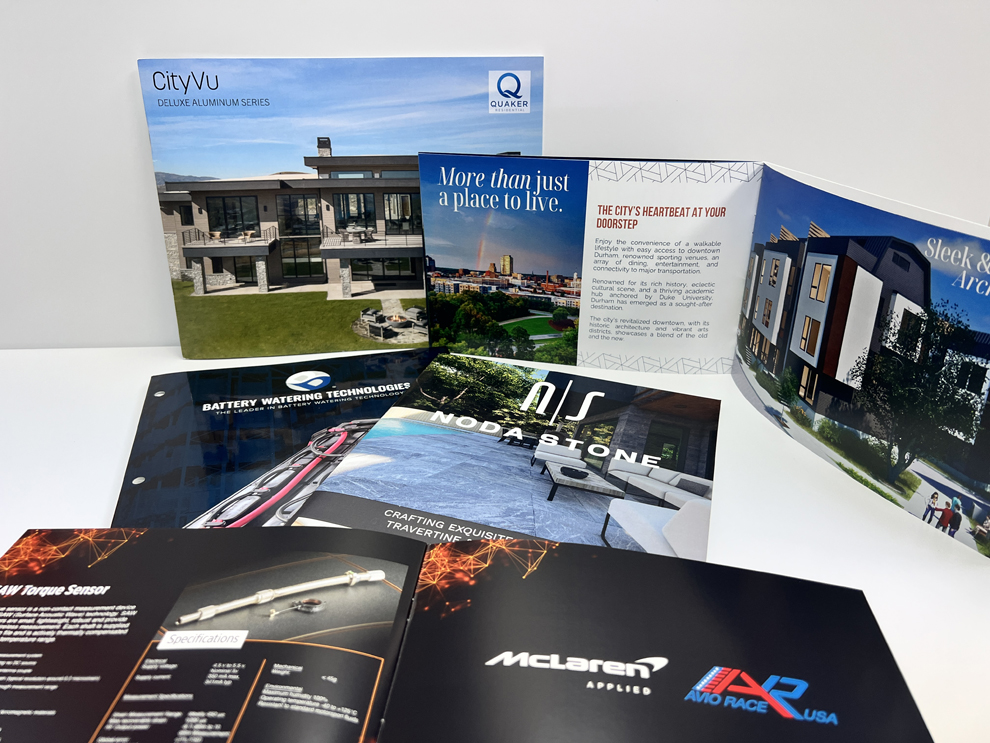
Supply the flyers, postcards, and sell sheets that often accompany a catalog or annual report.
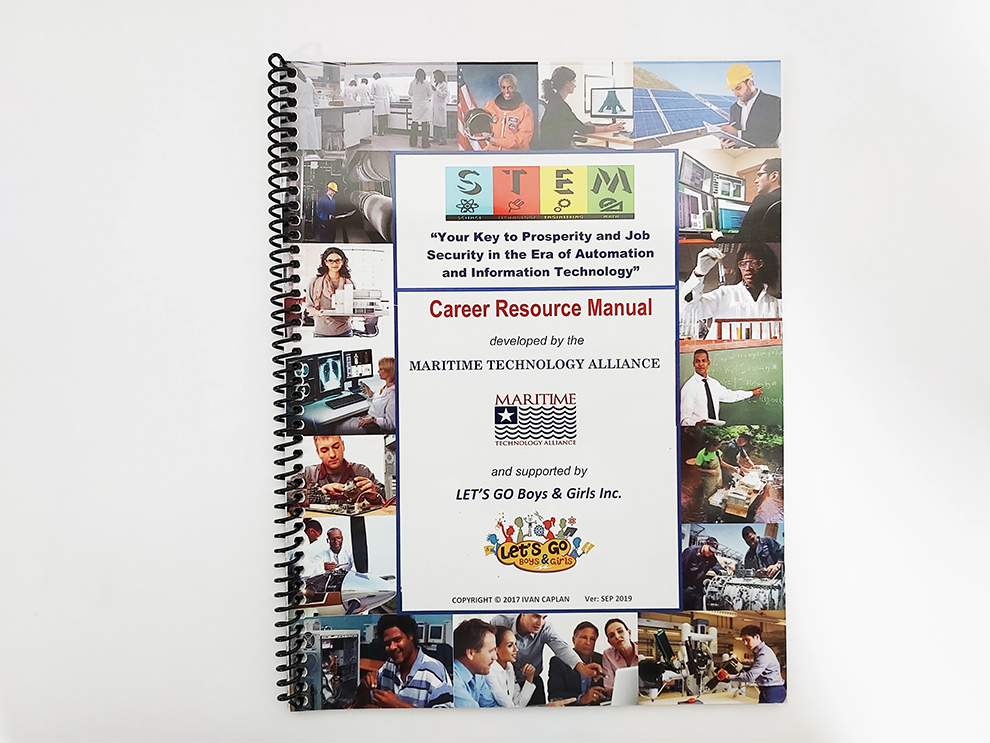
Suit instructional content that is revised often and consulted while readers perform a task.
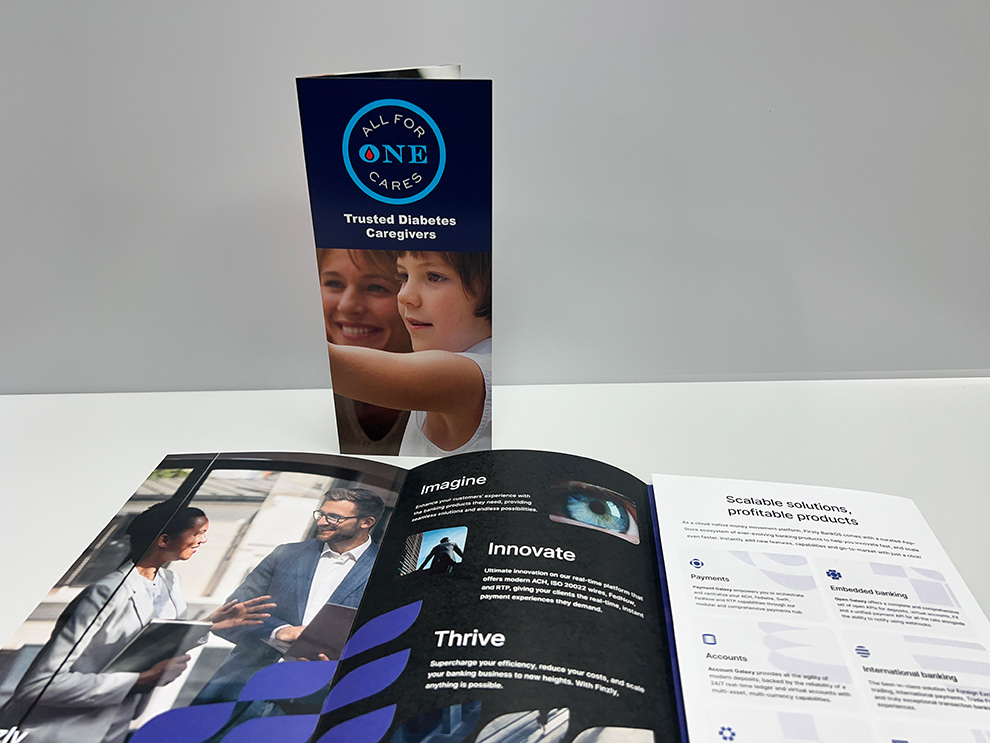
Provide a compact folded piece for walk-up audiences who need a summary rather than a full publication.
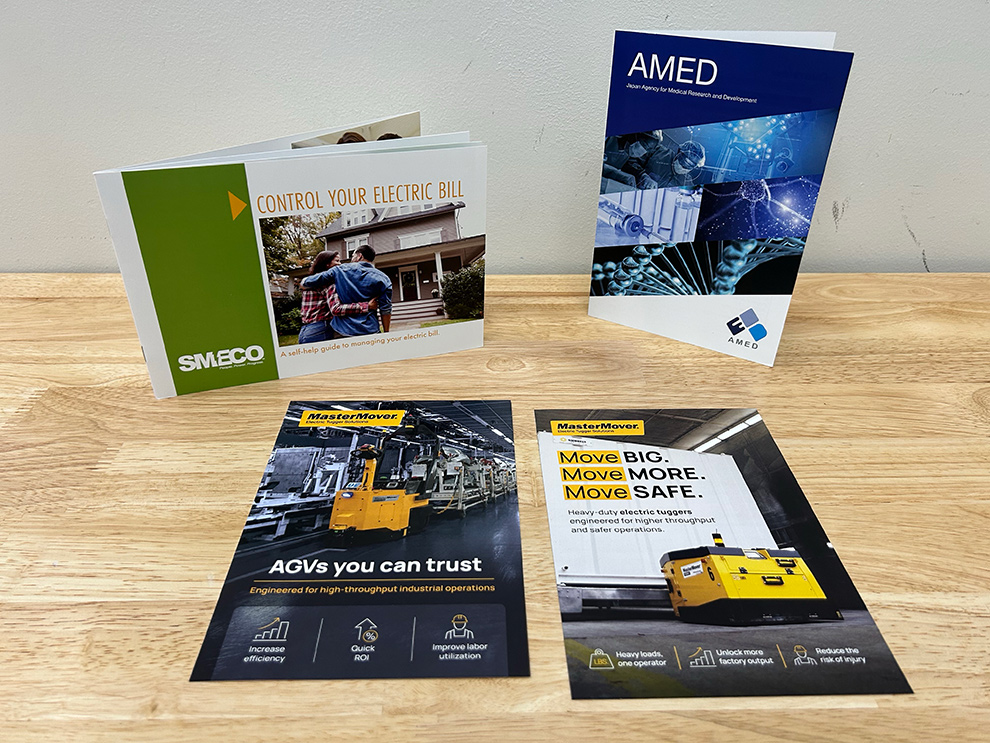
Review the broader Heritage print-production range when a book belongs to a larger communication program.
Alexandria, VA organizations with finished, print-ready files and a specification the live Store offers can price and order perfect bound books online. If the job is a qualifying $2,000+ opportunity with open questions about files, cover and spine setup, versions, or timing, submit a Custom Quote and Heritage will evaluate the open items before deciding whether to accept and schedule the work.
The interior sets the terms for everything else. Once the page count and paper caliper are fixed, the spine width can be calculated, and only then can the front, back, and spine panels of the cover be laid out correctly. A cover built before those numbers are final will likely need adjustment, and a late page addition can shift the spine enough to push artwork off center.
Margins deserve the same care. Because a perfect bound book does not open fully flat, content near the binding edge is lost in the gutter in use. Page numbers, running heads, captions, and any image that crosses the center should be positioned with that loss in mind. Paper opacity matters too, since show-through on heavy ink coverage makes pages harder to read.
Color and file setup round out the plan. Files set to the agreed trim size with proper bleed, reviewed against the electronic proof, prevent most production surprises. For an annual report or directory that returns each year, retained specifications such as trim, paper, cover stock, and color targets give the next edition a dependable starting point.
The right route depends on how settled the job is.
When the live Perfect Bound configuration matches the trim size, page count, and paper the publication needs, and the cover and interior files are complete and print-ready, order through the Self-Directed Online Store. The buyer configures the order, uploads artwork, and pays; no Project Coordinator is assigned, no design work is included, and a physical color proof is not offered on this route. Eligible products may be combined in one order to reach the $750 minimum. Heritage reviews the accepted files, issues an electronic proof for approval, and applies its standard quality control before printing.
A Custom Quote suits a new Commercial Printing opportunity of $2,000 or more that needs production support: file preparation, cover and spine setup, open specifications, or several versions printed together. The form is a request, not an order, and acceptance is not automatic. After Heritage accepts the quote and assigns the job, the Project Coordinator handles direct phone and email communication. Include any fixed meeting or distribution date so feasibility can be weighed against the actual production steps early.
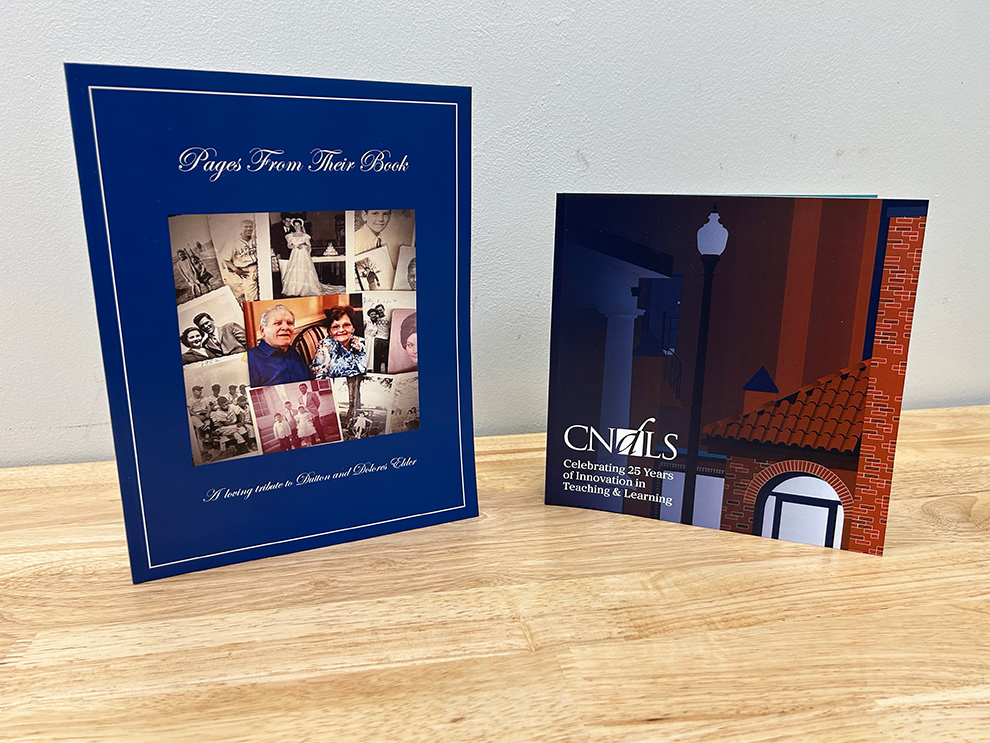
Publications that need to look finished and hold up over time: member directories, annual reports, capability books, catalogs, conference compendia, and commemorative volumes are the most frequent fits. The common thread is enough interior thickness to form a spine and an audience that will keep or display the piece. A short agenda or a working checklist usually belongs in a different format, so Heritage weighs the page count, paper, and intended handling rather than the category alone.
Usually not without a hand holding it. The adhesive spine keeps the book in a conventional closed form, so it resists lying fully flat and the pages cannot be folded back the way a plastic coil book allows. Readers can page through it normally. If the publication must stay open during a presentation, a training session, or hands-on work, plastic coil is the more practical binding.
Perfect binding gathers the interior pages, roughens and glues them along the spine edge, and wraps a cover around the block before the three open sides are trimmed square. The result is the flat spine and clean edges associated with paperback books. Because the construction relies on adhesive and interior thickness, the method works best when the page count and paper give the spine enough body to hold.
Spine width is calculated from the thickness of the bound interior, which depends mainly on the number of pages and the caliper of the paper, plus the cover stock and binding construction. Thicker paper or more pages produce a wider spine; a lighter sheet produces a narrower one. Heritage calculates the measurement once those variables are final, which is why the cover layout should wait until the page count and paper are locked.
Saddle stitching is the better choice when the publication is thin enough to fold cleanly and fasten through the center, which is typical of programs, short newsletters, and brief guides. It is a simpler construction, opens more easily, and does not need a spine measurement. Perfect binding becomes the better option as page count and paper thickness grow, because a thick saddle-stitched piece can creep at the edges and resist closing neatly, while the glued square spine handles that bulk and presents as a book.
Yes, when the live Perfect Bound configuration matches your trim size, page count, and paper, and your cover and interior files are already print-ready. The Store is self-directed: you choose the options and complete the purchase without an assigned Project Coordinator or any design assistance. The order total must meet the $750 minimum, which can include other eligible products. Heritage still reviews the files, sends an electronic proof for your approval, and runs its normal quality control before the job prints.
Check the things a monitor can show accurately: spelling, page sequence and numbering, placement of images and captions, cover panel alignment, and whether anything sits too close to the binding edge or trim. Every perfect bound order, including an Online Store purchase, waits for this approval before printing. The proof is not a color standard; screen settings and lighting vary, so printed color can differ from what you see. Approve the content, and address color through a separate proofing option if the job qualifies and requires it.
Only when the finished spine is wide enough for the type to read clearly, and that is not known until the page count and paper are final. A thick directory on an opaque sheet may carry a title and year comfortably; a slim report on lightweight paper may not. Heritage advises on the available width before the cover is finalized. When the spine is narrow, leaving it unprinted usually looks cleaner than squeezing small lettering that drifts off center during trimming.
Plastic coil is recommended when the reader needs the book open and flat: a procedure manual on a bench, a workbook filled in during a class, or a reference guide consulted one page at a time. The coil lets pages rotate fully around the spine. Perfect binding gives up that flexibility in exchange for a square spine, trimmed edges, and the appearance of a finished book, which is why it suits publications meant to be presented, shelved, or kept.
Start with the date, then list what is and is not finished: quantity, current page count, whether the cover is done, the state of the interior files, any versions, and who still needs to sign off. Heritage reviews that information against the production sequence, proof approvals, materials, and available capacity to judge whether the date is realistic. If it is, Heritage treats the accepted commitment seriously; if it is not, you will hear that early, with practical alternatives around quantity, specification, or delivery planning. For qualifying Custom Quote work, the Project Coordinator joins only after the quote is accepted and the order assigned.
Custom Quote is the right request when a new Commercial Printing opportunity is valued at $2,000 or more and still needs production help before it can run: files that need preparation, a cover and spine that need setup, specifications that are not settled, or multiple versions that must be coordinated. Submitting the form starts a review, not a production order, and does not guarantee acceptance or scheduling. If Heritage accepts the quote and assigns the order, the Project Coordinator then becomes your direct phone and email contact through delivery.
A Physical Production Color Proof is available as a paid option on qualifying $2,000+ Custom Quote commercial-printing work, not through the Online Store. Heritage prints it on the production printer and the paper or material planned for the final run, so it shows how the cover and interior will actually reproduce rather than how they appear on screen. It adds production time, and once you approve it, that proof sets the color standard for the run unless another agreement controls. It makes the most sense for covers with brand colors or photography where close color matters.
Heritage can reference the approved production details from a prior run, such as trim size, paper, cover stock, binding setup, and color targets, so the next edition can begin from a known baseline. Content, page count, quantity, and dates can change while the overall format stays consistent. When the page count moves, the spine width is recalculated and the cover adjusted before the new proof is issued. If several versions ship in the same cycle, label each file, quantity, and approver clearly so the editions stay separated through production.
Heritage Signs & Displays created new museum signage for the Military Women’s Memorial in Arlington, VA. The project included custom signs, wall wraps, dimensional letters, and standoff-mounted displays to honor the legacy of U.S. servicewomen and the donors who supported the memorial. The updated interior features impactful designs, including a "Our Legacy" wall display and panels showcasing historical contributions and artwork, creating a transformative tribute to women in the U.S. Armed Forces.
Heritage Signs & Displays' collaboration with The Gathery to brand Union Market in Arlington, VA, for Indeed's "Ready to Work" job fair. The project included custom event displays, wall graphics, window graphics, and wayfinding signs, creating an immersive and visually appealing environment. The branding enhanced the venue, reflected the event's mission, and provided a seamless experience for attendees.