The entry should let people identify the organization quickly and step inside without hesitation. Storefront graphics carry that responsibility across doors, windows, and the exterior-facing surfaces nearby, and they do it without trying to deliver every brand message at the curb. A restrained mix of identification, privacy, controlled visibility, and glass awareness sets expectations for the office, showroom, lobby, or customer-facing space waiting on the other side.
Getting there means deciding what should read from the sidewalk, which views through the glass are worth keeping, and where separation actually helps. A logo or door lettering handles immediate recognition. Frosted vinyl screens selected sightlines while daylight still comes through. Decorative or branded vinyl makes clear glass easier to register. Every element earns its place, and nothing crowds the entry.
Heritage Signs & Displays treats Storefront Graphics as the hinge between exterior identity and interior branding. The threshold makes the introduction. Past the door, lobby signs, wall graphics, dimensional features, and displays have room to speak about culture, history, values, services, or recognition in greater detail. Planning both zones at the same time keeps them related without repeating the same treatment on every surface.
The Heritage process links discovery, environmental graphic design, production, fabrication, and professional installation. One dedicated Project Manager stays with the project as objectives, site findings, artwork, materials, schedules, and approvals take shape. That continuity holds project knowledge in one place, trims unnecessary handoffs, and gives the client a single accountable relationship. It also means questions get answered before they turn into production delays or field surprises that compromise approved design intent.
Heritage opened in 1977 as a commercial printing company. Signs, interior graphics, workplace branding, and event environments became the defining focus starting in 2009. Heritage is an award-winning, veteran-owned, family-led company approaching its 50th anniversary. That history shapes a disciplined project model where design recommendations have to line up with production requirements, fabrication details, real surfaces, property access, and installation conditions.
Storefront Graphics can also work alongside non-illuminated exterior window graphics, exterior wall graphics or wraps, dimensional lettering, dimensional signs, and custom sign panels within Heritage's approved scope. Those pieces introduce the organization before anyone reaches the door and build a visual relationship with the branded space inside. They do not replace the interior experience. They open it.
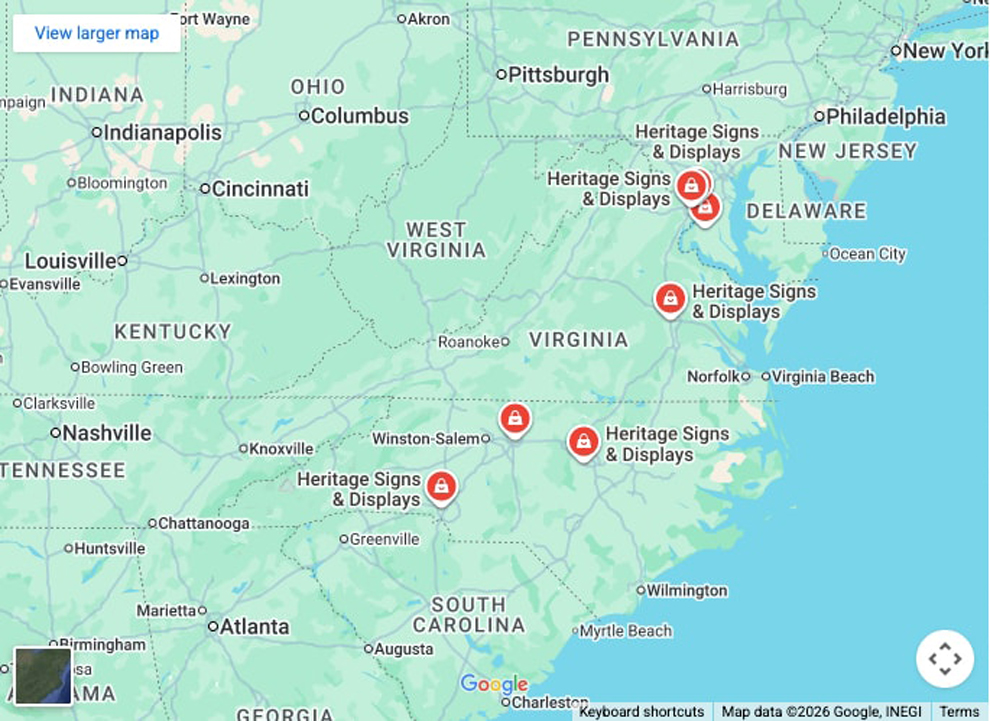
Alexandria organizations receive nearby client and field support through Heritage's verified Washington, DC and Arlington, Virginia locations, both a short drive from Wisconsin Avenue and Connecticut Avenue corridors. Site surveys, field verification, access planning, and schedule-sensitive installation can be coordinated across Alexandria, Bethesda, Silver Spring, and the wider DC metro area. The Waldorf, Maryland production facility supports Mid-Atlantic production and is staffed by production personnel only, not a client-facing office or showroom. Heritage seeks to honor God by serving clients and communities with excellence through clear communication, thoughtful stewardship, and dependable follow-through.
Recognition starts on the approach, and the brand experience should keep building once someone walks in. The door may only need a concise identity treatment. Adjacent windows often call for a balance of privacy, daylight, outward views, and glass awareness. Inside, a lobby feature can carry the stronger focal point while wall graphics and displays deliver messages that would feel cramped or ineffective on entrance glass.
That sequence separates essential arrival information from deeper storytelling. Frosted vinyl can shield a conference room or reception desk without closing the space off. Selective window graphics protect the views worth keeping. A lobby sign confirms arrival, and a timeline, recognition display, mission statement feature, or dimensional installation gives visitors a reason to look closer.
Instead of treating the door, windows, lobby, and workspace as separate purchases, Heritage plans them as connected parts of one environment. Storefront Graphics stay the featured entrance layer. Interior elements continue the approved visual direction in ways suited to their surfaces, viewing distances, lighting, and purpose.
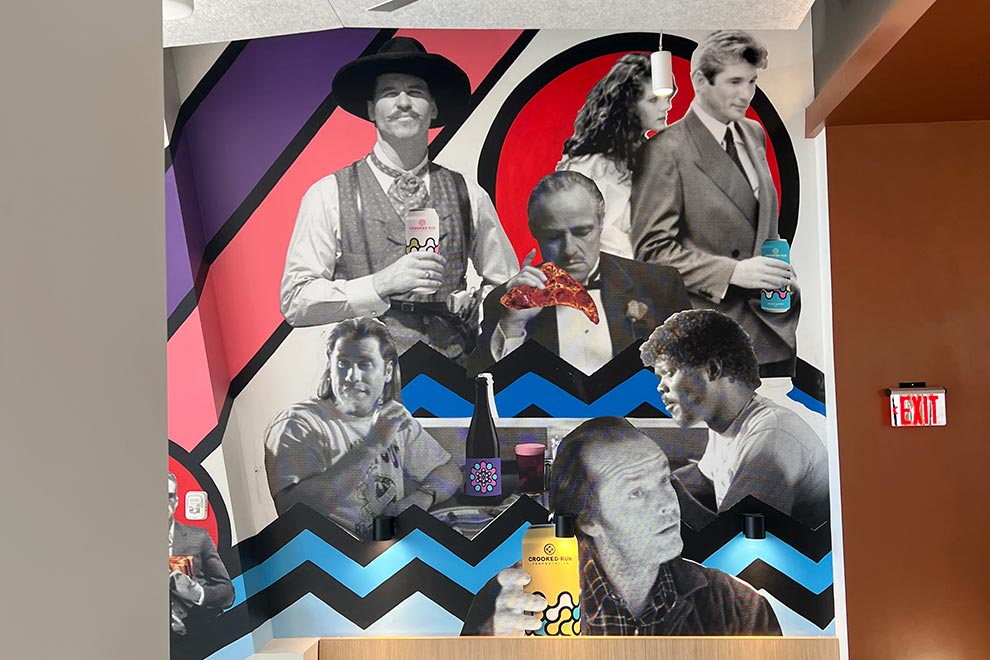
Commercial branding work involves far more than artwork and material picks. It takes accurate site information, coordinated stakeholders, controlled production, careful fabrication, installation planning, and ownership of the finished result. The Heritage One Dedicated Project Manager System gives the client one consistent relationship from discovery through professional installation.
That Project Manager connects client representatives with Heritage environmental graphic designers, production specialists, fabricators, and full-time professional installers. Heritage also collaborates with architects, interior designers, branding agencies, general contractors, and property teams. Fewer handoffs protect brand standards, approved decisions, access details, and schedule commitments as work moves forward.
Heritage is veteran-owned and family-led, with nearby field support for Alexandria backed by Mid-Atlantic production and broader network resources. That structure supports substantial one-time projects, phased rollouts, and coordinated multi-location programs. Individual properties may need different physical solutions, and the client still keeps one accountable Heritage relationship, one brand direction, clear communication, and dependable follow-through.
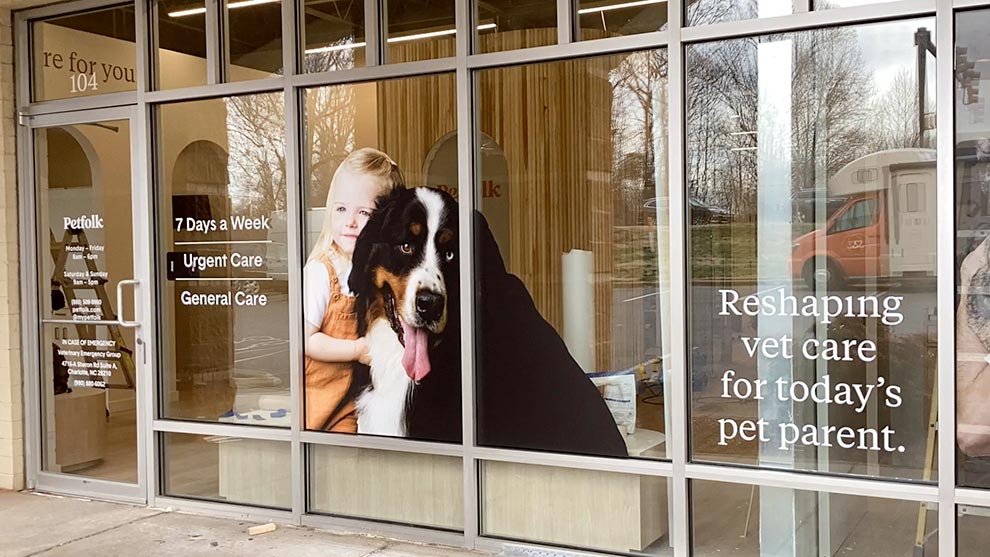
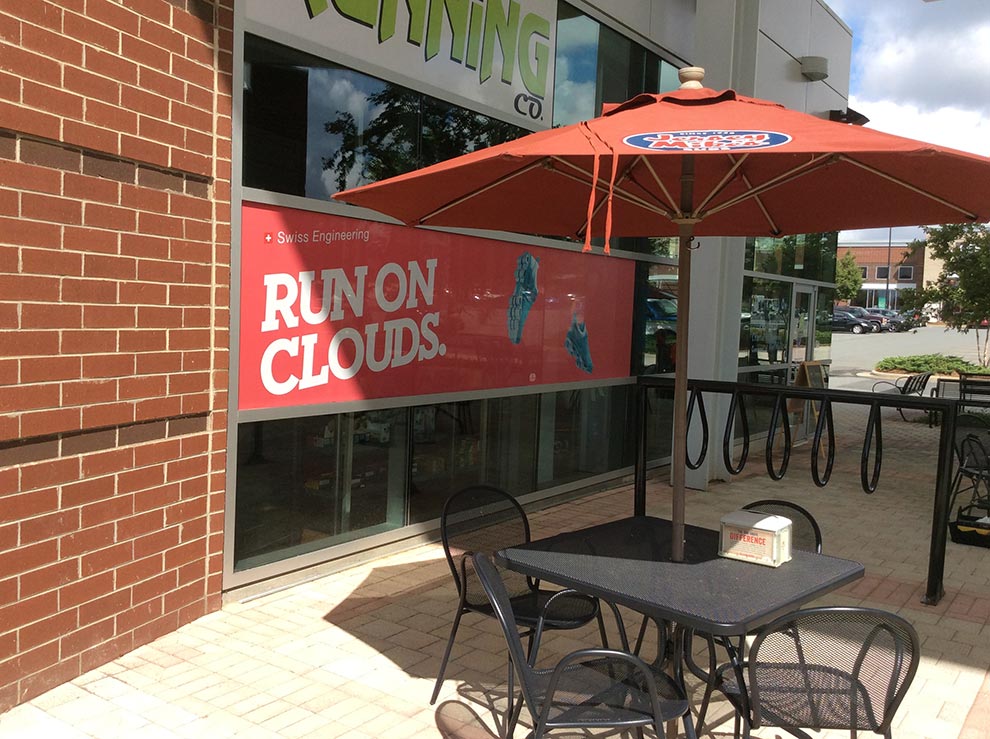
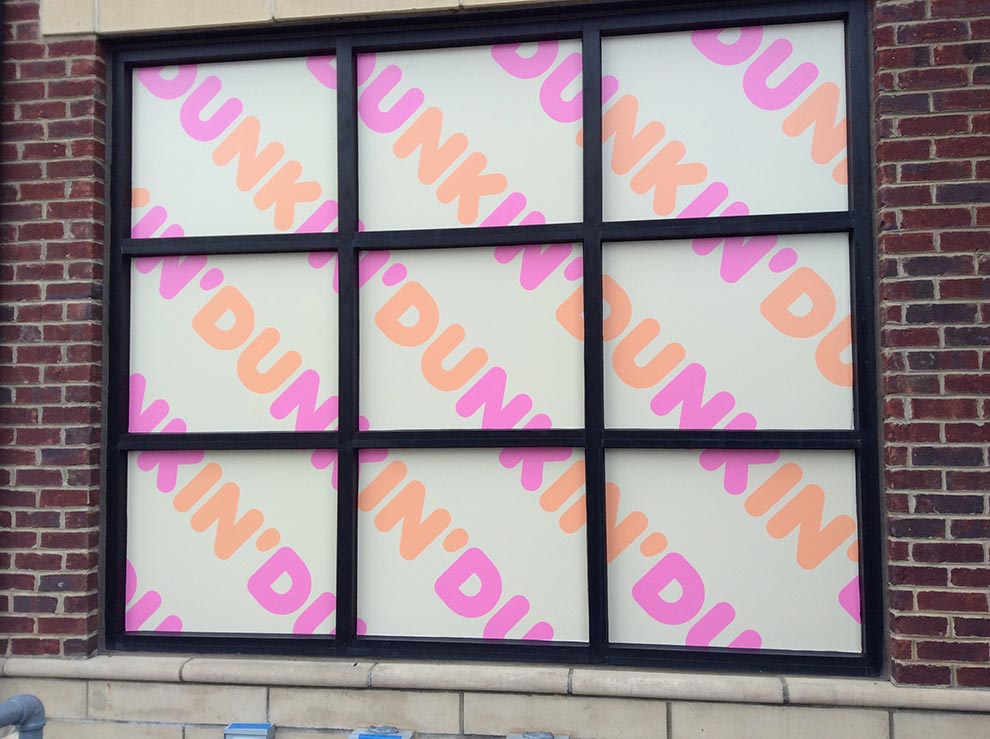
Window and glass graphics build identity while controlling how much of the interior stays on view. Coverage, placement, color, and opacity can be tuned around recognition, daylight, privacy, and preferred sightlines, so the entrance supports the interior without making the glass feel sealed off.
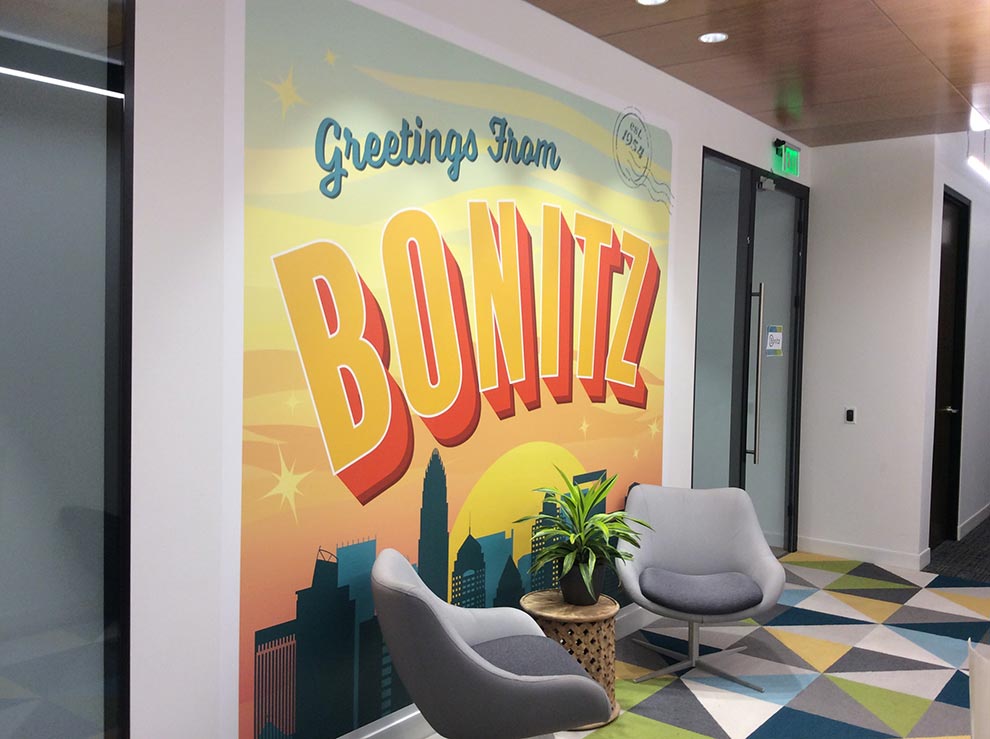
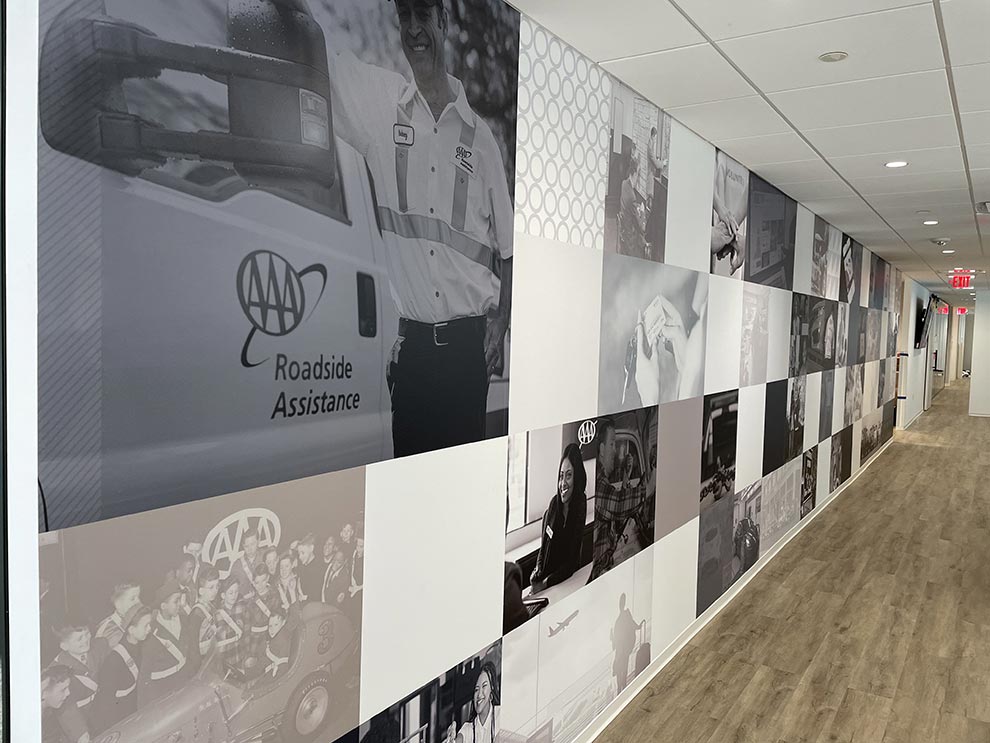
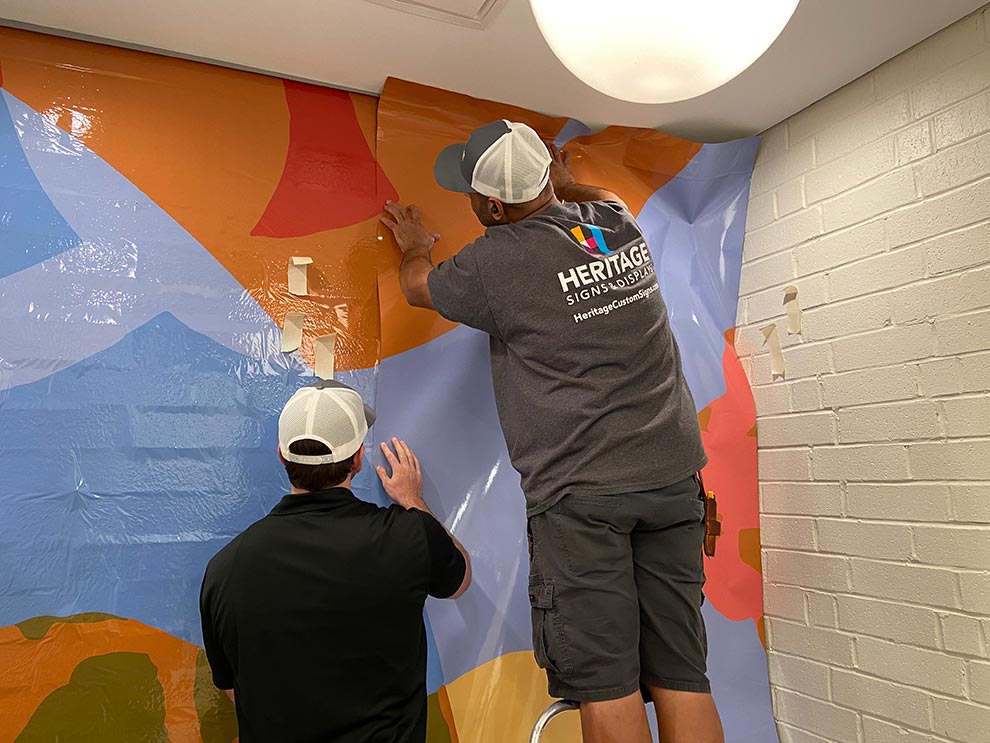
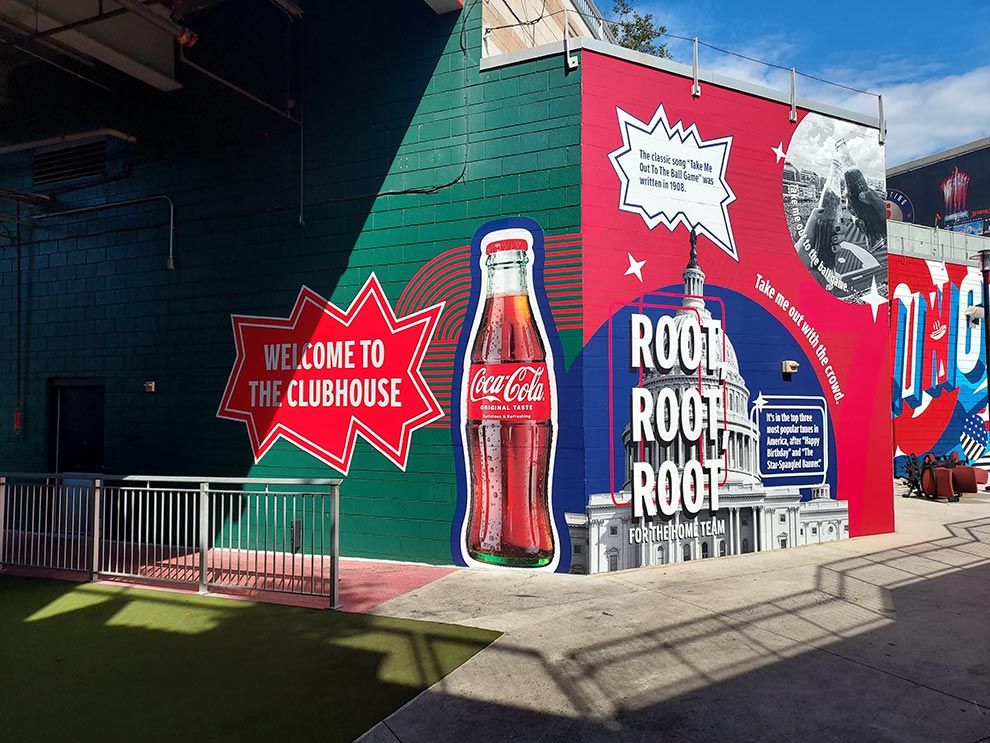
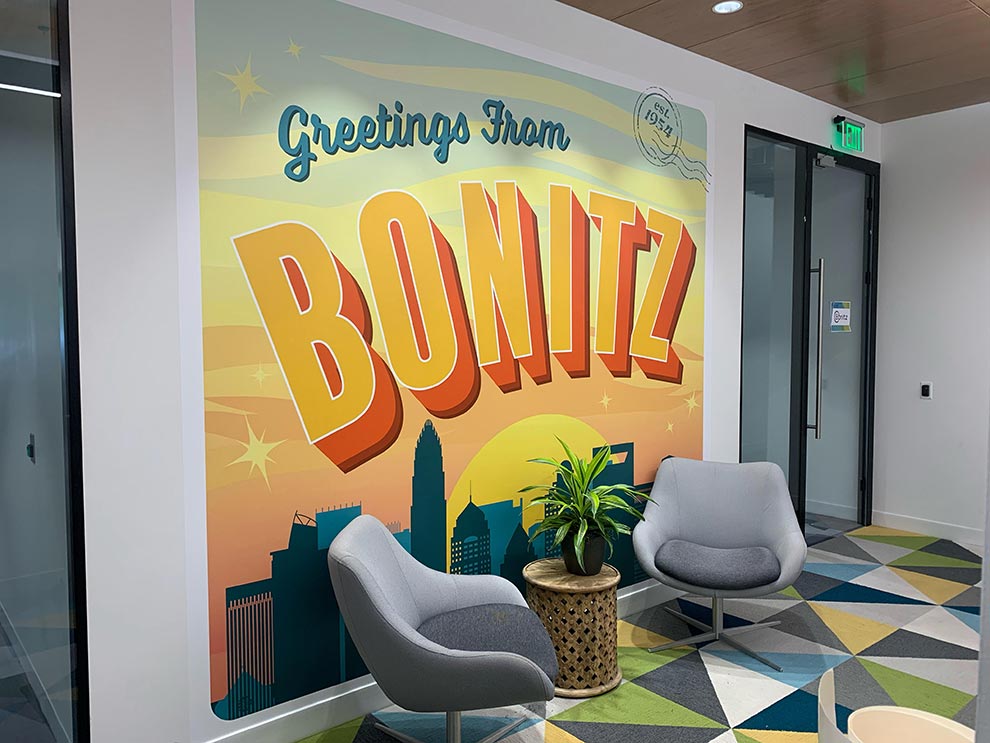
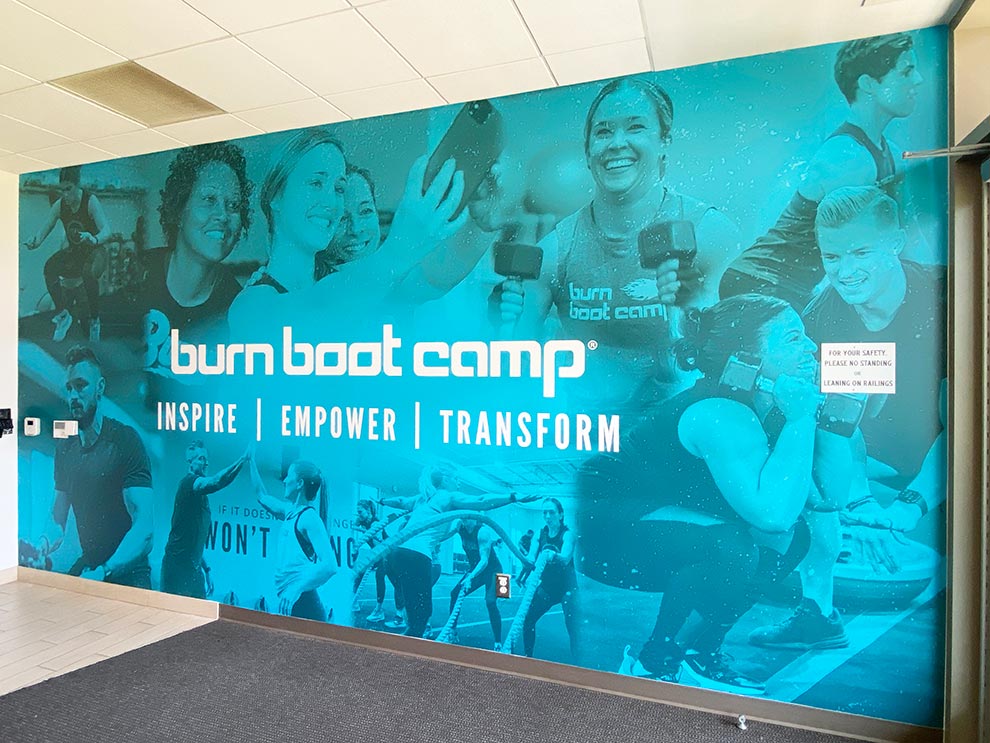
Wall wraps push color, imagery, and messaging past the entry. Reception areas, corridors, meeting rooms, and customer-facing spaces gain a clearer role inside the branded environment while staying tied to the visual direction the storefront established.
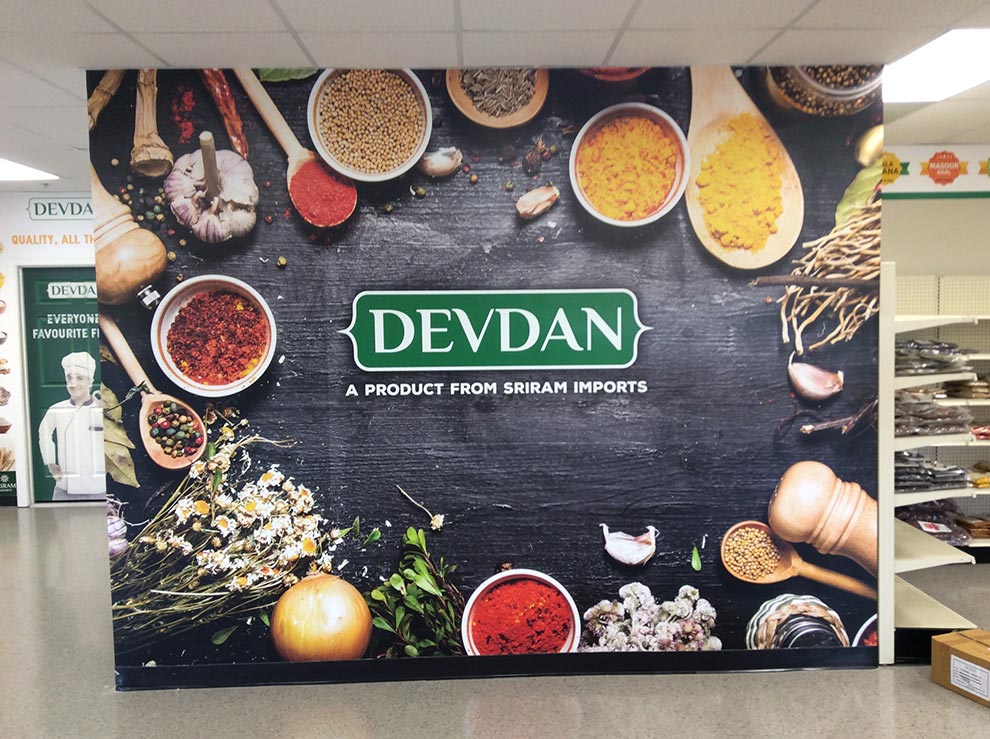
Once entrance graphics handle first recognition, a lobby sign becomes the primary interior destination. Heritage weighs scale, placement, depth, finishes, and surrounding architecture so the sign confirms arrival and reads as part of the same visual system as the storefront.
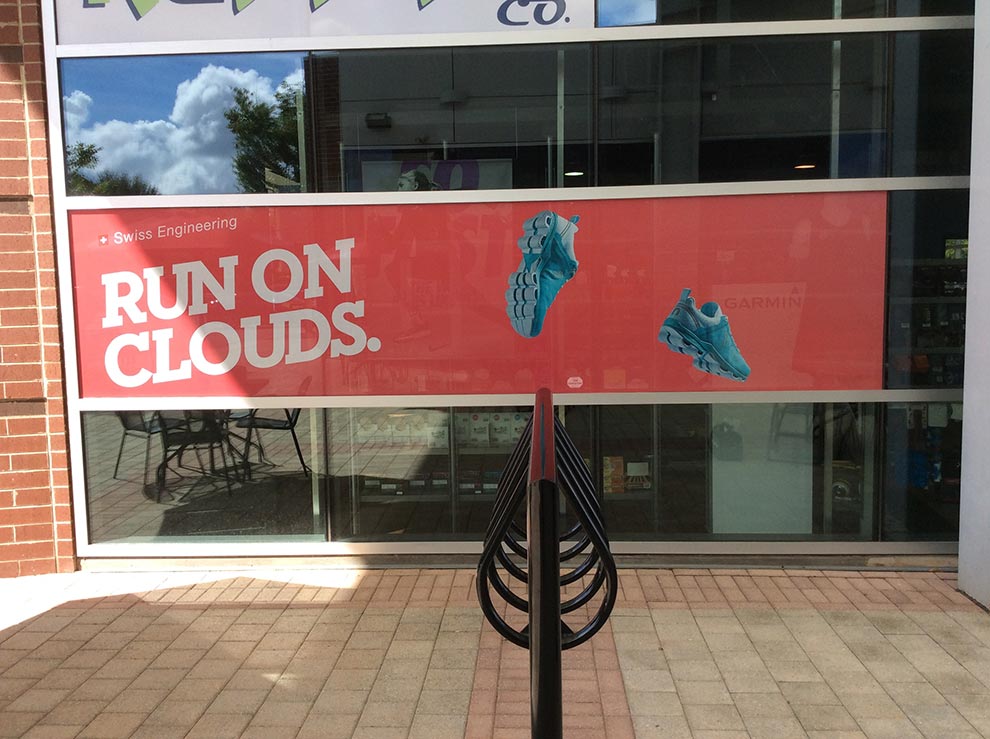
Wall displays create structured room for history, recognition, services, milestones, or values. Printed graphics can pair with dimensional and mounted components, giving the interior space to communicate detail that would be misplaced or unreadable at the door.
Dimensional letters and logos add physical depth to reception walls and other interior focal points. Size, finish, mounting method, and the relationship to nearby graphics get coordinated so the identity gains emphasis without competing with the storefront or the architecture.
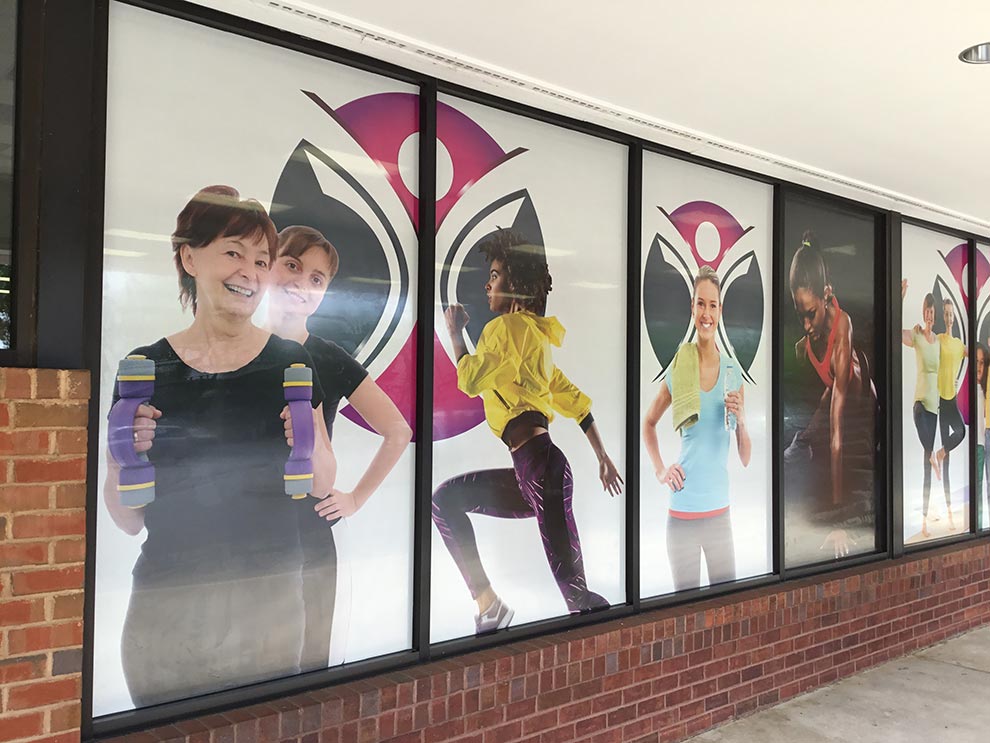
Frosted vinyl and etched-look privacy film soften direct sightlines while letting light through. Custom bands, patterns, logos, or partial coverage help conference rooms, offices, partitions, and entrance glass meet privacy needs while still looking like part of the same brand.
SEG fabric graphics use tensioned fabric set into a slim frame for a clean interior presentation. They handle large imagery or messaging well, and the graphic face can be swapped when priorities shift without rebuilding the entire display.
Backlit signs give an interior logo or message added presence where illumination fits the space. Heritage coordinates the feature with existing lighting, viewing distance, nearby graphics, and the room's visual hierarchy so it reinforces the interior destination the entrance introduced.
If your Alexandria organization is mapping out storefront graphics as part of a managed entrance or interior branding project, use Get Started Now to tell us the address, the result you want, your target completion date, your anticipated investment, and whatever photos, measurements, plans, artwork, and brand standards you already have. A dedicated Project Manager reviews it, flags the next decisions, and lines up our design, production, fabrication, survey, and installation resources.
Alexandria clients work with nearby Heritage support through verified client-facing locations in Washington, DC and Arlington, Virginia. That proximity makes it practical to hold discovery at client facilities and handle required site surveys, field verification, access planning, installation coordination, professional installation, and follow-through for commercial properties across Alexandria and the surrounding Montgomery County and DC metro area.
One dedicated Project Manager ties field observations to the Heritage teams handling environmental graphic design, production, fabrication, and installation. That shared history matters most at properties with controlled loading access, occupied offices, shared building entrances, property-management rules, narrow installation windows, or several stakeholders in the approval chain.
The Waldorf, Maryland production facility supplies nearby production capacity for Maryland, Washington, DC, Northern Virginia, Baltimore, and the broader Mid-Atlantic. It is staffed by production personnel and is not a client-facing office or showroom. When a Alexandria organization has locations in other Heritage markets, the wider network can coordinate site-specific solutions while holding common brand standards, consistent project knowledge, and one accountable Heritage relationship.
Environmental graphic design sorts out what people should notice first and how the branded experience should unfold after entry. The goal might be clearer identification, better privacy, a stronger lobby destination, easier wayfinding, a timeline or history wall, a core values display, a mission statement feature, or a more unified workplace.
Some organizations arrive with complete brand standards, approved artwork, and defined applications. Others start with objectives, photos, floor plans, or a rough concept that needs development. Heritage can work with client stakeholders, architects, interior designers, branding agencies, environmental graphic designers, general contractors, and property teams to develop the graphics within Heritage's scope.
Visibility, scale, lighting, glass coverage, viewing distance, surface condition, and architectural context all shape the design. Heritage carries the approved direction through production, fabrication, and professional installation. Heritage does not provide licensed architecture, engineering, general commercial interior design, lighting design, or code consulting. Those boundaries keep the design work focused on signs, graphics, displays, and branded features that can be executed responsibly.
Heritage produces and installs non-illuminated exterior elements as part of coordinated Storefront Graphics and workplace branding projects. Typical scope covers exterior window graphics, exterior wall graphics or wraps, dimensional lettering, dimensional signs, custom sign panels, and related non-illuminated storefront pieces. These applications identify the organization before entry and connect entrance glass with lobby signs, wall graphics, displays, and other interior features.
Printed exterior wall graphics receive protective film laminate as standard practice for added UV and weather protection. Heritage also reviews surface, exposure, attachment, access, and installation conditions for exterior components included in an accepted project. Material and attachment choices follow the approved design and the actual property conditions.
Heritage does not produce or install channel letters, monument signs, pylon signs, or illuminated exterior signs. Heritage does not determine whether a sign permit is required, prepare permit documents, submit applications, contact permitting authorities, pay fees, or pursue approvals. The client, property owner or property manager, or general contractor is responsible for confirming and securing required sign permits and property approvals.
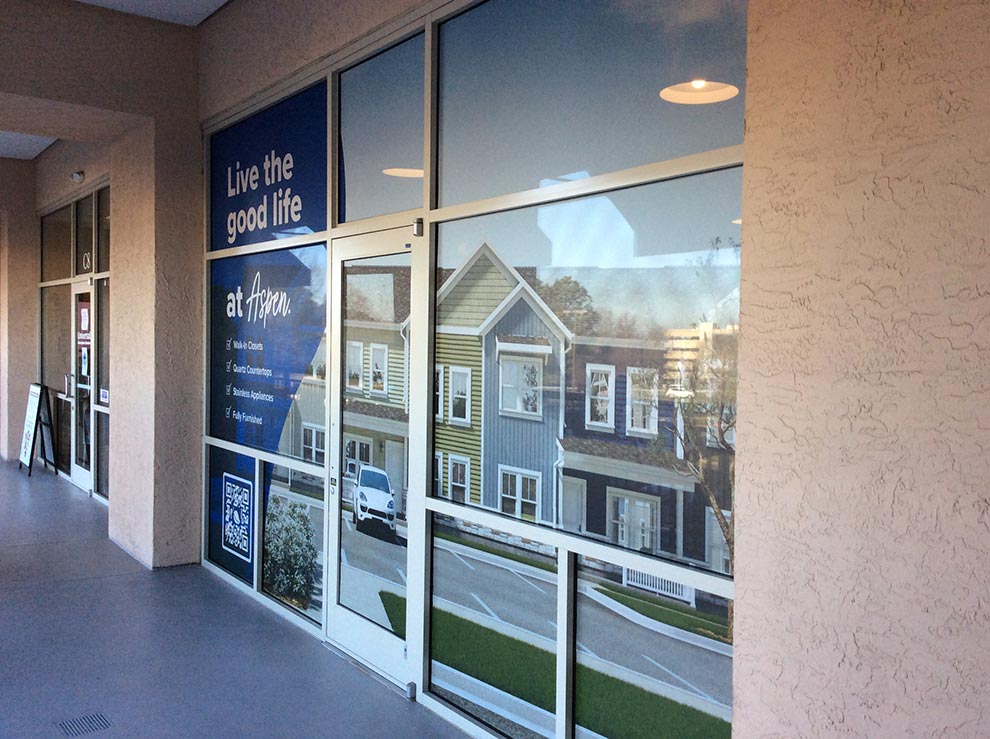
We begin every storefront graphics project with a site survey, because the numbers on a drawing rarely tell the whole story once you are standing in a King Street entry or a Carlyle office lobby. During that visit we tie your goals to real measurements, glass and wall conditions, door swings, mullion locations, ceiling heights, loading access, and the hours we are allowed to work. What we learn there tells us what still needs to be confirmed before artwork, materials, fabrication, and field scheduling get locked in.
You work with one dedicated Project Manager who keeps those survey findings tied to our environmental graphic designers, production specialists, fabricators, and full-time installers. Approved design intent, material choices, building restrictions, stakeholder input, and the installation plan all live in one project record. Fewer handoffs means fewer surprises, and it means questions get answered at a desk instead of on a ladder.
Good installation also respects your property and your business day. We plan arrival times, staging areas, work windows, equipment, and on-site communication around the approved scope and the conditions we verified. For a busy Old Town retail block or a multi-tenant building off Eisenhower Avenue, that usually means early mornings, tight containment, and clean exits. The goal is accurate work, minimal interruption, and clear accountability from kickoff to punch list.
Adhesive wall graphics reward good prep. Drywall should be sound and smooth, patches finished, primer and paint applied correctly, and the topcoat fully cured. Dry to the touch is not the same as cured. Roughly four weeks is a reasonable planning cushion for many paints, but the manufacturer's data and your actual site conditions decide when a wall is ready.
Washable, scrubbable, stain-blocking, low-VOC, and zero-VOC coatings can be difficult partners for adhesive. Those surfaces may call for cleaning, adhesion testing, or a different vinyl and adhesive pairing. Testing tells us how the film behaves on the paint. It cannot tell us how well that paint and primer are gripping the drywall beneath. If paint lifts during a test or during a routine reposition, we stop instead of making the wall worse.
Wall repair, priming, repainting, cure time, and any restoration are arranged and paid for by the client or property owner. We do not perform or fund that work. Removal is its own conversation. We take vinyl down slowly and deliberately to limit damage, but no installer can promise damage-free removal. Paint, primer, or drywall facing may come away with the film. "Removable" describes the adhesive system, not a guarantee. When older graphics are being replaced, pull them early so any restoration shows up before the new install date is on the calendar.
Strong planning starts with the outcome you want, the audience walking through the door, the scope and phasing, the schedule, site readiness, who has to approve what, the investment you have in mind, and the details still missing. Photos, measurements, floor plans, artwork, brand standards, and landlord requirements all help, as long as they inform the bigger decisions rather than replace them.
We are built for professionally managed projects that need environmental graphic design, production, fabrication, and installation handled together. Projects of that type commonly run from $10,000 to more than $200,000. Where yours lands depends on total scope, number of locations, materials, fabrication complexity, access, phasing, and install requirements.
Some Alexandria clients focus on a single high-impact branded entrance. Others carry that entrance language into the lobby, corridors, and meeting rooms. Others build a repeatable program across several buildings in the DC metro area. In each case, one Project Manager keeps responsibilities, approvals, schedules, and open items visible while pulling in the right Heritage resources to finish the job.
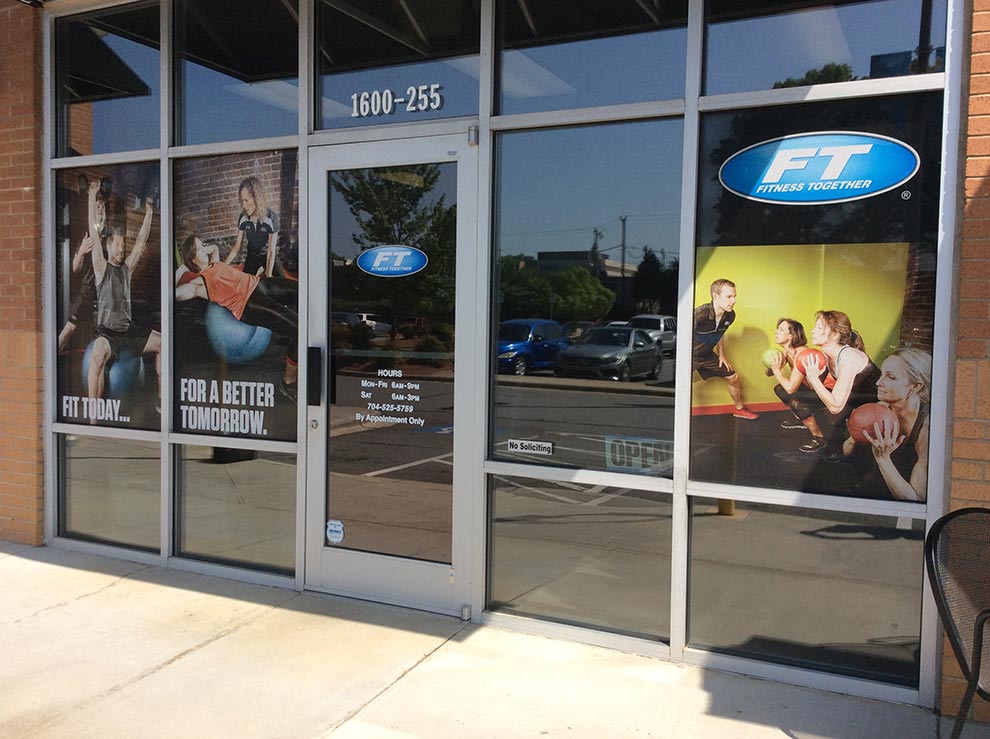
Storefront graphics are the visuals applied to entry glass, windows, doors, walls, and nearby surfaces to identify a business and guide arrival. They deliver recognition, privacy, controlled sightlines, and glass awareness while setting up the lobby signs, wall graphics, and displays waiting inside.
Always. Every storefront graphics project starts with a site survey that pairs your objectives with confirmed measurements, surface conditions, access, viewing distances, and installation logistics. Those findings stay with your Project Manager and the design, production, fabrication, and install teams.
Yes. Coverage can be tuned to block specific sightlines while keeping natural light and outward views. Frosted film, etched-glass looks, gradient patterns, banding, and custom motifs all accomplish this differently. The right choice depends on your glass, exposure, viewing angles, and how much separation you actually need.
Distraction markers are decorative or branded vinyl elements placed on clear glass so people notice the surface is there. Bands, dot patterns, logos, and graphic motifs all work, and many double as privacy or branding features. Applied vinyl does not create building-code compliance, safety-glazing compliance, certification, or approval of any kind.
Yes. We collaborate regularly with architects, interior designers, branding agencies, environmental graphic designers, general contractors, property managers, and internal stakeholders. We develop environmental graphic design within our scope and carry the approved direction through production, fabrication, and installation. We do not provide licensed architecture, engineering, full commercial interior design, lighting design, or code consulting.
Yes. We produce and install exterior window graphics, exterior wall graphics and wraps, dimensional lettering, dimensional signs, custom sign panels, and similar non-illuminated storefront elements as part of coordinated branding work. Printed exterior wall graphics get a protective laminate as standard for added UV and weather resistance.
We do not produce or install channel letters, monument signs, pylon signs, or illuminated exterior signage. Sign permits and property approvals are secured by the client, property owner or manager, or general contractor. In Alexandria that can also mean review requirements tied to historic districts, so confirm those obligations early.
The wall should be sound, smooth, properly patched, primed, painted, and fully cured. Dry is not cured. Four weeks is a workable planning allowance for many coatings, though the paint manufacturer's specifications and your site conditions determine actual readiness.
Washable, scrubbable, stain-resistant, low-VOC, and zero-VOC paints may require cleaning, adhesion testing, or a different film and adhesive combination. No single adhesive suits every painted wall.
No. A test shows how the vinyl behaves on the painted surface. It says nothing about how firmly the paint and primer are attached to the drywall underneath. If paint lifts during testing or during a routine reposition, we stop rather than compound the damage.
Repair, priming, repainting, cure time, restoration, and related surface costs are arranged and paid for by the client or property owner before we reschedule the installation.
Yes, when removal is part of a new production and installation project with us. Schedule it early enough that any paint, primer, or drywall issues surface before your new install date.
We remove adhesive vinyl slowly and carefully to limit damage, but damage-free removal cannot be guaranteed. Repair, priming, repainting, restoration, and cure time fall to the client or property owner. We do not offer removal as a standalone service.
It can. Paint, primer, or drywall facing may pull away when adhesive graphics come off, even with careful professional technique. "Removable" describes the adhesive system and intended use, not a damage-free outcome.
Repair, priming, repainting, restoration, and full cure time are the client's or property owner's responsibility. Planning removal ahead of schedule gives you room to handle those conditions before new graphics are queued up.
Selection starts with the look you want, the surface, the exposure, the mounting method, and how long the graphics need to last. Depending on the application, we work with adhesive vinyl, acrylic, dimensional substrates, and aluminum composite material, known as ACM.
ACM delivers a durable metal appearance at a fraction of the weight of solid metal. We do not print on or cut solid aluminum or solid steel as a sign substrate.
Yes. We coordinate storefront and interior branding across multiple properties throughout the Mid-Atlantic and the Carolinas, including sites across Alexandria, Arlington, Fairfax County, and the wider DC region. One Project Manager holds the project history, approved brand standards, communication record, and stakeholder decisions for the whole program.
Each building still gets its own evaluation. Architecture, dimensions, access, surfaces, schedules, and install conditions often demand different physical solutions even when the brand direction stays identical.
The client, property owner or manager, or general contractor confirms and secures every required sign permit and property approval. We do not determine whether a permit applies, prepare or submit applications, correspond with permitting authorities, pay fees, or chase approvals.
Our review of materials, surfaces, attachment methods, and site conditions is project planning. It is not permitting or code consulting.
Our full-time professional installers complete storefront graphics projects produced and managed through our process. They work from the survey data, approved design intent, measurements, access requirements, production decisions, and install plan shared by your Project Manager.
We do not offer installation-only service for signs or graphics supplied by others. Keeping production, fabrication, and installation under one roof is what lets us stand behind the finished result.
Start with the Alexandria address, the outcome you want, your target completion date, your anticipated investment, plus any photos, measurements, plans, artwork, brand standards, and building requirements on hand. A complete package is helpful but not required to begin.
Submit what you have through Get Started Now. Your Project Manager will review it, identify what still needs verification, and walk you through the next set of decisions.
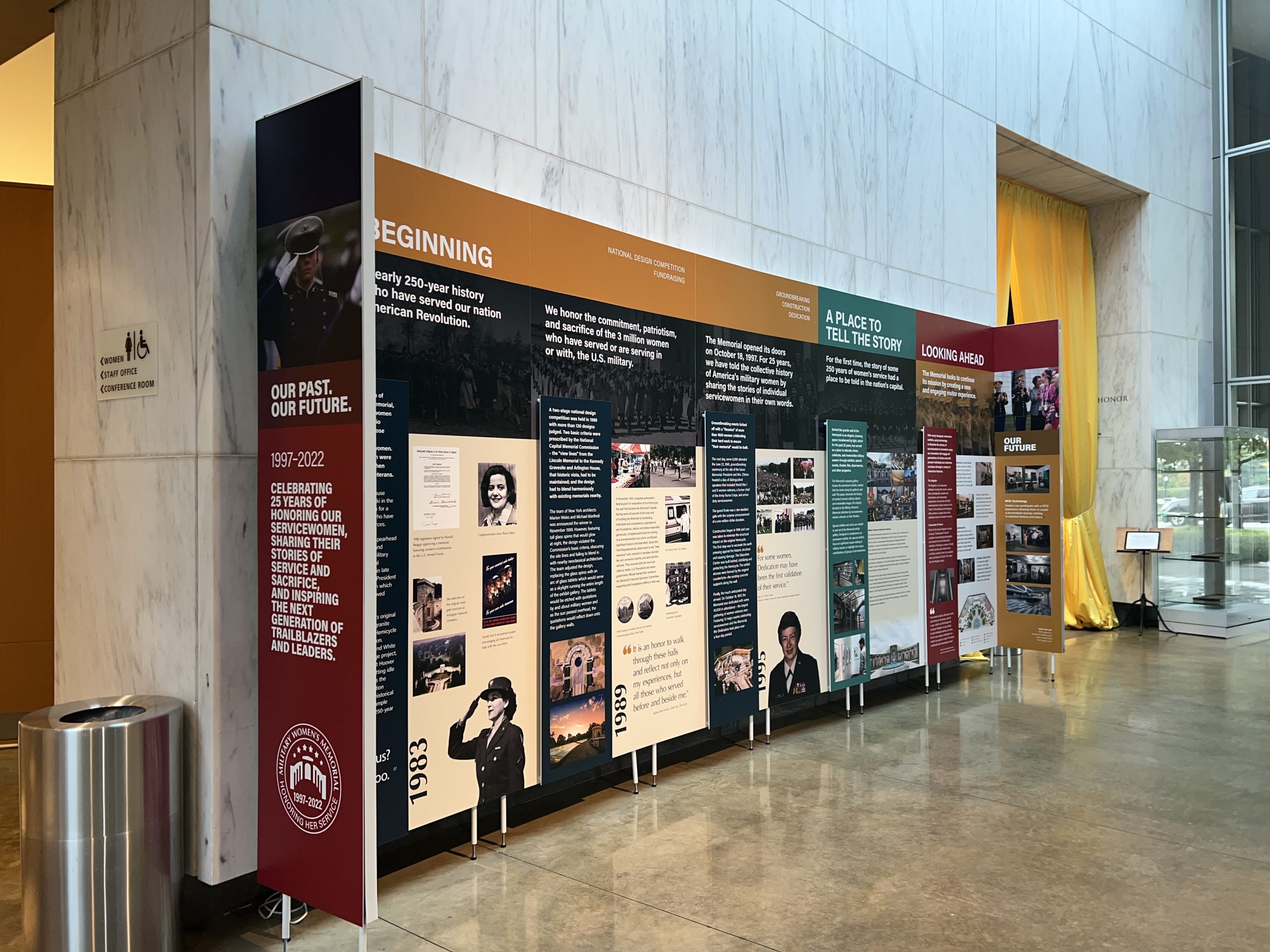
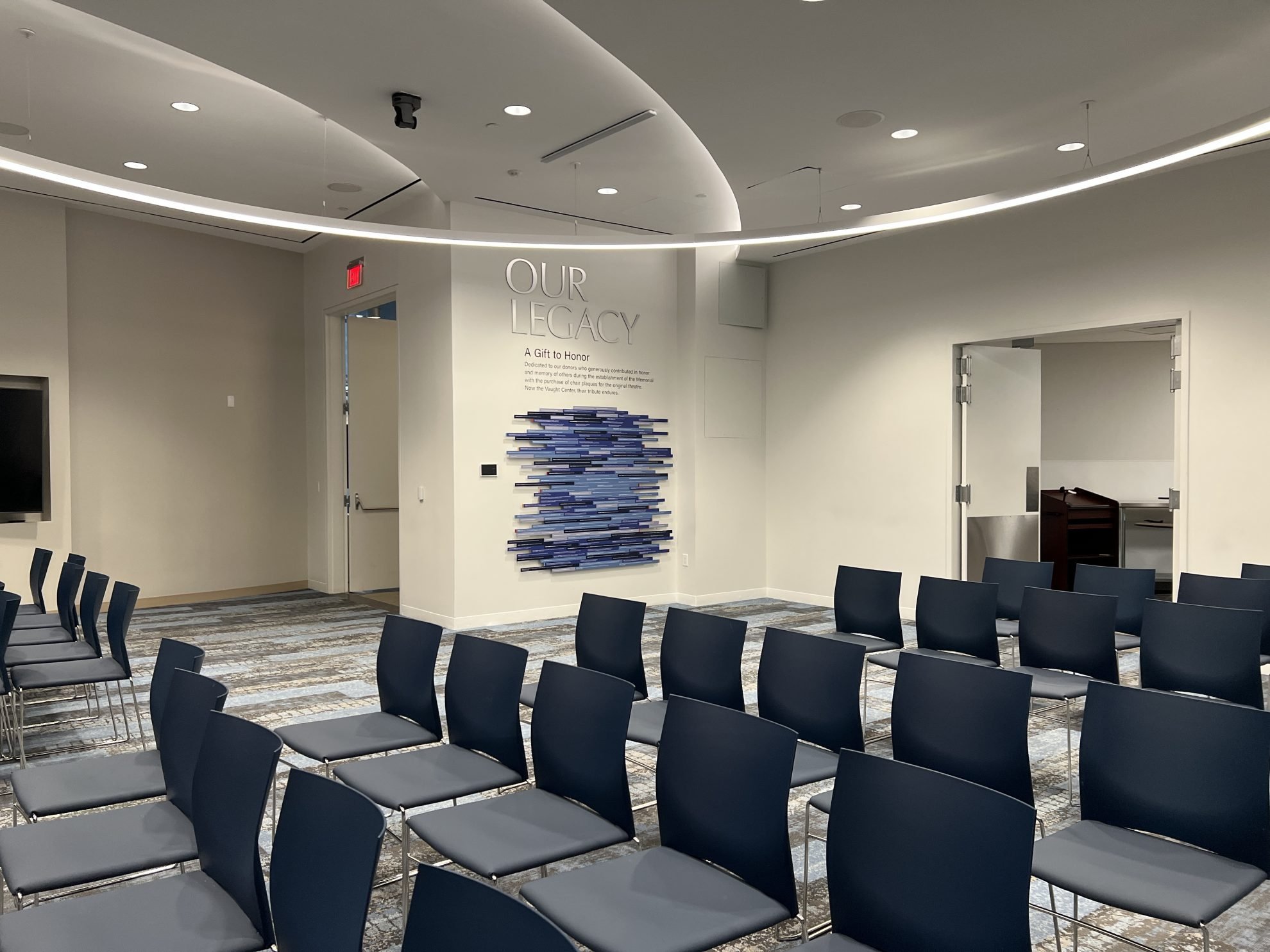
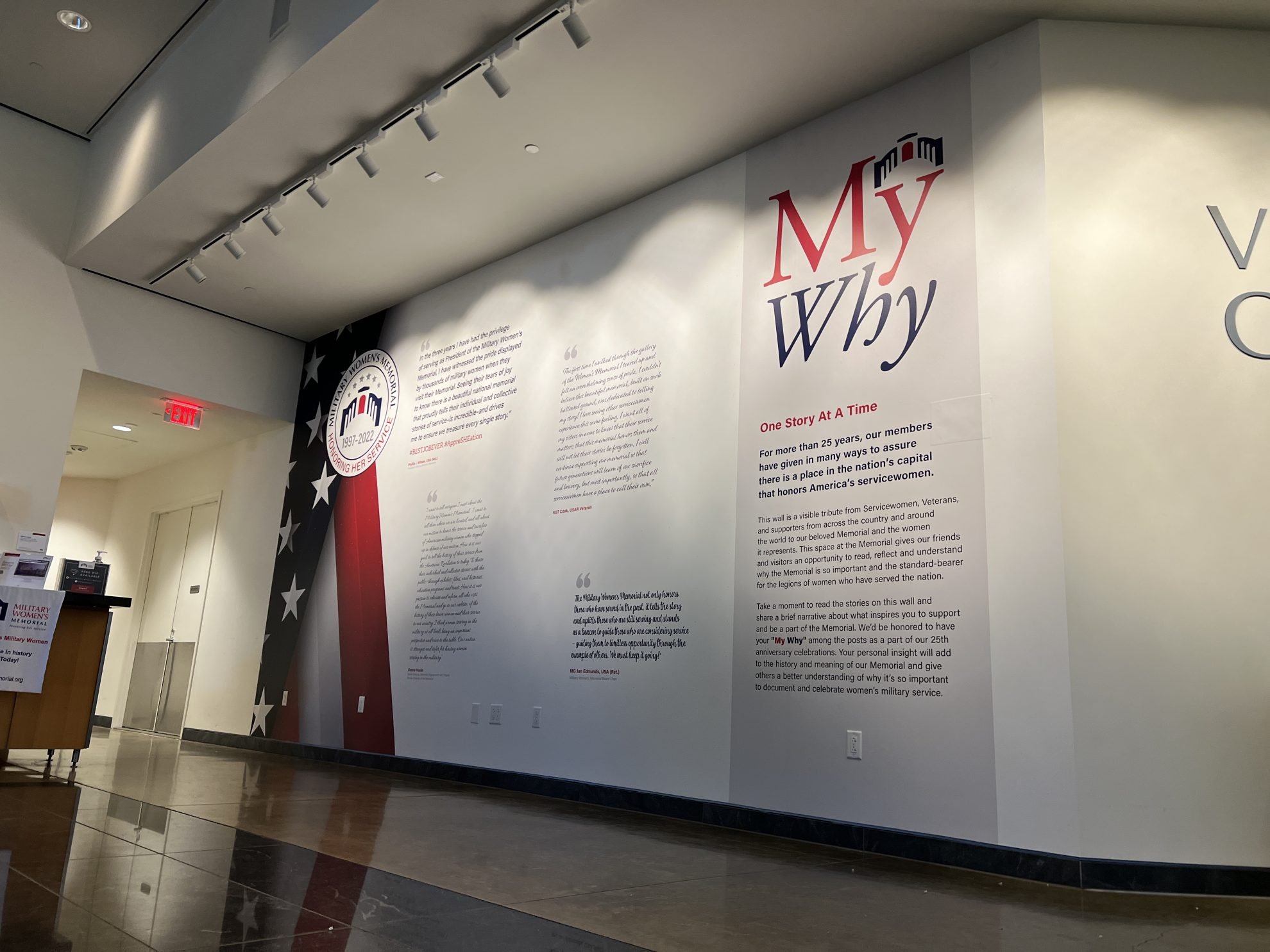
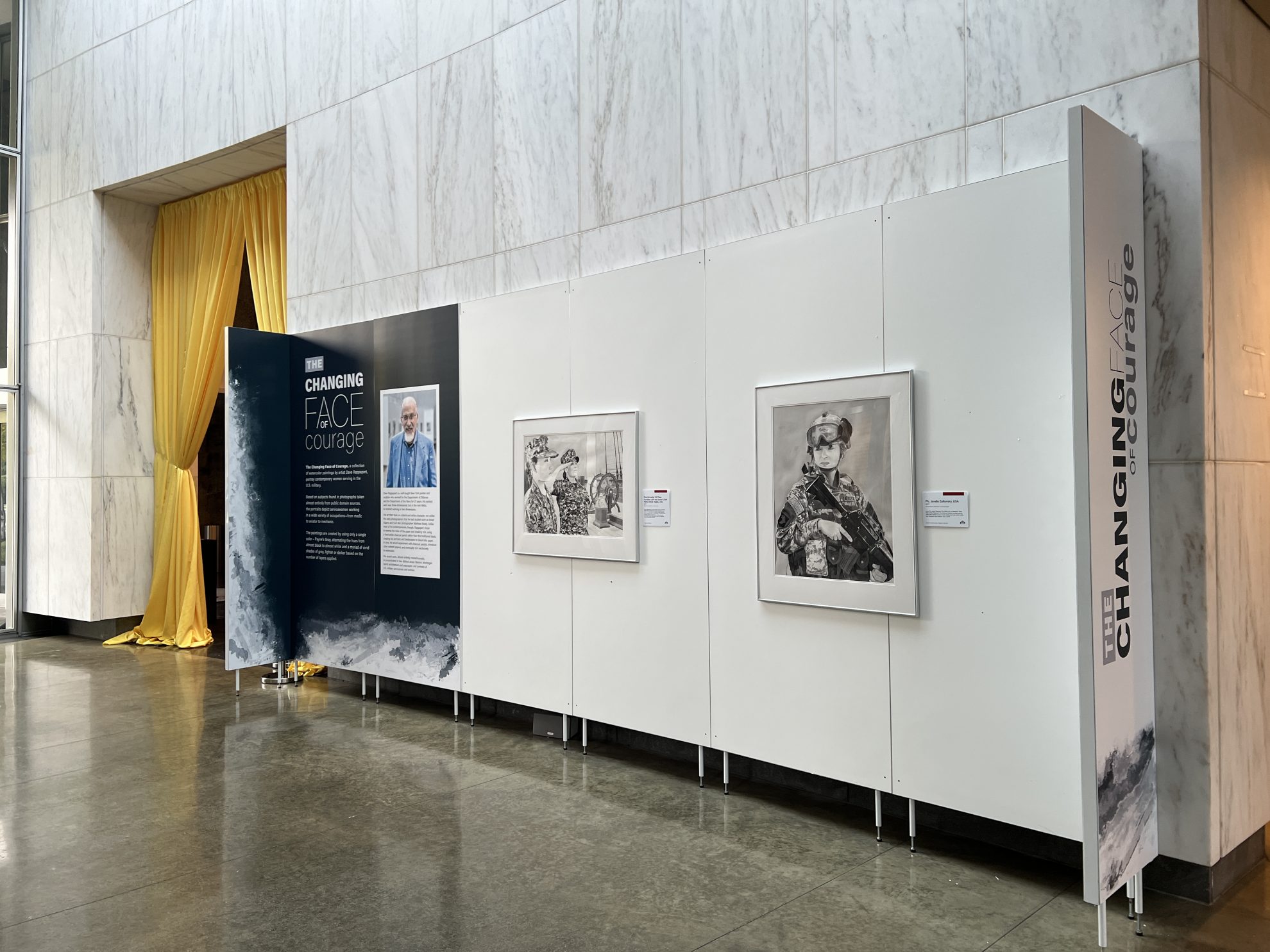
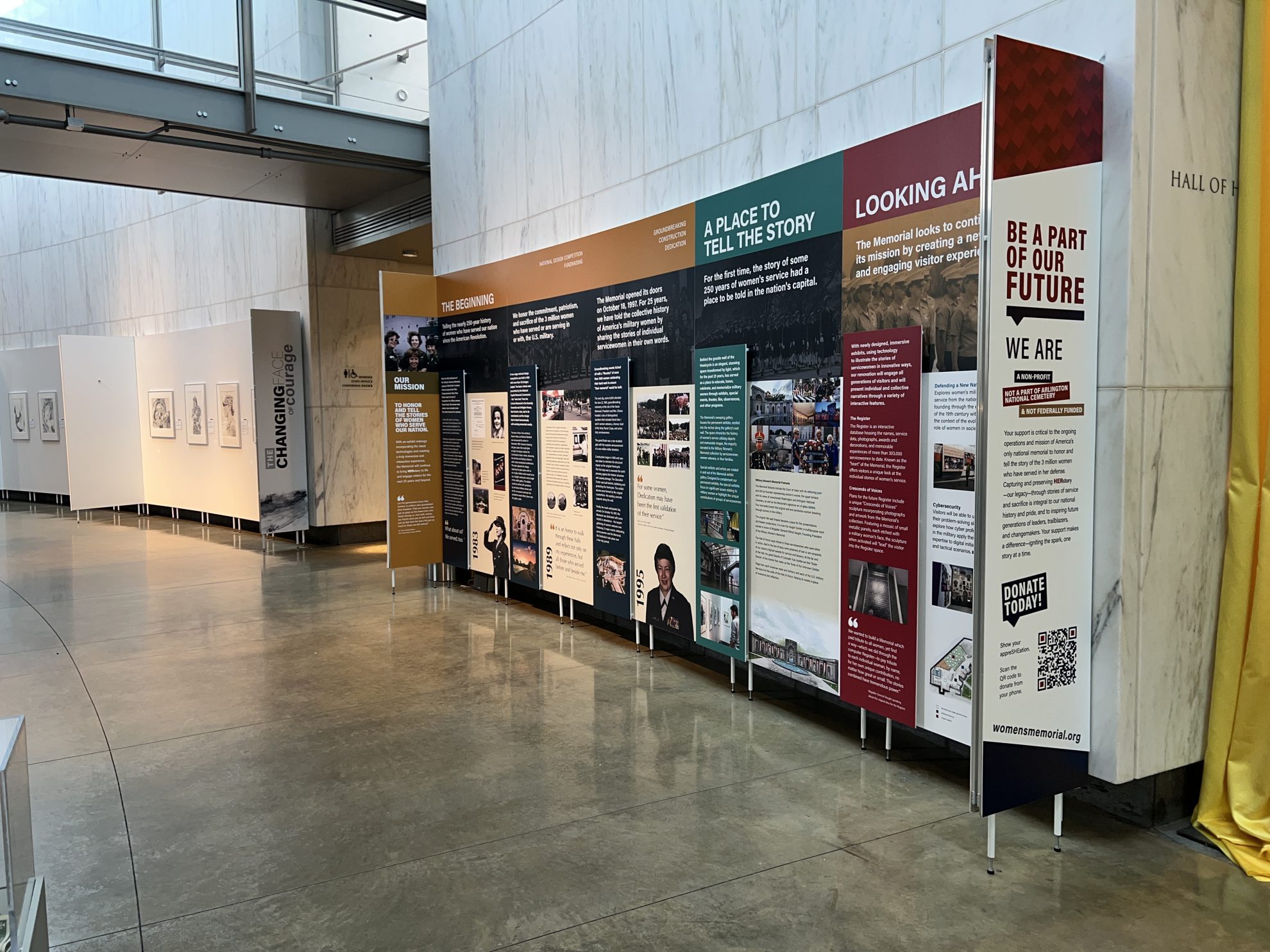
Heritage Signs & Displays created new museum signage for the Military Women’s Memorial in Arlington, VA. The project included custom signs, wall wraps, dimensional letters, and standoff-mounted displays to honor the legacy of U.S. servicewomen and the donors who supported the memorial. The updated interior features impactful designs, including a "Our Legacy" wall display and panels showcasing historical contributions and artwork, creating a transformative tribute to women in the U.S. Armed Forces.
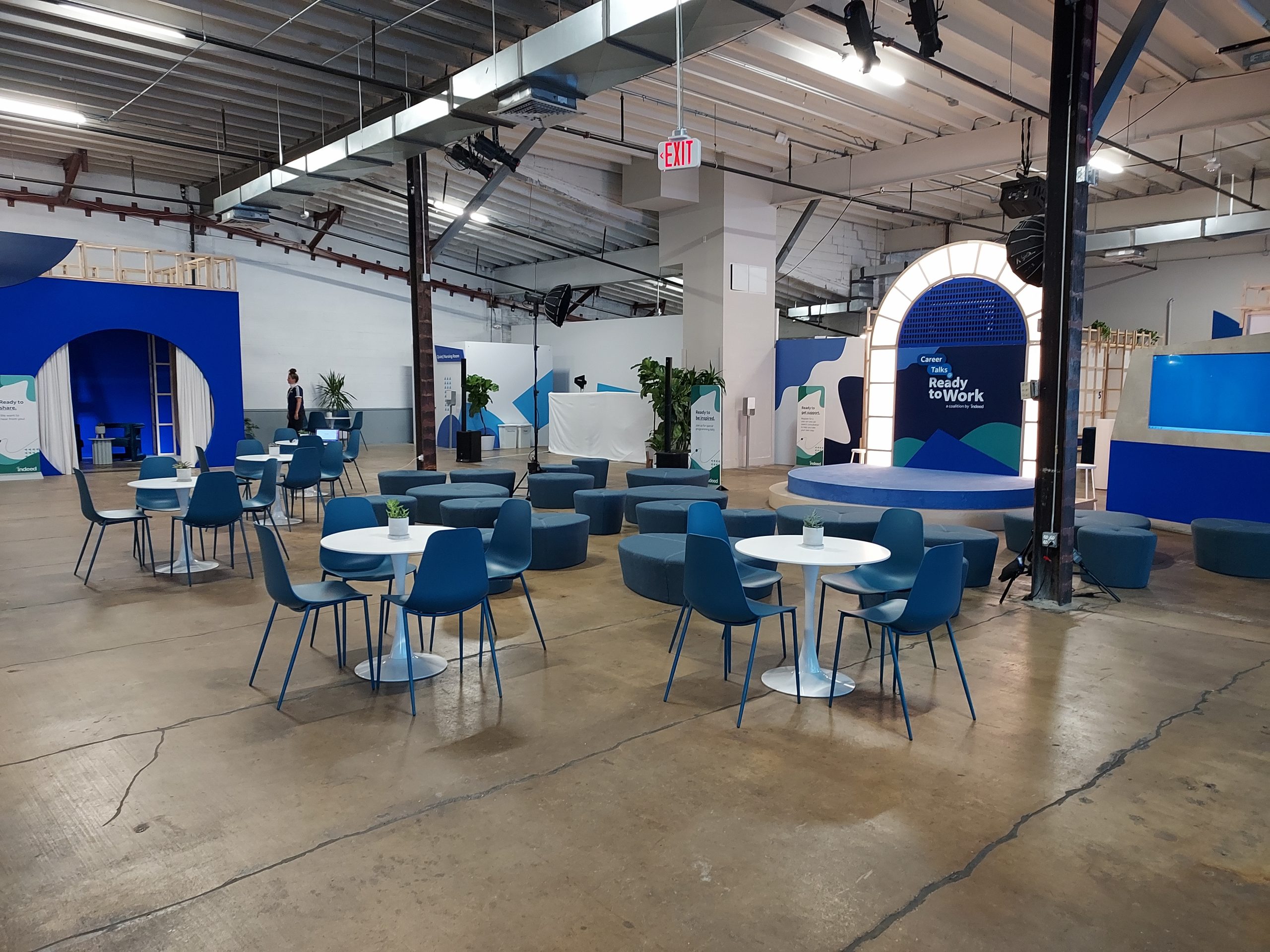
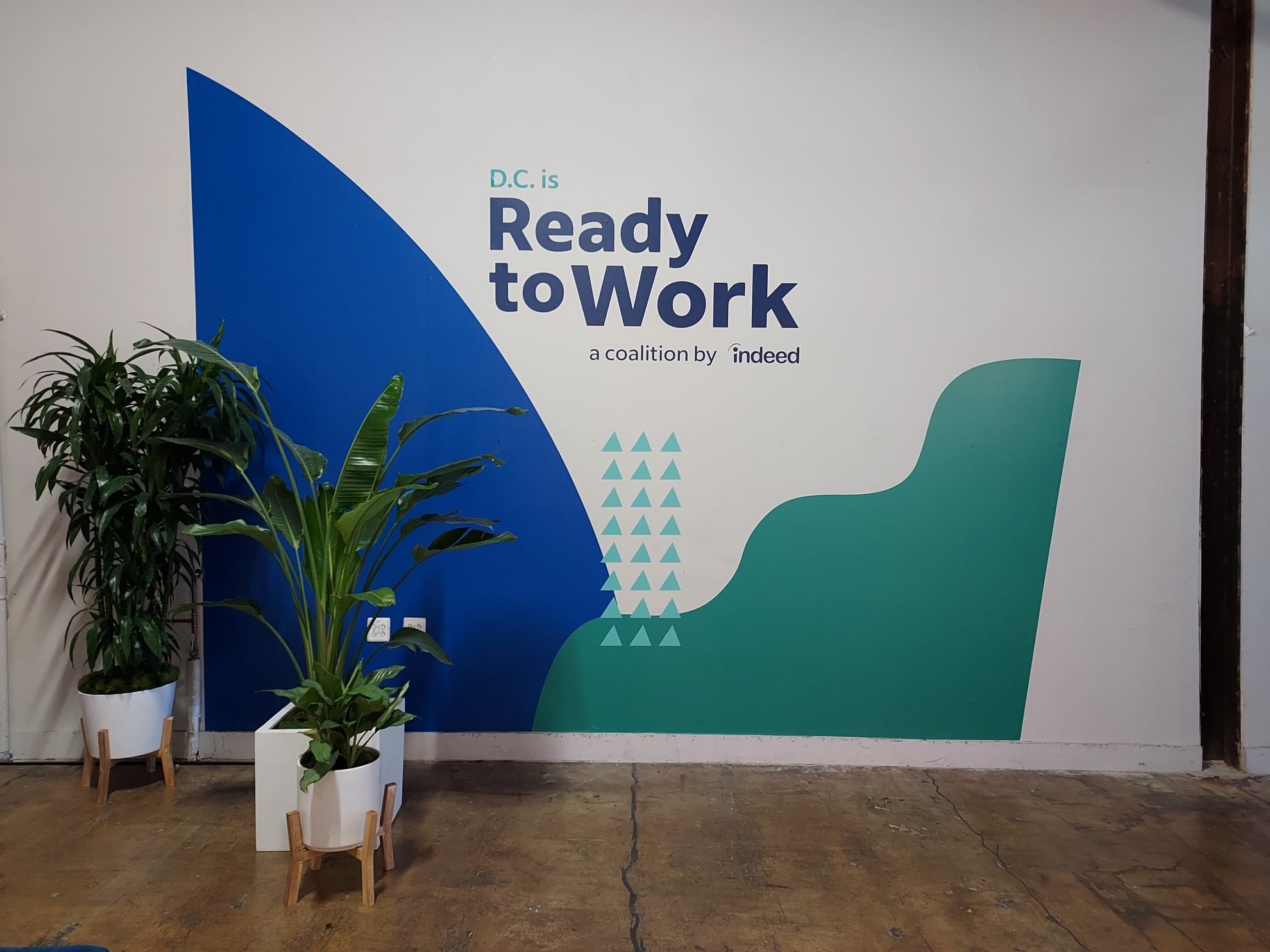
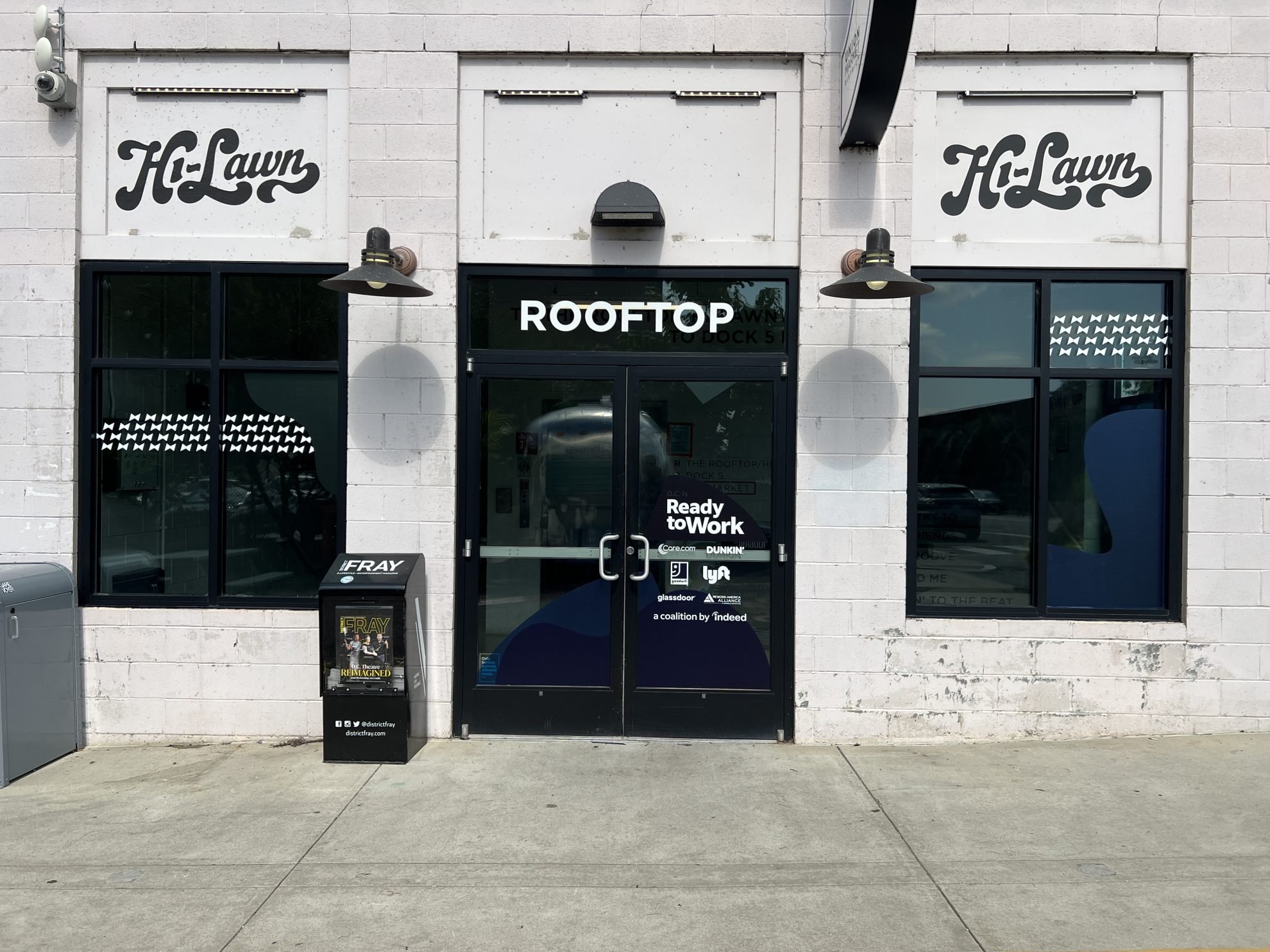
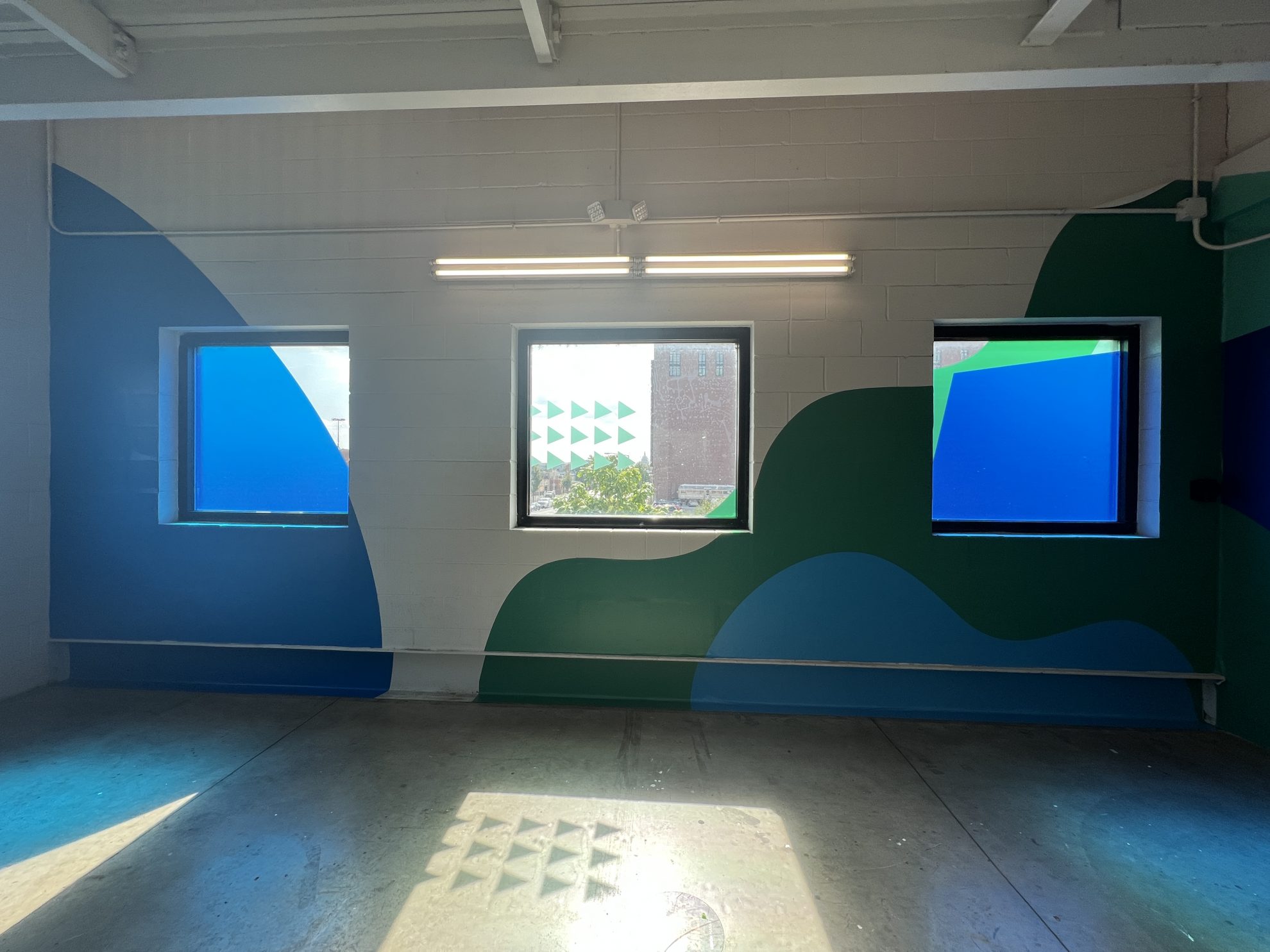
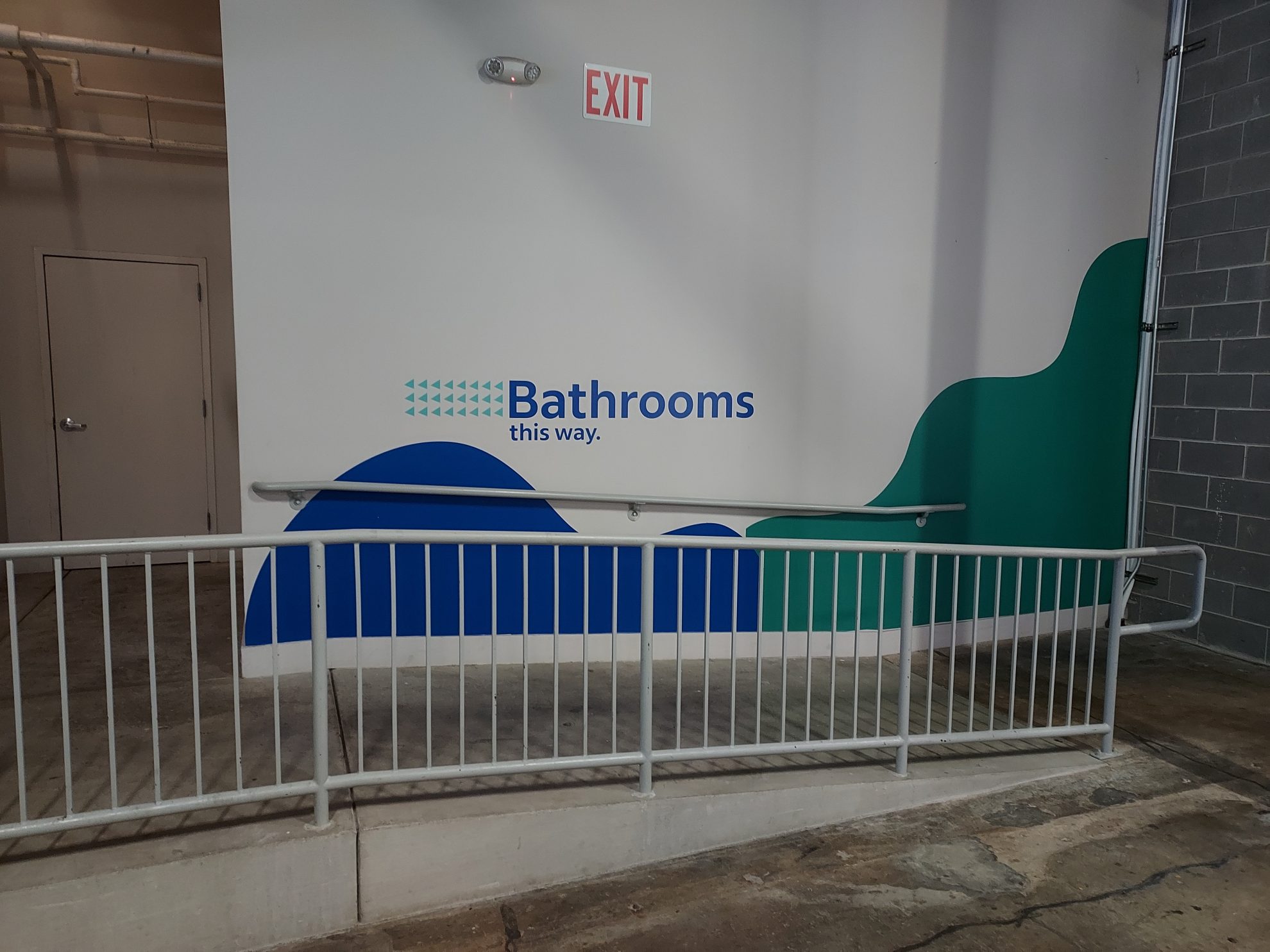
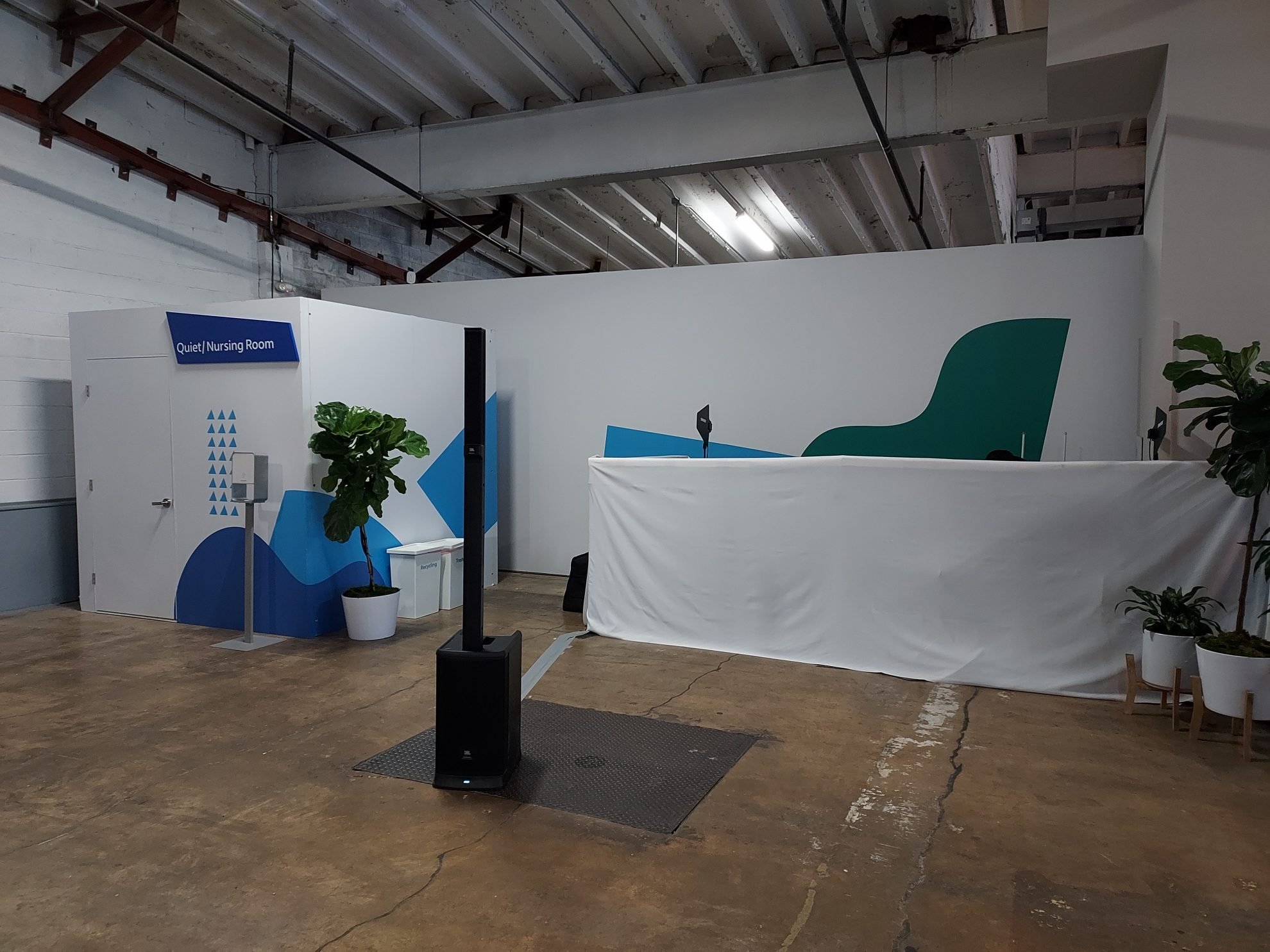
Heritage Signs & Displays' collaboration with The Gathery to brand Union Market in Arlington, VA, for Indeed's "Ready to Work" job fair. The project included custom event displays, wall graphics, window graphics, and wayfinding signs, creating an immersive and visually appealing environment. The branding enhanced the venue, reflected the event's mission, and provided a seamless experience for attendees.