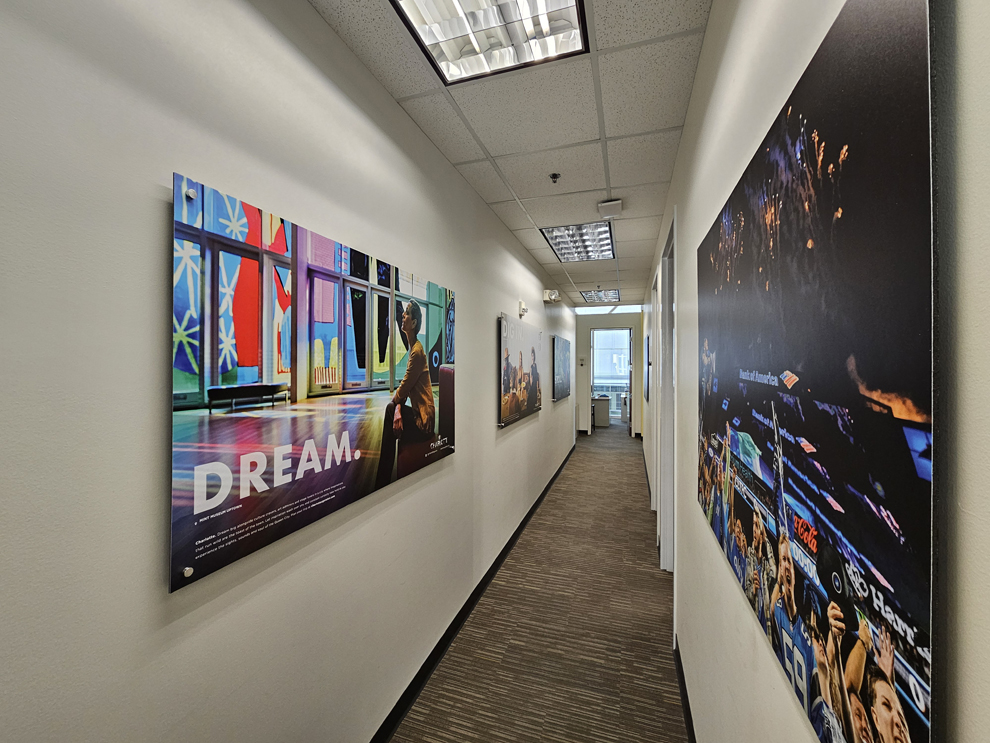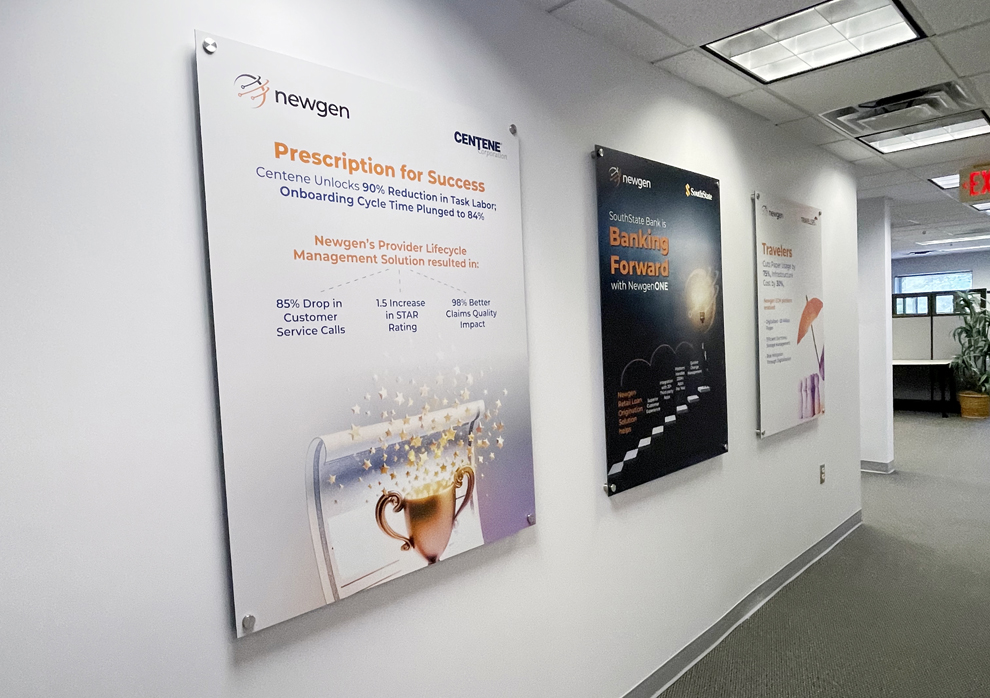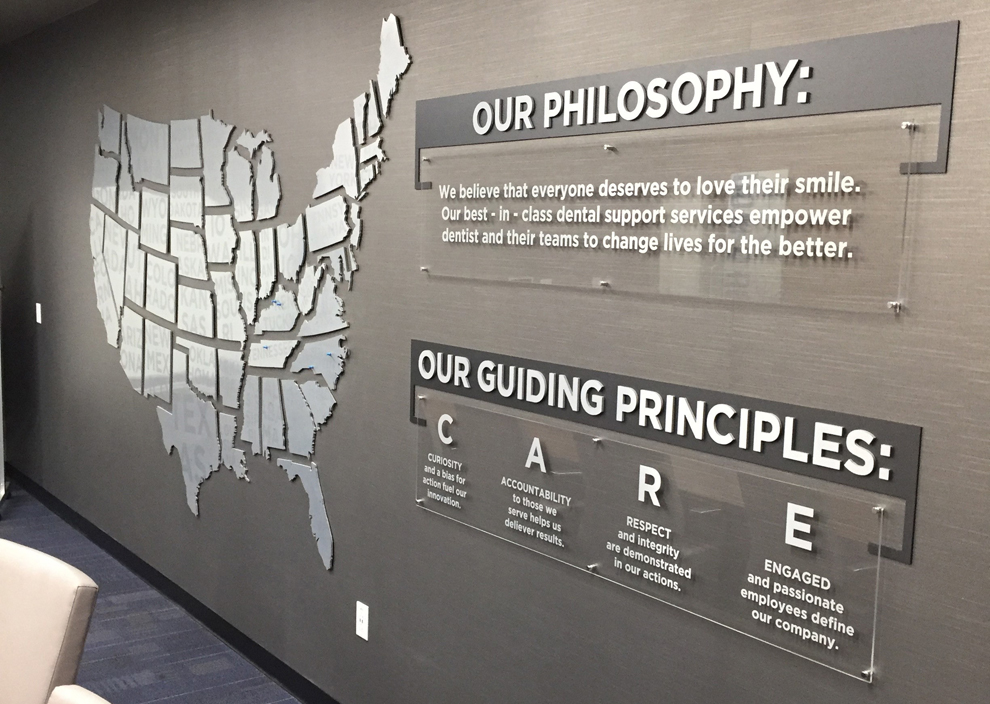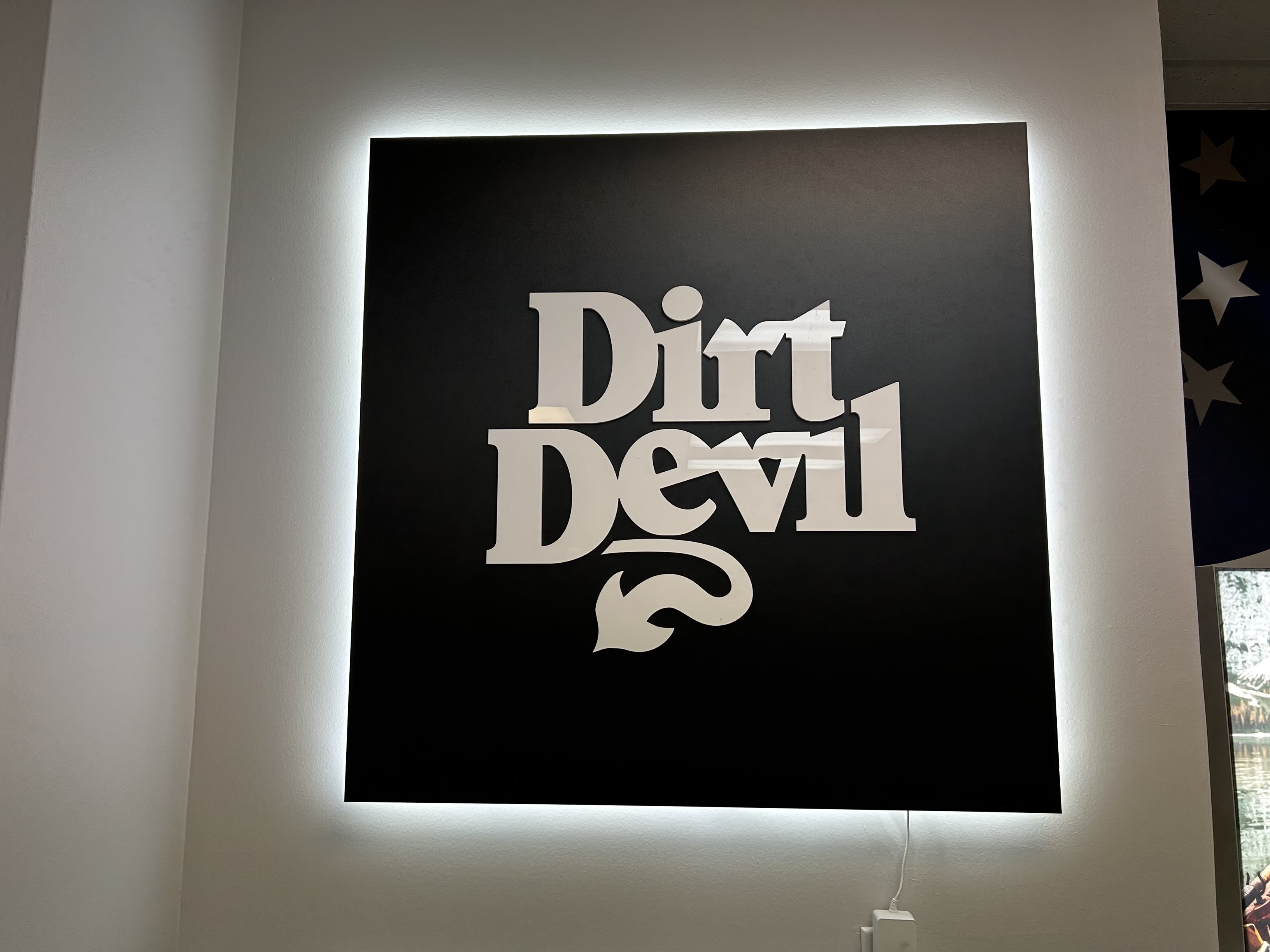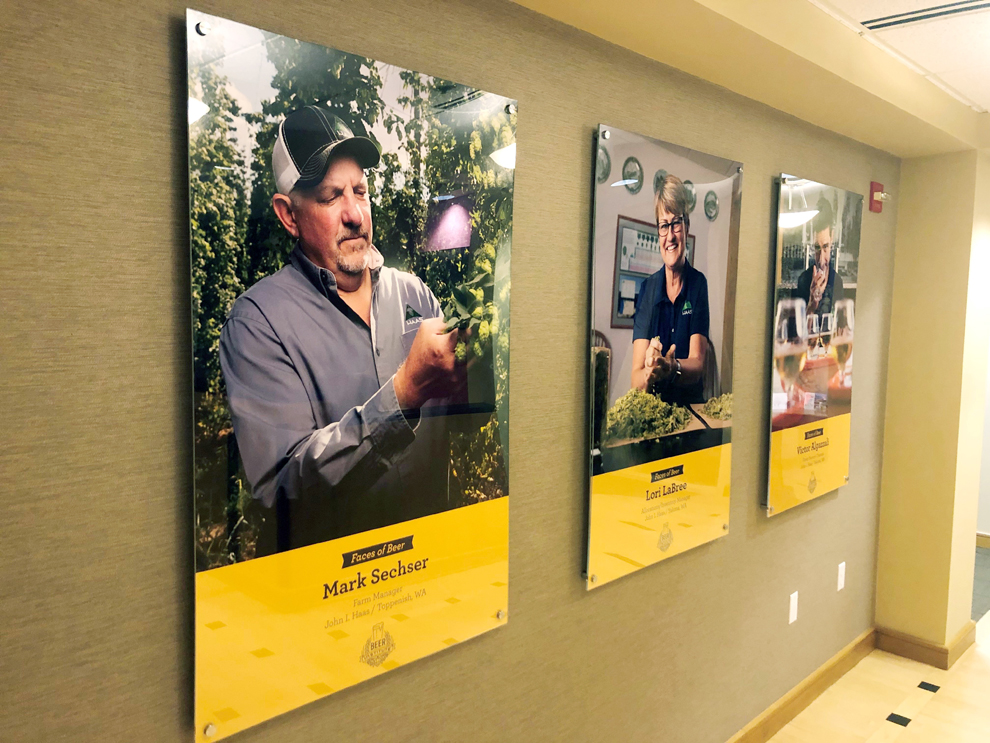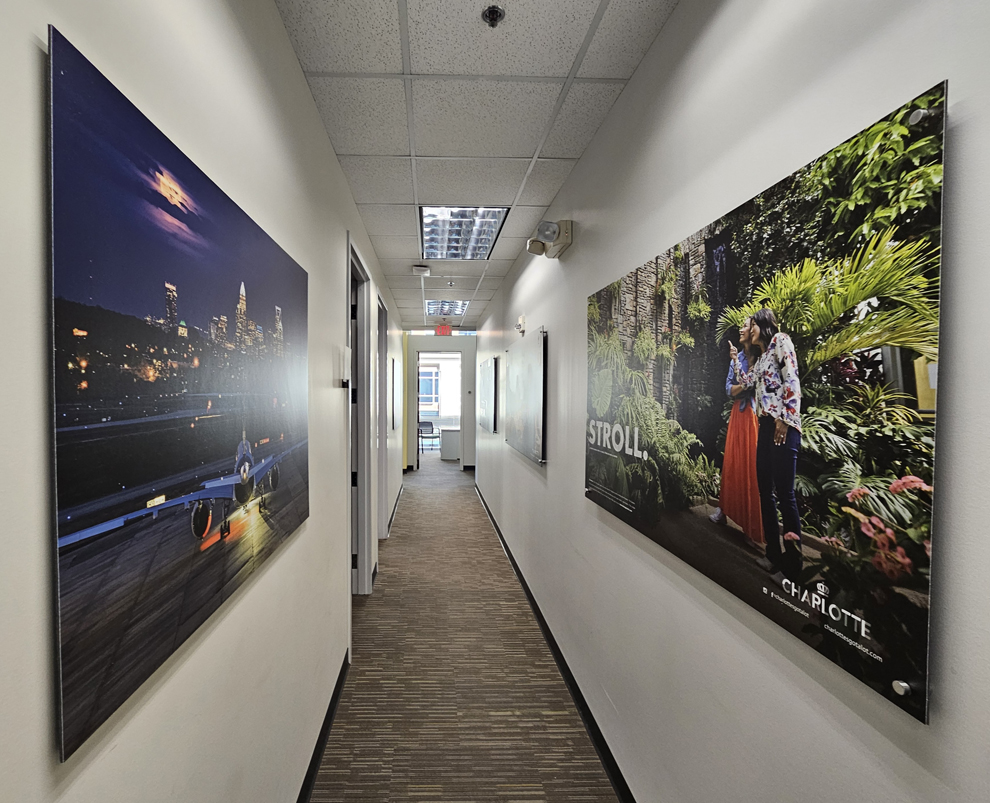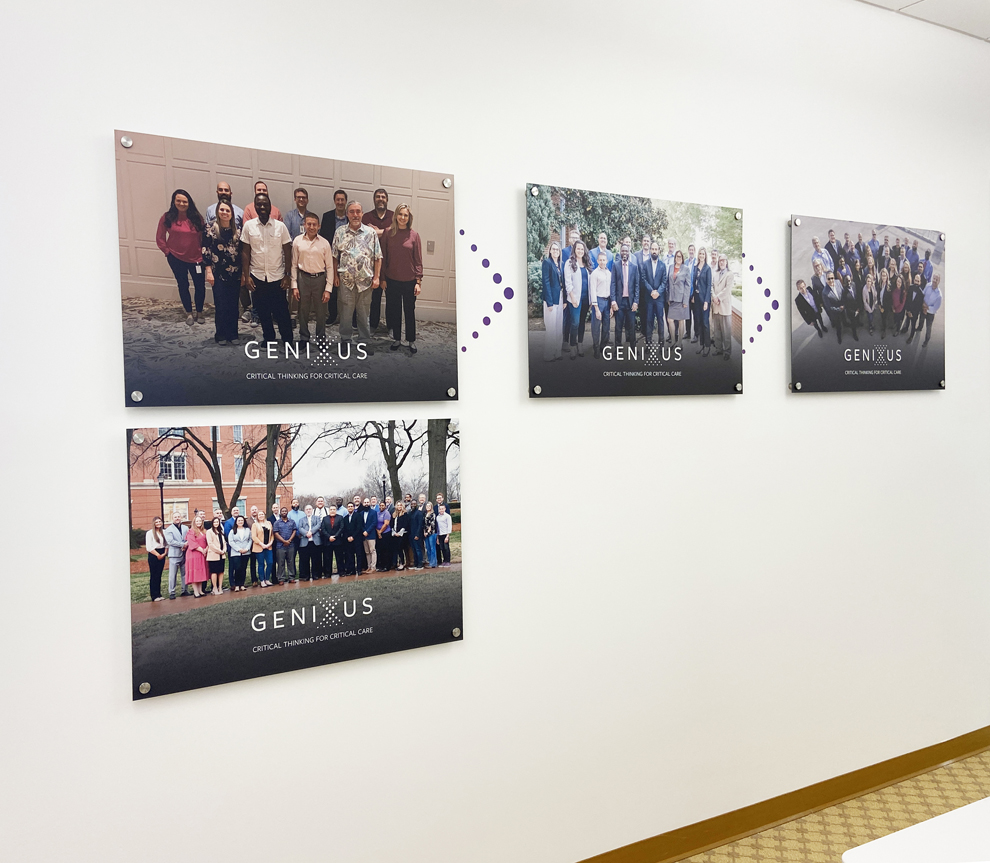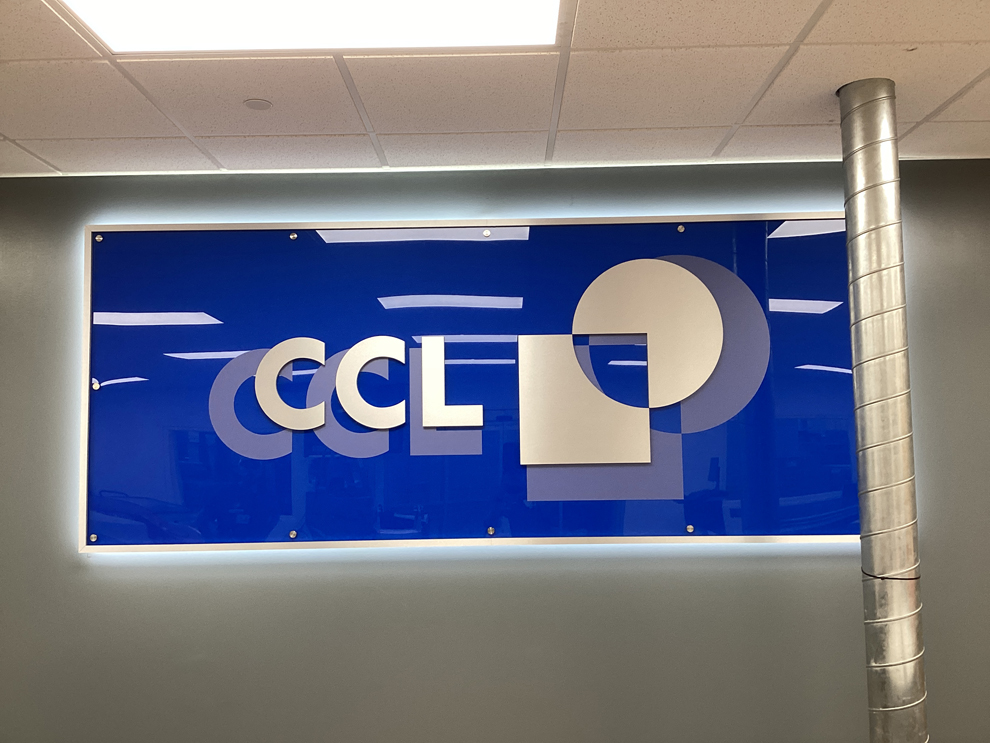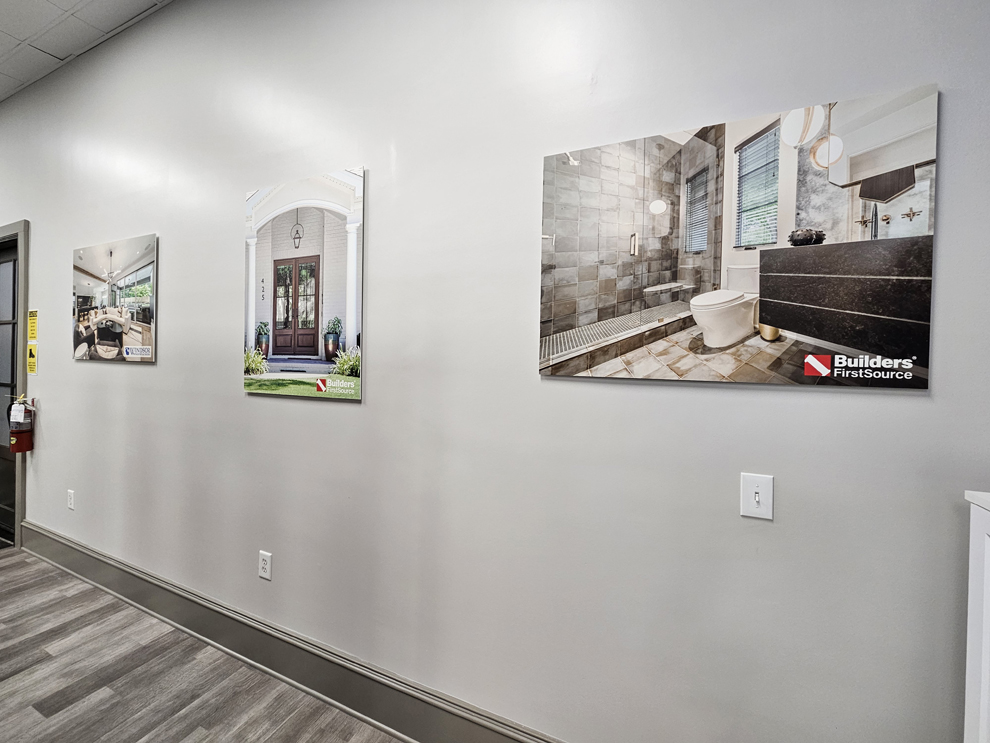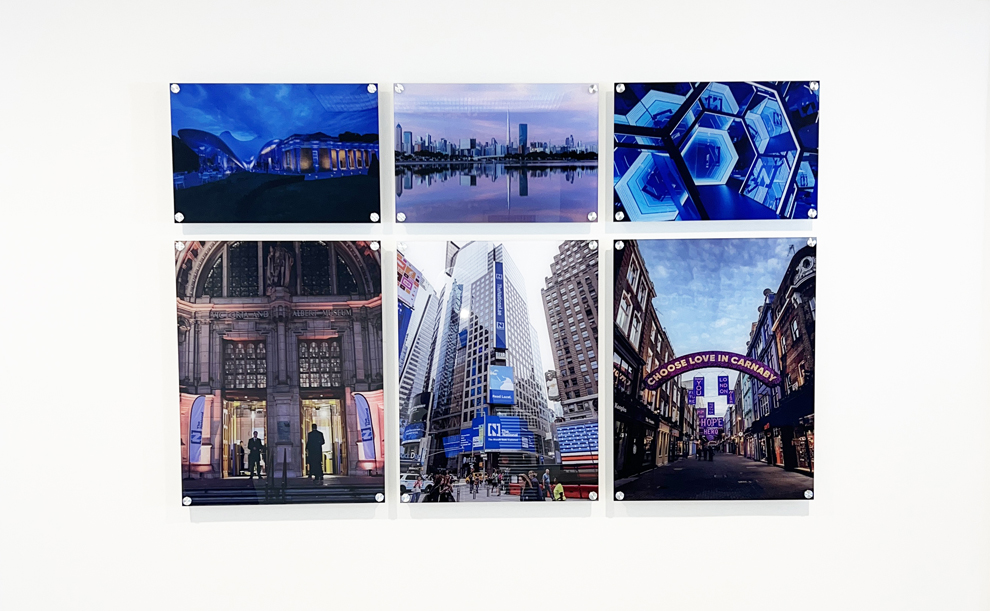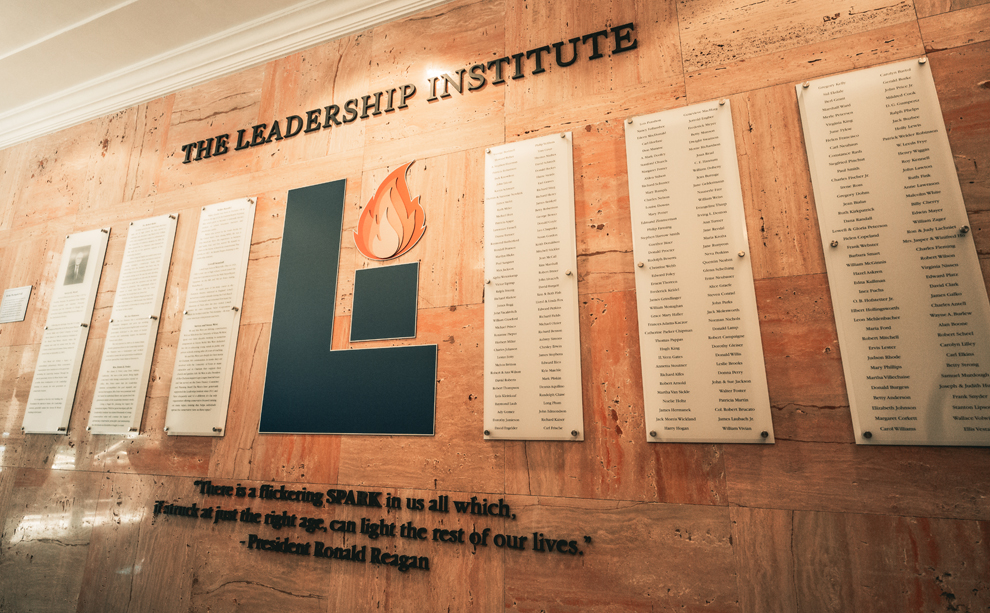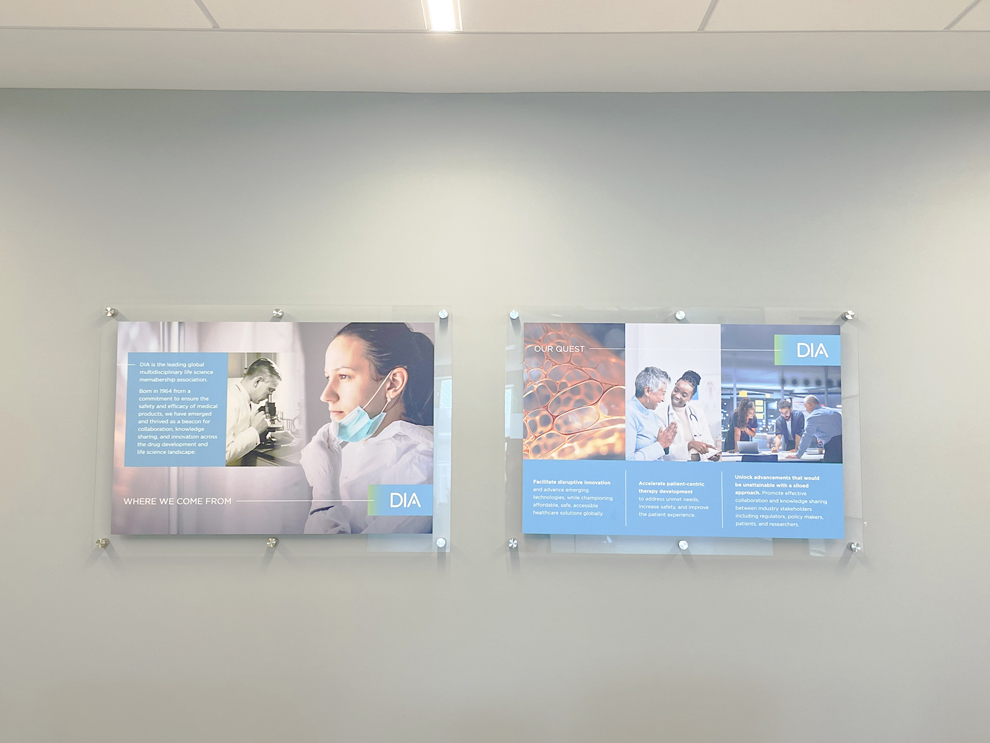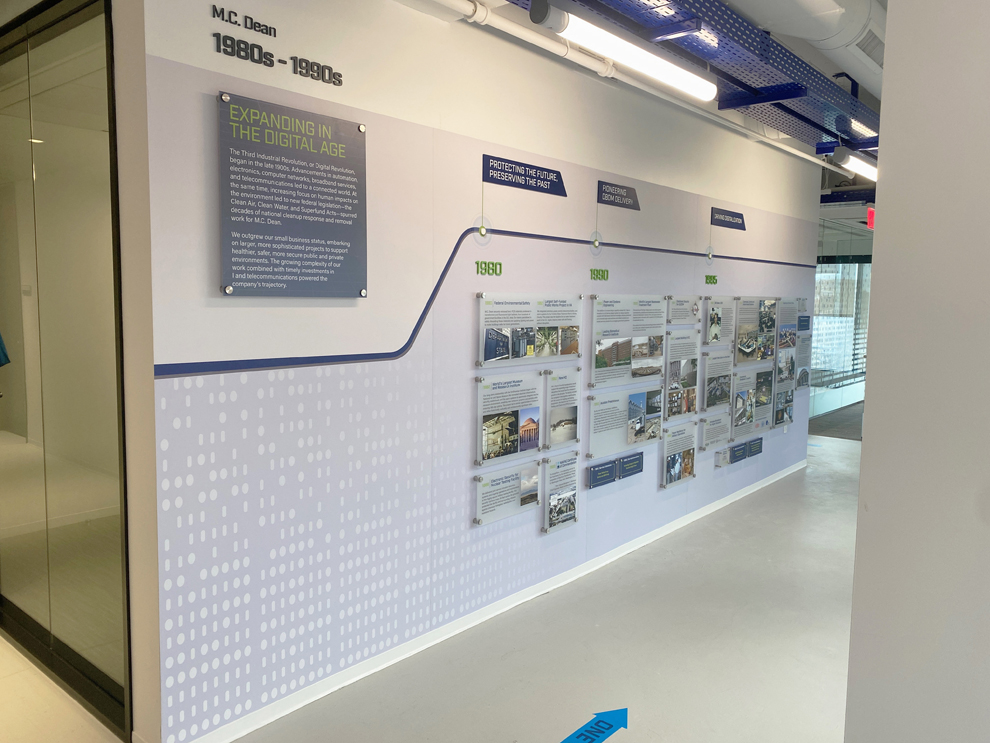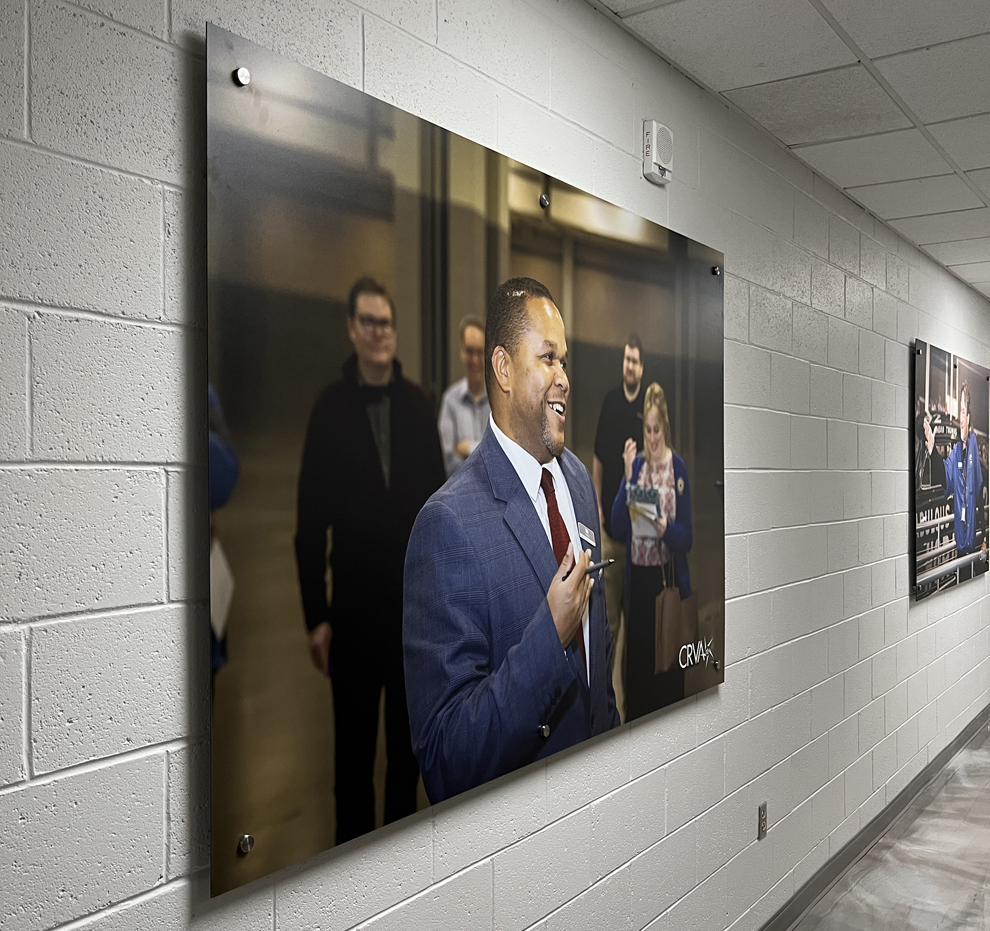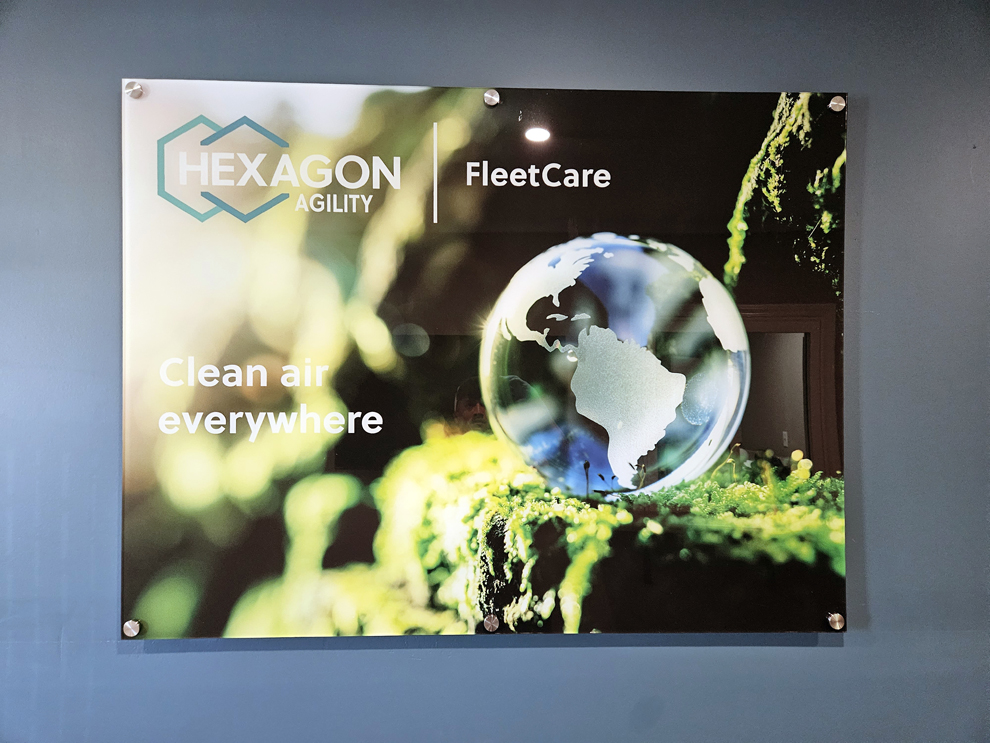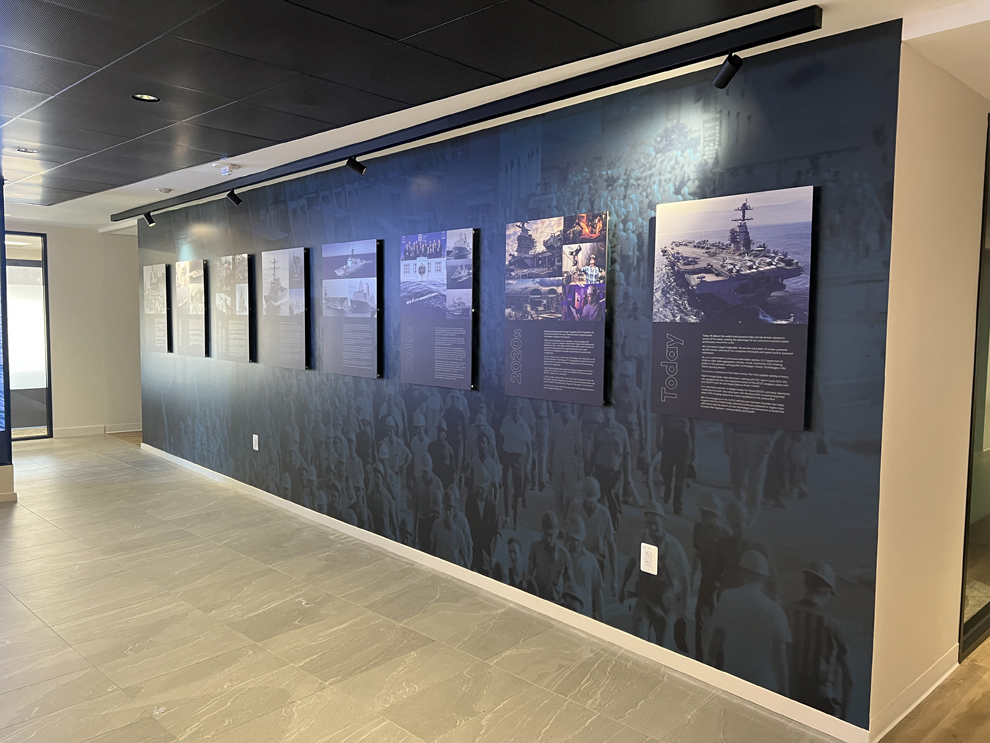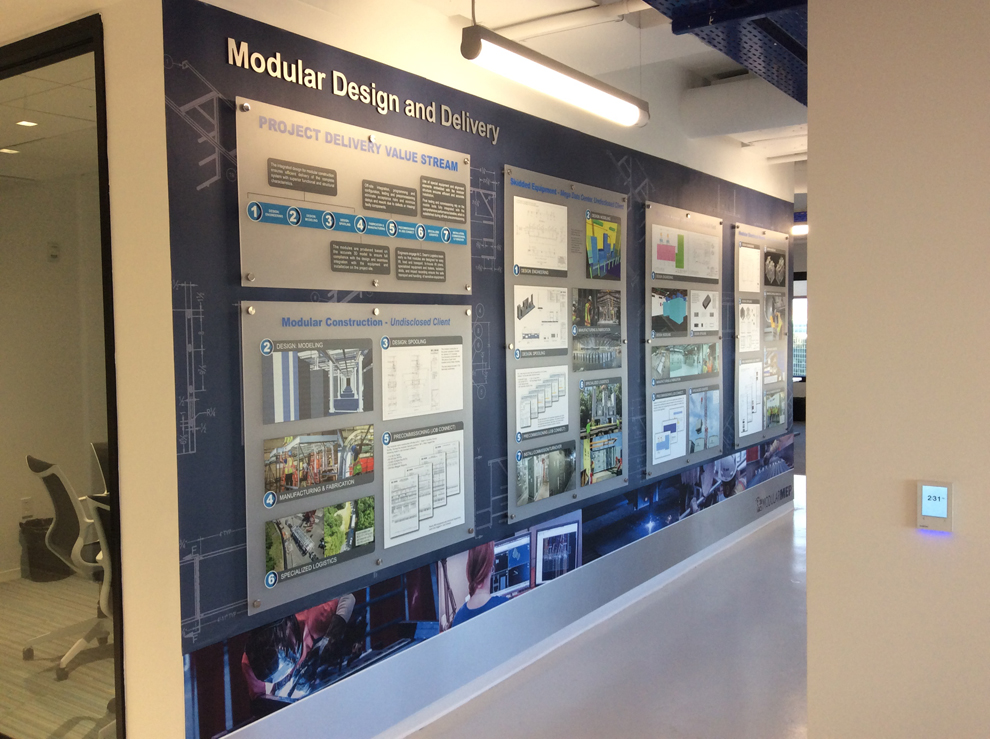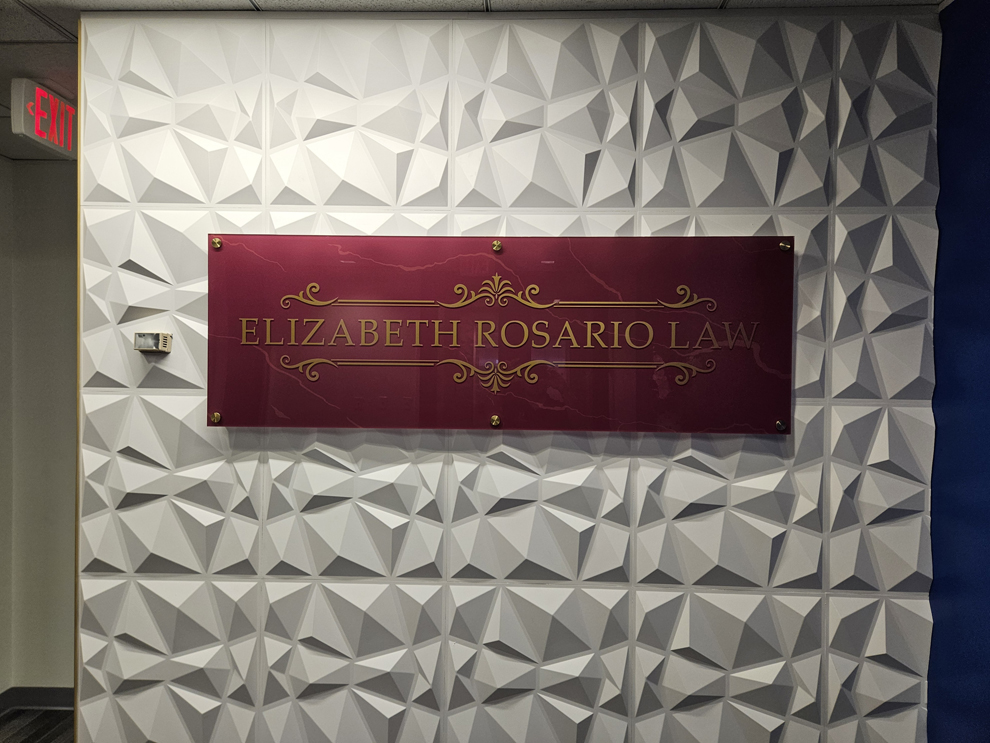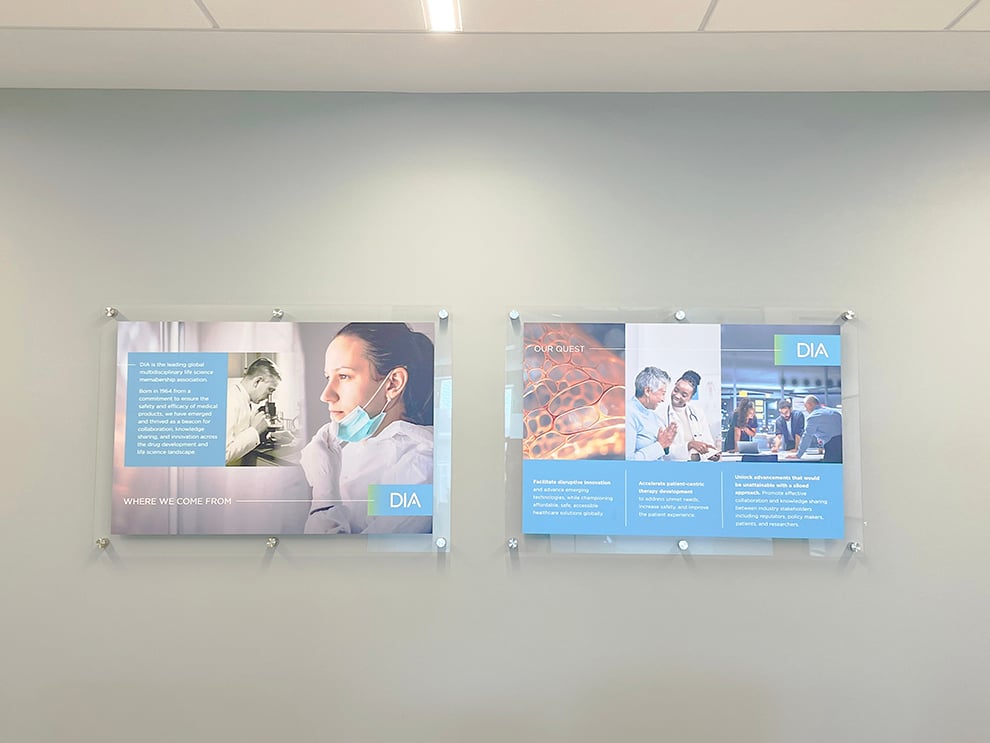
Organizations frequently need a wall feature that communicates identity, presents core values, honors donors or contributors, orients visitors, or documents an organizational history through a dimensional presentation. Standoff mounted signs address that need by suspending a finished panel a measured distance from the wall using visible architectural hardware. The resulting separation produces shadow, depth, and a composed appearance that suits headquarters, association offices, nonprofit workplaces, healthcare facilities, universities, cultural institutions, and professional environments across Alexandria, VA.
Founded in 1977, Heritage Signs & Displays is an award-winning, veteran-owned, family-led company. We serve organizations throughout Alexandria, VA, the wider Northern Virginia corridor, the District, and neighboring Maryland communities using a coordinated process that unites environmental graphic design, project management, production, fabrication, and professional installation. One dedicated Heritage project manager keeps client goals, stakeholder input, site information, approvals, materials, schedule, access requirements, and installation details aligned throughout the engagement.
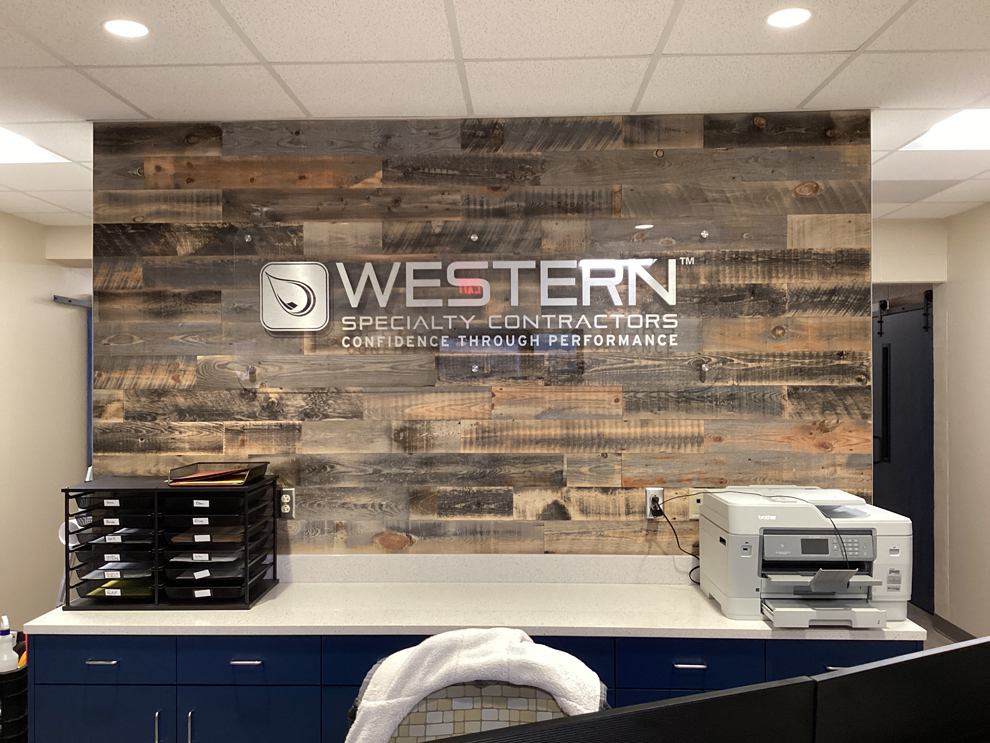
A standoff mounted sign is defined by its attachment method rather than by any single face material. The assembly relies on barrels, caps, fasteners, anchors, and a planned projection distance to hold the sign face forward from its supporting surface. The face itself may incorporate acrylic, aluminum composite material (ACM), printed graphics, dimensional lettering, layered components, or replaceable content. Because acrylic signage accepts many mounting approaches, the projected hardware system is what distinguishes a Heritage standoff mounted sign.
Drilled mounting points are required on every properly installed wall-mounted standoff sign. Anchors and fasteners must be matched to the wall construction, panel weight, hardware layout, anticipated contact, and environmental conditions at the location. Removal will ordinarily leave holes that require patching and refinishing. These displays should therefore be understood as permanent or semi-permanent wall features, not temporary graphics or portable signage.
Projects in Alexandria, VA can introduce specific planning demands that deserve early attention. Installations may involve controlled building access, loading restrictions, certificates of insurance, security procedures, freight-elevator reservations, occupied offices, limited work windows, multiple reviewers, or firm deadlines tied to board meetings, public programs, donor events, ribbon cuttings, and stakeholder visits. Heritage weighs those conditions before fabrication so mounting templates, panel tolerances, access plans, installation timing, and the approved design remain coordinated.
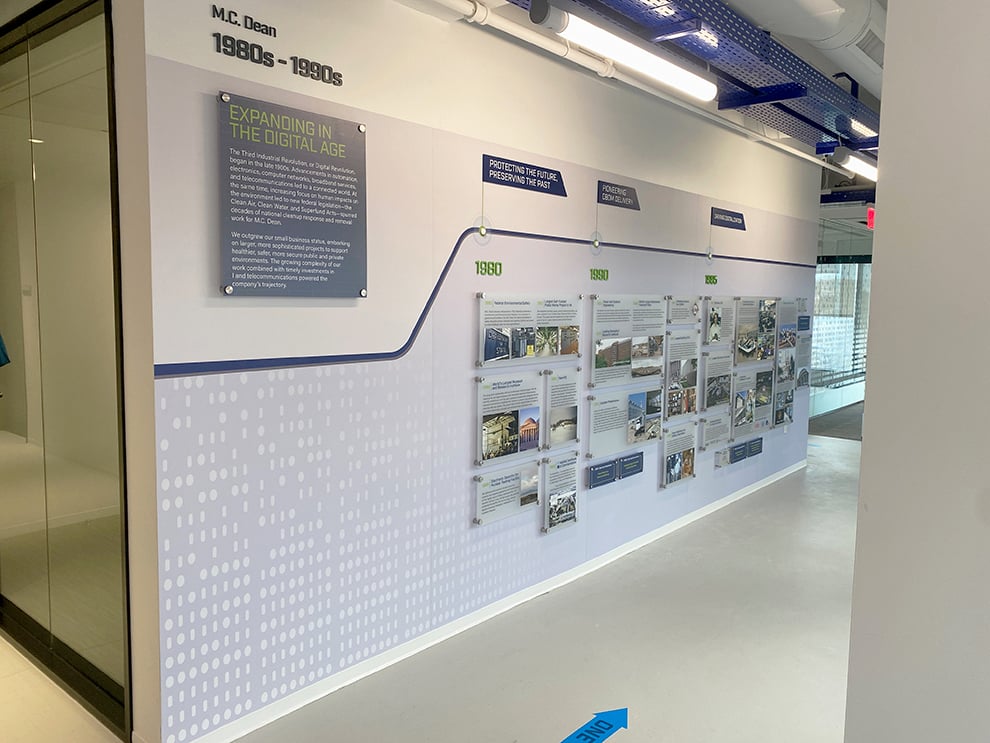
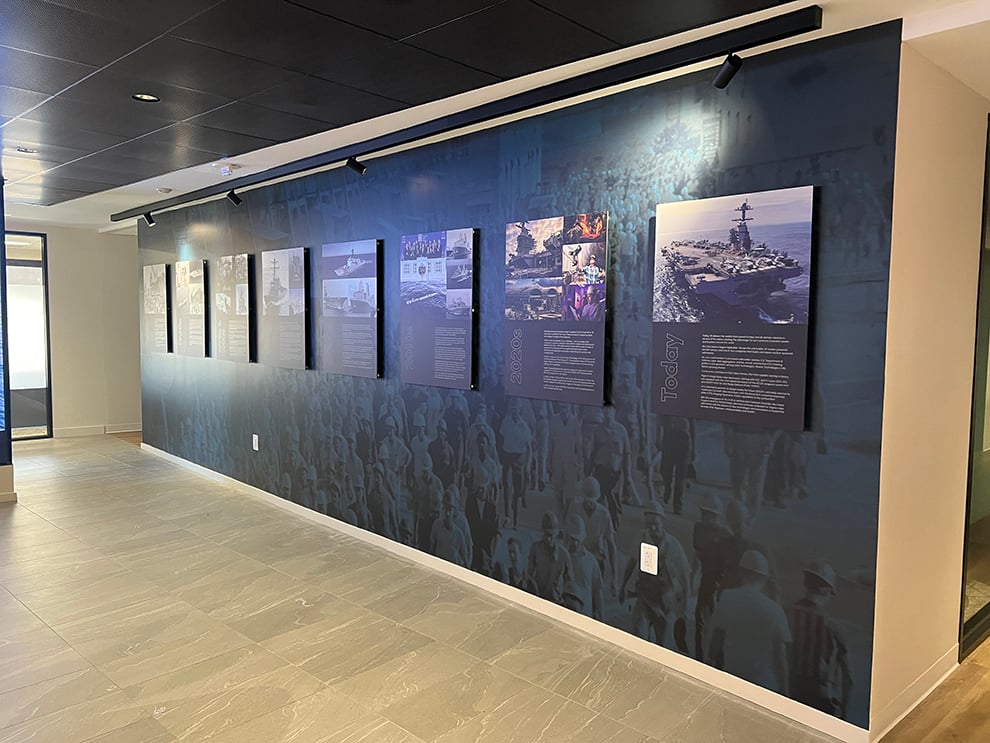
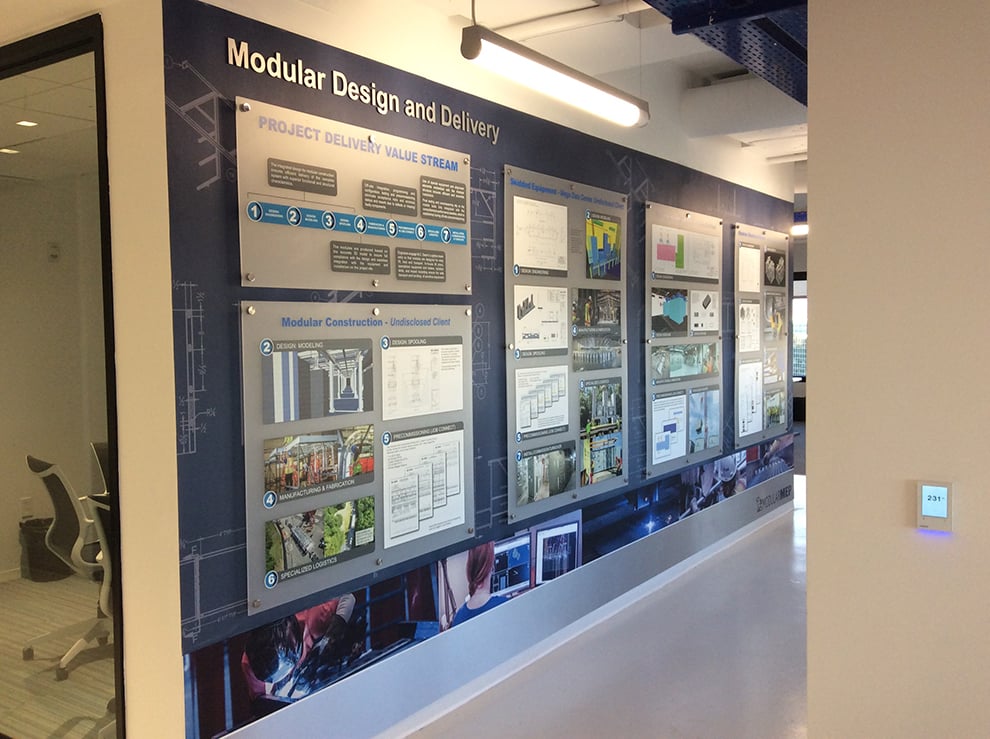
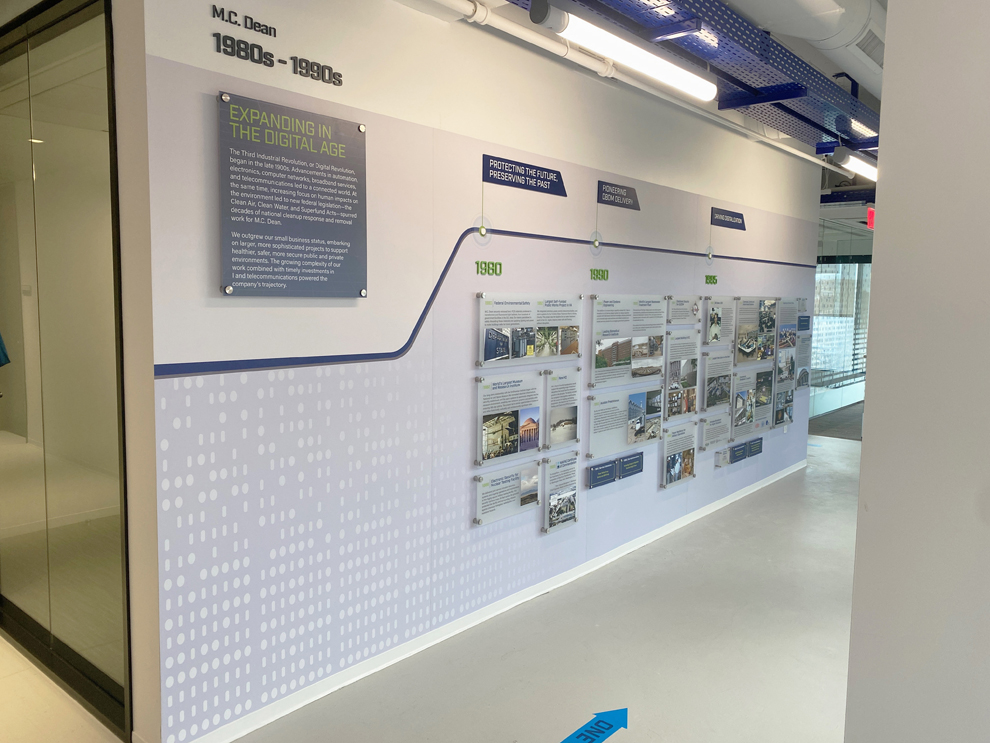
Standoff hardware may also serve as one construction element within a larger installation. Timeline and history features, mission statement and core values presentations, donor recognition and inspiration walls, dimensional logo features, directories, and branded storytelling systems can all use projected panels to structure information or establish hierarchy. The broader Wall Displays page owns those application categories, while this page concentrates on the drilling, projection, hardware, substrate, fabrication, permanence, and installation decisions that make standoff construction dependable.
As a veteran-owned business, Heritage aims to be a trusted resource that honors God by serving clients and communities with excellence. Throughout the Alexandria, VA area, that purpose becomes visible through careful listening, respect for approval processes and client facilities, responsible material recommendations, accurate production, organized installation planning, and accountable follow-through on every commitment.
A finished standoff display can appear straightforward, yet its precision depends on decisions settled long before installation day. Hardware diameter, projection depth, panel thickness, hole locations, anchor type, edge distance, visual balance, cleaning access, and alignment with architectural features must operate together as one integrated system. A minor error in a template or drilling pattern becomes noticeable the moment several caps are expected to hold a clean horizontal or vertical line.
Wall conditions further shape the installation approach. Drywall with suitable backing, masonry, wood, tile, specialty finishes, exterior surfaces, and areas near glass or concealed utilities each require separate evaluation. Panel weight and expected contact guide the load strategy, while exterior exposure introduces moisture, sunlight, temperature swings, wind loads, corrosion resistance, code, and service-life factors that interior work rarely presents.
Heritage links verified field information to design and fabrication before any work is released. That coordination allows the team to select appropriate components, prepare accurate templates, confirm access, and plan installation around the actual site. It also separates a properly engineered standoff feature from a panel fixed with adhesive or hardware chosen only for its appearance.
Alexandria, VA organizations select Heritage when a standoff mounted display must read clearly, satisfy demanding facility requirements, and reflect the credibility of the institution behind it. Heritage Signs & Displays is an award-winning, veteran-owned, family-led company founded in 1977. We contribute experience to headquarters, associations, nonprofits, government-related workplaces, universities, cultural institutions, healthcare facilities, and professional offices across the Northern Virginia region.
A single Heritage project manager directs the work from environmental graphic design and site verification into production, fabrication, and final placement by full-time installers. This connected responsibility protects messaging, brand standards, panel tolerances, hardware placement, stakeholder reviews, security procedures, and scheduling. Installers receive context about the approved concept and building conditions rather than an isolated task handed off at the end of the process.
Resources in Washington, DC, Arlington, Virginia, and Waldorf, Maryland connect field support to Heritage capabilities across the Mid-Atlantic. That structure can serve a single Alexandria facility or a multi-location program without assuming that every wall, approval path, or audience is identical. Our purpose calls us to honor God through excellent service to clients and communities, evident in responsible recommendations, respect for facilities, accurate execution, and dependable follow-through.
The related-product gallery highlights eight direct connections to standoff mounted signs without diverting attention from the hardware, projection, wall penetration, and installation requirements this product demands. Each category answers a different buyer question within an Alexandria, VA workplace or institutional project.
Wall wraps convert plain walls into bold branded surfaces that reinforce identity in Alexandria, VA workplaces and produce immersive visual backdrops for meetings and events.
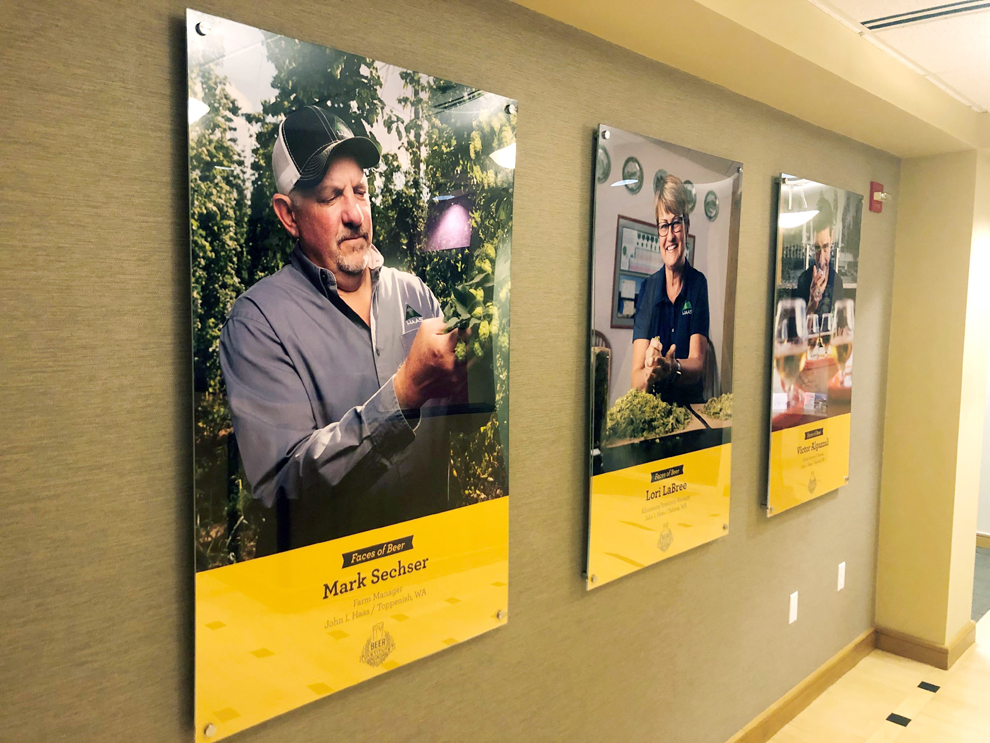
Window graphics apply branding, messaging, and visual interest to glass while helping Alexandria, VA workplaces and event spaces feel more polished and unified.
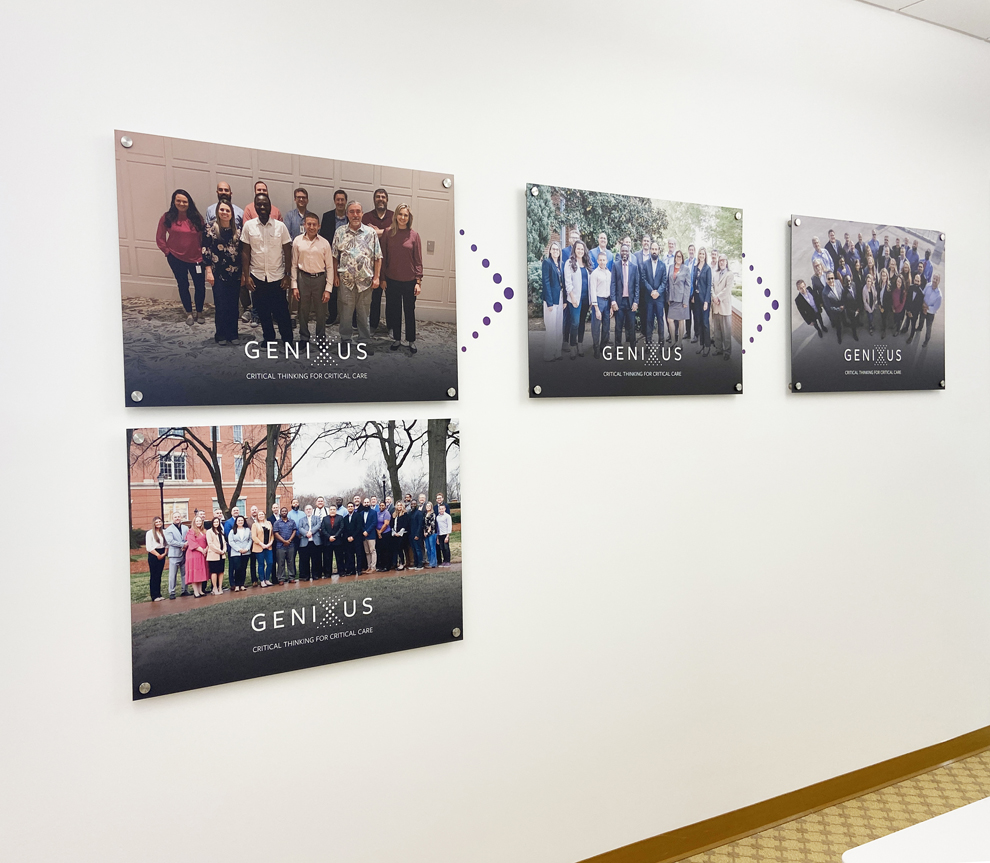
Lobby signs center on organizational identity and the arrival experience, and standoff construction may support the feature when architectural hardware and measured depth suit the setting.
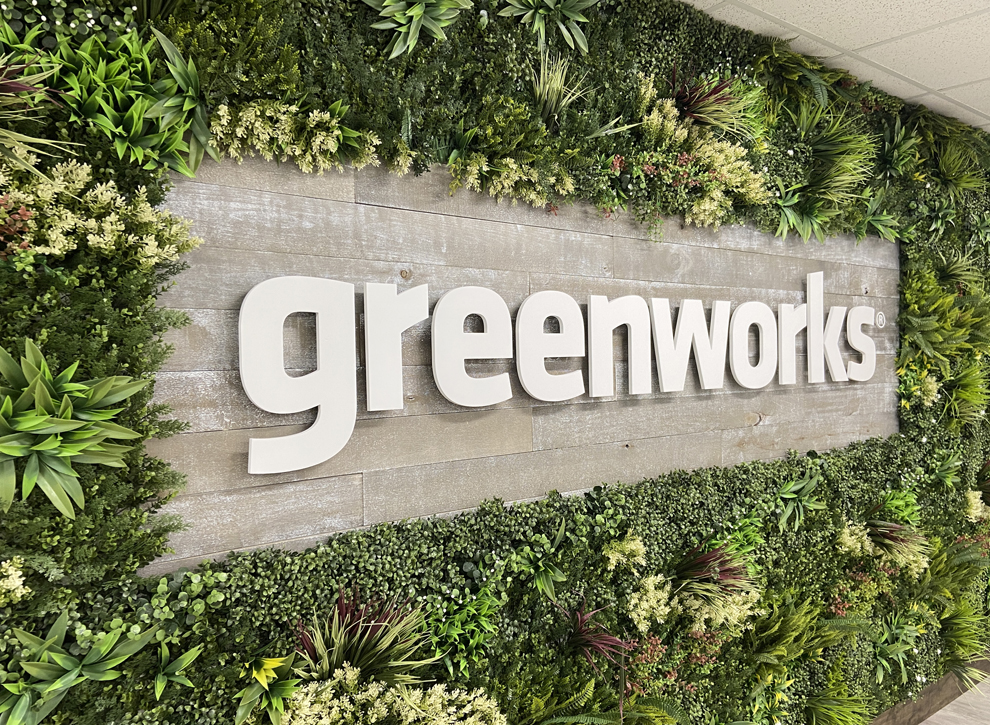
Frosted vinyl introduces privacy to glass while carrying subtle branded elements that improve the appearance and function of interior workplace and event spaces.
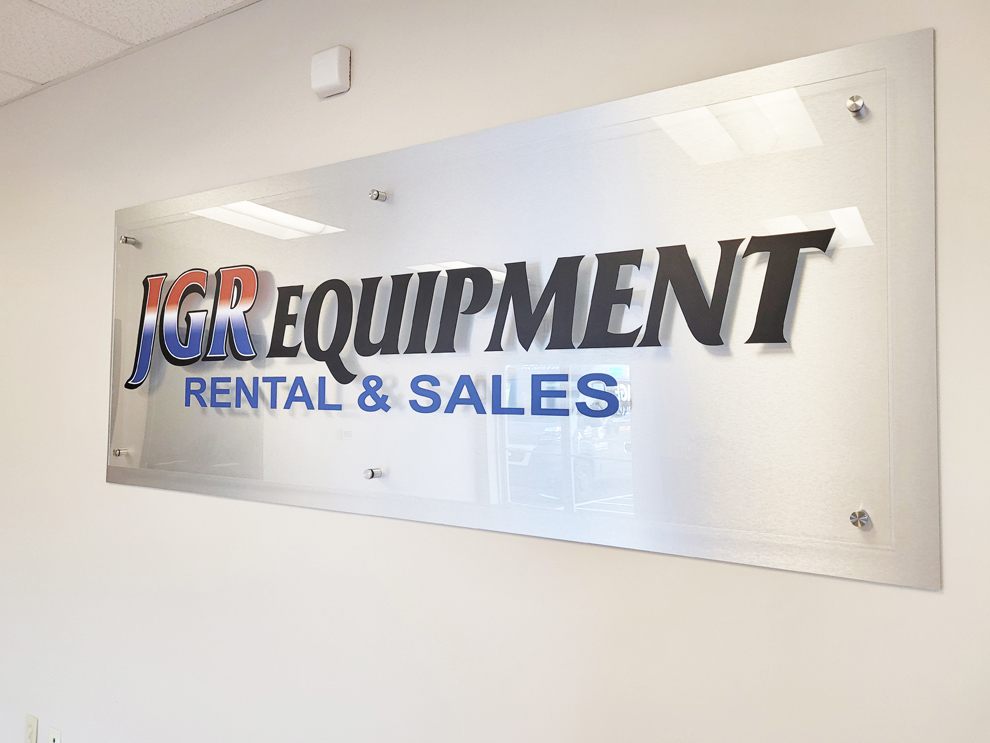
Elevator wraps convert high-traffic transit areas into branded touchpoints that extend messaging through an office building, hotel, campus, or venue.
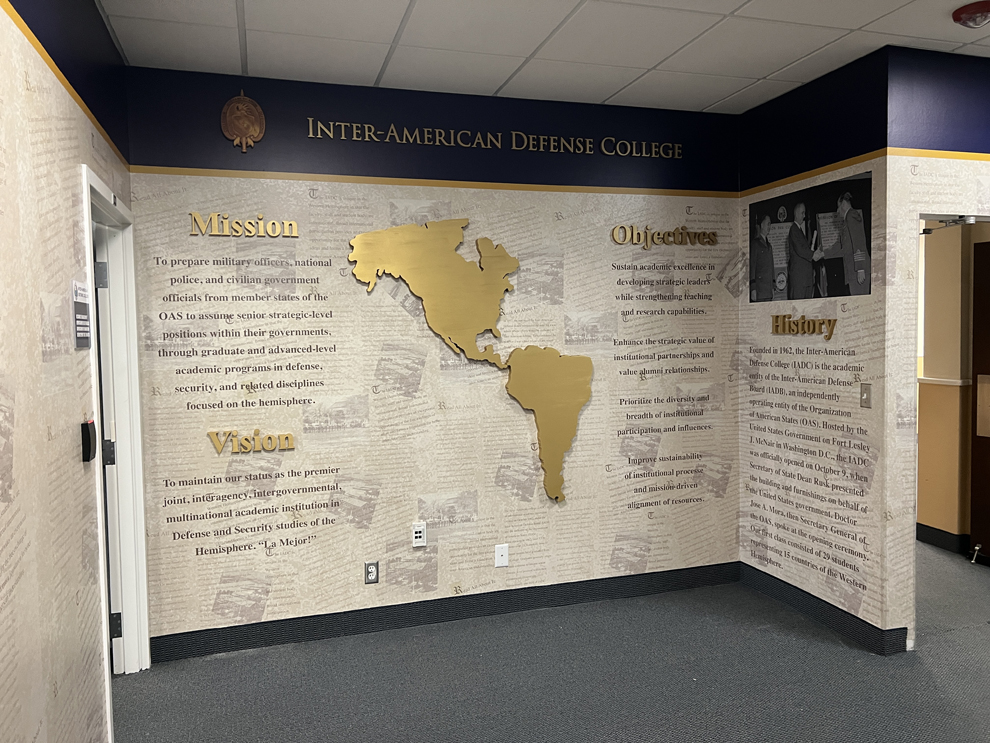
Dimensional letters build depth through individual characters and shapes that may mount directly to a wall or coordinate alongside a projected standoff panel.
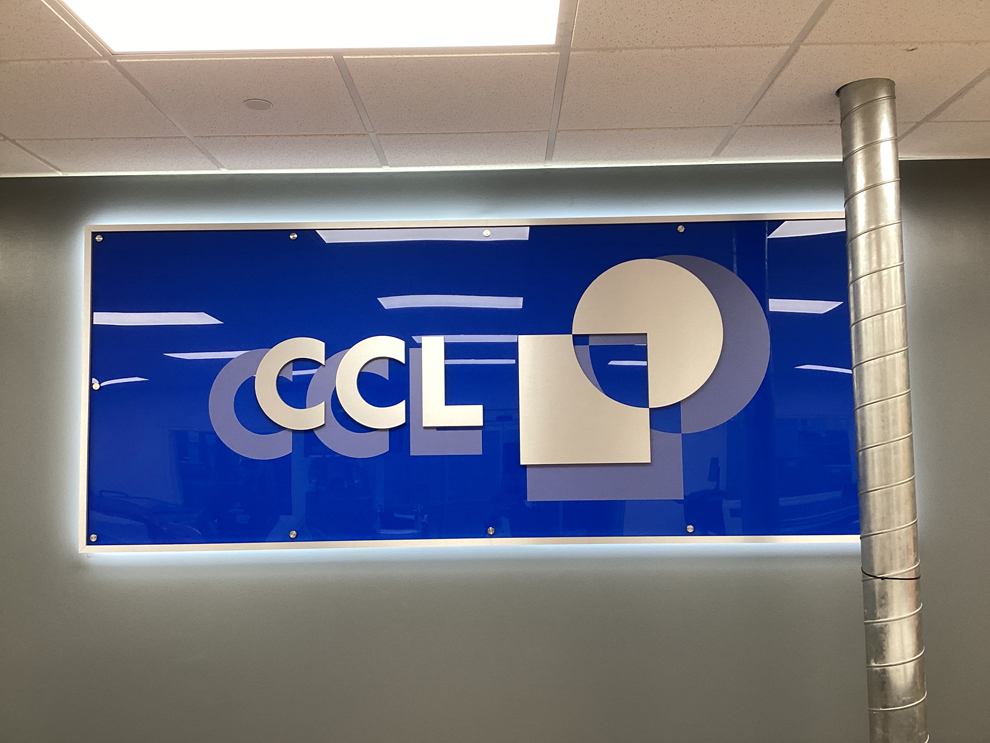
Acrylic signs address the face material itself, including clear, frosted, opaque, printed, and layered treatments, along with mounting options beyond standoff hardware.
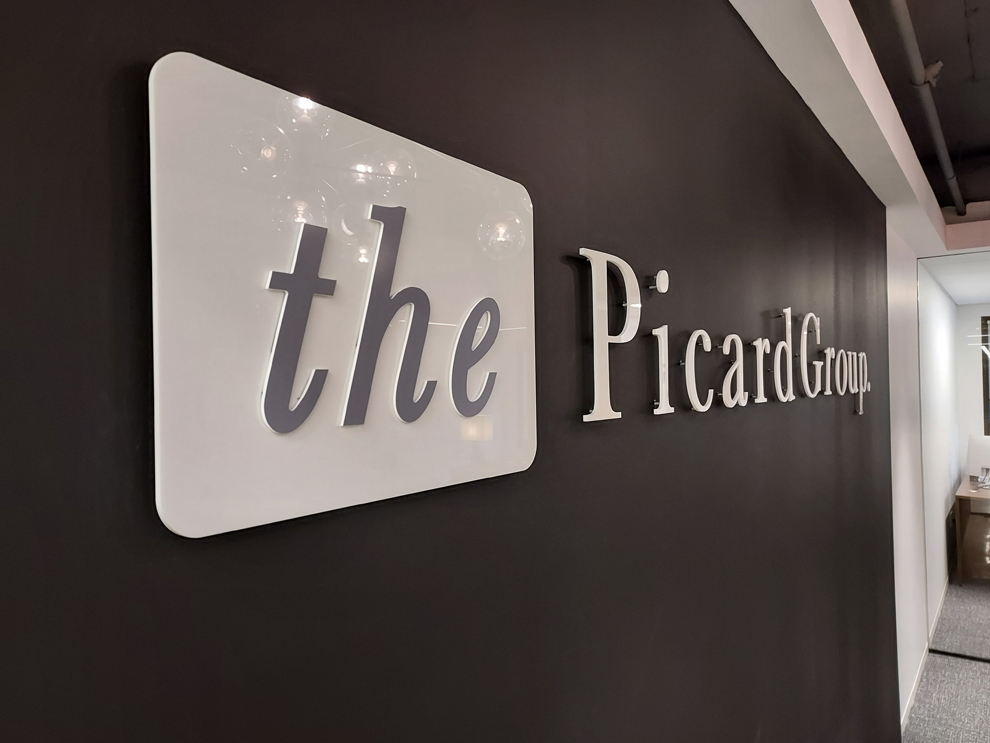
Wall displays own the broader mission, values, inspiration, history, recognition, culture, and storytelling applications that may incorporate projected standoff panels.
Bring Heritage Signs & Displays into your Alexandria, VA standoff project while the message, wall conditions, stakeholder approvals, and building procedures can still be planned together. Use the Get Started Now form to describe the audience and objective, then include the site address, required completion date, brand standards, photographs or drawings, approximate dimensions, known access restrictions, and anticipated scope. A Heritage project professional will evaluate the proposed wall application, identify information requiring verification, and recommend an appropriate next step for a coordinated Mid-Atlantic project spanning design, fabrication, and professional installation.
Heritage supports Alexandria, VA projects through resources in Washington, DC, Arlington, Virginia, and Waldorf, Maryland. This structure links site surveys, field verification, project management, production, fabrication, and installation planning for organizations across Northern Virginia and the surrounding Capital Beltway. It serves business communities in Alexandria, Arlington, Tysons, Fairfax, Reston, Falls Church, Springfield, and McLean, with additional regional reach into Washington, DC, Maryland, and Baltimore.
A single engagement may connect an Old Town association office, a headquarters near the Eisenhower Avenue corridor, a Fairfax contractor workplace, and a nearby Maryland campus under shared brand standards. One dedicated Heritage project manager coordinates materials, hardware finishes, typography, color references, panel logic, production records, and installation expectations while each site receives its own dimensional, surface, access, and audience review.
Buildings across Northern Virginia differ in wall construction, security, loading, work hours, stakeholder expectations, and approval paths. Heritage reconciles the shared brand standard with site-specific execution so multi-location clients receive a recognizable system backed by informed local planning and accountable regional production resources.
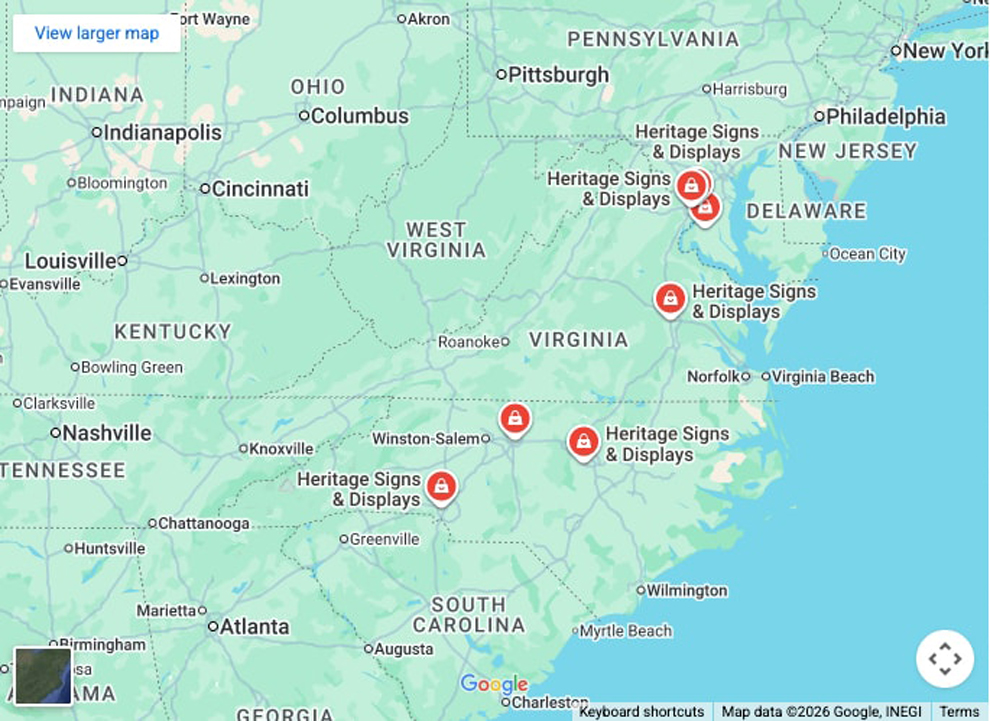
Heritage environmental graphic designers connect standoff displays to their message, audience, viewing path, and architectural setting. They resolve hierarchy, scale, typography, contrast, panel divisions, and placement before selecting the details that support the concept. This discipline matters in Alexandria, VA workplaces where a display should convey confidence and permanence without becoming promotional or visually loud.
Material selection influences weight, transparency, edge appearance, printed color, durability, cleaning, and the relationship to surrounding finishes. Acrylic can produce clear, frosted, opaque, or layered effects. Aluminum composite material (ACM) delivers a durable, professional metal-surface appearance at substantially less weight than solid metal. Printed graphics, dimensional lettering, vinyl elements, replaceable inserts, and approved rigid substrates may be combined when fabrication and mounting requirements allow.
Projection depth and hardware finish should reinforce the design without competing with it. Heritage weighs panel proportions, content margins, cap spacing, wall color, light sources, reflections, expected viewing distance, nearby doors, casework, artwork, and building features as one composition. Uniting environmental graphic design with production and installation lets material choices, mounting templates, hardware placement, and wall conditions inform the solution before fabrication starts.
Installation planning across Northern Virginia frequently involves more than selecting a date. Buildings may require advance vendor registration, certificates of insurance, security clearance, loading-dock reservations, freight-elevator scheduling, escorted access, restricted tools, after-hours work, or coordination with property managers and facility teams. Occupied offices, public-facing lobbies, and fixed stakeholder events can narrow the available work window even further.
Heritage collects those requirements while design and fabrication decisions can still respond to them. Available drawings, photographs, field measurements, wall construction, finish conditions, hardware locations, installer access, staging space, protection requirements, and removal of packaging or debris all inform the installation plan. Complex or high-visibility projects may warrant a site survey when client-supplied information cannot verify conditions reliably.
Heritage installation team members install the signs and displays we produce, fabricate, or procure within a Heritage-managed project. We do not provide installation-only services for products manufactured by another company. Retaining responsibility for the approved concept, materials, templates, hardware, fabrication tolerances, site information, and final placement gives Alexandria, VA clients a clearer line of accountability when access is demanding and the finished presentation carries weight.
Heritage suits organizations seeking a standoff feature or coordinated signs, panels, graphics, and wall displays managed through one accountable process. The project may serve a lobby, headquarters, association office, institution, donor area, cultural facility, healthcare setting, campus, or workplace. It should benefit from discovery, environmental graphic design, site evaluation, production, fabrication, project management, and professional installation working in concert.
Heritage-managed Alexandria, VA projects begin with an overall project investment of $5,000. This starting point applies to the complete project, not to each panel, letter, cap, or standoff considered separately. Dimensions, content development, design requirements, materials, hardware, fabrication complexity, wall conditions, exterior exposure, access, stakeholder approvals, installation scheduling, and related signs or graphics all influence the final investment.
Most Heritage standoff projects serve interior walls. A suitable exterior wall application may be considered as an exception when the substrate, graphics, hardware, anchors, wall construction, exposure, code requirements, and expected service life support it. Heritage does not specialize in channel letters, monument signs, pylons, or traditional exterior sign programs, and we do not install products made by outside providers. Careful qualification protects the design, the installation, and the client experience.
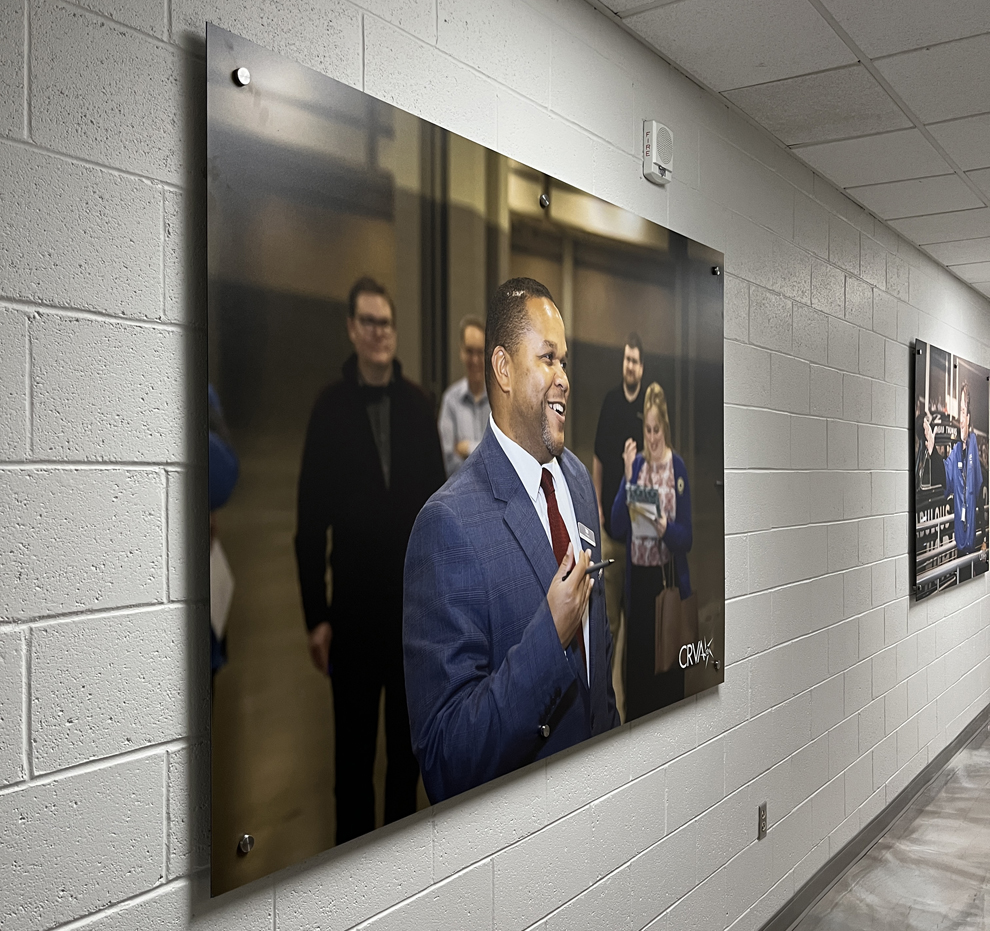
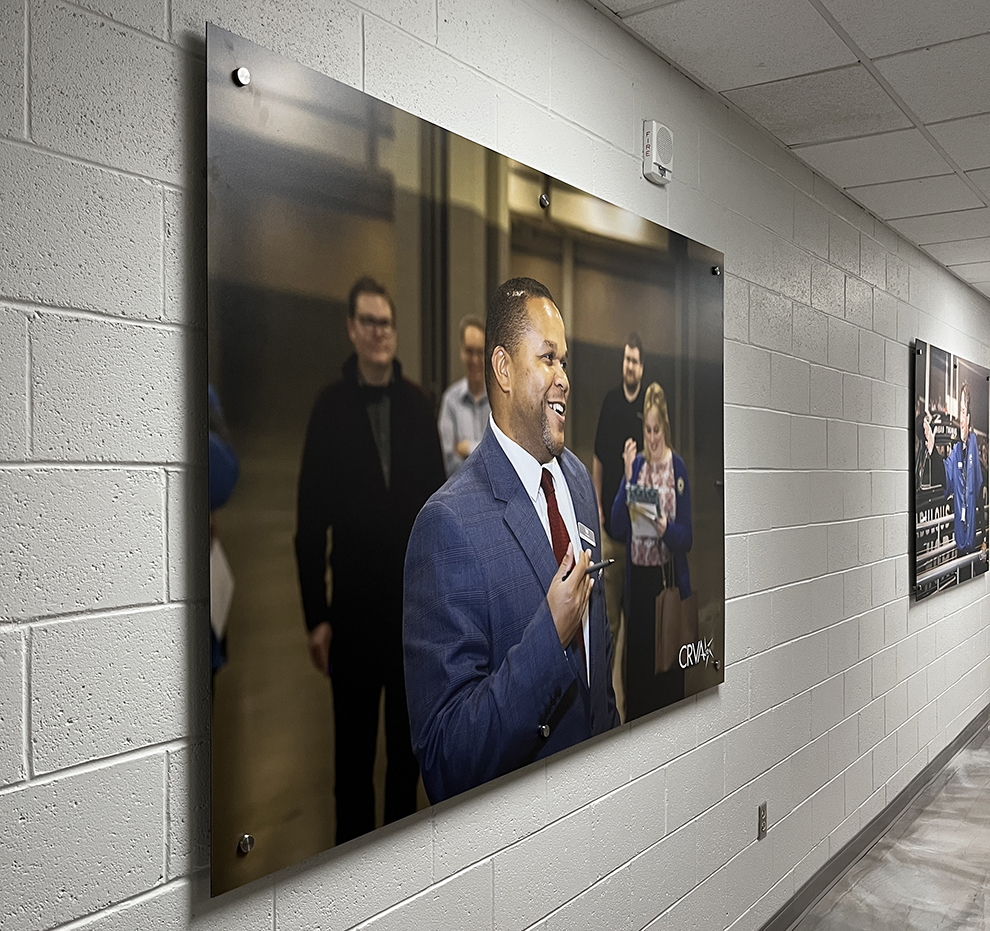
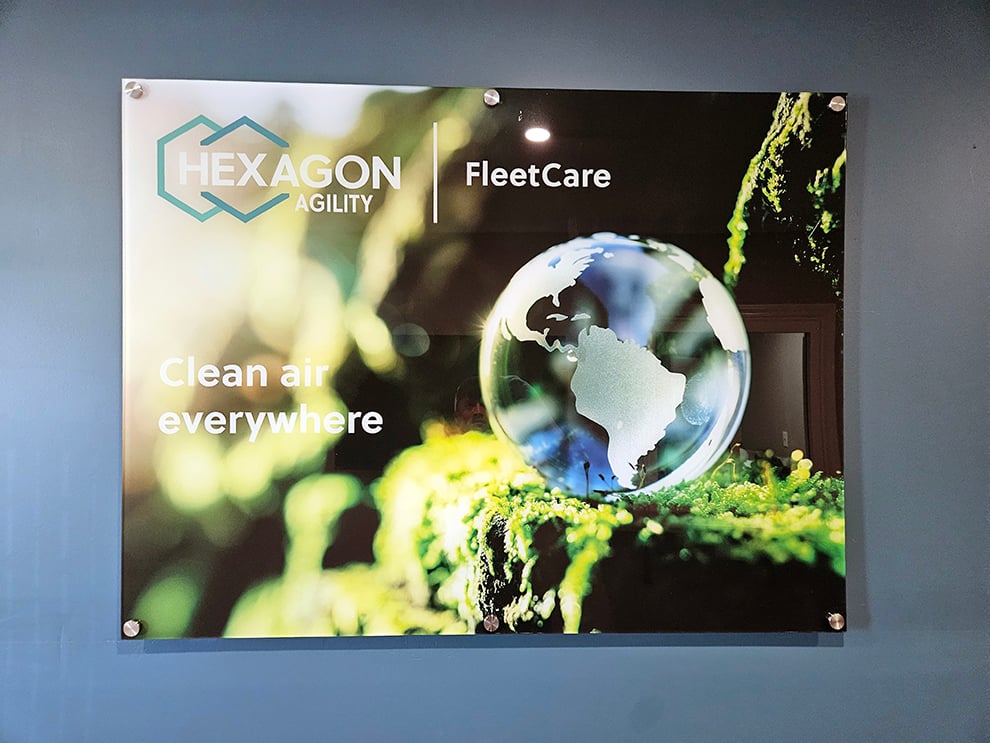
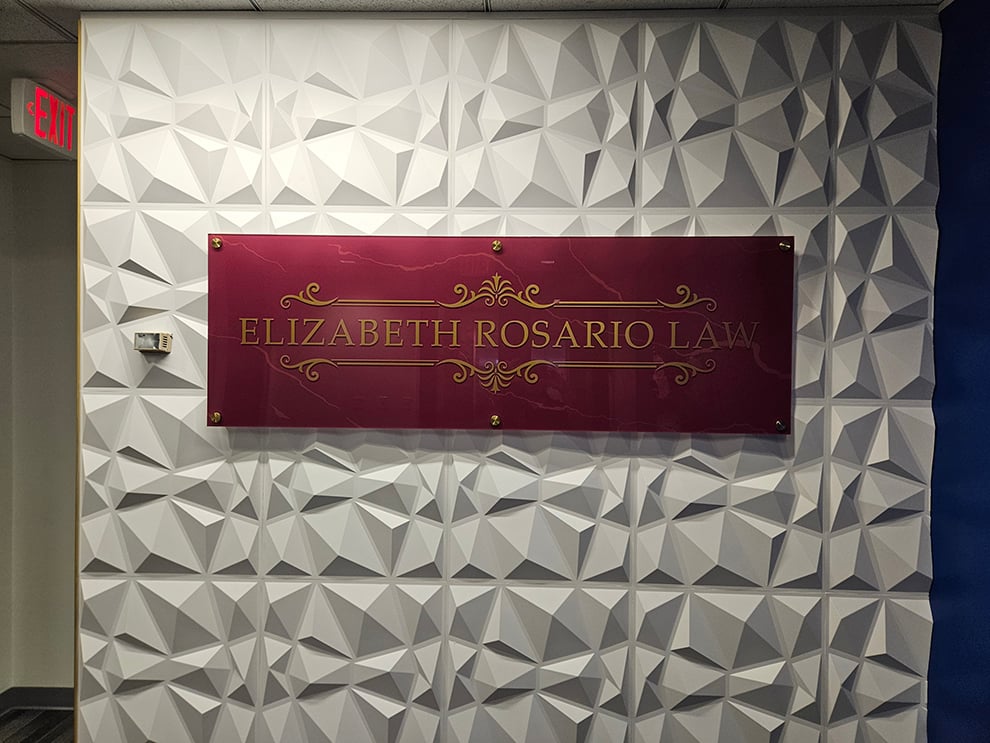
Standoff mounted signs use visible architectural hardware to position a finished panel or dimensional element a measured distance from a wall. The gap produces depth and shadow while making the barrels and caps part of the presentation. The face may carry a logo, mission statement, recognition content, history, directory information, printed graphics, or another message intended for permanent or semi-permanent display.
Yes. A properly installed wall-mounted standoff sign requires drilled mounting points and mechanical anchors or fasteners suited to the wall and the load. Adhesive alone does not create a true standoff installation. The hole pattern must correspond to the fabricated panel and hardware so the finished face stays level, evenly projected, and securely attached.
Standoff mounted describes the attachment and projection system. Acrylic describes a material that can be printed, layered, routed, flush mounted, suspended, adhered, or installed with several hardware choices. A standoff sign may use acrylic, but it can also use ACM or another approved face construction. The two terms therefore answer different questions about the finished product.
Drywall, masonry, wood, blocking, tile, and selected specialty wall systems may support standoff hardware when construction, condition, load capacity, and hidden conditions are understood. Each surface can require different drilling methods, anchors, or clearances. Unknown backing, fragile finishes, concealed utilities, and limited access may call for a survey or further investigation before the mounting plan is confirmed.
Heritage identifies building procedures early, including vendor registration, certificates of insurance, security clearance, loading restrictions, freight-elevator reservations, escorted access, tool limitations, occupied-space protection, and approved work hours. One dedicated project manager coordinates those requirements with fabrication and installation planning so the team arrives with the necessary information, approved materials, site contacts, and a realistic work window.
Yes. Heritage can produce and install standoff signs for suitable exterior wall applications. The team evaluates face substrates, graphics, hardware, fasteners, anchors, finishes, wall construction, moisture, sunlight, temperature changes, wind loads, corrosion exposure, code, maintenance, and intended service life before recommending the system. Exterior approval is specific to the product and site rather than a universal extension of every interior construction.
No. Heritage does not provide installation-only service for signs or displays produced by another company. Templates, panel tolerances, hardware, anchors, material condition, design assumptions, and fabrication accuracy all affect installation quality. Heritage installs products we produce, fabricate, or procure within a Heritage-managed project so responsibility stays connected from planning through placement.
Heritage-managed Alexandria, VA projects begin with an anticipated overall project investment of $5,000. This is the starting point for the complete project, not the price of each panel, letter, cap, or standoff. Dimensions, design, materials, hardware, content preparation, fabrication, wall conditions, exterior exposure, site access, approvals, installation, and related signs or graphics influence the final investment.
Some projects can combine standoff panels with halo lighting, backlighting, illuminated lettering, or nearby architectural lighting. Heritage design, production, and installation teams evaluate electrical supply, wire routing, mounting depth, ventilation, service access, wall construction, code, and exposure before fabrication. When illumination becomes the defining feature, the Backlit Signs page may provide a more appropriate product path.
Useful information includes the installation address, desired completion date, immovable meetings or opening dates, wall photographs, approximate dimensions, drawings, brand standards, vector files, intended message, material preferences, update expectations, wall construction, exterior exposure, building procedures, access limitations, and anticipated overall scope. A dedicated project manager can then identify missing decisions, survey needs, approval milestones, fabrication considerations, and a realistic sequence for the work.
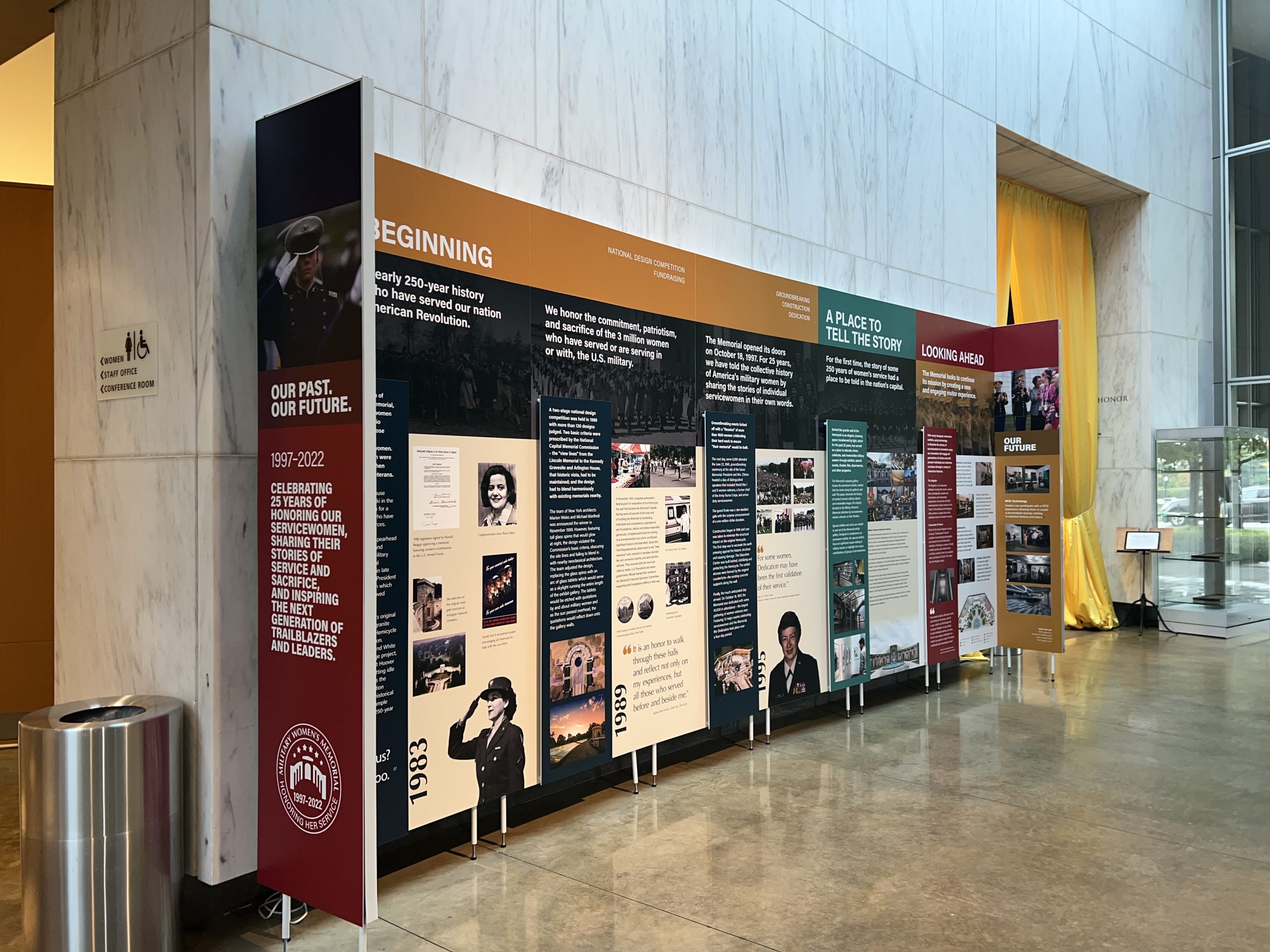
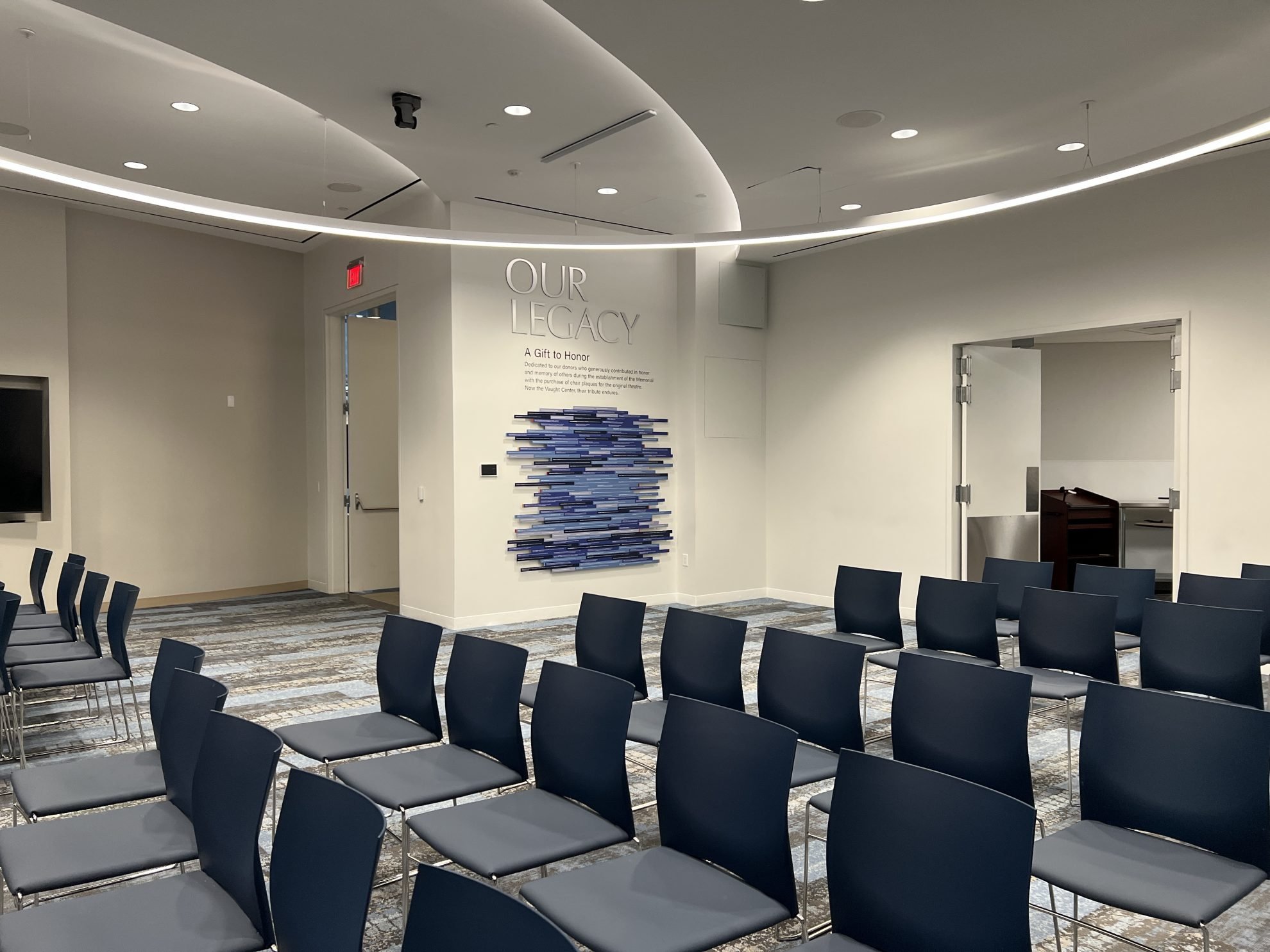
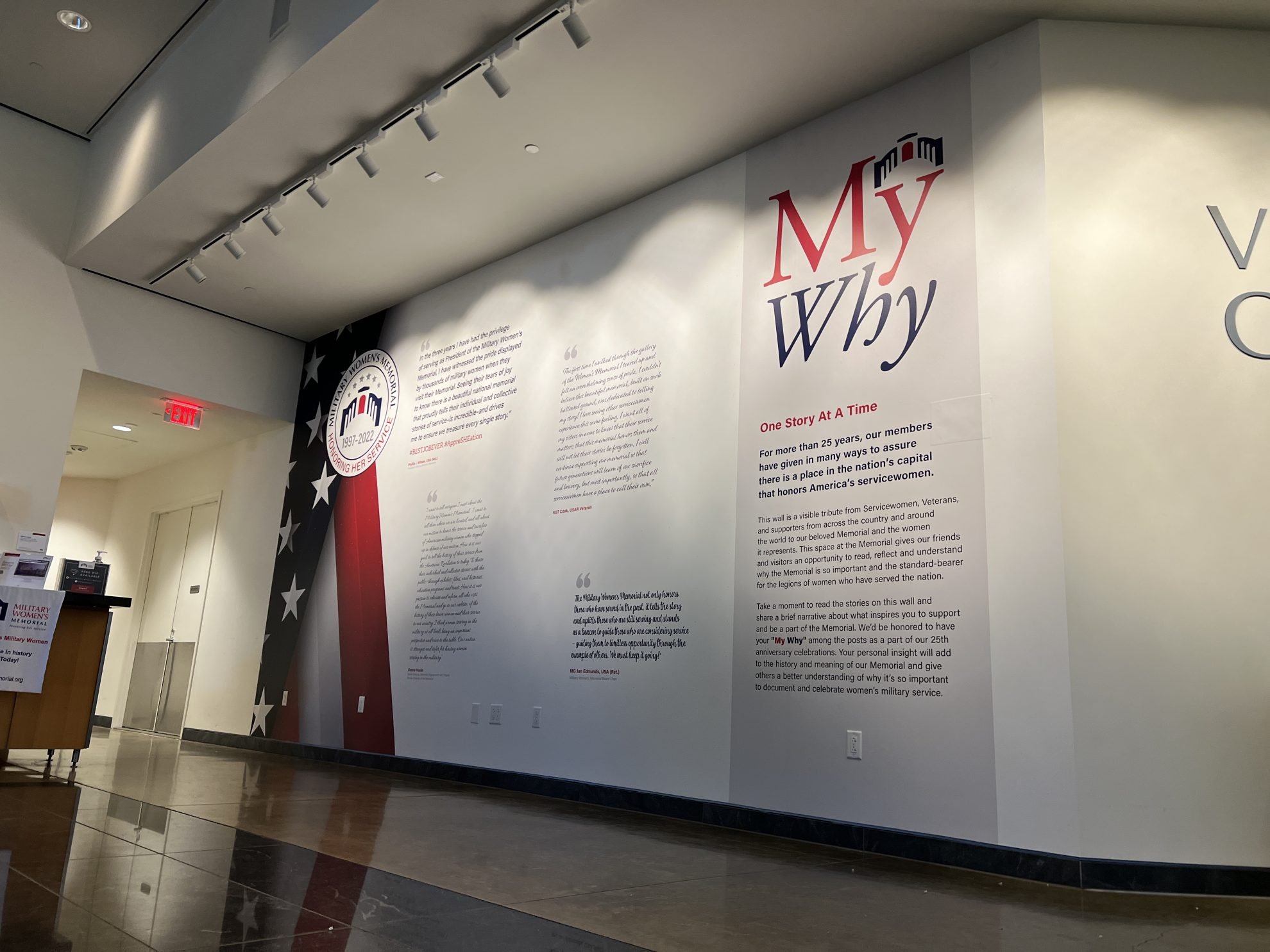
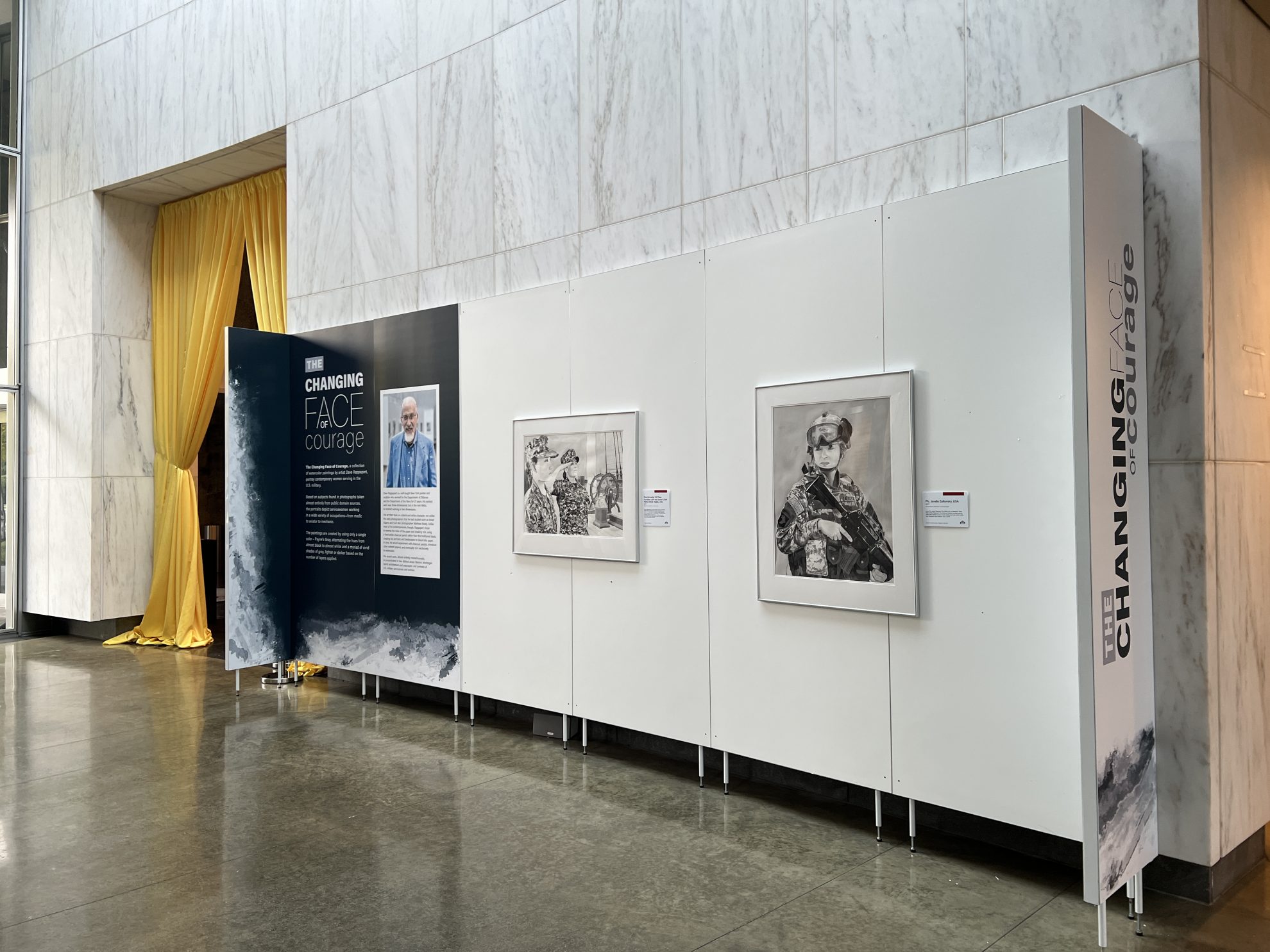
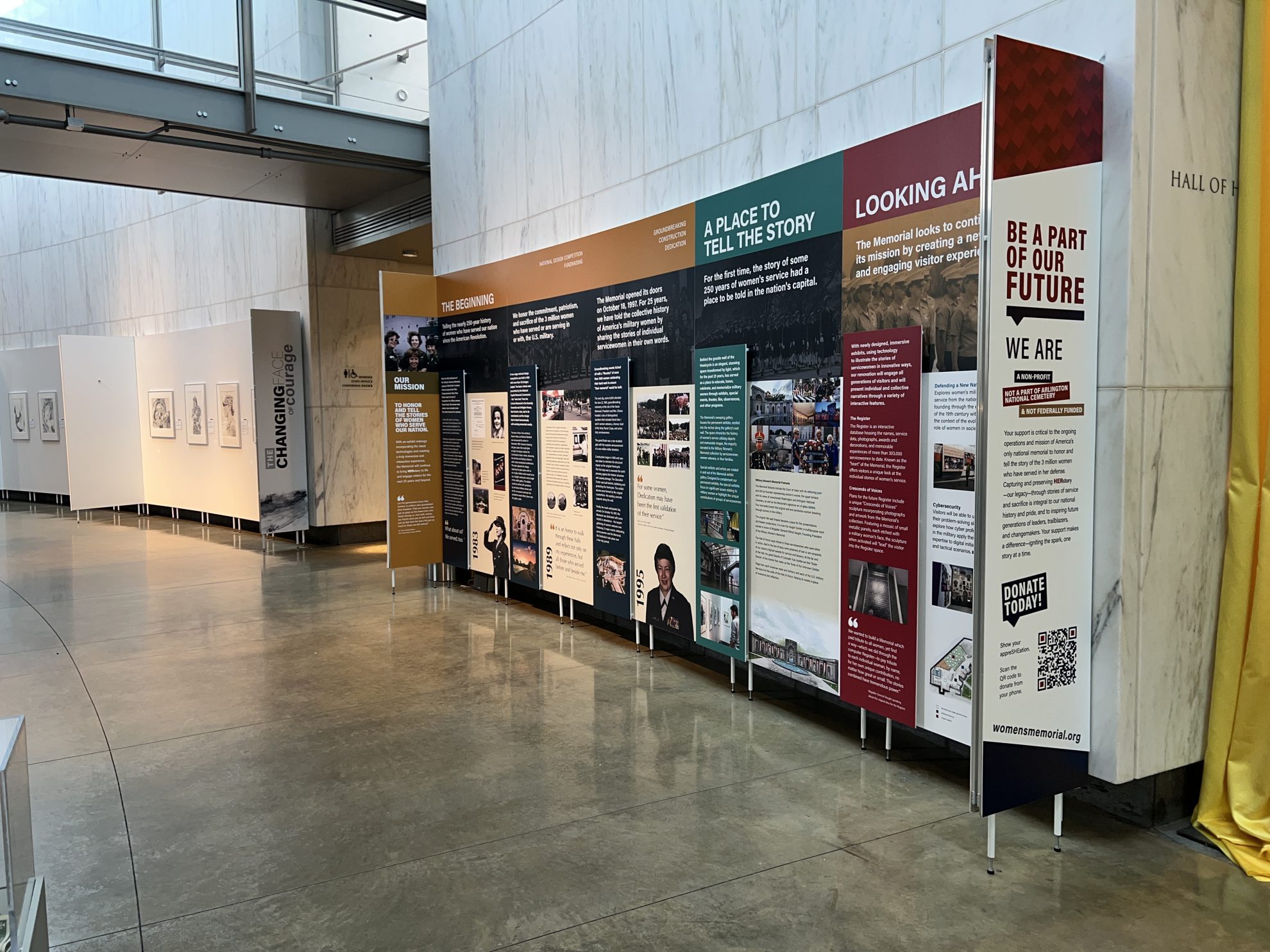
Heritage Signs & Displays created new museum signage for the Military Women’s Memorial in Alexandria, VA. The project included custom signs, wall wraps, dimensional letters, and standoff-mounted displays to honor the legacy of U.S. servicewomen and the donors who supported the memorial. The updated interior features impactful designs, including a "Our Legacy" wall display and panels showcasing historical contributions and artwork, creating a transformative tribute to women in the U.S. Armed Forces.
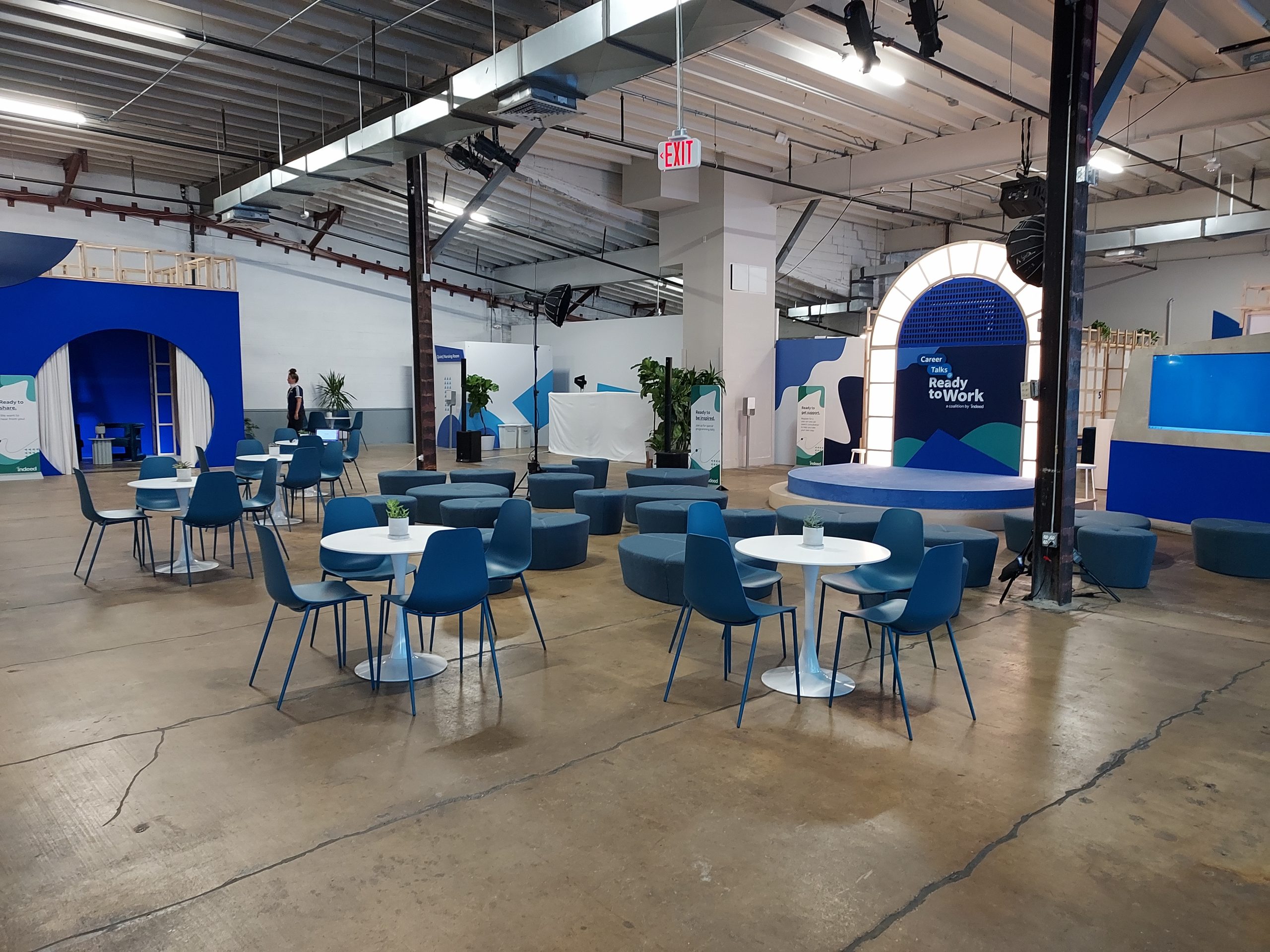
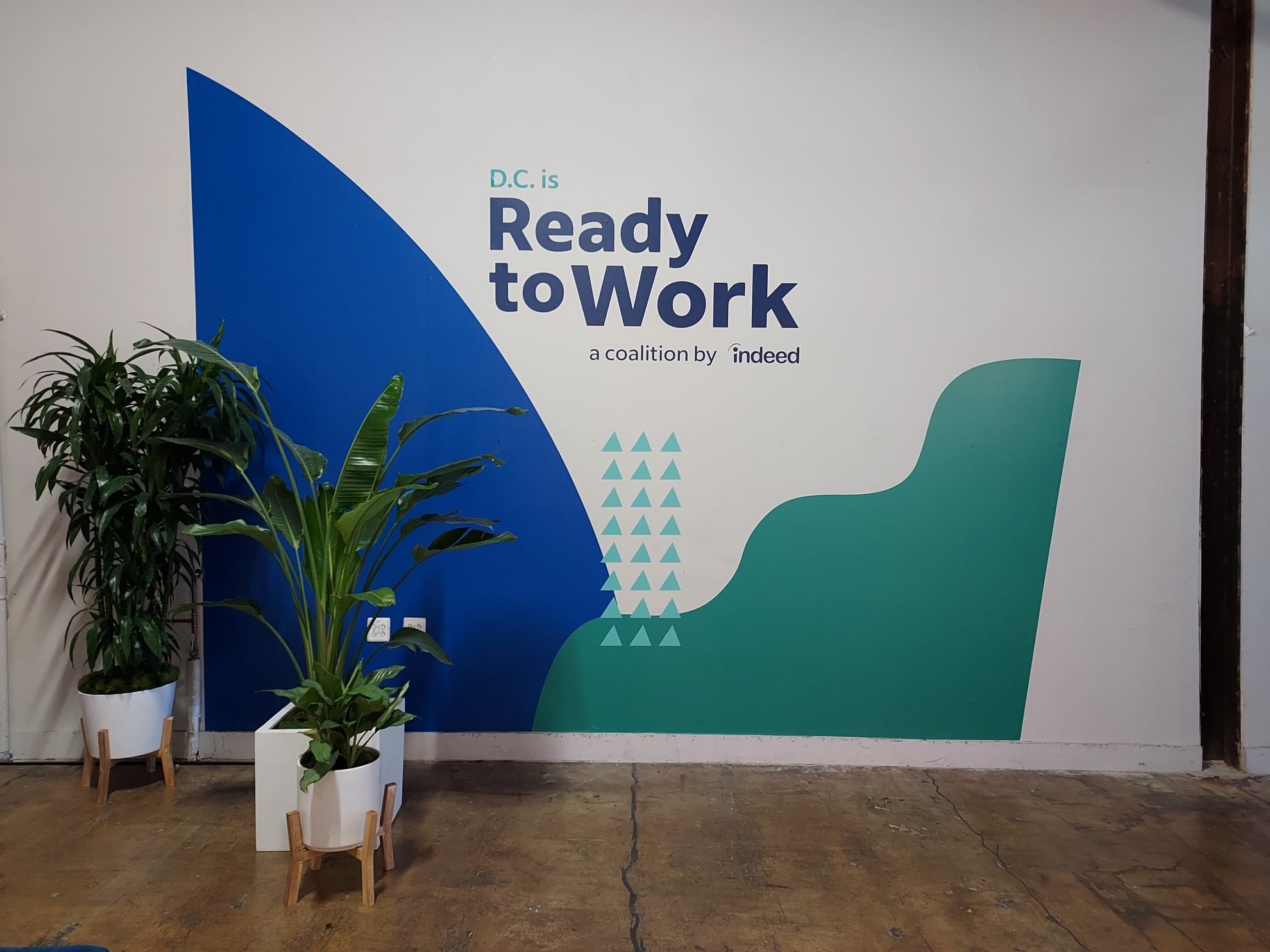
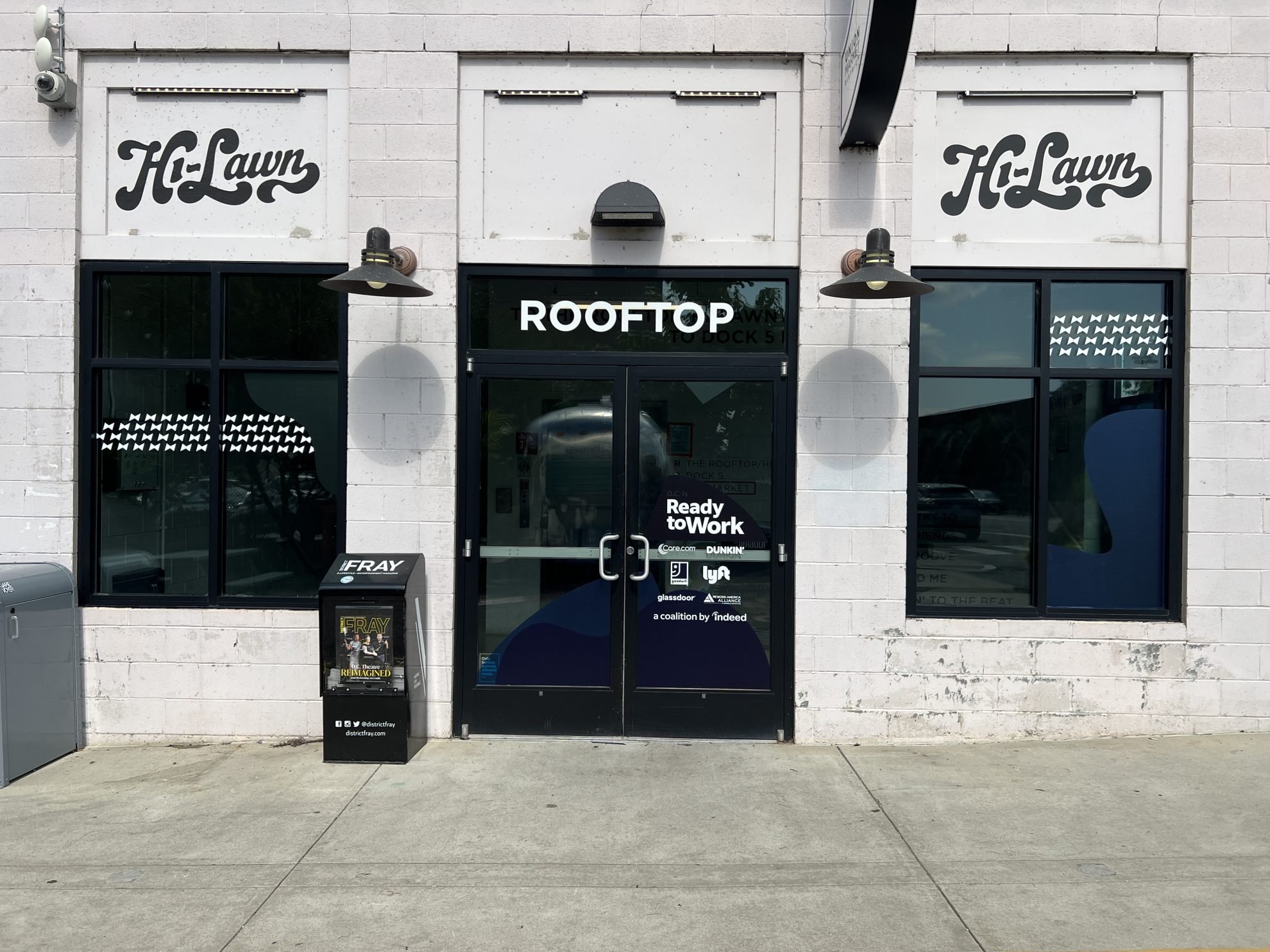
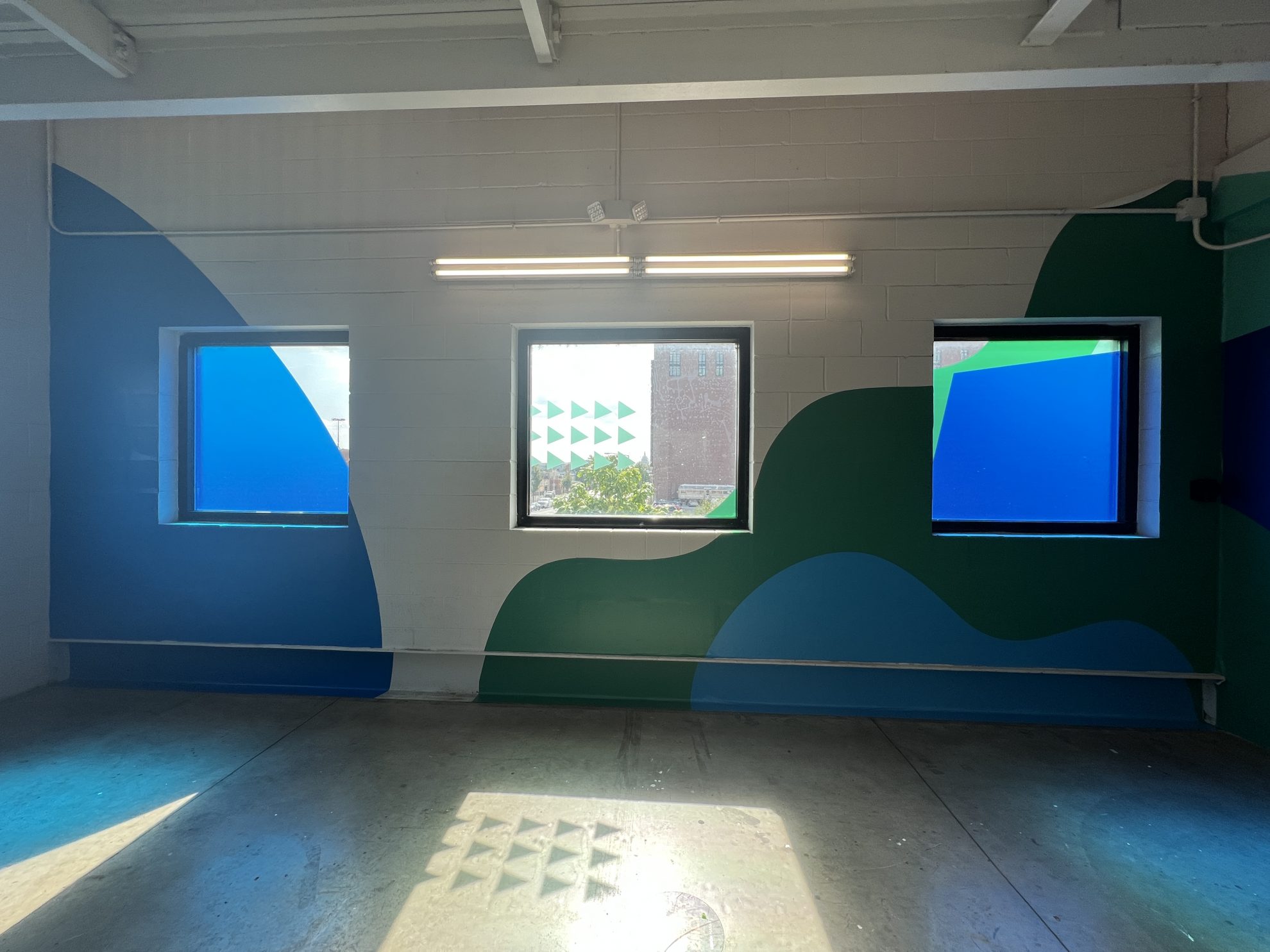
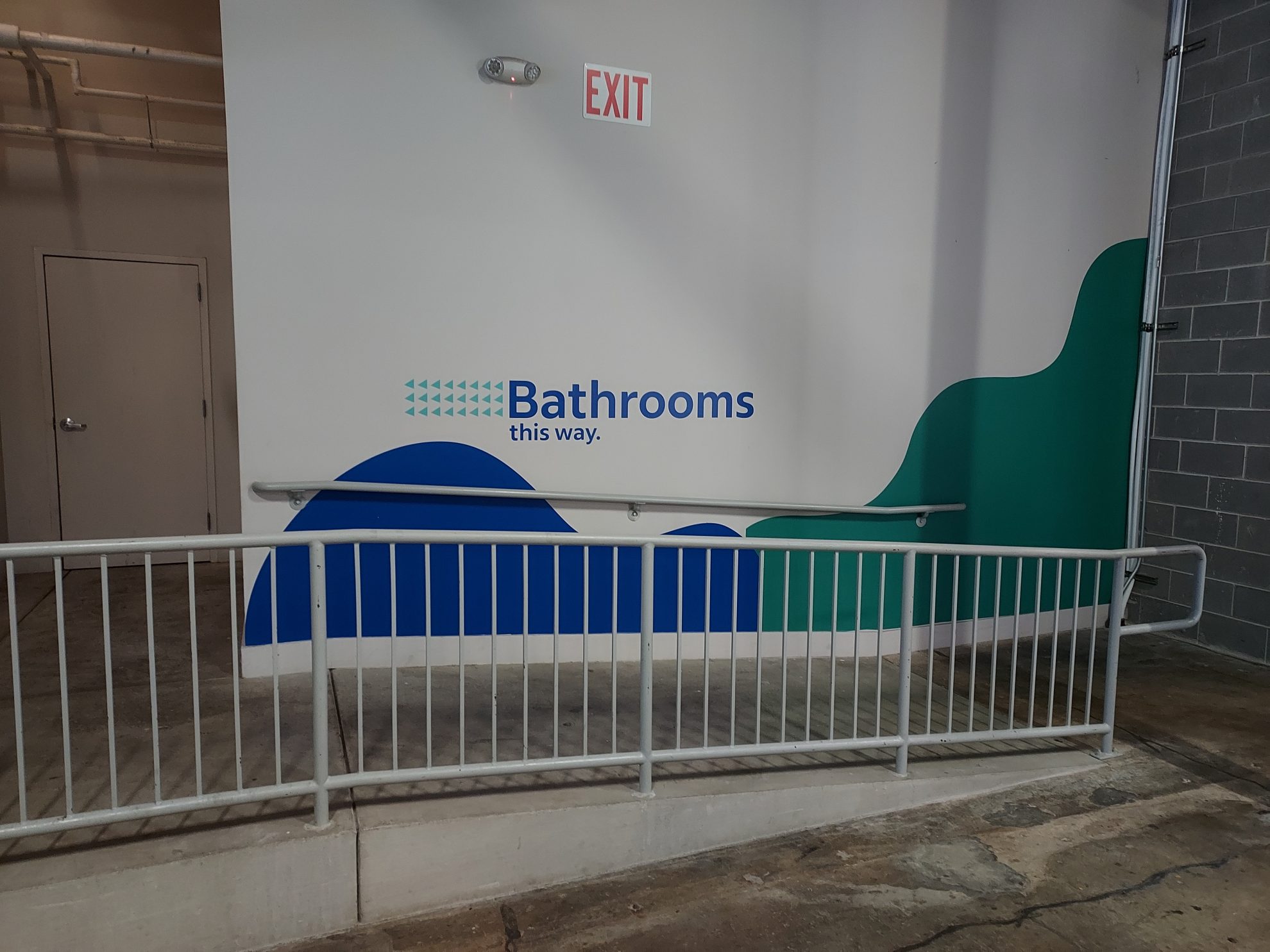
Heritage Signs & Displays' collaboration with The Gathery to brand Union Market in Alexandria, VA, for Indeed's "Ready to Work" job fair. The project included custom event displays, wall graphics, window graphics, and wayfinding signs, creating an immersive and visually appealing environment. The branding enhanced the venue, reflected the event's mission, and provided a seamless experience for attendees.