A workplace tells a story through every area people enter and use. The reception area introduces the organization, glass graphics can add privacy or identify conference rooms, and corridors can highlight milestones or institutional history. Employee spaces may feature company values, accomplishments, announcements, or practical guidance. Training rooms, galleries, donor walls, and shared spaces each serve different audiences. When these features follow a coordinated plan, visitors can understand the organization more quickly and employees experience a stronger, more cohesive connection to the workplace.
Heritage Signs & Displays serves organizations in Arlington, Rosslyn, Ballston, Crystal City, Pentagon City, Clarendon, National Landing, and communities across Northern Virginia. Founded in 1977, Heritage is an award-winning, veteran-owned, family-led company. Since 2009, the company has focused on custom signs, environmental graphics, branded workplace interiors, and institutional displays. Regional project support is backed by experienced design, production, fabrication, project management, and installation teams.
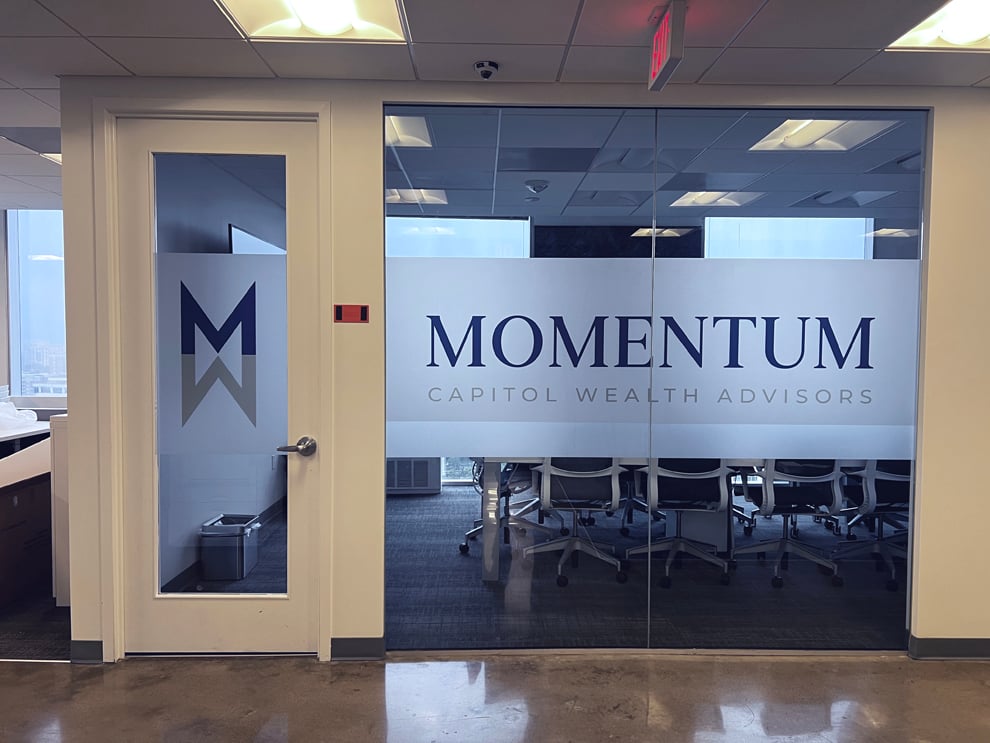
Heritage is well suited for organizations that need their interiors to communicate clearly, support navigation, provide privacy, and reflect established brand standards. A visitor’s experience might begin with dimensional lobby lettering, continue past directional signs and frosted conference room graphics, and conclude with a timeline or mission display. Employees may encounter branded wall graphics, recognition installations, values messaging, and consistent room identification along the same route. Each element is considered as part of the complete environment so that the space remains informative without becoming visually overwhelming.
Heritage works with corporate offices, law firms, consulting companies, healthcare providers, schools, universities, associations, nonprofits, museums, government agencies, and cultural organizations. A project may involve one prominent lobby feature, an entire Arlington office, several departments, or facilities in multiple cities. A dedicated Heritage project manager coordinates discovery, estimating, design input, field documentation, approvals, production, scheduling, and installation through one defined scope of work.
Successful implementation requires more than approving a design proof. Heritage evaluates field measurements, wall and glass conditions, material suitability, color reproduction, viewing distance, scale, mounting hardware, installation access, and construction schedules. Addressing these details early helps improve fit, alignment, finish quality, durability, and integration with the surrounding architecture.
A unified approach also makes the project easier for client stakeholders to manage. Instead of coordinating separate designers, printers, fabricators, and installers, the organization works with one accountable team. This structure is particularly valuable in occupied Arlington workplaces, secured facilities, renovation projects with firm completion dates, and multi-location programs that require consistent standards across different buildings.
The working relationship is as important as the finished environment. Heritage listens carefully, recommends practical and producible solutions, and keeps design, manufacturing, fabrication, and installation connected from initial planning through completion. Our purpose is to honor God by serving clients and communities with excellence. We pursue that purpose through honest communication, responsible guidance, thoughtful stewardship, attentive service, and clear accountability.
An experienced Arlington sign company should help your organization communicate effectively with employees, visitors, clients, students, patients, donors, members, guests, and public stakeholders. Depending on the facility, the project may need to establish identity at the entrance, simplify navigation, communicate a mission, increase privacy, recognize contributors, or present important information throughout the interior.
Effective solutions account for more than appearance. Brand standards, architecture, circulation patterns, lighting, viewing distance, accessibility, wall conditions, glass surfaces, audience needs, and installation requirements all affect the final result. Heritage reviews these factors before recommending dimensional signs, wall graphics, window films, wayfinding elements, or custom displays. Arlington projects may also involve property management procedures, federal or corporate security protocols, busy occupied spaces, loading limitations, and restricted installation hours.
Potential outcomes include an updated reception area, a fully branded employee environment, a mission and values wall, a donor recognition installation, an interpretive display, or an integrated wayfinding system. Heritage can also combine several objectives into a larger visual communications program for organizations that need consistency across departments, floors, buildings, or regional locations.
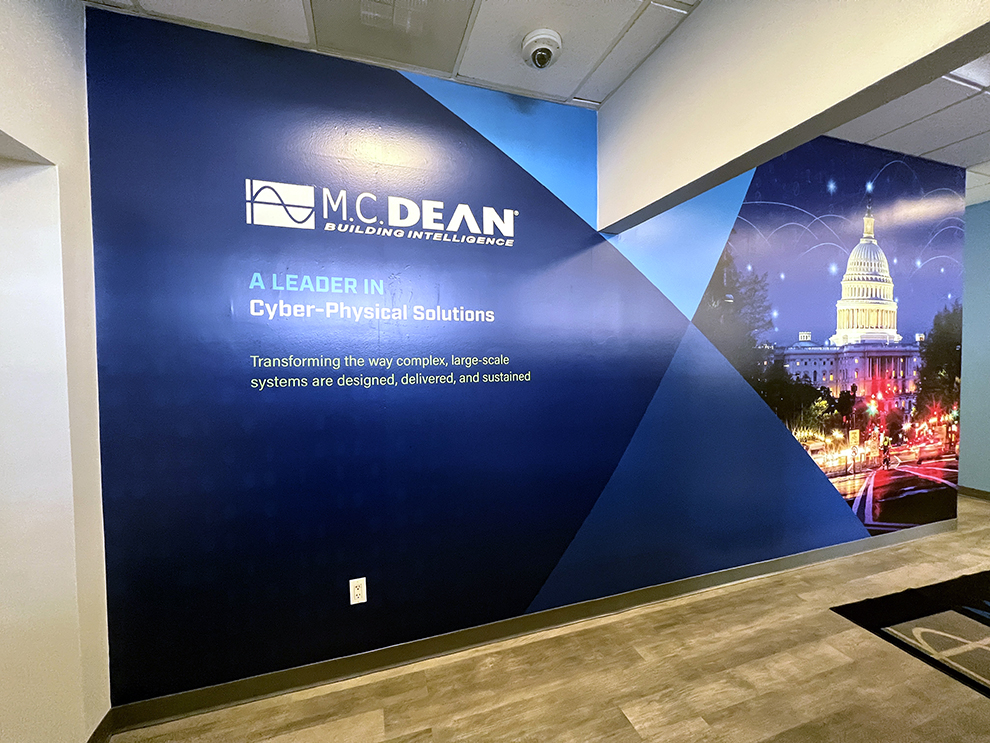
Heritage provides a coordinated team led by a dedicated project manager. This individual serves as the primary contact and organizes project discovery, information collection, estimates, material recommendations, design reviews, approvals, production schedules, installation planning, and final completion. Clients receive a clear communication path while Heritage maintains responsibility for the approved work.
Environmental graphic designers, project managers, production specialists, fabricators, and installation professionals collaborate throughout the process. On complex assignments, a pre-production review examines field measurements, substrates, architectural transitions, color specifications, mounting details, building access, and installation sequencing. Identifying possible conflicts before fabrication can reduce delays and prevent avoidable field issues.
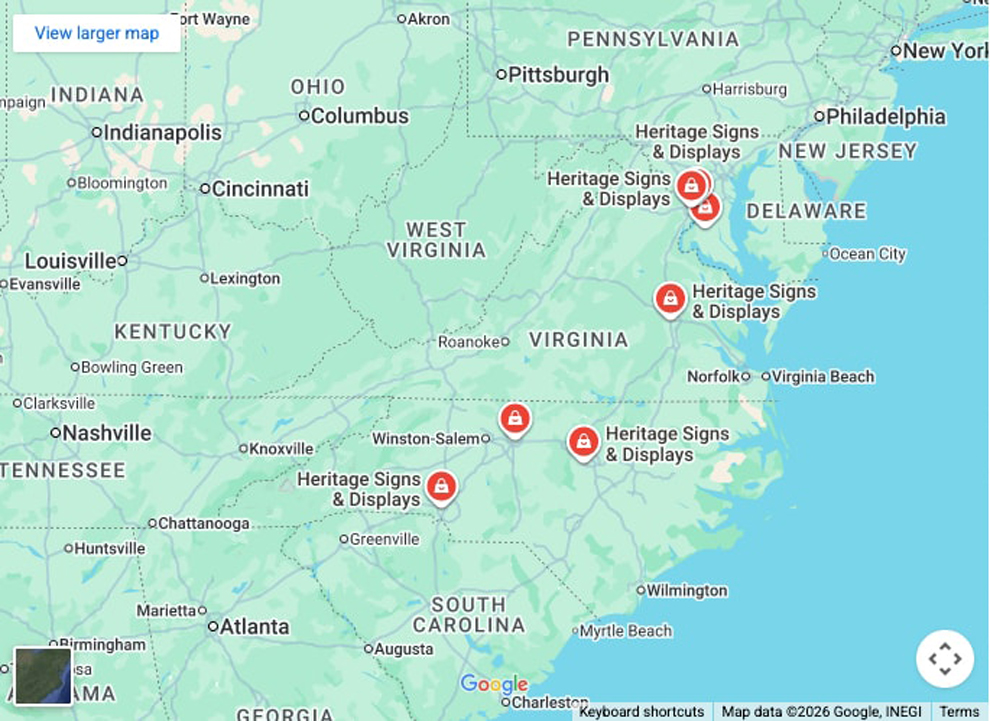
Heritage remains veteran-owned and family-led, with nearly five decades of operational experience and multiple locations supporting regional work. Responsive service for Arlington organizations is reinforced by in-house capabilities, shared production resources, and full-time installers. This model allows Heritage to complete a single statement feature, transform an entire workplace, or coordinate a multi-site rollout while keeping creative intent connected to fabrication and installation.
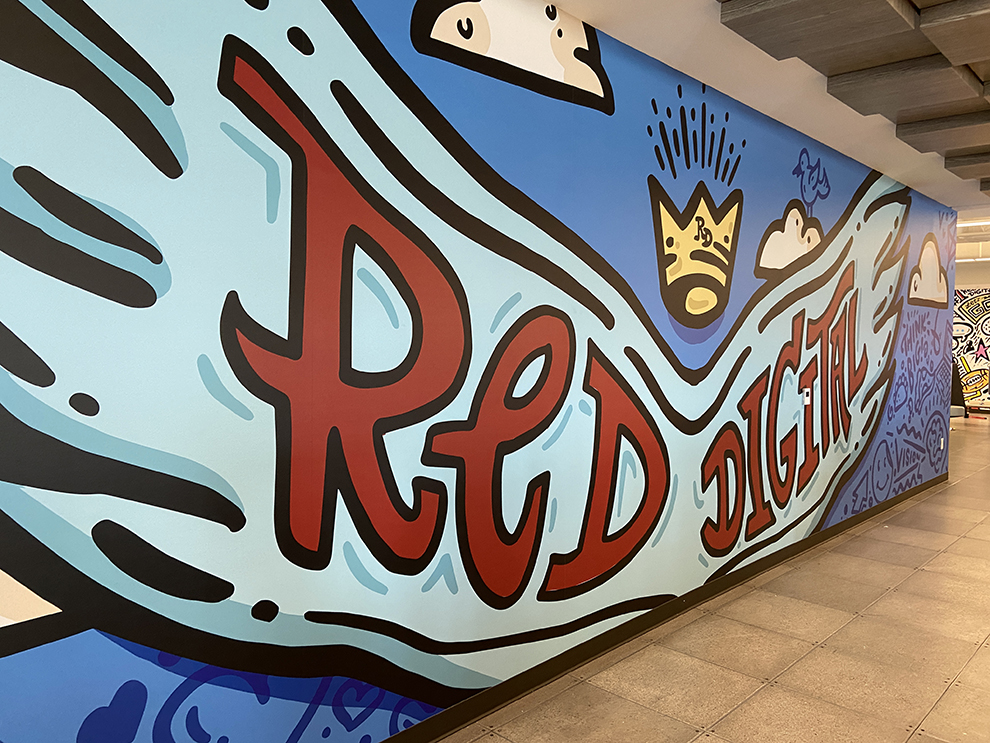
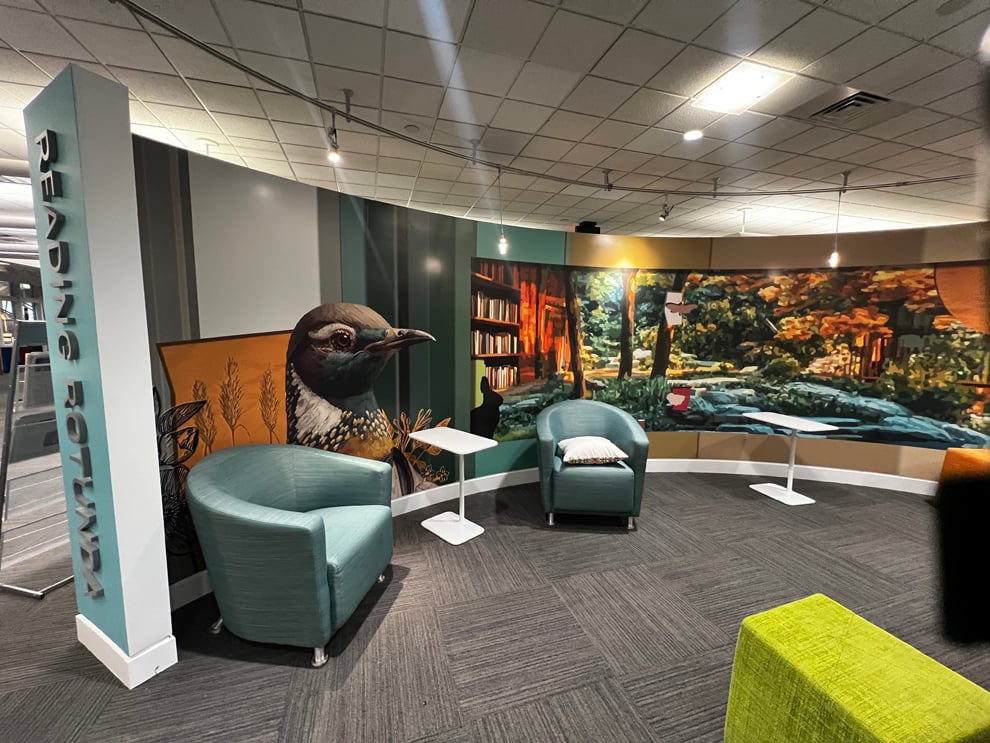
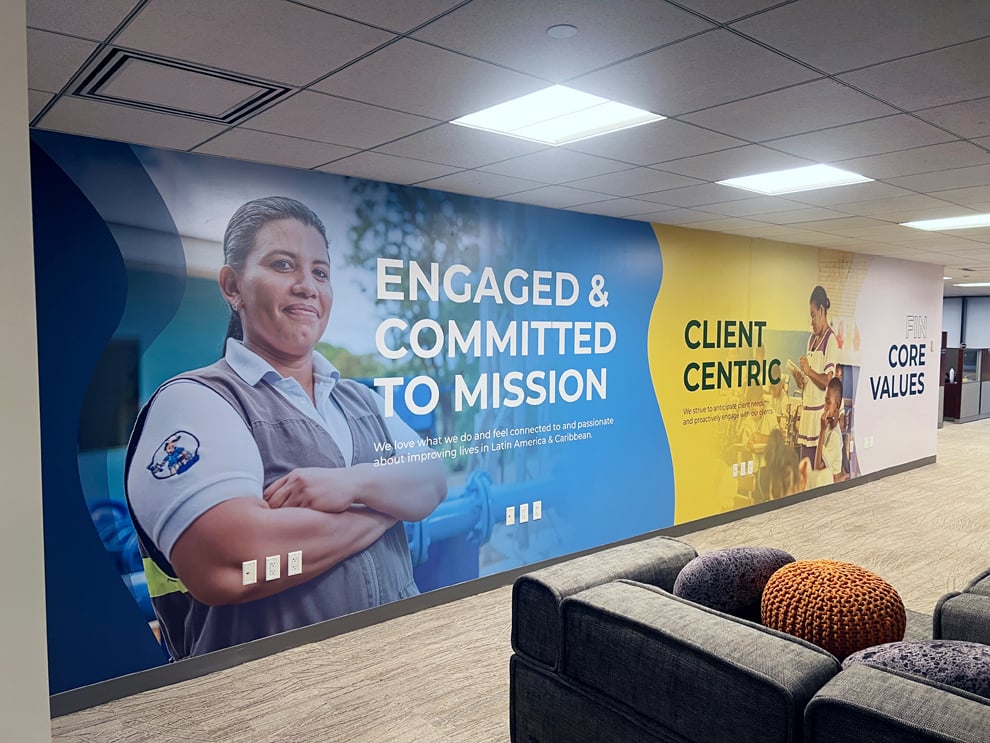
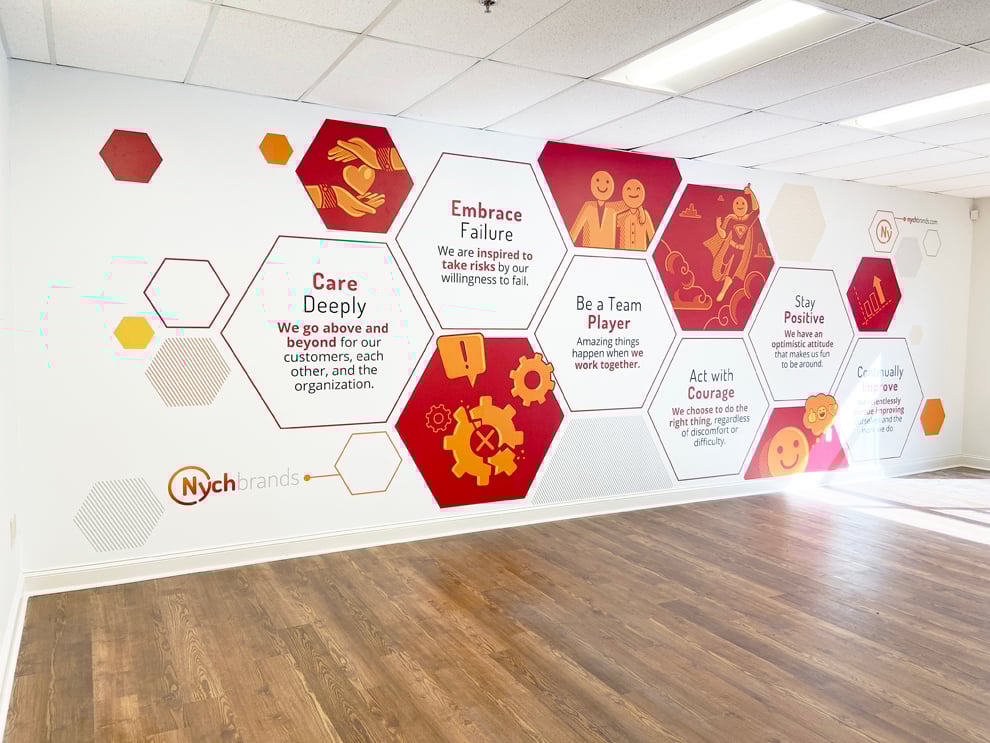
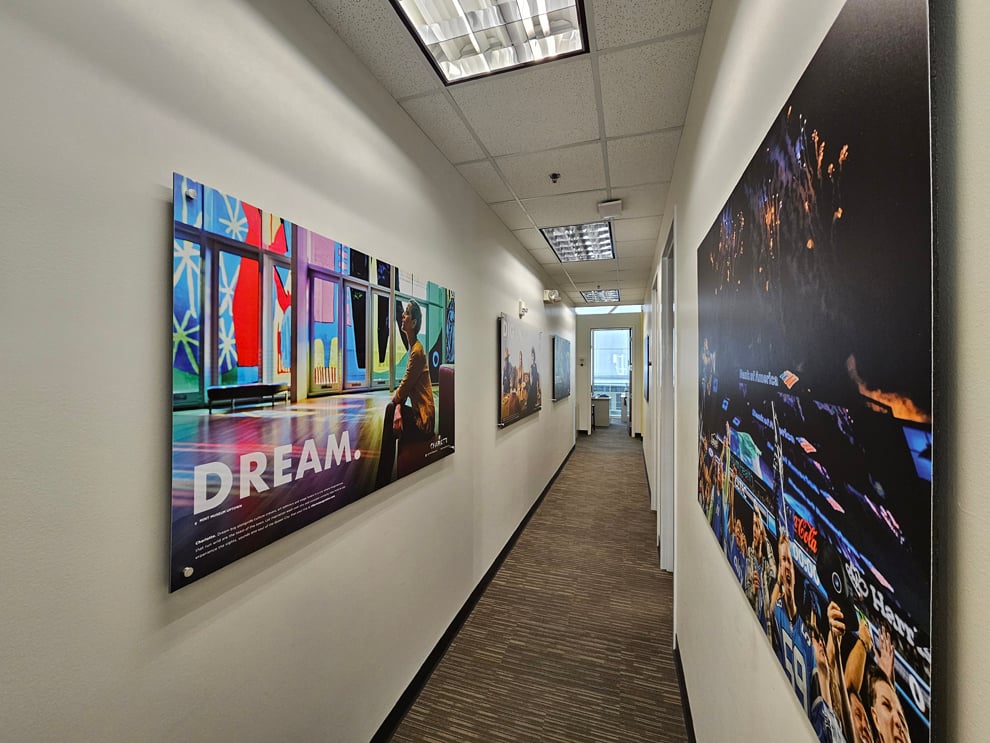
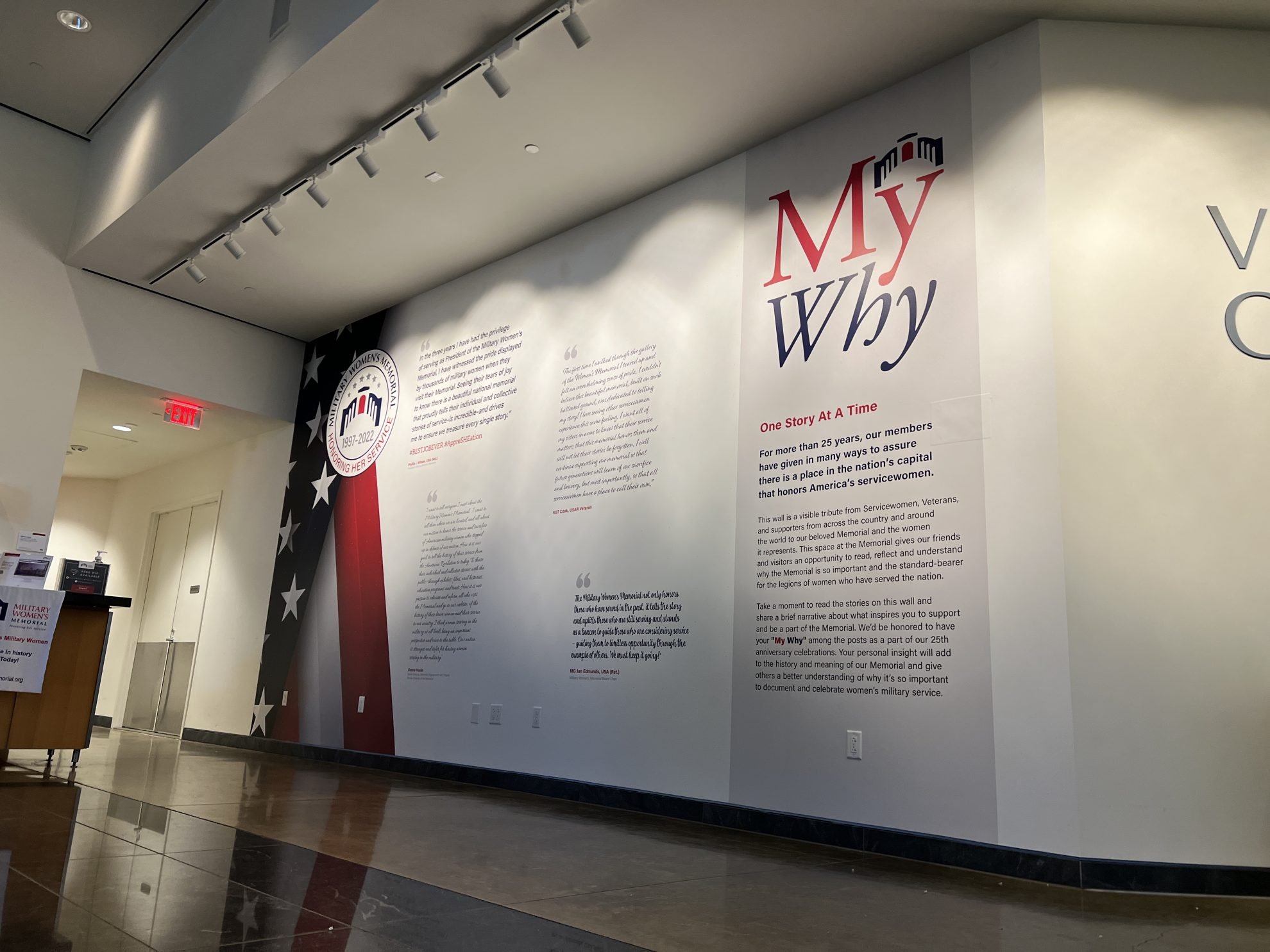
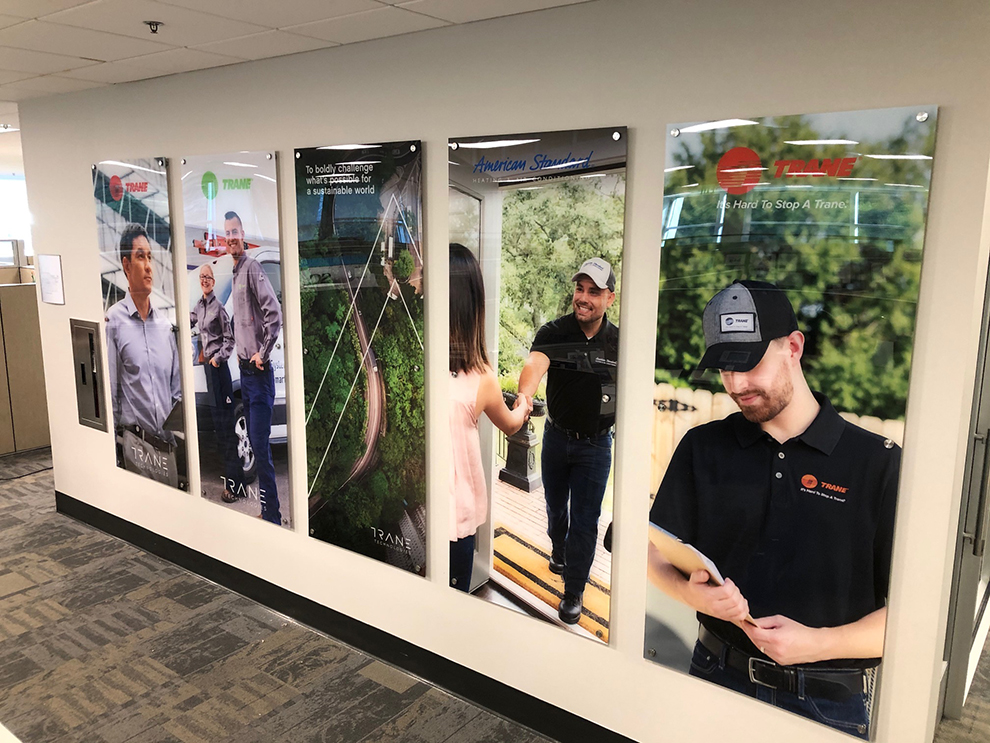
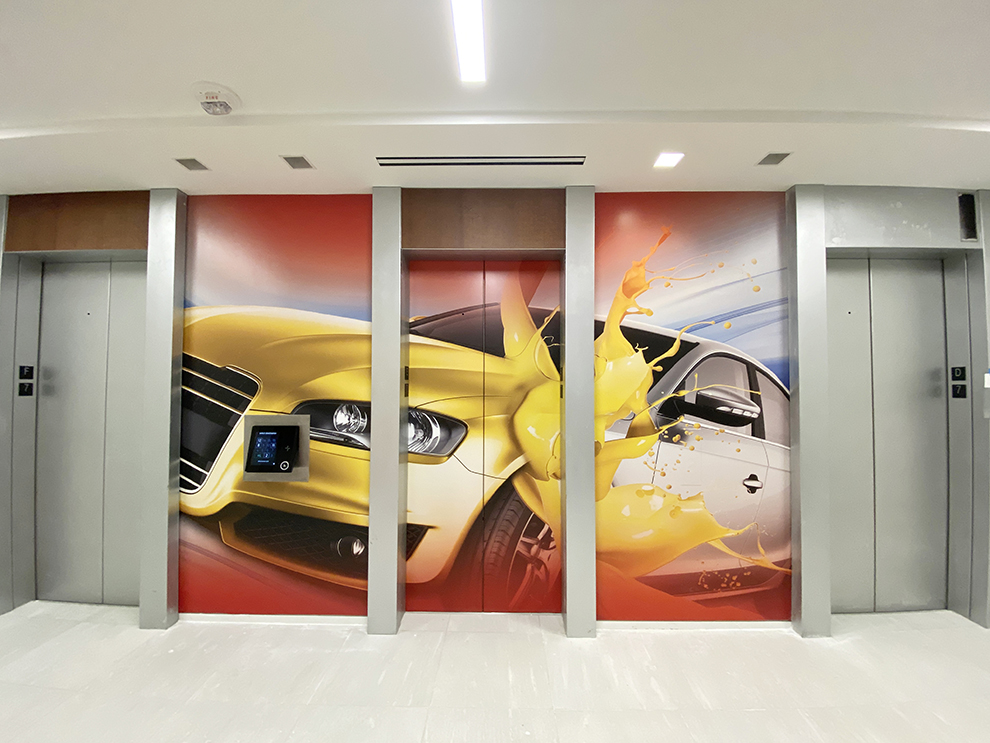
Use expansive wall surfaces to introduce photography, patterns, maps, branded colors, illustrations, or messages in hallways, conference rooms, employee lounges, and collaboration areas.
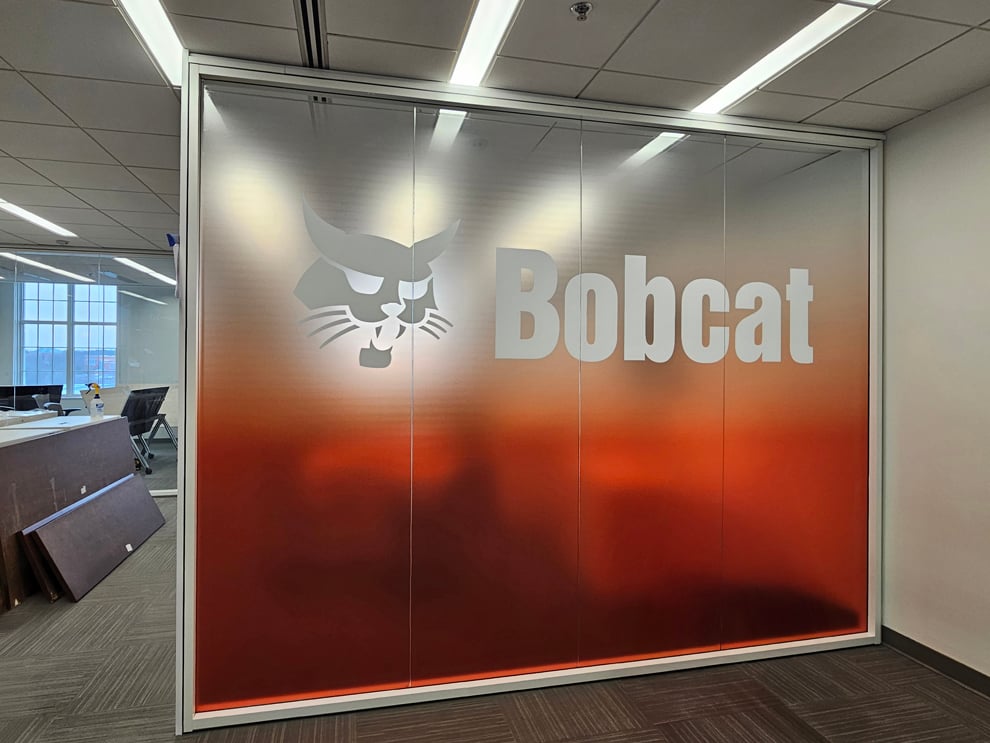
Add branding, privacy, room identification, safety markings, or controlled visibility to interior glass with printed, frosted, etched-look, or patterned films.
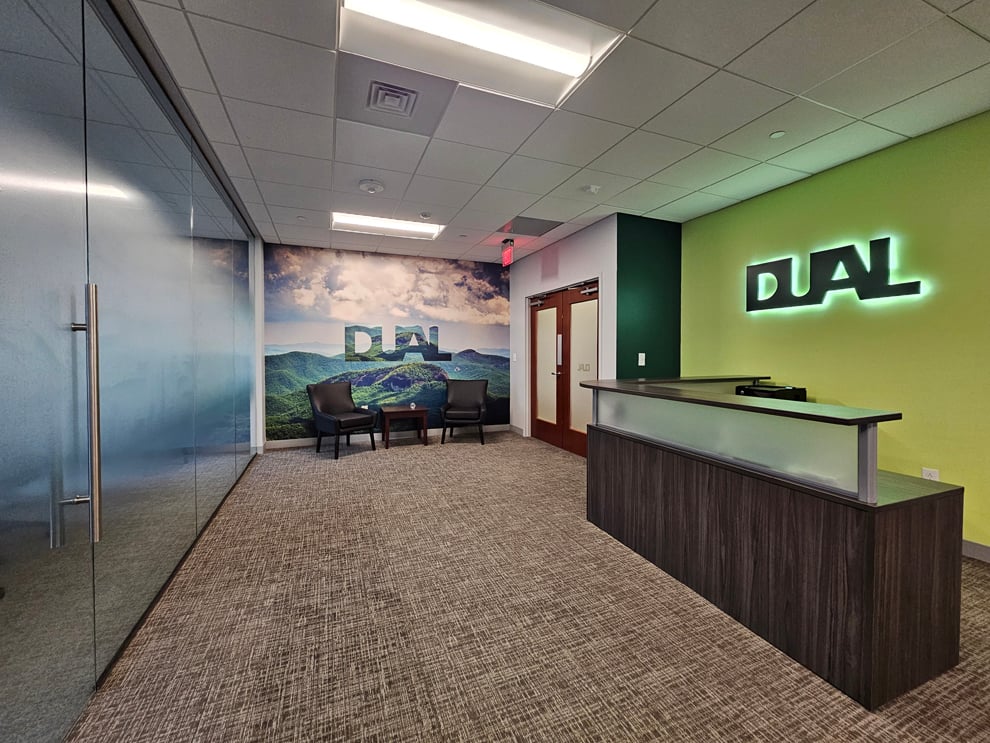
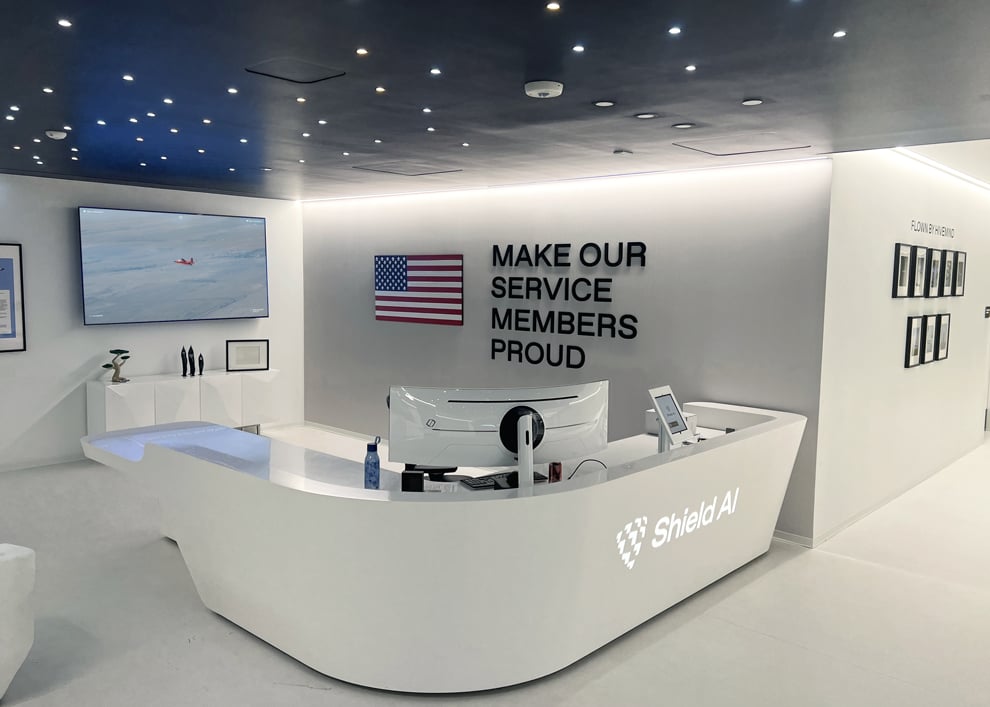
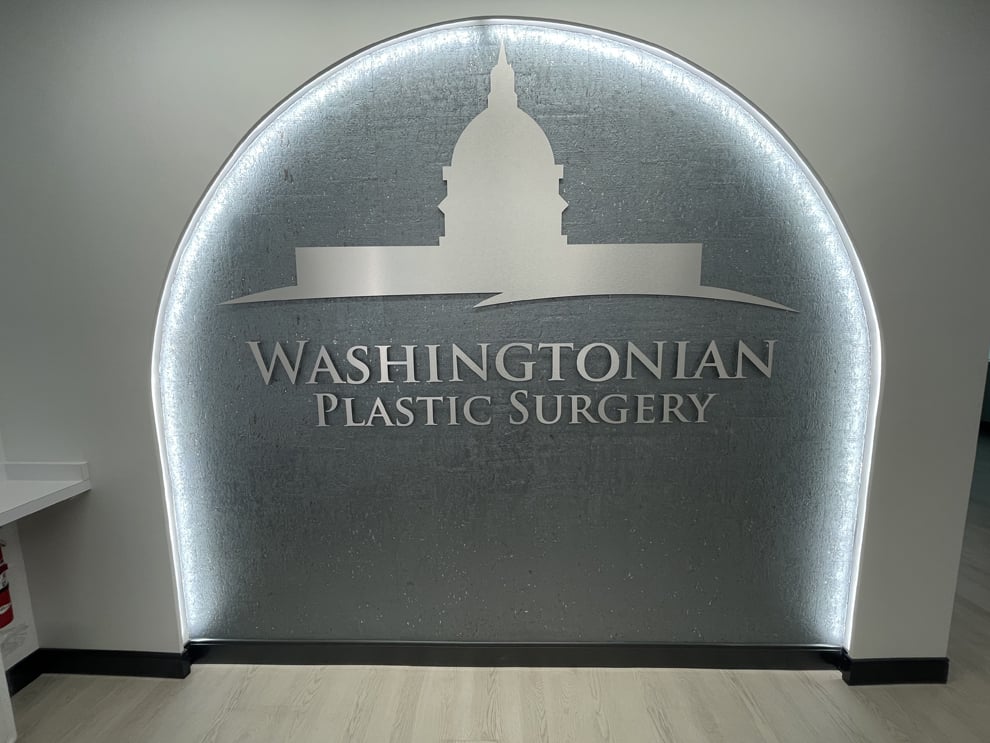
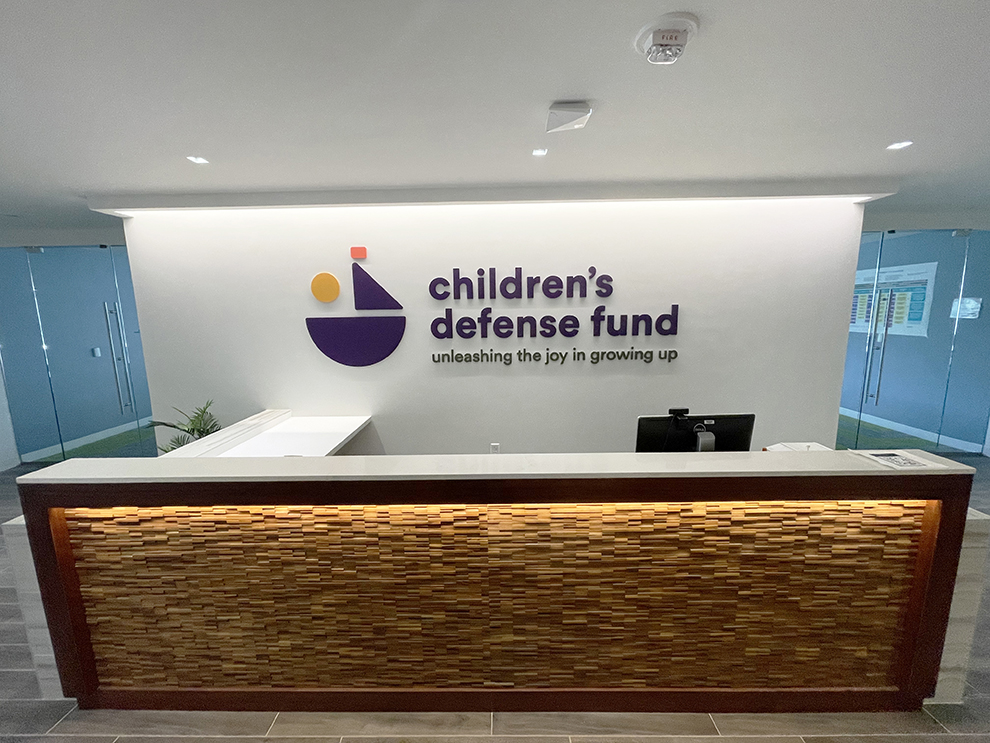
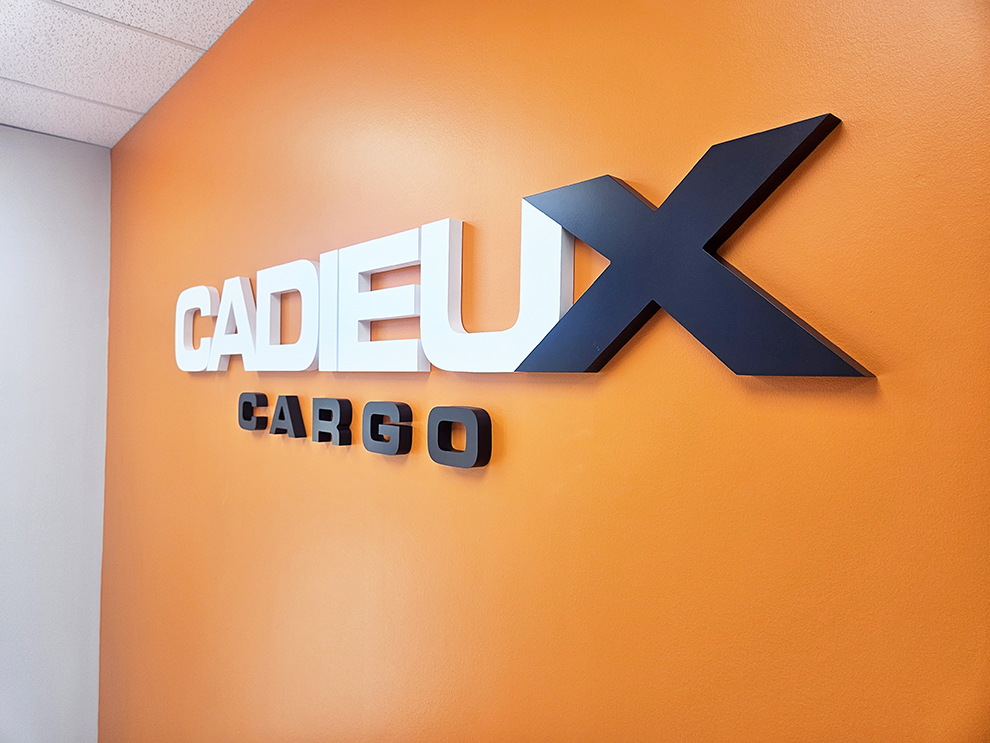
Create a clear sense of identity at the entrance with dimensional logos, architectural panels, acrylic elements, layered materials, specialty finishes, or illuminated features.
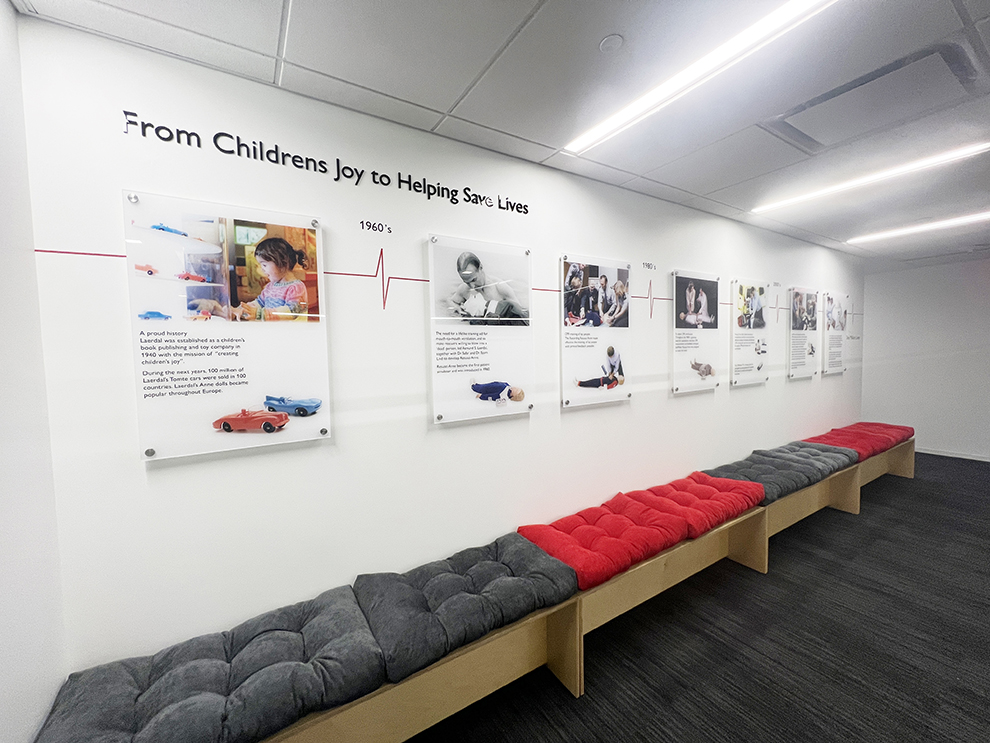
Give panels and displays additional depth by mounting acrylic, metal, or printed components away from the wall with carefully selected architectural hardware.
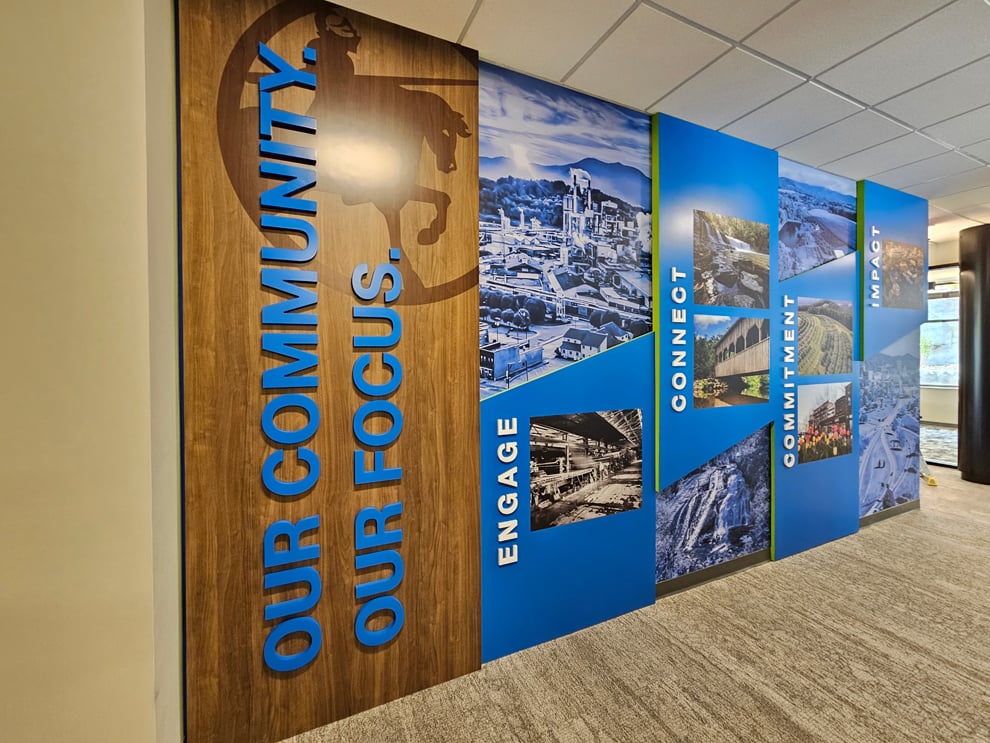
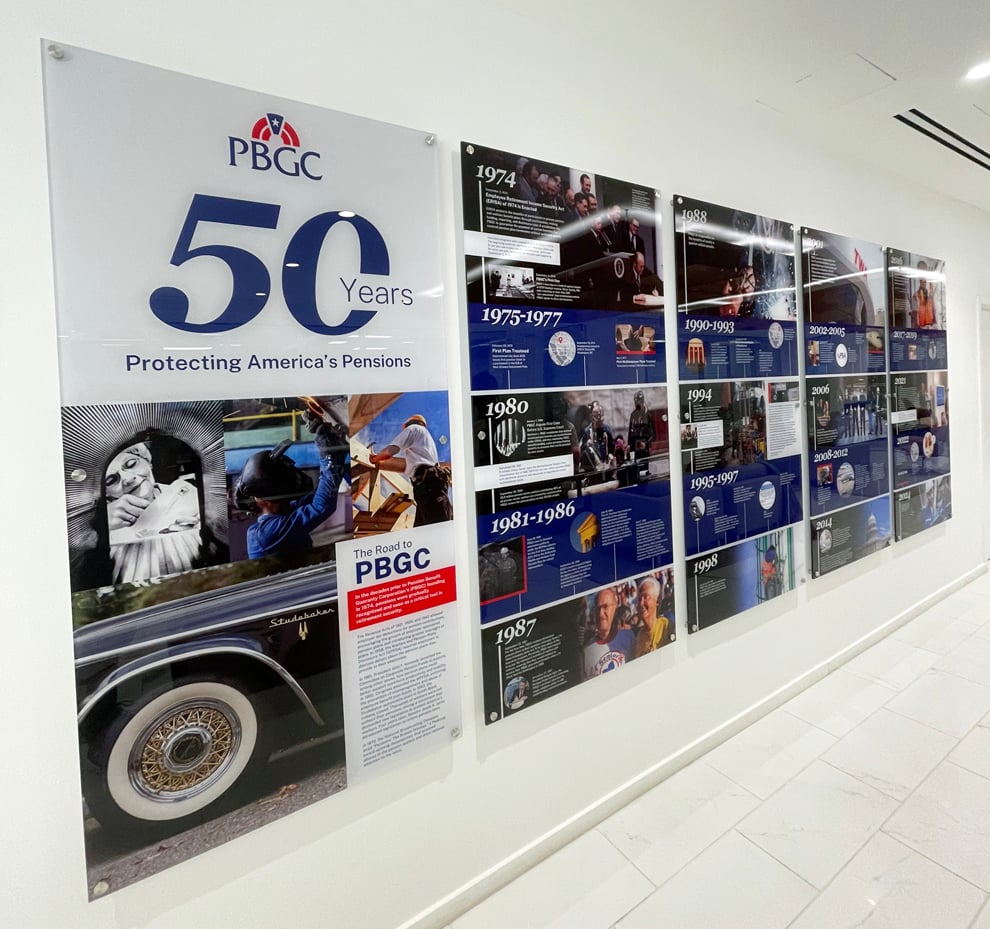
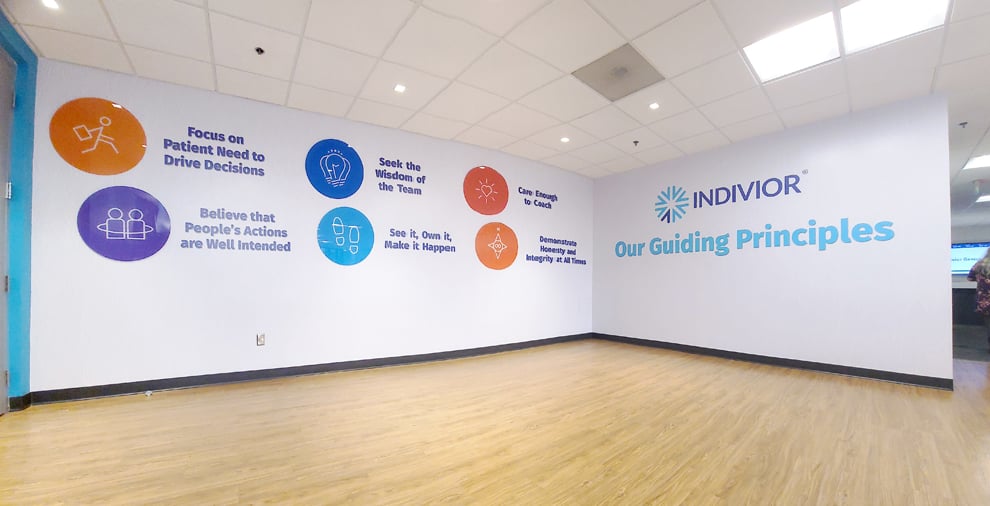
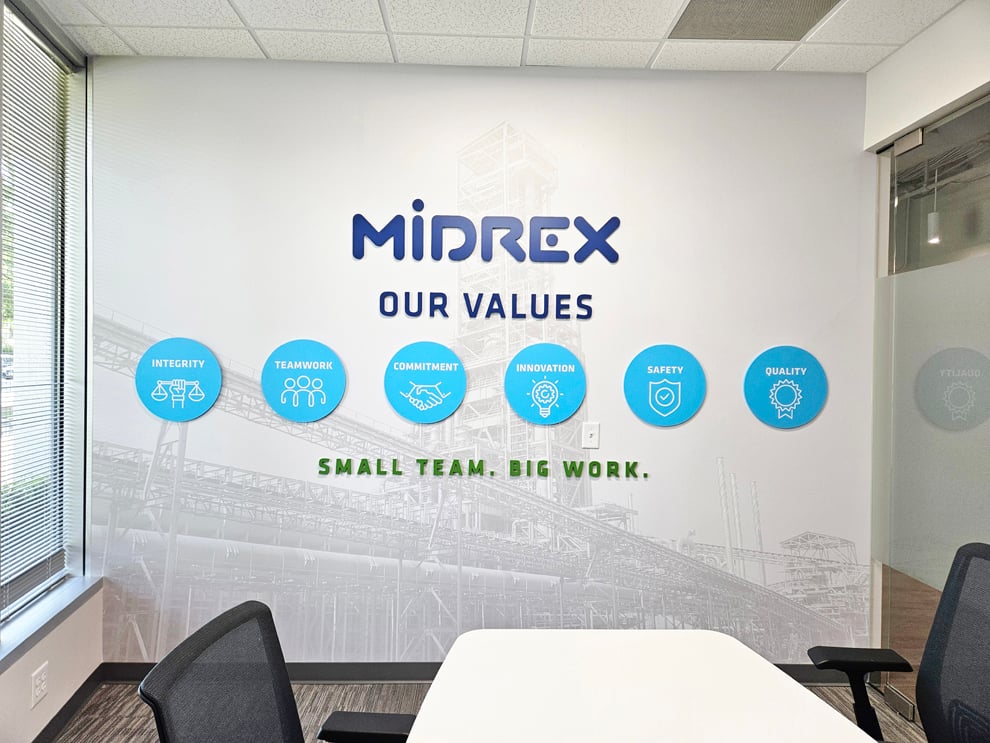
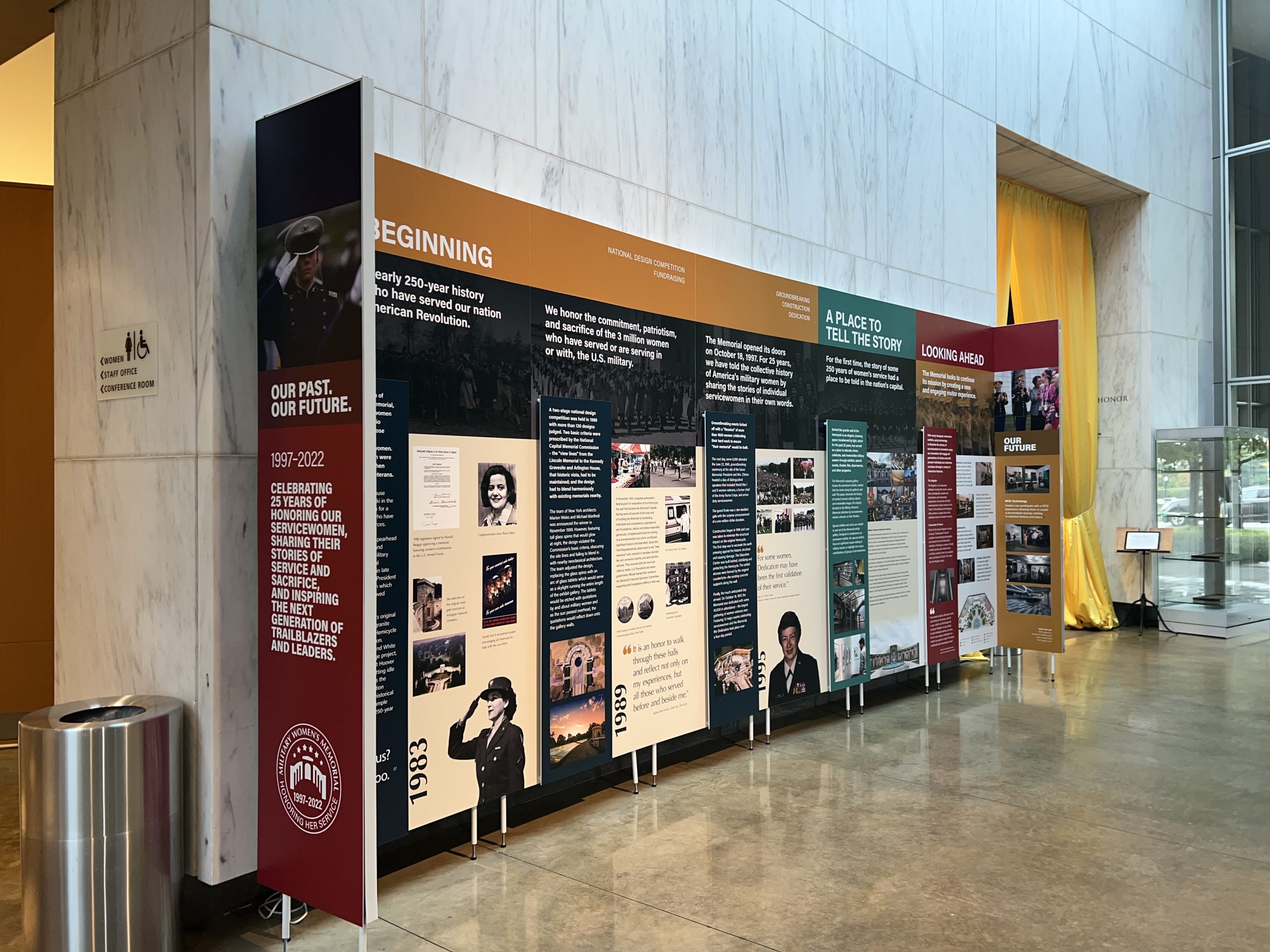
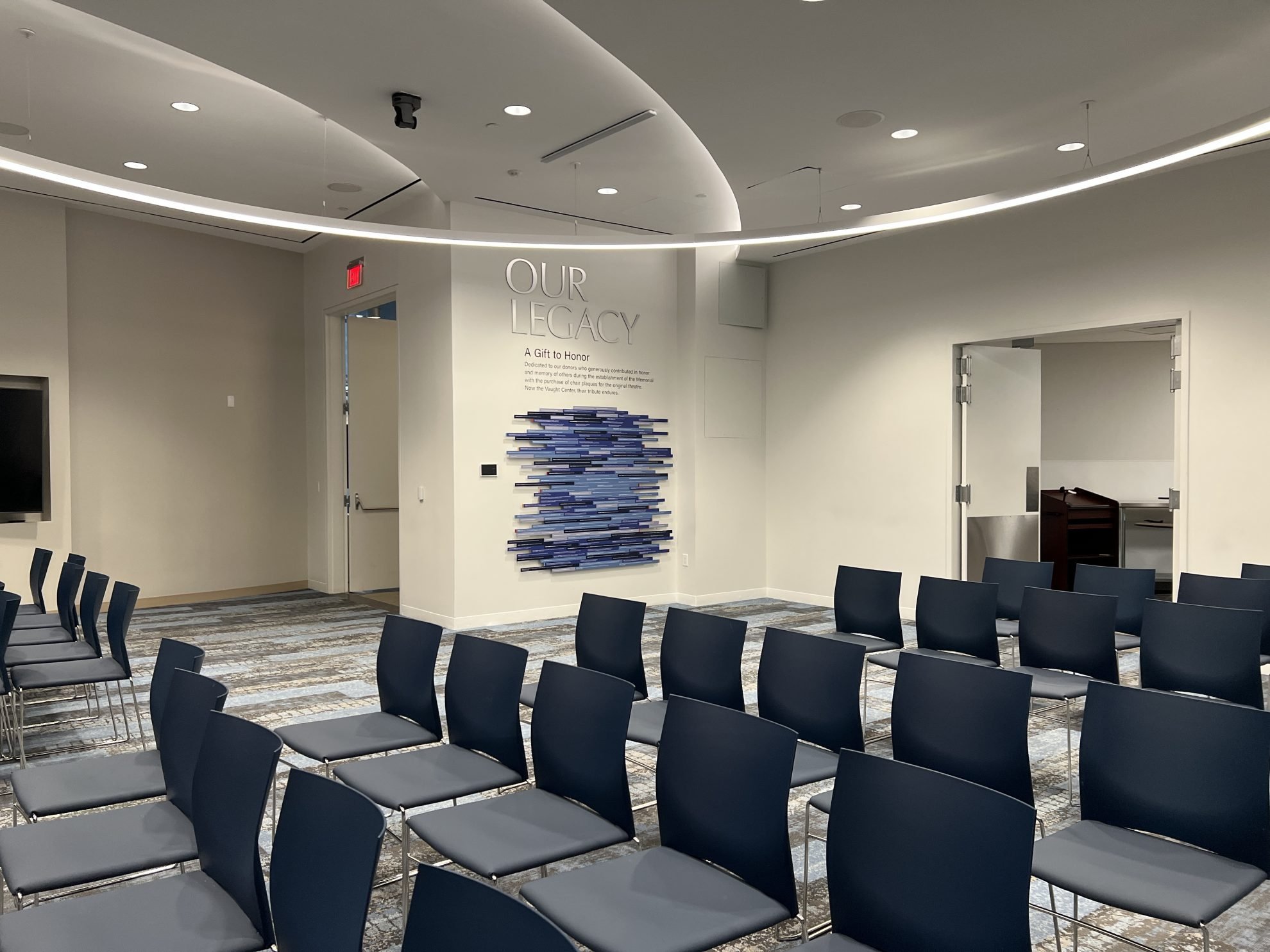
Present company history, core values, donor contributions, employee recognition, research, achievements, or educational content through coordinated graphics and dimensional elements.
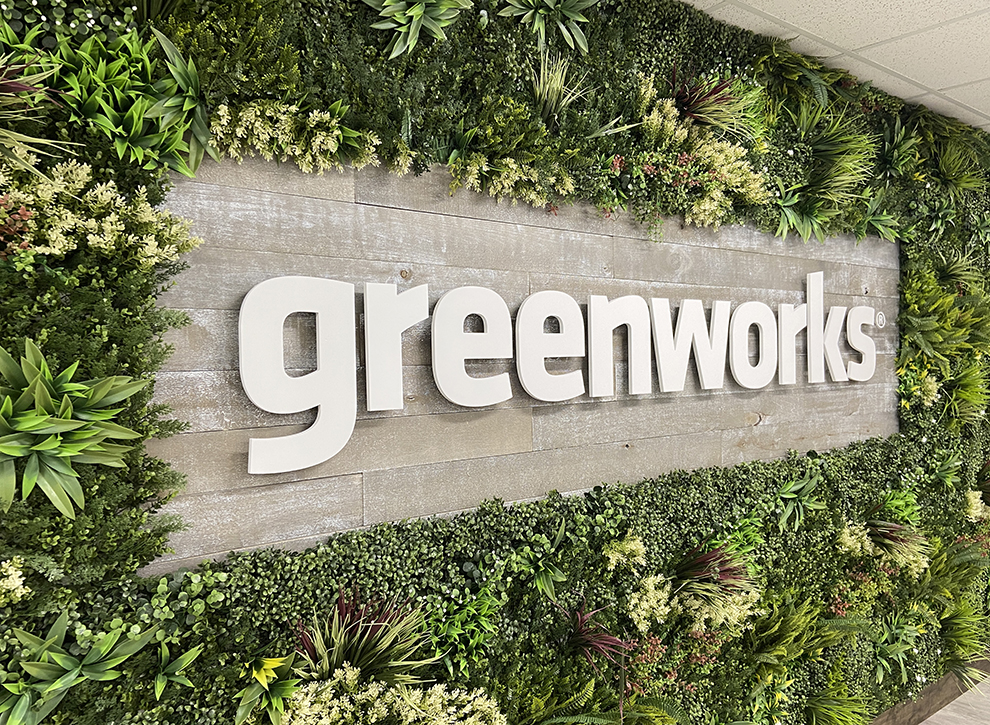
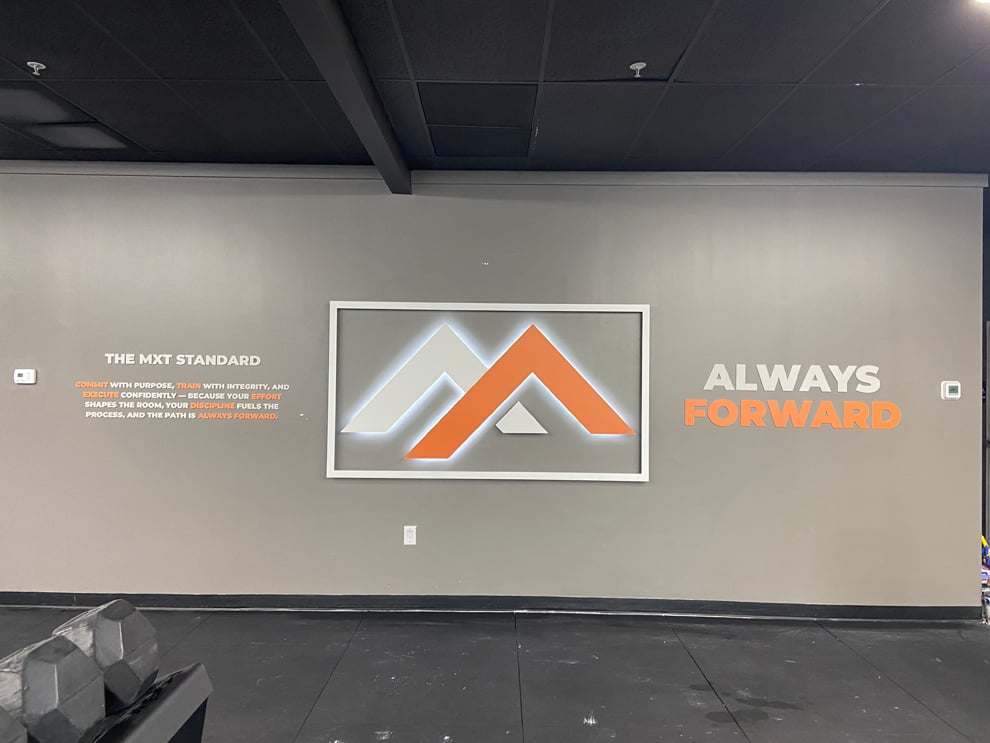
Display names, logos, and important messages with depth, shadow, scale, and material finishes selected to complement the surrounding interior.
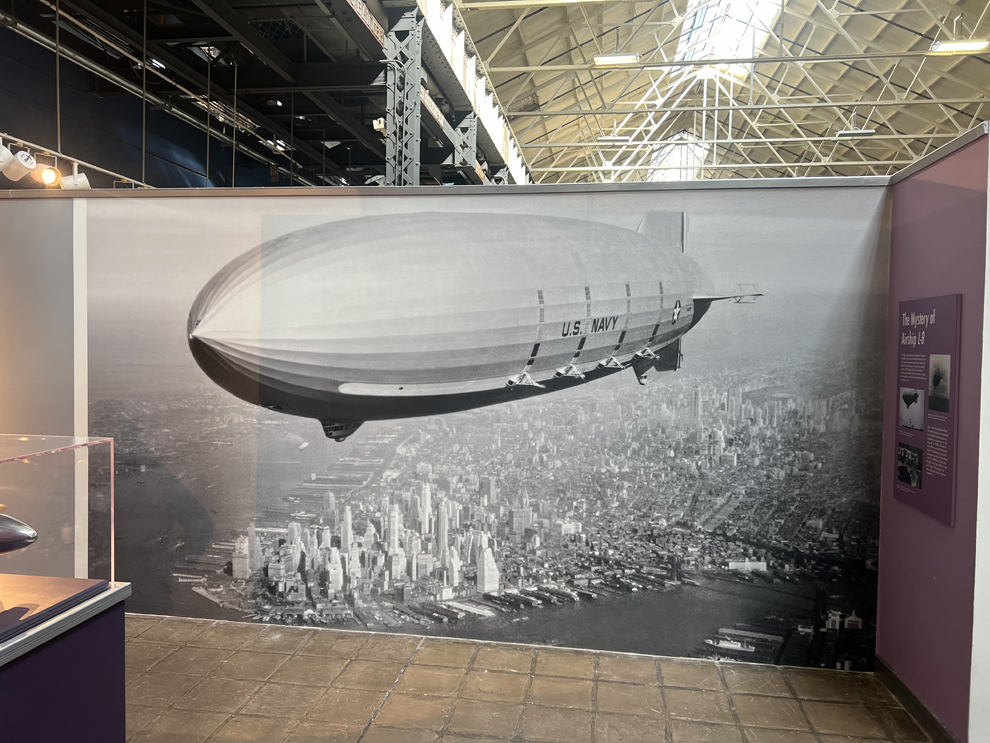
Bring architecture, branding, messaging, materials, circulation, visibility, and user needs together in a unified plan for the built environment.
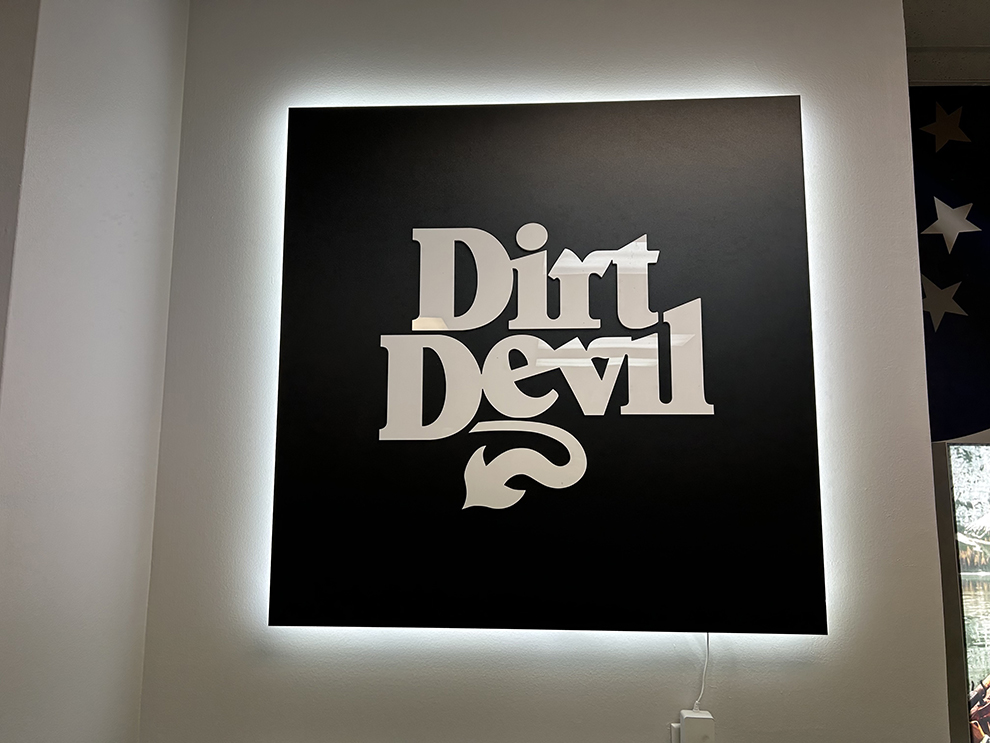
Help visitors and employees reach their destinations with accessible, legible directional information placed at entrances, intersections, elevators, corridors, and other decision points.
Qualified organizations can use the Get Started Now form to explain what their Arlington environment needs to accomplish. Helpful information includes project goals, installation address, intended audiences, preferred timing, available artwork, photographs, drawings, brand standards, and any important opening or completion dates.
If the full scope has not yet been determined, submit the information that is currently available. A Heritage representative will review the request, consider relevant Arlington site conditions and scheduling factors, and recommend an appropriate next step for discovery, field verification, design, estimating, or project planning.
Arlington organizations often benefit from nearby support for discovery meetings, site surveys, field verification, property coordination, and installation planning. Heritage works with clients, facilities teams, contractors, and building representatives to document site conditions before production begins. Preparation may include reviewing security procedures, loading dock requirements, freight elevator access, working hours, occupied areas, wall preparation, parking limitations, and other conditions that influence installation.
Arlington includes a diverse mix of federal offices, corporate headquarters, professional firms, associations, nonprofits, educational organizations, healthcare providers, technology companies, and public-facing facilities. Buildings in Rosslyn, Ballston, Clarendon, Crystal City, Pentagon City, and National Landing can have very different architectural features, approval processes, security requirements, audiences, and operating constraints. Heritage evaluates each site individually instead of applying the same formula to every location.
Regional production, fabrication, project management, and installation resources allow Heritage to support projects extending beyond one wall or building. The team can coordinate large interior transformations, phased programs, and multi-location assignments throughout Northern Virginia. For organizations with offices in Arlington and other markets, Heritage can maintain approved brand standards while adapting measurements, mounting methods, access plans, and installation schedules to the conditions at each property.
Environmental graphic design integrates visual communication with the physical environment. In an Arlington workplace, this process considers brand identity, architecture, messaging, materials, scale, visibility, movement, accessibility, and installation requirements as parts of a connected system. The goal goes beyond decoration. A successful program helps people recognize the organization, understand its purpose, navigate the facility, and form an appropriate impression of the space.
A project may begin with brand guidelines, architectural plans, floor plans, photographs, field measurements, written copy, or a preliminary concept. Heritage can develop visual layouts, message hierarchy, glass privacy treatments, dimensional features, wall graphics, directional elements, and placement plans. Designers also review viewing distances, surface changes, color relationships, update requirements, and the practical production methods needed for every component.
Thorough design development gives decision-makers a more reliable foundation before production. It supports accurate estimating, material selection, fabrication planning, internal review, and installation preparation. It also reduces ambiguity when approved concepts move into manufacturing. Heritage designs the branded environmental elements it produces and installs. The company does not present itself as an architectural, engineering, general lighting-design, or full-service interior-design firm.
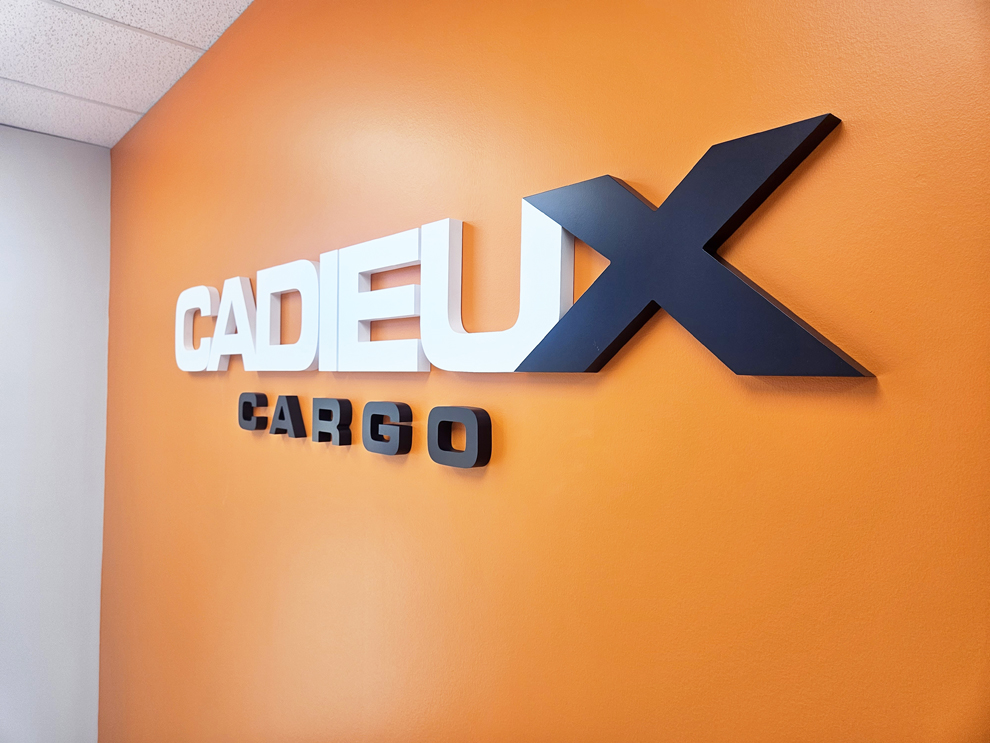
Installation should influence the project from the beginning rather than being addressed only after fabrication. Heritage reviews dimensions, wall and glass conditions, alignment, attachment methods, access limitations, and sequencing during planning. These details can affect material choices, panel sizes, graphic placement, hardware, production tolerances, and the final installation schedule.
A Heritage-managed installation starts with a site survey. The team documents measurements, substrates, obstructions, nearby lighting, pedestrian activity, security procedures, delivery routes, elevator requirements, building policies, and conditions in occupied areas. The survey also confirms the client’s priorities, visibility requirements, timing, and concerns so that the installation plan reflects both technical needs and operational expectations.
Heritage’s full-time installers coordinate with the project manager, designers, production personnel, and fabricators assigned to the work. This continuity helps the installation crew understand the approved drawings, materials, mounting specifications, finish standards, and site restrictions before arriving at the Arlington property. Heritage does not provide installation-only services for signs or graphics purchased from clients or unrelated vendors.
Project evaluation begins with the organization’s objectives, audiences, installation site, target schedule, and investment expectations. Heritage also reviews available photographs, architectural documents, measurements, brand standards, approved content, site addresses, and access requirements. For projects in Arlington and elsewhere in Northern Virginia, renovation milestones, move-in dates, stakeholder approval periods, construction schedules, and property management requirements should be identified early.
A complete Heritage engagement begins at $4,000. Many projects involving production and professional installation range from $10,000 to more than $200,000. The final investment depends on design requirements, materials, quantities, fabrication complexity, field conditions, number of locations, access, and schedule. These ranges refer to the overall managed engagement, not the price of one sign, panel, graphic, or display component.
Heritage primarily serves commercial workplaces, educational institutions, museums, healthcare facilities, government organizations, and other public-facing interiors. A larger interior program may include non-illuminated exterior signs, dimensional exterior lettering, or graphics applied to outside windows and walls. Standalone exterior sign packages, monument signs, pylons, channel letters, vehicle fleets, failed-component repairs, LED repairs, and installation-only requests are generally outside the company’s service scope.
Heritage supports Arlington organizations with regional project coordination, on-site surveys, field verification, installation planning, and production capabilities. Discovery and site documentation often take place at the client’s facility because the team needs to evaluate architecture, surfaces, access, operational restrictions, and stakeholder priorities firsthand.
Heritage does not claim an Arlington street address when one has not been provided. Local service refers to active regional support, site visits, project coordination, and professional installation capabilities throughout Arlington and Northern Virginia.
Environmental graphic design organizes communication within a physical space. Heritage combines brand standards, messaging, colors, materials, scale, visibility, architecture, circulation, and placement to create a more coherent experience.
The process can influence lobby identity, glass privacy graphics, feature walls, values displays, directional signs, interpretive installations, and recognition features. It also connects visual ideas with material performance, fabrication methods, and installation requirements. This allows stakeholders to evaluate the environment as a coordinated system instead of a collection of unrelated signs.
A dedicated Heritage project manager serves as the primary point of contact. This person coordinates discovery, estimates, site information, design input, materials, proofs, approvals, production schedules, building access, installation, and closeout.
The project manager also connects the client with the appropriate designers, fabricators, production specialists, and installers. This structure creates a clear path for communication and preserves accountability as the work moves from concept development to final installation.
Heritage can design, produce, and install lobby signs, dimensional lettering, acrylic signs, standoff mounted panels, wall wraps, window graphics, frosted privacy films, timeline displays, donor walls, employee recognition features, interpretive graphics, and wayfinding systems.
Recommendations depend on the organization’s audience, brand standards, architecture, messaging, durability needs, substrate conditions, viewing distance, and installation method. Heritage develops a coordinated solution based on the facility rather than recommending the same products for every Arlington workplace.
The minimum complete Heritage engagement is $4,000. Many produced-and-installed projects range from $10,000 to more than $200,000. Actual costs are influenced by the scope, number of components, design development, materials, fabrication requirements, field conditions, installation access, schedule, and number of locations.
These figures apply to the entire project engagement and are not standard prices for individual signs or graphics. Discussing budget expectations early allows the project manager to recommend an appropriate scope and avoid developing solutions that do not align with the organization’s priorities.
Yes. Heritage can work alongside architects, interior designers, general contractors, brand agencies, workplace consultants, and internal marketing teams. The team can review architectural plans, brand standards, concepts, artwork, and intended materials for production feasibility.
Depending on the project, Heritage may recommend substrates, graphic specifications, mounting methods, shop-ready artwork requirements, fabrication details, and installation sequencing. Heritage’s role is to translate approved creative direction into producible branded elements. The company does not replace architects, engineers, contractors, agencies, or other professionals responsible for the broader project.
Planning should begin once the location, project goals, and desired completion date are reasonably clear. A focused lobby feature may take several weeks, while a multi-floor workplace, phased installation, or multi-location program may require several months.
Timing can be affected by site surveys, design development, content preparation, stakeholder approvals, material availability, fabrication, construction readiness, wall preparation, property rules, security requirements, and restricted working hours. Heritage reviews these dependencies before confirming a schedule. Timely client decisions are also essential because delayed artwork, content, or approvals can reduce the available production and installation window.
No. Heritage does not offer installation-only services for signs, graphics, or displays furnished by a client or another sign company. Heritage installers place components that the company has designed, produced, fabricated, sourced, or otherwise administered as part of a complete project.
This policy keeps measurements, material compatibility, mounting methods, production tolerances, field conditions, and accountability connected. It also gives the project team an opportunity to resolve potential fit or performance concerns before installation begins.
Yes. Heritage supports organizations with offices, facilities, and campuses in multiple locations. The team can document approved standards, coordinate site surveys, adapt designs to different dimensions, schedule production, and manage installation through one project-management relationship.
Brand consistency does not mean every space must be physically identical. Heritage preserves the intended identity, colors, materials, message hierarchy, and visual character while accounting for differences in architecture, wall surfaces, glass configurations, audiences, access procedures, and installation conditions.
Heritage creates storytelling displays that can communicate organizational history, mission statements, core values, major milestones, donor contributions, employee achievements, research, community impact, or institutional accomplishments. Installations may combine printed graphics, photographs, dimensional lettering, acrylic panels, architectural finishes, standoff hardware, and layered components.
Designers organize the content according to the audience, viewing sequence, available space, message hierarchy, and future update needs. The finished installation may occupy a single feature wall or continue through several connected areas, depending on the amount of content and the purpose it serves within the Arlington environment.
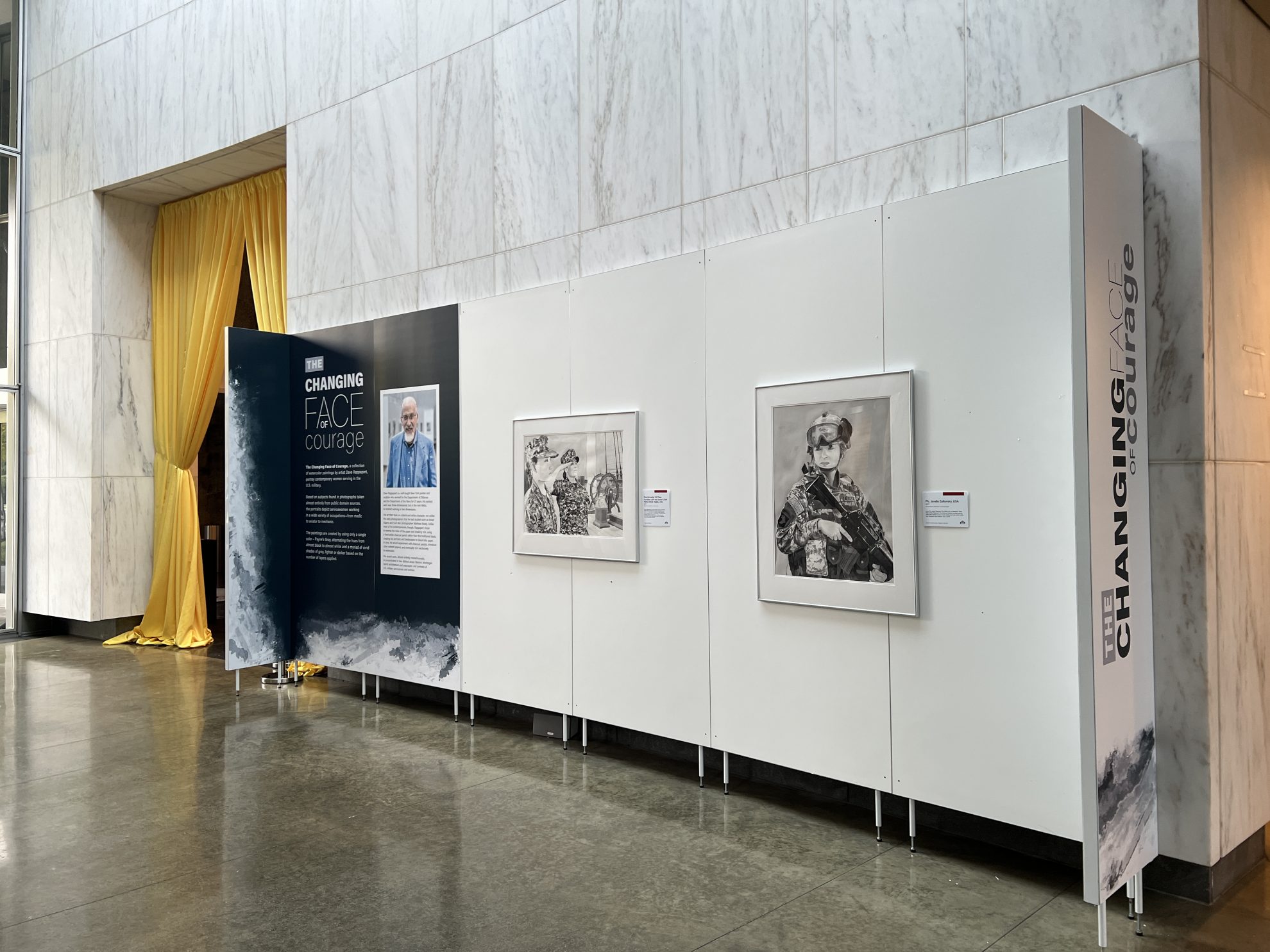
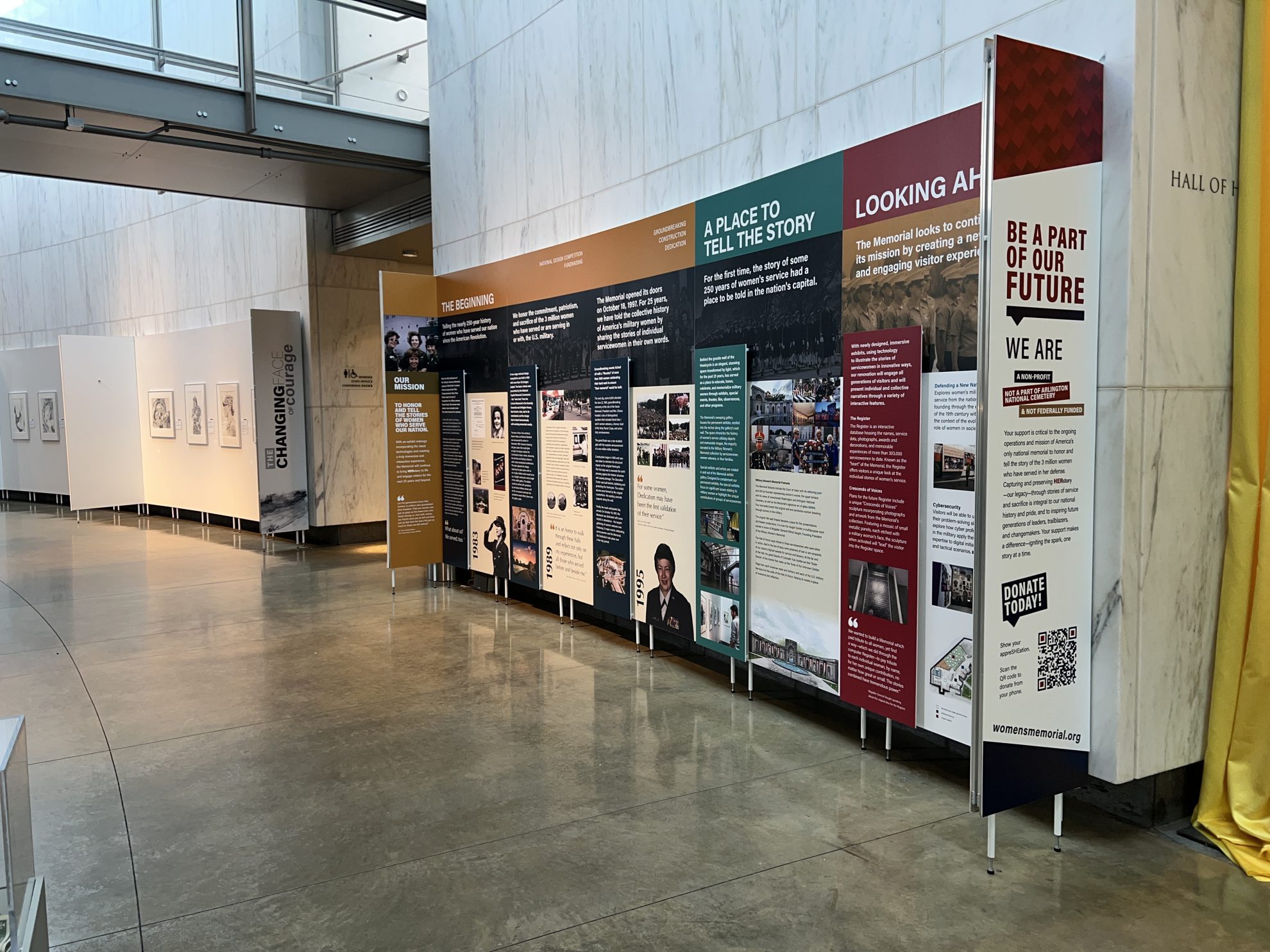
Heritage Signs & Displays created new museum signage for the Military Women’s Memorial in Arlington, VA. The project included custom signs, wall wraps, dimensional letters, and standoff-mounted displays to honor the legacy of U.S. servicewomen and the donors who supported the memorial. The updated interior features impactful designs, including a "Our Legacy" wall display and panels showcasing historical contributions and artwork, creating a transformative tribute to women in the U.S. Armed Forces.
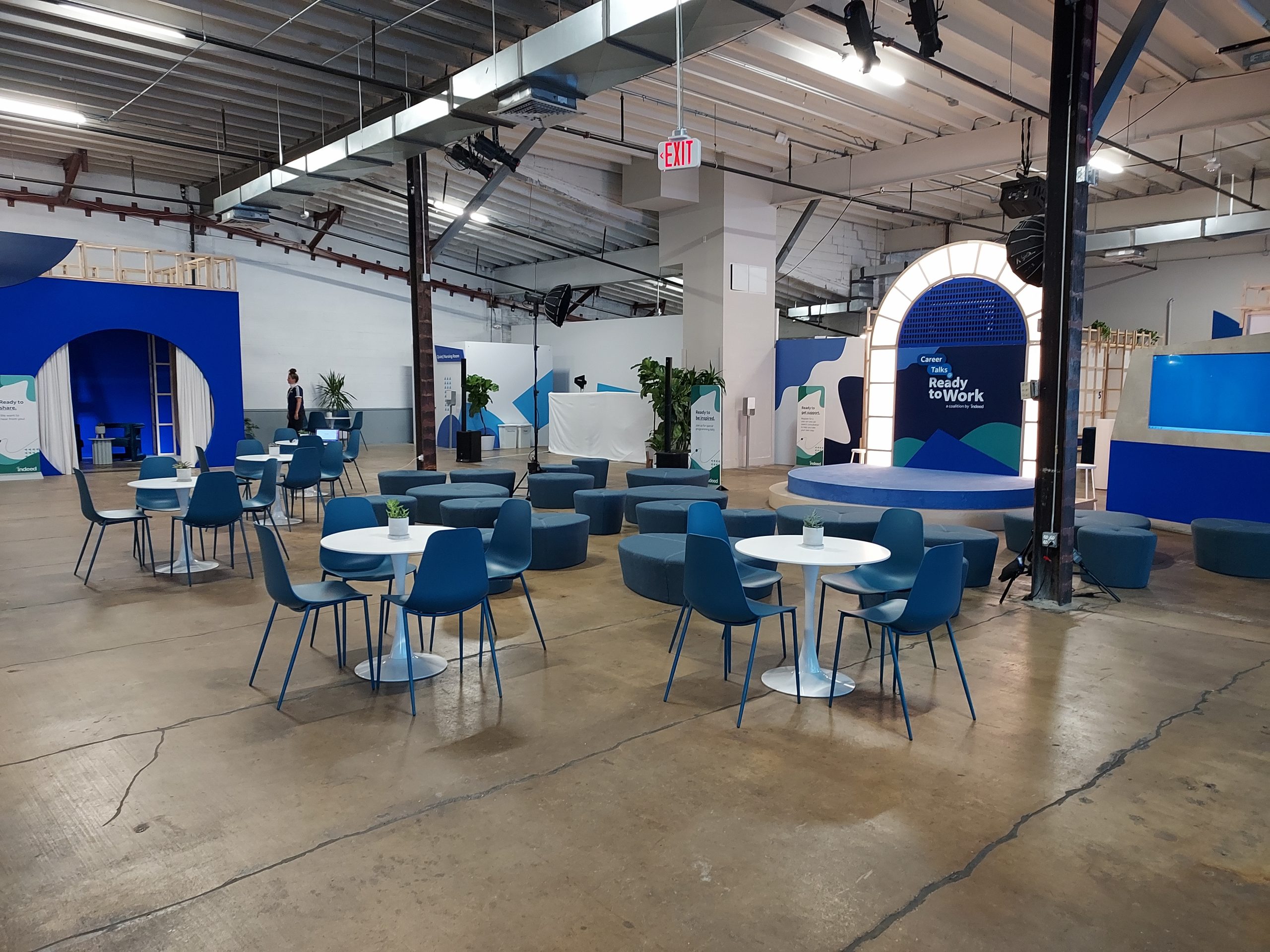
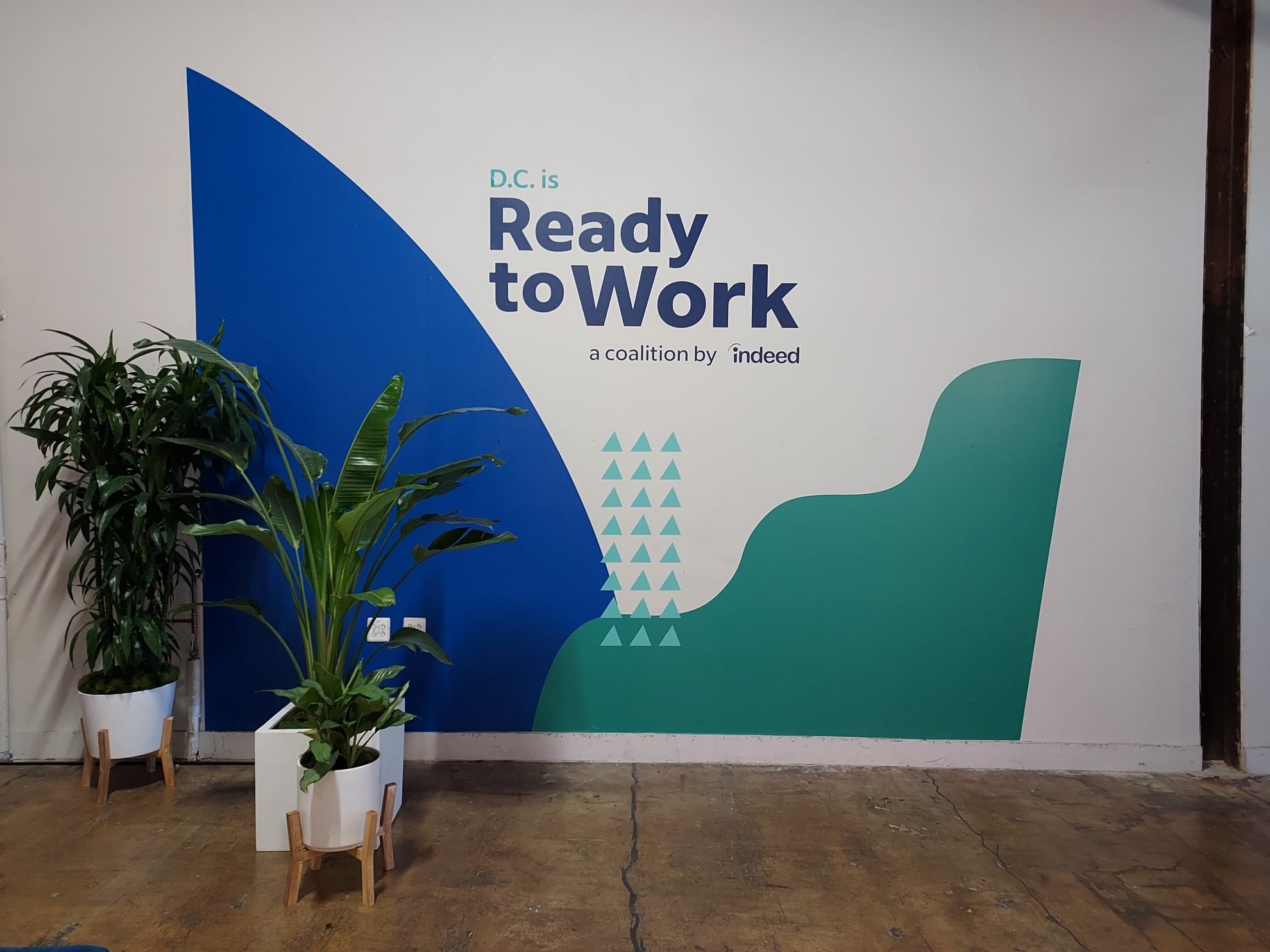
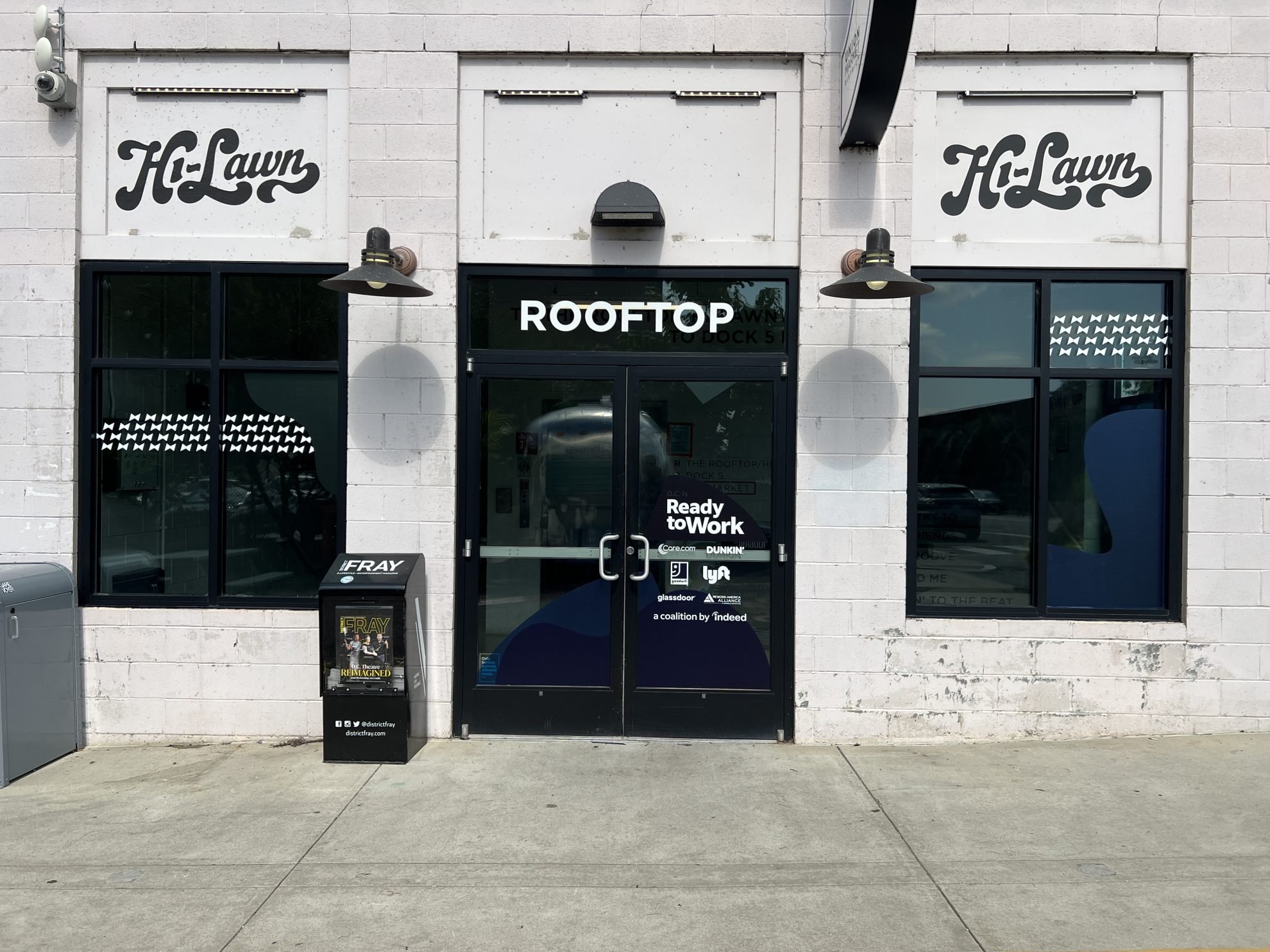
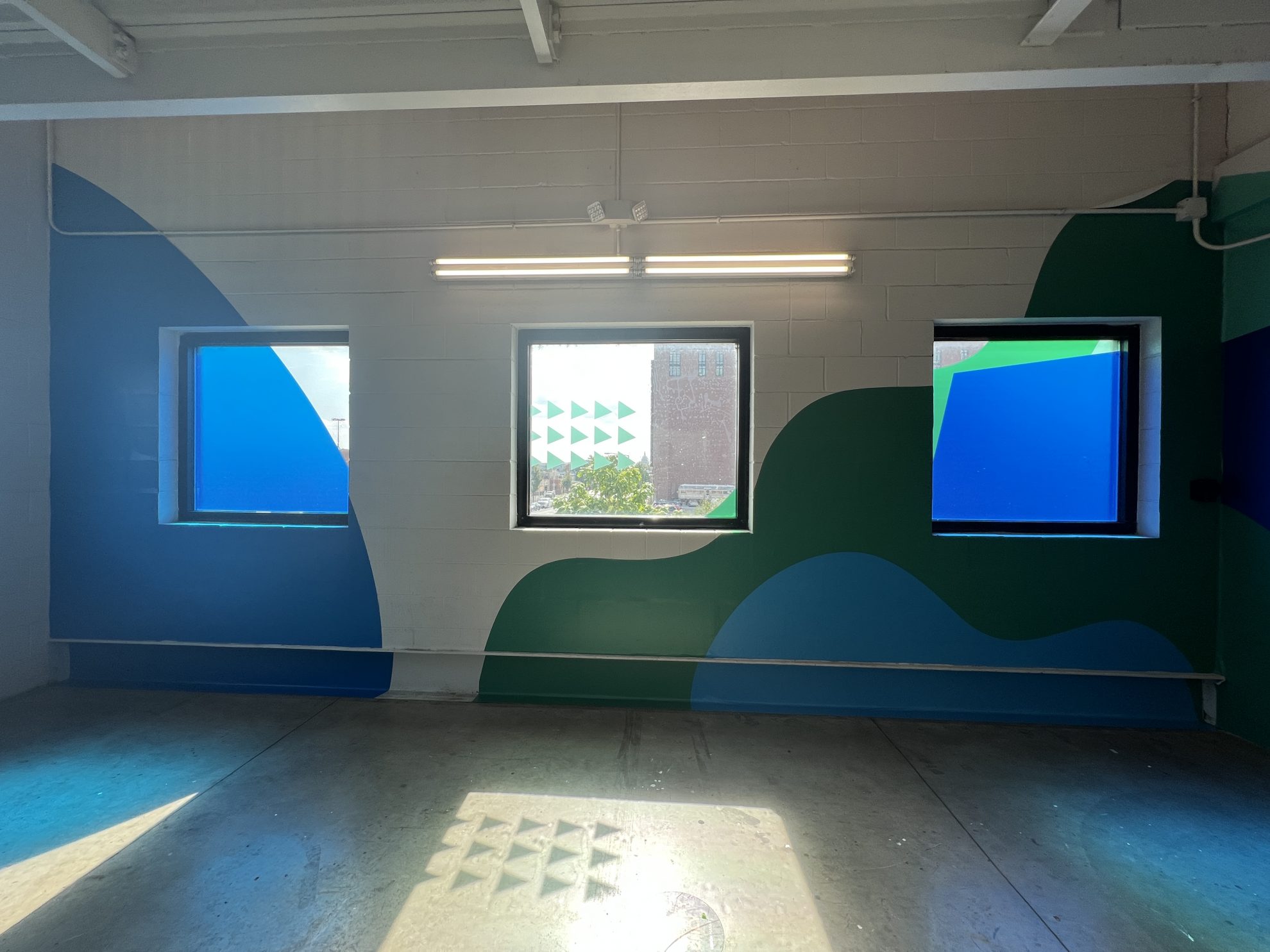
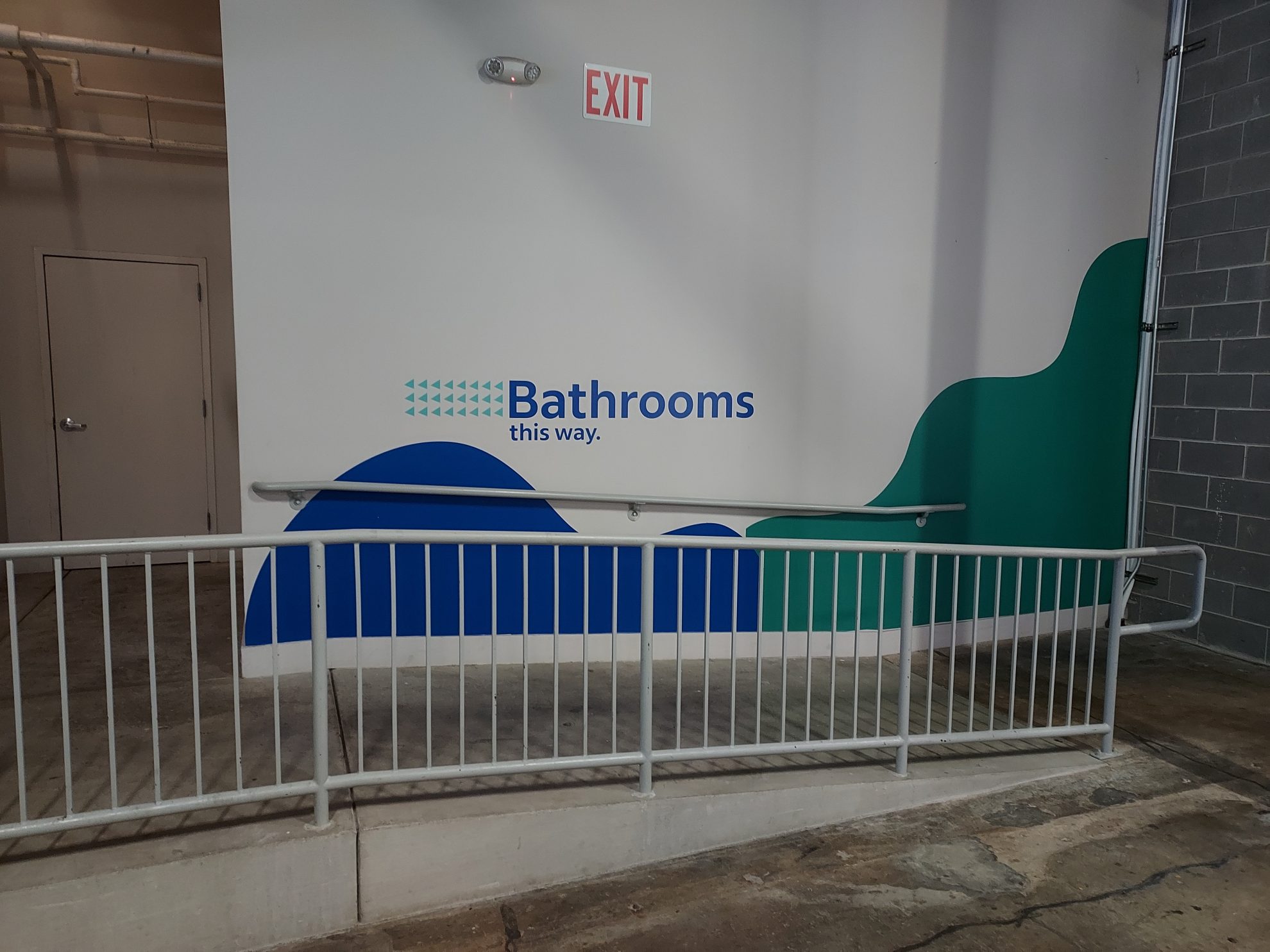
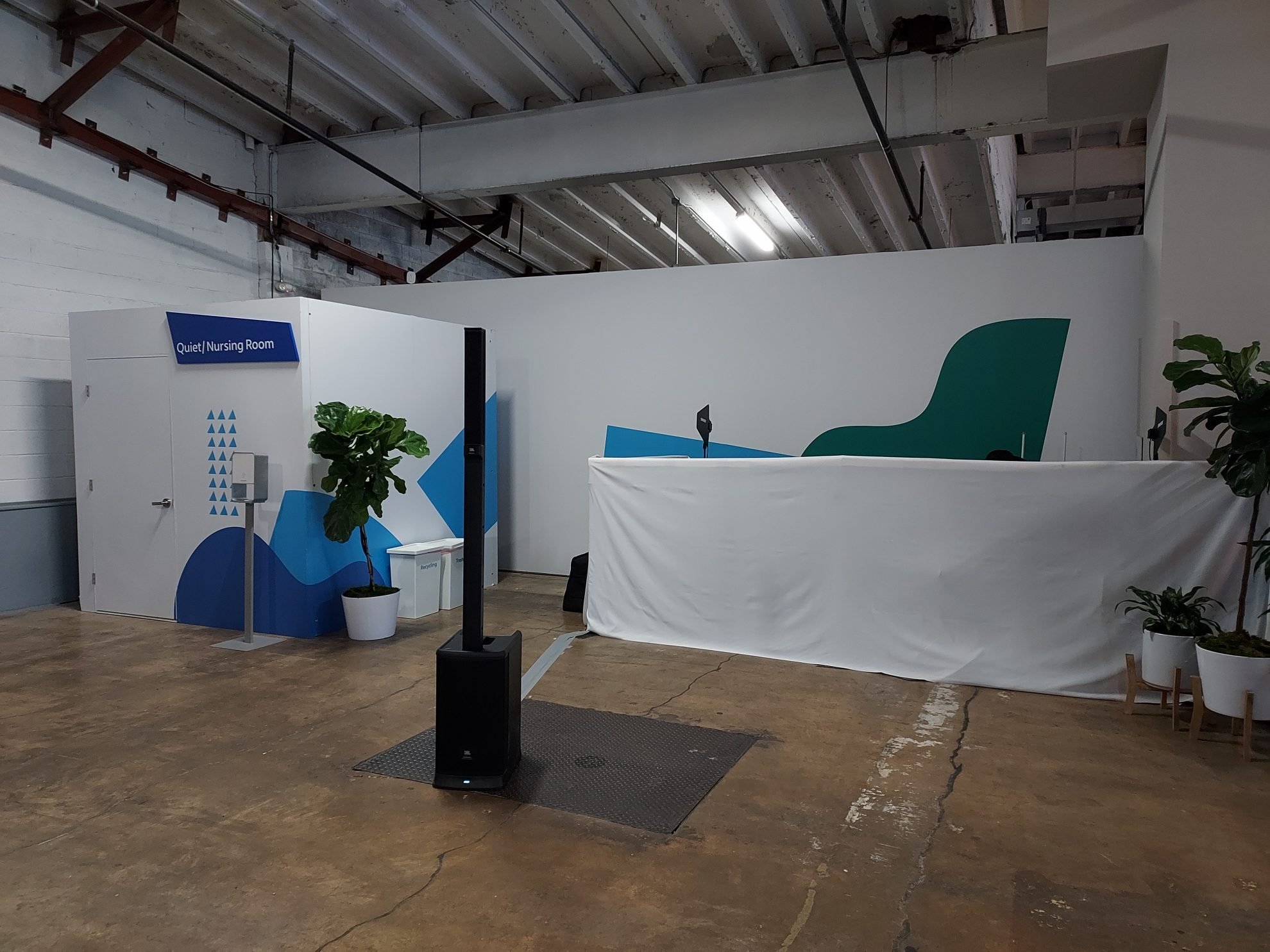
Heritage Signs & Displays' collaboration with The Gathery to brand Union Market in Arlington, VA, for Indeed's "Ready to Work" job fair. The project included custom event displays, wall graphics, window graphics, and wayfinding signs, creating an immersive and visually appealing environment. The branding enhanced the venue, reflected the event's mission, and provided a seamless experience for attendees.