

How Wall Wraps Transform Washington, DC Workplace Interiors
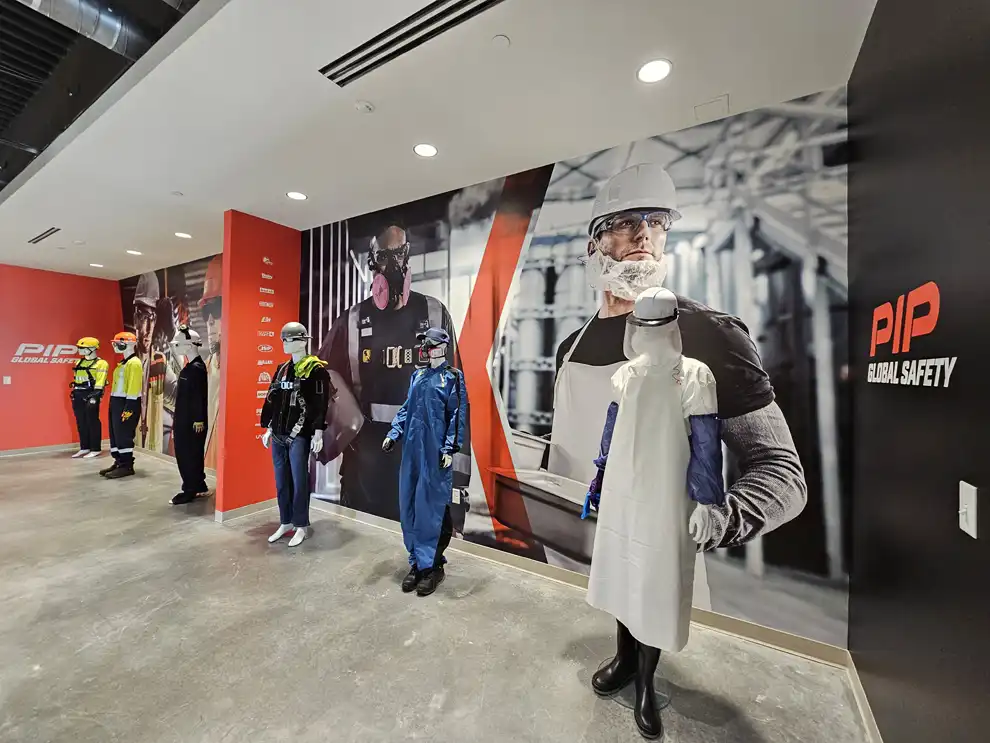
A workplace wall can do much more than separate one room from another. For organizations throughout Washington, DC, wall wraps and custom wall murals can turn large interior surfaces into meaningful opportunities to communicate brand identity, organizational culture, history, purpose, and the stories that matter to employees and visitors.
Rather than treating walls simply as places for decoration, organizations are increasingly using large-format graphics as part of a broader workplace branding strategy. A reception-area wall can establish a strong first impression. A corridor can communicate company history. A conference area can reinforce a mission statement or core values. An employee space can celebrate people, achievements, or organizational milestones. The right wall graphic can transform an underused surface into an intentional part of the workplace experience.
Heritage Signs & Displays creates, produces, and installs custom wall wraps and murals for workplace interiors throughout Washington, DC, Northern Virginia, Maryland, and the surrounding Mid-Atlantic region. Our work is centered on understanding what an organization wants people to see, understand, and remember, then determining how graphics, signs, displays, and dimensional elements can help communicate that message effectively.
Wall Wraps Can Do More Than Decorate a Workplace
Wall wraps are especially valuable because their scale allows imagery, color, typography, photography, illustrations, and branded messaging to become part of the interior itself.
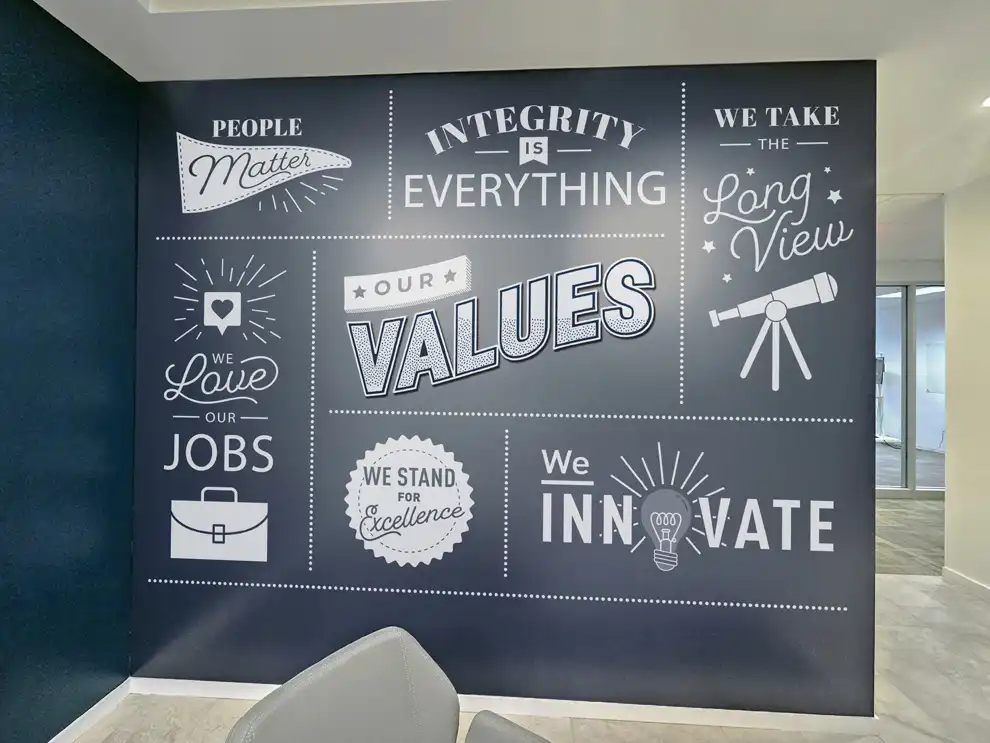
A large wall might feature a dramatic photograph that connects employees to the organization’s work. Another might use archival images and graphics to tell decades of company history. A nonprofit or association could highlight its mission statement, accomplishments, or community impact. A corporate headquarters might use wall graphics to reinforce culture and core values throughout employee areas.
Washington, DC organizations often have another important audience to consider: stakeholders. Associations, nonprofits, professional firms, government contractors, institutions, and other organizations regularly welcome members, donors, clients, partners, recruits, community leaders, and other visitors into their workplaces. Thoughtfully planned wall graphics can help those guests understand the organization before a meeting even begins.
The objective is not simply to fill a blank wall. The strongest installations give the wall a clear communication purpose.
Wall Graphics Can Become Part of a Larger Storytelling Display
Wall wraps do not need to function alone.
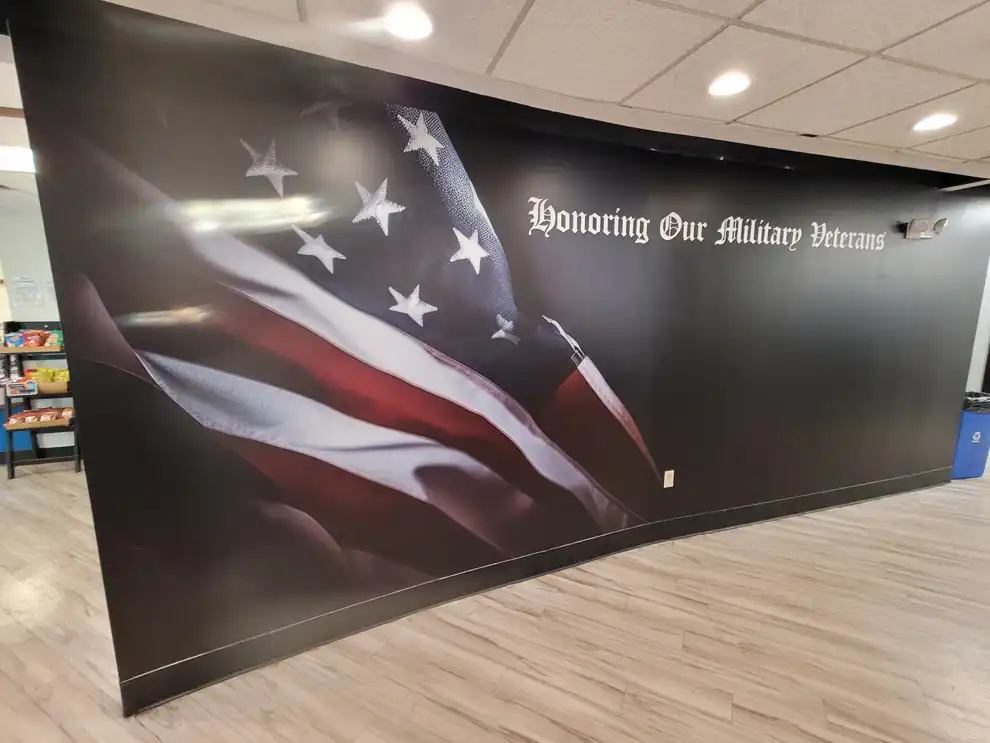
A printed wall graphic can provide the visual background for dimensional lettering, acrylic signs, standoff mounted panels, photographs, recognition elements, or other fabricated displays. This allows organizations to combine imagery and large-scale graphics with physical depth and architectural detail.
For example, a timeline wall might use a wall wrap to establish the visual narrative while dimensional elements identify important dates and milestones. A donor recognition display might combine branded wall graphics with mounted recognition panels. A company history wall might integrate archival photography, printed content, dimensional lettering, and graphic elements into one coordinated presentation.
These layered installations are an important distinction between simply printing a large graphic and using environmental graphic design to determine how messages, materials, surfaces, scale, and physical elements should work together inside the workplace.
Heritage collaborates with client stakeholders to develop that direction and then carries the approved concept through project management, production, fabrication, and professional installation.
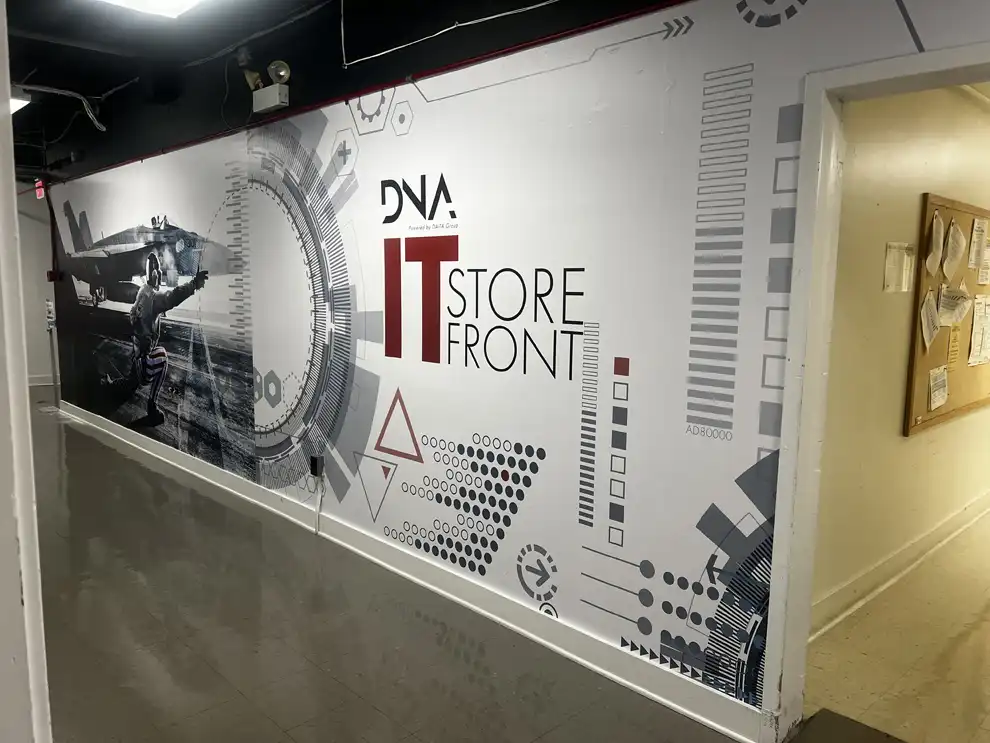
Good Wall Wraps Begin with the Wall Itself
One of the most important parts of a successful wall wrap project is also one of the easiest to overlook: the condition of the wall.
Adhesive vinyl graphics applied to painted wallboard require a smooth, sound, properly prepared surface. Walls should be properly primed, painted, and fully cured according to the coating manufacturer’s requirements. Approximately four weeks is a useful planning expectation for many paints, although actual curing requirements vary by coating and site conditions.
Low- and zero-VOC paints can sometimes require additional cleaning, adhesion testing, or a different vinyl and adhesive system. Testing can help identify compatibility concerns, but it cannot guarantee the strength of the underlying primer, paint, or paint-to-wall bond.
If primer or paint peels, chips, or pulls away during testing or installation, Heritage stops rather than applying graphics to an unstable surface. The client’s facilities team, contractor, or property representative must repair, properly prime, repaint, and fully cure the wall before installation can continue.
This is one reason a site survey and careful project planning matter. Material selection should be based on the actual wall and the desired result, not simply on the appearance of the graphic.
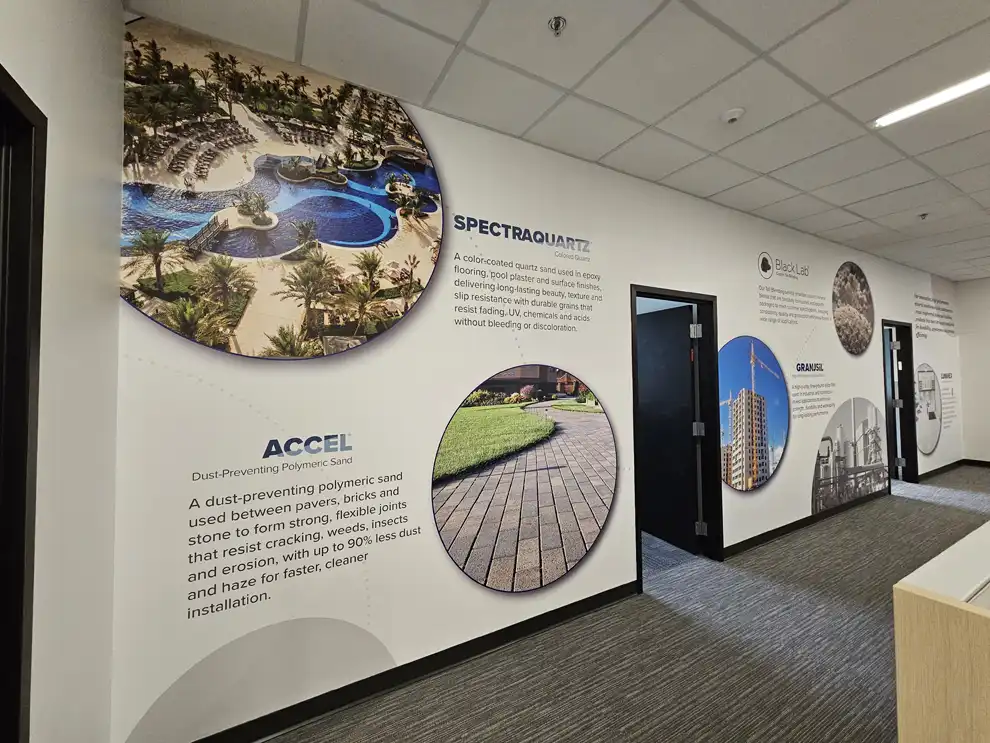
Removable Vinyl Does Not Mean Damage-Free Removal
Another misconception about wall wraps involves the word removable.
Certain adhesive systems are designed to be more suitable for later removal, but removable vinyl should never be interpreted as a guarantee that a painted wall will look exactly the same after the graphics come down.
Removal can expose adhesive residue, ghosting, paint loss, weaknesses in the original coating, or damage to the drywall facing. Age, paint condition, primer, adhesive, length of installation, environmental conditions, and the wall itself can all influence what happens during removal.
For planning purposes, organizations should assume that a painted wall may require repair and repainting after an adhesive wall graphic is eventually removed.
Heritage can include graphics removal as part of a new Heritage production and installation project, but the client or property representative remains responsible for wall repair, refinishing, repainting, restoration, and associated costs.
Being clear about those expectations at the beginning of a project is far better than making unrealistic promises about what will happen years later.
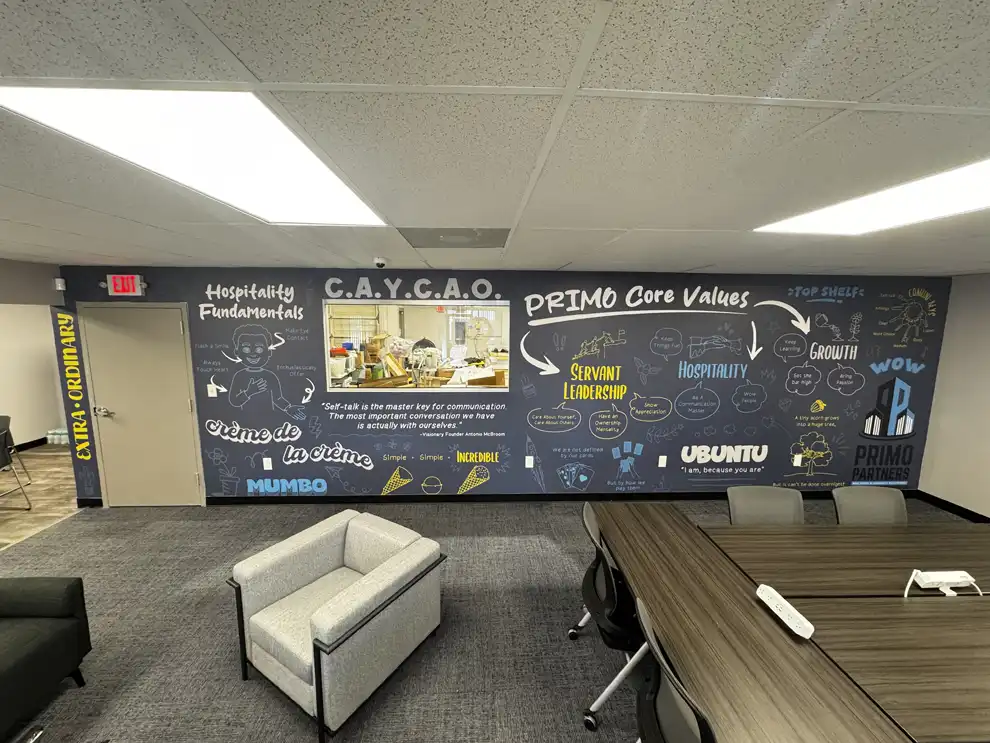
Professional Installation Matters
A great design and a properly prepared wall still need a careful installation.
Wall wraps are often produced in multiple panels that must align accurately across a large surface. Image registration, seams, edges, corners, doors, outlets, fixtures, architectural transitions, and other conditions must be addressed during planning and installation.
The amount of time required varies considerably depending on wall size, graphic complexity, site access, surface conditions, furniture, installation hours, and other project requirements. For that reason, responsible planning is more useful than assuming every mural or wall wrap can be installed within a predetermined number of hours.
Heritage’s full-time installation team members install the signs, graphics, and displays Heritage produces, fabricates, procures, or manages within our projects. One assigned project manager coordinates the client relationship, site information, environmental graphic design, production, fabrication, scheduling, and installation so important details are not separated among unrelated providers.
For organizations with multiple locations, that same coordinated approach can help maintain brand standards while adapting graphics to the dimensions and conditions of each individual workplace.

Turning Workplace Walls into Something Worth Remembering
The best wall wraps do not succeed simply because they are large or colorful. They succeed because they communicate something worth remembering.
That could be a company’s history. A nonprofit’s impact. An association’s purpose. A university’s achievements. A healthcare organization’s values. A team’s accomplishments. A founder’s story. A mission statement. Or simply the personality and identity an organization wants employees and visitors to experience when they enter the workplace.
Heritage Signs & Displays is a veteran-owned, family-led company founded in 1977. Today, we help organizations throughout Washington, DC and the Mid-Atlantic transform workplace interiors and event environments through environmental graphic design, project management, production, fabrication, and professional installation.
If you are considering a wall wrap, mural, storytelling wall, or larger workplace branding project, our team can help you evaluate the space, surfaces, communication goals, artwork, and installation requirements before determining the right solution. Get Started Now to tell us about your workplace and what you want its walls to communicate.