An organization’s physical environment communicates before a conversation begins. A headquarters lobby can establish credibility, a glass-walled office can balance privacy with openness, and a hallway can explain history, recognize contributors, or reinforce a mission statement and core values. At a conference, public program, or brand activation project, visual elements must orient people quickly while representing the host with clarity. Effective interior signs, graphics, and displays connect those moments so the environment feels intentional, professional, and aligned with the organization it serves.
Heritage Signs & Displays turns these communication needs into physical branded environments. The company began in 1977, and its intentional move toward custom signage, interior graphics, workplace branding, and event solutions accelerated in 2009. Heritage is award-winning, veteran-owned, and family-led. As our 50th anniversary approaches, teams serving Washington, DC, Arlington, and Waldorf draw on shared design, project leadership, production, fabrication, and field-installation capabilities across the Mid-Atlantic.
Our role is to convert a client’s objectives, brand standards, messages, architecture, stakeholder needs, and site conditions into custom interior signs and graphics that strengthen the commercial interior environment. One engagement may revolve around a prominent lobby feature, while another may encompass multiple floors, offices, buildings, or event areas. Heritage creates wall wraps, window graphics, privacy films, dimensional lettering, acrylic signs, standoff mounted displays, timeline wall displays, wayfinding, interior architectural signage, donor and recognition features, museum and interpretive displays, event graphics, sponsor presentations, and modular display systems.
The Washington, DC region includes government agencies, public offices, associations, nonprofits, corporate headquarters, law firms, universities, healthcare organizations, museums, embassies, contractors, faith-based organizations, venues, and purpose-driven institutions. Their interiors may welcome employees, members, donors, public officials, clients, students, patients, media, and international visitors. Each audience brings different expectations for credibility, accessibility, security, privacy, navigation, and tone. Heritage helps identify what people should understand, where visual branding should lead, and when restraint will make the communication stronger.
Every project is organized by one dedicated Heritage project manager. That person connects discovery, site information, design development, estimating, material decisions, approvals, production, fabrication, scheduling, access planning, installation, and closeout. Environmental graphic designers, production specialists, fabricators, and full-time installers remain connected as the work advances. Clients receive a single accountable team instead of being required to manage separate creative, printing, fabrication, and installation providers.
That coordination is especially valuable in the DC metro area, where building rules, security procedures, loading access, stakeholder approvals, public visibility, traffic, and immovable event dates can influence execution. Heritage approaches the work with urgency while making realistic commitments and protecting the quality of the result. Our purpose is to honor God by serving clients and communities with excellence. We seek to express that purpose through responsible recommendations, honest communication, careful stewardship, and interior environments that represent each organization well.
The most successful branded spaces begin with the people who will use them. Employees may need stronger connections to culture and organizational direction. Visitors may need immediate reassurance and intuitive navigation. Members, donors, public officials, students, patients, partners, and event attendees may each need different information at different points in the experience.
Heritage studies how messages, brand identity, architecture, circulation, surfaces, viewing distance, accessibility, installation conditions, and the effect of existing lighting influence that experience. We help determine where dimensional identification should establish authority, where wall graphics can introduce energy or context, where privacy films can make glass offices more functional, and where a timeline wall display or recognition feature can invite deeper engagement.
For a Washington, DC organization, this planning may shape a headquarters, association office, government facility, museum, university building, healthcare setting, nonprofit workplace, conference, or public program. The goal is not visual volume. It is a purposeful combination of custom signs, graphics, and displays that improves understanding, reinforces identity, and gives employees and visitors confidence in the environment around them.
Washington, DC clients choose Heritage when they need an accountable partner capable of carrying a project from early planning through final installation. One project manager leads communication and keeps the client, designers, production specialists, fabricators, and installers aligned around the approved scope, schedule, site conditions, and finished result.
The work remains under Heritage’s care from environmental graphic design through making, fabrication, and field installation. For assignments with greater scale or complexity, a pre-production conference assembles the needed specialists to examine drawings, field dimensions, substrates, finishes, access, attachment details, sequence, approvals, and timing before fabrication starts.
Heritage remains veteran-owned and family-led as we approach our 50th anniversary. Our Washington, DC, Arlington, and Waldorf presence is supported by seven Heritage locations and multiple production resources across the Mid-Atlantic and Carolinas. This model combines nearby project support with the capacity to complete substantial interior features, multi-floor transformations, phased programs, event installations, and multi-location branding initiatives with consistent standards and clear responsibility through completion.
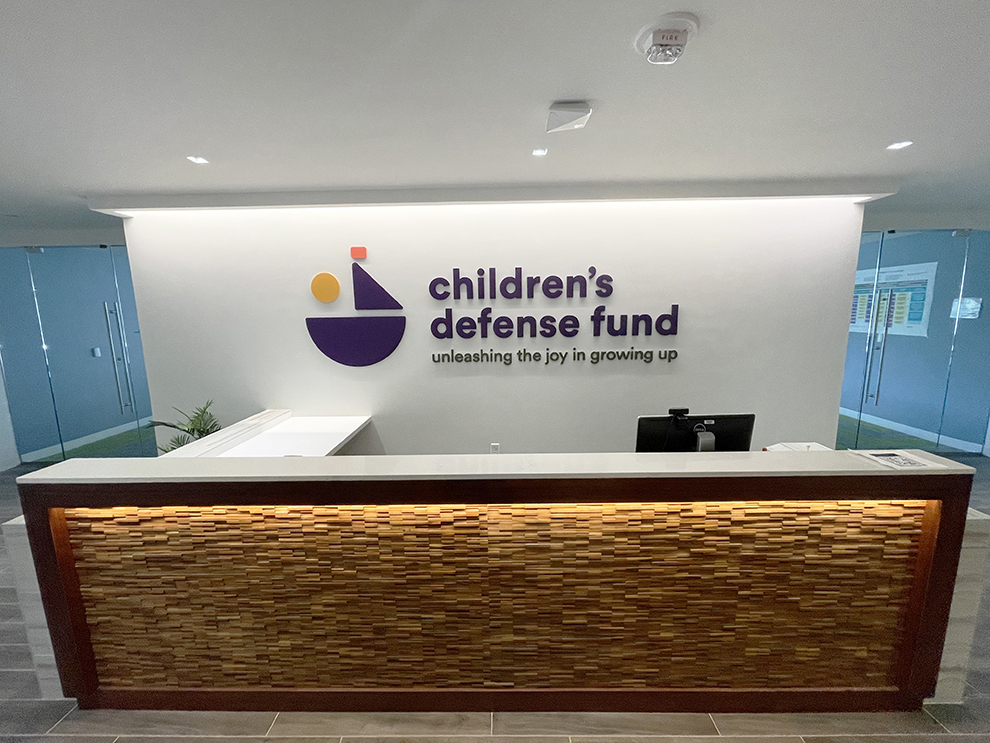
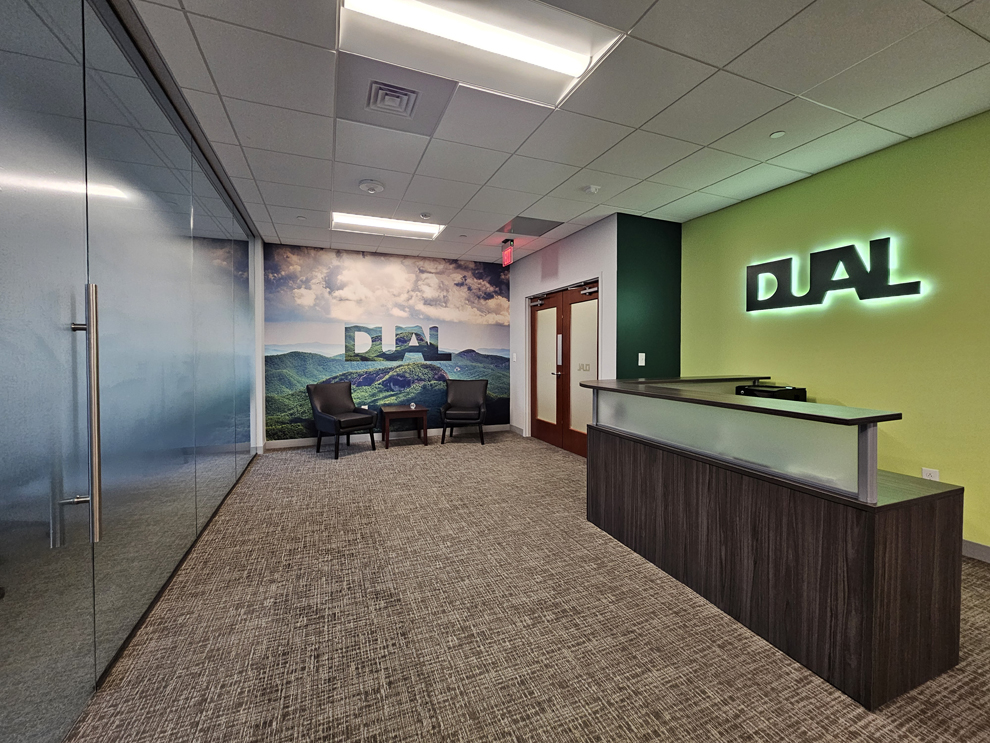
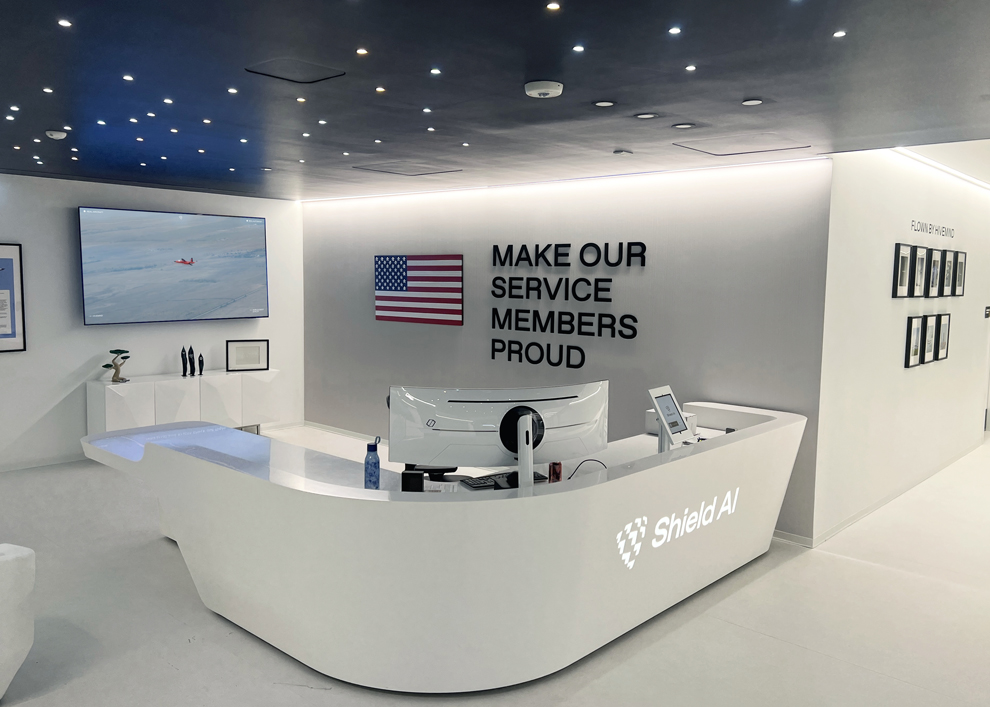
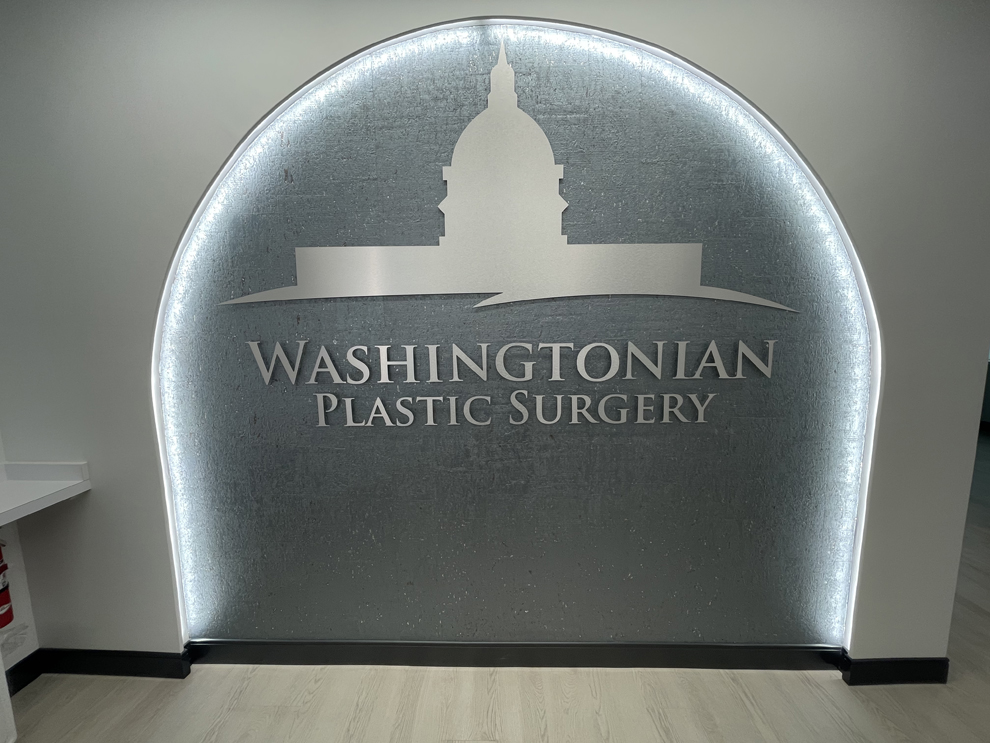
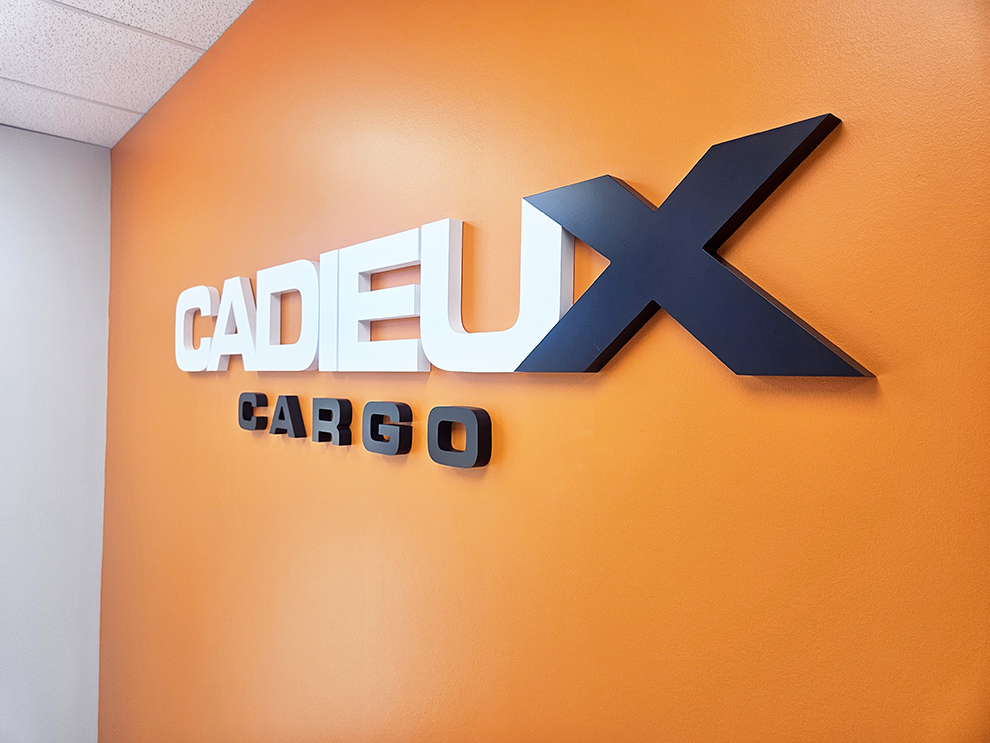
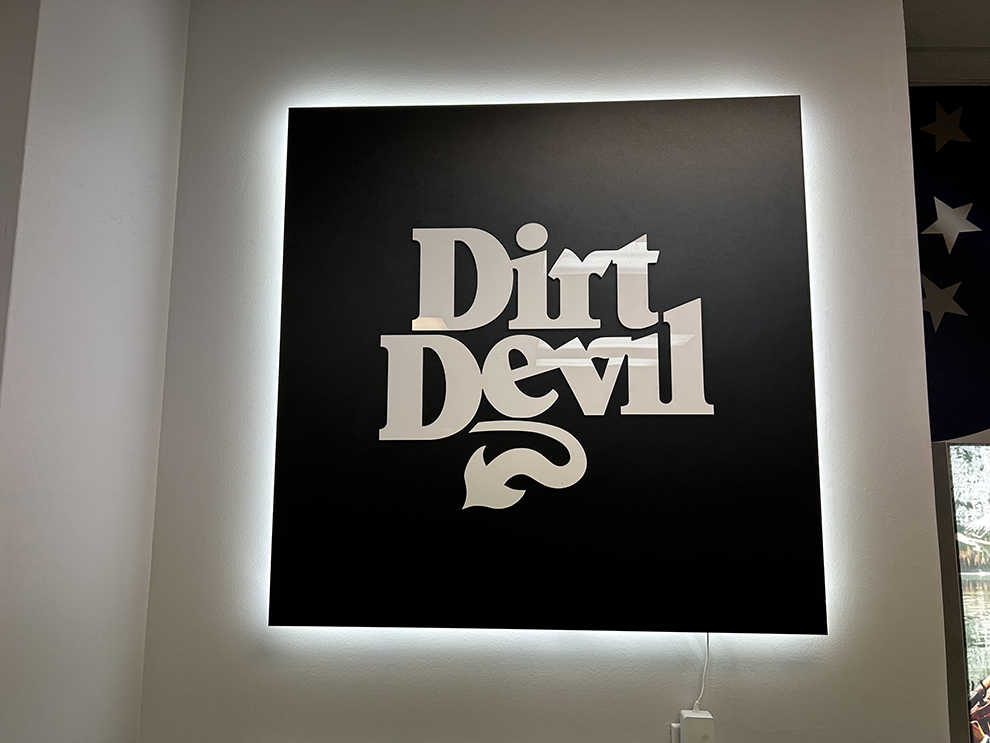
A lobby identity feature can combine a dimensional logo, lettering, acrylic, illumination, specialty finishes, and an architectural background to create a confident arrival.
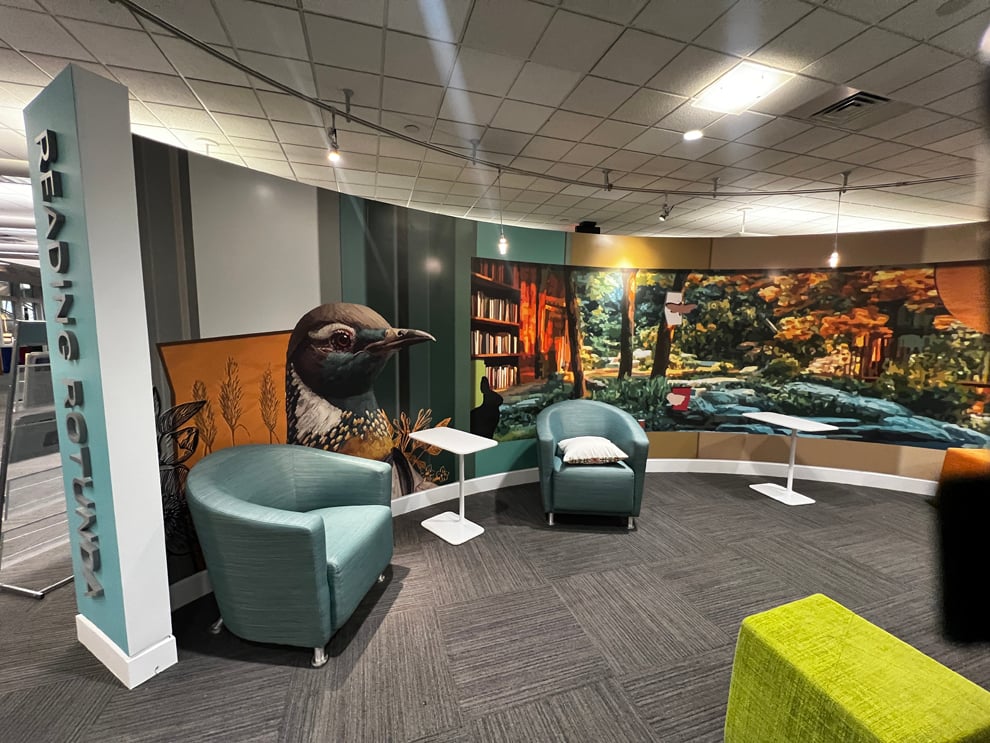
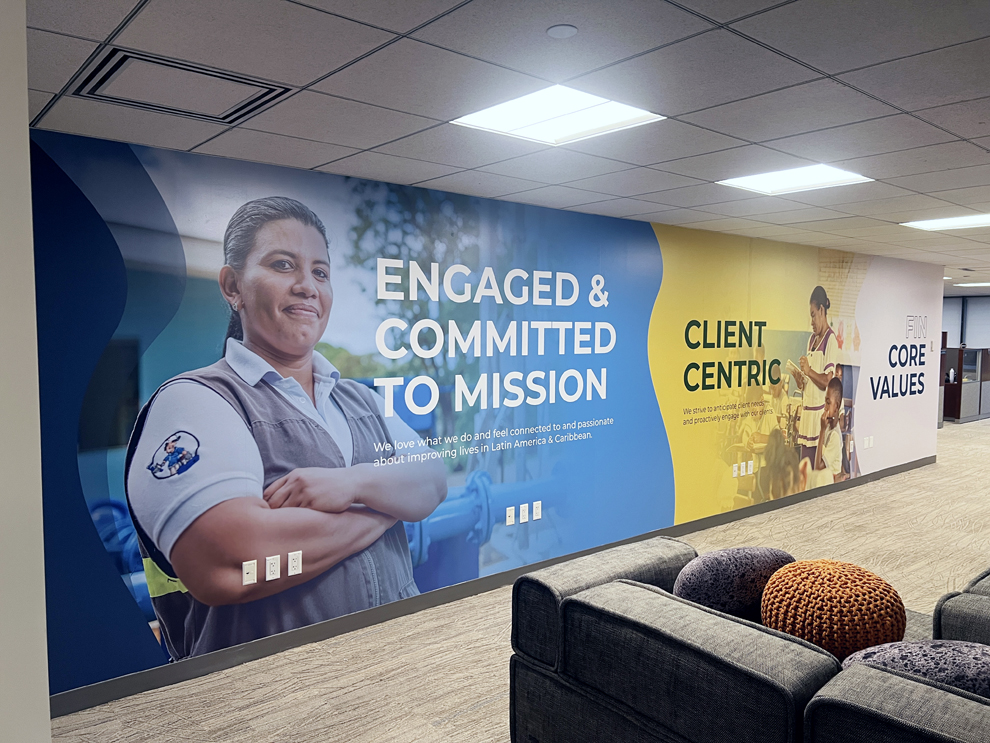
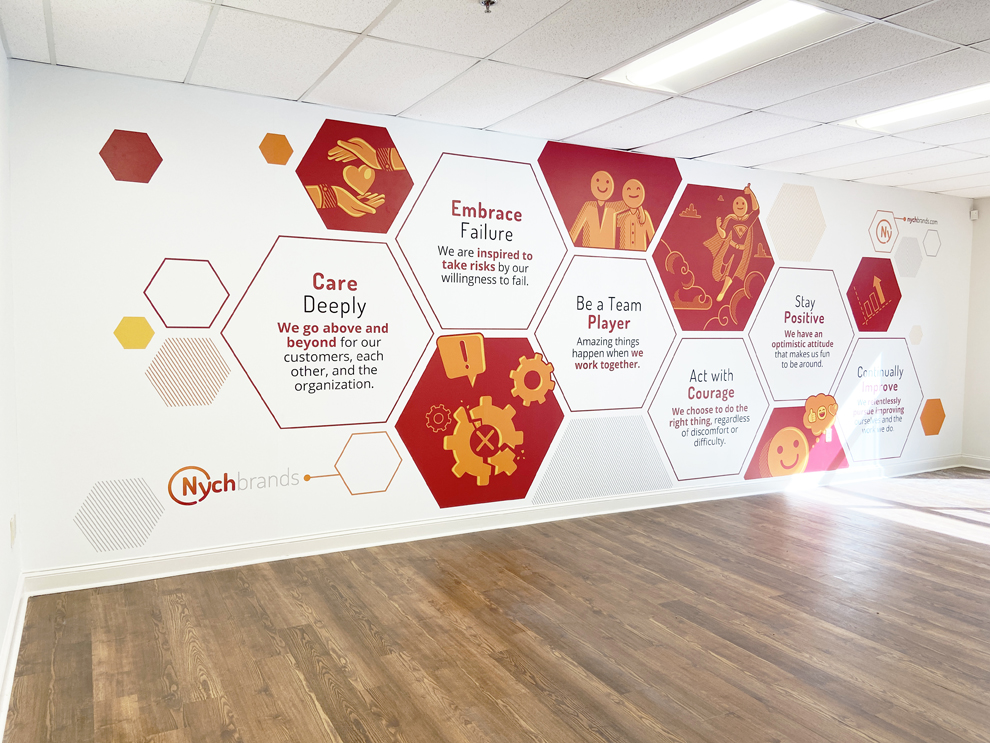
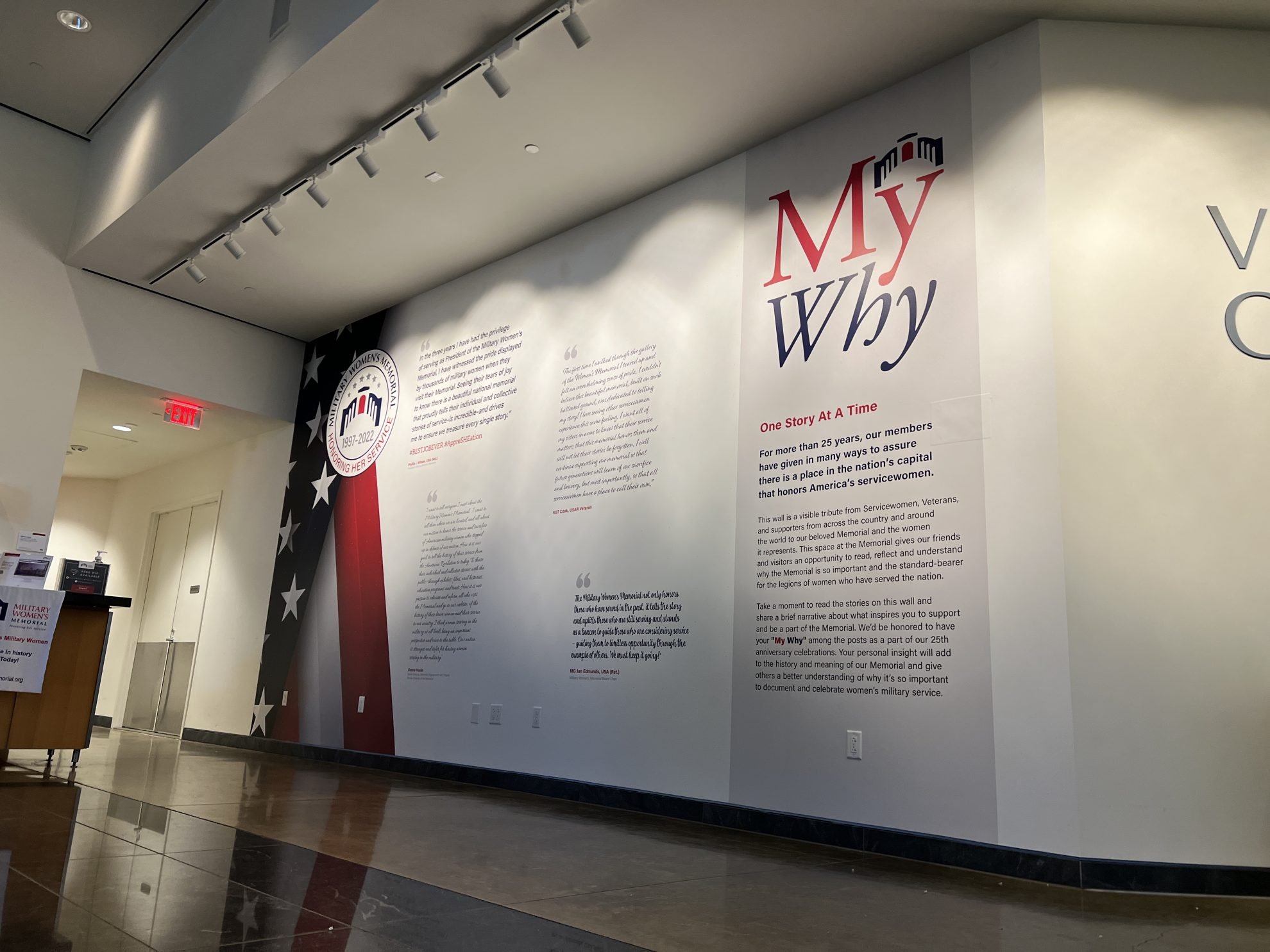
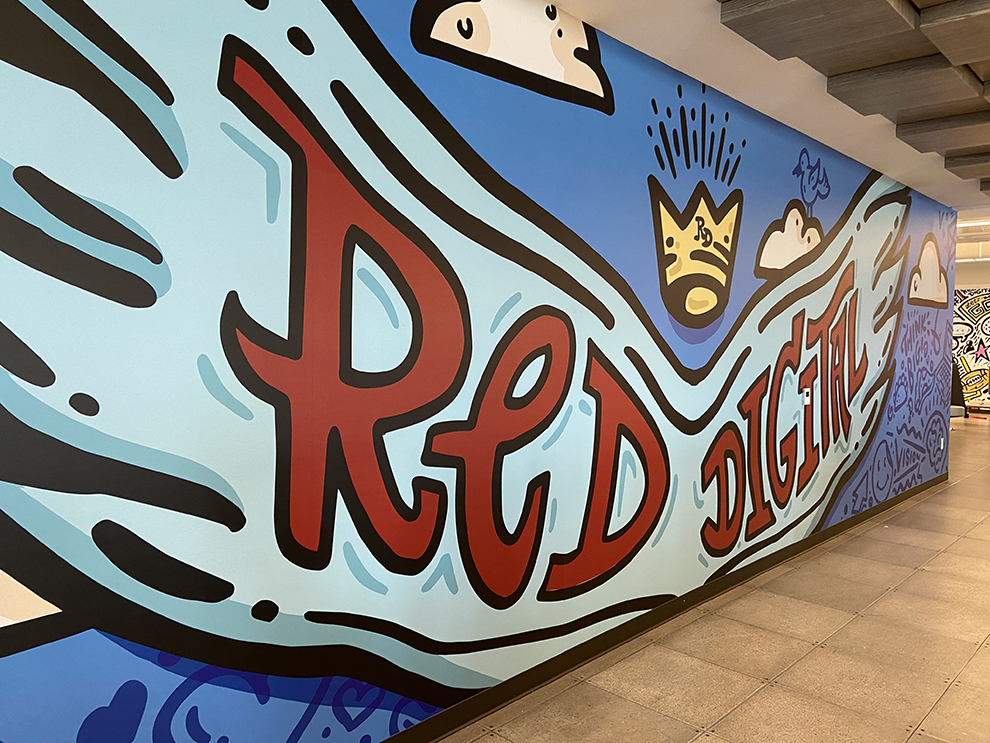
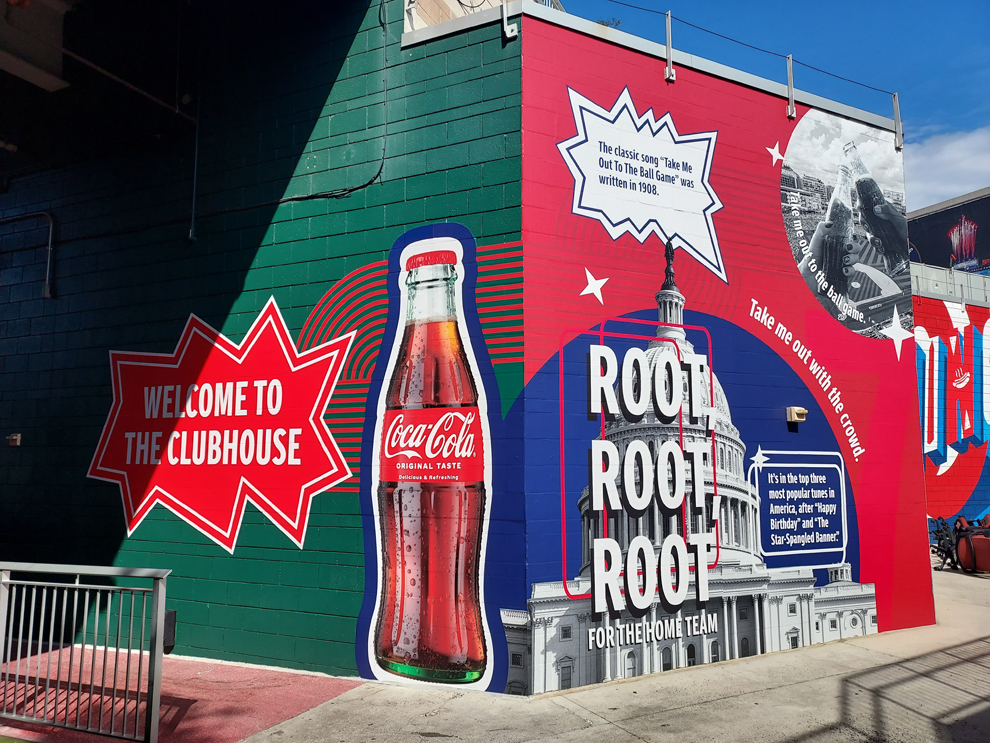
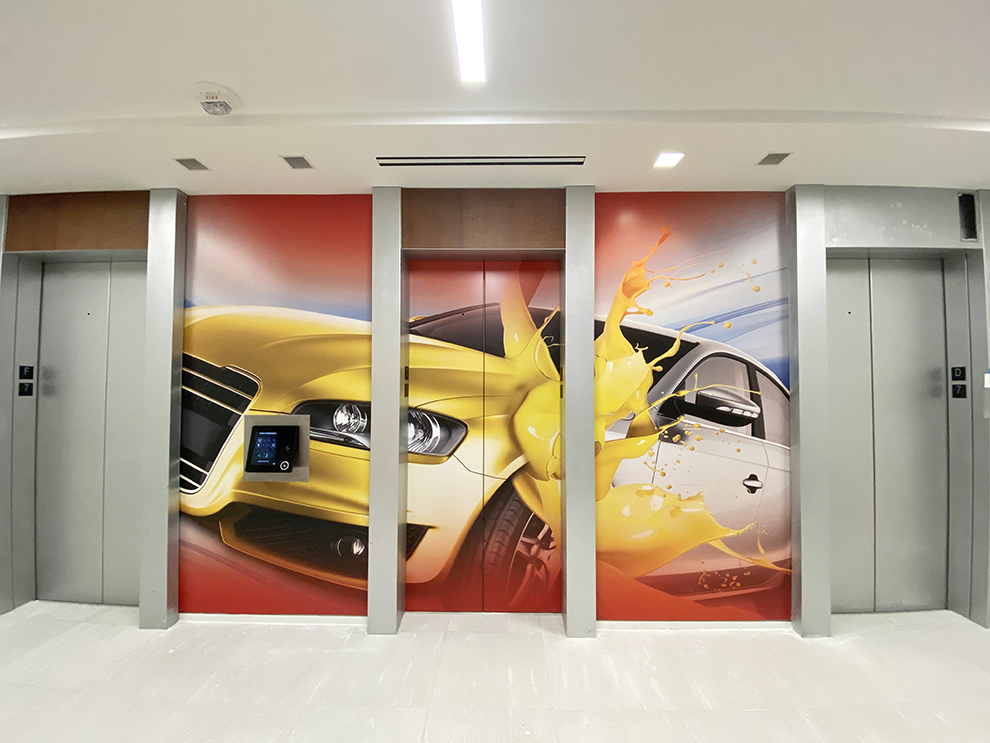
Wall wraps transform offices, corridors, meeting areas, exhibits, and event surfaces through branded imagery, color, patterns, maps, and messages.
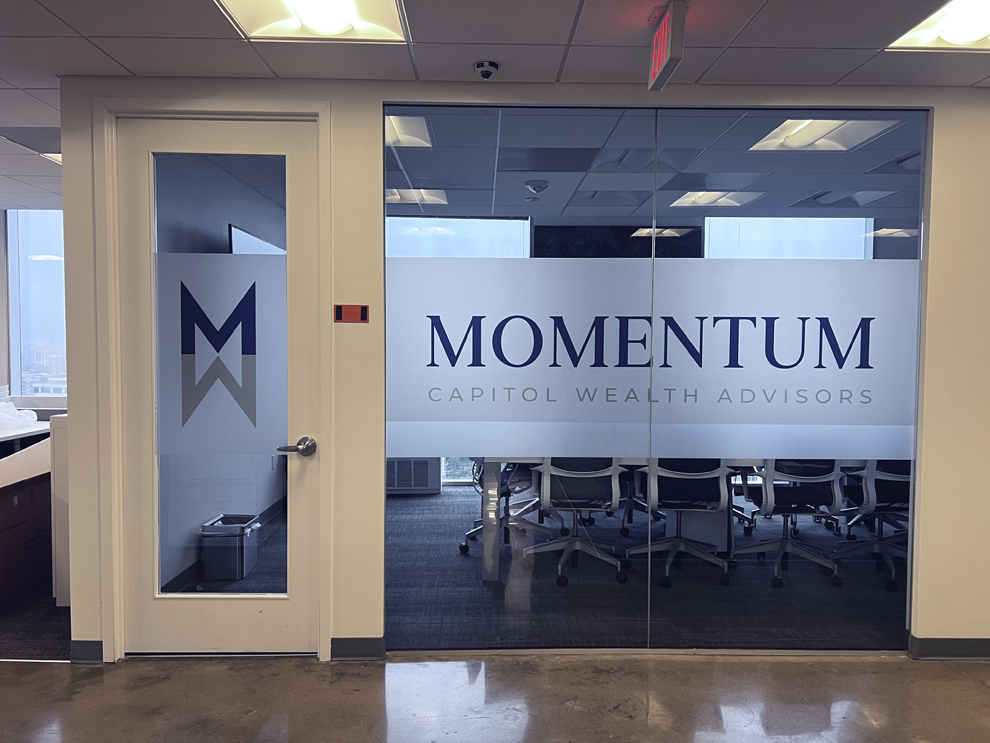
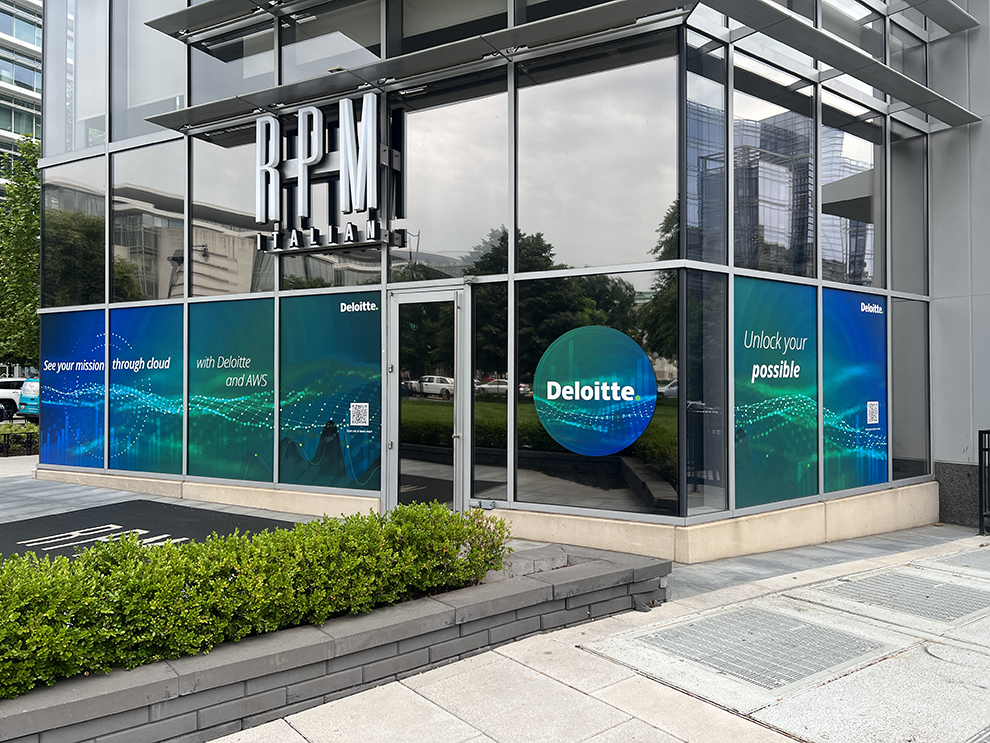
Films and printed graphics turn interior glass into useful branded surfaces while providing decoration, privacy, distraction markers, and controlled sightlines.
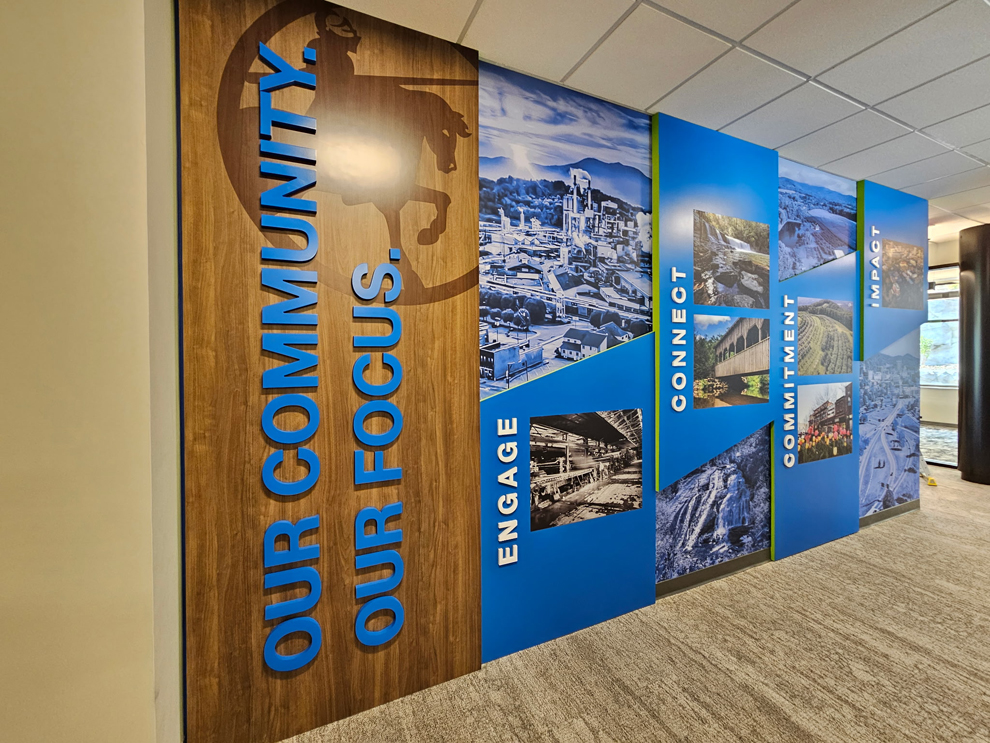
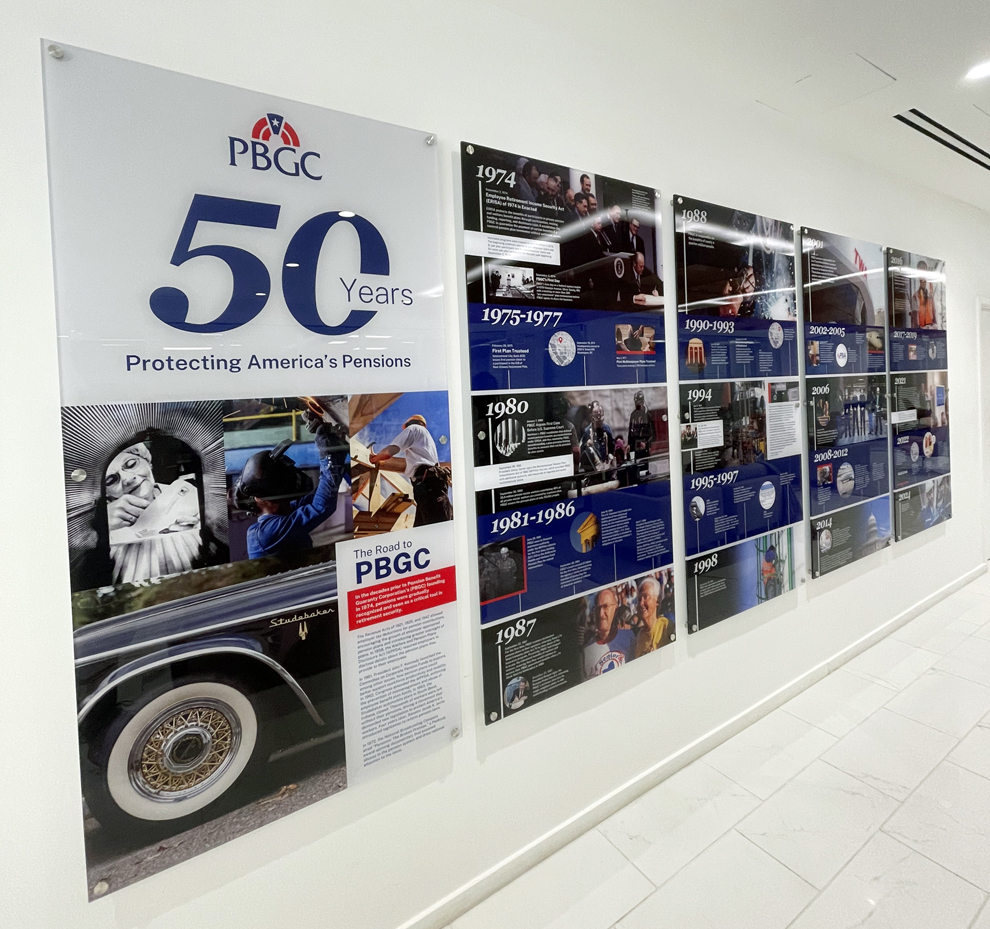
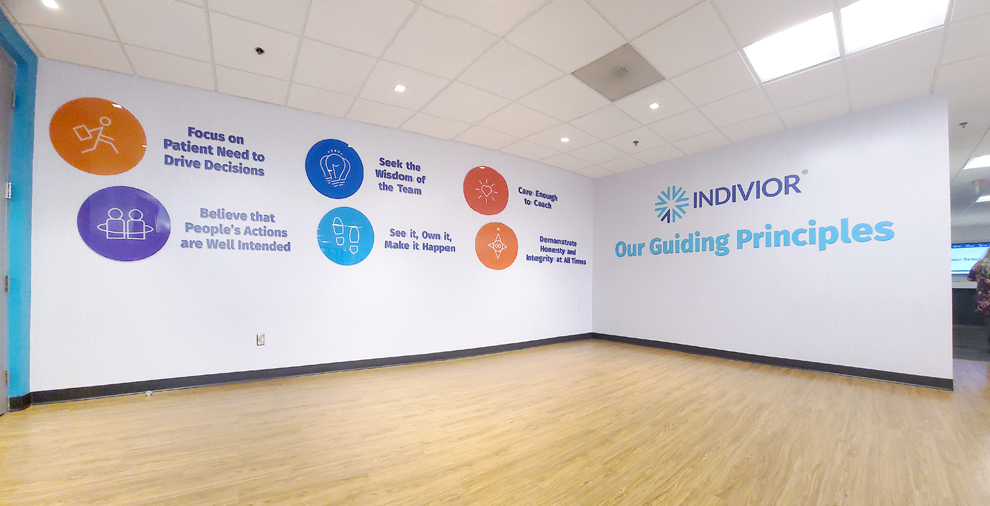
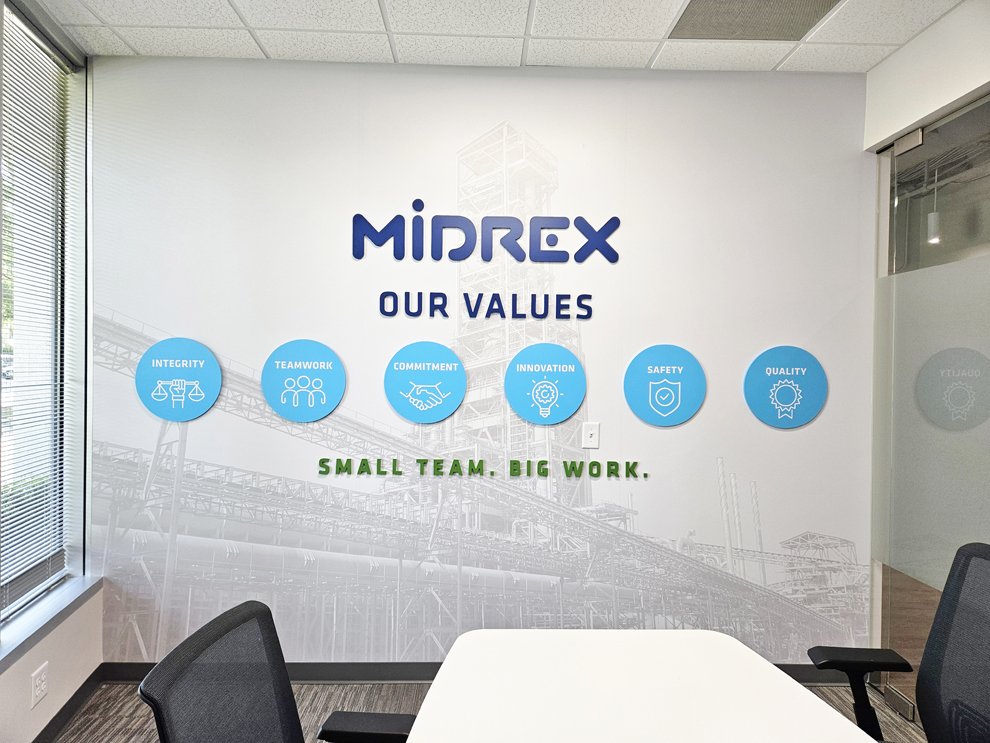
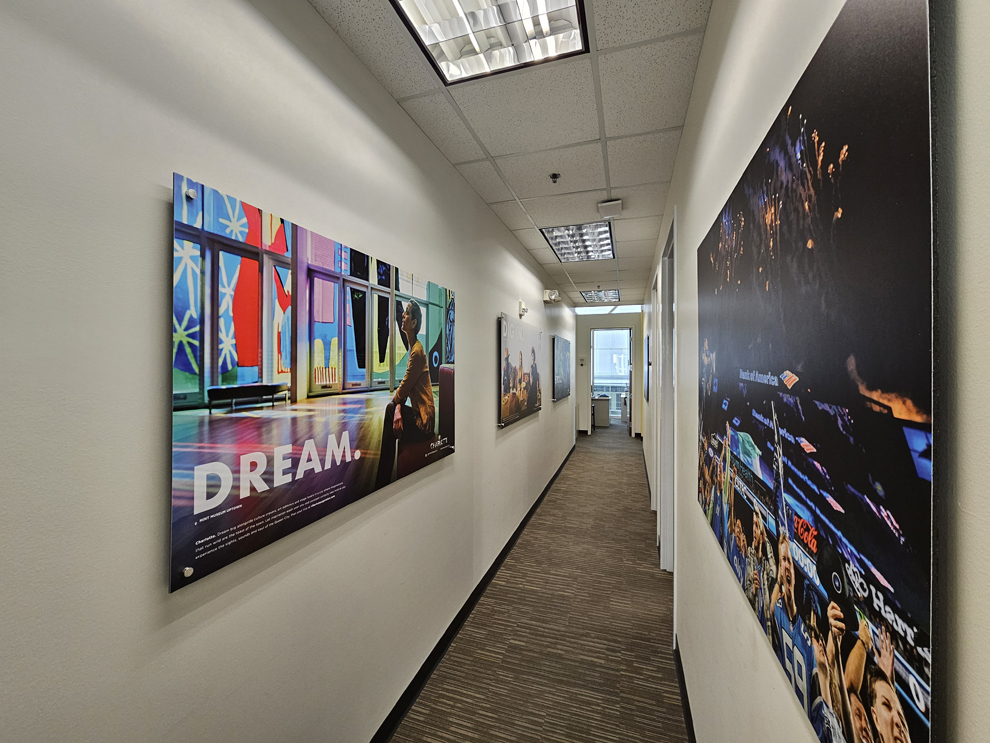
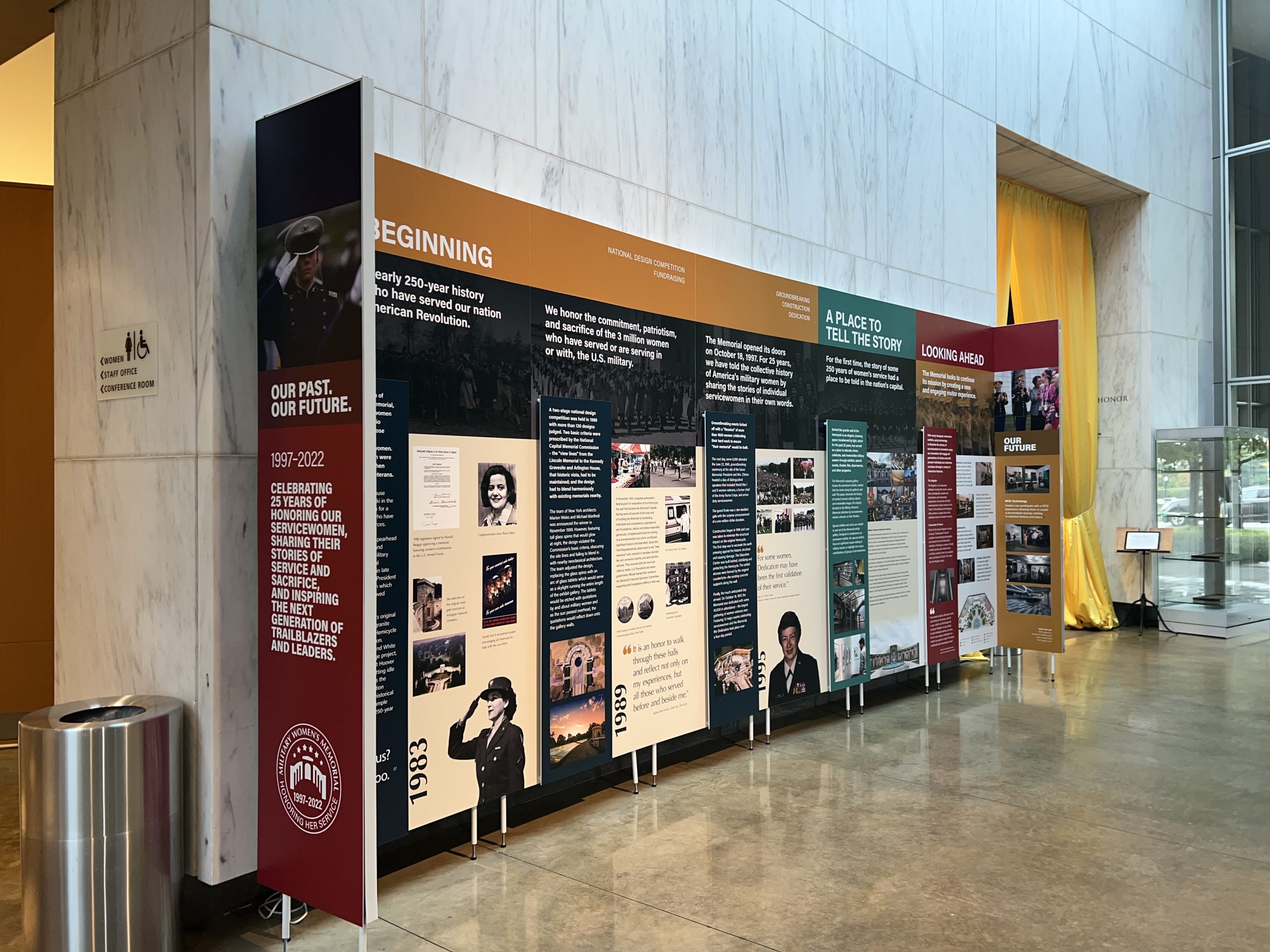
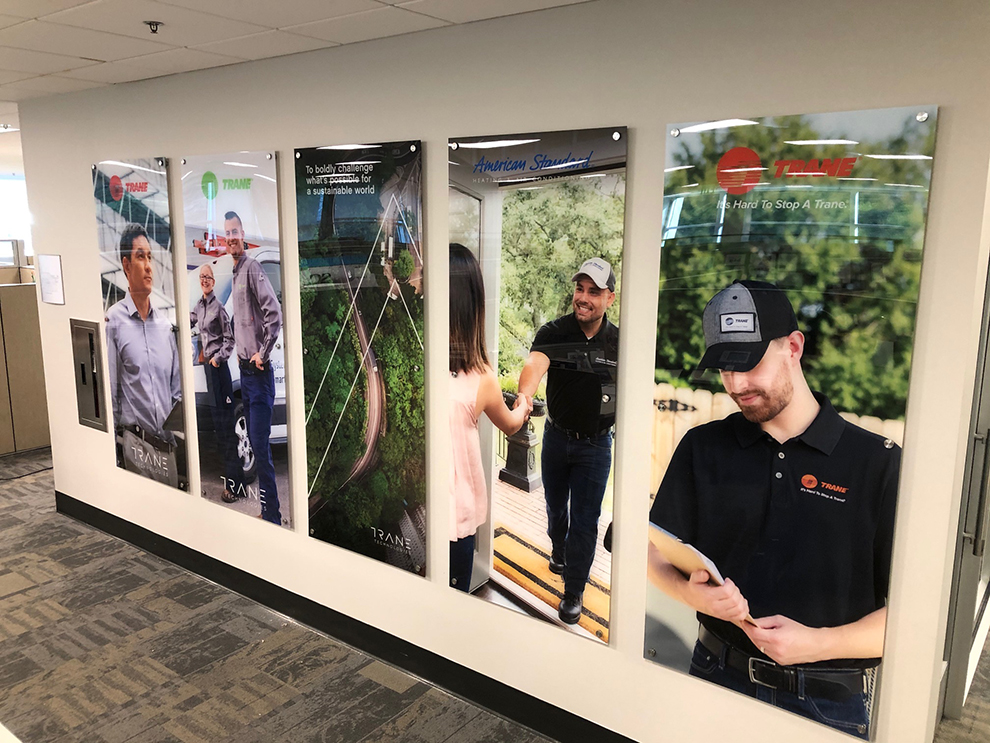
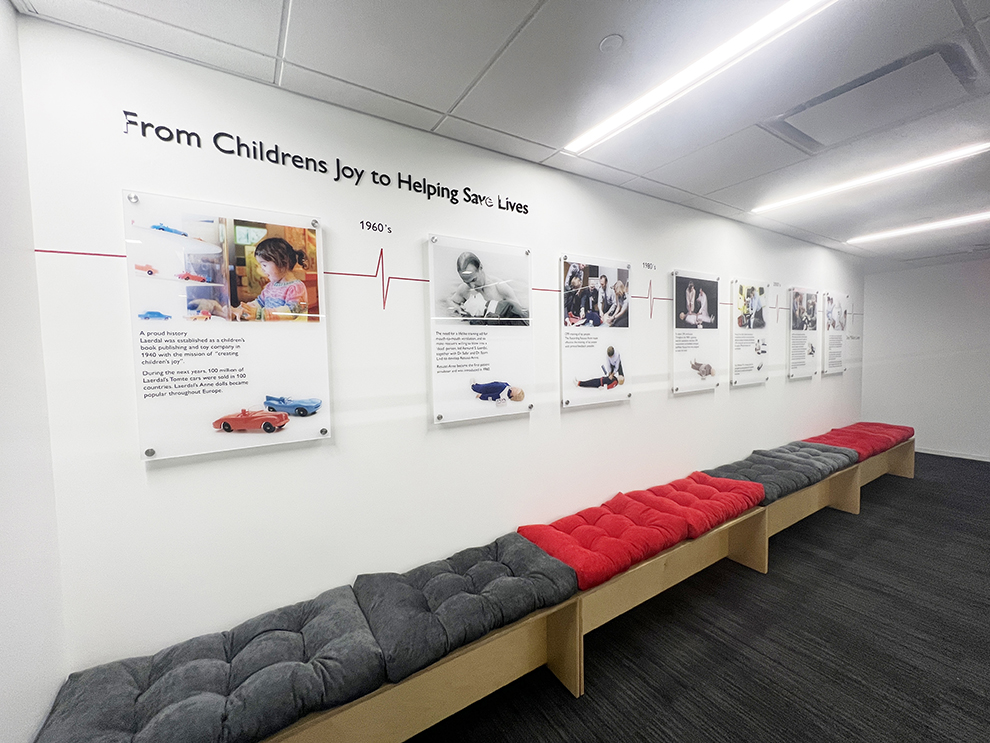
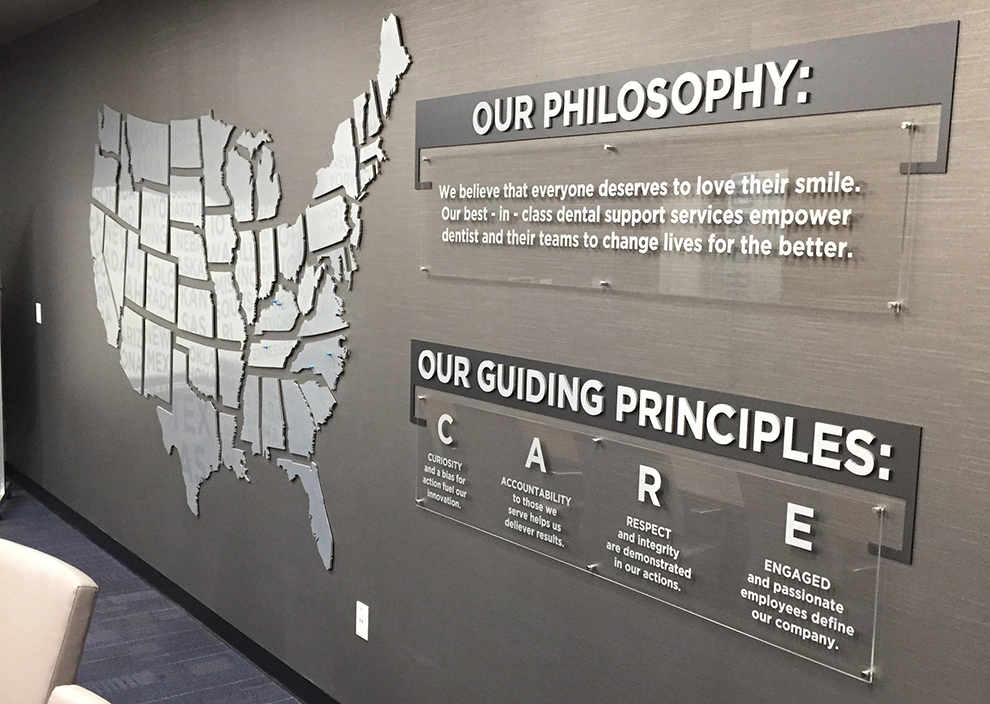
Wall displays combine printed panels, photographs, dimensional elements, lettering, standoff hardware, and graphics for timelines, core values, recognition, donor stories, and organizational history.
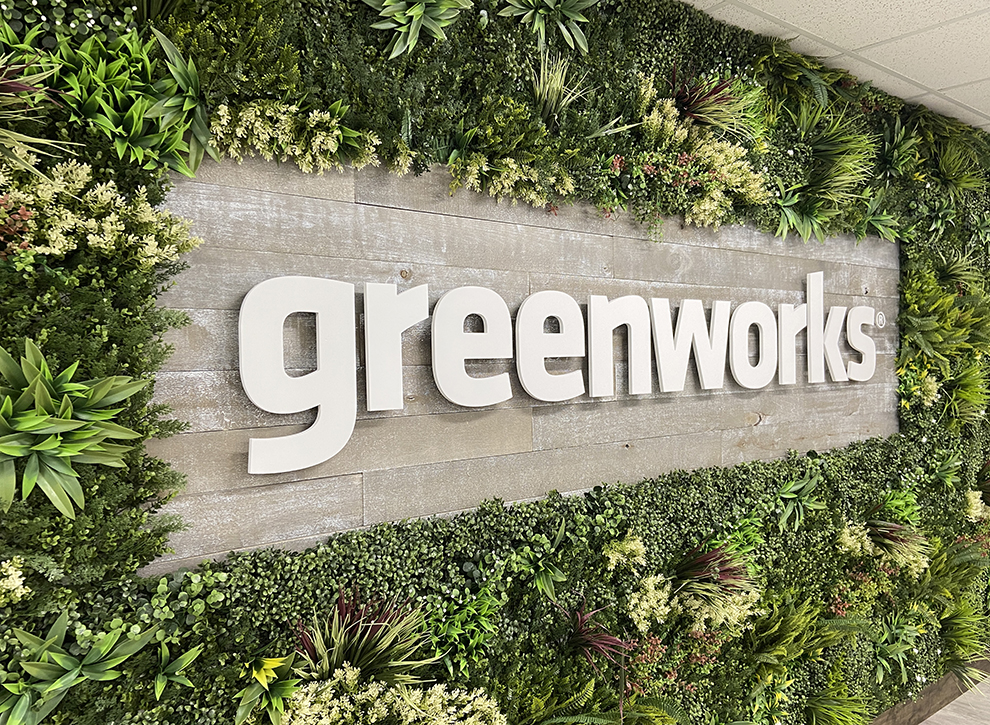
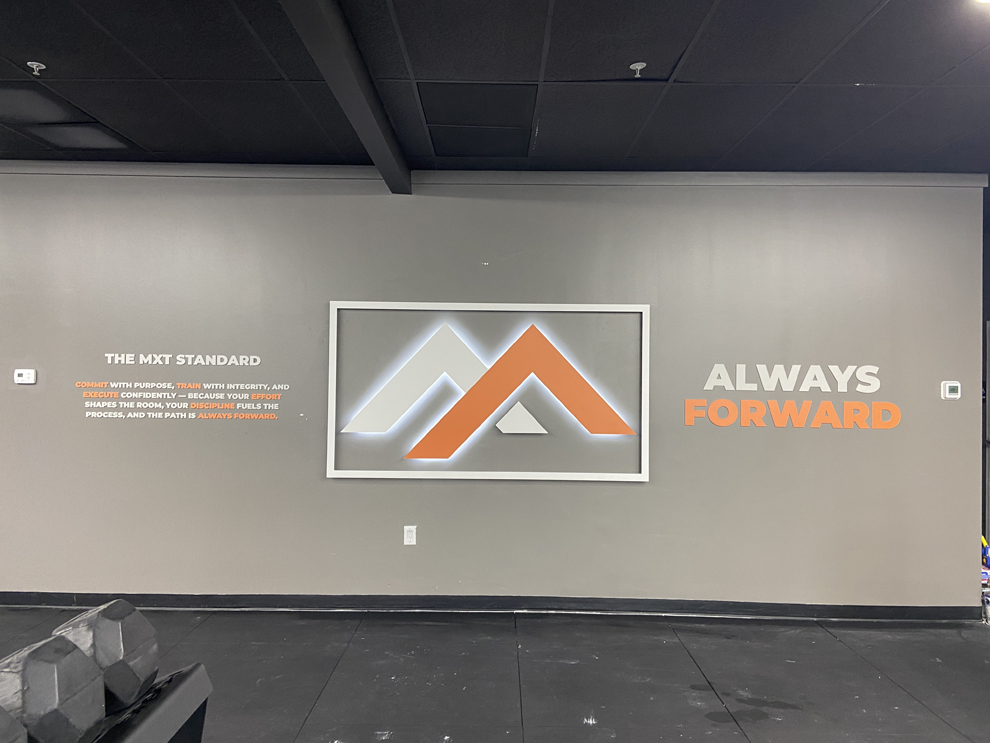
Raised letters and logos introduce depth, shadow, hierarchy, and permanence to identification, messaging, and interpretive features in stakeholder-facing spaces.
Wayfinding signs organize destinations, room identification, decision points, and directional information across offices, facilities, campuses, venues, and event environments.
Museum and interpretive displays integrate storytelling, artifacts, photographs, graphics, dimensional elements, and changeable components for educational and cultural experiences.
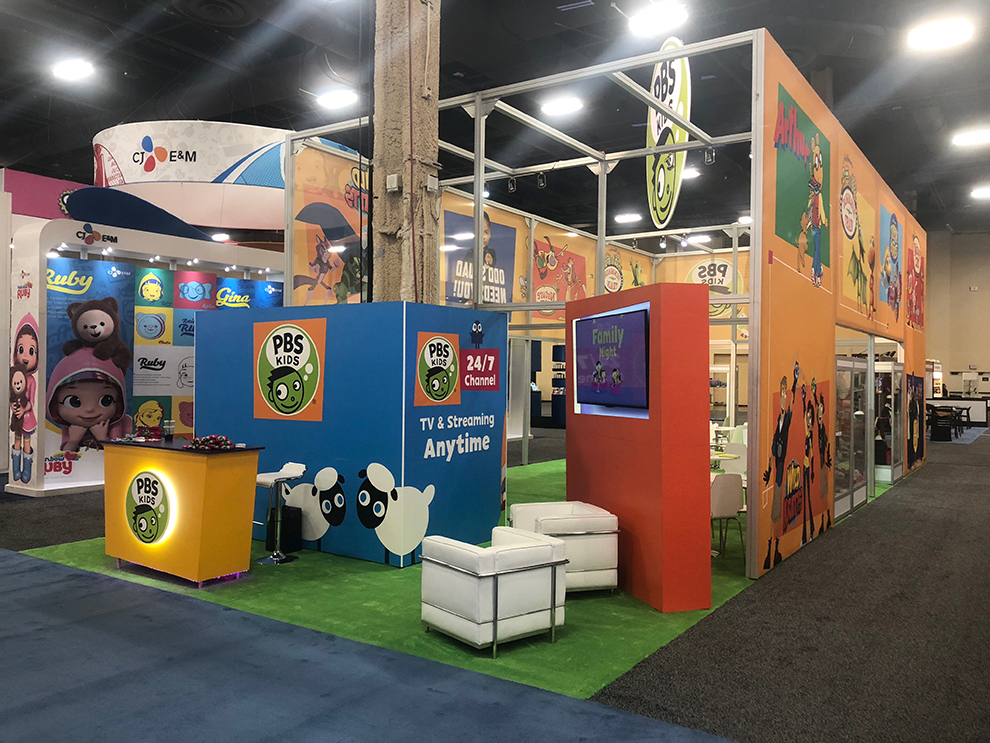
Conferences and public programs can draw on branded gateways, sponsor recognition, navigation, scenic backdrops, stage graphics, modular frames, and physical brand activations.
Use the Get Started Now form to tell Heritage what your workplace, facility, museum, venue, or event environment needs to accomplish. Include the project address, audience, preferred completion date, anticipated overall investment, photographs, plans, brand standards, content, event layouts, and known access or security requirements. If some information is still developing, send what is available. Our Washington, DC-area team will review the submission, identify the decisions or field information still needed, and recommend the next step toward design, production, fabrication, and professional installation.
Heritage supports Washington, DC organizations from our location at 1120 Connecticut Avenue NW, with additional nearby teams in Arlington, VA and Waldorf, MD. Projects extend throughout Downtown DC, Capitol Hill, NoMa, Georgetown, Dupont Circle, and the broader DC metro area, including Alexandria, Arlington, Bethesda, Silver Spring, Tysons, Fairfax, and surrounding Maryland and Northern Virginia communities.
This market contains highly visible corporate, government, association, nonprofit, legal, healthcare, education, museum, hospitality, and event environments. Access rules, stakeholder reviews, security, property requirements, tight installation windows, and public-facing expectations can all affect the project. Nearby field support helps Heritage document those conditions and communicate with clients where the work will be installed.
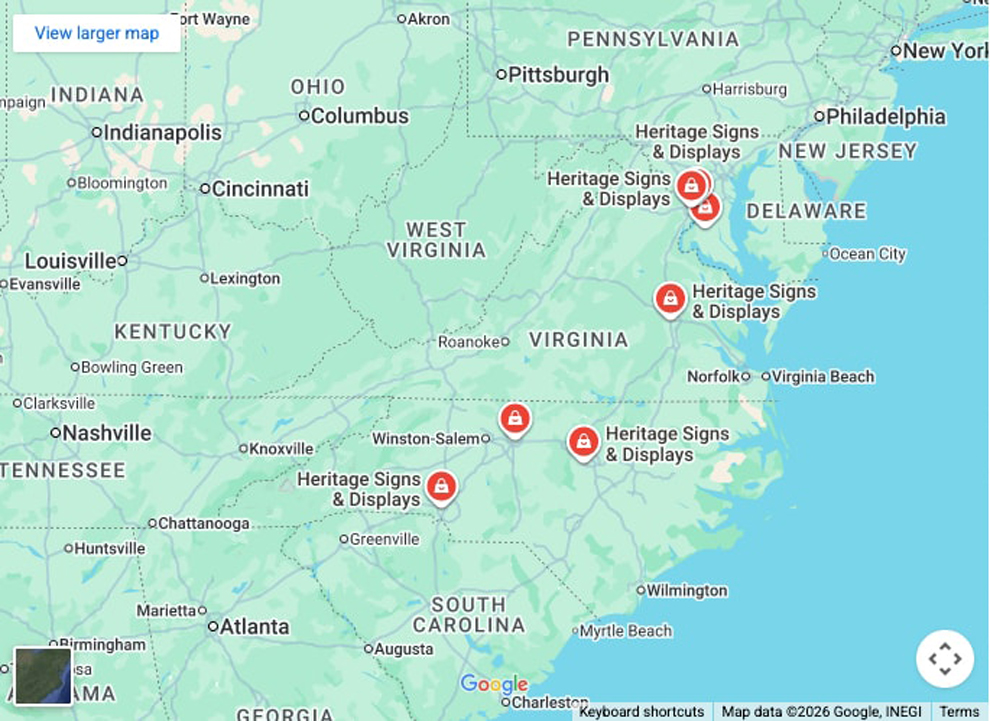
Regional resources expand that local responsiveness. Heritage’s seven locations and multiple production facilities support quality control, fabrication, scheduling, and installation across the Mid-Atlantic and Carolinas. A Washington, DC organization with offices in several cities can work through one accountable relationship while Heritage adapts the approved brand system to the architecture, audience, access, and operating realities of each location.
Environmental graphic design connects visual communication to the built environment. It examines what people need to see, understand, and remember, then brings brand identity, message hierarchy, material, scale, placement, and circulation into one coordinated plan. Experiential graphic design considers the impressions people form while moving through that space.
Heritage may begin with brand standards, architectural drawings, floor plans, photographs, measurements, event layouts, content, or an early concept. Our designers develop producible solutions for lobby features, workplace graphics, privacy treatments, architectural signage, timelines, donor recognition, museum interpretation, wayfinding, sponsor presentations, and brand activation projects. We consider visibility, existing lighting conditions, material transitions, future content changes, installation access, and accessibility and ADA-related requirements when applicable.
This process gives stakeholders a clearer basis for decisions before production begins. It also connects creative intent with practical fabrication, investment, scheduling, and installation realities. Heritage designs the physical branded elements we create, produce, and install. We do not present our team as an architectural, engineering, event-planning, or general lighting-design firm.
Professional installation is planned at the beginning because mounting, alignment, wall preparation, access, security, sequencing, and working hours influence both appearance and performance. In the DC metro area, property rules, loading procedures, freight-elevator reservations, street conditions, credentials, and occupied spaces can be as consequential as the sign or graphic itself.
Every Heritage-managed installed project starts with a site survey. Our team records dimensions, substrates, wall and glass conditions, obstructions, access routes, traffic patterns, mounting conditions, security requirements, and the way existing lighting effects visibility. We also speak with client stakeholders about the audience, priorities, operational needs, concerns, schedule, and desired outcome.
Heritage’s employed installation professionals receive the approved plans and production knowledge from colleagues who developed the assignment. Their field plan accounts for occupied offices, restricted zones, public programming, adjacent contractors, and compressed event windows. Our crews place only the signs, graphics, displays, and associated elements that Heritage has made, sourced, or administered within the project. Customer-furnished product is not accepted as installation-only work.
Effective planning begins with the outcome the space must achieve. Location, audience, scope, brand standards, content, approvals, schedule, site conditions, and anticipated investment all help Heritage shape a responsible recommendation. Photographs, plans, measurements, architectural drawings, event layouts, and firm opening dates make the first evaluation more productive.
For Washington, DC and neighboring Mid-Atlantic clients, the anticipated starting point for the complete managed engagement is $5,000. Heritage’s production-and-installation portfolio commonly extends from $10,000 through $200,000 and beyond, reflecting work such as major interior features, several-floor programs, planned phases, and coordinated rollouts.
The best fit is an organization that wants unified responsibility for the branded visual components inside its space. If that interior assignment also calls for complementary outdoor elements, Heritage can consider non-illuminated identification, dimensional letters, and wall or window graphics for exterior surfaces. Exterior-only requests for monuments, pylons, channel letters, conventional outdoor sign programs, or vehicle fleets fall outside our offering.
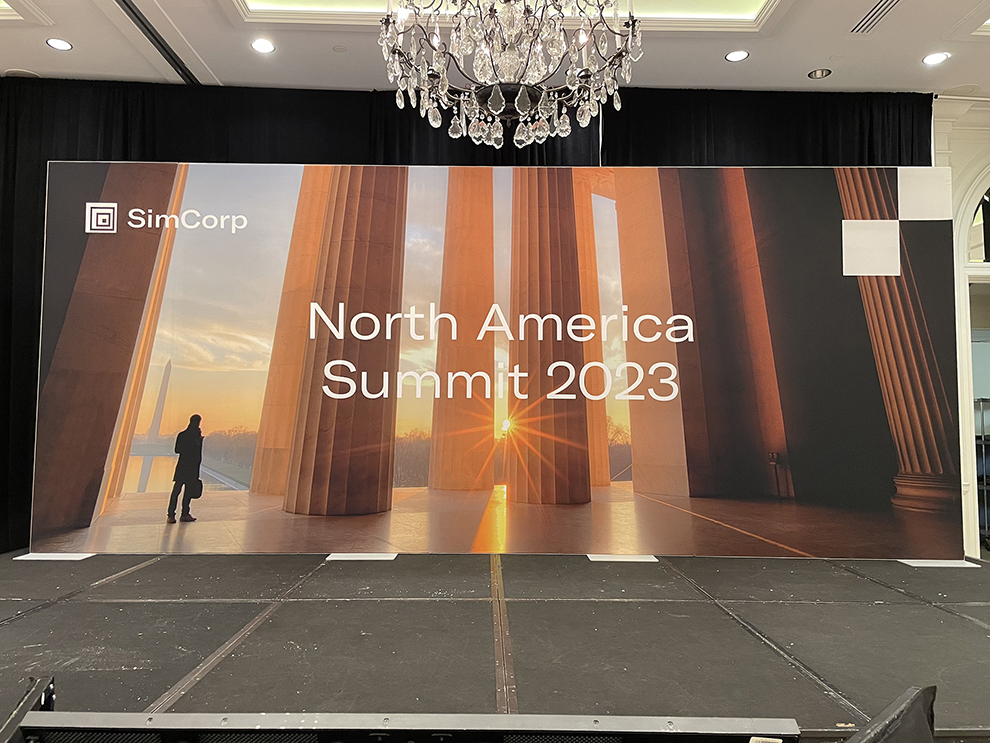
Heritage develops complete visual systems for offices, headquarters, institutions, museums, public facilities, conferences, and event spaces around the DC metro area. The mix can include reception identification, dimensional elements, large-format wall and glass graphics, privacy treatments, storytelling displays, standoff panels, acrylic, architectural signs, navigation, exhibit interpretation, sponsor recognition, and custom-built features. A single project leader joins creative development and field discovery to manufacturing, fabrication, and final placement.
Heritage combines collaborative client service with an in-house team capable of carrying the approved idea into the finished environment. The project manager keeps environmental graphic designers, production specialists, fabricators, and full-time installers connected instead of shifting responsibility among unrelated vendors. This structure supports stronger recommendations, faster problem-solving, consistent quality control, and accountability for the result whether the assignment is a prominent individual feature, a complete interior transformation, an event environment, or a multi-location program.
Yes. Heritage Signs & Displays is located at 1120 Connecticut Avenue NW in Washington, DC. Meetings are available by scheduled appointment. Most discovery, site surveys, field verification, and installation planning occur at the client’s workplace, facility, venue, campus, museum, or event location so our team can understand the physical environment and project requirements firsthand.
Heritage serves Washington, DC and surrounding DC metro communities in Northern Virginia and Maryland. Regular service areas include Arlington, Alexandria, Tysons, Fairfax, Bethesda, Silver Spring, Rockville, National Harbor, and nearby markets. Our Washington, DC, Arlington, Waldorf, and broader regional teams coordinate site surveys, production resources, installation, and multi-location support throughout the Mid-Atlantic.
Clients include corporations, government agencies, public offices, associations, nonprofits, law firms, universities, schools, healthcare organizations, museums, contractors, embassies, faith-based organizations, venues, and other institutions. Heritage is especially well suited for organizations whose interiors must communicate credibility, culture, purpose, history, privacy, direction, and brand standards to several stakeholder groups.
Heritage creates lobby signs, dimensional letters, wall wraps, window graphics, privacy films, acrylic signs, standoff mounted displays, timeline wall displays, donor and recognition features, wayfinding, room identification, architectural signage, museum and interpretive displays, event graphics, sponsor features, backdrops, and modular display structures. Materials and construction methods are selected for the message, environment, durability, installation conditions, and desired appearance.
Yes. A single lobby sign, dimensional identity feature, or other substantial visual focal point may be a strong Heritage project on its own. If the organization wants a broader transformation, our team can also connect that feature to walls, glass, meeting rooms, corridors, privacy needs, wayfinding, timeline displays, mission statement and core values presentations, and other branded areas. The recommendation follows the client’s goals and appropriate project scope rather than an either-or formula.
Heritage supports corporate offices, workplaces, government and public offices, association headquarters, nonprofit facilities, educational environments, healthcare settings, museums, cultural institutions, faith-based spaces, campuses, venues, and other commercial interiors. The visual system may establish identity, improve navigation, protect privacy, explain purpose, recognize people, interpret history, or create a more engaging employee and visitor experience.
Yes. Heritage supports conferences, conventions, galas, fundraising programs, public events, exhibits, sporting and athletic environments, sponsor programs, and brand activation projects when scope, timing, access, and logistics align. Our team creates event backdrops, branded entrances, directional graphics, meter boards, sponsor features, stage elements, modular displays, and related visual components. Heritage focuses on the physical event environment rather than event planning, media buying, entertainment, or promotional staffing.
Environmental graphic design uses signs, graphics, displays, messages, and wayfinding to improve how people understand and navigate a physical place. Heritage applies it to the visual elements we create, produce, and install. Our designers consider brand standards, architecture, audience, circulation, scale, materials, message hierarchy, site conditions, and the effect of existing lighting so the finished components work together rather than appearing as unrelated additions.
Experiential graphic design concentrates on what people perceive and remember as they move through an environment. For Heritage, that may influence how a visitor encounters a lobby, follows directions, understands a timeline, recognizes a donor, experiences a museum narrative, or engages with an event activation. It complements environmental graphic design without suggesting that Heritage provides architectural or general interior-design services.
Yes. Heritage routinely works from existing brand standards, architectural drawings, design intent, agency concepts, and approved messaging. Our team evaluates how the proposed visual elements will be produced, fabricated, mounted, and installed under actual site conditions. We can also supply environmental graphic design when the client needs Heritage to develop the physical branded components.
Yes. Heritage begins every managed installation project with a site survey. We verify measurements, substrates, wall and glass conditions, access, obstructions, mounting conditions, traffic patterns, security procedures, and the influence of existing lighting. The visit also allows our team to discuss the organization’s audience, goals, priorities, schedule, concerns, and desired outcome with client stakeholders at the project location.
Yes. Heritage keeps creative development, production, fabrication, and field installation connected inside one turnkey organization. The project manager maintains a continuous information path among design, prepress, printing, fabrication, quality review, scheduling, and the installation crew. The client therefore has one responsible company carrying the approved concept into the completed environment rather than coordinating a collection of independent vendors.
One dedicated Heritage project manager serves as the primary point of contact. That person organizes discovery, estimates, design input, site information, materials, proofs, stakeholder approvals, production, fabrication, scheduling, access, installation, and completion details. The project manager also identifies client decision dates and keeps both teams accountable for the information and actions required to maintain progress.
Full-time Heritage installation professionals install the signs, graphics, displays, and related components Heritage has produced, fabricated, procured, or managed. They coordinate with the project manager and internal specialists who know the approved drawings, materials, surfaces, mounting requirements, access conditions, and schedule. This continuity protects the creative intent and technical details through final placement.
No. Heritage does not provide installation-only service for signs or graphics furnished by a client or another vendor. Our installation capability is part of the complete Heritage-managed process because production decisions, material compatibility, mounting, site conditions, scheduling, and accountability must remain connected.
Yes. Heritage supports organizations with offices, facilities, campuses, venues, or event sites throughout the Mid-Atlantic and Carolinas. Our team can document standards, adapt approved elements to different architecture and field conditions, coordinate production, and schedule installation through one project-management relationship. Local site realities are addressed without losing the consistency of the broader brand program.
Some focused assignments can be completed in days, many require a number of weeks, and renovations, museum installations, phased programs, or stakeholder-intensive scopes can continue for months. Heritage builds the calendar around field verification, design decisions, approvals, manufacturing, security, access, site readiness, and installation. Fresh primer and paint create a specific constraint: certain wall graphics cannot be applied until the surface has cured and released gases, often for roughly four weeks. We pursue the client’s desired date urgently while making only commitments that the scope and participants can support.
Absolutely. Challenging dates are a Heritage strength because the people directing the project, preparing the design, making the components, and working on site can solve problems together. Before accepting a deadline, we check artwork, materials, decision-makers, security, building access, load-in, and the permitted work window. The project manager then establishes who must act and when, holding Heritage and client stakeholders to the agreed calendar while protecting quality.
Provide the project address, audience, objectives, desired completion date, anticipated overall investment, and whether multiple locations are involved. Helpful uploads include photographs, measurements, floor plans, architectural drawings, brand standards, logos, approved messages, event layouts, inspiration images, and access or security requirements. If details are incomplete, submit what is available. Heritage will identify what remains to be decided and recommend the most useful next step.
The complete Heritage engagement begins with an anticipated investment of at least $5,000 for clients in Washington, DC and nearby Mid-Atlantic communities. It represents the total assignment, not a unit price for every sign, graphic, or display. Projects that Heritage produces and installs often fall between $10,000 and more than $200,000. Final value reflects creative needs, construction, quantities, locations, approval paths, field conditions, security and access, timing, installation, and the number of phases.
Absolutely. Heritage’s demonstrated capacity spans $10,000 assignments through programs exceeding $200,000. That experience includes major focal installations, several-floor workplaces, sequenced transformations, museum presentations, event builds, and programs repeated at numerous sites. Reception signs, architectural identification, glass privacy, wall graphics, dimensional features, wayfinding, timelines, interpretation, sponsor recognition, and common-area branding can share one scope. Cross-functional planning keeps design intent, field realities, materials, stakeholder decisions, timing, and on-site execution aligned.
Interior workplaces and event environments are Heritage’s specialty. A broader assignment centered on interior production and installation can also contain compatible outdoor pieces, including non-illuminated signs, dimensional letters, and graphics for exterior glass or walls. We do not produce or install stand-alone monument, pylon, channel-letter, conventional exterior-sign, and fleet-graphic programs. Before including an outdoor component, our team reviews its substrate, fastening method, sun and weather exposure, property conditions, applicable requirements, and intended lifespan.
Yes. Our team can take down an existing interior feature and deliver a new solution planned, made, and installed by Heritage. We first study its attachment, substrate condition, size, electrical considerations where relevant, removal needs, and neighboring finishes. Heritage does not troubleshoot failed LED systems or repair broken sign parts. Replacement generally creates the better opportunity to improve dependability, appearance, brand alignment, and the relationship to the surrounding space.
Yes. Heritage creates company and organizational history displays, timeline wall displays, mission statement presentations, core values walls, donor recognition systems, employee recognition features, and interpretive storytelling installations. These may combine photographs, printed graphics, acrylic, standoff mounted panels, dimensional letters, backlighting, aluminum composite material (ACM), and architectural hardware. The elements are planned as one presentation so the message hierarchy, materials, and surrounding interior reinforce one another.
Yes. Heritage plans wayfinding for corporate interiors, government facilities, association offices, museums, healthcare settings, universities, campuses, venues, and event environments. Effective systems account for destinations, decision points, message hierarchy, viewing distance, accessibility, traffic flow, architecture, security, brand standards, and future updates. The purpose is to make navigation clearer while allowing the directional information to belong within the environment.
Heritage brings nearly five decades of experience to the DC metro area through a Washington, DC presence, nearby Arlington and Waldorf teams, seven locations, and several production resources. Each client has a designated project manager backed by environmental graphic designers, in-house production and fabrication specialists, and employed installation professionals. Our veteran-owned, family-led company seeks to honor God through excellent service, responsible stewardship, genuine care, and dependable follow-through.
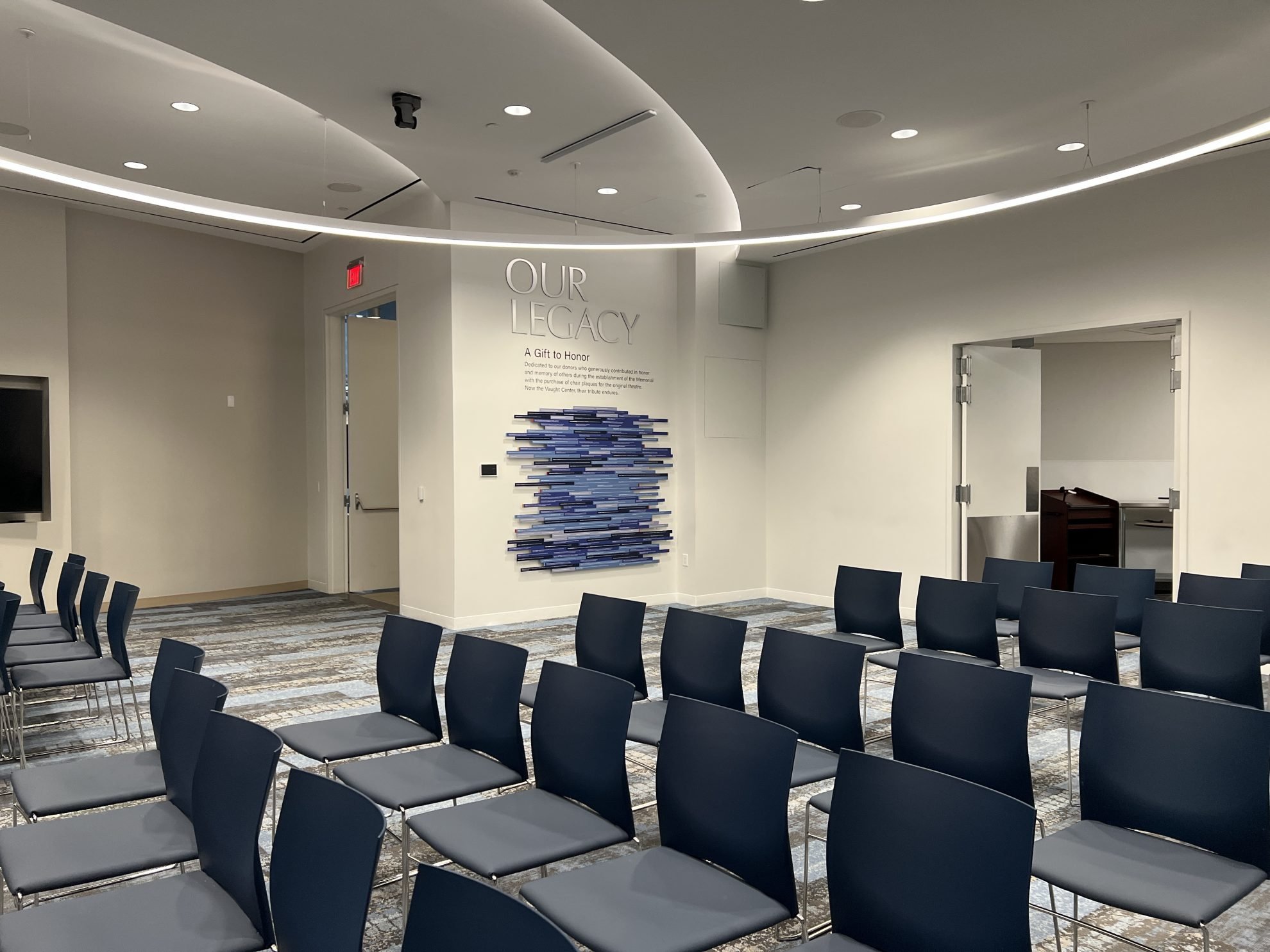
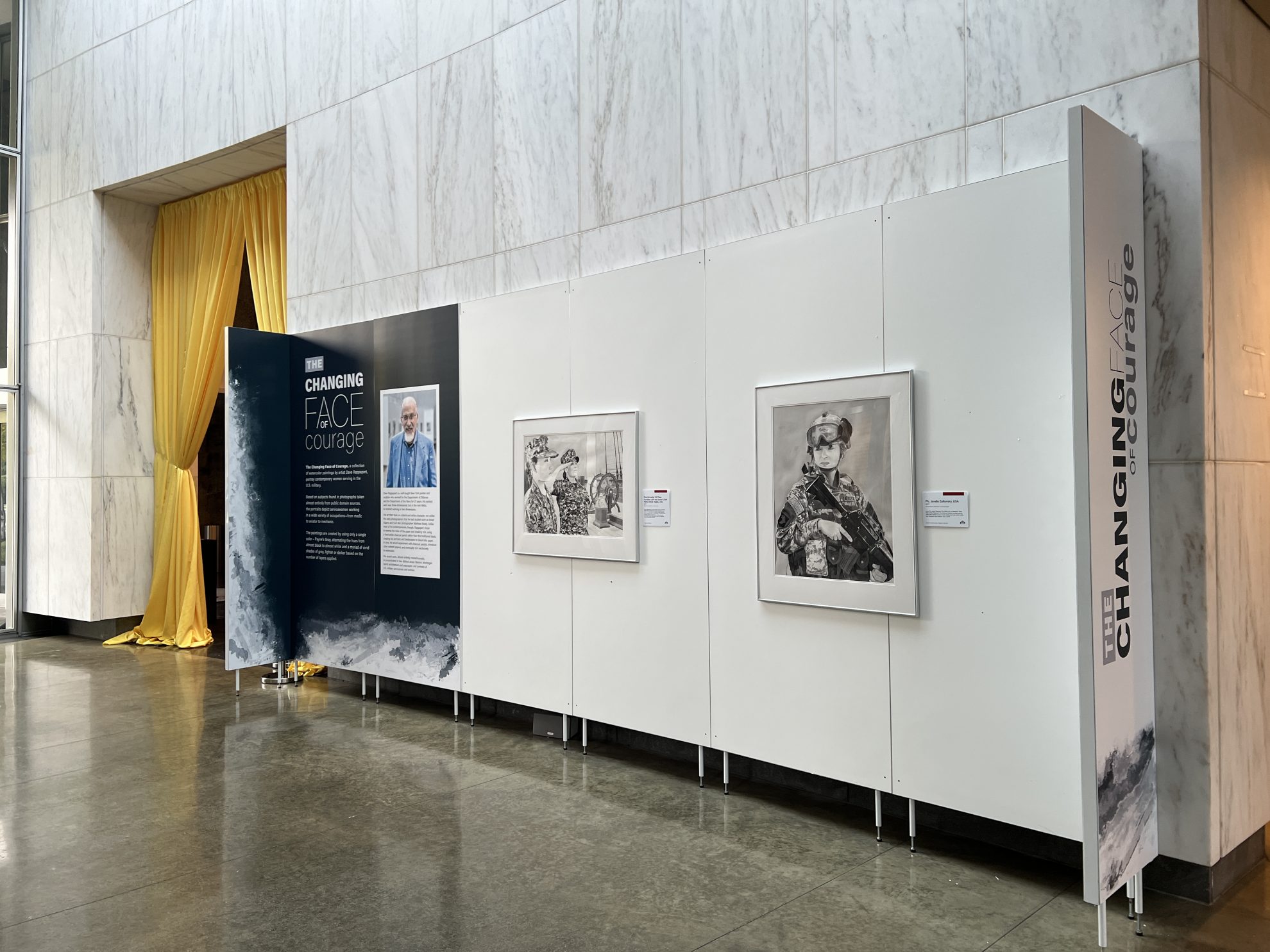
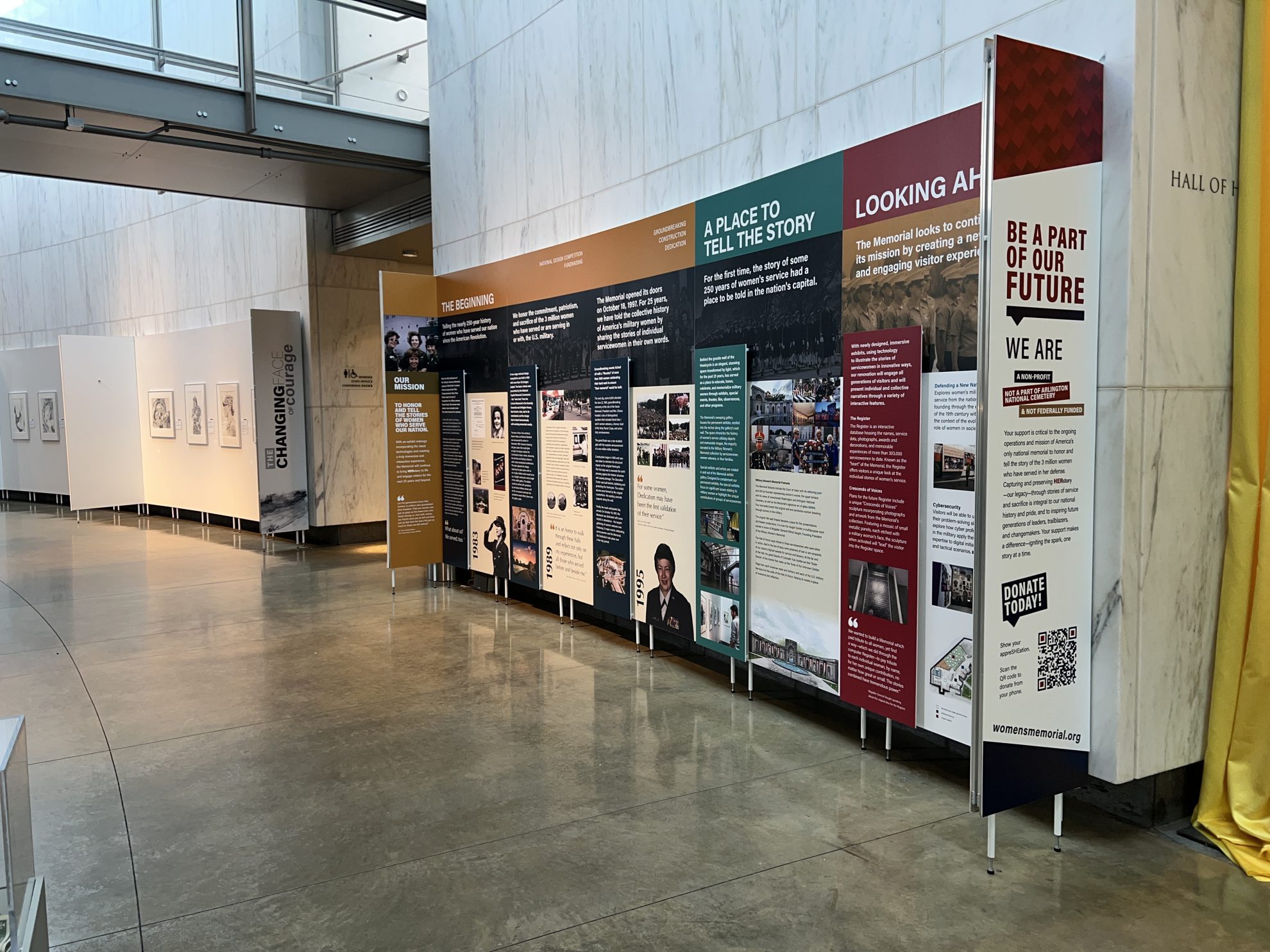
Heritage Signs & Displays created new museum signage for the Military Women’s Memorial in Arlington, VA. The project included custom signs, wall wraps, dimensional letters, and standoff-mounted displays to honor the legacy of U.S. servicewomen and the donors who supported the memorial. The updated interior features impactful designs, including a "Our Legacy" wall display and panels showcasing historical contributions and artwork, creating a transformative tribute to women in the U.S. Armed Forces.
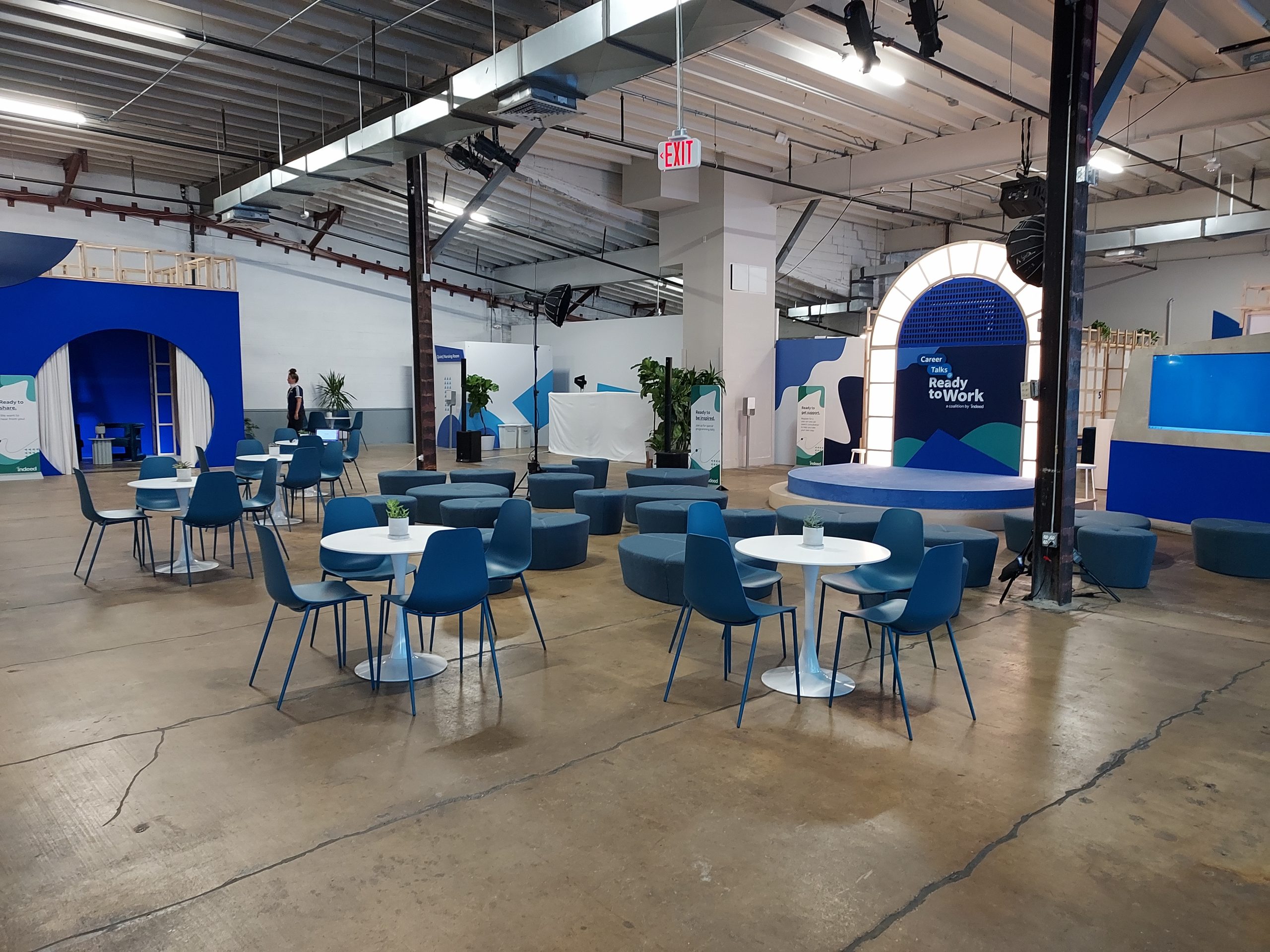
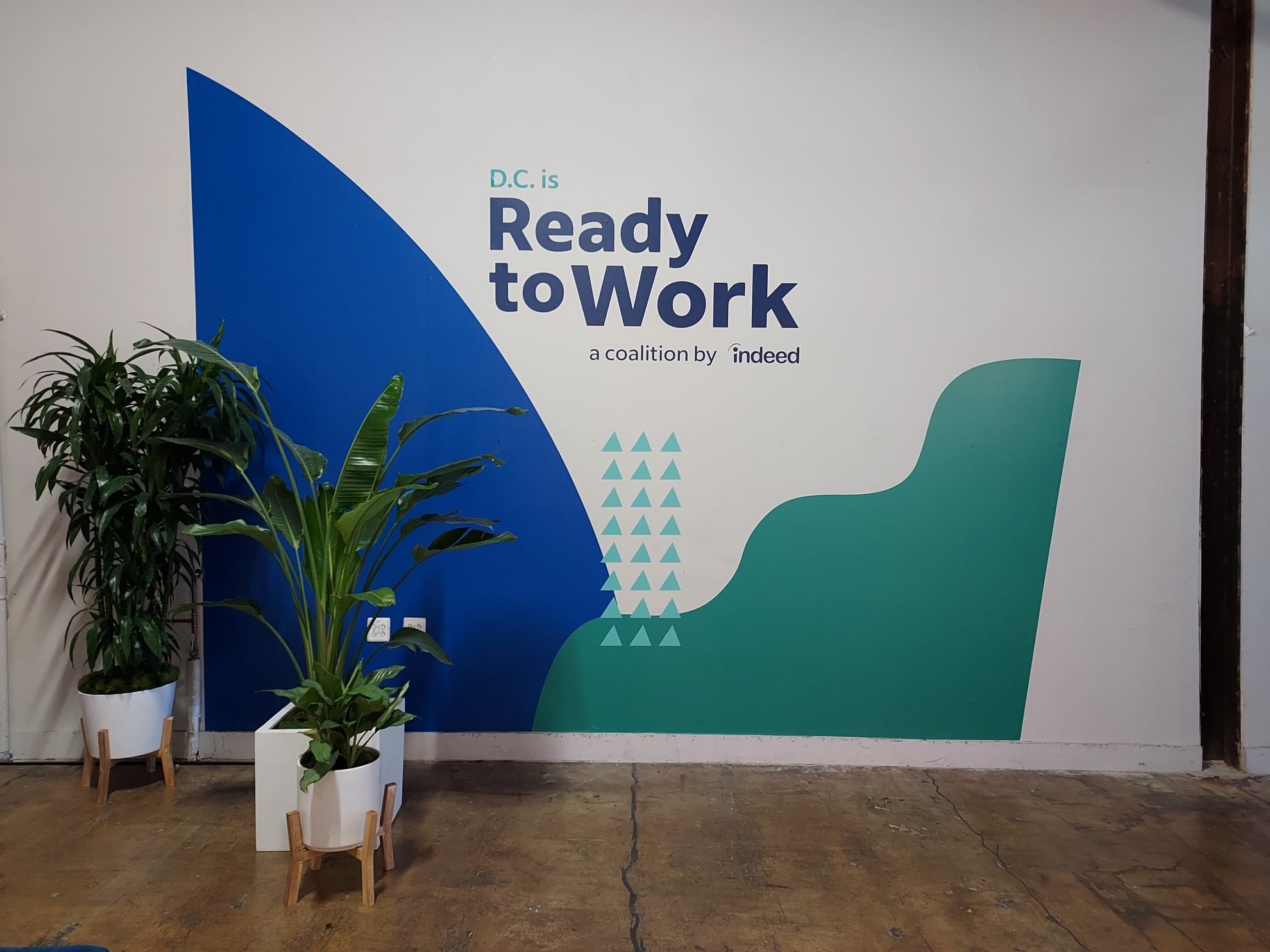
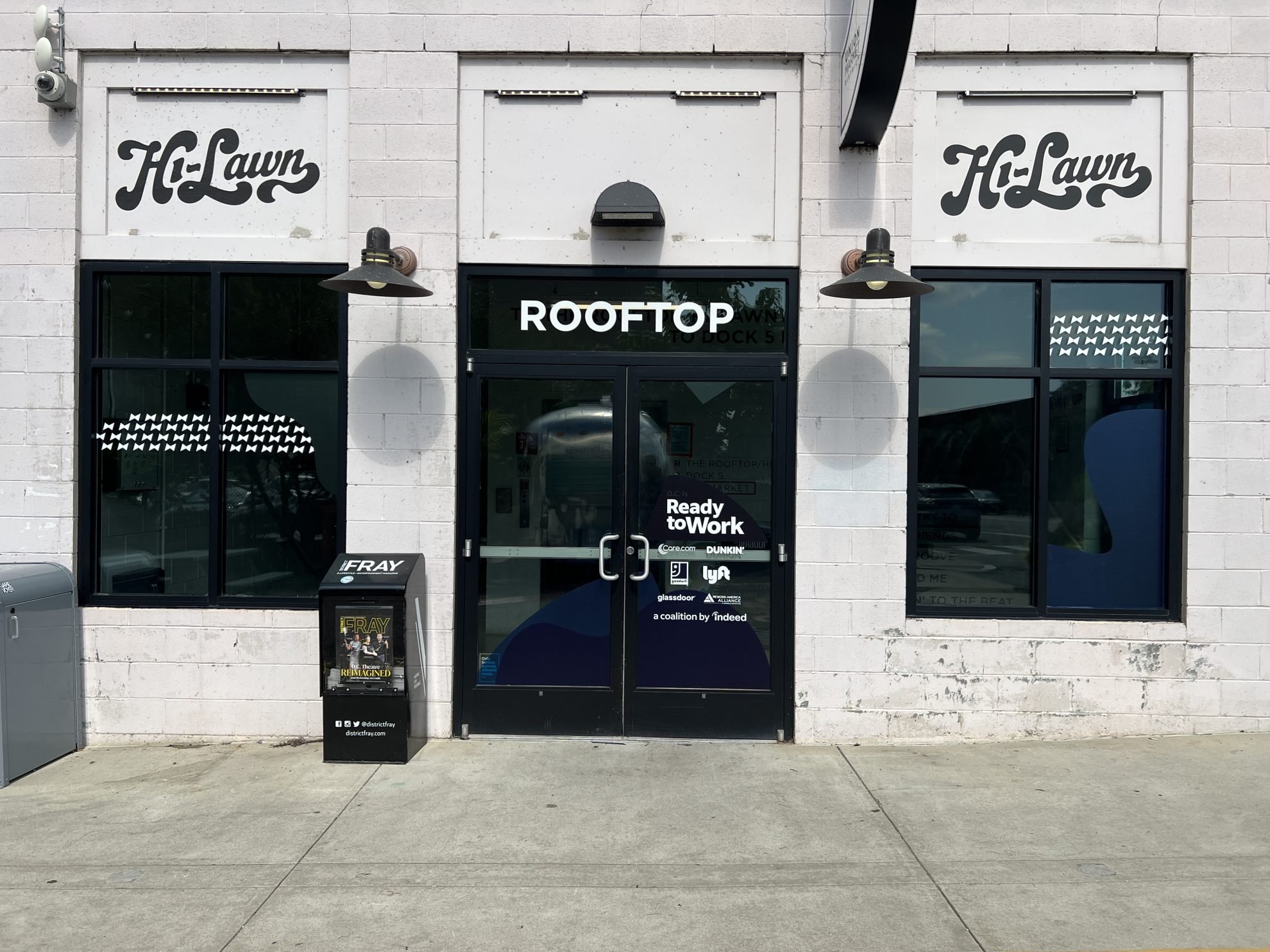
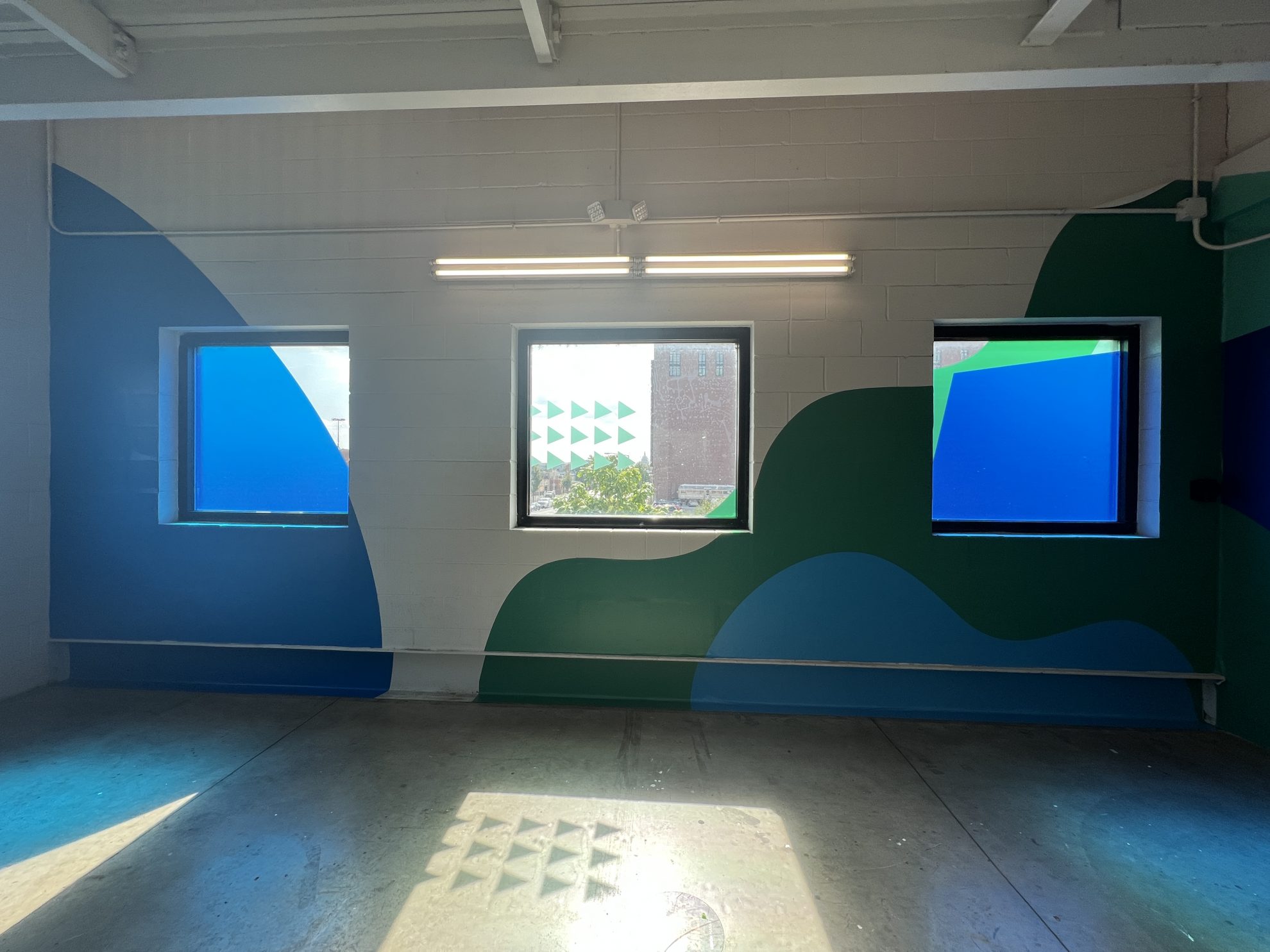
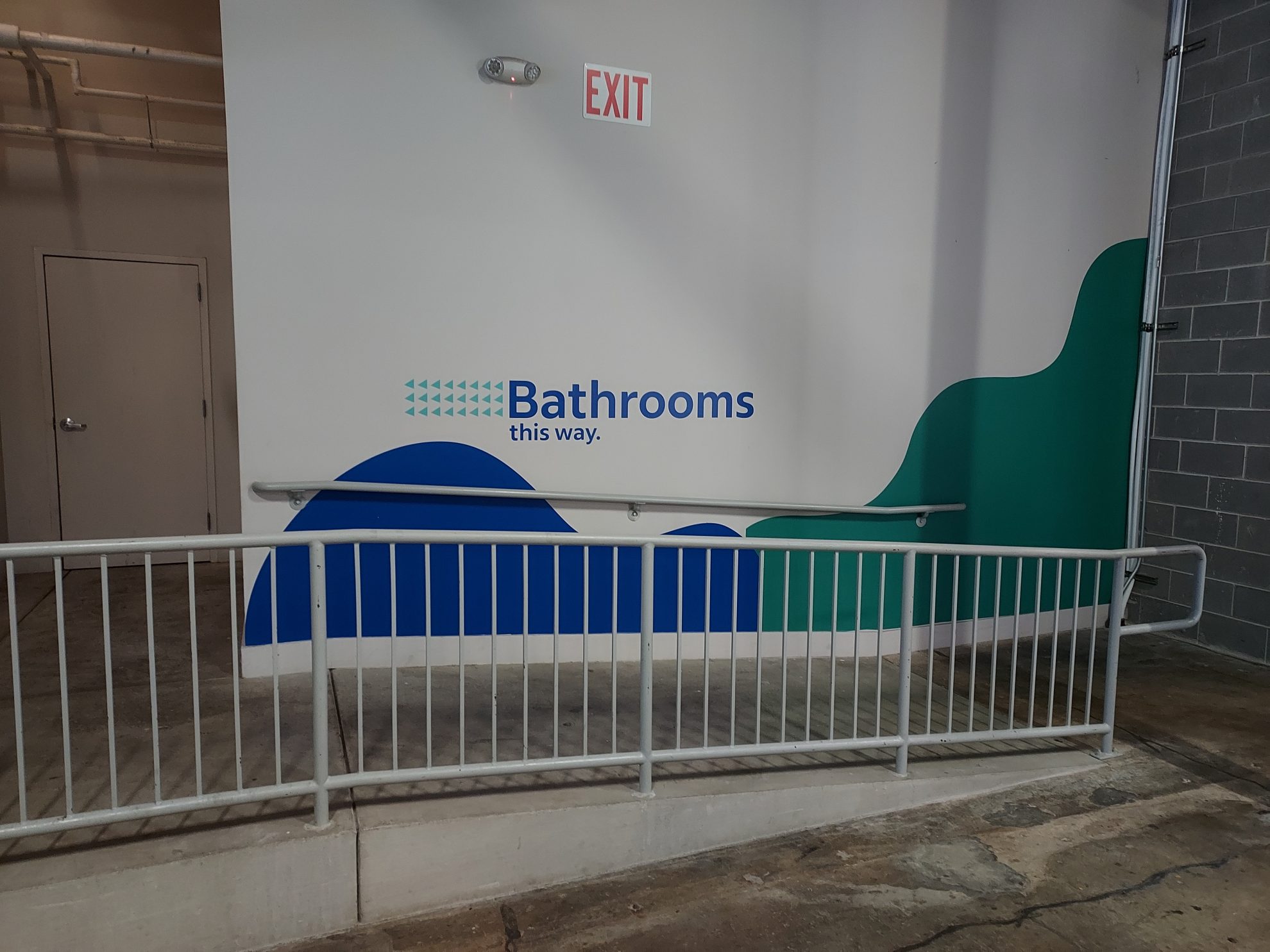
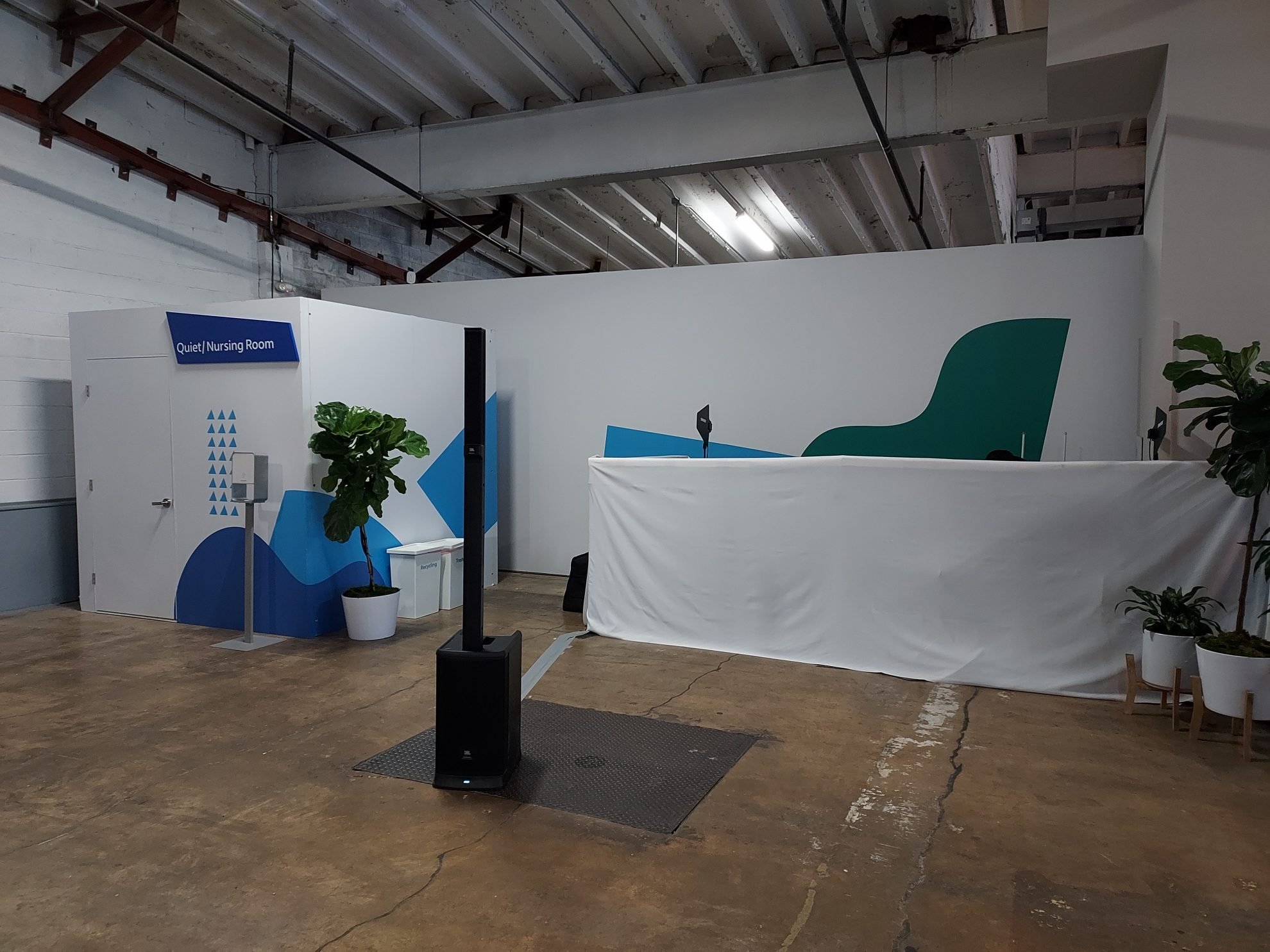
Heritage Signs & Displays' collaboration with The Gathery to brand Union Market in Arlington, VA, for Indeed's "Ready to Work" job fair. The project included custom event displays, wall graphics, window graphics, and wayfinding signs, creating an immersive and visually appealing environment. The branding enhanced the venue, reflected the event's mission, and provided a seamless experience for attendees.