Workplace branding can quickly lose cohesion when departments make sensible decisions without a shared visual plan. Executives may approve a lobby centerpiece, marketing may oversee brand standards, facilities may manage building access, and human resources may develop culture or recognition content. Each team may perform its role well, yet the finished signs, graphics, displays, and architectural features can still feel unrelated.
Commercial interior graphics in Arlington, VA require a coordinated system that connects stakeholder priorities with actual site conditions. Heritage Signs & Displays helps organizations establish a clear visual hierarchy, document approvals, and resolve production or installation requirements before disconnected decisions create delays.
Heritage is a veteran-owned, family-led sign company founded in 1977. Custom signage and workplace branding became a central focus in 2009. Today, Heritage coordinates environmental graphic design, project management, production, fabrication, and professional installation for workplace interiors and authentic event environments. The objective is not to cover every surface with branding. It is to determine which messages matter most and select physical solutions that communicate those messages effectively.
This coordinated process is especially valuable for office relocations, renovations, rebrands, expansions, headquarters improvements, and phased workplace updates. Arlington organizations often make branding decisions while construction schedules, tenant requirements, floor plans, content, or occupancy details are still evolving. Early coordination helps separate permanent identity features from information that may require future updates.
Projects in Rosslyn, Ballston, Clarendon, Crystal City, Pentagon City, and other Arlington business districts may involve executives, marketing teams, facilities managers, property representatives, architects, interior designers, branding agencies, and general contractors. Heritage coordinates its visual branding scope with the confirmed requirements established by those parties.
One dedicated Project Manager maintains the working project record, including approved artwork, stakeholder feedback, field measurements, production details, scheduling information, and access procedures. When one part of the program changes, its effect on related components can be reviewed before the project advances.
Physical conditions also receive attention early. Dimensional lettering requires a suitable mounting surface. Backlit signage depends on electrical coordination by the responsible parties. Privacy graphics must respond to glass dimensions and sightlines. Recognition displays may need replaceable components so new names or achievements can be added without rebuilding the entire display.
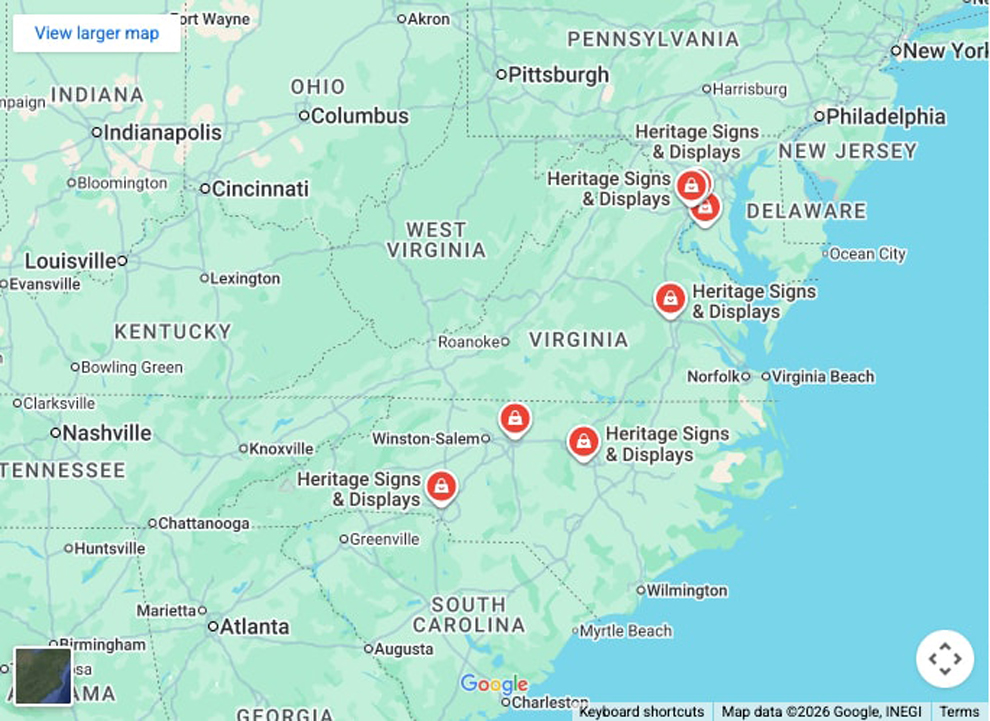
Heritage supports Arlington clients through verified Mid-Atlantic resources serving Northern Virginia and the Washington, DC metropolitan area. Site information can be connected with environmental graphic design, fabrication, production planning, and professional installation through the dedicated Project Manager. The result is a practical, buildable interior branding system in which identity, privacy, wayfinding, recognition, and storytelling support one another.
A centralized project record keeps design approvals, property conditions, access requirements, and execution details connected before fabrication begins. Arlington workplaces may be occupied, leased, located in high-rise buildings, or subject to strict procedures for loading docks, security check-in, freight elevators, staging, insurance documentation, work hours, and protection of common areas.
These conditions can influence component dimensions, delivery methods, installation equipment, crew scheduling, and the order in which elements are installed. Identifying them early gives the project team a more reliable basis for design and production decisions.
Heritage does not take over responsibilities assigned to the client, property manager, architect, interior designer, engineer, accessibility consultant, code authority, or general contractor. Each participant remains responsible for decisions within its professional role. Heritage’s Project Manager organizes the confirmed branded-interior scope around approved content, verified dimensions, mounting requirements, site conditions, schedules, and property procedures.
The goal is not to eliminate every variable. It is to identify and manage those variables while changes remain practical. When brand approvals and site requirements stay connected, production has a clearer release point and installers receive more dependable information. This reduces the risk of completed components arriving before access, mounting surfaces, placement details, or responsible-party approvals are ready.
Commercial Interior Graphics often include multiple materials, stakeholders, deadlines, and site conditions. Heritage’s One Dedicated Project Manager System gives each client a consistent Heritage contact who maintains approval history, stakeholder direction, site documentation, production decisions, access requirements, and schedule information throughout the engagement.
This structure does not shift outside responsibilities to Heritage. Client teams approve content, visual direction, and investment. Property representatives establish access requirements and building procedures. Architects, designers, engineers, and other specialists retain authority over their disciplines. Heritage coordinates environmental graphic design and execution within its approved scope of signs, graphics, displays, and branded architectural features.
Heritage is veteran-owned and family-led. The company began as a printing business in 1977 and made custom signs and workplace branding a defining focus in 2009. Full-time professional installers provide accountable field execution when verified for the engagement.
Heritage seeks to honor God by serving clients and communities with excellence. In practice, that commitment means thoughtful preparation, responsive communication, disciplined craftsmanship, and clear responsibility from initial discovery through installation.
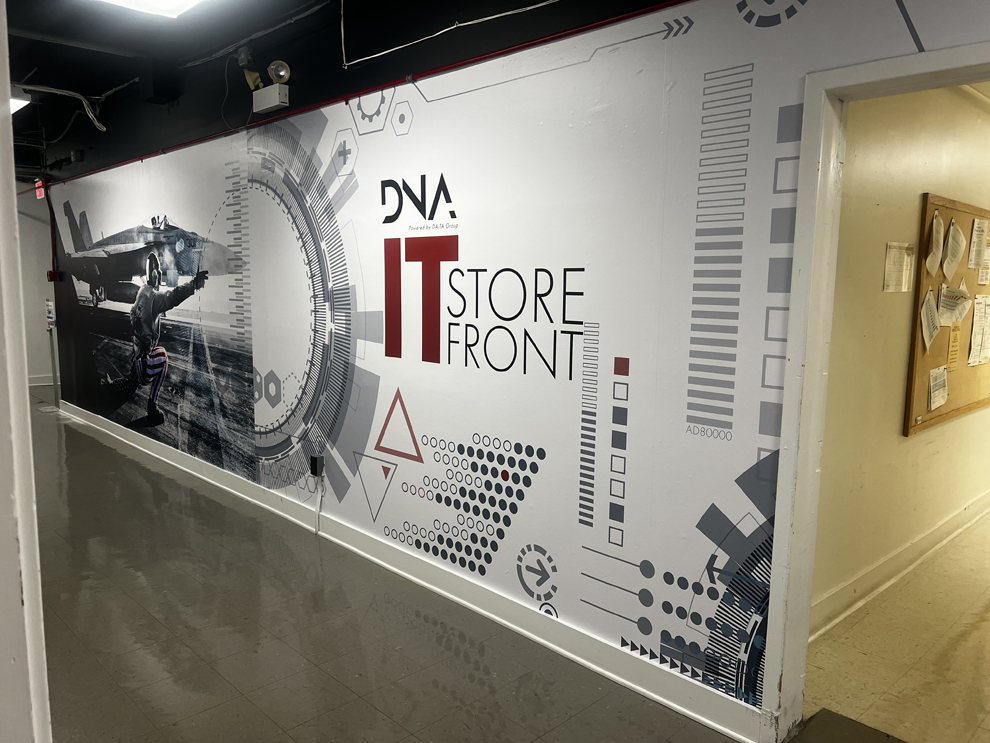
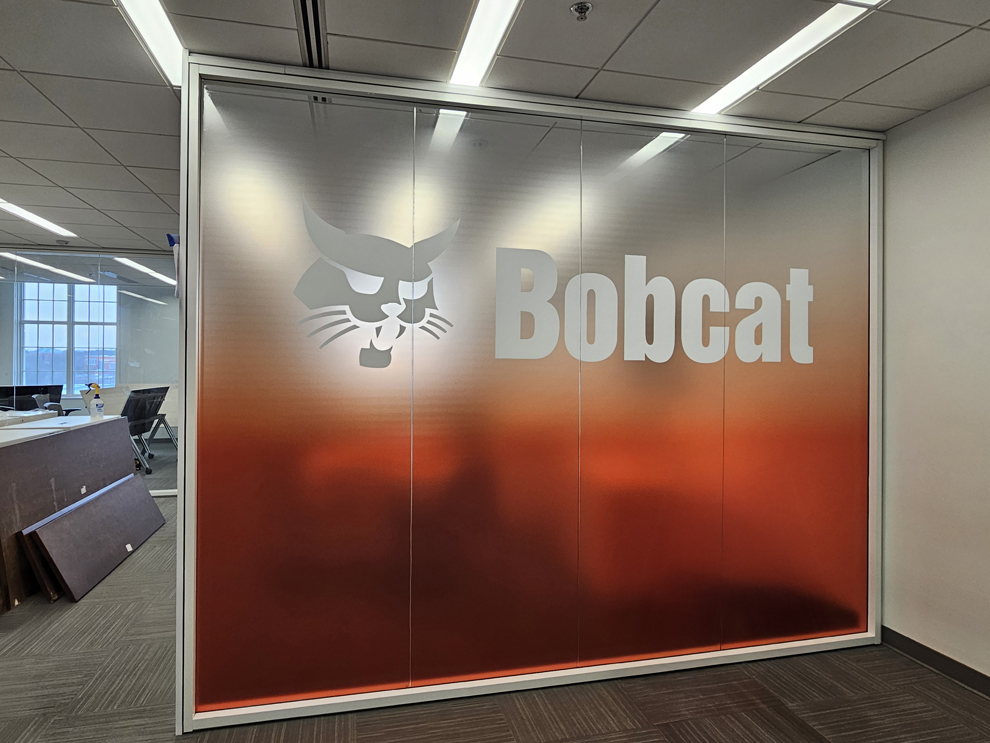
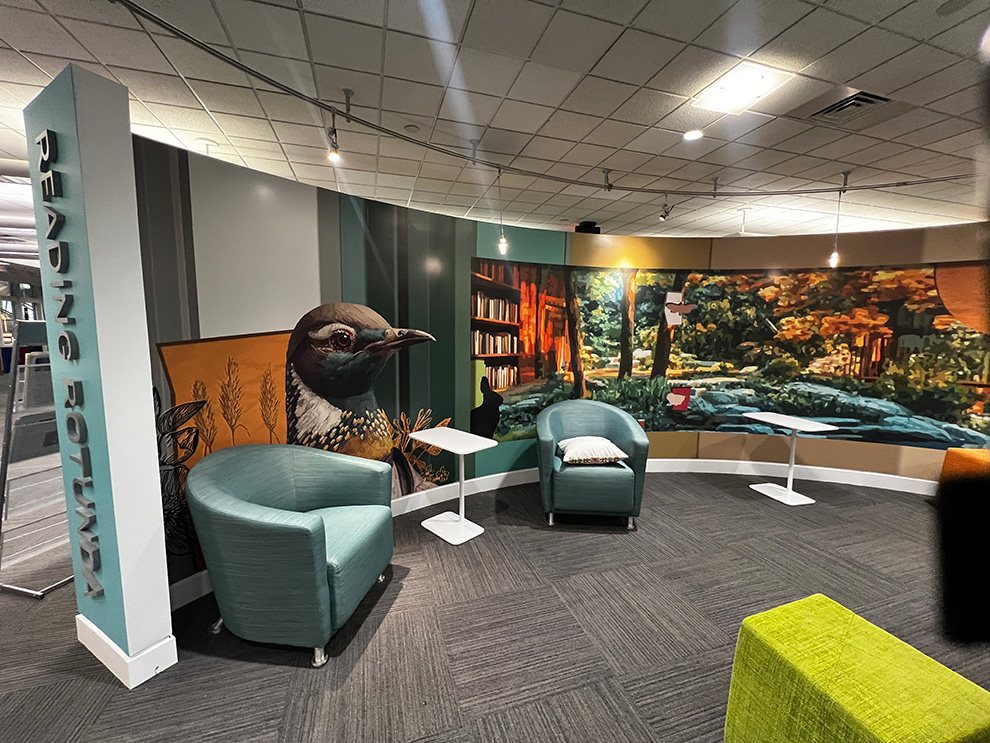
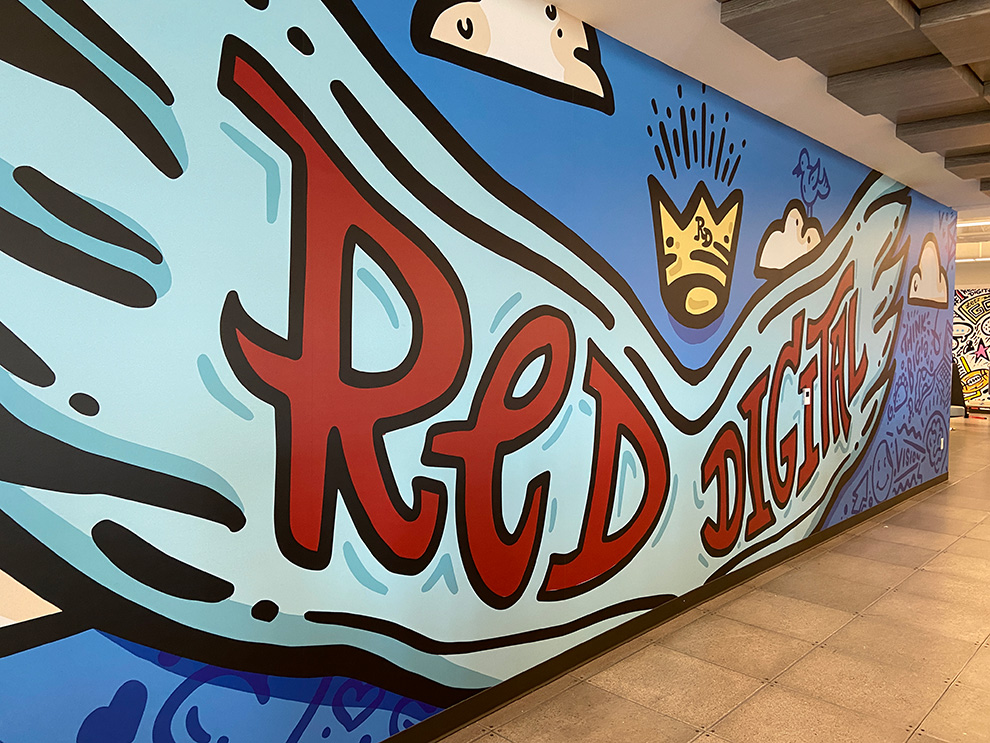
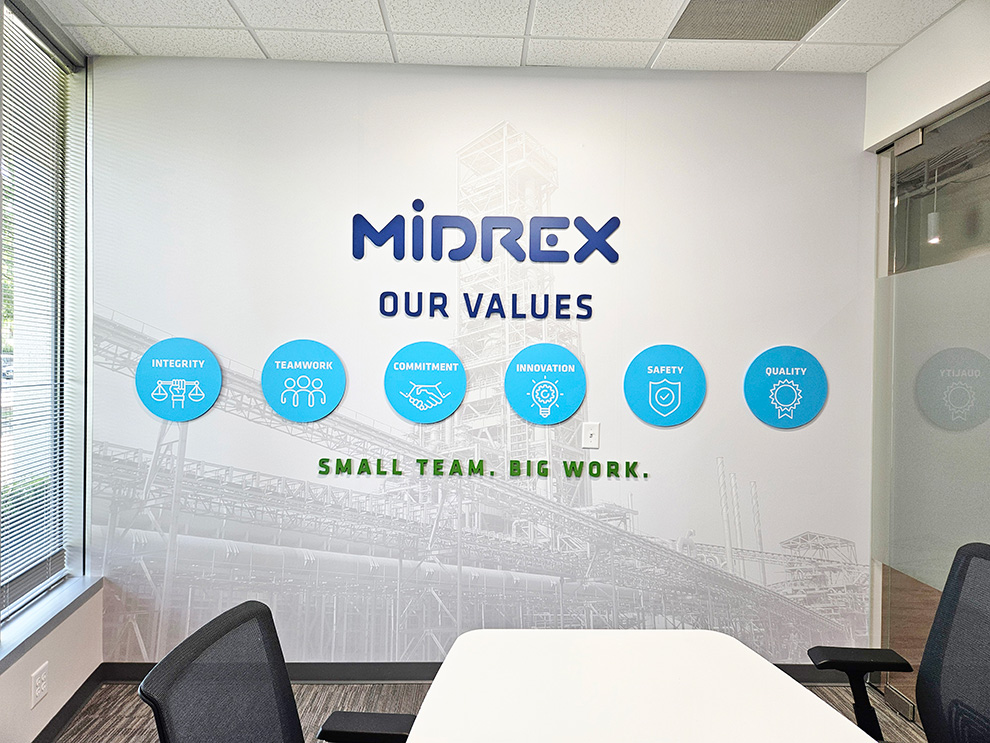
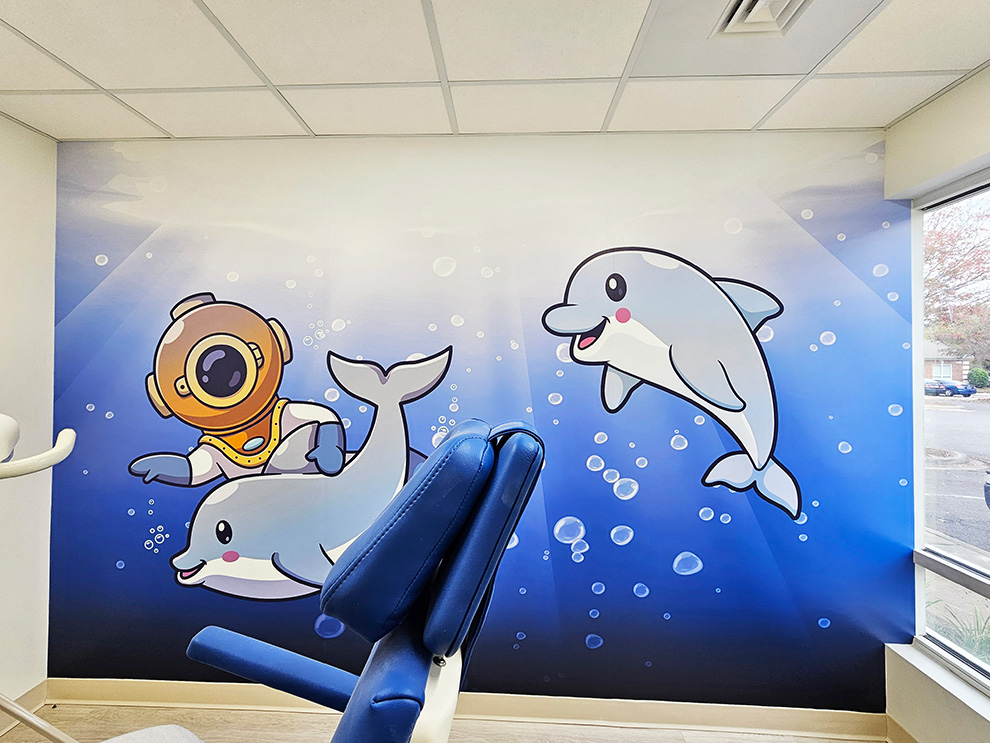
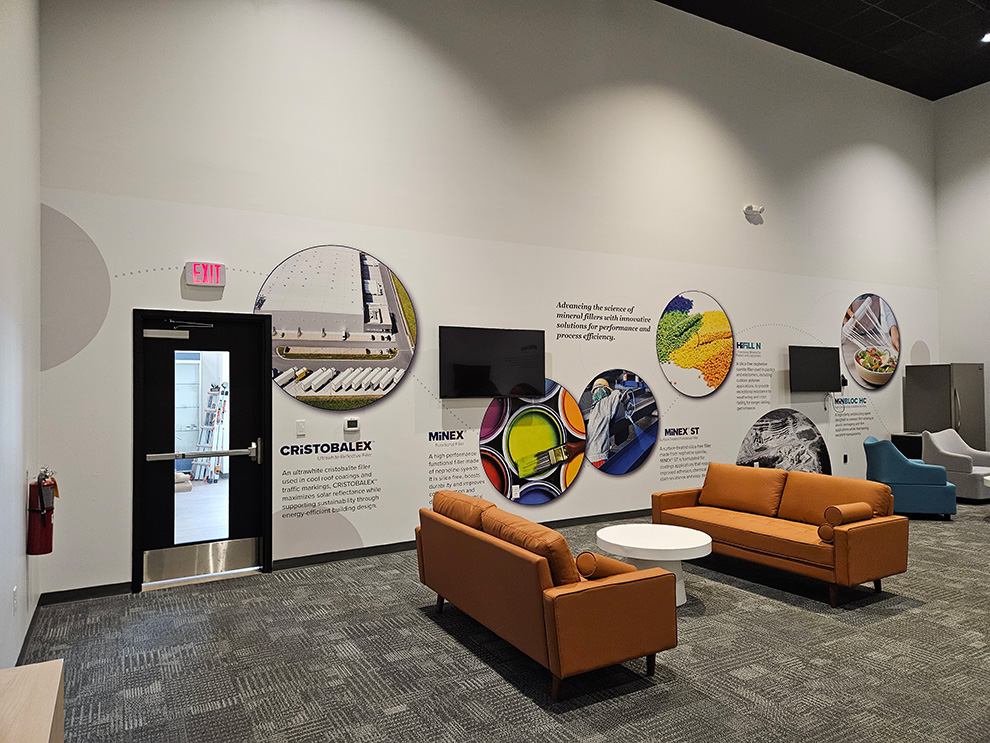
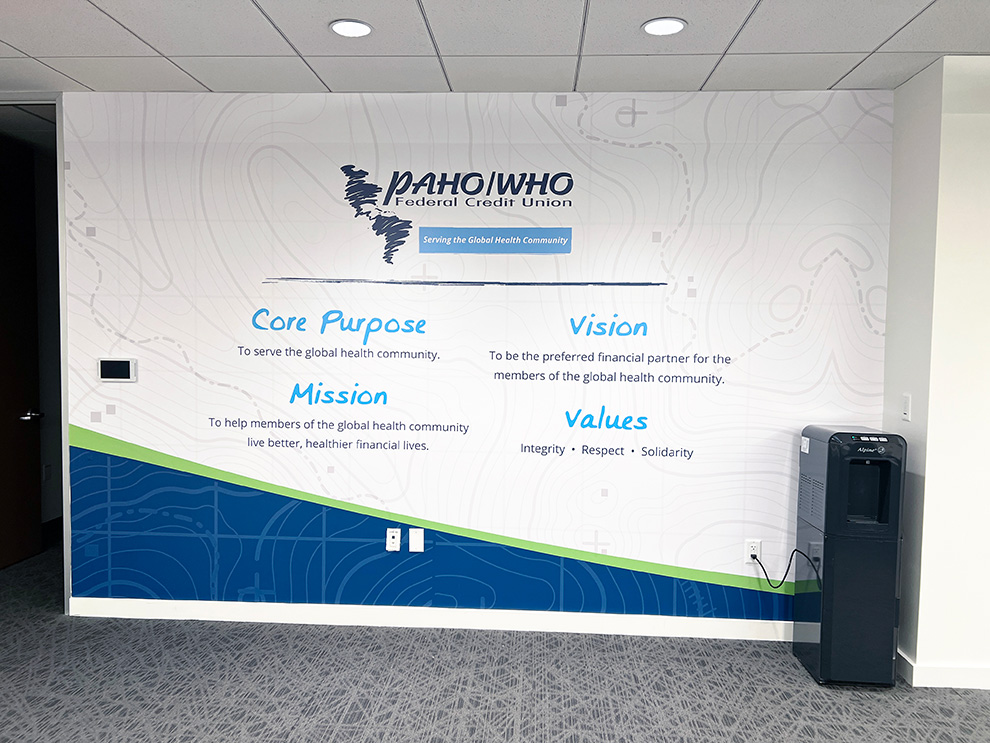
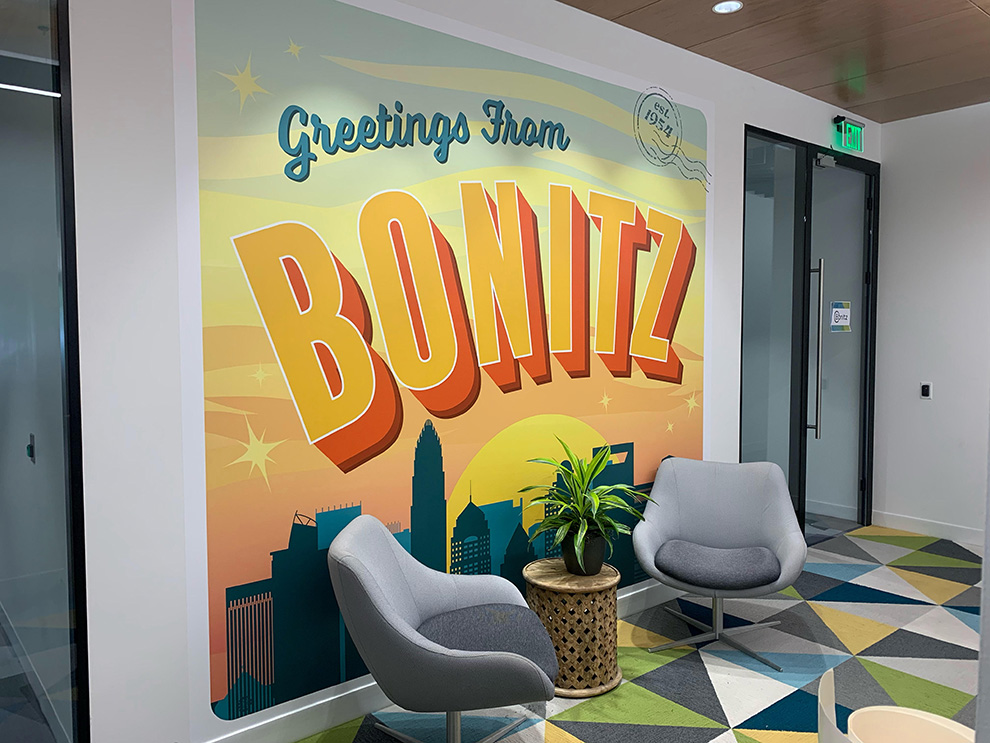
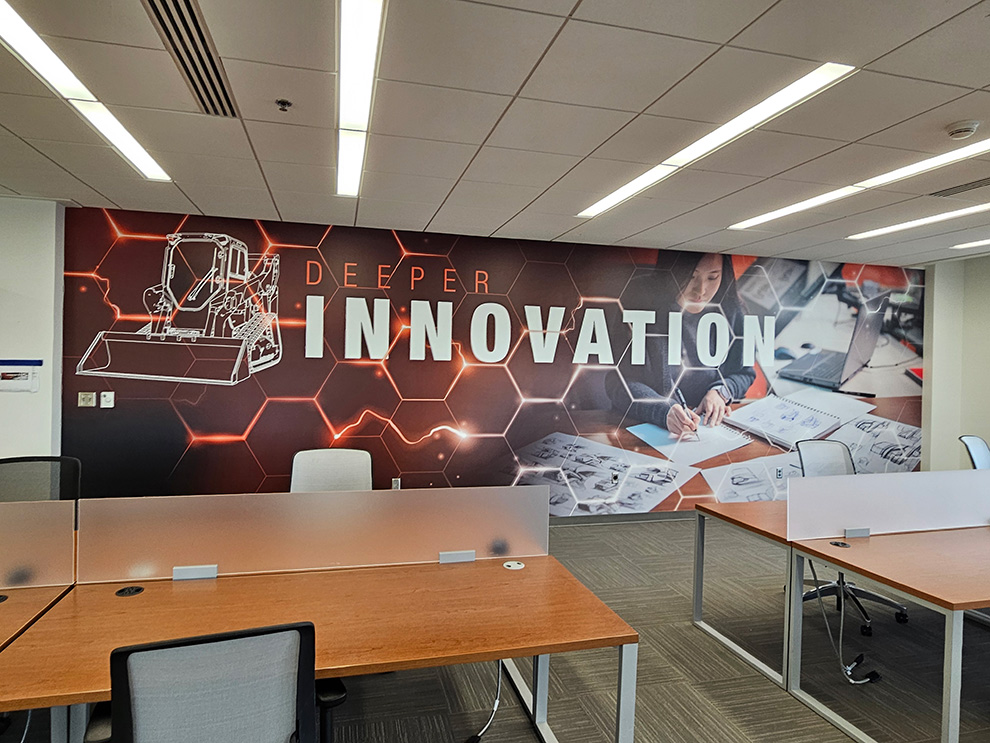
Transform large wall areas into immersive displays of organizational history, culture, photography, milestones, or brand messaging. Wall wraps can serve as the primary storytelling feature while dimensional signs, privacy treatments, and directional elements provide supporting information throughout the workplace.
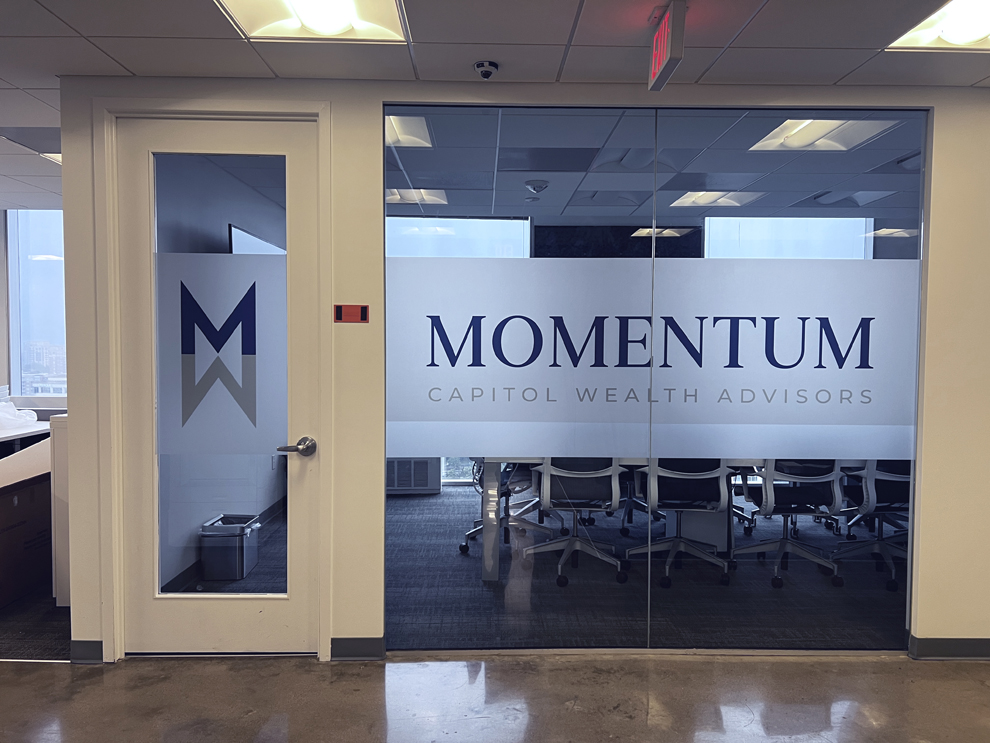
Use compatible interior glass for branding, identification, decorative patterns, or messaging. Window graphics can visually connect conference rooms, entrances, and shared spaces without making each pane feel like an unrelated application.
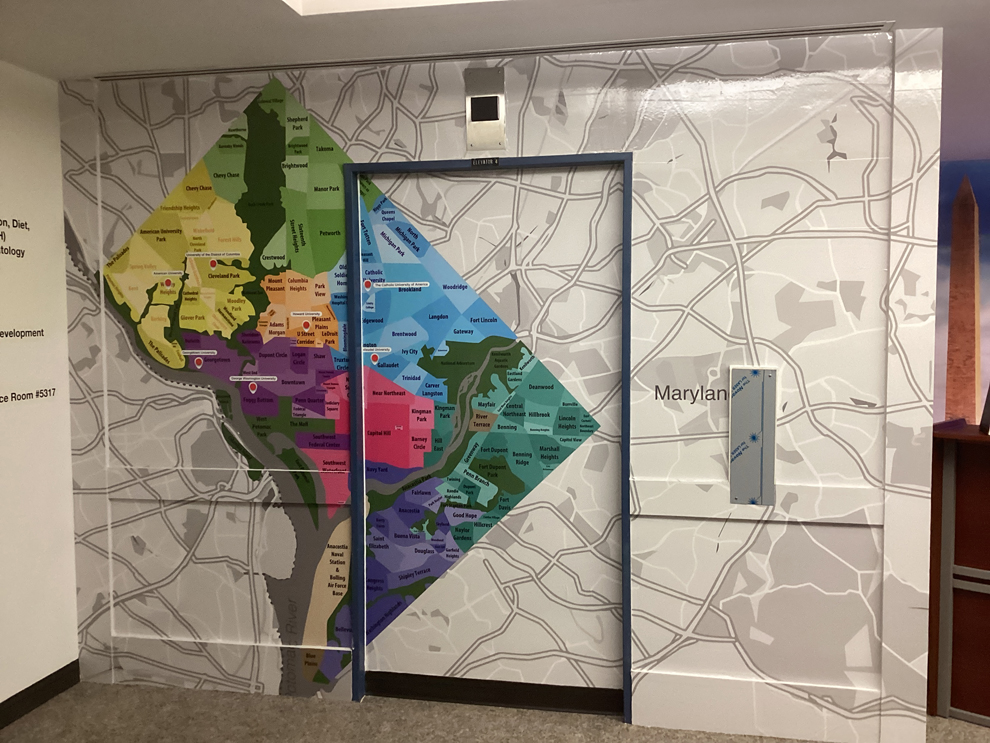
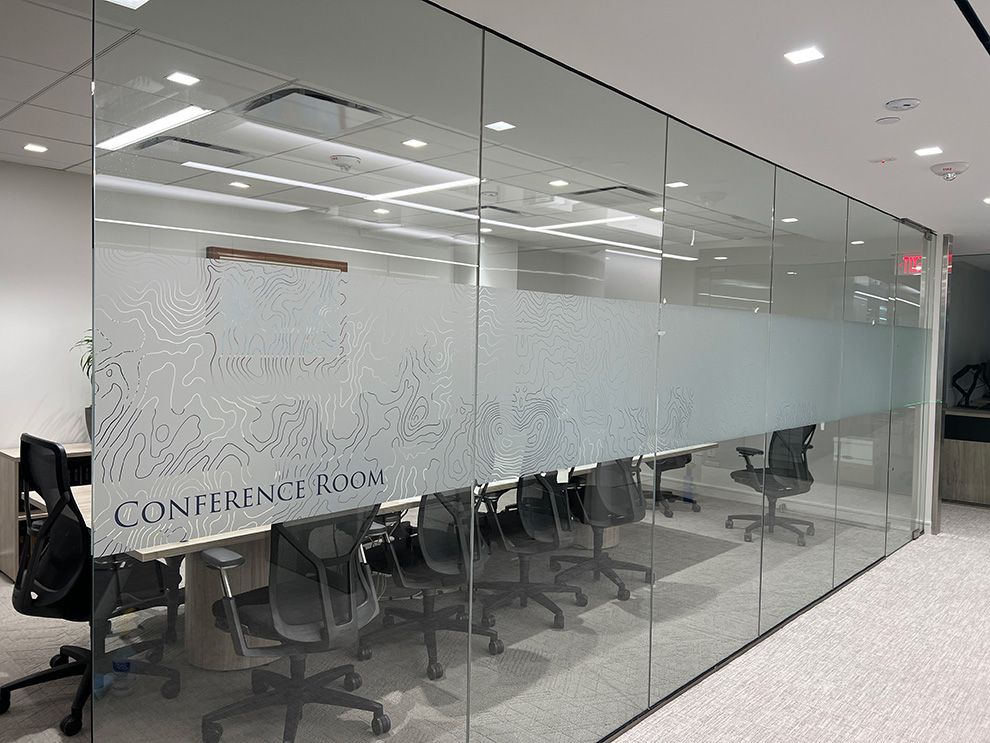
Improve visual privacy while allowing daylight to pass through interior glass. Frosted vinyl and privacy film can feature bands, patterns, logos, or custom artwork that complement nearby signs and displays while addressing practical sightline concerns.
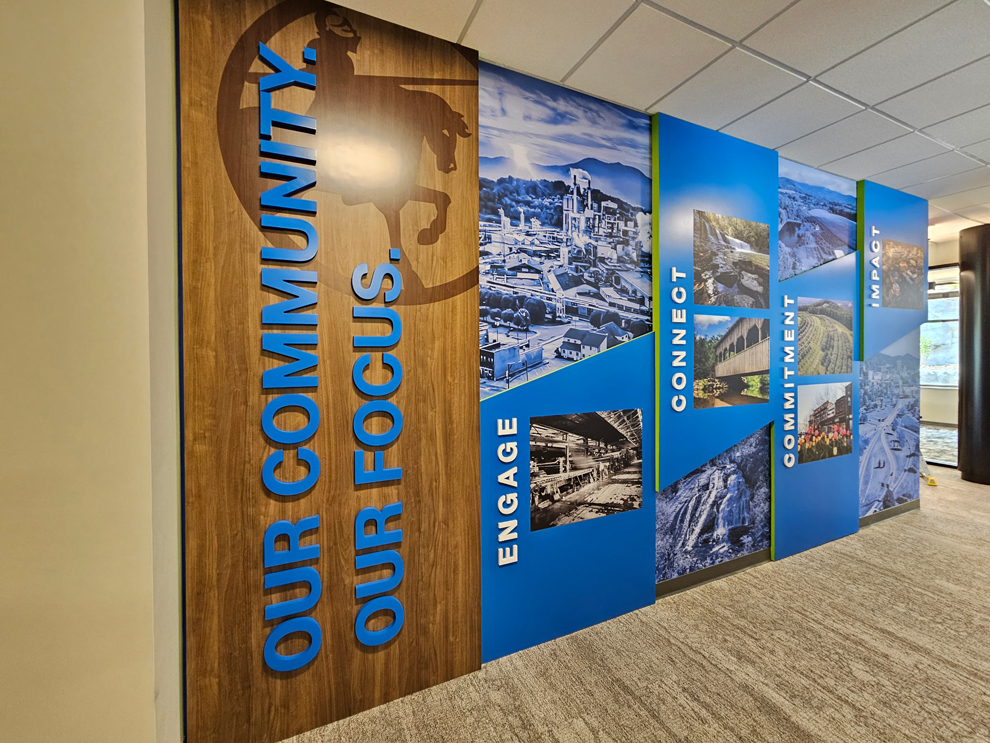
Present employee recognition, donor information, photographs, timelines, values, achievements, or frequently updated content within an organized system. Wall displays add structure and depth when information requires more permanence or flexibility than a single printed graphic can provide.
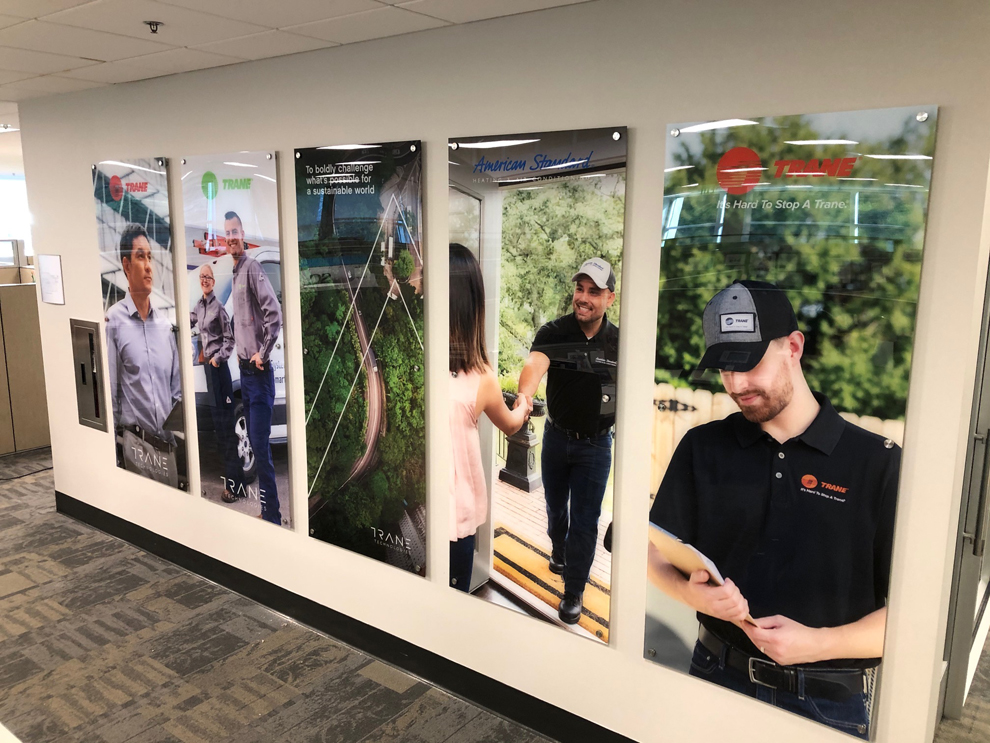
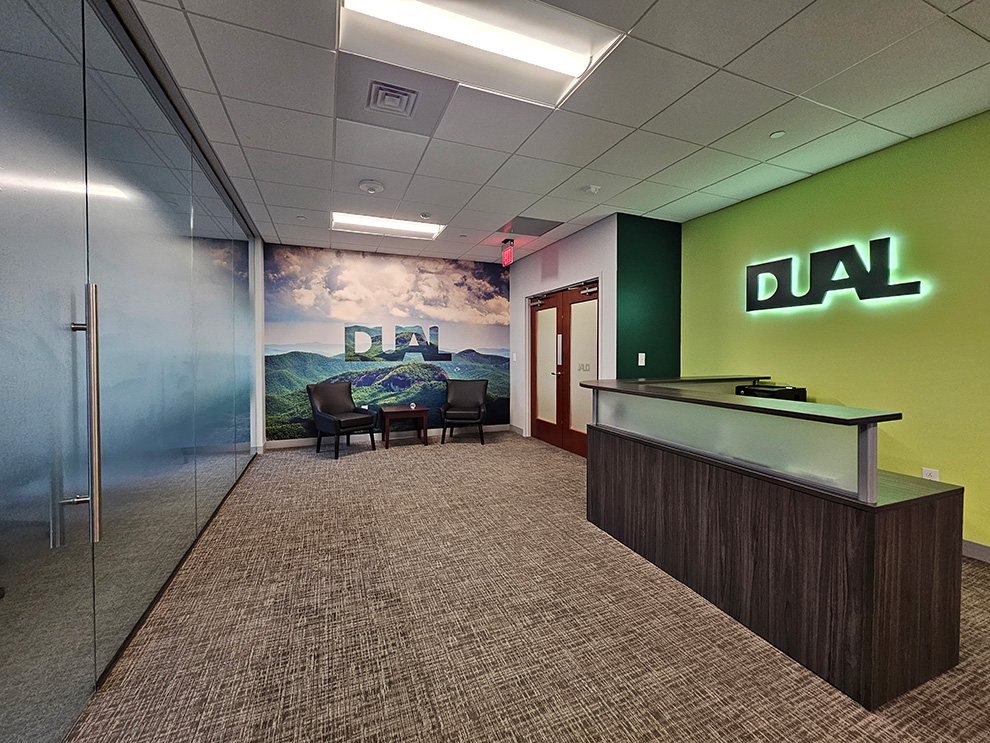
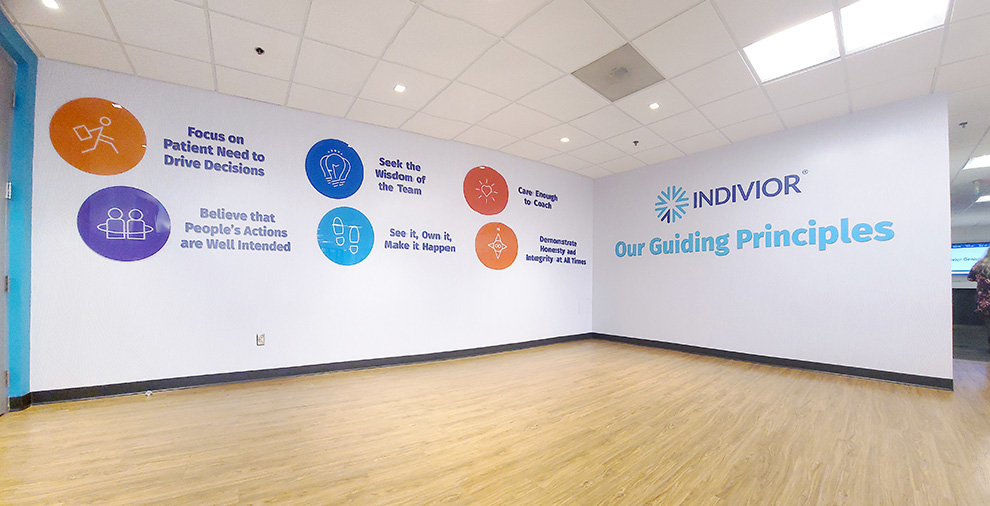
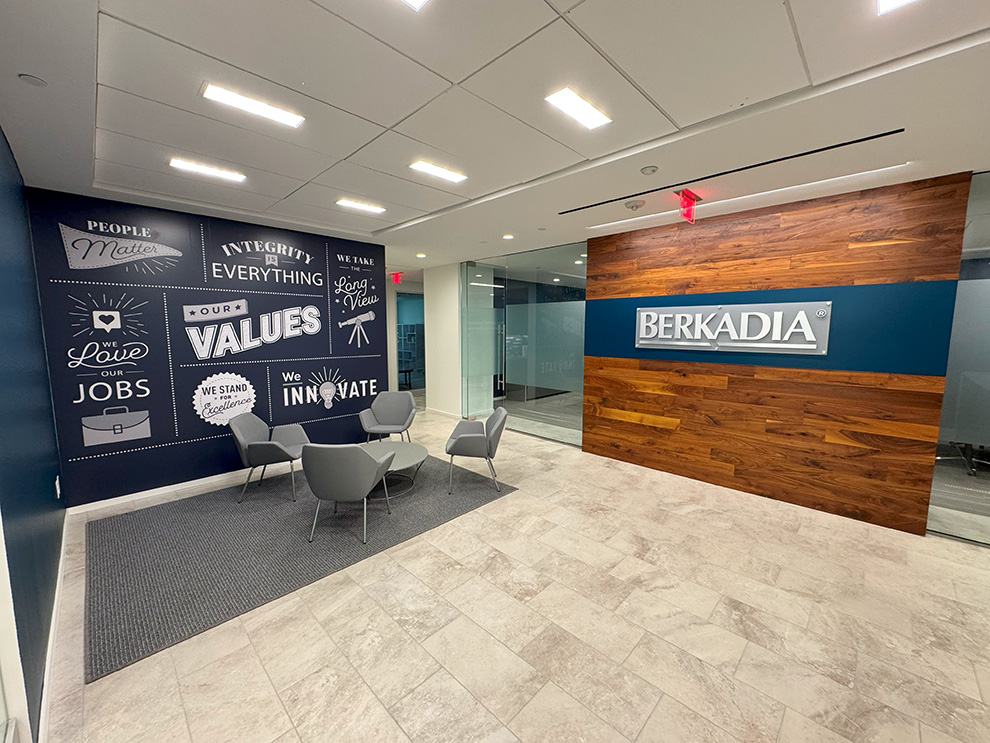
Give a company name, logo, mission statement, or core value greater physical presence. Dimensional letters can create a strong arrival feature while nearby graphics and displays communicate secondary information without competing for attention.
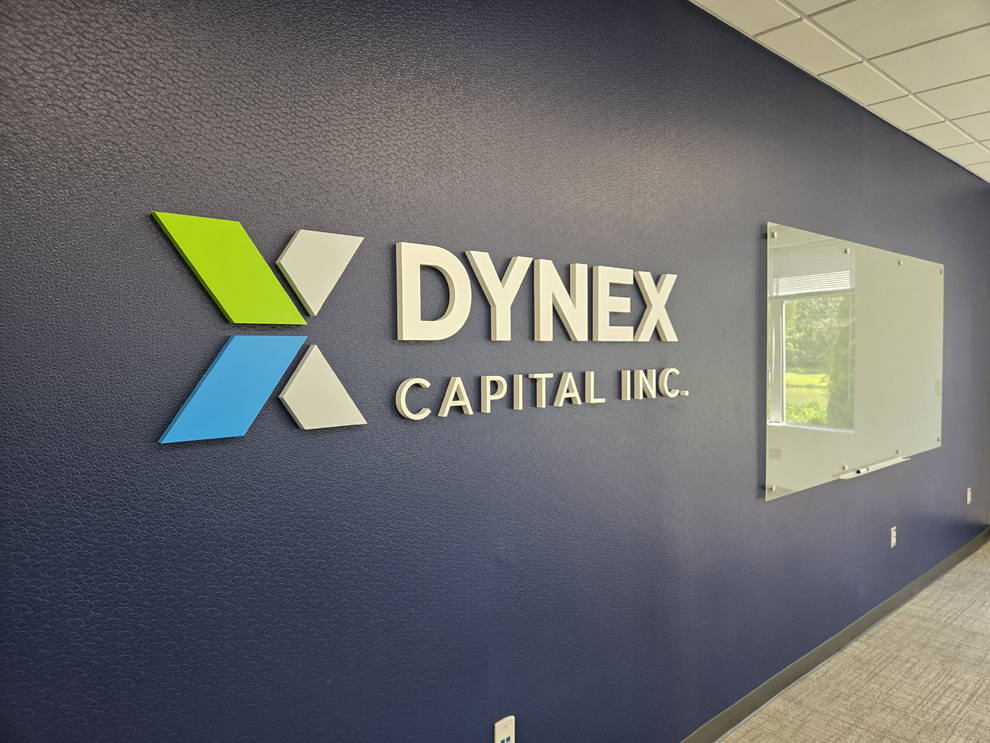
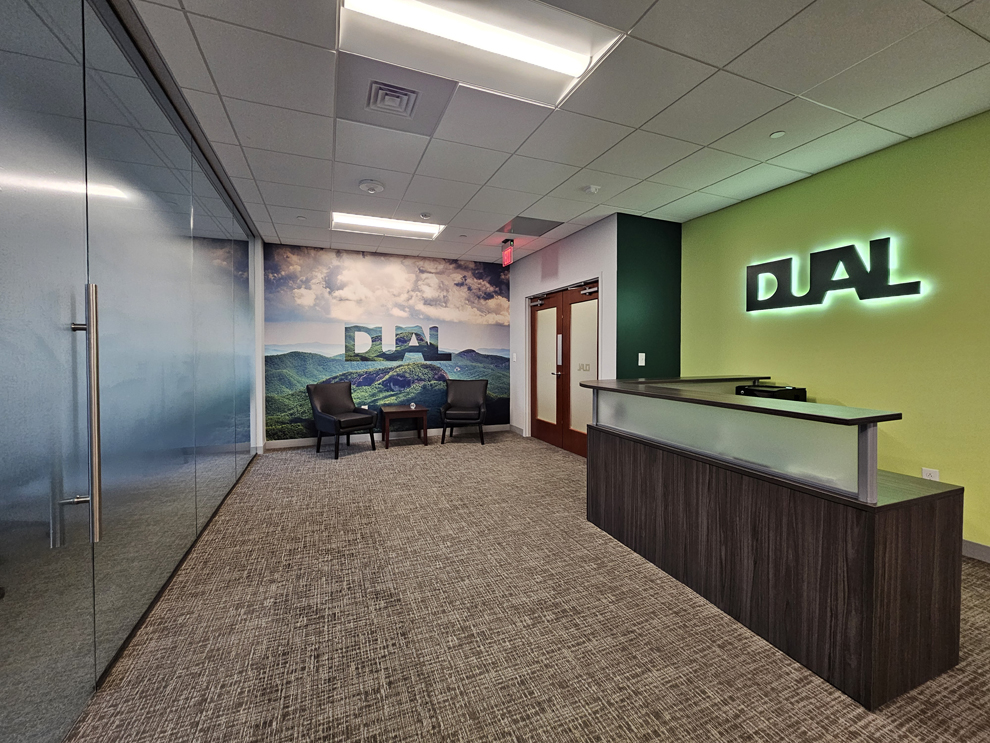
Introduce focused illumination when a logo or identity feature needs greater prominence. A backlit sign can anchor a reception area or branded destination while acrylic, dimensional, wall, and glass elements support the surrounding workplace story.
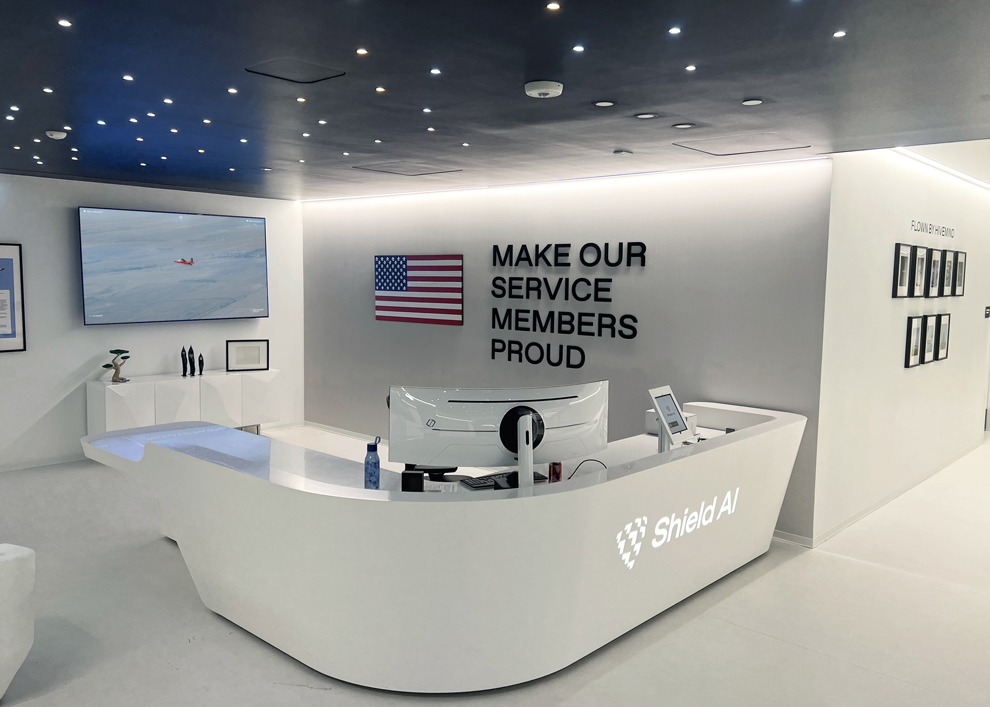
Position acrylic panels, printed graphics, photographs, lettering, or recognition content away from the wall to create depth. Standoff mounted signs can combine permanent structural elements with replaceable information in a polished architectural presentation.
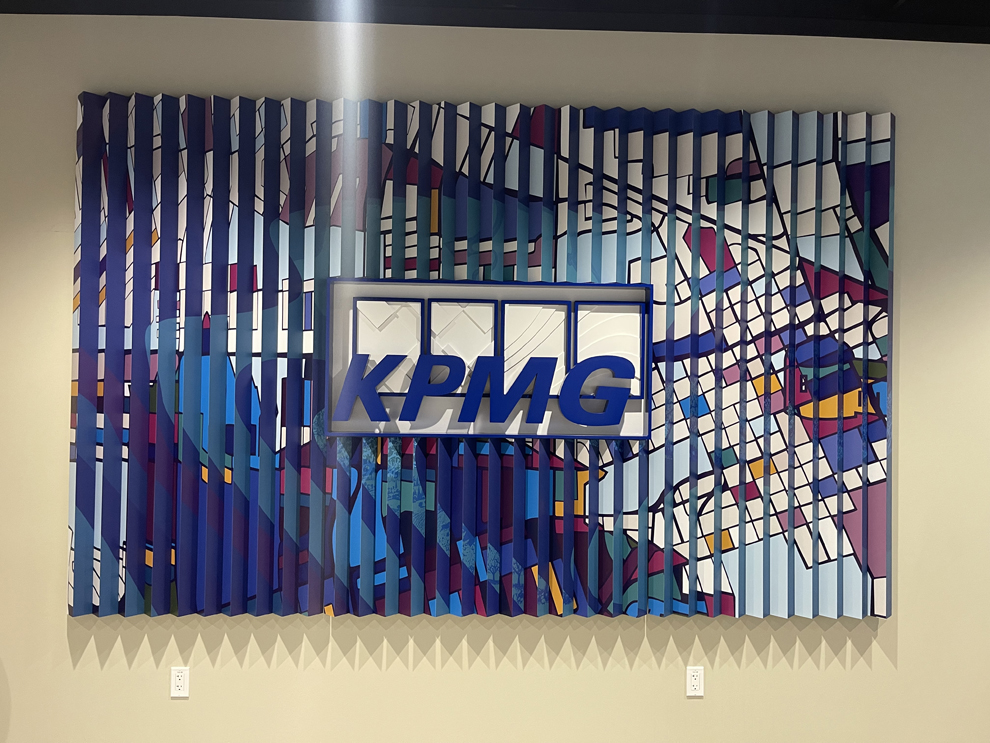
Use clear, translucent, frosted, or colored acrylic for lobby signs, directories, recognition systems, identification signs, and layered displays. Acrylic works well with printed graphics, dimensional lettering, illumination, and metal mounting hardware.
An Arlington Commercial Interior Graphics project can begin before every sign, material, or display has been selected.
Get Started Now by sharing the property location, desired result, target completion date, anticipated investment, available plans or photographs, brand standards, participating stakeholders, and known building or access requirements. Heritage can use this information to identify outstanding approvals, discovery needs, and field verification requirements before developing the appropriate environmental graphic design, production, fabrication, and installation plan.
One dedicated Project Manager will coordinate the next Heritage steps. You do not need to choose every product or material before beginning the conversation.
An effective Commercial Interior Graphics program gives Arlington stakeholders one hierarchy to review instead of a series of disconnected product choices. Leadership may prioritize credibility and organizational identity. Marketing may focus on brand consistency. Human resources may develop culture and recognition content. Facilities may be concerned with privacy, navigation, maintenance, and installation conditions.
A coordinated program brings these priorities together without requiring every element to command equal attention. Heritage helps determine which message should serve as the primary focal point, which information should remain secondary, and which content may need future updates. Dimensional lettering might establish identity at the entrance. A large wall feature may communicate history or values. Frosted graphics can provide privacy on conference-room glass, while a modular recognition display accommodates changing names and achievements.
These elements do not need identical materials or construction methods. They need a shared purpose, compatible visual language, and an intentional relationship to the surrounding architecture. Coordination is more important than the number of signs or graphics installed. When each component has a defined communication role, stakeholders can make more informed approvals and the finished workplace can deliver clear messages without unnecessary visual competition.
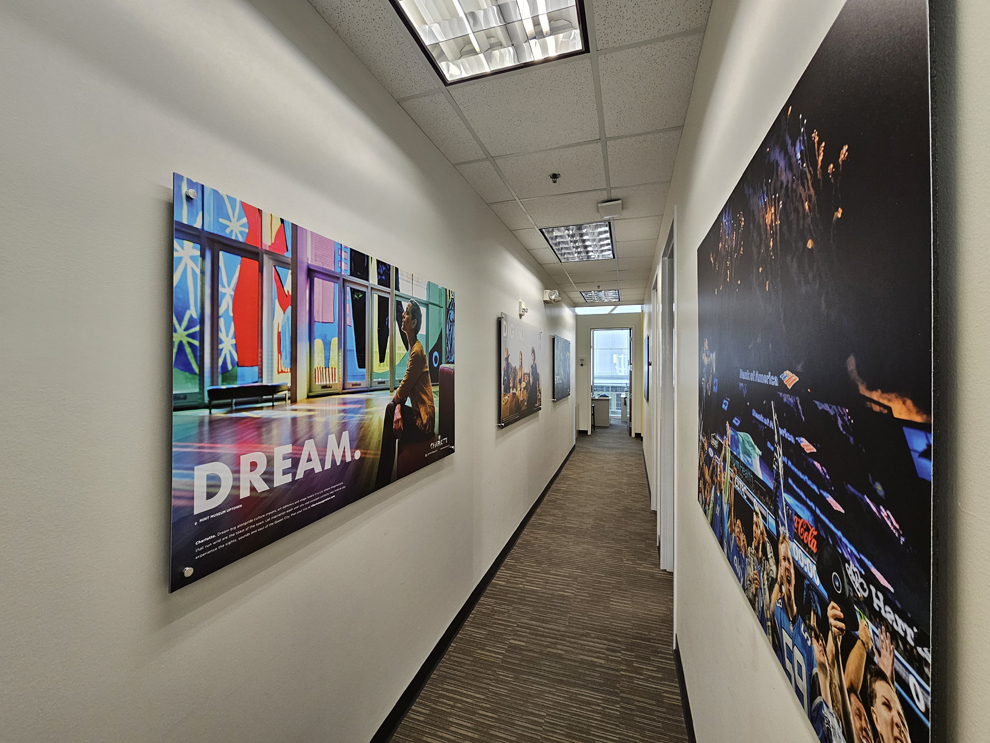
Arlington clients can receive support through Heritage resources serving Northern Virginia and the greater Washington, DC region. Planning begins with discovery and accurate information about the property. Mounting locations, occupied work areas, loading procedures, security requirements, elevator availability, and installation windows may affect several visual components at once.
Client-facing and field resources are assigned according to the verified needs of the engagement. Heritage does not imply that every capability or team is physically located at every facility.
One dedicated Project Manager connects Arlington site requirements with environmental graphic design, production, fabrication, scheduling, and professional installation. When appropriate, Heritage’s Waldorf, Maryland production facility may support Mid-Atlantic projects. Waldorf is staffed by production personnel and is not a showroom or sales office. Charlotte is Heritage’s headquarters and primary specialty production facility, serving the Carolinas and supporting specialized projects across the broader network.
Heritage can serve qualified client locations throughout the Mid-Atlantic and Carolinas while maintaining consistent project knowledge and brand standards. Consistency does not require every office to receive identical physical features. Architecture, dimensions, surfaces, audiences, schedules, and access conditions can differ by property while approved messaging and visual principles remain aligned.
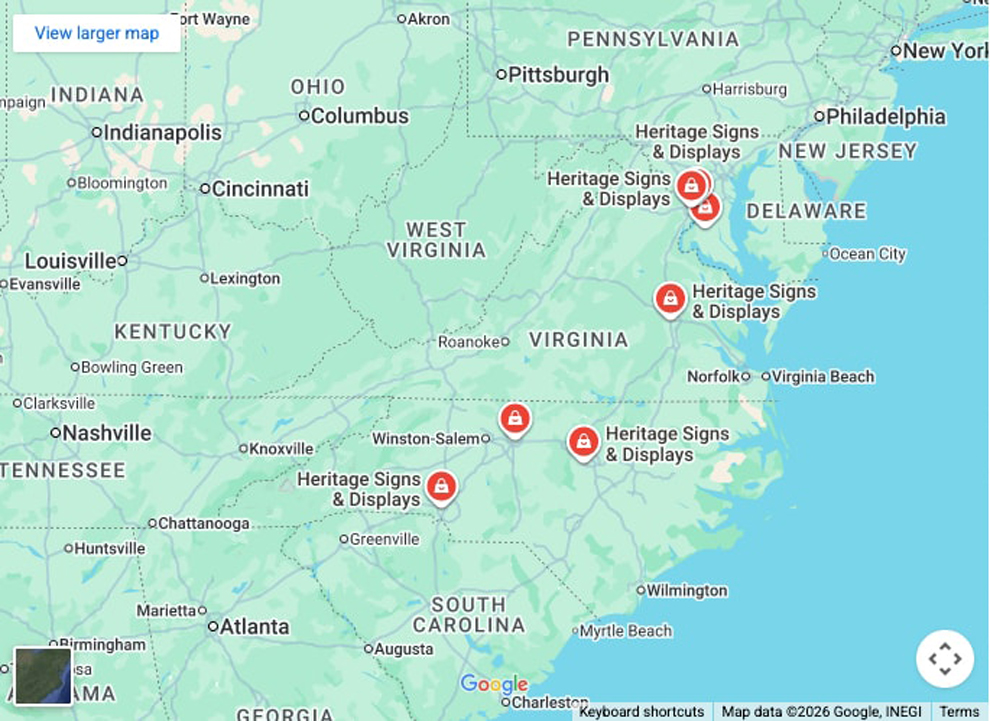
Environmental graphic design can strengthen an entrance, lobby, history wall, mission statement, values display, recognition area, privacy system, or overall workplace experience. The process begins by identifying what employees and visitors should notice, understand, or remember in each space. Product selection comes after the communication hierarchy is defined.
Heritage evaluates how approved priorities relate to viewing distance, scale, sightlines, wall and glass conditions, mounting methods, existing lighting, fabrication requirements, building access, and installation sequencing. These factors help determine whether a message is best communicated with dimensional lettering, illuminated signage, wall graphics, acrylic panels, privacy vinyl, photographs, or a layered display.
The purpose is to protect the intended message while developing a physical solution that can be produced, delivered, and installed at the Arlington property. Heritage may create environmental graphic design directly with client stakeholders or implement an approved direction developed by architects, interior designers, branding agencies, environmental graphic designers, workplace consultants, or internal creative teams. Heritage focuses on the branded visual scope it manages. It does not provide architecture, general commercial interior design, engineering, lighting design, ADA consulting, or code consulting.
Maintaining clear professional roles helps preserve creative intent while keeping physical execution aligned with the project’s confirmed requirements.
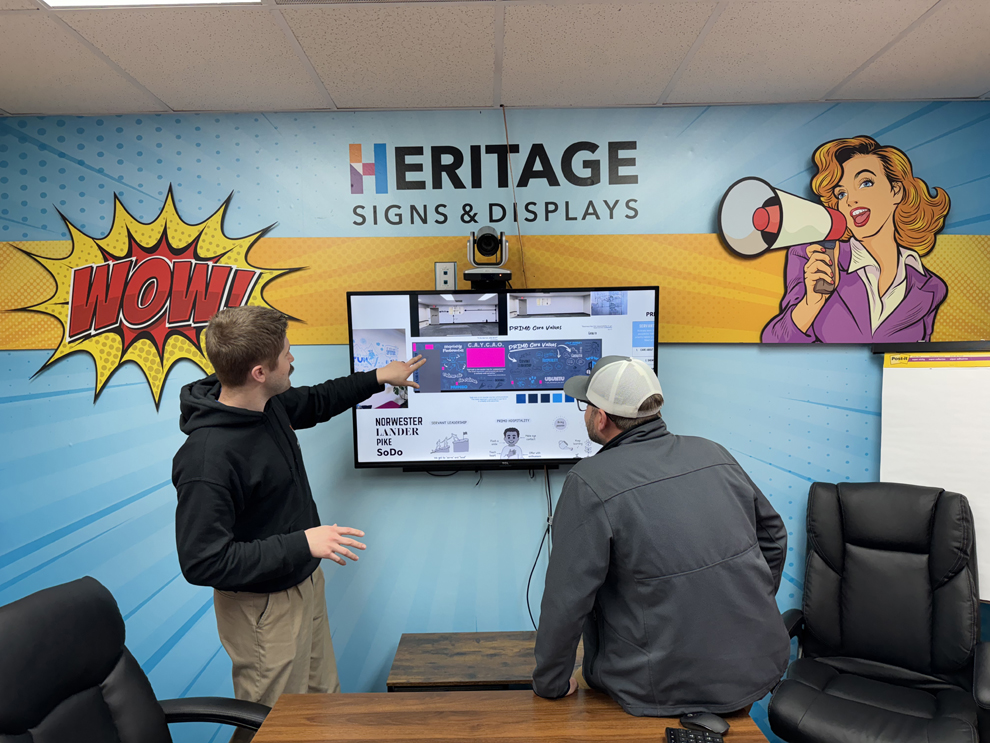
Professional installation depends on accurate site information, confirmed access, and a project record that reflects the approved work. A Heritage site survey is required whenever a project will ultimately include Heritage professional installation. The survey combines client discovery with field verification of dimensions, surfaces, mounting conditions, placement, access, and other factors that may affect production or installation.
When verified for the engagement, Heritage’s full-time professional installers receive approved design files, fabrication details, site documentation, property procedures, work-window requirements, and installation sequencing instructions before arriving.
This preparation supports accurate placement, secure mounting, clean alignment, proper fit and finish, protection of surrounding areas, and communication with responsible site contacts. It also helps reduce disruption in occupied Arlington offices.
If installers encounter field conditions that differ materially from the documented project record, Heritage pauses the affected work and communicates what was found. The team then determines the appropriate next step instead of forcing an installation under unsuitable conditions.
Heritage installs signs, graphics, displays, and branded features that it produces, fabricates, procures, or manages through a Heritage engagement. Heritage does not offer installation-only service for customer-supplied signs or graphics. Accountable installation requires connected control over specifications, measurements, materials, production, finishing, packing, fit, and replacement procedures.
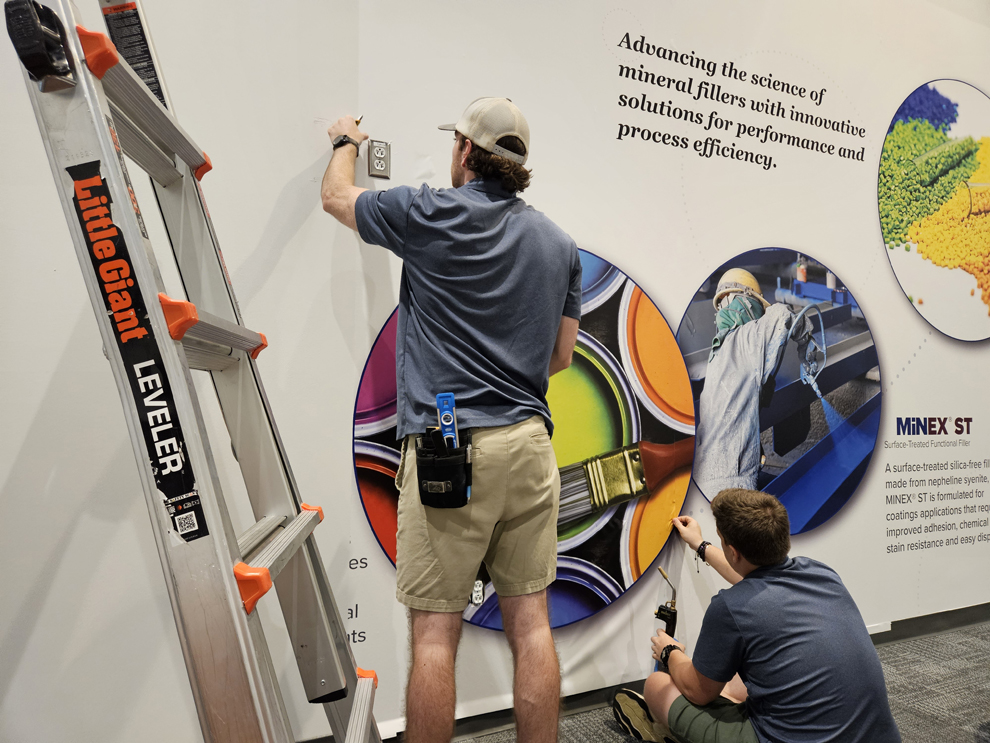
Project planning should connect the desired result, audience, visual scope, stakeholders, approvals, phasing, schedule, site readiness, access requirements, anticipated investment, and outstanding information before production is released.
Floor plans, artwork, elevations, and photographs are valuable planning resources, but they do not replace discovery or the required Heritage site survey when professional installation is included.
Walls receiving graphics should be sound, smooth, clean, dry, properly repaired, primed, painted, and fully cured. Approximately four weeks can be useful planning guidance for many paints, but manufacturer instructions and actual site conditions determine readiness. Paint that is still curing may release gases that contribute to bubbles, blisters, lifting, or premature adhesive failure.
Surface testing can help evaluate how vinyl performs on the exposed paint. It cannot verify the concealed bond between drywall, primer, and paint.
If paint or primer peels or separates during testing, positioning, or installation, Heritage stops the affected work and reports the condition. The client or property owner is responsible for arranging and paying for repairs, priming, repainting, restoration, and full curing. Heritage does not perform or fund that corrective work.
Graphic removal is a separate service, and damage-free removal cannot be guaranteed. When existing graphics must be replaced, removal should occur early enough to identify and correct wall damage before the scheduled installation date.
New website-generated Arlington workplace opportunities should anticipate an overall project investment of at least $6,000. Many Heritage projects that include production and professional installation range from $10,000 to more than $200,000, depending on scope, fabrication, access, scheduling, site readiness, and installation requirements.
Commercial interior graphics address the disconnect that occurs when identity, privacy, recognition, direction, storytelling, and display features are purchased as unrelated items. Individually approved elements may compete visually or create practical conflicts involving dimensions, mounting, building access, fabrication, and installation order.
A coordinated program gives each feature a defined communication role and evaluates its relationship to the rest of the workplace before fabrication. The value lies in connecting signs, graphics, displays, and branded features to one hierarchy, one site record, and one execution plan.
They work as one program when every element has a clear purpose and level of visual priority. Dimensional letters may establish identity at reception, a wall display may present company history, privacy vinyl may manage conference-room glass, and a recognition system may organize content that changes over time.
The components do not have to use the same materials. Their placement, scale, colors, content, and architectural relationships should support the same approved direction without making every feature compete to become the focal point.
Heritage manages its confirmed scope through discovery, environmental graphic design, dedicated project management, production, fabrication, site coordination, scheduling, and professional installation. Approved decisions and verified field information remain connected as the project moves between specialists.
Clients, property representatives, architects, interior designers, engineers, accessibility professionals, and other responsible participants retain their approvals and professional obligations. Heritage coordinates its work with their confirmed requirements rather than assuming their roles.
One dedicated Project Manager maintains the approval record, stakeholder feedback, field documentation, production requirements, building procedures, schedule, and installation plan. This continuity limits unnecessary handoffs and helps the team understand how a change to one component could affect other elements.
The Project Manager does not replace decision-makers from the client team or other professional disciplines. The role provides one accountable Heritage contact while design, production, fabrication, field, and installation specialists complete their assigned work.
A Heritage site survey is required when the project will ultimately include Heritage professional installation. The survey is both a discovery process and a technical field verification, not simply a measurement visit.
It may document dimensions, surfaces, sightlines, mounting conditions, placement, access, staging restrictions, and installation requirements. This record gives designers, production teams, fabricators, project managers, and installers a shared factual foundation before final production release.
Environmental graphic design begins by determining what visitors and employees should notice, understand, feel, or do in each area. Executives, marketing, human resources, facilities, and property representatives may prioritize different outcomes, so the process creates a hierarchy before individual products are chosen.
Heritage then evaluates scale, sightlines, lighting, surfaces, mounting methods, fabrication, and installation conditions. This connects communication objectives with the realities of the Arlington property.
Yes. Heritage can develop environmental graphic design with client stakeholders or execute approved visual direction created by architects, interior designers, environmental graphic designers, branding agencies, workplace consultants, and other creative partners.
Heritage translates that direction into producible artwork, signs, graphics, displays, fabricated elements, and installation plans within its confirmed scope. Architecture, engineering, general interior design, accessibility determinations, code compliance decisions, and property management remain with the appropriate responsible parties.
Preparation includes confirming property access, responsible site contacts, loading arrangements, freight elevator availability, staging restrictions, work hours, occupied areas, security procedures, and site readiness. These details may affect crew size, equipment, deliveries, installation order, and scheduling.
The client or property representative manages permissions and building access within their control. Heritage uses the confirmed information and required site survey to prepare installers and organize the work.
Painted drywall should be sound, smooth, clean, dry, properly repaired, primed, painted, and fully cured. Approximately four weeks may be useful guidance for many paints, but the paint manufacturer’s requirements and actual site conditions determine readiness. Paint that is still curing can contribute to bubbles, blisters, lifting, or premature adhesion failure.
Testing may indicate how vinyl adheres to the exposed surface, but it cannot verify the concealed bond between drywall, primer, and paint. If paint or primer separates during testing, positioning, or installation, Heritage stops the affected work. The client or property owner must arrange and pay for repairs, priming, repainting, restoration, and adequate curing before installation resumes.
Organizations can maintain consistent brand principles, messaging, hierarchy, production standards, and project knowledge while adapting each physical solution to its property. Architecture, dimensions, wall conditions, glass layouts, audiences, access requirements, and installation schedules may differ between locations.
Heritage can support qualified properties throughout the Mid-Atlantic and Carolinas using a coordinated program. Consistency means protecting the brand and decision framework, not forcing every workplace to use identical signs and displays.
Adhesive vinyl graphics are a broad category of pressure-sensitive applications used on suitable walls, windows, glass doors, displays, elevators, selected floors, and other compatible surfaces. Commercial Interior Graphics describe a broader workplace program that may combine multiple visual layers and construction methods.
Vinyl graphics may be used alongside acrylic signs, dimensional letters, backlit signs, photographs, recognition displays, standoff mounted panels, and fabricated features. The overall program determines how these components share the communication work.
A wall wrap becomes one part of a larger program when it handles an architectural-scale story while other features address identity, privacy, navigation, recognition, or changeable information elsewhere in the workplace.
The wall wrap may deliver imagery, culture, history, or major brand messaging. Commercial interior graphics coordinate that feature with dimensional, illuminated, acrylic, glass, and display elements throughout the Arlington interior.
Successful installation depends on measurements, specifications, material selection, production quality, finishing, packing, fit, and replacement responsiveness established before the installation team arrives. Customer-supplied signs and graphics introduce production variables Heritage did not control.
Heritage therefore installs signs, graphics, displays, and branded features that it produces, fabricates, procures, or manages within a Heritage engagement. Keeping production and installation connected allows Heritage to remain accountable for the finished scope.
New website-generated workplace interior opportunities in Arlington should plan for an anticipated total project investment of at least $6,000. Many Heritage projects involving production and professional installation range from $10,000 to more than $200,000. Final investment depends on project size, fabrication, materials, schedule, number of locations, access restrictions, site readiness, and installation requirements.
Helpful starting information includes the Arlington property address, desired outcome, target date, anticipated investment, stakeholder list, plans or photographs, brand standards, available content, and known building procedures. Clients do not need to select every sign, graphic, display, or material before discovery begins.
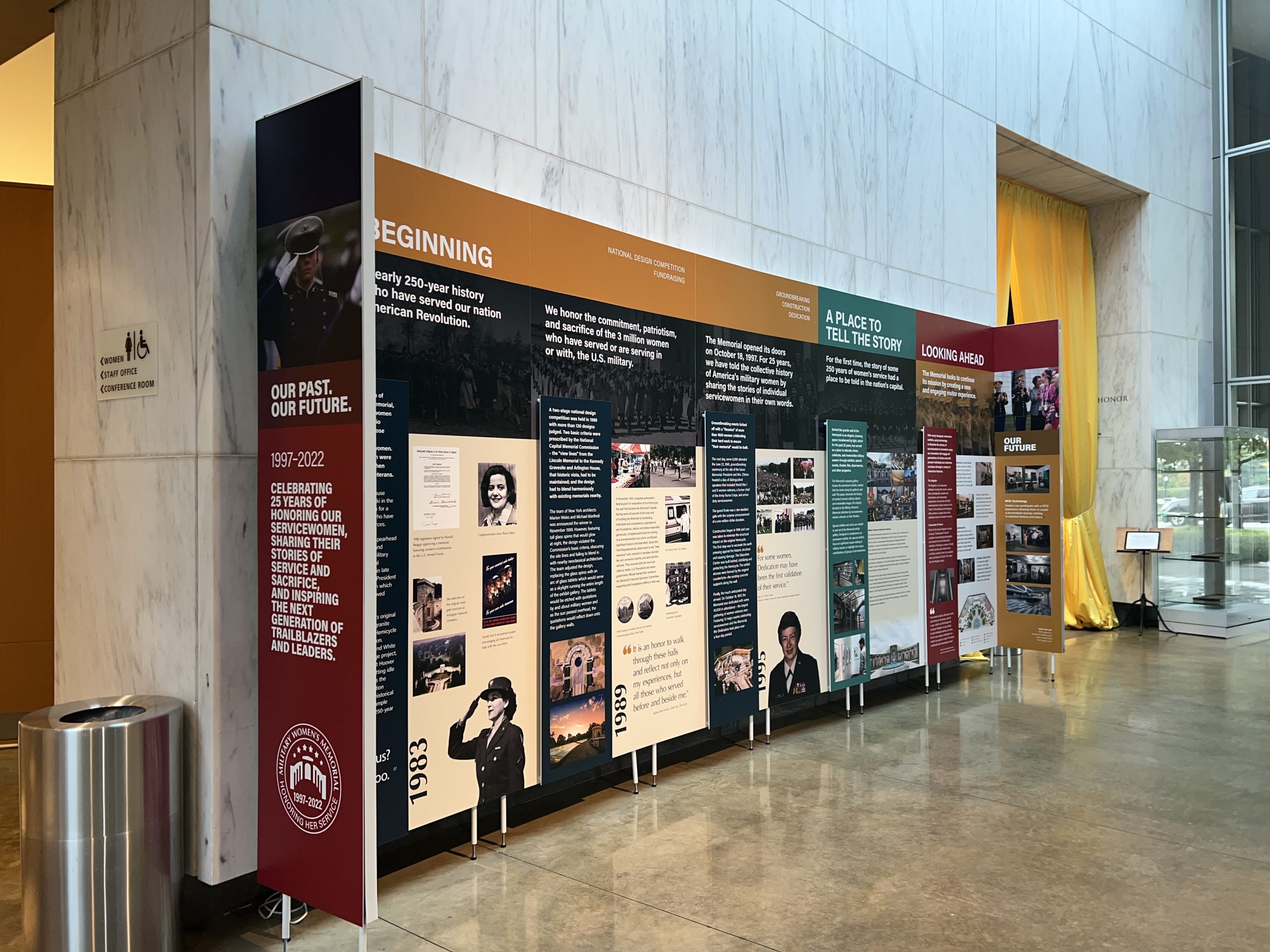
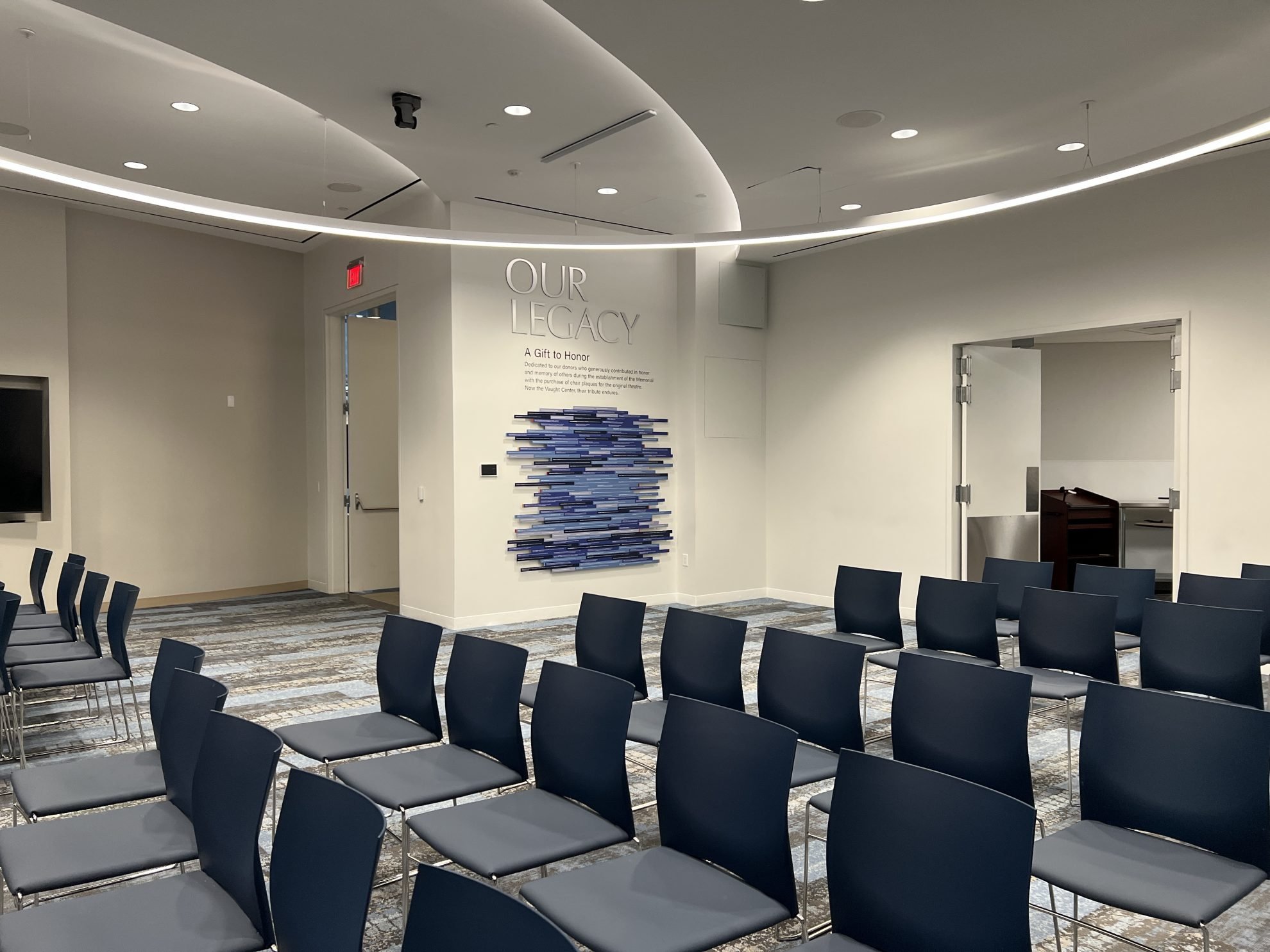
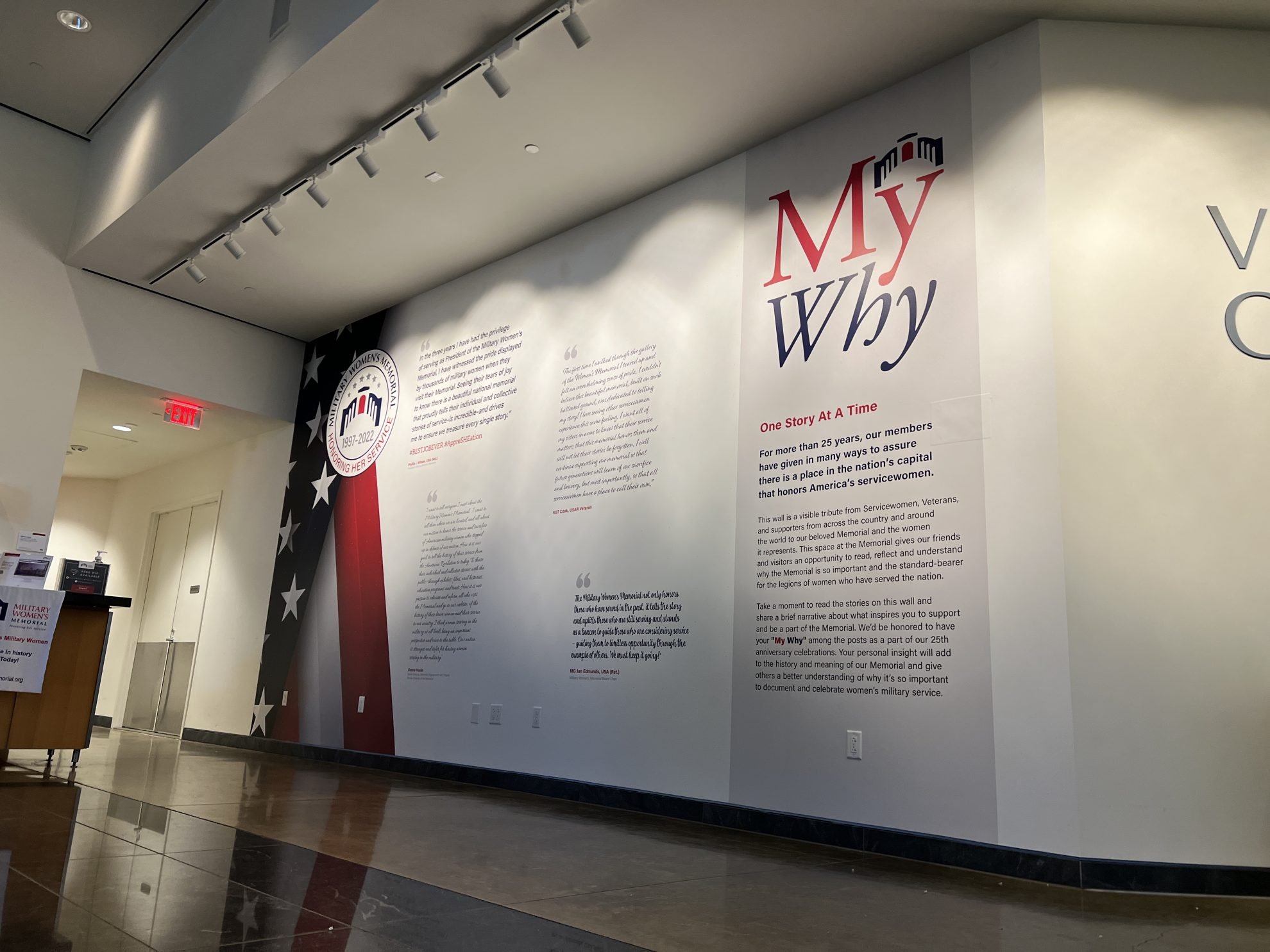
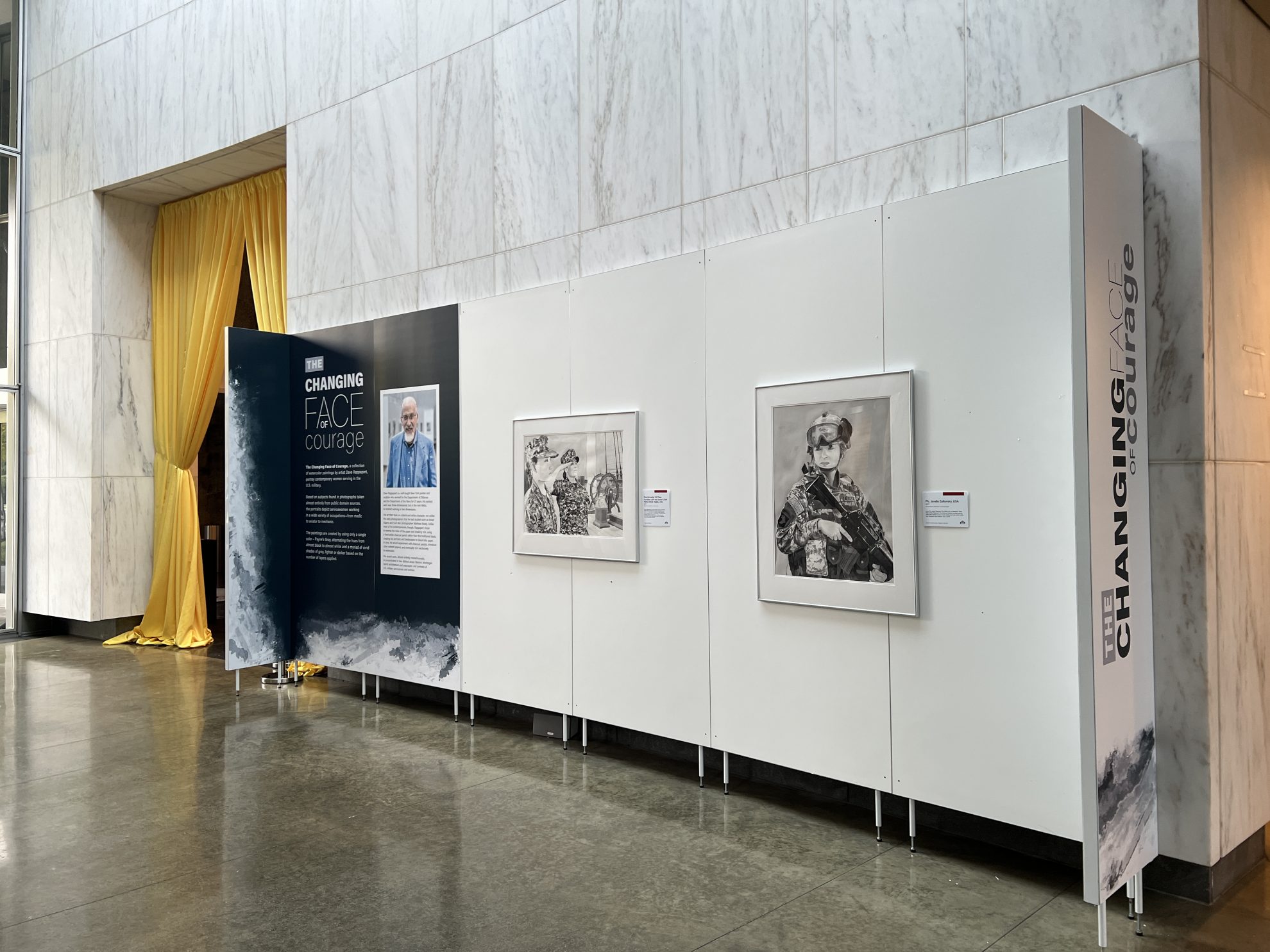
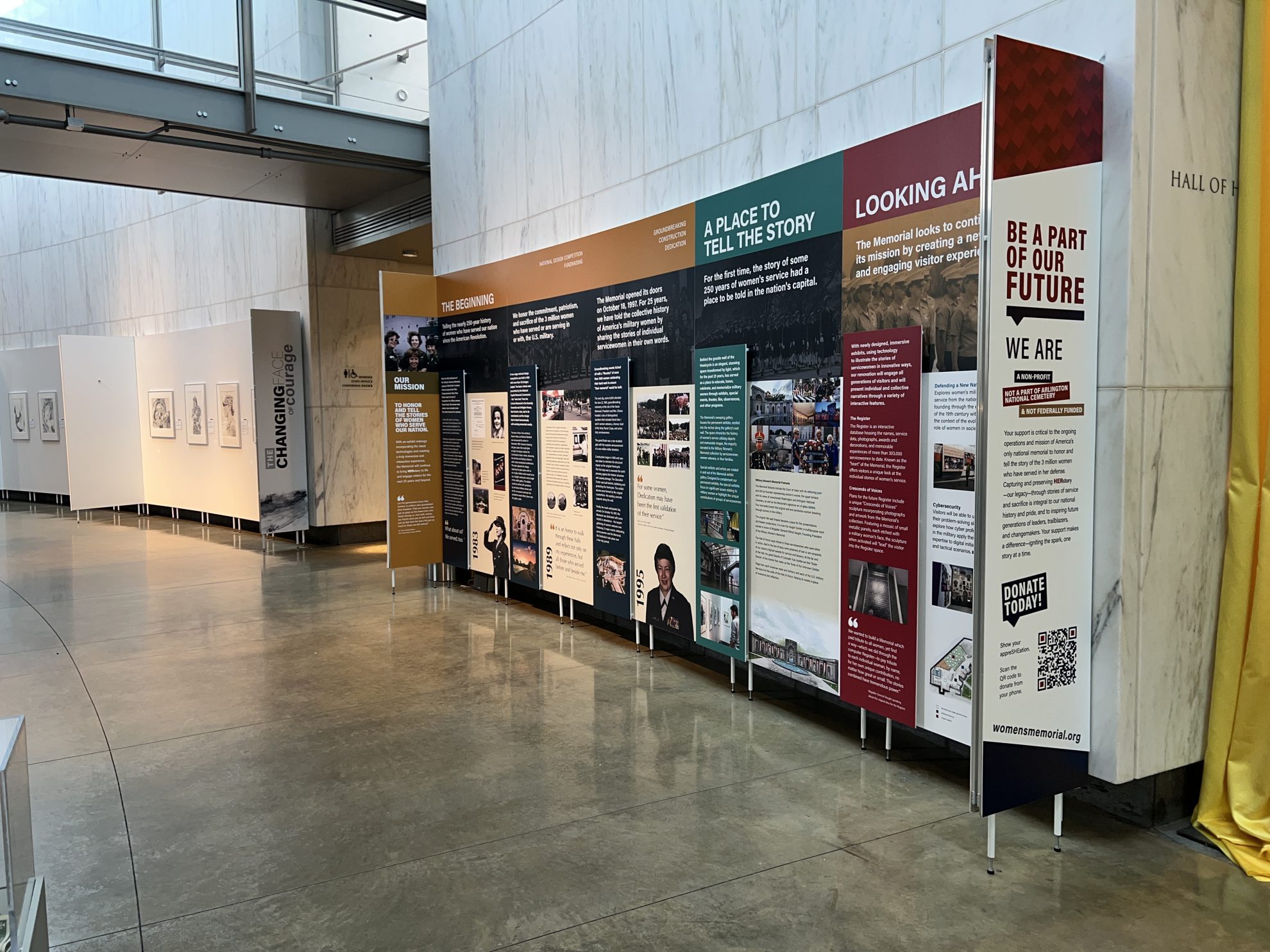
Heritage Signs & Displays created new museum signage for the Military Women’s Memorial in Arlington, VA. The project included custom signs, wall wraps, dimensional letters, and standoff-mounted displays to honor the legacy of U.S. servicewomen and the donors who supported the memorial. The updated interior features impactful designs, including a "Our Legacy" wall display and panels showcasing historical contributions and artwork, creating a transformative tribute to women in the U.S. Armed Forces.
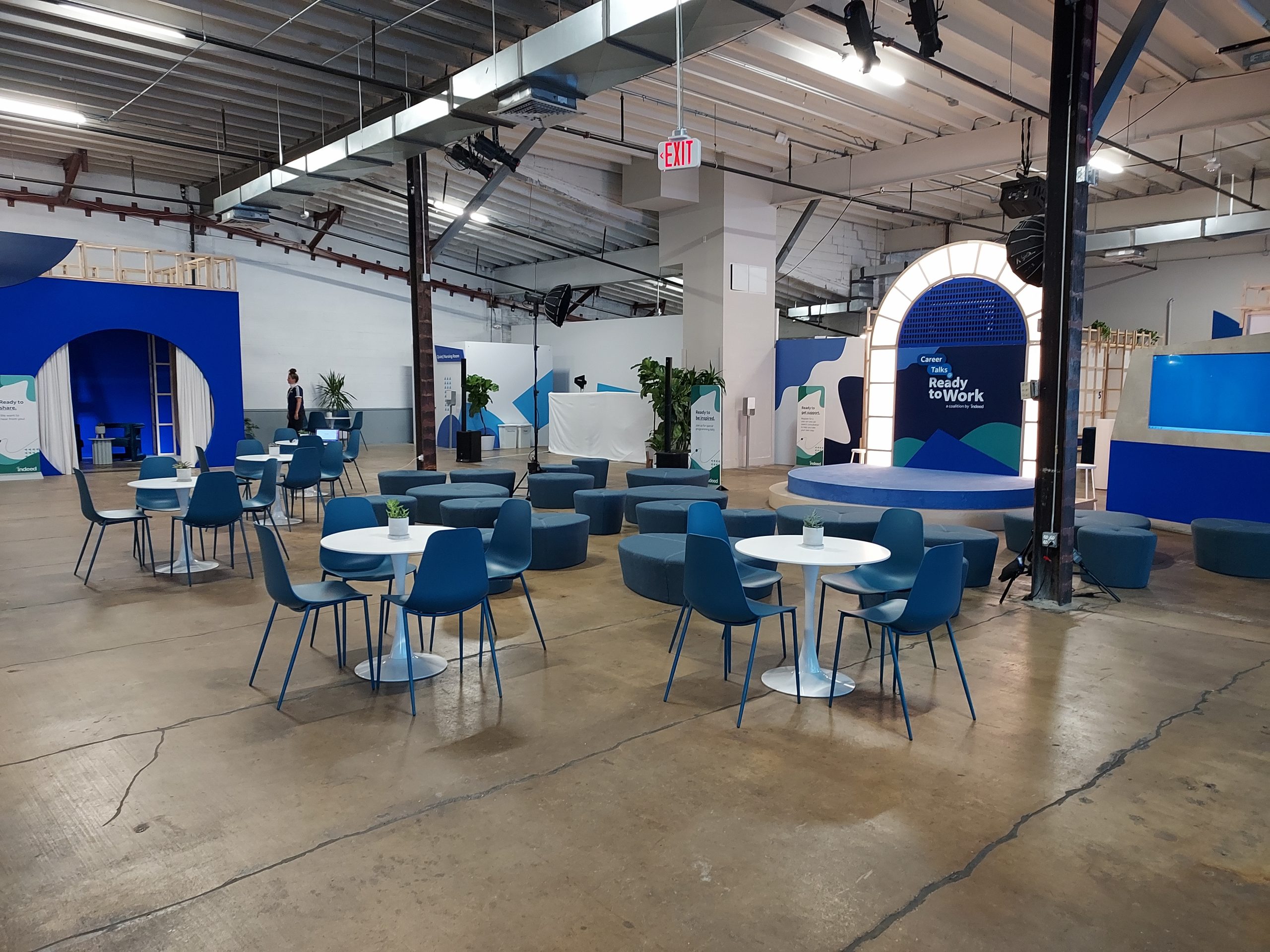
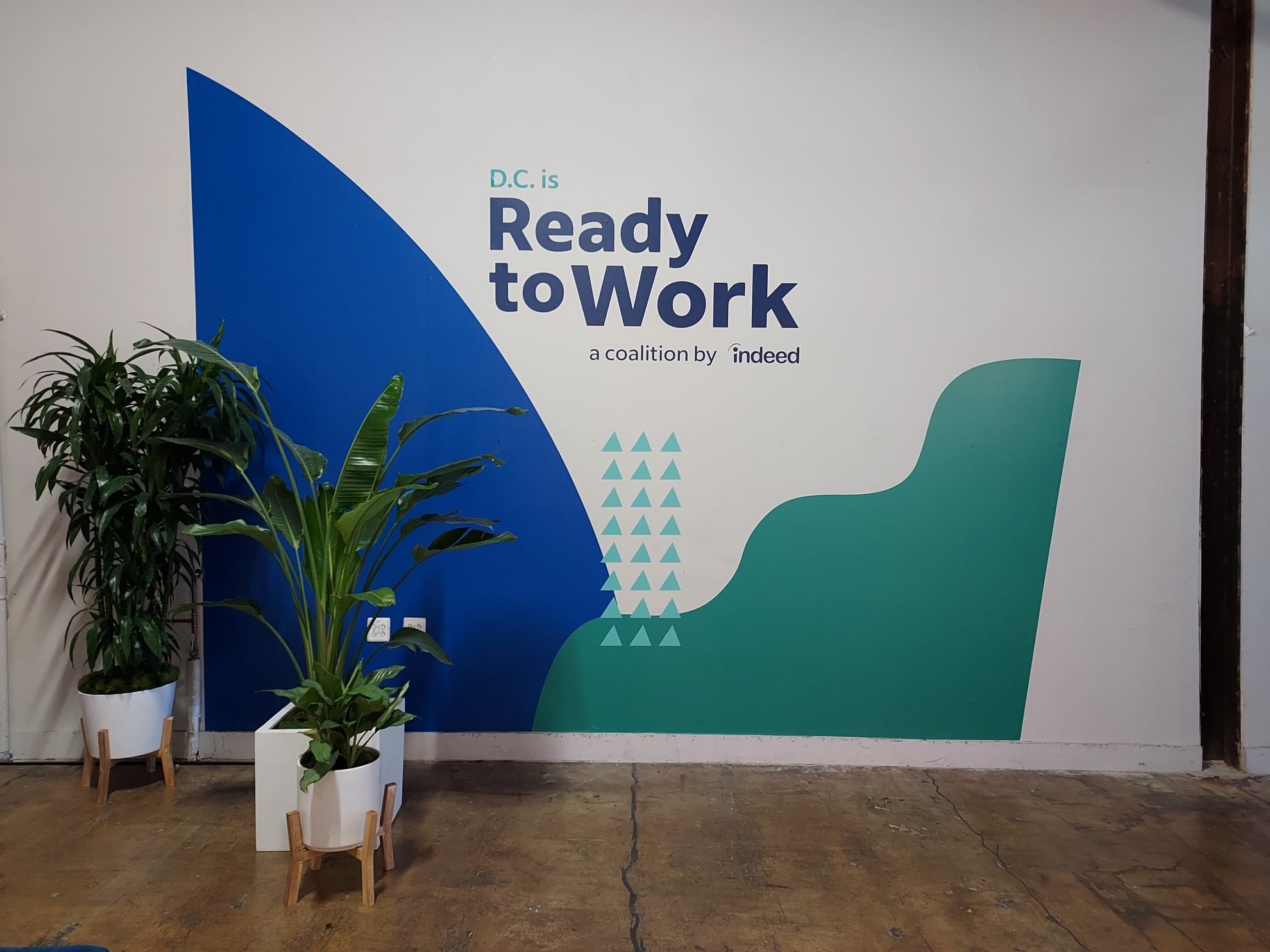
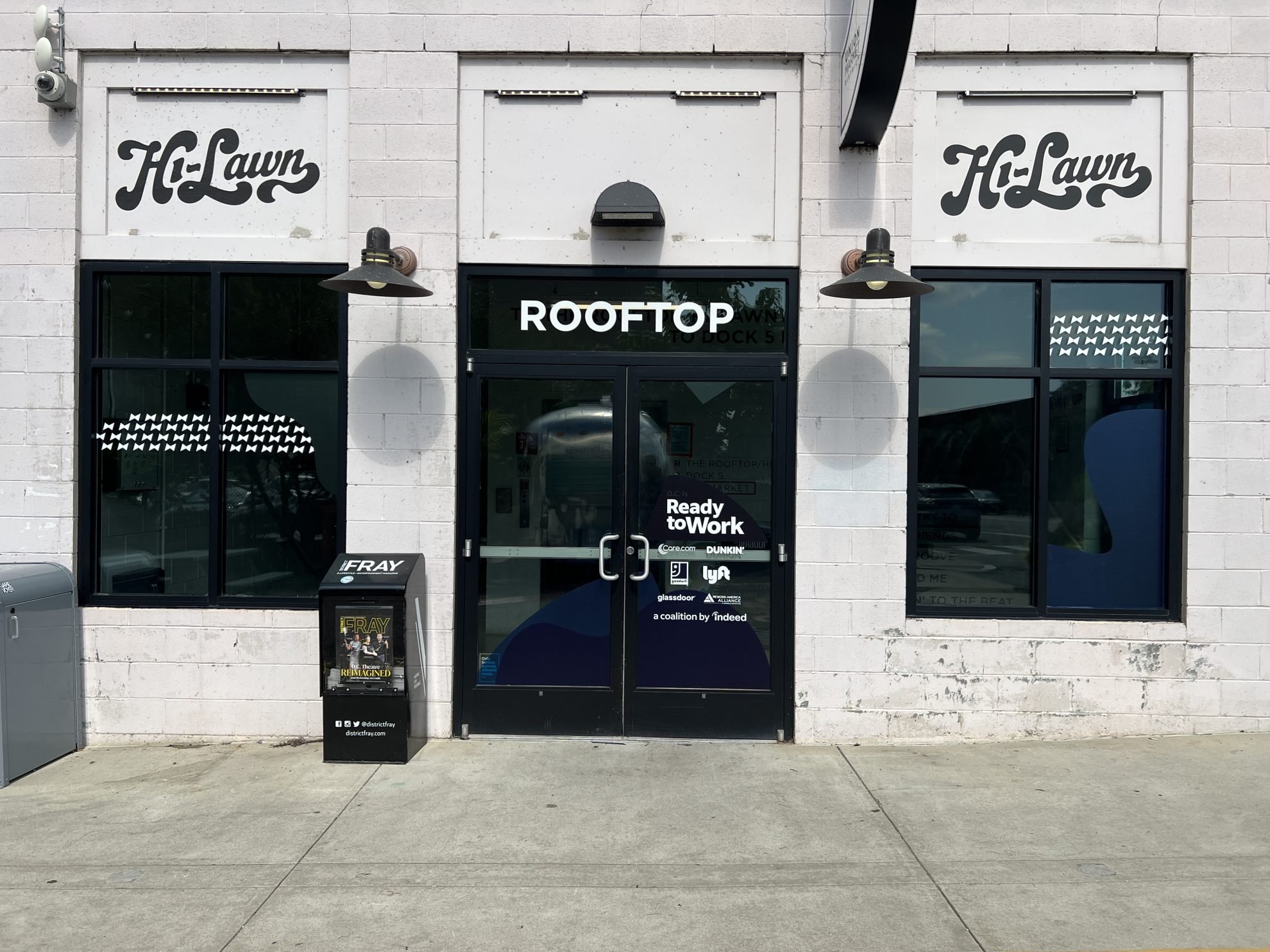
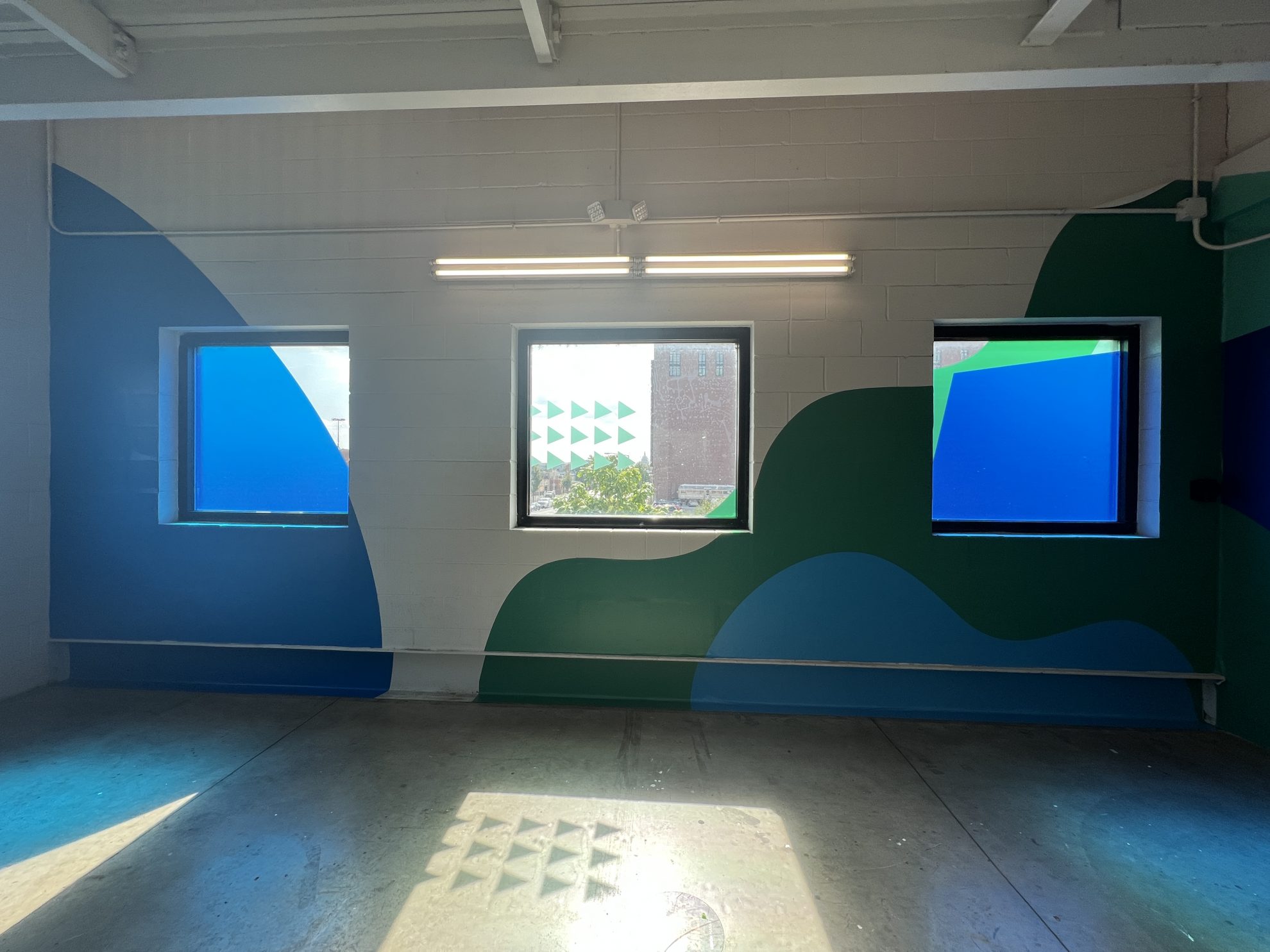
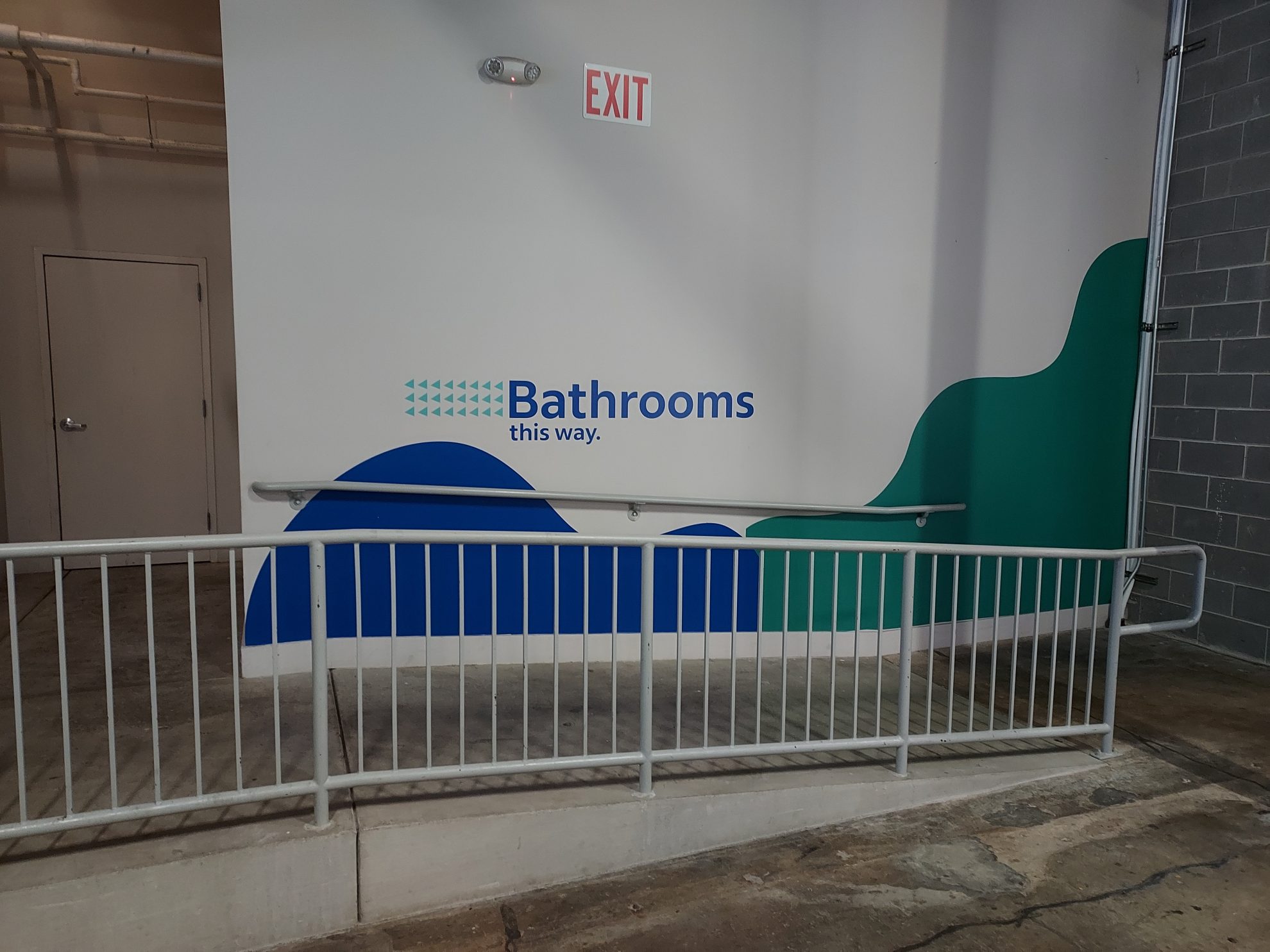
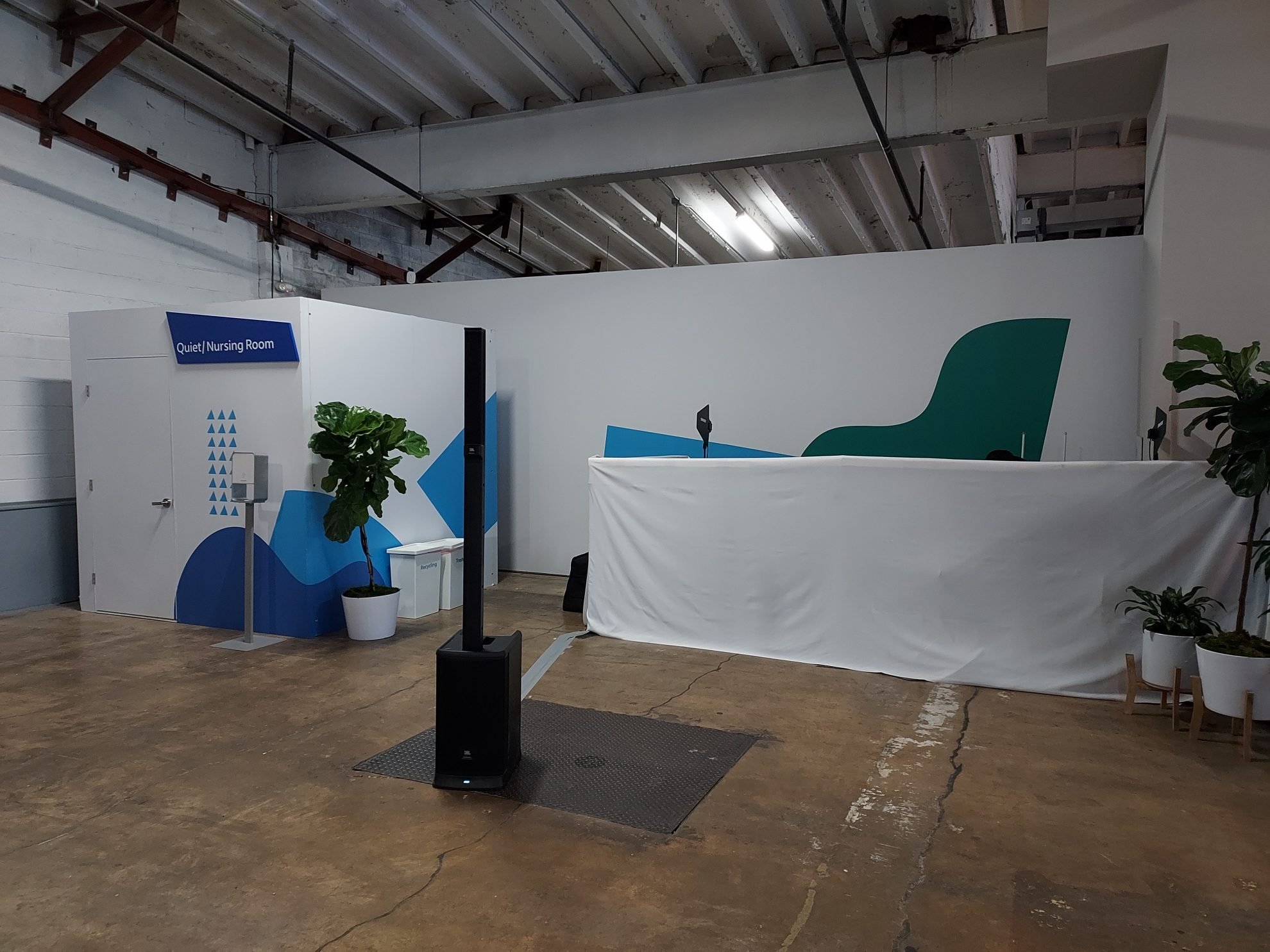
Heritage Signs & Displays' collaboration with The Gathery to brand Union Market in Arlington, VA, for Indeed's "Ready to Work" job fair. The project included custom event displays, wall graphics, window graphics, and wayfinding signs, creating an immersive and visually appealing environment. The branding enhanced the venue, reflected the event's mission, and provided a seamless experience for attendees.