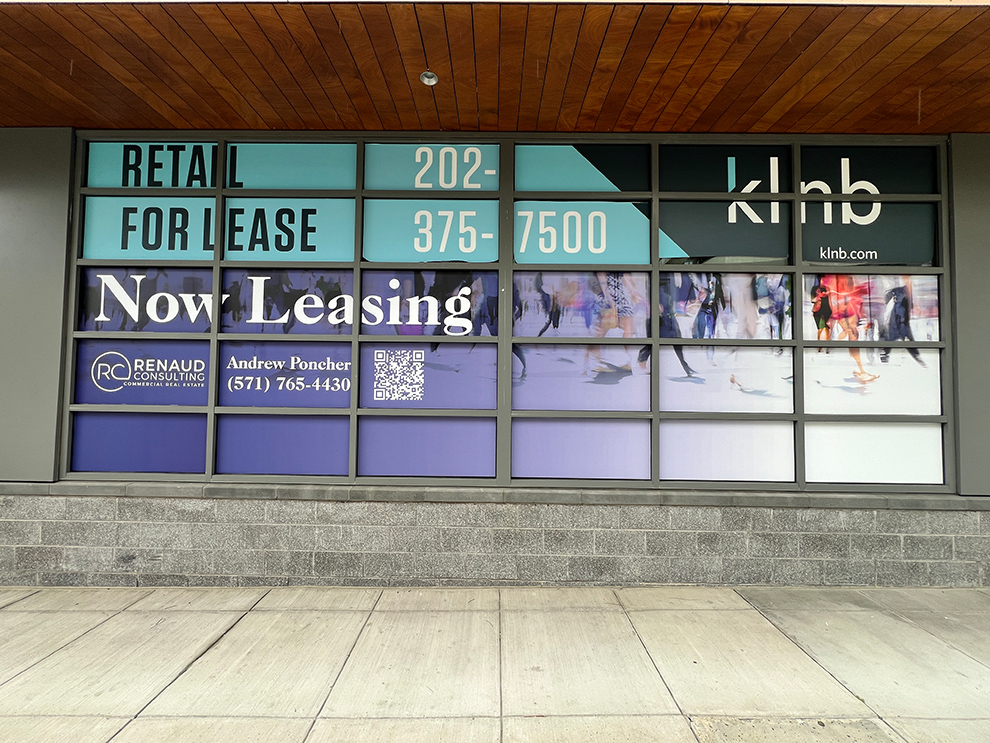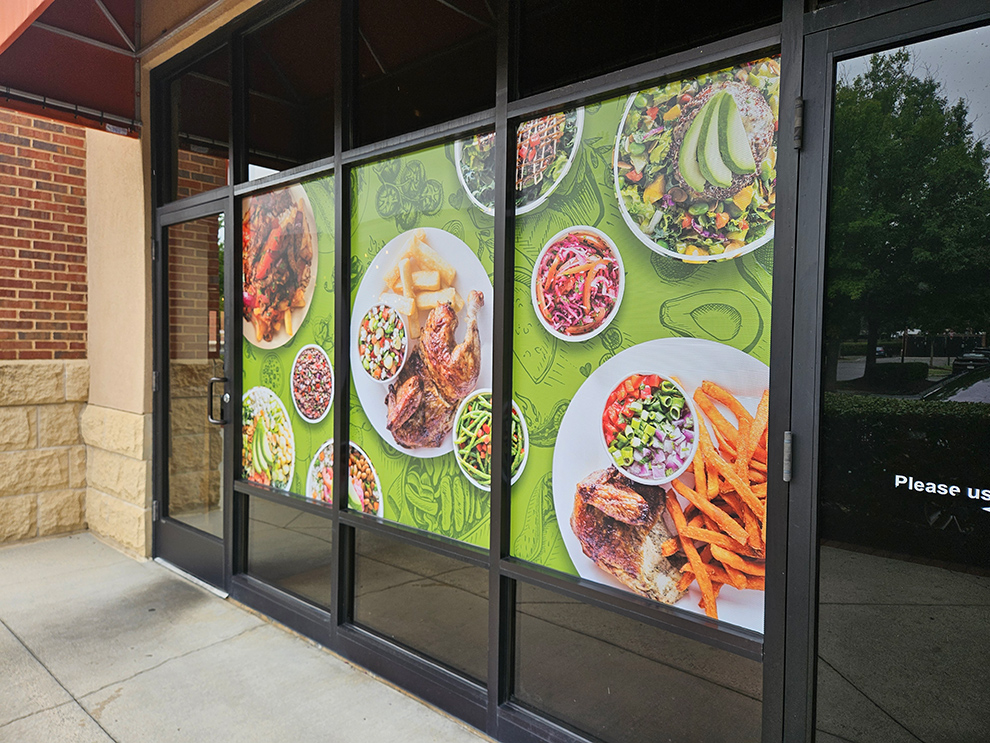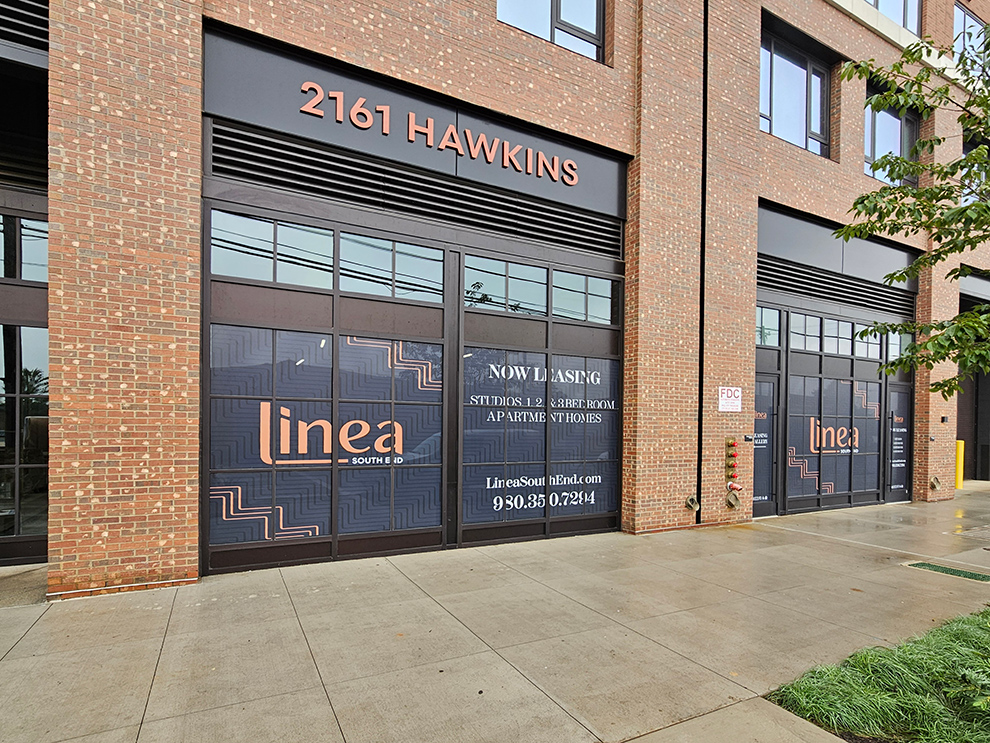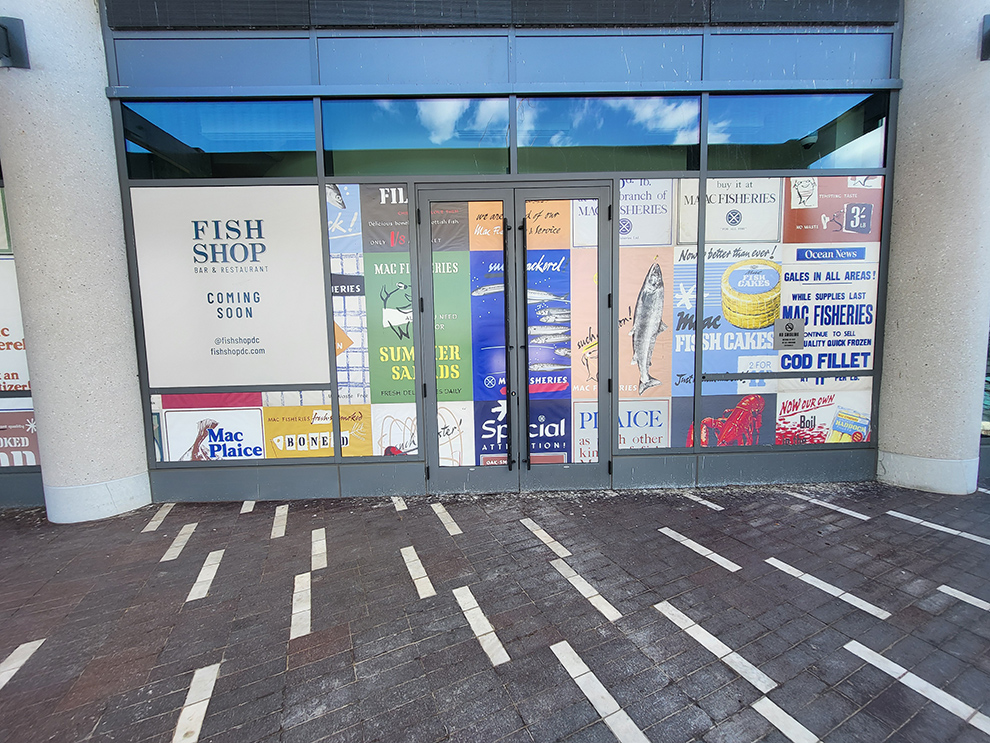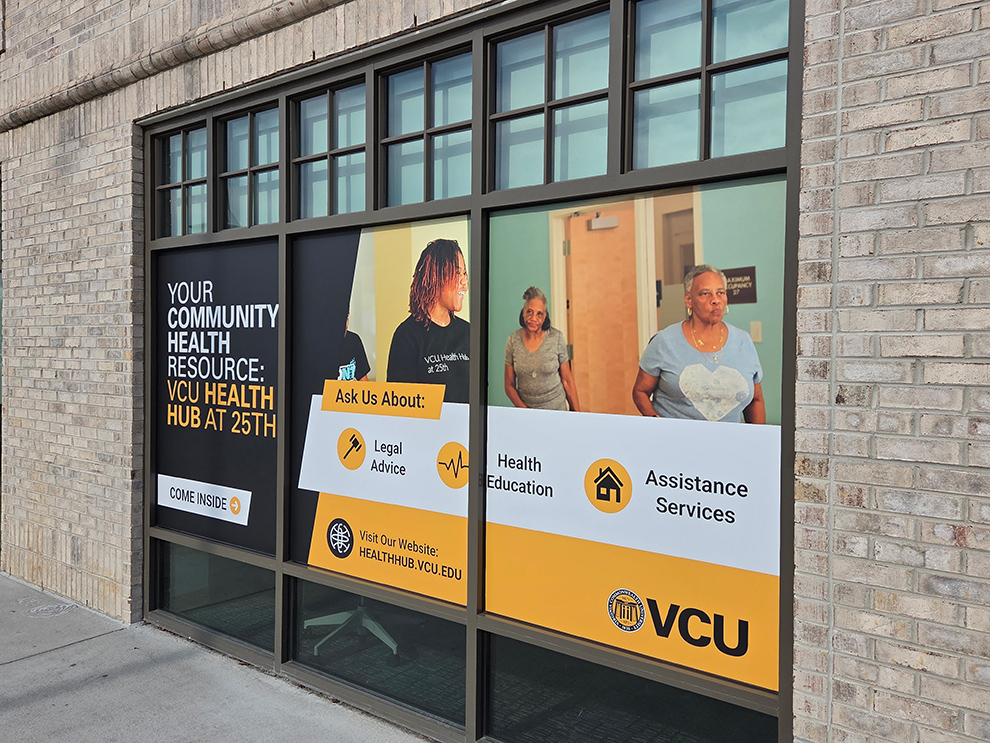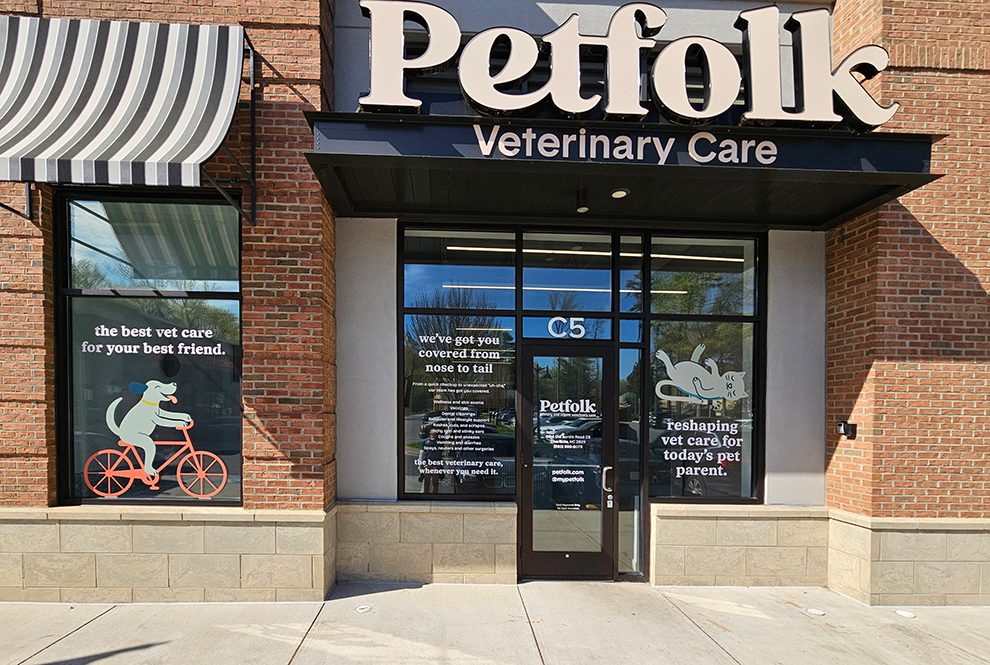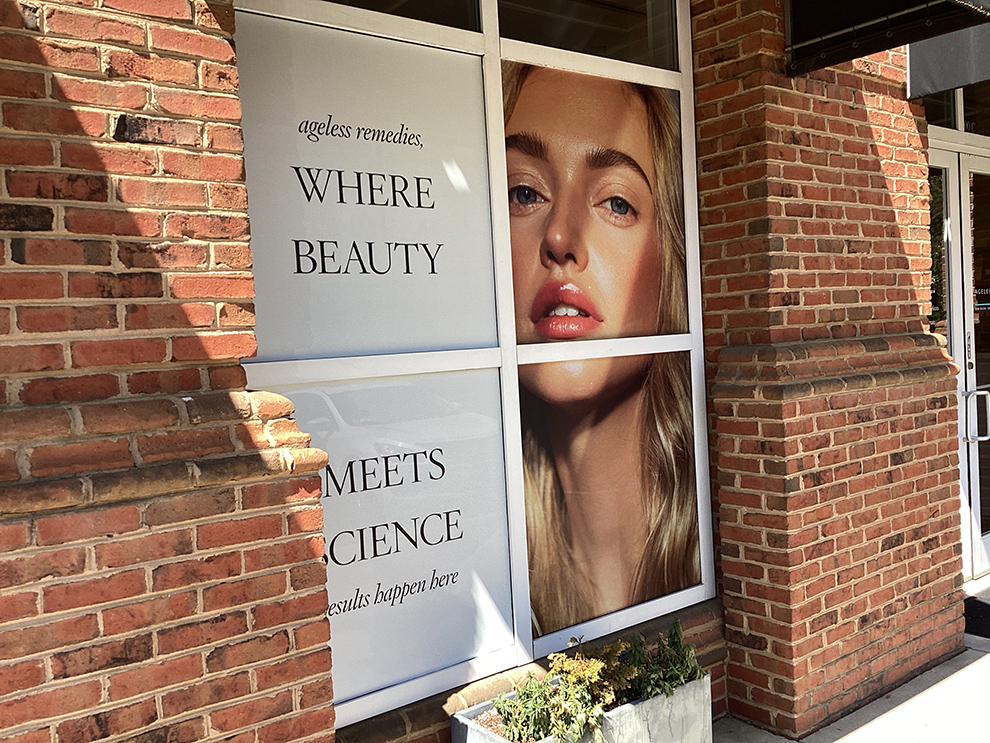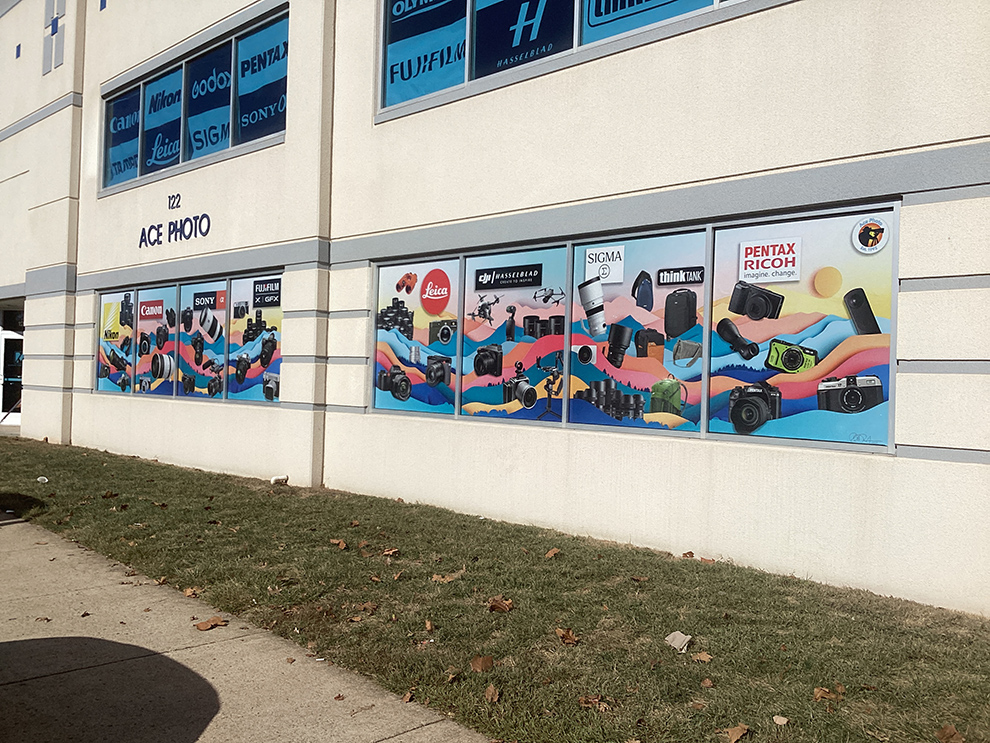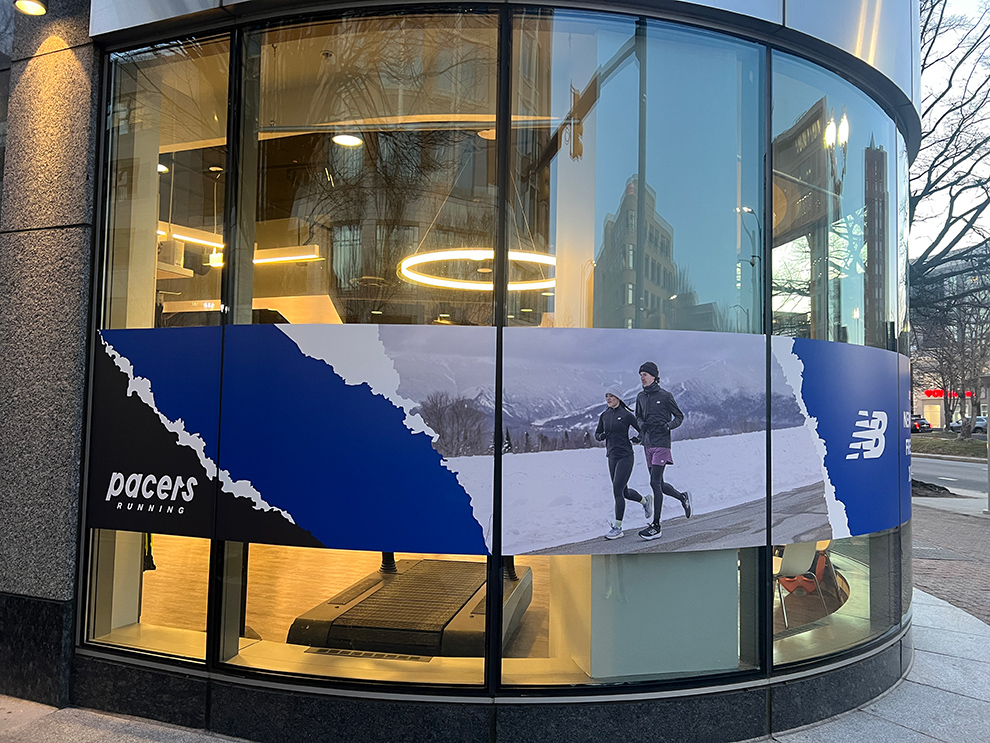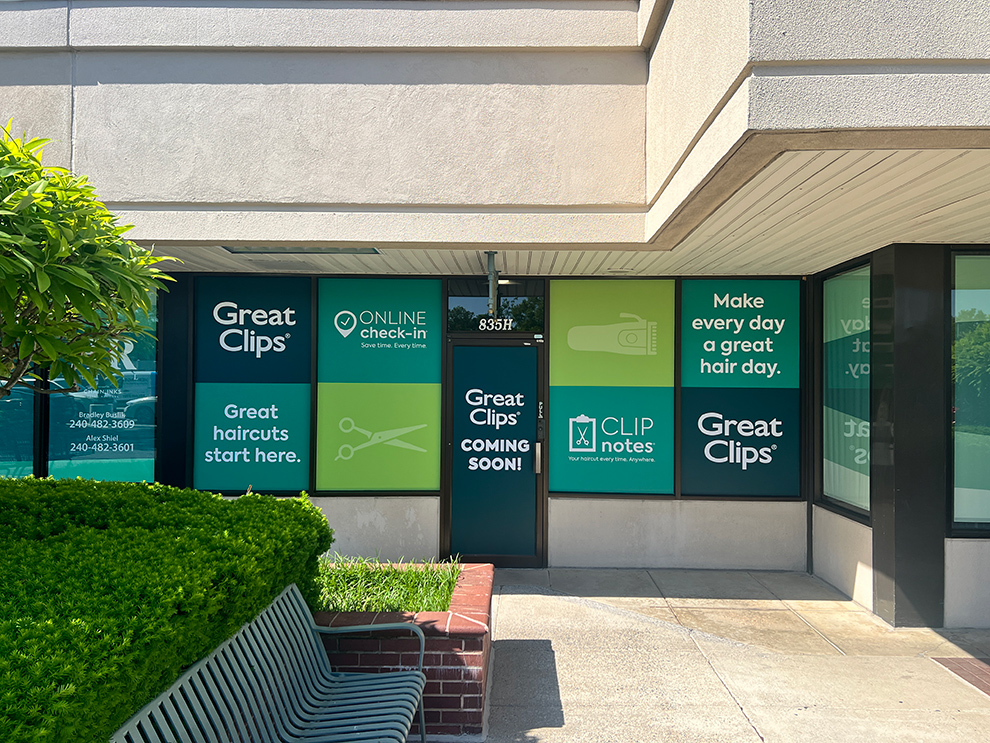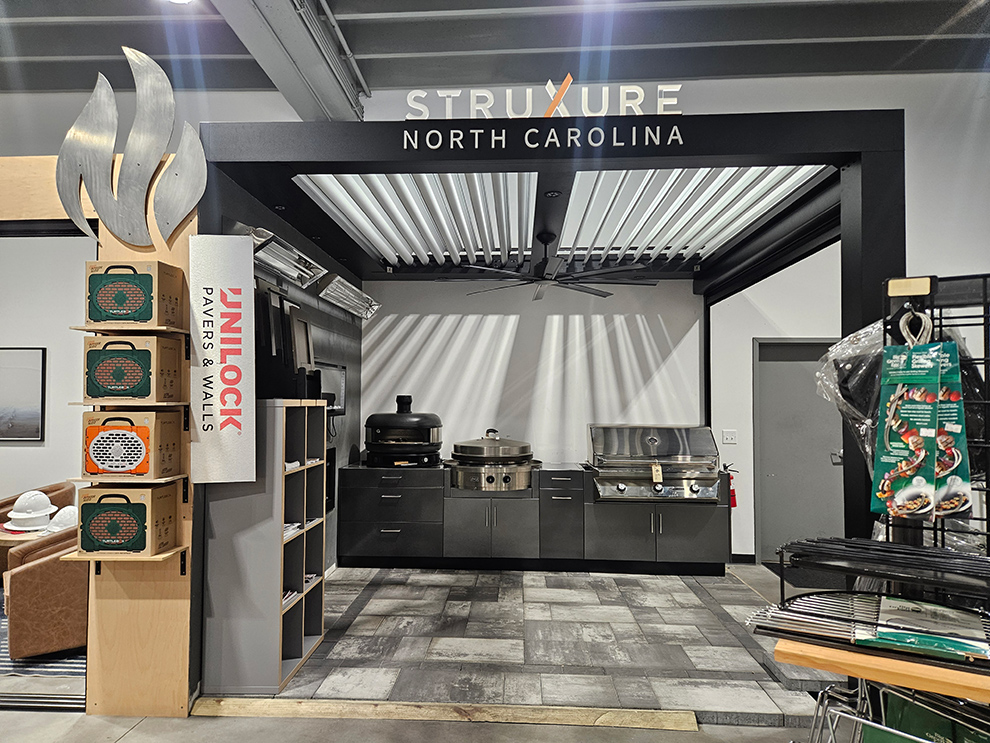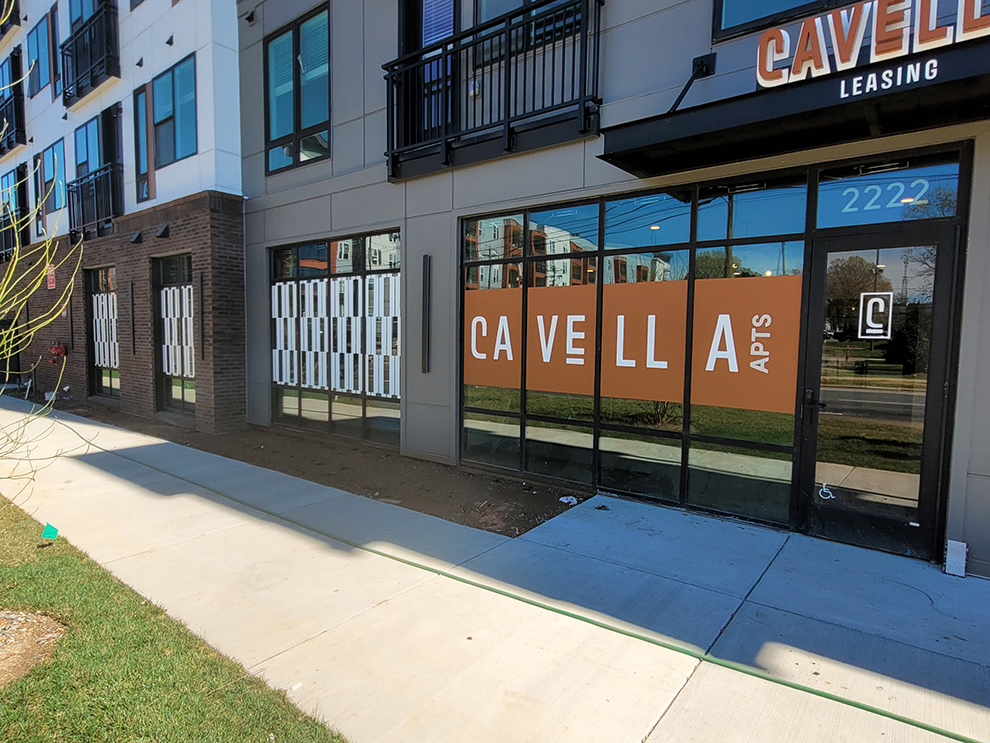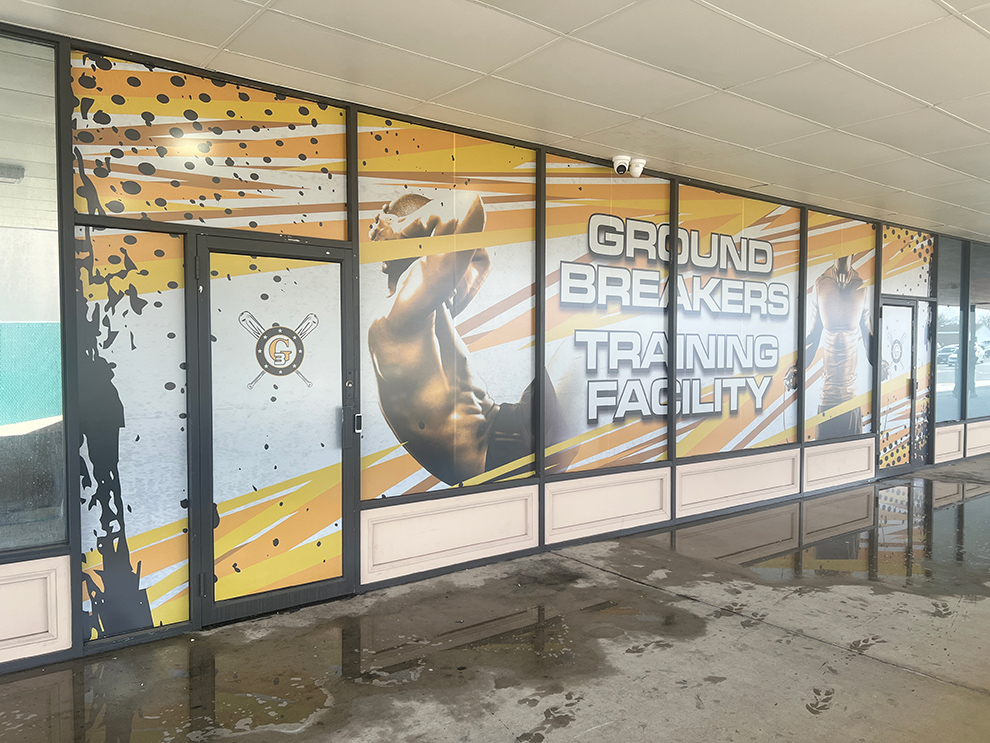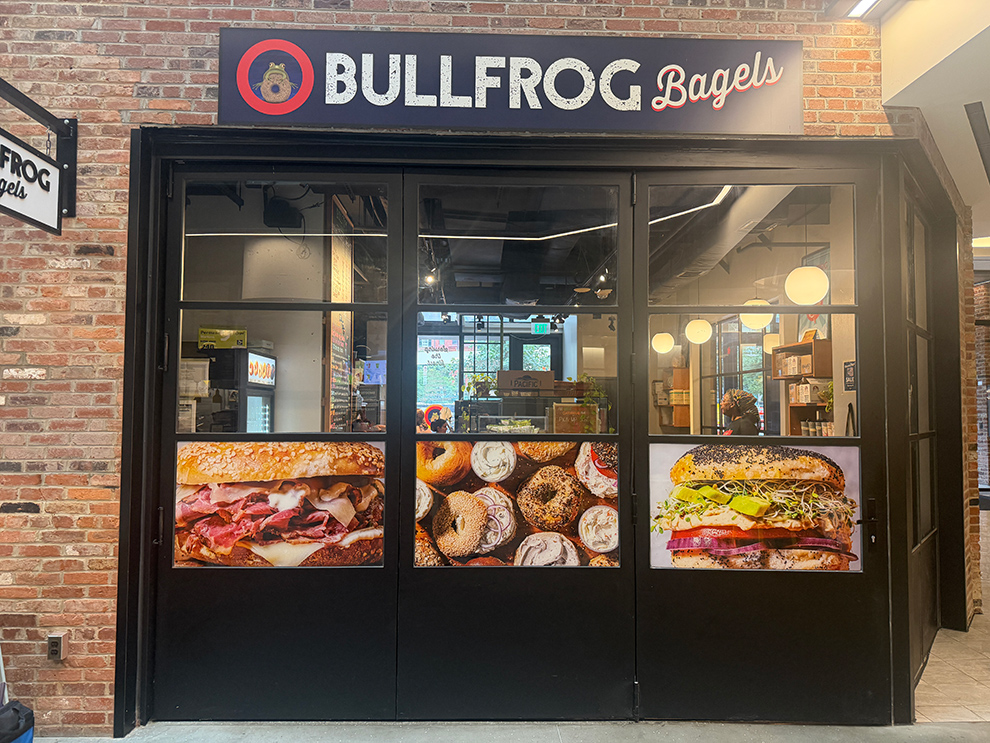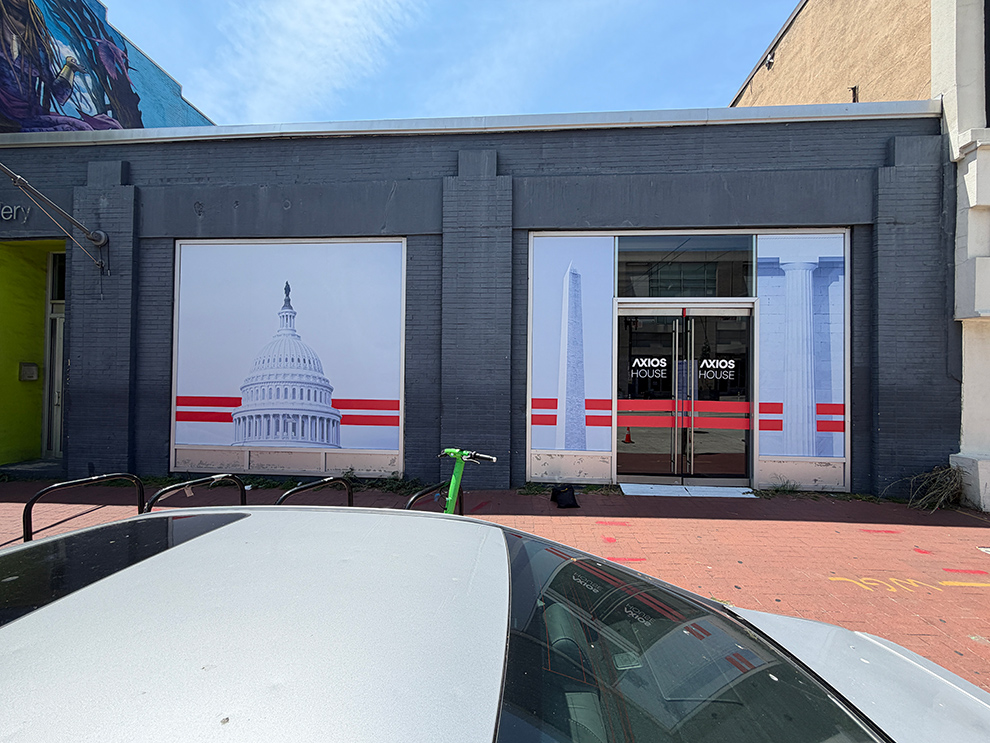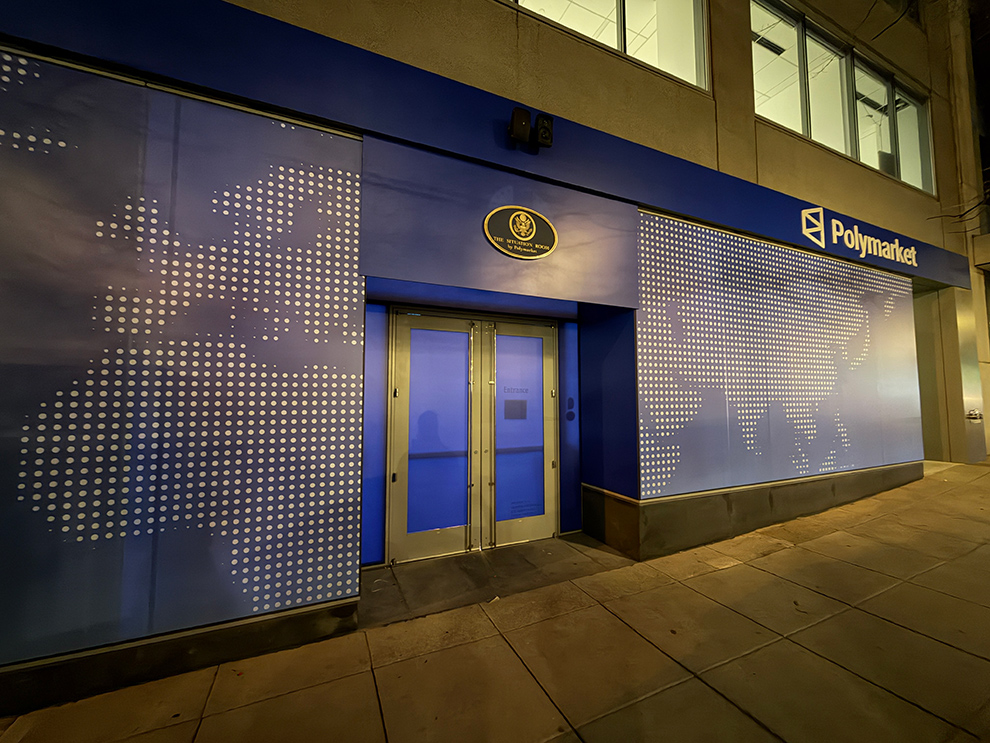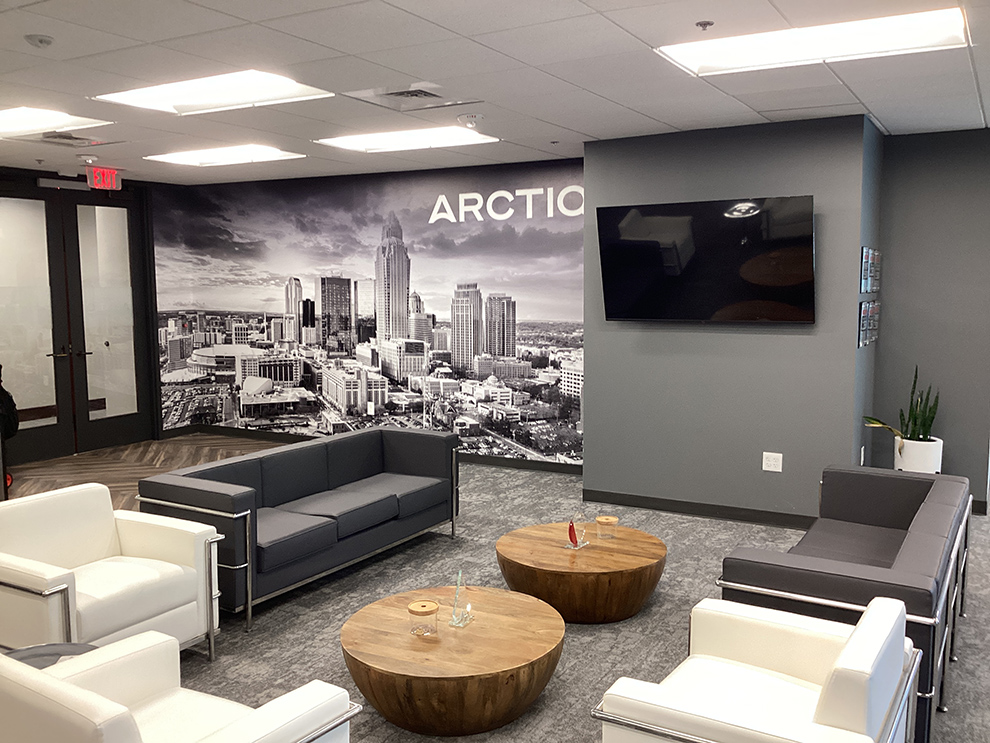
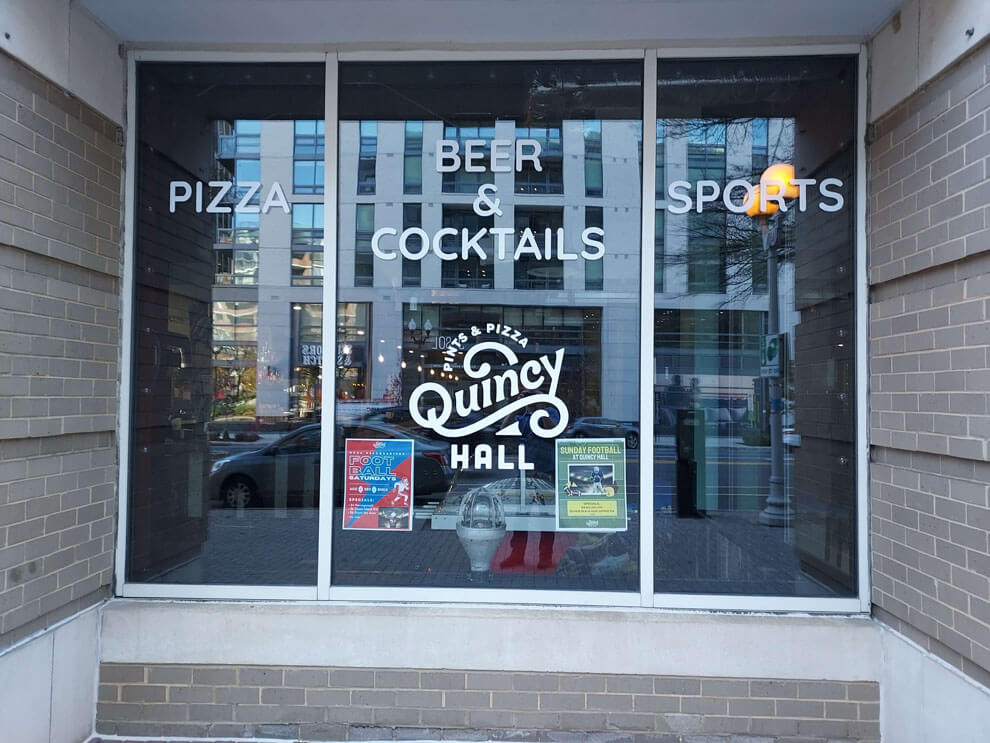
Visitors decide what kind of organization you are before a single word is exchanged. That judgment happens at the glass, in the seconds between the sidewalk and the handle, and storefront graphics are how we shape it on purpose. Applied lettering, window graphics, privacy film, and branded glass elements confirm the address, mark the door, and give an otherwise blank pane a job to do. The goal is never wall-to-wall coverage. It is recognition at the threshold and a clean handoff to the branded interior waiting inside.
We plan storefront graphics as the first chapter of a larger commercial interior branding project. Entrance glass usually needs some mix of identification, screening, and visual awareness, and those needs rarely fall evenly across every pane. Past the door, a lobby sign, dimensional feature, wall graphic, or display carries the message into the rooms where people actually spend time and can take in more than a glance allows. Storefront graphics are the focus here, but their strongest role is almost always as an introduction.
We start with what your organization wants people to recognize, understand, or feel the moment they arrive. Those goals become an environmental graphic design plan built around your architecture, your glazing, your light, and the rhythm of your operating day. One dedicated Project Manager stays with you through discovery, design, production, fabrication, and professional installation, so an early decision is still intact when the crew reaches the site. Fewer handoffs mean fewer repeated explanations, fewer conflicting assumptions, and better protection of approved design intent once real field conditions enter the picture.
We opened in 1977 as a commercial printing company. Beginning in 2009, signs, interior graphics, workplace branding, and event environments became our defining focus. We are award-winning, veteran-owned, family-led, and closing in on 50 years in business. That history keeps us practical about this work. Good artwork is only one ingredient. The design has to suit the surface, the material has to suit the exposure, and the installation plan has to suit the building as it stands today.
Storefront Graphics is the main bridge between exterior-facing branding and the branded interior. When we are producing and installing interior signs and graphics, the same project can include selected non-illuminated exterior signs and graphics that sharpen identification and arrival, then tie into entrance glass, lobby signs, wall graphics, and displays so the approach and the interior clearly belong to each other.
Williamsburg VA organizations work out of an unusually varied mix of buildings, from Merchants Square shopfronts and New Town street-level suites to medical offices, showrooms, professional practices, and light industrial space toward Lightfoot and Toano. We support those projects with field work in Williamsburg for discovery and installation, backed by production and fabrication at our headquarters and specialty production facility. Our purpose is to honor God by serving clients and communities with excellence, which shows up as clear communication, honest recommendations, and follow-through you can plan around.
An entrance can announce who you are and move people confidently inside, but it cannot carry your whole story. Door glass is read quickly, often while someone is walking, frequently in glare or shadow. The interior gives you time and square footage for culture, history, purpose, recognition, and the experience you want employees and guests to remember.
We plan storefront graphics around that split. Entry lettering or window graphics deliver recognition while leaving the sightlines your staff depends on. Frosted film at a reception window or conference room creates separation without turning the space dim. Inside, a lobby sign usually becomes the visual anchor, while wall graphics, dimensional elements, and displays fill in the depth.
Planning both at once also avoids the patchwork look that shows up when the door, the windows, the lobby, and the corridor are bought separately across several budget years. Deciding early what belongs on the glass and what deserves a stronger interior moment produces a sharper arrival and a space that reads as one intentional project.
Williamsburg VA organizations usually reach out when the job is bigger than sticking vinyl on a window. They want help deciding what the entrance should say, how it should connect to the interior, and how the approved design gets built and installed without interrupting business. Our One Dedicated Project Manager System keeps that thinking, and every decision that follows, attached to one accountable relationship from first call through final walkthrough.
Our environmental graphic designers work directly with whoever owns the brand and the building, whether that is an in-house marketing lead or an architect, interior designer, branding agency, or property team already engaged. From there, the same Project Manager links design, production, fabrication, and our full-time professional installers so every group is working from identical site facts and identical client goals.
We are veteran-owned and family-led, with the capacity to handle one significant entrance, a phased interior program, or coordinated branding across several properties throughout Virginia and the Mid-Atlantic while brand standards and project knowledge stay in one place.
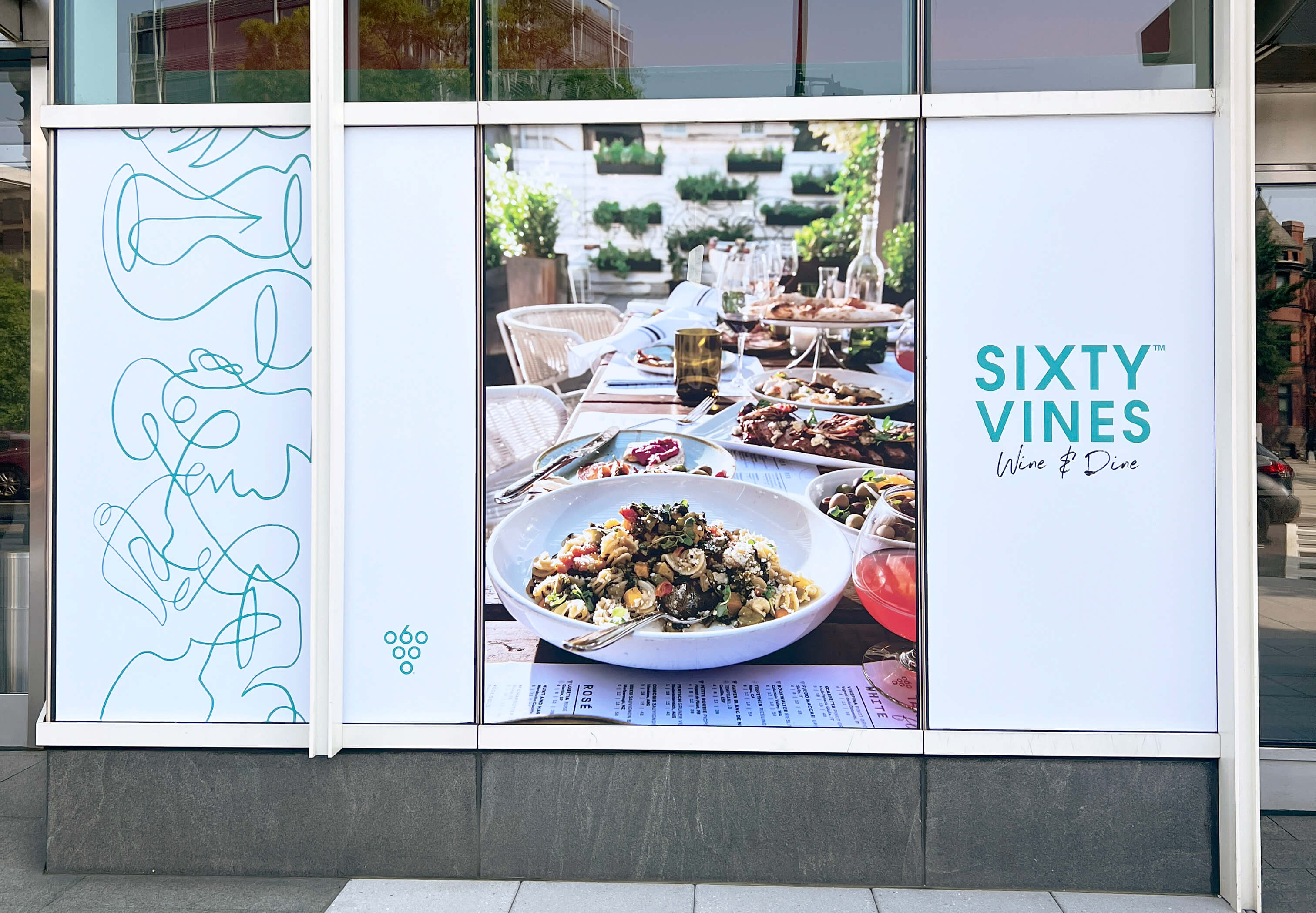
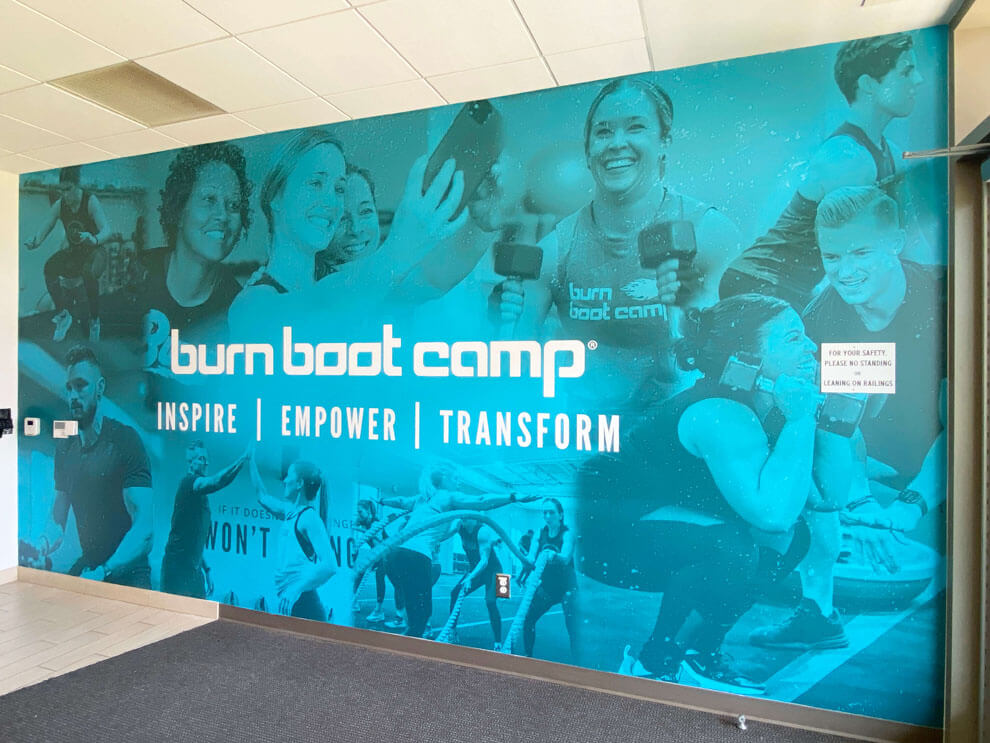
Entrance and interior glass can identify your organization, block the sightlines you want blocked, and still bring in daylight. We set coverage pane by pane, putting identification where people approach and leaving the rest of the glass to do the work your team actually needs from it.
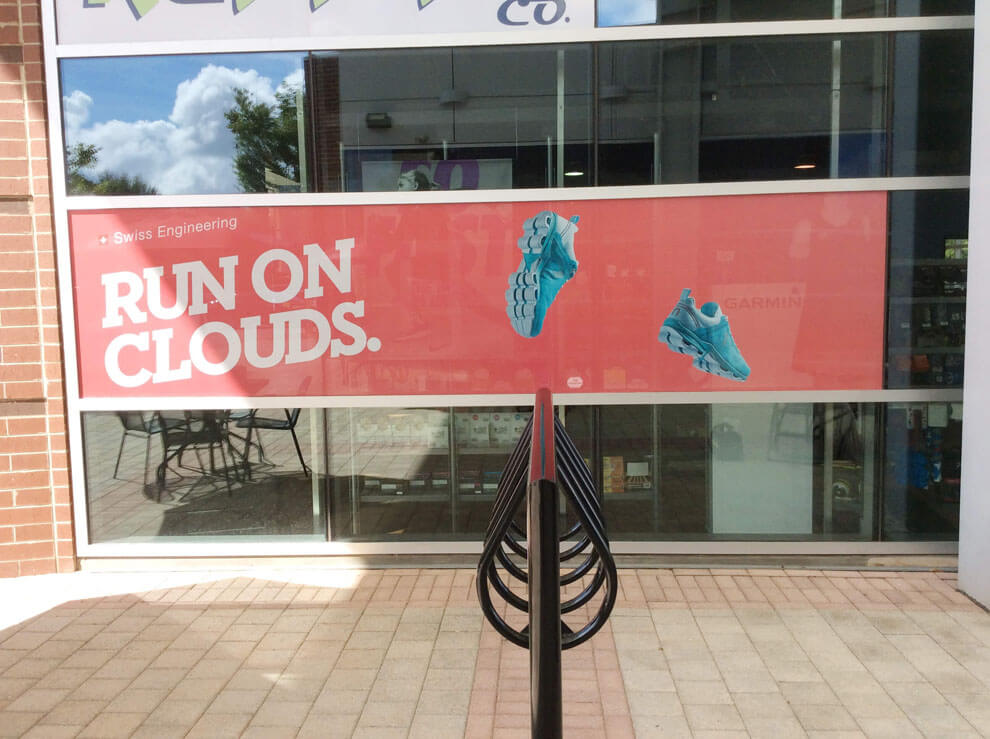
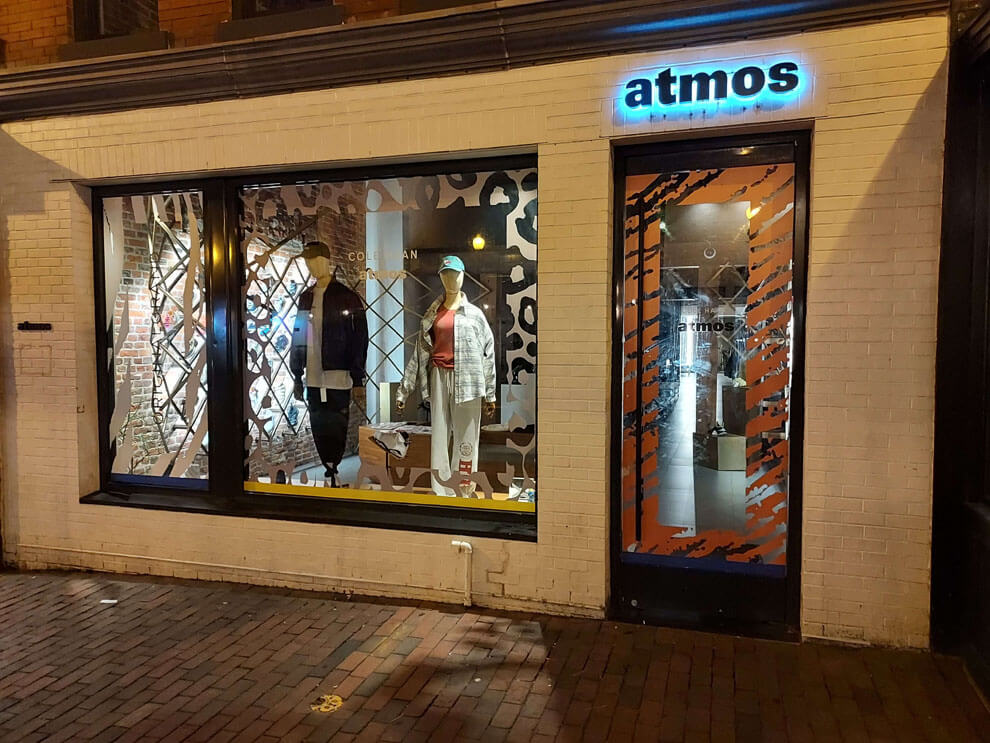
Frosted vinyl and etched-look privacy film give offices, conference rooms, and glass partitions separation while daylight keeps moving through the floor plan. Custom bands, patterns, or brand shapes make the treatment look designed instead of merely functional.
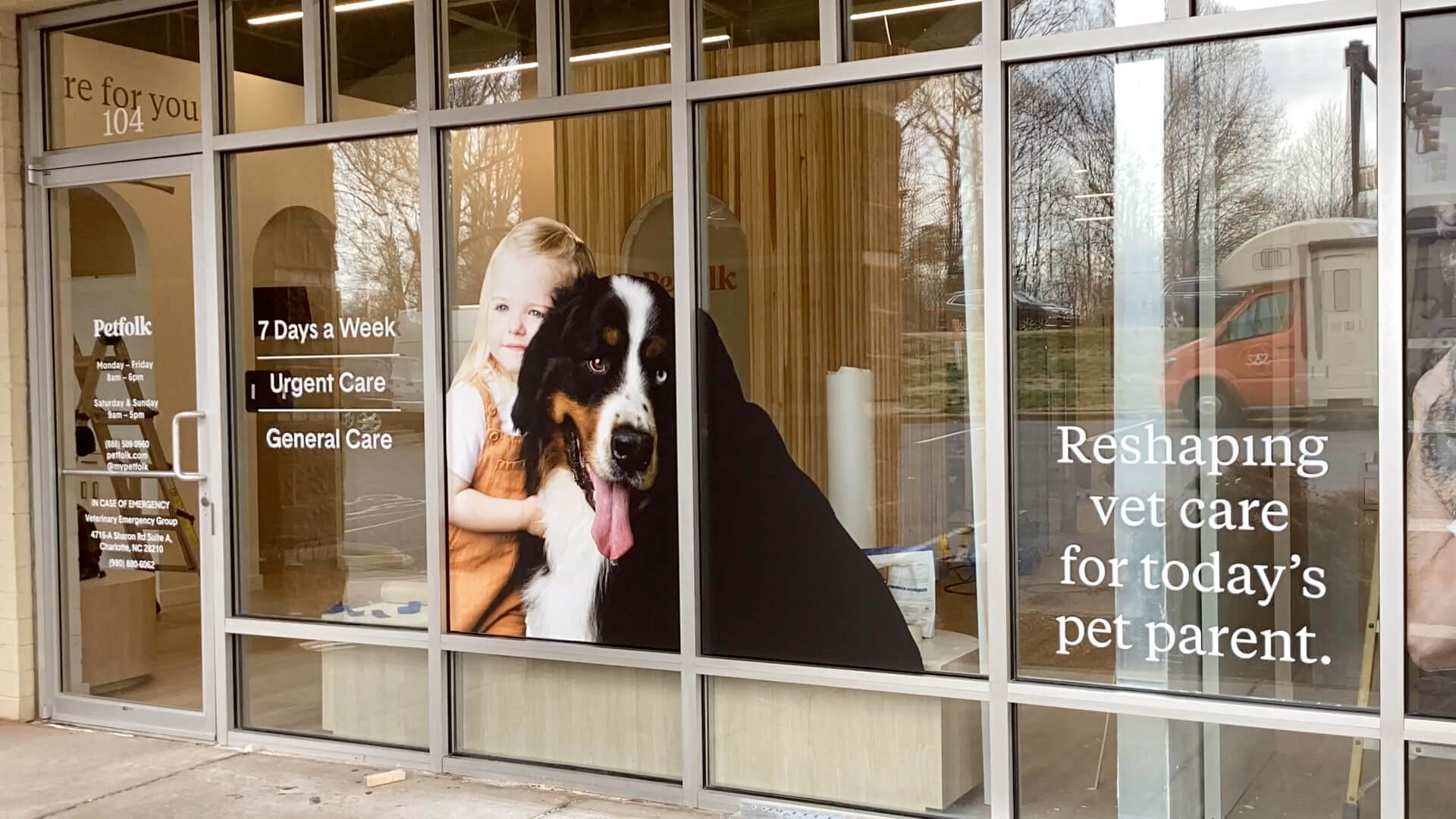
Once the entrance has made the introduction, a lobby sign gives arrival a destination. We size it to the wall, the viewing distance, and the surrounding finishes so reception feels like the next sentence after the door rather than a separate purchase.
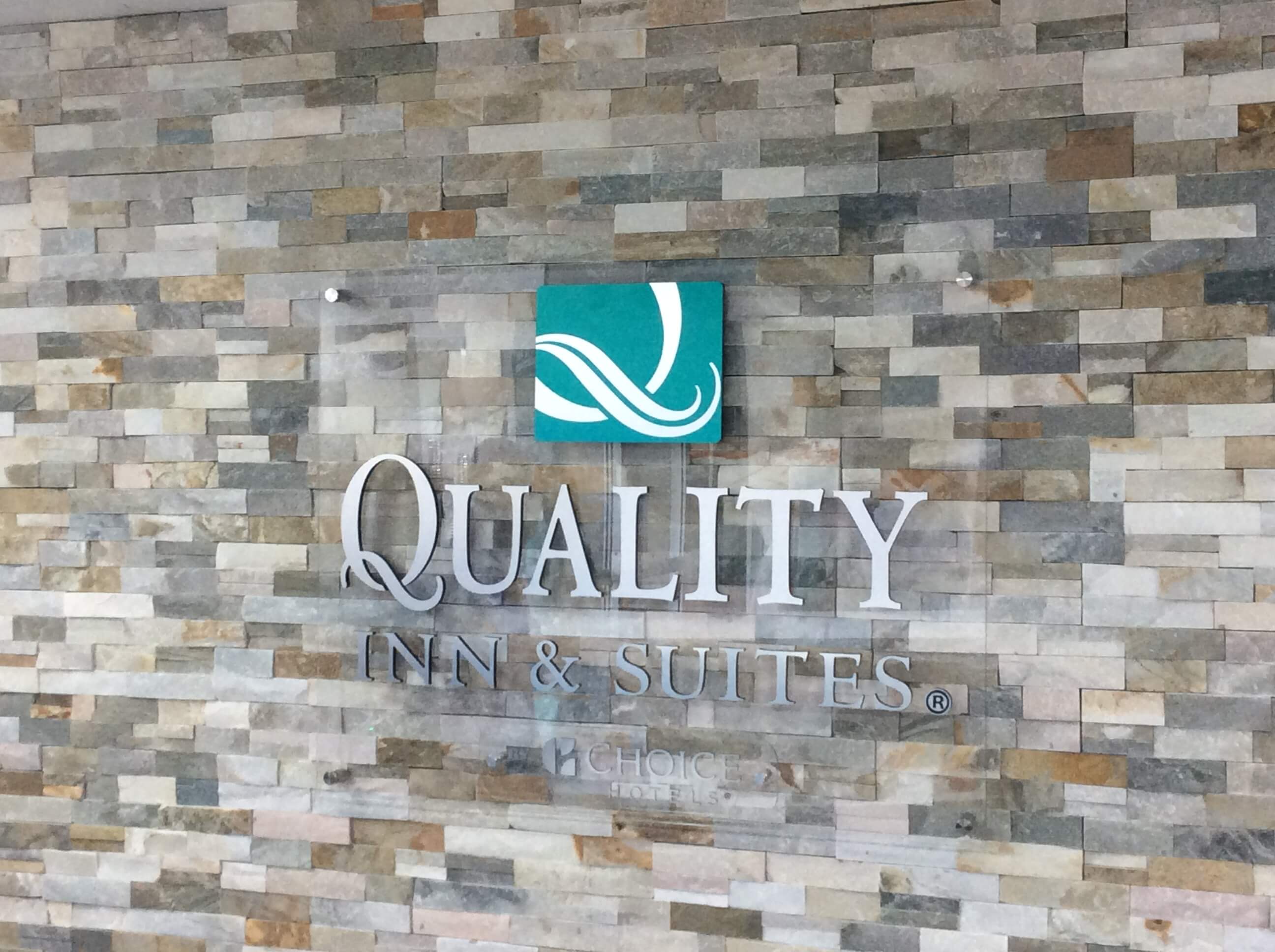
Dimensional letters and logos create physical depth and shadow that flat printing cannot imitate. We coordinate letter height, material, finish, and mounting with nearby graphics and available light so the feature reads cleanly without shouting down the architecture.
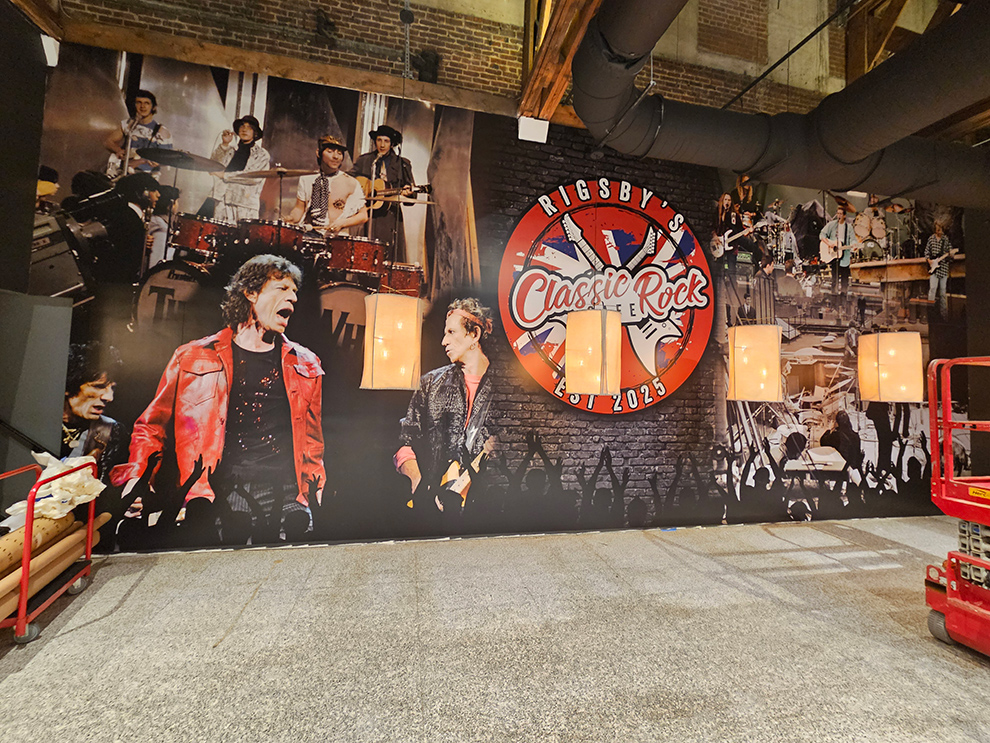
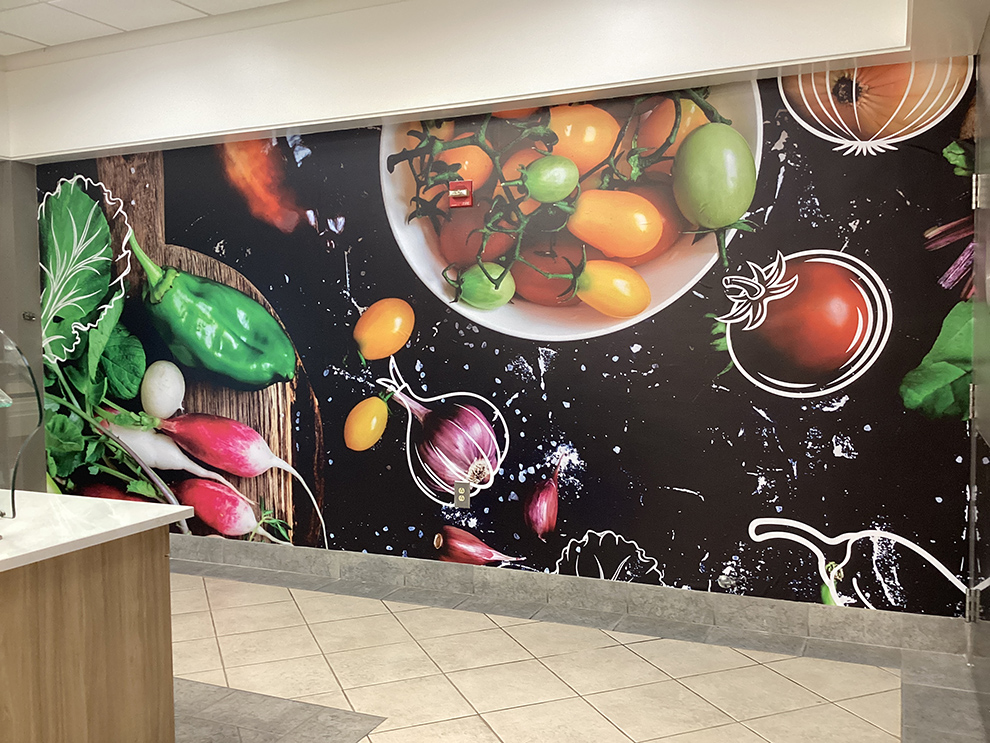
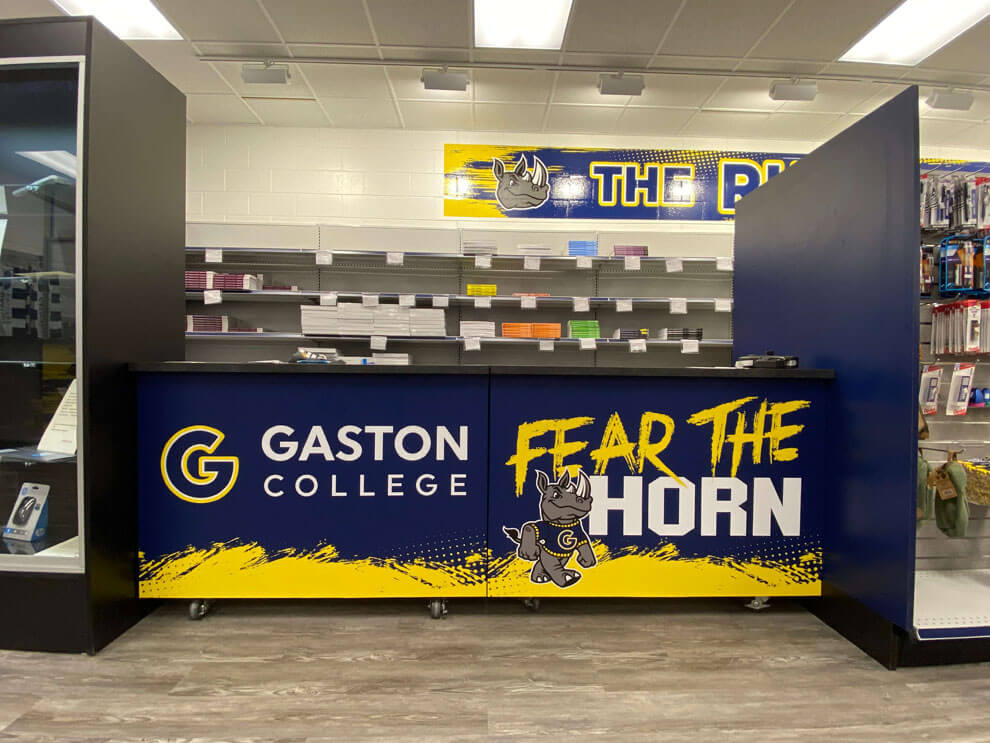
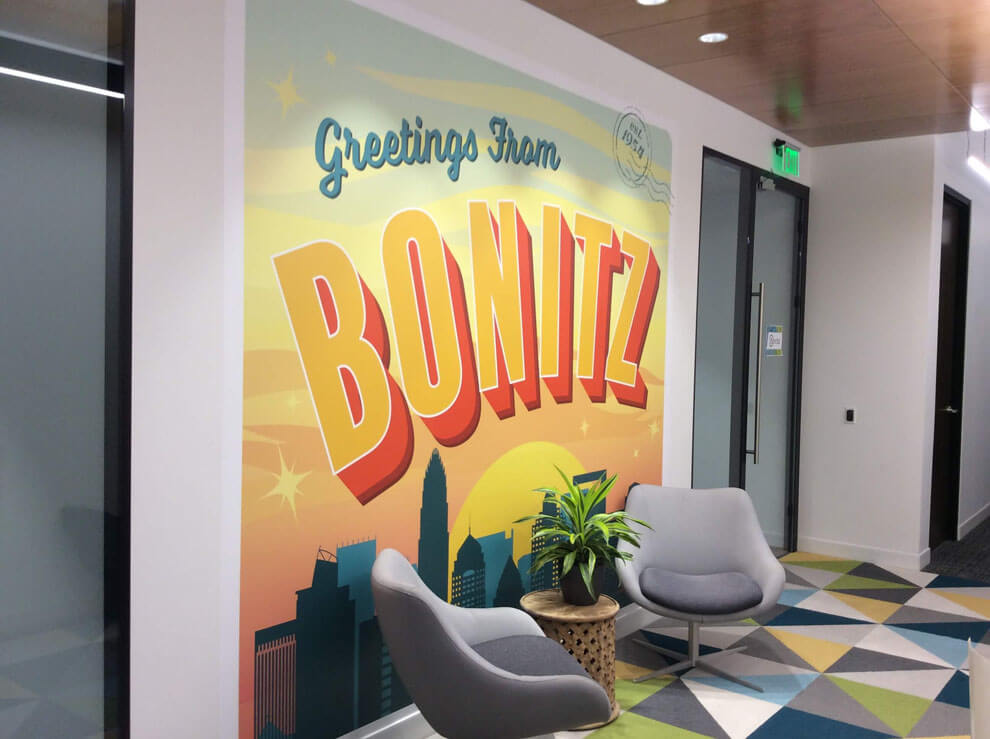
Wall wraps convert a large interior surface into a deliberate piece of the brand experience. Imagery, color, or messaging carried in from the entrance can define a reception wall, a corridor, a stair landing, or a break room where people linger long enough to read it.
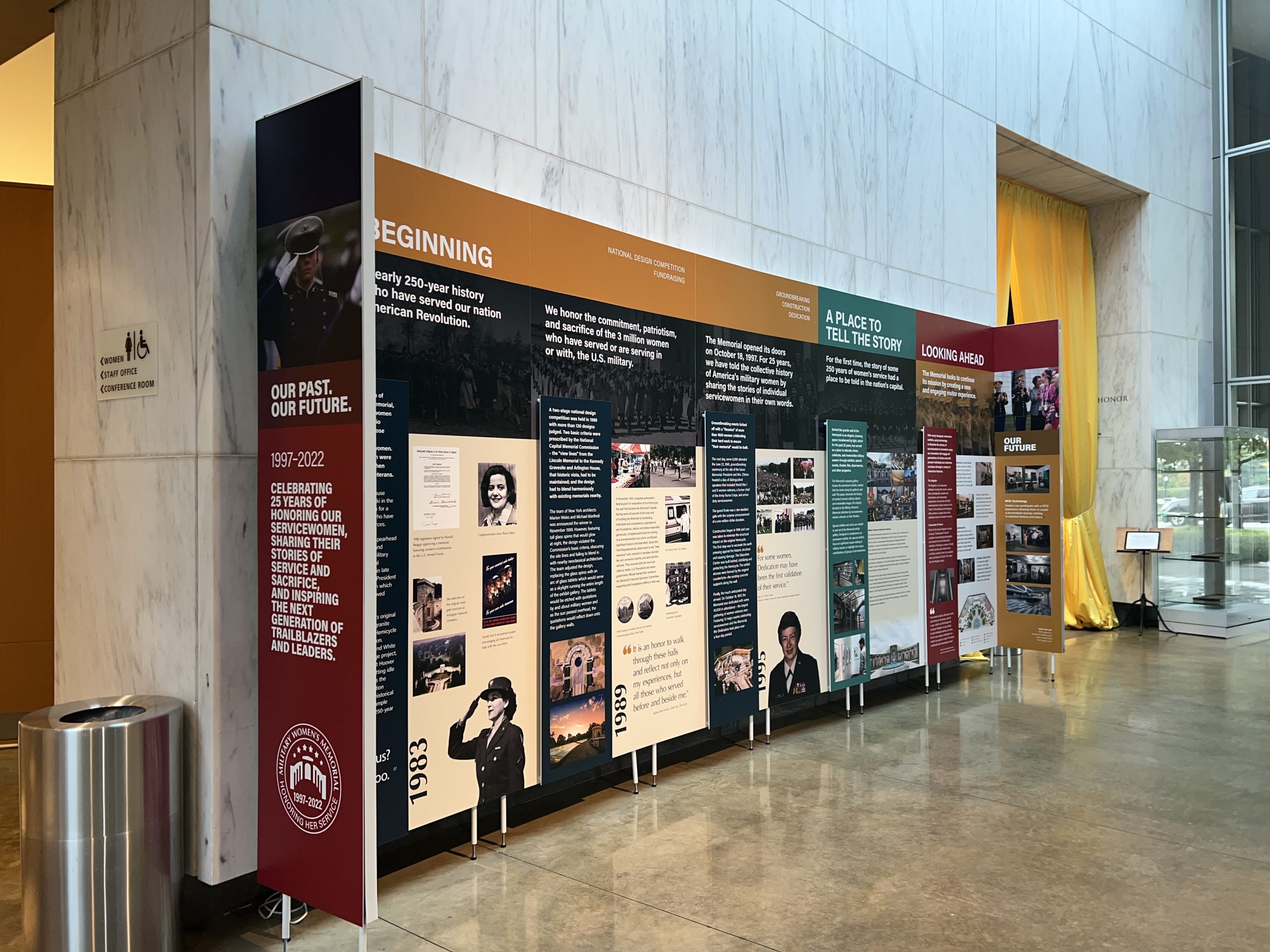
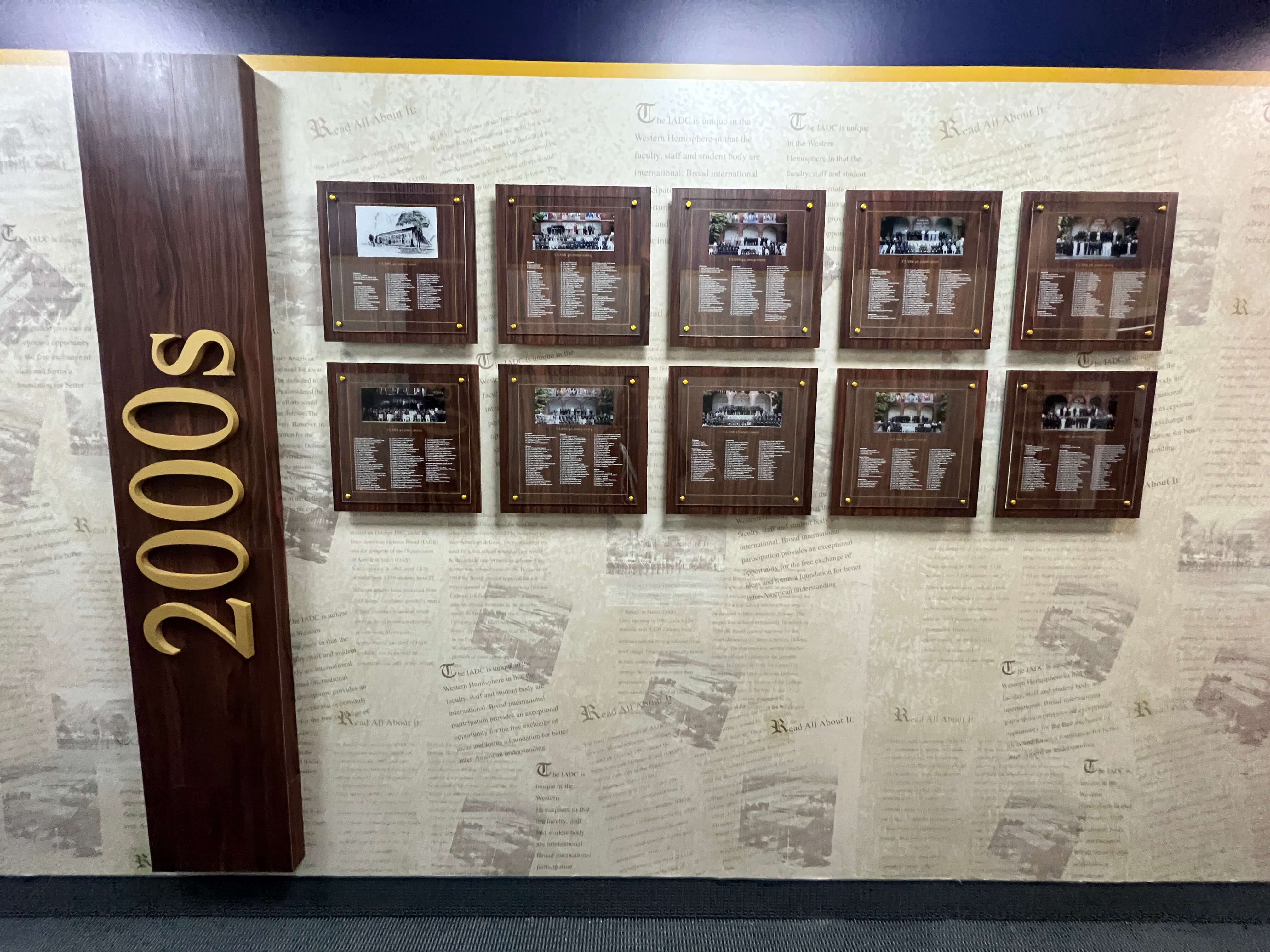
Wall displays handle information a single printed panel cannot carry gracefully, including company history, milestones, awards, or program outcomes. Mixing graphics with mounted and dimensional components adds depth, allows selective updates, and gives the content real presence.
SEG fabric graphics stretch printed fabric into a slim frame for a smooth, contemporary face. The graphic can be swapped without replacing the frame, which fits interior spots where campaigns, programs, or featured content change on a schedule.
Backlit signs give a logo or short message more weight in a lobby or customer-facing interior. We study the room, the adjacent graphics, and existing light levels so illumination strengthens the composition instead of fighting it.
If your Williamsburg VA organization is considering storefront graphics as part of a workplace or commercial interior branding project, Heritage Signs & Displays wants to hear what the entrance and the interior need to accomplish. Use Get Started Now to send along the project address, your target completion date, anticipated investment, photos, any measurements you have, brand standards, and anything else already in hand. One dedicated Project Manager will review it, flag the next planning decisions, and line up the Heritage resources needed to carry the approved direction through production, fabrication, and professional installation.
Williamsburg properties are reached in very different ways, and that changes what belongs on the glass. A Merchants Square or Duke of Gloucester Street shopfront speaks to walking traffic at close range in a district with strict architectural expectations. New Town and High Street suites present to a mix of drivers and pedestrians along landscaped streets. Offices and medical practices near Monticello Avenue, Richmond Road, and the Route 199 corridor often open into shared lobbies or vestibules. Older converted buildings bring dated glazing, deep mullions, and brick that dictate what can be applied and where. Facilities toward Lightfoot, Norge, and Toano frequently pair an office entrance with warehouse or production areas that need their own identification.
We provide field support for Williamsburg projects, including discovery visits, site surveys, field verification, installation planning, and professional installation. Everything observed on site stays connected to your dedicated Project Manager and to the teams handling environmental graphic design, production, and fabrication at our headquarters and specialty production facility.
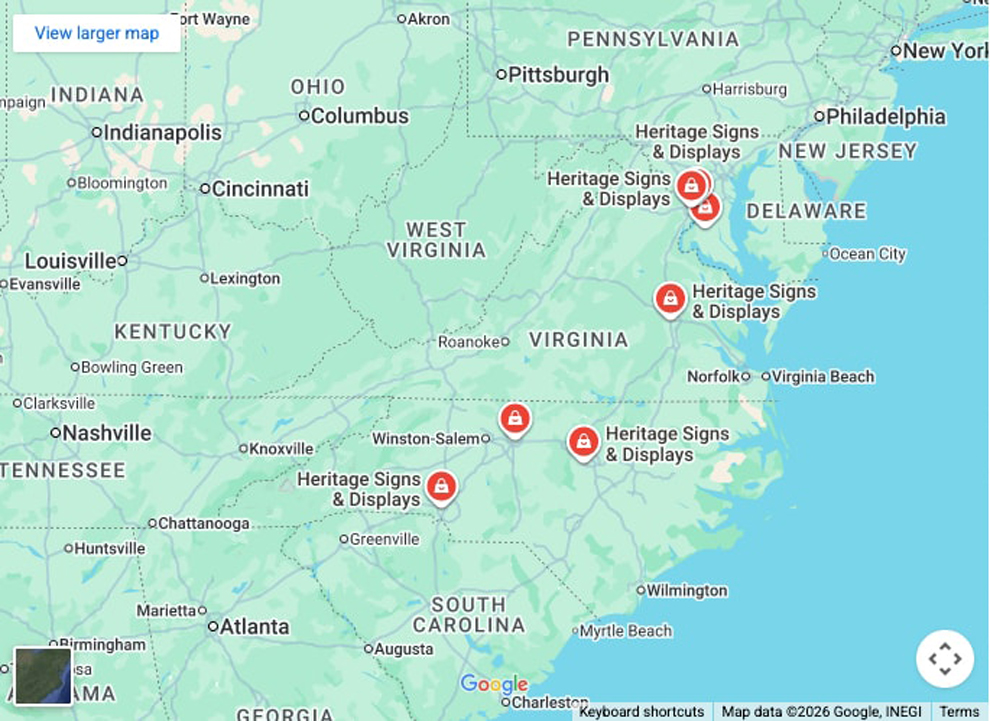
The same structure scales. A Williamsburg client with additional sites in Newport News, Hampton, Yorktown, Richmond, Virginia Beach, or anywhere else in the Mid-Atlantic keeps one Project Manager while we coordinate resources at each property. Brand standards hold steady, and each location is adapted to its own architecture, access, and calendar.
Environmental graphic design answers the questions that decide whether an entrance works. What should register first from the sidewalk or the parking lot. Which views through the glass need to stay open. Where does privacy genuinely matter. What should pull attention once the door shuts. Those answers drive scale, placement, contrast, and material long before anyone finalizes artwork.
Some clients arrive with complete brand standards and print-ready files. Others bring an objective, a few photographs, and an idea that still needs development. Heritage works in either situation, and it collaborates readily with architects, interior designers, branding agencies, environmental graphic designers, property teams, and internal stakeholders who are already shaping the space.
The design has to survive contact with the building. Heritage develops direction that can be produced, fabricated, and professionally installed on the surfaces and in the conditions that exist on site. Typical outcomes include a stronger arrival, a branded lobby, privacy graphics that preserve daylight, a history or timeline wall, core values or mission statement features, recognition displays, and clearer direction through the space. Heritage does not provide licensed architecture, engineering, general commercial interior design, lighting design, or code consulting.
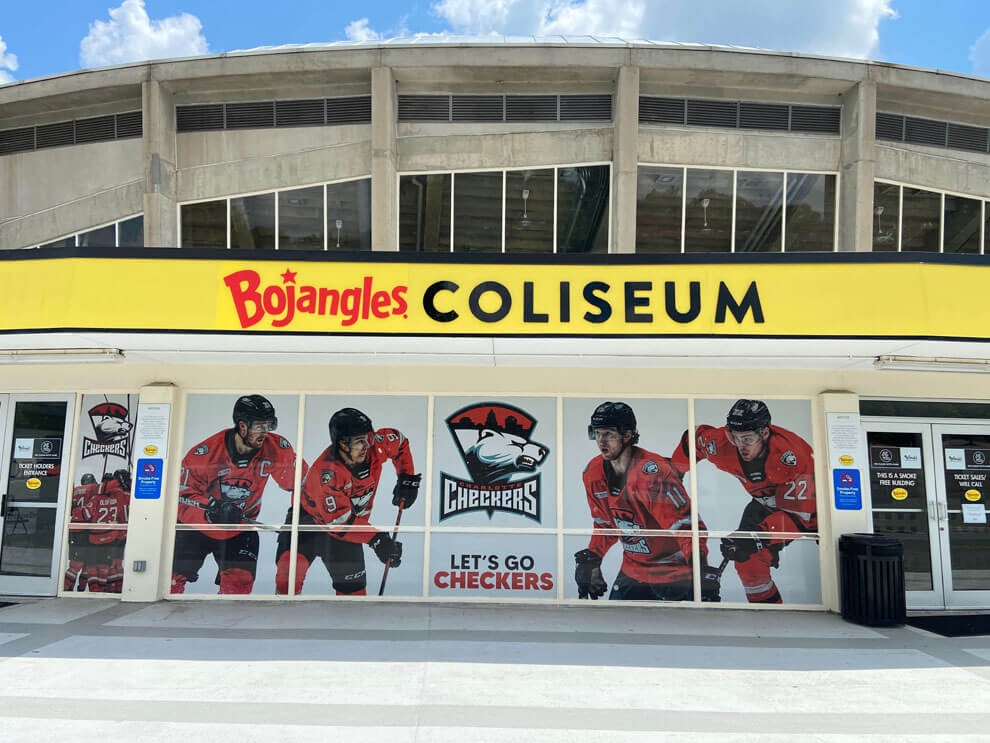
We fabricate and install a defined range of non-illuminated exterior signage and graphics, and we do it as part of a larger storefront and workplace branding effort that also covers the interior. That work can include exterior window graphics, exterior wall graphics and wraps, dimensional lettering, dimensional signs, custom sign panels, and similar non-illuminated storefront elements. These pieces announce who you are before a visitor reaches the door, and they tie back to entrance glass, privacy graphics, lobby signage, wall graphics, and displays so the walk-up and the interior feel like one continuous project.
Printed exterior wall graphics always get a protective film laminate for added UV and weather resistance. Before we accept any exterior component, we look at surface condition, sun and weather exposure, attachment method, and how our crew will reach the work.
We do not build or install channel letters, monument signs, pylon signs, or any illuminated exterior signage. We also do not determine whether a sign permit is needed, prepare or file permit documents, correspond with permitting authorities, cover permit fees, or chase approvals. Confirming and securing sign permits and property approvals falls to you, your property owner or property manager, or your general contractor.
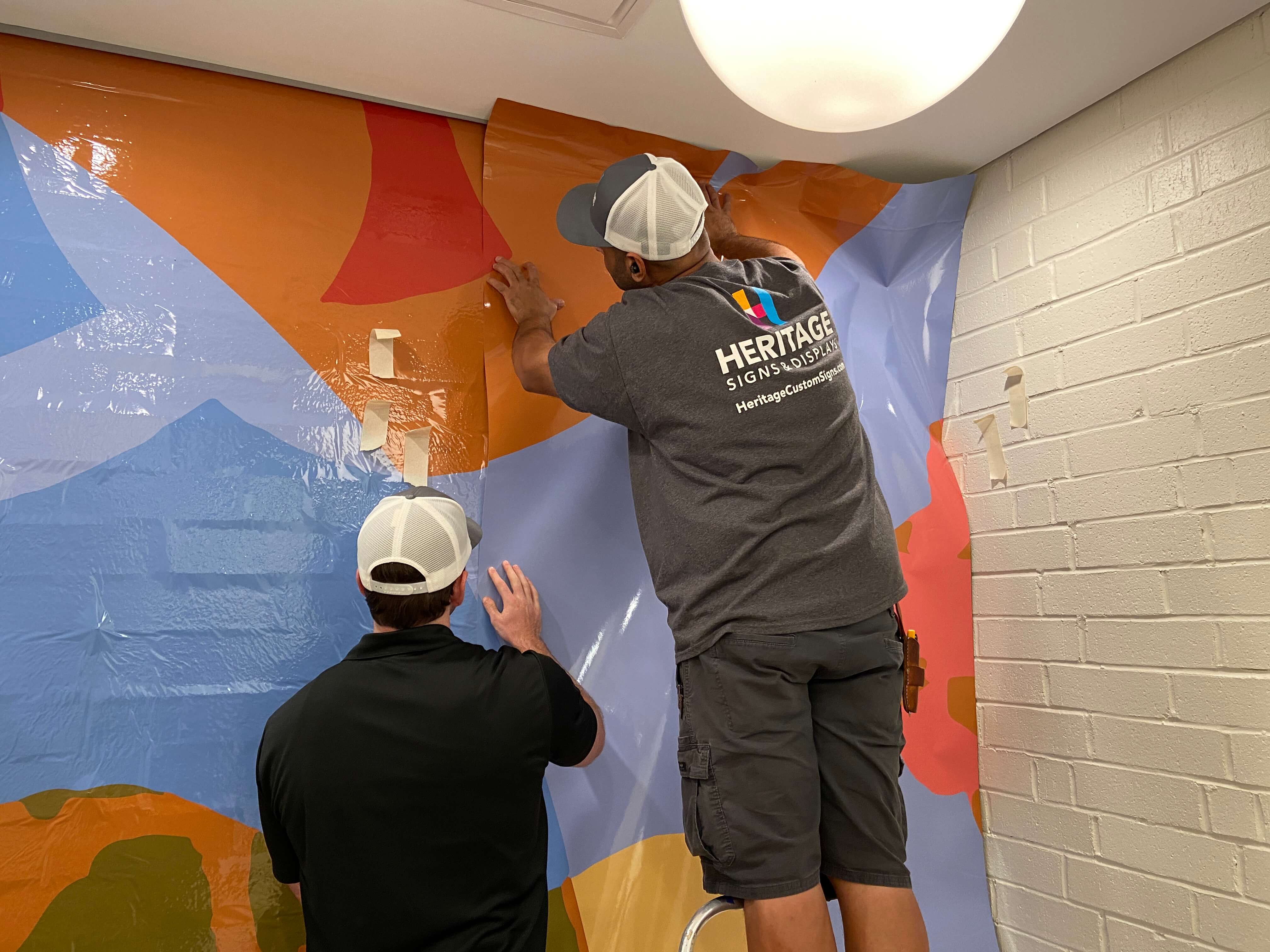
Every Storefront Graphics project we take on starts with a site survey that connects your goals to real measurements, actual glass and wall surfaces, access limitations, and the conditions our installers will face on the day. From there, your dedicated Project Manager keeps environmental graphic design, production, fabrication, and our full-time professional installers working from one shared set of facts.
That shared record is where the value shows up. Survey notes, approved design intent, material choices, production specs, access planning, parking and after-hours arrangements, and installation sequencing all live in one place, so every team arrives already knowing what the others learned. Questions get answered at the desk instead of in the field. Compare that to splitting survey, design, production, and installation across separate vendors who each meet the project cold at a different stage.
Our installers protect your property, work respectfully around staff, patients, students, and customers, and schedule around business hours when a Williamsburg site calls for it. Installation days are planned, not improvised, and your Project Manager stays reachable while the work happens and through the final walkthrough.
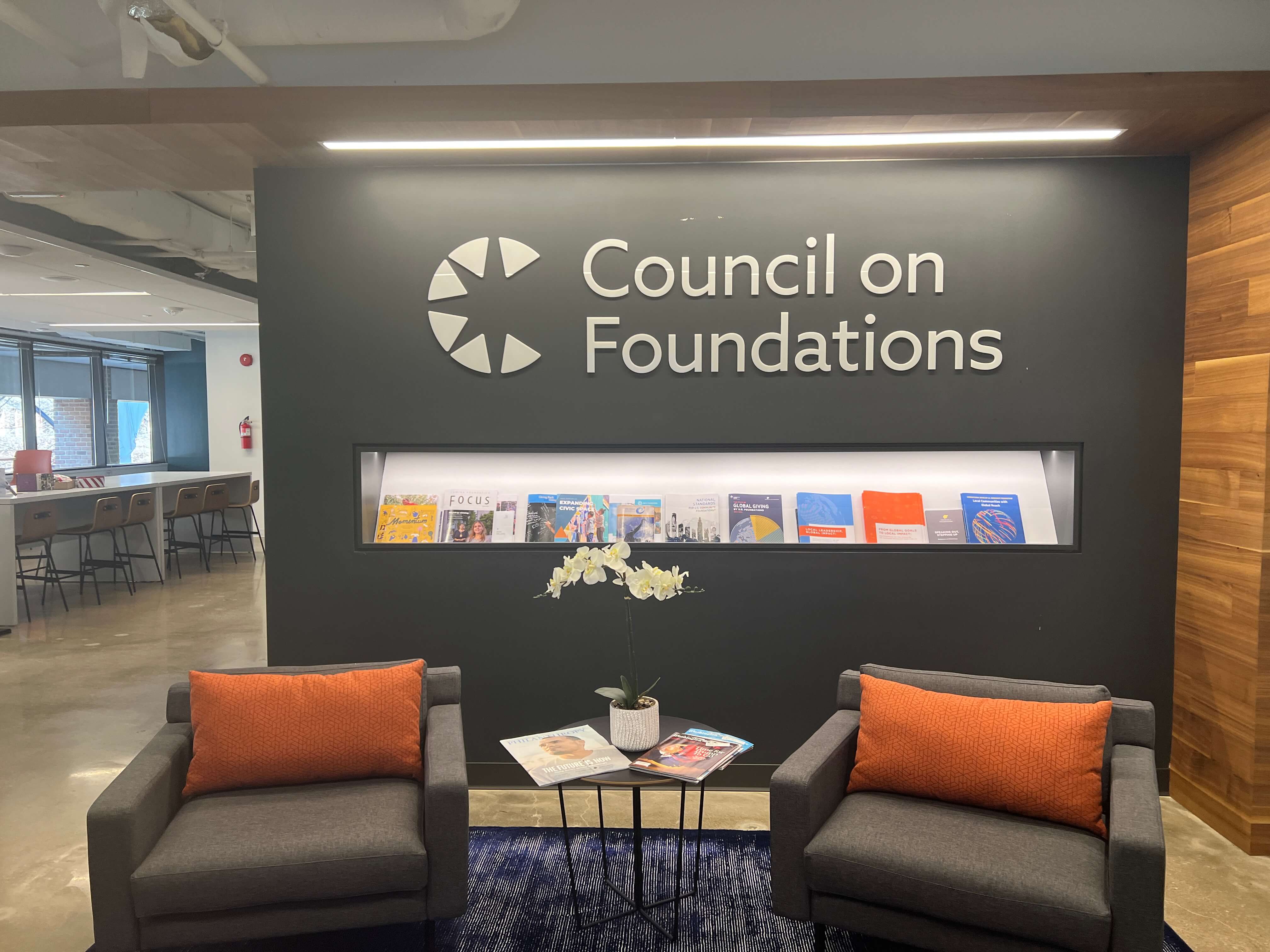
Adhesive vinyl is only as reliable as the wall behind it. Drywall needs to be sound and smooth, repairs finished, primer and paint applied correctly, and the finish coat fully cured. Dry paint and cured paint are not the same thing. Roughly four weeks is a reasonable planning window for many paints, but the manufacturer's specifications and the actual conditions on site decide when a wall is ready. Washable, scrubbable, stain-resistant, low-VOC, and zero-VOC coatings sometimes call for cleaning, adhesion testing, or a different vinyl and adhesive combination.
Adhesion testing tells us how vinyl behaves against the paint. It cannot tell us how well that paint and primer are bonded to the drywall underneath. If paint lifts or peels during testing or during routine repositioning at install, we stop rather than compound the damage. Repair, priming, repainting, and full cure are arranged and paid for by you or the property owner.
Removal down the road is its own conversation. We pull vinyl slowly and deliberately to limit avoidable damage, but no one can promise a damage-free result, and paint, primer, or the drywall facing may come away with it. Removable refers to the adhesive system and its intended use, not a guarantee about your wall. When graphics are being swapped out, taking the old ones down early exposes any restoration work before installation gets scheduled. Handled with these realities in mind, wall graphics remain one of the most dependable branding tools available.
Planning is about aligning decisions, not picking products off a list. Together we settle the intended result, the audience, the scope, any phasing, the timeline, site conditions and readiness, who needs to weigh in, how approvals will move, and the expected investment. Photos, measurements, floor plans, artwork, brand standards, and property requirements all feed those decisions, and whatever is missing usually becomes the first thing we tackle.
We are the right fit for professionally managed projects that benefit from environmental graphic design, production, fabrication, and professional installation running through one connected process. Many of our projects that involve production and professional installation fall between $10,000 and more than $200,000. The right number follows the full scope, not the price of any single graphic.
A Williamsburg storefront project might focus on a single entrance, extend deeper into the workplace through selected signs and displays, or grow into a phased or multi-location program. One dedicated Project Manager keeps responsibilities, approvals, schedule, and upcoming decisions clear until the approved scope is complete.
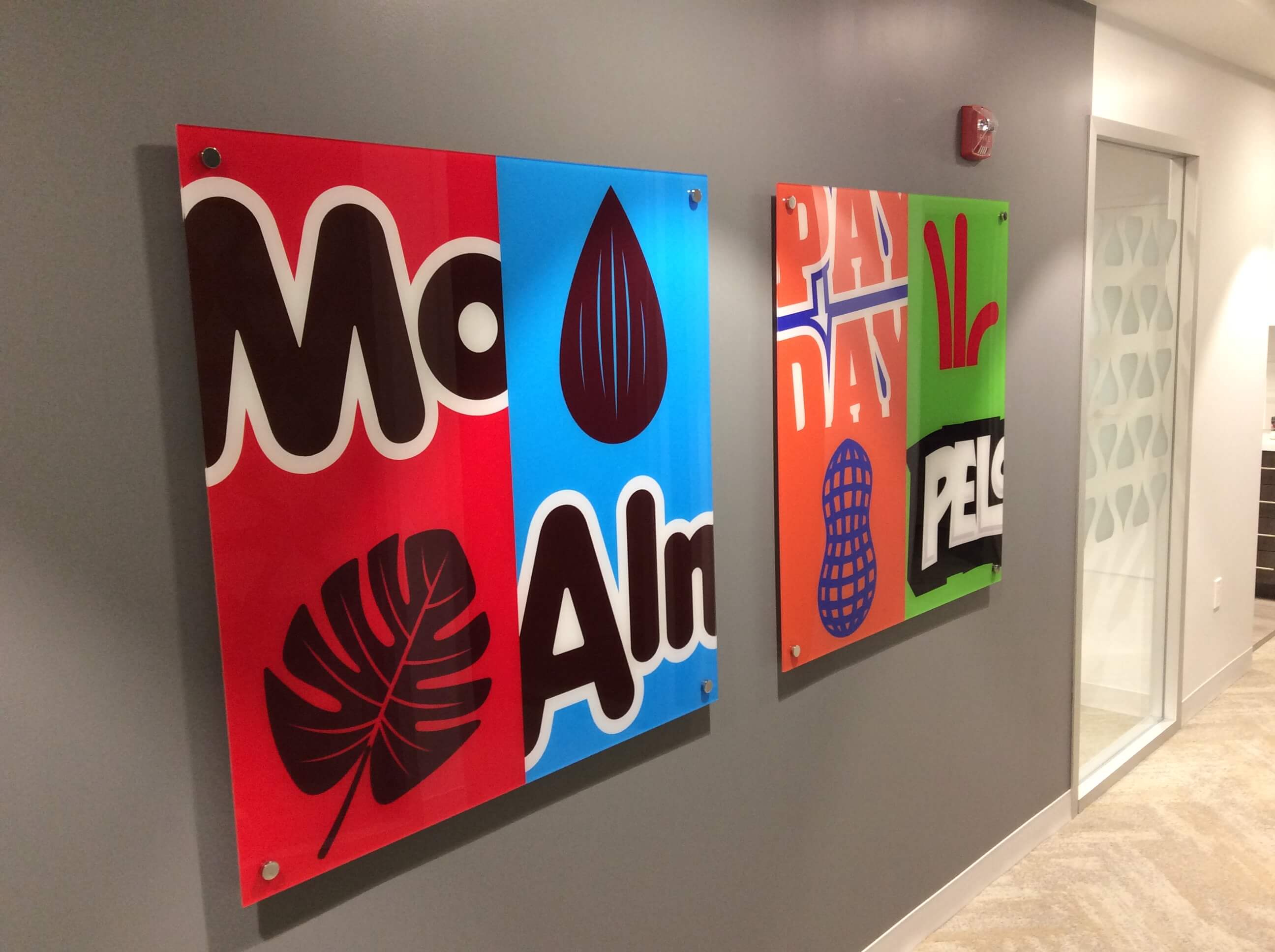
Storefront graphics establish your identity at the entrance and start the handoff into the interior. They deliver recognition, privacy, visual awareness, and wayfinding across entrance glass, doors, and the surfaces nearby. In a Heritage-managed project, they are planned right alongside lobby signage, wall graphics, dimensional elements, and other interior branding so arrival and the space beyond it work as a pair.
Yes. Privacy usually comes from treating the specific bands or panes where sightlines actually matter, not from blanketing the glass. Frosted vinyl, etched-look privacy film, branded patterns, or placed graphics can screen a reception window, a conference room, or a work area while daylight and chosen views stay intact.
Yes. A site survey is part of every Storefront Graphics project we do. The visit pairs discovery with field verification, confirming measurements, glass and wall conditions, mullions and hardware, access, and anything else that could shift production or installation. Those findings stay linked to your dedicated Project Manager and to the design, production, fabrication, and installation teams.
Yes, when the graphics were applied to painted drywall. We remove adhesive vinyl slowly and carefully to limit avoidable damage, but a damage-free outcome cannot be guaranteed. Paint or primer can lift with the vinyl, and the drywall facing is sometimes affected.
Plan for both the time and the budget to handle possible repair, proper priming, repainting, and full cure before the wall is reused or replacement graphics go up.
Arranging and paying for that repair and restoration is the responsibility of the client or property owner. We do not perform or fund wall repair, priming, repainting, or restoration. Removable describes the adhesive system and its intended use, not a promise of damage-free removal. Our job is to use careful methods, limit avoidable damage, and report exactly what we see.
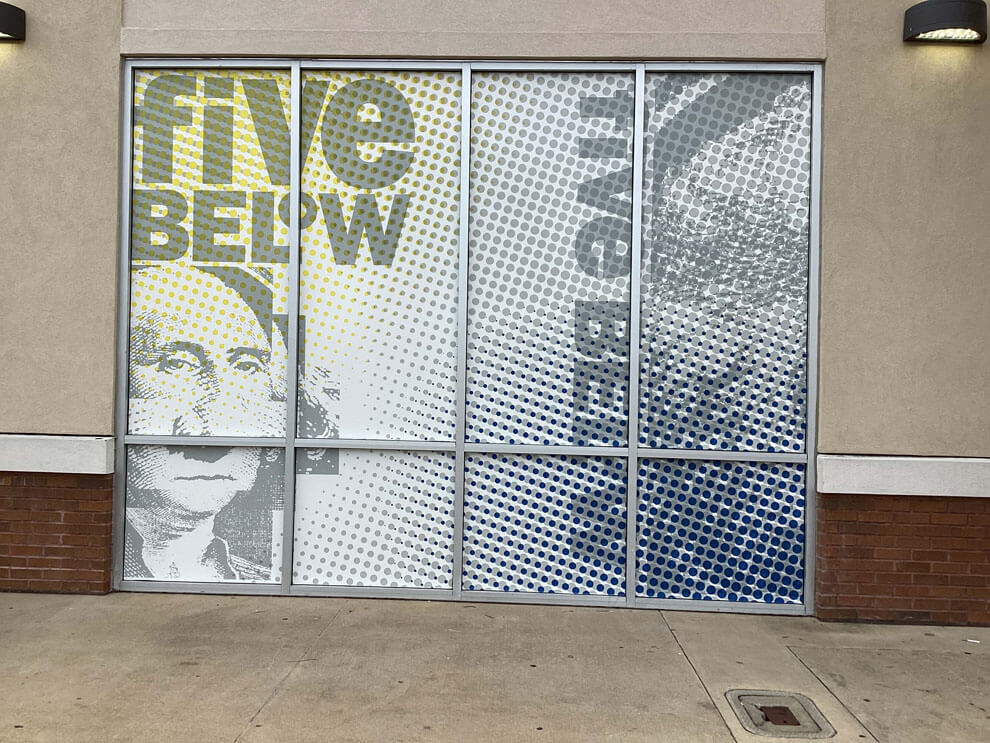
Perforated window graphics print on a vinyl punctuated with small openings that preserve a measured amount of see-through visibility. The effect leans heavily on the light levels on each side of the glass, so a graphic that looks great at midday can behave very differently after sunset. We evaluate the real conditions at your location before recommending it.
Yes, within a defined scope. We produce and install specific non-illuminated exterior signs and graphics when they belong to a coordinated storefront or workplace branding project that also includes interior work. That covers exterior window graphics, exterior wall graphics and wraps, dimensional lettering, dimensional signs, custom sign panels, and related non-illuminated elements that link the exterior approach to the branded interior.
Printed exterior wall graphics receive a protective film laminate as standard practice for added UV and weather protection.
We do not produce or install channel letters, monument signs, pylon signs, or illuminated exterior signs. We do not determine whether a sign permit is required, prepare or submit permit documents, communicate with permitting authorities, pay permit fees, or pursue approvals. Confirming and securing required sign permits and property approvals belongs to the client, the property owner or property manager, or the general contractor.
Service life depends on the material, the surface, how the glass or wall is oriented and exposed, cleaning habits, and physical contact. No single number applies to every application. We start with how long you expect the graphic to stay up, then recommend a material system built for that expectation instead of quoting one durability claim across the board.
Material selection follows the design, the location, and how the finished piece has to perform. Depending on the application, we may specify adhesive vinyl, frosted or perforated vinyl, acrylic, dimensional materials, or aluminum composite material (ACM). ACM delivers a durable metal-like look at a fraction of the weight of solid metal. We do not print on or cut solid aluminum or steel as a sign substrate.
We provide field support throughout Williamsburg and the Historic Triangle, including discovery meetings at your facility, site surveys, field verification, installation planning, and professional installation. Your dedicated Project Manager coordinates that local work and connects it to our environmental graphic design, production, and fabrication resources.
You get people who have walked your property in person without losing continuity as the project moves through design, production, and installation. For organizations with sites beyond Williamsburg, the same structure scales across Virginia and the Mid-Atlantic under one coordinated program.
Painted walls should be smooth, sound, properly repaired, primed, painted, and fully cured to the paint manufacturer's requirements. Roughly four weeks is a workable planning allowance for many paints, though cure times vary and site conditions matter. Washable, scrubbable, stain-resistant, low-VOC, zero-VOC, and other difficult coatings may call for cleaning, adhesion testing, or a compatible vinyl and adhesive approach.
Adhesion testing reveals how vinyl performs against the paint, but it cannot confirm how well the paint and primer are bonded to the drywall beneath. If paint peels or pulls away during testing or during normal repositioning at install, we stop rather than make the wall worse. The client or property owner arranges and pays for repair, priming, repainting, and full cure before installation is rescheduled.
Yes. We routinely plug into an existing professional team and can build from established brand standards, architectural drawings, approved concepts, or design direction already in motion. We develop or refine the environmental graphics within our own scope and carry the approved direction through production, fabrication, and professional installation. We do not provide licensed architecture, engineering, general commercial interior design, lighting design, or code consulting.
Distraction markers are decorative or branded vinyl graphics applied to clear glass so the surface is easier to see. They show up as bands, dots, patterns, logos, or other visual elements, and they frequently do double duty for privacy or branding. We plan their look and placement to suit the space. Applied vinyl does not establish building-code or safety-glazing compliance.
Yes. Heritage coordinates storefront and interior branding programs across multiple client locations in the Carolinas and Mid-Atlantic. One dedicated Project Manager remains the client's consistent point of coordination while Heritage arranges site surveys, production, fabrication, and professional installation for each property.
That continuity protects brand standards, approvals, communication history, and accumulated project knowledge, so the client does not restart the process at every site. At the same time, Heritage does not force identical physical solutions onto different buildings. Dimensions, architecture, glazing, access, surfaces, and schedules vary, and each location is adapted while the approved brand direction stays consistent.
Care depends on the material and where the graphic is installed. Glass graphics generally tolerate routine glass cleaning when the method suits the vinyl, though abrasive pads and aggressive solvents should be avoided at edges. Most interior wall vinyl is not laminated and should be cleaned gently.
In spaces where frequent cleaning or contact is expected, such as schools, cafeterias, clinics, and other high-use environments, Heritage may specify a protective laminate over the printed vinyl. Exterior wall graphics are laminated as standard practice because the protective film laminate adds UV protection that slows fading and helps shield the print from rain and other exposure. Heritage provides maintenance guidance for the specific material system used on the project.
Yes, when the removal is part of a new Heritage production and installation project. Heritage does not provide graphics removal as a separate service.
When wall graphics are being replaced, we strongly recommend removing the existing graphics well before the planned installation date. The reason is timing. No one can know the true condition of the surface until the old vinyl comes off. Removal may reveal lifted paint, exposed drywall facing, or other restoration needs.
Removing early gives the client or property owner time to arrange and pay for repair, proper priming, and repainting. The new finish paint must then fully cure before Heritage returns with the replacement graphics, and roughly four weeks is a useful planning allowance for many paints, subject to the manufacturer's requirements and site conditions. Waiting until the replacement graphics are finished can turn a hidden wall condition into an unexpected delay.
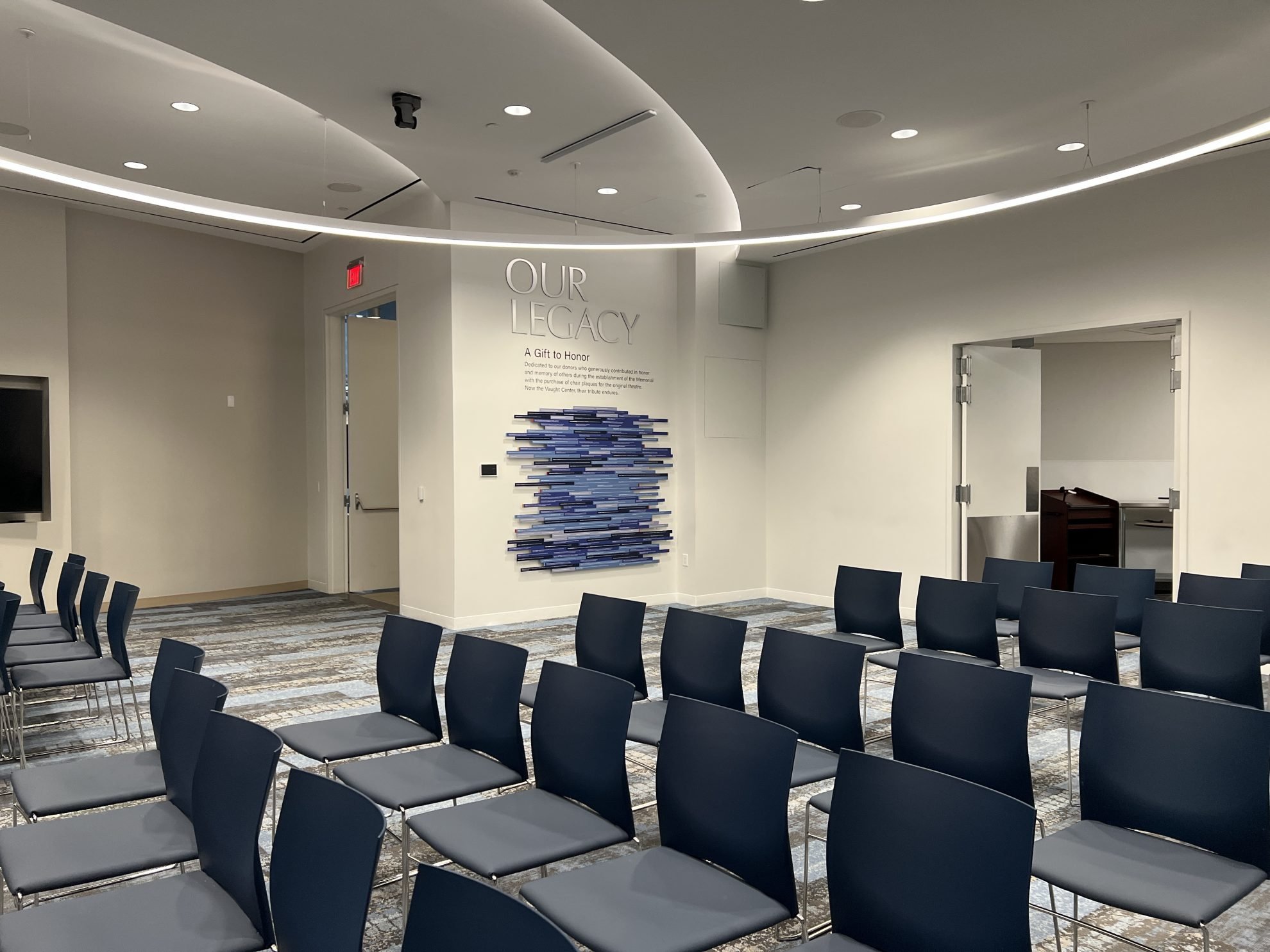
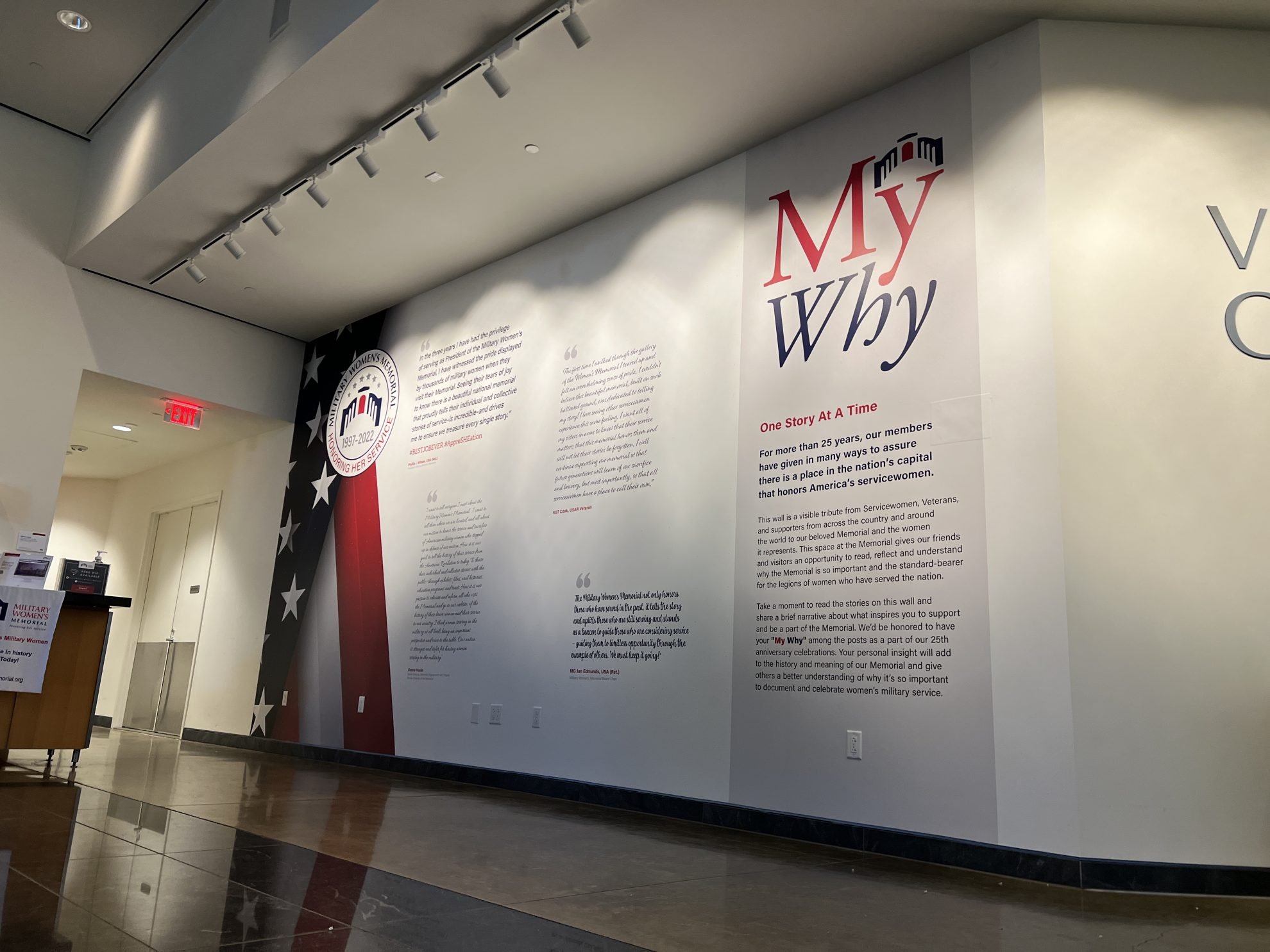
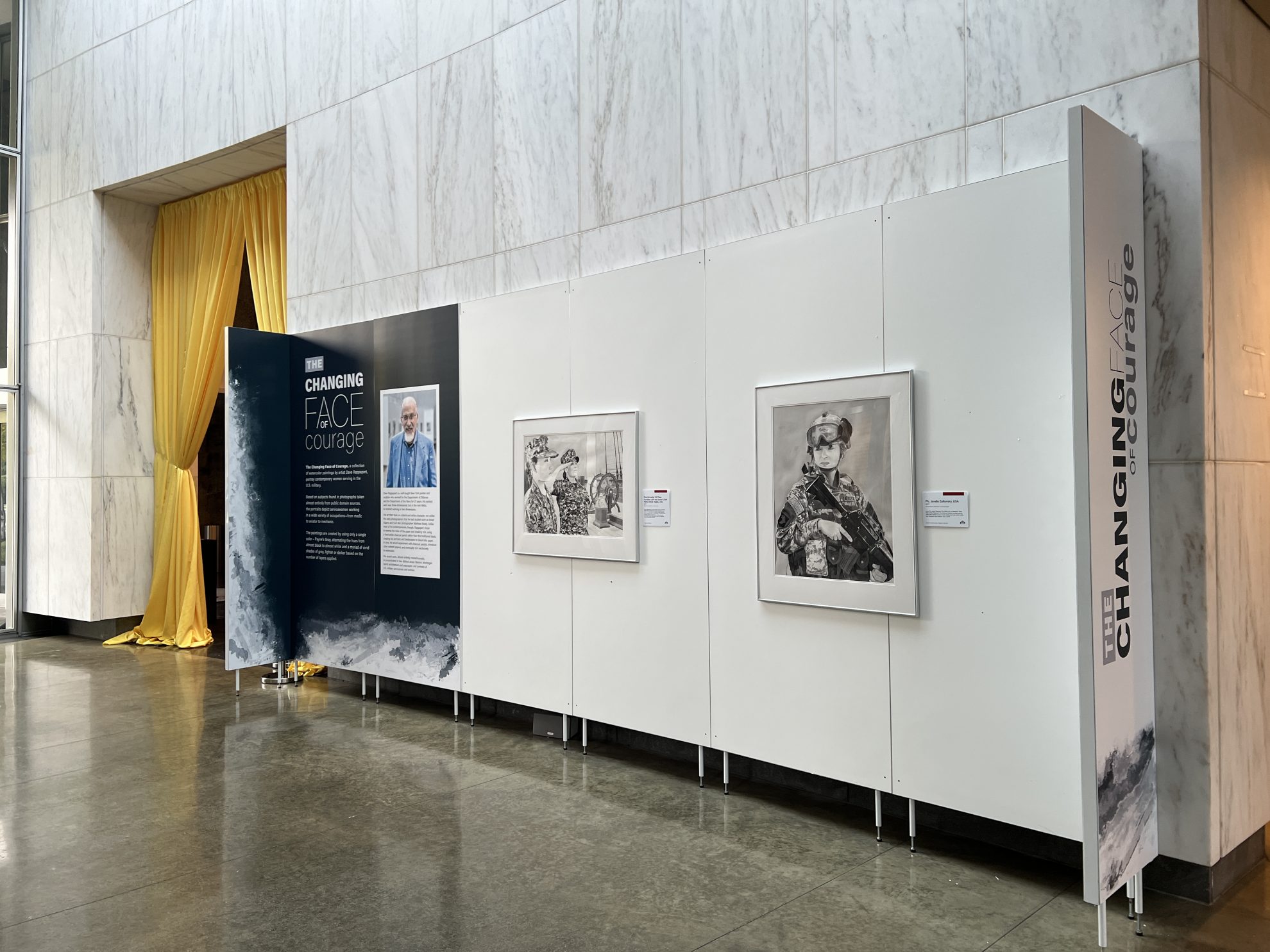
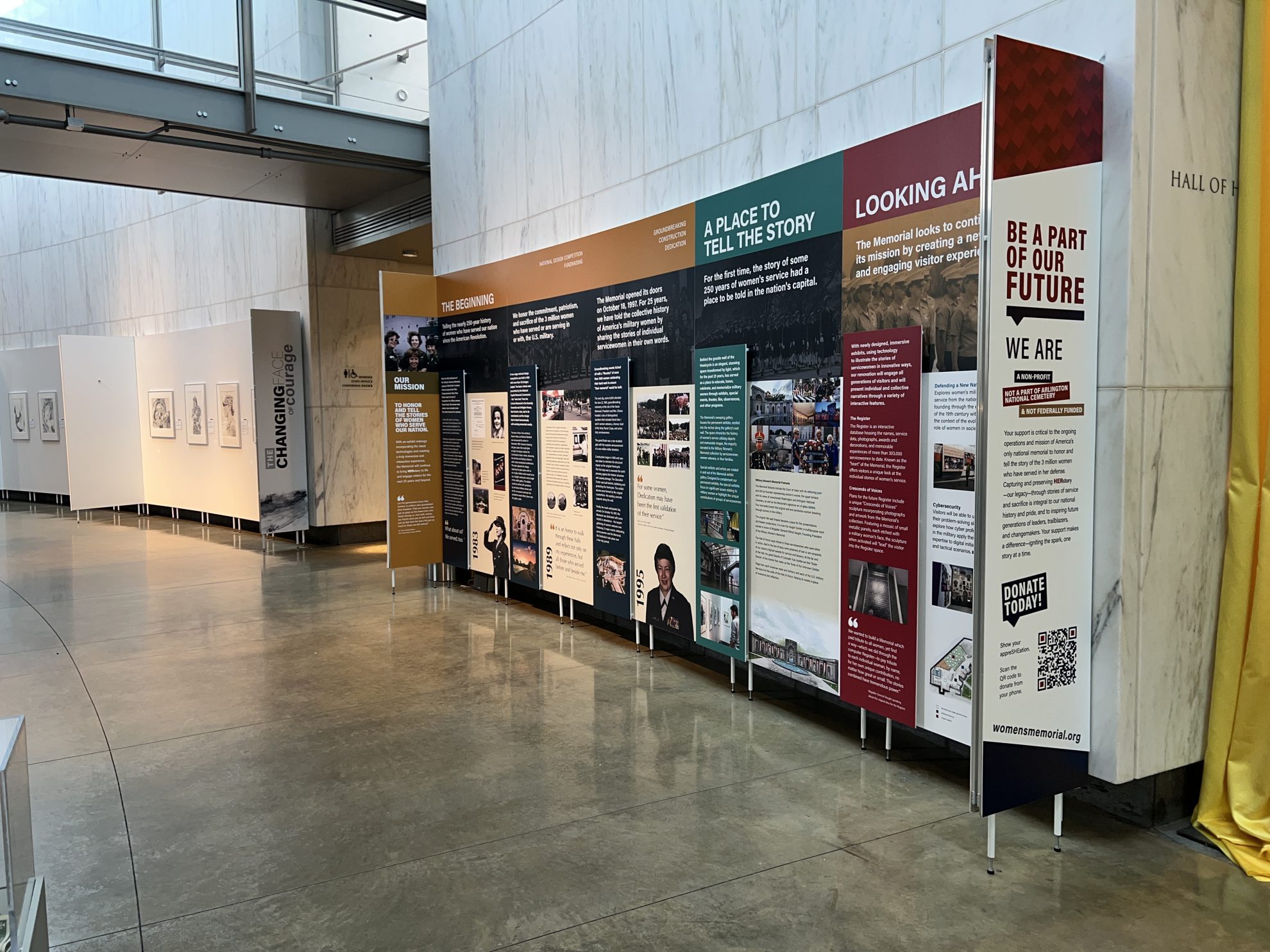
Heritage Signs & Displays created new museum signage for the Military Women’s Memorial in Arlington, VA. The project included custom signs, wall wraps, dimensional letters, and standoff-mounted displays to honor the legacy of U.S. servicewomen and the donors who supported the memorial. The updated interior features impactful designs, including a "Our Legacy" wall display and panels showcasing historical contributions and artwork, creating a transformative tribute to women in the U.S. Armed Forces.
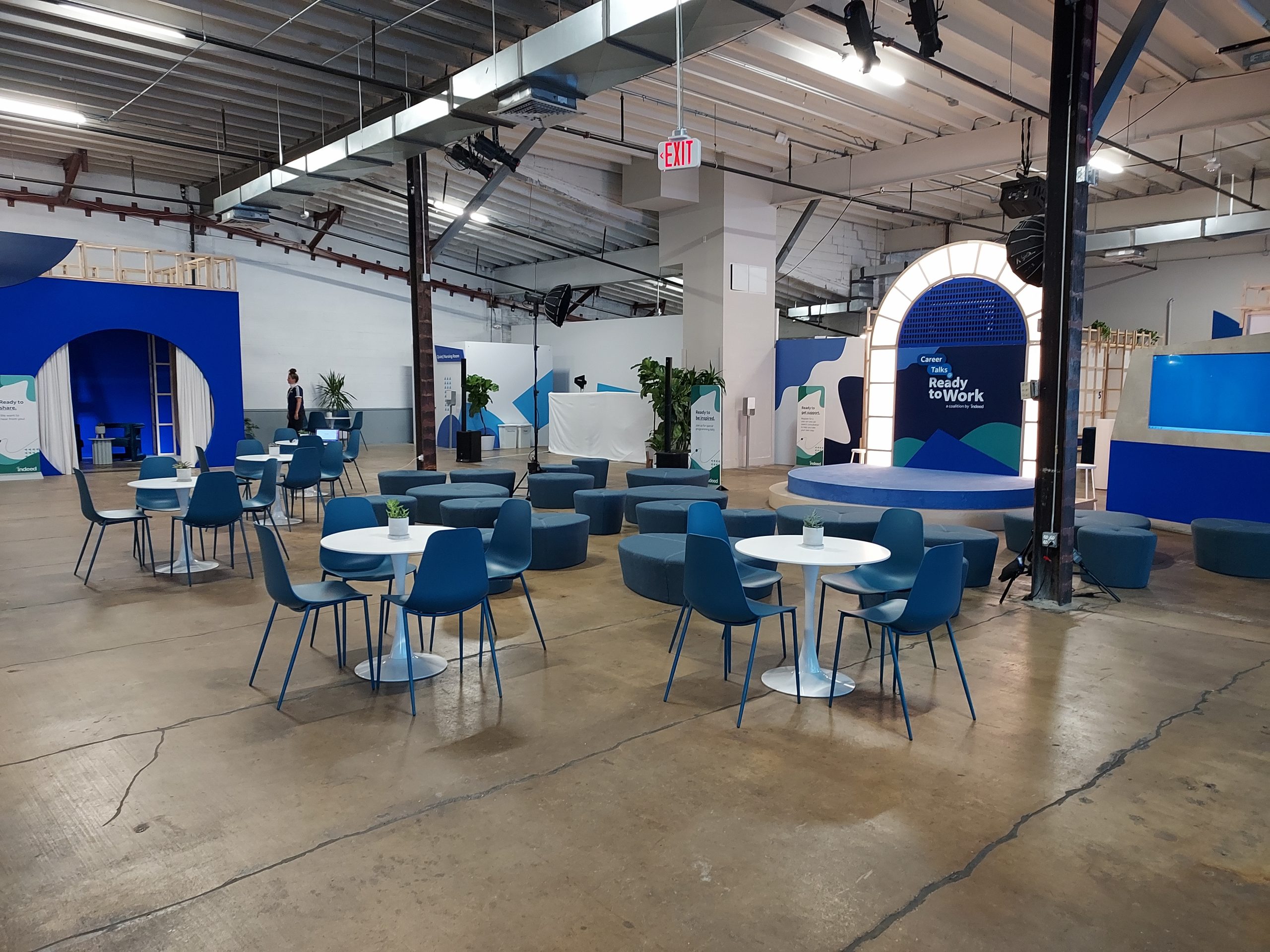
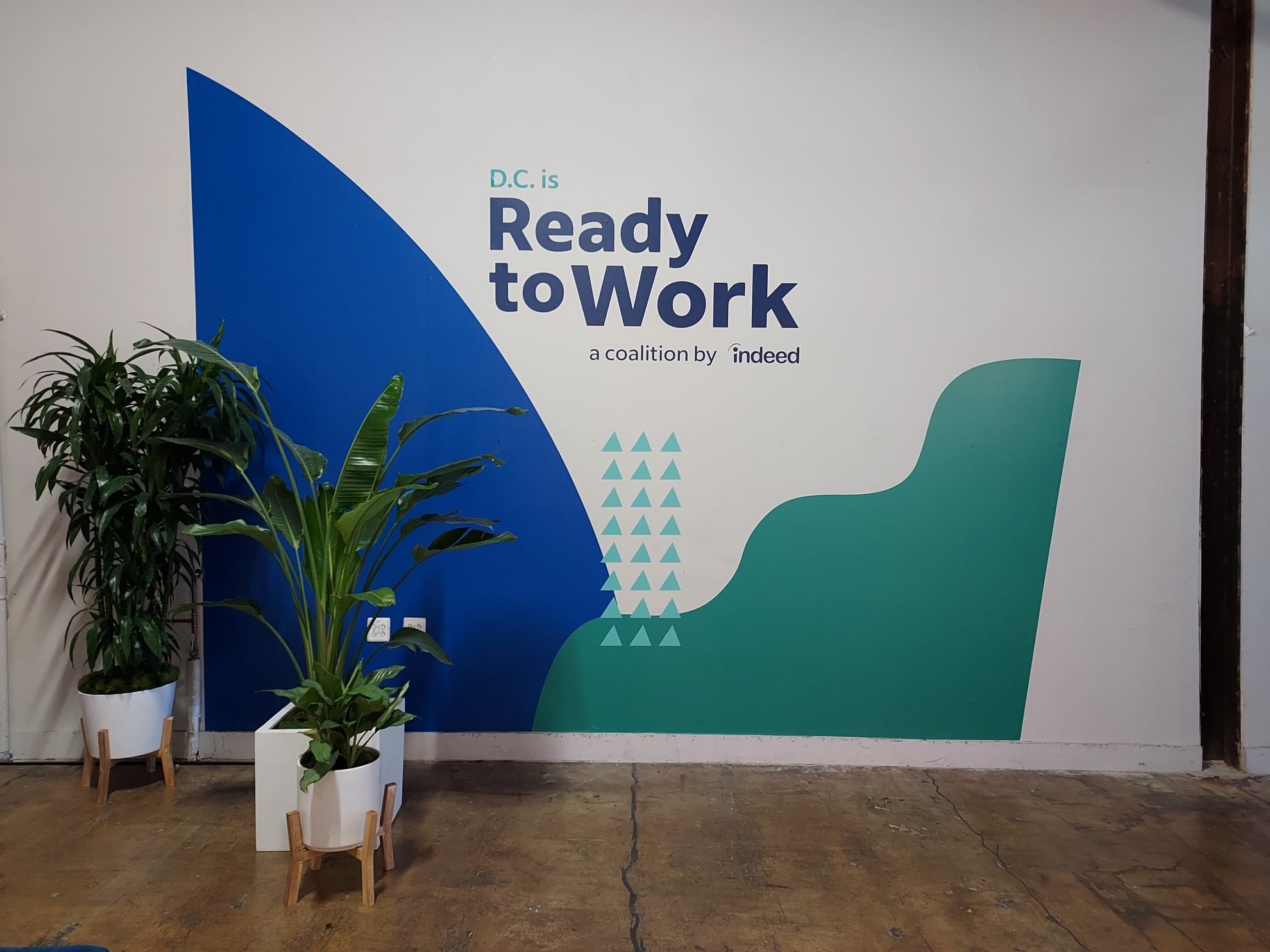
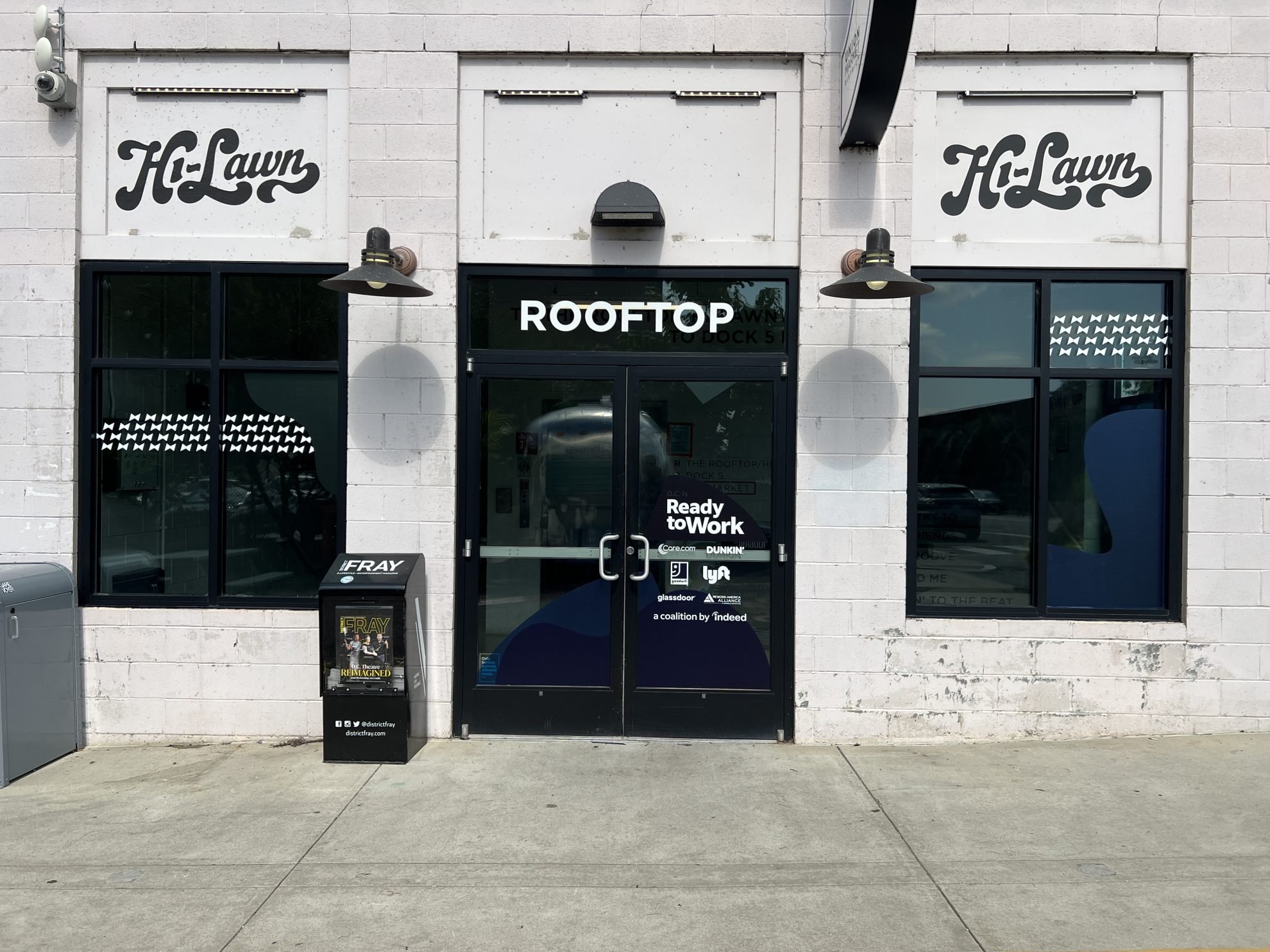
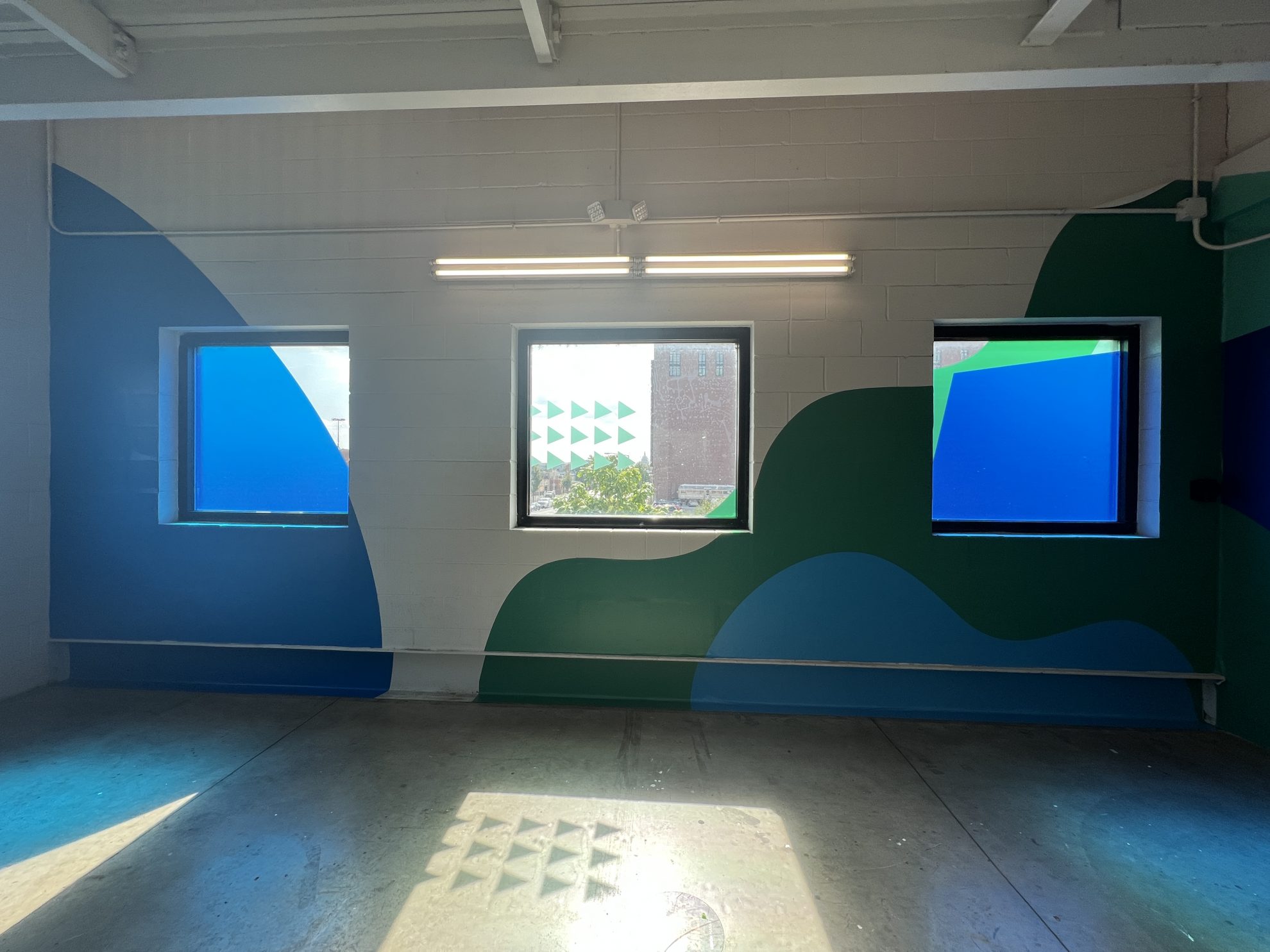
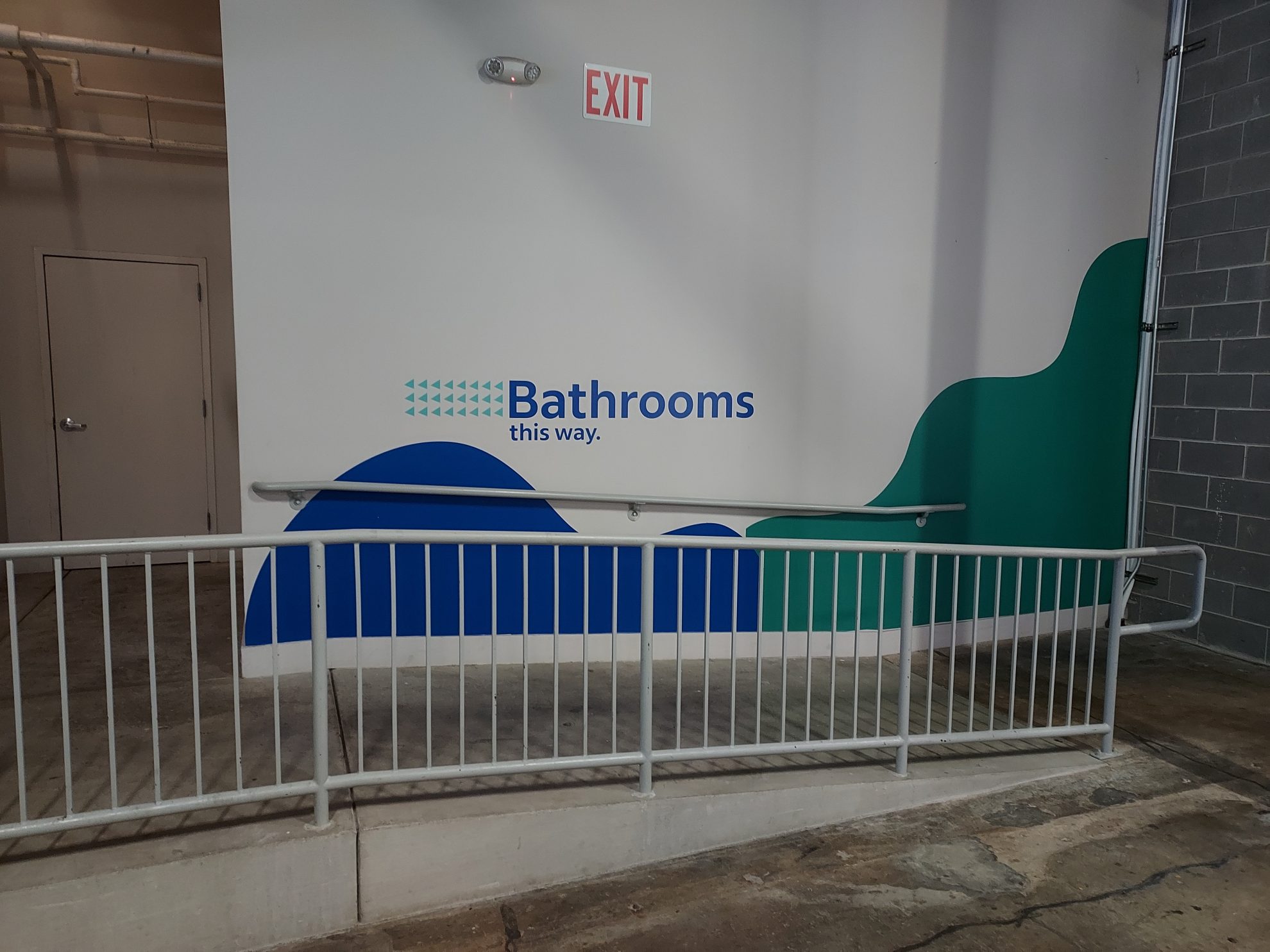
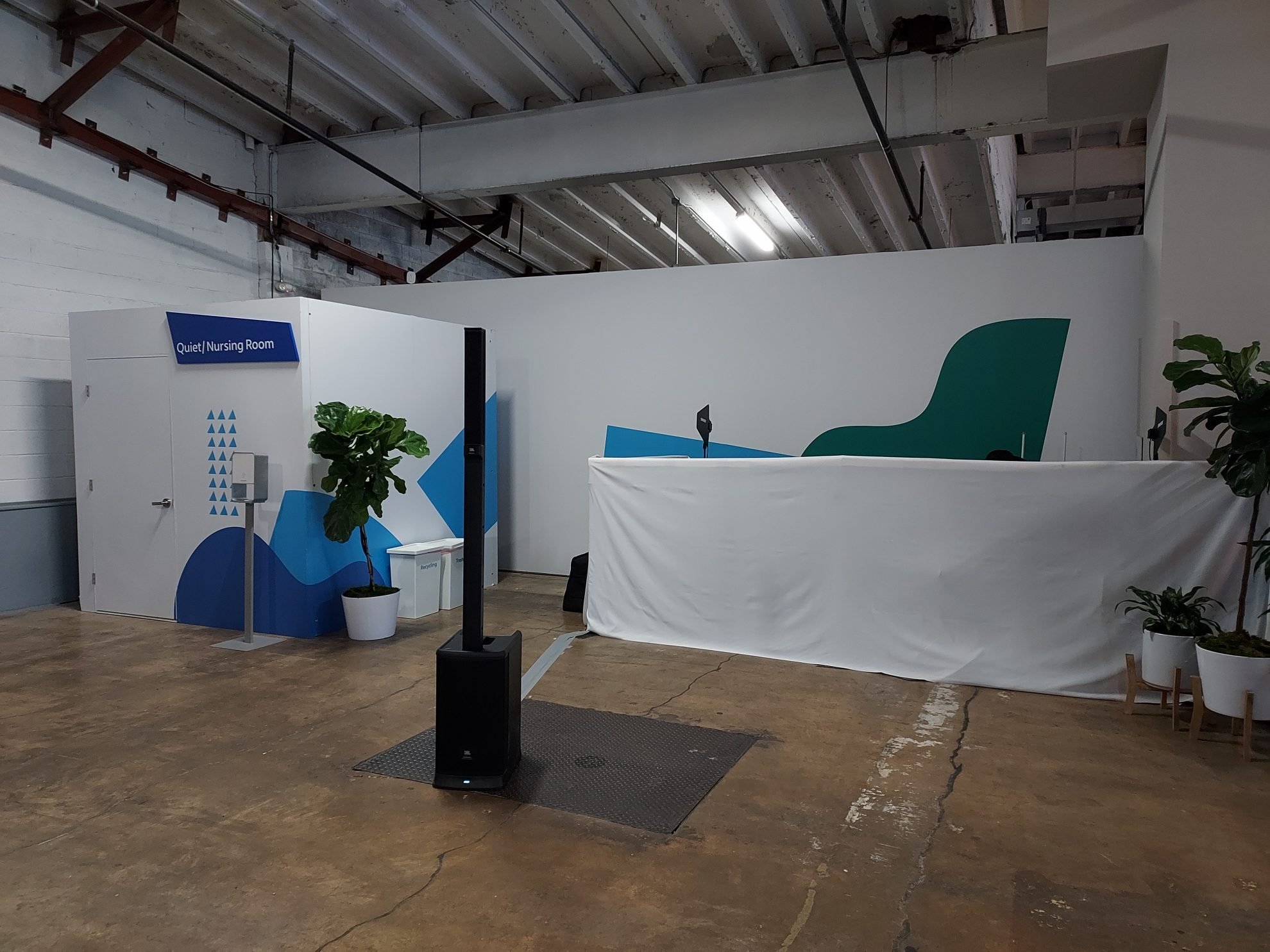
Heritage Signs & Displays' collaboration with The Gathery to brand Union Market in Arlington, VA, for Indeed's "Ready to Work" job fair. The project included custom event displays, wall graphics, window graphics, and wayfinding signs, creating an immersive and visually appealing environment. The branding enhanced the venue, reflected the event's mission, and provided a seamless experience for attendees.