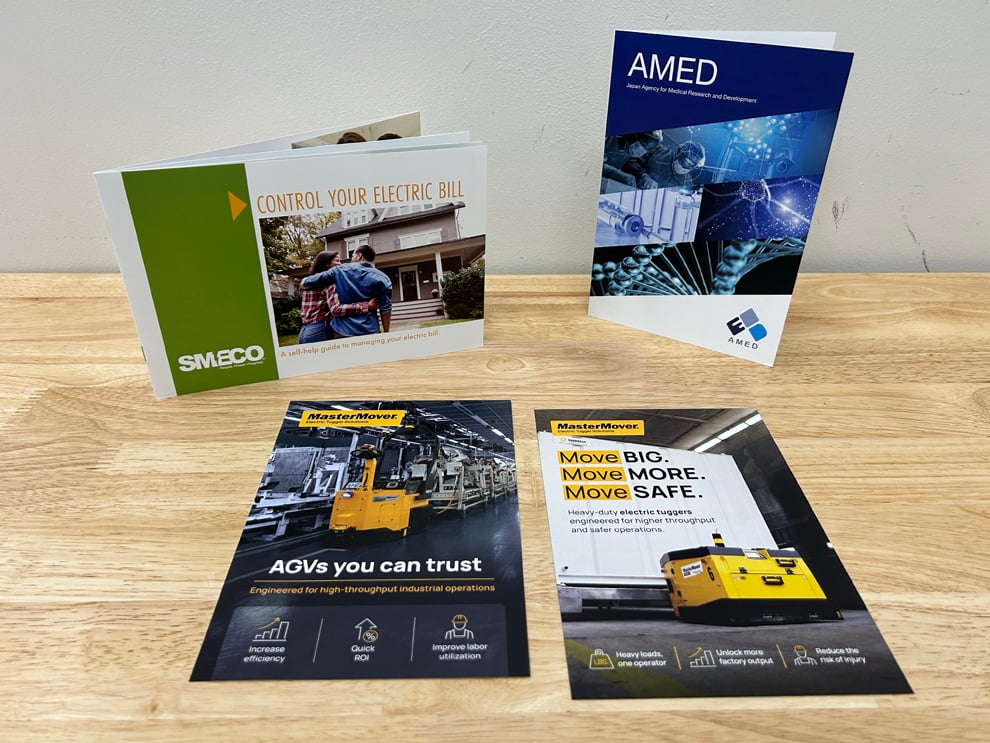
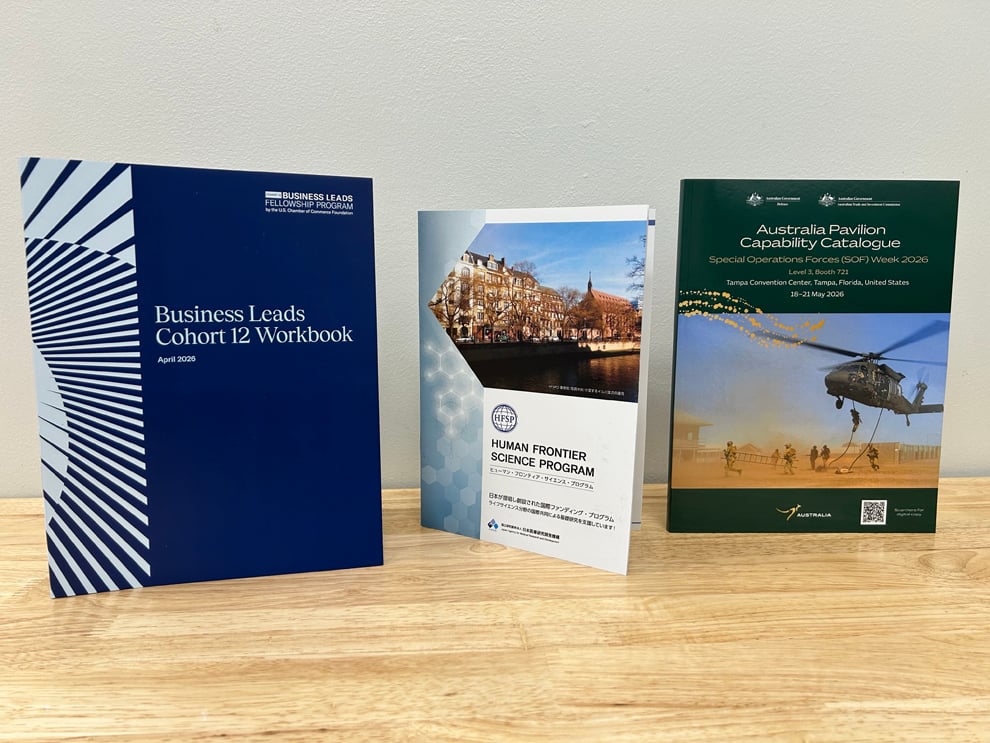
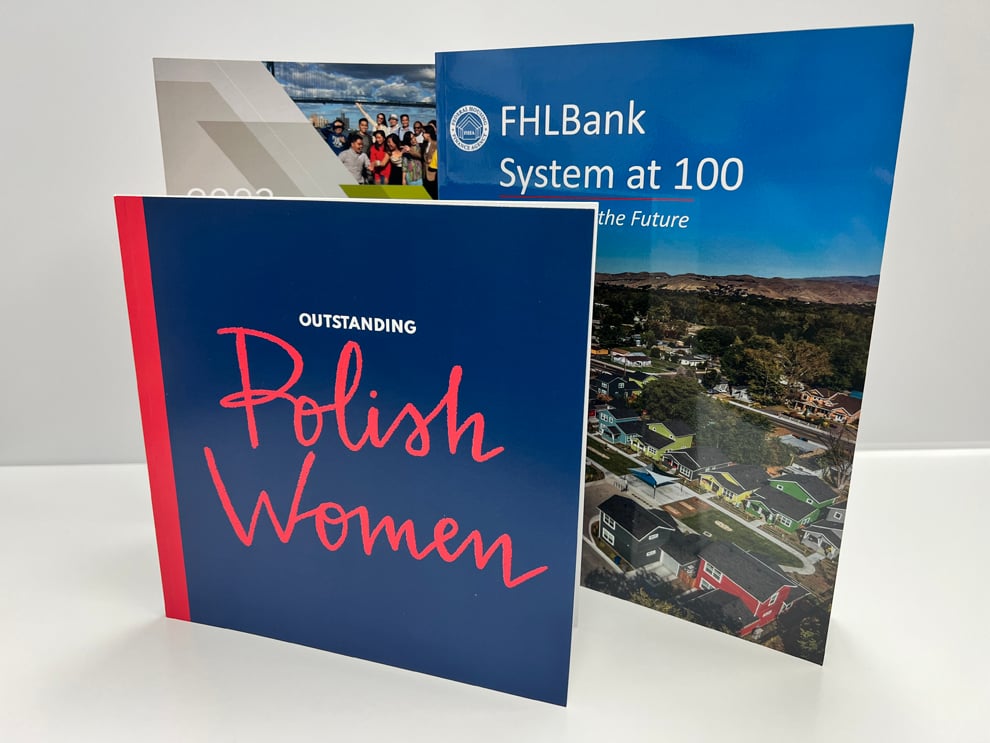
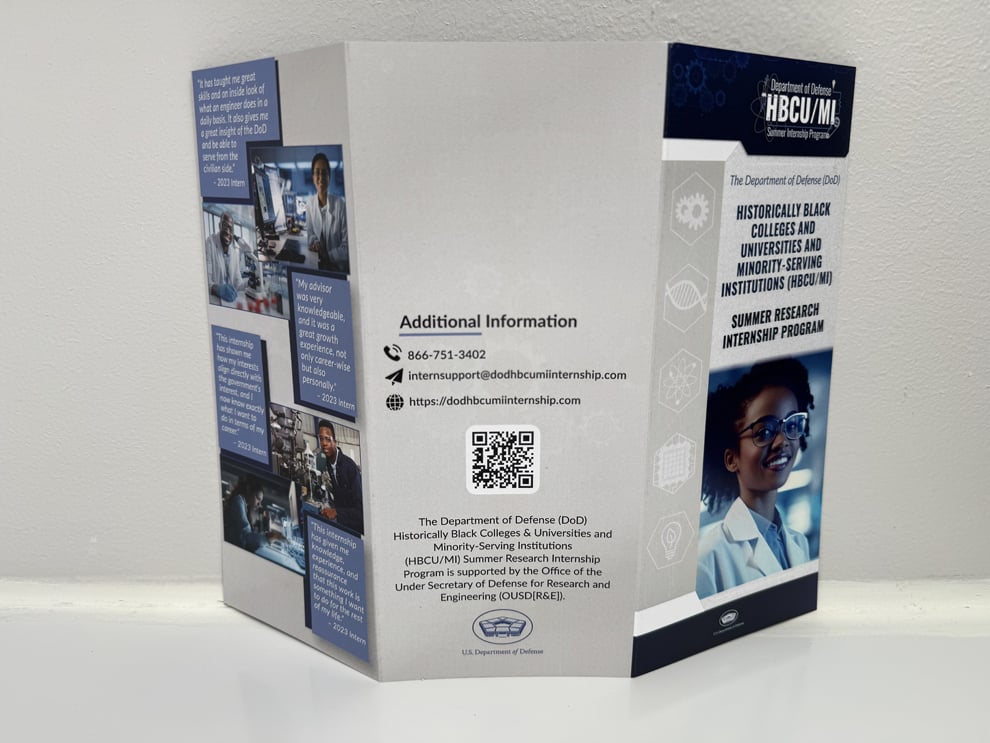
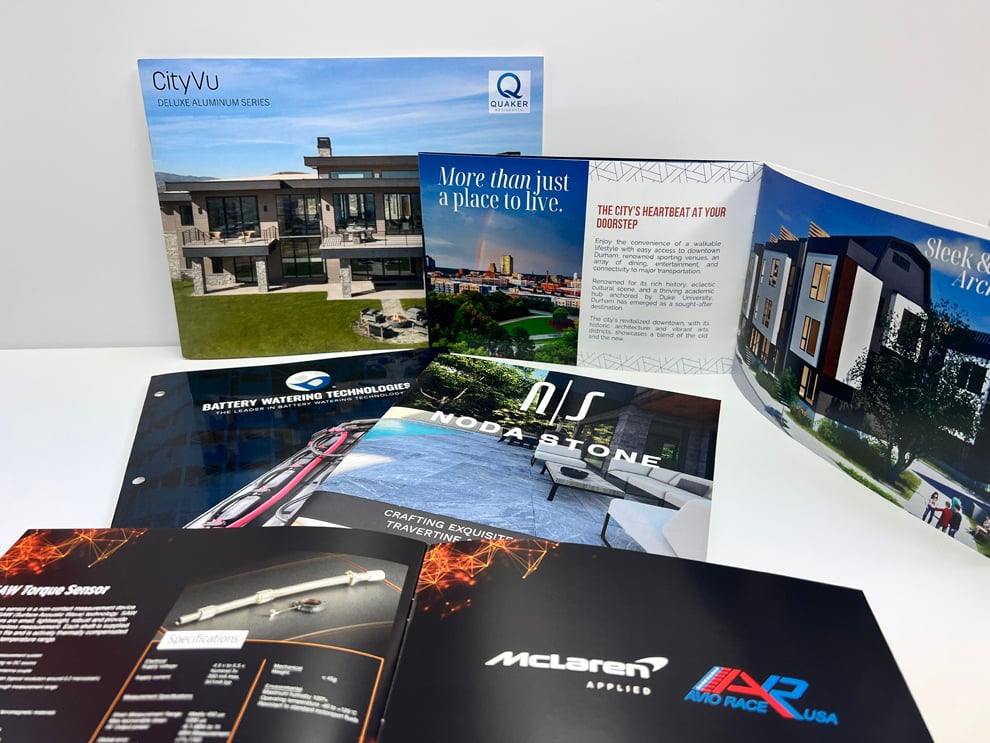
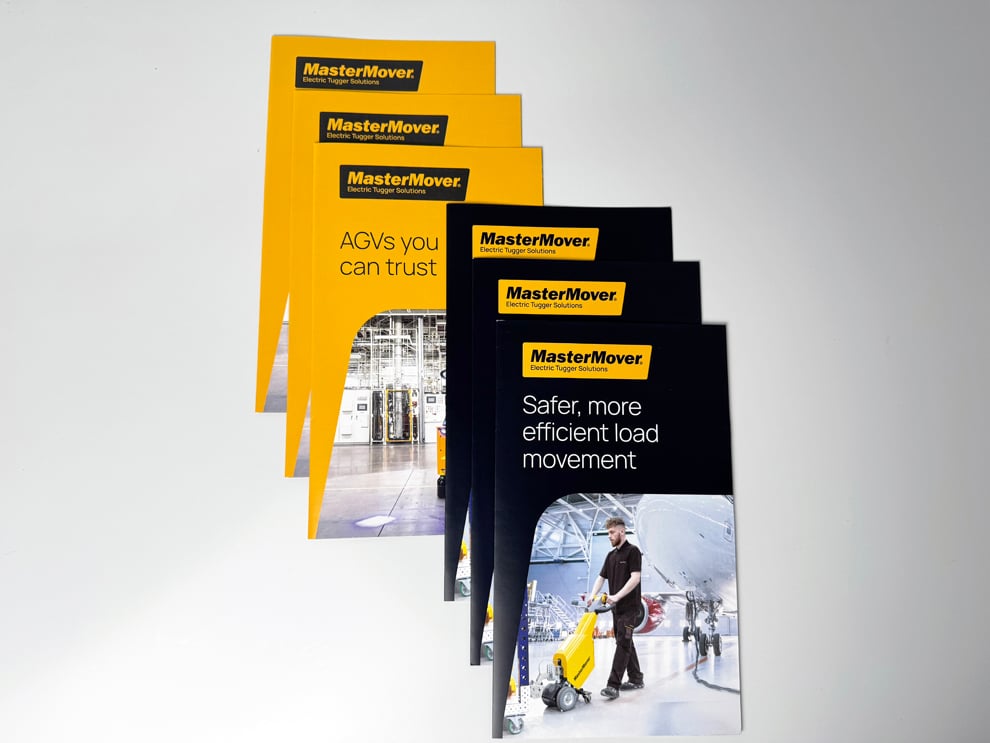
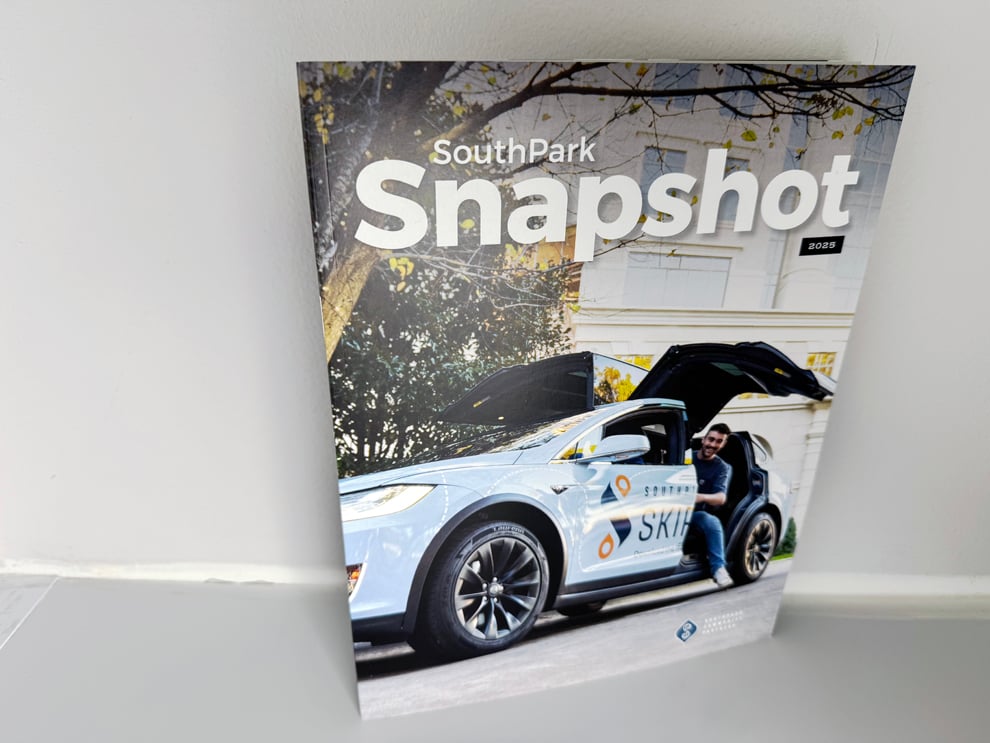
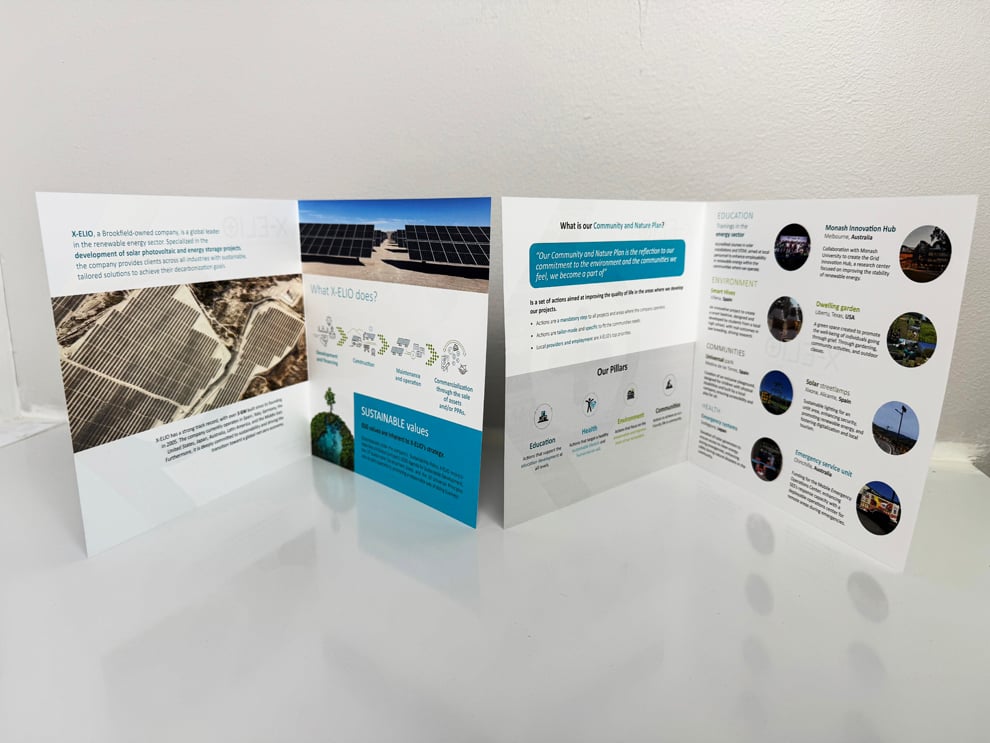
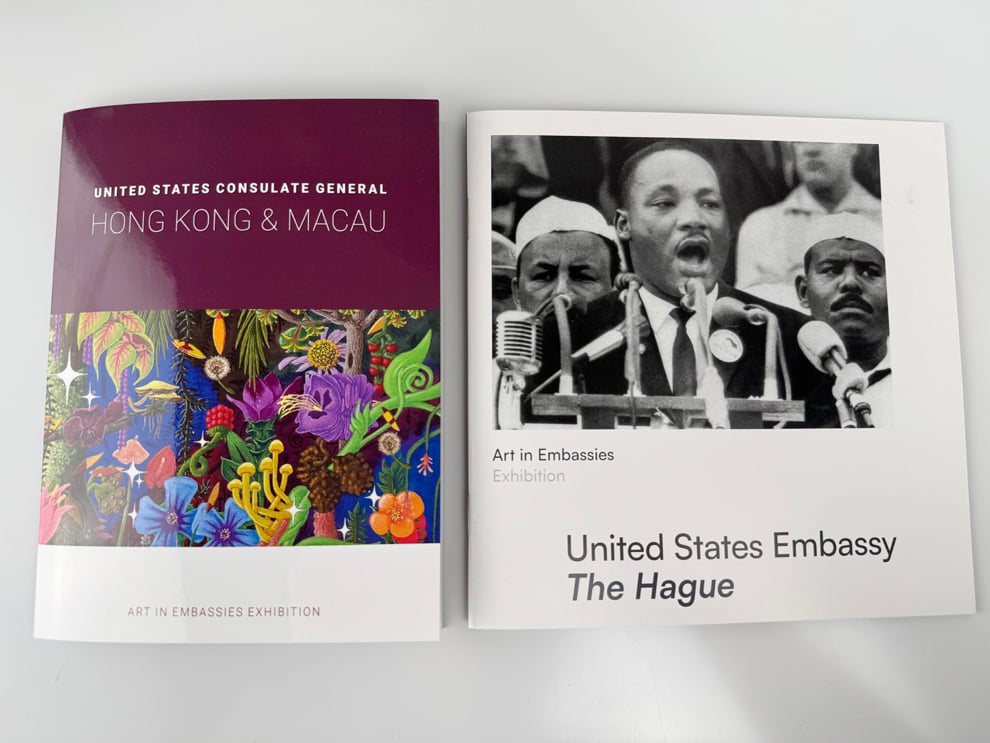
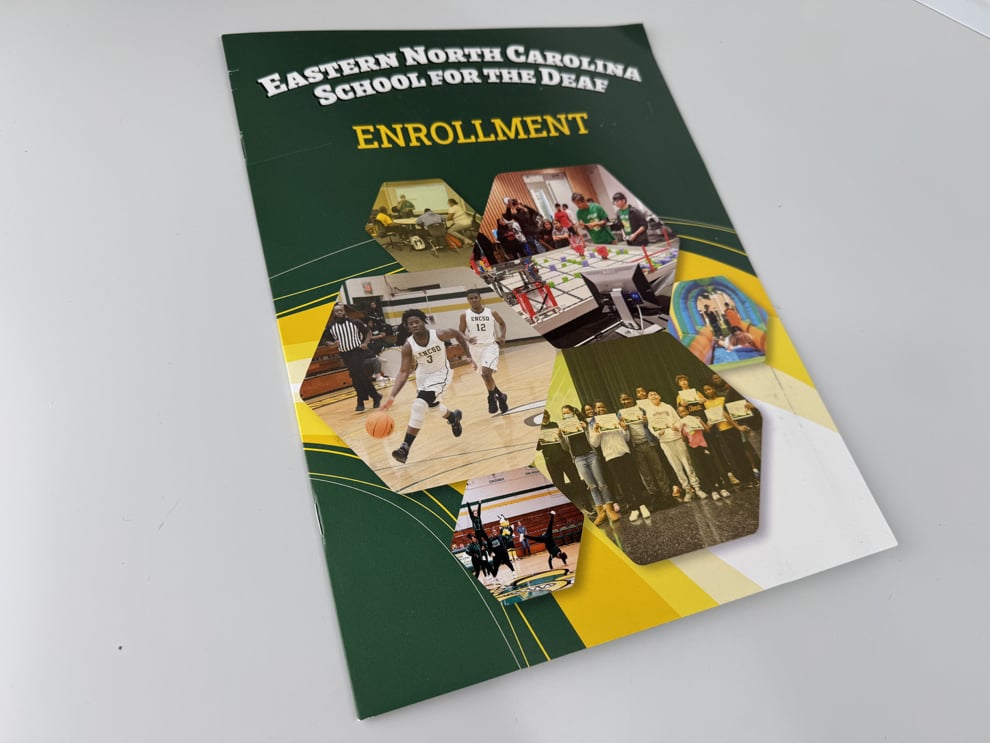
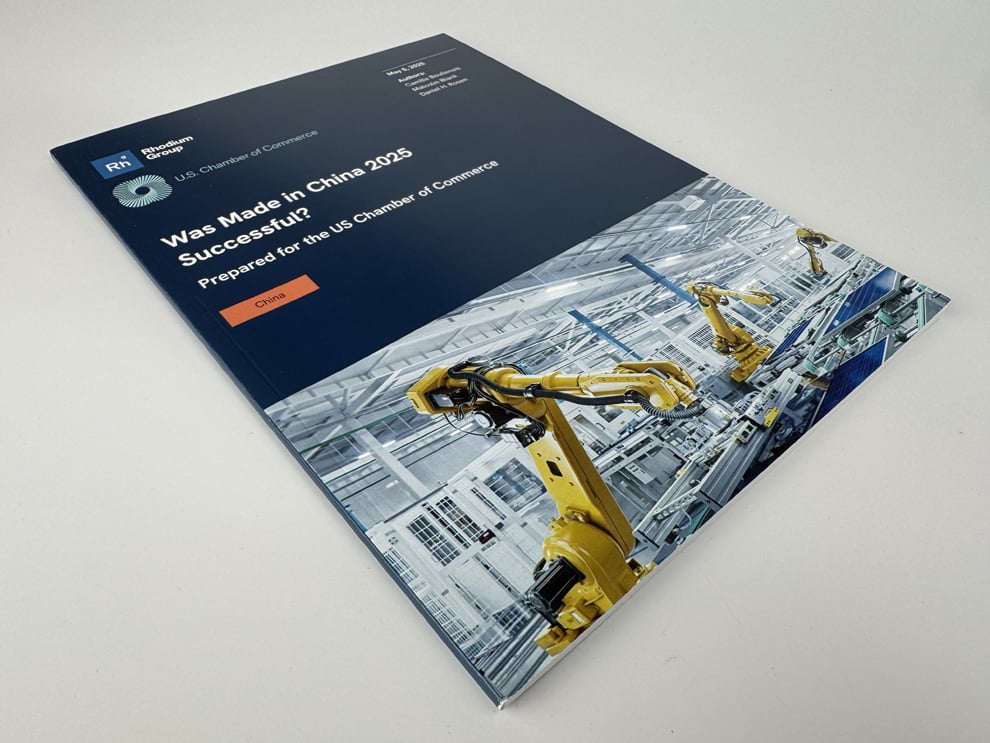
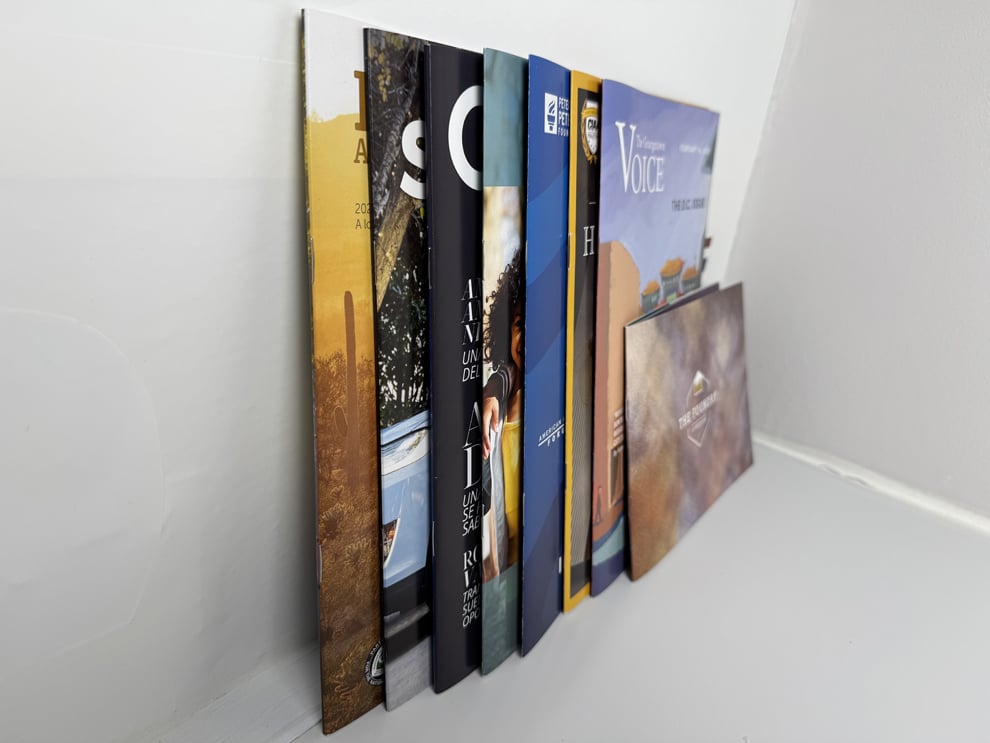
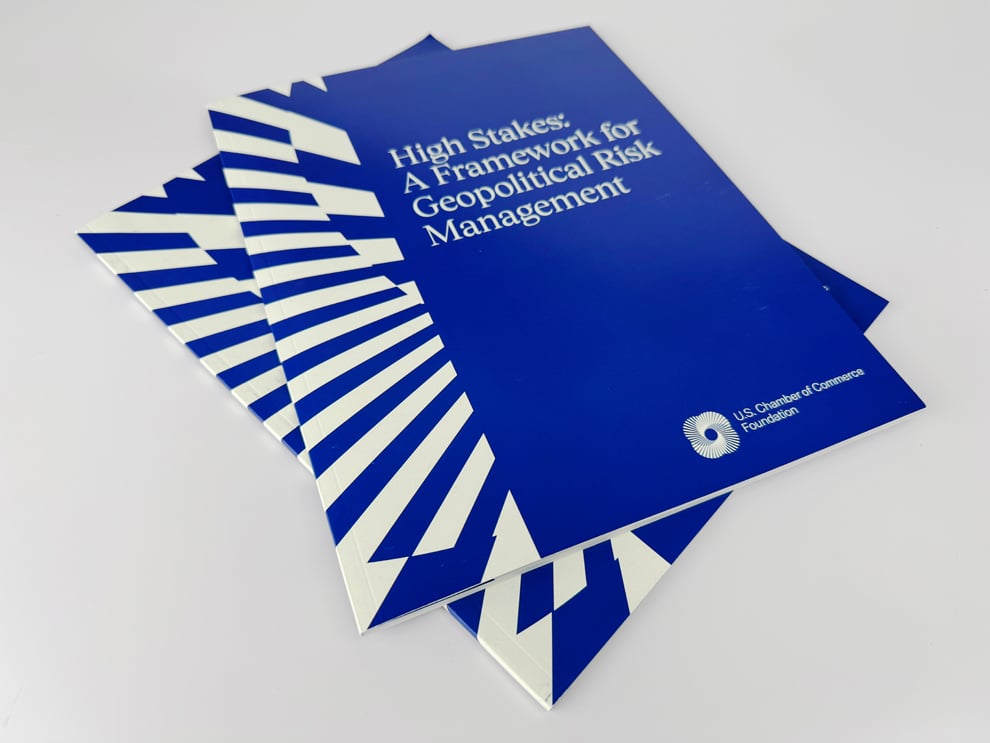
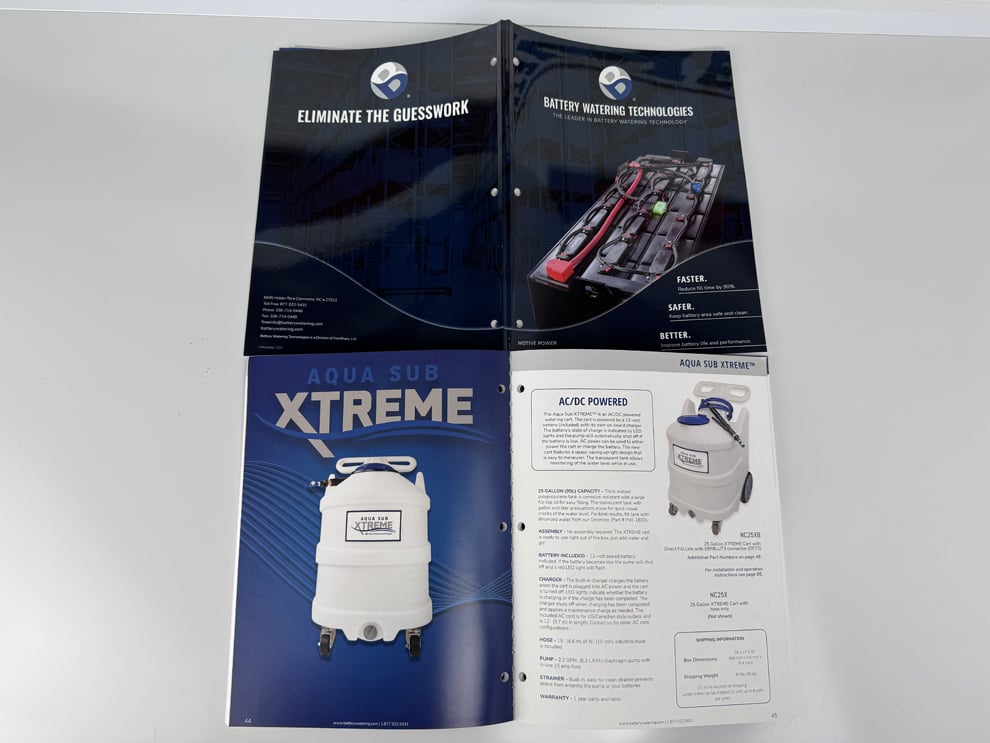
Hampton's aerospace, defense, and research employers compete for engineers, technicians, scientists, and skilled trades. At career fairs, campus visits, military transition events, and community outreach days, a recruiting brochure gives candidates something concrete to take away: what the work involves, why it matters, and how to apply. Often it is the piece a candidate shows a spouse or mentor that evening.
Heritage's part begins when your recruiting team's design is final. We print it so photography of your people and projects looks sharp, panels fold where the layout expects, and corporate colors stay consistent, with an electronic proof approved before the run.
Recruiting materials also face a format question. Sometimes the story fits comfortably in six panels; sometimes it needs program descriptions, career paths, and benefits detail that would crowd a folded sheet. Choosing the right format before the design is finished saves time later. When a hiring event date is fixed, share it early so production can be planned around it with appropriate urgency.
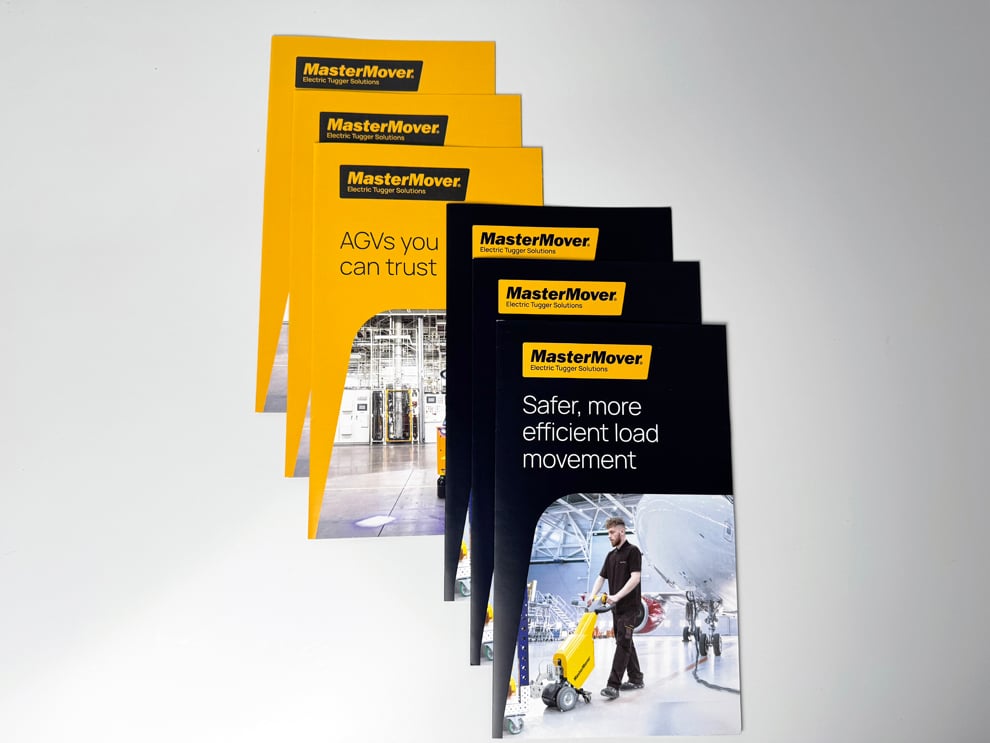
Veteran ownership and family leadership are part of who Heritage is, a background many Hampton organizations will recognize. That perspective shapes how we treat commitments: respond directly, flag schedule risks early, and keep accepted work moving until it is finished. A hiring event does not wait, and neither do we.
Technical employers also expect the materials that represent them to be precise. With printing experience reaching back to 1977, Heritage checks each file against the selected fold and finished size so headings, photos, and contact details land where they should. Color is managed with spectrophotometric measurement and production-specific profiles where relevant, keeping corporate colors and imagery consistent within what the chosen paper and finish can reproduce.
Every order includes an electronic proof before printing, a clear checkpoint for teams that need recruiting, communications, or security review before materials are released. When a qualifying Custom Quote is accepted and assigned, the Project Coordinator becomes your direct phone and email contact, and established clients may keep that coordinator for repeat recruiting cycles.
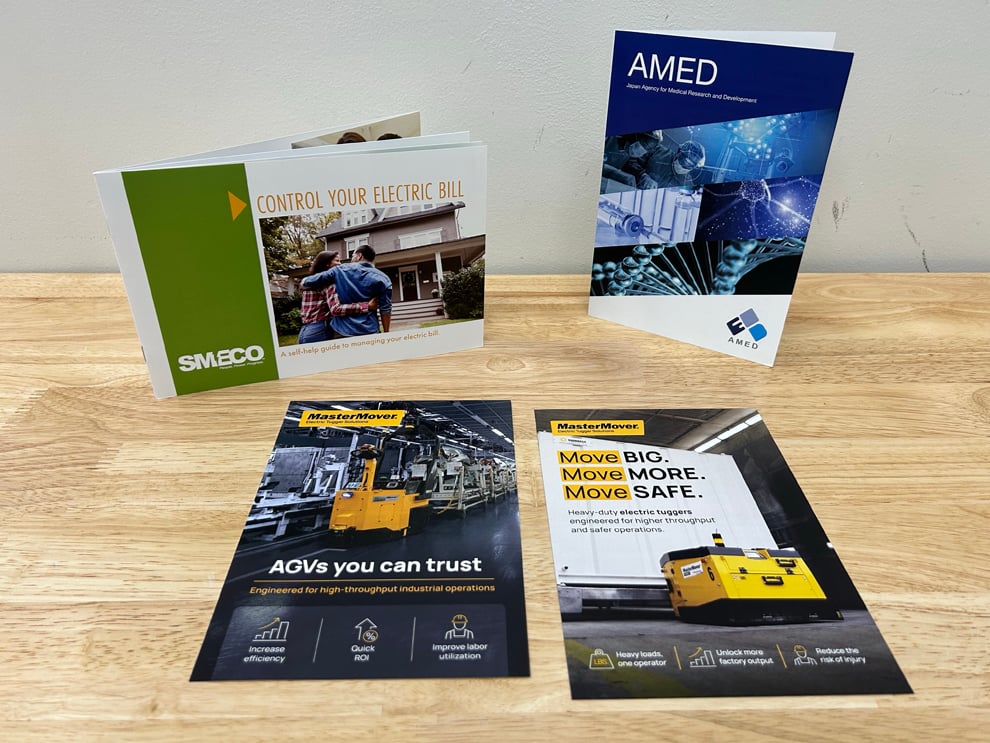
Hand candidates a folder with brochures, position summaries, and benefit details after an interview or event.
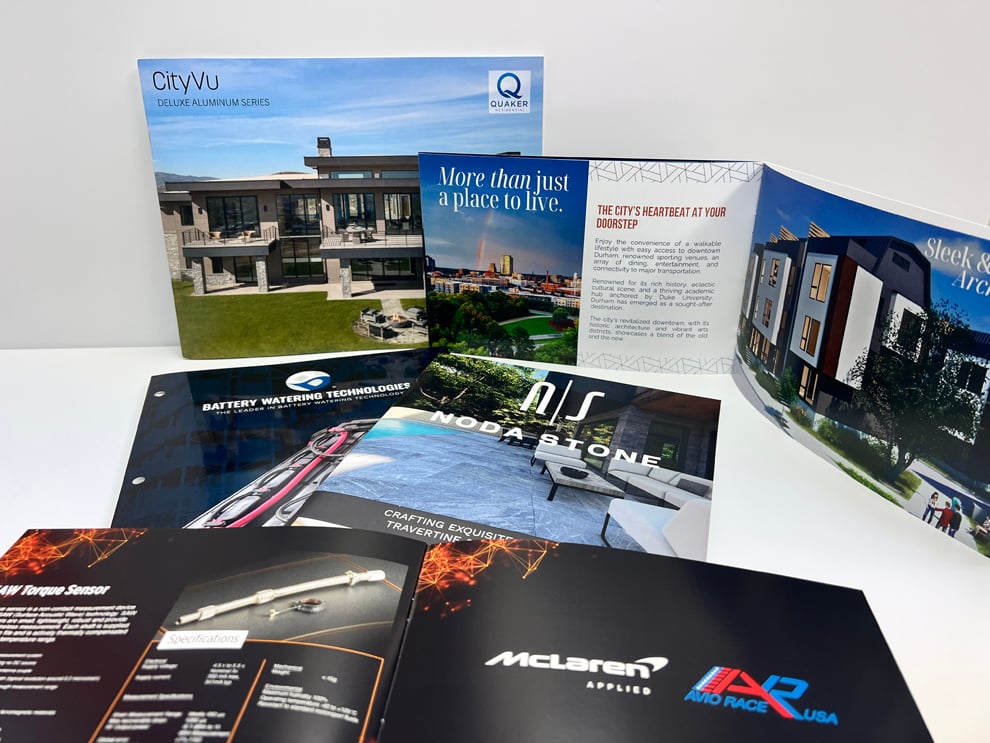
Coordinate flyers, postcards, and handouts for career fairs and community outreach.
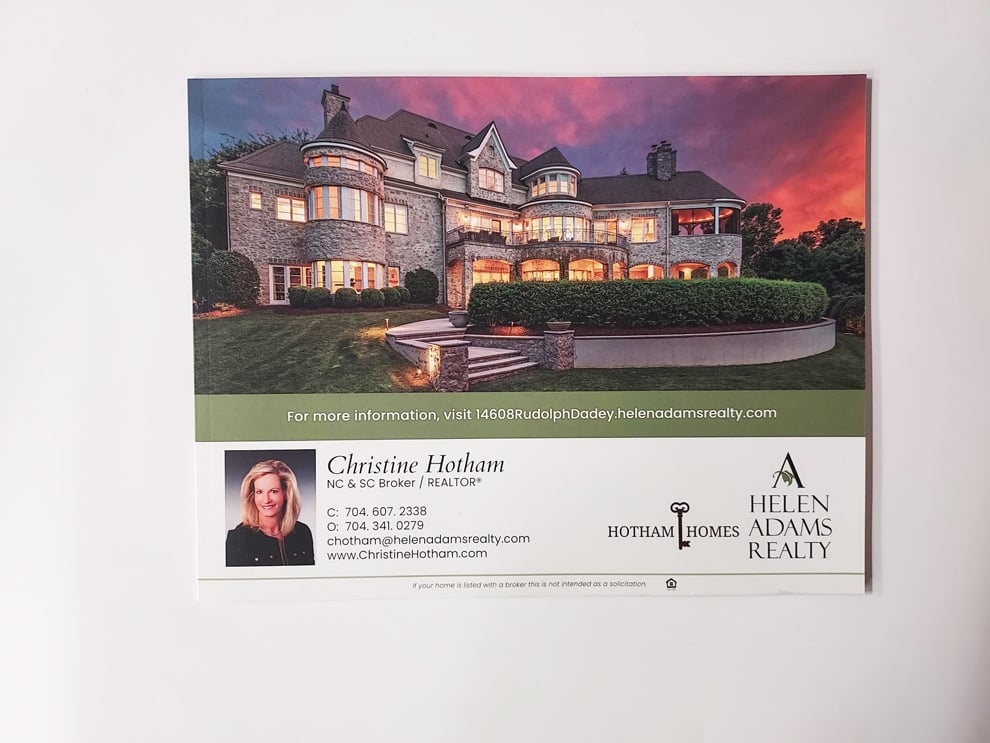
Reach candidates or community audiences by mail when addressing and postal preparation are part of the scope.
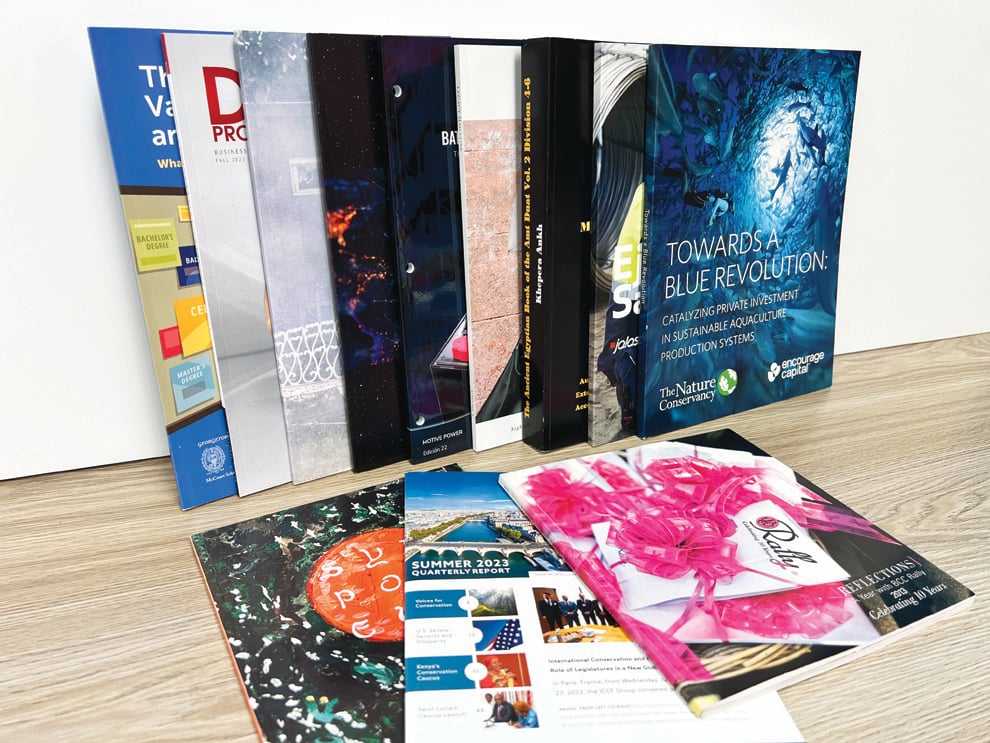
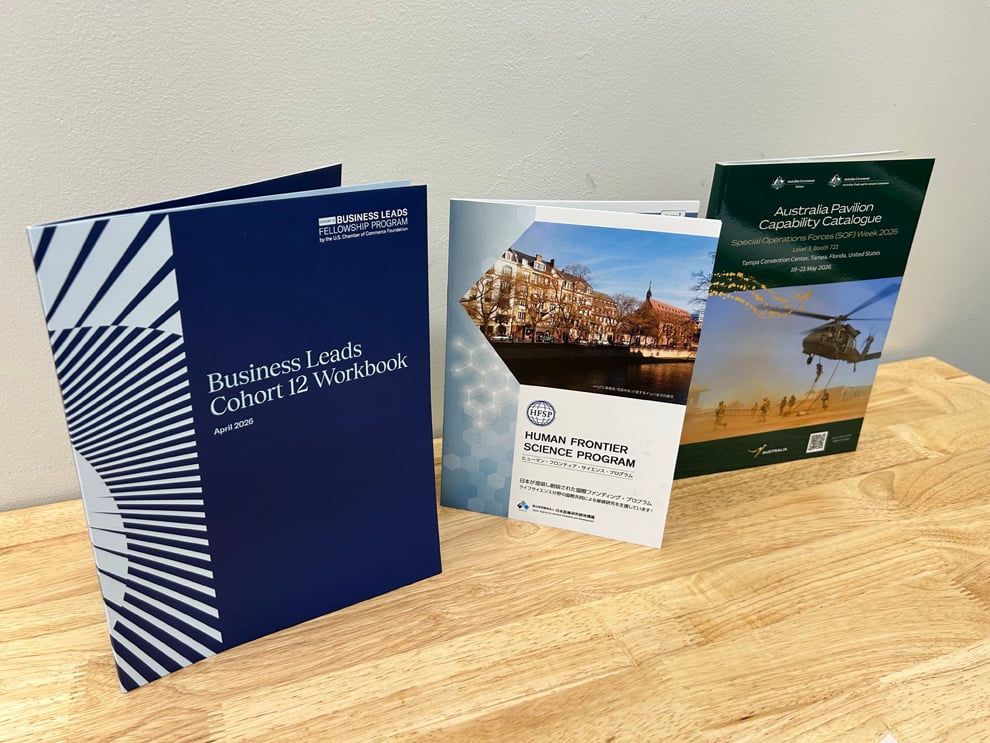
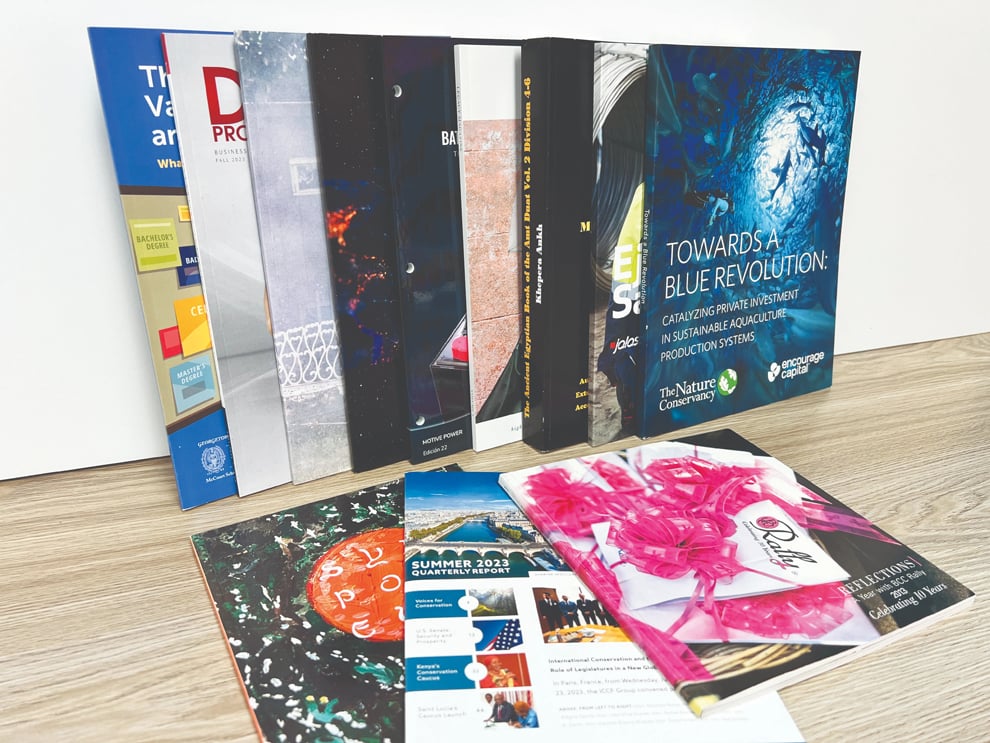
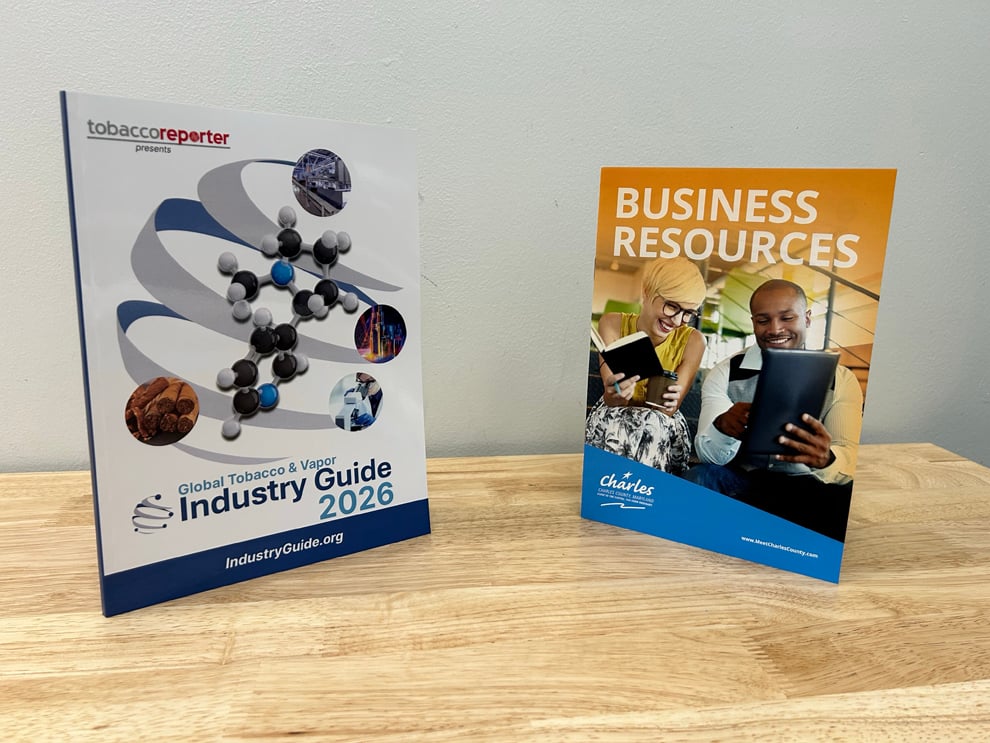
Choose a bound format when career paths, program descriptions, or benefit details need full pages.
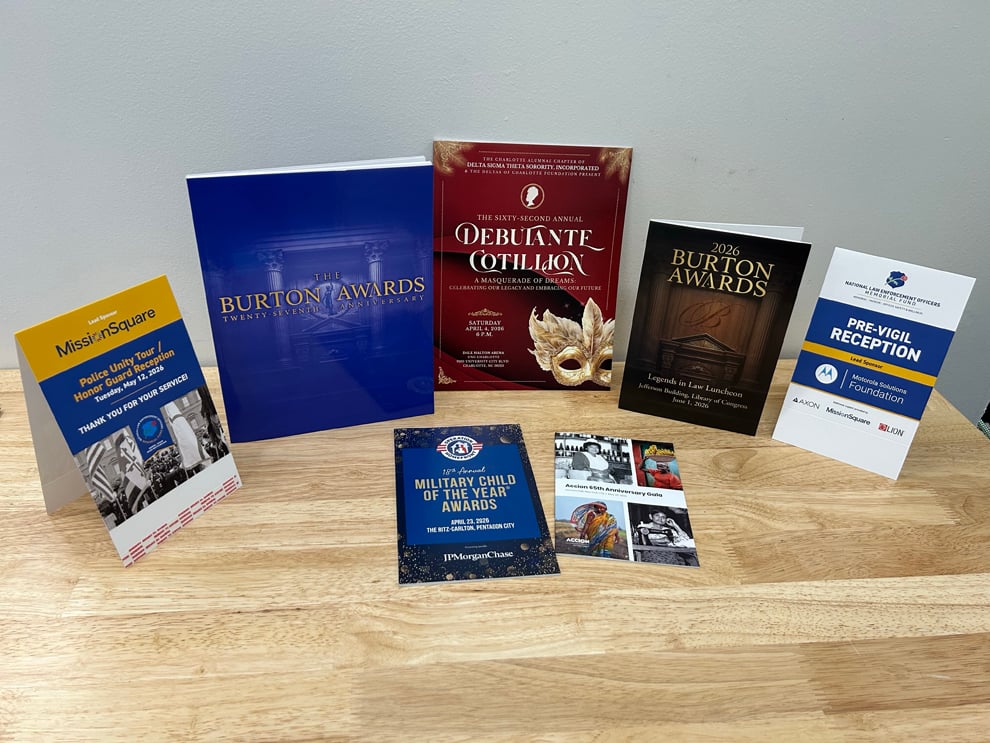
Print programs for open houses, recognition events, and technical symposiums.
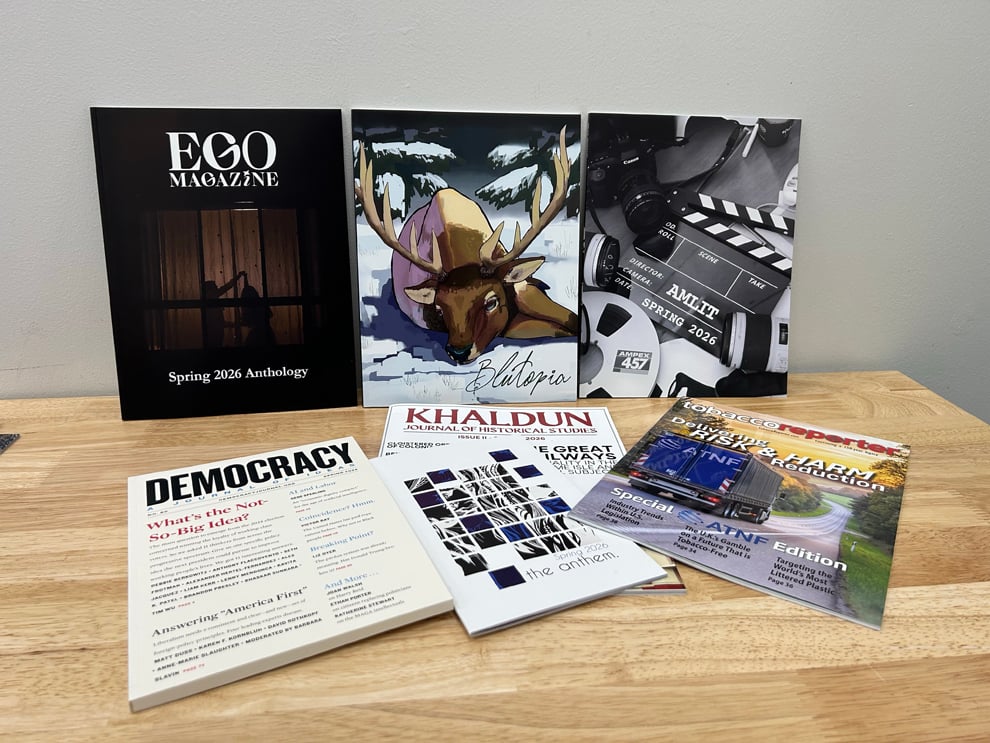
Produce technical overviews, research summaries, and reference guides.
Keep employees, families, and partners informed with a recurring printed edition.
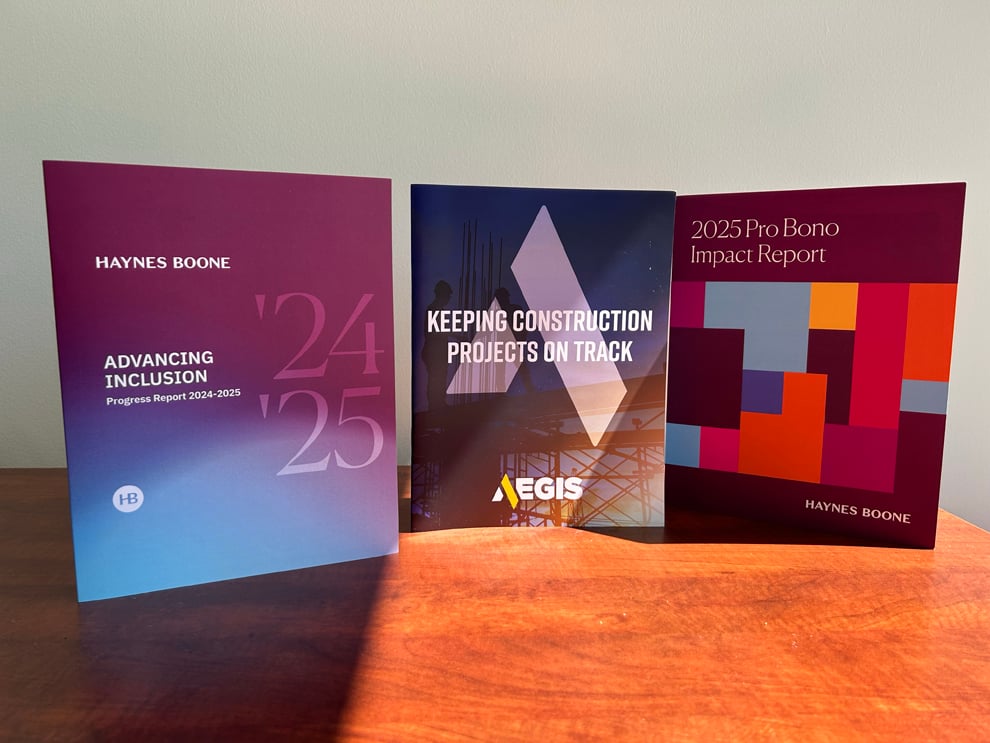
Share yearly accomplishments, research progress, and community impact with stakeholders.
Recruiting teams with role-specific versions, file adjustments, or brochures headed to several career fairs and transition events should submit a Custom Quote for work valued at $2,000+. After Heritage accepts the quote and assigns the order, the Project Coordinator is the person your recruiters can call or email about it. When only one print-ready brochure is involved and the Store lists its configuration, self-directed ordering at Heritage's lowest available pricing is the quicker route.
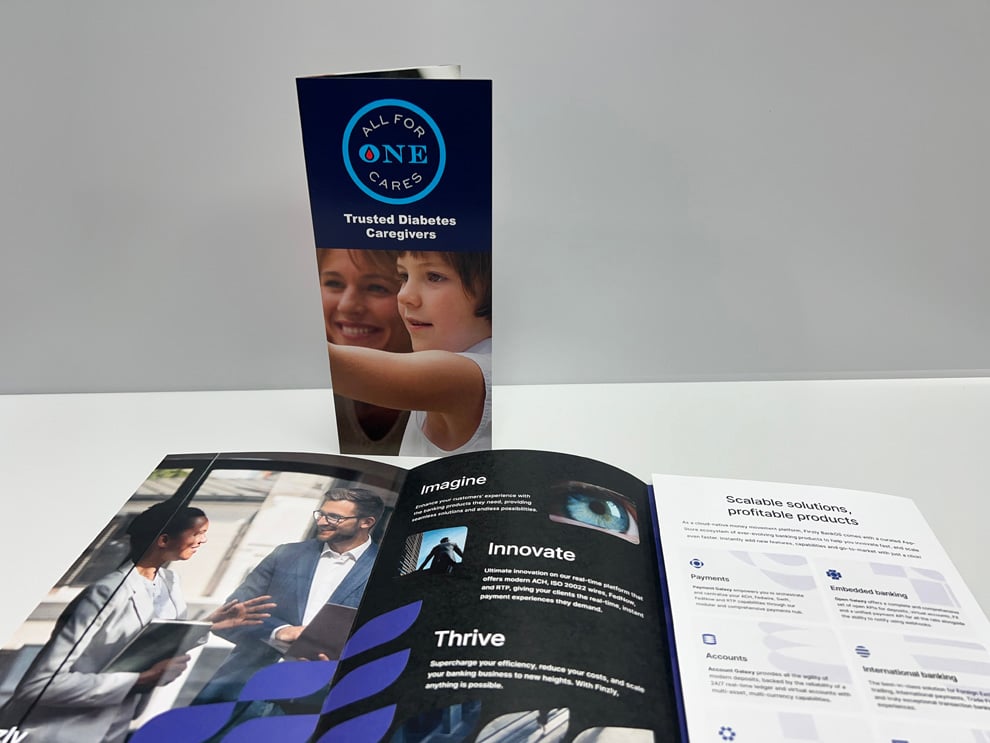
The easiest way to decide is to outline the content before the design starts. If the core message fits within six or eight folded panels, with room for images and white space, a brochure keeps it compact, easy to carry, and economical to distribute widely. Candidates can read it in a few minutes and keep the contact panel.
If the outline includes several career tracks, detailed program descriptions, benefit tables, or profiles of current employees, a bound booklet usually serves the reader better. Page-to-page reading gives each topic space to breathe, and the format signals a deeper resource. Squeezing that content into a brochure often leads to small type and crowded panels that work against recruiting.
Some organizations use both: a brochure for career fairs and first conversations, and a booklet for finalists or new hires who need the full picture. Heritage prints both formats, and the electronic proof process applies to each. Choosing the format early lets design, approvals, and production follow a single, realistic plan rather than a late change of direction.
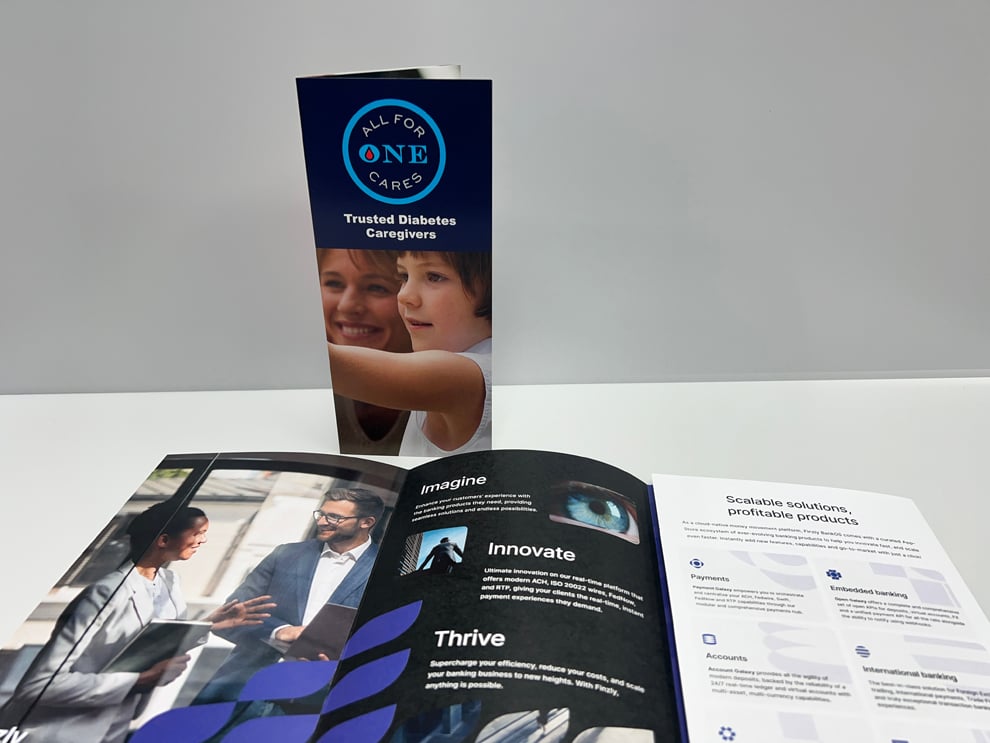
A tri-fold provides six panels: three on the outside and three on the inside. In practice, one outside panel is the cover and another often carries contact or application details, leaving four panels for the core story. If your outline needs much more than that, consider a bi-fold with larger panels or a booklet.
Yes. Role-specific versions can change imagery, job descriptions, and recruiter contacts while sharing the same design. When you order, spell out how many of each role version you need and who on the recruiting team approves it, and Heritage will proof each one separately so a technician brochure never carries an engineering recruiter's details.
Check job titles, program names, benefits language, application links, and contact details, along with photography captions and panel order. If materials require security or communications review, complete it before approval. The proof confirms content, not physical color or the physical fold.
Usually not. Open positions change quickly, and a brochure that lists them can become outdated within weeks. Describe role families, career paths, and what makes your organization a good place to work, then point readers to a careers page for current openings. The printed piece stays accurate longer and can be reordered without revisions.
Generally, yes, because a booklet uses more paper and requires binding, while a brochure is a single folded sheet. The difference depends on page count, quantity, and specification. If budget matters, a brochure for broad distribution and a smaller run of booklets for finalists can balance cost and depth.
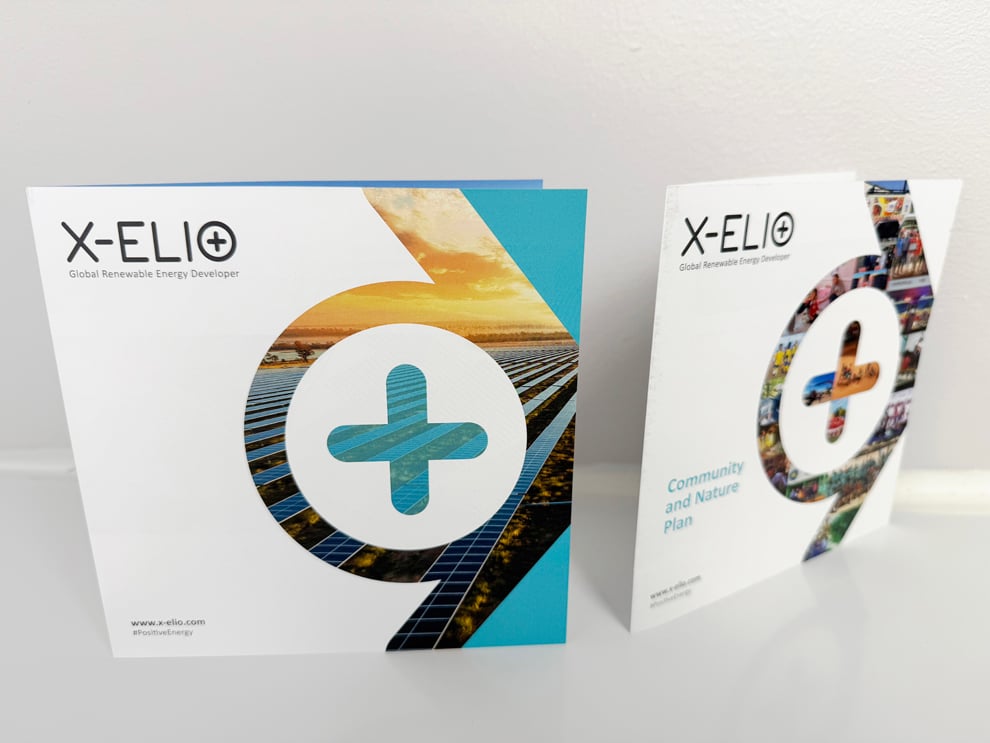
Wide shots of aircraft, facilities, or test environments can span panels effectively, but keep people and key equipment within a single panel. A fold running through a face or a critical component is distracting, and normal folding tolerance means the crease may shift slightly from its intended position.
Choose a sturdier stock that resists bending and curling in humid or breezy conditions, with a coated surface that handles damp hands and repeated handling. Heavier stocks may need scoring to fold cleanly. The goal is a brochure that still looks professional after a long day in a tent or open-air venue.
Yes, and it saves listing openings that change quickly. Place the code on one panel away from folds, with strong contrast and clear space around it, and add a short web address underneath. Test the link on the proof, and point it to a page that will stay current for as long as the brochure circulates.
Yes, when the accepted plan includes multiple destinations. List each event location, the quantity it needs, a receiving contact, and the arrival deadline. Campus and military-installation events often have specific delivery rules, so confirm them with each host before production finishes.
Addressing and postal preparation can be handled with printing when mailing is in the order's accepted scope. Your organization provides the recipient list, accurate and authorized for that use, in the format agreed. Delivery after the Postal Service accepts the mailing follows its schedule, so plan around any hiring event dates.
It is a good fit for a single print-ready recruiting brochure in a configuration the Store lists. You choose the options, order yourself at Heritage's lowest available pricing, and approve an electronic proof before printing. Role versions or multi-event delivery are better handled through Custom Quote.
For qualifying Custom Quote orders of $2,000 or more, Heritage can provide production-oriented file preparation and layout adjustments so artwork fits the size and fold. That help covers print readiness, not writing or creative development. Online Store orders require artwork that is already print-ready.
Corporate colors can be supplied as PMS targets, and Heritage reproduces them using calibrated measurement and profiles specific to the printer and paper. The selected stock affects how closely a color can be matched. For qualifying Custom Quote orders, a Physical Production Color Proof lets your team approve color on the production paper.
Share the date with Heritage immediately, along with the planned size, fold, paper, and quantity. Heritage evaluates the remaining window as soon as print-ready files come in and tells you honestly what fits. A standard tri-fold on an available paper usually offers the most schedule flexibility.
Choose Custom Quote for qualifying orders of $2,000 or more that need role versions, production-oriented file adjustments, physical color proofing, or delivery to several events. After Heritage accepts the quote and assigns the order, a Project Coordinator becomes your direct contact.
Yes. Heritage supports employers, research organizations, and other clients across Hampton Roads, Virginia, and the broader Mid-Atlantic. Brochures can go to your office, straight to a recruiting event, or anywhere else the accepted plan specifies, as long as receiving details are confirmed ahead of time.
Heritage Signs & Displays created new museum signage for the Military Women’s Memorial in Arlington, VA. The project included custom signs, wall wraps, dimensional letters, and standoff-mounted displays to honor the legacy of U.S. servicewomen and the donors who supported the memorial. The updated interior features impactful designs, including a "Our Legacy" wall display and panels showcasing historical contributions and artwork, creating a transformative tribute to women in the U.S. Armed Forces.
Heritage Signs & Displays' collaboration with The Gathery to brand Union Market in Arlington, VA, for Indeed's "Ready to Work" job fair. The project included custom event displays, wall graphics, window graphics, and wayfinding signs, creating an immersive and visually appealing environment. The branding enhanced the venue, reflected the event's mission, and provided a seamless experience for attendees.