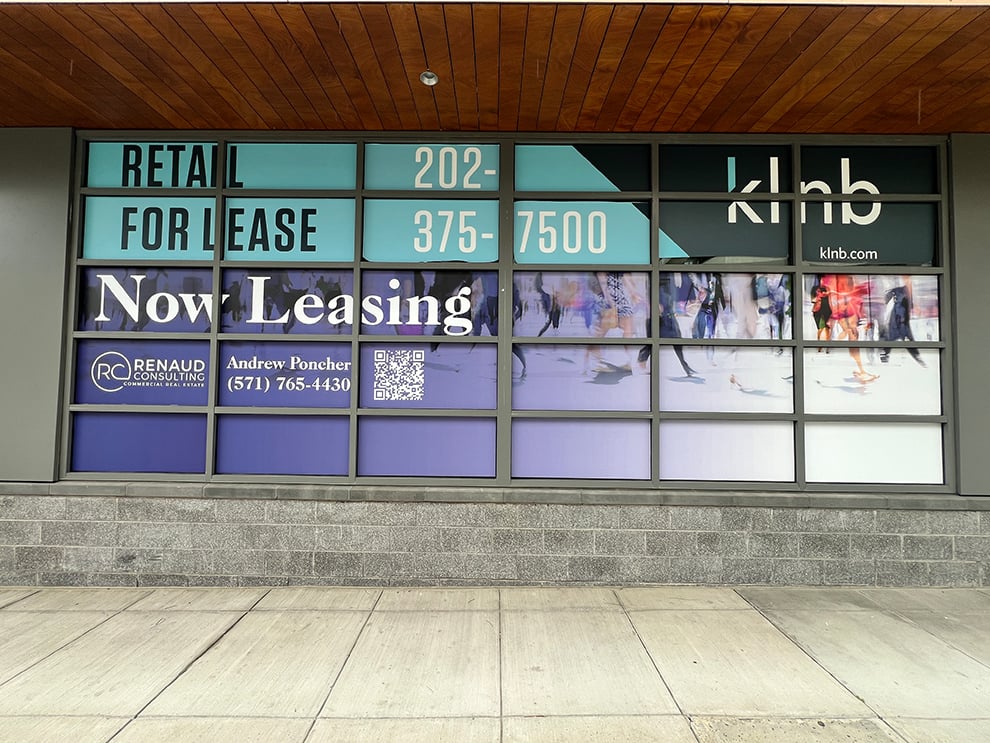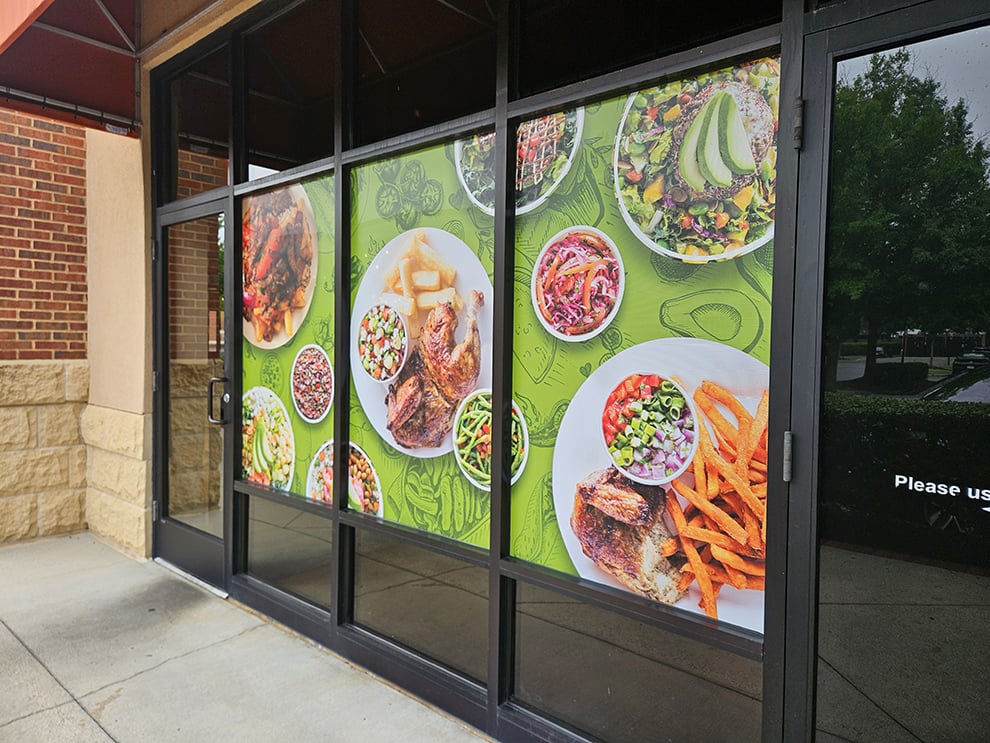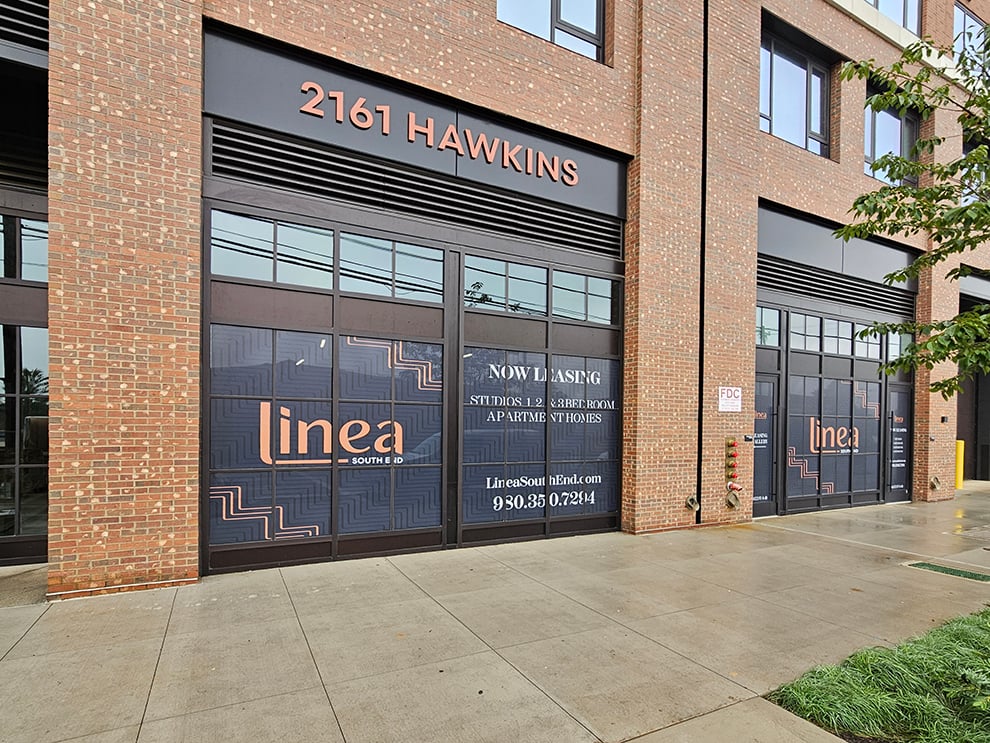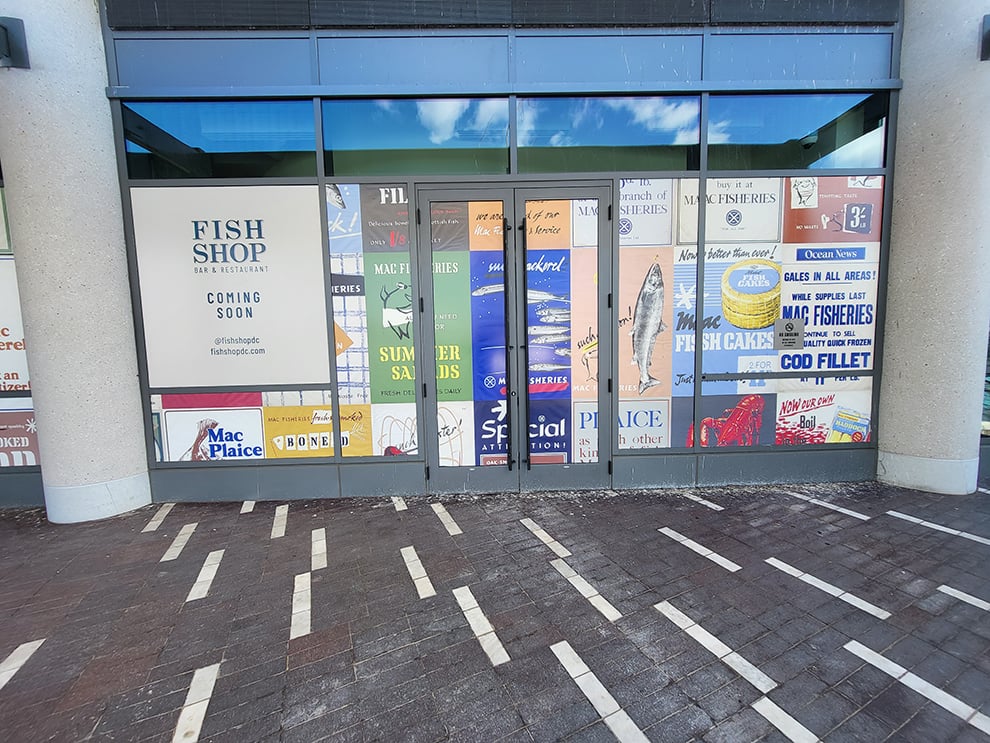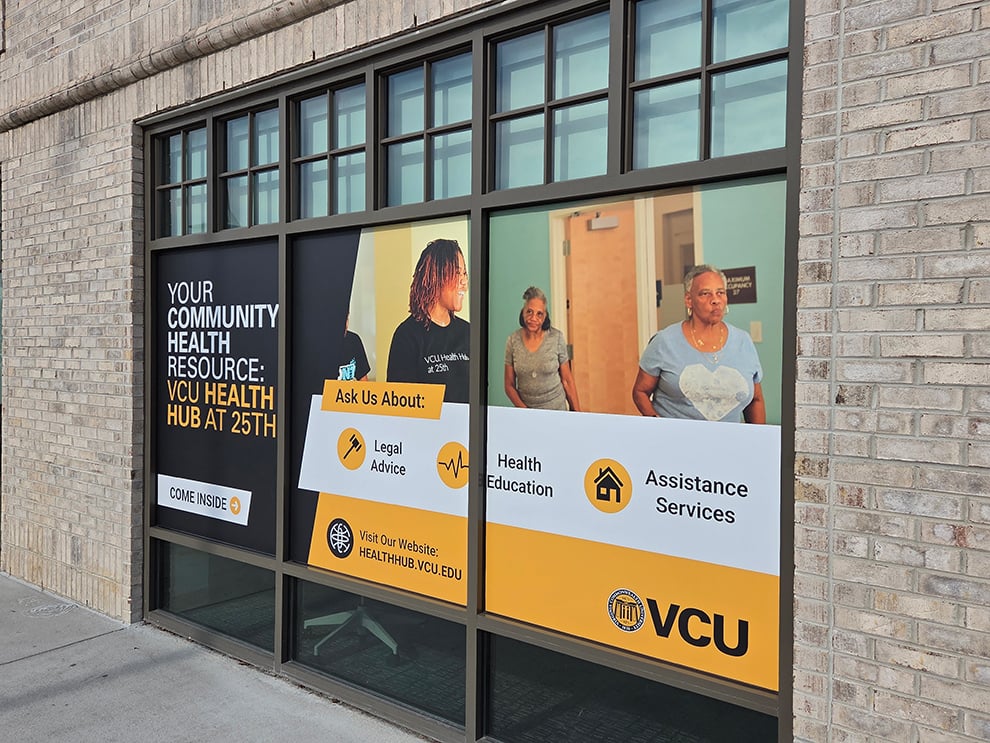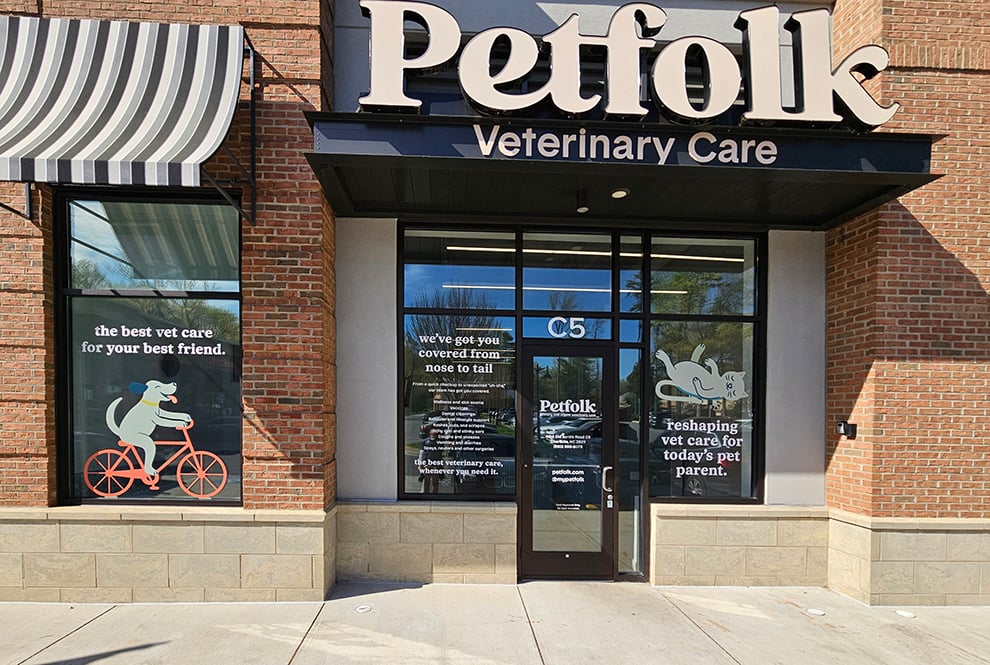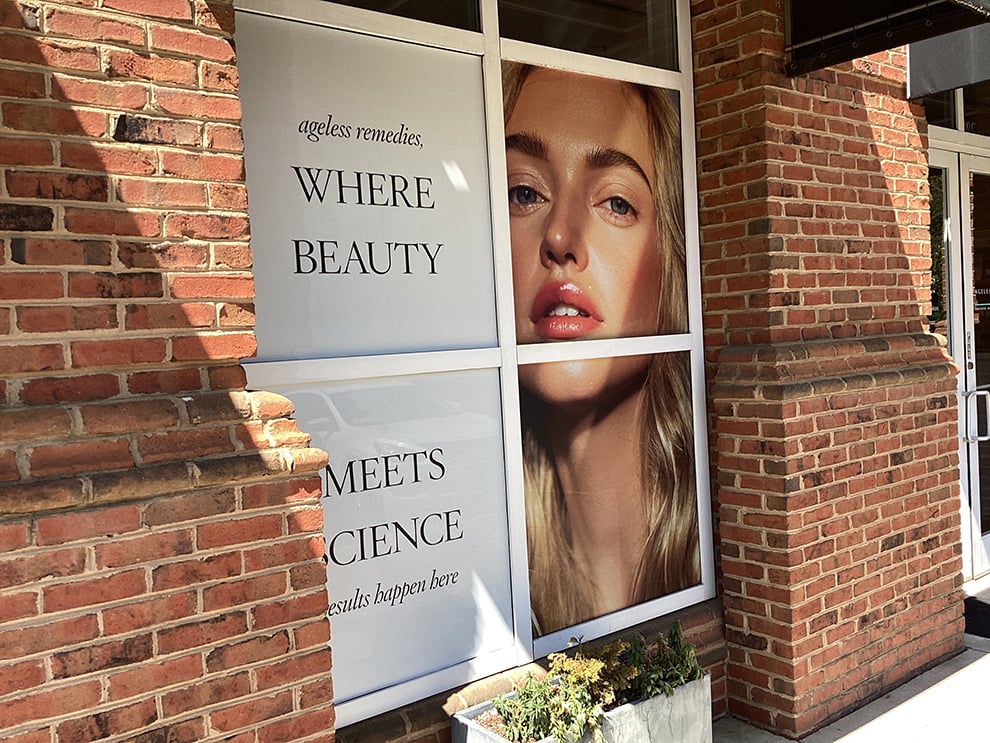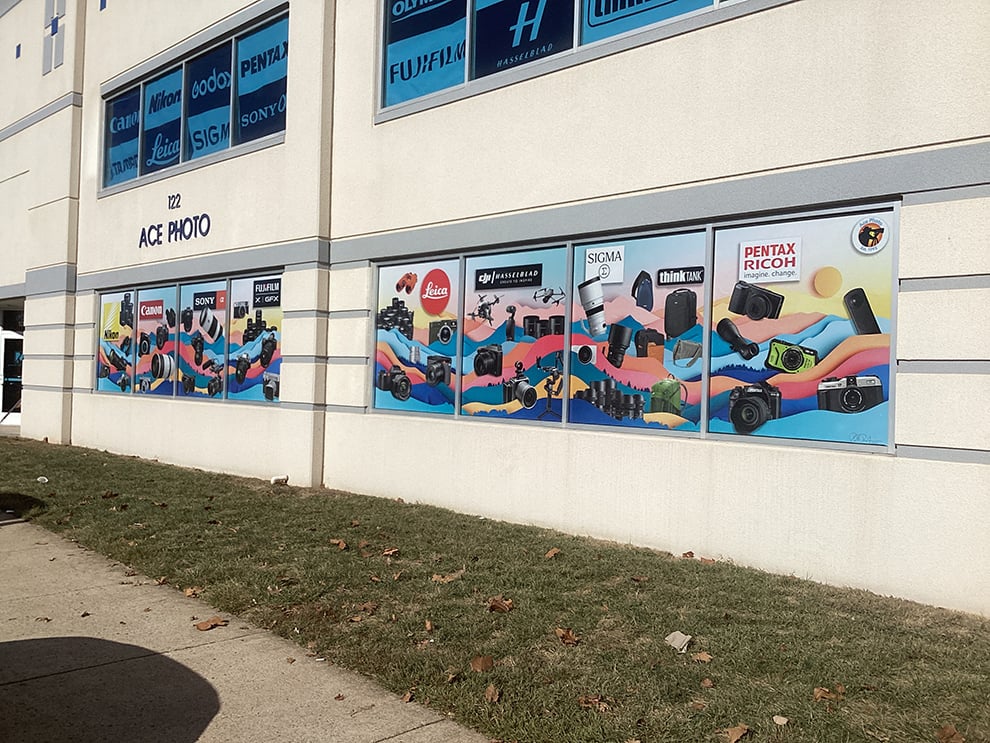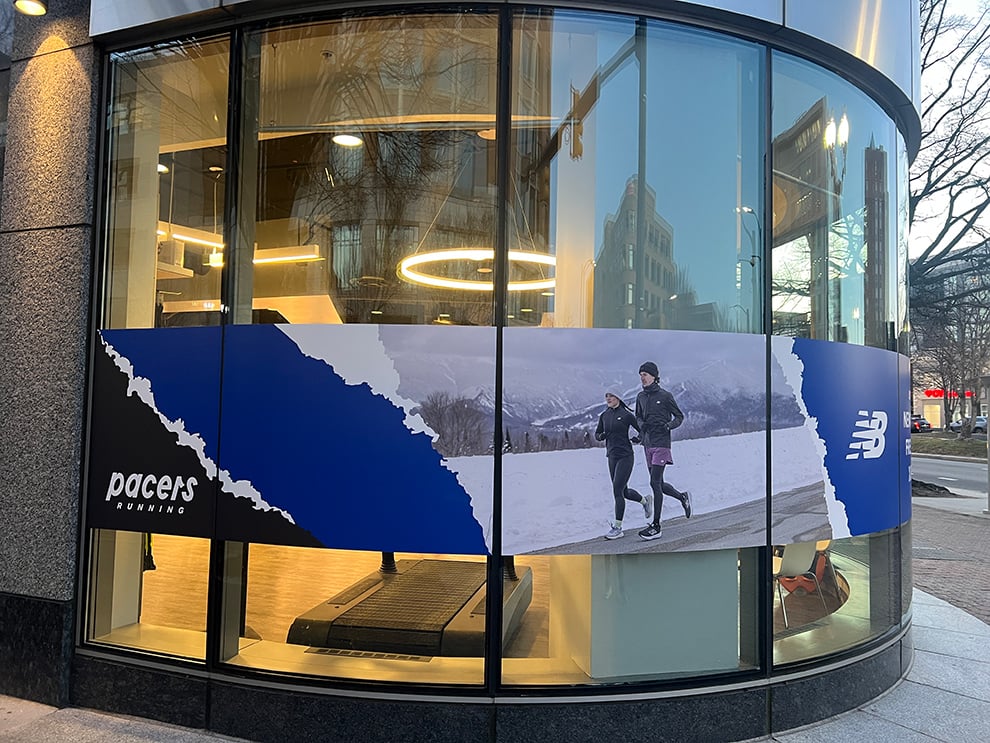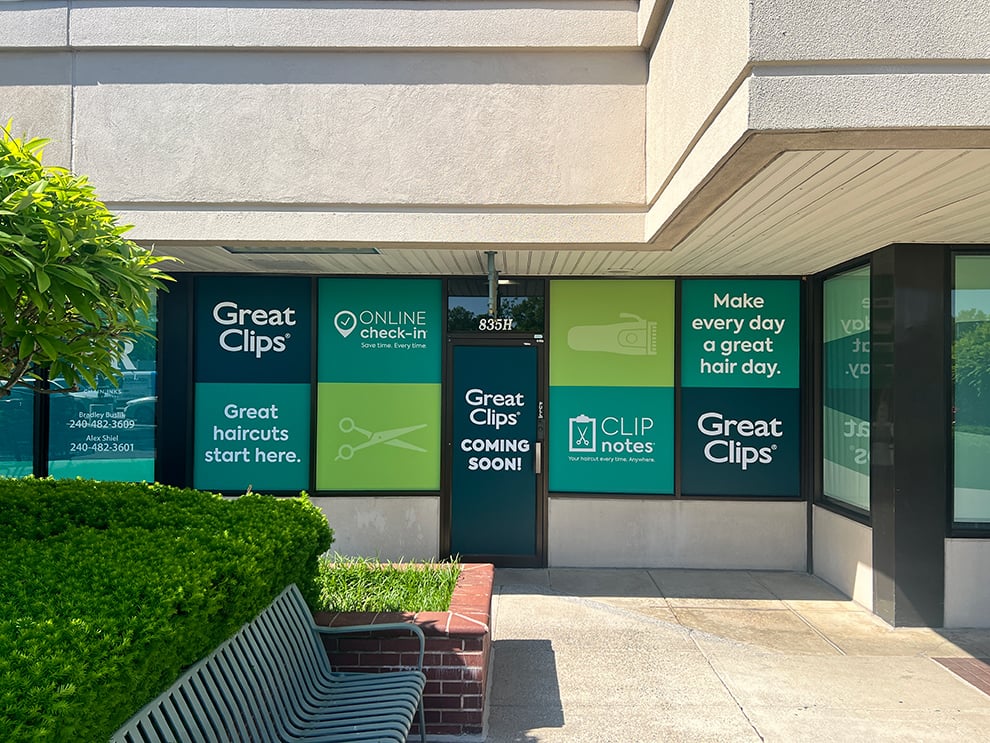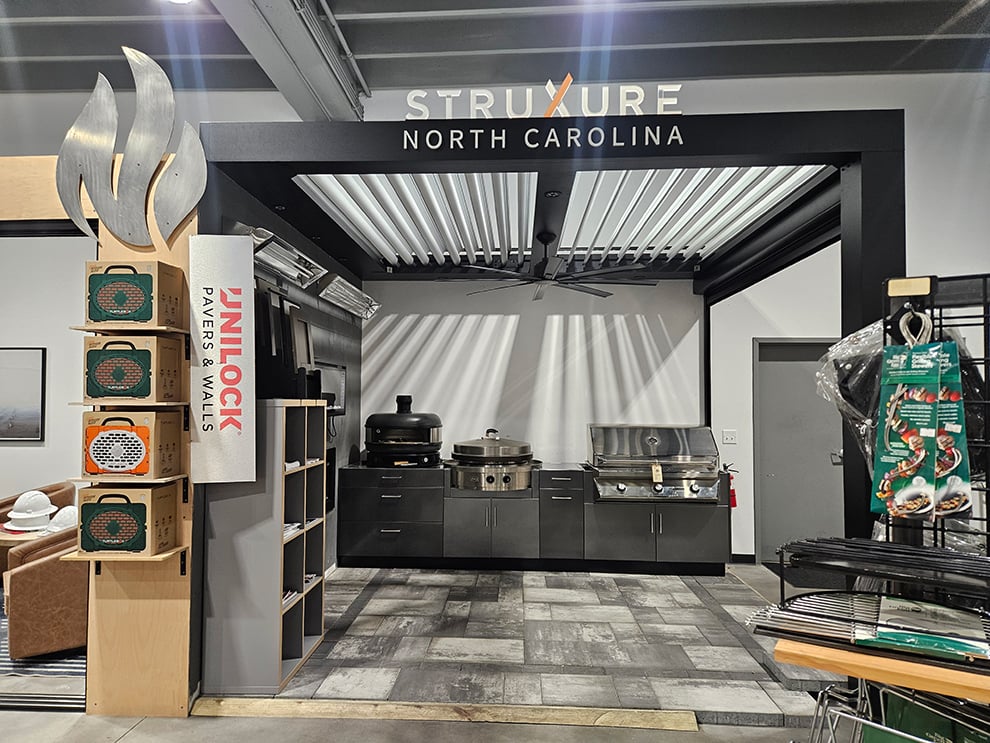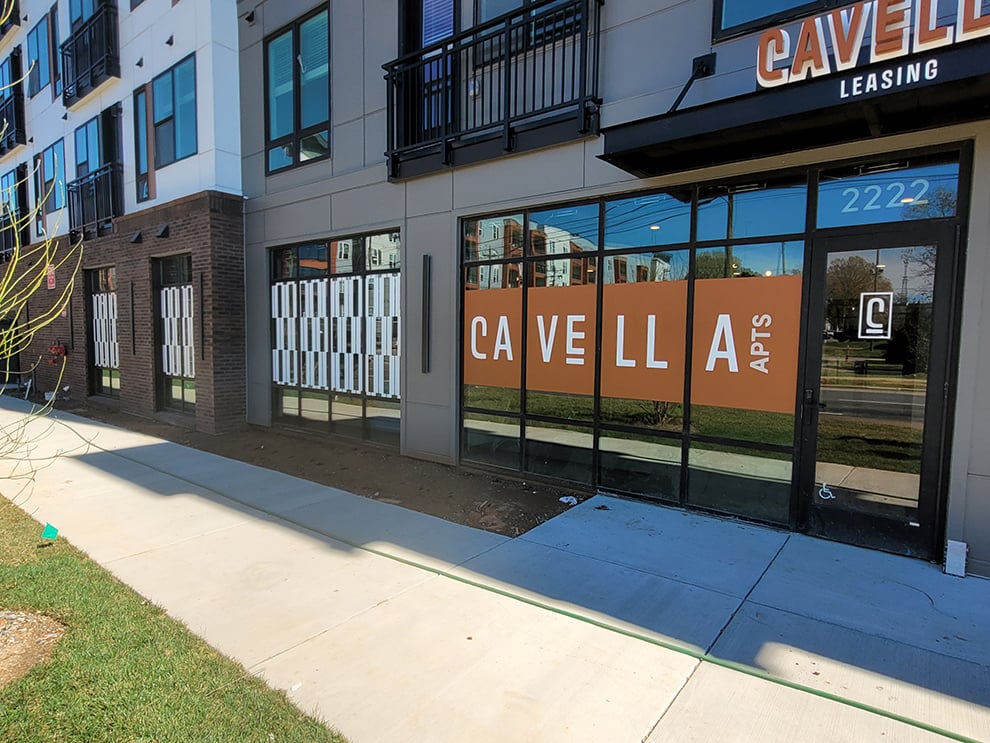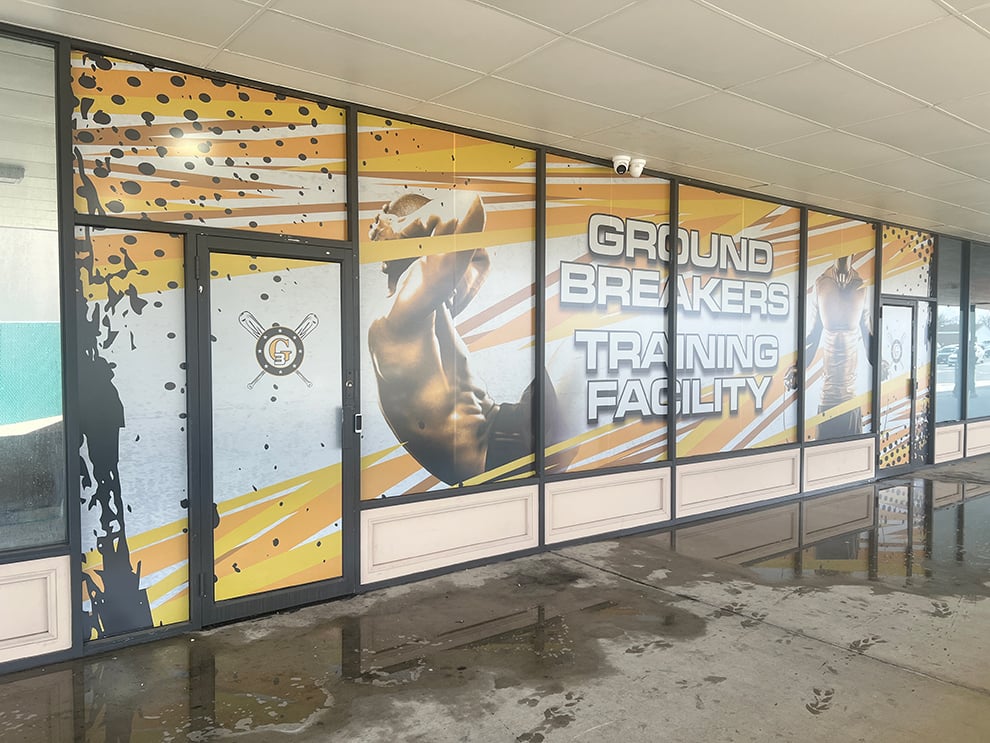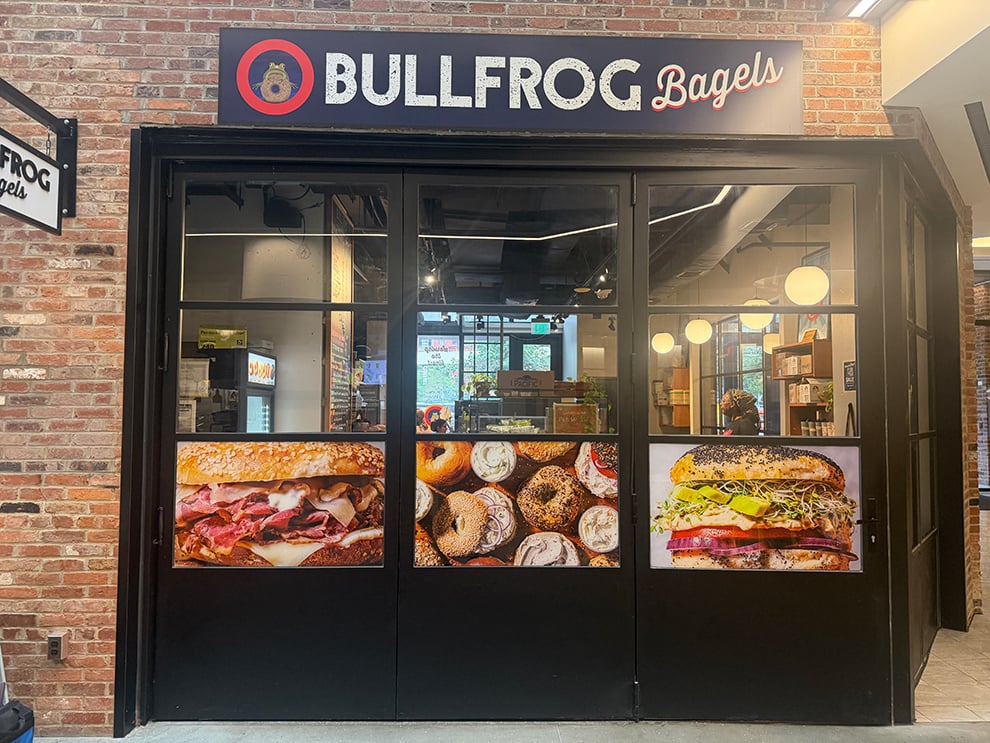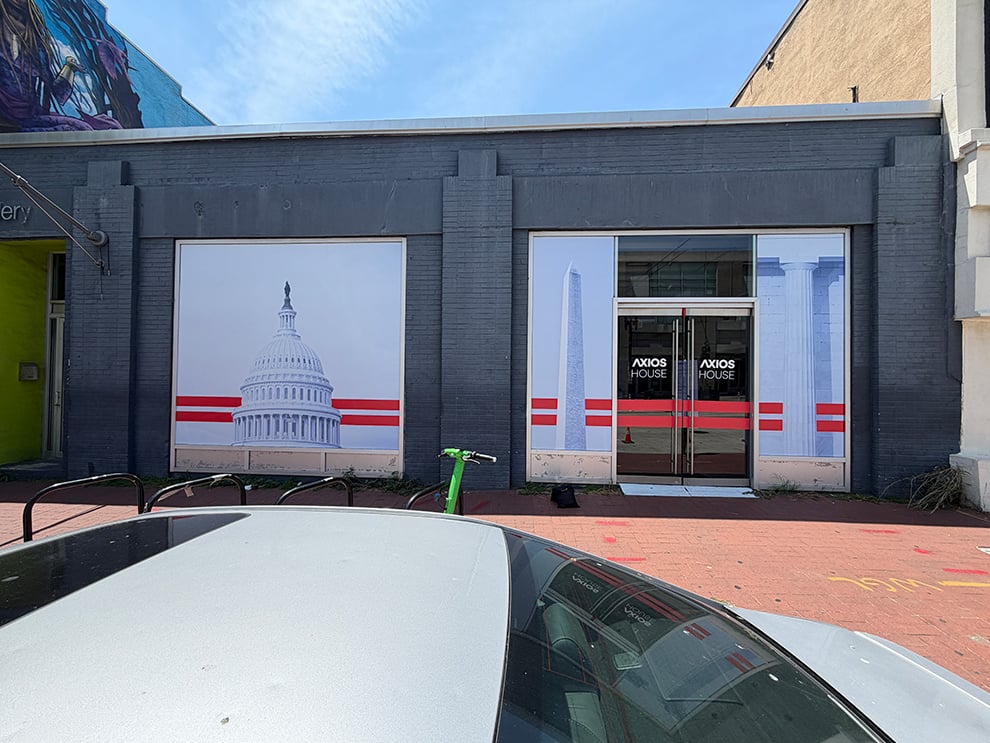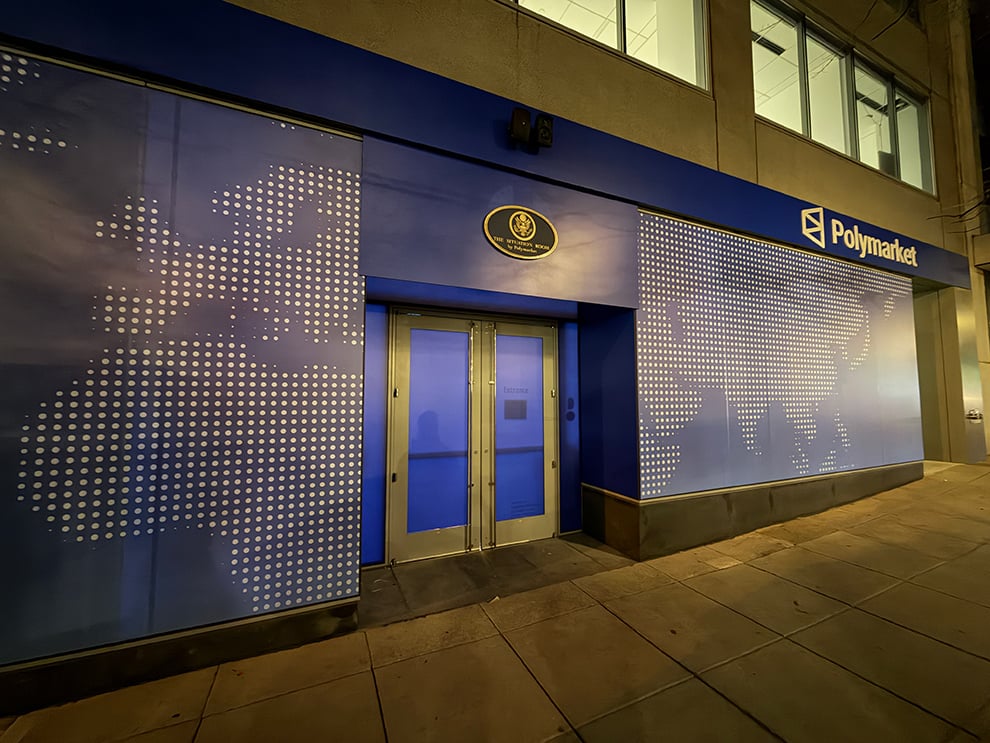
A visitor forms an opinion about your business before their hand ever reaches the door. Storefront graphics own that split second. Applied lettering, a logo on the glass, service details, posted hours, privacy film, and glass identification tell people they have arrived at the right address and can walk in without hesitating. Covering every pane with copy is not the objective. A purposeful entrance is: one that names the organization, works with the building instead of against it, and sets expectations for the office, clinic, showroom, or retail floor waiting inside.
We approach storefront graphics as the first chapter of a branded environment, not a one-off purchase. Glass introduces who you are. Lobby signage, dimensional features, printed wall graphics, and displays then tell the story a doorway was never built to hold. When the exterior face and the interior are mapped out in a single conversation, the two support each other rather than pulling attention in opposite directions.
Every engagement starts with a simple question: what should someone recognize, understand, or feel the moment they arrive? We turn those answers into environmental graphic design built around your actual building, how the space gets used day to day, and what our installers will find on site. One dedicated Project Manager carries the work through discovery, design, production, fabrication, and professional installation. Because fabrication happens inside our operation instead of through an outside vendor, approved design intent survives the trip from concept to finished wall.
For anyone responsible for a visible, significant investment, that continuity is the real advantage. Project knowledge stays intact, details are not re-explained at every stage, handoffs shrink, and a single accountable relationship owns the schedule, the approvals, and the outcome. Heritage opened in 1977 as a commercial printing company. Signs, interior graphics, workplace branding, and event environments became our defining focus starting in 2009. Today we are an award-winning, veteran-owned, family-led company approaching 50 years in business, staffed by teams who know that results come from design fit, material fit, and installation planning working in concert, not from artwork alone.
Storefront Graphics is also where our interior work moves outward to the face of the property. When we are producing and installing signs and graphics inside, the same project can include selected non-illuminated exterior elements that strengthen identification before anyone reaches the entry. Woodbridge organizations get local field support tied directly to our Mid-Atlantic production and fabrication resources, plus the broader Heritage network across the region. We listen closely, recommend responsibly, and manage the logistics that move an accepted project forward. Our purpose is to honor God by serving clients and communities with excellence, which shows up as clear communication, careful stewardship, and follow-through you can count on.
Entry glass gives you very little space and very little time. People approach on foot, often carrying bags or a coffee, usually scanning for a handle or a suite number. That makes the storefront a poor venue for your full brand story and an excellent venue for recognition, orientation, and a sense of welcome.
We stage the sequence on purpose. Cut vinyl lettering or an applied logo claims the identity at the threshold. Frosted vinyl or a printed pattern handles privacy where sightlines matter, without giving up daylight or the views worth keeping. Once someone steps through, the focus moves to a lobby sign anchoring reception, then to wall graphics, dimensional pieces, or displays carrying mission language, company history, recognition, or culture.
Treating the door, the windows, the lobby, and the interior walls as one connected experience prevents the mismatched look that happens when each surface gets bought separately, months apart, from different suppliers. You end up with an arrival that feels deliberate and an interior that continues the thought instead of starting a new one.
Clients in Woodbridge are rarely shopping for a decal. They are choosing who will decide what the entrance should say, how it ties to the interior, and whether the approved concept can actually be built and installed on the building as it stands today. Our One Dedicated Project Manager System keeps that line of decision-making unbroken from the first call through the final walkthrough.
Our environmental graphic designers work directly with whoever owns the brand and the space, whether direction comes straight from you or gets developed alongside architects, interior designers, branding agencies, or property management teams. The dedicated Project Manager keeps design, production, fabrication, and our full-time professional installers working from identical project information, so questions in the field get answered against documented intent instead of guesswork.
We are veteran-owned and family-led as we approach five decades in business. Woodbridge organizations receive local field support backed by production, fabrication, and installation capacity throughout the Mid-Atlantic. That structure works equally well for one significant entrance, a phased interior program, or coordinated branding across a portfolio of properties, all with one accountable relationship in place.
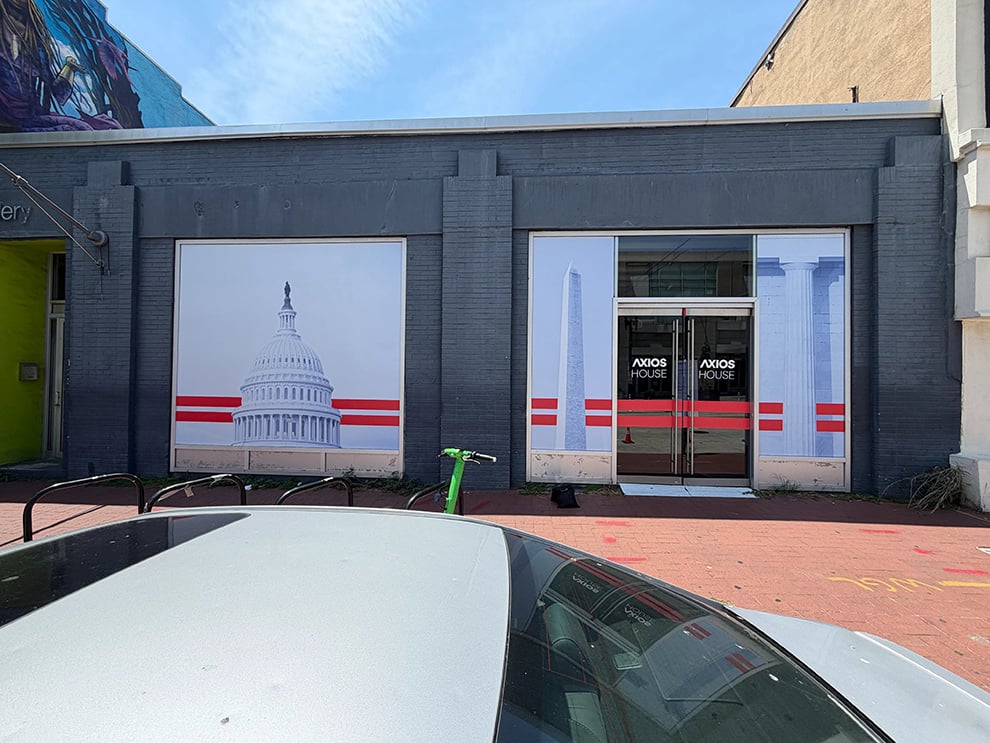
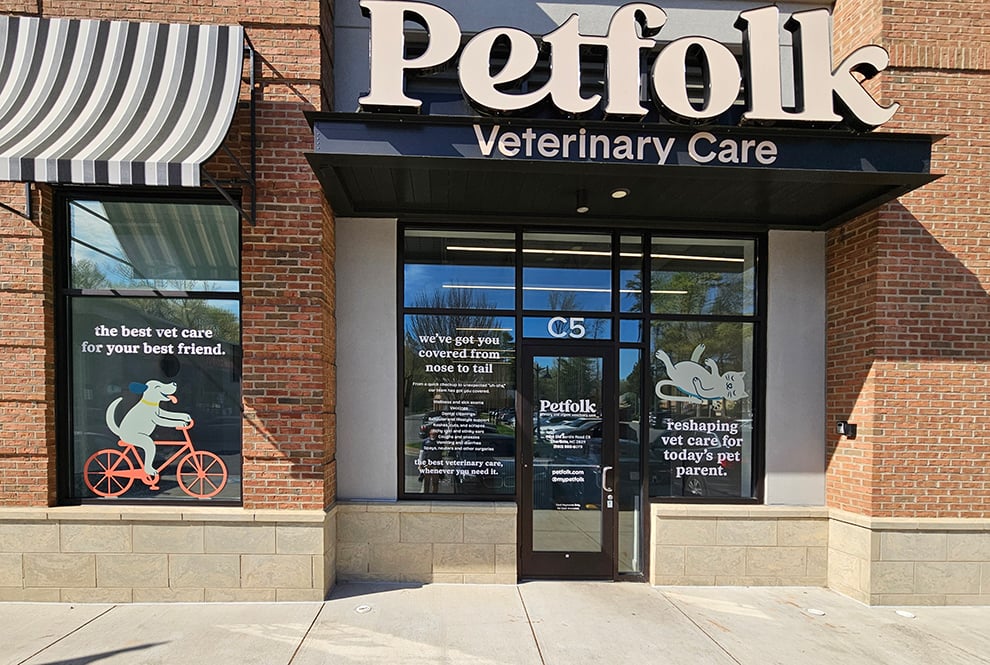
Glass is almost always the first branded surface anyone sees. We plan coverage, height, and opacity around what the entrance has to identify and how much daylight or visibility should remain, so graphics read cleanly from the sidewalk or parking lot without sealing the space off.
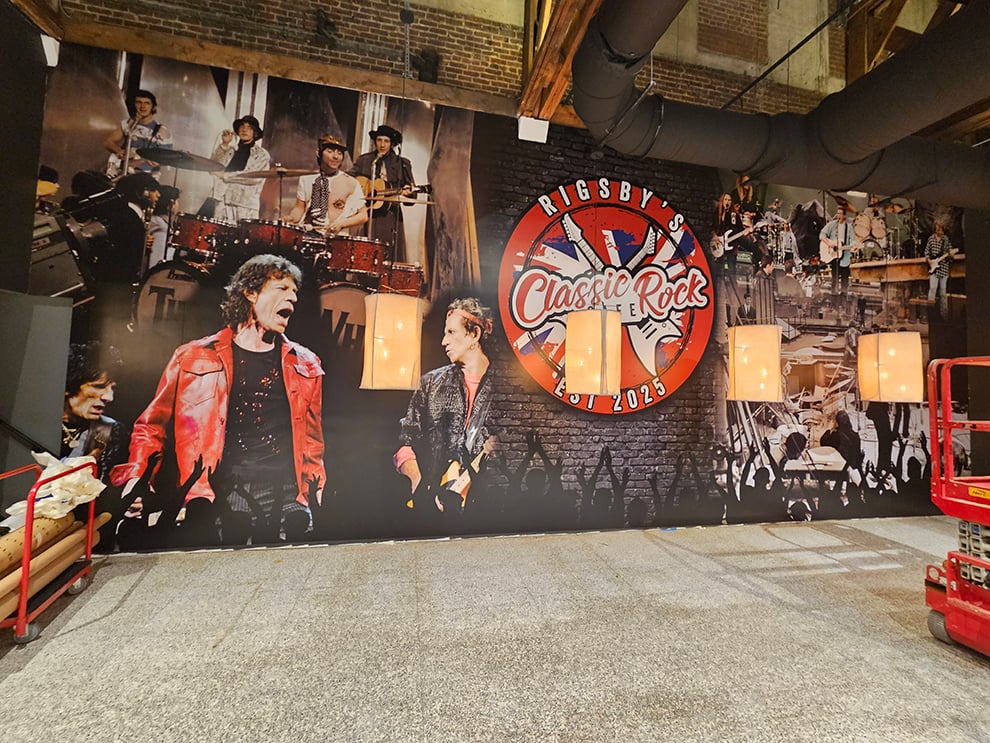
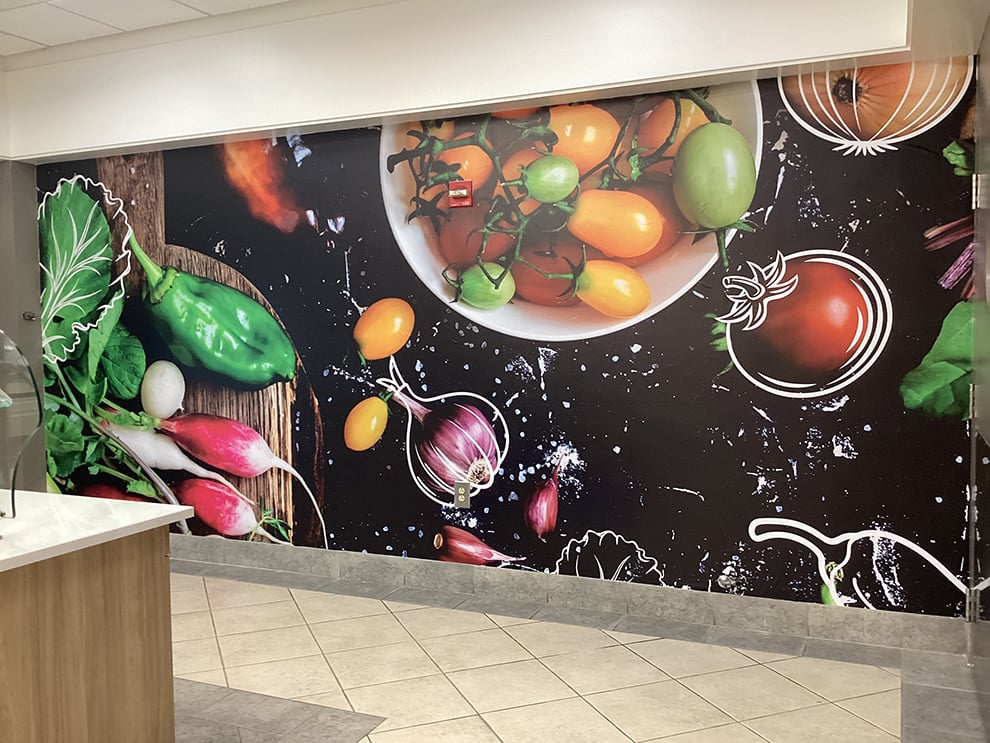
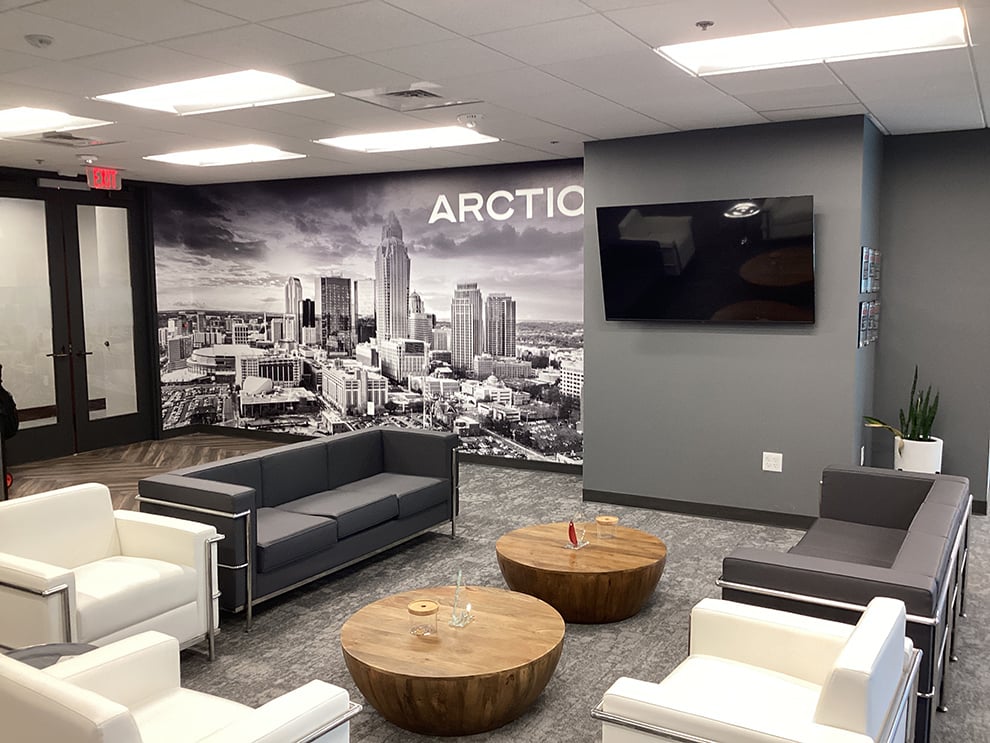
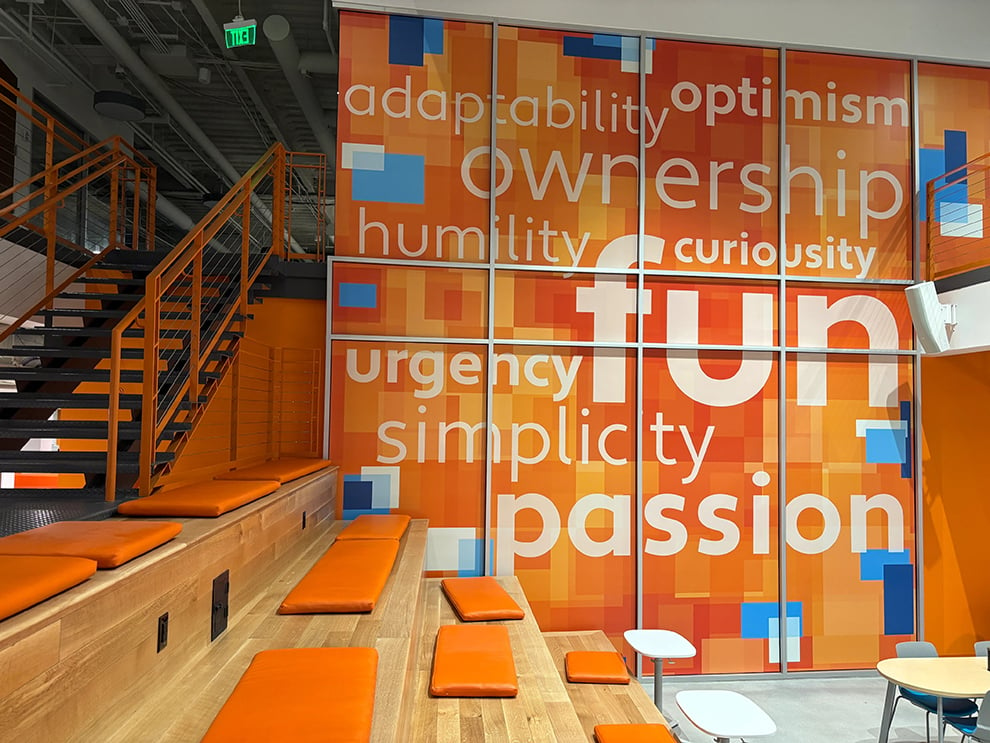
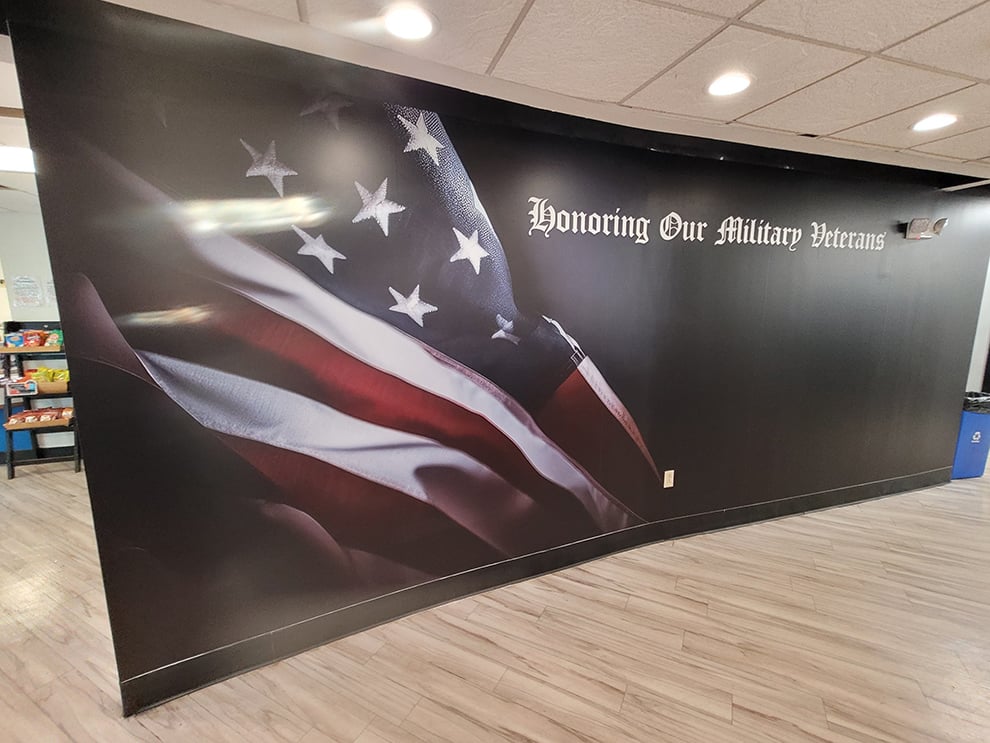
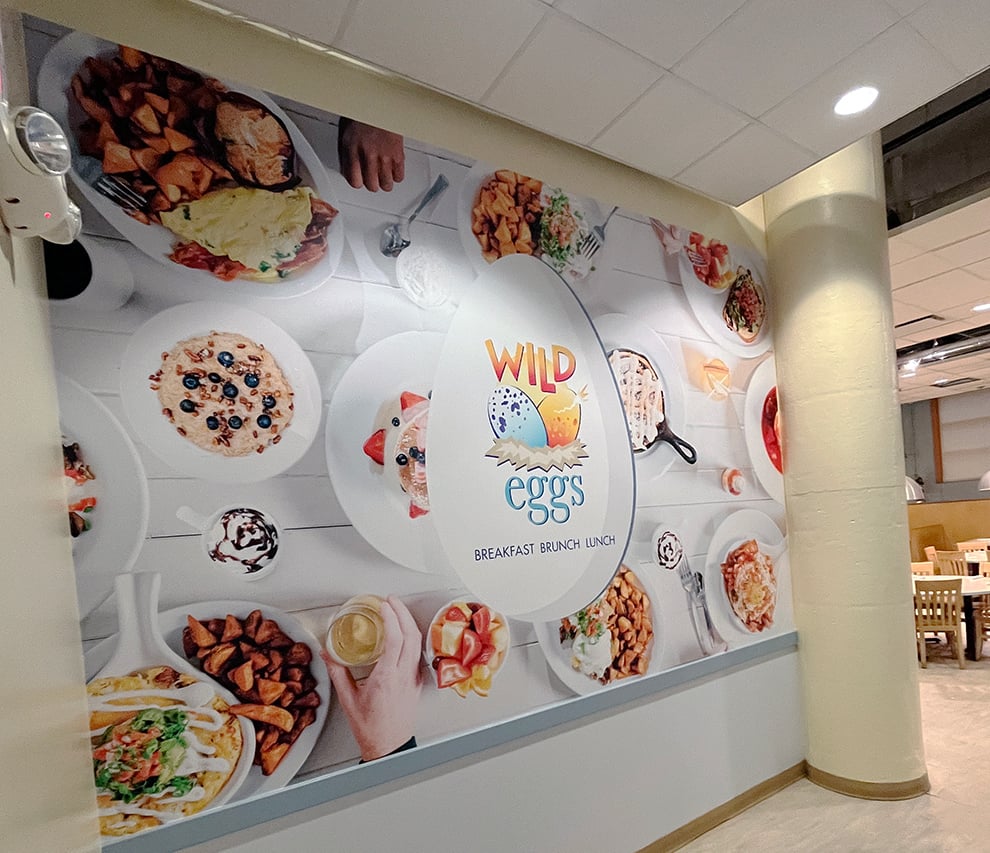
Interior walls can carry imagery, color, or messaging at a scale no entryway can match. A wall wrap pushes the identity established at the door into reception areas, hallways, training rooms, and the places where staff and visitors actually spend their time.
The storefront makes the introduction and the lobby sign confirms it. We coordinate depth, finish, mounting method, and placement with the reception desk, the wall substrate, and available lighting so the sign belongs to the architecture rather than sitting on top of it.
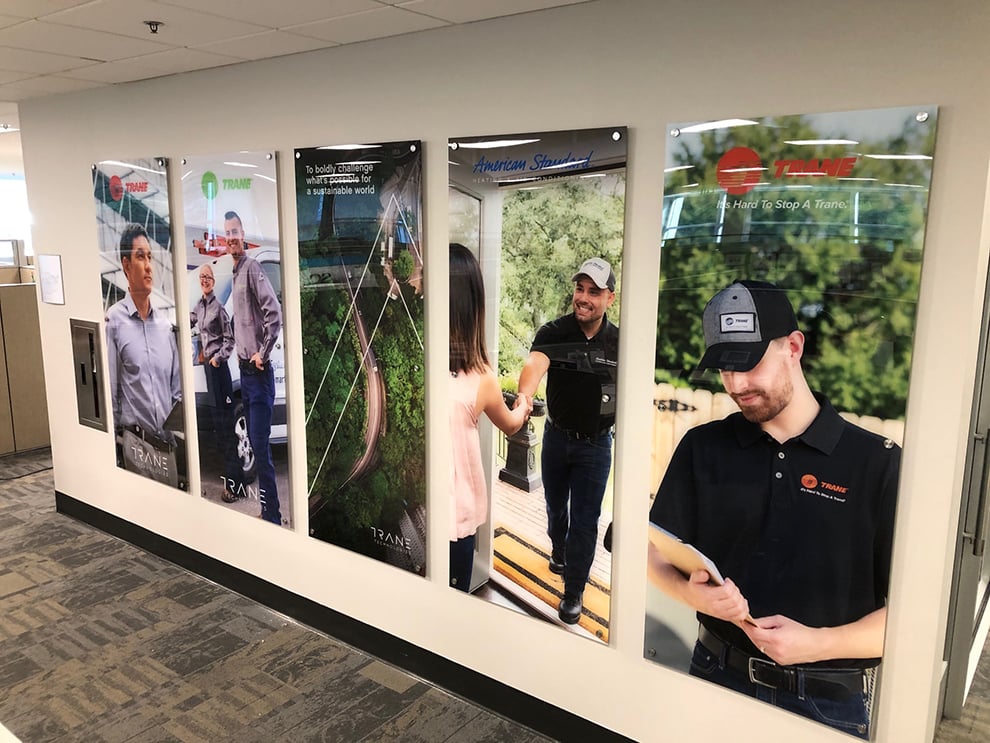
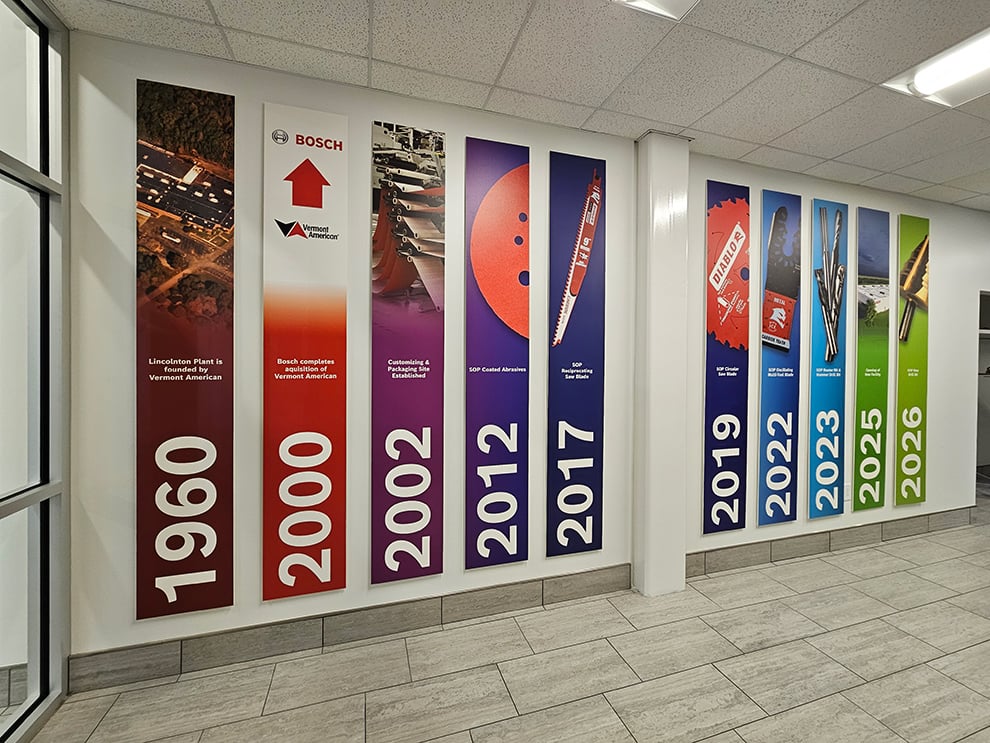
Displays organize content that grows or changes, including recognition programs, milestones, leadership, and service information. Pairing printed graphics with mounted or dimensional components adds depth and lets you refresh sections without rebuilding the whole wall.
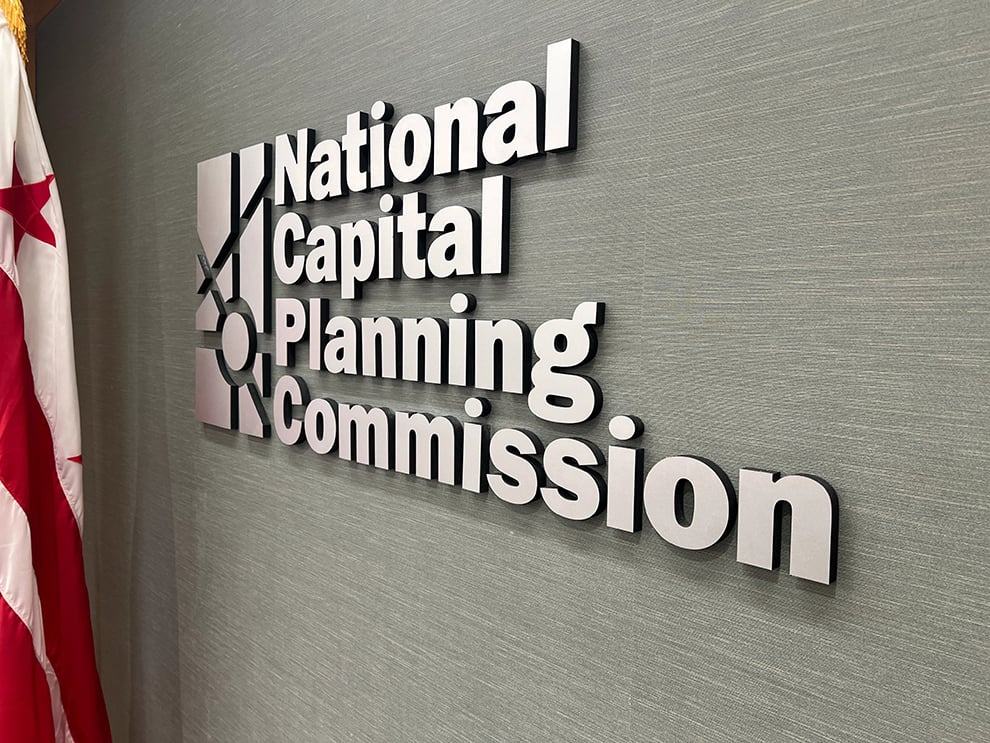
Cut letters and logos deliver relief and shadow that flat printing cannot replicate. We match material, thickness, finish, and mounting to the wall condition and the viewing distance so the feature holds its presence in reception areas, corridors, and branded focal points.
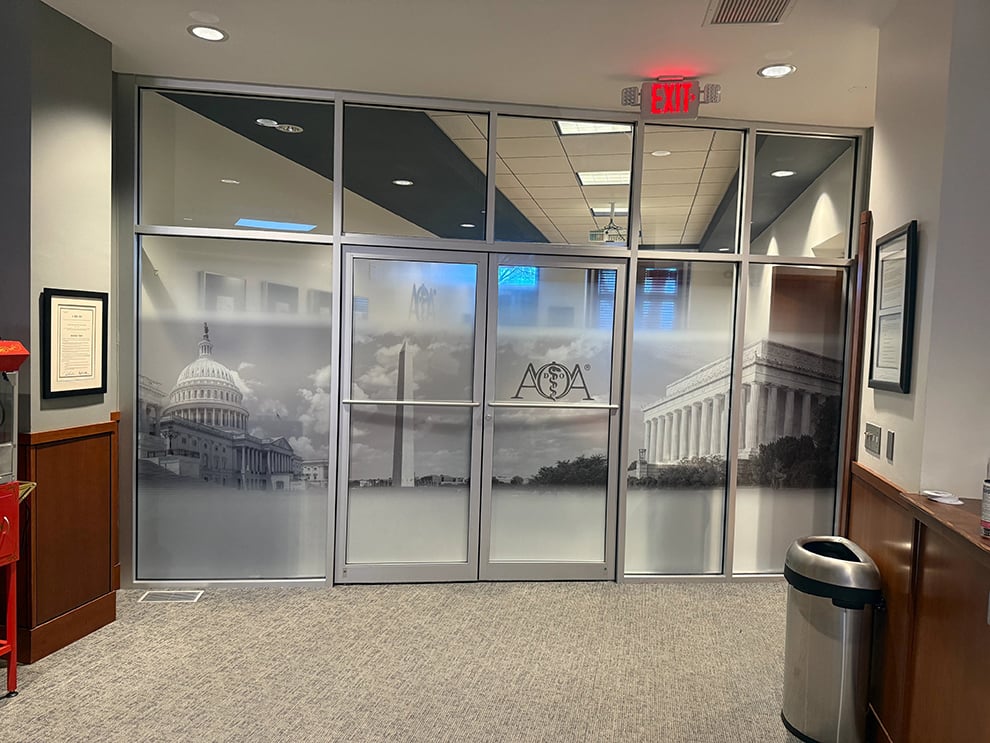
Frosted vinyl and etched-look privacy film soften views into offices, conference rooms, and glass partitions while borrowed daylight keeps moving through the space. Custom bands, patterns, or logo elements make the treatment look designed rather than merely functional.
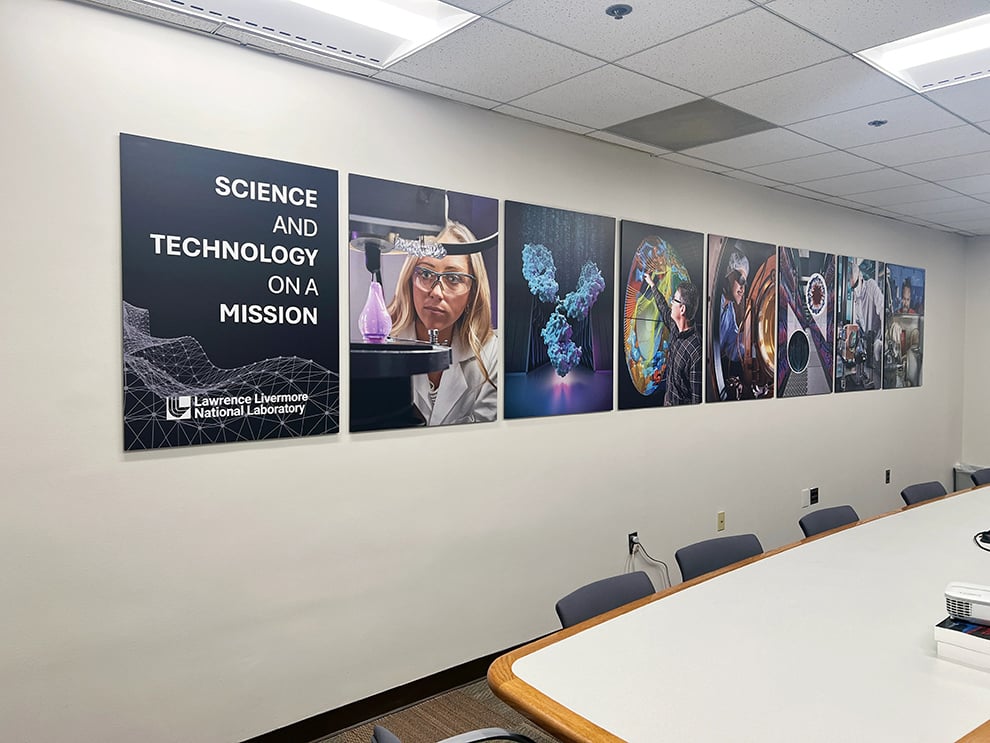
SEG fabric graphics stretch printed fabric inside a slim frame for a flat, modern surface. They fit interior locations where a prominent visual needs to change with a new campaign, program, or announcement without touching the surrounding wall or replacing the structure.
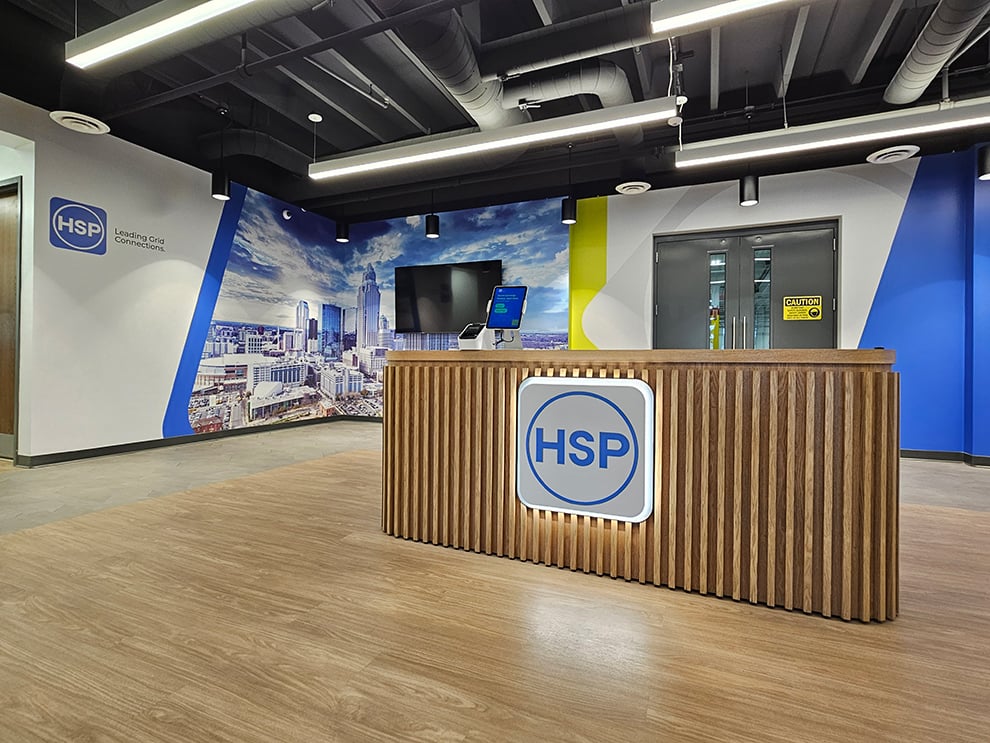
An illuminated interior feature can give a logo or statement real weight in a lobby or customer-facing area. We evaluate the room, nearby finishes, and existing light levels so brightness supports legibility and depth instead of overpowering everything around it.
If your Woodbridge, Lake Ridge, Dale City, or wider Prince William County organization is getting ready for a storefront, workplace, or commercial interior branding project, Heritage Signs & Displays wants to hear what the entrance and the interior need to do. Use the Get Started Now form to send the property address, target completion date, budget range, photos, any measurements you have, brand standards, and anything else already sitting in a folder. A dedicated Project Manager reviews it all, flags the next planning decisions, and lines up the Heritage resources that will carry the approved direction through production, fabrication, and installation.
Entrances around Woodbridge vary far more than most branding conversations assume. A retail suite near Potomac Mills, a professional office along Prince William Parkway, a medical practice in a shared building off Opitz Boulevard, a service business on Route 1, and a flex or distribution facility near the Interstate 95 corridor each bring different sightlines, glass conditions, landlord rules, and access restrictions. Those realities determine how much identification belongs on the glass, where privacy actually matters, and how the entry should hand off to the interior.
We provide local field support for Woodbridge and the surrounding Prince William County communities, including Dale City, Lake Ridge, Occoquan, Montclair, Dumfries, Manassas, Stafford, and nearby areas. That support covers client meetings, site surveys, field verification, installation planning, and professional installation.
Everything learned on site stays connected to your dedicated Project Manager and the Heritage teams handling environmental graphic design, production, and fabrication. For organizations with locations across Northern Virginia and the wider Mid-Atlantic, the same Project Manager coordinates the broader network so brand standards hold steady while each property gets a solution suited to its own architecture, surfaces, and timeline.
Environmental graphic design settles the practical questions before anything gets printed. What should a visitor notice first from the parking lot? Which views through the glass need to stay open? Where does privacy outrank transparency? What becomes the focal point once someone is inside, and how does the entry point them toward it?
Some clients arrive with finished brand standards and print-ready artwork. Others bring an objective, a handful of photos, and an idea that still needs shaping. We work with you and, when applicable, with architects, interior designers, branding agencies, environmental graphic designers, or property teams to develop approved direction into graphics that suit the real site. Scale, viewing distance, glass tint, wall finishes, lighting, and traffic flow all influence design and material choices.
The goal is a plan that holds up through execution. We develop design that moves cleanly into production, fabrication, and professional installation, delivering results such as a stronger arrival, a branded lobby, privacy graphics that preserve daylight, a history or timeline wall, mission and core values features, or clearer wayfinding through the building. We do not provide licensed architecture, engineering, general interior design, lighting design, or code consulting.
We produce and install specific non-illuminated exterior signs and graphics as part of coordinated storefront and workplace branding projects that also include interior work. That scope can cover exterior window graphics, exterior wall graphics or wraps, dimensional lettering, dimensional signs, custom sign panels, and related non-illuminated storefront elements. These pieces identify the organization before entry and then connect visually with entrance glass, privacy graphics, lobby signs, wall graphics, and displays so the approach and the interior read as one continuous experience.
Printed exterior wall graphics receive protective film laminate as standard practice for added UV and weather resistance. We also assess surface condition, exposure, and attachment method for the exterior components we take on.
We do not produce or install channel letters, monument signs, pylon signs, or illuminated exterior signs.
We also do not determine whether a sign permit is required, prepare permit documents, submit applications, communicate with permitting authorities, pay permit fees, or pursue approvals. The client, property owner or property manager, or general contractor is responsible for confirming and securing required sign permits and property approvals.
Every Heritage Storefront Graphics project includes a site survey linking your objectives to measurements, surface conditions, glass details, access, and installation constraints. From that point forward, your dedicated Project Manager keeps environmental graphic design, production, fabrication, and our full-time professional installers working from a single shared project history.
That shared history is why installation day rarely produces surprises. Site details, approved design intent, material choices, production specs, access logistics, scheduling, and building rules are all recorded long before a crew loads the van. Fewer handoffs means fewer open questions, and the questions that do come up get settled on paper instead of on a ladder.
Our installers protect the client's property, work alongside building management or on-site staff, sequence around business hours when a Woodbridge tenant cannot afford disruption, and leave the space swept, wiped down, and ready to open. Compare that to a setup where survey, design, production, and installation are split among vendors who each arrive with partial context. We keep the same team accountable for the finished result from the first planning call through final walkthrough.
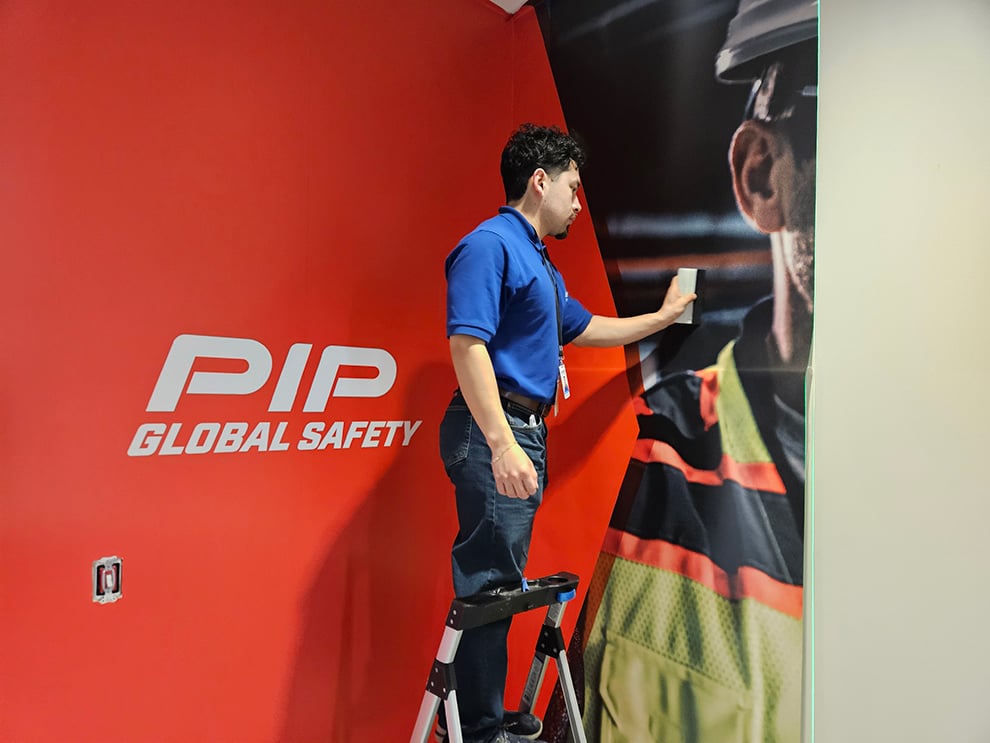
Storefront work usually carries past the glass and onto interior walls, and adhesive vinyl is only as reliable as whatever sits beneath it. Drywall needs to be solid and smooth, repairs finished, primer and paint applied correctly. Finish paint also has to be fully cured, which is not the same as dry to the touch. Four weeks is a practical planning window for many paints, though the manufacturer's specs and real conditions inside the building decide when a wall is truly ready. Washable, scrubbable, stain-resistant, low-VOC, and zero-VOC coatings sometimes call for cleaning, adhesion testing, or a different vinyl and adhesive pairing.
An adhesion test tells us how vinyl behaves on the painted surface. It cannot tell us how firmly that paint and primer are gripping the drywall behind it. If paint lifts or peels during testing or while a panel is repositioned, we stop instead of compounding the damage. Repair, priming, repainting, and full cure are arranged and paid for by the client or property owner.
Removal later is its own conversation. We take graphics down slowly and deliberately to avoid unnecessary damage, but no one can promise a flawless wall afterward. "Removable" describes the adhesive system, not the fate of the paint. When graphics are being swapped out, pulling the old vinyl early exposes any repair work before the replacement date is locked in. Planned this way, wall graphics hold up and keep earning their place.
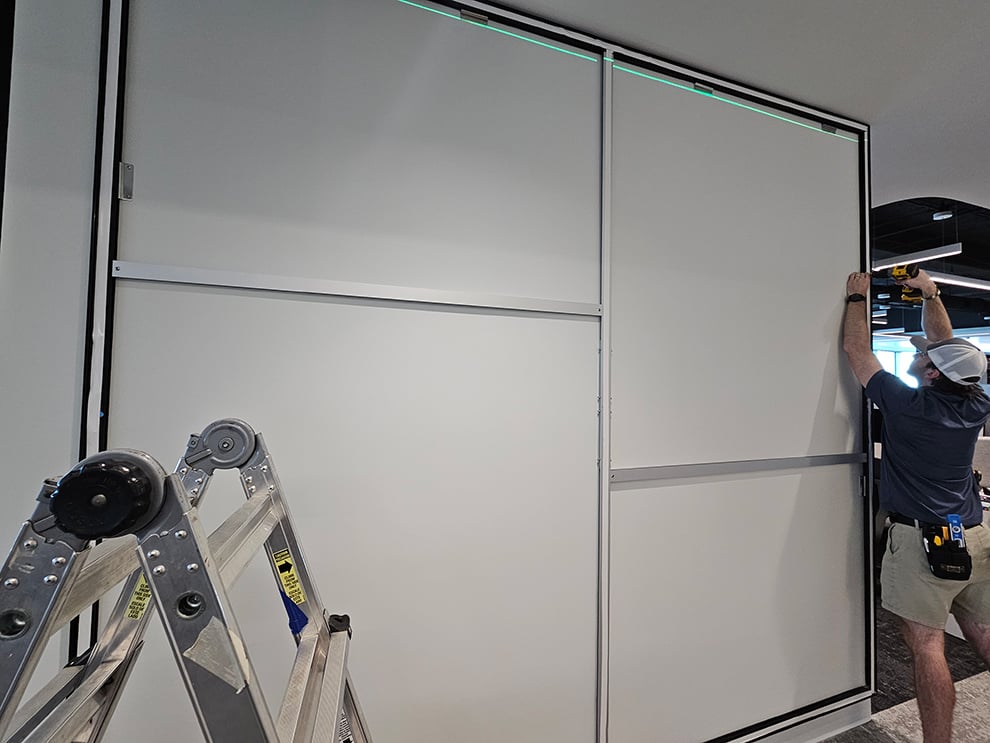
Good planning lines up a handful of decisions at once: what the organization wants the space to accomplish, who walks through it, how far the scope reaches, whether the work happens in one push or in phases, the timeline, site readiness, who signs off on design, and the budget range. Photos, measurements, floor plans, artwork, brand standards, and property requirements matter because they shape those decisions, not because collecting files is the goal.
We are a strong fit for professionally managed projects that benefit from connected environmental graphic design, production, fabrication, and professional installation. Many of our projects that include production and installation land between $10,000 and more than $200,000, shaped by scope, location count, fabrication demands, and installation conditions. The right number reflects the whole project, not the price of one window graphic.
A Woodbridge project might revolve around a single high-impact branded entrance along Prince William Parkway, extend through an entire office or clinic interior, or roll out across several Northern Virginia properties over a year. Whatever the shape, one dedicated Project Manager keeps responsibilities, approvals, dates, and the next decision in plain view.
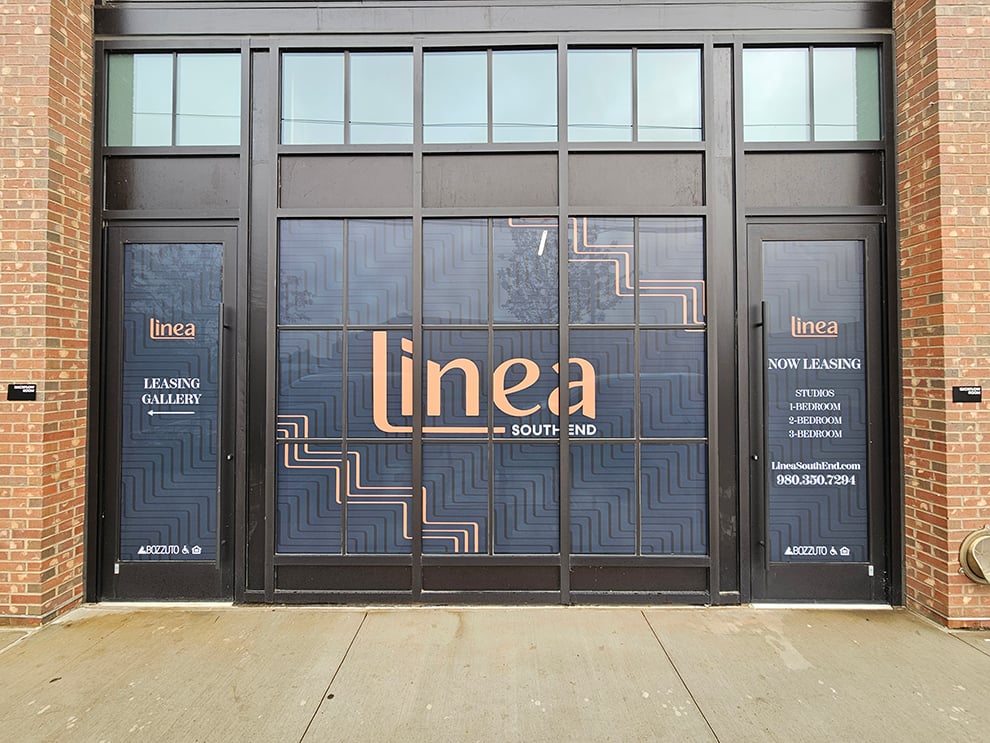
Storefront graphics put an organization's identity on the entrance and start the handoff into the interior. Applied lettering, logos, printed or cut vinyl, and glass treatments can build recognition, add privacy, make clear glass visible, and point people in the right direction. On a Heritage-managed project, they are planned in the same breath as lobby signs, wall graphics, and other interior pieces so arrival and interior read as one experience.
Yes, and rarely by covering the whole window. Frosted vinyl, etched-look privacy film, printed patterns, or graphics set at seated sightline height can block direct views into offices, conference rooms, or treatment rooms while daylight still comes through. We map coverage around what genuinely needs screening and what should stay open, because a storefront blacked out top to bottom tends to read as closed for business.
Yes. We produce and install specific non-illuminated exterior signs and graphics when they belong to a coordinated storefront or workplace branding project that also covers interior work. That can include exterior window graphics, exterior wall graphics and wraps, dimensional lettering and signs, custom sign panels, and similar non-illuminated elements.
Printed exterior wall graphics get protective film laminate as standard for added UV and weather resistance.
We do not produce or install channel letters, monument signs, pylon signs, or illuminated exterior signage. We also do not determine whether a sign permit is required, prepare or file permit applications, correspond with Prince William County or other authorities, or cover permit fees. Confirming and securing sign permits and property approvals falls to the client, property owner or manager, or general contractor.
Yes. Every Storefront Graphics project includes one. The visit pairs discovery about what you want the entrance and interior to achieve with hands-on verification of measurements, glass and wall conditions, mounting surfaces, access, and anything that could complicate production or installation. Those findings stay tied to your dedicated Project Manager and travel with the design, production, fabrication, and installation teams.
Perforated window graphics print on vinyl punched with tiny holes that preserve a measured amount of see-through from inside. Light levels on each side of the glass drive the effect, so the same graphic can look solid from the sidewalk during the day and fairly transparent from a desk indoors. We look at the actual glass, its orientation, and the lighting before recommending it.
Painted walls should be smooth, sound, repaired, primed, painted, and fully cured per the paint manufacturer's instructions. Roughly four weeks is a sensible planning allowance for many paints, though cure times shift with the product and with temperature and humidity on site. Washable, scrubbable, stain-resistant, low-VOC, and zero-VOC paints may require cleaning, adhesion testing, or a different vinyl and adhesive combination.
Adhesion testing shows how vinyl behaves on the paint. It cannot verify the bond between paint, primer, and drywall. If paint peels or lifts during testing or while a piece is repositioned at installation, we stop rather than make the wall worse.
Arranging and paying for repair, priming, repainting, and full cure is the responsibility of the client or property owner before we reschedule installation.
Material follows the design, the site, and the performance the piece has to deliver. Depending on the application we may specify printed or cut adhesive vinyl, perforated vinyl, frosted vinyl, acrylic, dimensional materials, or aluminum composite material (ACM). ACM delivers a durable metal look at a fraction of the weight of solid metal, which matters for mounting and handling. We do not print on or cut solid aluminum or steel as a sign substrate.
We handle client meetings, site surveys, field verification, installation planning, and professional installation locally in Woodbridge and across Prince William County and Northern Virginia. What we gather in the field is documented and routed to your dedicated Project Manager and to the environmental graphic design, production, and fabrication teams at Heritage headquarters.
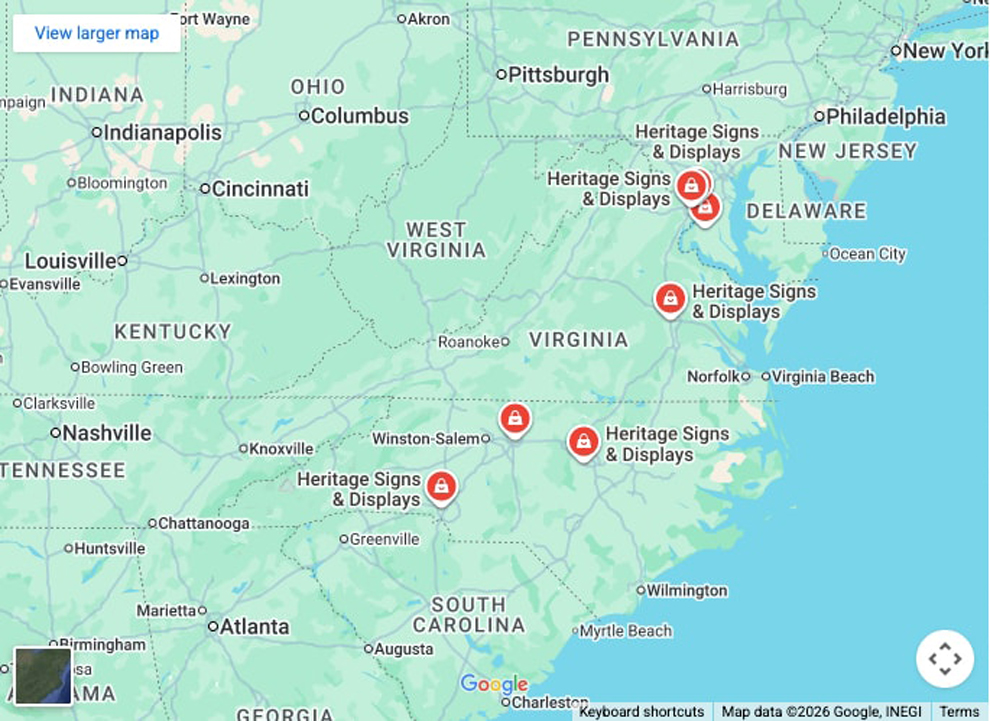
For organizations with more than one address, the same structure stretches across the Mid-Atlantic and the Carolinas. You keep one Project Manager while we assign the right local resources property by property.
No single lifespan covers every storefront graphic. Performance depends on the material and adhesive, the surface, sun exposure and orientation, how the glass gets cleaned, physical contact, and whether the piece is meant for a seasonal campaign or a multi-year run. We start by asking how long you expect it to stay up, then recommend a system built for that answer instead of quoting one durability claim across the board.
Yes. We make every reasonable effort to pull adhesive vinyl slowly and carefully using methods meant to limit avoidable damage, and even then a spotless result cannot be guaranteed. Paint or primer can come away with the vinyl, and the drywall facing can be affected.
Clients and property owners should budget both time and money for possible repair, priming, repainting, and full cure before the wall is reused or new graphics go up. That work is arranged and paid for by the client or property owner. Heritage does not perform or fund wall repair or restoration.
"Removable" describes the adhesive system and its intended use. It is not a guarantee of damage-free removal.
Yes. We coordinate storefront and interior branding across multiple client locations throughout the Mid-Atlantic and the Carolinas. One dedicated Project Manager stays constant while we schedule the right site surveys, production and fabrication, and installation for each address.
That continuity protects brand standards, approvals, and project history, so you are not re-explaining the program at every location. It also does not mean forcing an identical solution into every building. Glass sizes, wall surfaces, ceiling heights, access rules, and operating hours differ from a Woodbridge retail suite to a Manassas office floor, so the physical execution adapts while the approved brand direction holds.
A distraction marker is a vinyl graphic applied to clear glazing so people can actually see that the glass is there. The marker might be a horizontal band, a run of frosted dots, a repeating pattern, a logo, or a custom shape that fits the look of your space. Many of these graphics do double duty by adding privacy or reinforcing your brand at the same time. We choose placement and scale based on how the entry is used, how light moves through it, and what surrounds the opening. Keep in mind that applied vinyl by itself does not satisfy building-code or safety-glazing requirements.
No. We do not offer installation-only service on customer-supplied signage or graphics. Our installation crews work exclusively on the signs, graphics, displays, and branded elements that we design, produce, fabricate, source, or manage as part of a project with us.
Handling the work end to end keeps everything connected: field measurements, substrate and material choices, print and fabrication quality, site conditions, and one clear owner of the finished result. It also protects installation capacity for the Woodbridge and Northern Virginia clients whose projects we are carrying from first concept to final walkthrough.
Yes, when removal is written into a new production and installation project with us. For wall-applied graphics in particular, we push hard for removal well before the installation date for the replacements.
It comes down to timing. Nobody knows what is hiding behind old vinyl until it comes off. Our crews work carefully to avoid unnecessary damage, but paint can lift and older wall repairs or blemishes can surface once the graphic is gone. Pulling the vinyl early gives you or your property owner room to schedule and budget patching, priming, and repainting without pressure.
Fresh finish paint also needs to cure completely before we return with the new graphics. Roughly four weeks is a reasonable planning window for many paints, though the manufacturer's specifications and conditions inside the building decide when the wall is truly ready. We do not offer graphics removal as a stand-alone service.
We pair on-the-ground support across Woodbridge, Prince William County, and the greater DC metro with the design, production, fabrication, and installation capacity to run large interior and exterior branding programs throughout Virginia and the Mid-Atlantic. You get one dedicated Project Manager from kickoff through installation, which cuts down on handoffs and keeps the approved design intent intact. We are award-winning, veteran-owned, family-led, and closing in on 50 years in business, with a reputation built on straight answers, practical recommendations, and reliable follow-through.
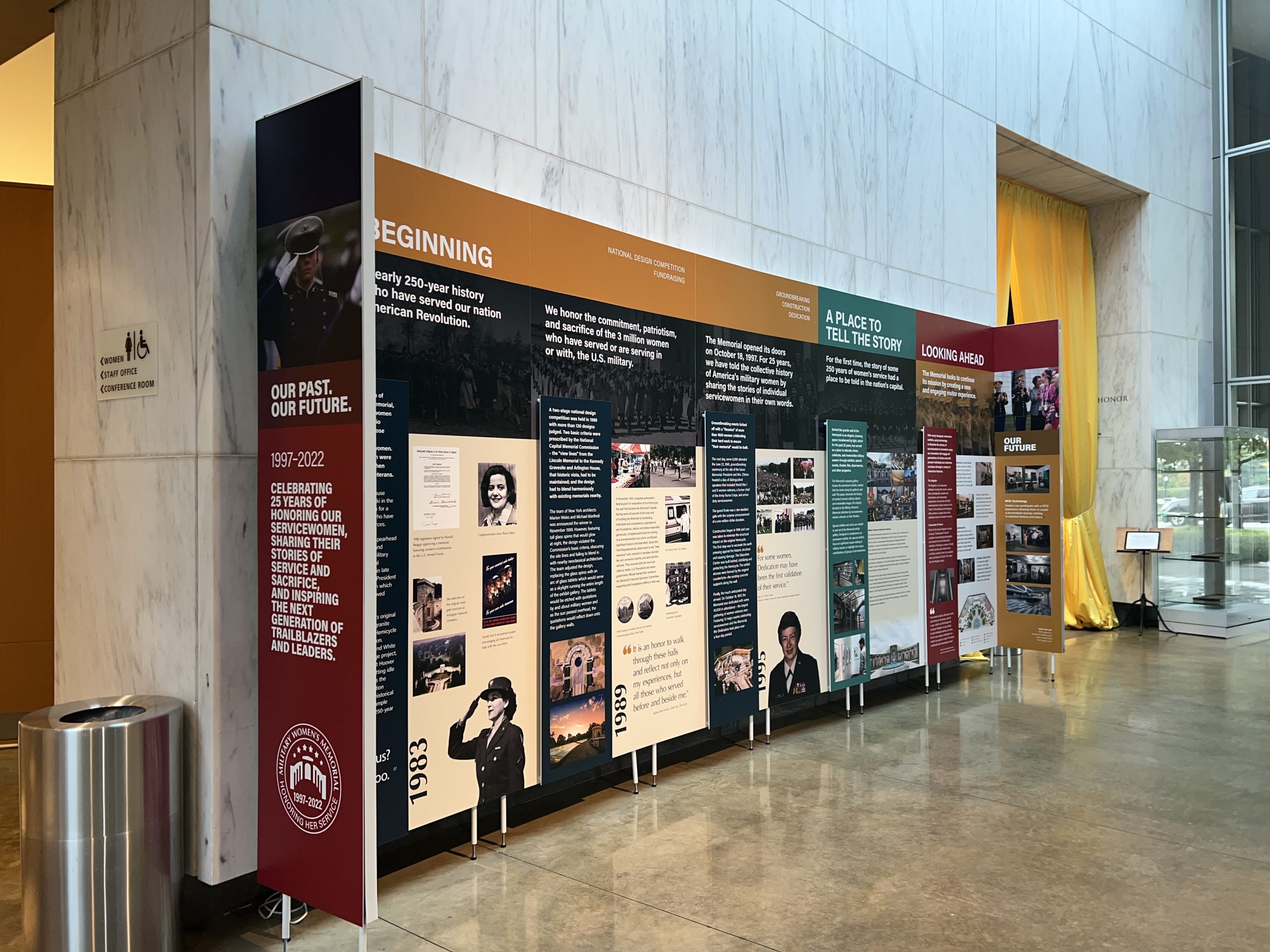
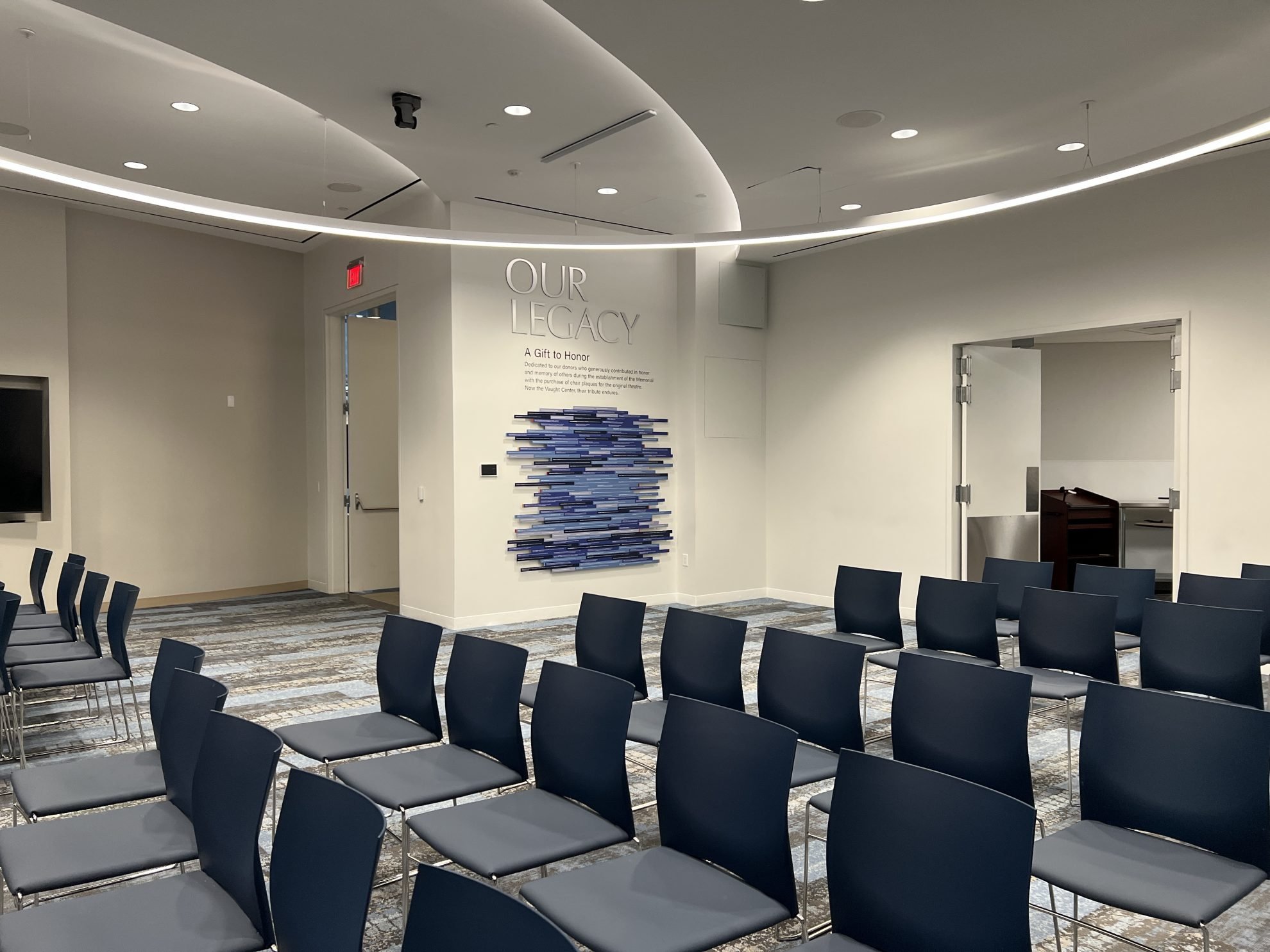
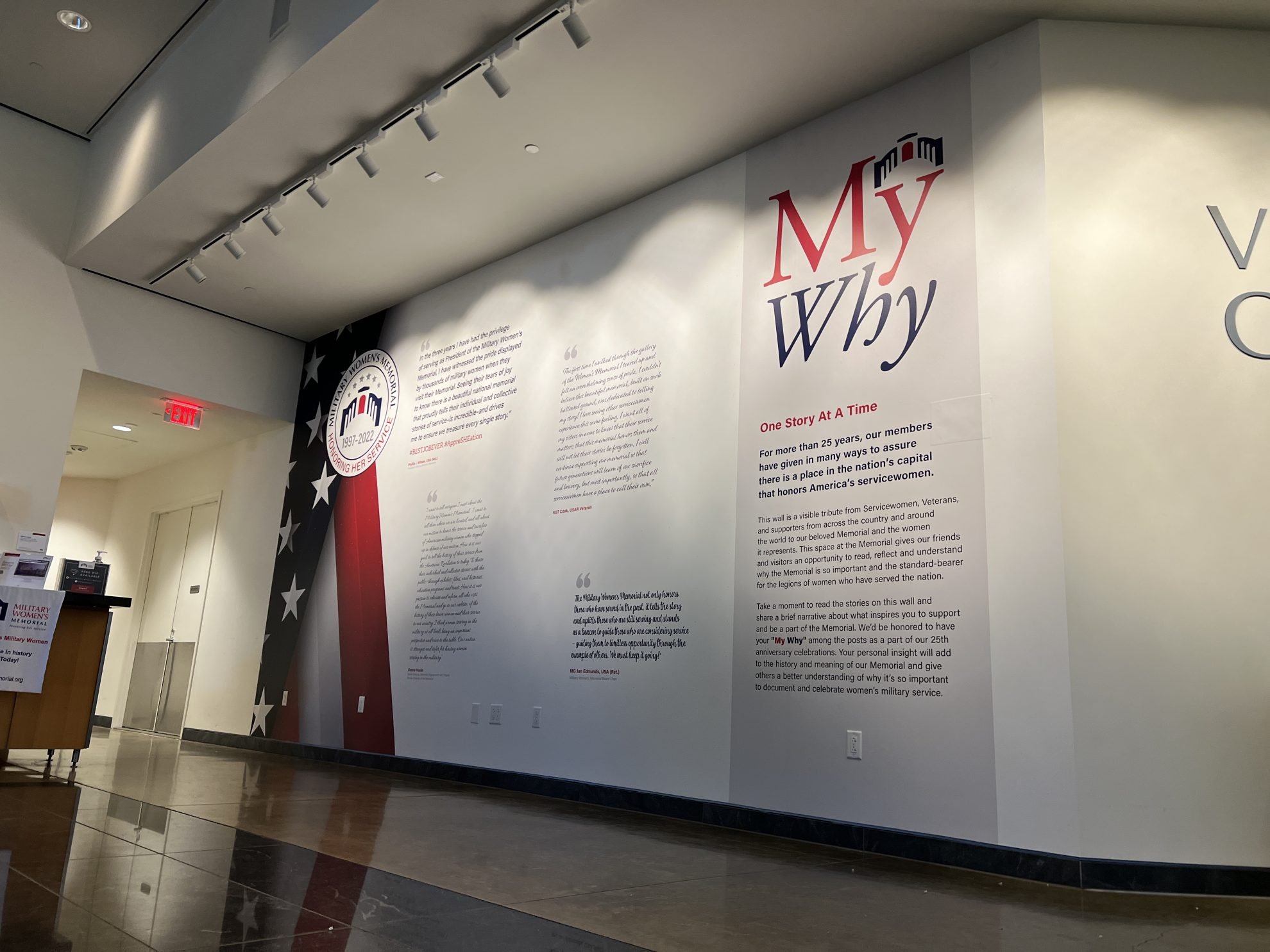
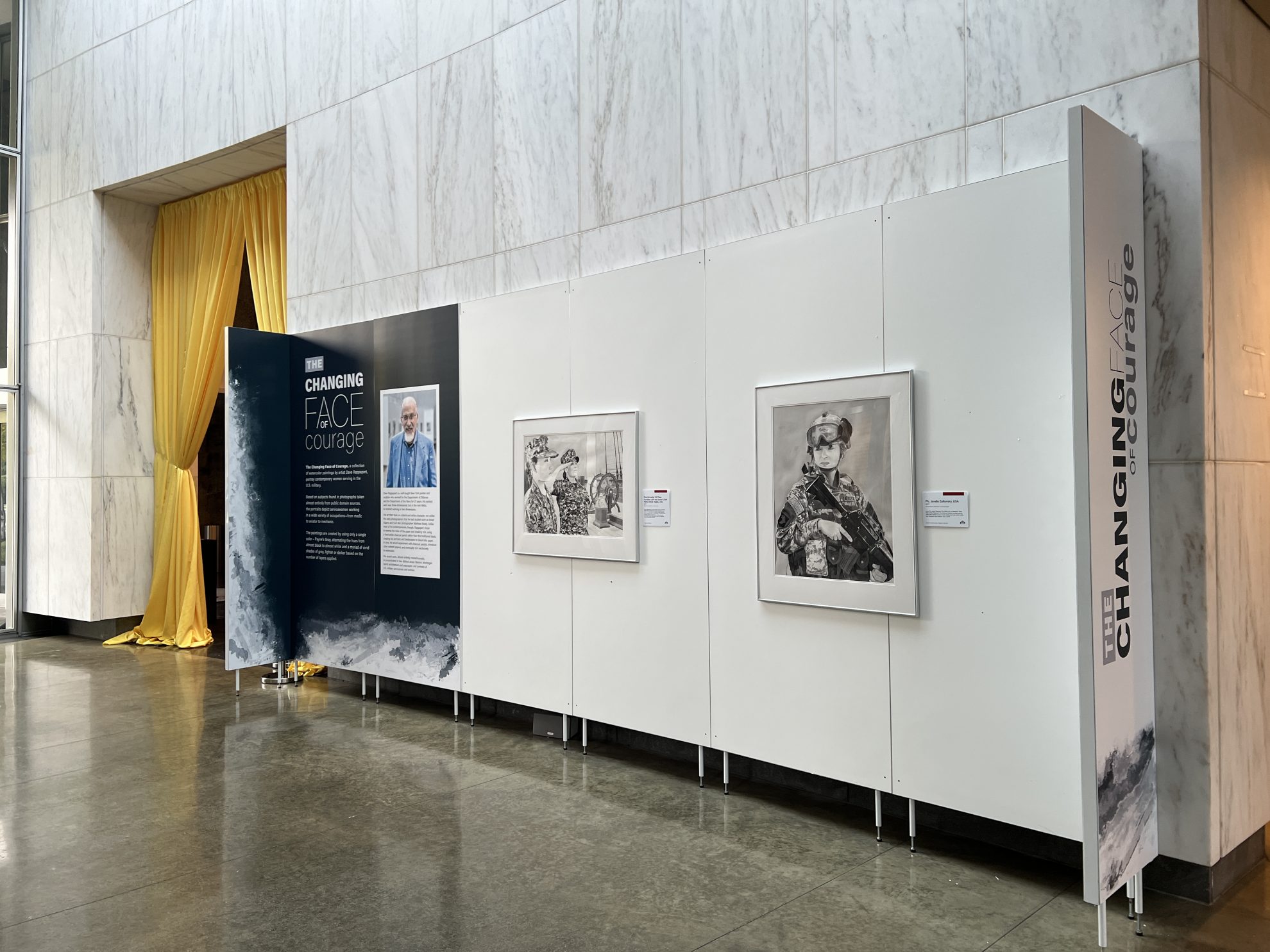
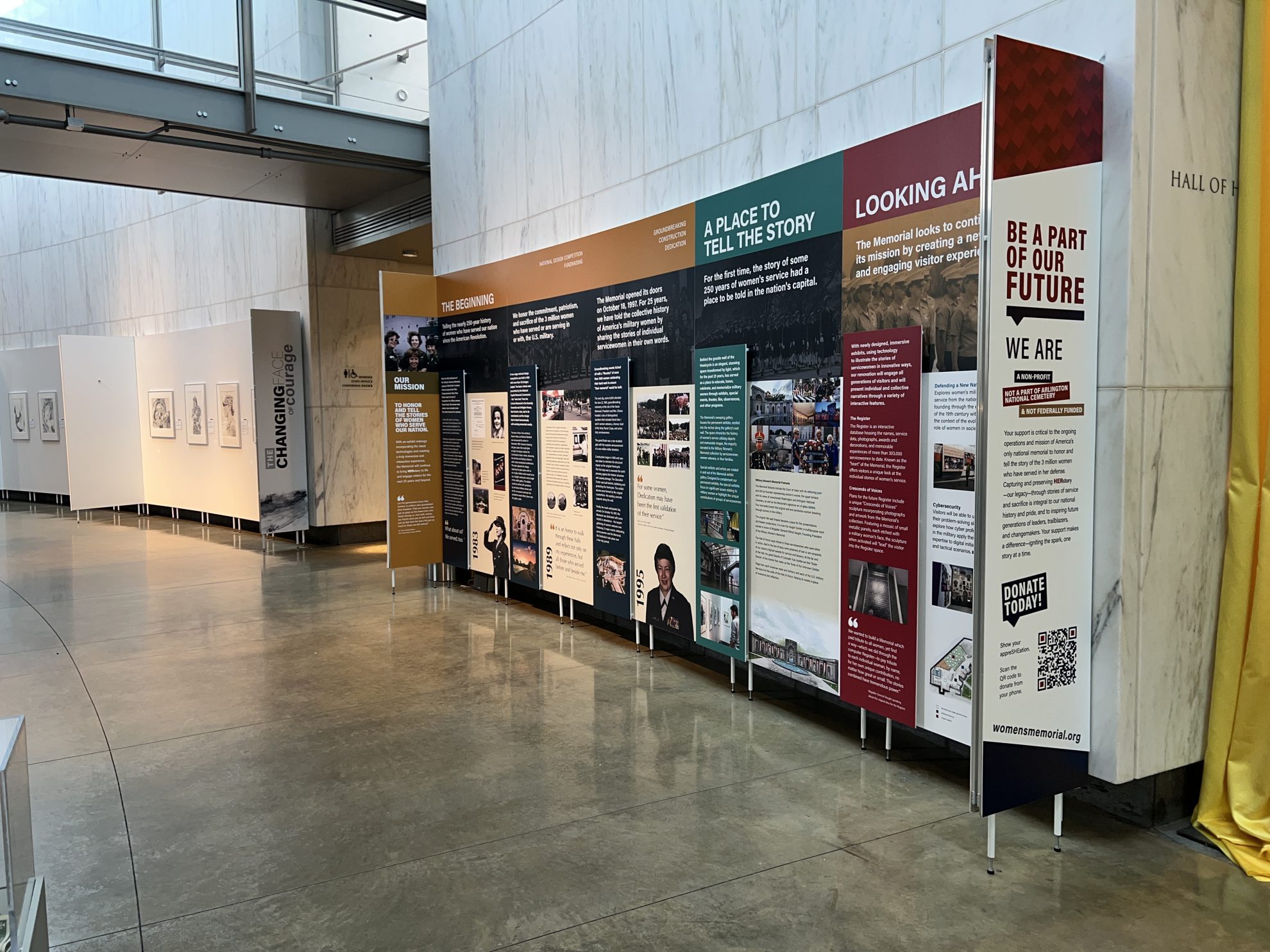
Heritage Signs & Displays created new museum signage for the Military Women’s Memorial in Arlington, VA. The project included custom signs, wall wraps, dimensional letters, and standoff-mounted displays to honor the legacy of U.S. servicewomen and the donors who supported the memorial. The updated interior features impactful designs, including a "Our Legacy" wall display and panels showcasing historical contributions and artwork, creating a transformative tribute to women in the U.S. Armed Forces.
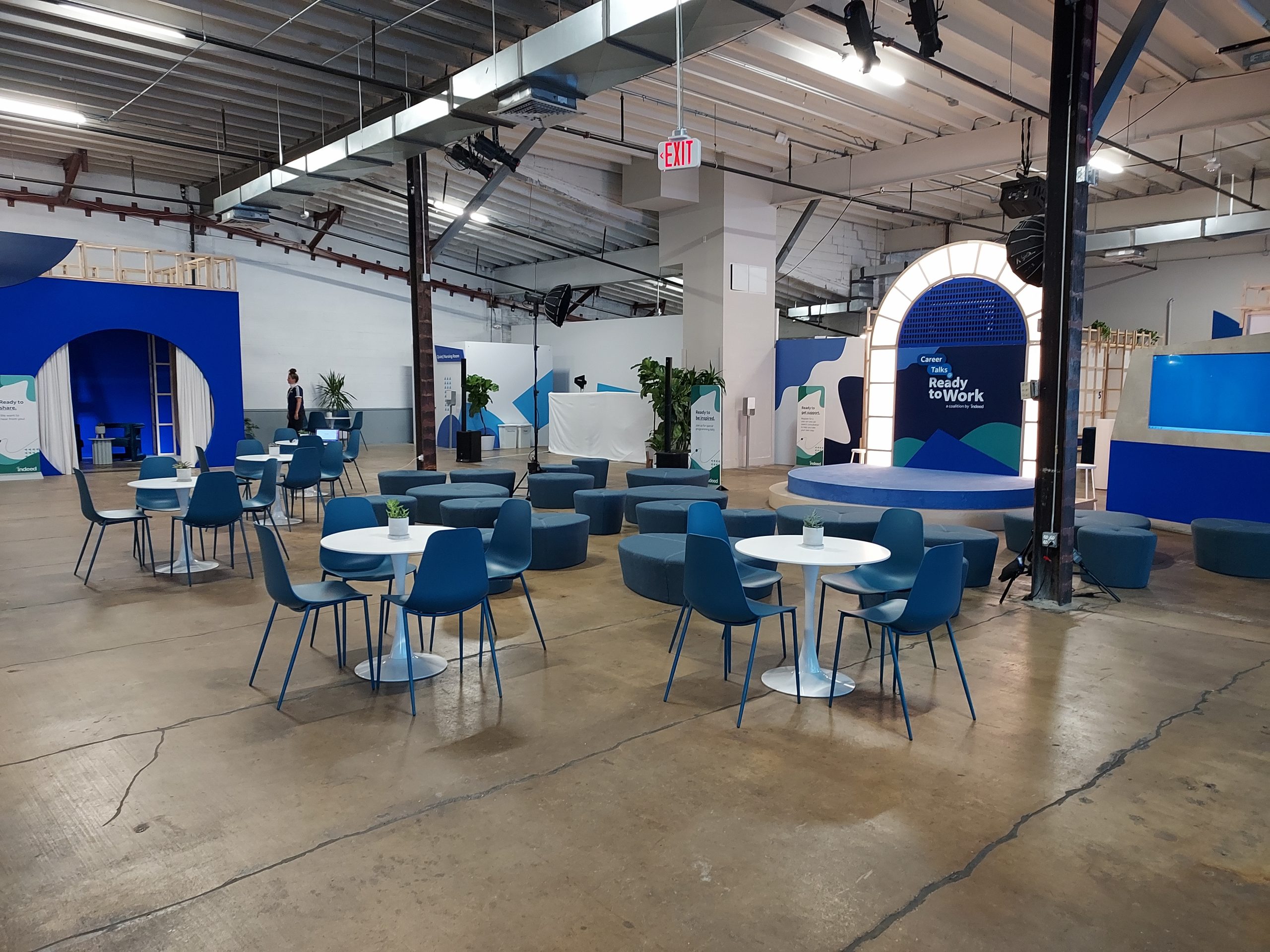
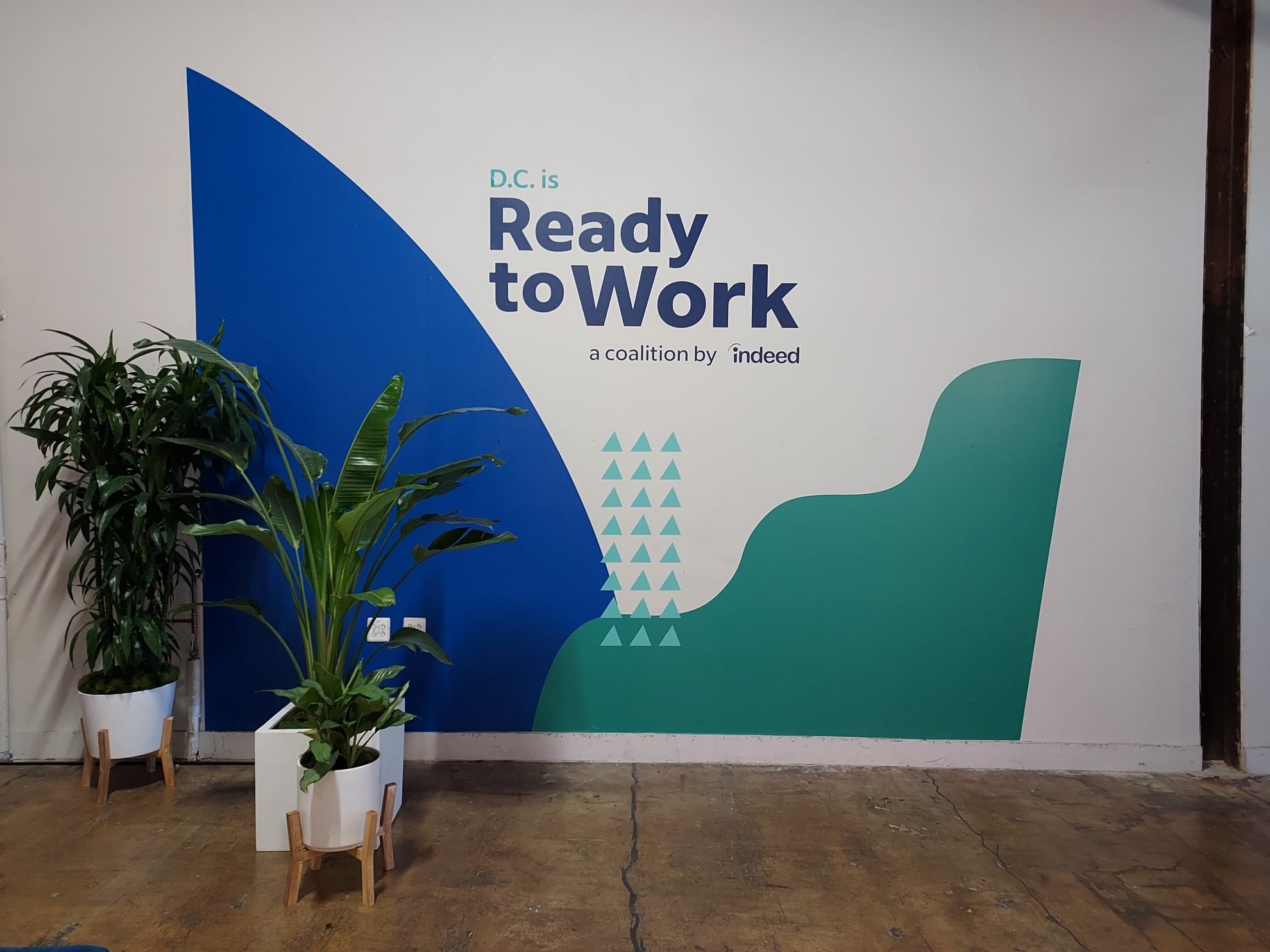
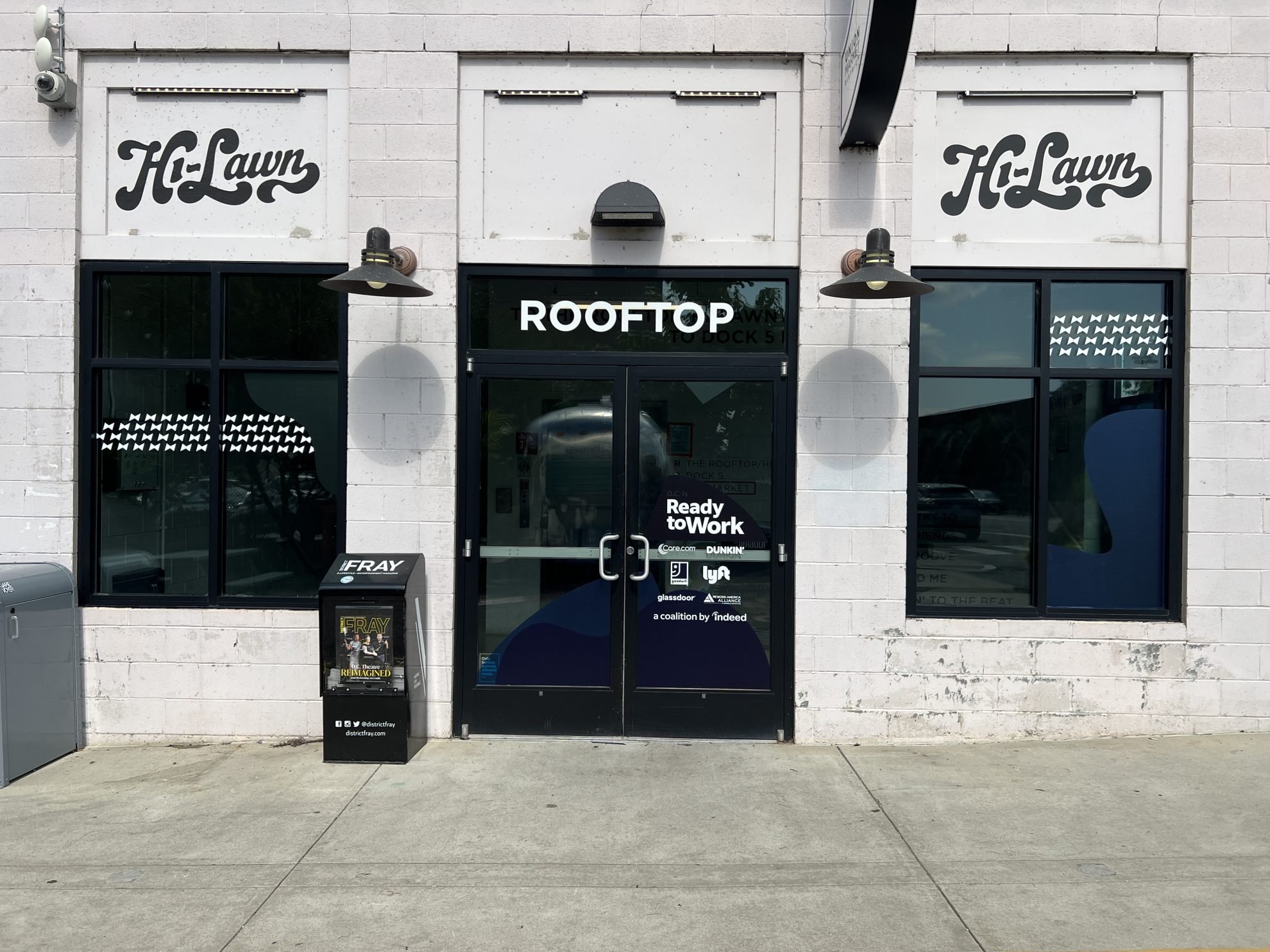
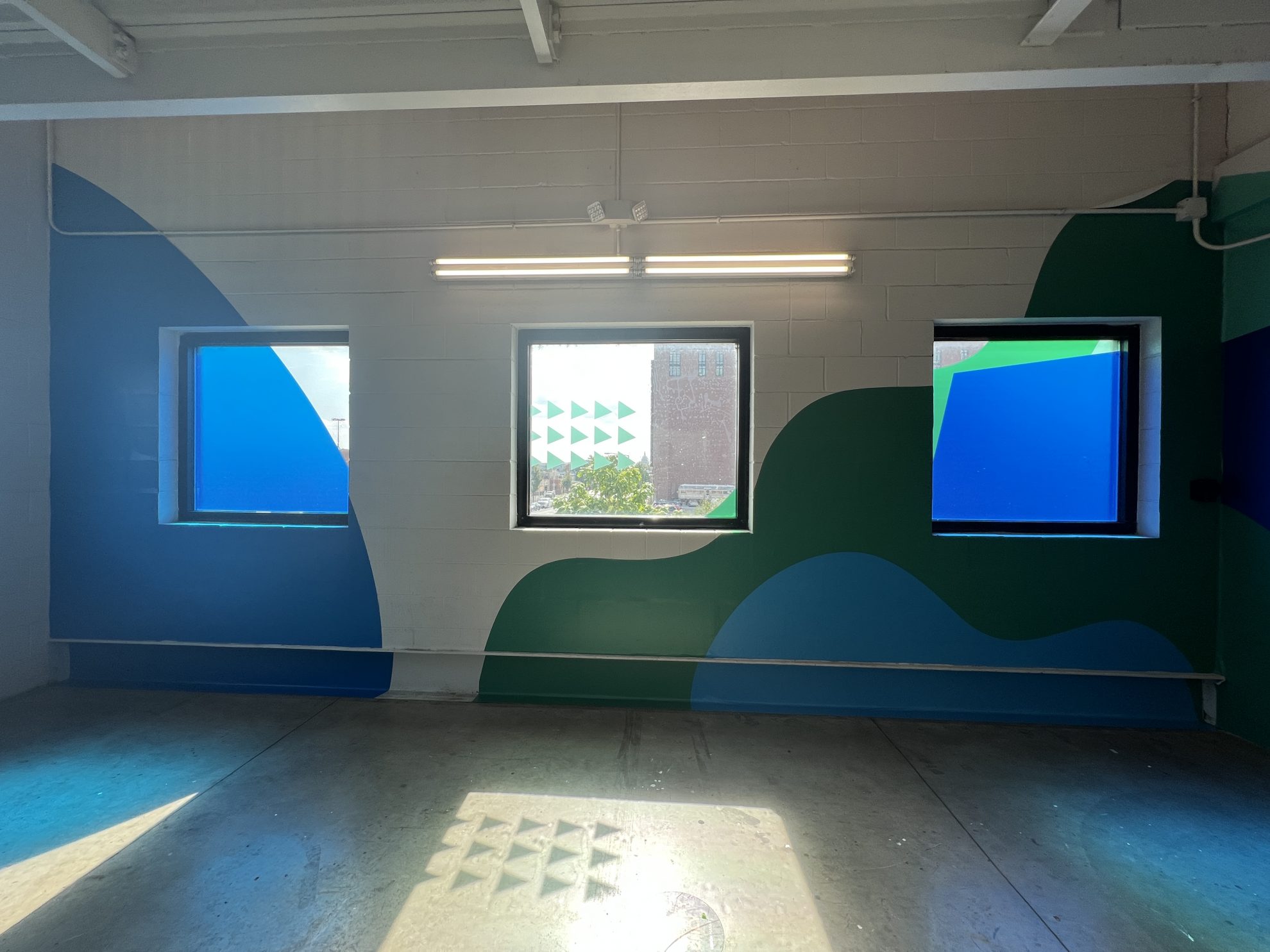
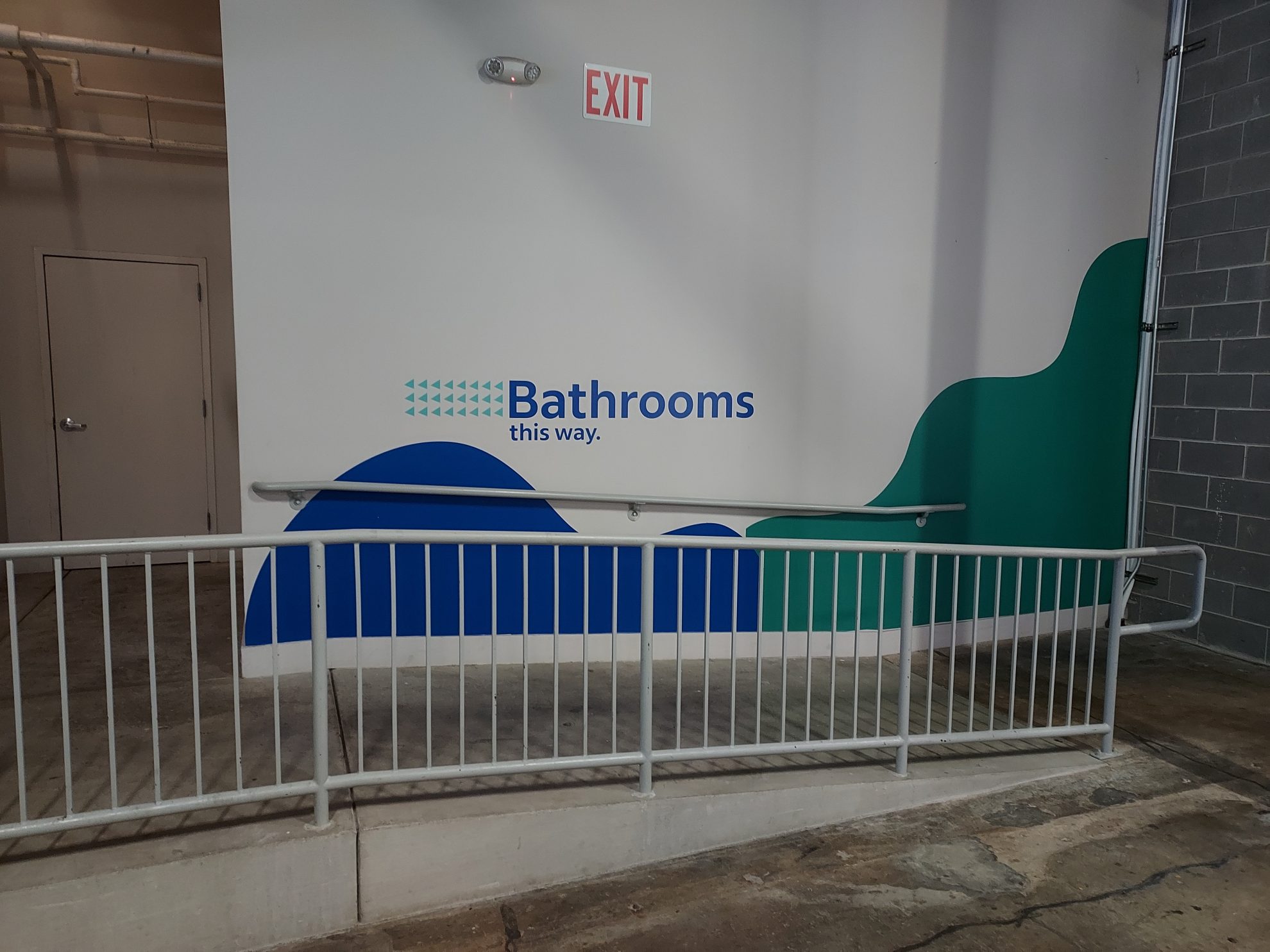
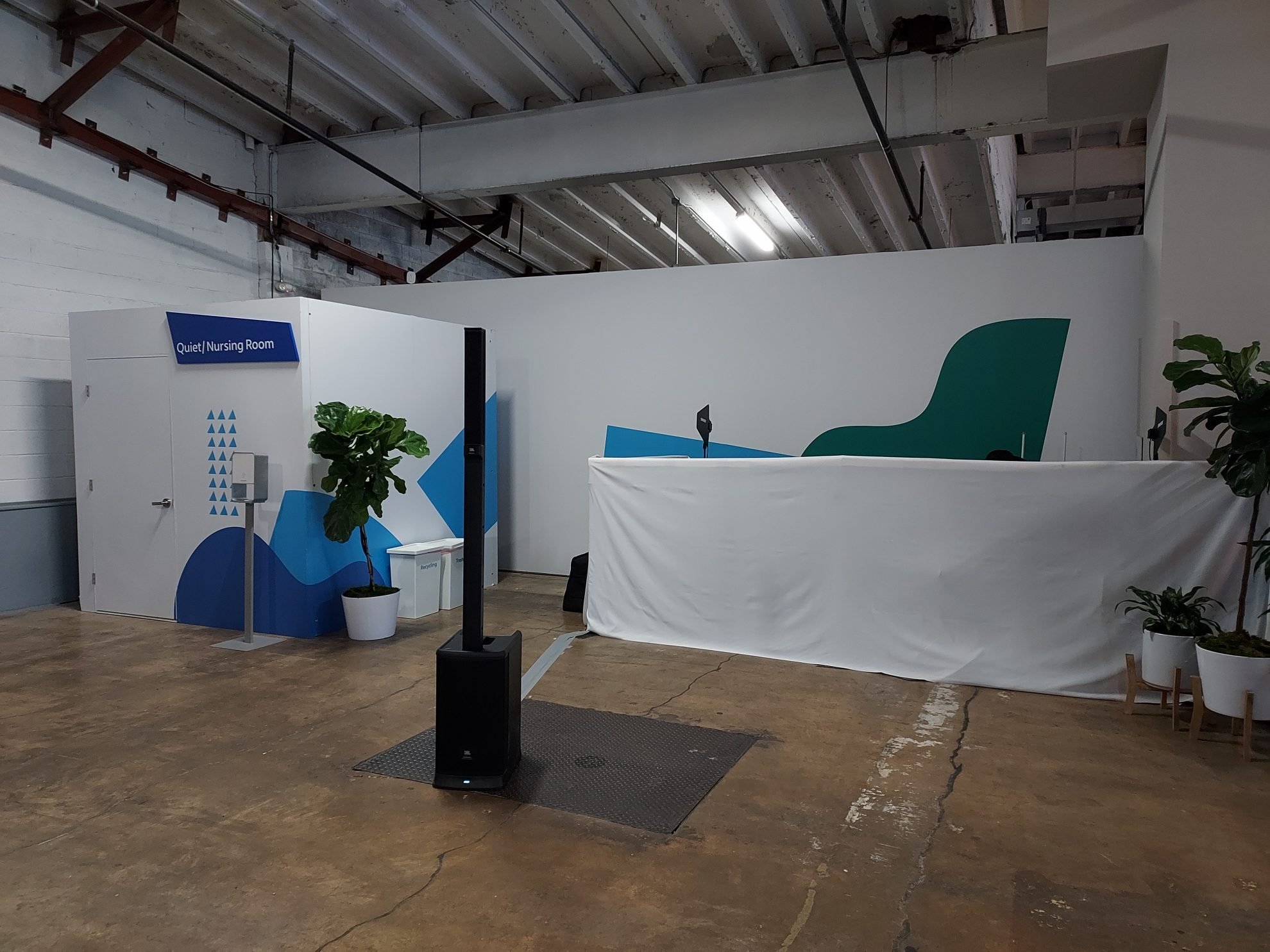
Heritage Signs & Displays' collaboration with The Gathery to brand Union Market in Arlington, VA, for Indeed's "Ready to Work" job fair. The project included custom event displays, wall graphics, window graphics, and wayfinding signs, creating an immersive and visually appealing environment. The branding enhanced the venue, reflected the event's mission, and provided a seamless experience for attendees.