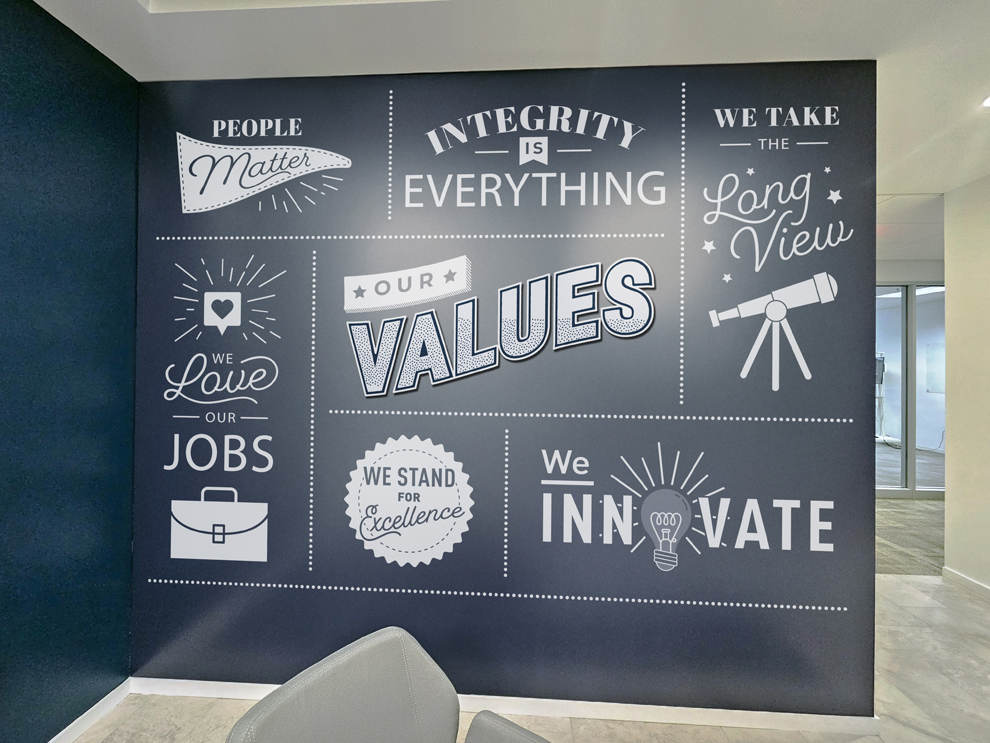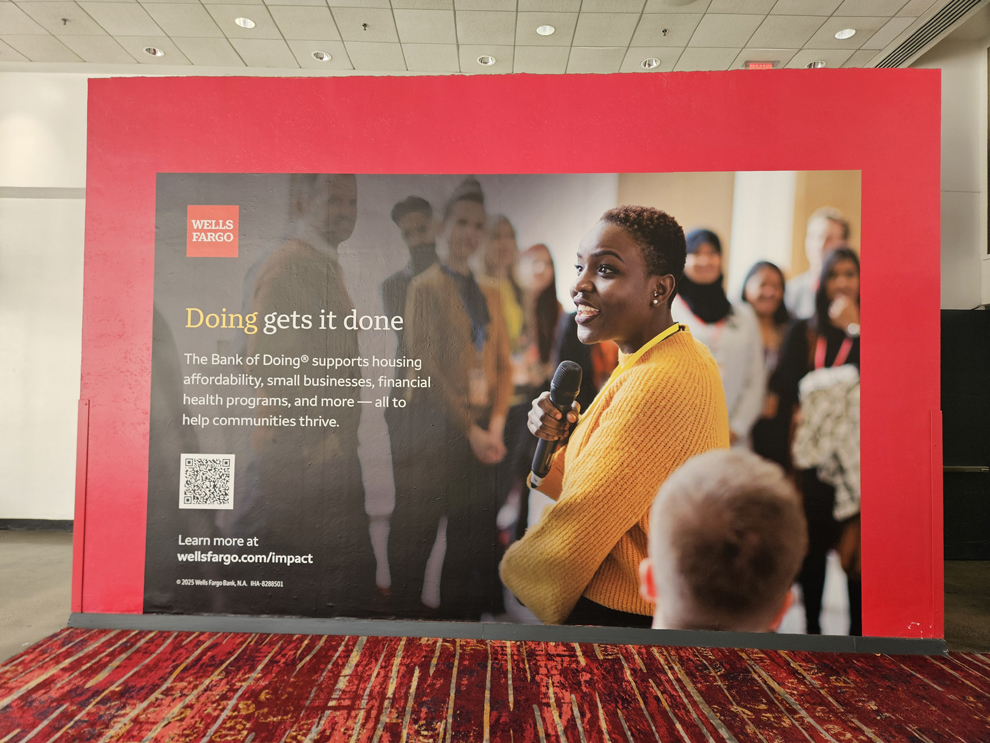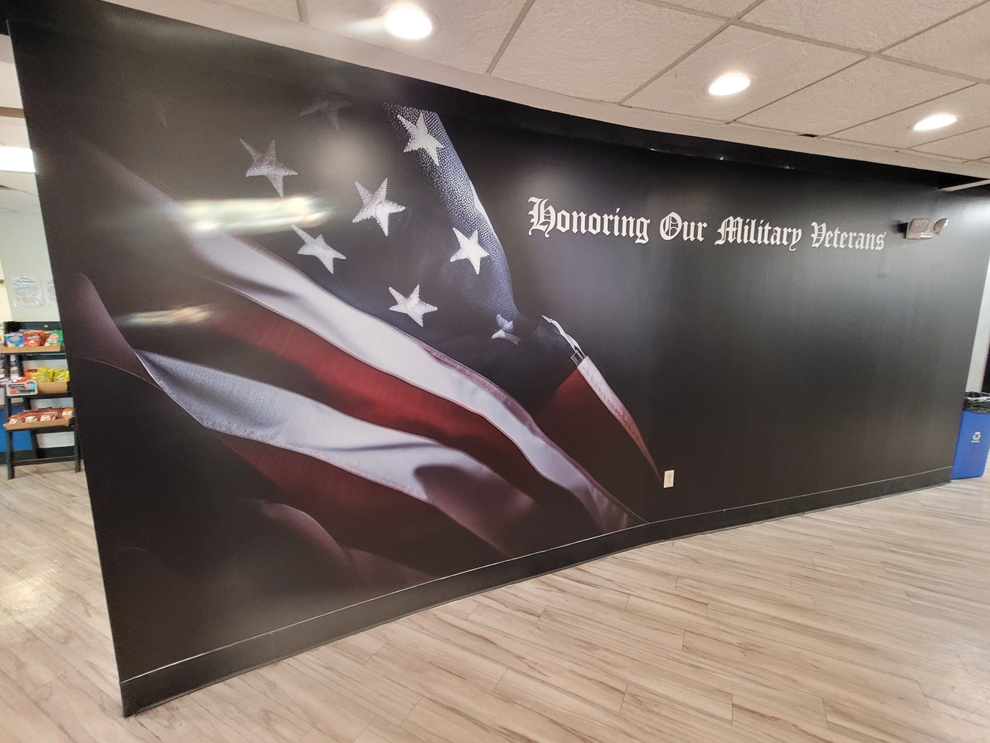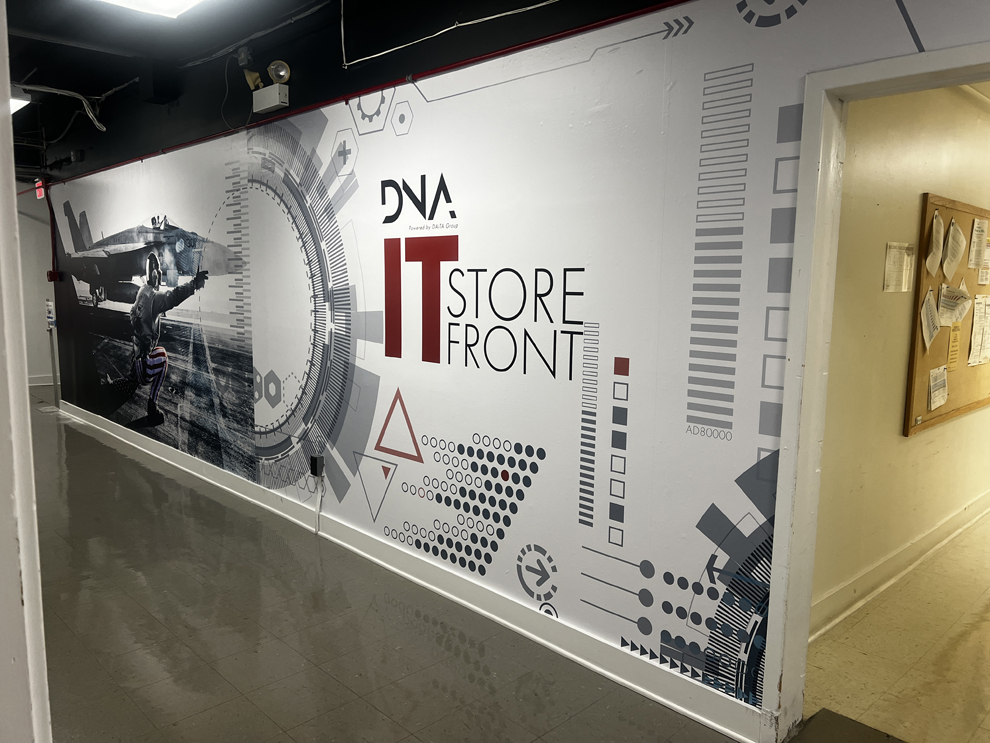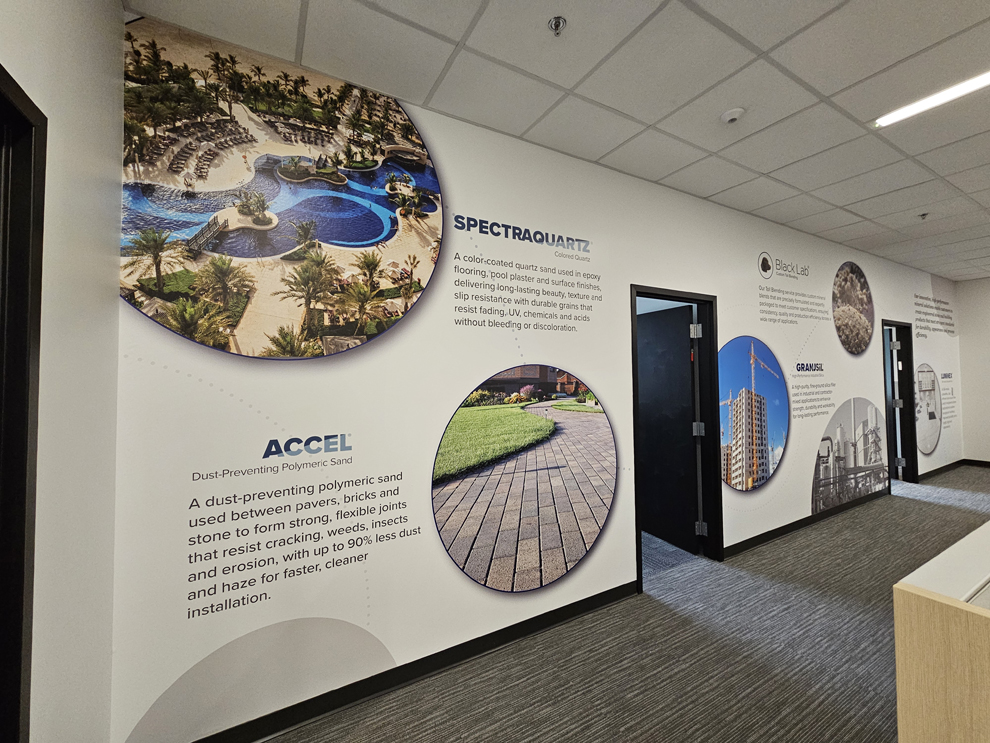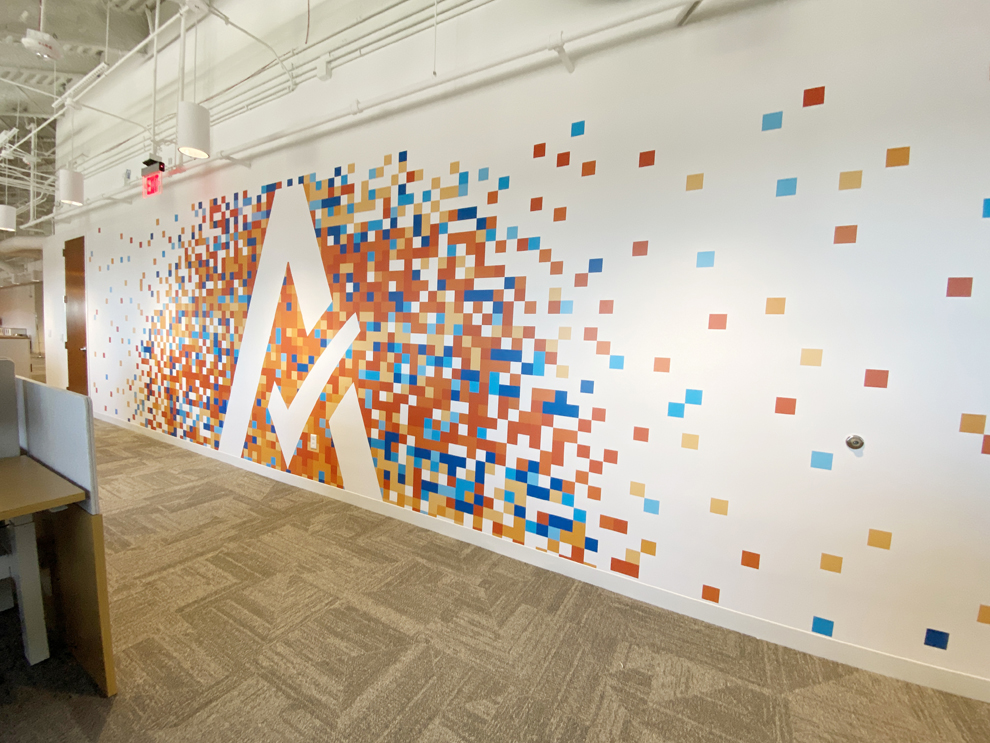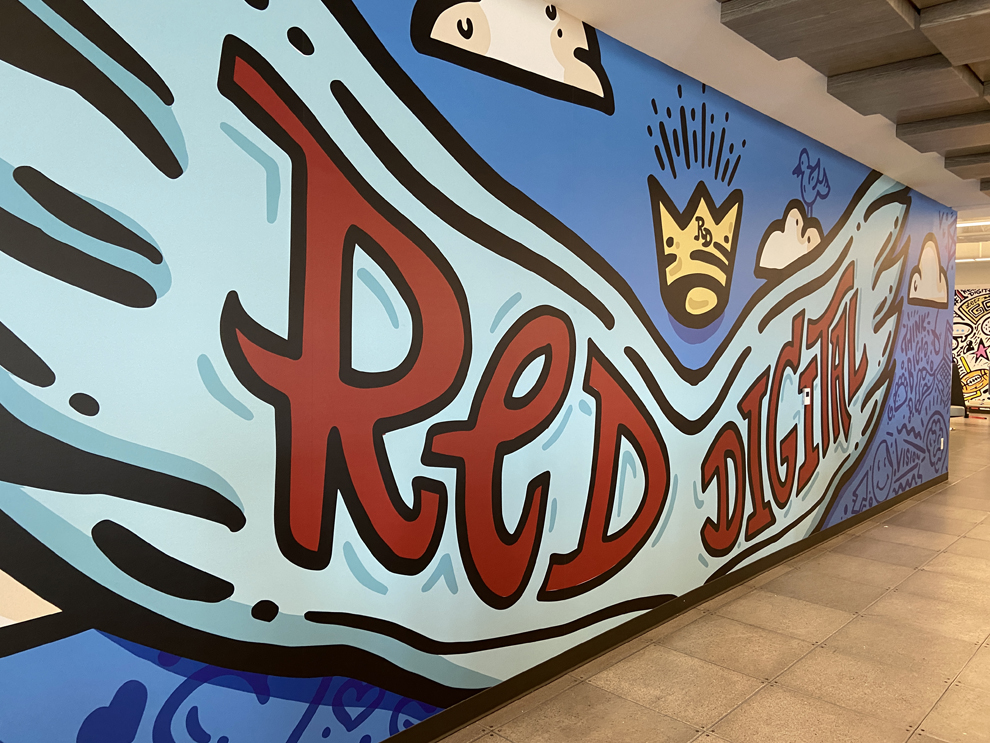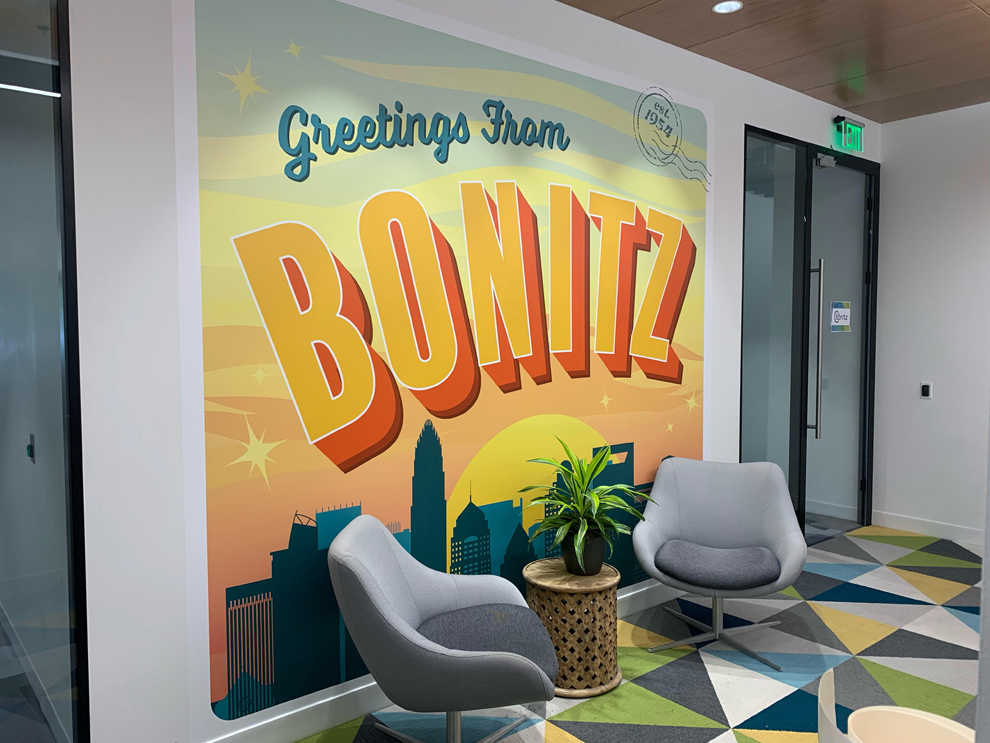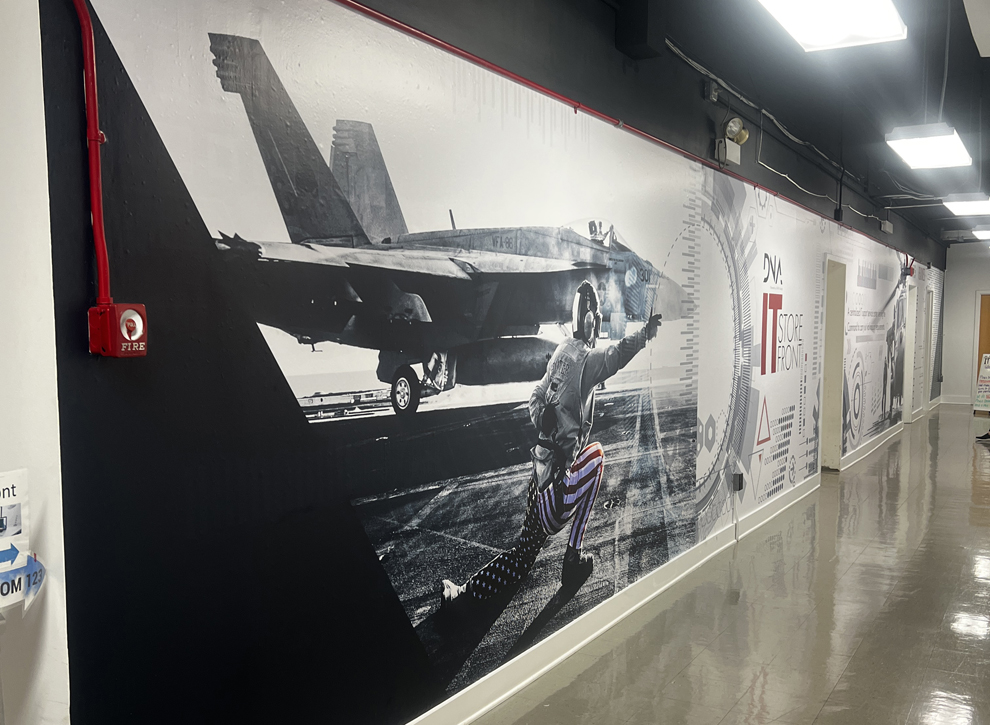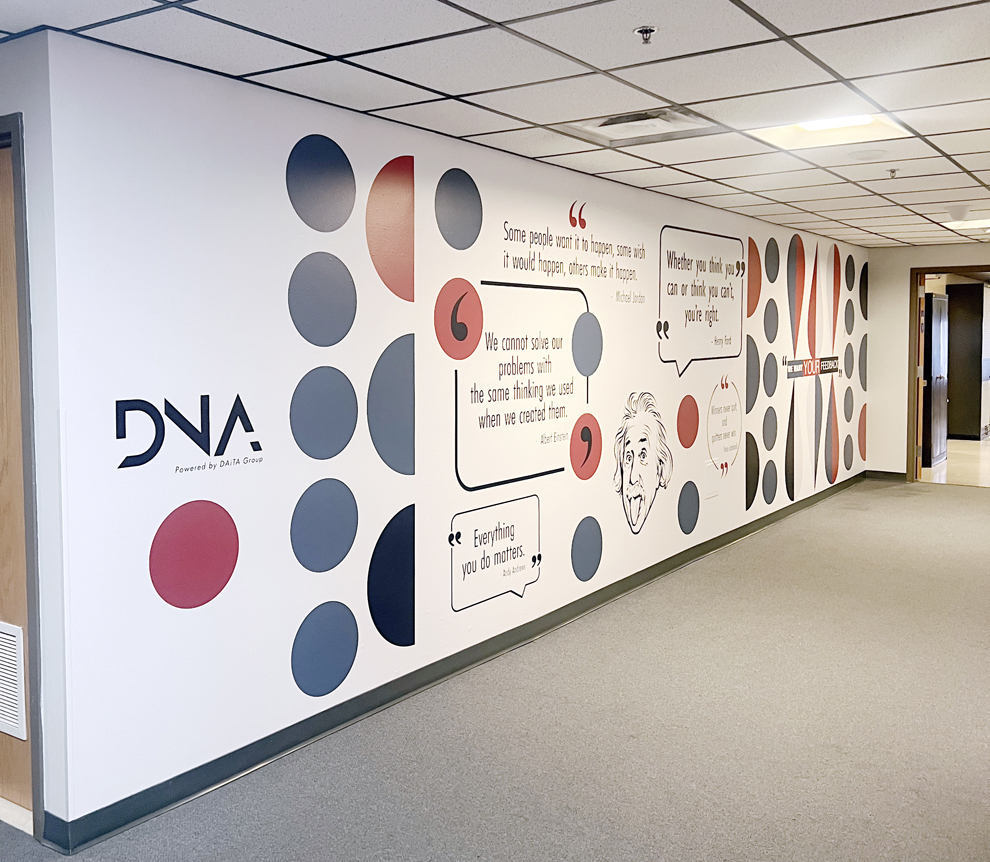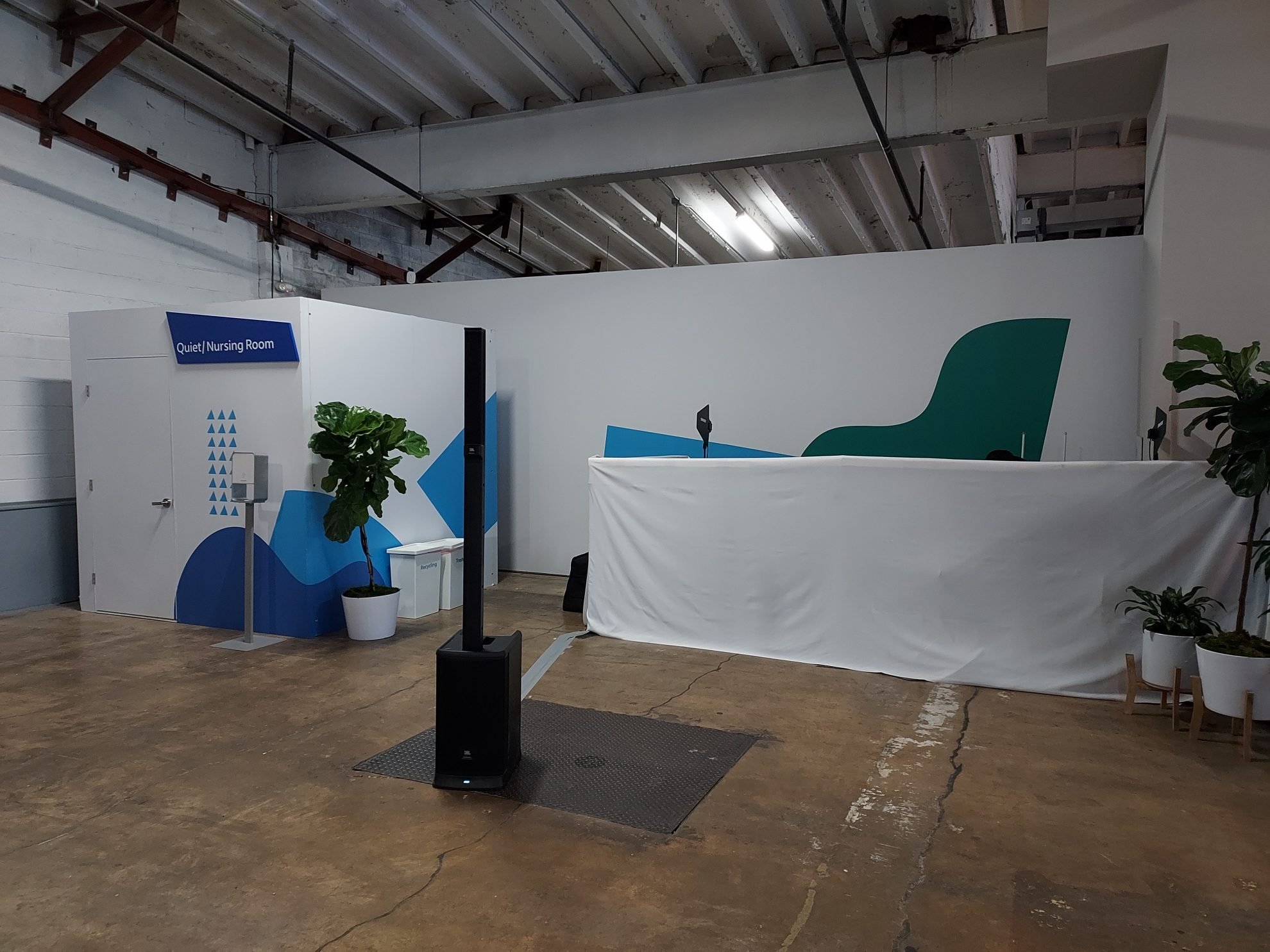
A workplace wall can help people understand an organization before a meeting begins, an employee orientation starts, or a visitor reaches the reception desk. Wall wraps use architectural scale to establish identity, organize important messages, connect people with institutional history, and make culture visible throughout an interior. Instead of distributing that communication among several unrelated signs, a planned wall composition can combine imagery, typography, color, archival material, and branded patterns across one continuous surface. The result can support a stronger arrival, a clearer sense of place, or a more coherent experience as people move through the building.
Heritage Signs & Displays develops wall wraps for Hampton, VA offices, universities, healthcare organizations, manufacturers, associations, nonprofits, professional firms, research environments, and stakeholder-facing properties. Environmental graphic design begins with the intended outcome and the audience that needs to receive the message. Heritage considers viewing distance, circulation, sightlines, image quality, architecture, lighting, furnishings, wall condition, and nearby signs or displays before recommending a composition. These decisions help determine whether the wall should deliver one concise statement, reveal information progressively, or provide a visual foundation for a broader interior branding program.
Wall graphics can support mission statement displays, core values, workplace murals, historical timelines, employee recognition, donor recognition, research storytelling, educational content, branded corridors, and selected wayfinding needs. Photography, illustration, maps, typography, and archival documents may be printed directly into the composition, while dimensional letters, acrylic panels, standoff mounted signs, or recognition components may be installed above or beside the wrap when layering supports the message. Those fabricated elements can add hierarchy and depth, but the wrapped wall remains the primary visual surface. Selected exterior wall graphics may also be considered when the substrate, exposure, access, material system, and intended service life support the application.
Hampton projects may involve occupied facilities, multiple reviewers, property requirements, security procedures, manufacturing schedules, or installation windows coordinated around classes, meetings, patient activity, and public programs. Heritage’s One Dedicated Project Manager System keeps discovery, the required site survey, environmental graphic design, production, fabrication, pre-install planning, and professional installation connected. One consistent Project Manager maintains project history, coordinates approvals, documents field conditions, and helps protect the approved design intent as the work moves from concept to production-ready files and then onto the finished wall.
Heritage began in 1977 as a printing business, and custom signs, interior graphics, workplace branding, and event-environment work became a defining company focus beginning in 2009. Nearly five decades later, the award-winning company remains veteran-owned and family-led. Heritage seeks to honor God by serving clients and communities with excellence, a purpose reflected in accountable communication, careful preparation, and respect for each client’s property. For Hampton organizations, the objective is a wall-wrap program that feels appropriate to the architecture, communicates with discipline, and arrives at installation with the major decisions already resolved.
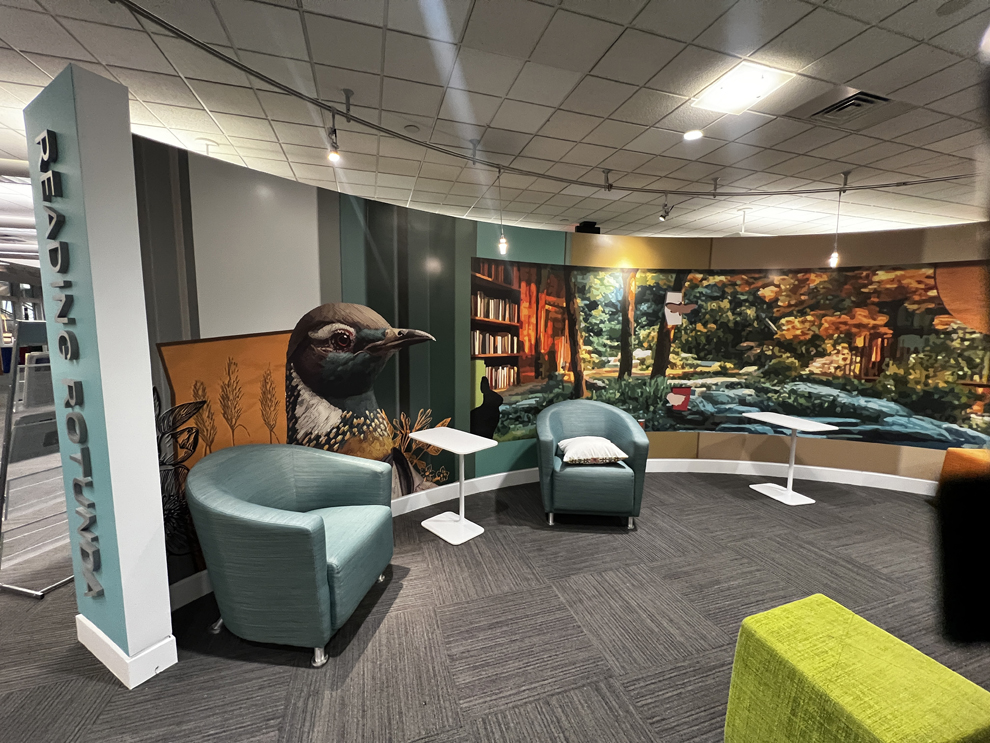
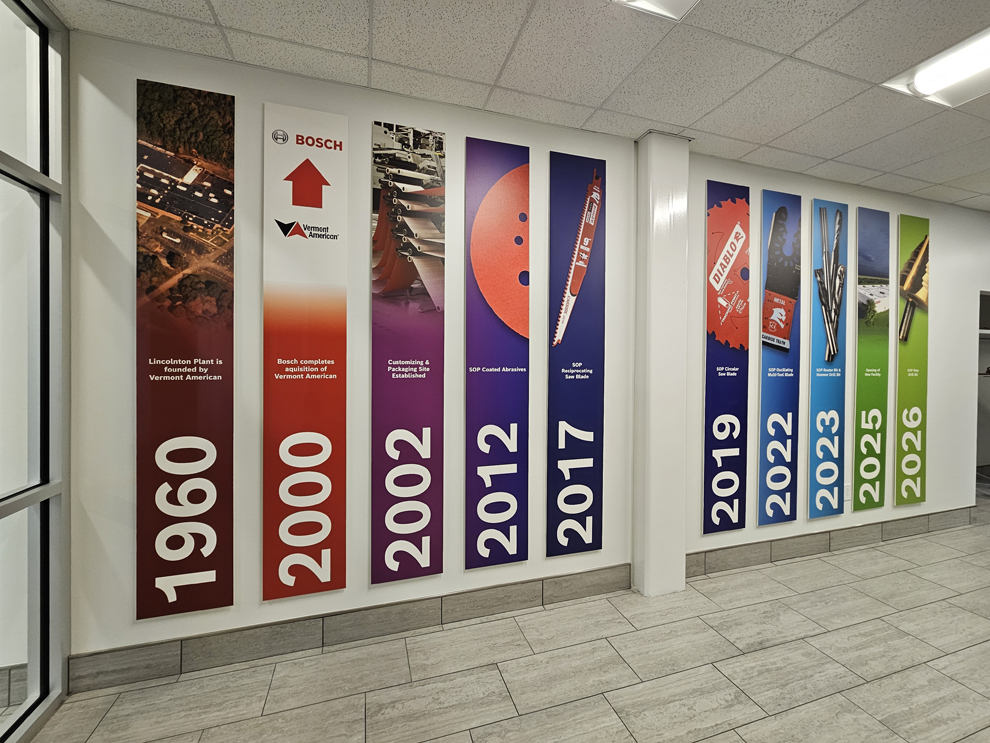
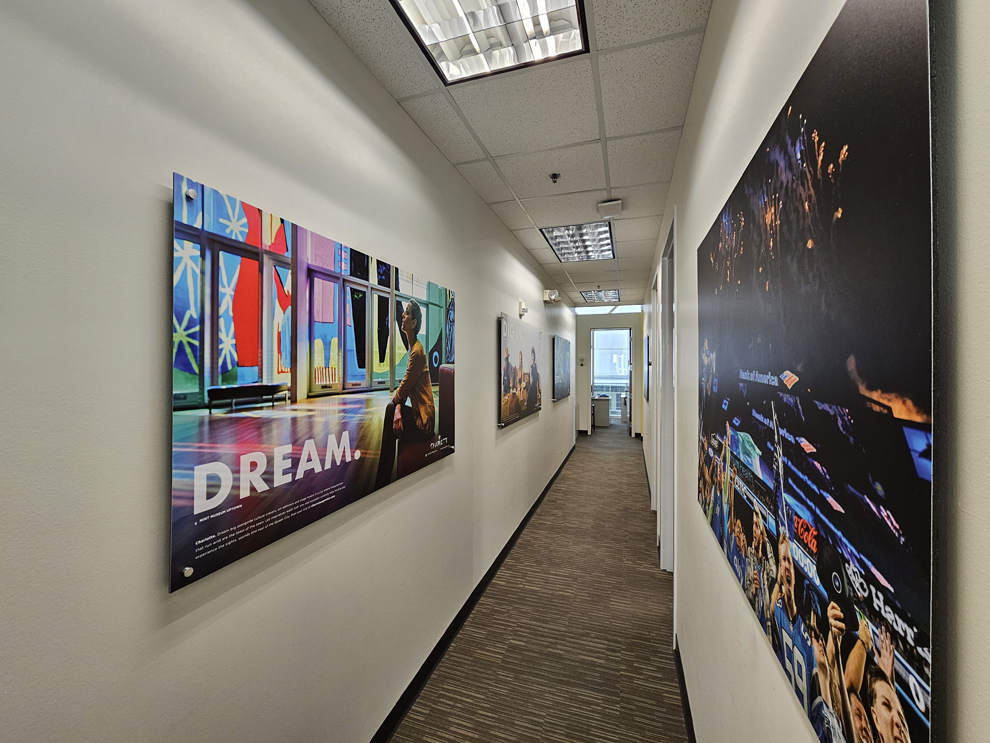
A full wall offers communication opportunities that individual signs cannot provide because imagery and typography can unfold across the architecture rather than remain confined to separate panels. A Hampton manufacturer might use a corridor to connect company milestones with present-day capabilities, while a university department may combine research photography, concise explanations, and donor recognition across a prominent gathering area. A corporate conference space may need a restrained brand pattern rather than a dense narrative.
Heritage evaluates where people enter, pause, turn, and approach the wall, then considers how doors, corners, outlets, fixtures, and changes in viewing distance affect the composition. Full coverage is not automatically the correct treatment. A partial mural, cut vinyl graphics, a printed feature field, or a wrap supporting dimensional components may communicate the intended message more effectively. The recommendation should follow the audience, content, architecture, maintenance expectations, and desired service period rather than a predetermined amount of material.
A wall wrap depends on coordinated decisions made well before installation. Measurements, image resolution, material selection, panel breaks, seam placement, color, openings, corners, and site access can each affect whether the finished mural appears deliberate within the space. Heritage keeps those decisions within one accountable engagement, reducing the need for the client to coordinate separate designers, print providers, fabricators, and installation subcontractors.
One dedicated Project Manager carries the project record from discovery and field verification through environmental graphic design, production, fabrication, pre-install planning, and professional installation. That continuity helps preserve stakeholder decisions, approved messaging, brand standards, and scheduling requirements as the work advances. The required site survey provides reliable information about dimensions, wall conditions, obstructions, access routes, and installation windows before production begins. Heritage then plans panel sequence, seams, registration, and fabricated additions around the verified site, giving Hampton clients a connected process with fewer handoffs and a clear point of accountability.
Wall displays can add photographs, recognition names, documents, or changeable information above a printed background. Heritage coordinates panel dimensions, mounting points, content hierarchy, and contrast so the added components support the wall wrap’s larger visual narrative.
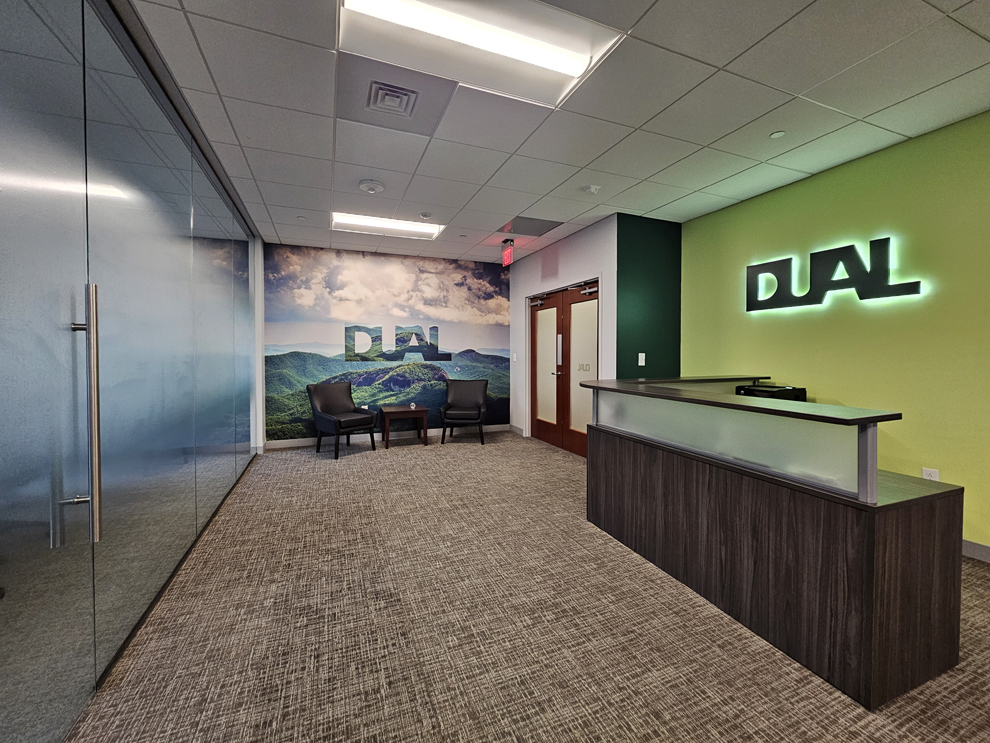
Lobby signs can provide primary identification while a surrounding mural establishes organizational context, culture, or place. Heritage plans scale, placement, materials, and sightlines so the identification remains clear without disconnecting it from the wrapped feature wall.
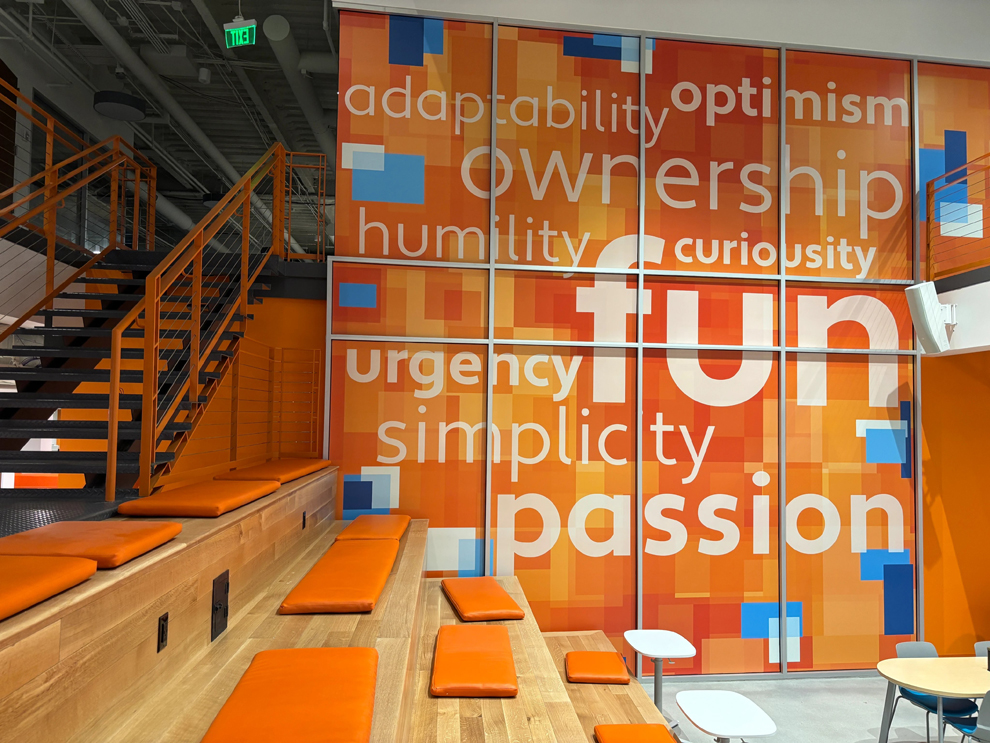
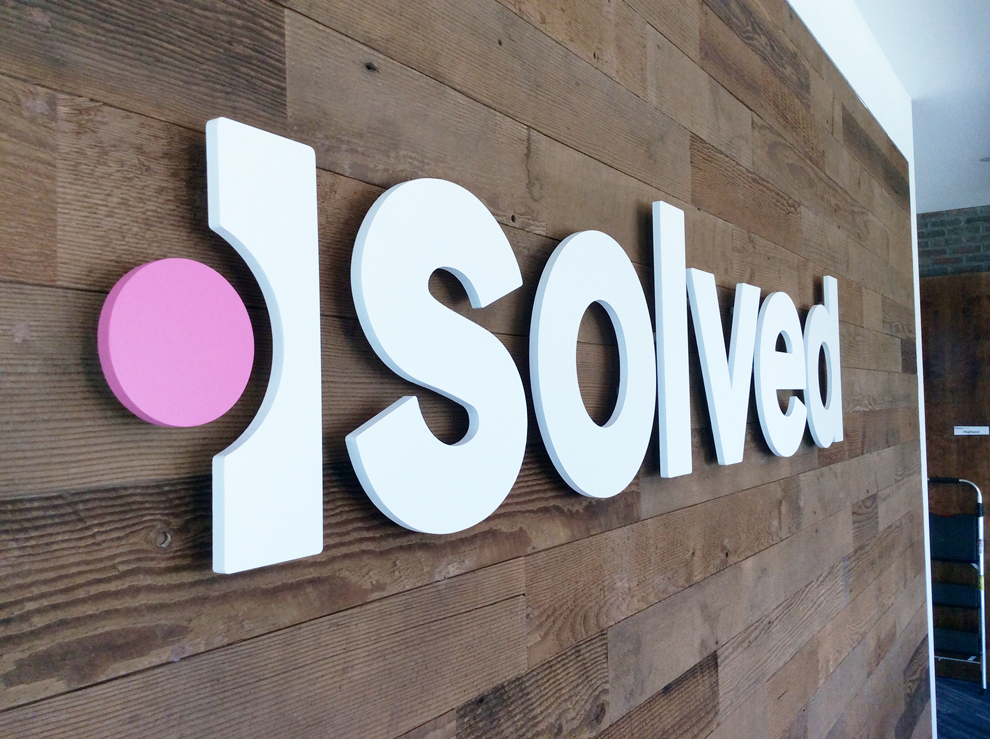
Dimensional letters can introduce physical depth for a name, mission statement, values, or concise message. Heritage coordinates letter spacing, mounting locations, color contrast, and background imagery so the lettering remains legible within the complete wall composition.
Standoff mounted signs can separate selected recognition, history, or educational content from the printed surface. Heritage accounts for projection, fasteners, panel size, wall construction, and surrounding graphics so each mounted element appears integrated rather than added afterward.
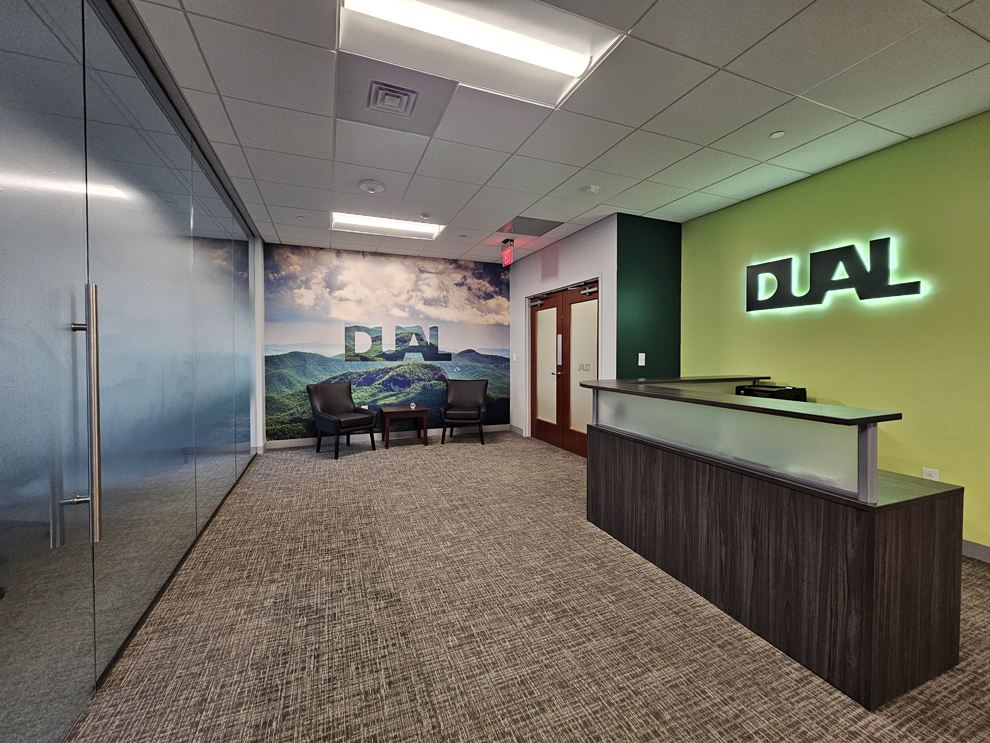
Backlit signs can anchor a lobby or stakeholder-facing feature wall when illumination is appropriate for the setting. Heritage coordinates brightness, electrical considerations, mounting, graphic contrast, and viewing distance so the illuminated component supports the mural without overpowering it.
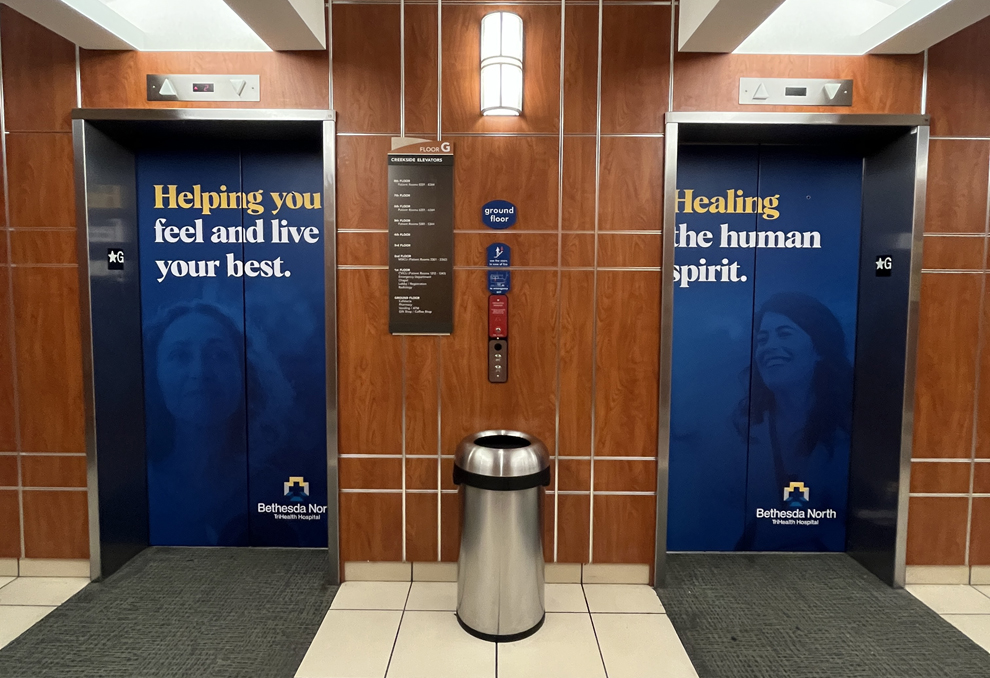
Elevator wraps can carry a coordinated visual program into high-use circulation areas, selected doors, or approved cab surfaces. Heritage adapts artwork to moving components, openings, sightlines, and building requirements while maintaining continuity with nearby wall graphics.
Window graphics can extend selected patterns, colors, or messaging from a wrapped wall onto adjacent glass. Heritage coordinates visibility, daylight, privacy, scale, and visual overlap so both surfaces contribute distinct functions within the branded environment.
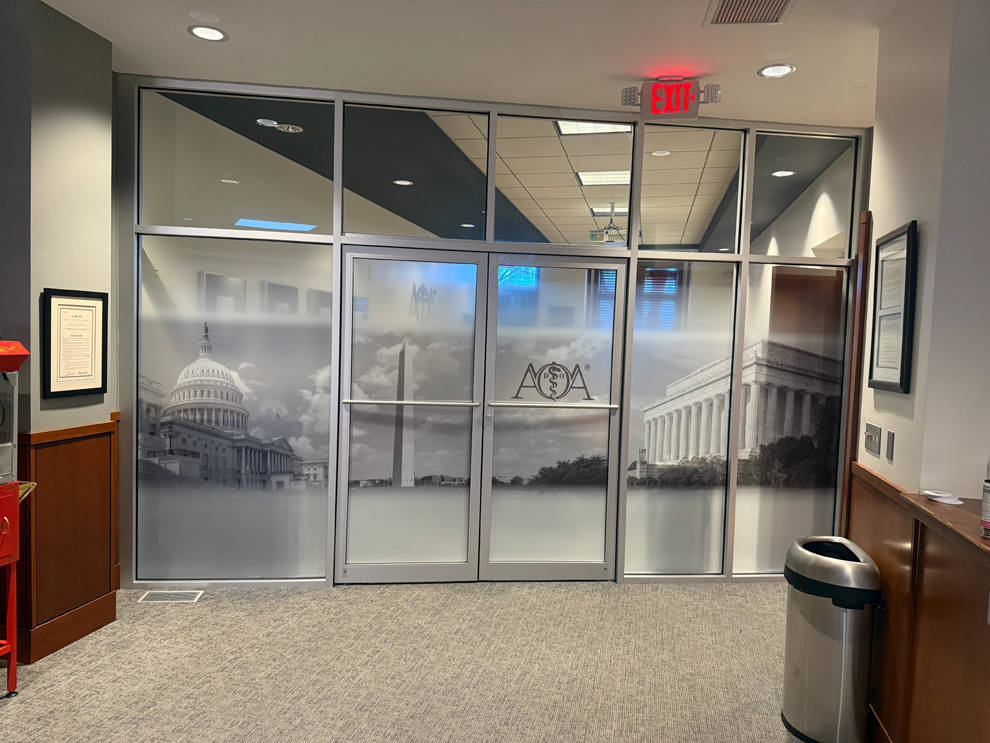
Frosted vinyl can provide privacy and restrained branding on conference-room or office glass near a mural. Heritage plans bands, patterns, logos, and sightlines so the glass treatment supports the interior program while the wall wrap retains visual ownership.
A Hampton wall-wrap project can begin with Get Started Now and a practical description of the property, desired result, audience, target completion date, and anticipated overall investment. Photographs, approximate dimensions, brand standards, available artwork, and known wall, paint, security, loading, or access information provide useful context. One dedicated Project Manager will identify the remaining decisions, determine whether a site survey or additional discovery should occur next, and coordinate the appropriate Heritage resources for environmental graphic design, production, fabrication, planning, and professional installation.
Heritage provides client-facing and field support from Hampton for organizations throughout the Tidewater region. Local discovery, site surveys, field verification, installation planning, professional installation, and follow-through can be coordinated at client properties in Hampton and surrounding communities. That proximity helps Heritage understand wall conditions, property access, loading procedures, installation windows, and operating constraints before graphics enter production.
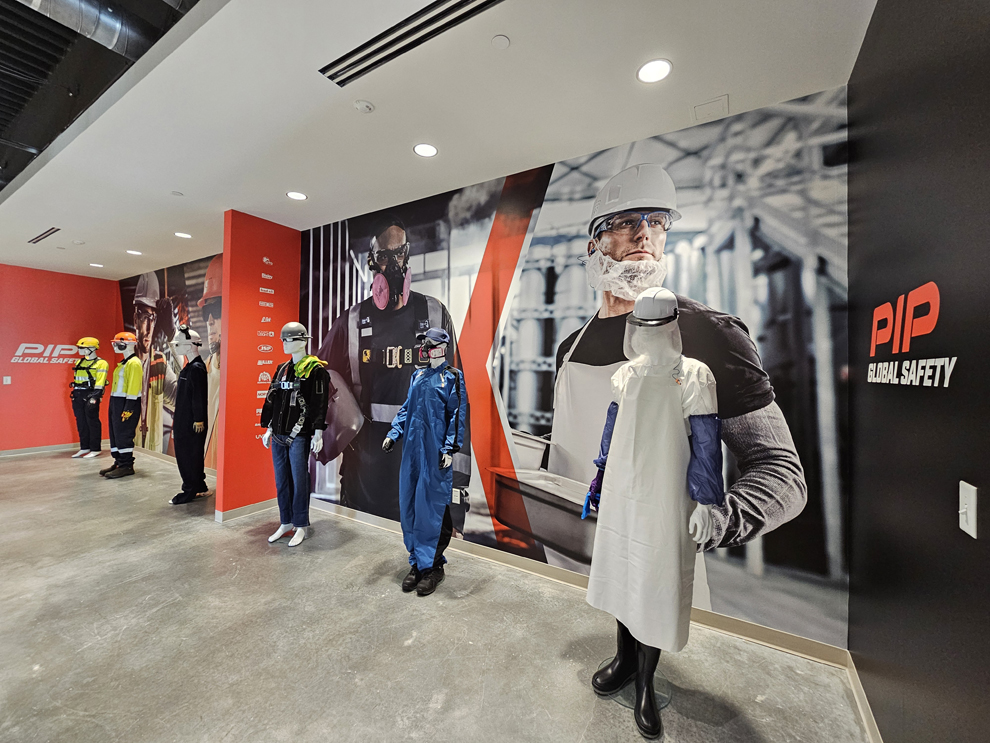
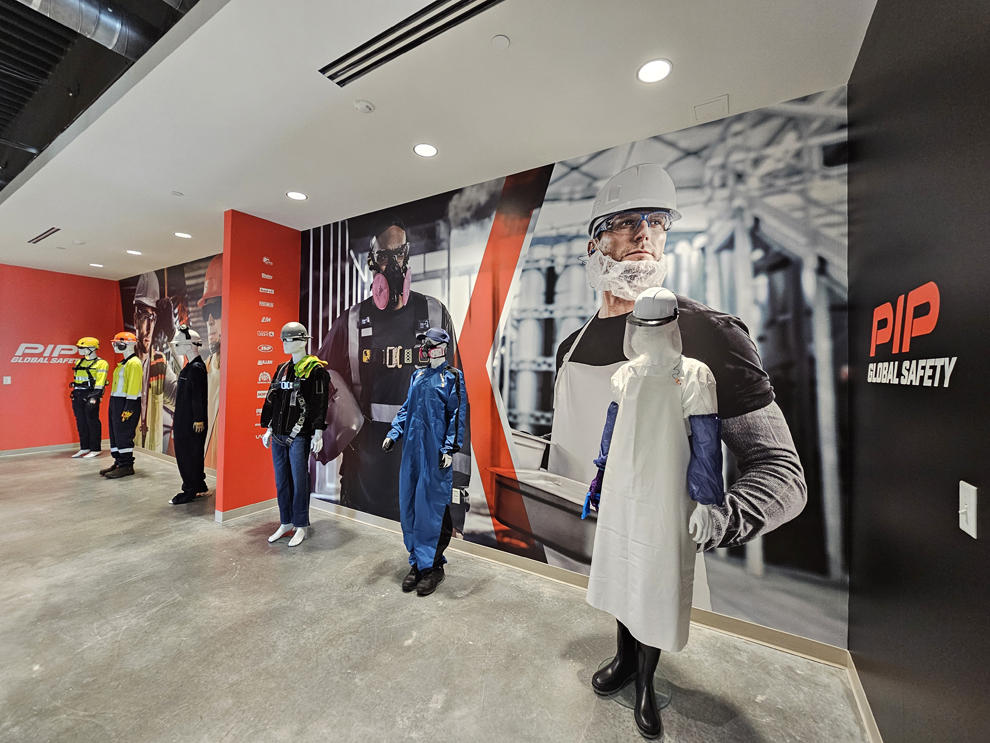
The regional workplace context includes corporate offices, university facilities, healthcare environments, manufacturers, nonprofits, professional firms, and institutional properties with different audiences and operating requirements. A research setting may use wall graphics to explain complex work, while a manufacturing workplace may communicate safety culture, history, capabilities, or employee recognition. Heritage connects this field knowledge with broader production, fabrication, and project management resources across its network.
For multi-location programs, one dedicated Project Manager can preserve approved brand standards, messaging decisions, production expectations, and schedule history across the engagement. Each location is still adapted to its dimensions, architecture, audience, access, and operating conditions rather than receiving an identical physical solution.
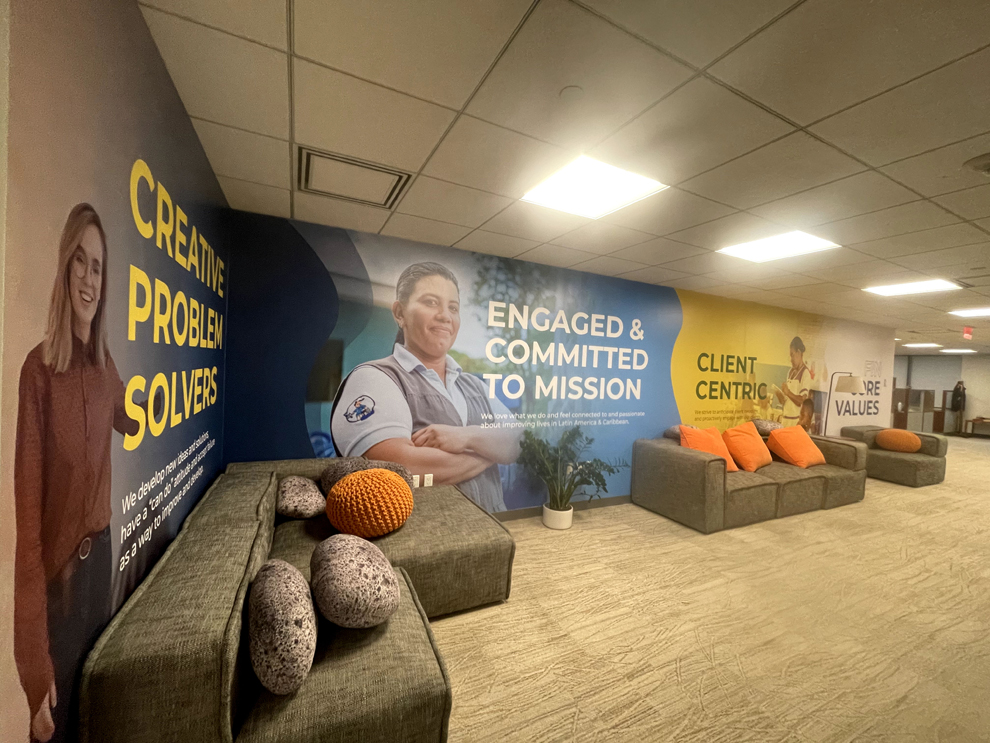
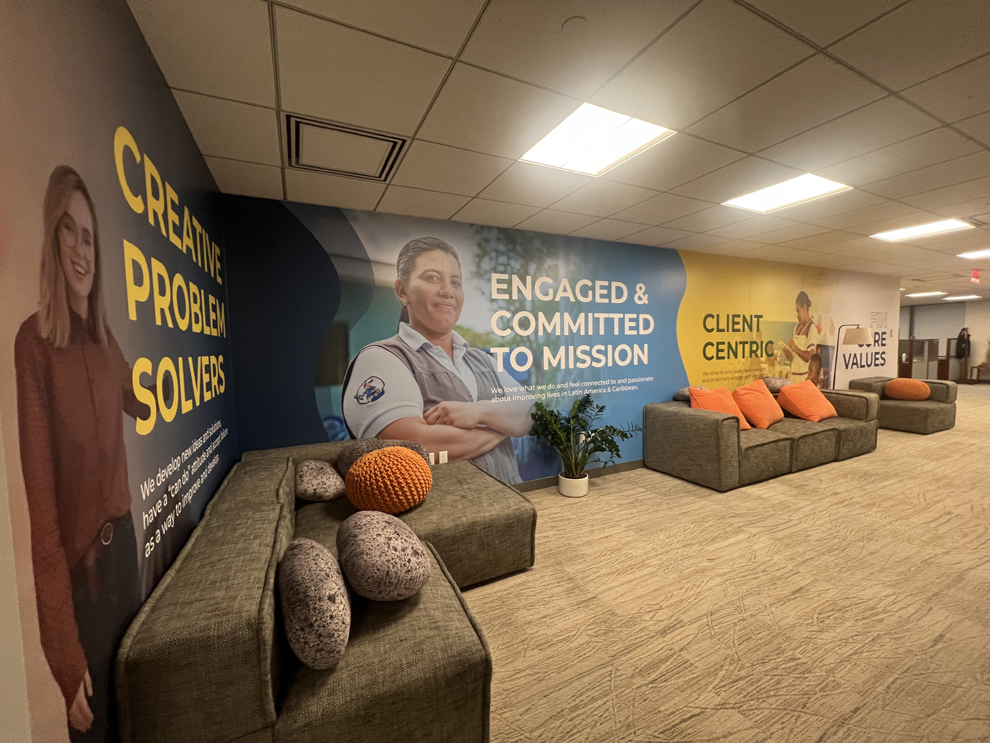
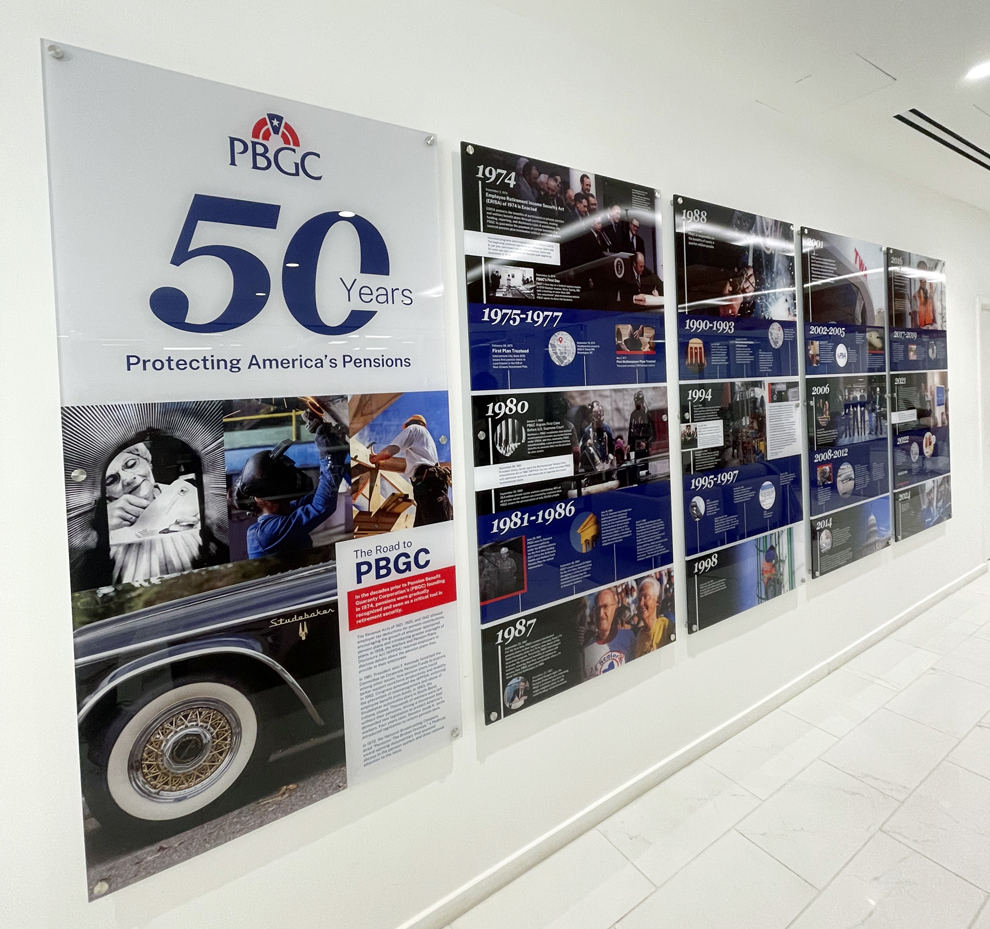
Environmental graphic design can turn a large wall into a structured history, recognition feature, mission statement display, research narrative, visitor orientation point, or workplace culture experience. Heritage begins by clarifying what the organization needs people to understand, where they will encounter the message, and how much information the setting can support. The composition can then establish hierarchy among imagery, typography, dates, maps, quotations, and brand elements without treating every piece of content as equally prominent.
Heritage can develop concepts directly with organizational stakeholders, work from approved brand standards, or prepare finished client artwork for production. Heritage also collaborates with architects, interior designers, branding agencies, marketing teams, and environmental graphic designers when another professional partner controls the broader creative direction. In those engagements, Heritage focuses on translating approved intent into a producible and installable wall solution.
Image resolution, panel breaks, seams, openings, corners, scale, and fabricated elements are resolved with the verified architecture in mind. Heritage does not provide architecture, engineering, general interior design, lighting design, or code consulting.
Professional installation should begin with the wall, artwork, access requirements, and operating schedule already understood. Heritage requires a site survey for Wall Wrap projects that include professional installation. The survey combines client discovery with field verification, documenting dimensions, surface conditions, openings, fixtures, access routes, loading considerations, work-hour restrictions, and other details that may influence production or installation sequencing.
The dedicated Project Manager carries those findings into environmental graphic design, panel planning, production, fabrication, and pre-install preparation. Installers receive the approved artwork, material information, panel sequence, site requirements, and schedule before arriving at the property. That preparation matters in Hampton offices, campuses, healthcare settings, and manufacturing facilities where security, elevators, active work areas, stakeholder calendars, or limited installation windows can affect execution.
During installation, Heritage installers manage registration, seam placement, alignment, corners, transitions, doors, outlets, and fixtures while protecting adjacent property and limiting disruption. If verified conditions have changed, the connected Heritage team evaluates the issue before proceeding with an unsuitable field adjustment.
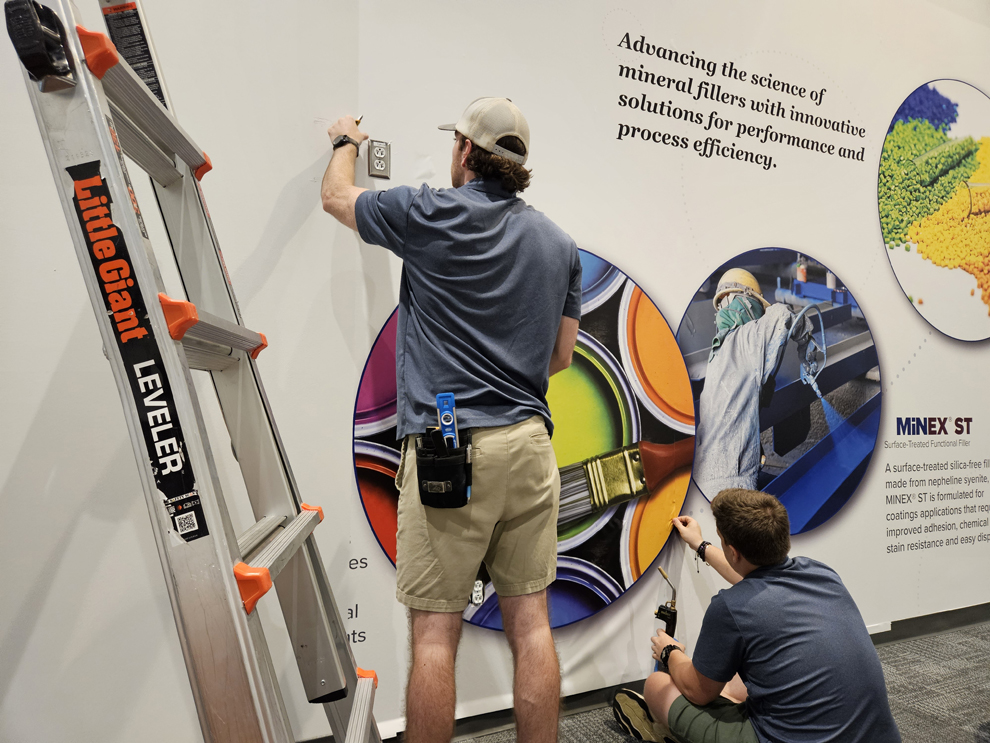
The wall itself is an important part of a successful graphics installation. Drywall should be structurally sound, smooth, clean, dry, and repaired where needed. Primer and paint must also be properly applied. Before adhesive vinyl is installed, the finish coat needs to reach full cure.
Paint often becomes touch-dry before curing is complete. During continued curing, gases or vapors can escape from the coating. If the wall is covered with vinyl too early, that outgassing may become trapped beneath the adhesive and contribute to bubbles, blisters, lifting, or premature adhesion failure. Four weeks can be a useful scheduling guideline for many paints, but the coating manufacturer's instructions and real conditions at the site determine when installation should proceed.
Testing can indicate whether vinyl is performing appropriately on the painted surface. It cannot confirm that the paint and primer underneath are firmly bonded to the drywall. If the coating begins pulling away during testing or routine repositioning of the graphic, Heritage stops work to avoid creating additional damage. The client or property owner coordinates and pays for the required repairs, correct priming, repainting, and complete curing before Heritage returns.
Graphic removal later should be treated as a separate issue. Heritage removes vinyl carefully with the goal of limiting avoidable damage, but damage-free removal cannot be guaranteed. Paint, primer, or the facing of the drywall can release. The client or property owner arranges and pays for any necessary restoration. Properly planned wall wraps remain proven and effective branding solutions.
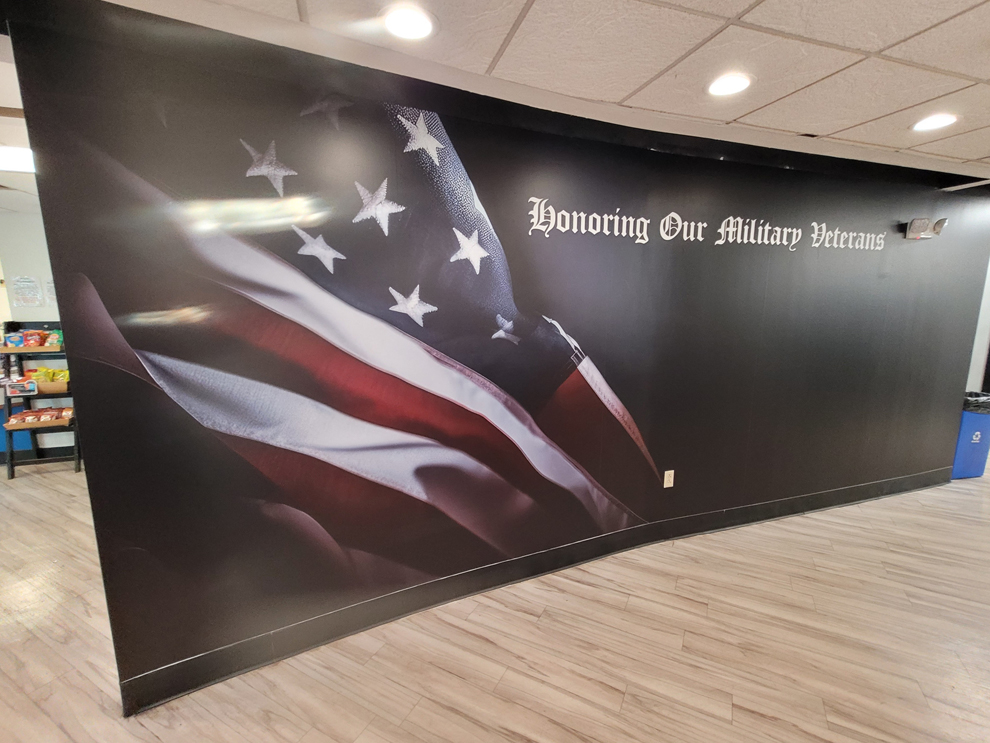
Effective planning aligns the desired result, audience, project scope, phasing, completion date, stakeholder approvals, wall readiness, property access, and anticipated overall investment before final production decisions are made. These factors help determine whether the project should use a full mural, partial coverage, cut graphics, fabricated additions, or a phased program across several walls or facilities.
Useful starting information includes the installation address, current photographs, approximate dimensions, approved messaging, brand standards, available artwork, paint information, access restrictions, and property requirements. The required site survey then verifies conditions that photographs, drawings, and written descriptions cannot establish with sufficient accuracy.
Heritage is best suited for professionally managed projects that combine environmental graphic design, production, fabrication, and professional installation. Many Heritage projects involving production and professional installation range from $10,000 to more than $200,000. Final investment depends on graphic coverage, design development, material selection, fabricated elements, wall condition, access, installation windows, phasing, schedule, and coordination demands. Use Get Started Now to confirm the current anticipated overall investment for Hampton and provide enough information for Heritage to evaluate project fit responsibly.
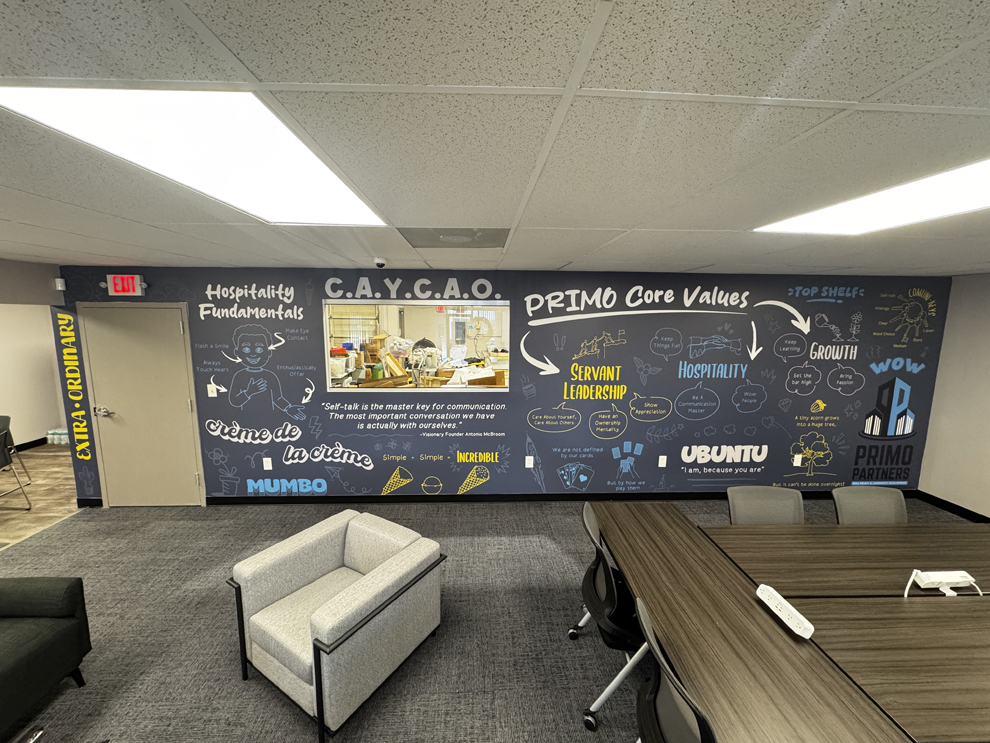
Yes. Heritage can develop an environmental graphic design concept from approved messaging, brand standards, photographs, archival material, and stakeholder priorities. The process considers hierarchy, viewing distance, circulation, architecture, image quality, panel planning, and fabrication requirements. Heritage can also implement finished artwork or collaborate with an architect, interior designer, branding agency, marketing team, or environmental graphic designer responsible for the broader design direction.
Adhesion testing provides useful information about how a selected vinyl behaves on the visible paint, including initial adhesion and response to controlled lifting. It does not verify the hidden bond among paint, primer, and drywall. A successful test therefore reduces uncertainty without certifying the underlying wall system or guaranteeing that paint will remain intact during installation or eventual removal.
Yes. One dedicated Project Manager can maintain approved messaging, brand standards, production expectations, and project history across a multi-location program. Each facility still requires individual planning for dimensions, wall conditions, audience, access, operating schedules, and installation requirements. Consistent branding does not require every wall to receive the same physical layout.
The wall is ready when its finish paint has fully cured according to the manufacturer's requirements. A surface being dry to the touch is not enough. Paint can continue releasing gases or vapors as it cures, and vinyl installed prematurely may trap those emissions and contribute to bubbling, blistering, lifting, or early adhesion failure.
About four weeks can be used as general planning guidance for many coatings. Actual cure times are affected by the paint system, temperature, humidity, preparation of the wall, and site conditions. Because outgassing represents only one possible adhesion concern, manufacturer requirements and actual surface conditions determine final readiness.
Heritage connects local Hampton field support with one dedicated Project Manager, the required site survey, environmental graphic design, production, fabrication, pre-install planning, and professional installation. That structure keeps wall measurements, site conditions, approved artwork, panel strategy, access requirements, and scheduling decisions within one accountable engagement instead of dividing them among unrelated providers.
They can. Some washable, scrubbable, stain-resistant, low-VOC, zero-VOC, and similarly challenging paints resist adhesives or require additional evaluation. Heritage may recommend cleaning, adhesion testing, or another compatible vinyl and adhesive system based on the actual wall. The paint label alone does not mean that every such surface requires a high-tack material.
No. Heritage does not provide installation-only services for customer-provided wall graphics. Heritage installs graphics that Heritage produces, fabricates, procures, or manages within the engagement. This boundary allows Heritage to remain accountable for measurements, materials, image quality, panel construction, replacement planning, and the production decisions that directly affect installation.
Wall wraps are large-format adhesive graphics produced to make a wall the primary visual surface within a branded or informational environment. They may incorporate photography, illustration, typography, patterns, maps, timelines, or archival content. The terms wall mural and wall graphics often overlap, although wall graphics can also describe smaller treatments that do not cover or visually control an entire wall.
Yes. Heritage removes wall graphics slowly and carefully to limit avoidable damage, but damage-free removal cannot be guaranteed. Paint or primer may release, and drywall facing can sometimes be affected. An adhesive described as removable is designed to support later removal under suitable conditions, but that term does not mean the painted wall will remain unchanged.
Sound, smooth, clean, dry, properly repaired drywall with correctly applied primer and fully cured finish paint generally provides the most suitable condition. Texture, moisture, dust, unstable repairs, peeling paint, contamination, or deteriorated drywall can affect appearance and adhesion. Heritage reviews these factors during the required site survey for professionally installed projects.
Not automatically. Most printed interior wall graphics are normally unlaminated when contact, cleaning, and operating conditions do not justify added protection. Heritage may recommend protective film laminate in high-contact areas or where frequent cleaning creates a practical need. Printed exterior wall graphics receive protective film laminate as standard practice for additional UV and weather protection.
Heritage stops rather than making the wall worse. Controlled lifting or repositioning can be a normal part of achieving correct panel alignment, but it may expose a weak bond beneath the visible paint. The client or property owner must arrange and pay for repair, proper priming, repainting, full cure time, and related restoration before Heritage returns.
Yes. A site survey is required for Heritage Wall Wrap projects that include professional installation. It combines client discovery with field verification of measurements, wall conditions, openings, fixtures, access routes, loading requirements, installation windows, and other property conditions. The resulting information guides design, production, panel planning, fabrication, scheduling, and installation preparation.
Some mild textures can work with specialty materials and installation techniques, provided the appearance and expected service period remain realistic. Deep texture, rough masonry, porous block, irregular concrete, unstable paint, or deteriorated surfaces may prevent reliable contact and produce an unsuitable visual result. Heritage evaluates the substrate before recommending a wrap or an alternative mounted display.
The client or property owner is responsible for arranging and paying for wall repair, restoration, proper priming, repainting, and complete cure time. This responsibility applies when paint releases during testing, normal installation repositioning, or eventual removal. Heritage does not perform or pay for drywall repair, painting, restoration, or related surface costs.
For new Hampton and Hampton Roads wall wrap and interior branding opportunities generated through the website, Heritage currently plans around an anticipated overall project investment of at least $5,000. That figure is a new-project planning threshold and is separate from Heritage's larger project scale.
Many projects that include production and professional installation range from $10,000 to more than $200,000. Project scope, artwork development, selected materials, fabrication, wall conditions, schedule, site access, and installation requirements can all affect the total. Use Get Started Now to provide details about your Hampton project and confirm the current regional investment level.
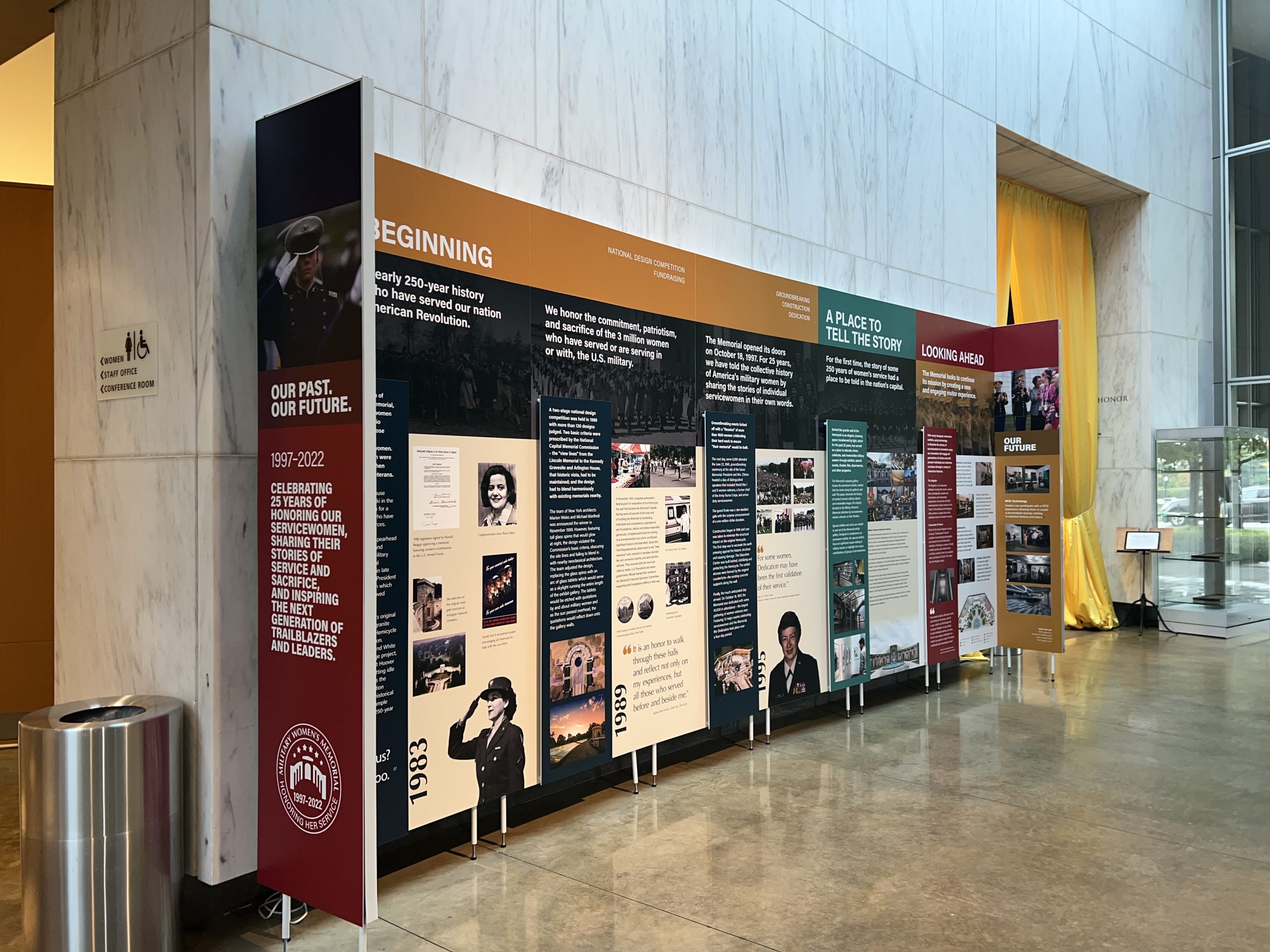
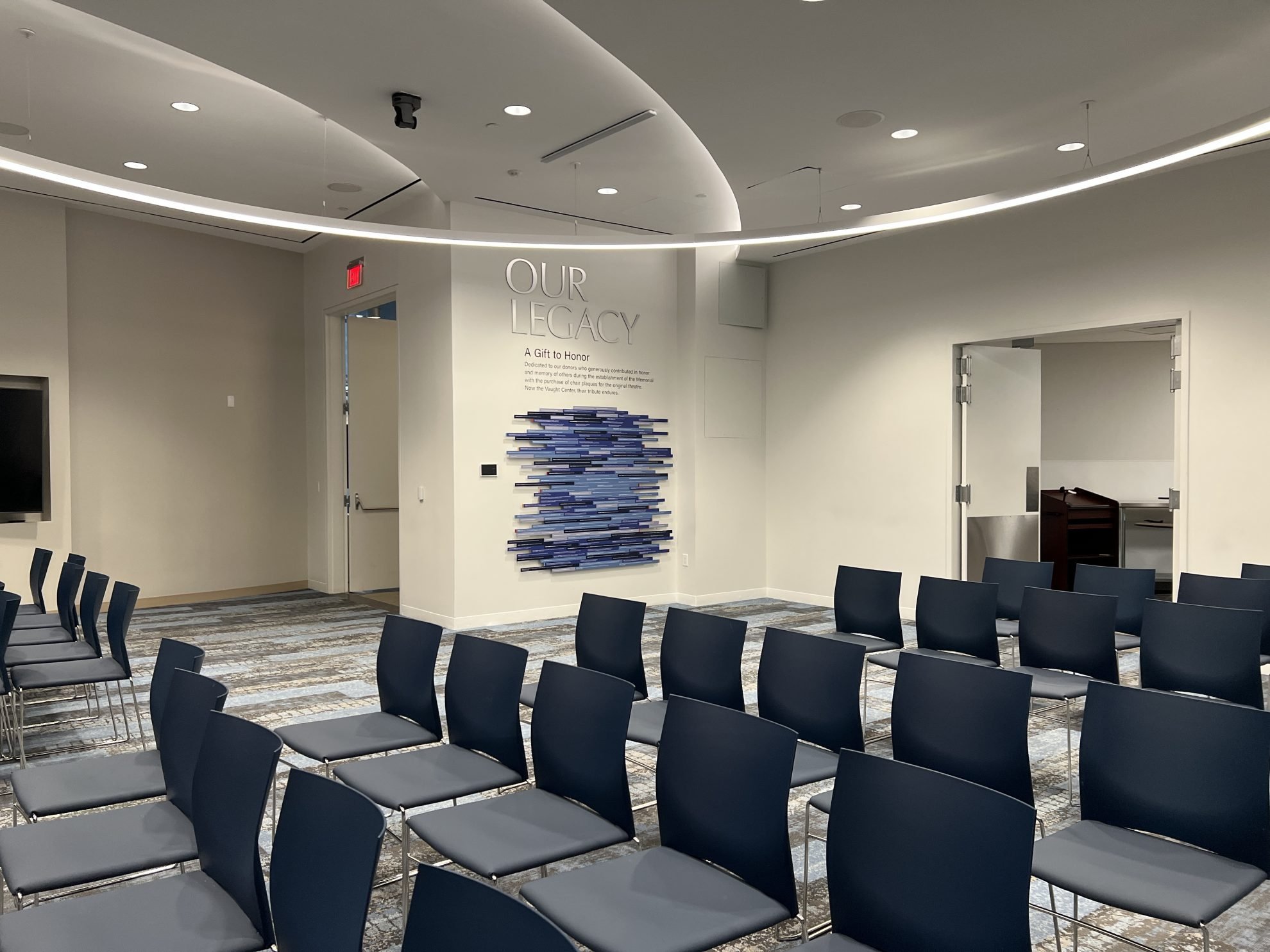
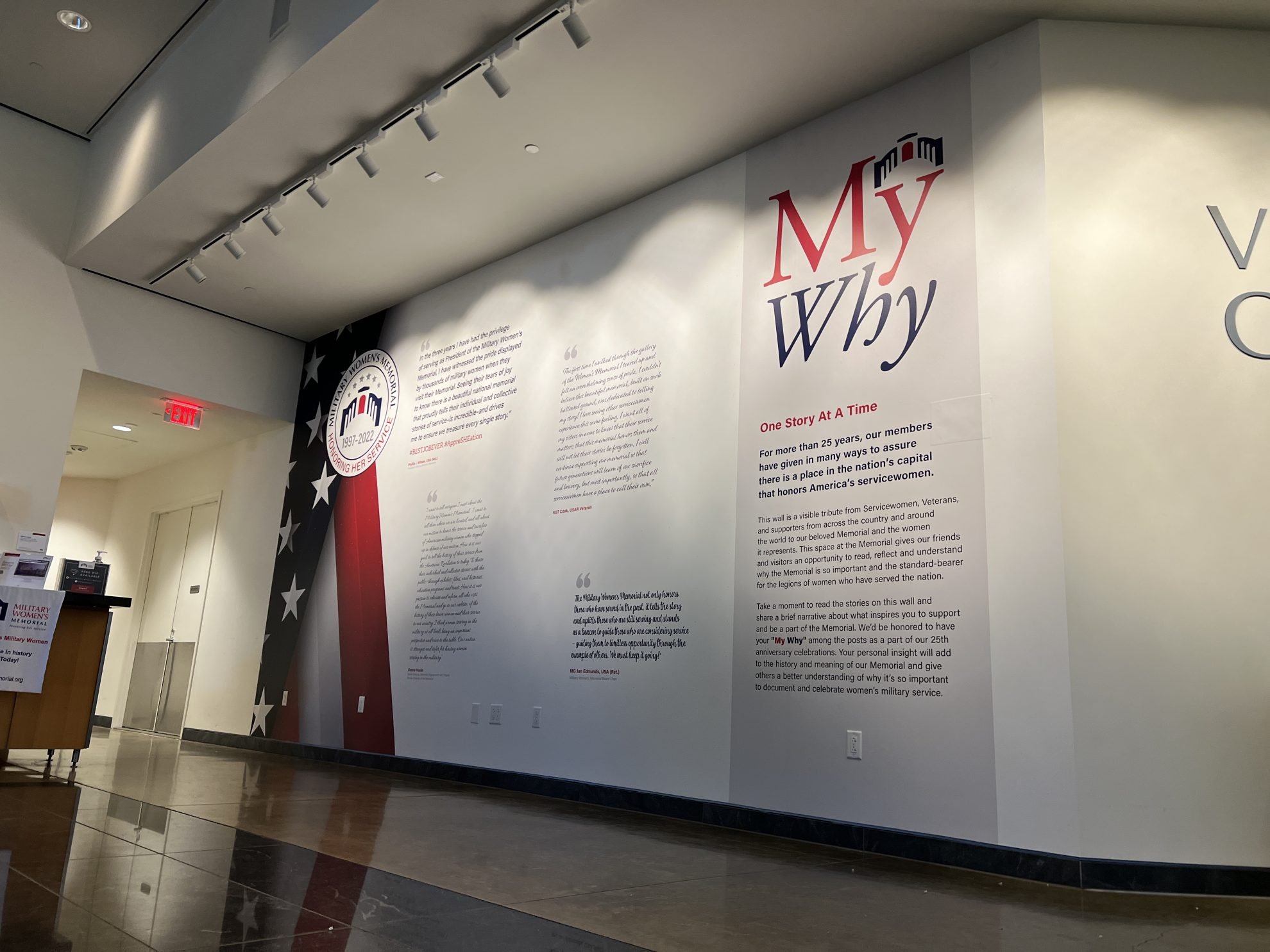
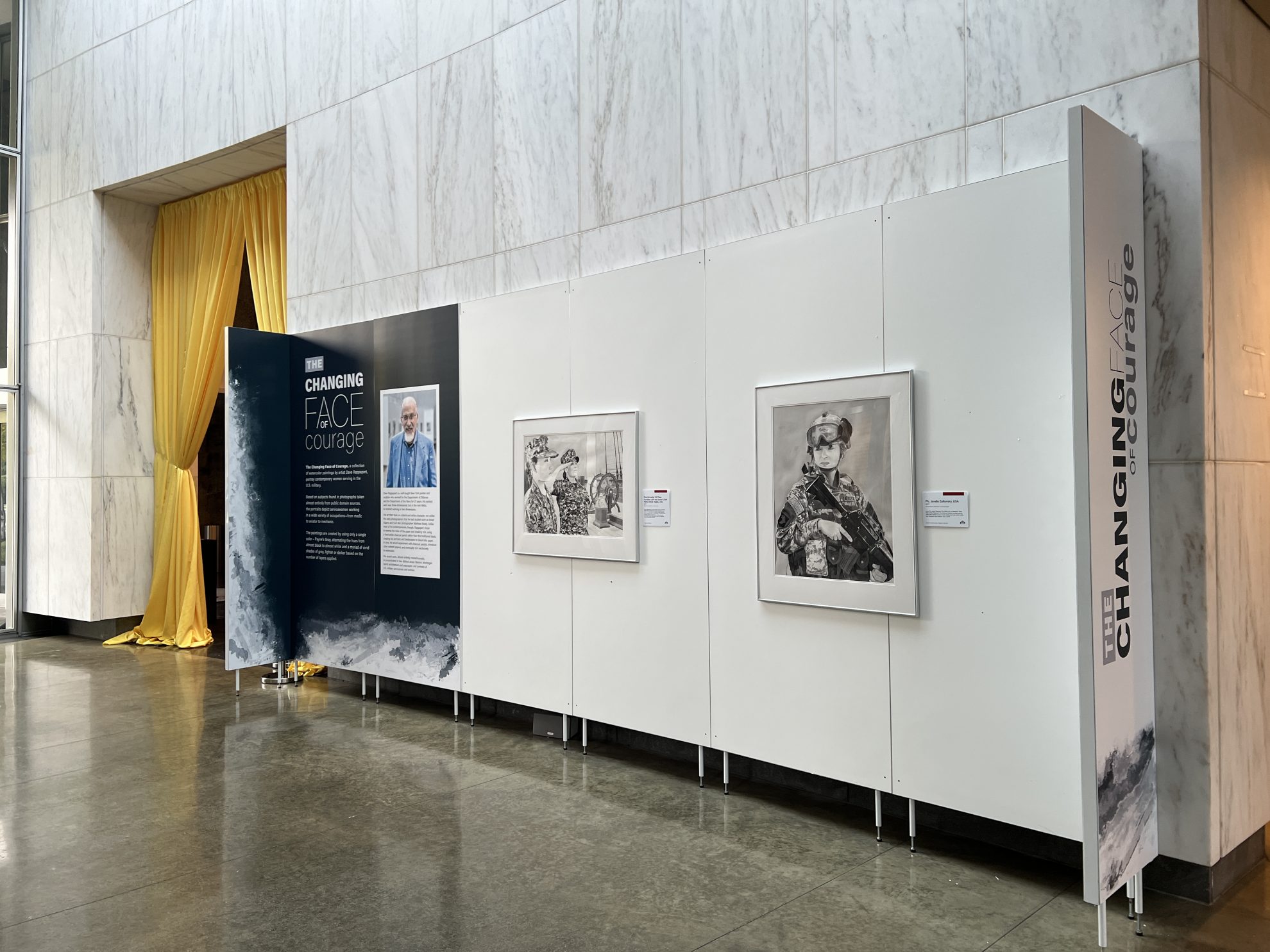
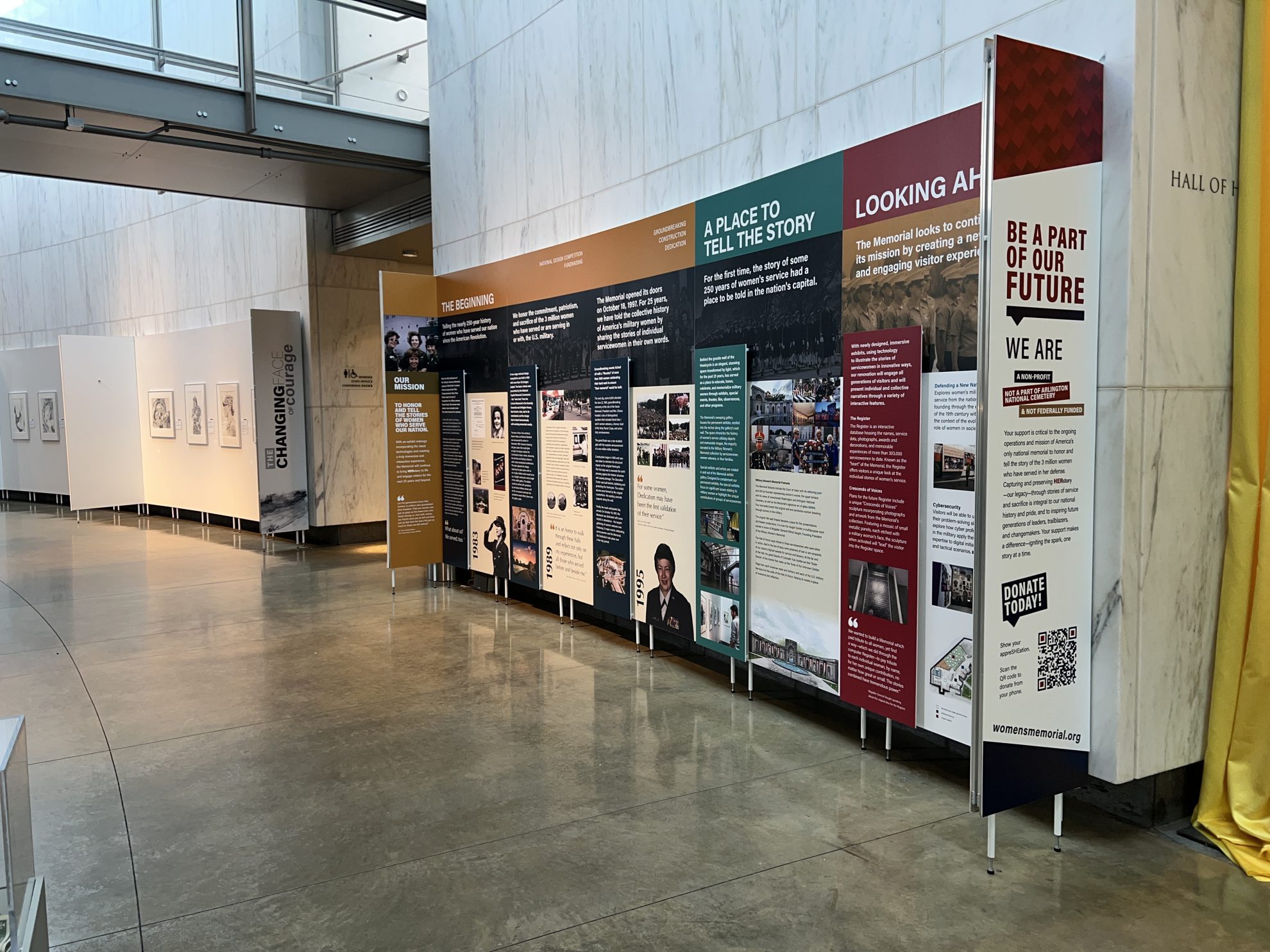
Heritage Signs & Displays created new museum signage for the Military Women’s Memorial in Arlington, VA. The project included custom signs, wall wraps, dimensional letters, and standoff-mounted displays to honor the legacy of U.S. servicewomen and the donors who supported the memorial. The updated interior features impactful designs, including a "Our Legacy" wall display and panels showcasing historical contributions and artwork, creating a transformative tribute to women in the U.S. Armed Forces.
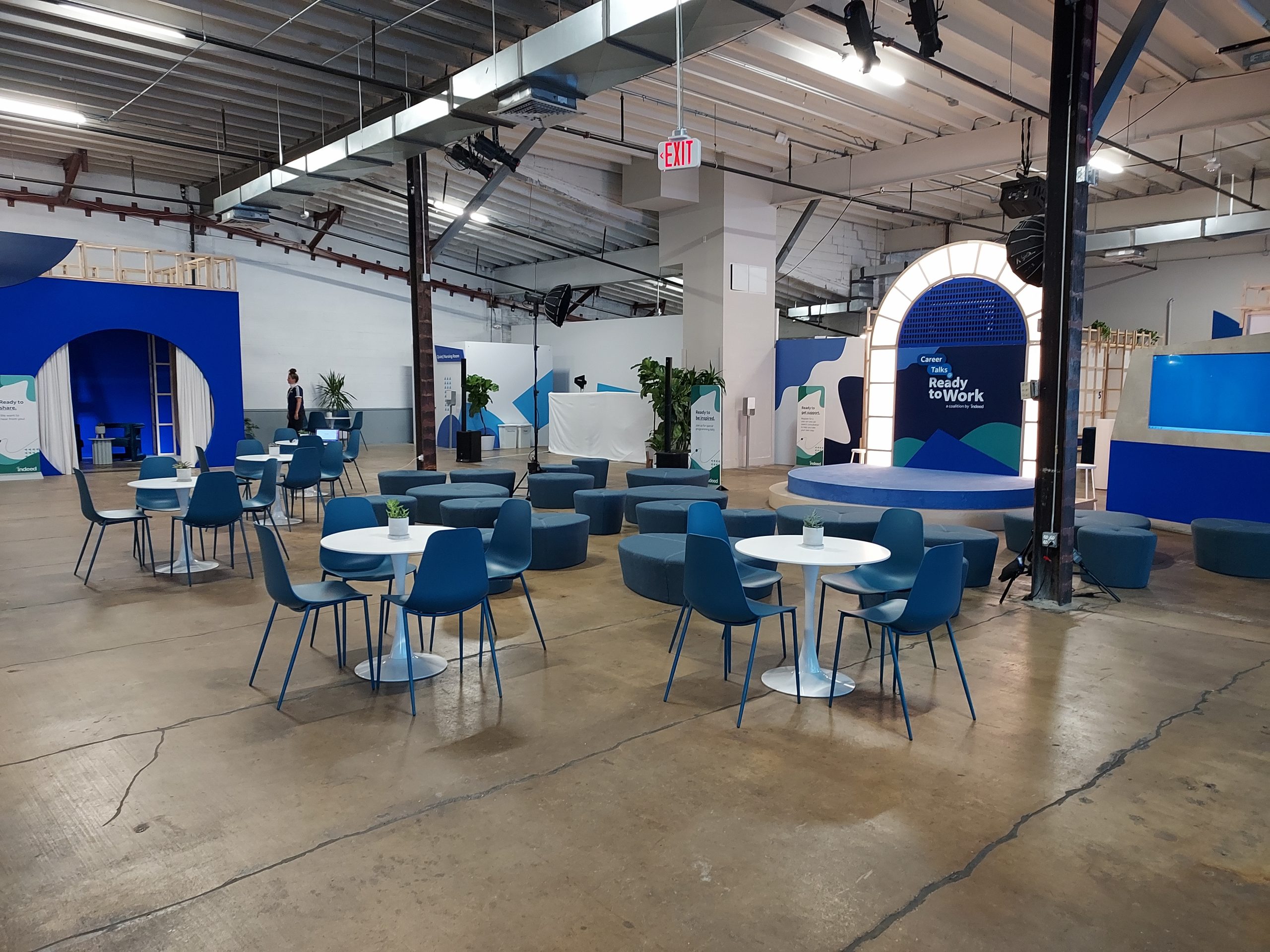
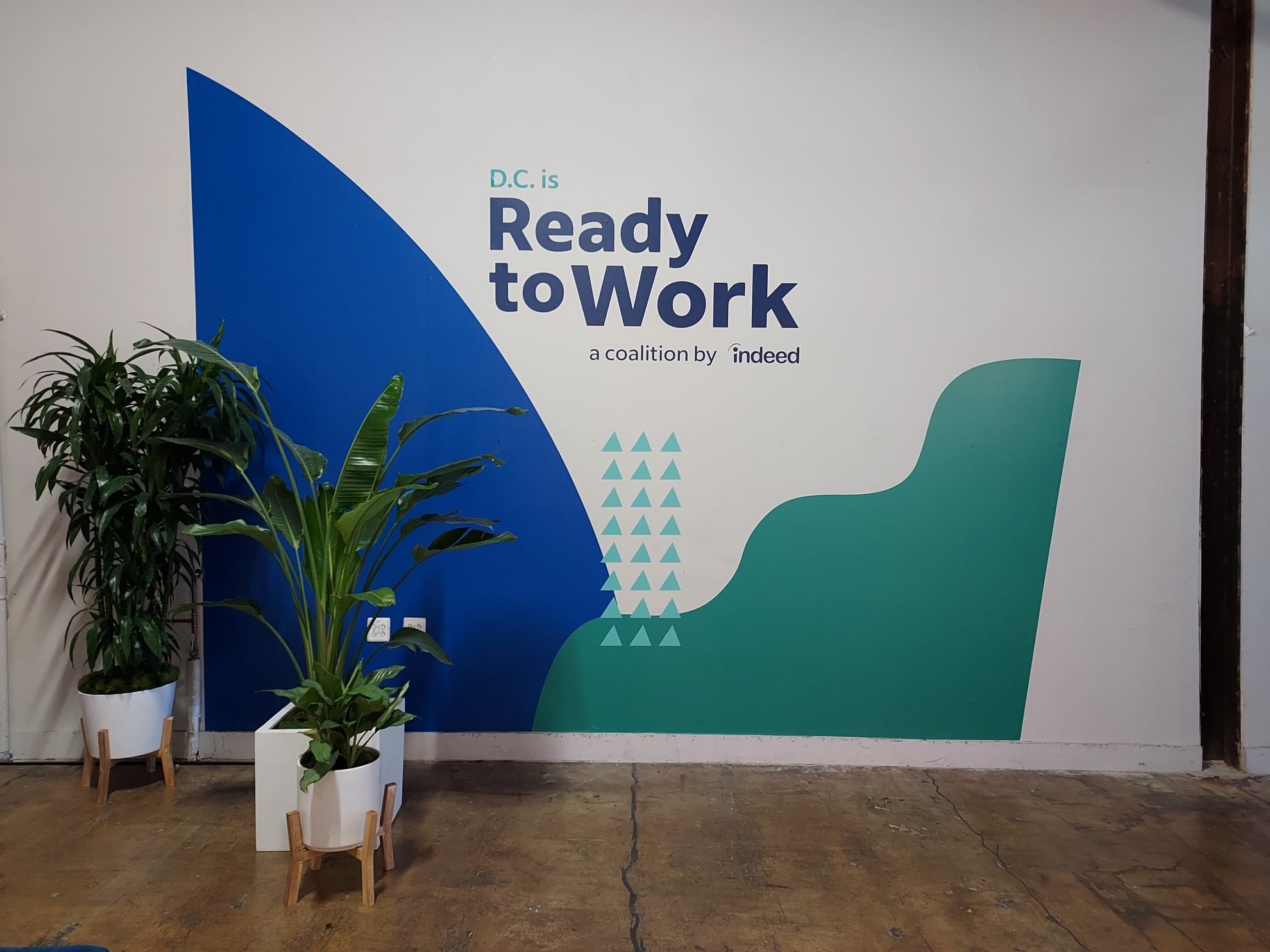
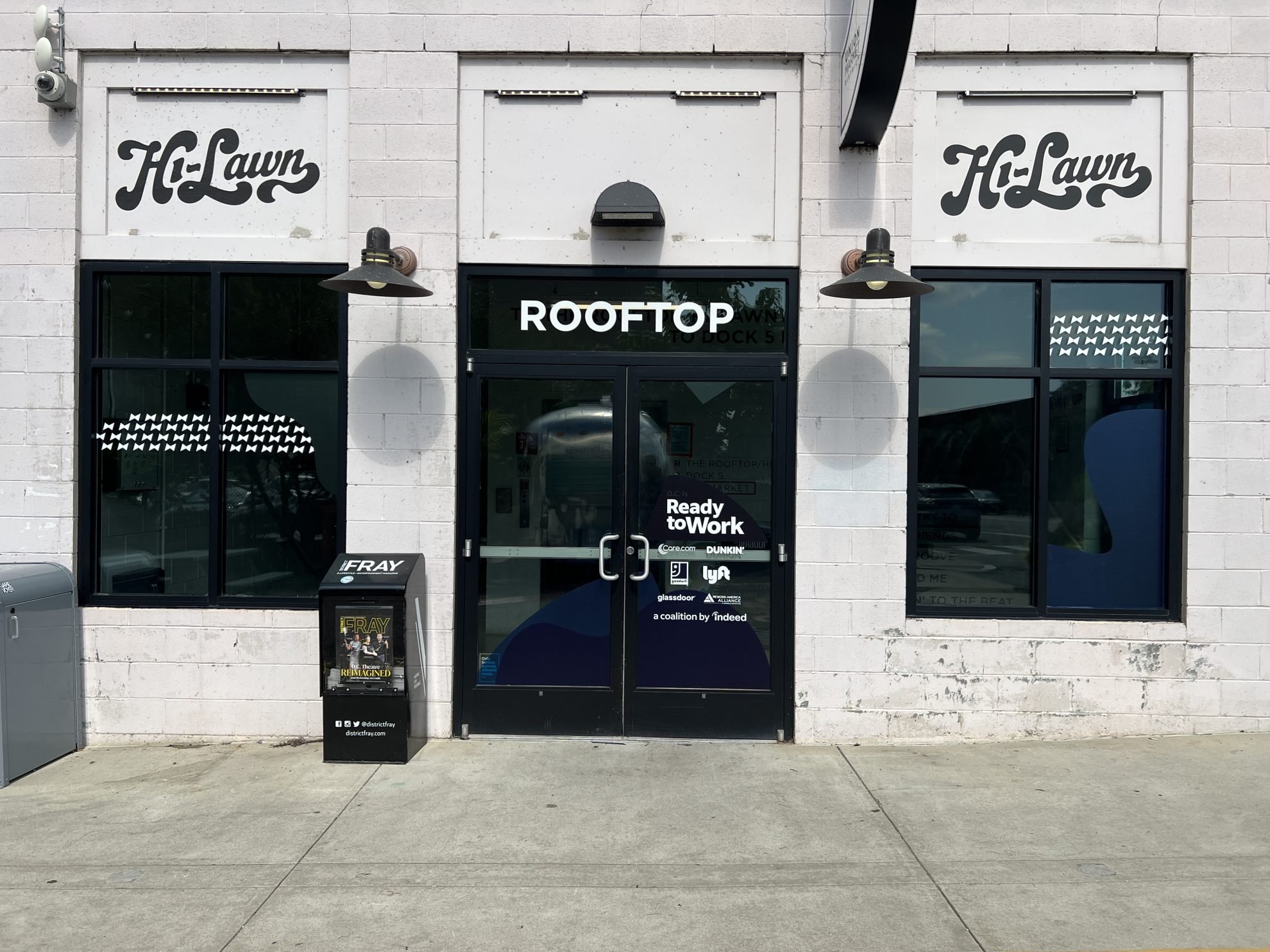
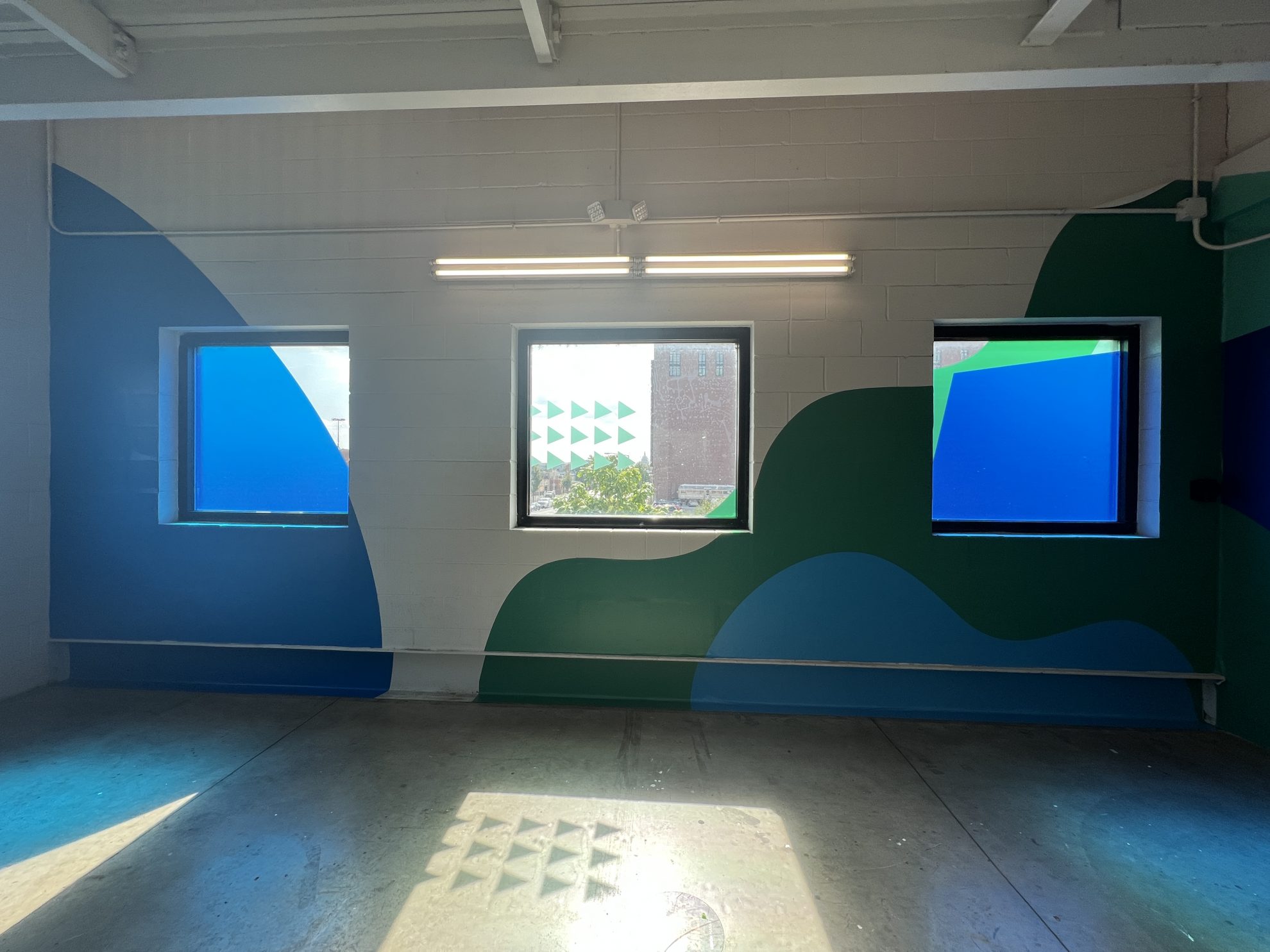
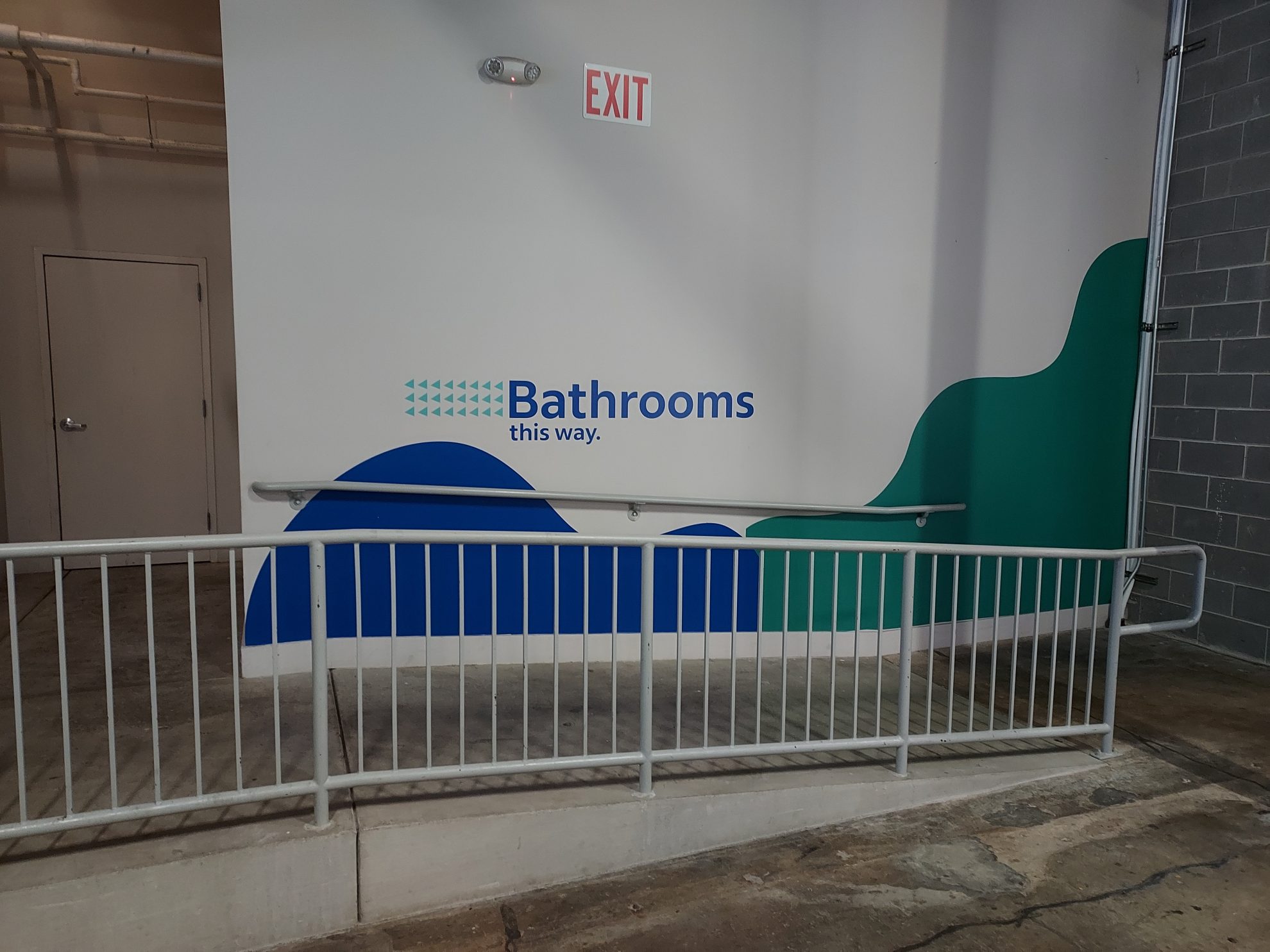
Heritage Signs & Displays' collaboration with The Gathery to brand Union Market in Arlington, VA, for Indeed's "Ready to Work" job fair. The project included custom event displays, wall graphics, window graphics, and wayfinding signs, creating an immersive and visually appealing environment. The branding enhanced the venue, reflected the event's mission, and provided a seamless experience for attendees.