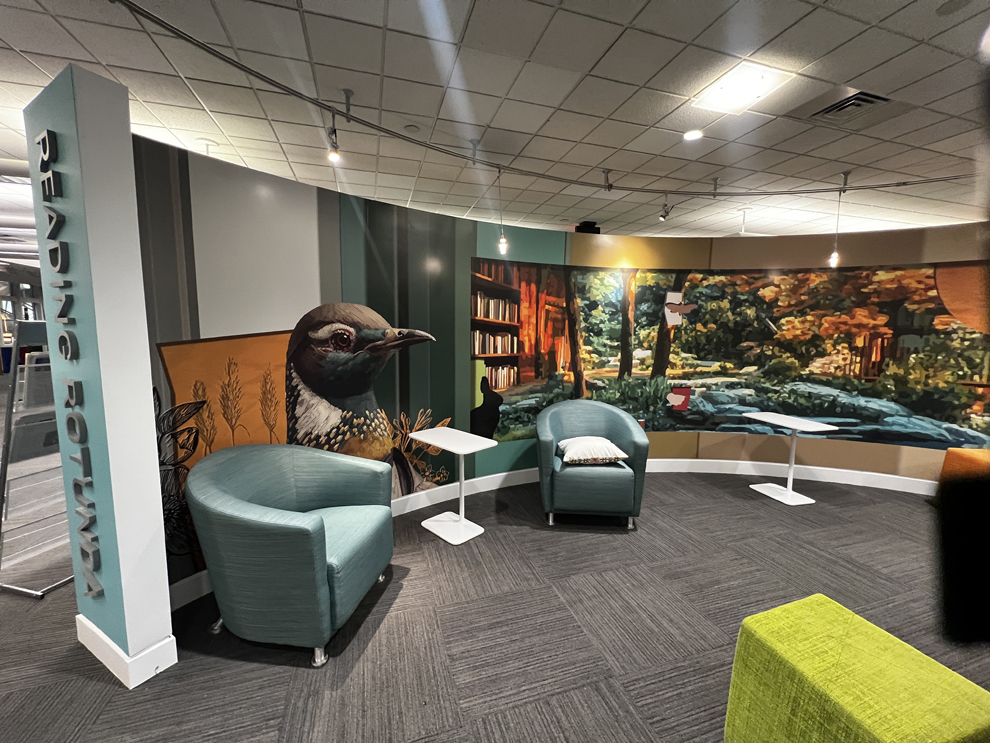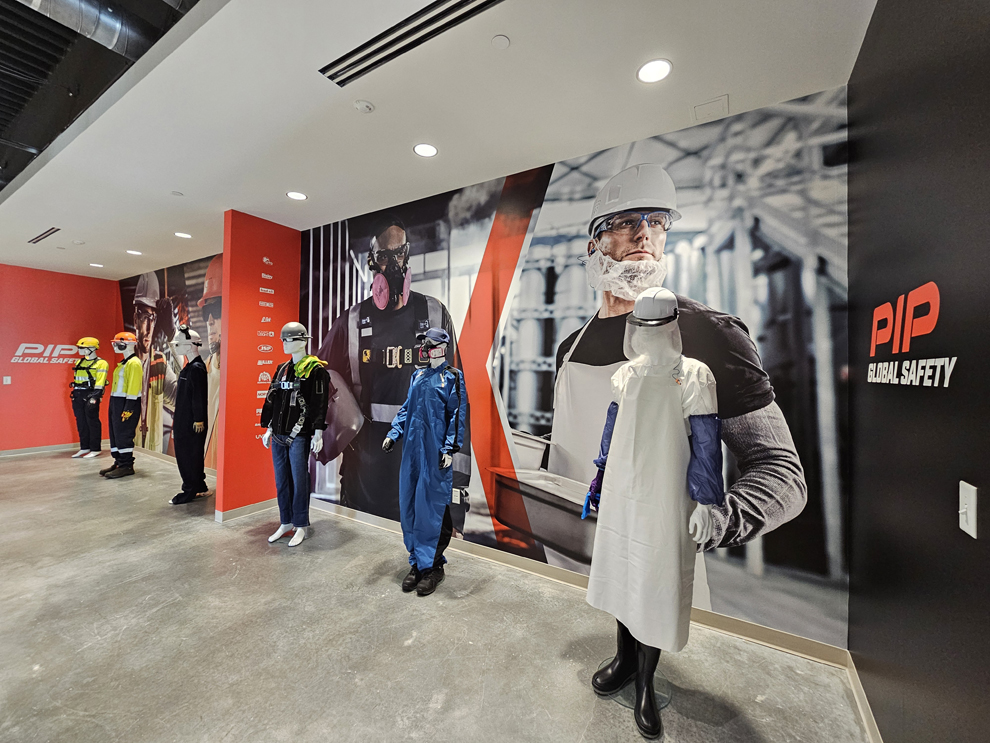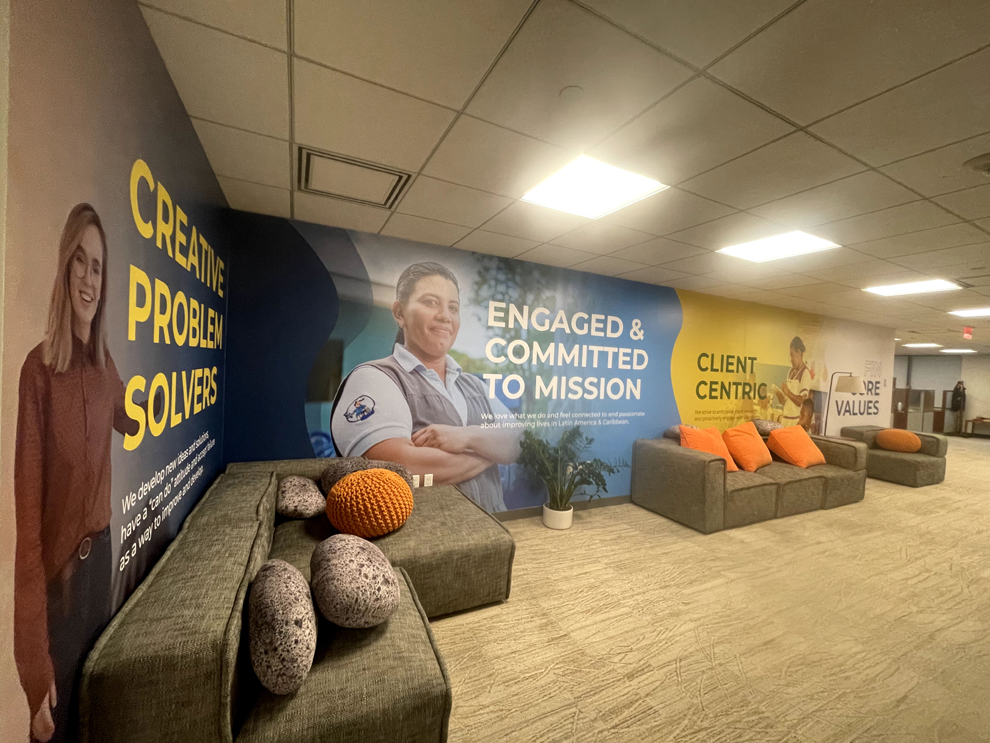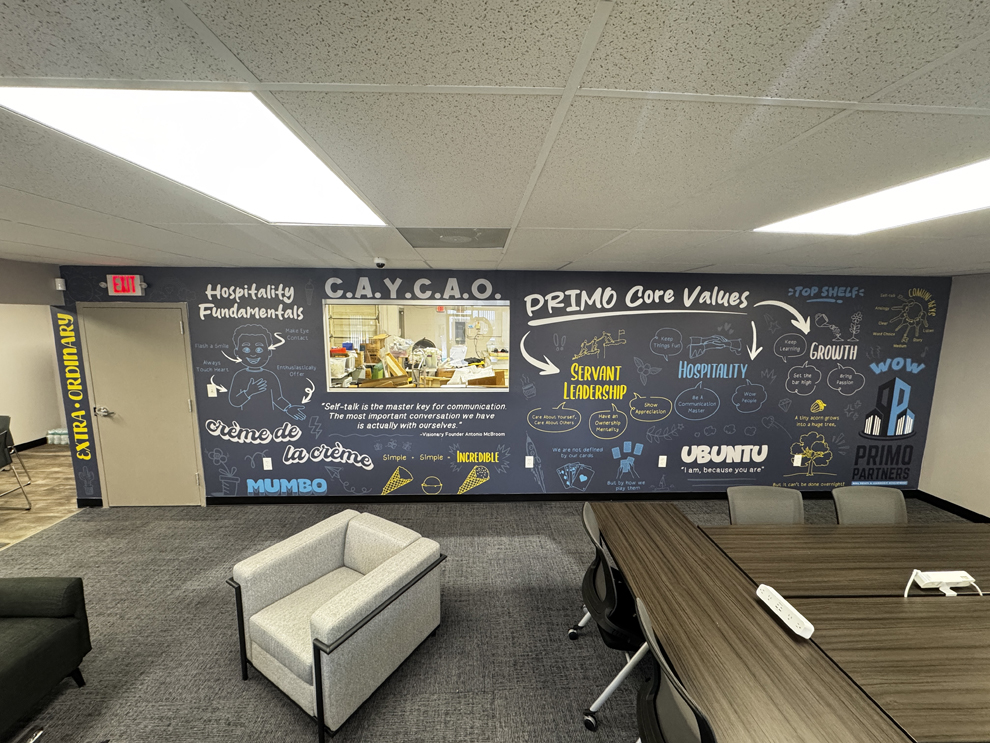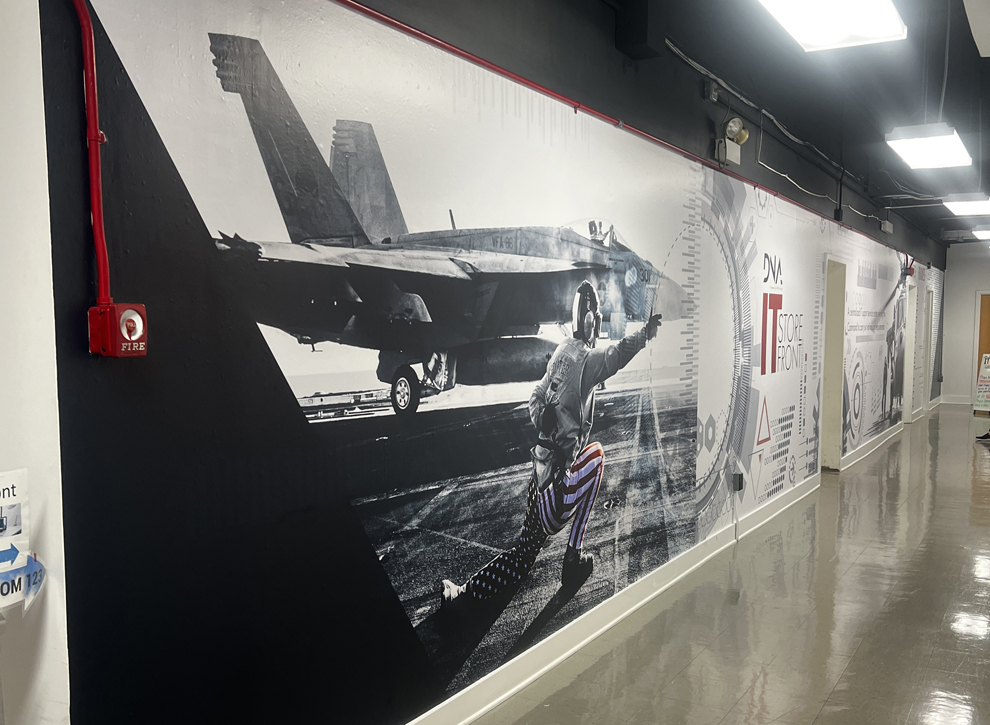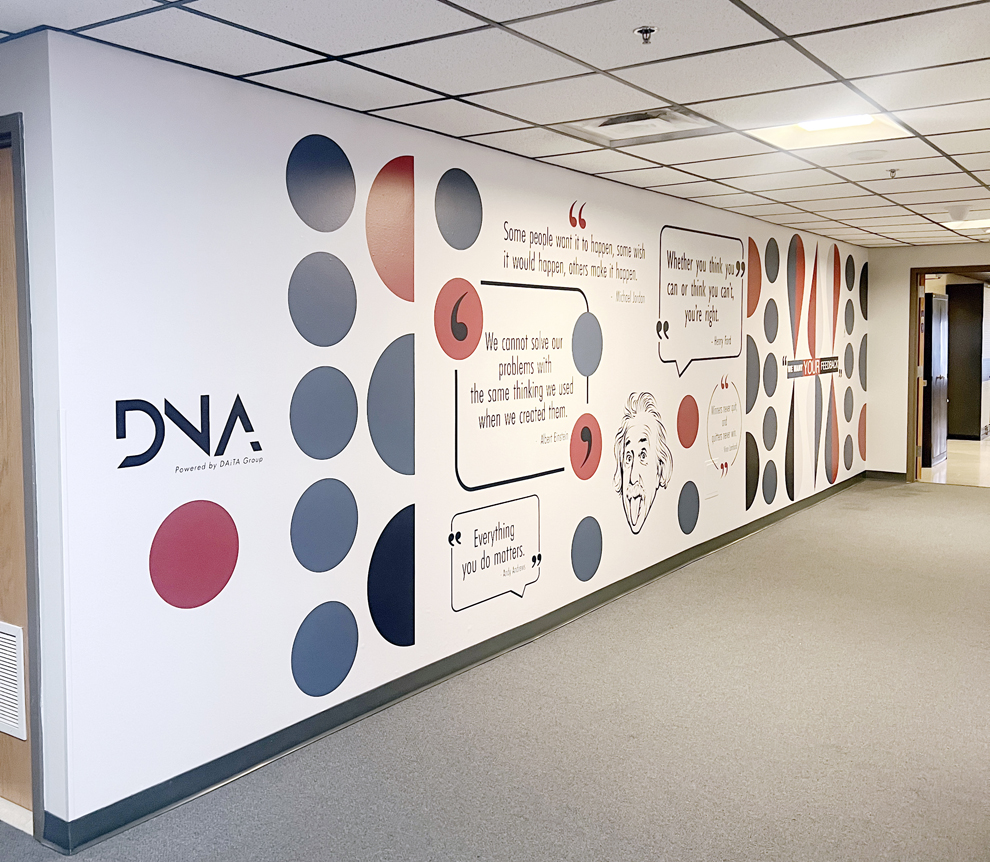
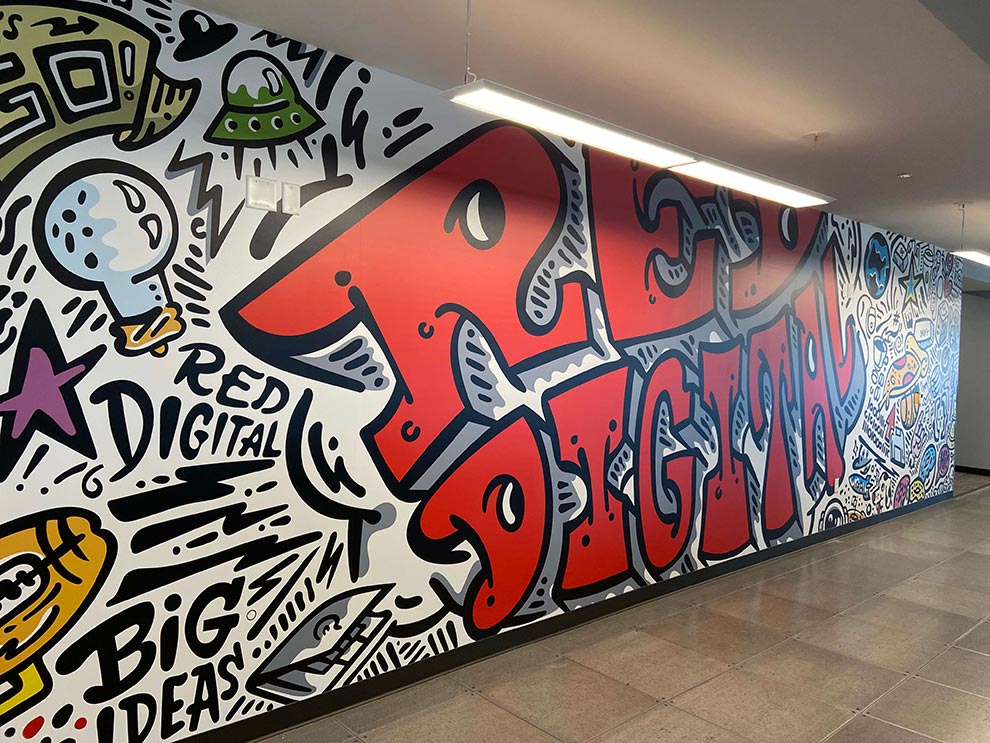
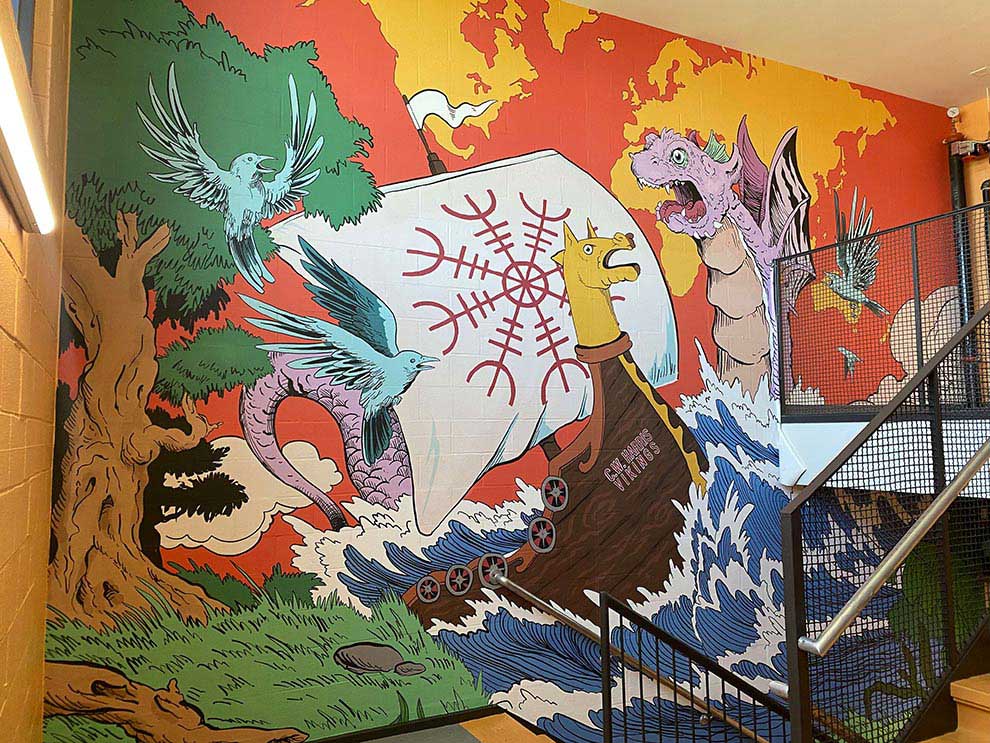
A prominent wall can become an important part of how an organization communicates with employees, visitors, clients, students, donors, members, and other audiences. Rather than leaving a large architectural surface visually inactive, wall wraps can use scale, photography, typography, color, illustration, and branded patterns to communicate identity, culture, history, recognition, or educational information as part of the physical environment.
Heritage Signs & Displays creates custom wall graphics for Richmond, VA offices, universities, healthcare environments, associations, nonprofits, professional firms, cultural organizations, corporate workplaces, event properties, and other commercial interiors. Environmental graphic design begins by identifying what viewers should notice, understand, or remember. Heritage then considers viewing distance, circulation, sightlines, image resolution, content hierarchy, lighting, furnishings, wall dimensions, surface condition, and surrounding signs or displays before determining how the graphics should occupy the space.
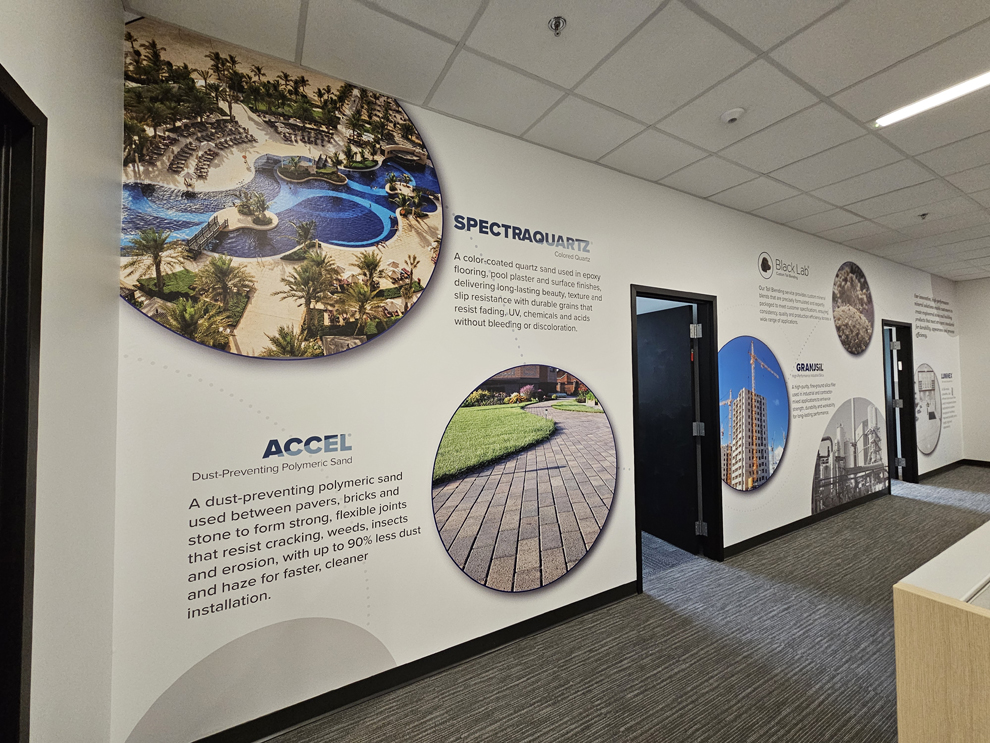
Richmond wall wraps can communicate corporate milestones, employee stories, organizational values, historical information, educational material, research, donor recognition, archival photography, maps, event content, or other approved messaging. Dimensional lettering, acrylic panels, mounted photographs, standoff signs, and selected illuminated elements can be integrated when the display needs additional depth or visual hierarchy. The printed wall typically establishes the primary visual environment while fabricated components create targeted points of emphasis.
Exterior wall graphics may also be considered when the substrate, exposure, materials, access requirements, intended lifespan, and installation conditions support the application.
Wall-wrap projects in active properties often involve more than artwork and printing. Executive approvals, facility requirements, property-management rules, security procedures, loading restrictions, installation windows, and completion dates tied to meetings, openings, or events can all affect execution. Heritage's One Dedicated Project Manager System connects discovery, the required site survey, environmental graphic design, production, fabrication, pre-installation planning, and professional installation within one managed project history.
Heritage began as a printing company in 1977 and remains veteran-owned and family-led. Custom signs, interior graphics, workplace branding, and event-environment projects have become an important part of the company's work. Heritage seeks to honor God by serving clients and communities with excellence. For Richmond organizations, that purpose is expressed through careful planning, responsible communication, skilled craftsmanship, and a coordinated process designed to carry approved creative direction from concept to completed installation.
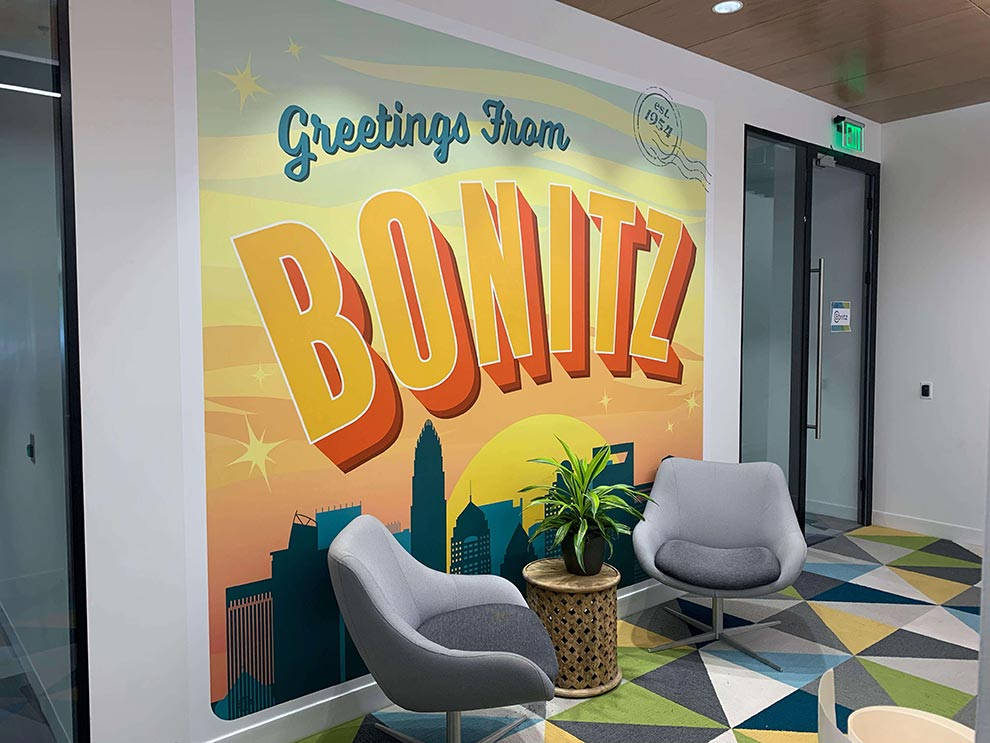
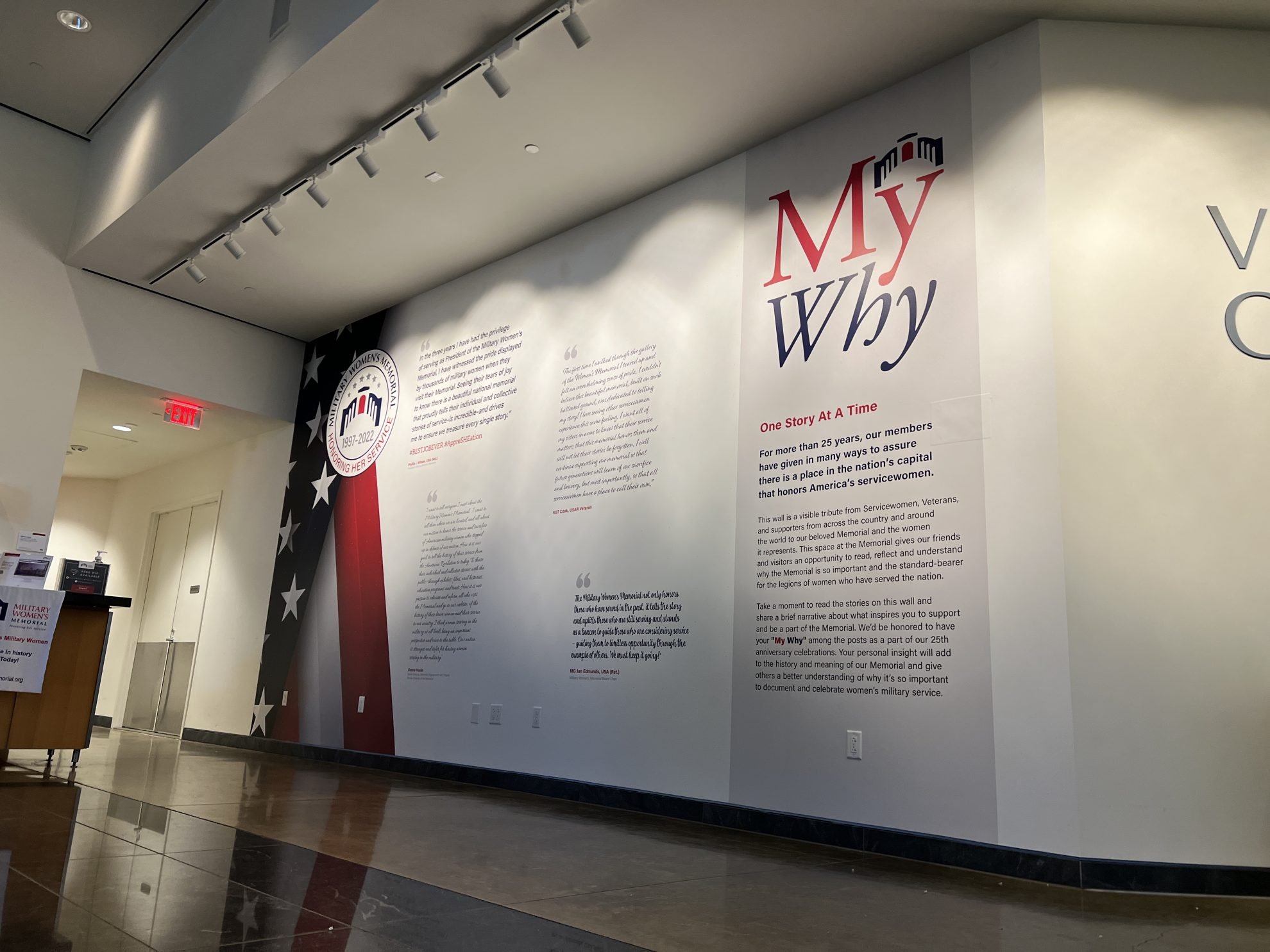
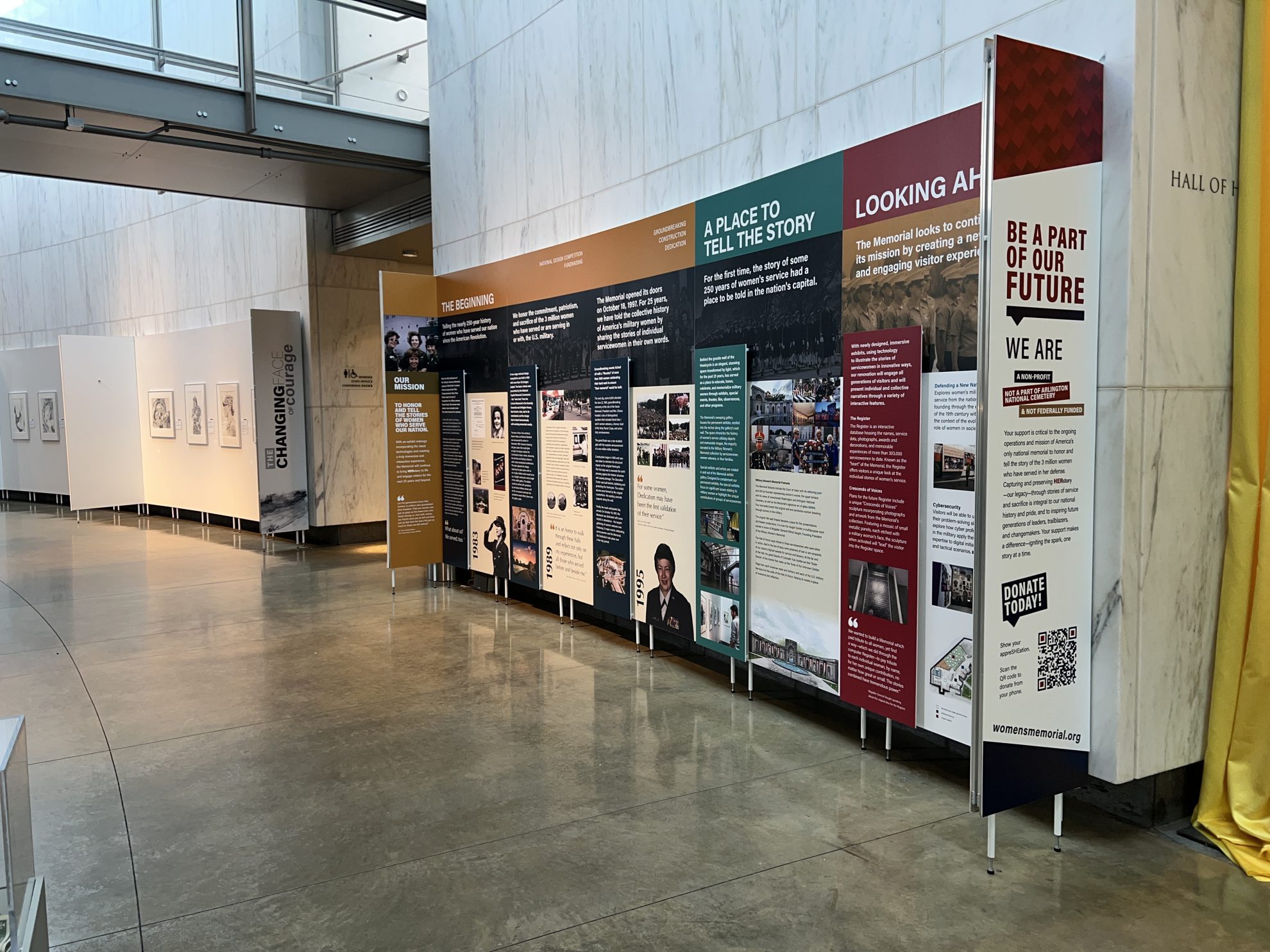
Large walls allow information to be arranged differently than it would be on a collection of smaller signs. A Richmond workplace corridor can organize decades of company history into a sequence people experience as they move through the building. A reception-area wall can combine branded imagery with a concise message and dimensional identification. A recognition environment can place names, photographs, or interchangeable information above a consistent printed background.
The wall does not always need complete graphic coverage. Depending on the architecture and communication objective, Heritage may recommend a partial mural, a large graphic band, strategically placed vinyl elements, or a printed background supporting dimensional signs and mounted displays.
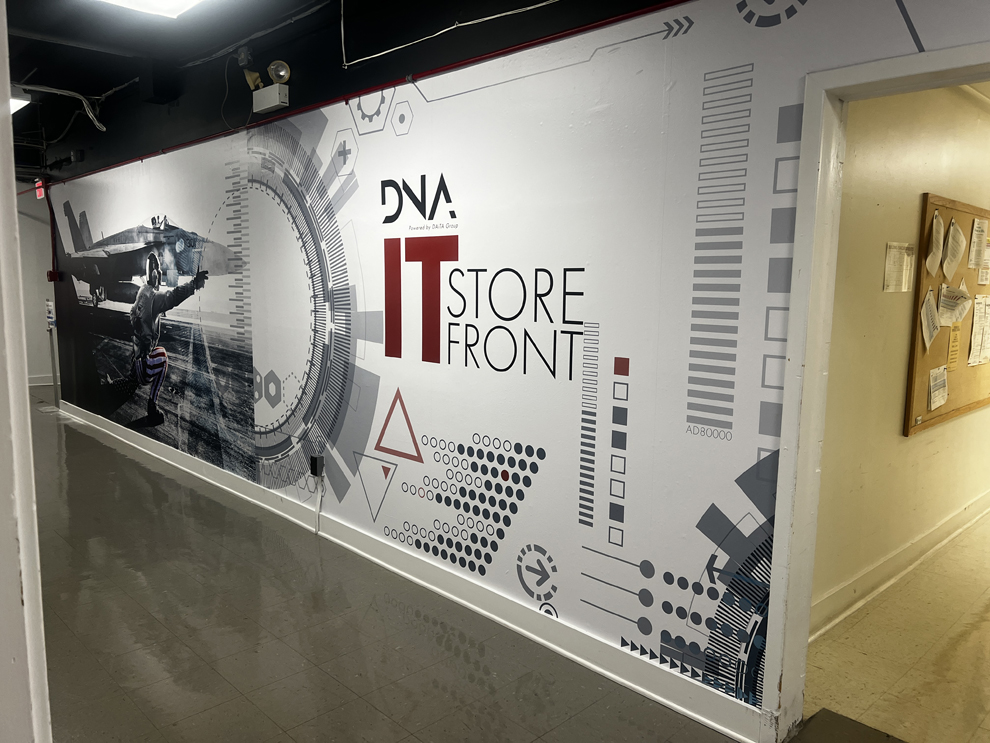
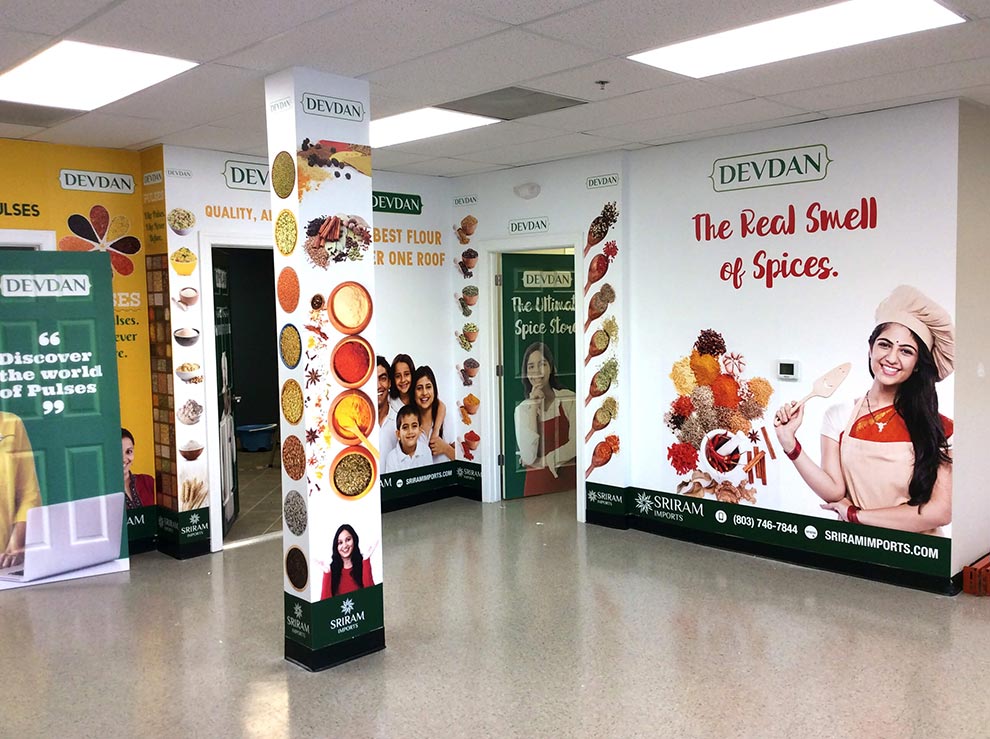
The composition should respond to the actual environment. Doors, corners, windows, outlets, fixtures, furnishings, transitions, sightlines, and viewing distance all affect artwork placement. Panel divisions and seams are considered before production so they work with the design instead of interrupting important faces, logos, typography, or focal imagery.
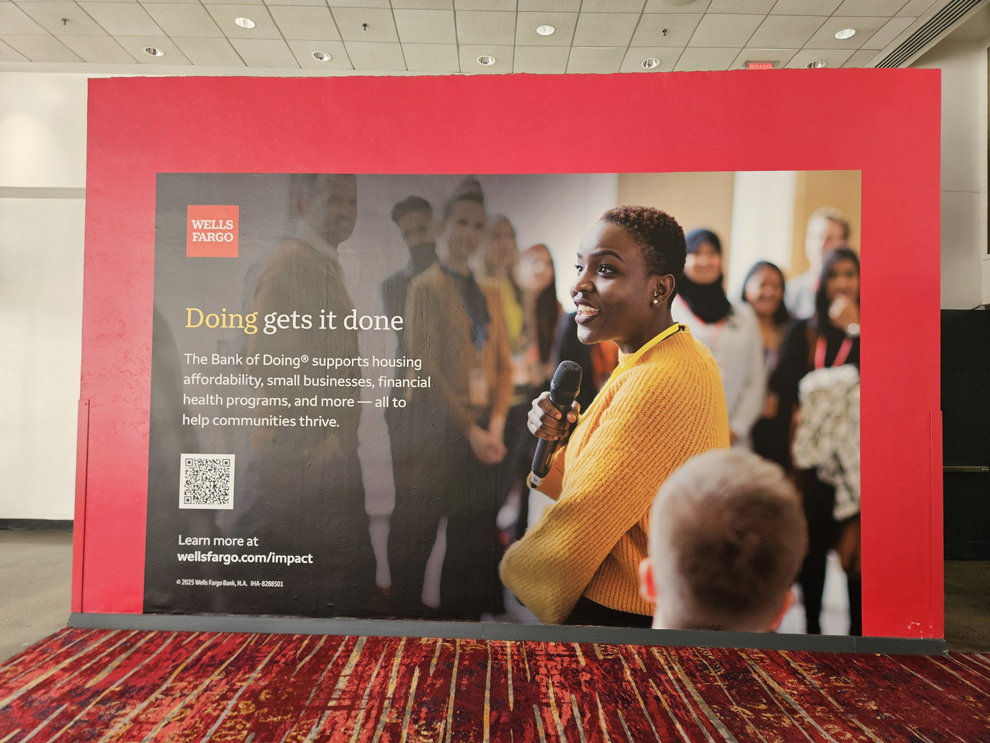
Temporary wall graphics can support conferences, exhibits, campaigns, seasonal programs, or other limited-duration uses when the wall, paint condition, installation period, access, and planned removal make the application appropriate. In each case, the graphic strategy should begin with the audience and communication objective instead of treating wall coverage as the primary goal.
Effective wall graphics depend on many decisions that take place before the first panel is printed. Wall measurements need to reflect actual site conditions. Source photography must support enlargement. Vinyl and adhesive selections need to correspond with the painted surface. Seams, corners, fixtures, openings, and access conditions must be reflected in panel planning.
When design, printing, fabrication, and installation are handled as unrelated activities, important project information can become lost between providers.
Heritage manages these responsibilities within a connected engagement. One dedicated Project Manager maintains continuity across discovery, stakeholder communication, the required site survey, environmental graphic design, artwork approvals, production, fabrication, scheduling, pre-install planning, and professional installation.
This structure gives Richmond clients one central point of coordination for the project record. Brand requirements, site findings, approved decisions, access instructions, schedule information, and installation considerations can remain connected instead of being repeatedly reconstructed as work moves forward.
Verified field conditions inform production and fabrication. Installers can receive the approved artwork, panel strategy, access requirements, property instructions, and installation schedule before arriving at the site. This approach helps align creative intent with the physical conditions that ultimately determine how the graphics appear on the wall.
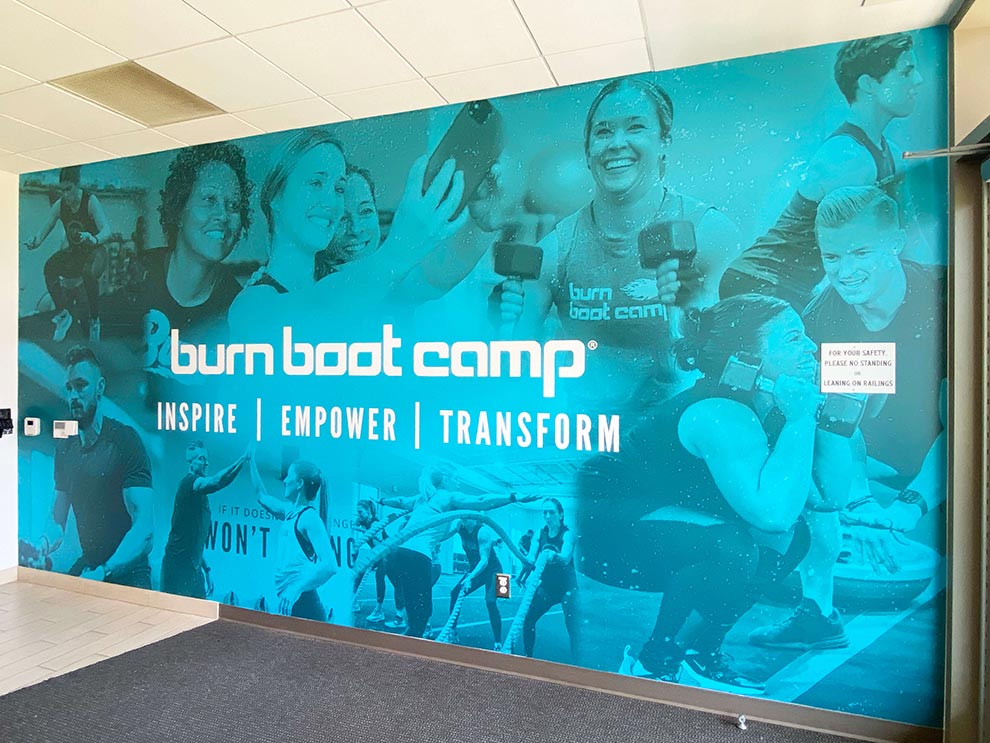
Wall displays can layer recognition information, photography, historical material, educational content, timelines, or replaceable panels over a printed wall graphic. Heritage coordinates dimensions, mounting positions, spacing, hierarchy, and background imagery so the mounted elements become part of the complete composition.
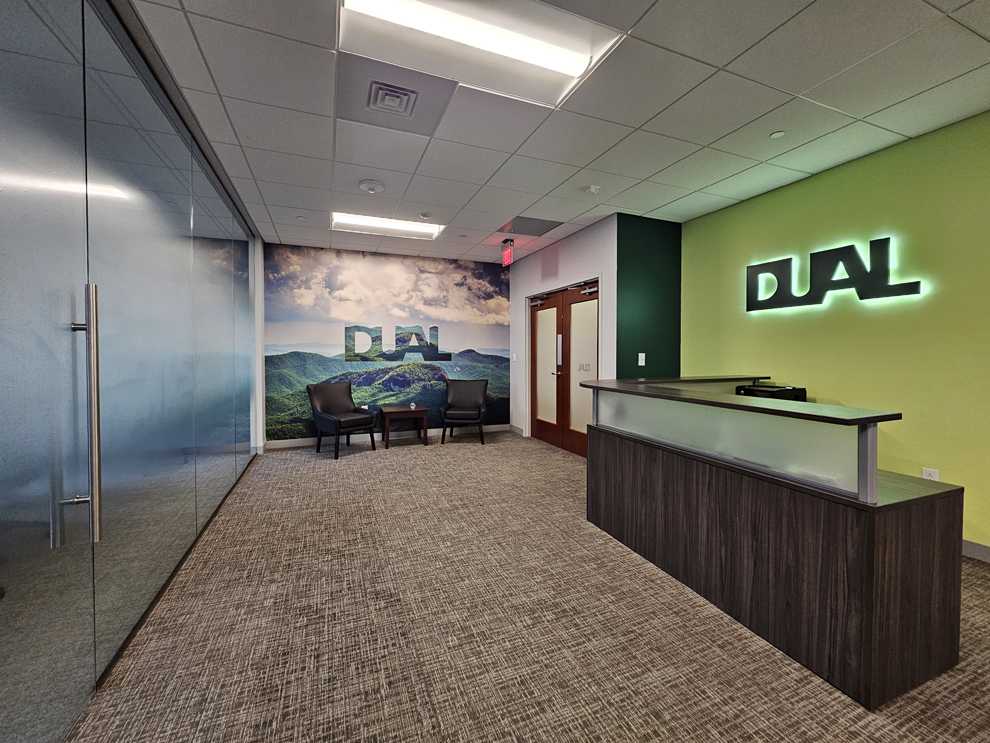
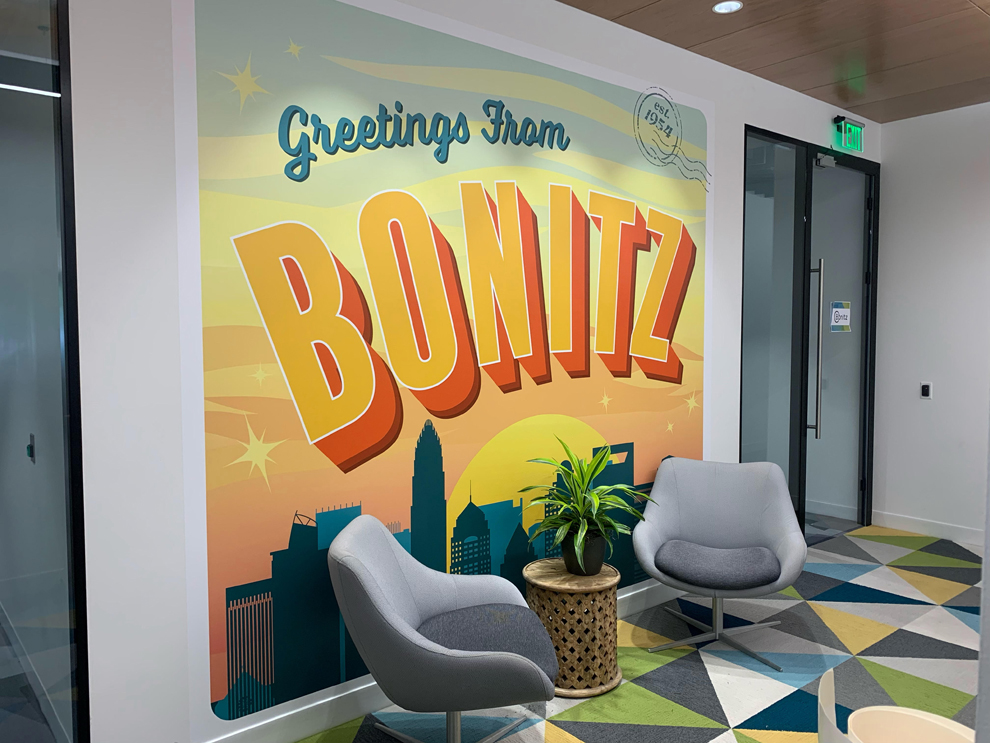
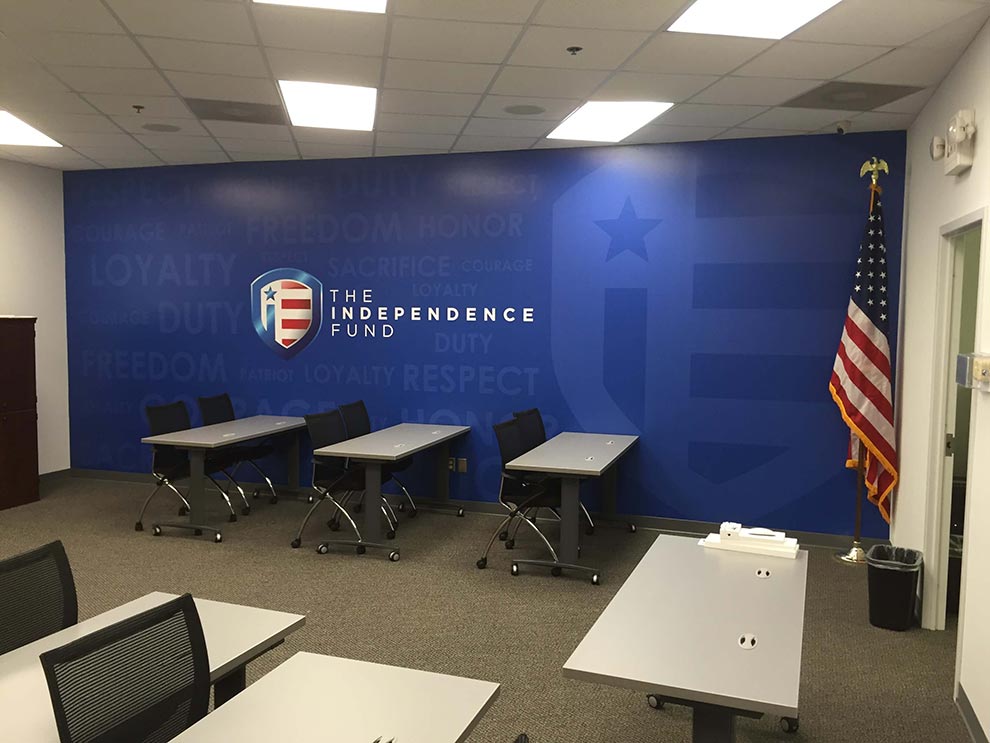
Lobby signs can provide immediate organizational identification while a surrounding mural introduces imagery, color, culture, or brand context. Heritage considers sign scale, contrast, placement, mounting, viewing angles, and nearby graphics so the identification remains prominent without competing unnecessarily with the feature wall.
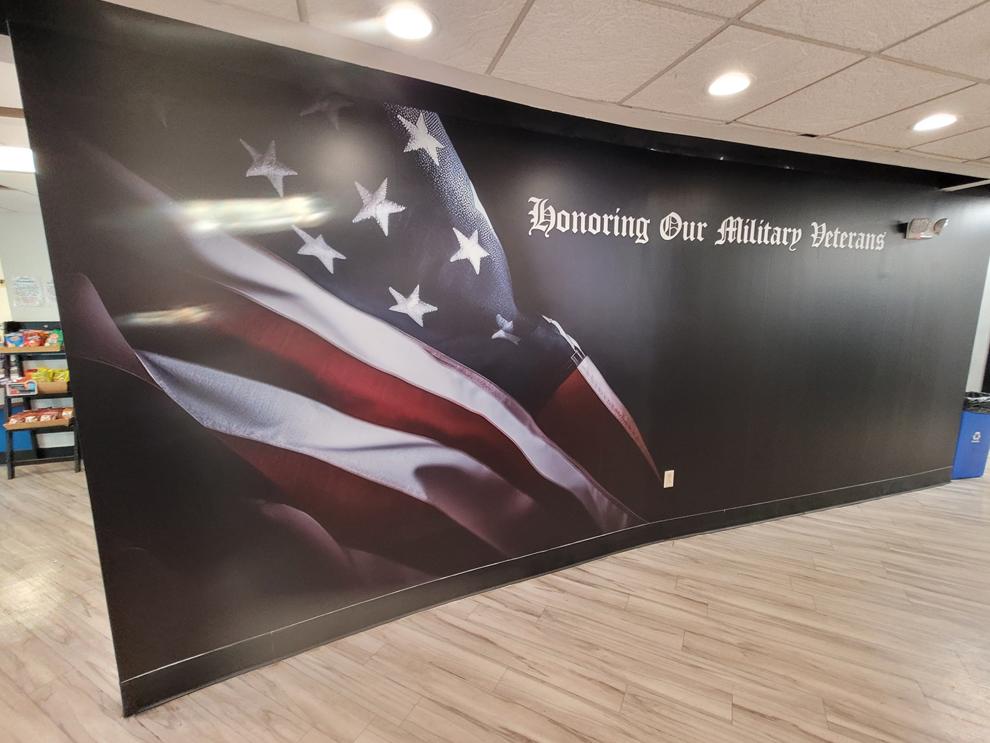
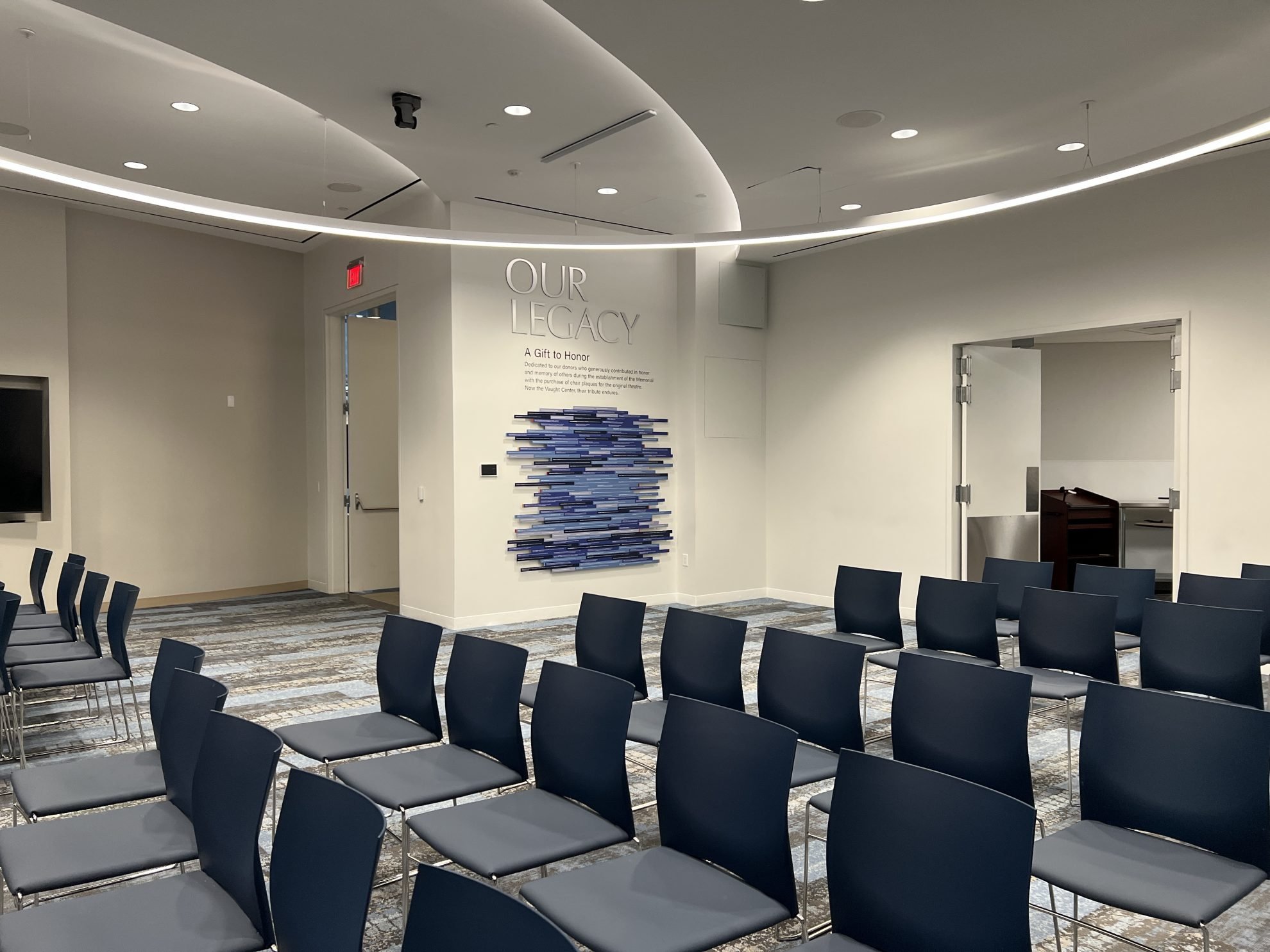
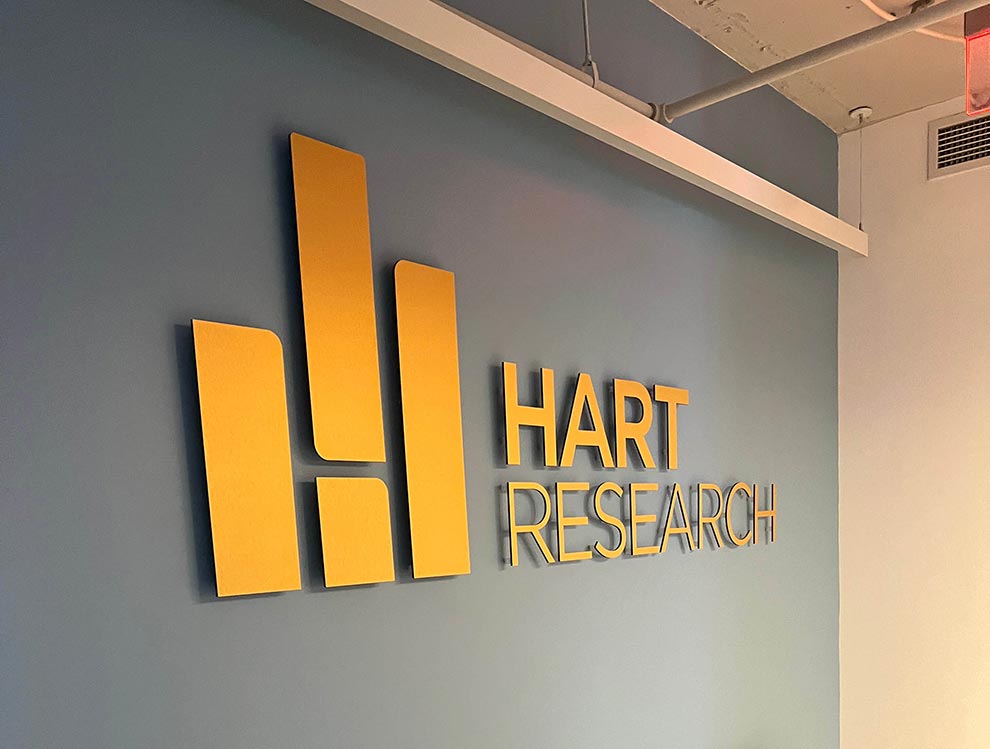
Dimensional letters can give names, mission statements, values, dates, or concise messages additional visual authority above a printed surface. Heritage plans letter size, projection, spacing, contrast, mounting locations, seams, and surrounding imagery so the raised lettering remains legible at the intended viewing distance.
Standoff mounted signs can present photographs, donor names, recognition information, research, historical details, or content that may require future replacement. Heritage coordinates panel placement, projection, mounting hardware, reading order, and the underlying mural so the layered components remain both functional and visually organized.
Backlit signage can provide a defined illuminated focal point within a lobby or major feature wall. Heritage evaluates brightness, dimensions, electrical requirements, mounting conditions, sightlines, and the relationship between the sign and surrounding graphics so illumination strengthens the composition without dominating it.
Elevator wraps can bring selected branding, campaign graphics, institutional messaging, or directional information into frequently traveled circulation areas. Heritage develops elevator graphics around moving doors, seams, controls, approved cab surfaces, maintenance requirements, and nearby wall treatments so the related elements feel intentional.
Window graphics can introduce related patterns, colors, secondary messaging, or privacy treatments onto adjacent glass. Heritage considers daylight, interior and exterior sightlines, mullions, reflections, furnishings, and pedestrian movement so the glass graphics complement the wall-wrap program while serving a different functional purpose.
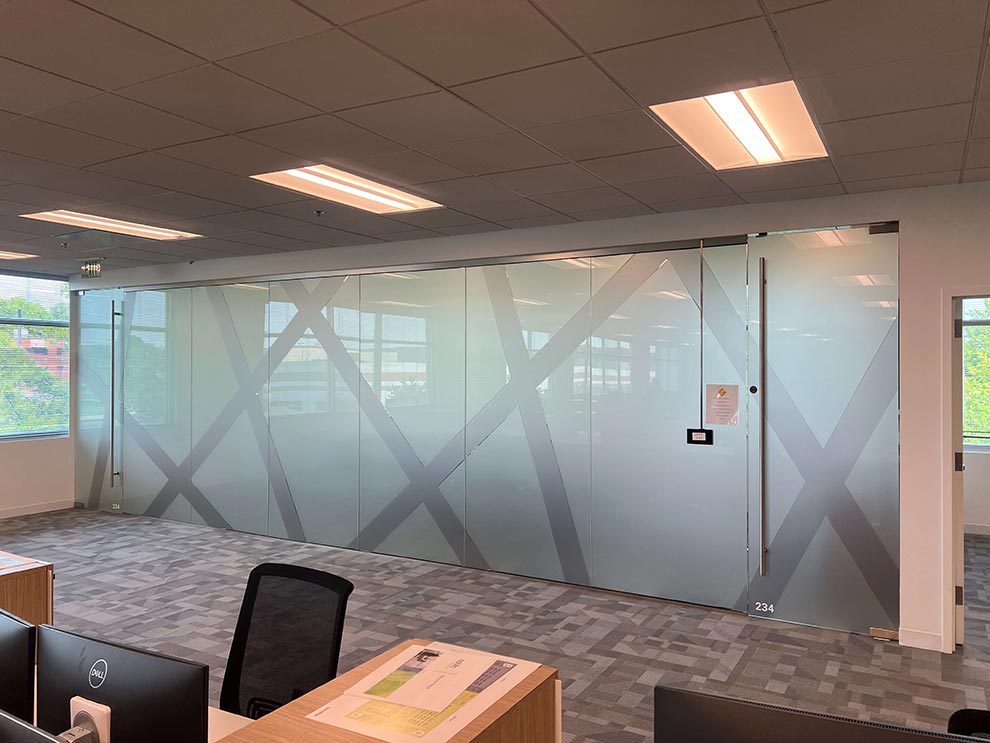
Frosted vinyl can provide visual privacy and subtle branding on office, conference-room, and corridor glass near a wrapped wall. Bands, patterns, logos, and other treatments can coordinate with the broader environment while preserving appropriate visibility and allowing the wall graphics to remain the primary storytelling surface.
A wall-wrap project begins by determining what the finished surface should accomplish.
Use Get Started Now to share the Richmond property address, intended audience, communication objective, desired completion date, anticipated overall investment, photographs, approximate wall dimensions, available brand standards, artwork, paint details, and known property-access requirements.
Initial information does not need to answer every project question. Heritage can use discovery and the required site survey to determine what still needs to be measured, verified, developed, or approved.
One dedicated Project Manager can then organize the appropriate environmental graphic design, production, fabrication, pre-installation planning, scheduling, and professional installation steps around the approved objective and the conditions of the property.
Richmond wall-wrap projects benefit from field coordination focused on the actual property where the graphics will be installed. Heritage personnel can conduct discovery, complete the required site survey, verify wall dimensions, document visible surface conditions, review architectural interruptions, and identify access requirements before approved graphics move into production.
This firsthand information can be especially important in downtown offices, corporate campuses, universities, healthcare environments, association facilities, cultural institutions, event spaces, and other occupied properties where installation must work around normal building operations. Security procedures, loading areas, elevators, protected finishes, limited work periods, property-management requirements, and stakeholder schedules can all influence how installation should be organized. Documenting these conditions early gives the Project Manager information that can be incorporated into environmental graphic design, material planning, production, and scheduling.
Heritage's broader production and fabrication resources support the printed and fabricated components required for Richmond projects while project planning remains connected to the individual property. For organizations managing signs and graphics at several facilities, one dedicated Project Manager can also retain brand standards, approval history, stakeholder decisions, and production expectations across the program. Each location still receives individual consideration because dimensions, wall conditions, architecture, audiences, access, and installation schedules can vary significantly.
Consistent branding does not require every property to receive an identical wall treatment. It requires a controlled process for applying approved standards appropriately to each environment.
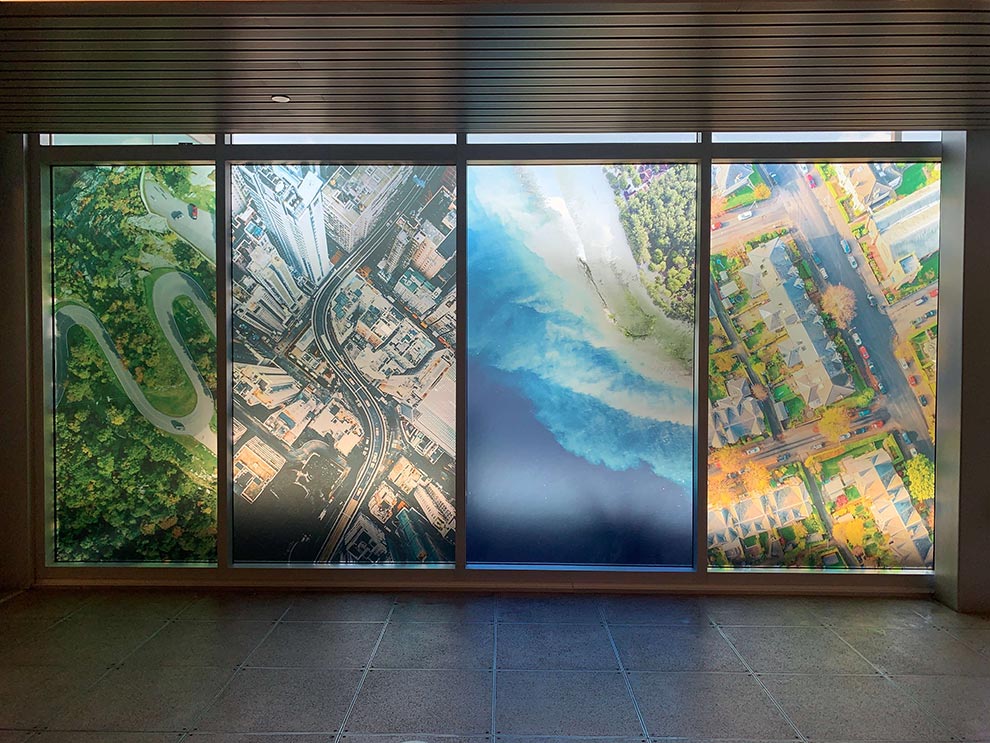
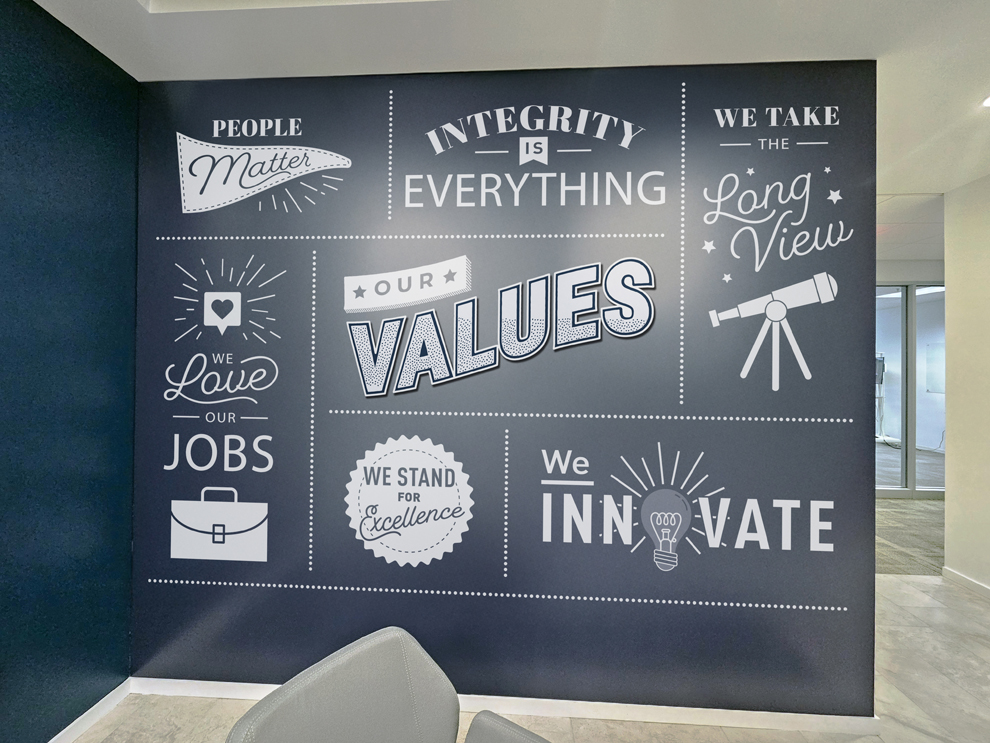
Environmental graphic design determines how an approved message should function within the architecture. A Richmond reception area may need a bold but concise identity statement that can be understood immediately. A corporate corridor may require a gradual historical sequence. A university or educational environment may use wall graphics to present achievements, research, donor recognition, or institutional milestones. A workplace may use large-format imagery and typography to communicate values, culture, capabilities, or organizational purpose.
Heritage can develop concepts directly with client stakeholders or work from established brand standards and approved artwork. The team can also coordinate with architects, interior designers, environmental graphic designers, branding firms, agencies, marketing departments, and other professional partners responsible for the larger identity or interior program. When another design team establishes the creative direction, Heritage focuses on translating that approved intent into a solution that can be produced and installed successfully.
This work can include resolving typography, imagery, hierarchy, color, scale, panel divisions, seams, corners, openings, dimensional elements, and relationships between different graphic surfaces. The actual property informs these decisions. A design that appears balanced on a monitor can change considerably once stretched across a long wall containing doors, outlets, corners, furniture, and architectural transitions. Incorporating verified field information before production helps the graphics retain their intended structure when installed.
Heritage provides environmental graphic design as part of its signs and displays services. It does not present that work as licensed architecture, engineering, general interior design, lighting design, or code consulting.
Installation planning should occur while the wall graphics are being developed, not after completed panels are already waiting to be applied. Heritage requires a site survey for professionally installed wall wraps. The survey combines project discovery with field verification of dimensions, wall conditions, openings, fixtures, access routes, loading procedures, security requirements, work-hour limitations, and other property conditions that may influence production or installation.
One dedicated Project Manager carries those findings into environmental graphic design, artwork approval, material planning, production, fabrication, and scheduling. Before installation begins, crews can receive the approved composition, material specifications, panel sequence, seam strategy, field photographs, access instructions, and known property conditions. This preparation is particularly valuable in occupied Richmond workplaces, campuses, healthcare facilities, event properties, and other locations where installation needs to minimize interference with normal operations.
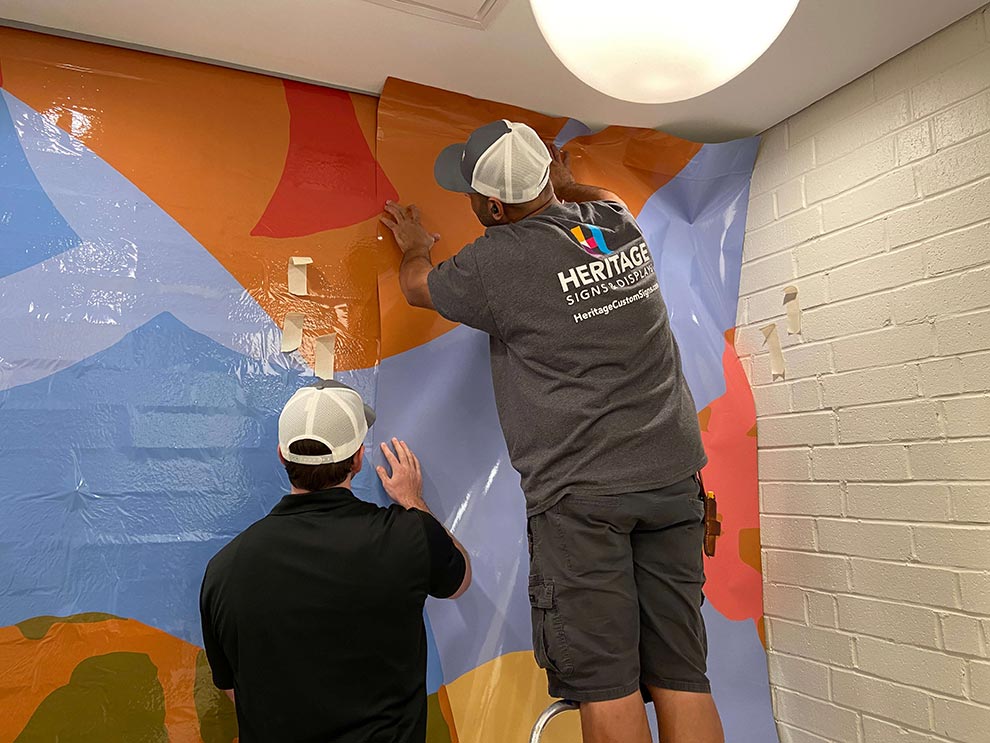
During installation, Heritage manages registration, panel alignment, seams, edges, corners, transitions, doors, outlets, fixtures, and other interruptions. Installers also work within approved access requirements and protect surrounding surfaces as appropriate. If a property condition differs materially from what was documented during the site survey, the connected project team can evaluate the issue and determine the appropriate next action before continuing.
The condition of the wall should be addressed before installation materials arrive. Drywall needs to be sound, smooth, clean, dry, and properly repaired. Primer and paint should be correctly applied, and the final paint layer needs enough time to cure completely before a wall wrap is installed.
A surface can become dry to the touch before the curing process has finished. During continued curing, paint may release gases or vapors. If vinyl covers the wall too soon, those emissions can become trapped beneath the adhesive and potentially contribute to bubbles, blistering, lifting, or premature adhesion failure. About four weeks is useful as a planning reference for many paints, but the manufacturer's specific requirements and site conditions determine whether installation can proceed.
Heritage can test the wall to evaluate vinyl performance against the painted surface. That testing does not verify the bond connecting the paint and primer to the drywall beneath them. If the paint peels, separates, or pulls away during testing or ordinary repositioning, Heritage stops the installation rather than risk worsening the condition. The client or property owner arranges and pays for repairs, proper priming, repainting, and the complete cure period before Heritage returns.
Removal later in the life of the graphics must be considered independently. Heritage removes wall wraps carefully to reduce avoidable damage, but no damage-free guarantee can be provided. Paint, primer, or drywall facing may release with the vinyl. Any necessary wall restoration is arranged and paid for by the client or property owner. Wall wraps remain proven, effective branding solutions for commercial interiors.
Wall-wrap projects benefit from defining major planning conditions before design and production progress too far.
The organization should identify the intended audience, desired communication result, approximate wall coverage, stakeholders, approval process, completion date, property access requirements, wall readiness, installation windows, anticipated overall investment, and any other known project constraints.
These factors influence whether the project should include one major feature wall, multiple connected surfaces, a corridor narrative, a layered recognition installation, or a broader environmental graphic program.
Helpful preliminary information includes the Richmond installation address, current photographs, approximate dimensions, available artwork, brand guidelines, messaging, paint information, property requirements, access restrictions, and desired completion date.
The required site survey then verifies conditions that photographs and preliminary measurements may not fully reveal.
Heritage is best suited for professionally managed projects involving environmental graphic design, production, fabrication, and professional installation. Many Heritage engagements that include production and installation range from approximately $10,000 to more than $200,000. That range describes the company's capacity for significant projects and should not be interpreted as a fixed quotation for wall wraps.
Actual investment depends on coverage, environmental graphic design requirements, materials, image preparation, fabricated elements, property access, surface readiness, installation complexity, schedule, and overall coordination.
Use Get Started Now to confirm current anticipated project requirements and provide enough information for Heritage to evaluate the engagement responsibly.
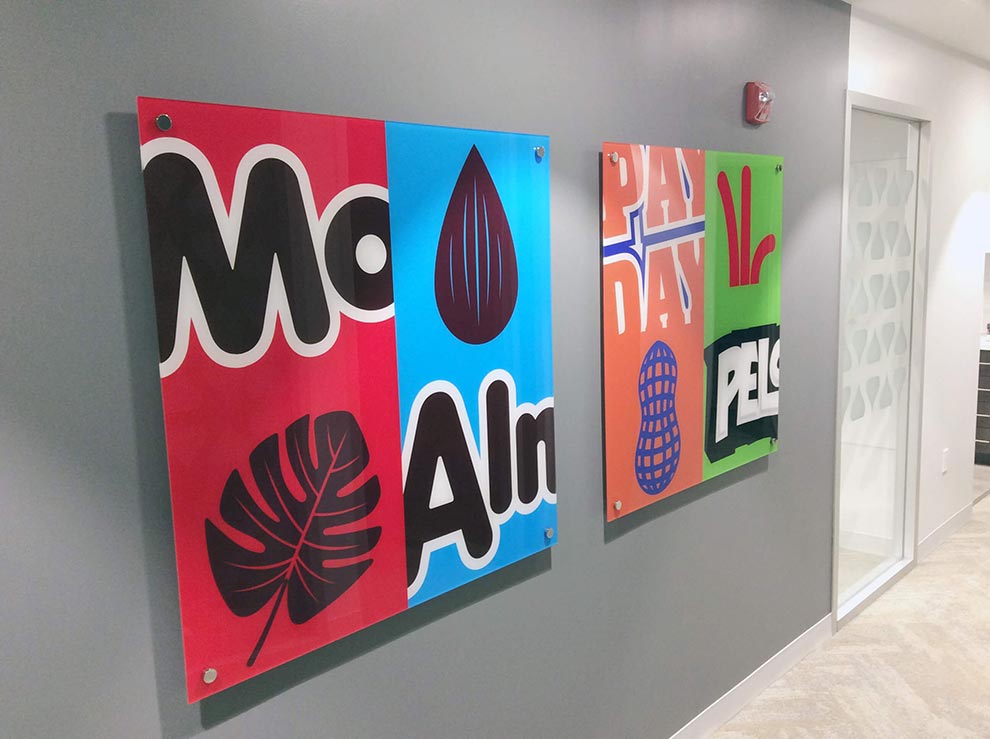
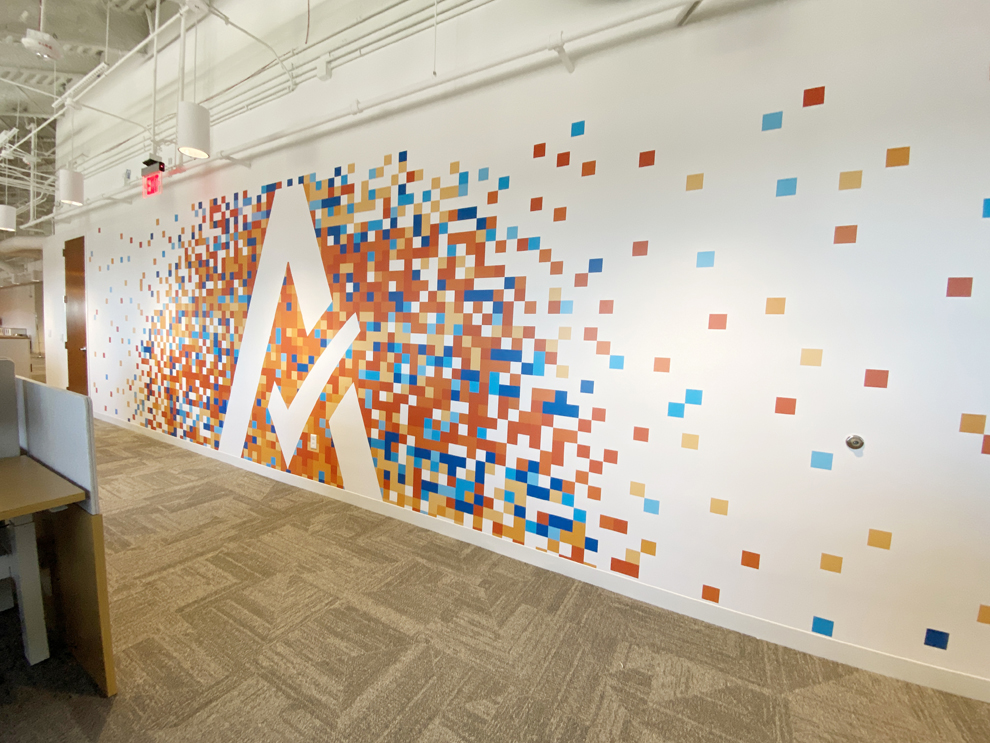
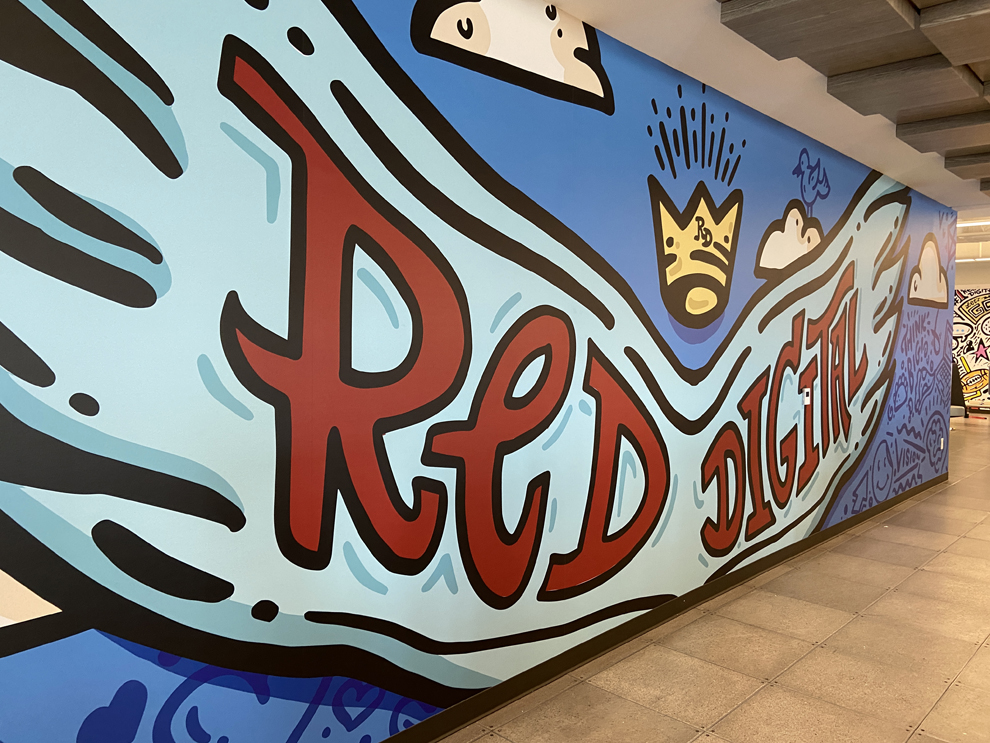
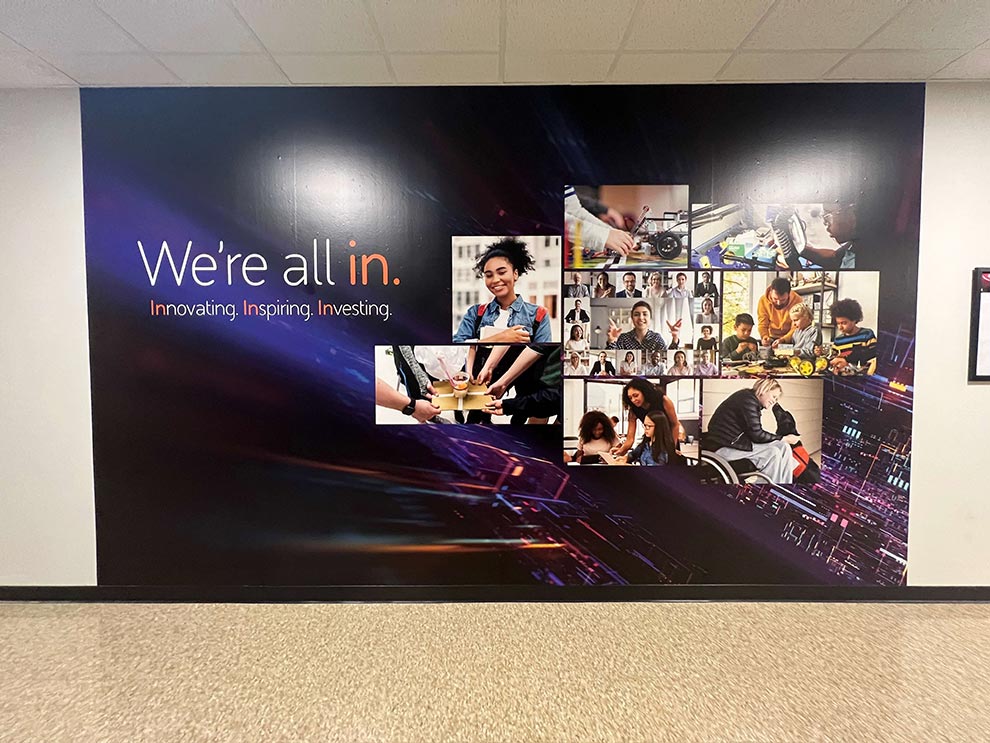
Wall wraps can transform large architectural surfaces into purposeful communication environments. Richmond organizations may use them for culture displays, mission statements, historical timelines, donor or employee recognition, research, educational material, workplace branding, event messaging, maps, organizational milestones, or arrival experiences. Their size allows photography, typography, graphics, and supporting information to operate as one coordinated composition rather than several unrelated signs.
Yes. Heritage can develop environmental graphic concepts with client stakeholders, organize approved information, establish hierarchy, prepare production-ready artwork, and scale graphics to the verified dimensions of the wall. Heritage can also work from completed artwork or existing brand standards and coordinate with architects, interior designers, agencies, marketing departments, branding firms, and environmental graphic designers involved in the broader project.
Sound, smooth, clean, dry, properly repaired drywall with correctly applied and fully cured paint generally offers the most predictable conditions. Surface texture, moisture, prior repairs, contamination, unstable paint, previous adhesive graphics, and unusual coatings can affect appearance and adhesion. Heritage evaluates visible wall conditions during the required site survey before professionally installed graphics proceed into final production.
Yes. Heritage requires a site survey when professional wall-wrap installation is included in the project. The survey verifies wall dimensions, visible surface conditions, architectural interruptions, fixtures, openings, access routes, loading procedures, work-hour limitations, security requirements, and other property conditions that may influence artwork, materials, production, scheduling, or installation.
The finish coat should be fully cured according to the manufacturer's requirements before adhesive vinyl is installed. Being dry to the touch does not confirm that curing is complete. Paint can continue releasing gases or vapors, and vinyl installed too early can trap that outgassing beneath the material, potentially contributing to bubbles, blisters, lifting, or premature adhesion failure.
Approximately four weeks provides helpful planning guidance for many paints, although cure time changes with the coating system, temperature, humidity, wall preparation, and conditions inside the property. Because outgassing is only one potential factor in adhesion issues, manufacturer requirements and actual site conditions ultimately determine when installation is appropriate.
For new Richmond wall wrap and interior branding opportunities generated through the website, Heritage currently plans around an anticipated overall project investment of at least $5,000. That new-project planning threshold is distinct from Heritage's broader project scale.
Many Heritage projects that involve production and professional installation range from $10,000 to more than $200,000. Project scope, artwork development, materials, fabrication, existing wall conditions, schedule, access, and installation requirements can all influence the final investment. Use Get Started Now to share the Richmond project you are considering and confirm the current regional investment level.
Yes. Some washable, scrubbable, stain-resistant, low-VOC, zero-VOC, and similar coatings may create more challenging surfaces for adhesive graphics. Heritage evaluates the actual painted wall rather than prescribing the same adhesive for every paint category. Depending on the condition, cleaning, testing, or another compatible vinyl and adhesive system may be recommended.
An adhesion test can show how a selected vinyl interacts with the visible painted surface during the testing period. It can provide useful information about initial adhesion and lifting behavior. It cannot verify the hidden bond between drywall, primer, and finish paint, nor can it guarantee long-term performance or damage-free removal.
Heritage stops work rather than continuing on an unstable painted surface. Controlled lifting and repositioning may be necessary when aligning large-format graphic panels. If normal installation activity causes paint, primer, or drywall facing to separate, the underlying wall requires correction. The client or property owner is responsible for arranging and paying for repair, priming, repainting, curing, and related restoration before installation resumes.
Yes. Careful removal can help limit unnecessary damage, but no adhesive graphic can guarantee that the original wall surface will remain completely unchanged. Paint adhesion, primer condition, previous wall repairs, drywall condition, adhesive system, time in service, and environmental conditions can all influence the result. Restoration remains the responsibility of the client or property owner.
The client or property owner arranges and pays for drywall repair, priming, repainting, curing, and related surface restoration. This applies when wall failure becomes visible during testing, normal installation repositioning, or eventual graphic removal. Heritage does not perform or pay for these wall-repair services.
Some textured surfaces may support graphics when the texture is relatively mild and the surface is stable. Deeper texture, porous block, rough masonry, irregular concrete, moisture, or unstable paint can prevent suitable adhesion and appearance. Heritage evaluates the actual substrate, desired visual result, service period, access conditions, and available materials before determining whether adhesive graphics or another display solution is more appropriate.
Yes. A single dedicated Project Manager can maintain project history, brand standards, approvals, production requirements, stakeholder decisions, and scheduling information across a multi-location program. Each property still requires individual planning because wall dimensions, paint conditions, architecture, access, operating schedules, and audiences may differ. Consistency should preserve approved brand and communication standards while adapting the physical solution to each site.
Not in every situation. Many printed interior wall graphics can be installed without film laminate when normal conditions do not require additional protection. Heritage may recommend laminate where frequent cleaning, repeated physical contact, abrasion, or another operating concern makes extra print protection useful. Exterior printed wall graphics are handled differently and receive protective film laminate for UV and weather protection when the application is appropriate.
Yes. Dimensional letters, photographs, acrylic panels, recognition displays, standoff mounted signs, backlit signs, and other fabricated elements can be incorporated into a wall-wrap installation when the wall and design support them. Heritage considers visual hierarchy, spacing, mounting locations, contrast, panel seams, imagery, and future update requirements so the individual components work together as one coordinated environment.
No. Heritage does not provide installation-only service for customer-supplied wall graphics. Heritage installs graphics it produces, fabricates, procures, or manages within its own project engagement. Keeping measurement, material selection, print production, panel planning, replacement capability, site coordination, and installation connected allows Heritage to maintain accountability for the completed result.
Heritage combines one dedicated Project Manager, environmental graphic design, a required site survey, production, fabrication, pre-installation planning, and professional installation within one coordinated engagement. This approach helps Richmond organizations manage stakeholder approvals, architectural conditions, wall readiness, property access, installation schedules, and fixed completion dates without repeatedly transferring critical project information among unrelated providers.
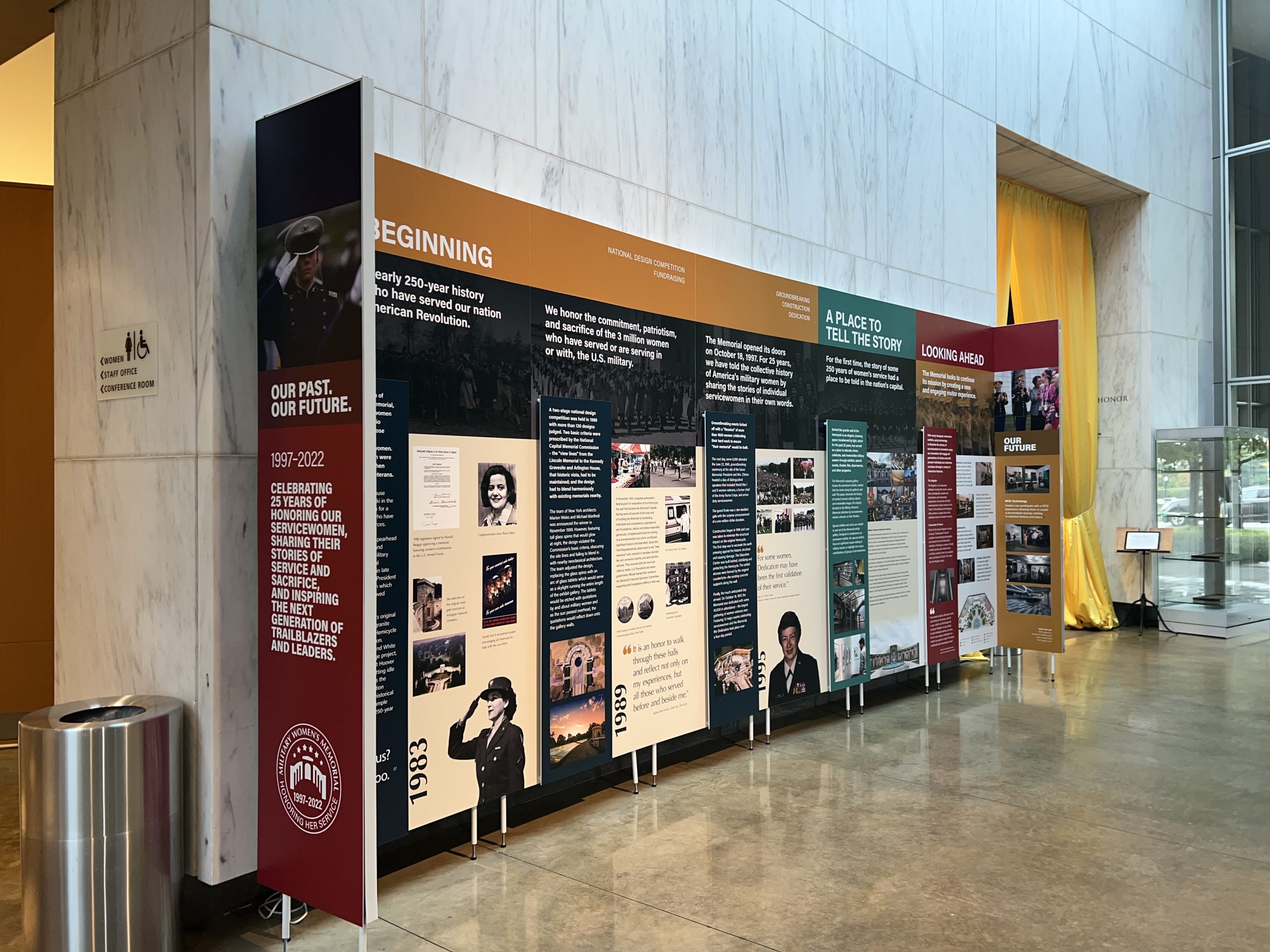
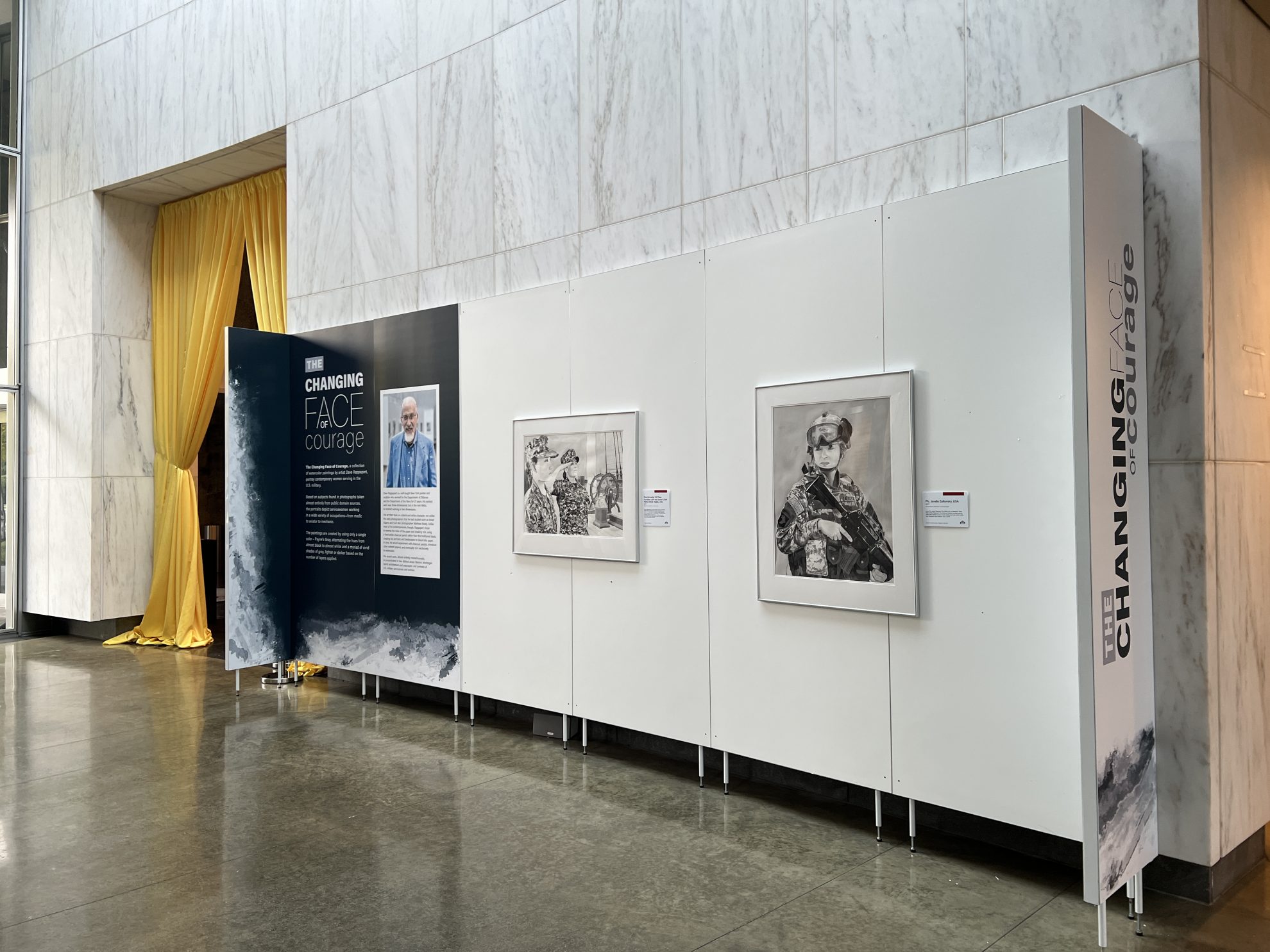
Heritage Signs & Displays created new museum signage for the Military Women’s Memorial in Arlington, VA. The project included custom signs, wall wraps, dimensional letters, and standoff-mounted displays to honor the legacy of U.S. servicewomen and the donors who supported the memorial. The updated interior features impactful designs, including a "Our Legacy" wall display and panels showcasing historical contributions and artwork, creating a transformative tribute to women in the U.S. Armed Forces.
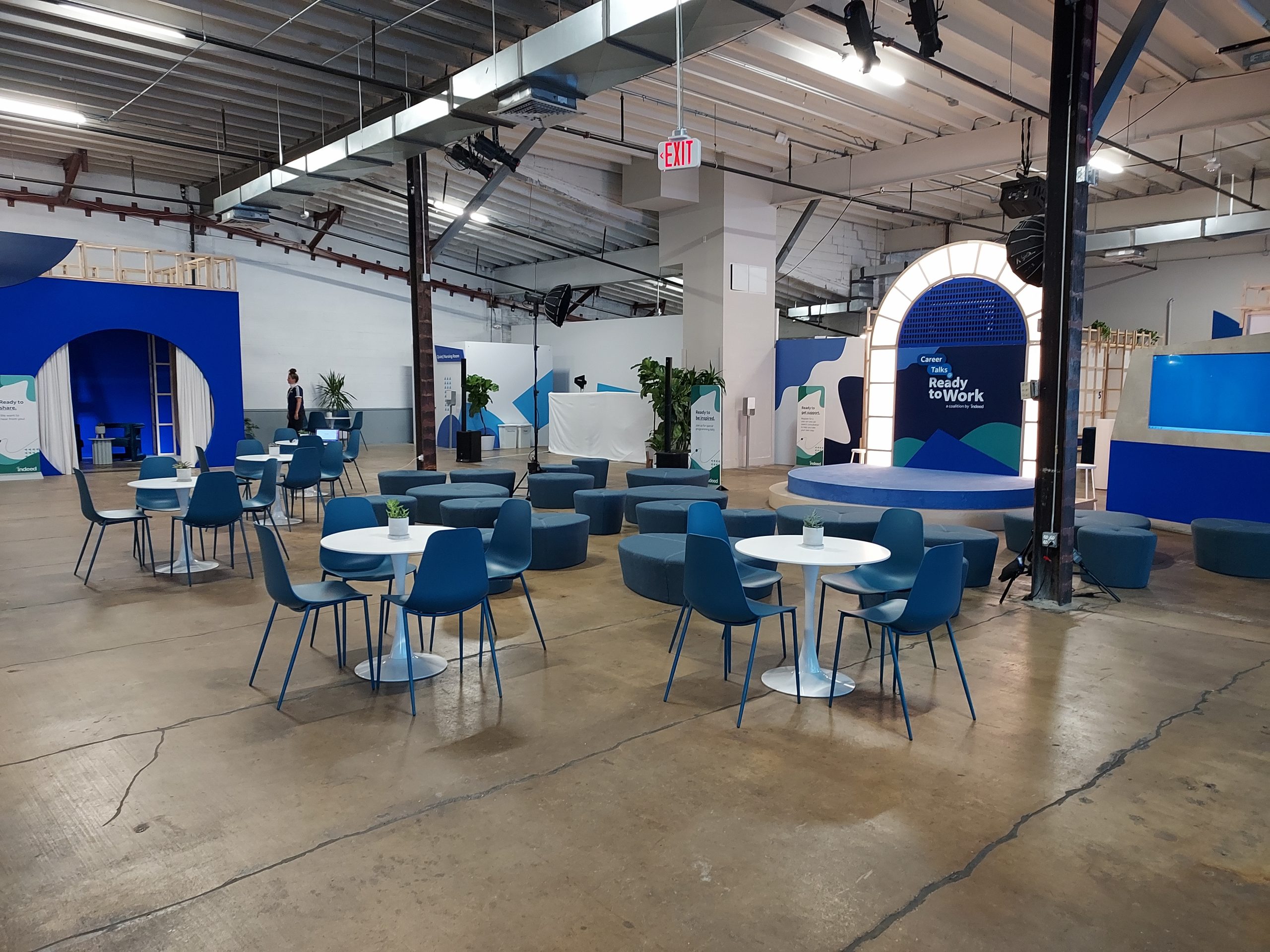
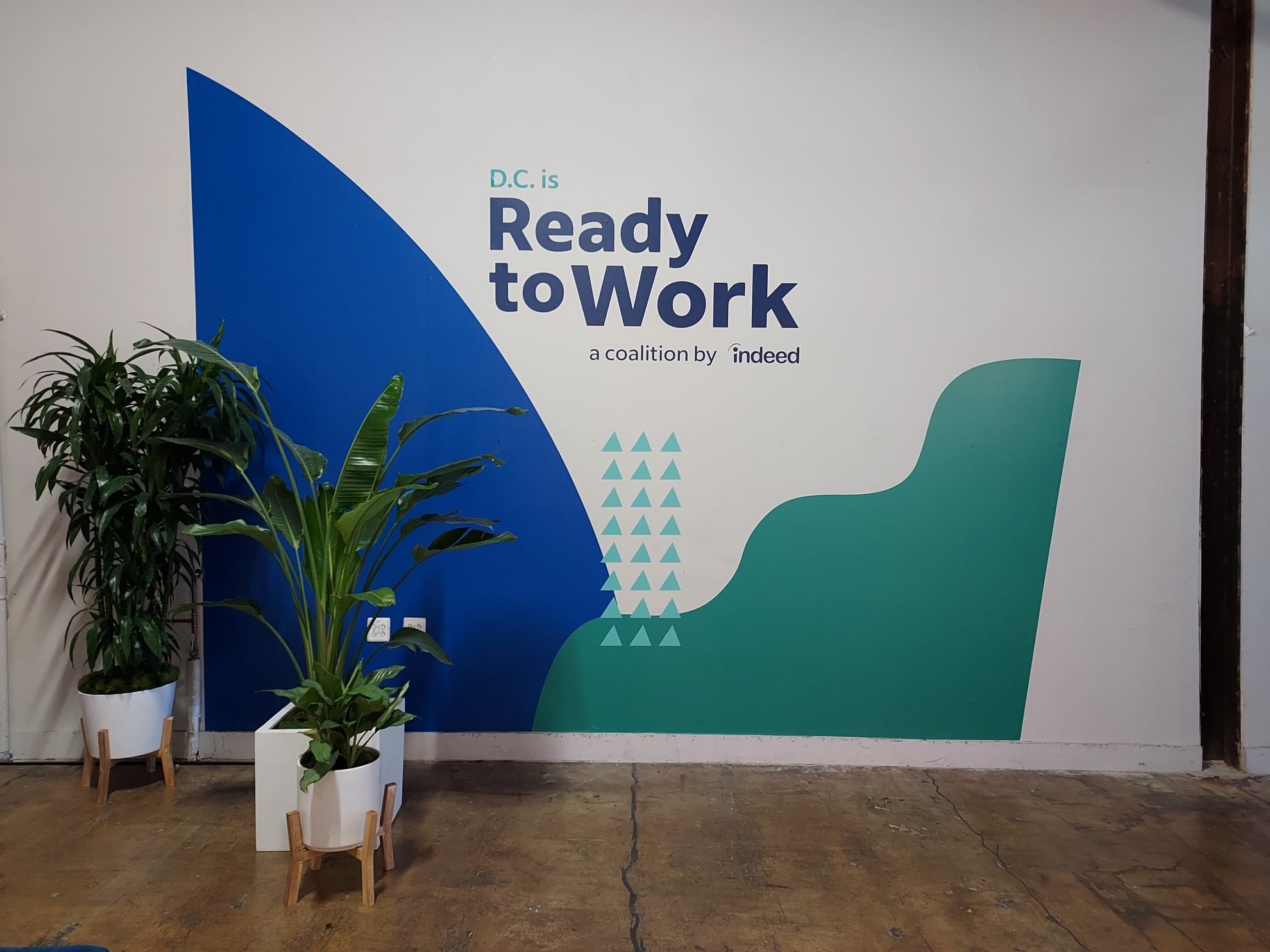
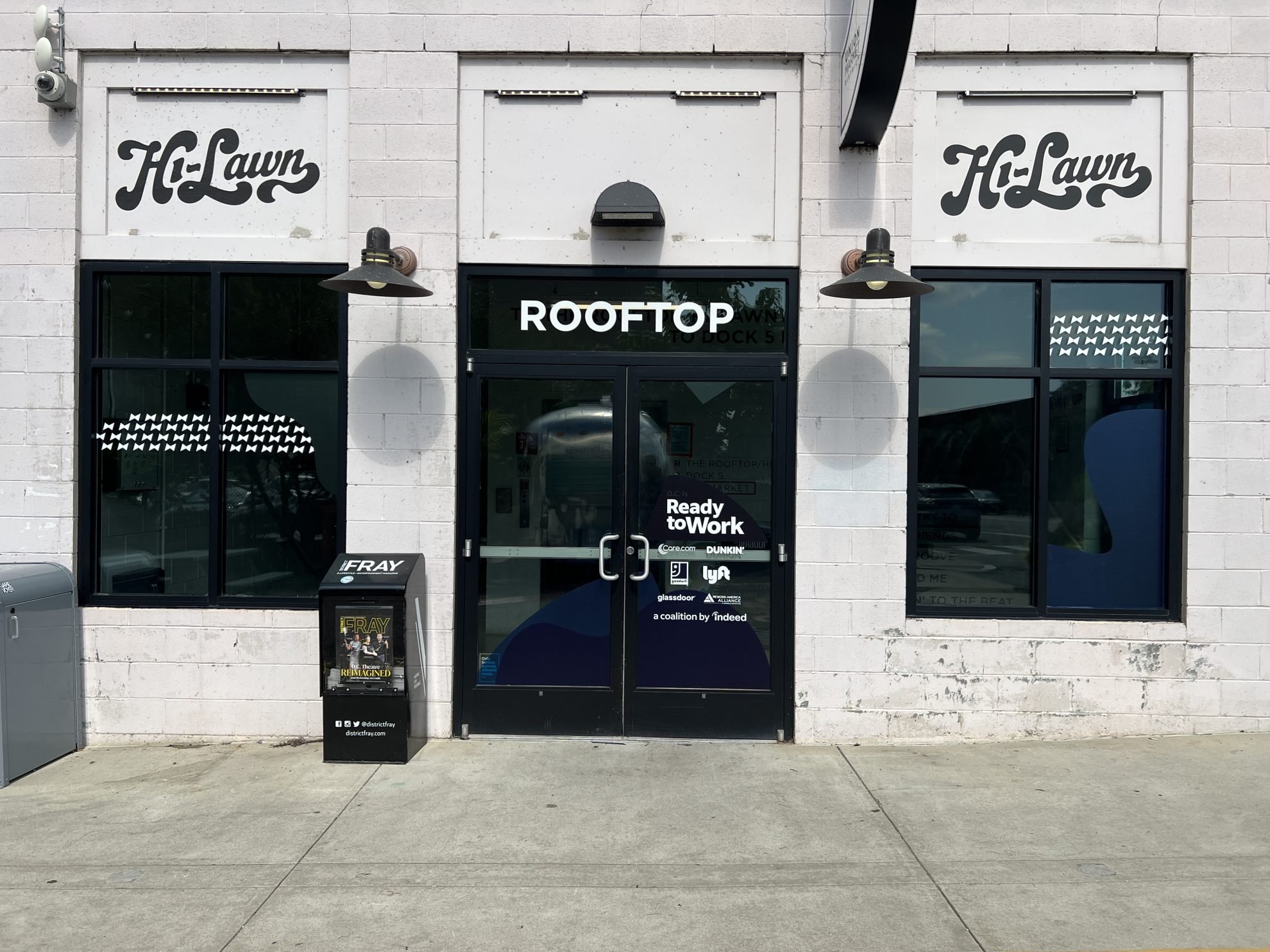
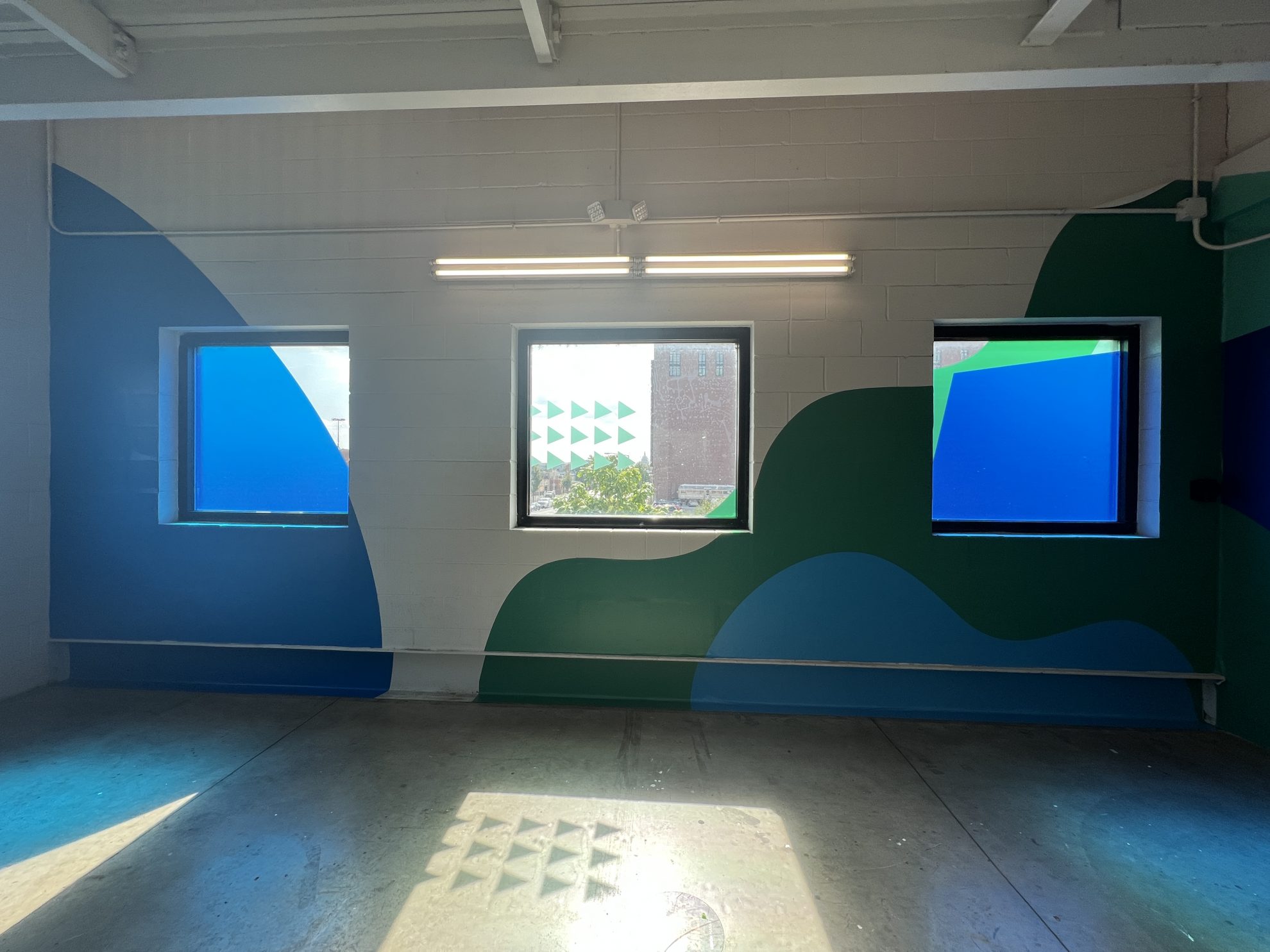
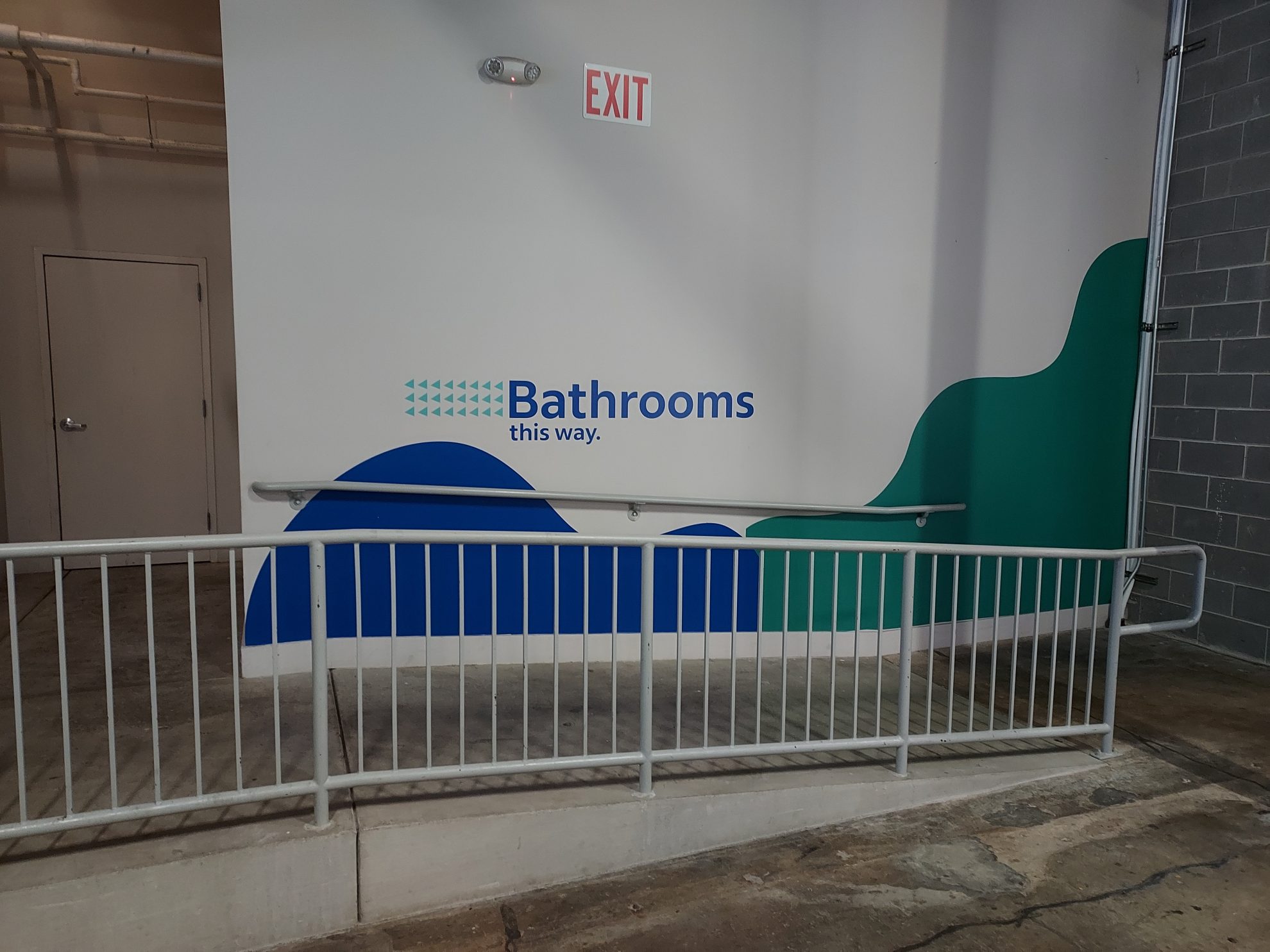
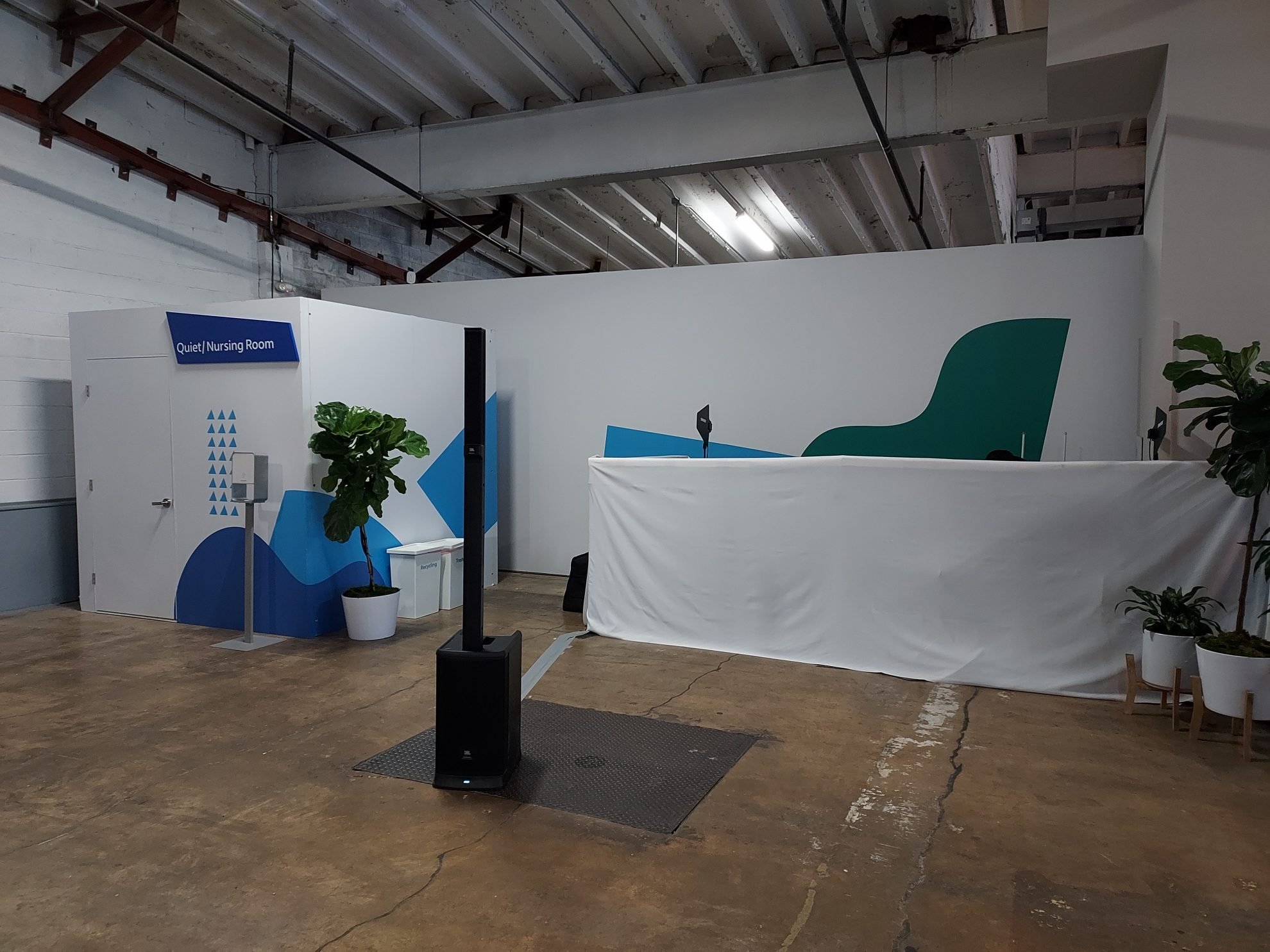
Heritage Signs & Displays' collaboration with The Gathery to brand Union Market in Arlington, VA, for Indeed's "Ready to Work" job fair. The project included custom event displays, wall graphics, window graphics, and wayfinding signs, creating an immersive and visually appealing environment. The branding enhanced the venue, reflected the event's mission, and provided a seamless experience for attendees.