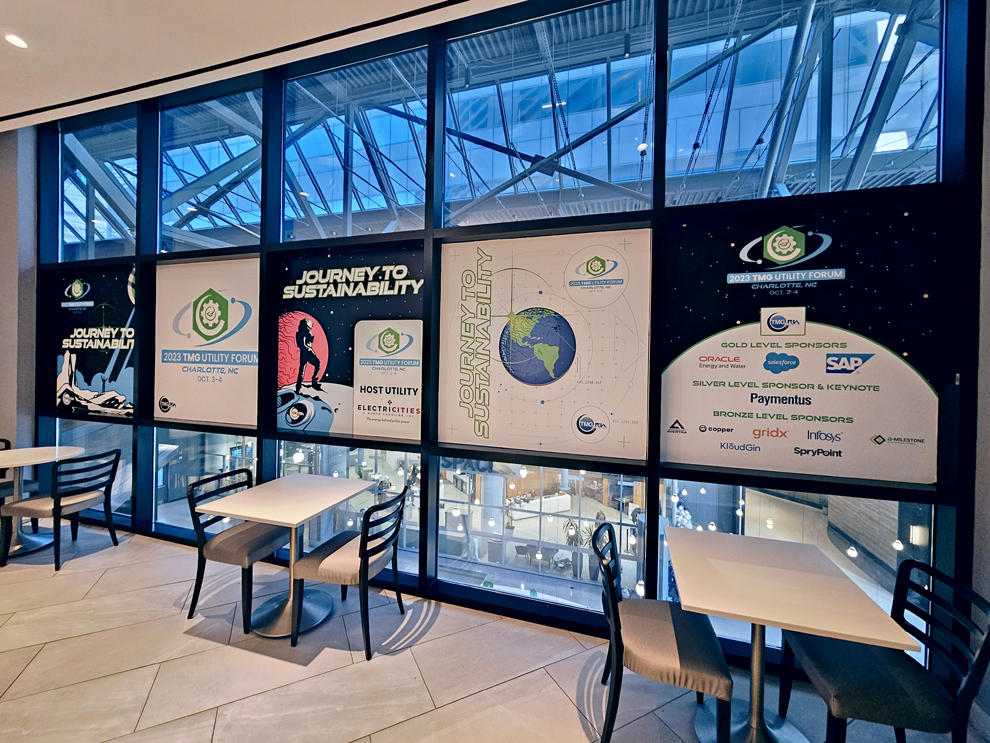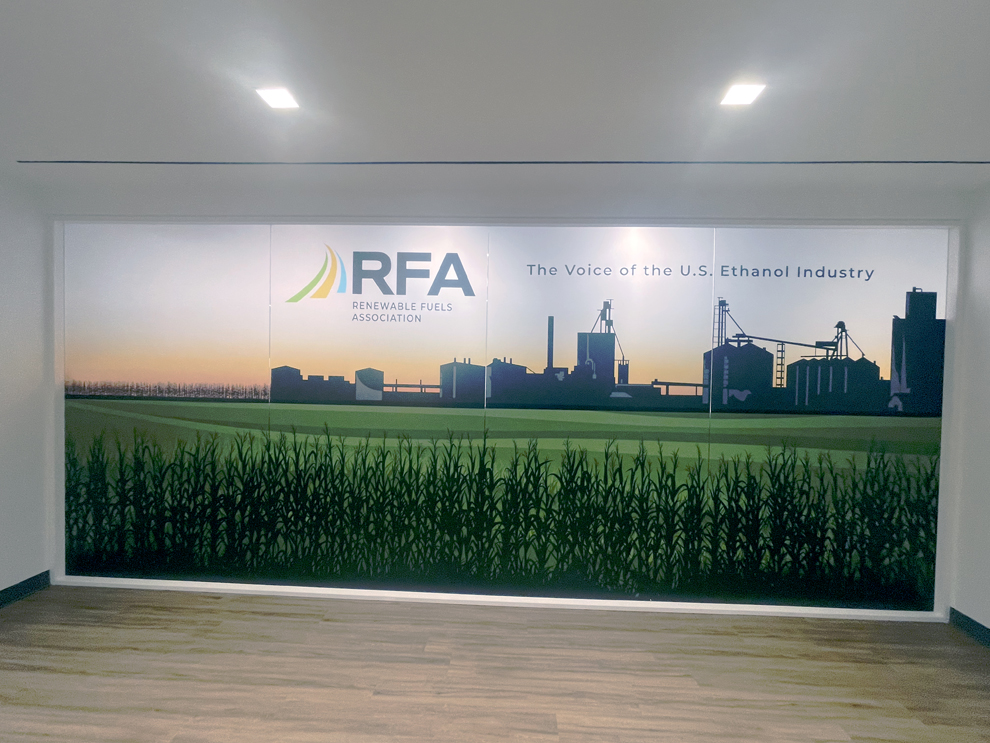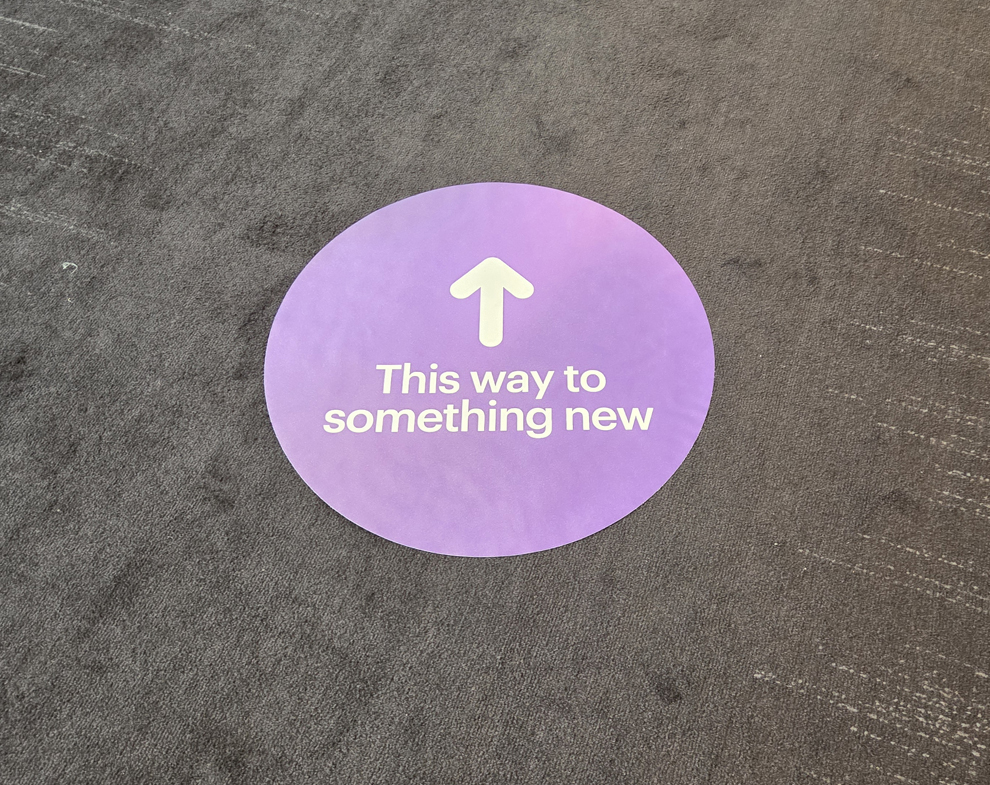
Most Gaithersburg organizations do not need construction to change how a space feels or functions. They need the walls, glass, floors, and elevator doors already in the building to start doing something useful. Adhesive vinyl graphics make that shift possible by giving every compatible surface a specific job. A glass-fronted conference room may need separation from the open floor. A reception wall may need to say who you are before anyone speaks. A corridor may need to move hundreds of attendees in one direction during a two-day conference. We let the objective decide the material, never the reverse.
Heritage Signs & Displays is veteran-owned and family-led, and we plan, produce, and install adhesive vinyl across Montgomery County and the greater Gaithersburg market. Some projects are a single focused application. Others involve several coordinated ones working together. Frosted vinyl and privacy film can shield sightlines into offices and huddle rooms while daylight still reaches the interior. Cut vinyl lettering can name departments, suites, labs, and meeting spaces. Window graphics can turn entrance glass into a clear statement rather than a blank pane. Floor graphics and elevator graphics can put wayfinding, recognition, or campaign messaging directly along the routes people already walk. When the wall itself needs to carry the story at mural scale, Wall Wraps is the architectural-scale member of the same adhesive vinyl family.
Good outcomes start with people, not product specs. Our environmental graphic designers begin by asking what employees, visitors, patients, members, or attendees should notice, understand, or do once they are inside. Those answers shape scale, coverage, visibility, privacy levels, and how the vinyl relates to nearby signage or displays. Large expanses of clear glass raise one more consideration. Distraction markers, meaning decorative or branded vinyl elements applied to clear glass so the surface reads as solid, can serve both awareness and brand personality. We do not represent applied vinyl as proof of building-code or safety-glazing compliance.
Work in Gaithersburg frequently moves through several layers of approval. Biotech and life sciences companies, federal contractors, nonprofits and associations, healthcare practices, schools, and professional service firms often need internal leadership, a landlord, and a property management team aligned before anything goes on a wall. In multi-tenant buildings along the I-270 corridor, near Washingtonian Center, or around Shady Grove, access windows are often restricted to evenings or weekends. One dedicated Project Manager holds the approved direction, field notes, production requirements, schedule, and installation plan in a single place, so you are never repeating the same information to three different vendors. The required site survey gives us firsthand knowledge of your property before production is locked in.
Field support for Gaithersburg comes from our Washington, DC location, which handles discovery, site surveys, field verification, installation planning, professional installation, and follow-through throughout Montgomery County, with additional nearby support from our Arlington, Virginia office. Mid-Atlantic production and fabrication happen at our Waldorf, Maryland facility. That structure lets discovery, verification, printing, fabrication, and installation function as one accountable process instead of a relay race. We have been at this since 1977, and we approach each accepted project with practical judgment, craftsmanship, and follow-through rather than a list of promises.
Adhesive vinyl is a category of materials, not a single product that behaves identically everywhere it is applied. Substrate, desired appearance, expected service life, traffic volume, cleaning routines, exposure, installation method, and the eventual removal plan all narrow the correct choice.
Painted walls bring their own questions: wall condition, texture, primer type, paint chemistry, cure status, and the invisible bond underneath the finish you can see. Glass introduces an entirely different set: how much privacy is needed, which views stay open, daylight direction, low-emissivity coatings or applied tint, which side people view from, and whether the product installs wet or dry. Floors require materials rated for that specific flooring type and traffic level, usually with a protective laminate and a defined service window. Elevators demand attention to moving panels, seams, edges, clearances, constant hand contact, and aggressive cleaning schedules.
We use those distinctions to narrow material selection rather than treating every application as a generic decal. Two graphics inside the same brand program can legitimately call for different vinyl systems and different installation methods, even when the artwork files and color standards are identical.
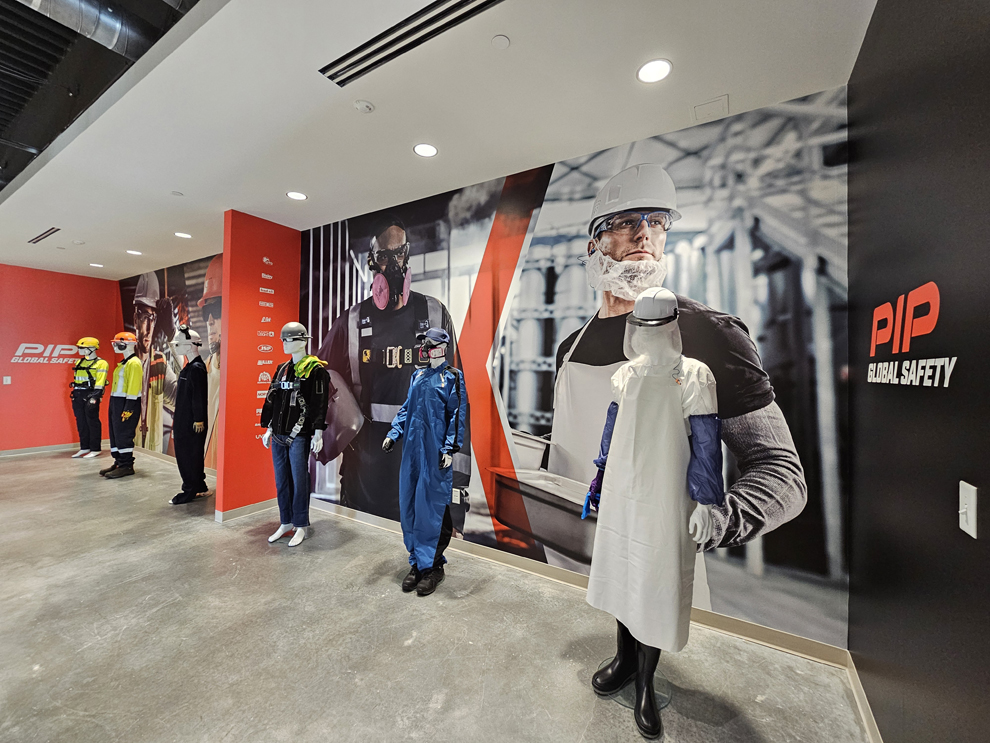
A finished adhesive graphic looks simple. Getting there depends on measurements, surface condition, material selection, print and color accuracy, building access, sequencing, and installation technique. One weak link in that chain is visible from across the room.
Our One Dedicated Project Manager System keeps all of those variables connected. The same person holds your goals, project history, approved artwork, site findings, and schedule constraints, then coordinates environmental graphic design, production, fabrication, scheduling, and our full-time installers. Fewer handoffs means fewer details lost in translation, and you always know exactly who owns the next step.
We also treat deadlines honestly. When your date is realistically achievable, we work proactively toward it. When the complete scope cannot responsibly be finished as requested, your Project Manager tells you early and builds the strongest workable alternative through phasing, resequencing, adjusted priorities, or a change in application or material. Regional field support means the people who saw your building are the same people feeding decisions into production, so nothing that matters in a Gaithersburg property gets lost on the way.
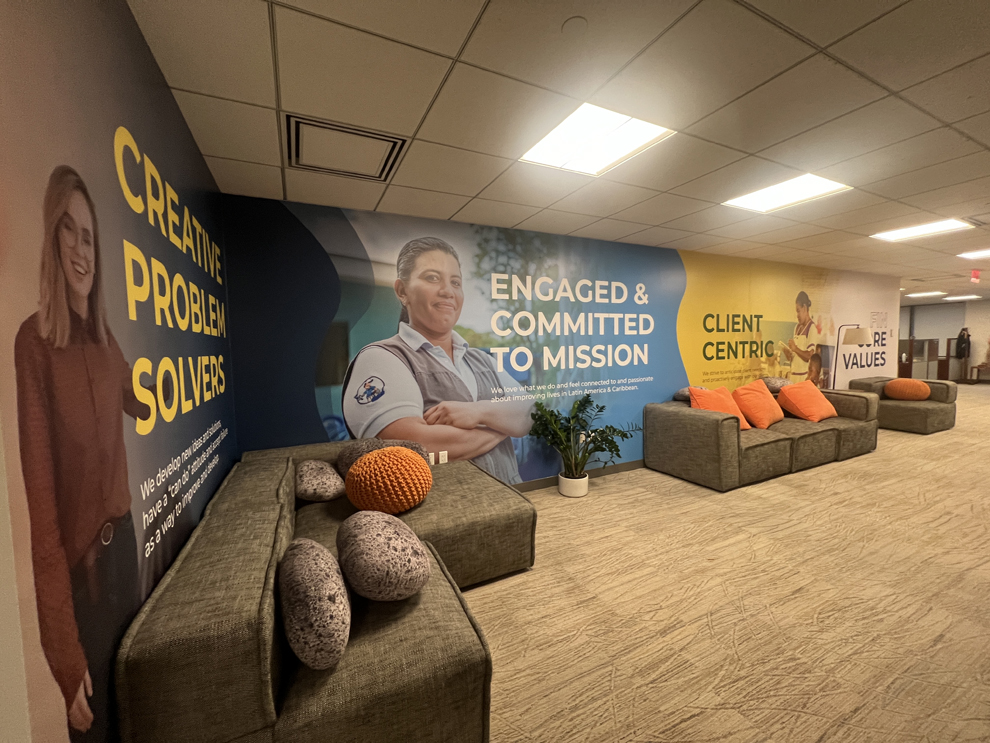
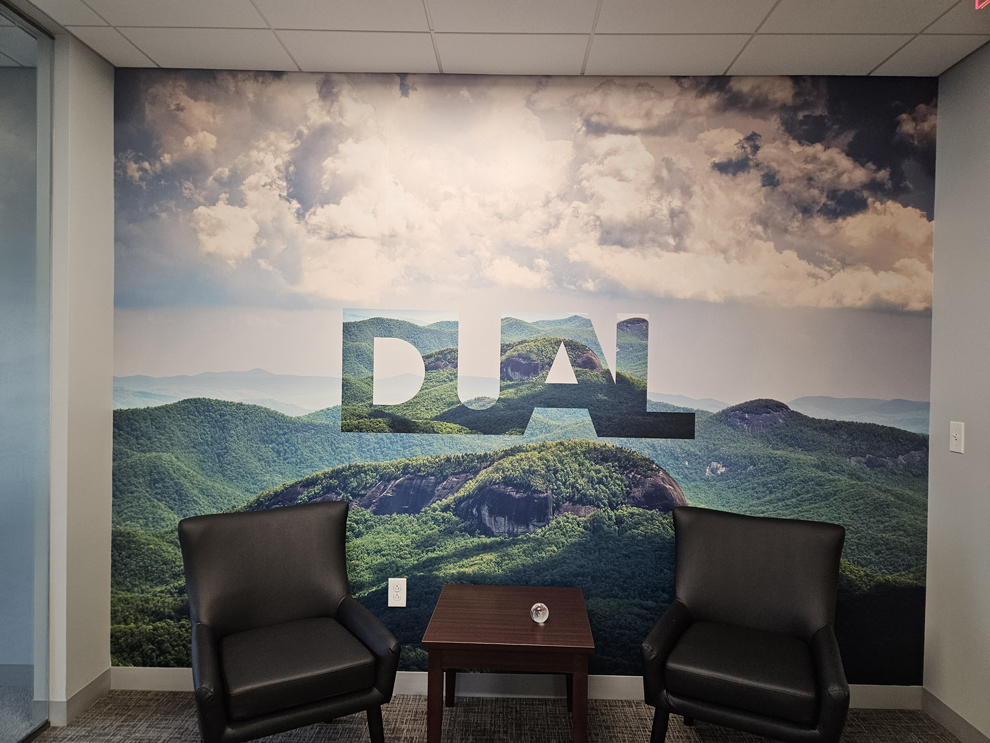
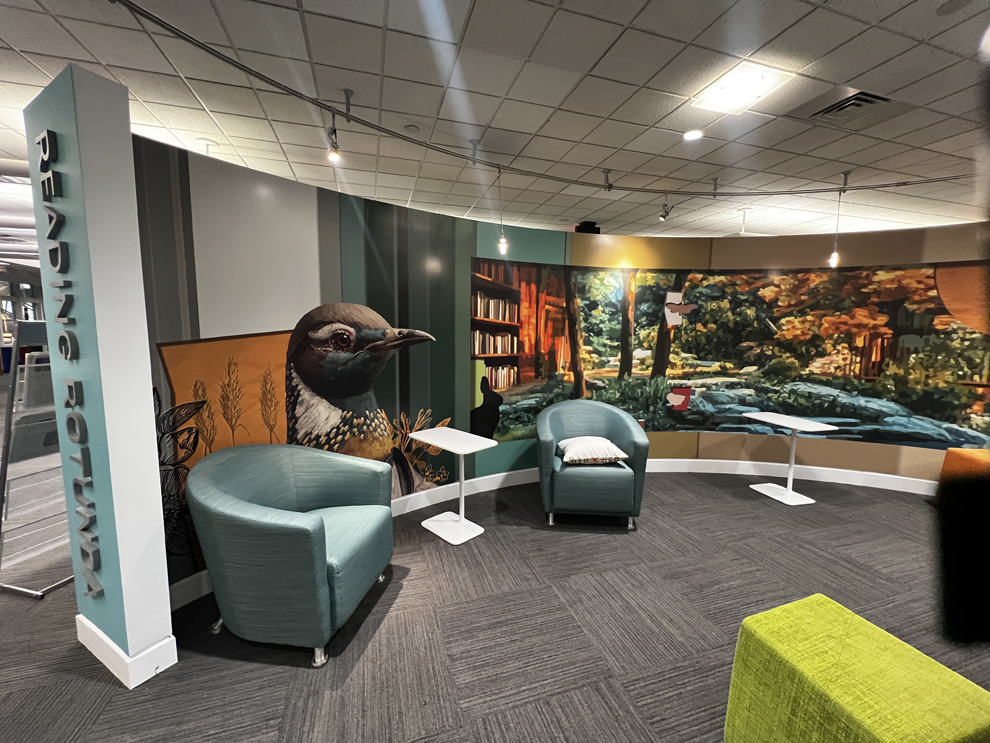
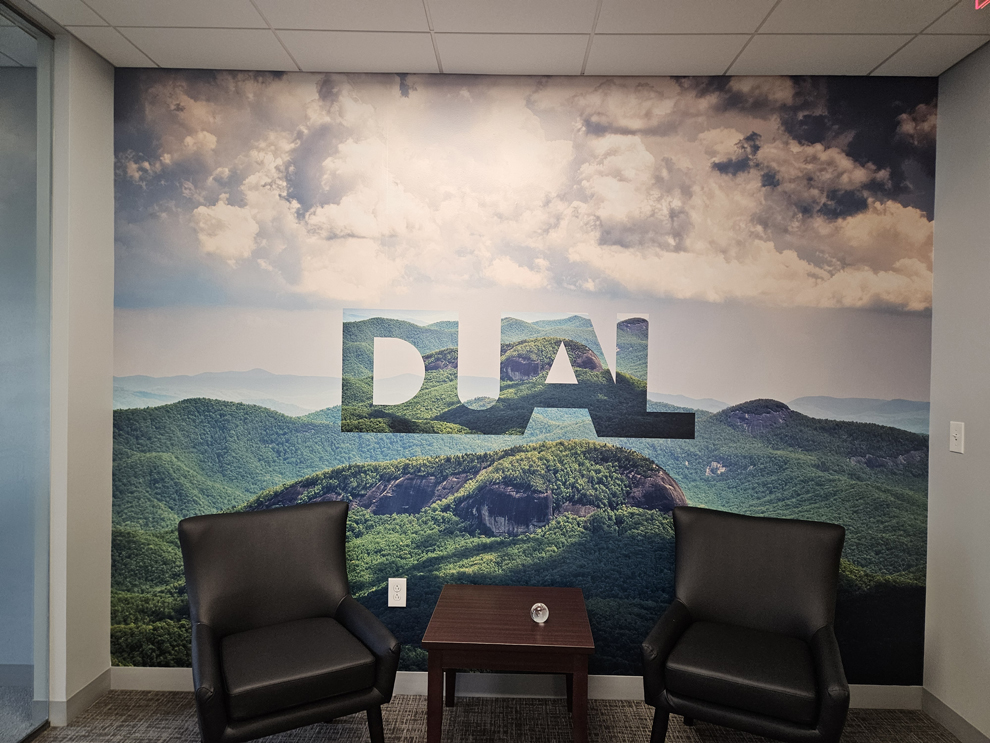
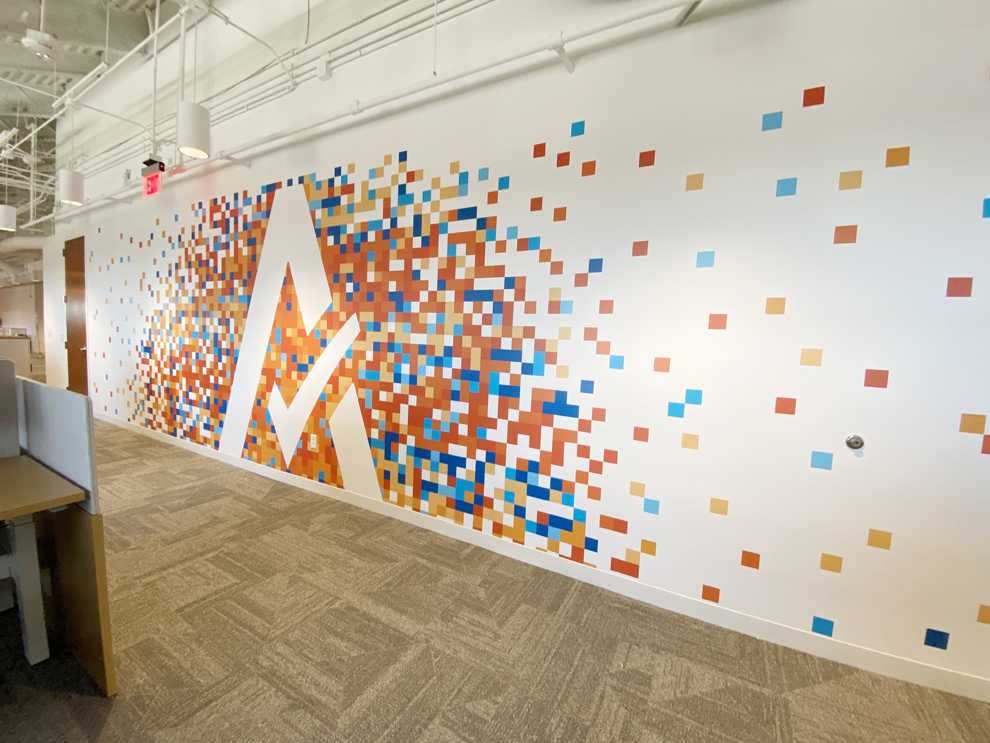
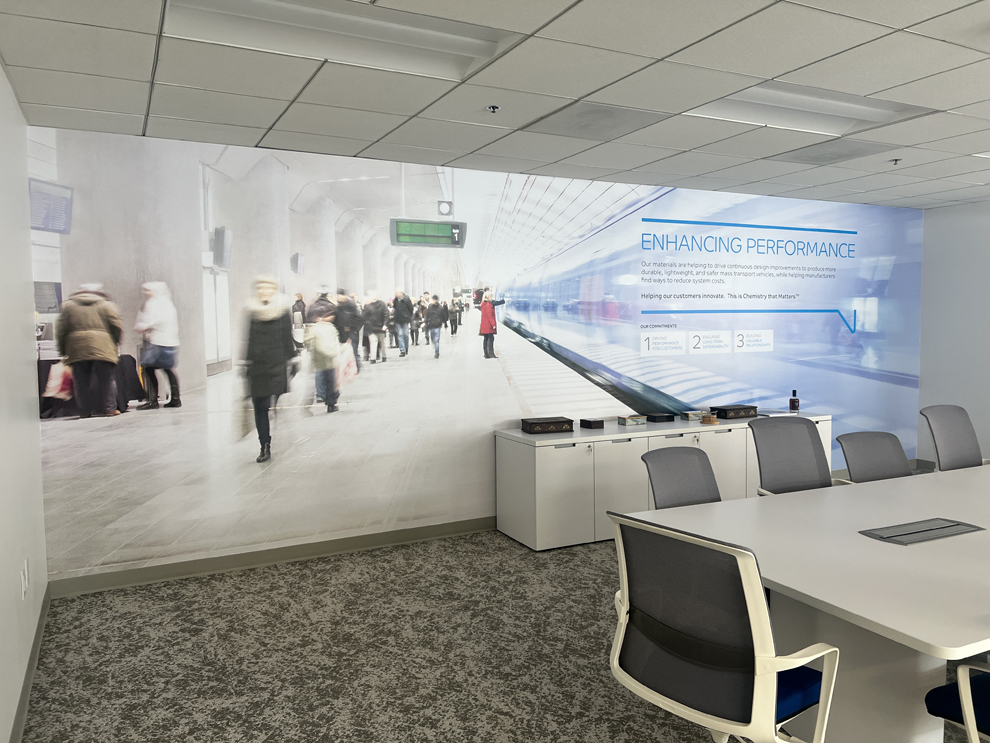
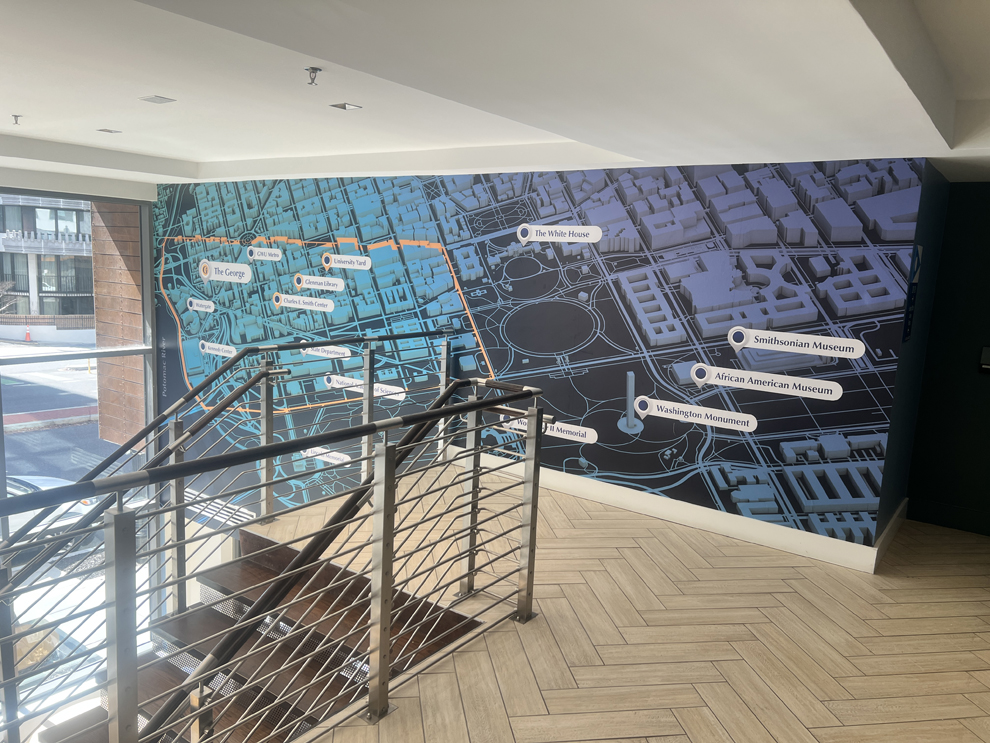
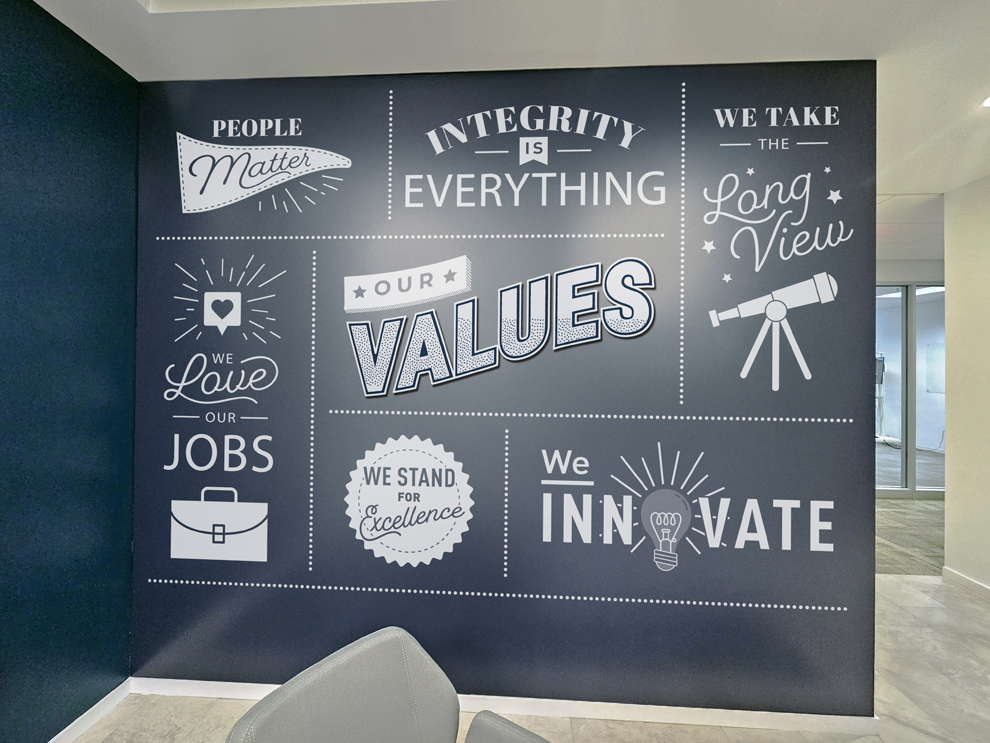
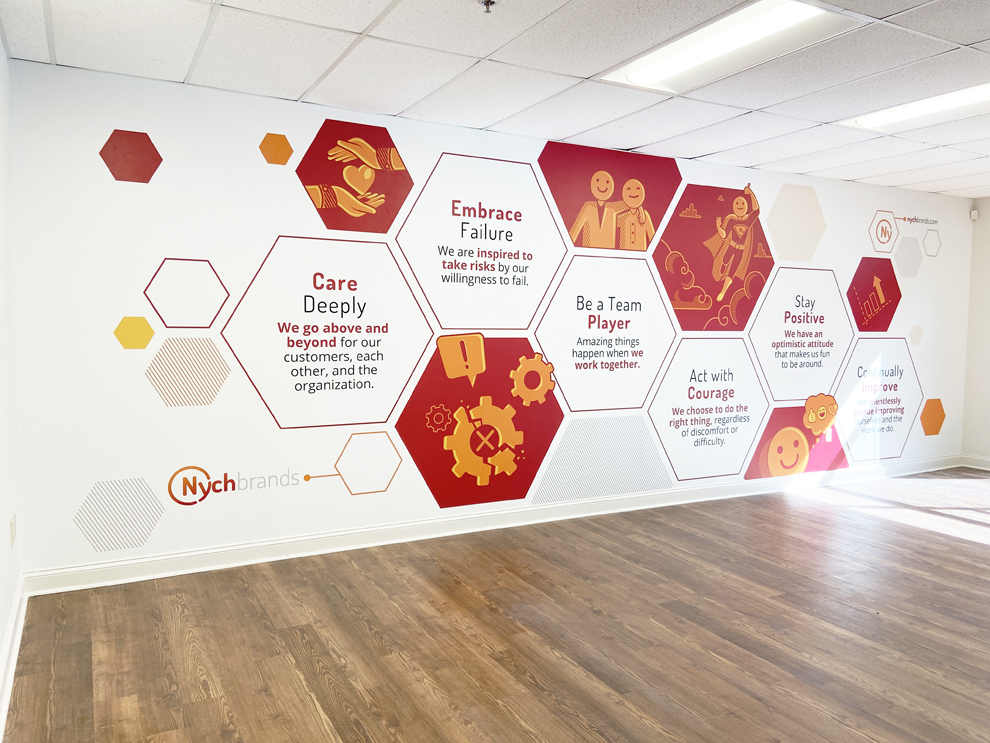
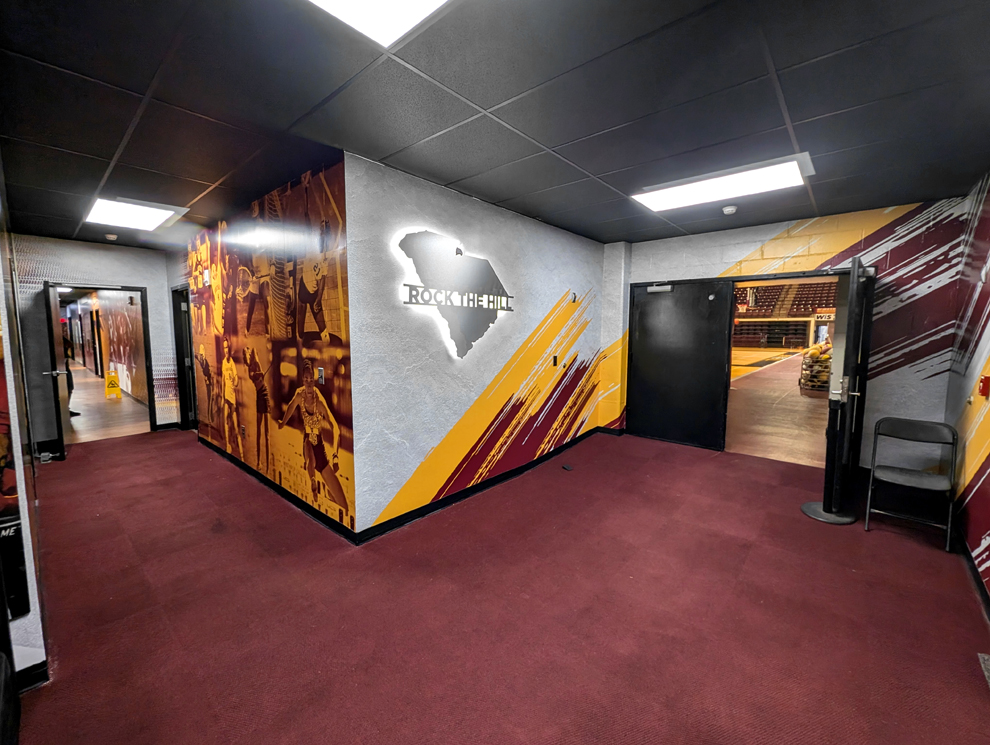
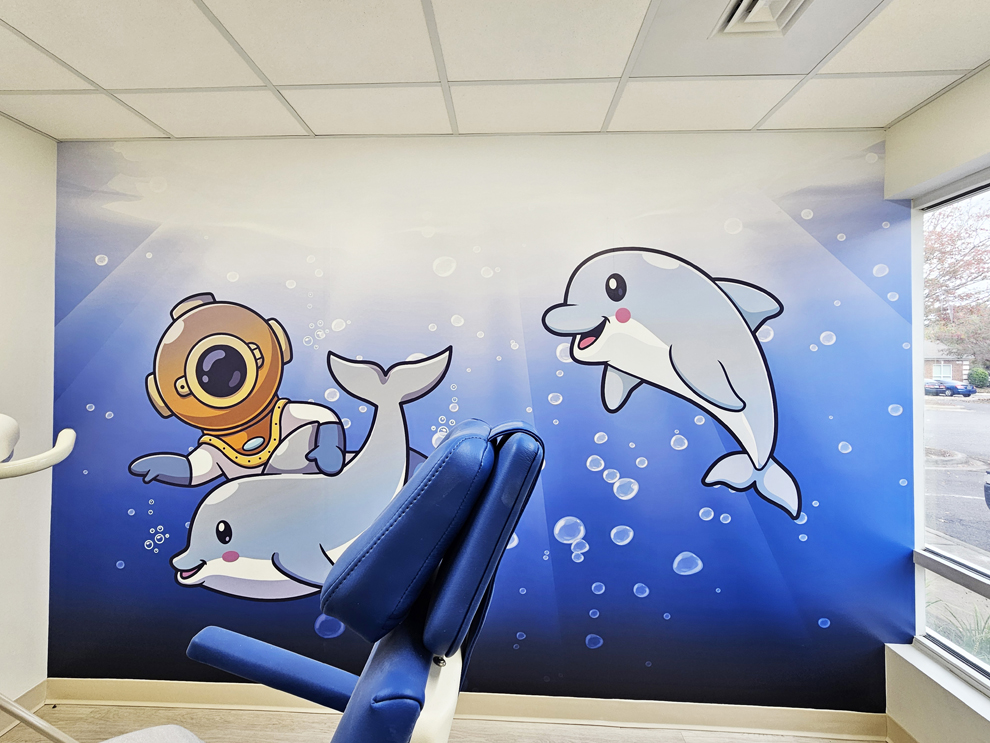
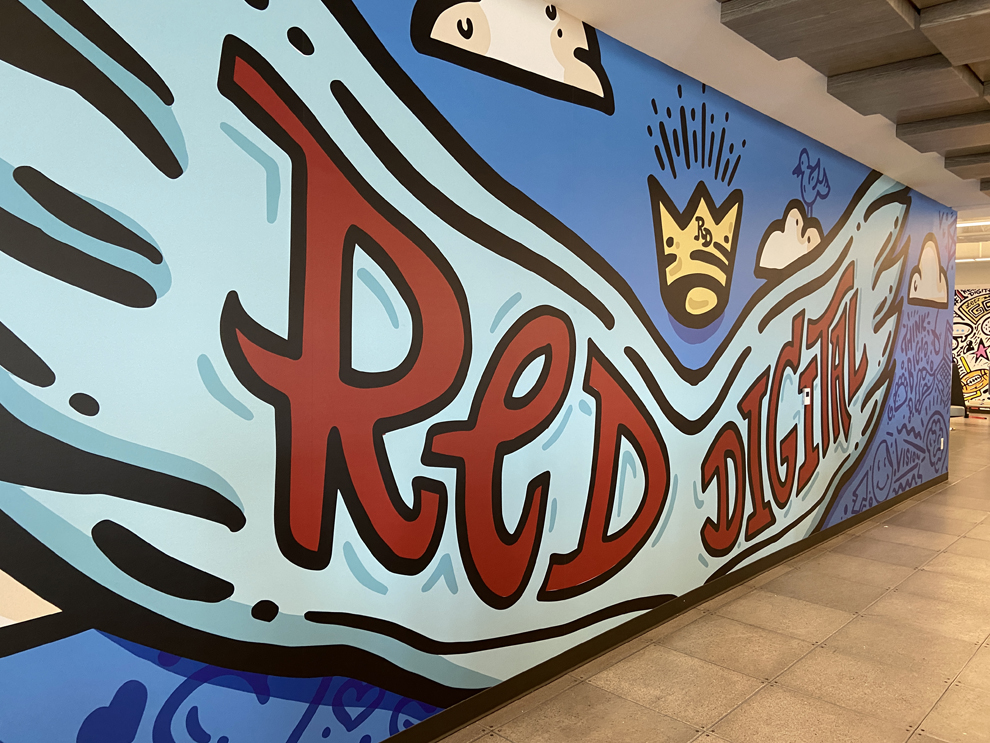
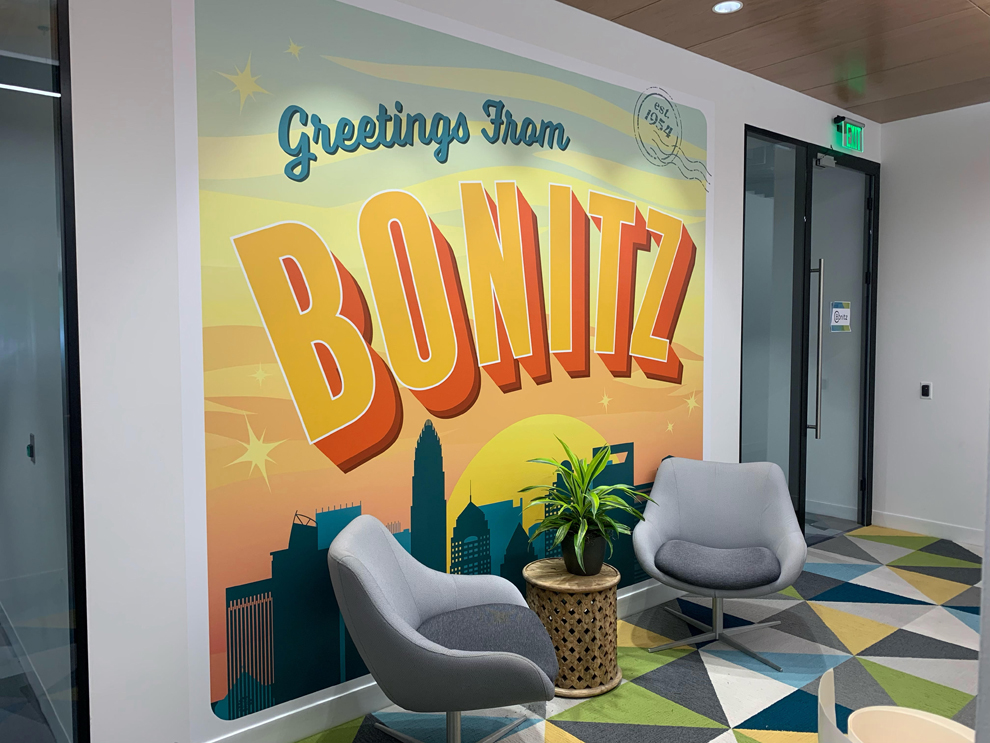
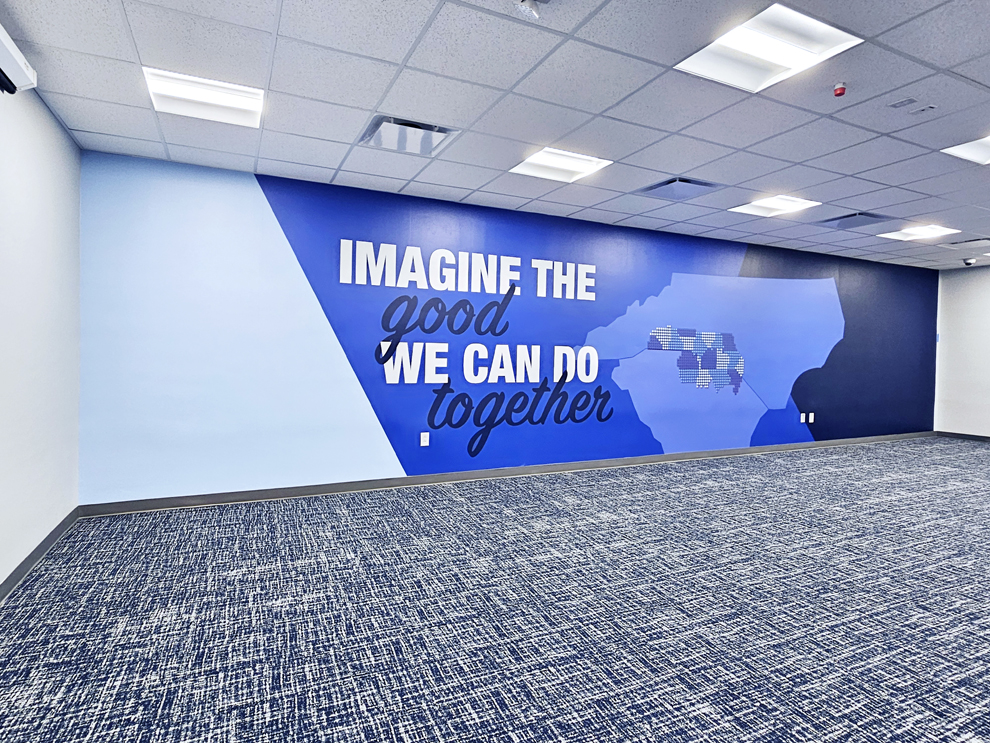
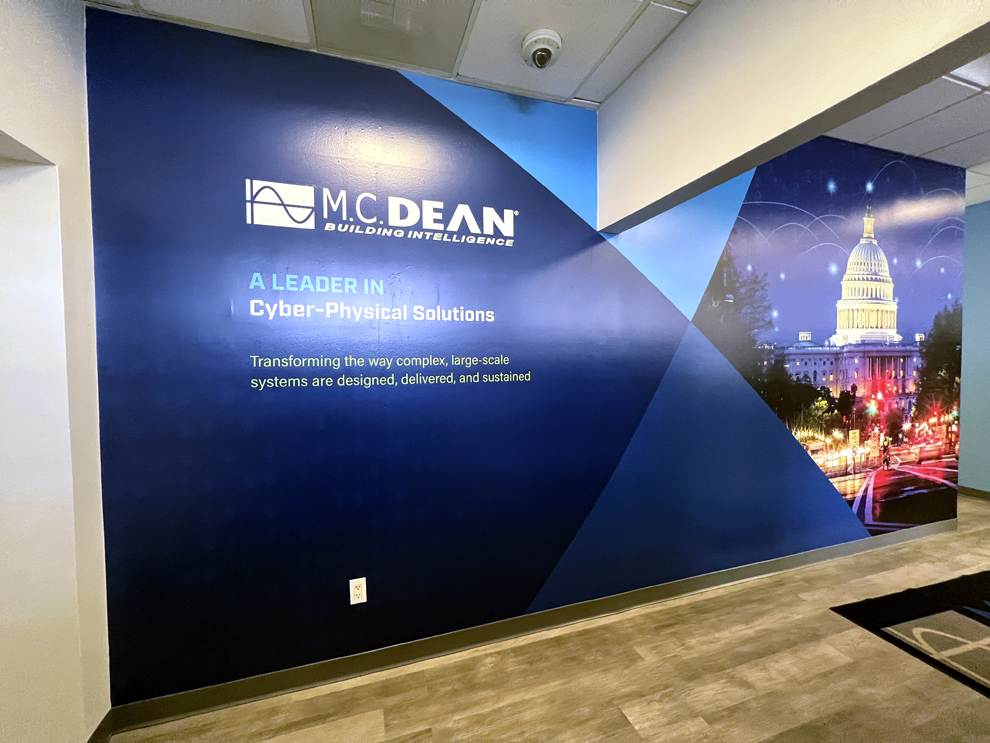
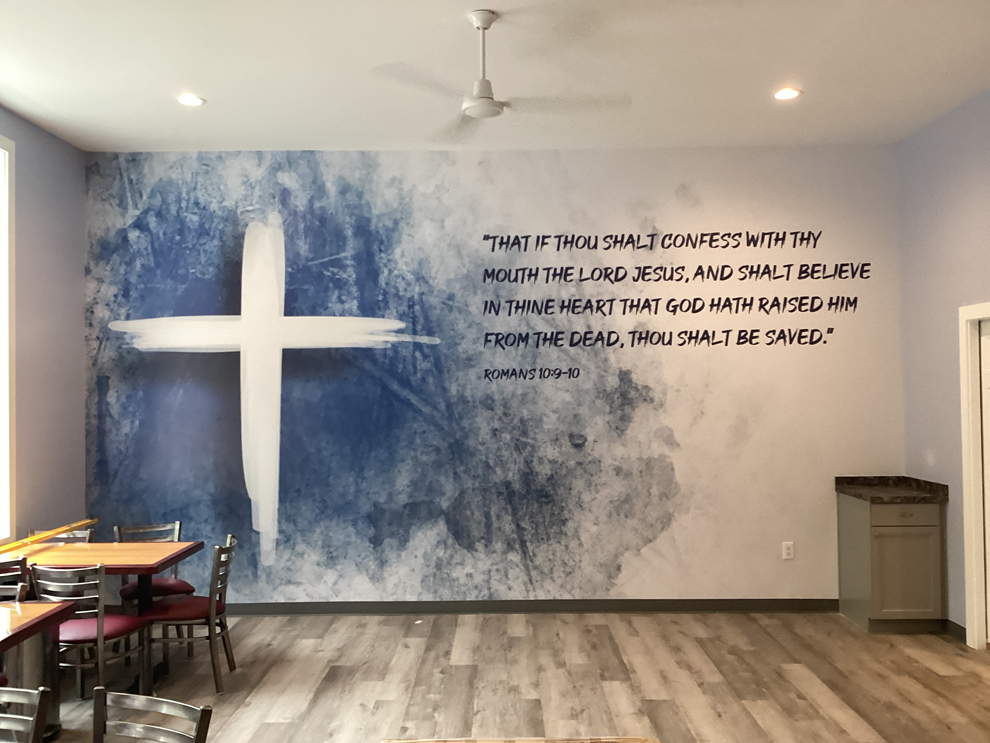
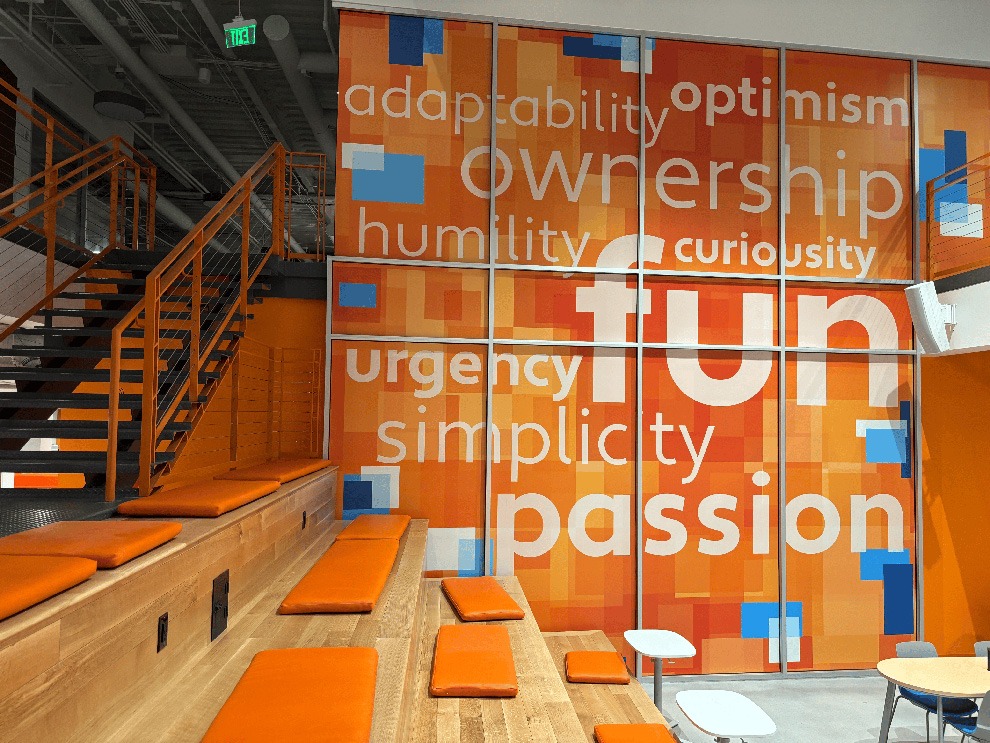
When a wall should carry the primary visual story, Wall Wraps handles the architectural scale. Mural imagery, timelines, culture walls, and donor or recognition installations depend on coverage planning, panel layout, wall condition, and lighting rather than a single applied graphic.
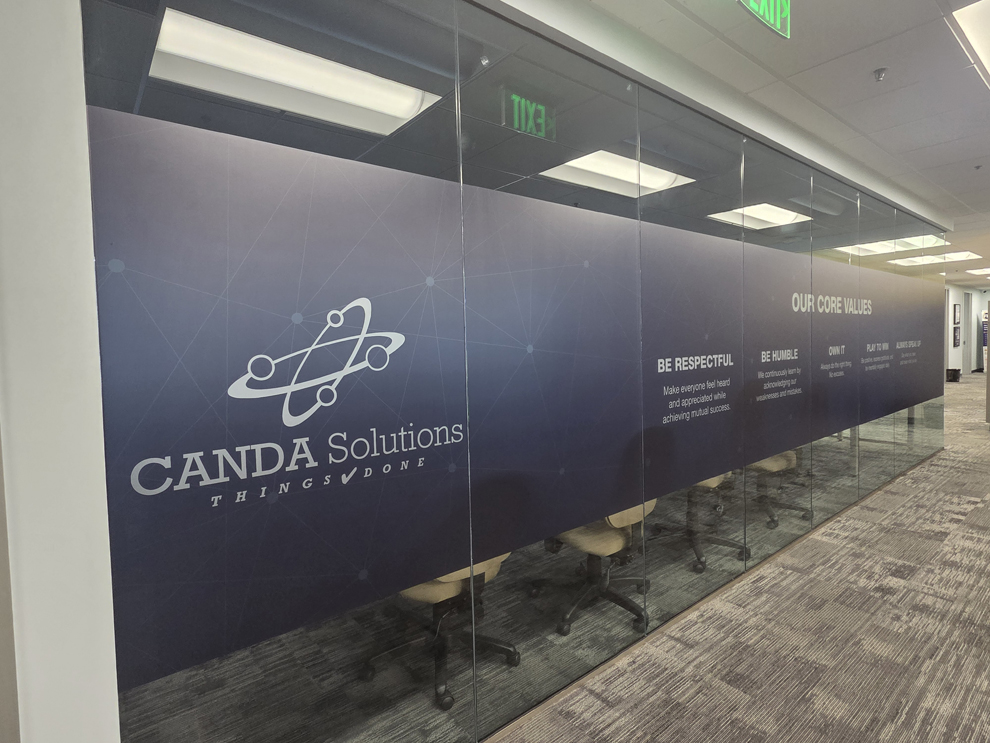
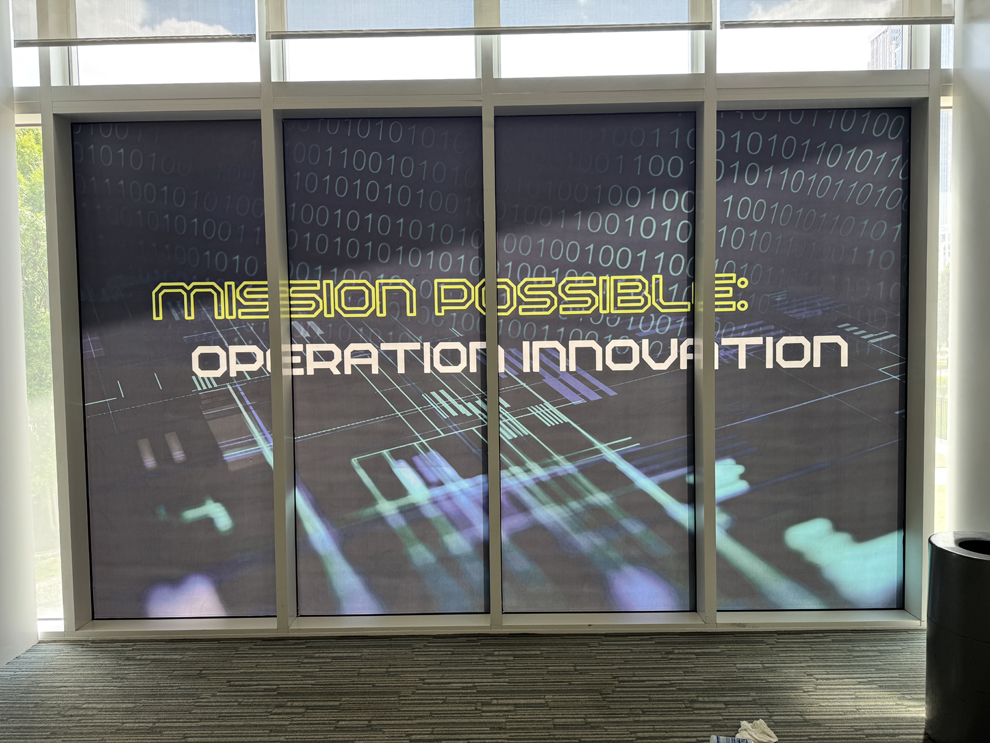
Window Graphics gives glass a defined role in identity, messaging, visibility, and view control. Coverage, viewing direction from both sides, daylight, glass coatings, and installation method drive what we recommend.
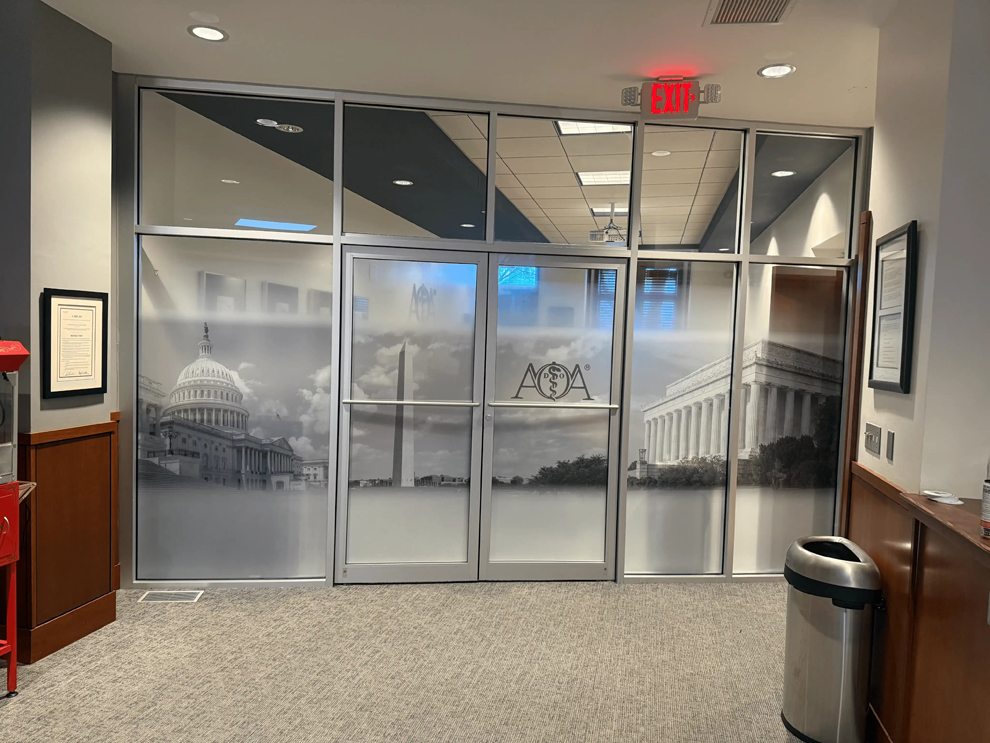
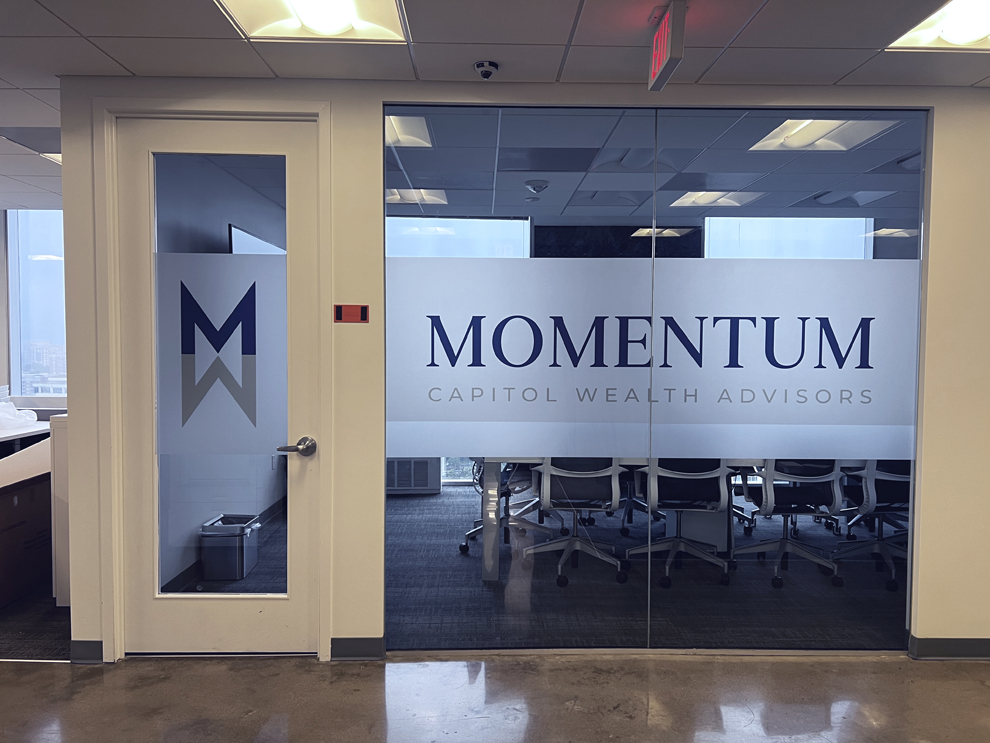
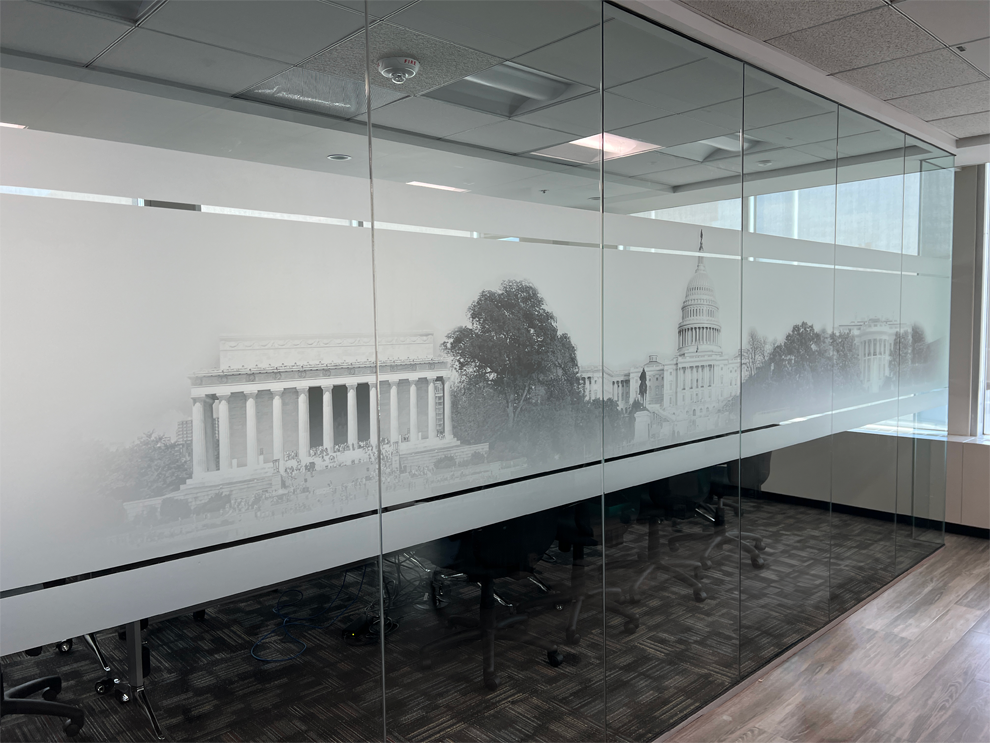
Frosted vinyl and privacy film create visual separation in glass offices and conference rooms while daylight keeps reaching the interior. Coverage height, seated and standing sightlines, pattern or logo treatment, cleaning routines, and glass condition shape the design.
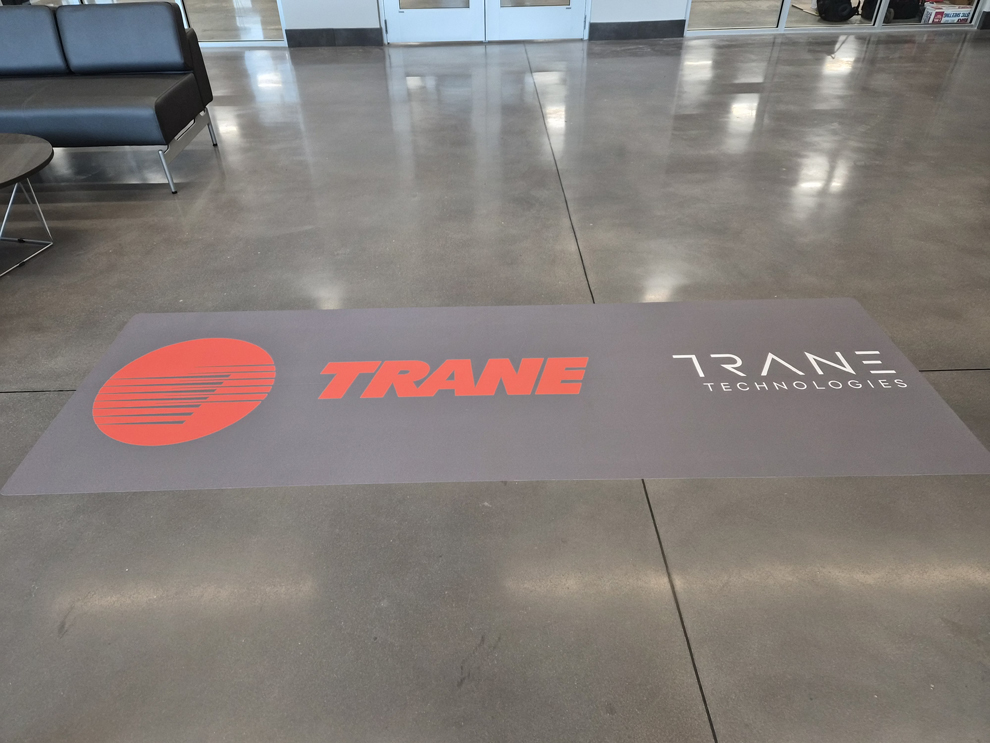
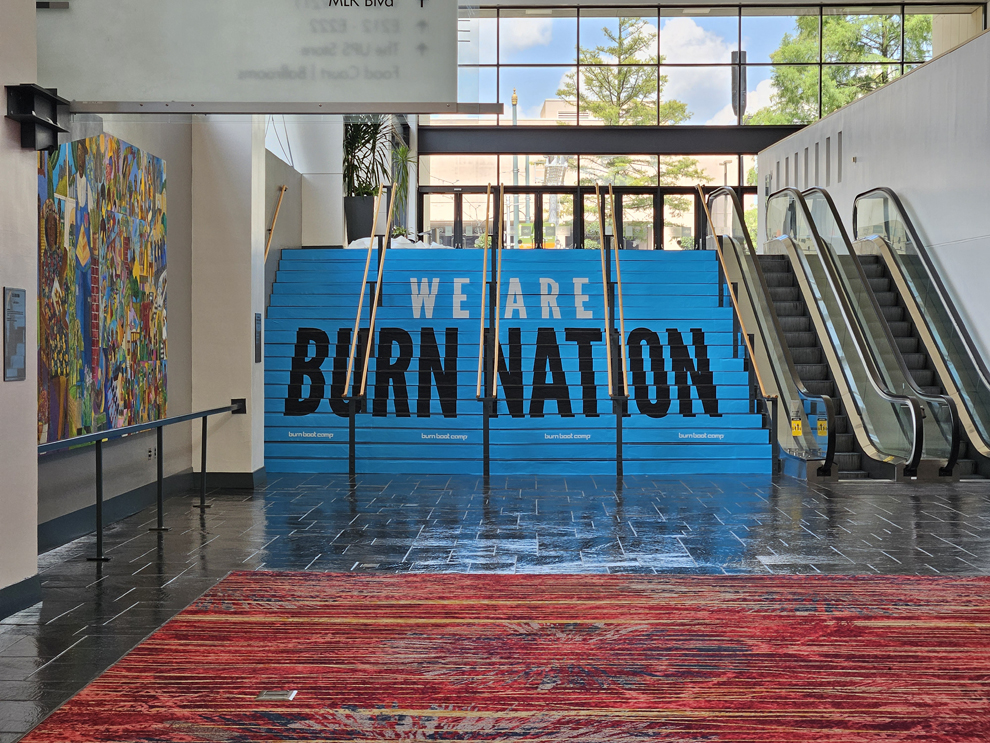
Floor Graphics puts direction, branding, sponsor recognition, or event messaging into the traffic path itself. Flooring type, foot traffic, protective laminate, cleaning chemicals, and intended duration determine whether the application makes sense.
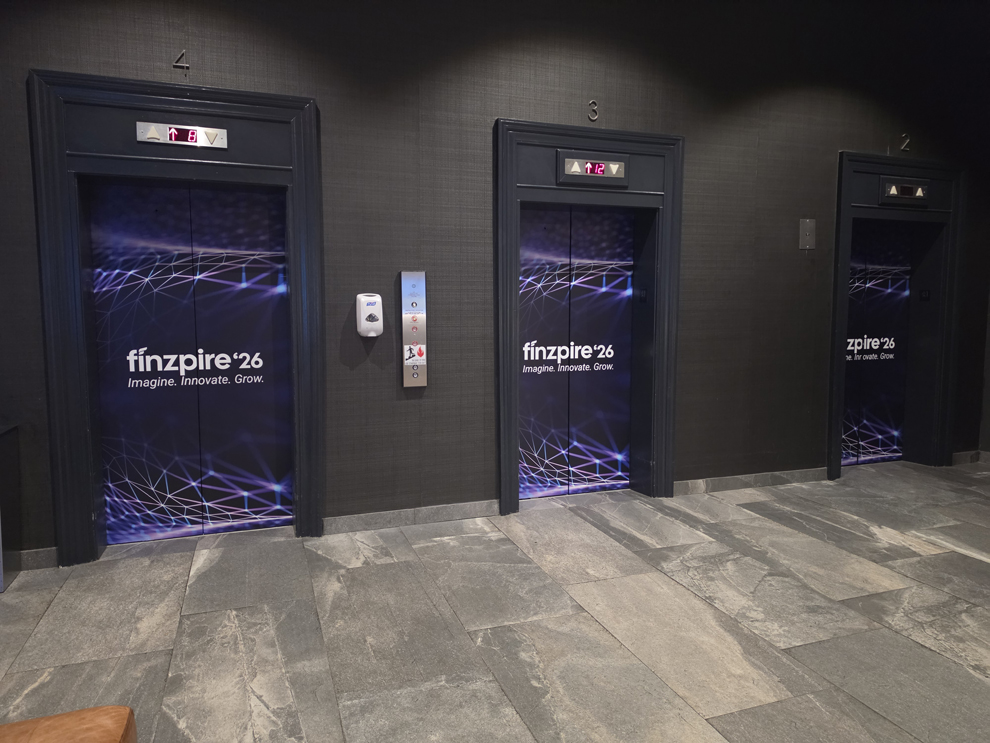
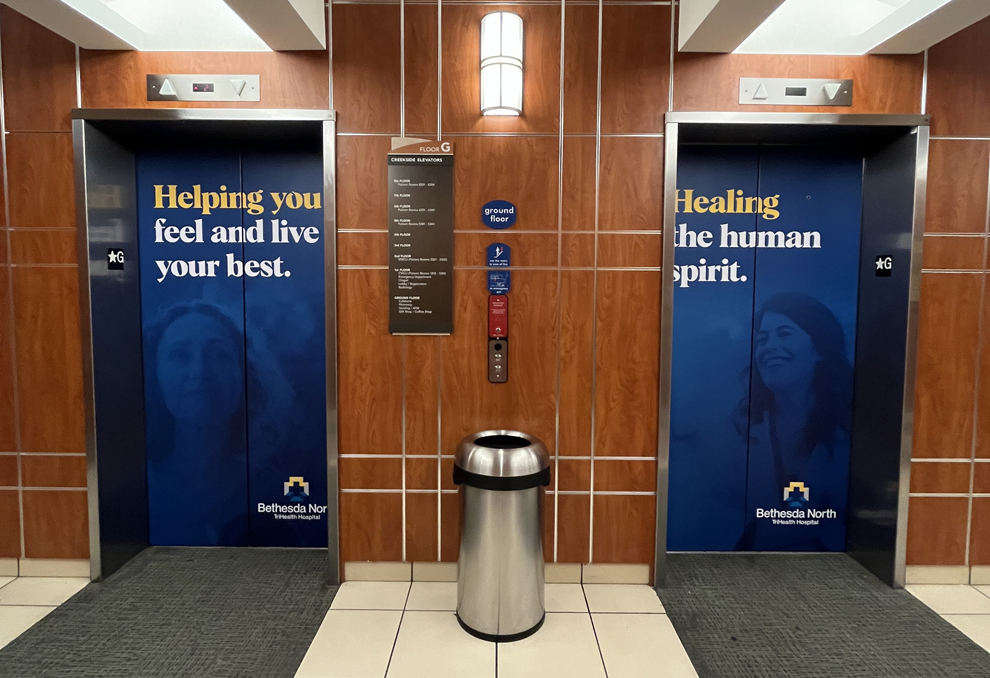
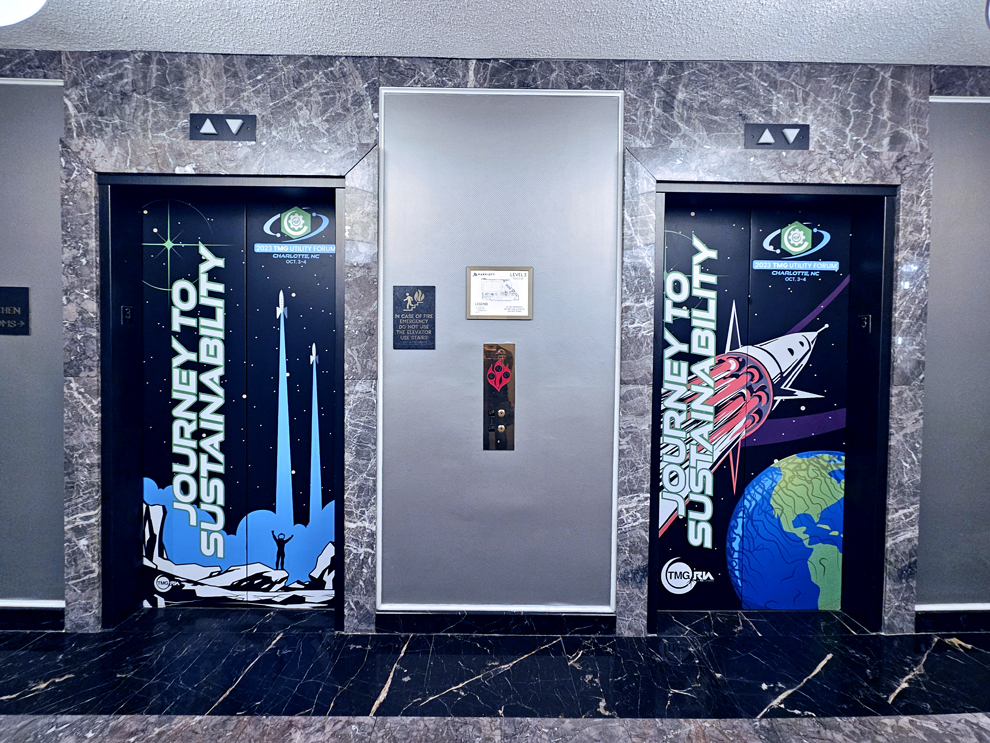
Elevator Wraps turn doors, cab panels, and surrounding transitions into recognizable branded moments. Planning has to account for panel movement, seams, clearances, edge treatment, constant hand contact, cleaning frequency, and scheduled car downtime.
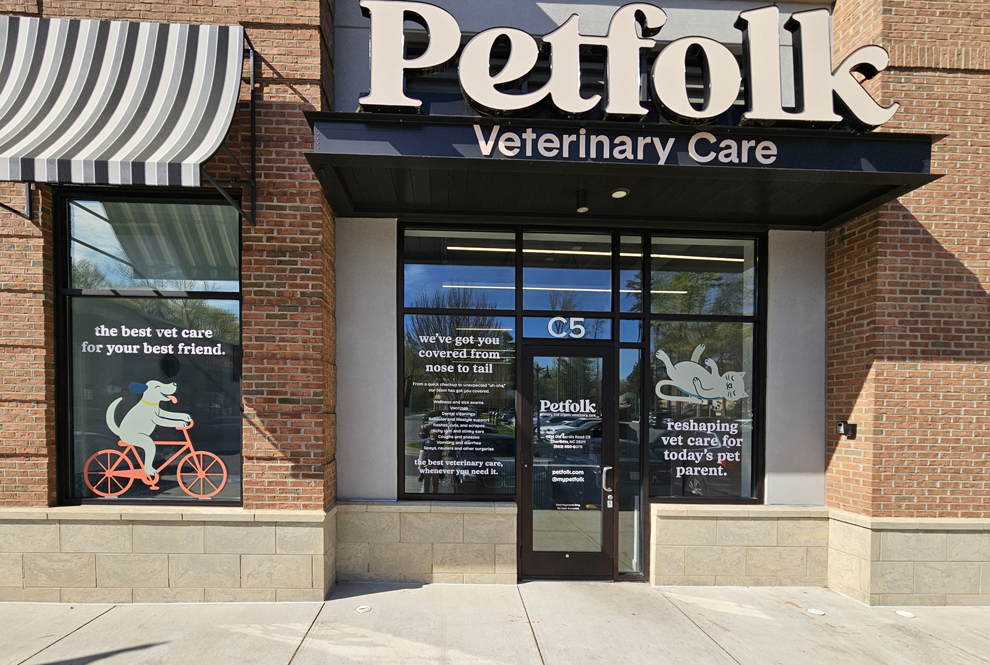
Storefront Graphics coordinates entrance glass, doors, and selected exterior-facing surfaces into a single arrival experience. It becomes the better fit when exterior visibility, dimensional lettering, and interior graphics need to communicate as one program.
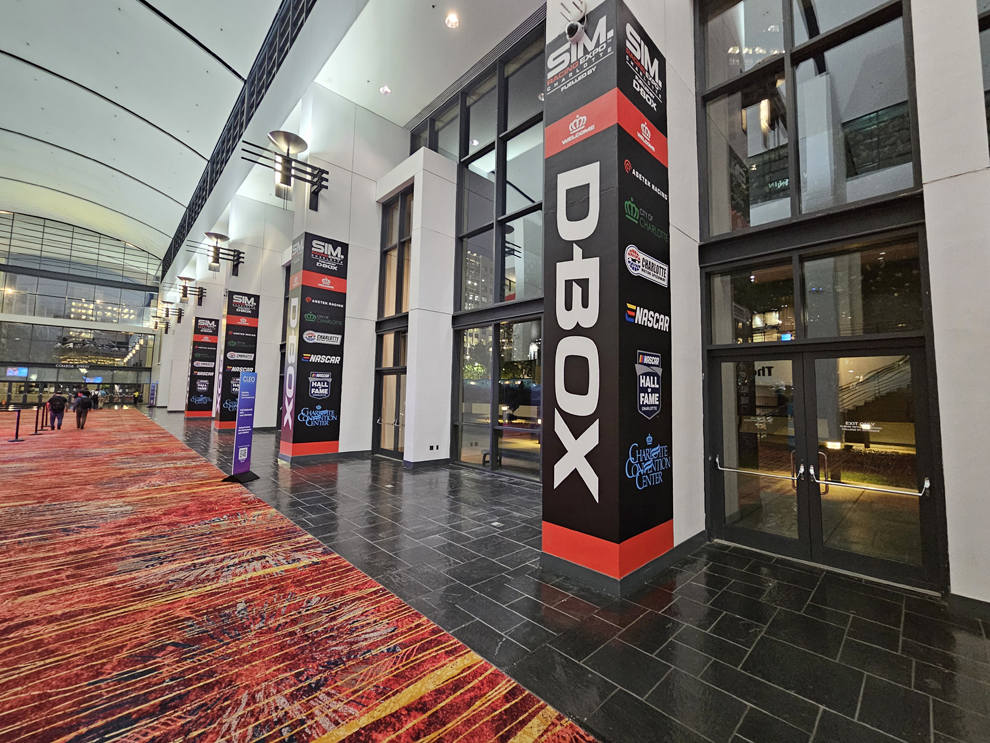
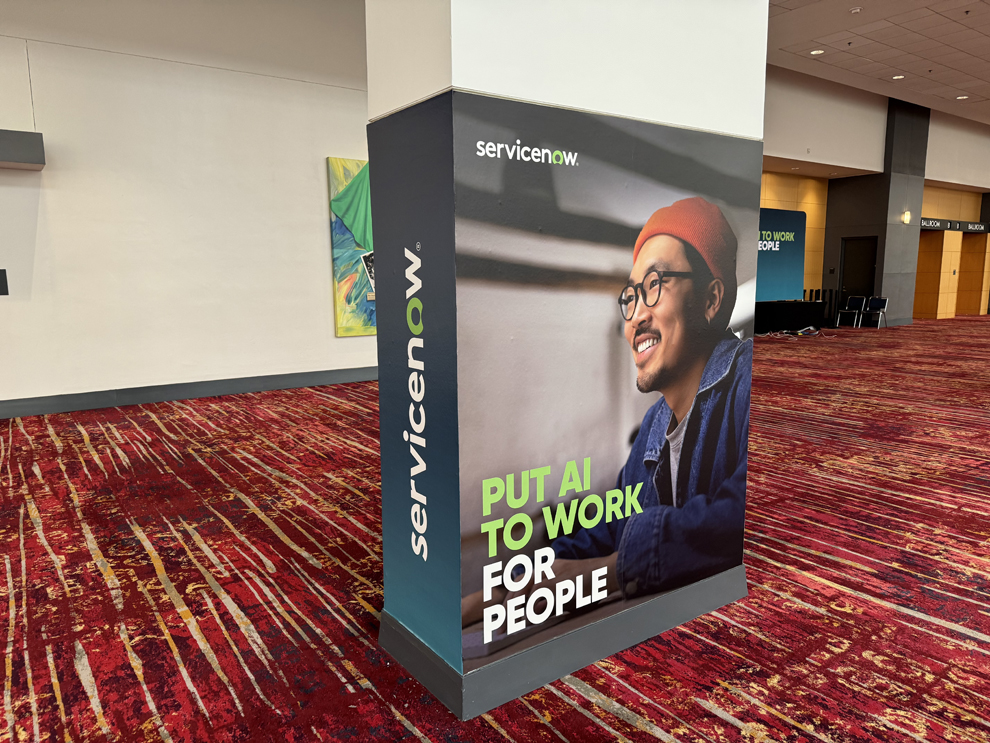
Event Signs & Graphics places adhesive vinyl inside a broader temporary branding system that may include sponsor recognition, directional signage, and displays. Venue rules, load-in windows, installation labor, and removal deadlines govern what is practical.
Gaithersburg clients work with Heritage field resources based at our Washington, DC location, an accessible run up I-270 to Kentlands, Crown, Quince Orchard, Muddy Branch, and the Sam Eig corridor. That team runs discovery meetings at your facility, performs site surveys and field verification, builds the installation plan, completes professional installation, and follows through afterward. Our Arlington, Virginia office adds nearby support when an organization operates on both sides of the Potomac.
Proximity matters for practical reasons. Gaithersburg properties range from life sciences and lab campuses to medical office buildings, suburban office parks, retail and mixed-use centers, schools, and multi-tenant buildings near the Shady Grove Metro station. Each one carries its own certificate of insurance requirements, loading dock rules, badge procedures, elevator reservations, and permitted work hours. Standing in the space tells us more than any floor plan ever will.
Production and fabrication for Mid-Atlantic projects take place at our Waldorf, Maryland facility, which is staffed by production personnel only and is not a sales office or showroom. Organizations with multiple Montgomery County locations can keep one dedicated Project Manager while graphics are adapted site by site, which protects brand standards and messaging across every address.
Environmental graphic design translates a communication need into something physical that belongs in the space. The first question is always behavioral. A conference room may need privacy without feeling sealed off. A long corridor may need better direction for visitors who check in at reception and then lose their bearings. A tenant suite may need identity strong enough to register from the elevator lobby. A three-day annual meeting may need messaging that performs hard and then comes down cleanly.
Some Gaithersburg clients arrive with finished artwork and strictly enforced brand standards. Others want us to develop the graphic approach alongside marketing, facilities, and leadership stakeholders. We also collaborate with architects, interior designers, branding agencies, experiential design firms, and workplace consultants who already own the creative direction.
Then design meets physical reality. Scale, image resolution, sightlines, coverage height, cut and panel requirements, surface transitions, and installation constraints all get resolved before production is finalized. Our scope stays environmental graphic design and related physical branded elements rather than licensed architecture, engineering, or general interior design.
Every adhesive vinyl project that includes professional installation starts with a site survey, and that survey does double duty. It is client discovery, clarifying goals, audience, priorities, and what success looks like on each surface. It is also field verification, capturing dimensions, substrate conditions, existing graphics, access routes, elevator and dock availability, and permitted work hours.
A single dedicated Project Manager takes those survey findings into production planning and equips our installers with the full picture: approved design, materials, sequence, and site conditions, all confirmed before anyone sets foot in your Gaithersburg space.
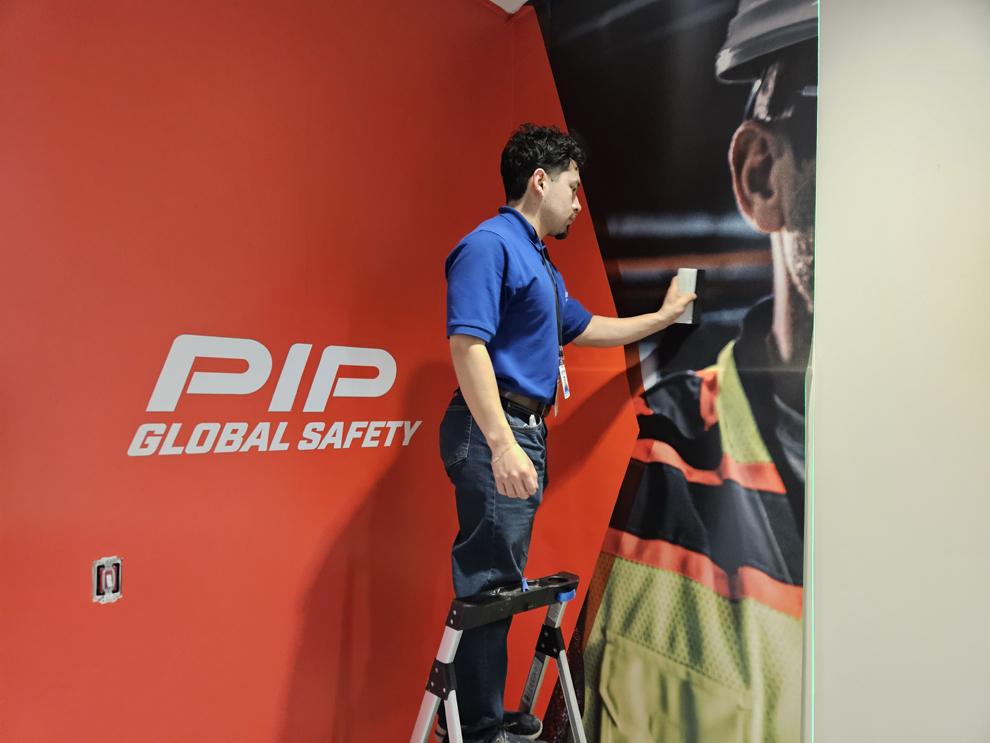
Once we are on site, craftsmanship lives in the details. Our full-time Heritage installers focus on precise placement, clean alignment and registration, controlled seams and edges where an application calls for them, protection of adjacent finishes and flooring, and a tidy work zone that keeps the space usable. We keep talking to you the entire time.
If what we find in the field differs meaningfully from what was documented, our installer pauses, reports the condition, and the Project Manager decides the right next move instead of forcing an application that no longer fits.
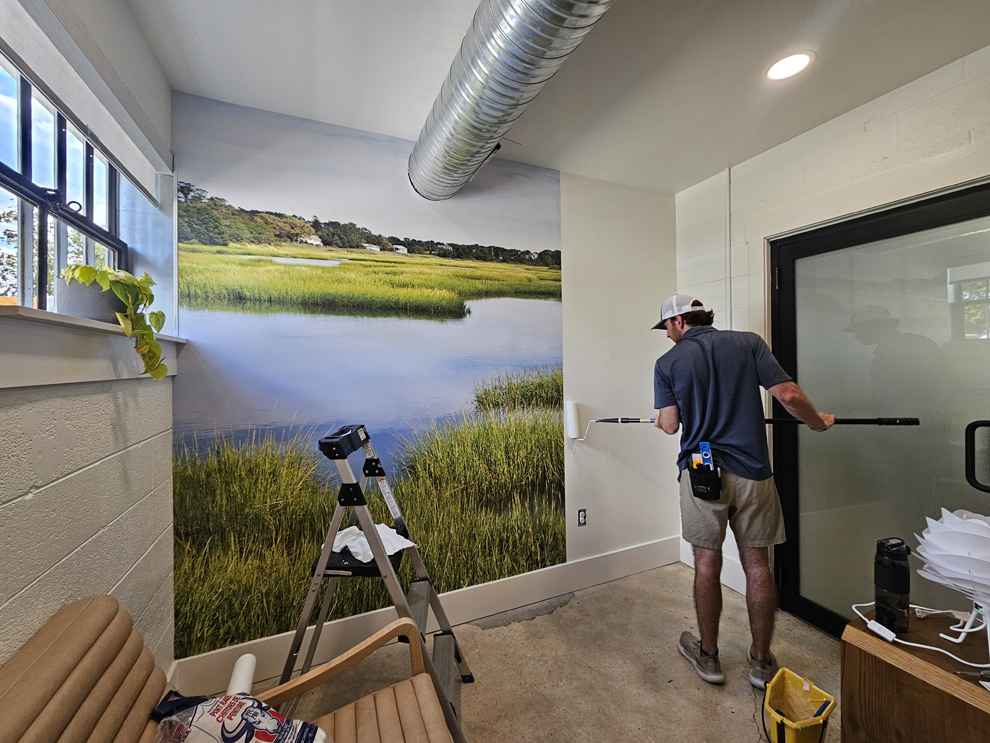
A wall graphic can only perform as well as the surface beneath it. Drywall needs to be sound, smooth, clean, dry, and properly repaired, with primer and paint applied correctly and the finish coat fully cured. Fully cured and dry to the touch are two different things. Paint that is still curing can continue to outgas, and those gases or vapors get trapped under vinyl applied too early, which leads to bubbles, blisters, lifting, or adhesion that fails ahead of schedule. Moisture, surface contamination, weak paint bonding, and the wrong material choice produce similar results.
Roughly four weeks is a workable planning assumption for many paints, though the paint manufacturer's cure requirements and the conditions inside your building always govern the actual timing.
Adhesion testing tells us how vinyl reacts to the visible paint layer. What it cannot confirm is the hidden bond between paint, primer, and drywall. Standard installation occasionally requires lifting and repositioning material, and if paint peels or releases, we stop rather than make the wall worse. The client or property owner arranges and covers repair, priming, repainting, and full cure, and we return once the new paint is ready. Walls that are prepared properly stay a reliable foundation for adhesive graphics.
Planning is where the desired outcome meets what can realistically be built and installed. We review scope, audience, priorities, phasing, the target date, site readiness, stakeholder approvals, surface conditions, and anticipated overall project investment, then flag the decisions and information still open.
Scale and timing get evaluated together. Many of our projects that include production and professional installation land between $10,000 and more than $200,000. When the calendar is compressed, your Project Manager weighs approvals, material availability, building access, site readiness, and our production and installation capacity before recommending what is genuinely achievable, and offers an alternative route when the original plan is not.
Project fit also carries an investment threshold. To protect the responsiveness and coordinated support our clients rely on, we are accepting new workplace interior and event environment projects in Gaithersburg, MD and throughout the Mid-Atlantic with an anticipated overall project investment of at least $6,000.
For select exterior-facing window or wall graphics, we assess physical suitability. Sign permits and property approvals remain the responsibility of the client, the property owner or manager, or the general contractor.
Tell us what your graphics need to accomplish and when they need to be done. Use Get Started Now to share your Gaithersburg project location, target date, anticipated overall investment, photographs, approximate dimensions, artwork or brand standards, intended duration, and any building or access requirements you already know about. If the work supports a suite opening, an annual meeting, an office relocation, an executive visit, or another immovable date, tell us up front. You do not need to have every material or field question answered first. One dedicated Project Manager will review fit, timing, and next steps with you.
Frosted vinyl and privacy film break up direct sightlines while letting light keep traveling through the space. Full coverage is rarely the answer. A banded treatment, a repeating pattern, a logo field, or partial coverage placed at seated and standing eye level usually delivers the separation you are after. We look at how the room gets used, how open the entrance should feel, cleaning routines, and brand character before recommending coverage height and density.
Properly prepared painted walls, glass, doors, select floors, elevator surfaces, display panels, and other compatible substrates are all fair game for evaluation. Suitability comes down to more than whether vinyl will stick. Paint condition, texture, glass coatings, moisture, panel movement, foot traffic, cleaning chemicals, exposure, and the intended service life all determine whether a particular vinyl and adhesive system belongs on that surface.
Because paint that feels dry can still be curing. While it cures, paint keeps outgassing, and those gases or vapors become trapped under vinyl applied too soon, which can cause bubbles, blisters, lifting, or early adhesion failure.
We schedule installation around the paint manufacturer's full-cure requirements, not around how dry a wall feels. About four weeks is a sensible planning assumption for many paints, but the real timeline depends on the paint and primer system, film thickness, temperature, humidity, ventilation, wall preparation, and manufacturer guidance.
Certain frosted, decorative, and privacy products for glass are positioned using a wet-application method. Even after our installer removes as much solution as possible, a thin amount of moisture can linger between the glass and the material, creating haze, streaking, cloudiness, or small pockets that disappear as the installation dries.
That dry-out window runs anywhere from a few days to several weeks depending on the product, the glass, temperature, humidity, and sun exposure. If you have a scheduled tour, board meeting, photo shoot, or opening on the calendar, tell us during planning. Wet application is not used on every window graphic.
Our installer stops. Adhesive vinyl is sometimes lifted and repositioned during normal professional installation to achieve correct alignment, and if the paint and primer are not securely bonded to the drywall, that routine step can pull paint off the wall.
Instead of pressing on and enlarging the damage, the installer documents the condition and alerts the dedicated Project Manager, who walks you through what was found so your team or property representative can arrange repair. The client or property owner handles and pays for the required repair, priming, repainting, and full cure before we come back. Because that sequence eats time, assessing walls early matters most when graphics support a fixed date.
The site survey trades assumptions for verified facts. We confirm dimensions, substrate conditions, existing graphics, access routes, work-hour restrictions, and other field realities while discussing what you want the graphics to achieve. Those findings stay connected to one dedicated Project Manager, the production plan, and the installers who will finish the work in Gaithersburg.
Absolutely. Event branding, seasonal campaigns, sponsor recognition, temporary directional graphics, window messaging, and floor applications are everyday uses of adhesive vinyl. We select material, adhesive, and any protective laminate based on the surface, intended duration, appearance, traffic, exposure, and removal plan so the graphics hold up for exactly as long as you need them. Painted walls still require proper preparation and realistic removal planning, but time-limited work is standard in this category.
No. We do not offer installation-only service for client-supplied signs or graphics. Installation quality is largely decided before anyone picks up a squeegee, through measurement accuracy, material and adhesive selection, print quality, fit, and the ability to reprint quickly if something needs correcting. Keeping all of that inside our engagement is what lets us stand behind both the schedule and the finished result.
New workplace interior and event environment projects in Gaithersburg, MD and the Mid-Atlantic currently require an anticipated overall project investment of at least $6,000. That number reflects your anticipated investment in the complete Heritage-managed scope, not the price of a single graphic or component.
Think of the threshold as a starting point for project fit rather than a typical project size. Many of our projects involving production and professional installation range from $10,000 to more than $200,000, with the actual figure shaped by scope, environmental graphic design, materials, production, fabrication, surface conditions, access, and professional installation. Sharing your goals, location, timing, and anticipated investment through Get Started Now lets us evaluate fit and recommend a next step.
Yes, and the earlier the better. Clients regularly get handed an opening, an executive visit, a move, or a leadership directive with far less lead time than the scope deserves. We start by separating what truly must be complete by the date from what can follow, then assess approvals, artwork readiness, material availability, building access, and production and installation capacity.
One dedicated Project Manager coordinates environmental graphic design, production, fabrication, scheduling, and professional installation so every remaining day gets used with intent. If the full original scope cannot responsibly be delivered by your date, the alternatives typically involve phasing the work, adjusting an application or material, simplifying part of the scope, or completing the highest-visibility areas first. We would rather build a solution that actually works than promise something we cannot responsibly deliver.
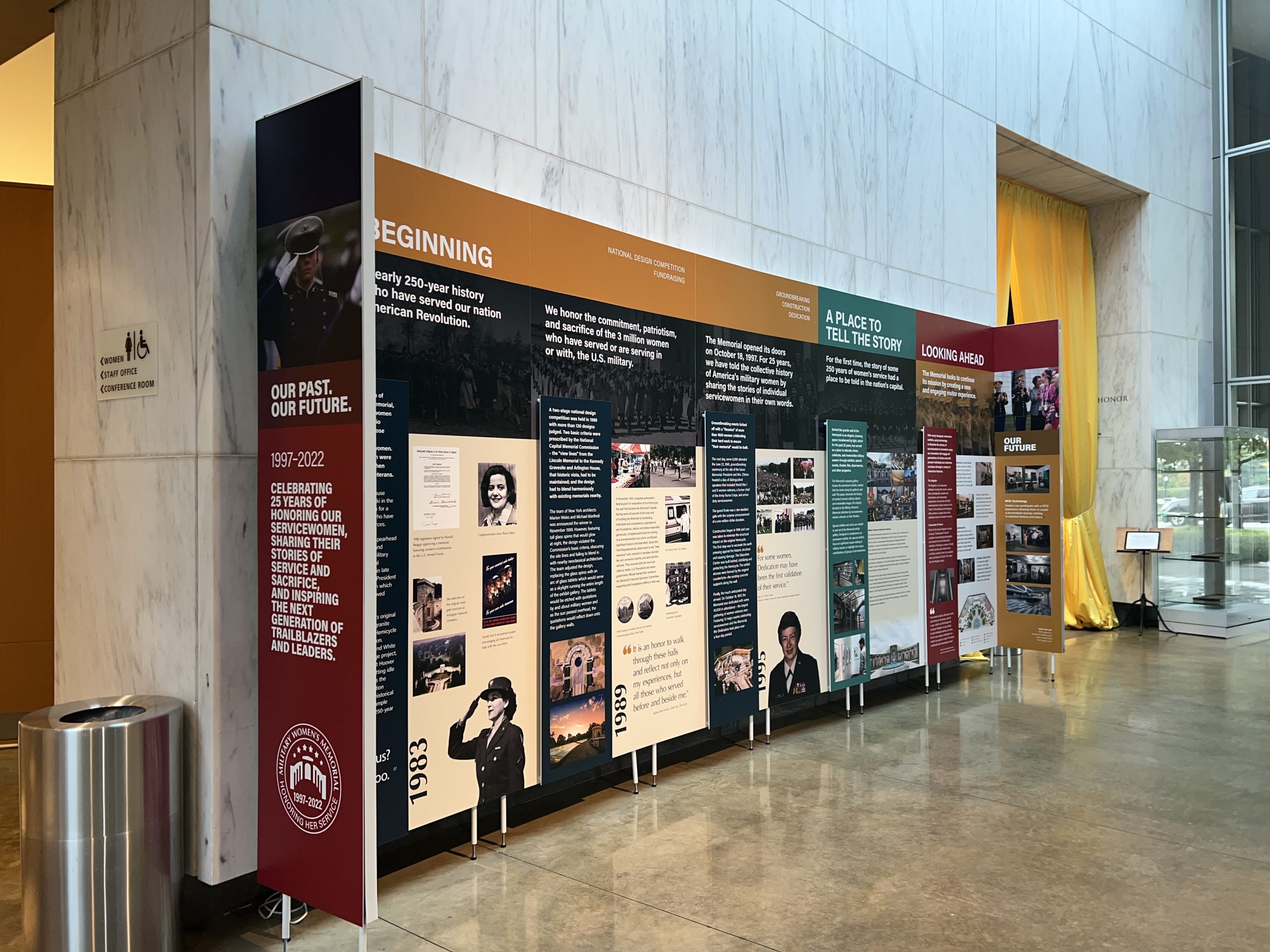
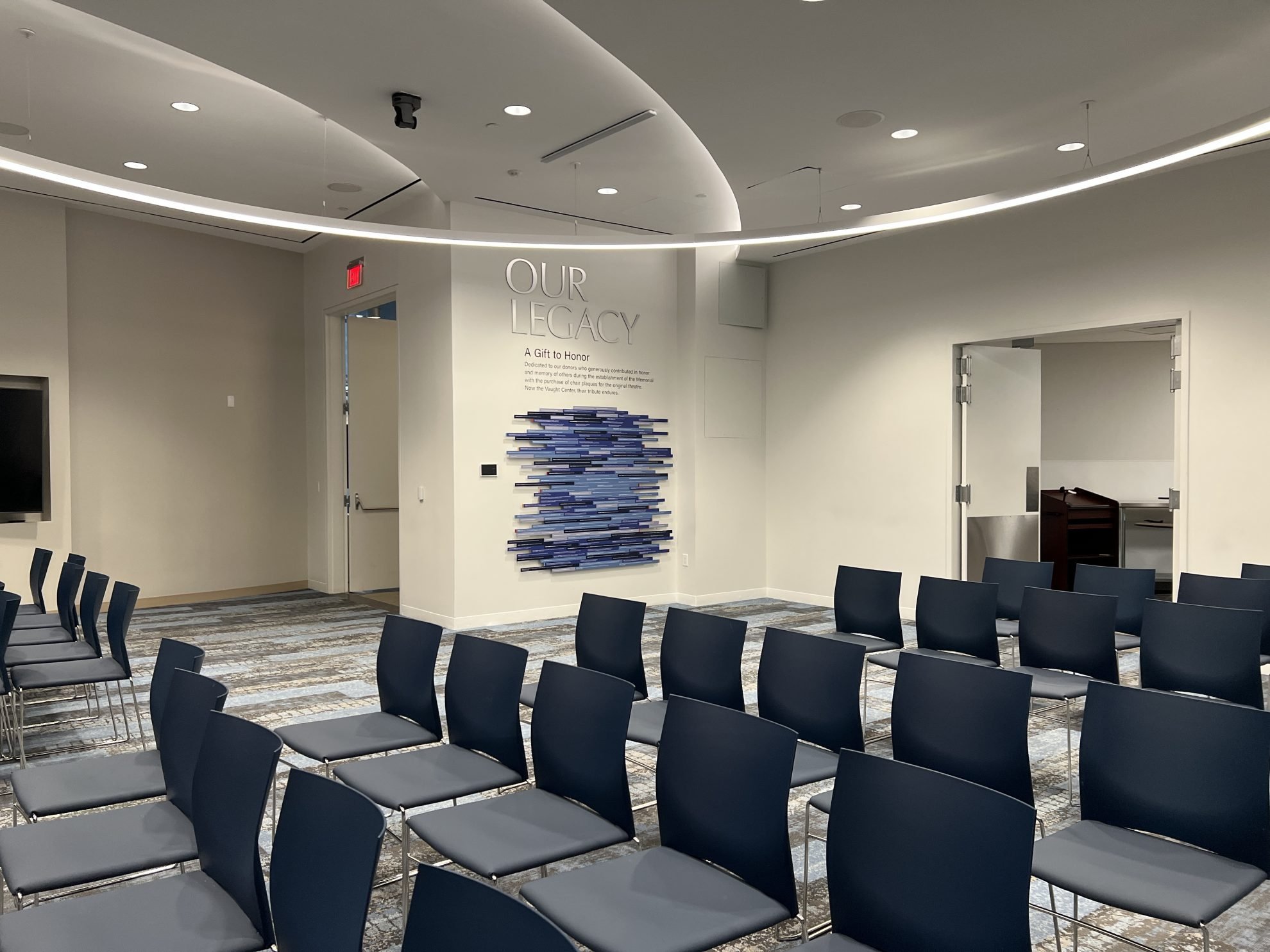
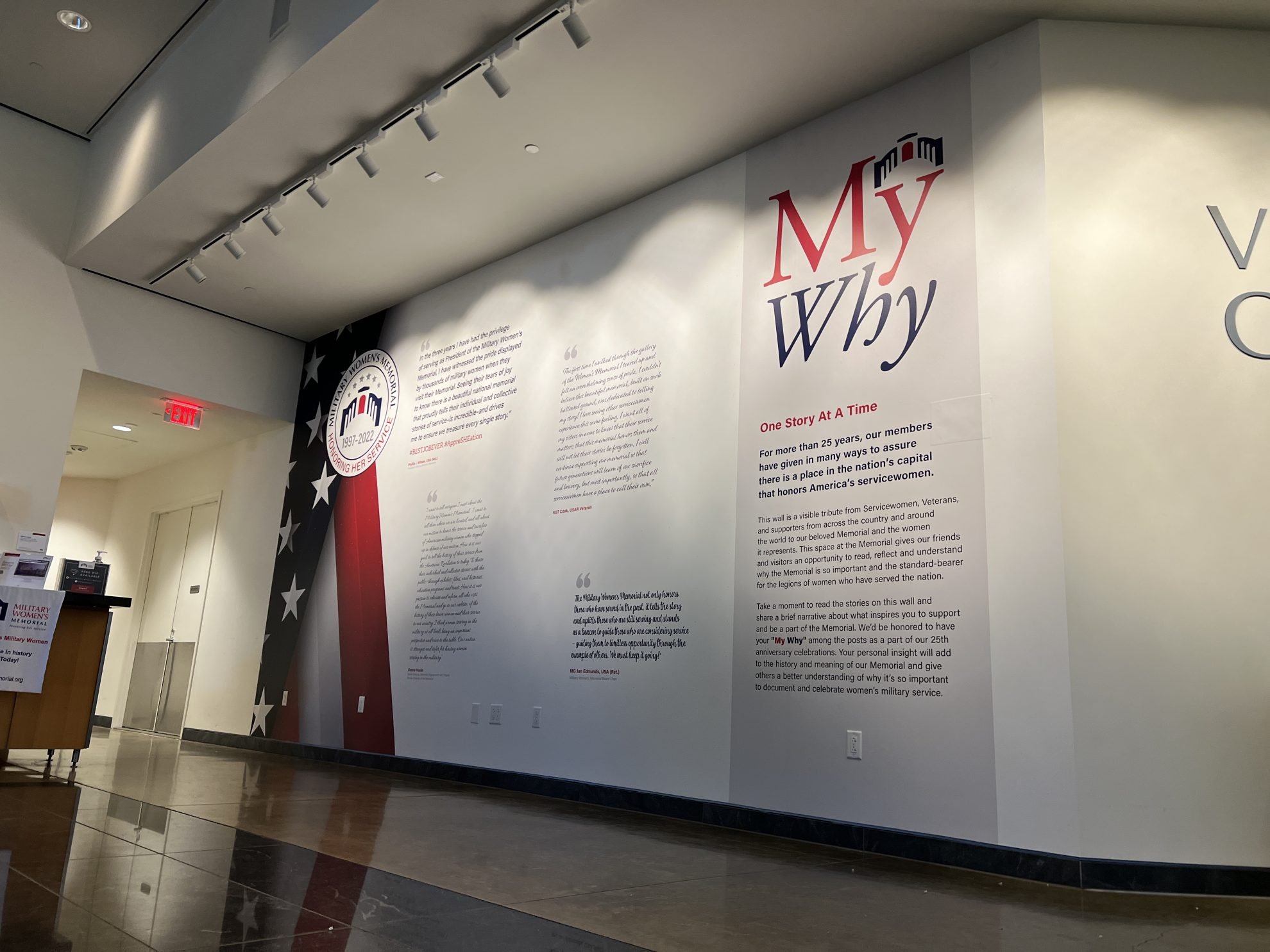
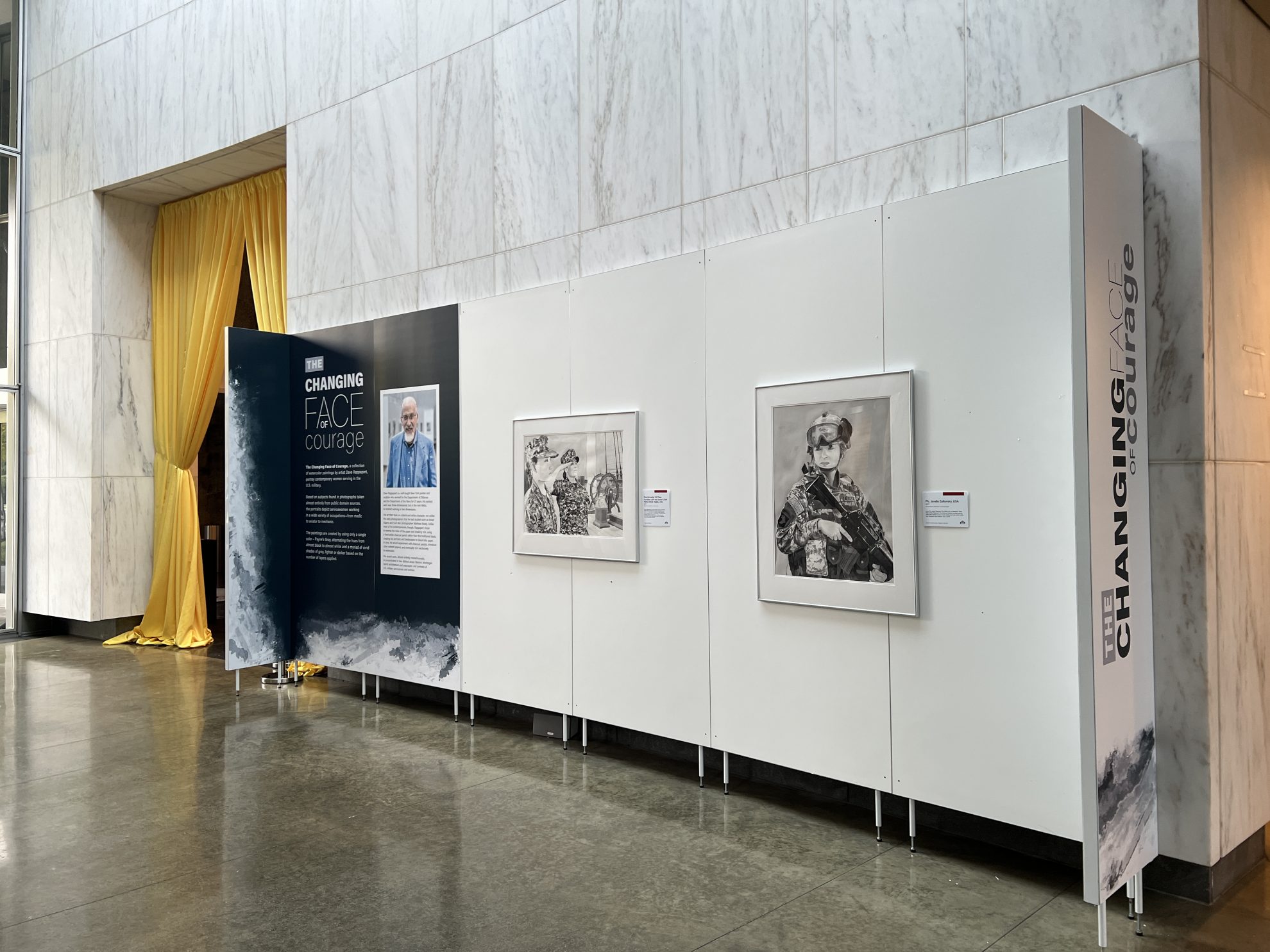
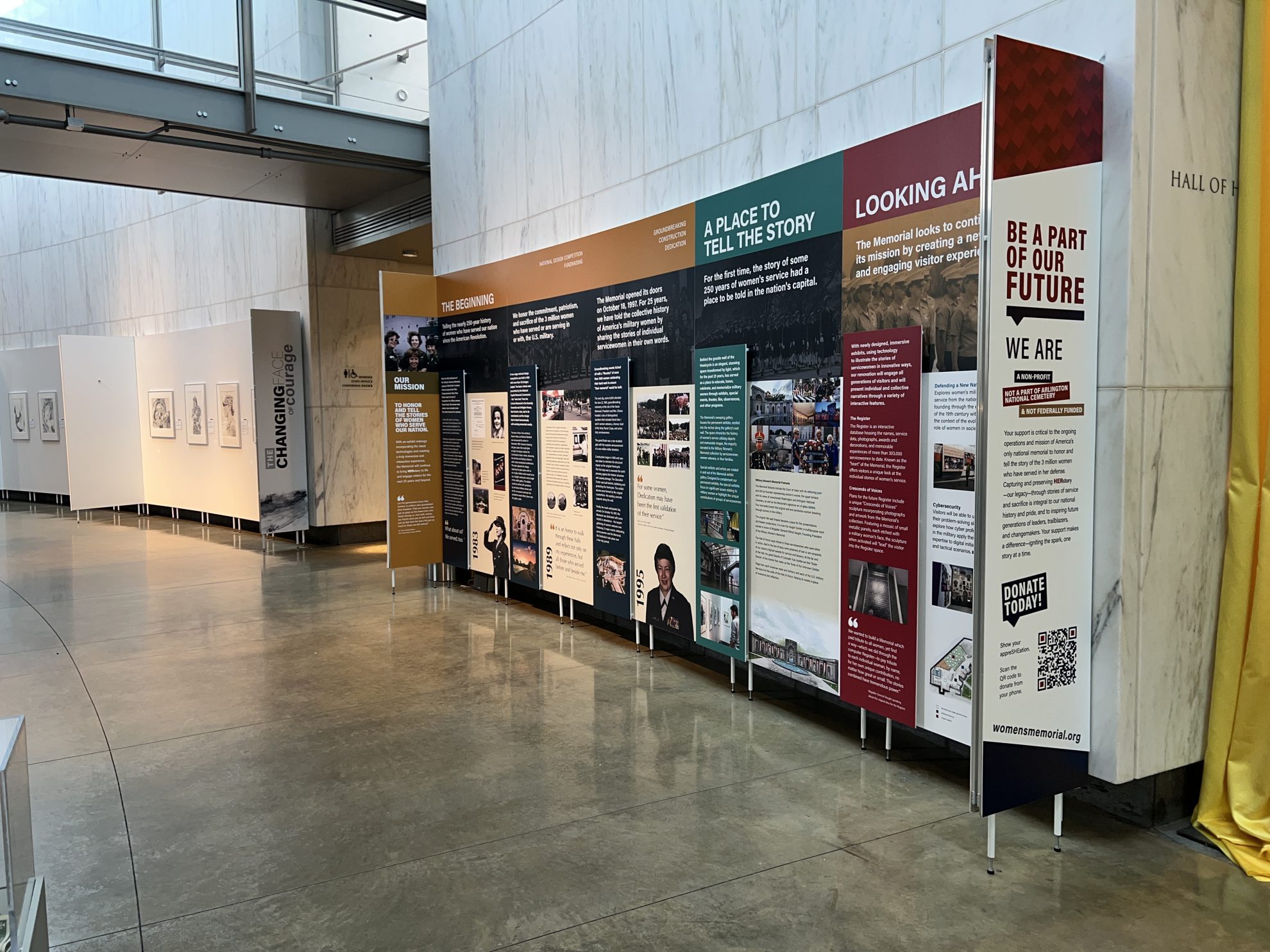
Heritage Signs & Displays created new museum signage for the Military Women’s Memorial in Arlington, VA. The project included custom signs, wall wraps, dimensional letters, and standoff-mounted displays to honor the legacy of U.S. servicewomen and the donors who supported the memorial. The updated interior features impactful designs, including a "Our Legacy" wall display and panels showcasing historical contributions and artwork, creating a transformative tribute to women in the U.S. Armed Forces.
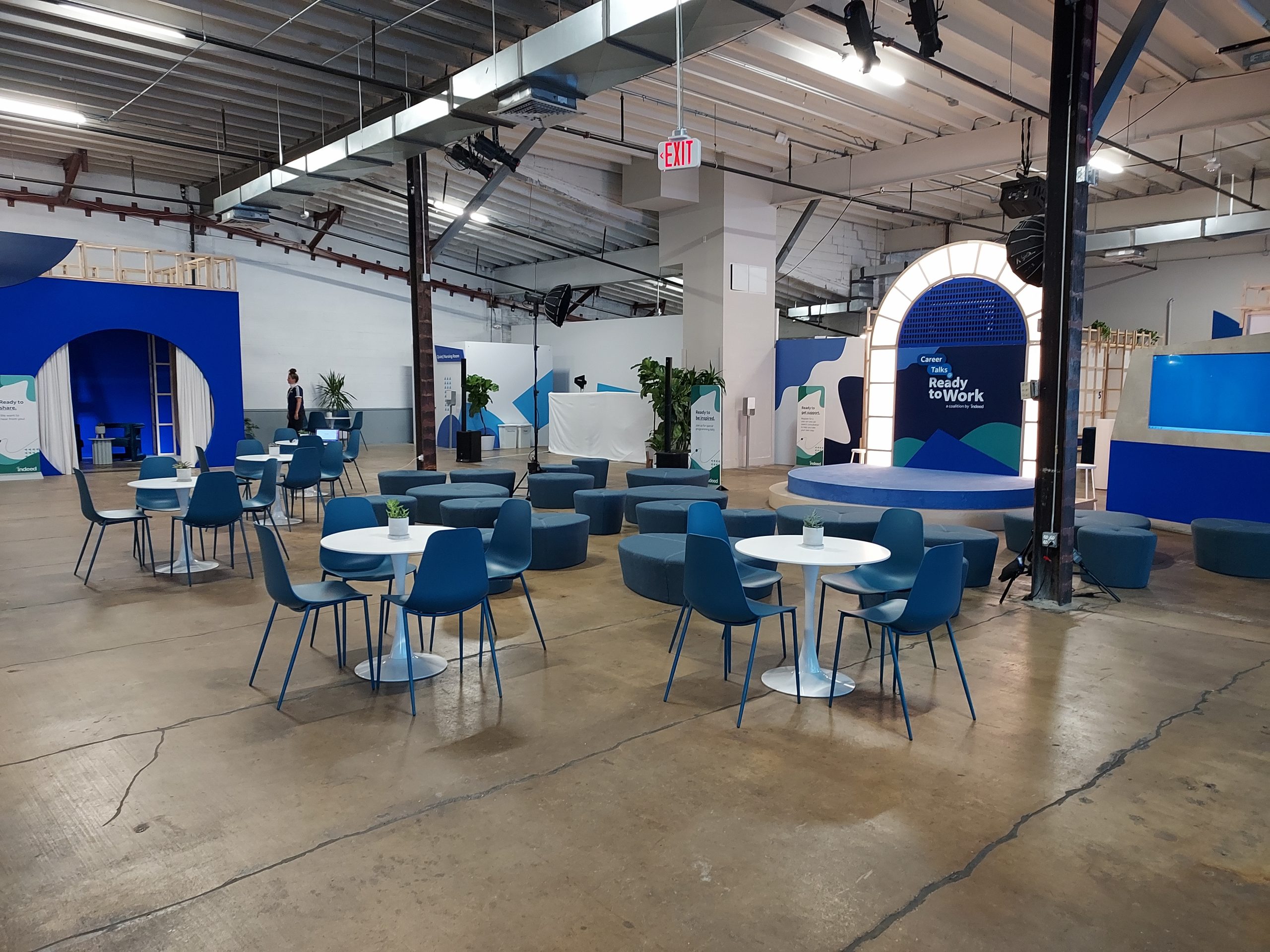
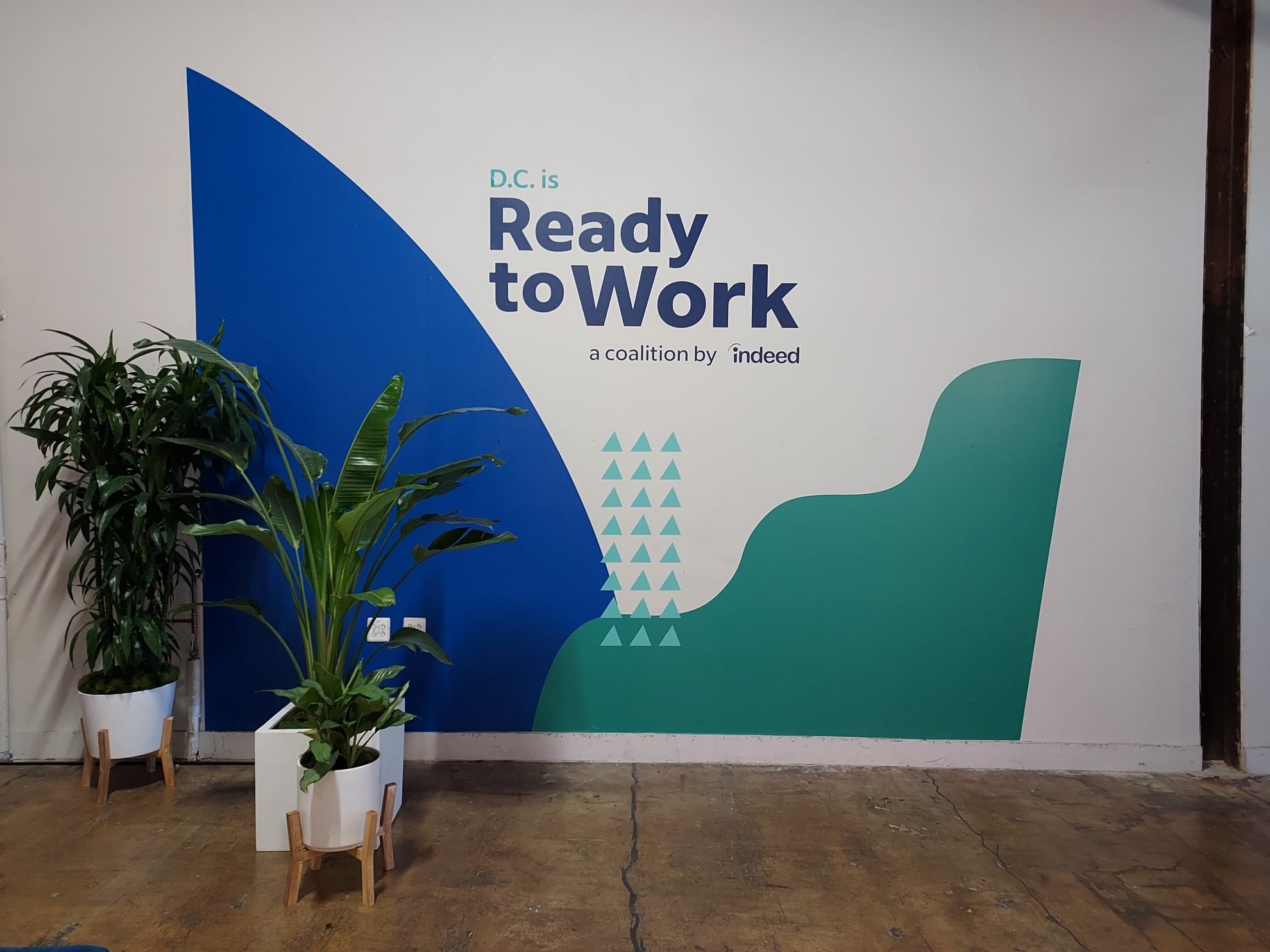
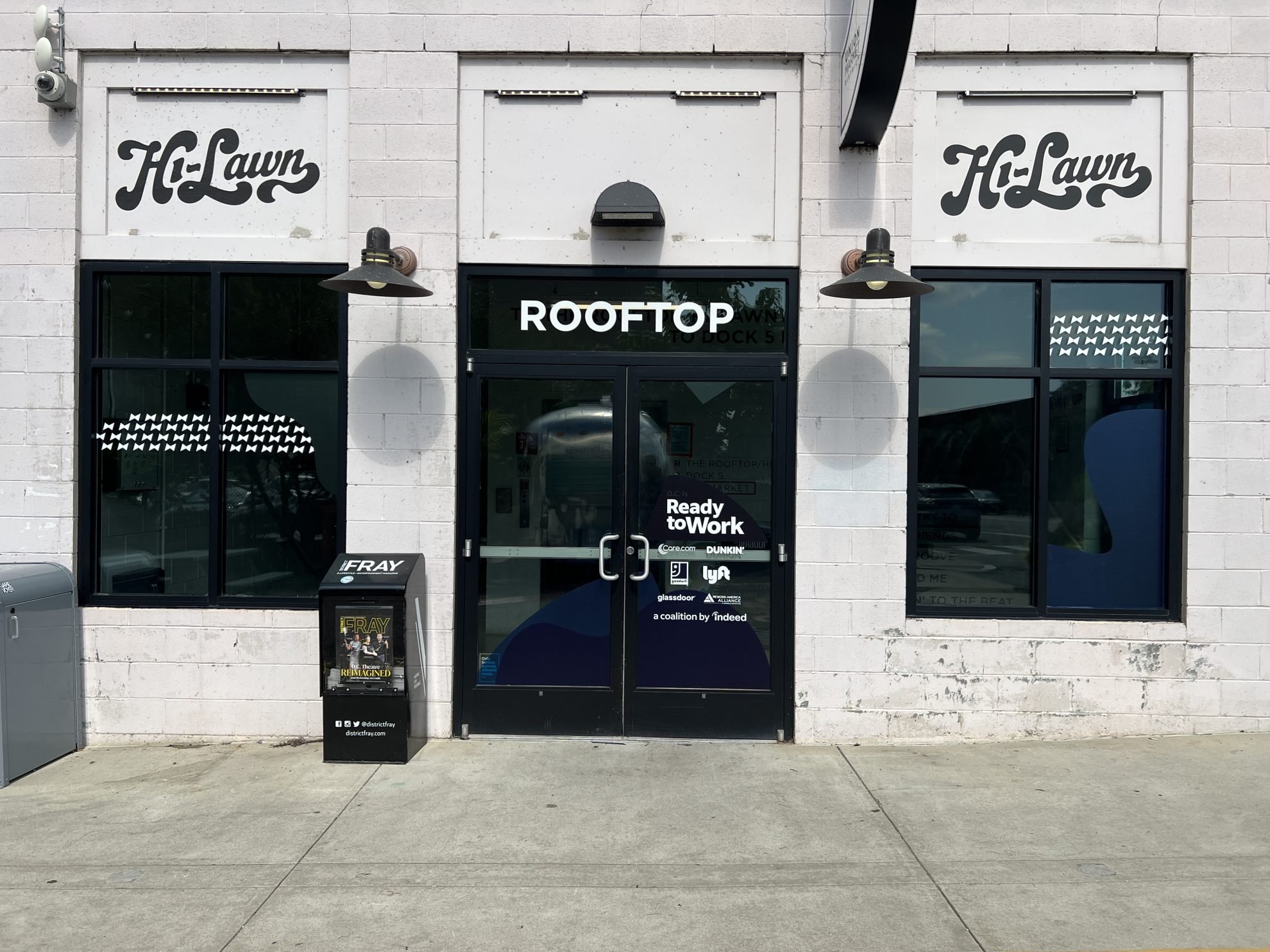
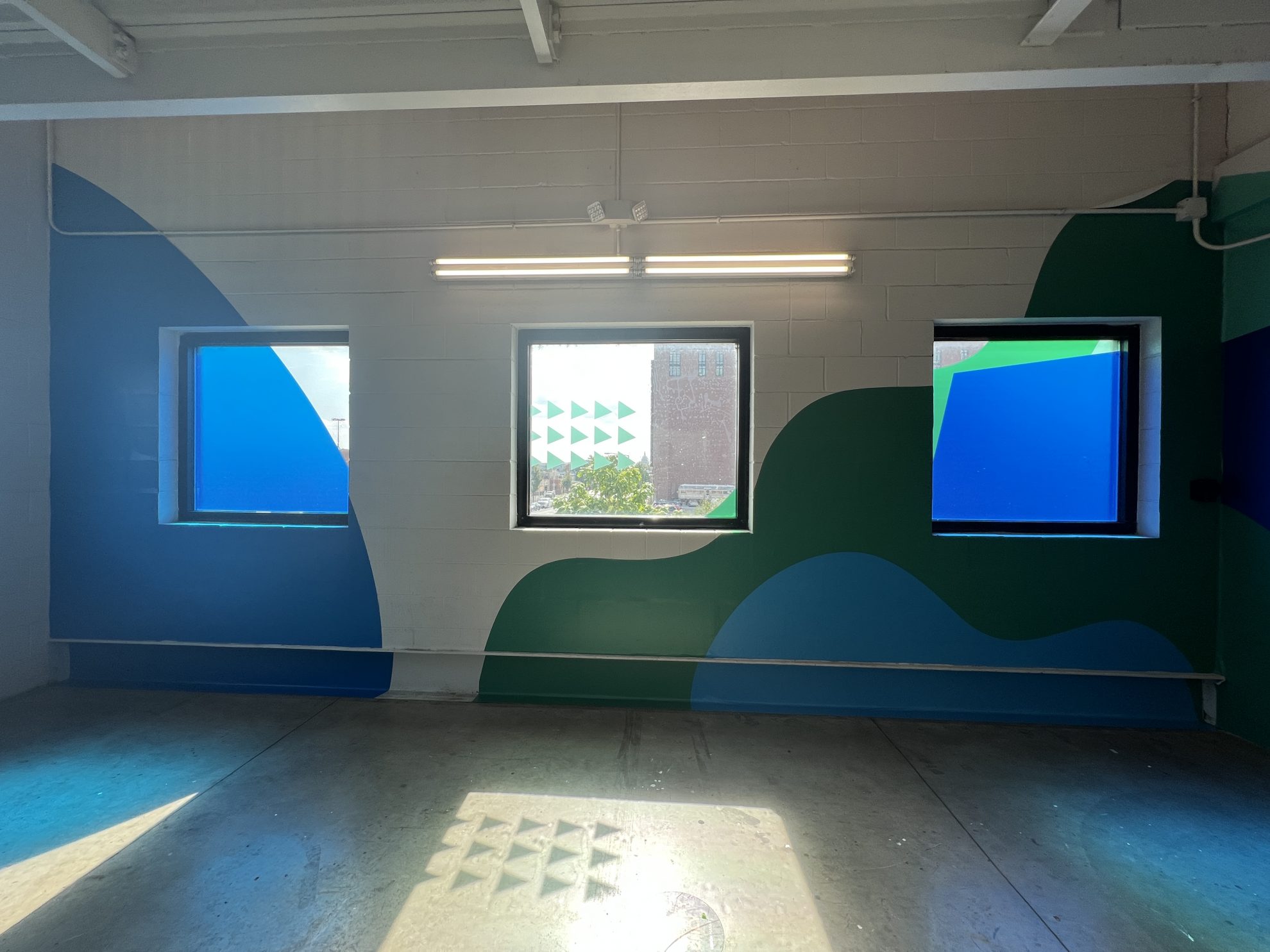
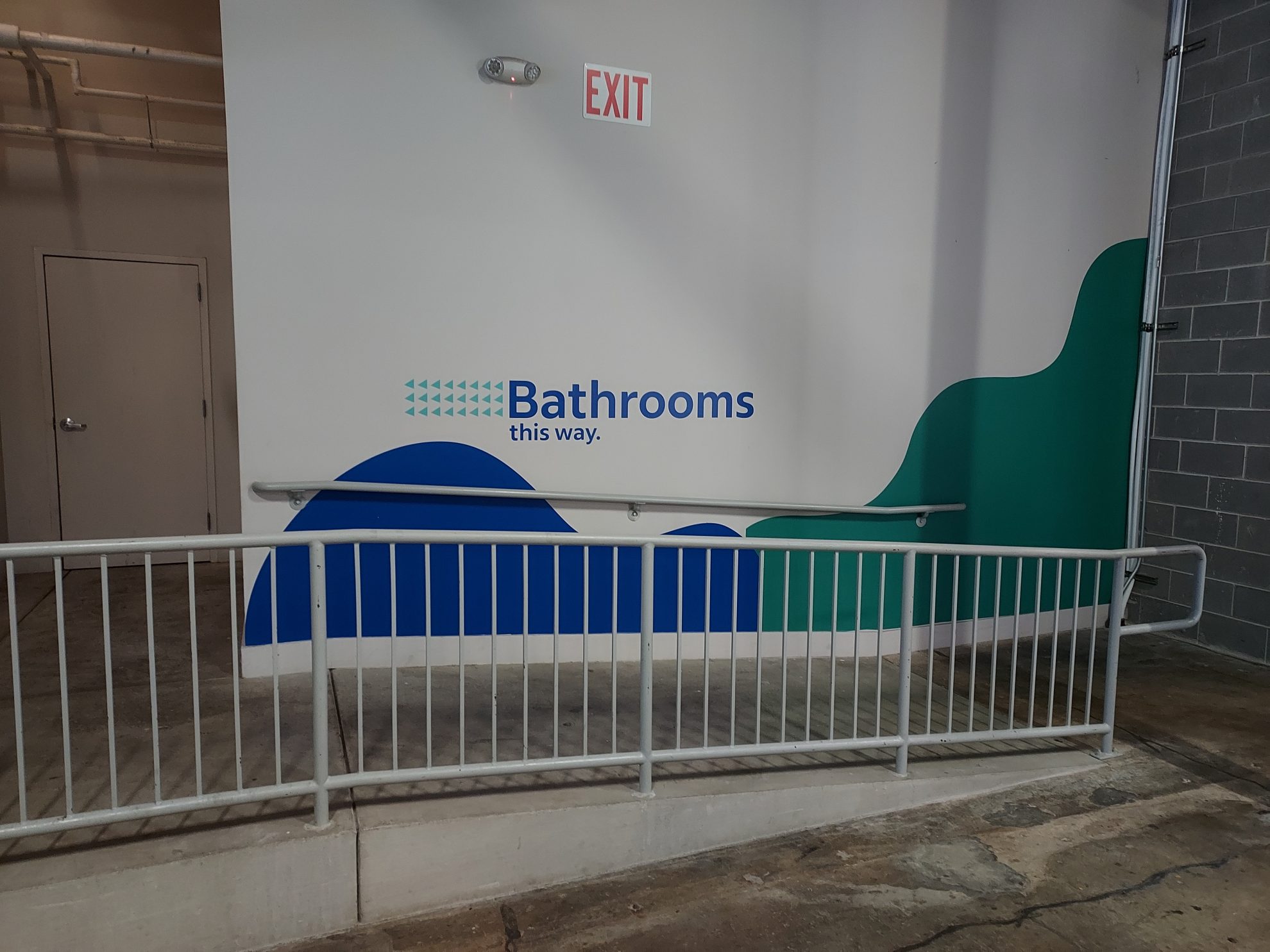
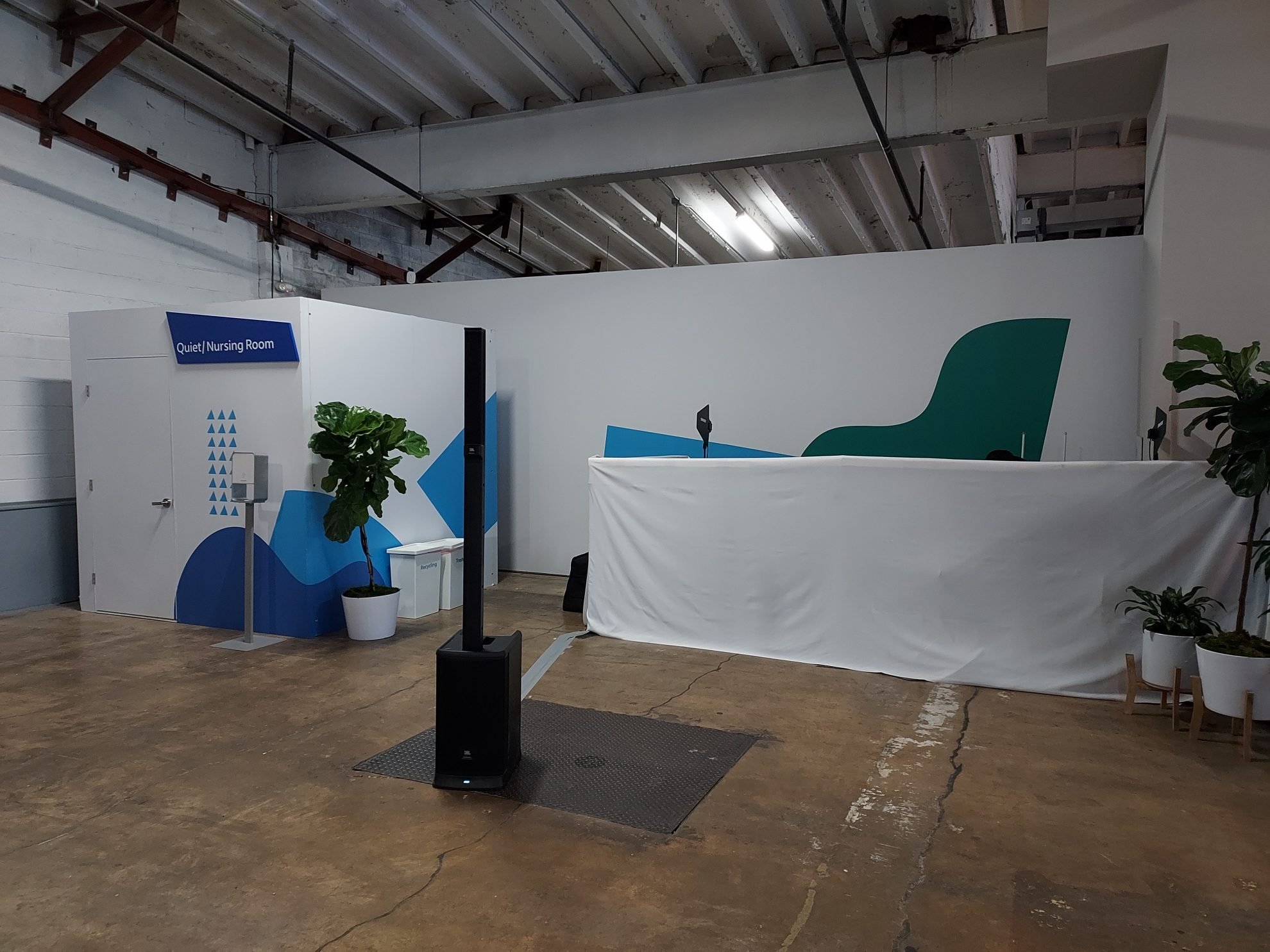
Heritage Signs & Displays' collaboration with The Gathery to brand Union Market in Arlington, VA, for Indeed's "Ready to Work" job fair. The project included custom event displays, wall graphics, window graphics, and wayfinding signs, creating an immersive and visually appealing environment. The branding enhanced the venue, reflected the event's mission, and provided a seamless experience for attendees.