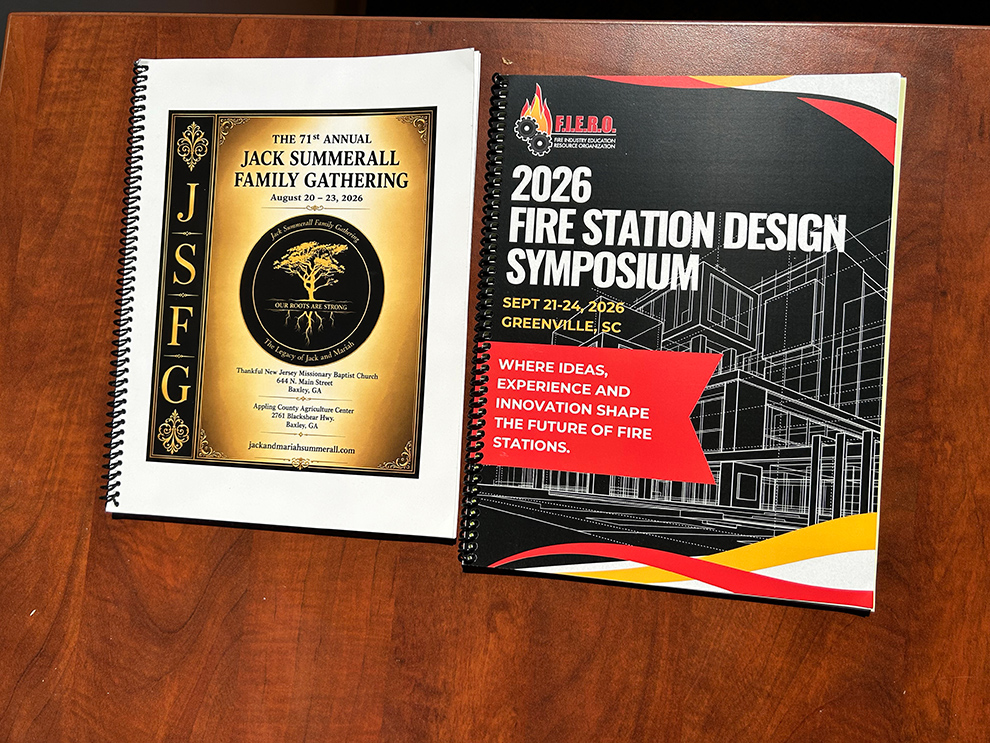
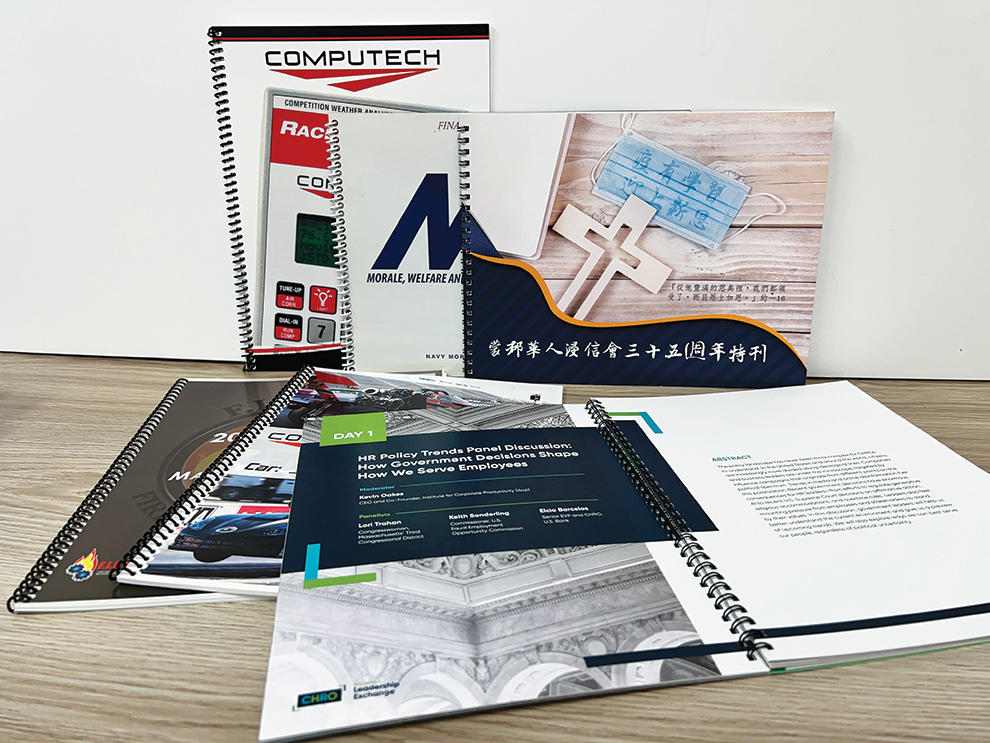
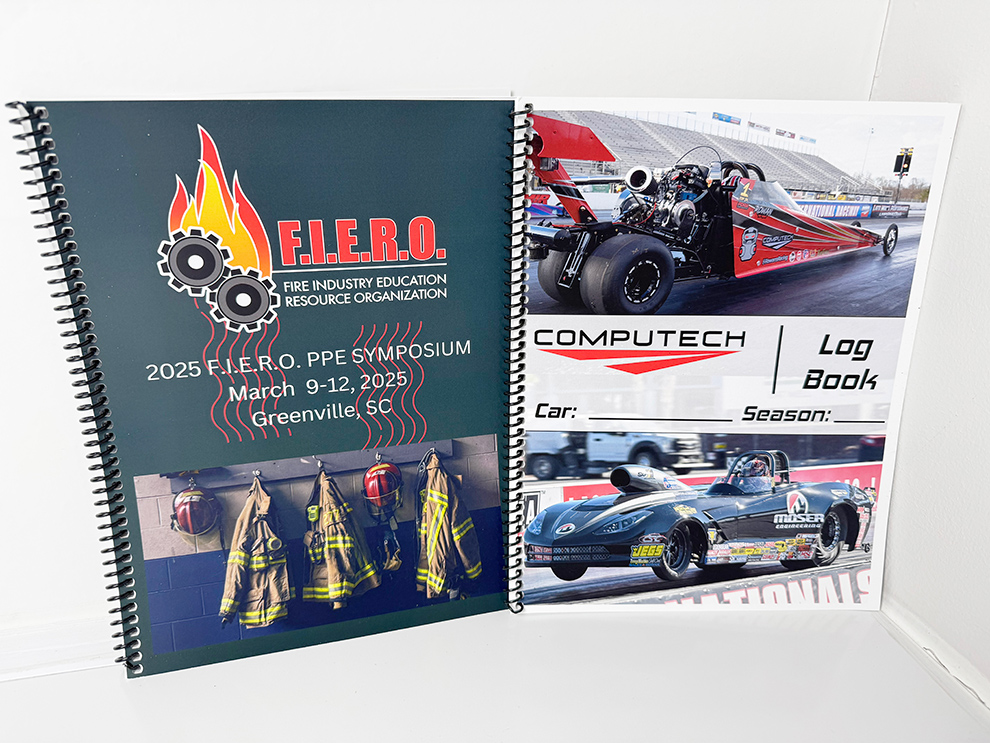
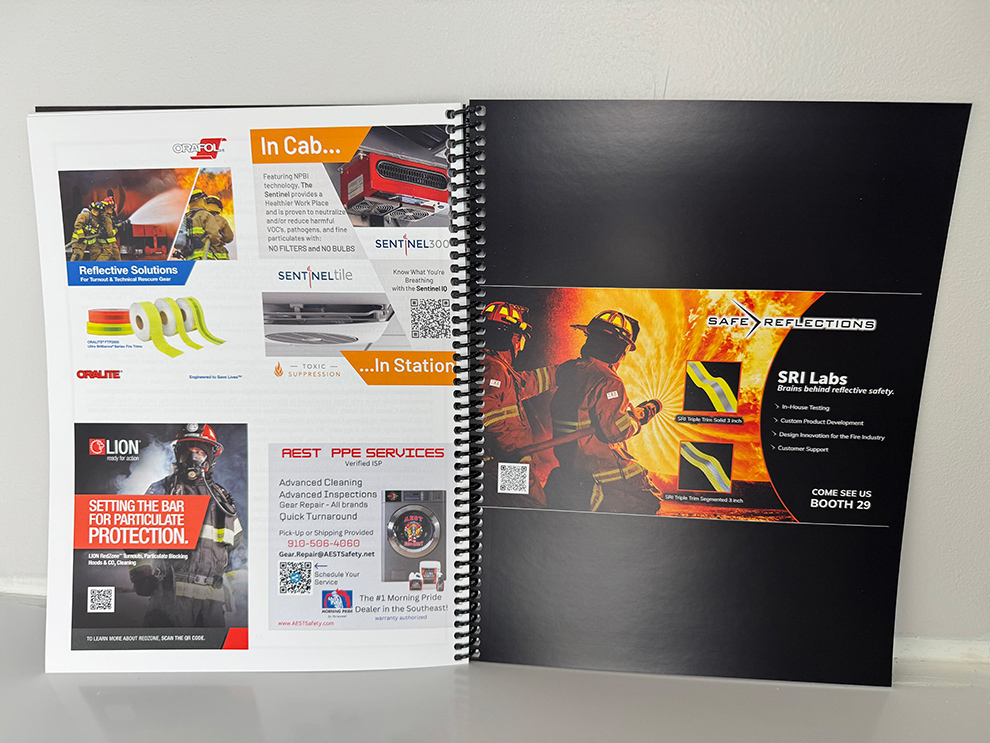
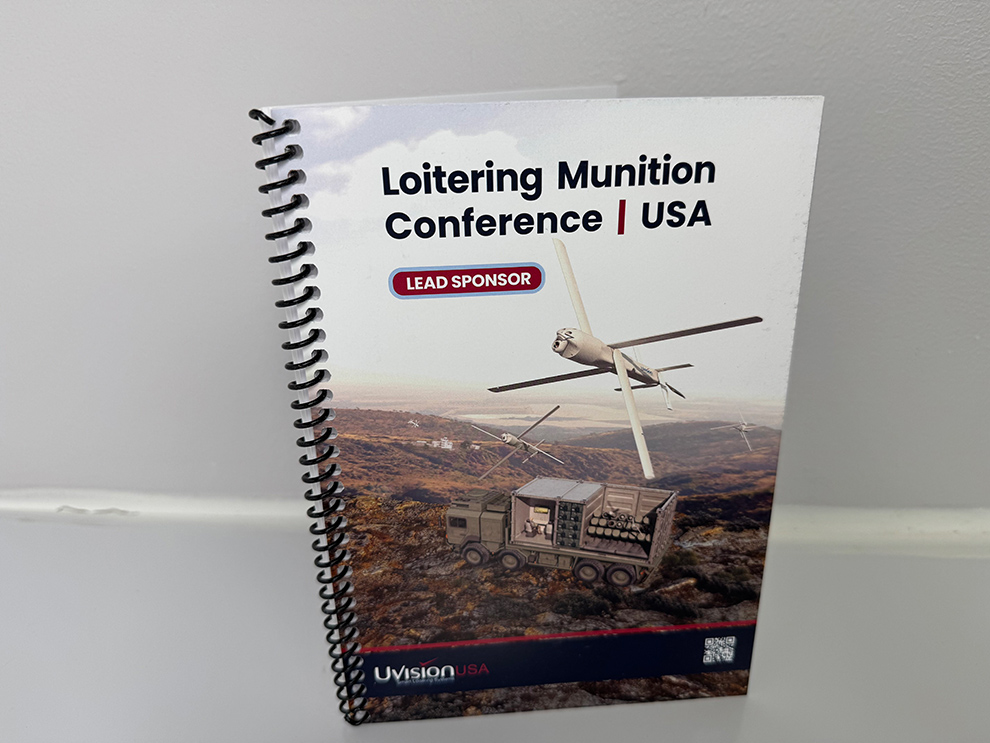
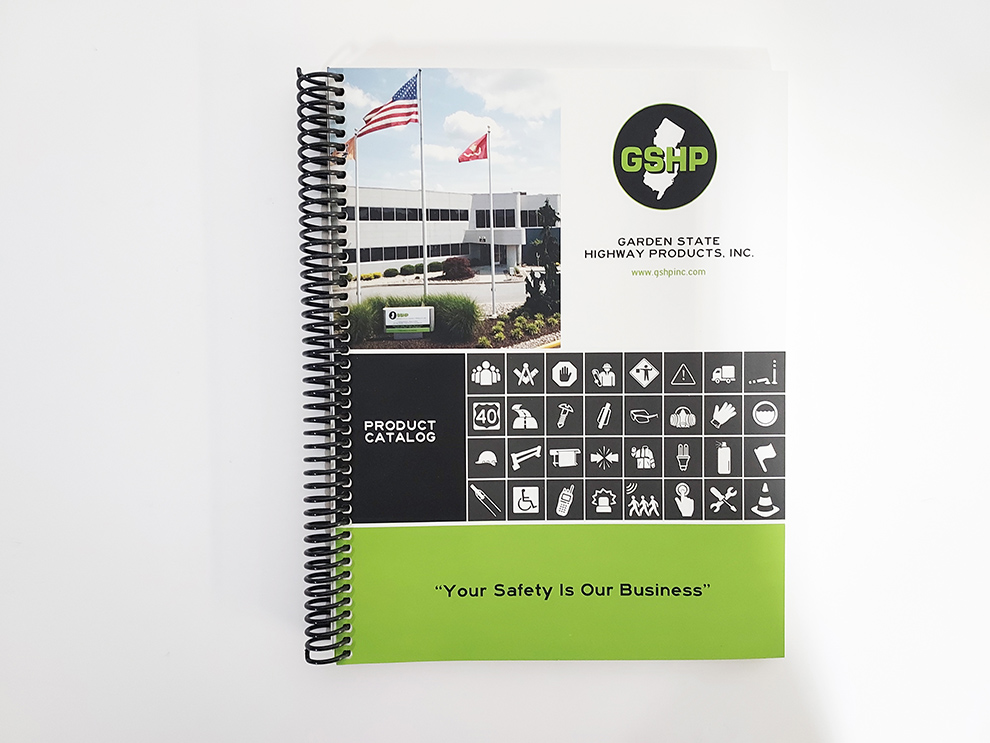
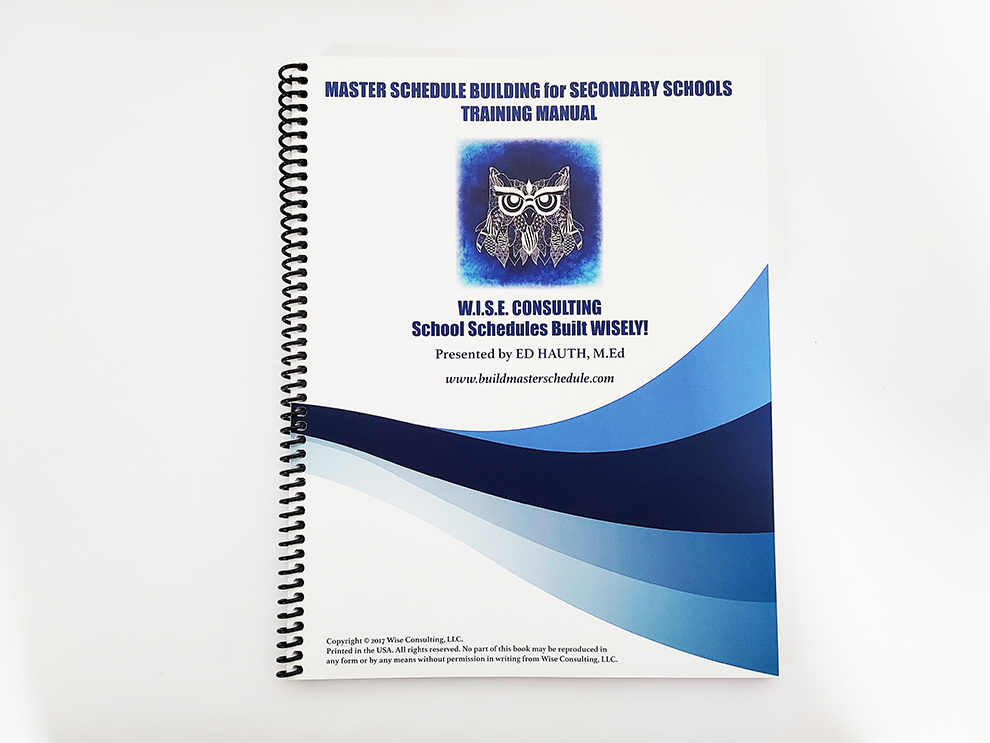
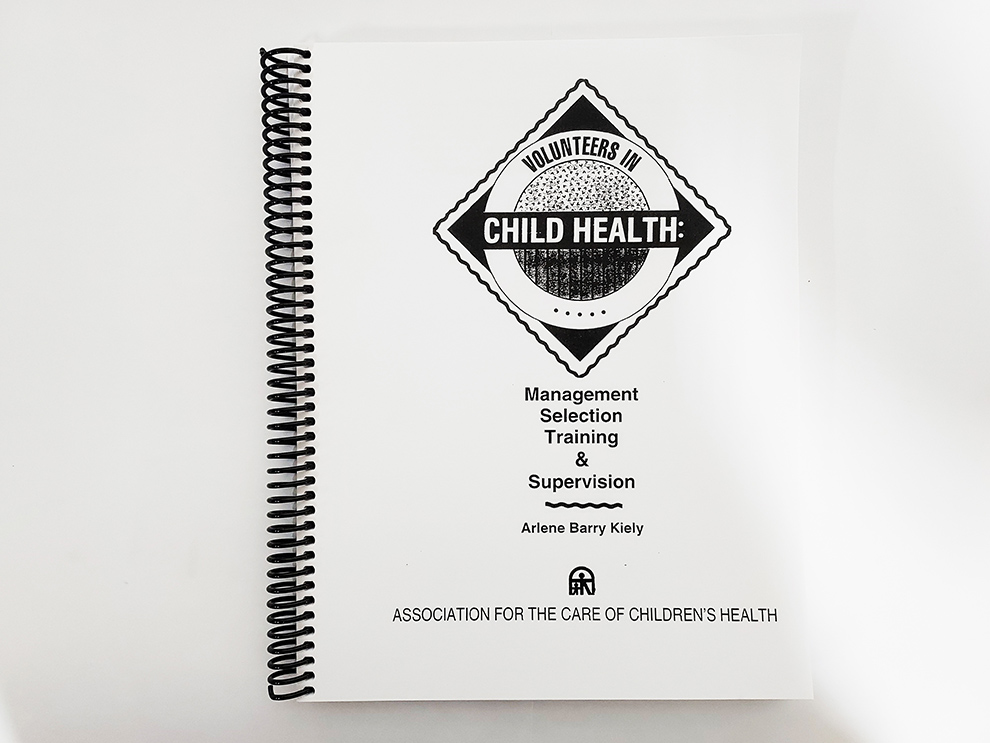
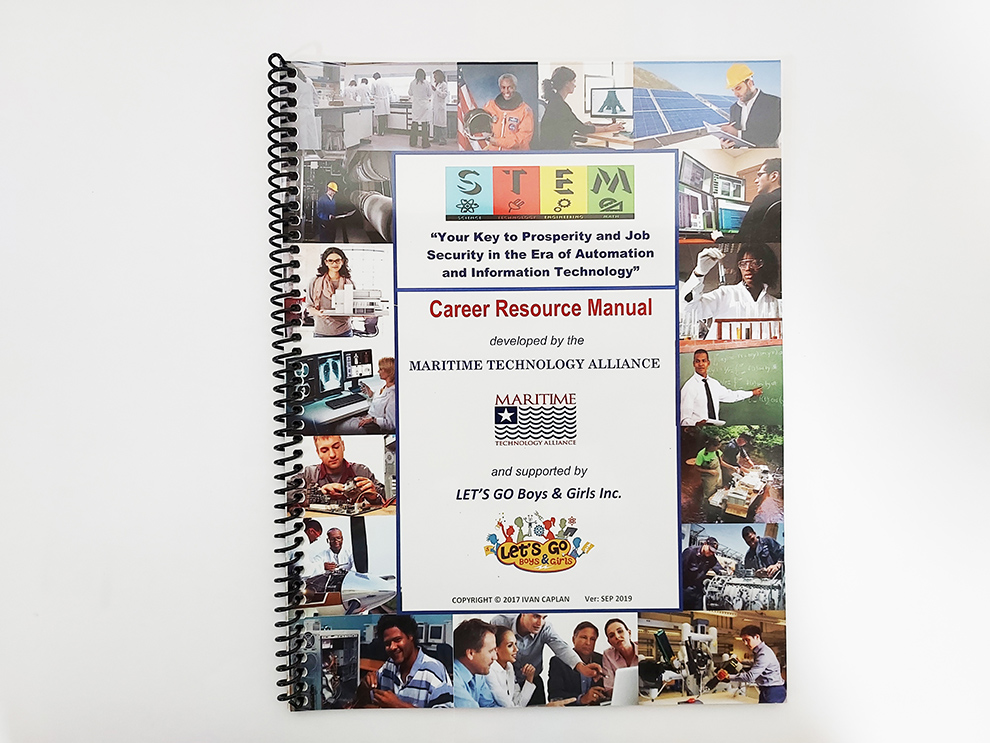
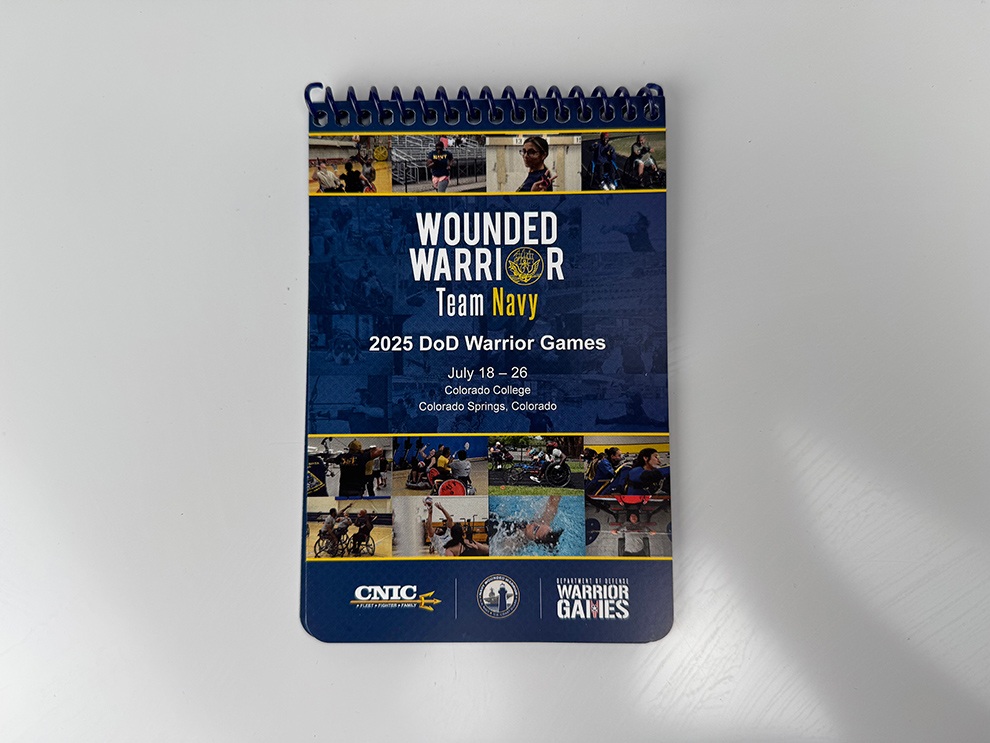
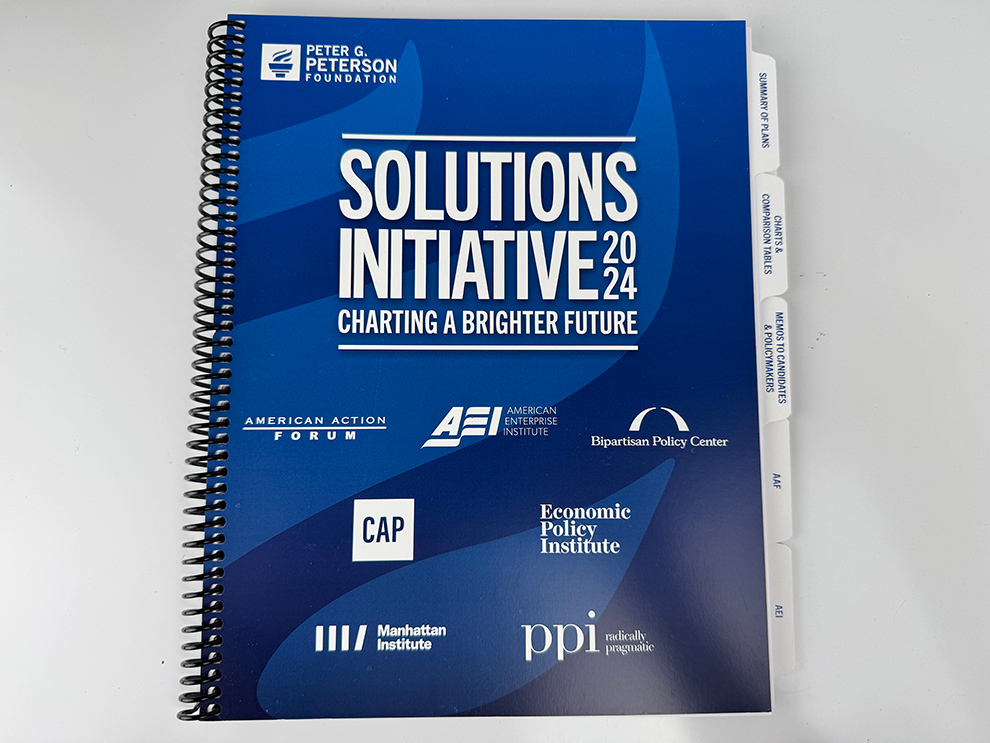
A lab protocol only helps when it stays open beside the equipment. A course packet only earns its place when a student can write in it without fighting the binding. Durham, NC teams that train, teach, document, and reference printed material need books that cooperate with the task in front of them.
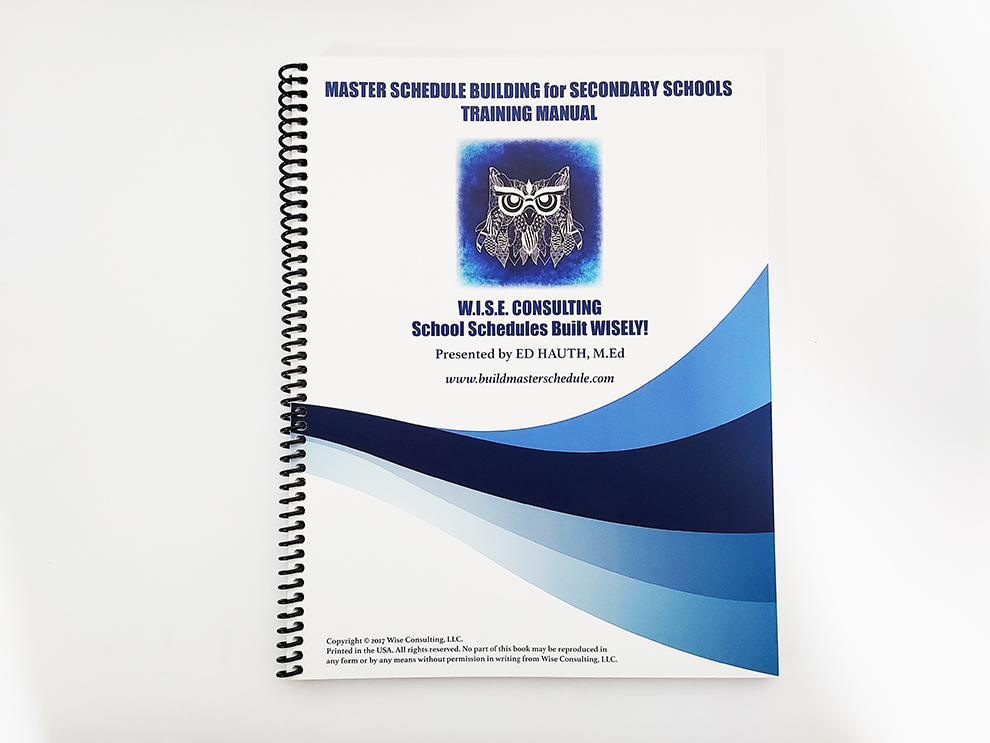
Heritage prints spiral-bound books with plastic coil binding for exactly that kind of use. The coil lets every page lie flat, turn without resistance, and wrap completely behind the book, so a technician, instructor, or new employee can keep one page in view while both hands stay busy. Typical applications include lab and procedure manuals, onboarding workbooks, continuing education course materials, clinical reference guides, safety handbooks, and internal directories that get consulted all year.
Practical additions such as laminated covers, heavier back boards, and section tabs can be planned where the production path supports them. Each book moves through Heritage's regular printing, color management, electronic proofing, and finishing process, so the finished copies are assembled in the right order and ready to be handed out.
Heritage started as a printing company in 1977, and that background still shapes how coil-bound books are produced. Automated plastic-coil binding handles the punching and coil insertion with consistent alignment, while the surrounding workflow checks page sequence, cover placement, and finishing before any quantity ships. Color is managed against established targets so a reprint of a safety handbook or course guide matches the copies already in circulation.
Those controls matter in Durham, NC because printed training material is often tied to a cohort start, a certification cycle, a semester, or a protocol update that cannot wait. A manual with transposed sections or a workbook that arrives after orientation has already begun creates a problem that is difficult to recover from on short notice. Heritage evaluates file readiness, specifications, and available capacity before confirming a schedule, and communicates early about any element that needs attention.
Production runs through Heritage's established facilities rather than a local storefront, keeping the focus on accurate output and dependable delivery. For recurring editions, accepted specifications are retained so the next version builds on a known foundation.
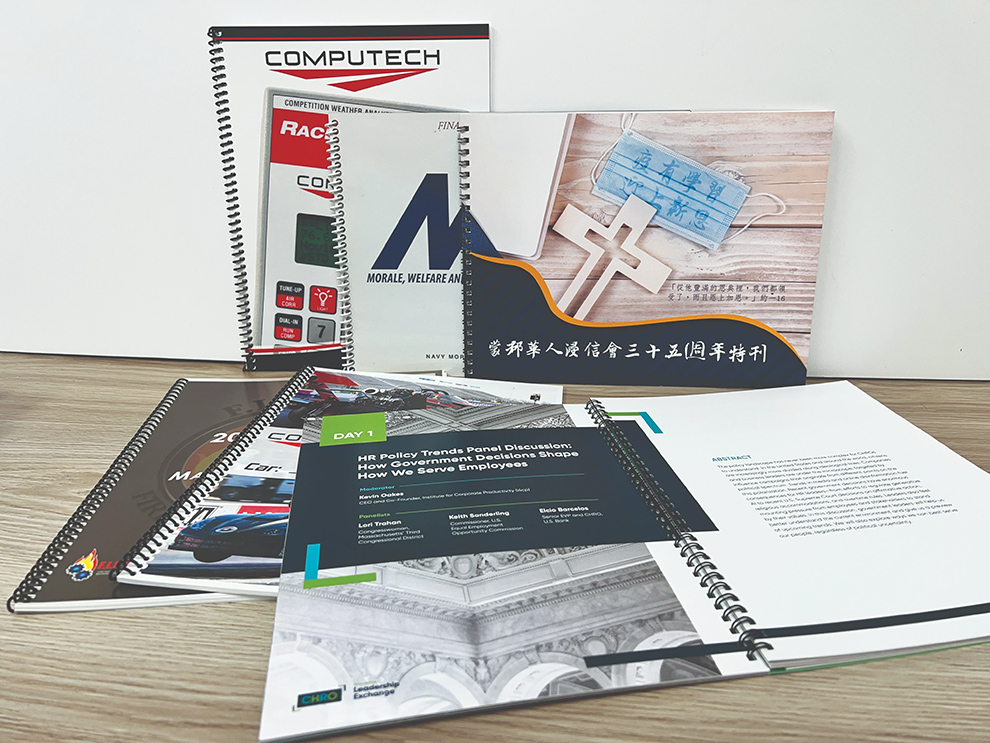
Start with how the finished book will be held. If a reader needs to write in it, prop it beside a monitor or instrument, or flip rapidly between sections, plastic coil binding is the practical answer. The pages rotate fully around the coil, the book stays open at any point without being pressed down, and the entire front half can fold behind the back cover to save space.
Those traits favor training workbooks, standard operating procedures, lab and clinical references, orientation guides, field checklists, and member or staff directories. Tabs make a long manual easier to search, and a laminated cover with a sturdy back keeps a book usable after months of circulation between desks, carts, and vehicles.
Perfect binding answers a different need. Its glued, squared spine can carry a printed title, stacks neatly, and reads as a finished publication, which suits annual reports, catalogs, proceedings, and books meant for display or distribution. If presentation and shelf life carry more weight than lay-flat handling, perfect binding is the better fit. If the book is a working tool, choose coil.
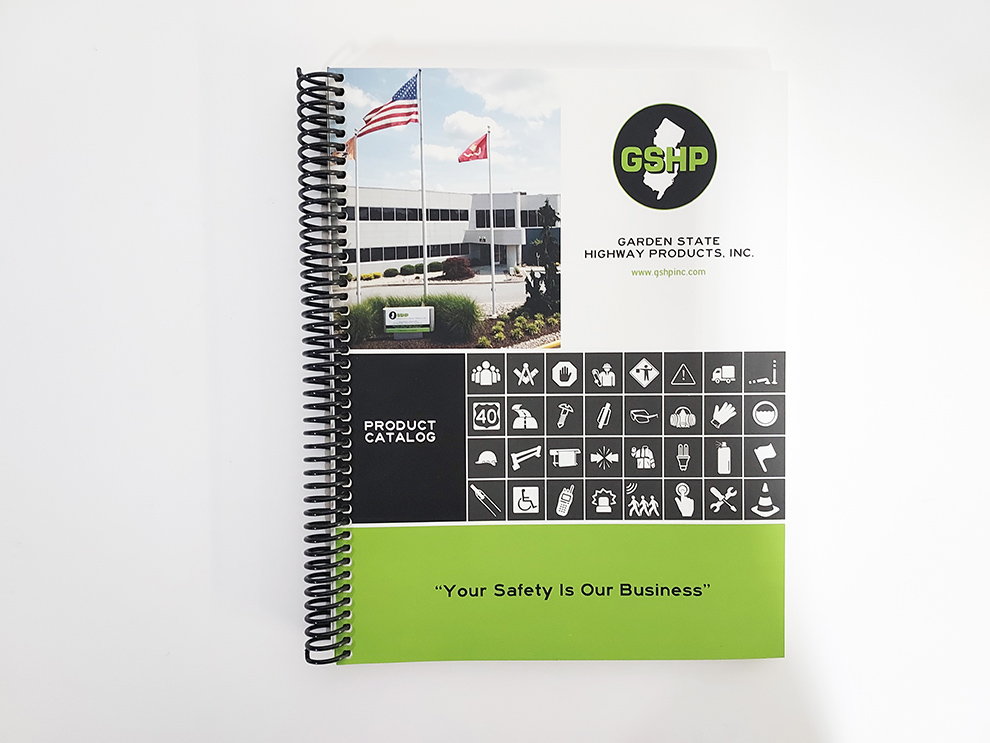
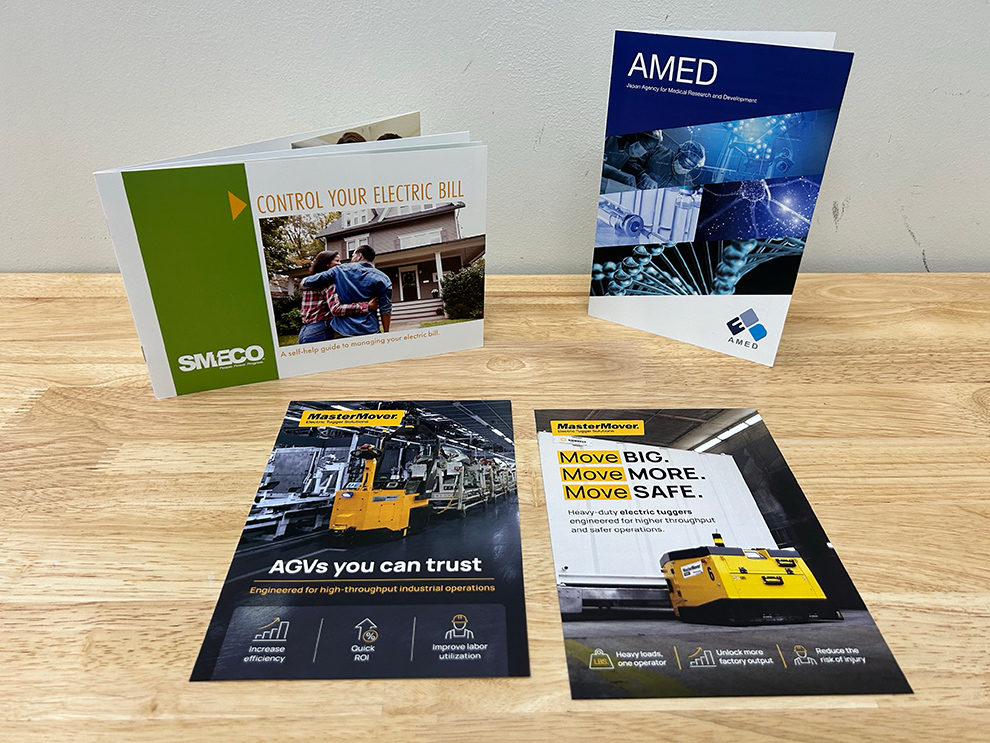
Coil-bound manuals rarely travel alone. Orientation kits, course programs, and research communications often call for other printed pieces, and Heritage can produce them alongside your books.
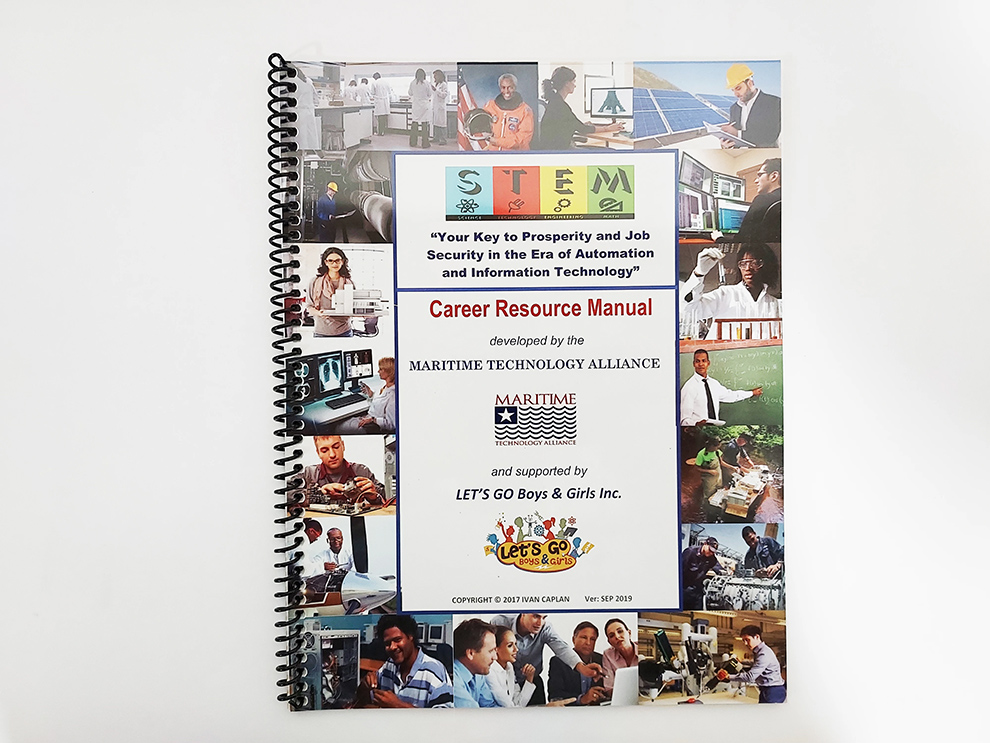
Build structured onboarding and procedure documents that new hires and existing staff can follow step by step and return to over time.
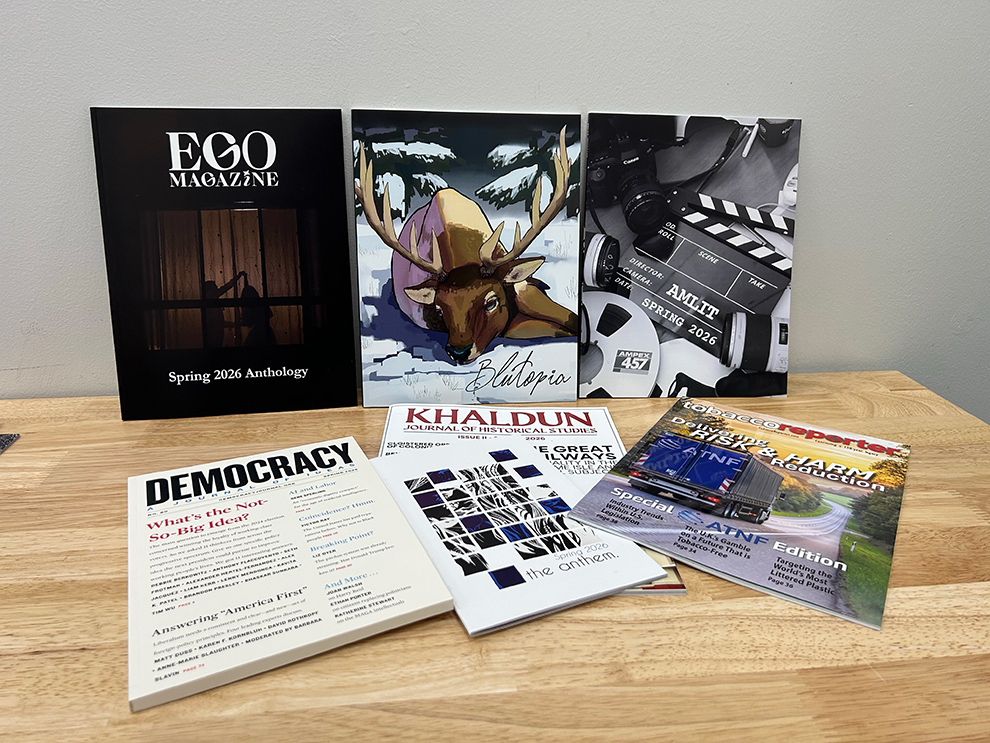
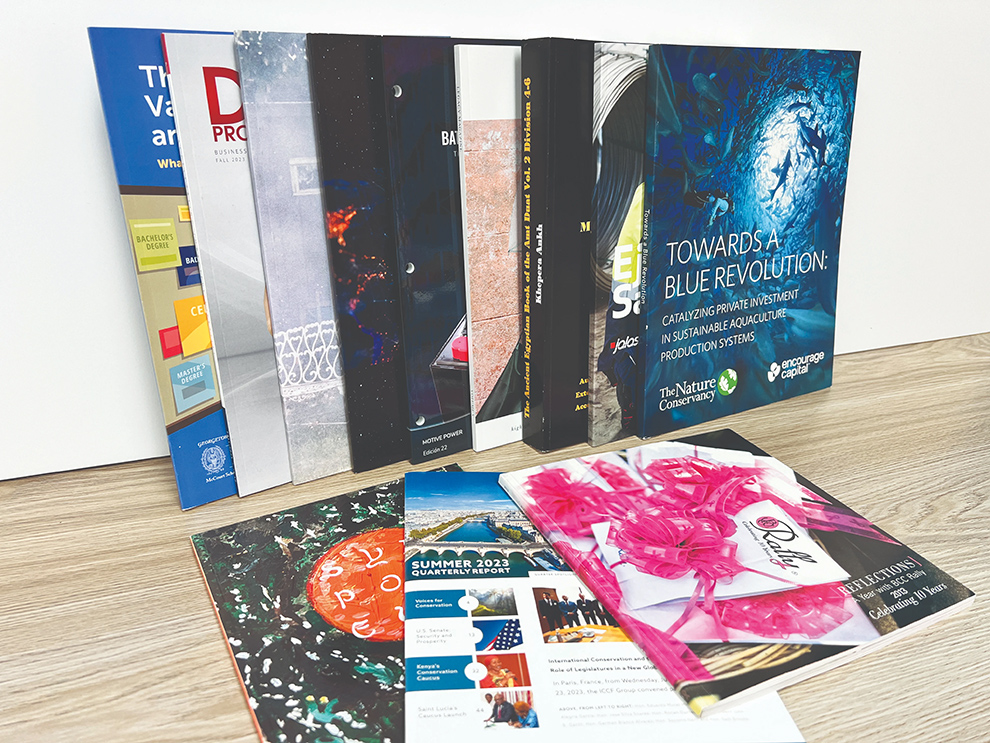
Select a squared, glued spine when a report, proceedings volume, or catalog needs a conventional book appearance and a title on the edge.
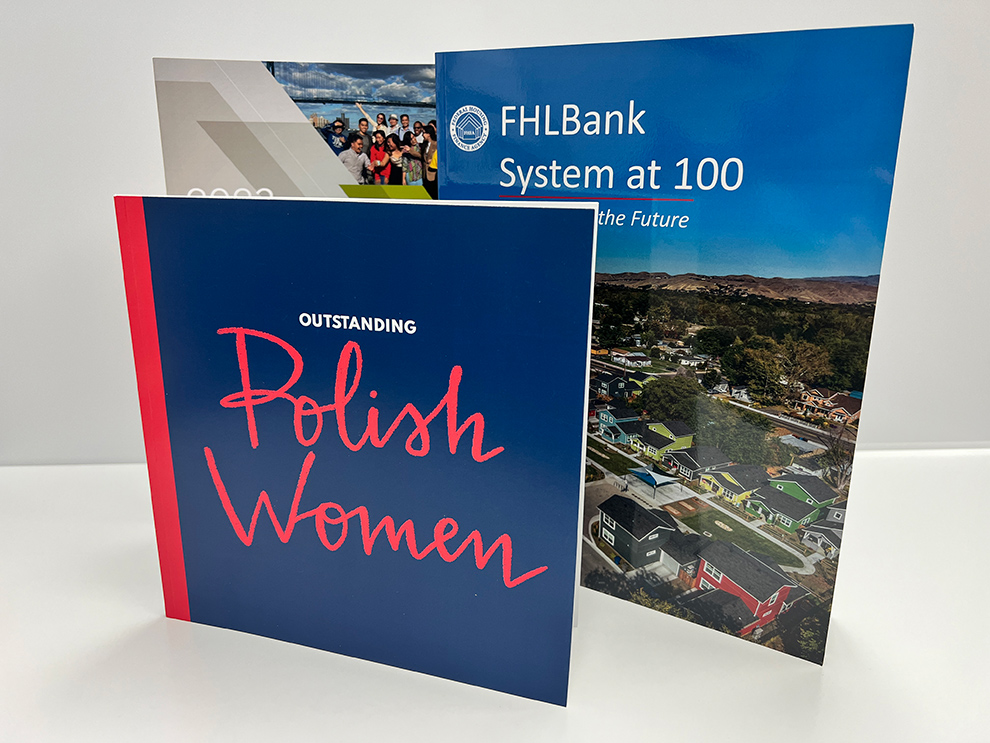
Review saddle-stitched and other multi-page formats for syllabi, event programs, short guides, and handouts that do not need lay-flat binding.
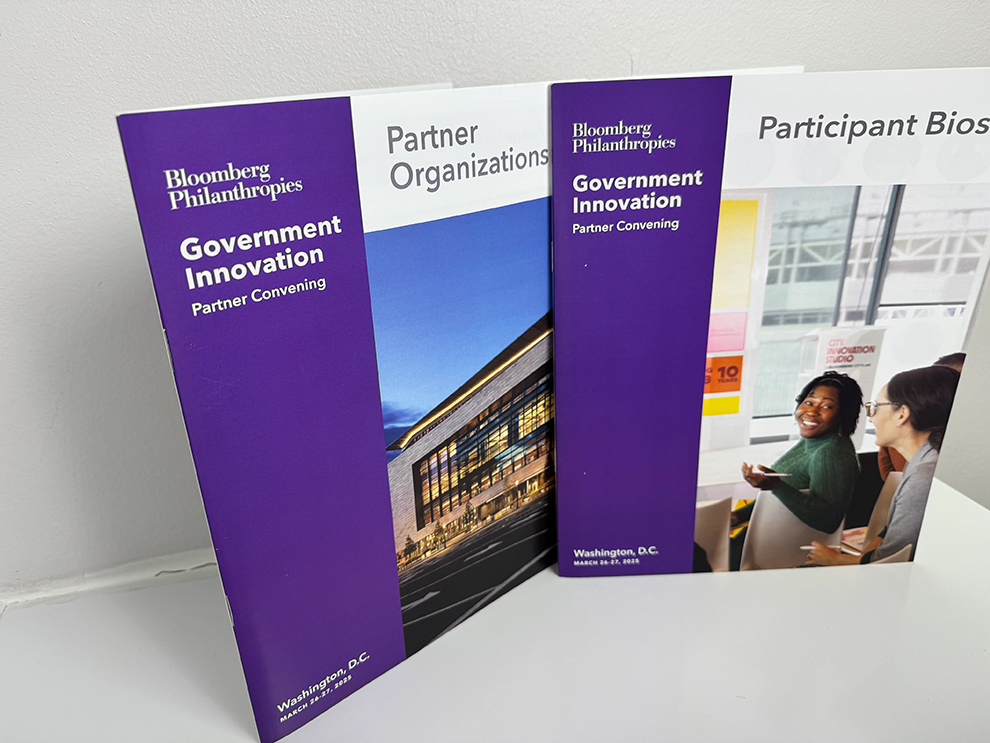
Hold a coil-bound workbook, certificates, schedules, and loose inserts together for a seminar, site visit, or stakeholder meeting.
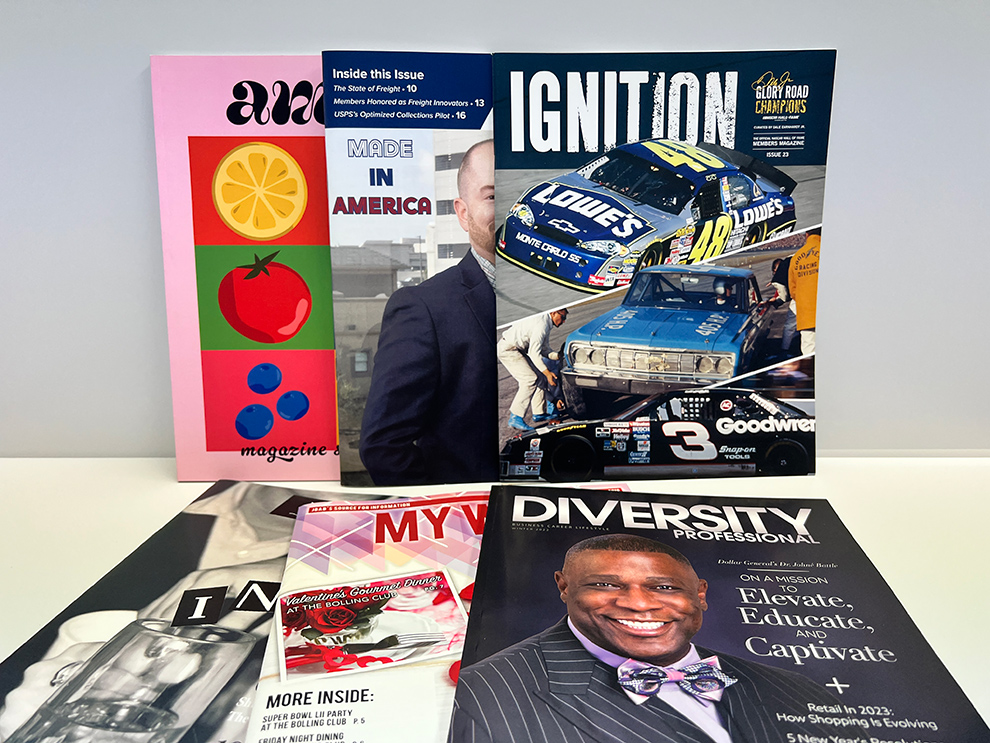
Produce member magazines, alumni publications, and recurring editorial issues with consistent binding and color from one issue to the next.
Pair printed guides and directories with addressing, mail preparation, and distribution when those services are included in the accepted scope.
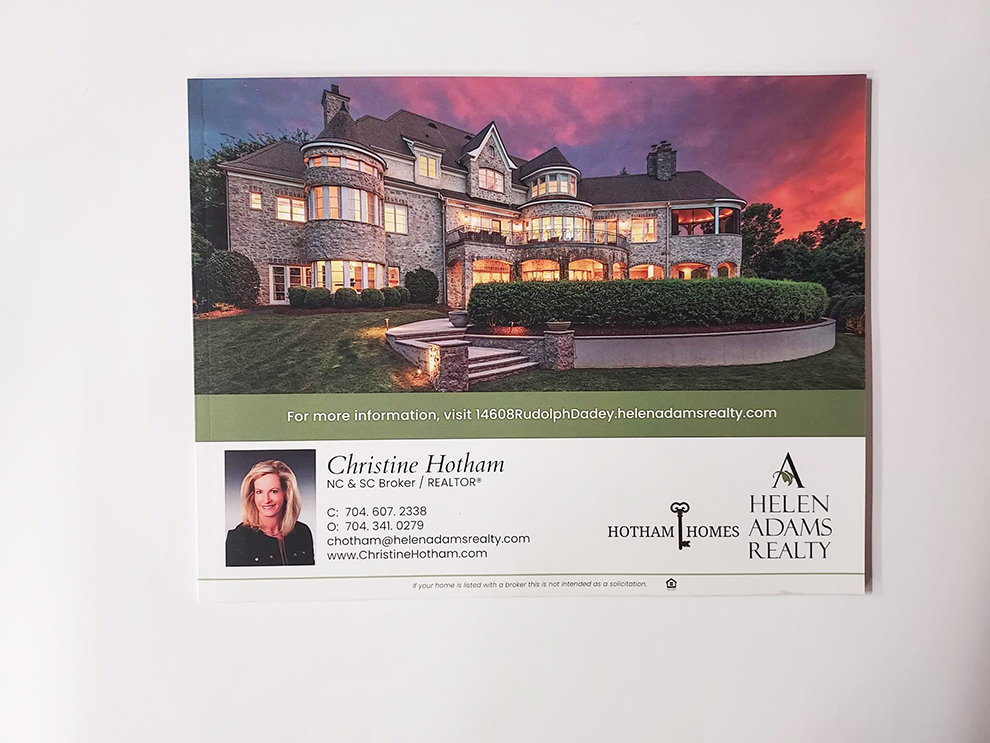
Add brochures, flyers, and campaign pieces that share the same color standards as your training and reference books.
Browse the full range of Heritage print production for business documents, publications, and recurring organizational communications.
If the specification is settled and the file is ready, open the Online Store to see pricing and place the order. If the book still needs tabs planned, versions sorted, files prepared, or a firm date protected, and the project qualifies at $2,000 or more, send the Custom Quote form so Heritage can review the scope before anything is promised.
Every specification should trace back to a reason the reader will notice. A workbook completed in pen benefits from an uncoated interior stock and generous margins. A procedure manual consulted on a production floor or in a lab needs a cover that wipes clean, a back board that resists bending, and tabs that still read after repeated use. A reference guide carried between sites may warrant a smaller trim size and a lighter page count.
Heritage weighs finished size, page count, paper weight, color versus black-and-white pages, cover construction, lamination, tab and divider placement, and total quantity as one set of linked decisions. Treating them together prevents a familiar mismatch, such as a heavy cover on a thin book or full-color pages where simple black text would read just as well at lower cost.
When a manual will be revised each year or each cohort, the accepted specification set is preserved so updates concentrate on the changed pages. Version numbers, dated footers, or a revised cover color can help readers distinguish the current edition from the last.
Two routes are available, and the right one depends on how settled the job is. A Durham, NC team with a finalized file and a configuration that is already listed can order through the Self-Directed Online Store. You select the available size, paper, cover, and quantity options, upload print-ready artwork, and submit the order without consultation.
The Store carries a $750 minimum per total eligible order, and several eligible products can share that minimum. Heritage still reviews the files for production readiness and sends an electronic proof for approval before printing, but no Project Coordinator is assigned, and design or layout work is not included.
Qualifying new Commercial Printing work valued at $2,000 or more may instead go through the Storefront Custom Quote form. That path fits projects that still need file preparation, specification guidance, tab and divider planning, multiple versions, or closer schedule coordination. Meeting the dollar threshold makes the form available; it does not require its use. After Heritage accepts the quote and assigns the order, a Project Coordinator becomes your direct phone-and-email contact through delivery.
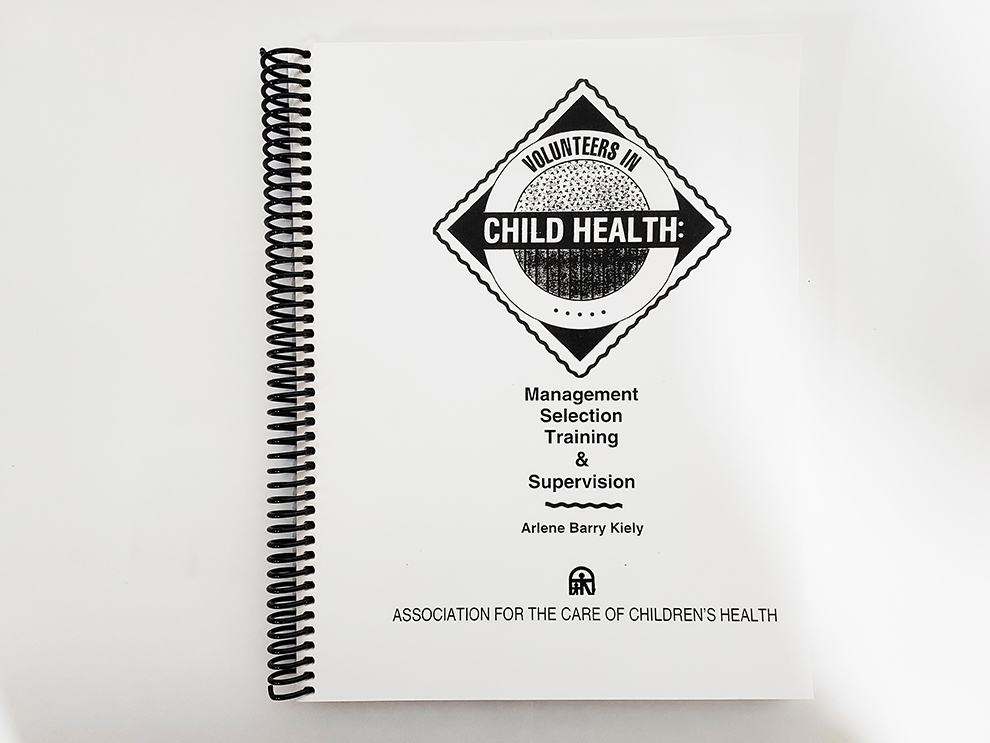
Yes. The plastic coil threads through punched holes along the spine edge, so each page and both covers rotate a full 360 degrees. A reader can fold the front cover and finished pages behind the book and work from a single visible page, which is useful at a crowded bench, a shared desk, or a training table.
The format fits organizations such as universities and continuing education programs, health systems and clinical training departments, life science and technology employers, contractors, nonprofits, and professional associations in Durham, NC. Typical pieces include lab and procedure manuals, onboarding workbooks, course packs, compliance handbooks, field checklists, and internal directories. The common thread is a document that is consulted repeatedly rather than read once.
Neither is better in every case. Plastic coil is the stronger option when the book must lie flat, fold back, and survive constant handling, as with workbooks, procedures, and references. Perfect binding, which glues the pages into a squared spine, is the stronger choice when a title on the spine, shelf presence, and a traditional publication appearance matter more than hands-on function.
Printed cover stock, laminated covers, heavier front covers, and rigid back boards are available where the selected ordering path supports them. Lamination resists scuffing and ordinary moisture, which suits manuals used near equipment or passed among staff. A sturdy back keeps the book flat on a desk and prevents the spine edge from curling during transport.
Yes, when the chosen Store configuration lists them or an accepted Custom Quote includes them. Tabs let a reader jump straight to a chapter or procedure, and dividers give a visual break between modules. Plan tab wording, the number of sections, and where each divider falls in the page sequence before artwork is finalized.
A coil-bound workbook opens flat without a reader holding it down, so writing near the inside margin stays comfortable and legible. Pages turn freely in either direction, and the book can be folded to a single page for note taking on a small surface. Combined with an uncoated interior stock that accepts pen and pencil, the format supports classroom and training use well.
Use the Self-Directed Online Store when the configuration you need is live there and your artwork is complete and print-ready. You choose the listed options and place the order yourself, without product selection help, layout assistance, or an assigned Project Coordinator. Heritage still checks the files for production readiness, sends an electronic proof for approval, and applies standard quality control. The total eligible order must reach $750.
Yes. Any products that are live and orderable in the Self-Directed Online Store may be combined in one purchase, and their combined eligible value counts toward the $750 minimum. A training team might pair coil-bound workbooks with other eligible printed pieces for the same session. Each item still follows its own listed options and file requirements.
New Commercial Printing work valued at $2,000 or more may use the Custom Quote form when it needs services the Store does not offer, such as file preparation, production-oriented layout support, specification guidance, multiple versions, or closer coordination around a fixed date. Submitting the form is a request, not an assignment. A Project Coordinator is assigned only after Heritage accepts the quote and schedules the work, and that person then handles phone and email contact for the order.
Yes. Every Heritage Commercial Printing order, including eligible Online Store purchases, receives an electronic proof for approval before printing begins. Review it for page order, content, trim, visible layout, and any tab or divider details. Because monitors and paper render color differently, treat the electronic proof as a layout check rather than a physical color reference.
For qualifying Custom Quote commercial-printing orders of $2,000 or more, Heritage offers an optional Physical Production Color Proof at additional cost. It is printed on the equipment scheduled for the job and on the same paper or production material, so it shows how color will actually appear. Producing it adds time to the schedule, and once approved it becomes the controlling color reference unless otherwise agreed. This option is not available for Self-Directed Online Store orders, which receive electronic proofing only.
Yes. Heritage retains accepted specifications such as trim size, paper, cover construction, lamination, tab layout, and color targets so a later printing starts from the same baseline. That lets your team focus revisions on the pages that changed. Clients who already have an assigned Project Coordinator may continue working with that contact on appropriate directly managed repeat orders.
Possibly, and the sooner the date is shared, the better the options. Heritage looks at artwork readiness, quantity, paper and cover availability, finishing complexity, proof approval timing, open production capacity, and the shipping or delivery requirement before committing to a schedule. If the original date cannot be met responsibly, you will hear that early along with any workable alternative, such as a staged delivery when that is feasible. For Custom Quote work, direct coordination starts after the quote is accepted and assigned.
Heritage Signs & Displays created new museum signage for the Military Women’s Memorial in Arlington, VA. The project included custom signs, wall wraps, dimensional letters, and standoff-mounted displays to honor the legacy of U.S. servicewomen and the donors who supported the memorial. The updated interior features impactful designs, including a "Our Legacy" wall display and panels showcasing historical contributions and artwork, creating a transformative tribute to women in the U.S. Armed Forces.
Heritage Signs & Displays' collaboration with The Gathery to brand Union Market in Arlington, VA, for Indeed's "Ready to Work" job fair. The project included custom event displays, wall graphics, window graphics, and wayfinding signs, creating an immersive and visually appealing environment. The branding enhanced the venue, reflected the event's mission, and provided a seamless experience for attendees.