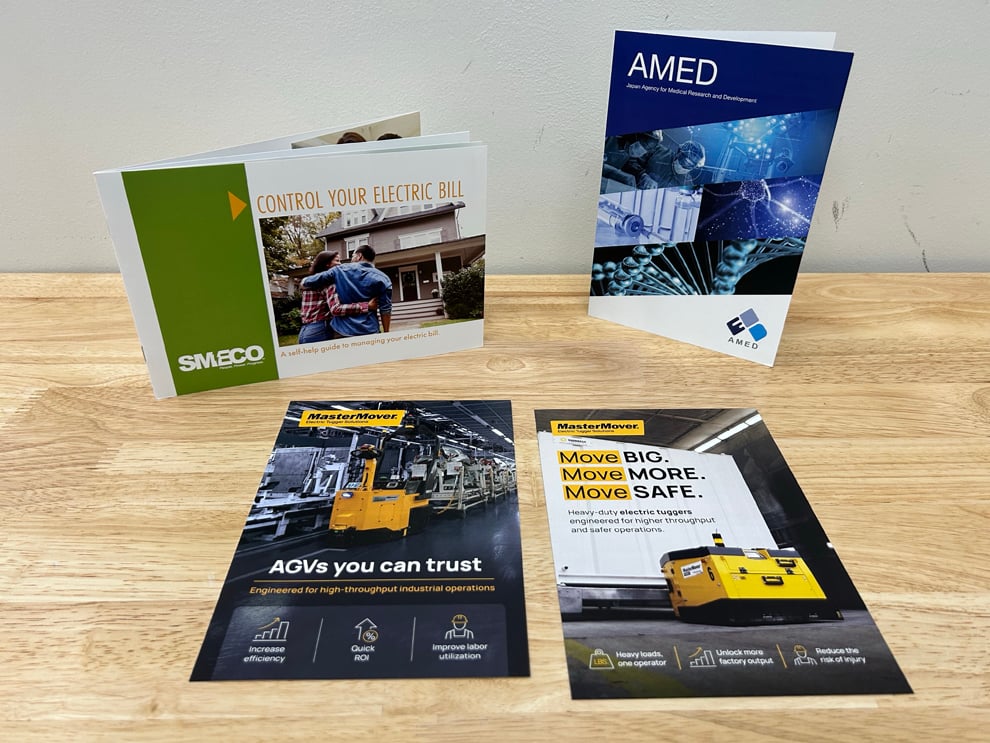
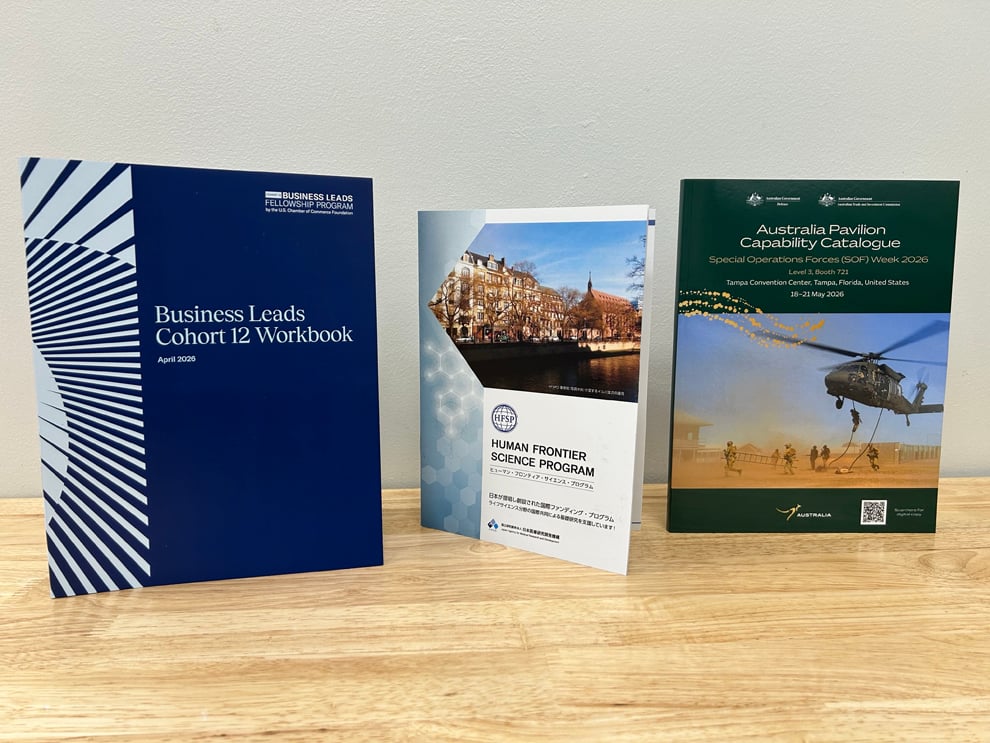
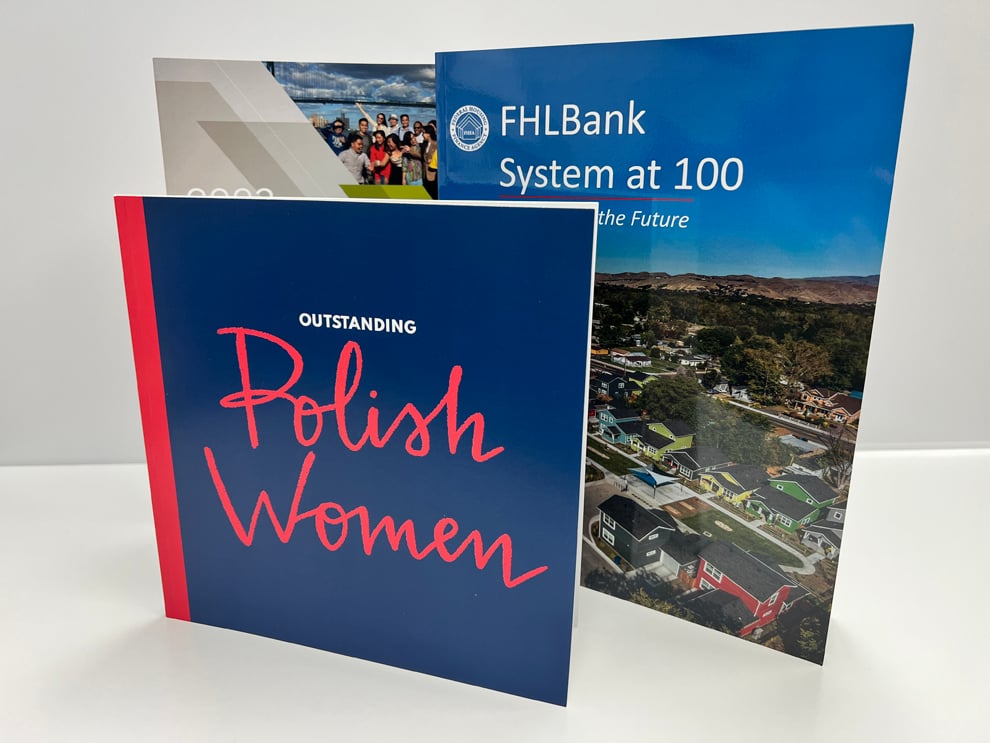
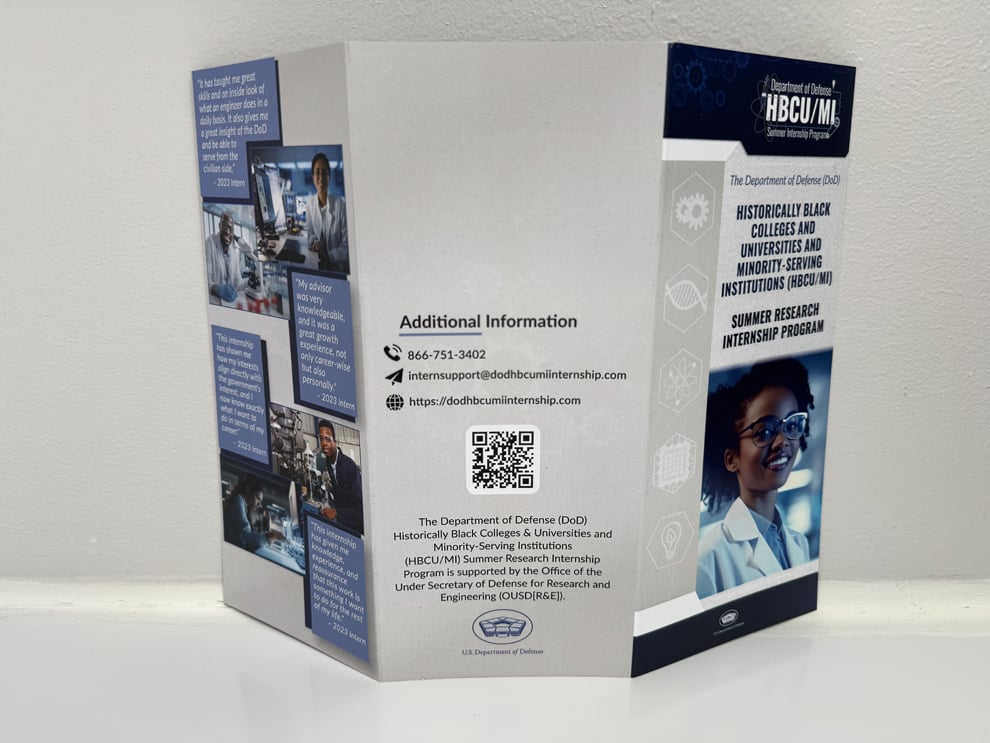
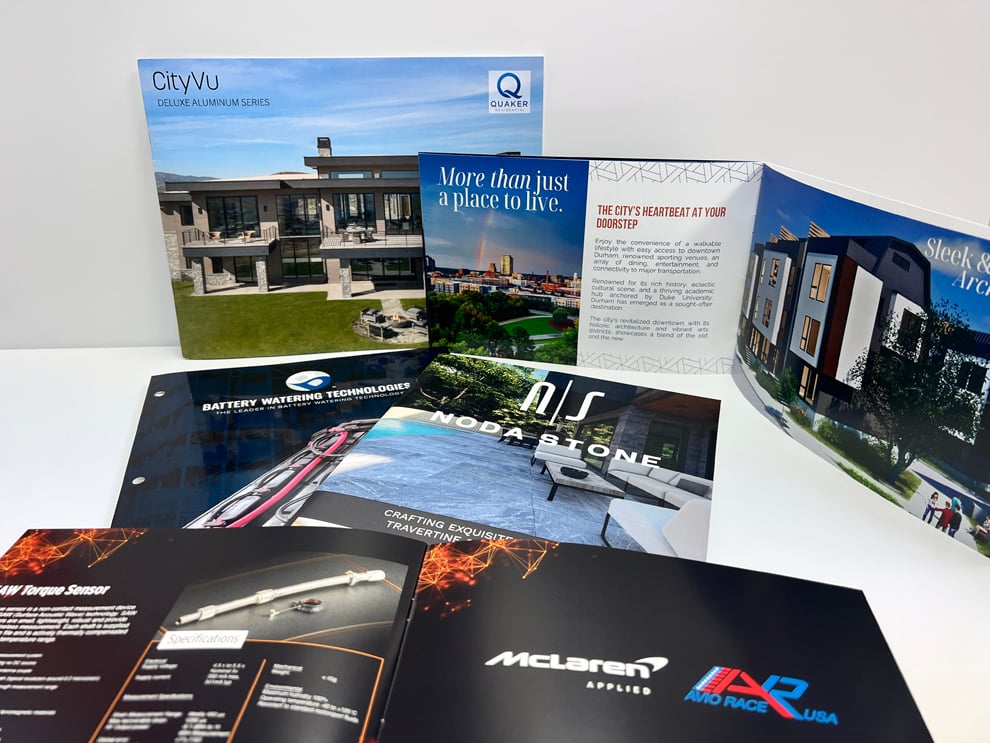
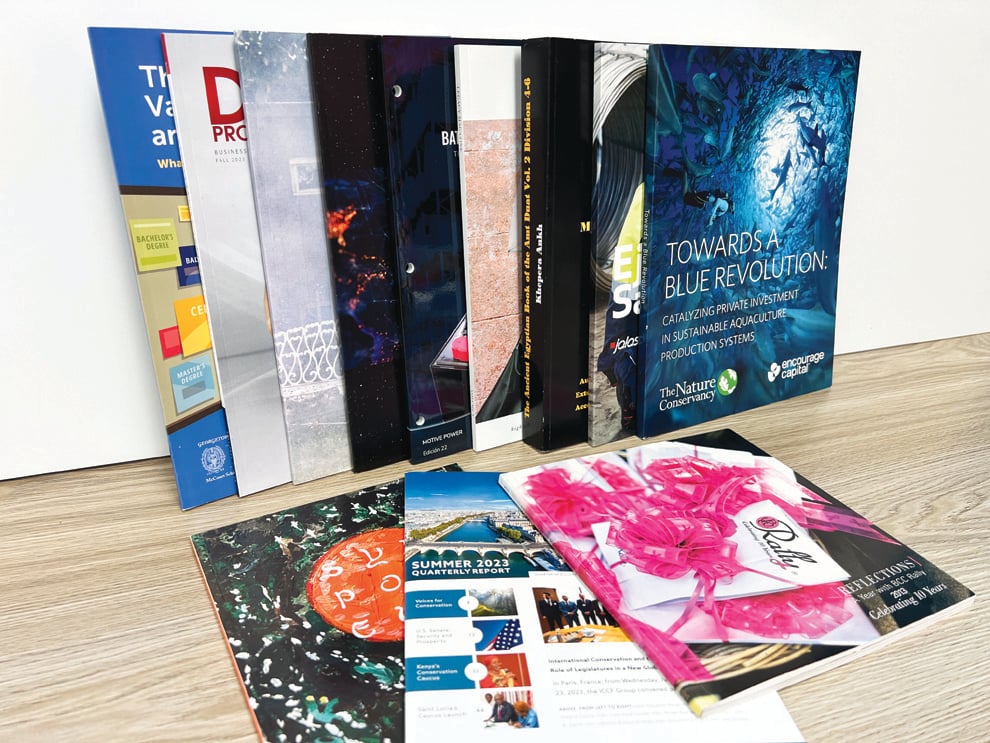
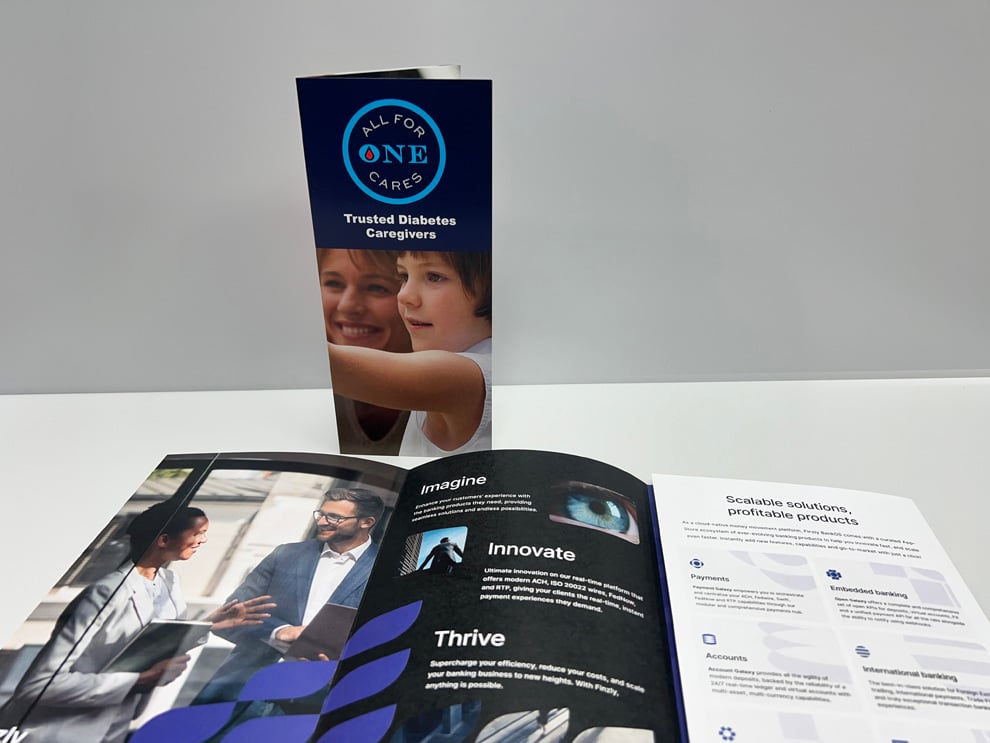
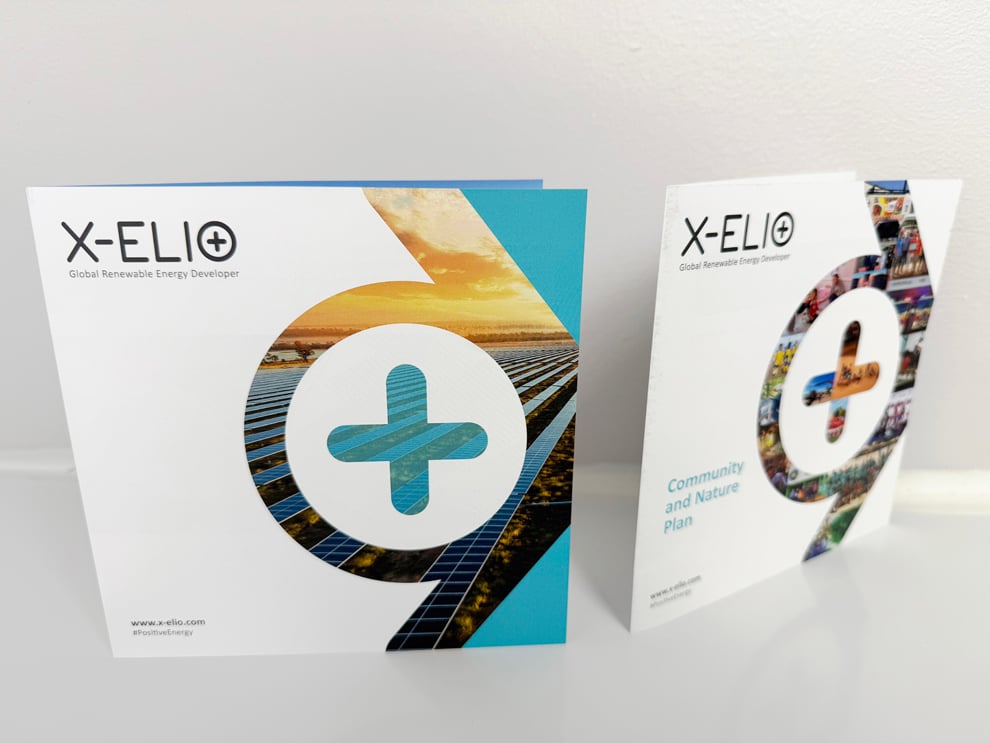
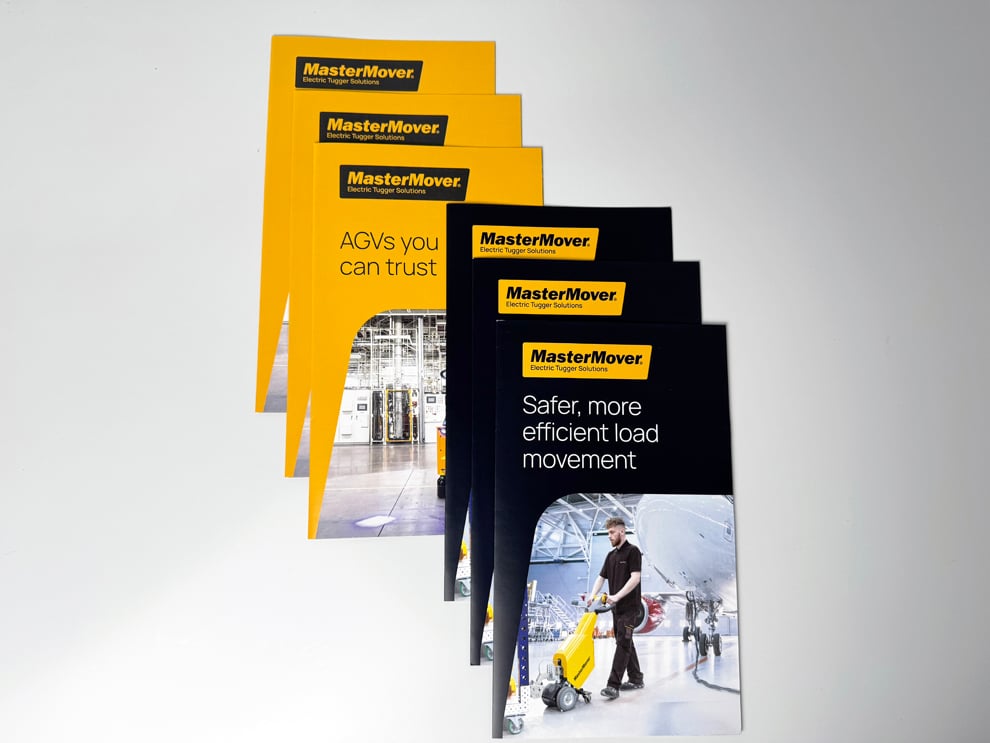
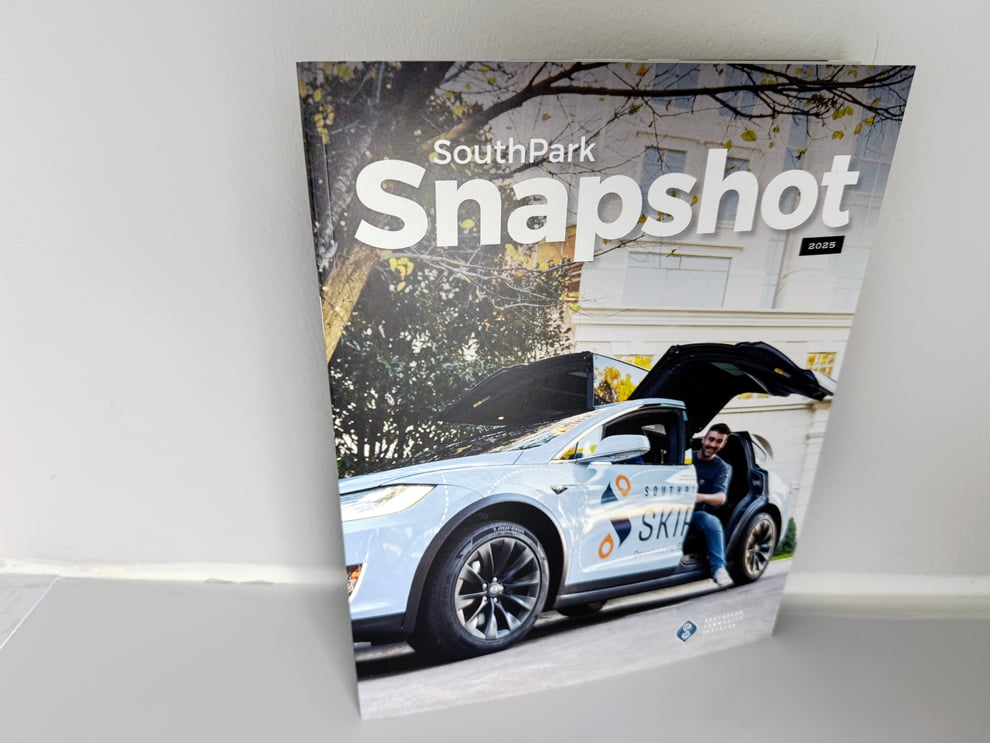
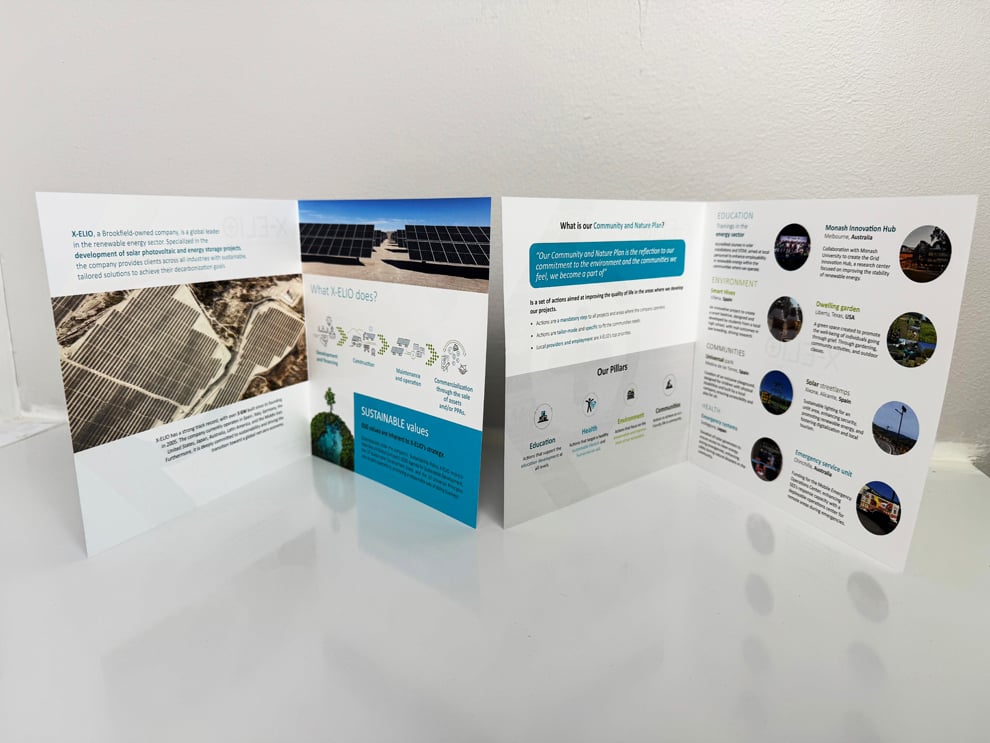
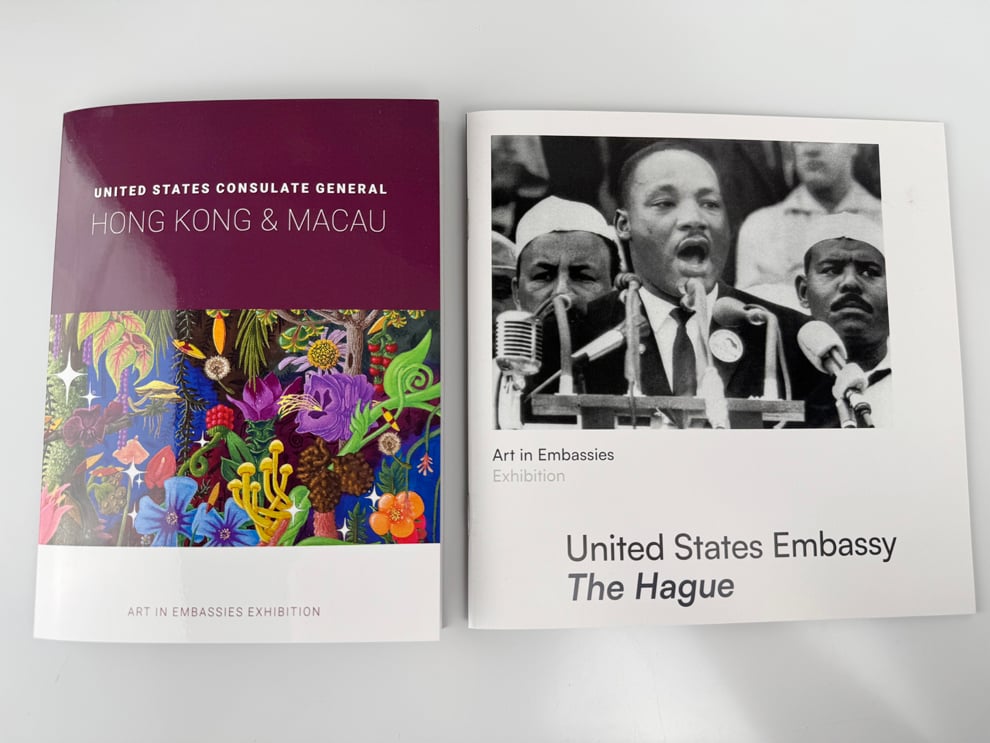
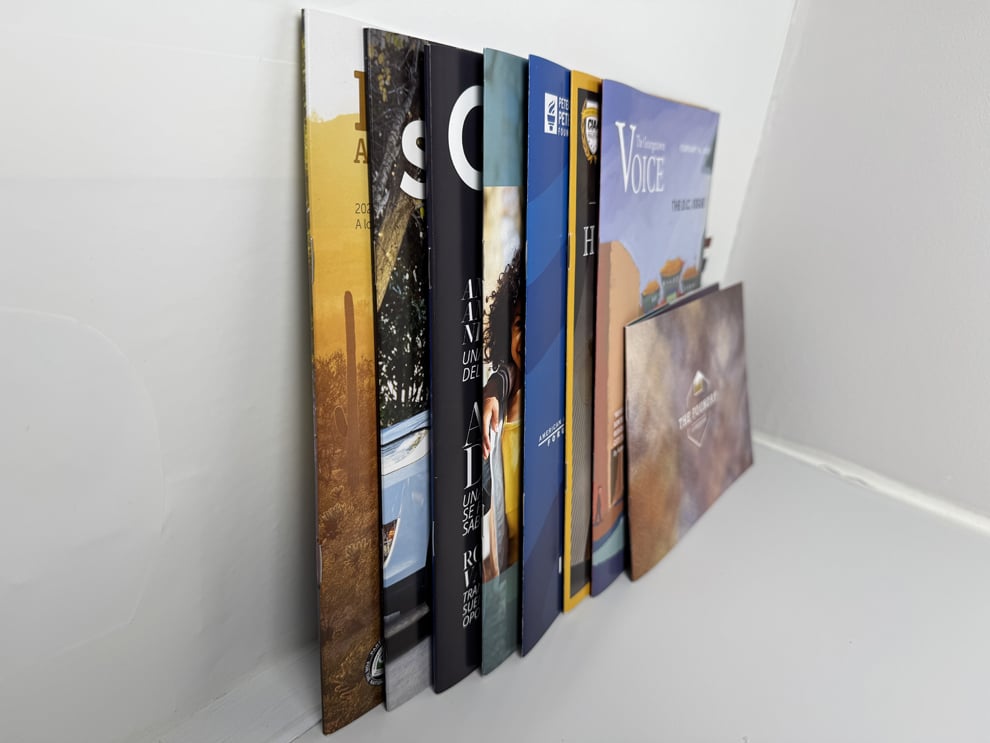
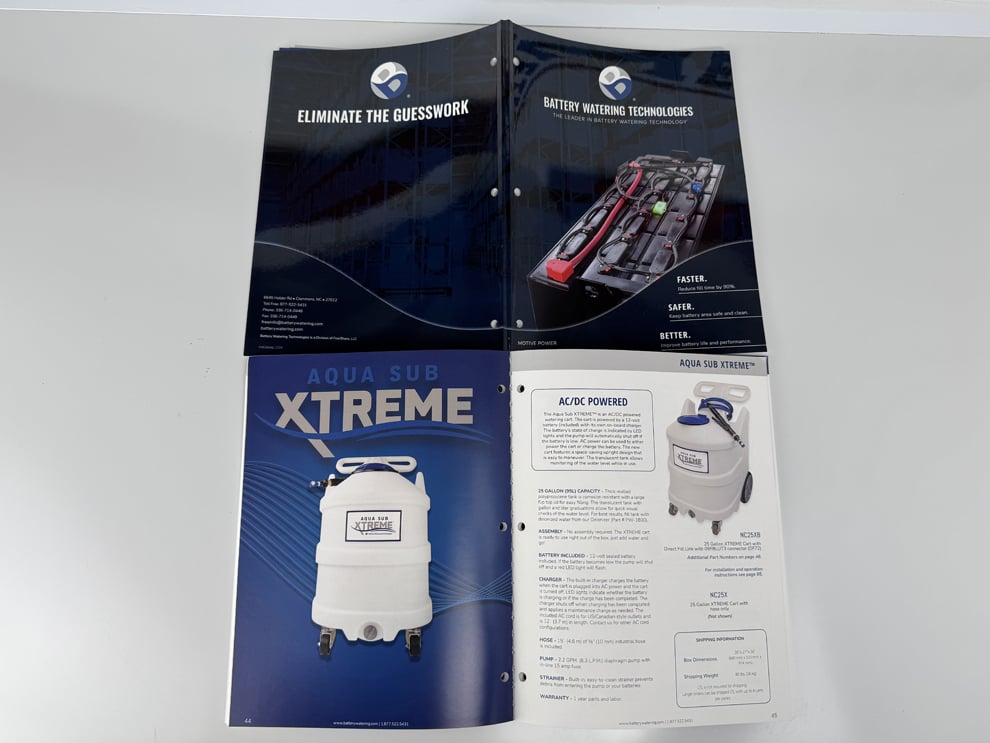
In a waiting room, a museum lobby, or a visitor center, a brochure competes with dozens of others for a few seconds of attention. Often only the top portion of the cover is visible above the rack, and that small space has to tell a passing reader what the brochure offers. Winston-Salem's healthcare systems, arts organizations, and visitor-facing businesses rely on that moment every day.
Heritage's job is to make sure the printed brochure performs once it reaches the rack. Working from your completed design, we confirm a size and fold that suit standard display holders, review the file for panel placement and print readiness, and manage color so the cover stays bright and consistent across the run.
You approve an electronic proof before anything prints. Then Heritage prints, folds, and finishes the brochures, ready for delivery or shipping to the locations where they will be displayed and replenished. Restocking is easier when reorders match the original, so the approved specification becomes a reference for future runs.
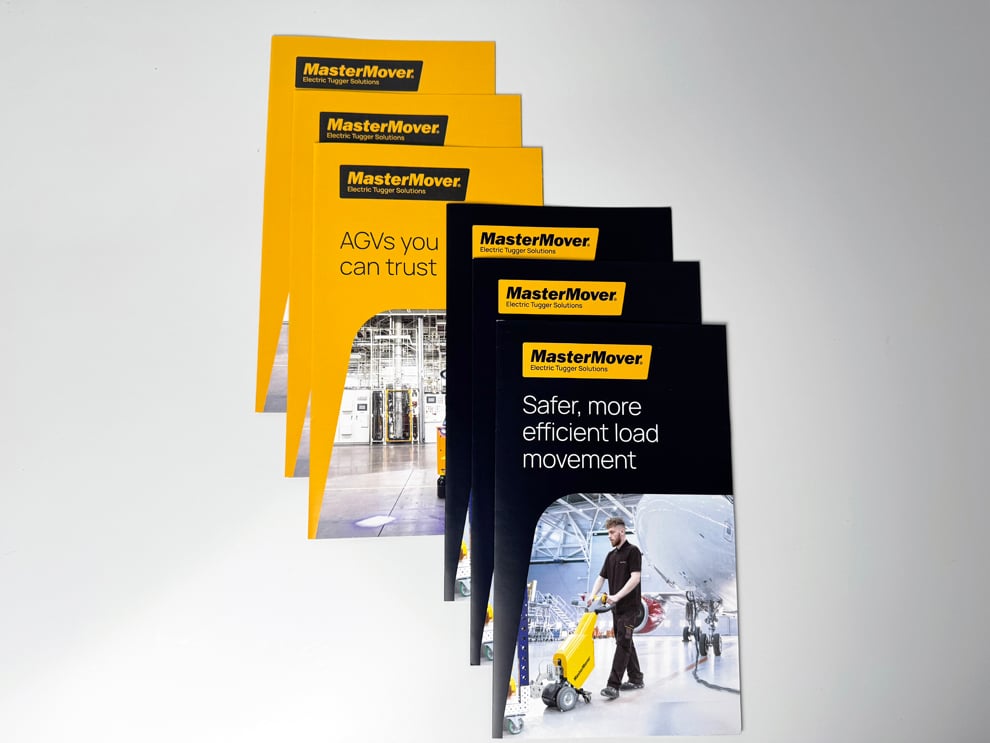
A display brochure has to look as fresh in month six as in week one. That depends on paper that stands upright without slumping, a cover surface that resists scuffing from constant handling, and folds that stay closed so the piece looks tidy in its pocket.
Heritage brings printing experience that began in 1977 to those practical details. Production review checks each file against the selected fold and finished size, and color is managed with spectrophotometric measurement and production-specific profiles where relevant, so your organization's colors stay consistent within the limits of the chosen paper and finish. Every order receives an electronic proof for approval before printing.
When a patient guide needs an urgent update or a season brochure has a firm release date, responsiveness matters. That responsiveness starts at the top of a veteran-owned, family-led company: we answer quickly and explain what production can responsibly support. Organizations that print display brochures repeatedly through directly managed orders can keep the same assigned Project Coordinator, so updates start with someone who already knows the piece.
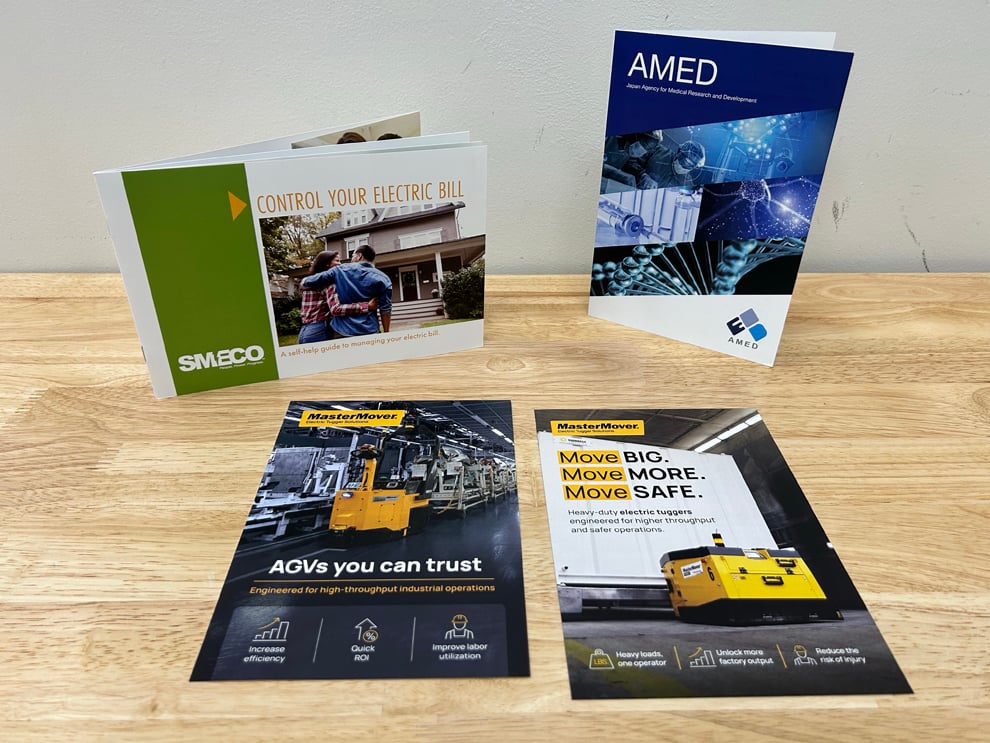
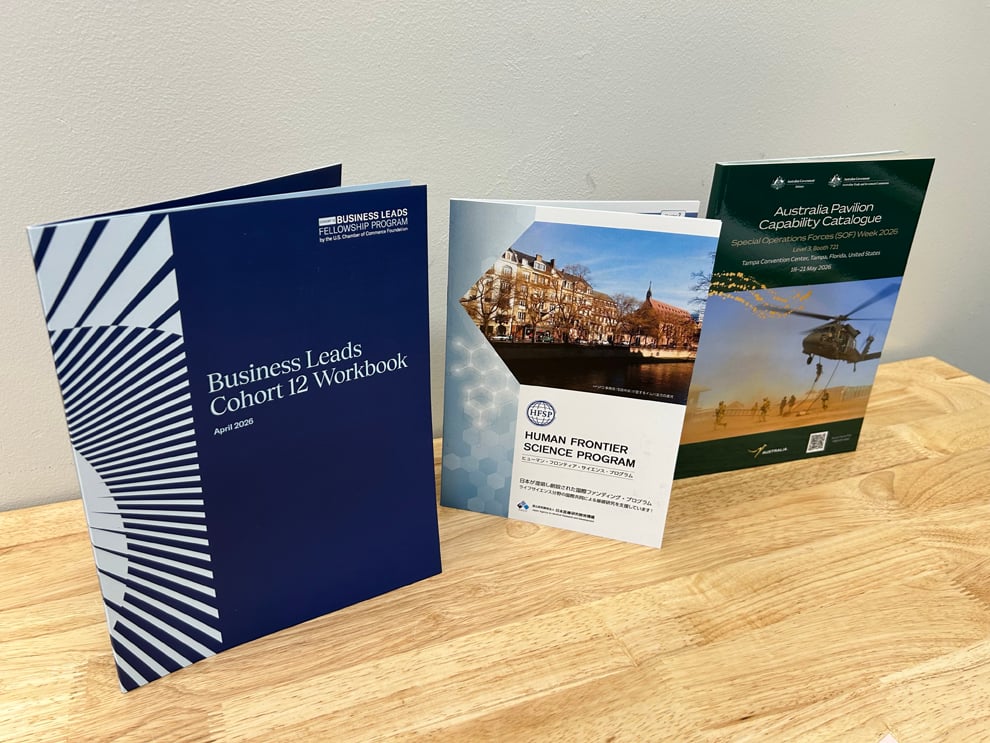
Give patients, donors, or new members a folder that keeps brochures and forms together.
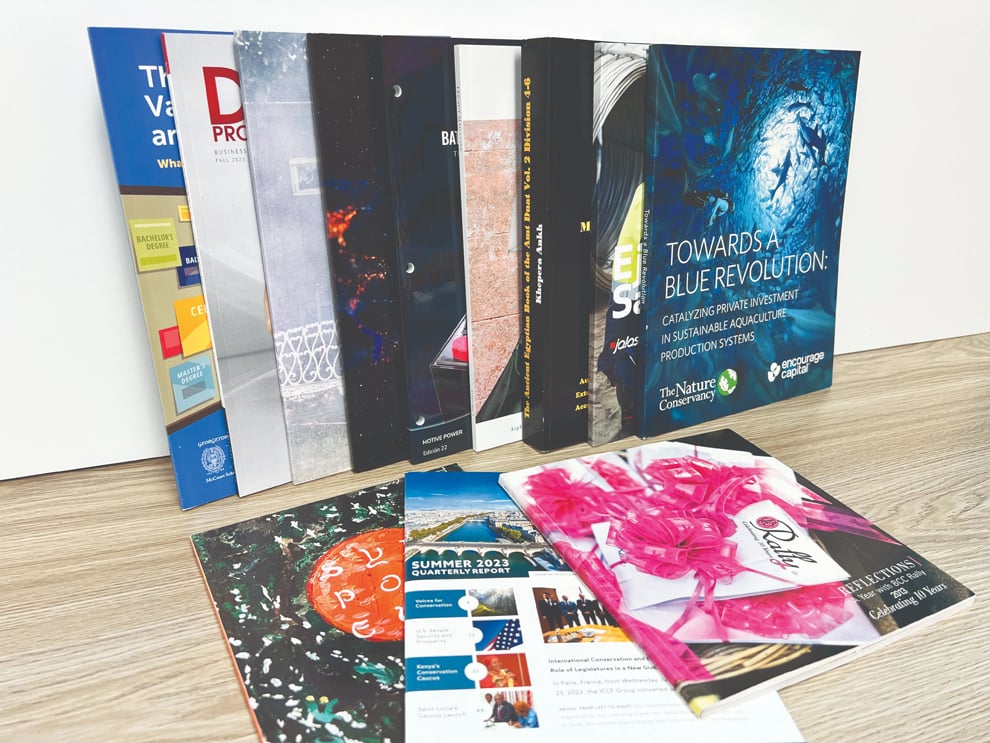
Pair rack brochures with rack cards, postcards, and flyers that share the same look.
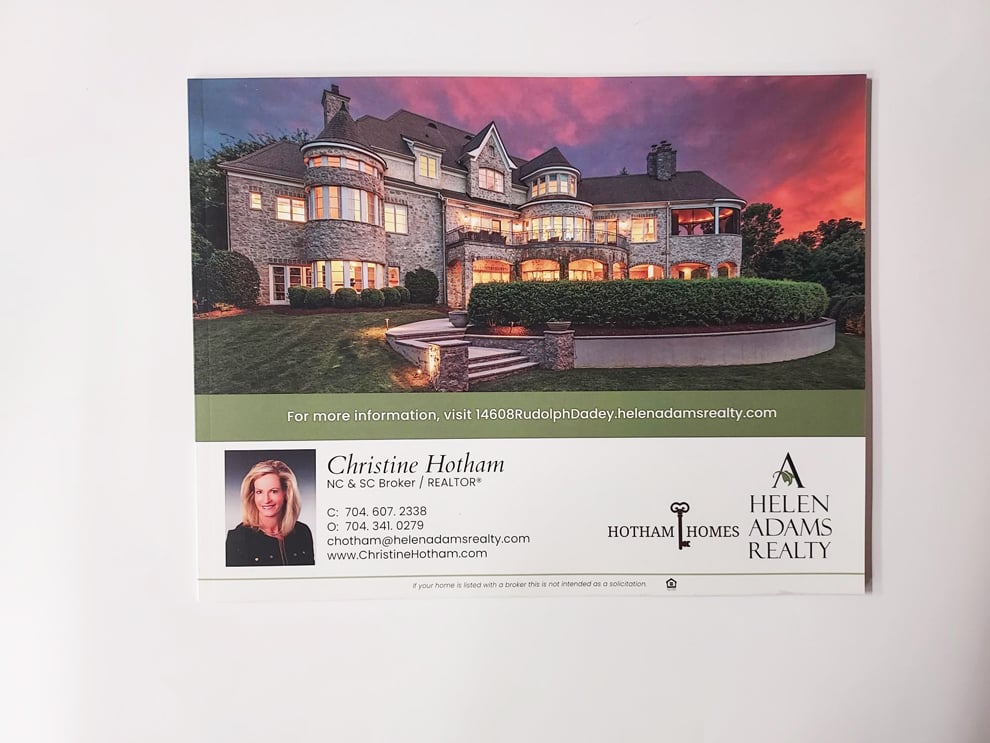
Send season or program brochures straight to subscribers, members, or patrons with postal preparation.
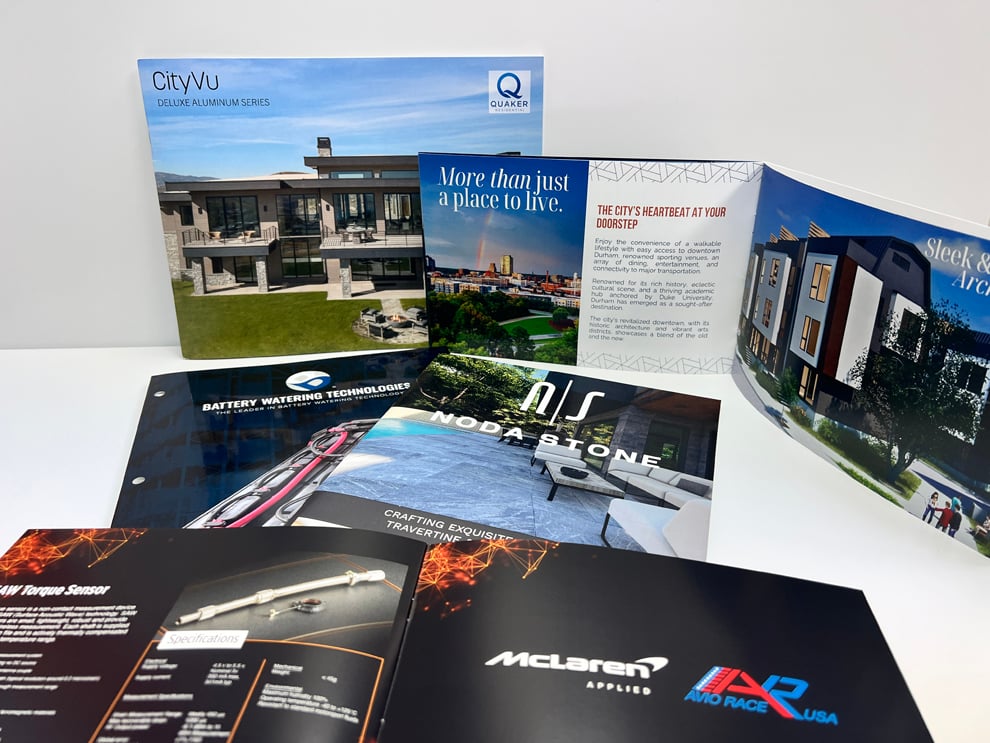
Choose a bound guide when patient education or a visitor itinerary needs more pages.
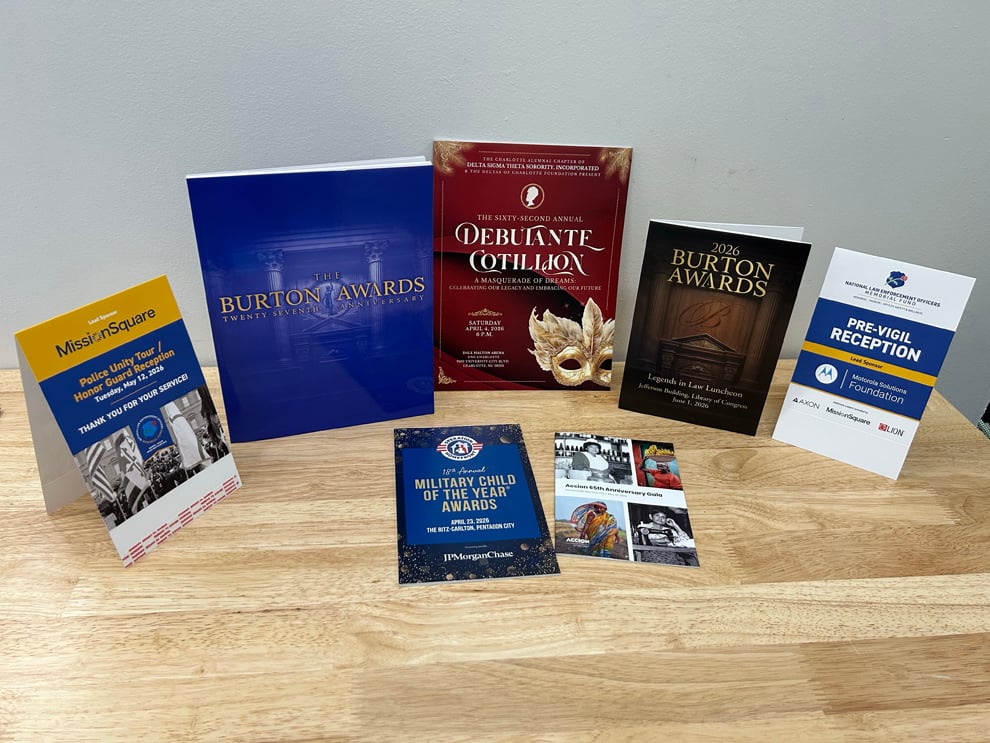
Print performance, gala, and ceremony programs with cast, speaker, or sponsor details.
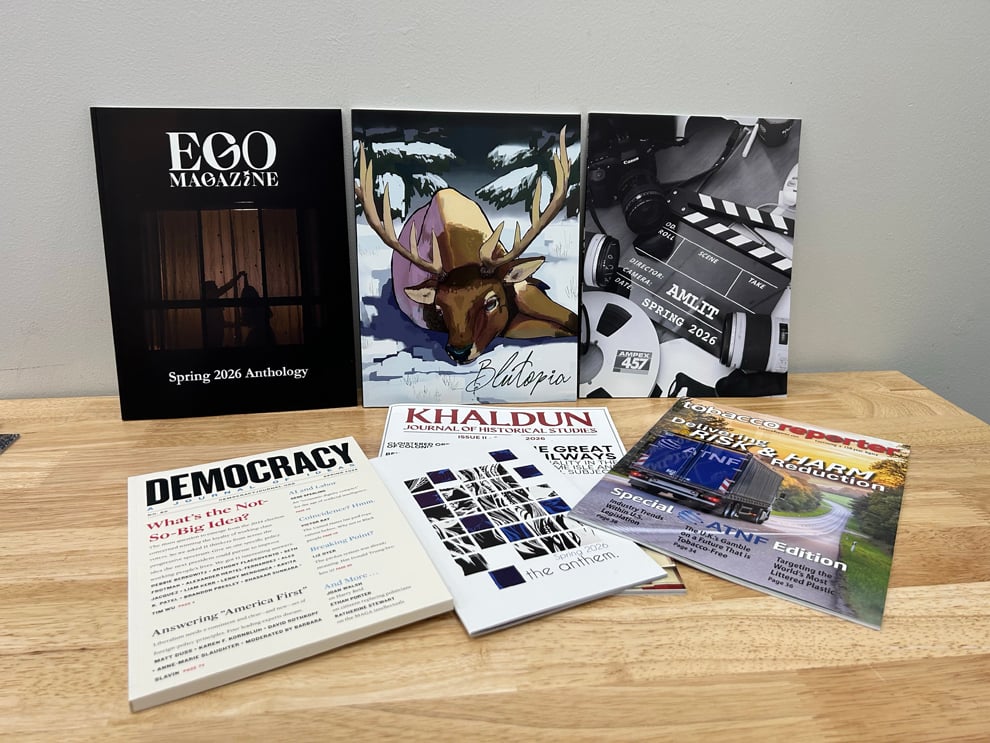
Produce directories, service guides, and visitor resources that need room beyond a brochure.
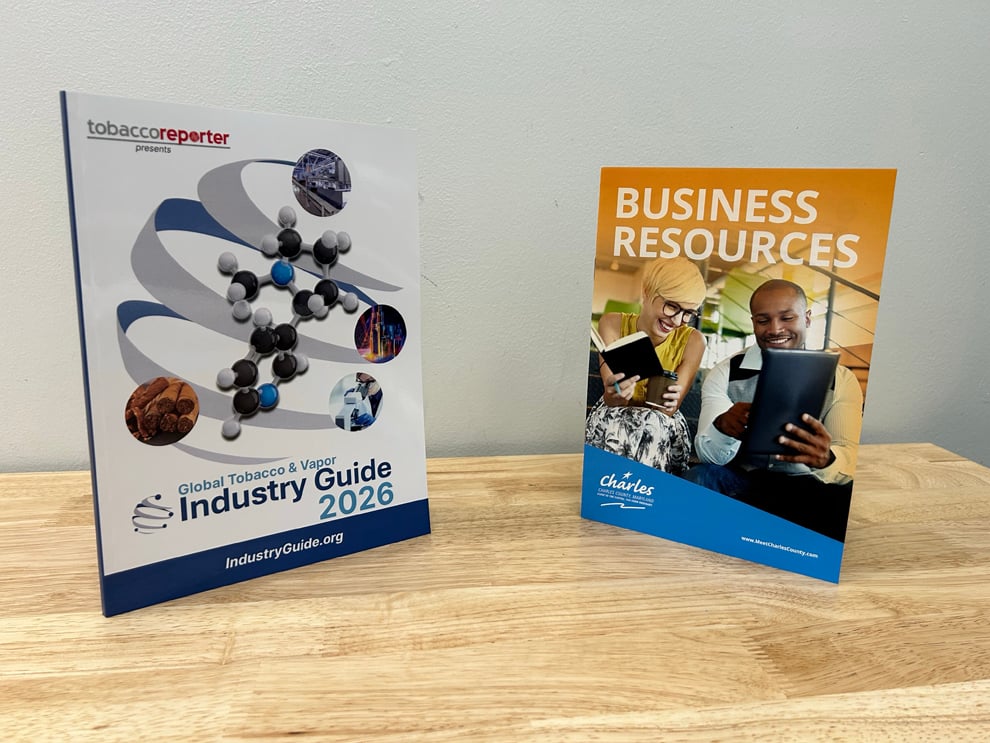
Keep patrons, members, or community partners up to date with a recurring printed edition.
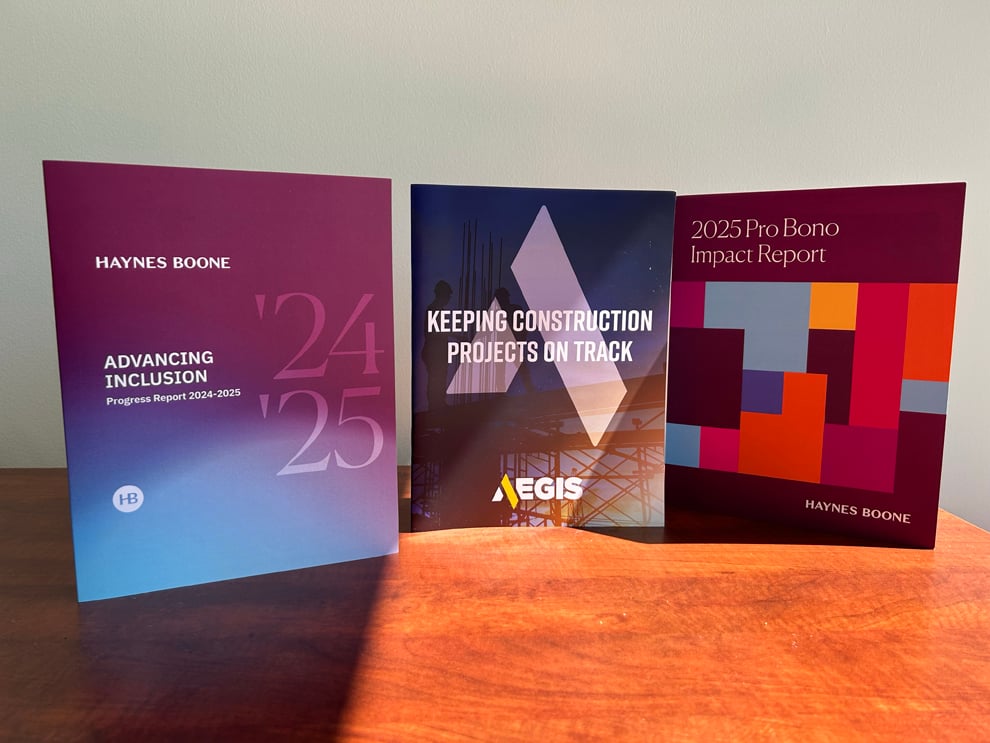
Share a year of impact and support with donors, boards, and the community.
Two paths are available. The Online Store suits finished, print-ready brochures in a listed size, fold, paper, and quantity, ordered directly at Heritage's lowest available pricing. Custom Quote suits qualifying orders of $2,000 or more that need fold adjustments, department or venue versions, color-critical review, or coordinated delivery, and each accepted and assigned order gets a named Project Coordinator who works with you directly.
Most brochure racks are built for pieces around four inches wide and nine inches tall, which is why a letter-size sheet folded into three panels is such a common choice. Before committing to a different size or fold, confirm that it will fit the holders where it will actually be displayed, including wall racks, countertop stands, and partner locations.
The top of the cover does the most work. In many racks, only the upper third or so is visible, so the organization name, headline, or key image should sit high on the front panel. Anything placed near the bottom of the cover may stay hidden until someone pulls the brochure out.
Paper stiffness matters too. A sheet that is too light can slump forward in the pocket, while a sturdier stock stands up and looks deliberate. Heritage reviews the size, fold, and paper with these display realities in mind, and the electronic proof lets you confirm the cover layout before printing. The result is a brochure that is easy to find, pull, and read.
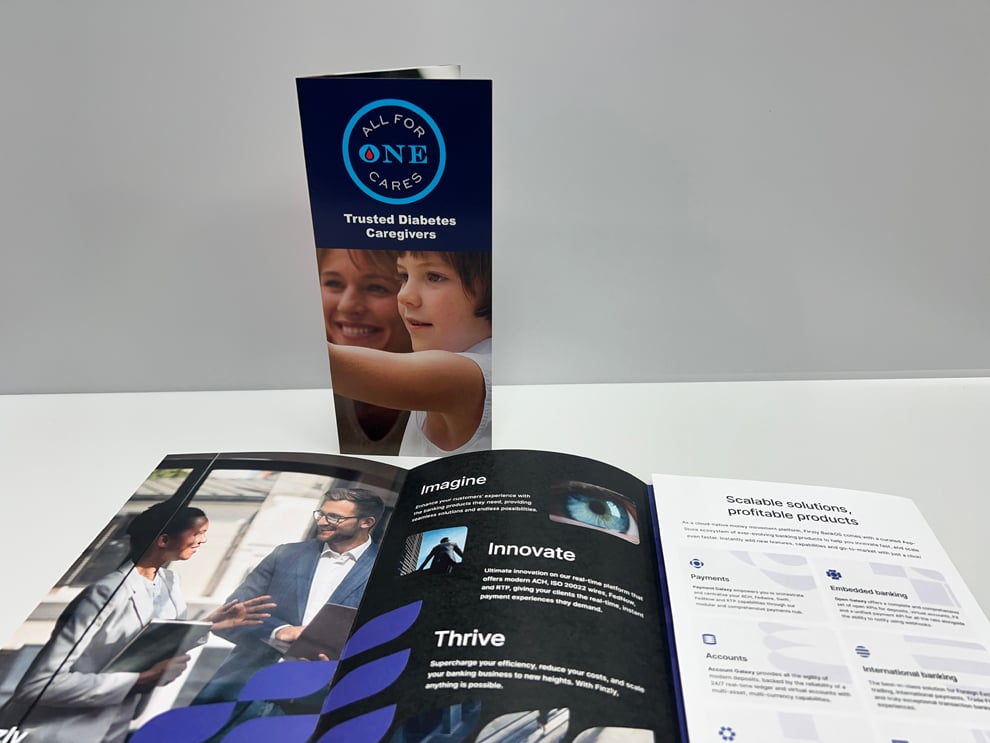
Most standard racks hold pieces about four inches wide by nine inches tall. A letter-size sheet folded into a tri-fold finishes at roughly 3.7 by 8.5 inches, which fits comfortably. Larger or square formats may need different holders, so check the racks at every display location before choosing a custom size.
Place it in the top portion of the front panel. In many racks, the lower part of the cover is hidden behind the rack lip or the brochure in front of it. Your organization name and a short, clear headline should be readable at a glance from a few feet away.
A tri-fold fits standard racks and gives six panels for a clear sequence of information, which suits most patient and visitor topics. A bi-fold offers larger panels but usually needs a larger holder. If the brochure will live in a rack, the tri-fold is typically the practical choice.
Yes. Department versions might change the service description, location, phone number, or provider list while keeping the shared design. Name each file clearly and assign quantities and approvers by version. Separate electronic proofs for each department let every location's details be checked on their own.
Check phone numbers, addresses, hours, web links, and any instructions patients will follow, along with panel order and text near the folds. Clinical accuracy and approvals remain with your organization, so route the proof to whoever owns the content. Remember that the proof is a content check rather than a color sample.
A brochure suits a single topic: preparing for a procedure, what a service offers, or how to reach a department. A booklet fits when patients need step-by-step instructions, several topics, or a guide they keep through treatment. Patients often appreciate a short brochure in the waiting room and a fuller booklet at discharge.
Stiffness is the deciding factor. A light text-weight sheet tends to bow forward in a pocket, while a heavier text or light cover stock stands upright and looks tidy. The sheet must still fold cleanly, so pick the sturdiest paper that works with your chosen fold rather than simply the heaviest option.
It can, and an unusual shape can help a season announcement stand out. The tradeoff is fit: oversized or square pieces may not fit standard racks, envelopes, or mail formats at the same cost. Decide where the brochure will live first, then choose a size that supports that use.
When a subscriber mailing is part of the job Heritage accepts, addressing and postal preparation can be handled alongside printing. Your organization supplies the subscriber list, current and approved for your use, in the agreed layout. Allow ample time before single-ticket sales open, since postal transit after acceptance runs on the Postal Service's schedule.
Base each location's share on how quickly brochures disappear from its racks, the number of holders it has, and how often staff can restock. High-traffic lobbies may need more frequent deliveries rather than one large drop. Tracking usage over a month or two makes the next order much more accurate.
Often, yes. A standard letter-size tri-fold that rarely changes is exactly the kind of well-defined product the Store handles well, as long as your artwork is print-ready and the configuration is listed. You order it yourself at Heritage's lowest available pricing, and an electronic proof still precedes printing.
On a qualifying Custom Quote order of $2,000 or more, Heritage can make production-oriented adjustments, such as fitting an existing layout to a rack-friendly size and fold. Messaging and content stay with your team. Online Store orders need artwork that already matches the selected size and panel layout.
Yes. Heritage works with healthcare providers, arts organizations, and businesses throughout North Carolina, including Winston-Salem and the Piedmont Triad. Finished brochures can be sent to a central office or divided among clinics, venues, and visitor centers, depending on the delivery plan you approve.
The same color-management controls are applied each time, and keeping the paper and finish unchanged is the most important factor you control. PMS references can be supplied as targets. Color stays within the normal range of the paper and process, and qualifying Custom Quote orders can add a Physical Production Color Proof.
Use it for qualifying orders of $2,000 or more that need fold or file adjustments, several department or venue versions, color-critical review, or coordinated delivery to multiple locations. A Project Coordinator becomes your direct contact once Heritage accepts the quote and assigns the order.
Share the release date as soon as it is set, ideally before the design is final. Size, fold, paper, and quantity can often be confirmed early. Once the print-ready file arrives, Heritage will tell you what the remaining window supports based on proof approval, production capacity, finishing, and delivery.
Heritage Signs & Displays created new museum signage for the Military Women’s Memorial in Arlington, VA. The project included custom signs, wall wraps, dimensional letters, and standoff-mounted displays to honor the legacy of U.S. servicewomen and the donors who supported the memorial. The updated interior features impactful designs, including a "Our Legacy" wall display and panels showcasing historical contributions and artwork, creating a transformative tribute to women in the U.S. Armed Forces.
Heritage Signs & Displays' collaboration with The Gathery to brand Union Market in Arlington, VA, for Indeed's "Ready to Work" job fair. The project included custom event displays, wall graphics, window graphics, and wayfinding signs, creating an immersive and visually appealing environment. The branding enhanced the venue, reflected the event's mission, and provided a seamless experience for attendees.