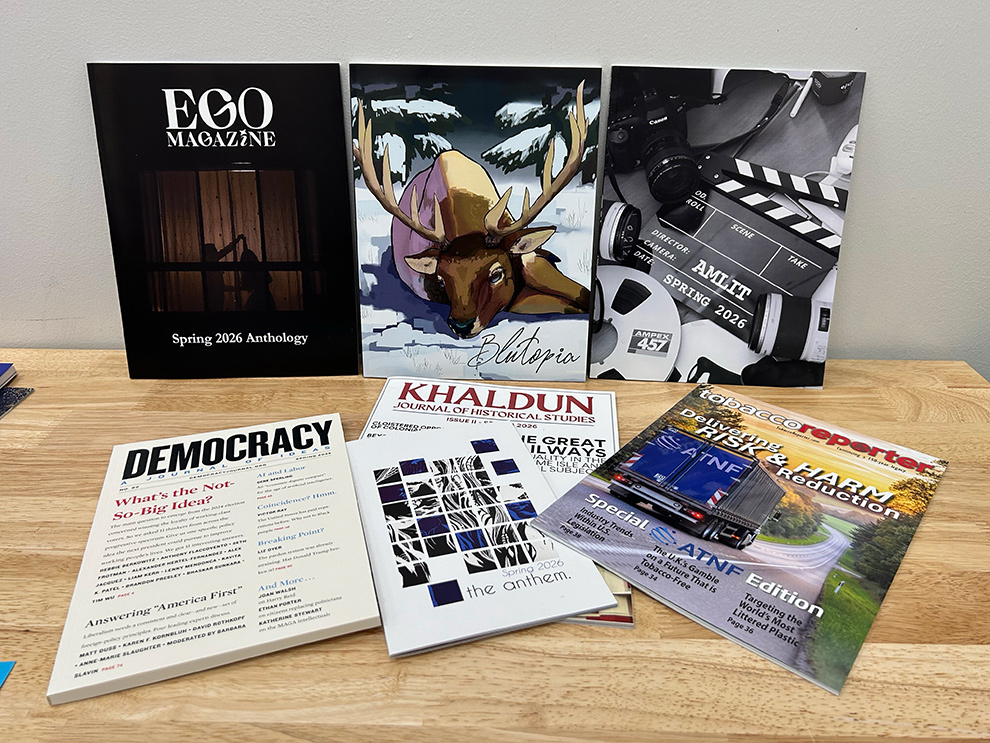
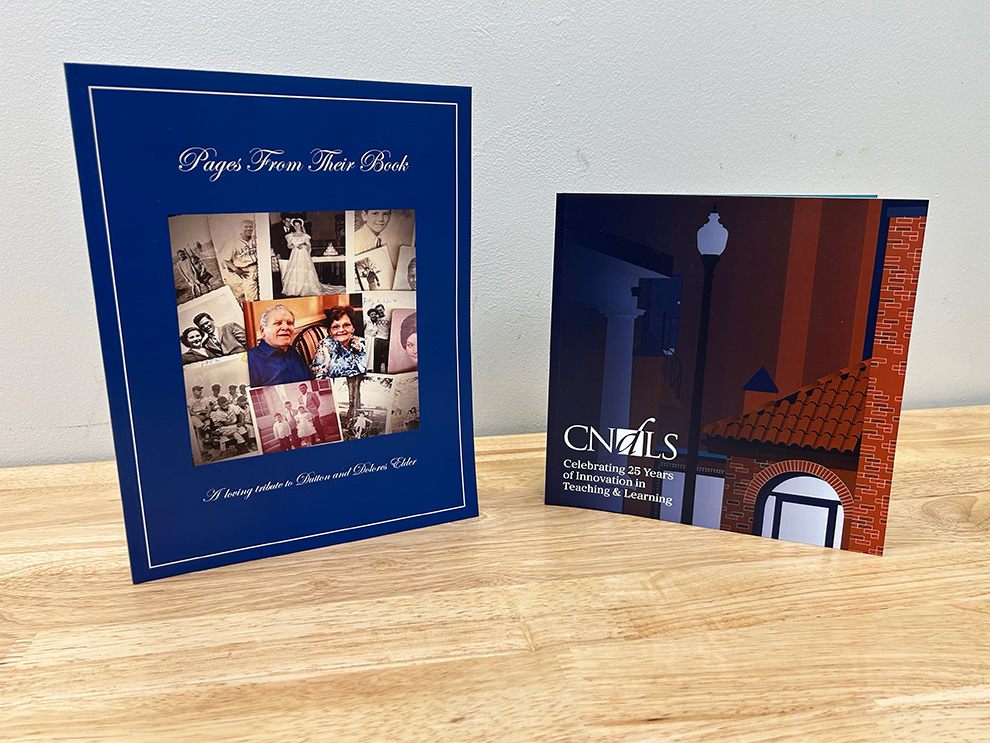
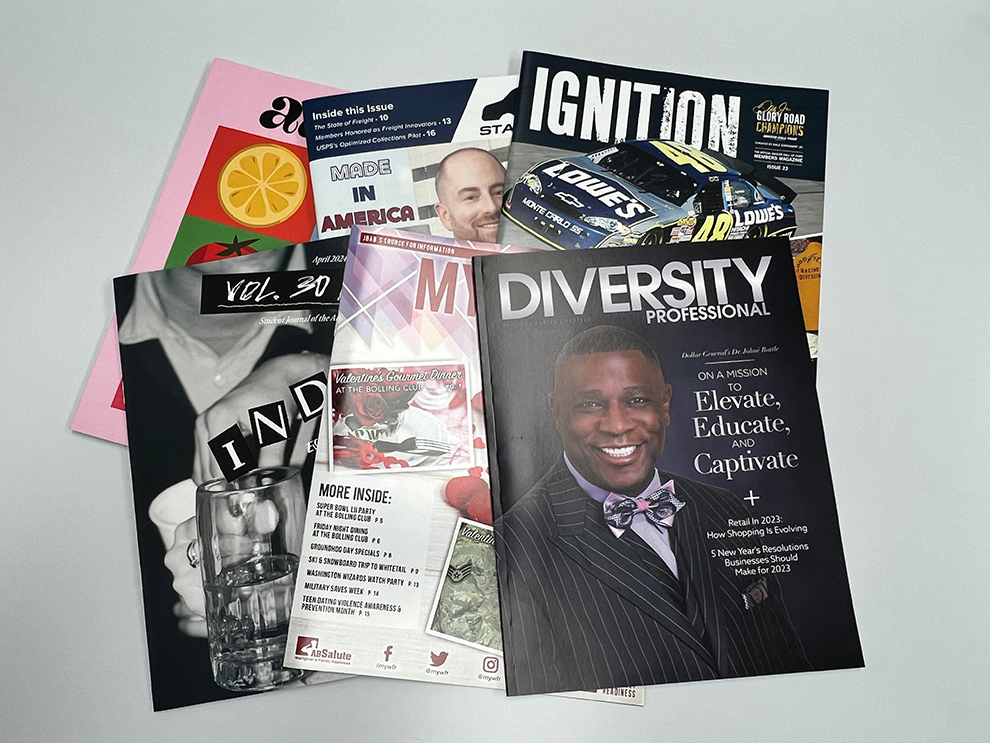
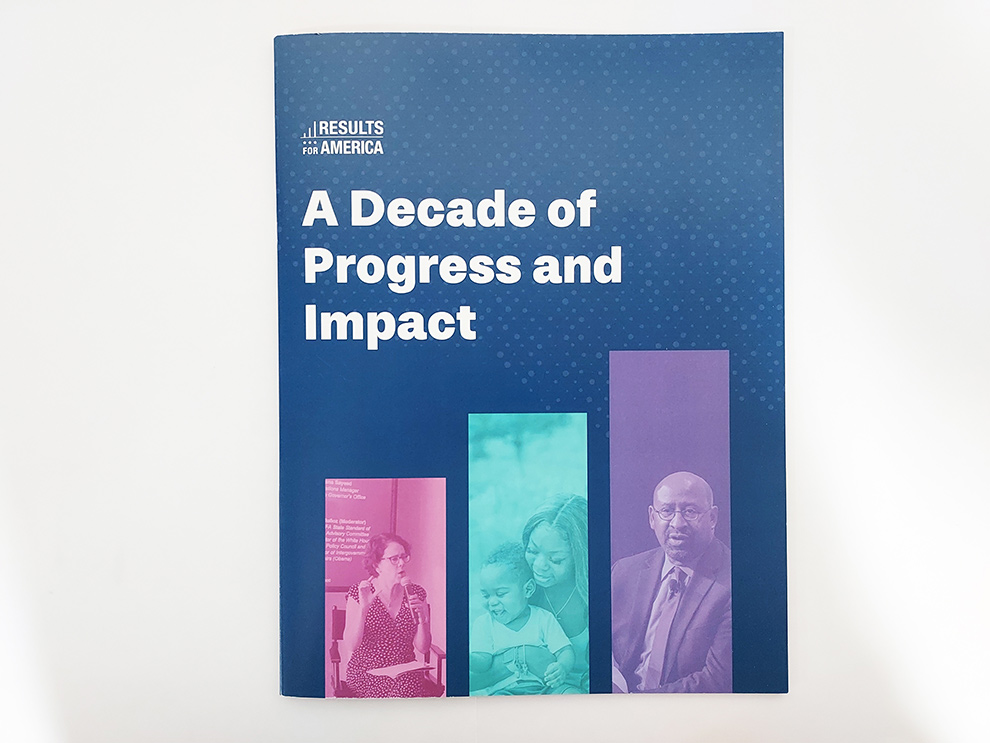
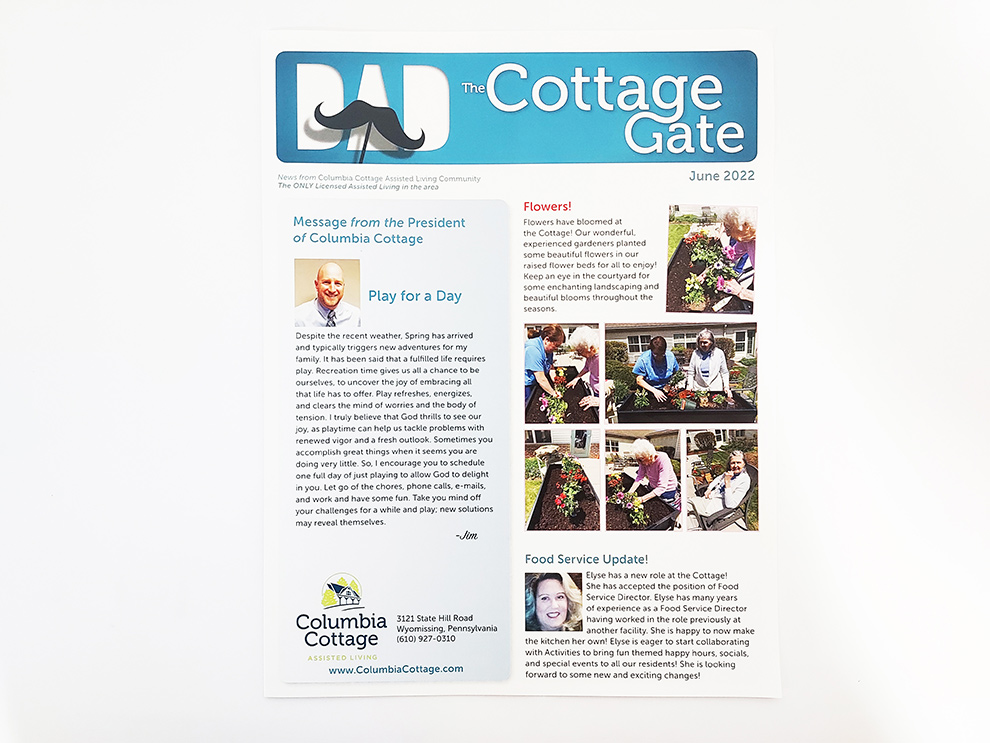
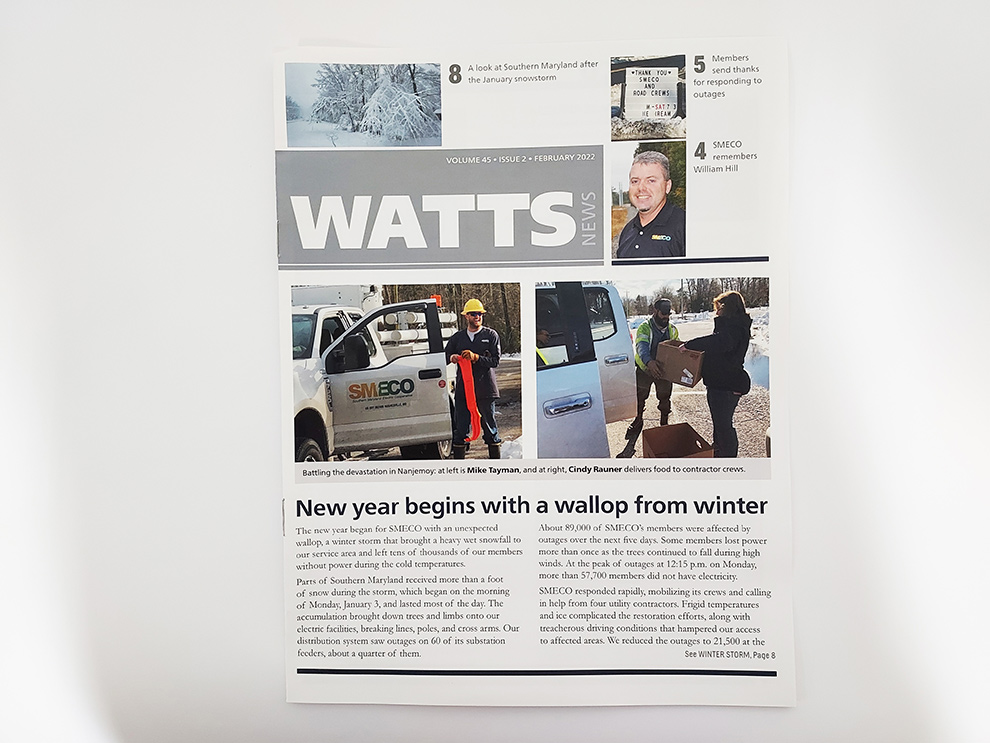
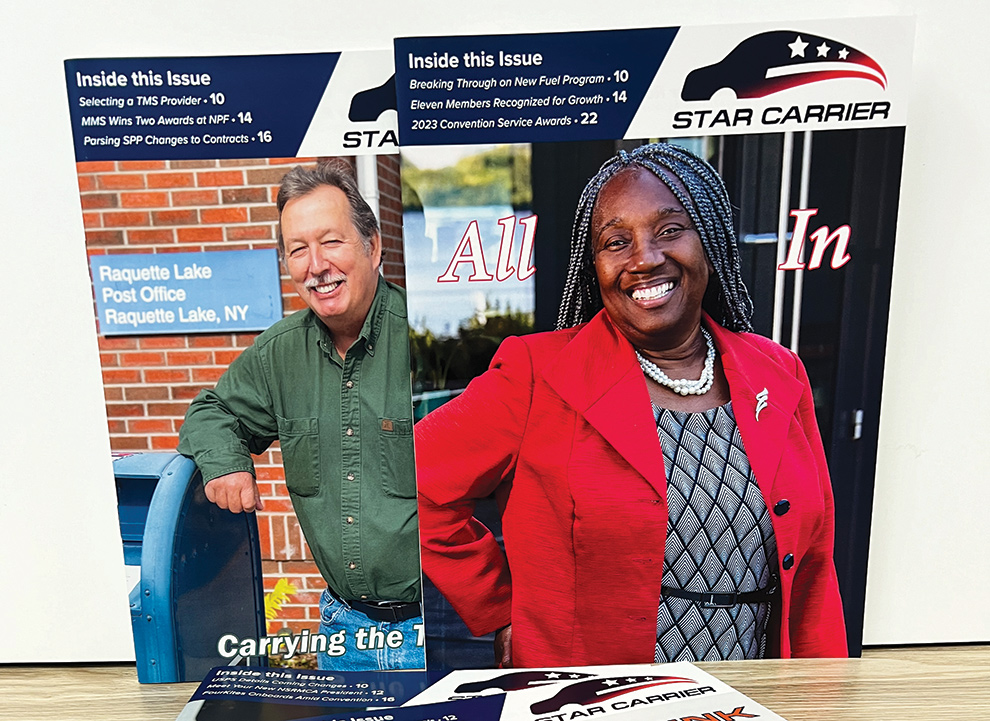
Most newsletters are not a one-time project. They return every month, every quarter, or every semester, and each edition carries the same expectation: the pages should look like the last issue, arrive when readers expect them, and reflect well on the organization sending them. Heritage produces newsletters for Durham, NC organizations with that recurring rhythm in mind.
Our approach starts with the specifications you have already settled. Finished size, paper, page count, self-cover or separate cover, saddle stitching, and mailing requirements become the foundation for every issue that follows. When your next print-ready file is uploaded, the production plan is already familiar, which shortens the review conversation and reduces the chance of a surprise.
Consistency does not mean complacency. Each edition still receives an electronic proof, a fresh look at quantities and versions, and confirmation of the distribution date. The result is a publication that holds its visual standard from issue to issue while Heritage manages the production details behind it. Whether your newsletter reaches alumni, members, patients, donors, residents, or employees across the Triangle, our job is to keep the printed piece reliable so your communications team can focus on the content.
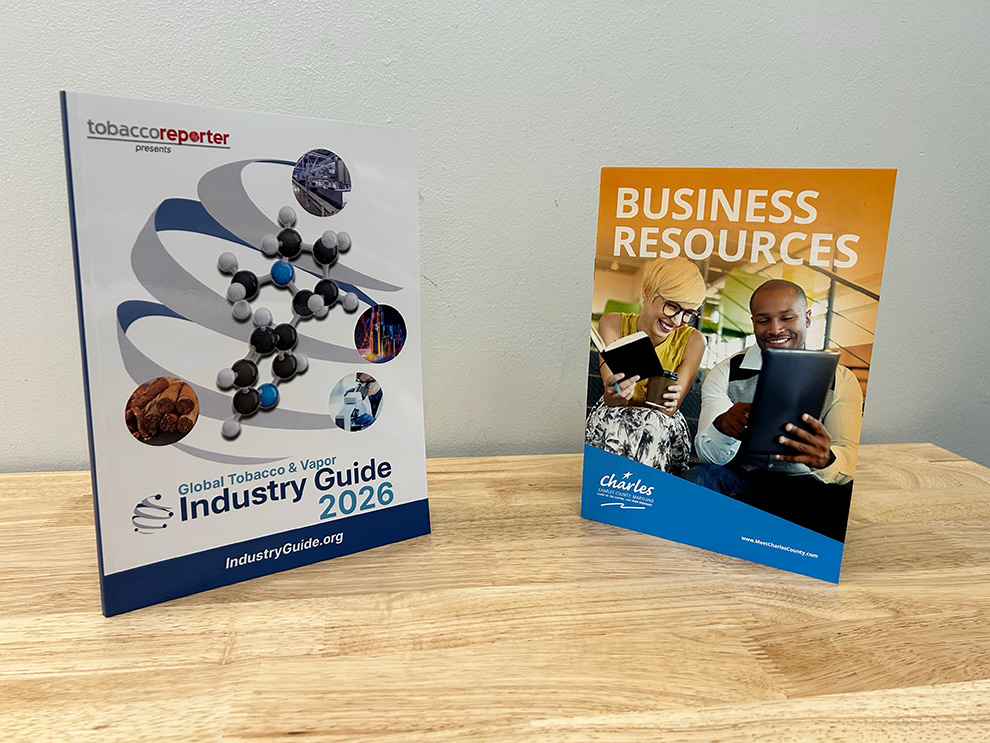
Heritage has been printing since 1977, and a large share of that history involves publications that come back on a fixed cadence. That experience shows up in practical ways: knowing when a page count will start to round the spine, when a self-cover stock is heavy enough to feel substantial in the mail, and when a mailing panel needs to be adjusted before the proof goes out rather than after.
Durham is home to universities, research institutions, healthcare systems, nonprofits, neighborhood groups, and growing companies that rely on printed newsletters to maintain a direct connection with their audiences. Those organizations tend to value a printer that remembers their specifications, flags issues before they become delays, and does not require a full re-briefing every quarter. Heritage brings award-winning print quality to that relationship, along with color management discipline that keeps logos, photography, and brand colors stable across editions.
We also respect the boundaries of the engagement. Heritage prints from your completed, print-ready artwork and does not write, edit, or design the newsletter. Where supplied files need limited production-oriented adjustments to run correctly, Custom Quote projects can accommodate that. What you receive is a production partner focused on quality, timing, and accountability rather than one that complicates a straightforward recurring order.
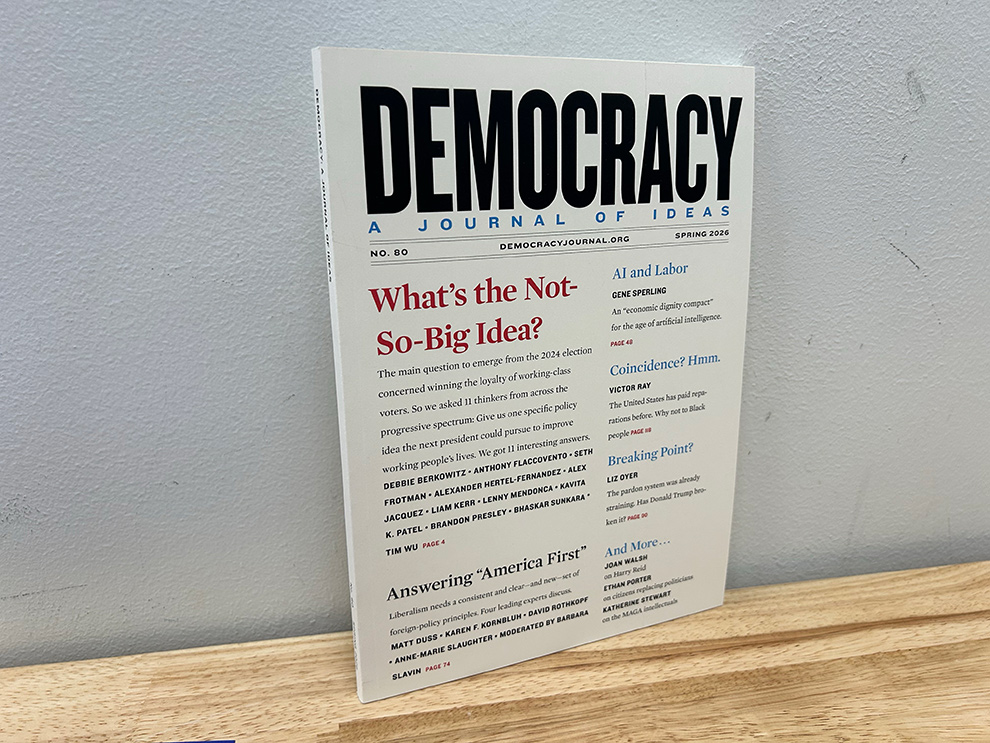
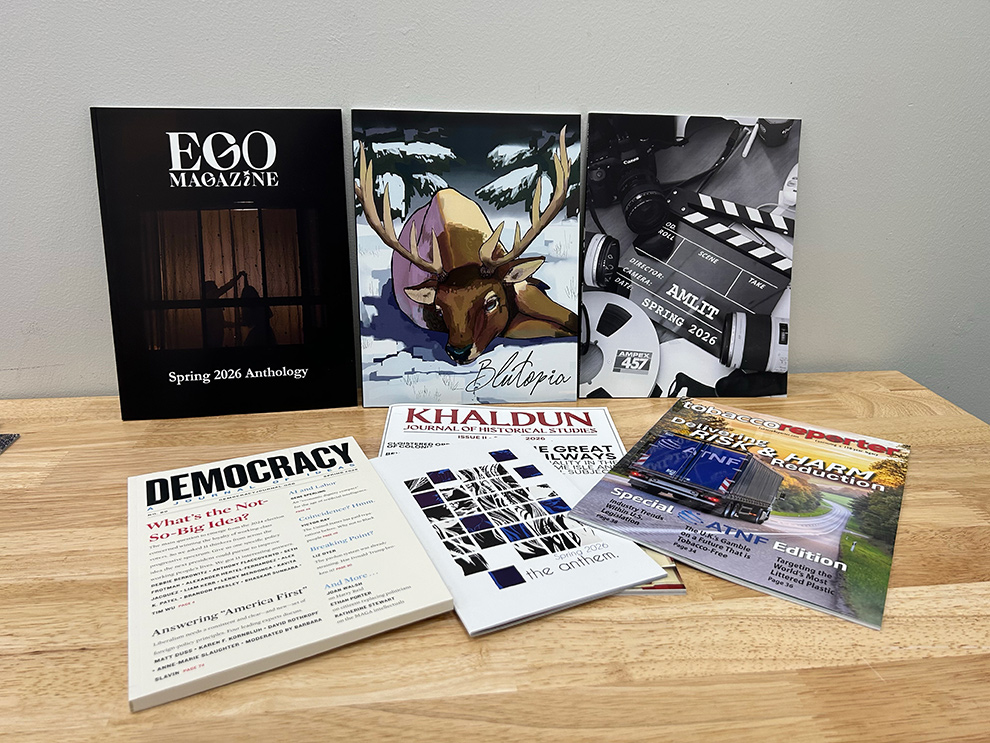
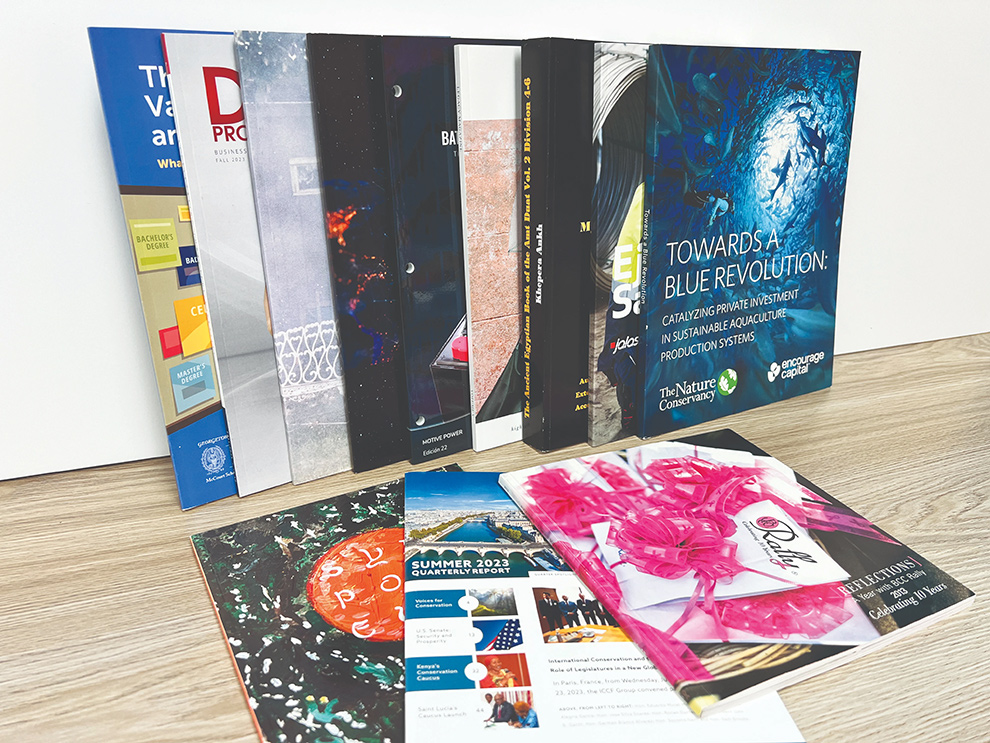
Choose this path for longer editorial publications with a distinct cover, higher page counts, and binding options that extend beyond saddle stitching.
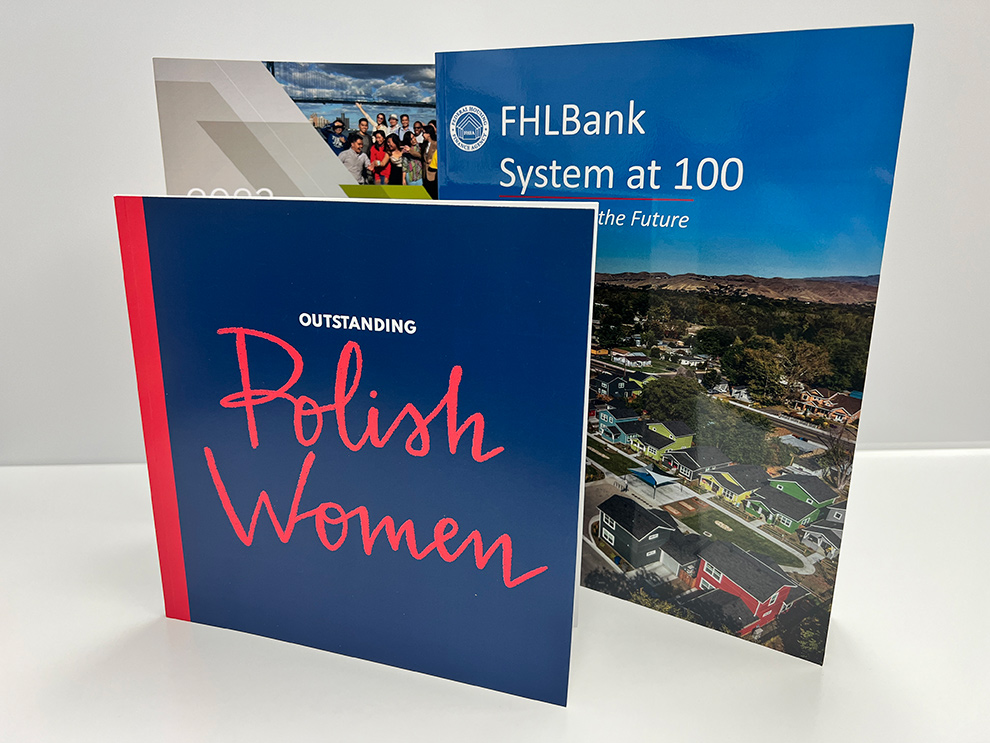
Suited to orientation guides, member handbooks, program listings, and other compact pieces that share a saddle-stitched format with newsletters.
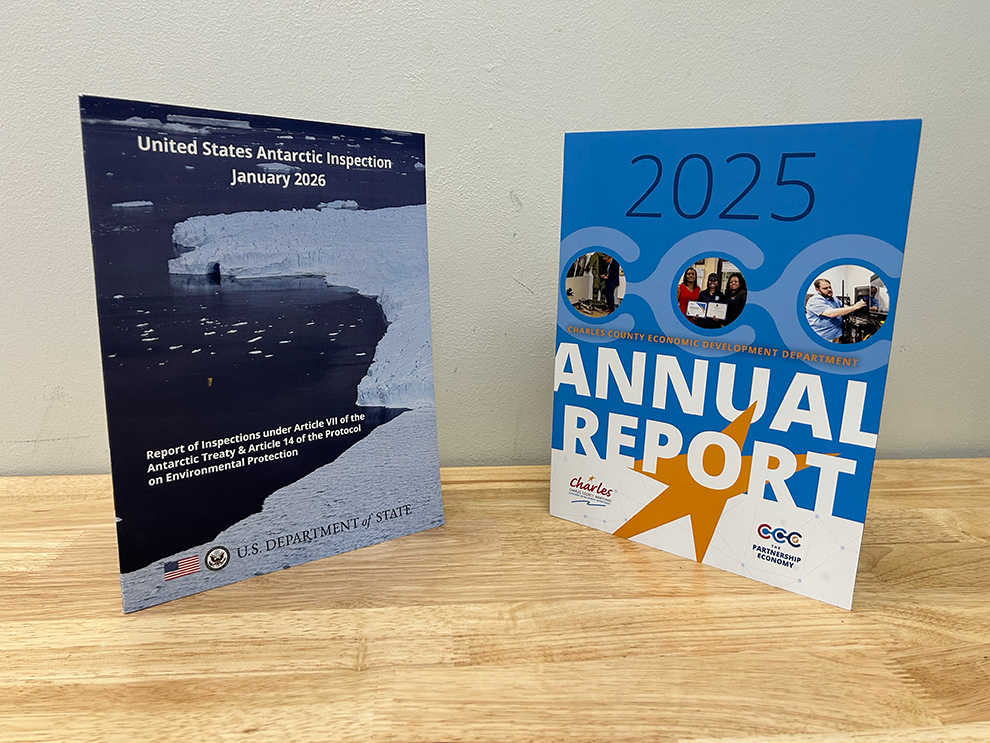
A formal printed format for year-end financial summaries, impact narratives, and governance reporting to boards, donors, and stakeholders.
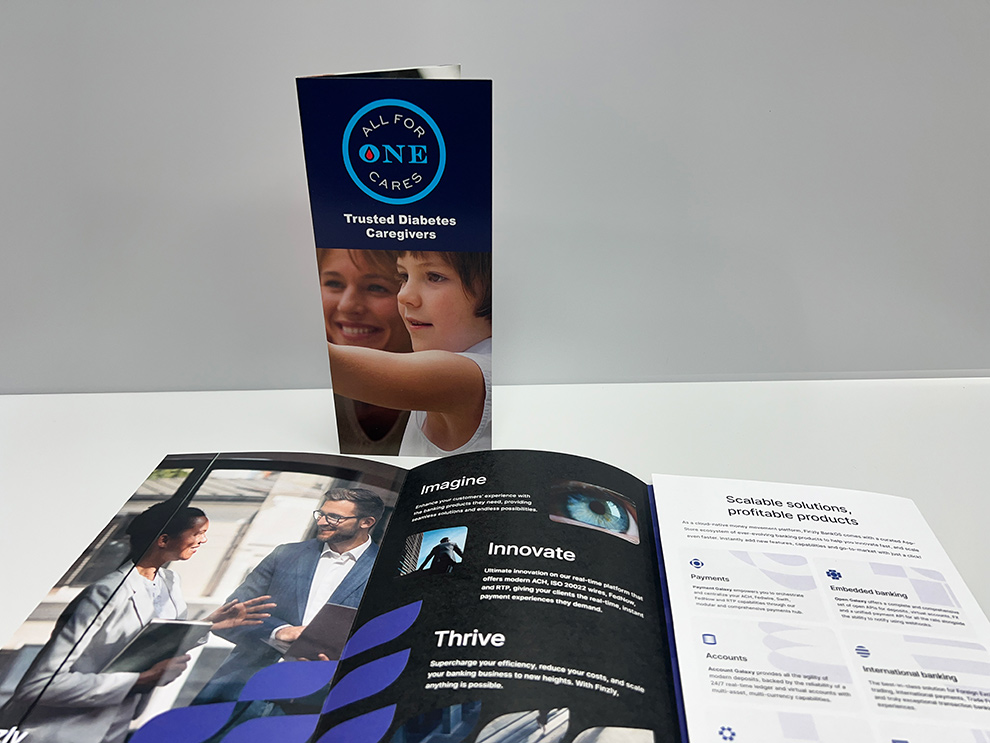
Folded pieces that summarize a program, a service line, or a campaign without the page structure of a newsletter.
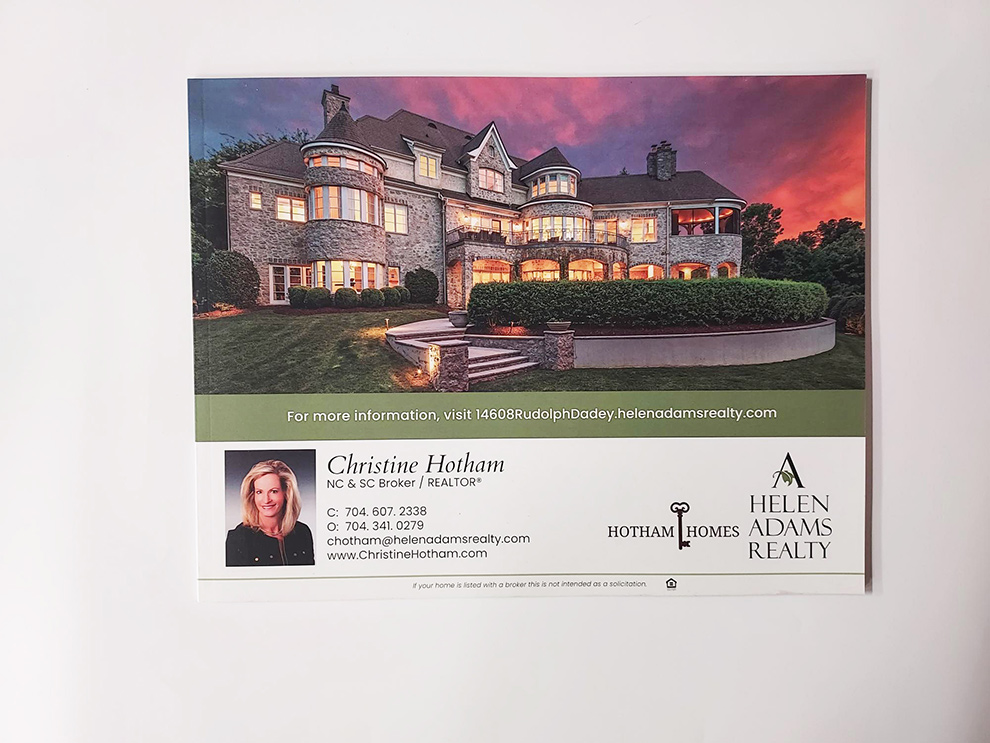
Pair printing with addressing, postal preparation, and USPS entry when your newsletter audience is defined by a mailing list.
Postcards, flyers, inserts, and related collateral that reinforce the message your newsletter carries.
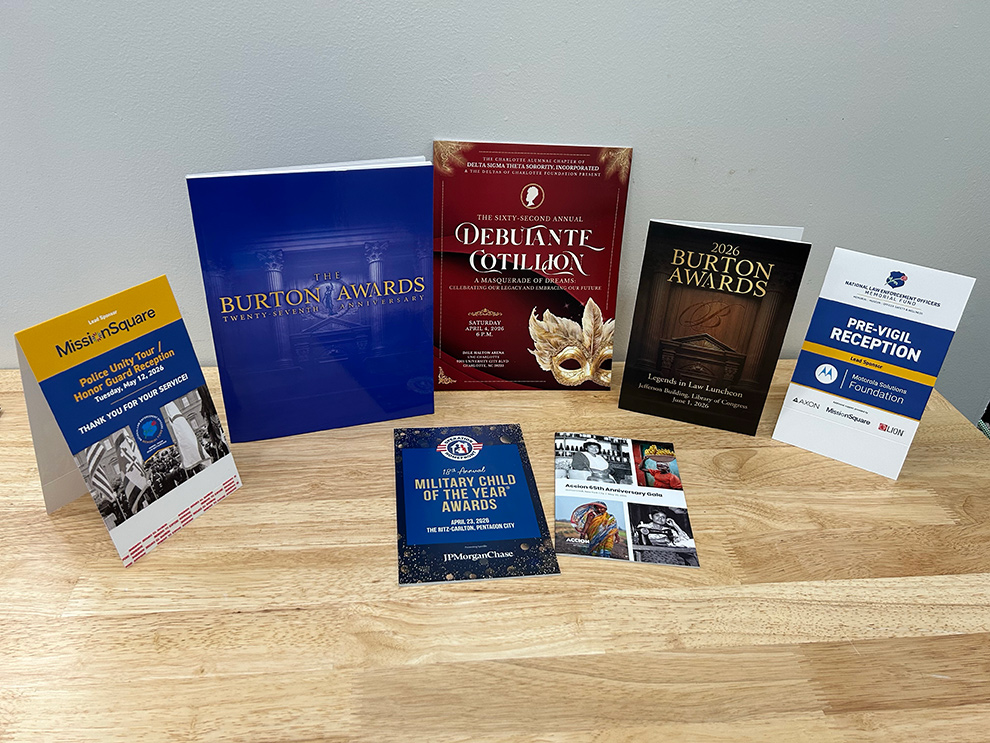
Printed schedules, speaker profiles, sponsor acknowledgments, and attendee information for conferences, ceremonies, and forums.
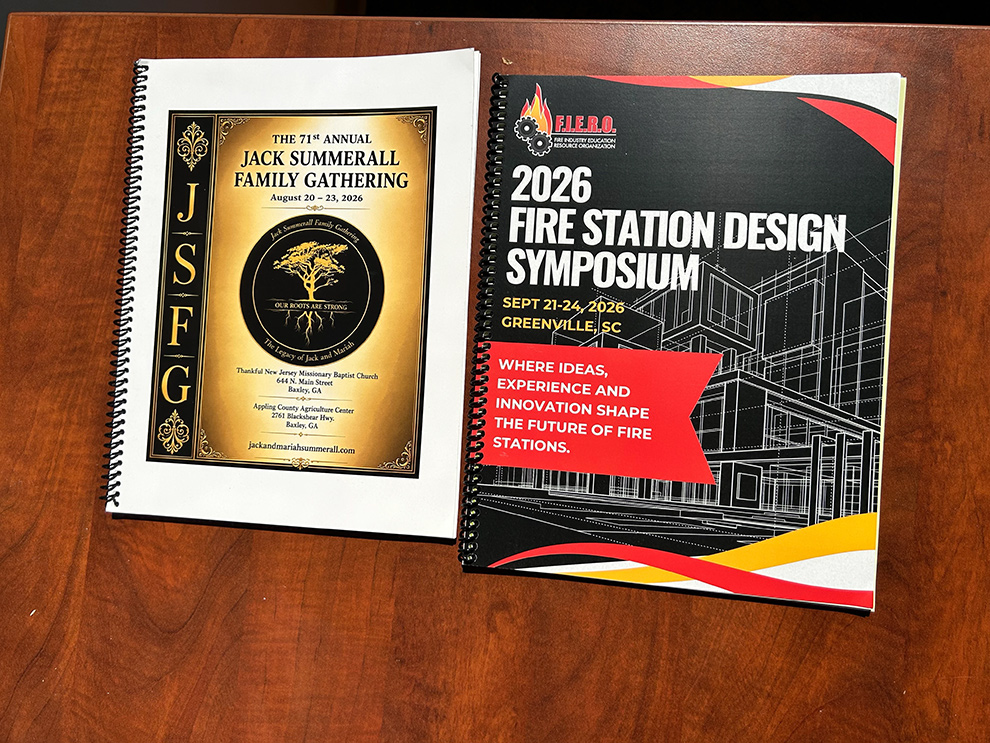
Reference documents built for repeated use by employees or students rather than periodic organizational updates.
Send your print-ready files, specifications, quantity, and required distribution date through Custom Quote, and your Project Coordinator will contact you to confirm the production plan. If your newsletter is fully specified and fits one of the available saddle-stitched booklet configurations, you can also select your options and order directly through the Online Store.
When a Custom Quote is submitted, Heritage assigns a Project Coordinator who reviews the request, confirms the specifications and the required date, and asks any remaining questions before production is planned. From that point forward, you have a single phone and email contact who understands the newsletter and stays with it through proofing, printing, binding, and delivery.
For a recurring publication, that continuity pays off quickly. The same Project Coordinator recognizes your standing specifications, notices when a new edition departs from them, and can confirm whether the change is intentional. If a version count increases, a mailing list grows, or a distribution date shifts, you explain it once to someone who already knows the history of the publication.
Every edition also receives an electronic proof before printing so you can verify copy, images, pagination, and cover treatment on the exact production file. Once approval is in hand, Heritage moves the newsletter through printing and saddle stitching and into the agreed distribution path, whether that means direct mail, shipment to a Durham office, delivery to a campus or event, or preparation for your own internal distribution.
As soon as the publication calendar is set. Knowing the anticipated specifications and distribution dates in advance allows Heritage to reserve paper and production capacity for each edition. The actual production clock starts when the completed, print-ready file arrives and the electronic proof is approved, so an early heads-up protects the timeline without committing you to final content.
That is the goal, and repeat specifications make it achievable. Paper, finished size, cover construction, and saddle stitching remain constant unless you request a change, and color management discipline helps keep brand colors and photography consistent. Heritage still reviews every new file because artwork, page count, quantities, and mailing requirements can shift between editions.
Newsletters are produced as saddle-stitched publications. For thicker issues, square-spine saddle stitching flattens the spine and gives the finished piece a cleaner profile than a conventional stitched spine that begins to round as pages are added. Your Project Coordinator can recommend the right option based on page count and paper.
Either works. A self-cover newsletter uses one paper throughout and is the most common choice for shorter editions. A separate, heavier cover adds durability and a stronger first impression when the publication warrants it. The decision usually comes down to page count, mailing considerations, and the presentation you want readers to experience.
Heritage regularly produces multi-version newsletters for different campuses, departments, chapters, donor tiers, or neighborhoods. Each version receives its own electronic proof, and clear file naming along with version-specific quantities and distribution instructions keeps the run organized from proofing through fulfillment.
Yes, when mailing is part of the project. You provide the authorized recipient data, and Heritage coordinates addressing, postal preparation, and entry into the mail stream. Mailing panel placement, finished size, and quantity are built into the production plan up front. Delivery performance after USPS acceptance is outside the control of any printer.
Yes. Every newsletter order, including purchases made through the Online Store, receives an electronic proof for your review before anything prints. It confirms the production file that will be used, including text, images, page order, and version details. It is not a physical color reference.
For Custom Quote projects, a paid Physical Production Color Proof may be available. Heritage prints the reference on the planned production equipment and paper so you have a tangible sample to approve. This step adds time to the schedule, so it is best requested when the publication calendar is first discussed.
No. Heritage works from your finished, print-ready artwork and does not provide editorial or general design services. Custom Quote projects can include limited production-oriented adjustments to prepare supplied files for printing. Online Store orders require complete print-ready files.
It is a good fit when the newsletter is print-ready, fully specified, and matches an available saddle-stitched booklet configuration, and when you are comfortable selecting production options without a Project Coordinator or a Physical Production Color Proof. Even Store orders receive an electronic proof before printing.
Choose Custom Quote when the project involves multiple versions, direct mail coordination, special specifications, limited production adjustments, a compressed schedule, or a preference for direct communication with an assigned Project Coordinator. Recurring publications with any complexity usually benefit from this route.
Your Project Coordinator reaches out to review the newsletter, confirm the required date, clarify specifications, and become your direct contact for the order. That same person then coordinates electronic proof approval, production timing, and whatever direct mail, shipping, or delivery the project includes.
Often, yes. Tell us the required distribution date right away and send the completed print-ready file as soon as it is final. Your Project Coordinator will evaluate the remaining production window, identify what needs attention immediately, and explain what is realistic. When an expedited path is workable, the job moves with urgency rather than on a standard timetable.
Newsletters are generally shorter, often self-cover, and almost always saddle-stitched. Magazines tend to carry higher page counts, a separate heavier cover, and may shift to perfect binding as they grow. If your publication is moving toward magazine territory, your Project Coordinator can discuss the transition.
Heritage supports organizations throughout Durham, NC and the surrounding Research Triangle, including universities, healthcare systems, research organizations, nonprofits, associations, and businesses. Finished newsletters can be direct mailed, shipped, delivered to a Durham address, or prepared for your own distribution depending on the plan.
Heritage Signs & Displays created new museum signage for the Military Women’s Memorial in Arlington, VA. The project included custom signs, wall wraps, dimensional letters, and standoff-mounted displays to honor the legacy of U.S. servicewomen and the donors who supported the memorial. The updated interior features impactful designs, including a "Our Legacy" wall display and panels showcasing historical contributions and artwork, creating a transformative tribute to women in the U.S. Armed Forces.
Heritage Signs & Displays' collaboration with The Gathery to brand Union Market in Arlington, VA, for Indeed's "Ready to Work" job fair. The project included custom event displays, wall graphics, window graphics, and wayfinding signs, creating an immersive and visually appealing environment. The branding enhanced the venue, reflected the event's mission, and provided a seamless experience for attendees.