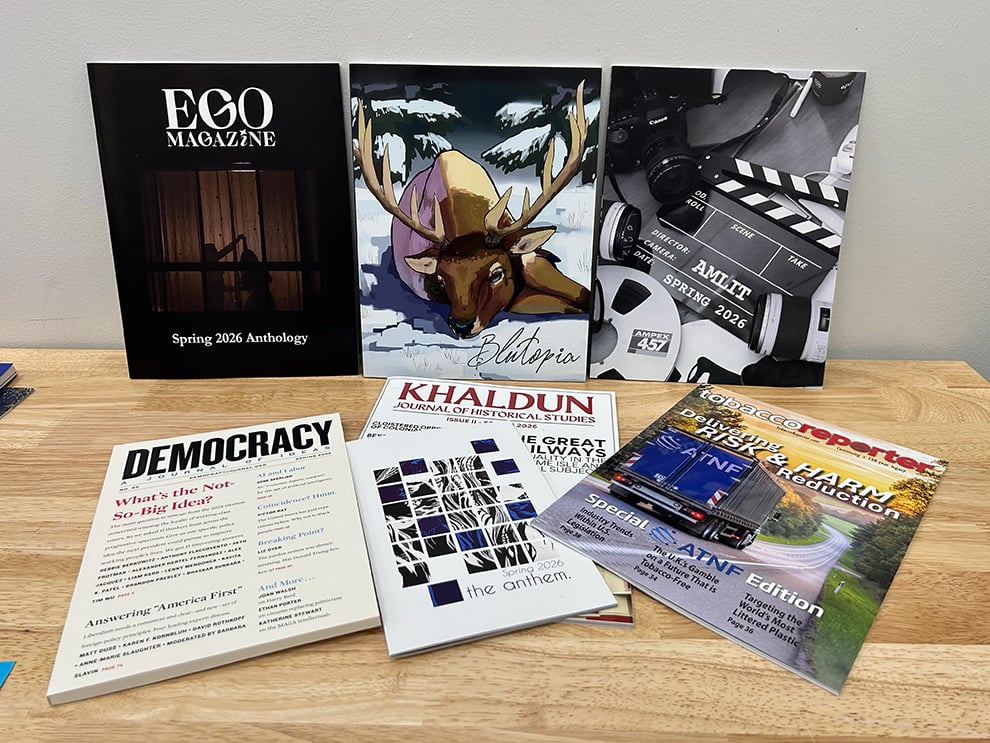
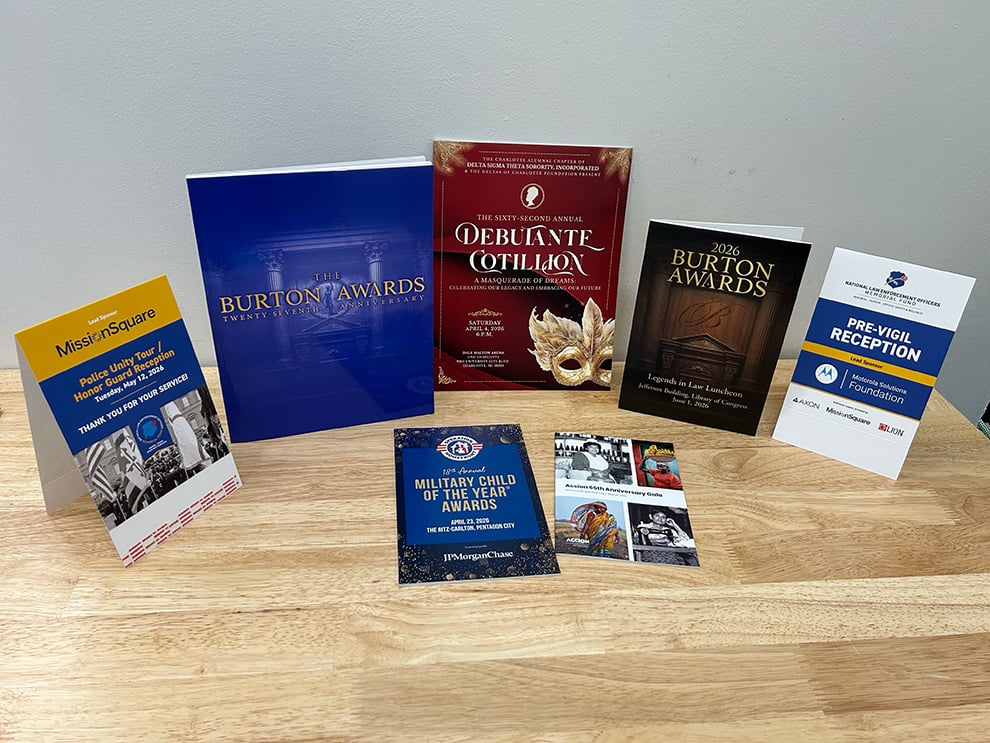
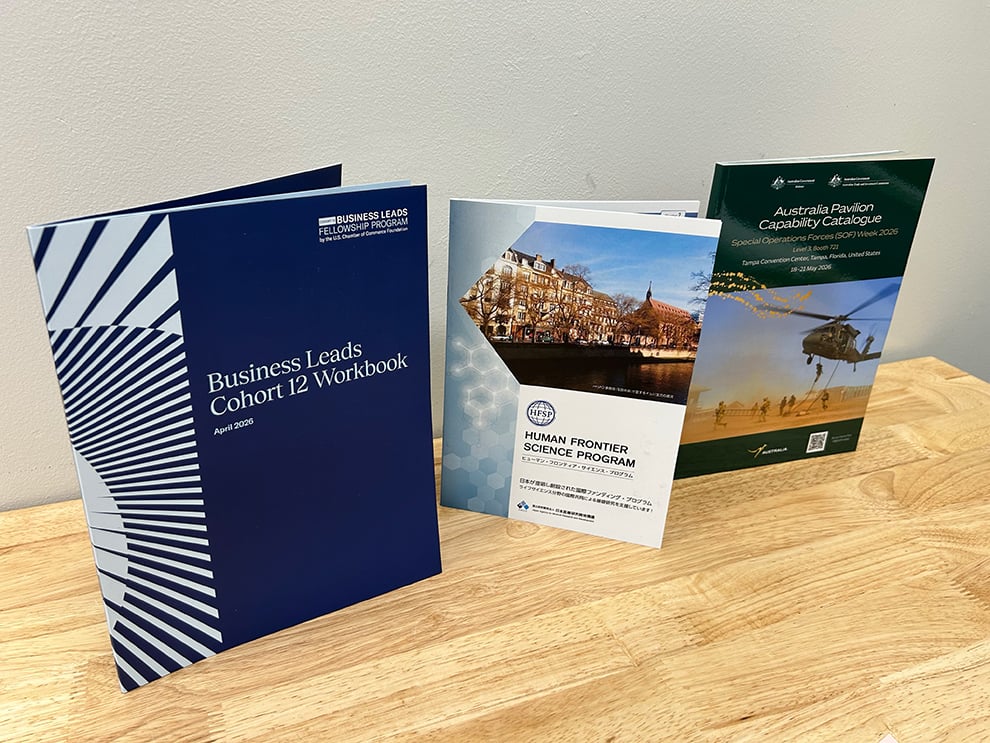
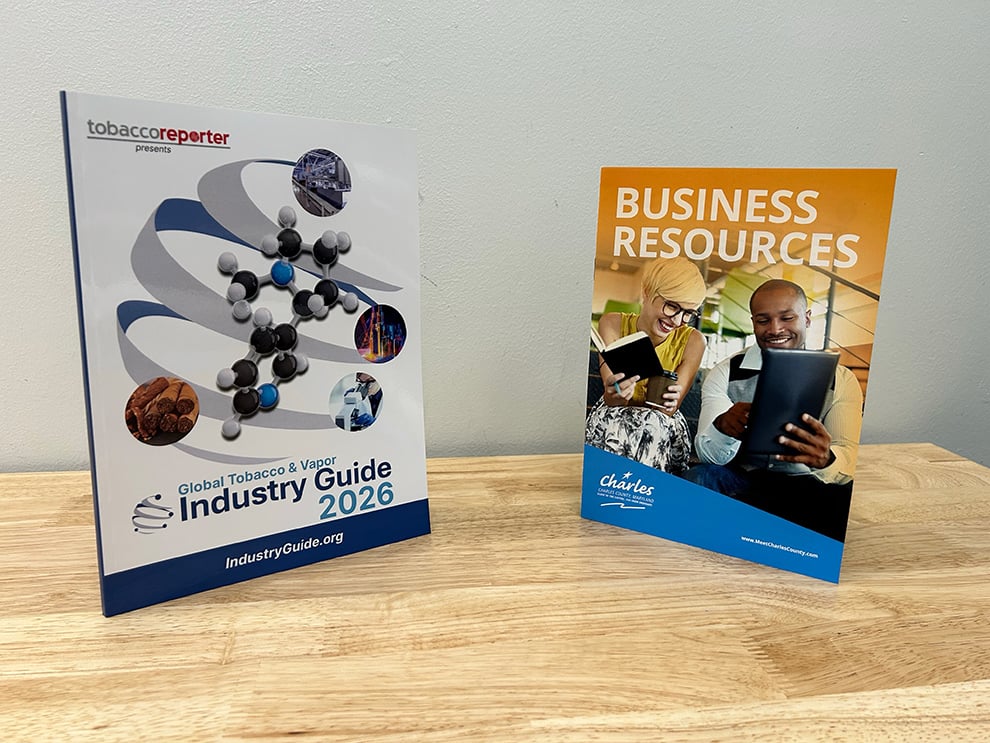
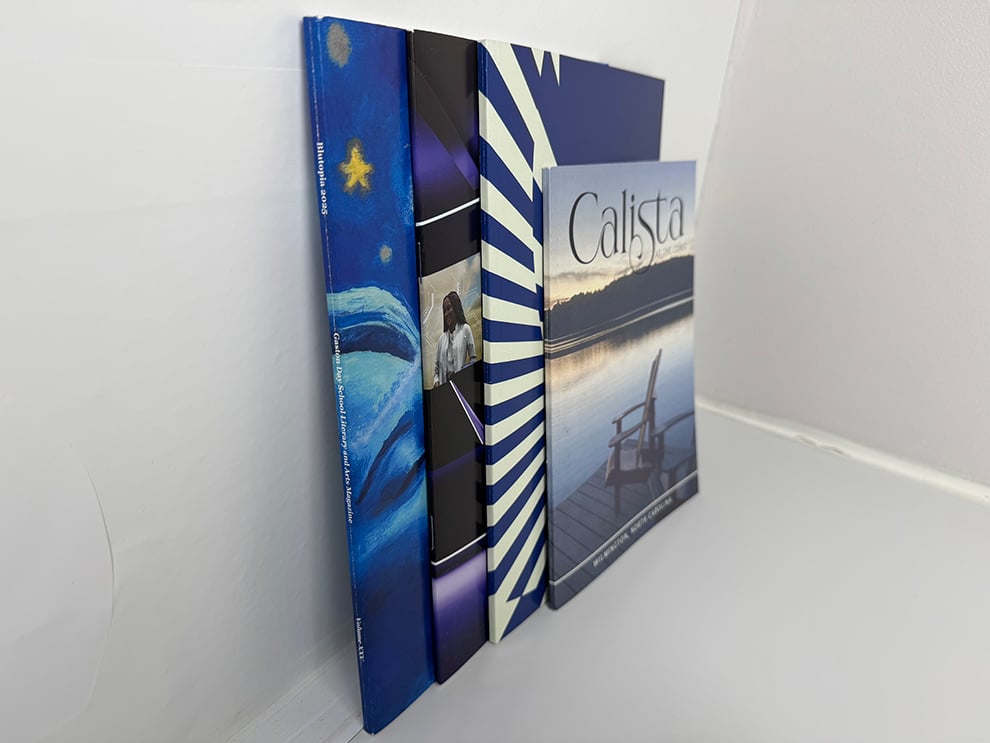
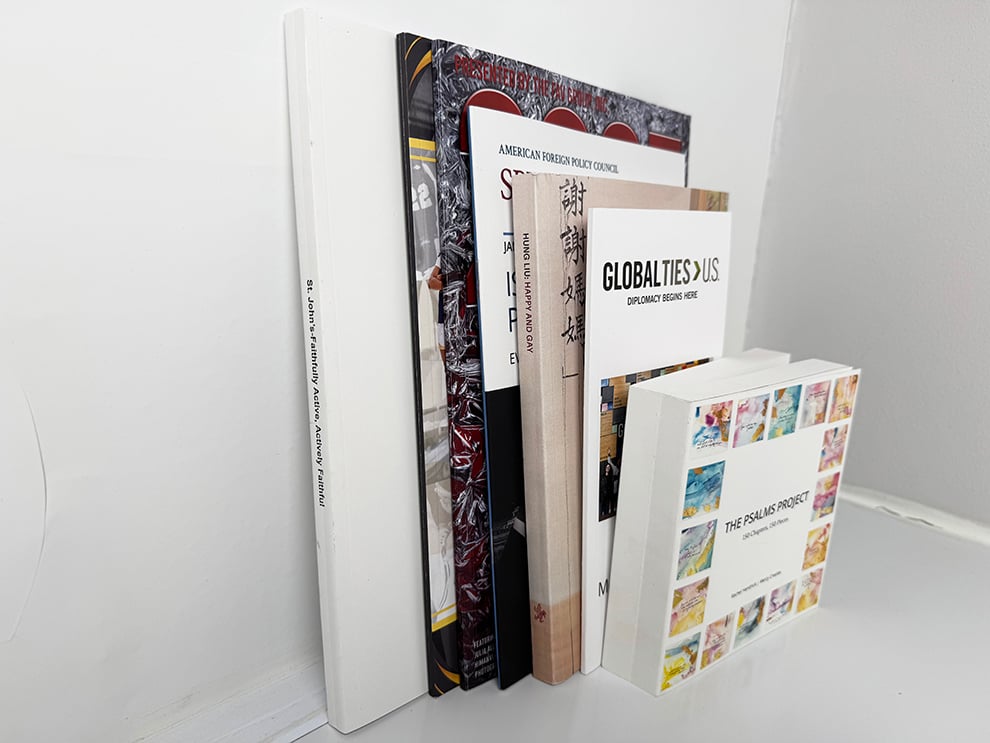
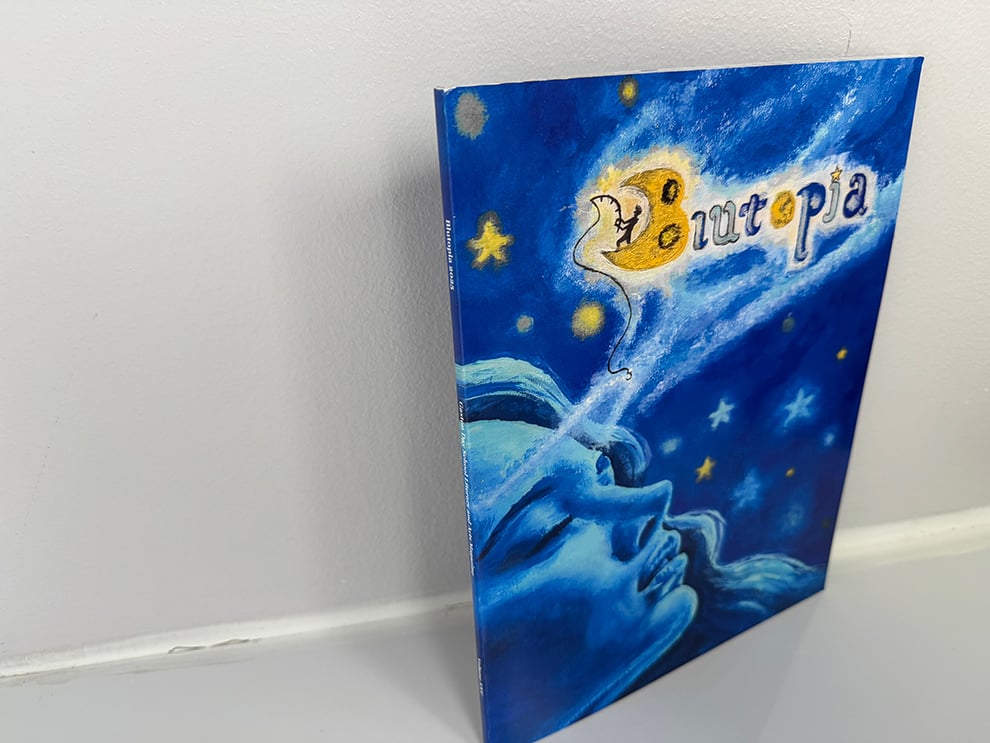
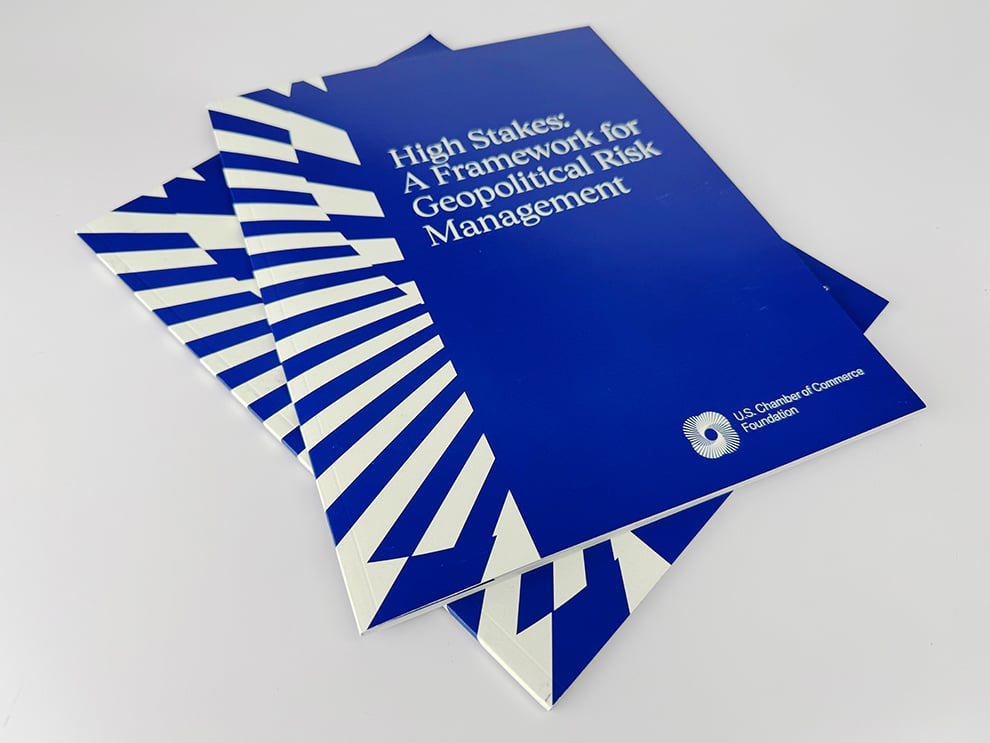
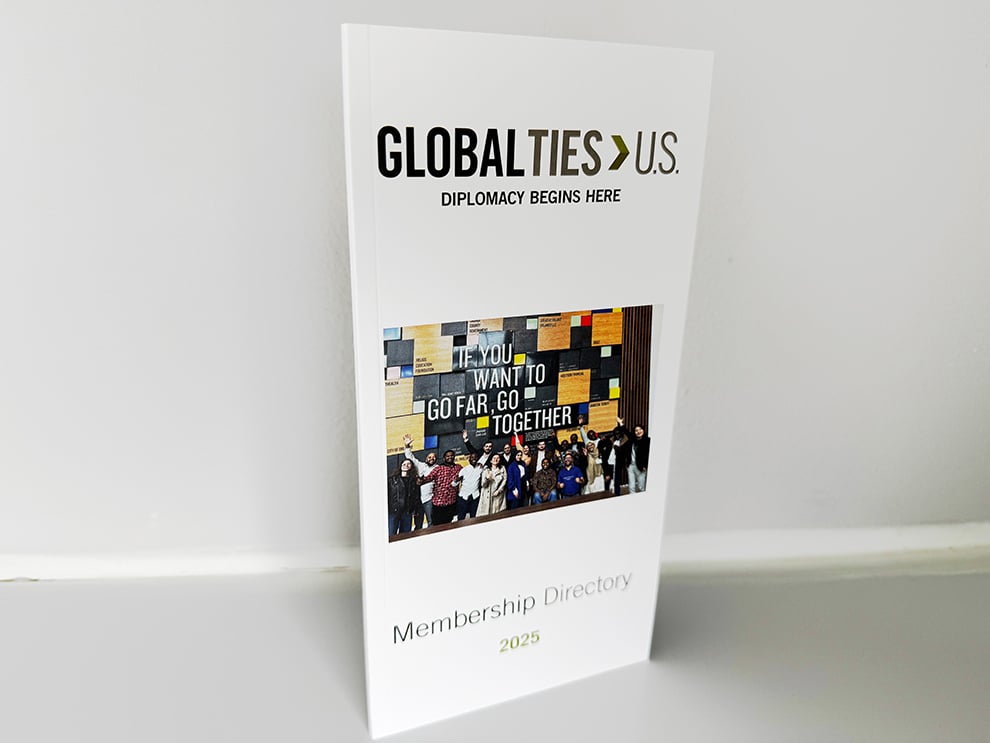
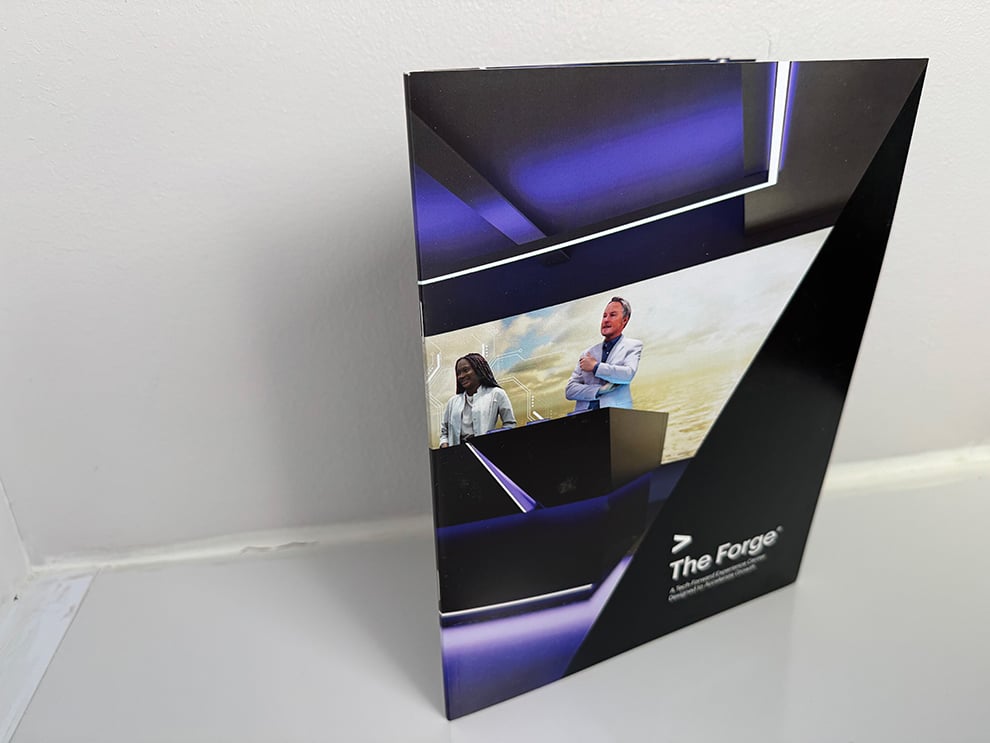
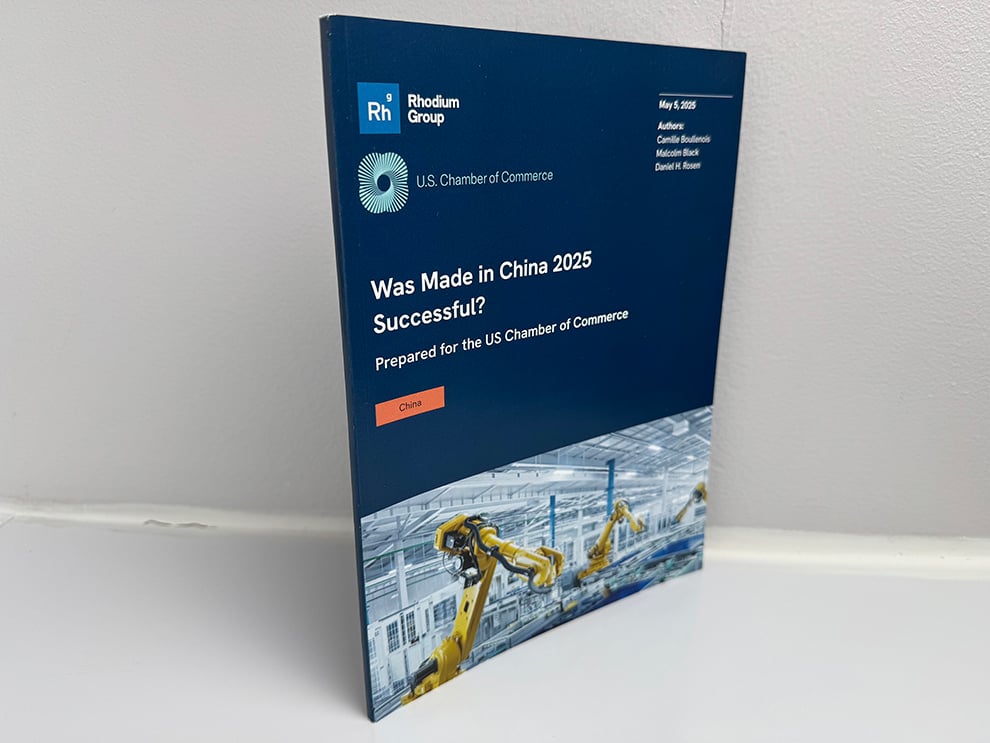
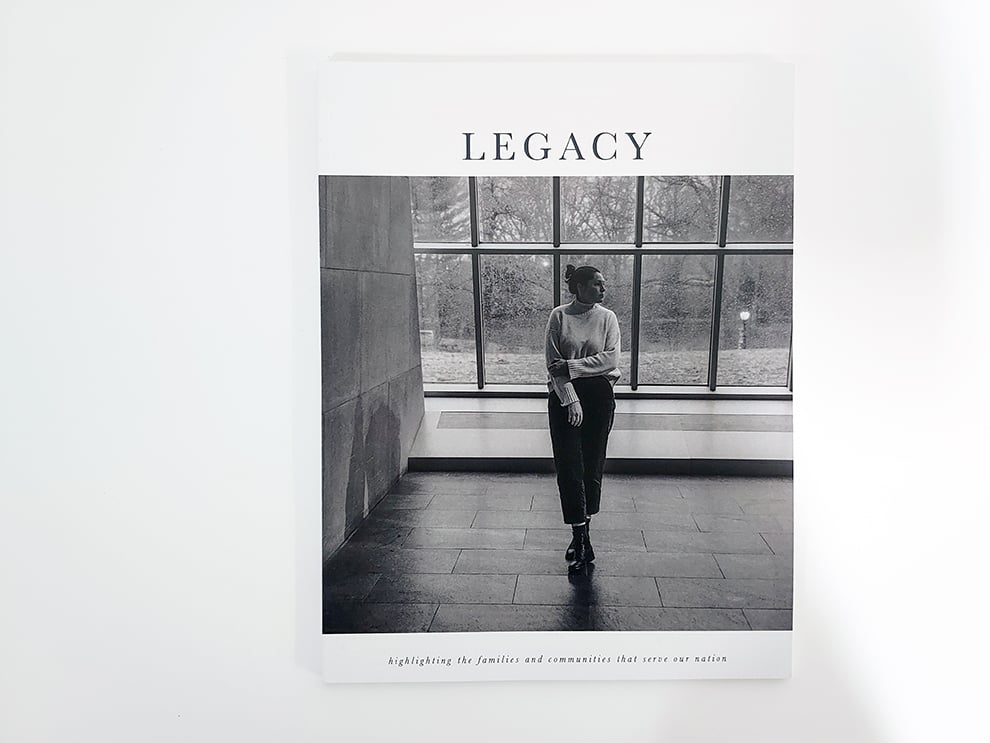
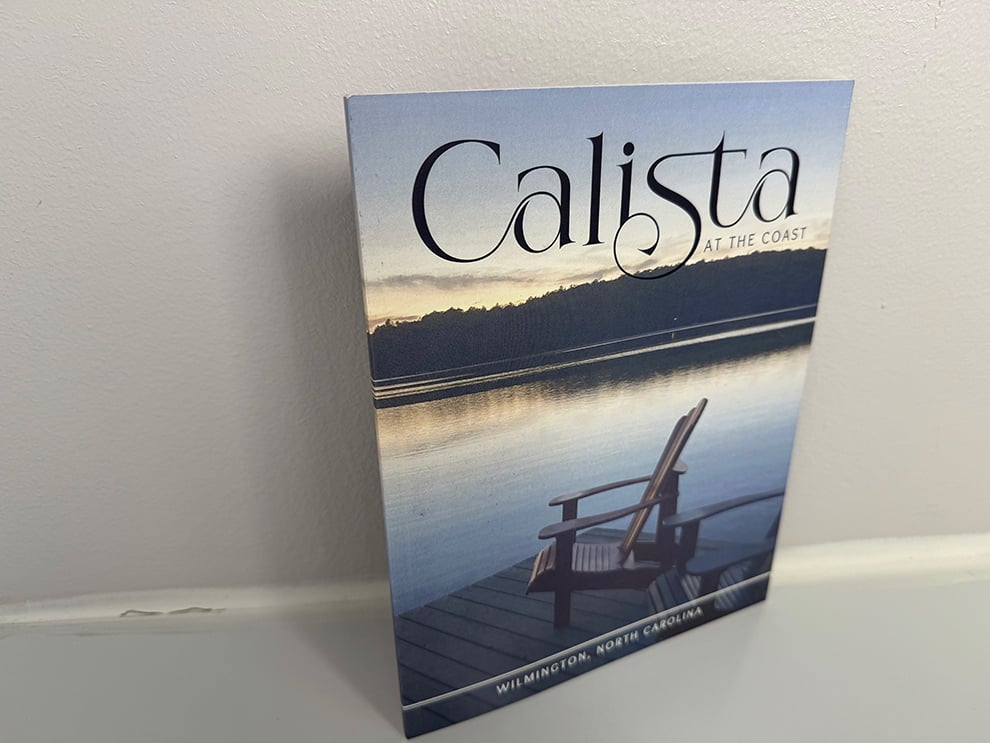
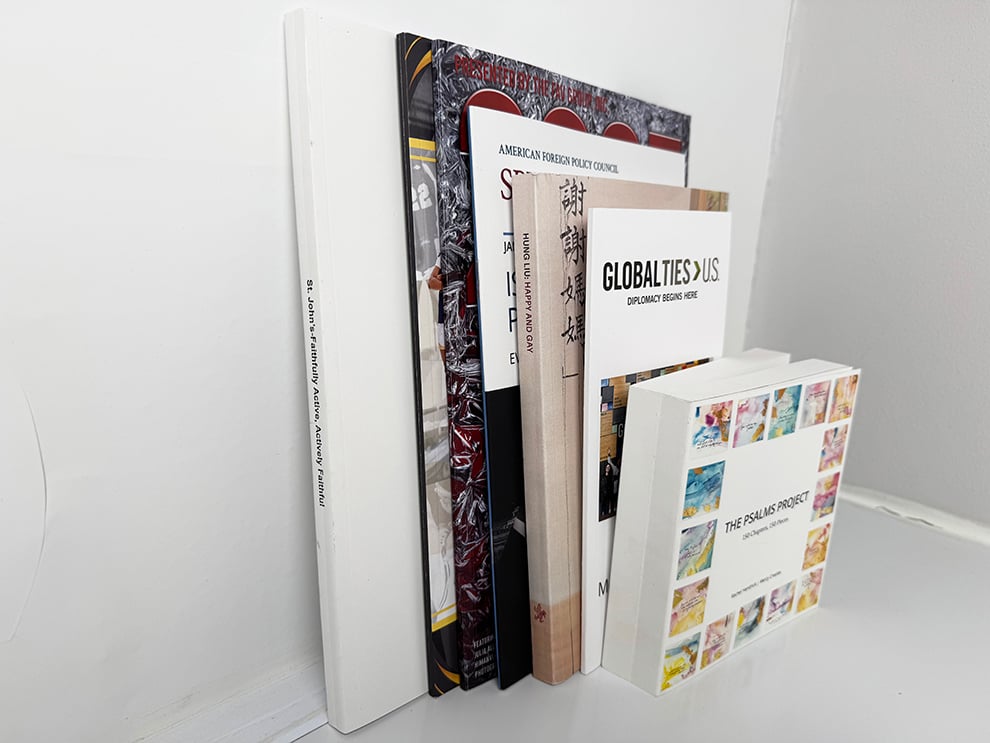
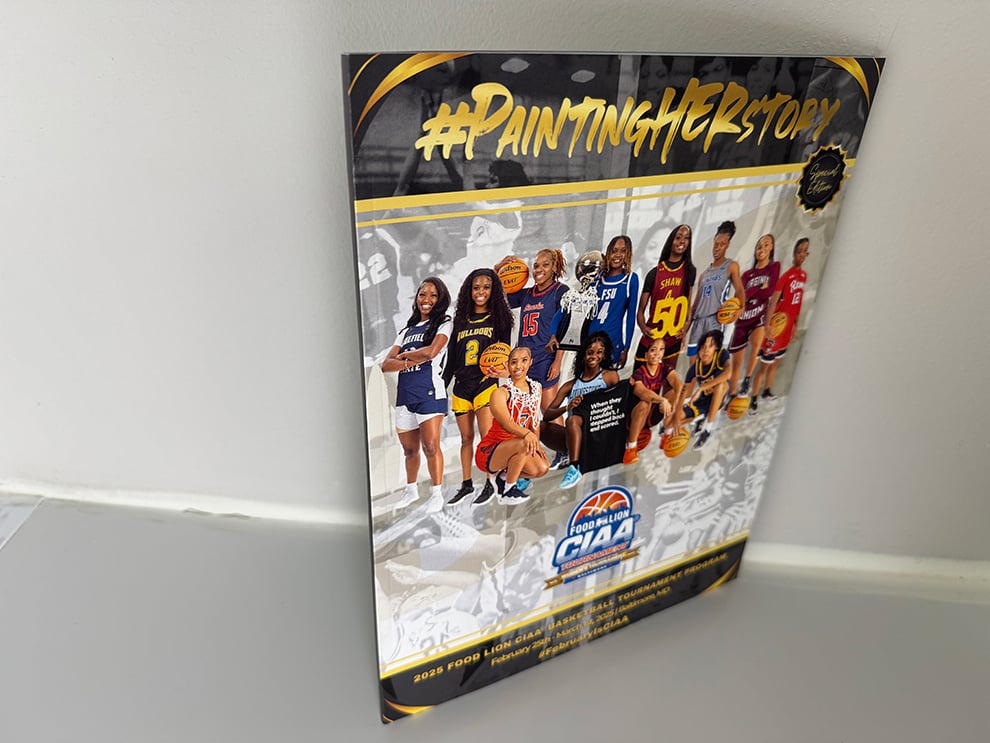
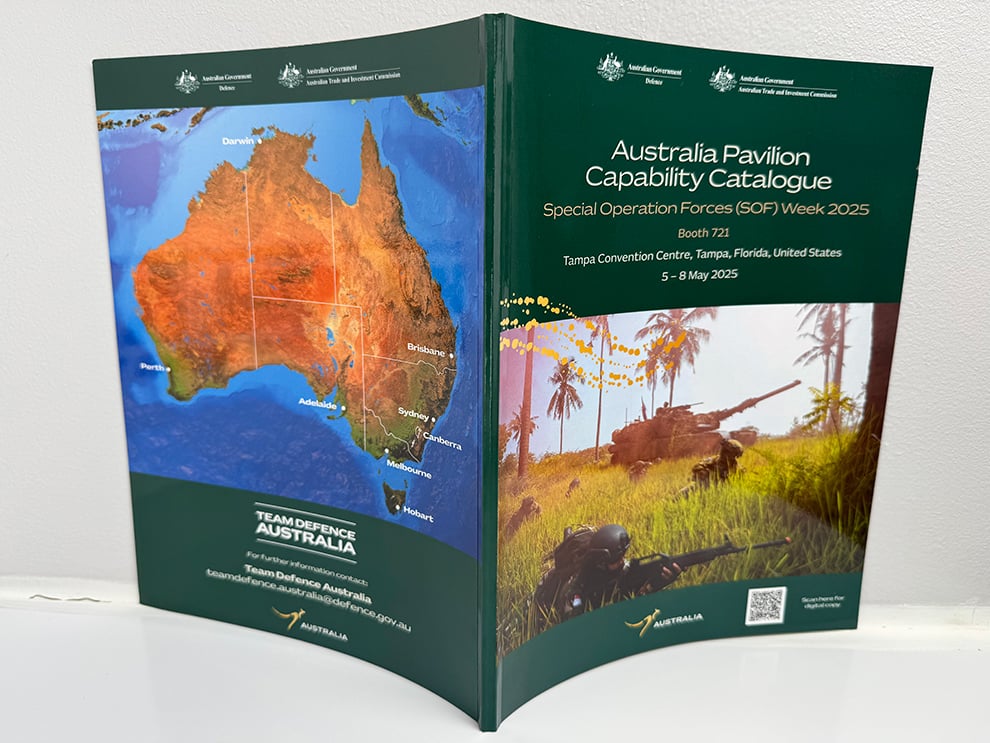
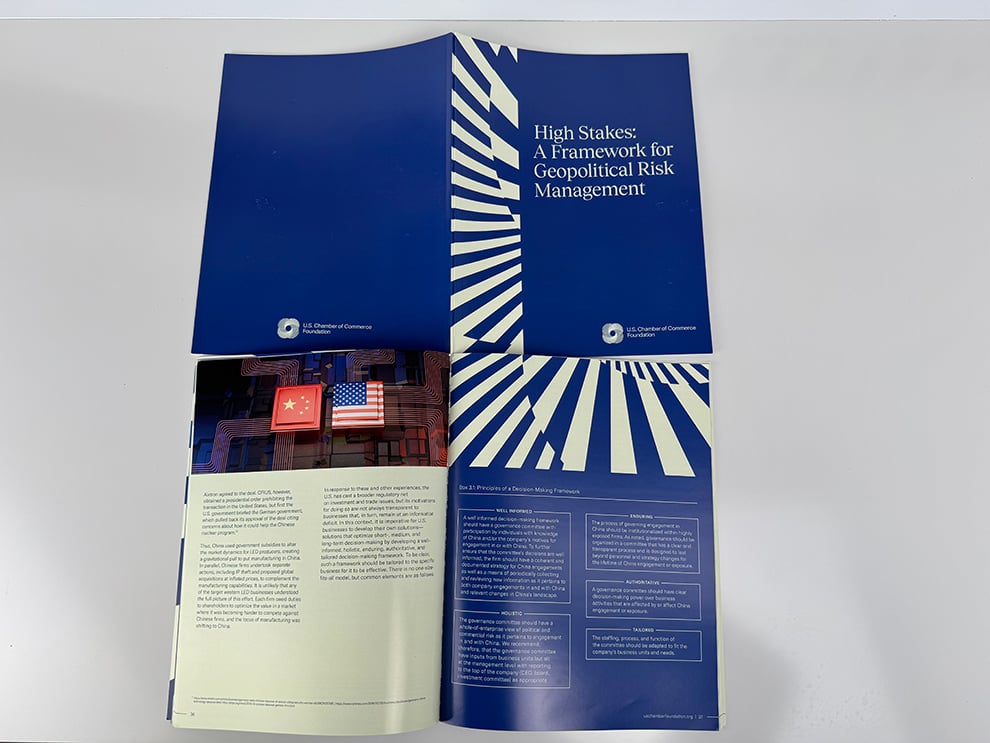
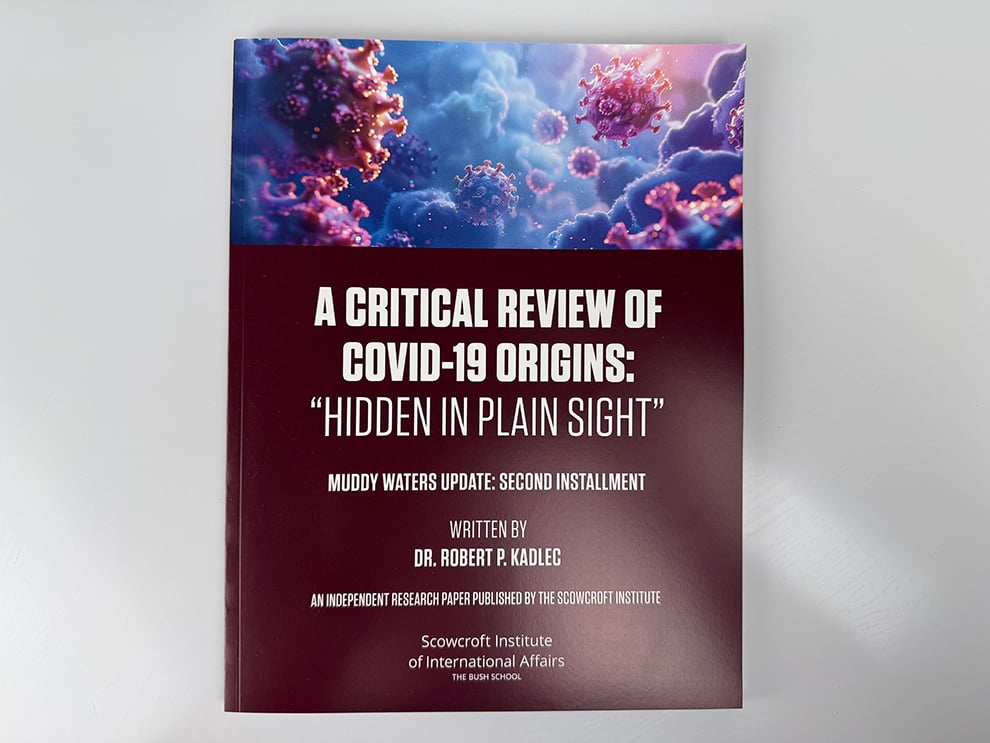
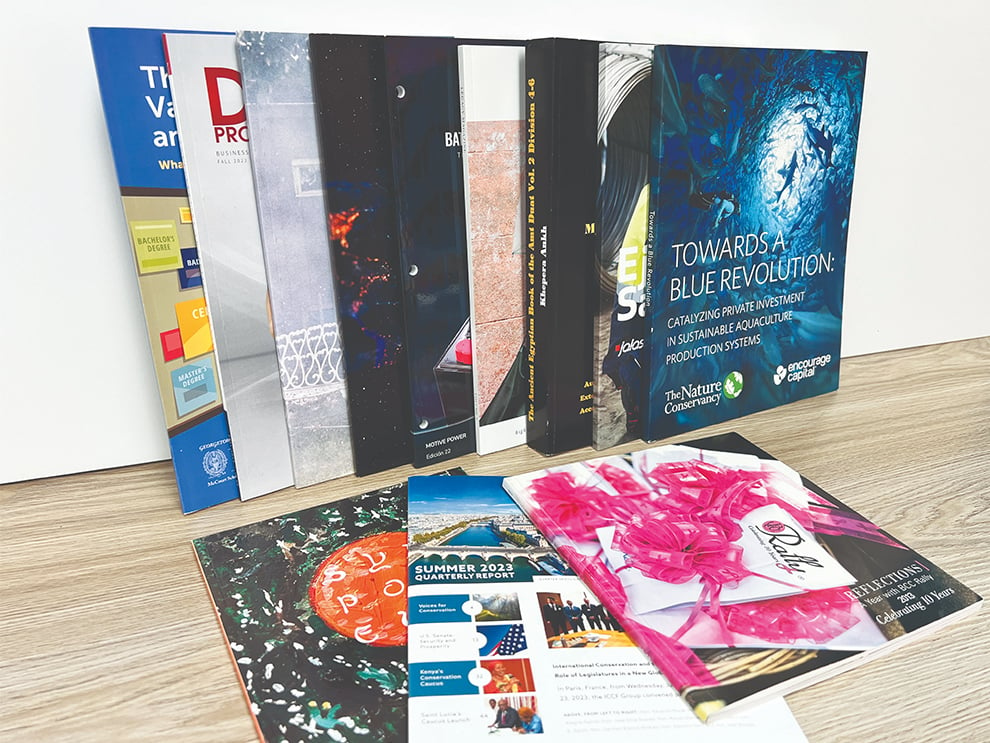
A product catalog that reaches a buyer's desk should still look organized after it has traveled through a showroom, sat on a shelf, and been picked up again weeks later. The same holds for an annual report handed to a board or a program guide carried through a conference. Perfect binding gives these publications an adhesive-bound square spine, a wraparound cover, and trimmed edges that read as a finished book rather than a stapled handout.
Heritage prints perfect bound books for Greensboro, NC organizations that need catalogs, reports, directories, lookbooks, portfolios, and guides to hold up under repeated handling. Across the Piedmont Triad, furniture and home furnishings showrooms, manufacturers, colleges, healthcare systems, and professional associations all produce material that benefits from a publication that stacks, stores, and presents well.
The binding method is only one of several decisions that shape the finished piece. Page count sets the interior thickness, paper choice affects both feel and spine width, cover setup depends on both, and proof approval confirms that the files match the plan. Heritage works through those relationships before production so the finished book looks intentional and reproduces consistently.
Heritage started as a printing company in 1977 and added signs and displays years later, so a bound publication is handled with a production mindset. A perfect bound book is a chain of dependent decisions: pagination, interior files, paper, cover artwork, spine measurement, color, trimming, adhesive binding, proofing, and delivery. When one changes, Heritage checks the others rather than assuming they still hold.
Greensboro clients work with a veteran-owned, family-led company that treats an accepted job as a commitment. Heritage's Charlotte headquarters and primary production facility supports the Carolinas, and Greensboro orders are scheduled and delivered as part of that support. Clear communication about requirements, status, and open questions is standard practice, not an upgrade.
Color management, quality control, and an electronic proof before printing protect the result. For repeat editions, Heritage retains accepted specifications so the next printing starts from a known baseline. On qualifying Custom Quote work, a Project Coordinator becomes the direct phone-and-email contact after Heritage accepts the quote and assigns the order, which keeps several reviewers aligned when a date is fixed.
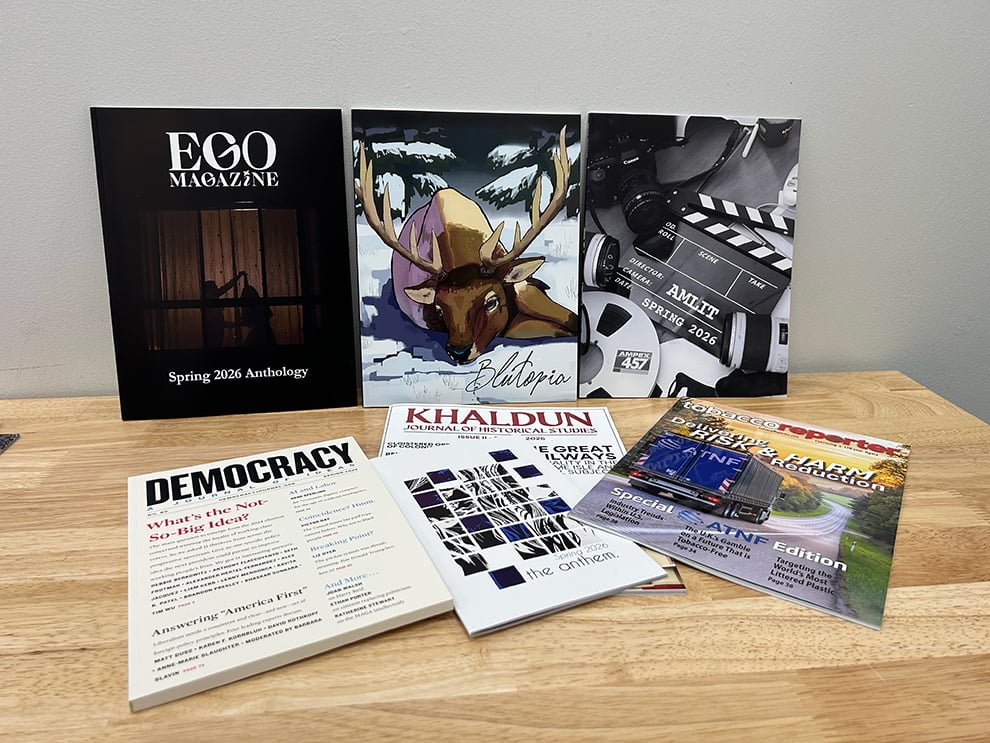
Perfect binding makes sense when a publication needs to look like a finished book, show a visible spine on a shelf, and feel substantial in the hand. A furniture catalog, a membership directory, or a multi-year planning report usually fits that description. The construction suits material that is read, kept, and referenced rather than written in.
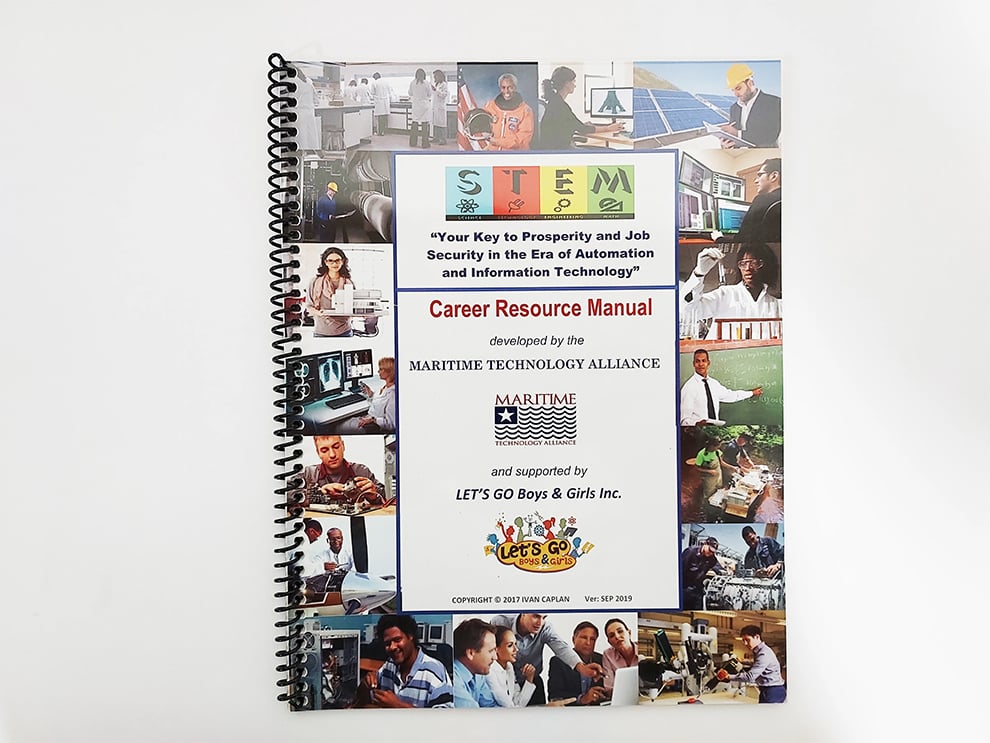
That does not make it the right answer for every multi-page document. Plastic coil binding lets a book lie flat and fold back on itself, which is better for training materials, procedure references, and other materials used while working. Saddle stitching, where folded sheets are fastened through the center, is usually the practical choice for thinner pieces that do not have enough bulk to form a spine.
Thickness decides the question more often than appearance. A publication with too few pages or very thin paper may lack the spine area needed for adhesive binding to hold well or for spine text to read clearly. Finished size, intended handling, paper weight, and the amount of content all shape the recommendation, so Heritage reviews the full specification before confirming the construction.
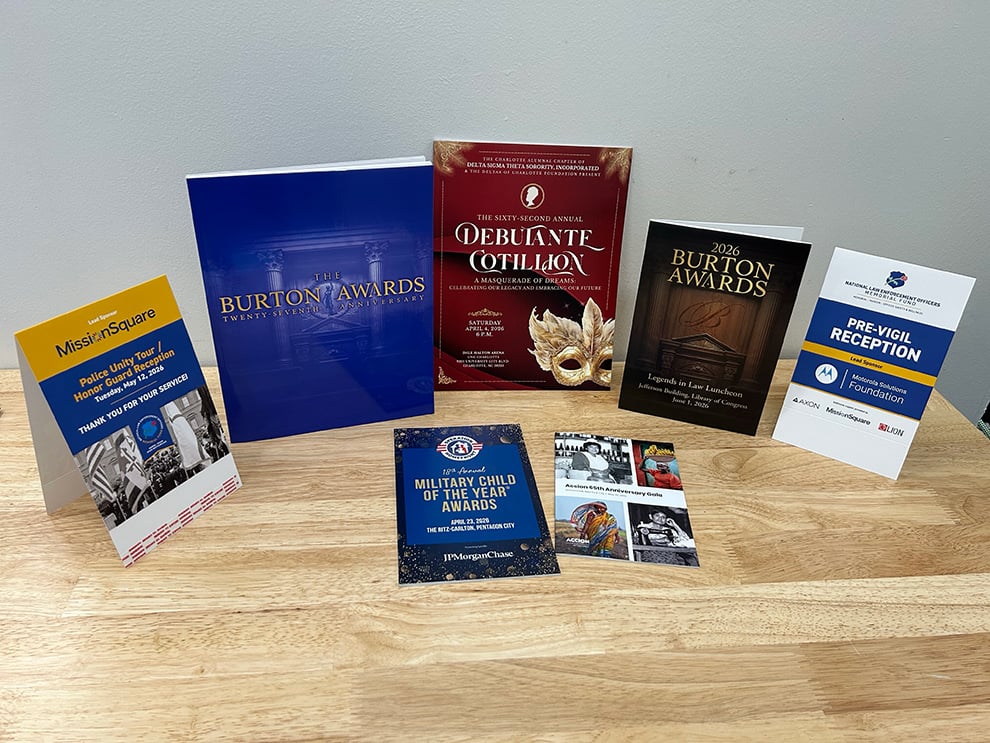
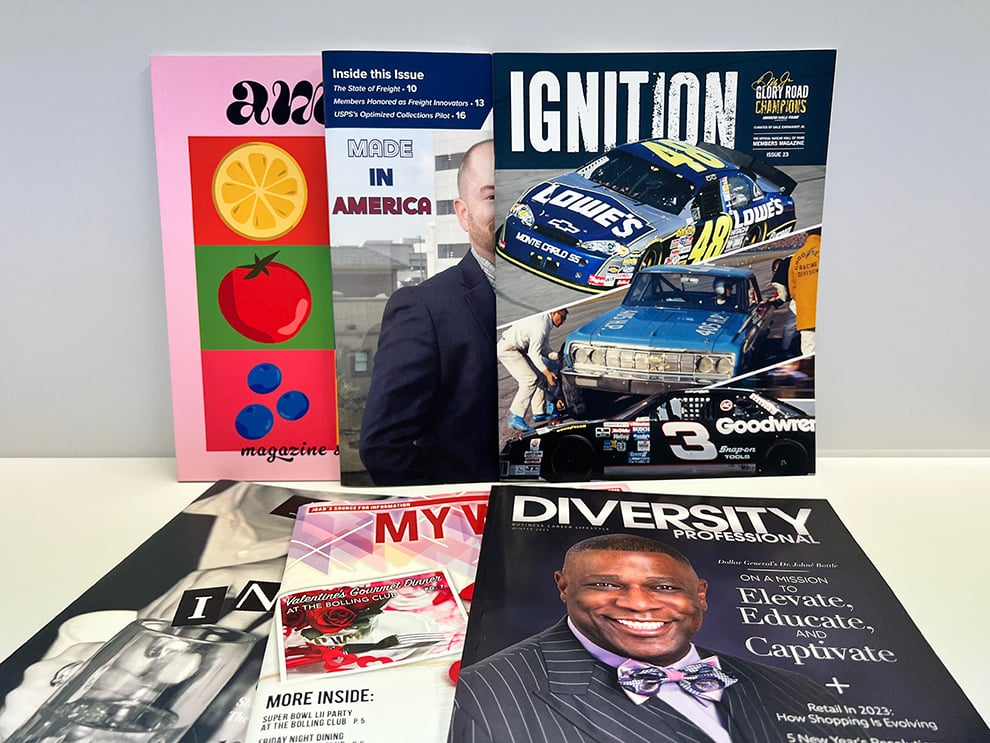
A perfect bound book often travels with other printed pieces. These related Heritage capabilities give Greensboro, NC organizations a starting point when a project calls for a different format, supporting materials, or a mailing plan.
Choose a lighter stapled or coil-bound format when the page count or handling of the piece does not call for an adhesive spine.
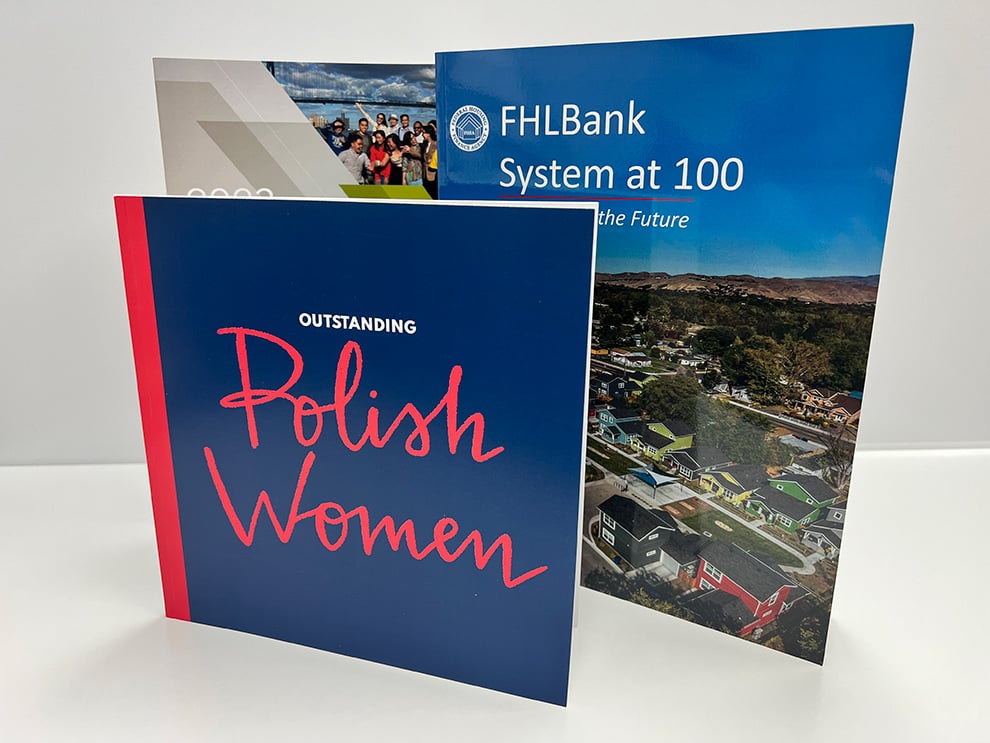
Keep periodic issues consistent from one printing to the next when the publication follows a recurring editorial schedule.
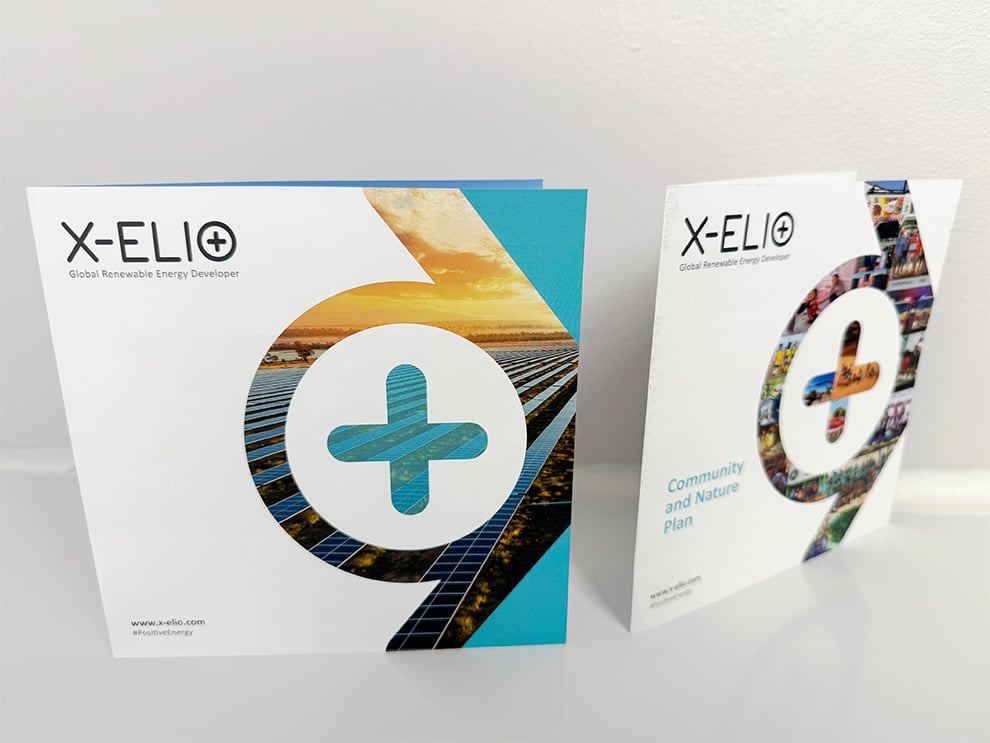
Hold a bound report together with loose inserts, pricing sheets, and letters for a sales call or board meeting.
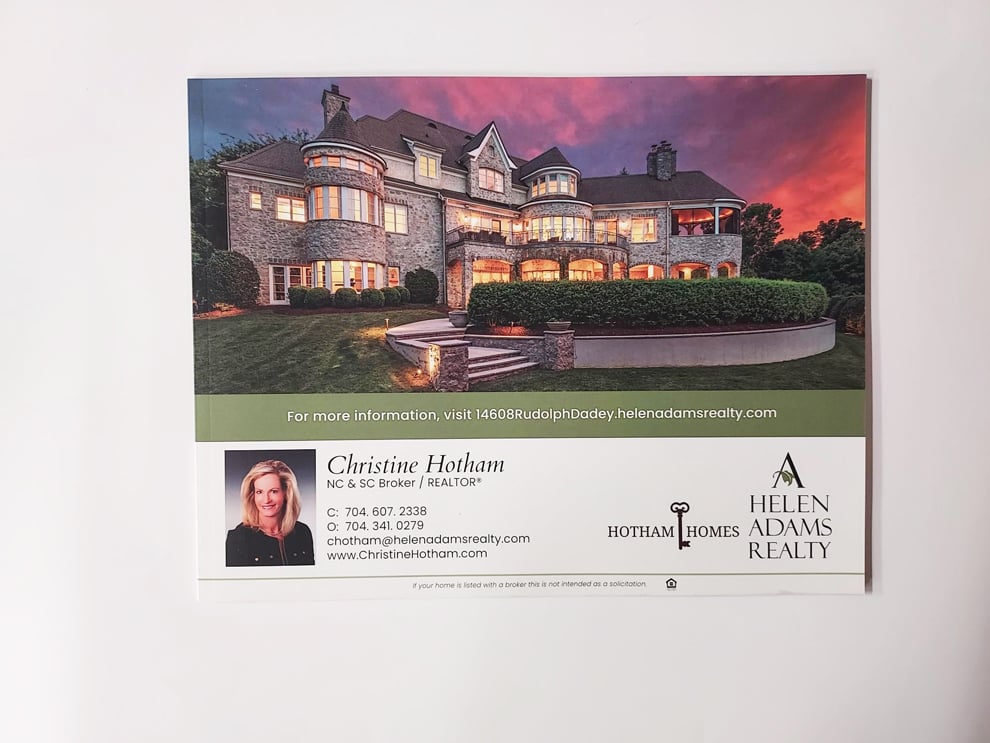
Produce procedure and instruction materials that need to lie flat and survive daily use on a plant floor or at a desk.
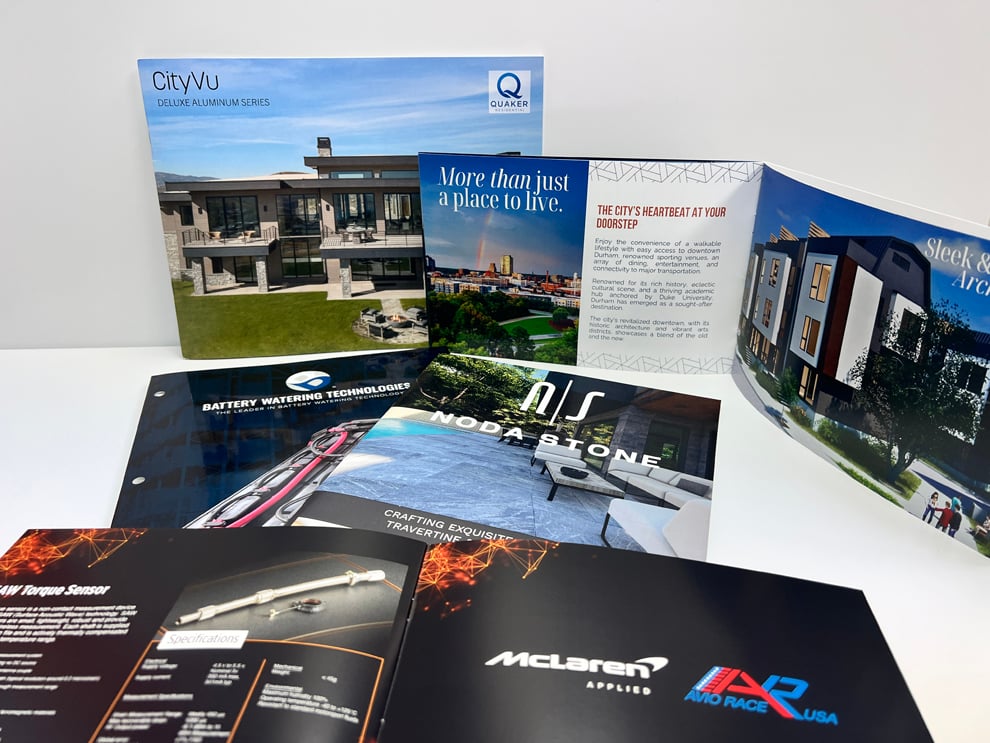
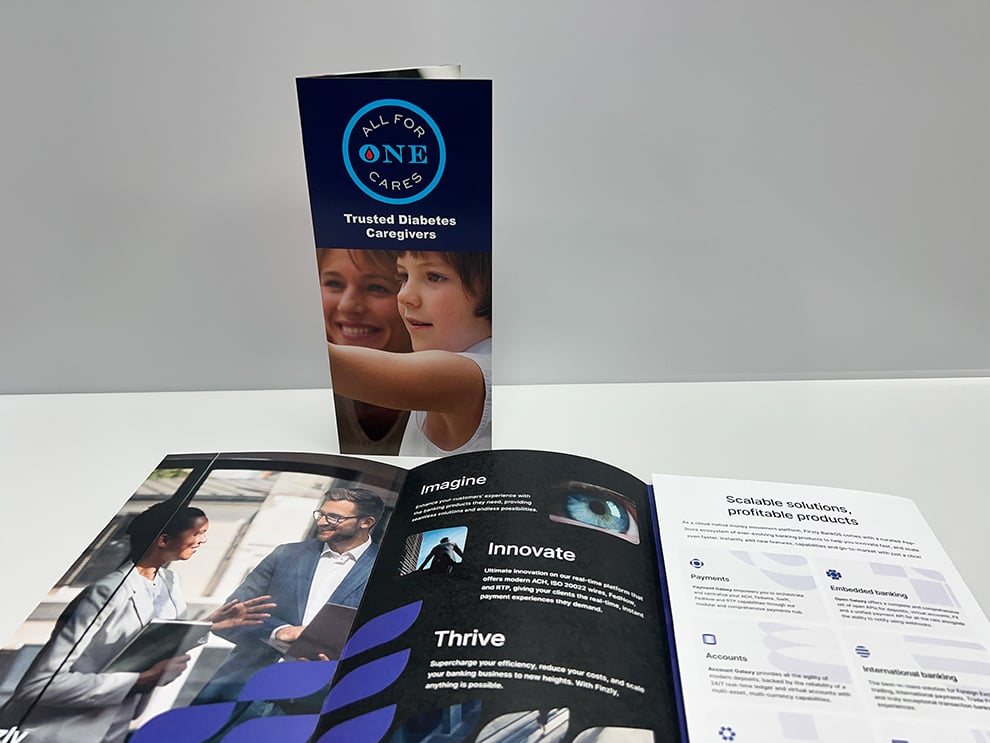
Summarize a catalog or program in a folded piece that is easy to hand out at a showroom or event.
Move finished books from the bindery into addressed delivery when the audience is spread across a mailing list.
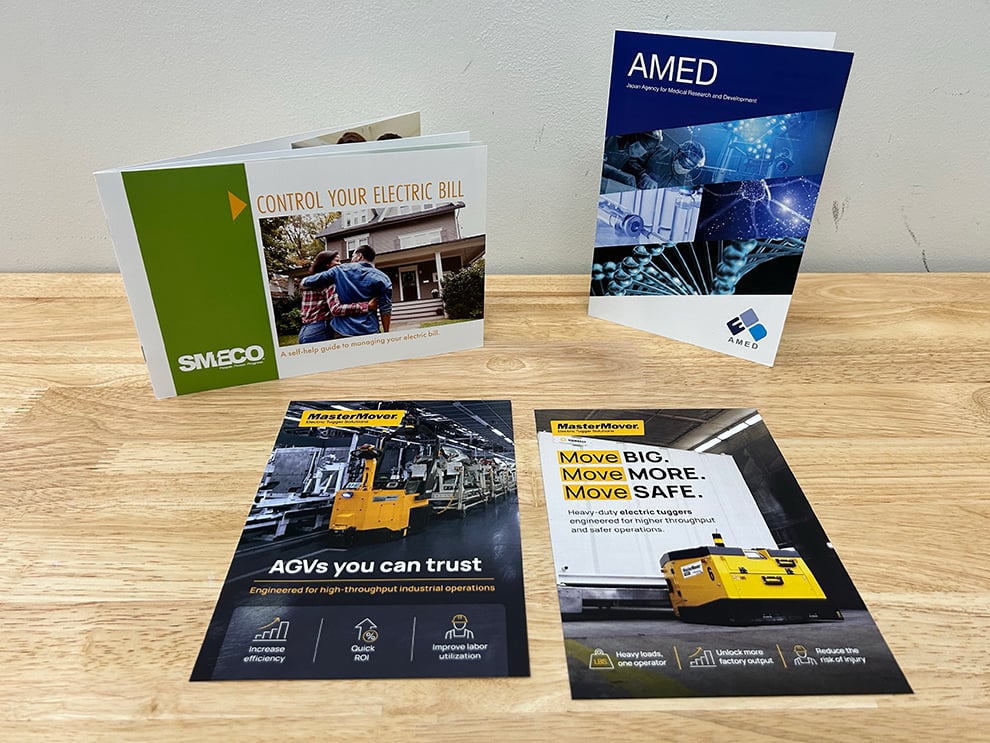
Coordinate postcards, flyers, and companion pieces that share artwork and color with the primary publication.
Review the broader Heritage print-production range when the book is one part of a larger communications order.
If the files are print-ready and the live Store configuration fits, the Online Store is the direct route. If a qualifying $2,000+ job still has open questions about files, spine setup, versions, or timing, submit a Custom Quote and Heritage will review the requirements before accepting and scheduling the work. In either case, the objective is a book that reaches Greensboro, NC readers looking exactly as intended.
A perfect bound cover cannot be completed until the interior is settled. The spine width comes from the page count and the paper caliper, so the cover file needs an accurate measurement before the spine panel can be positioned. A late decision to add a section, change paper, or cut pages can shift that measurement and require a revised cover before the run.
Interior margins matter because the glued spine limits how far the book opens. Body copy, page numbers, captions, and important image details should sit away from the binding edge so nothing disappears into the gutter. Paper opacity deserves attention when ink coverage is heavy on both sides of a sheet, and the finished trim size should suit how the book will be carried, shelved, or mailed.
File setup and approval close the loop. Fonts, bleeds, page order, and cover layout should be checked before the electronic proof, because that proof is the client's final review of the production file. For catalogs or reports that return every year, holding the approved trim size, paper, cover construction, and color targets on record lets the next edition focus on new content.
Two routes are available, and the right one depends on whether the book is ready to print or still needs production help. Both include production review, electronic proof approval, and normal quality control, so the choice concerns service level rather than print quality.
The Self-Directed Online Store suits a Greensboro order when the live Perfect Bound configuration matches the specification and the cover and interior files are complete and print-ready. Options are selected and the purchase is completed online without an assigned Project Coordinator, without Heritage design or layout work, and without a physical color proof. The $750 Store minimum applies to the total eligible order, and other eligible products may be combined to reach it.
A new Commercial Printing opportunity of $2,000 or more may qualify for Storefront Custom Quote when the job needs file preparation, cover or spine setup, specification guidance, or coordination of several versions. The form is a request only; it does not assign a contact or confirm a schedule. After Heritage accepts the quote and assigns the order, the Project Coordinator becomes the direct phone-and-email contact. State any fixed meeting, market, or distribution date at the outset so feasibility can be evaluated and any constraint identified early.
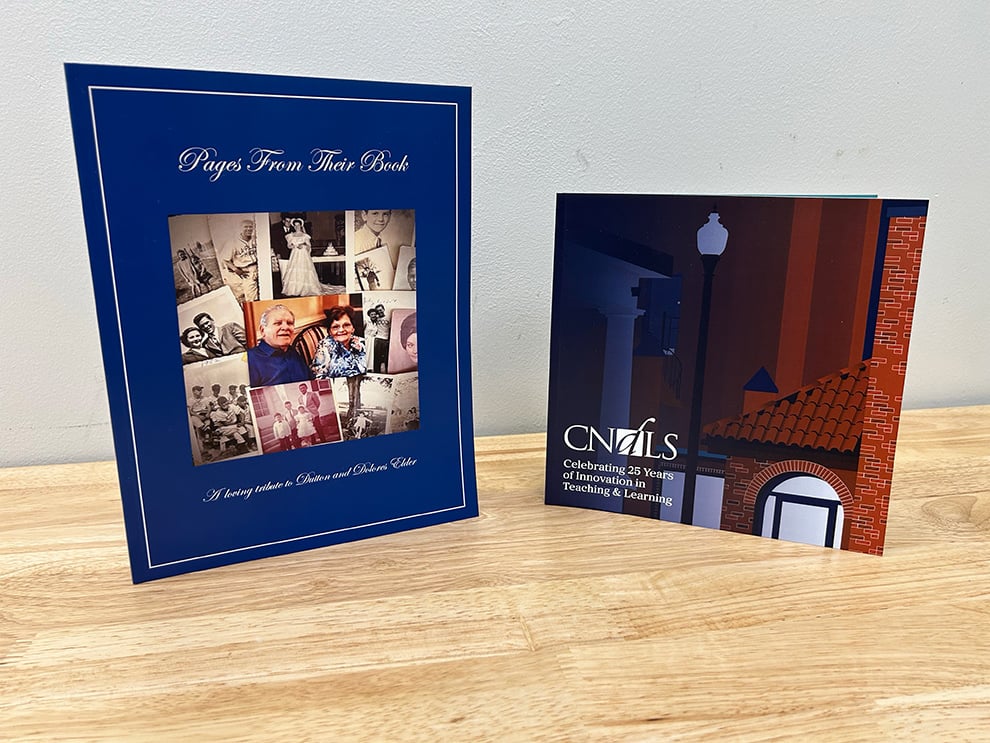
Catalogs, annual reports, membership directories, lookbooks, portfolios, program guides, and longer reference books are the usual candidates in Greensboro. The common thread is enough page count and paper thickness to form a spine, plus an intended use that favors presentation and storage over lying flat. A thin piece or a working manual often belongs in a different binding, so Heritage reviews the full specification rather than the application name alone.
There is no single page count that answers this, because the usable spine depends on paper caliper as much as page total. Spine text works when the finished spine is wide enough for the type to read at a comfortable size and stay centered through normal binding variation. If the spine ends up narrow, a plain spine looks more professional than cramped lettering. Finalize the page count and paper first, then decide whether spine copy belongs on the cover.
Perfect binding gathers the interior pages, roughens and glues them along one edge, and wraps the block in a single cover that forms the front, spine, and back. The three open sides are trimmed after binding, which produces the clean square spine and flush edges of a conventional paperback book. It is used when a publication should feel finished and store neatly on a shelf.
Plastic coil is usually the better choice for that situation. A coil-bound book lies flat on a bench and folds back to a single page so someone can read it while handling parts or equipment. A perfect bound book has a glued spine that resists lying open and is intended to be held or read at a desk. Choose perfect binding when the manual also serves as a presentation or reference piece and daily hands-free use is not the priority.
No, not fully. The adhesive spine holds the pages in a block, so the book opens comfortably for reading but does not lie flat the way a coil-bound publication does. This is normal for the format and is one reason interior layouts should keep text and image details away from the binding edge. If flat opening is essential to how the material will be used, a coil binding is the better fit.
Spine width is driven mainly by the number of pages and the thickness of the interior paper, with the cover stock and binding process contributing a smaller amount. Doubling the page count or moving to a heavier sheet can change the measurement enough to affect cover layout. Because of that, Heritage treats the spine dimension as something to confirm after the interior is locked, not something to estimate from an early draft.
Saddle stitching is often the right call for thinner publications, such as short programs, newsletters, and small booklets, where the sheets can be folded and fastened through the center fold. It costs less to produce and opens flatter than an adhesive spine, but it has no printable spine and becomes awkward as the page count grows. When the publication has the bulk to form a readable spine and the audience expects a book-like presentation, perfect binding is generally the stronger option.
An electronic proof is required for every perfect bound order, including purchases made through the Online Store, and printing does not begin until the client approves it. The proof shows the production file as it will be imposed: page sequence, numbering, text, image placement, bleeds, and the cover layout including the spine panel. It is a review of content and layout rather than a color standard, so colors on screen may differ from the printed sheet.
Yes, when the live Perfect Bound configuration in the Store matches your book and the cover and interior files are print-ready. The Store is self-directed, so you select the available options and complete the purchase without an assigned Project Coordinator, design assistance, or a physical color proof. Eligible Store products can be combined to reach the $750 total-order minimum. Heritage still performs its normal file review and sends the electronic proof before production.
Custom Quote is appropriate for a new Commercial Printing opportunity valued at $2,000 or more that still needs production support, such as preparing files, building the cover and spine to the correct measurement, settling specifications, or managing several versions of the same book. Submitting the form starts a review; it does not guarantee acceptance, a production slot, or an assigned contact. If Heritage accepts the quote and assigns the order, the Project Coordinator then becomes the direct phone-and-email contact for the accepted work.
A paid Physical Production Color Proof may be requested on qualifying $2,000+ Custom Quote work when screen approval is not sufficient for a color-critical publication. Heritage produces it on the press or printer planned for the run and on the actual production paper, so it reflects how the finished book will print. It adds production time and cost, and once approved it governs color for the run unless another agreement controls. This option is not available for Online Store orders.
Yes. Heritage retains the accepted production details from a completed job, including trim size, paper, cover construction, binding, and color targets, so a returning catalog can start from that record. The new edition then concentrates on updated content, quantity, and any intentional changes. If the page count or paper changes between editions, the spine measurement and cover file are rechecked rather than reused automatically.
Lead with the date itself, then the facts that control feasibility: quantity, current page count, whether the cover and interior files are final, the number of versions, and any approvals still pending. Heritage uses that information to map the production steps and confirm whether the requested date can be met responsibly. If a constraint exists, it is identified early so an alternative can be arranged, and any accepted commitment is treated seriously. On qualifying Custom Quote work, the Project Coordinator becomes directly involved after acceptance and assignment.
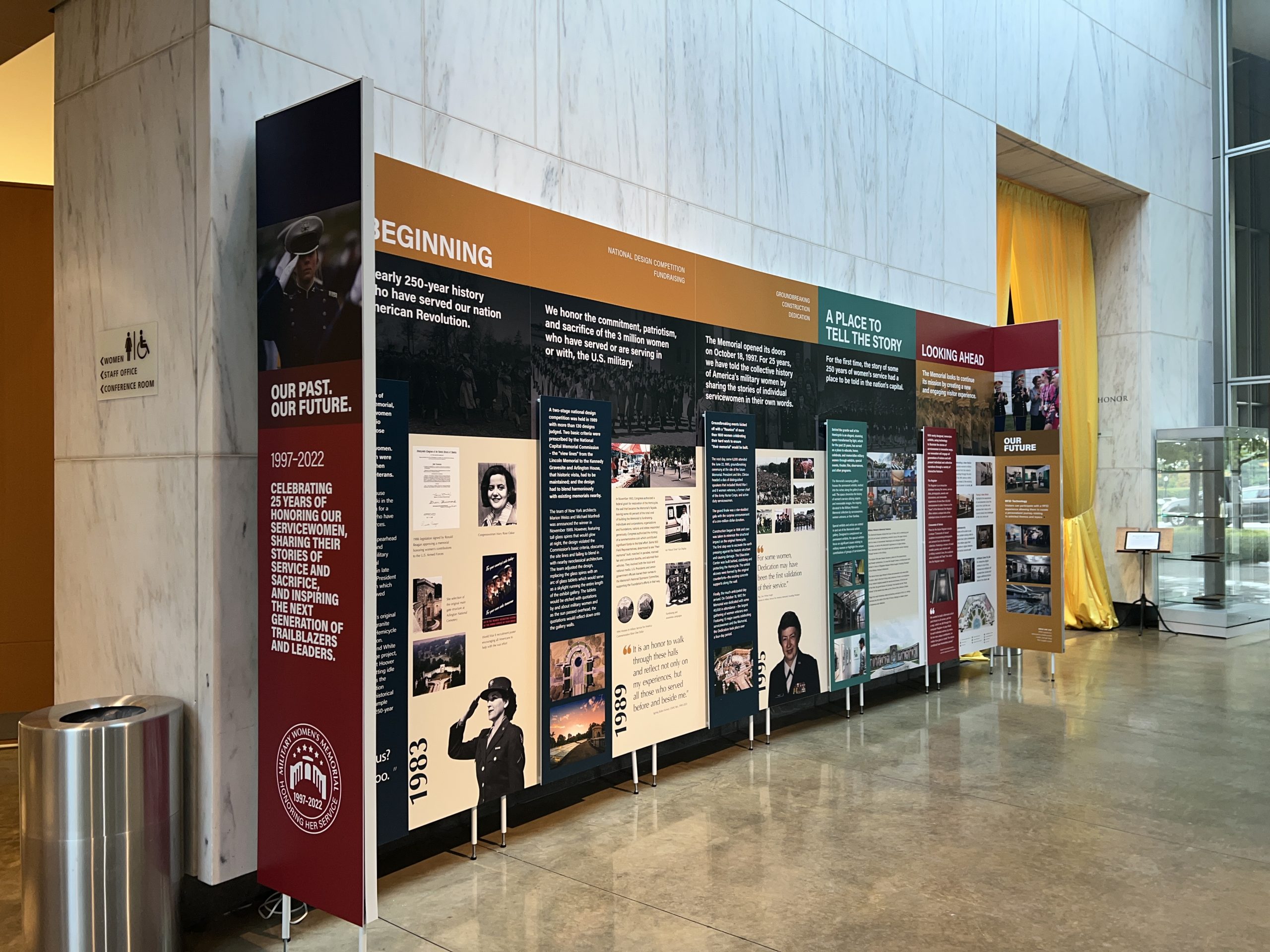
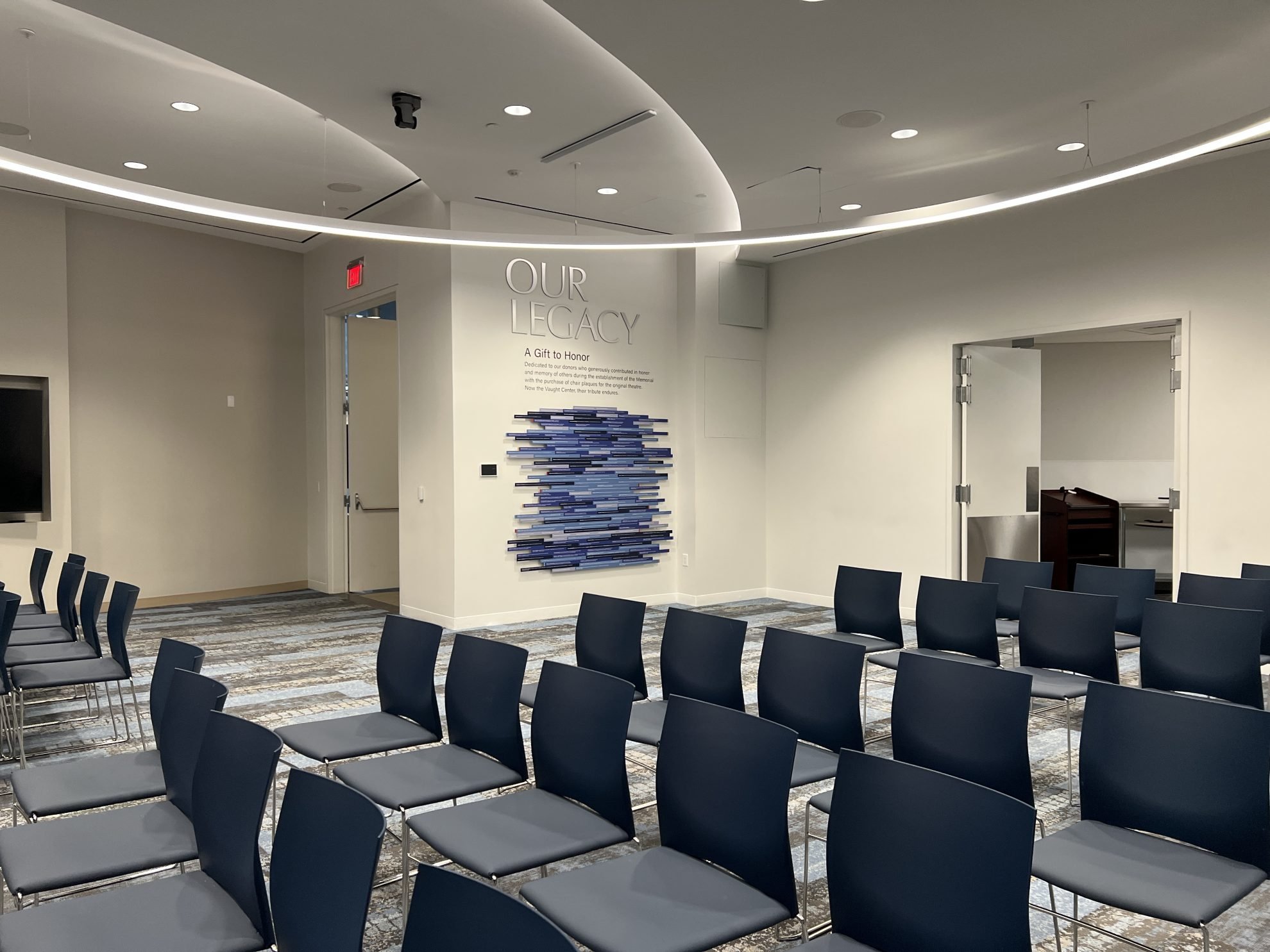
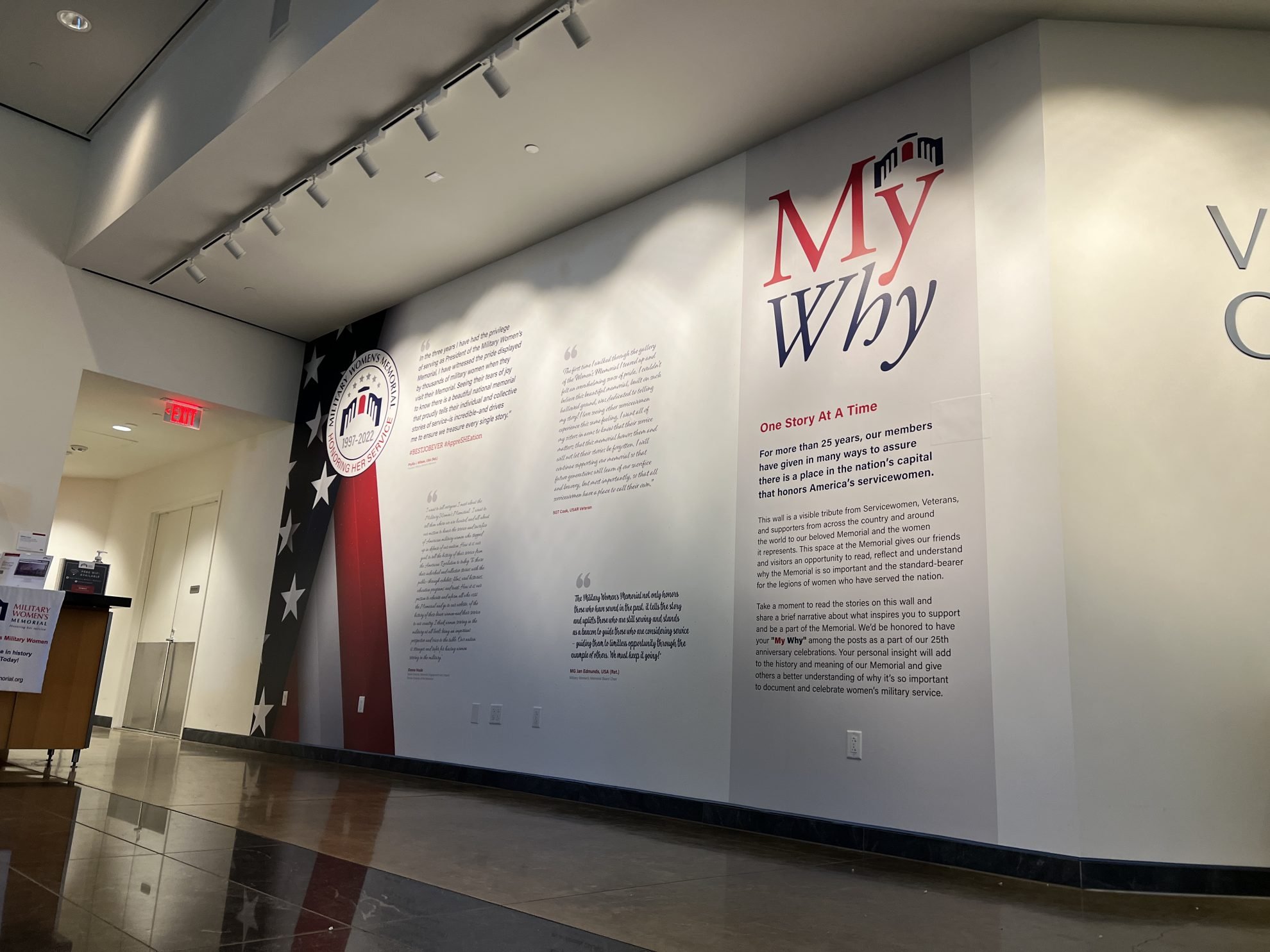
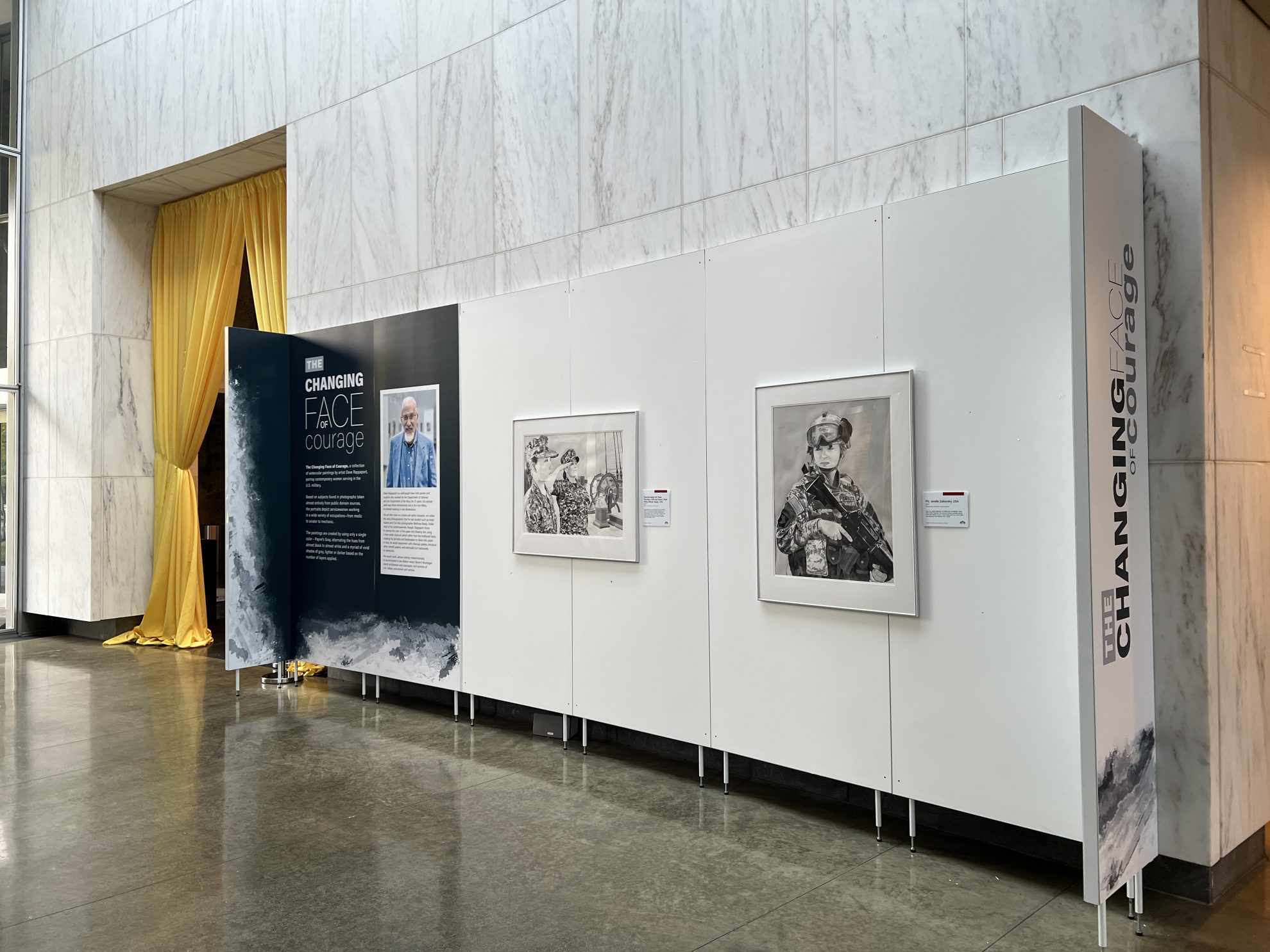
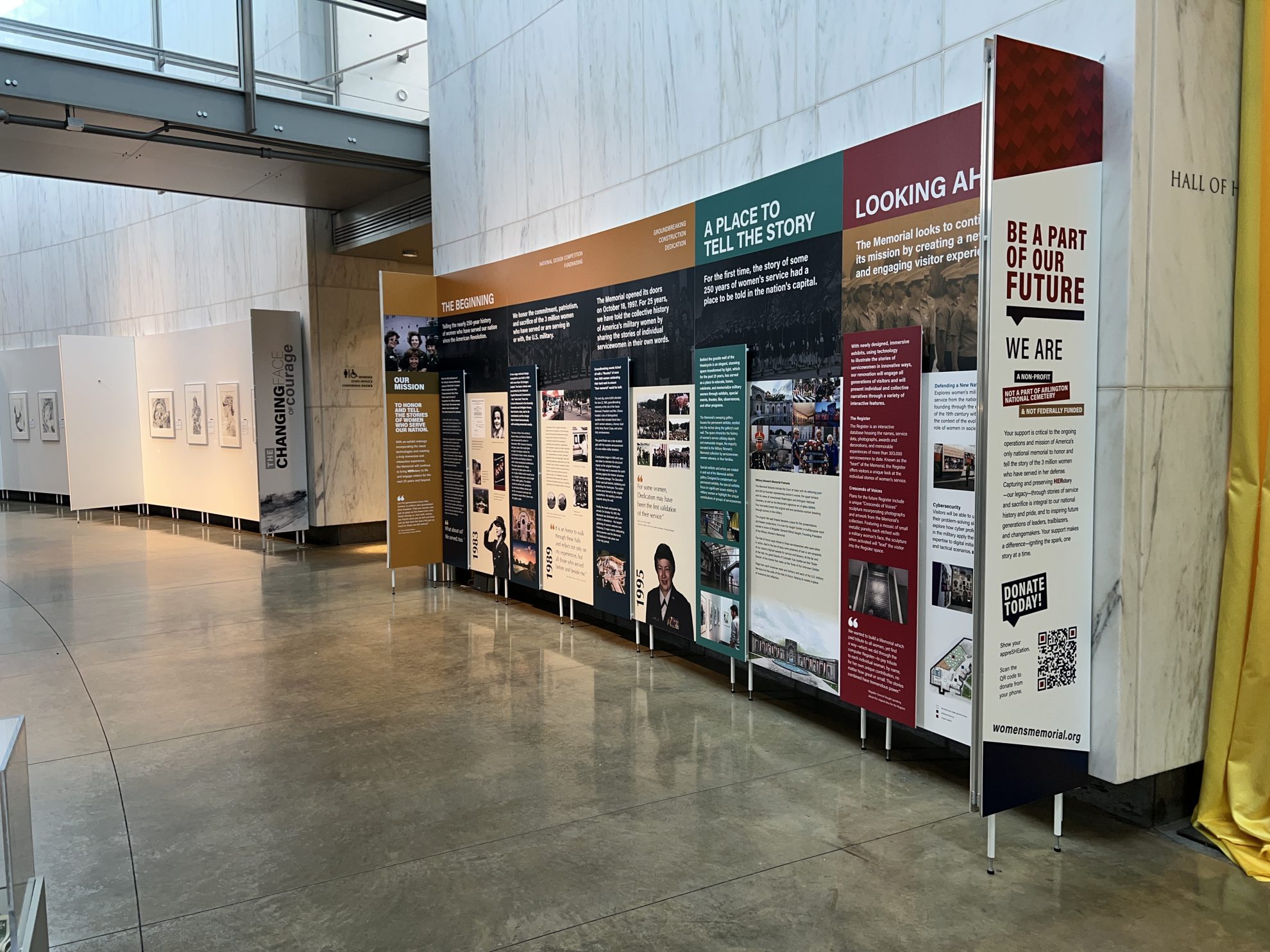
Heritage Signs & Displays created new museum signage for the Military Women’s Memorial in Arlington, VA. The project included custom signs, wall wraps, dimensional letters, and standoff-mounted displays to honor the legacy of U.S. servicewomen and the donors who supported the memorial. The updated interior features impactful designs, including a "Our Legacy" wall display and panels showcasing historical contributions and artwork, creating a transformative tribute to women in the U.S. Armed Forces.
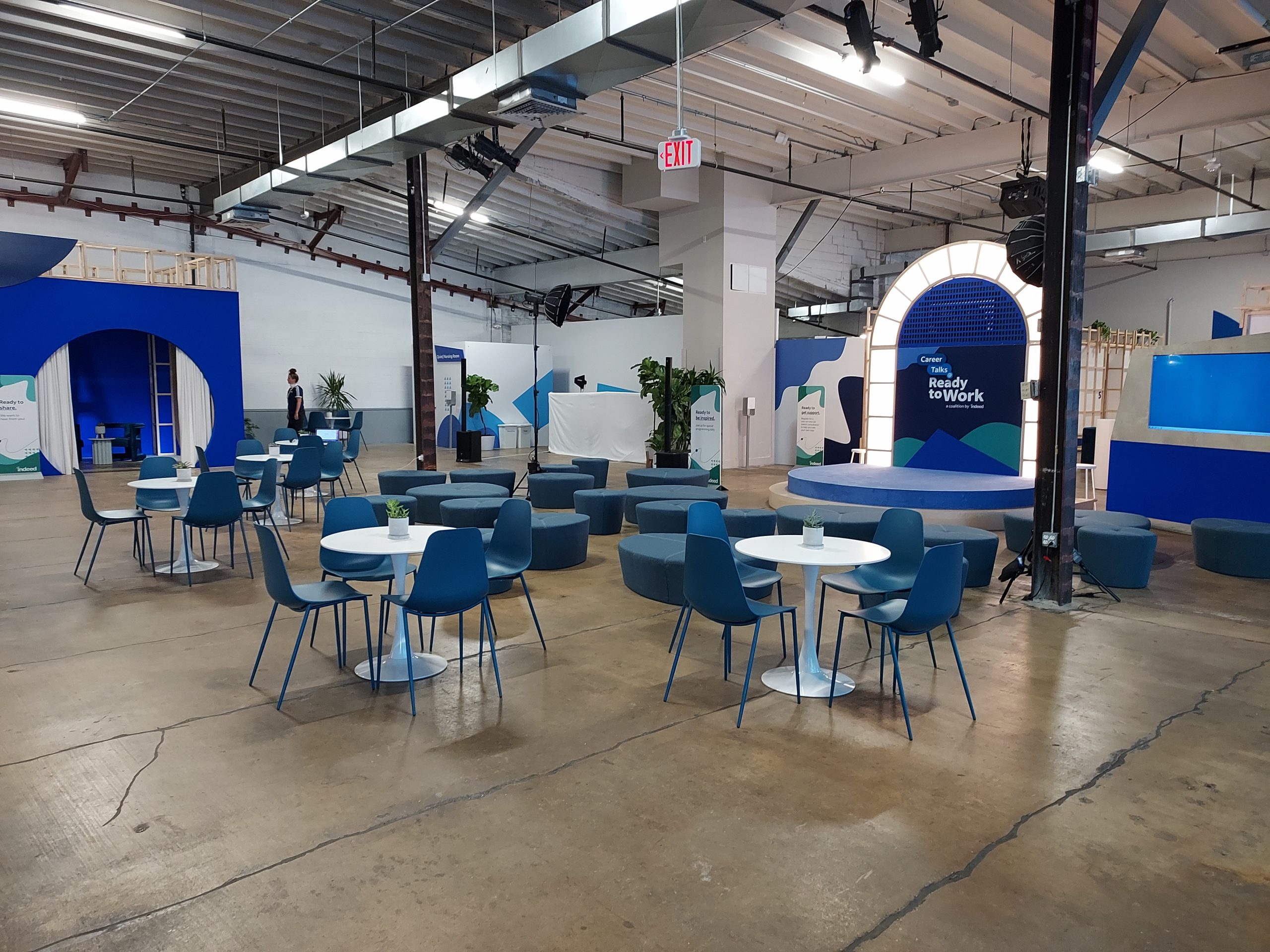
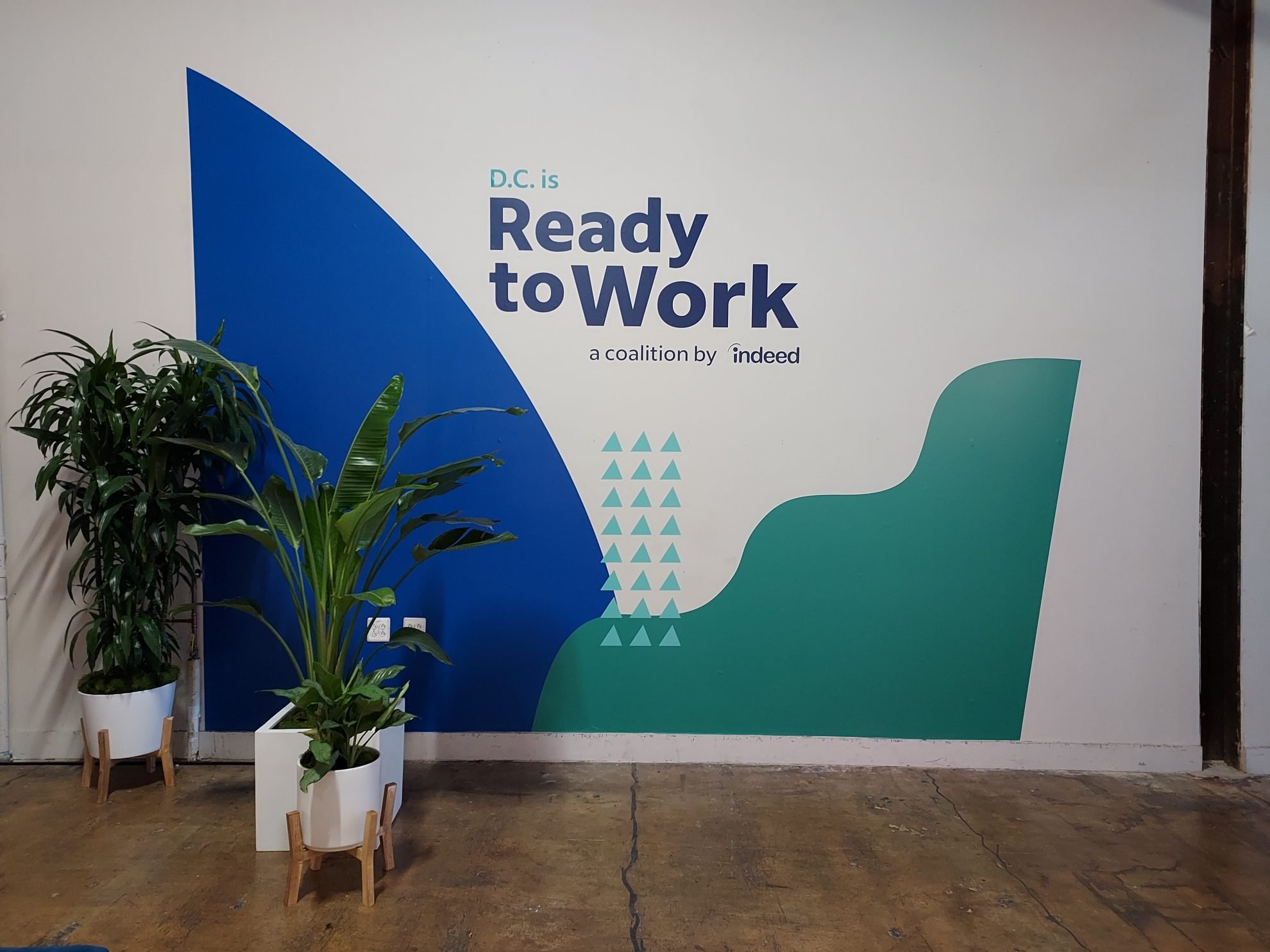
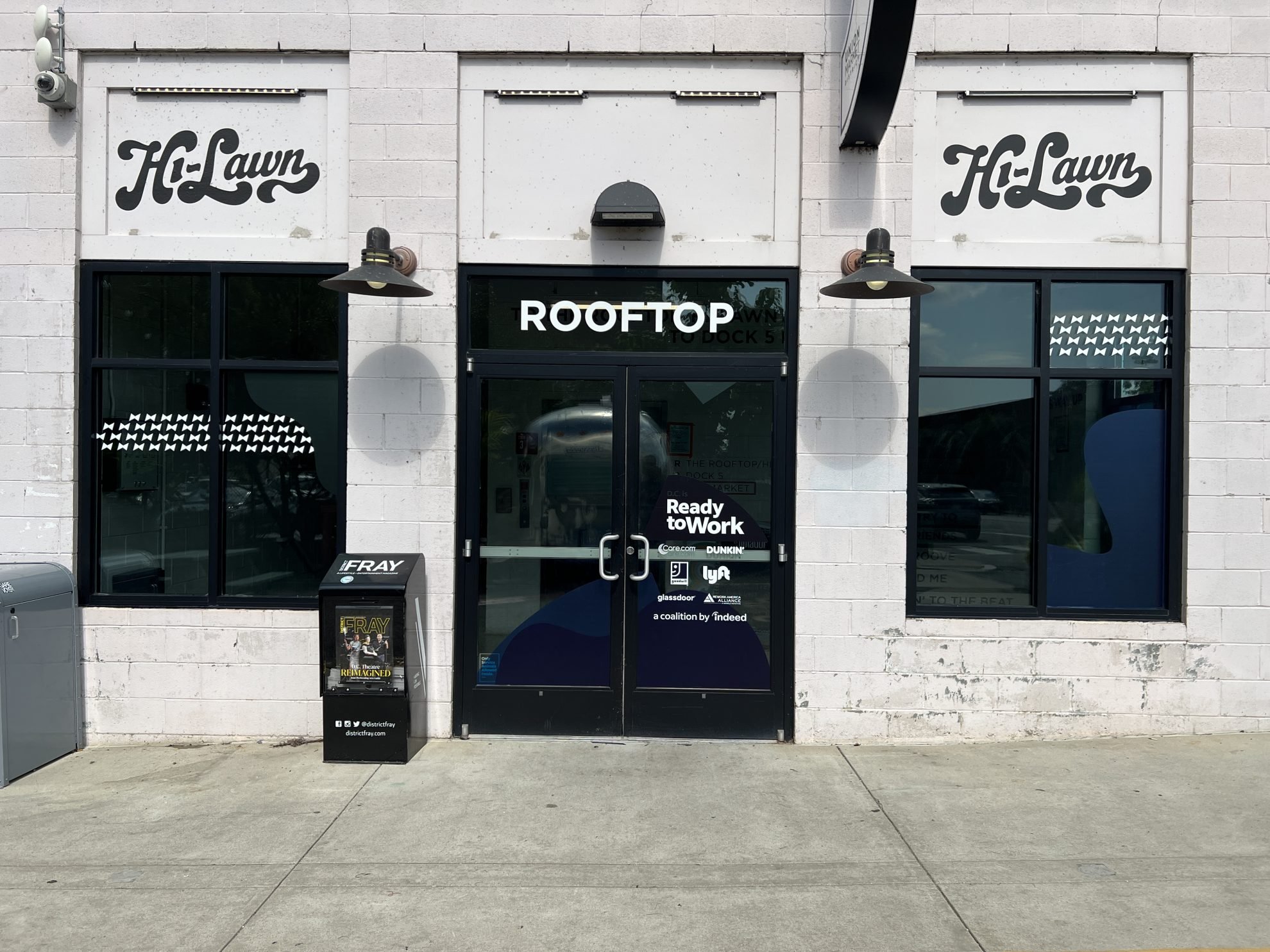
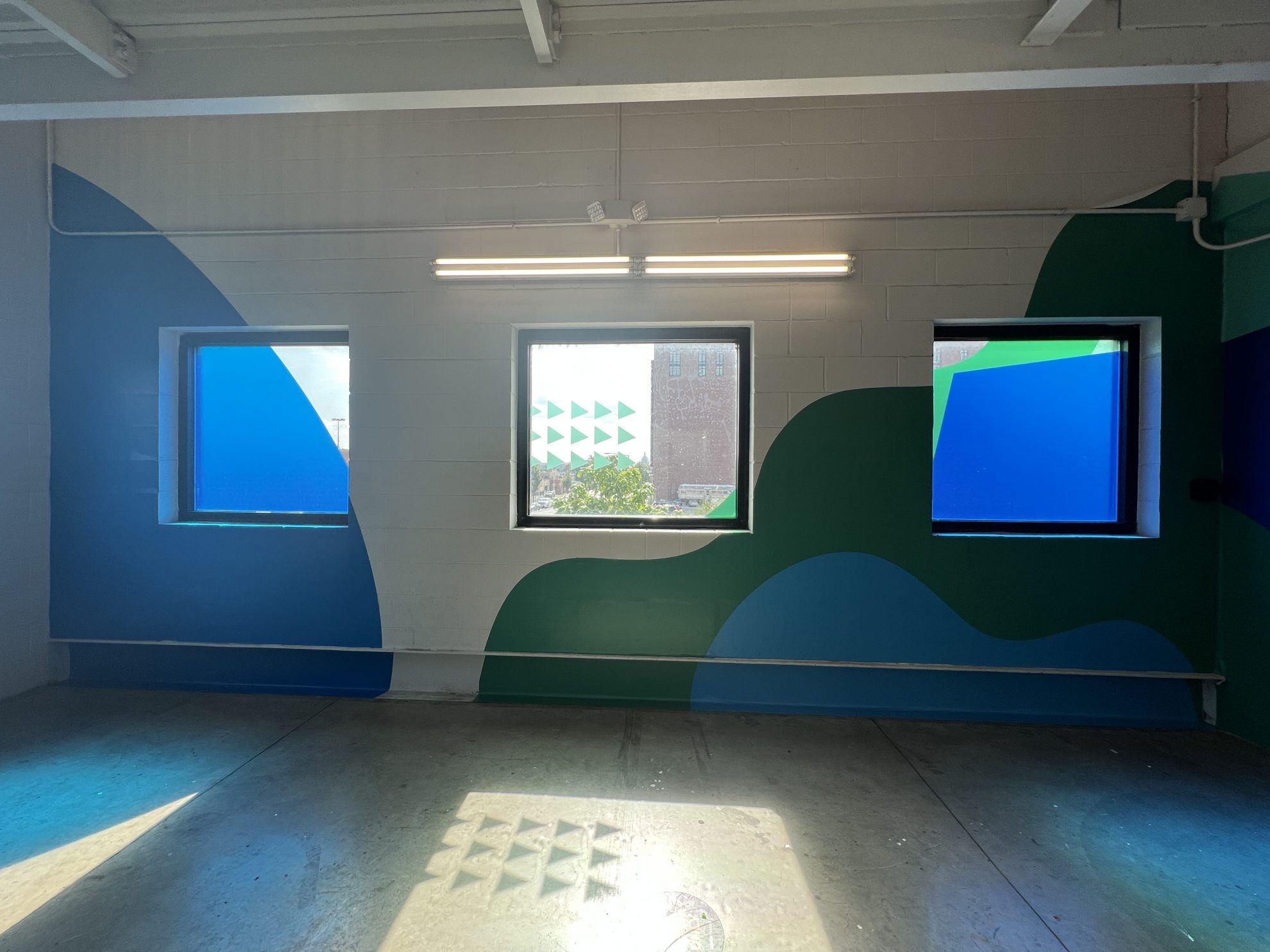
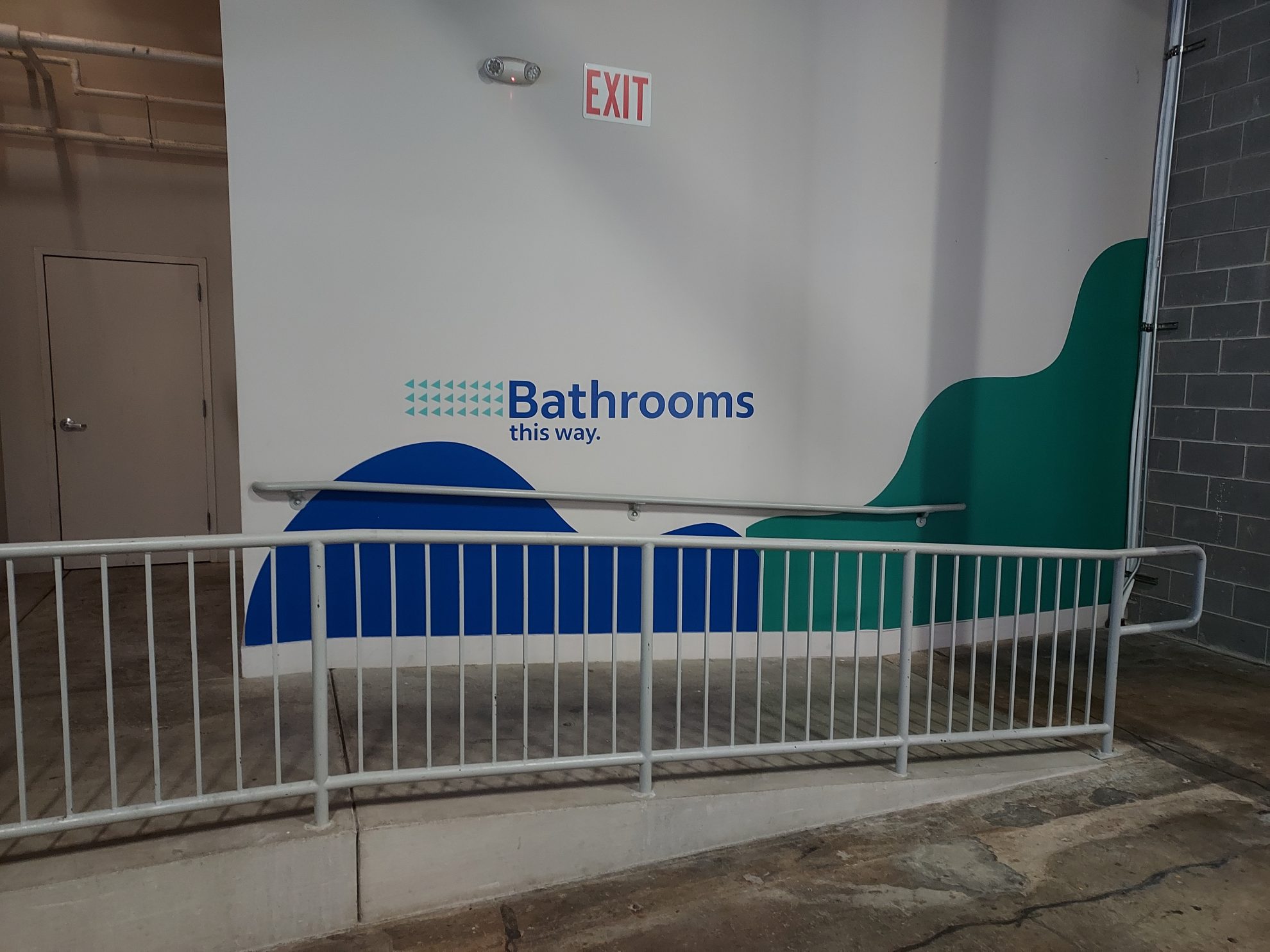
Heritage Signs & Displays' collaboration with The Gathery to brand Union Market in Arlington, VA, for Indeed's "Ready to Work" job fair. The project included custom event displays, wall graphics, window graphics, and wayfinding signs, creating an immersive and visually appealing environment. The branding enhanced the venue, reflected the event's mission, and provided a seamless experience for attendees.