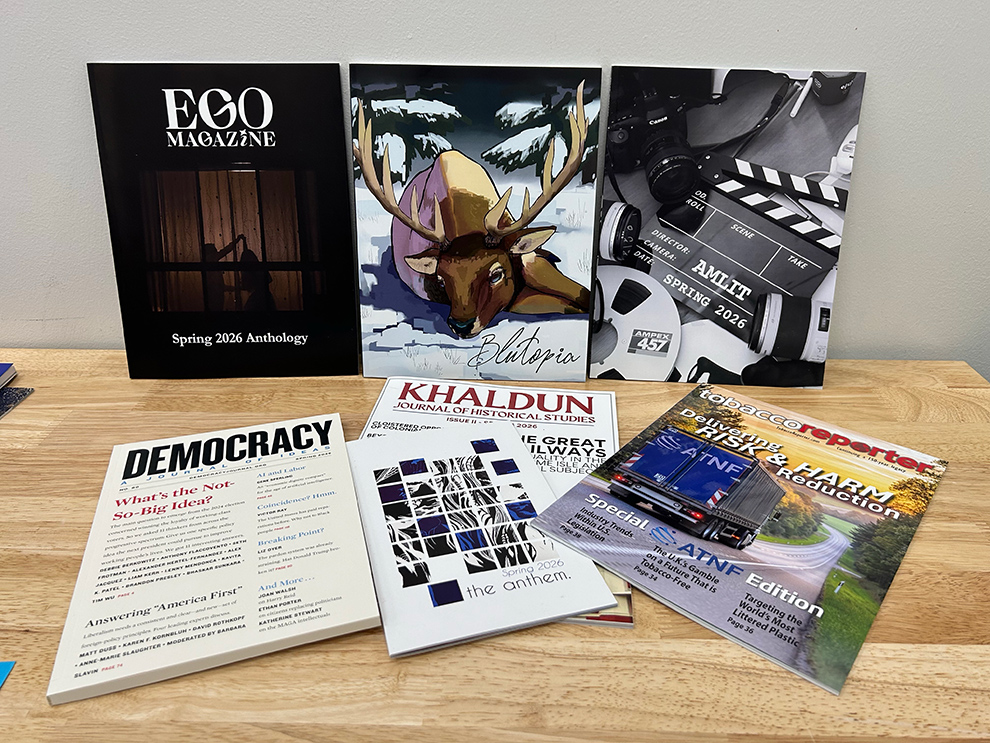
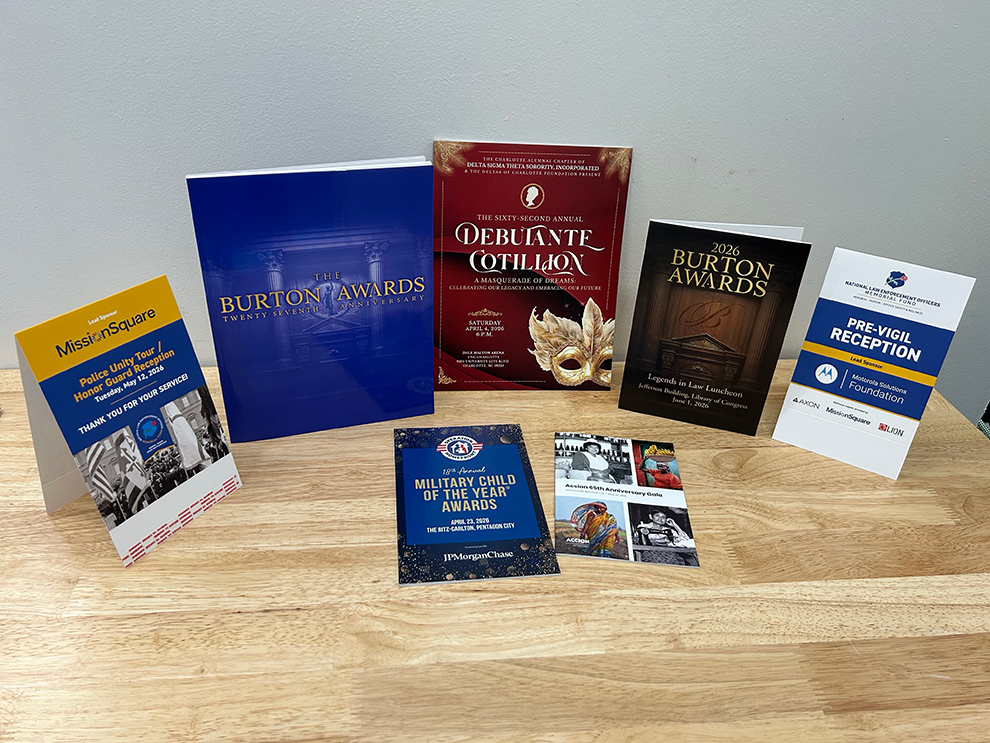
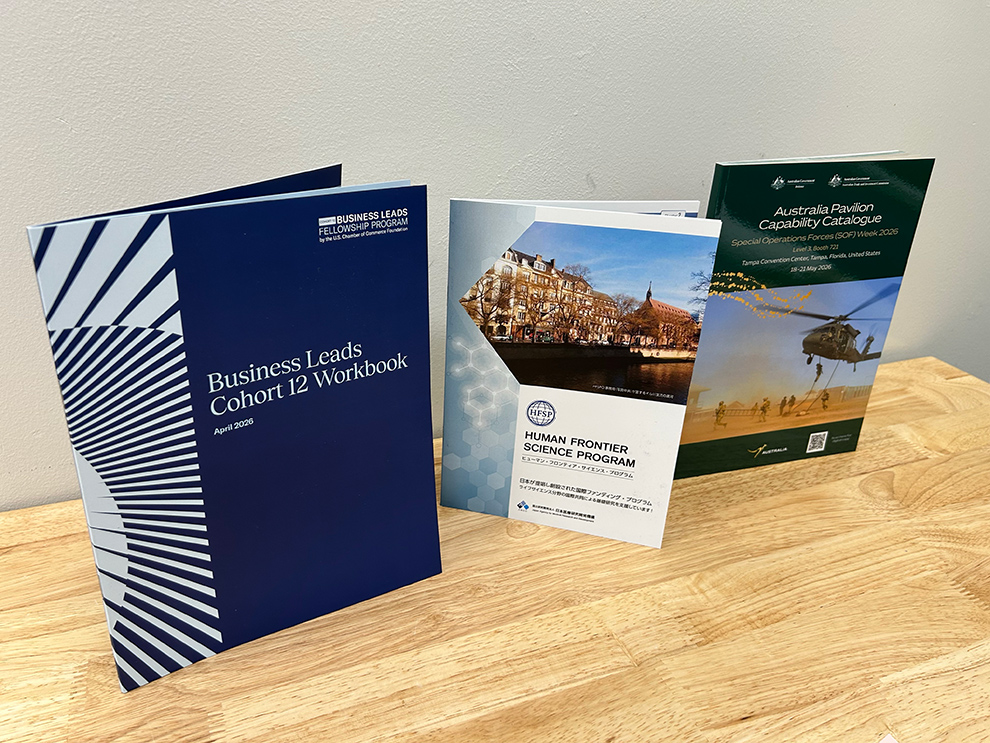
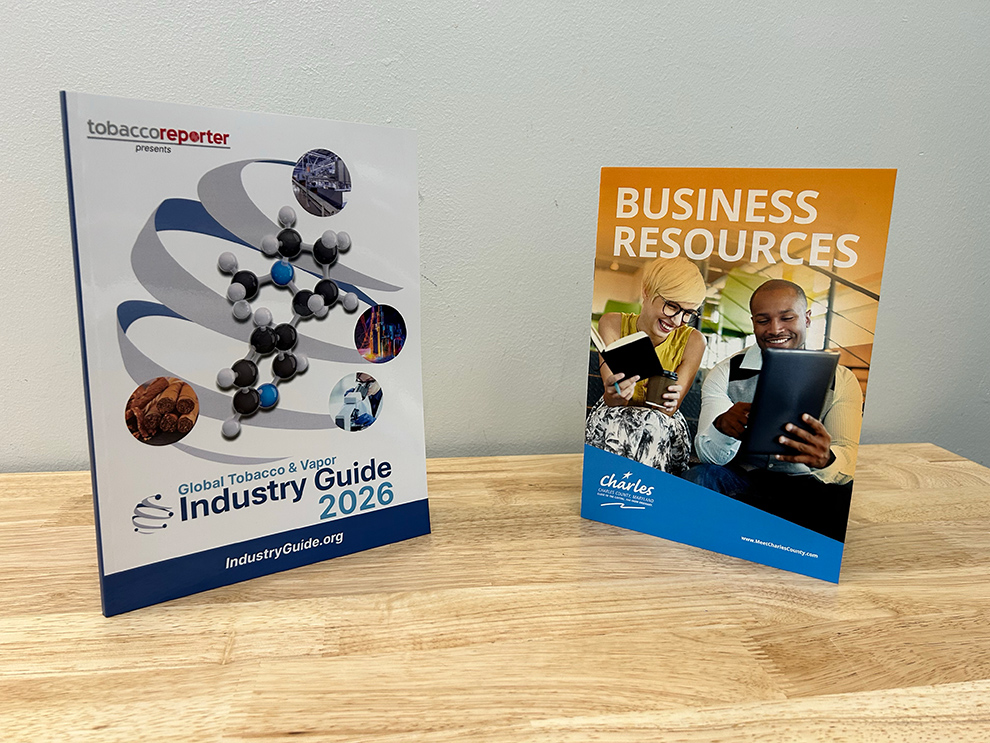
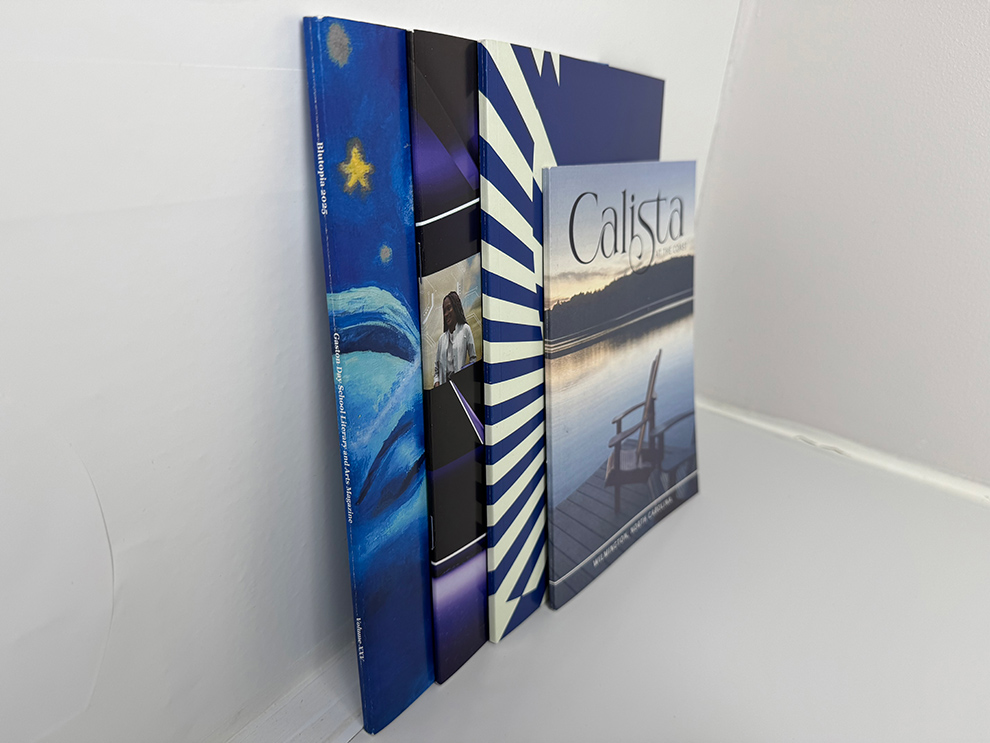
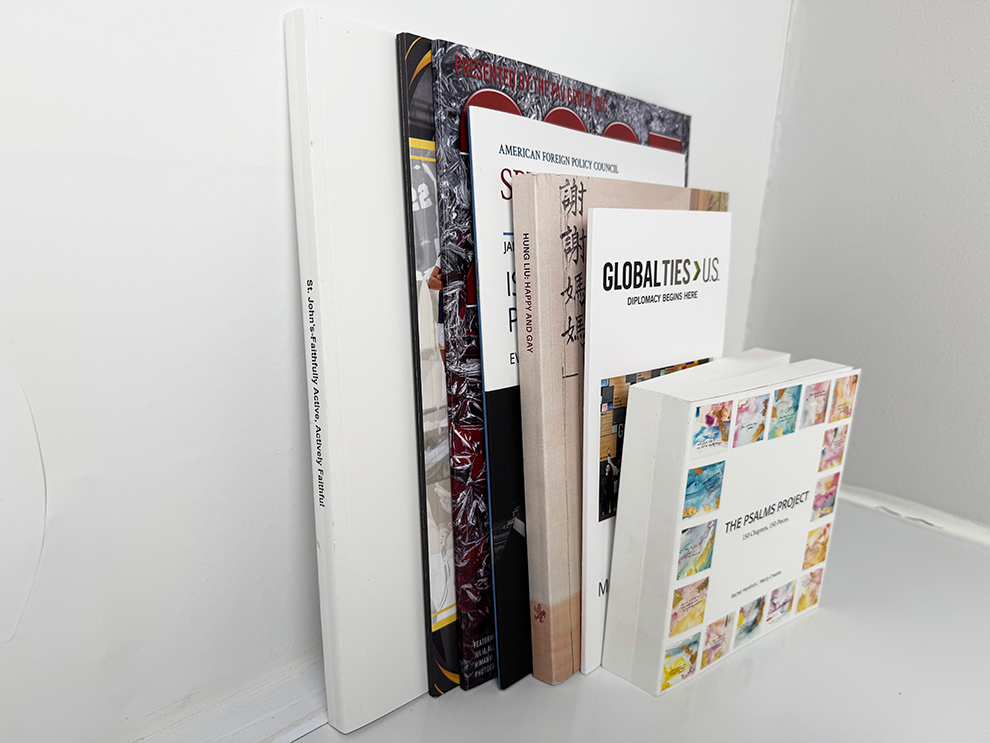
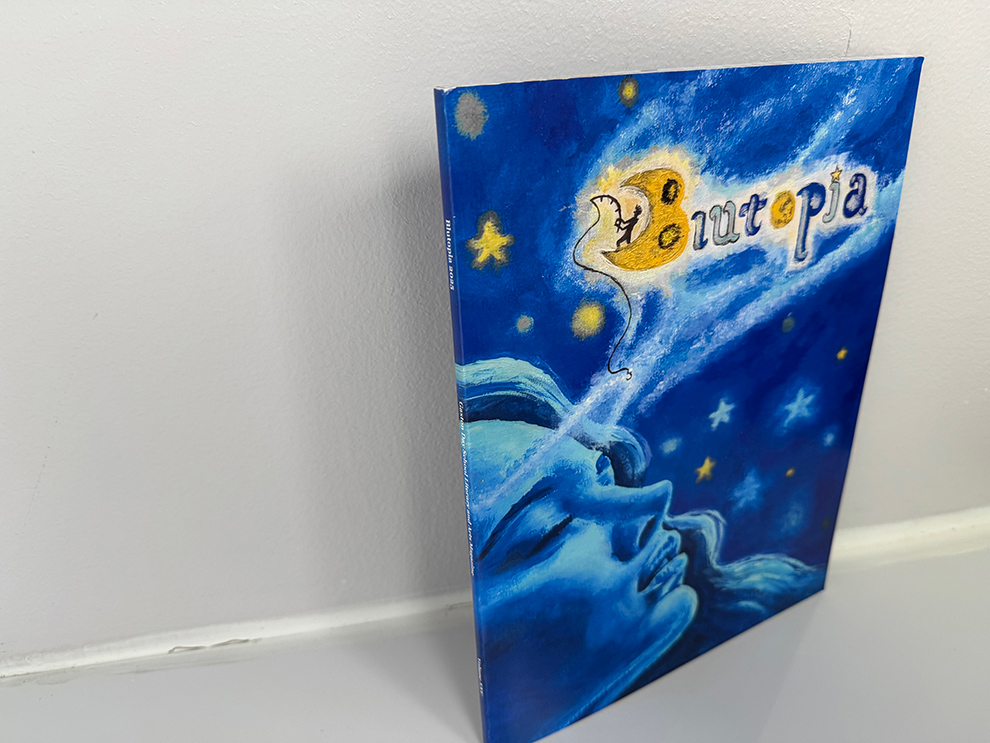
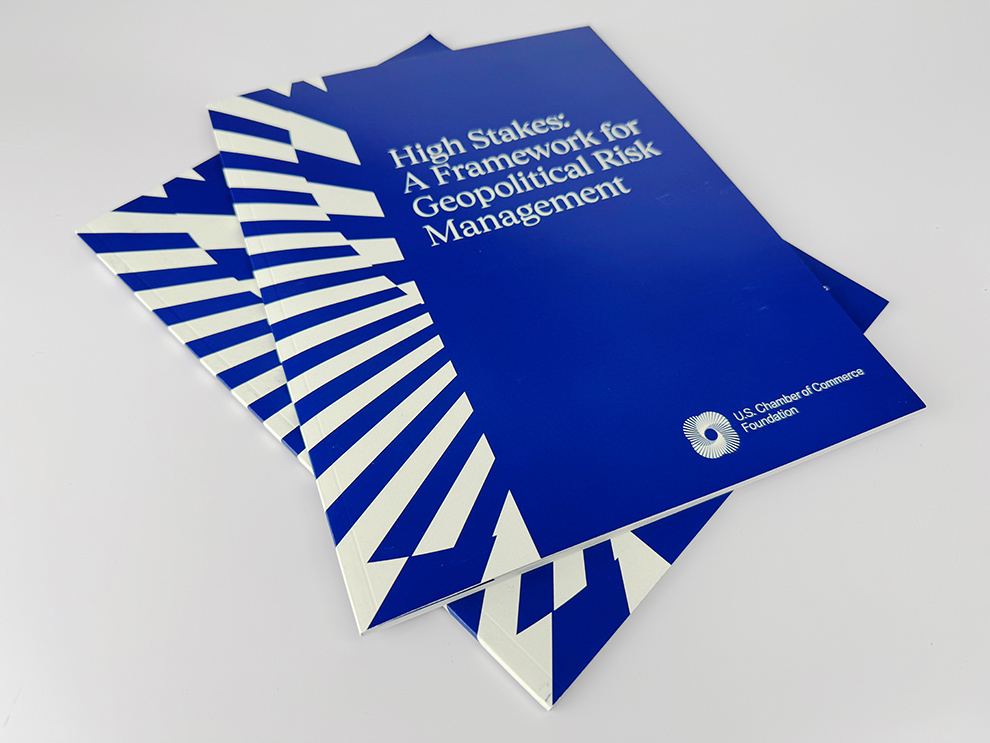
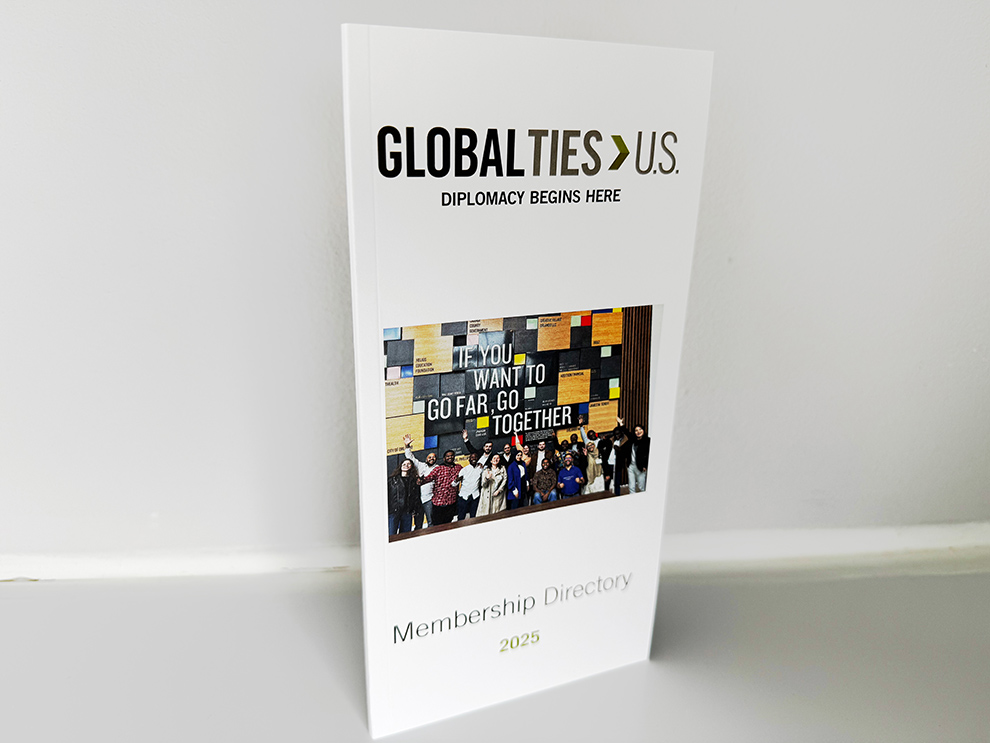
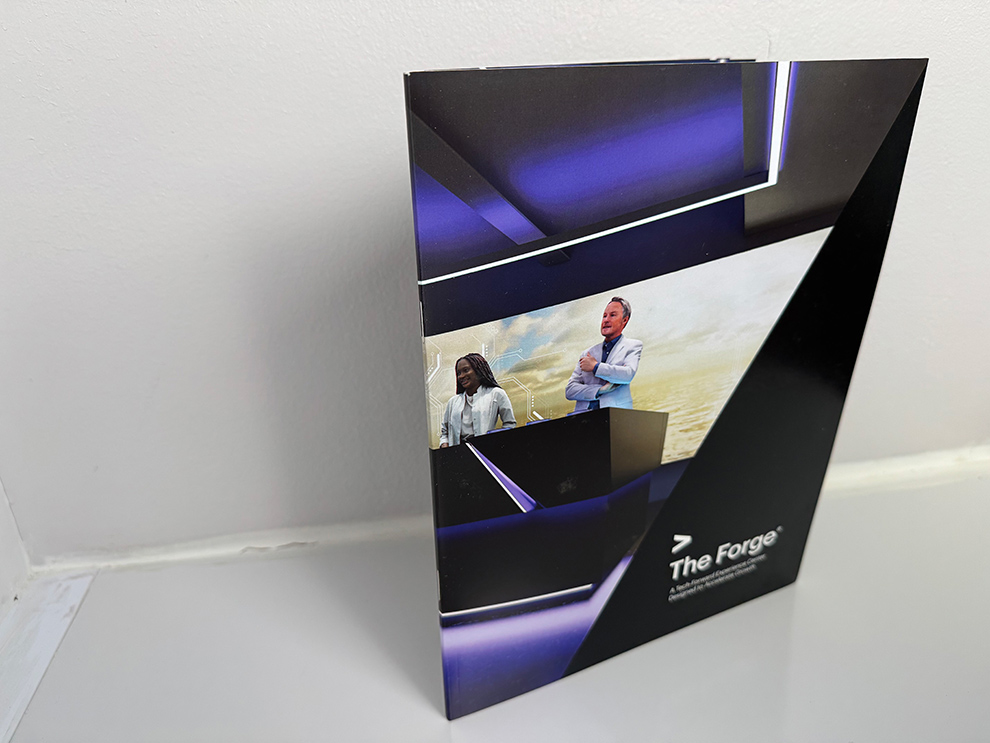
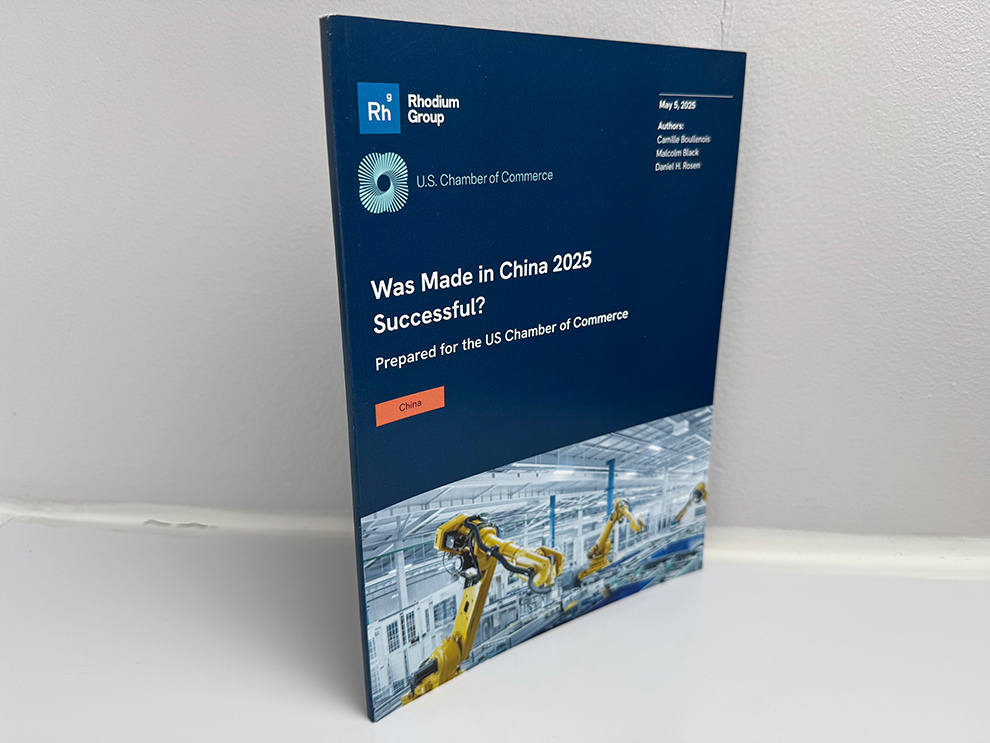
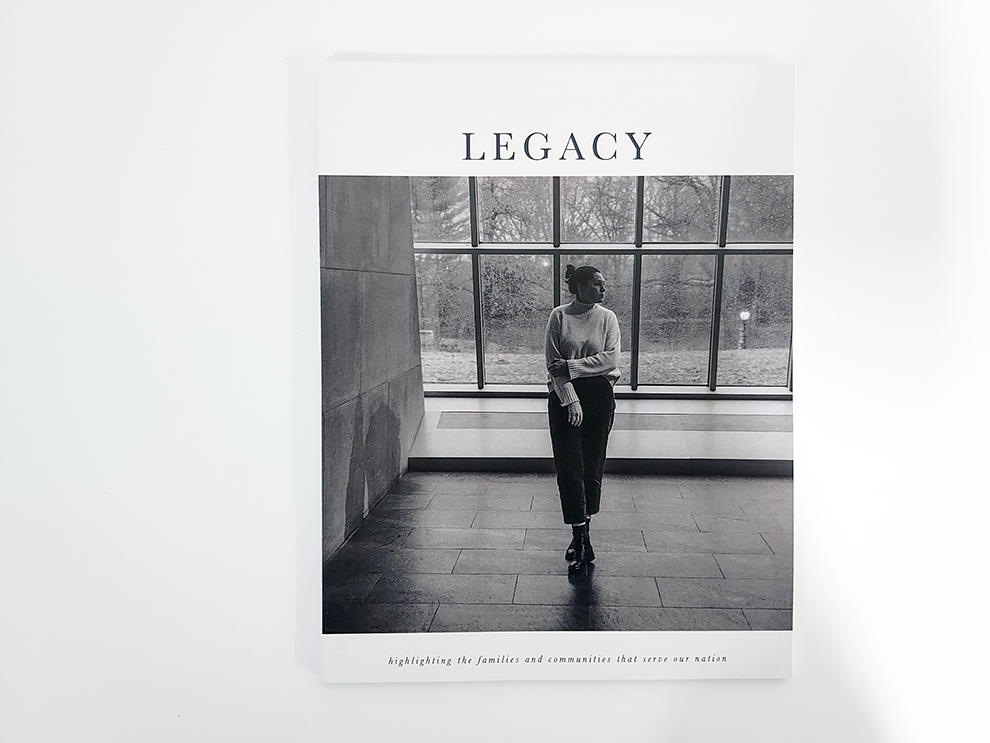
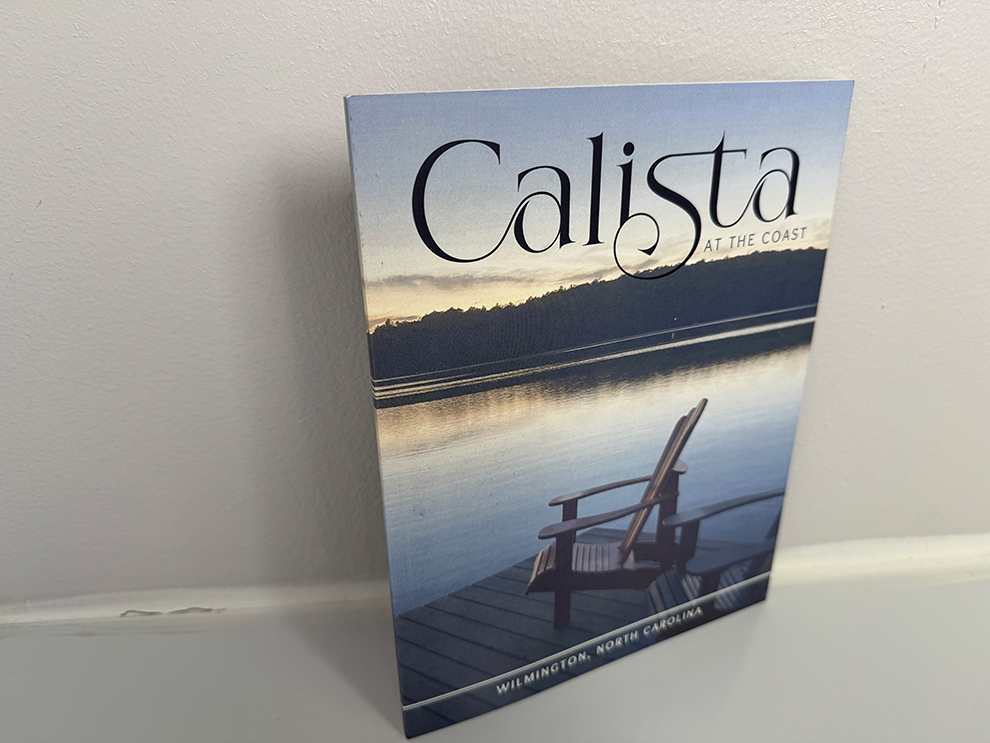
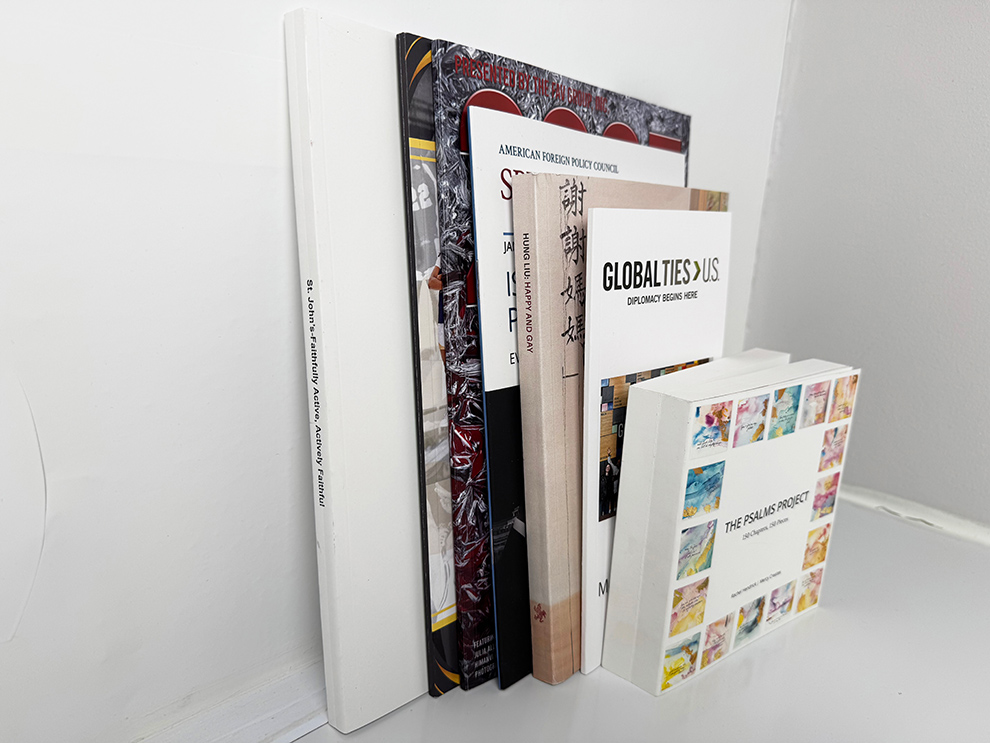
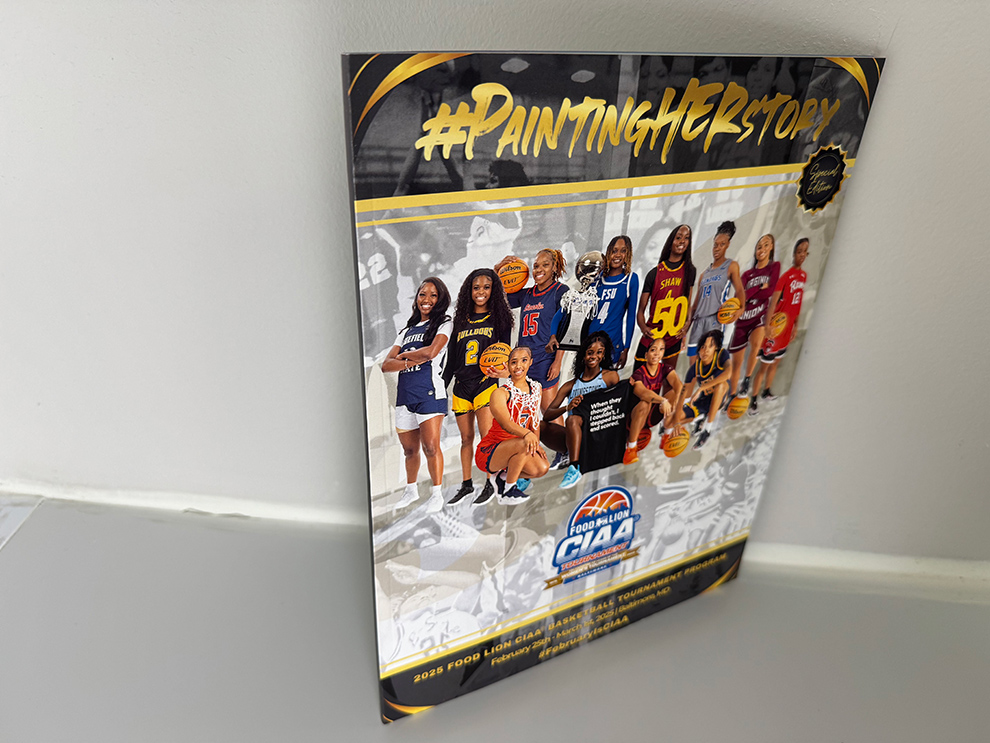
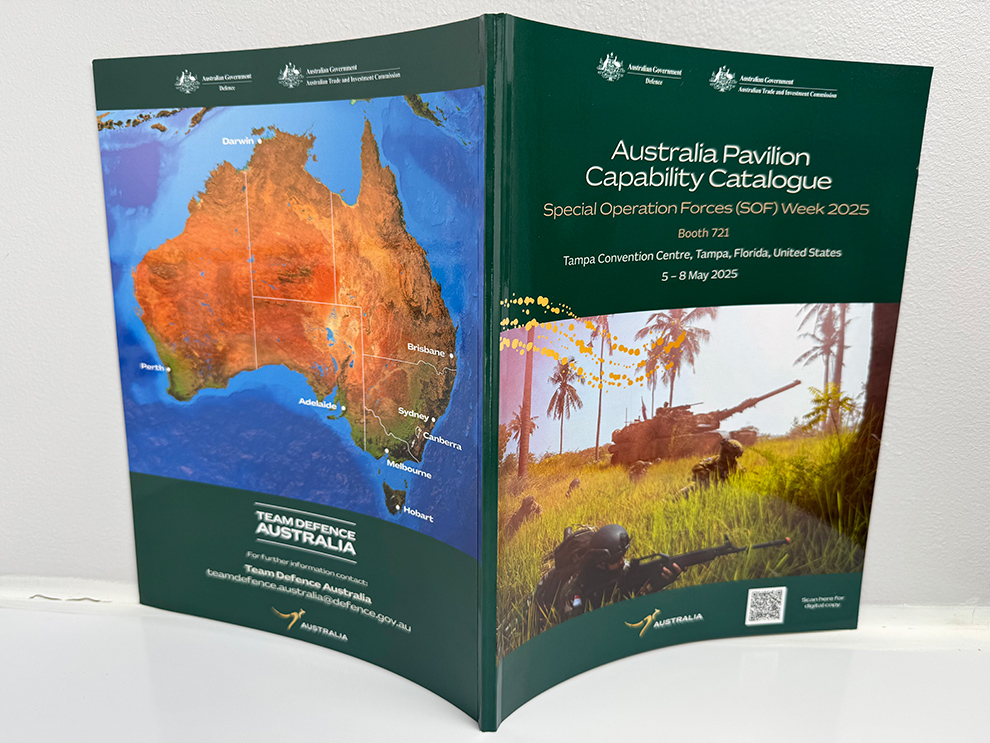
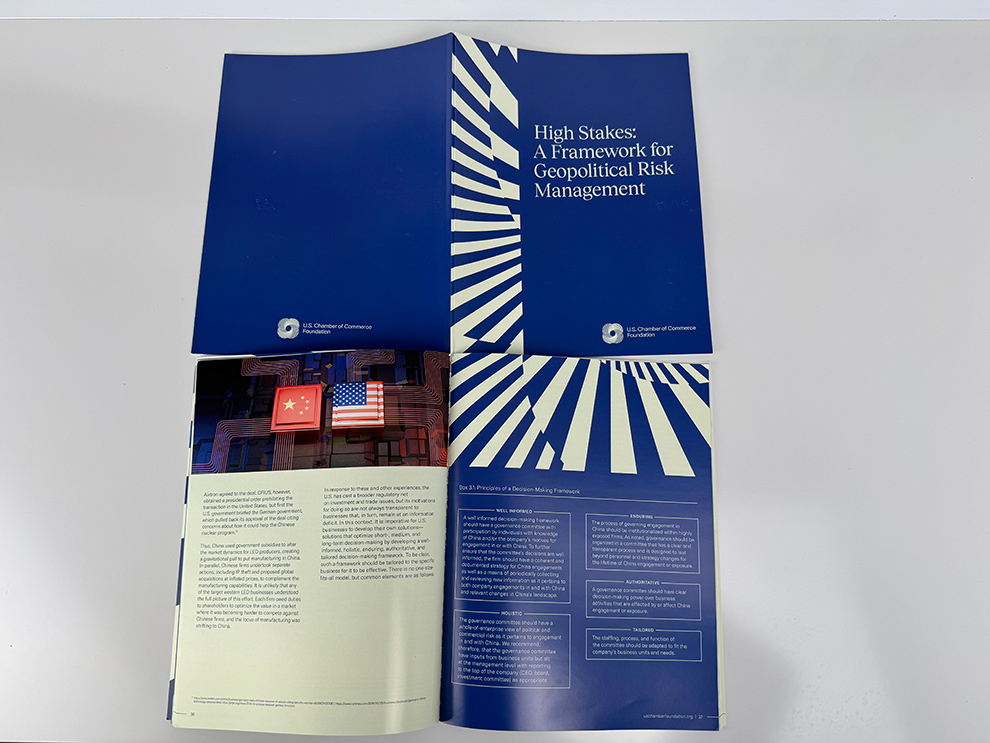
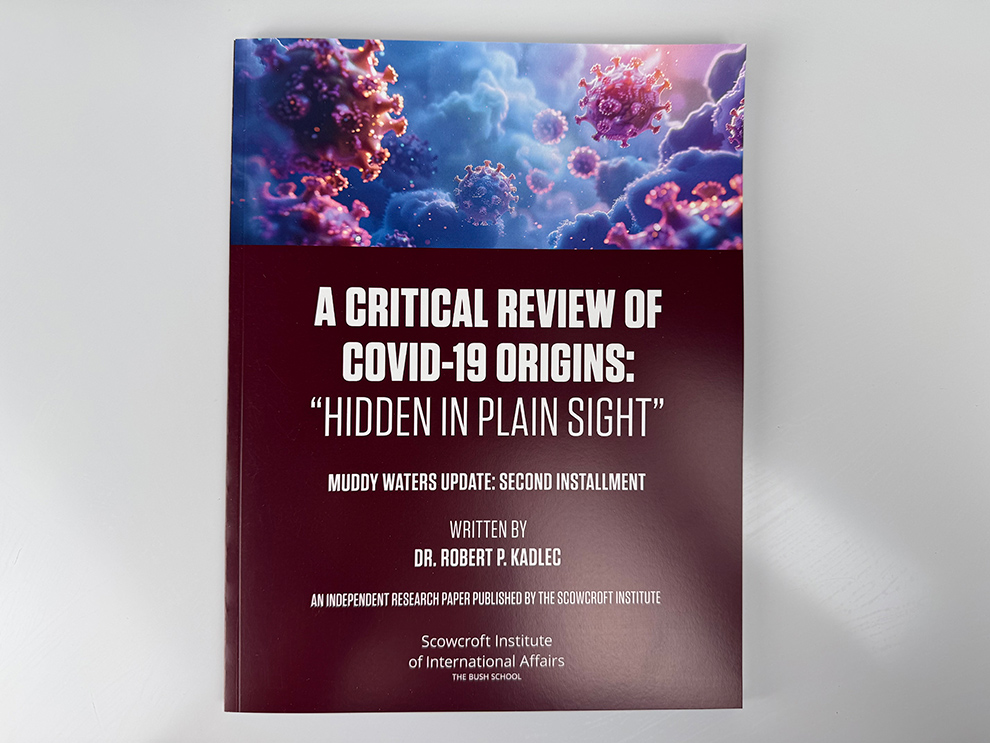
When a Durham organization distributes a research summary, an annual report, a program catalog, or a donor publication, the piece is often judged in the first few seconds of handling. Perfect binding supports that moment with a flat square spine, cleanly trimmed edges, and a cover that wraps the entire book, so a thick publication reads as a finished volume rather than an oversized handout.
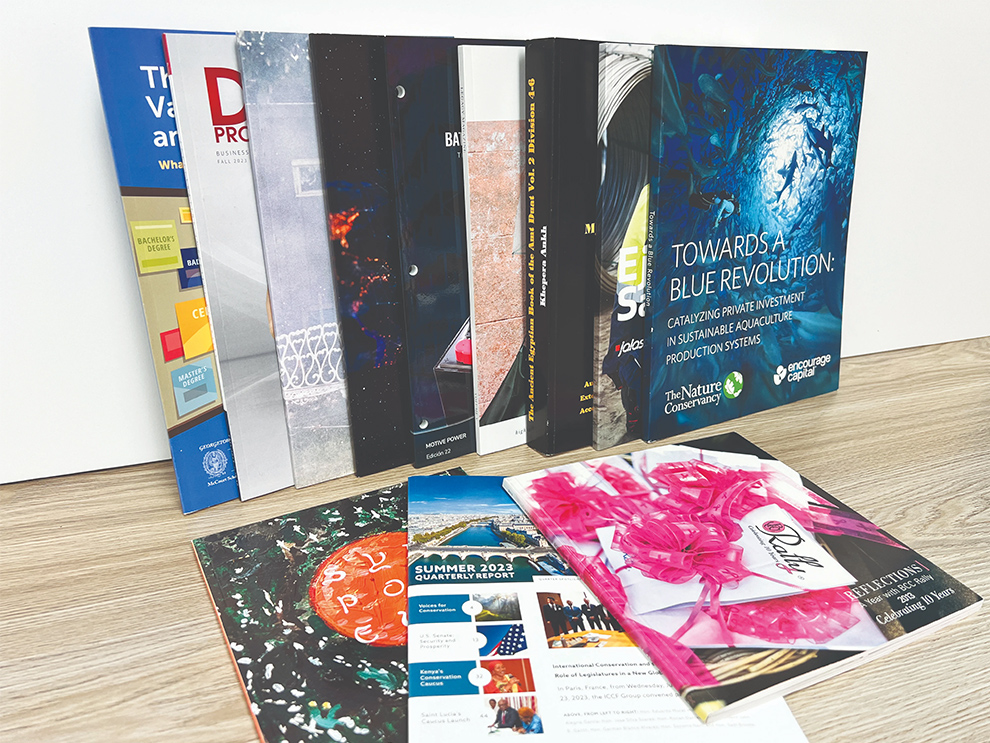
Heritage prints perfect bound books for Durham, NC organizations in research, healthcare, education, life sciences, nonprofit work, and professional services. Typical candidates include symposium proceedings, course and program catalogs, foundation and grant reports, clinical education guides, directories, and bound portfolios that will sit on a shelf or travel into a meeting.
The binding method is only one part of the finished piece. Spine width grows with page count and paper thickness, cover artwork must be sized to that spine, and interior margins must respect the glued edge. Heritage plans those relationships together, confirms them through an electronic proof, and weighs the delivery date against the actual production steps. When the specifications fit, the result stacks, stores, and presents like a real book.
Heritage began as a printing company in 1977, and perfect bound work still draws on that foundation. Producing a square-spine book means coordinating interior files, pagination, cover layout, spine measurement, paper selection, color reproduction, trimming, binding, proof approval, and delivery. Experience with that sequence helps Heritage anticipate which detail is likely to shift.
Durham organizations often work under committee review, grant cycles, academic calendars, or event schedules, so approvals arrive in stages. As a veteran-owned company with family leadership, Heritage treats an accepted commitment as an obligation and treats an open question as something to resolve early rather than absorb late. If a page count moves or a cover is still in review, Heritage explains what must settle before the run can proceed.
Quality control, professional color management, and retained production specifications support consistency from one edition to the next. The required electronic proof lets your reviewers verify the file before any sheet is printed. For qualifying Custom Quote orders, a Project Coordinator becomes the direct phone-and-email contact once Heritage has accepted the quote and assigned the work, which keeps several stakeholders aligned without reopening approved decisions.
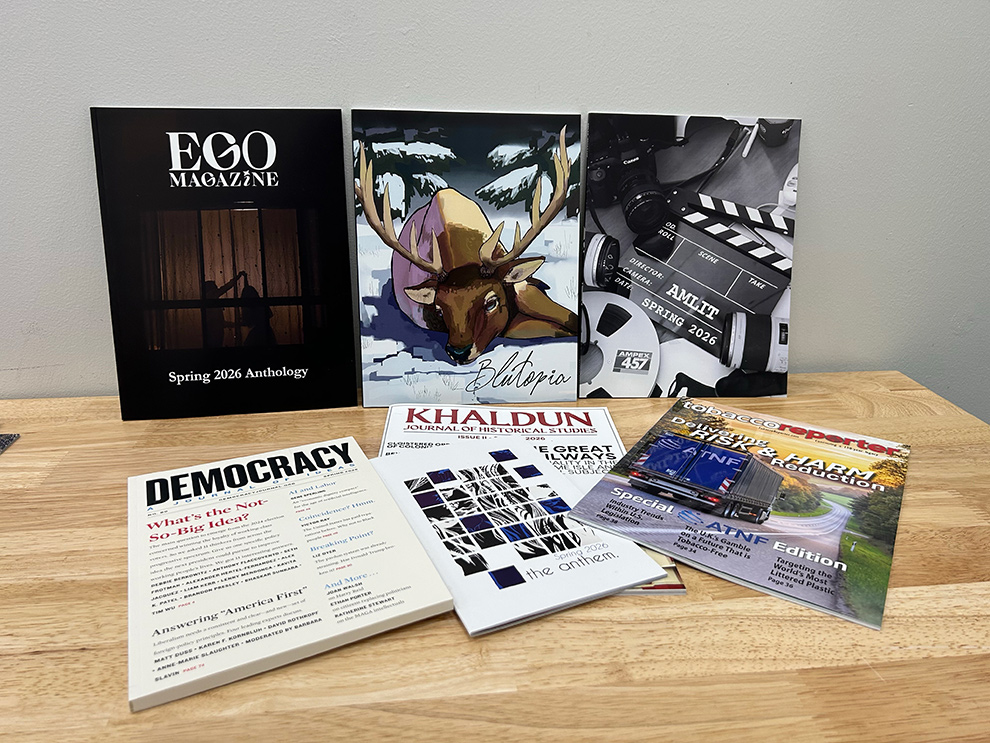
Perfect binding earns its place when the publication should look and feel like a book, stand upright on a shelf, and present a finished face to the reader. A glued square spine wrapped by a single cover gives that profile and holds up in briefcases, mail, and conference bags.
Other constructions serve other needs. Plastic coil binding is the stronger option for training materials, lab manuals, and reference documents that must lie open or fold back during use. Saddle stitching, where folded sheets are stapled along the fold, usually suits thinner programs and booklets. If a document is short or printed on light paper, there may not be enough thickness to form a convincing perfect bound spine at all.
A readable spine title is a separate decision. A slim book may yield a spine too narrow for clean type, and a blank spine then looks more deliberate than cramped lettering. Durham buyers should begin with how the publication will be read, stored, and distributed, confirm the page count and paper, and then settle on the construction those specifications support. Heritage will say plainly when a different format is the better fit.
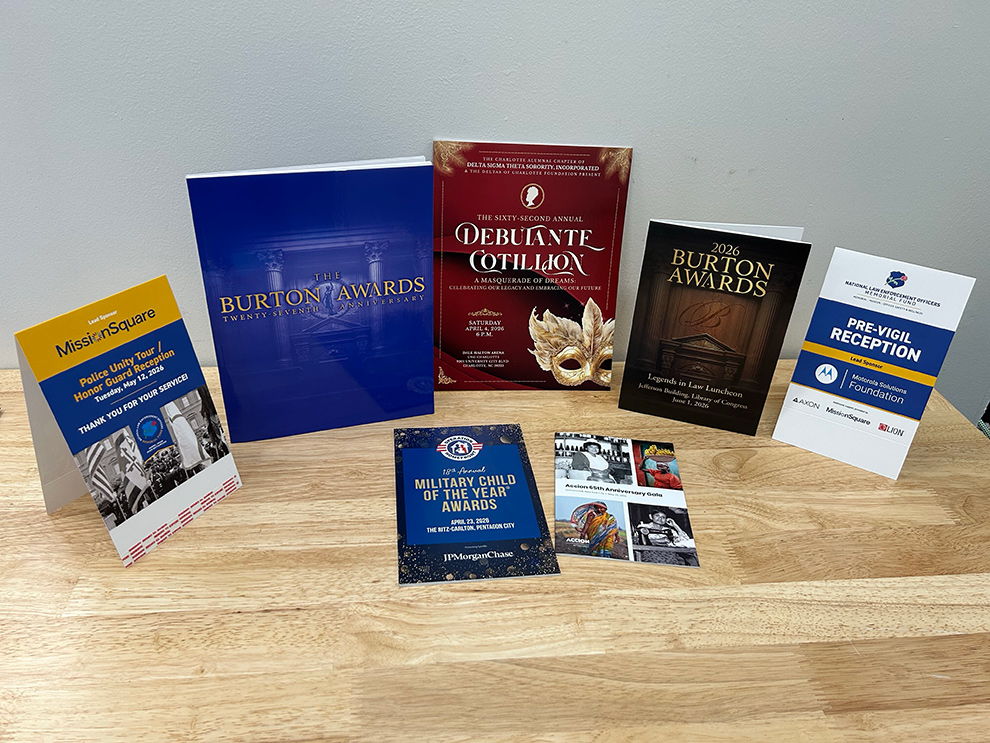
A bound book rarely travels alone. Durham organizations often pair it with companion pieces for events, programs, outreach, and mailing, and these Heritage capabilities cover the most common needs.
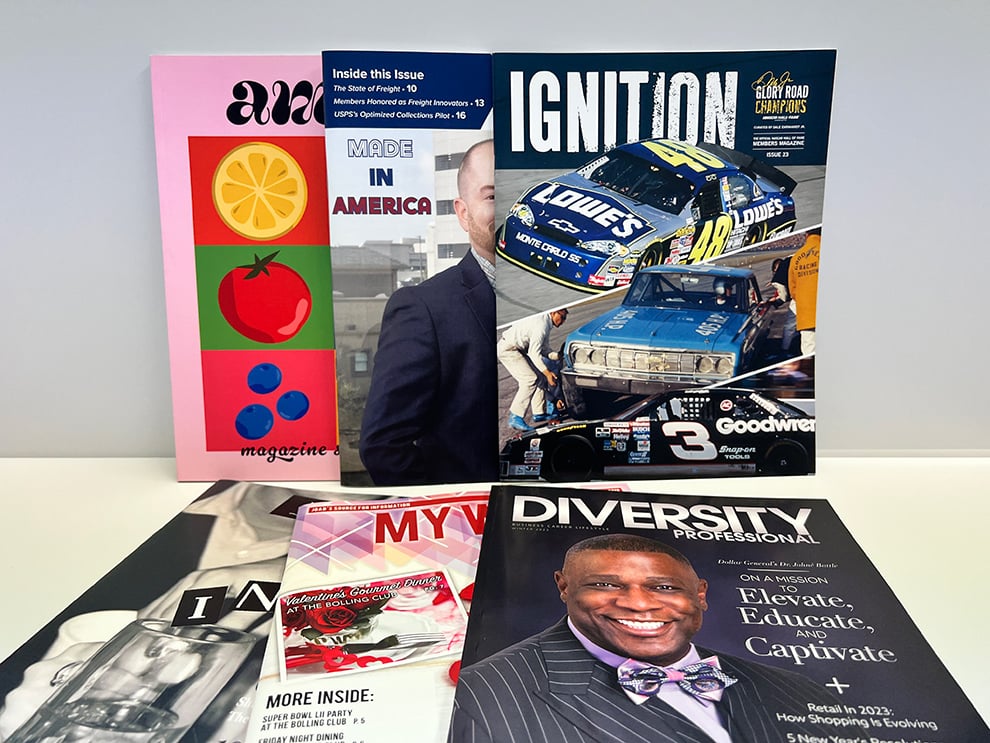
Keep a quarterly research digest or member publication consistent in trim, paper, and color across every issue.
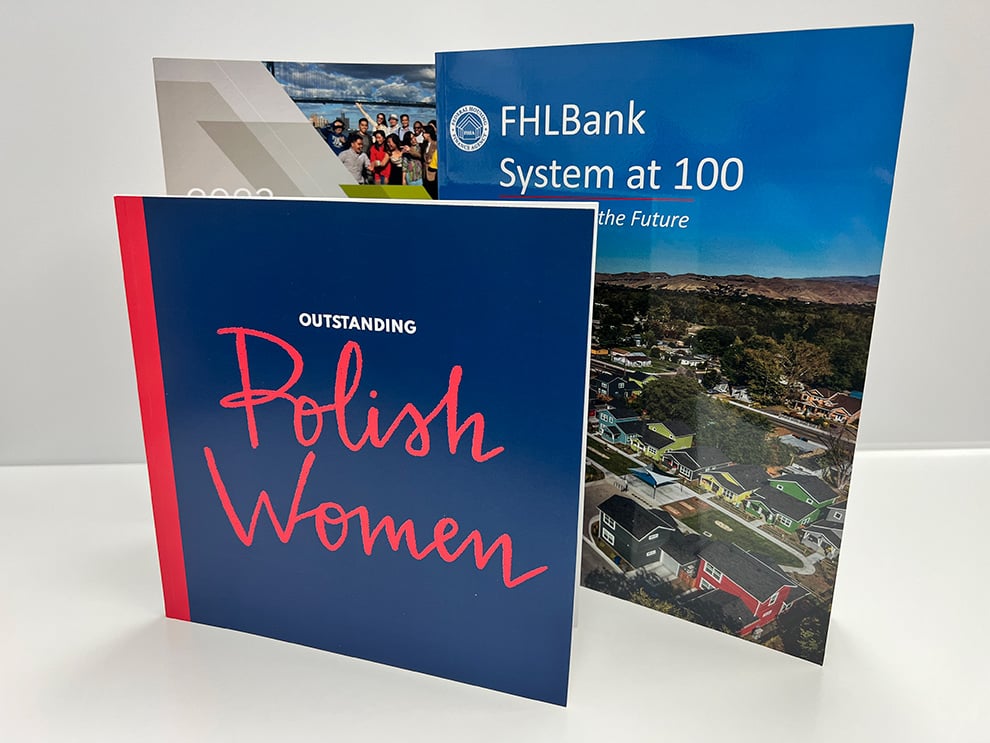
Choose a saddle-stitched or lighter multi-page format when the page count does not justify a glued spine.
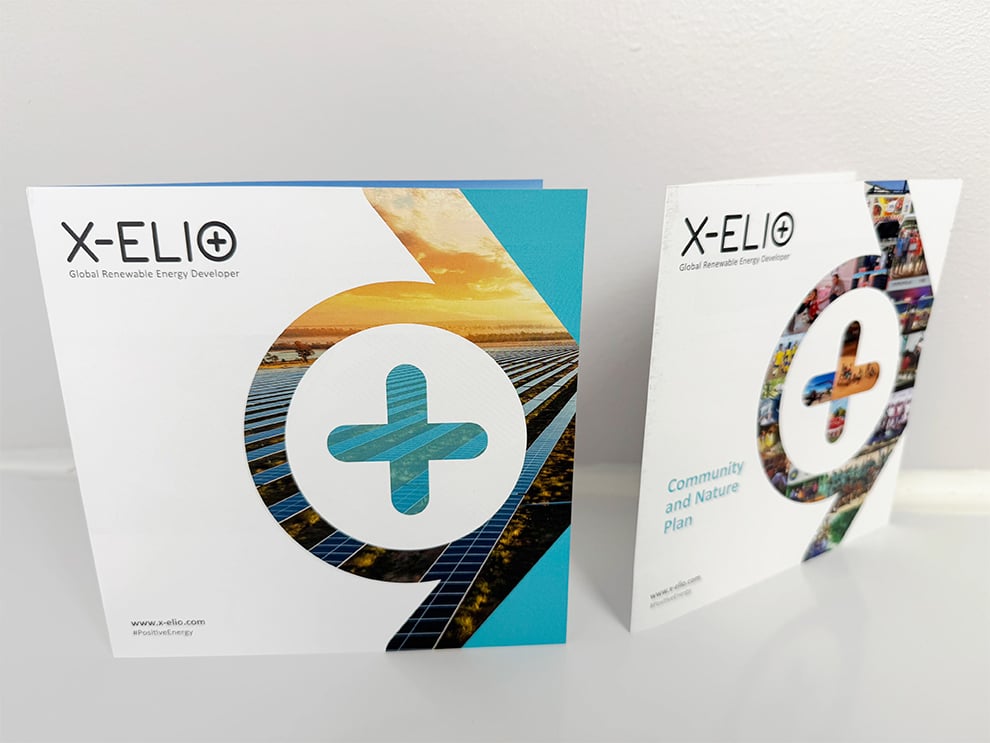
Organize a bound report with cover letters, data sheets, and agendas for grant reviews, site visits, and board sessions.
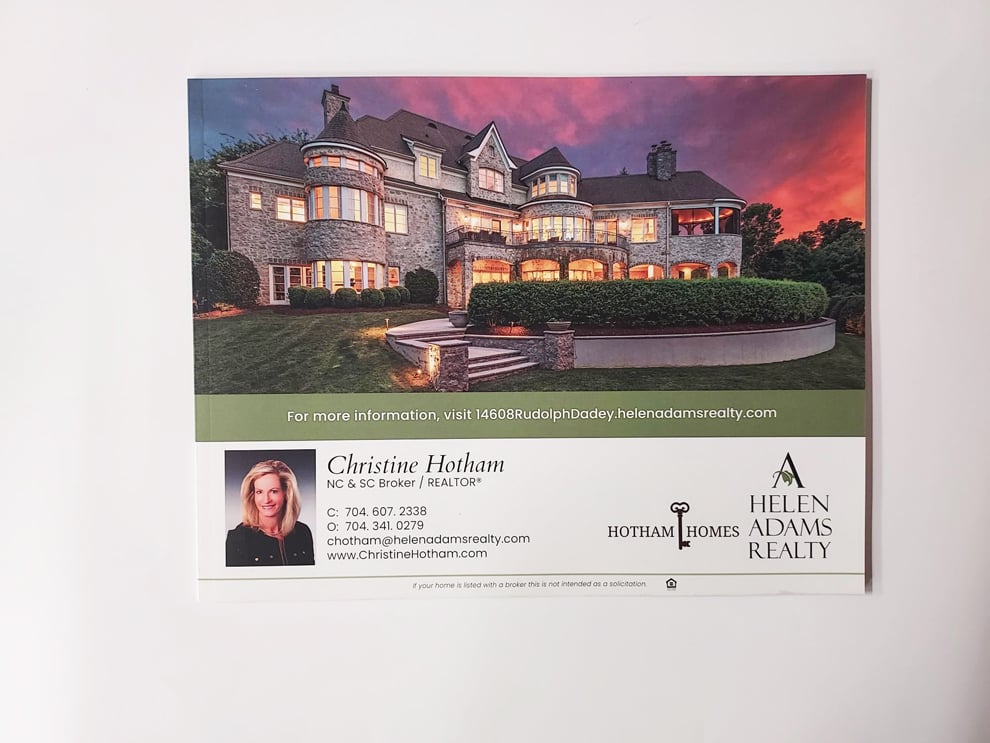
Move an accepted print run into addressed distribution to donors, members, alumni, or regional partners.
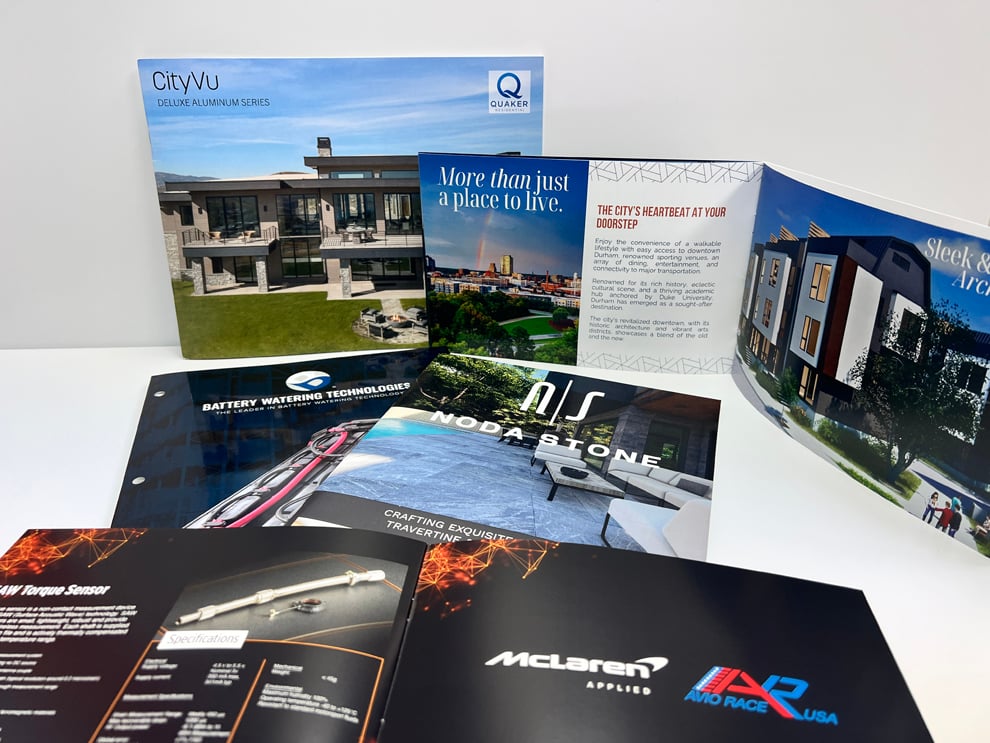
Produce companion flyers, postcards, and handouts that carry the same visual identity as the publication.
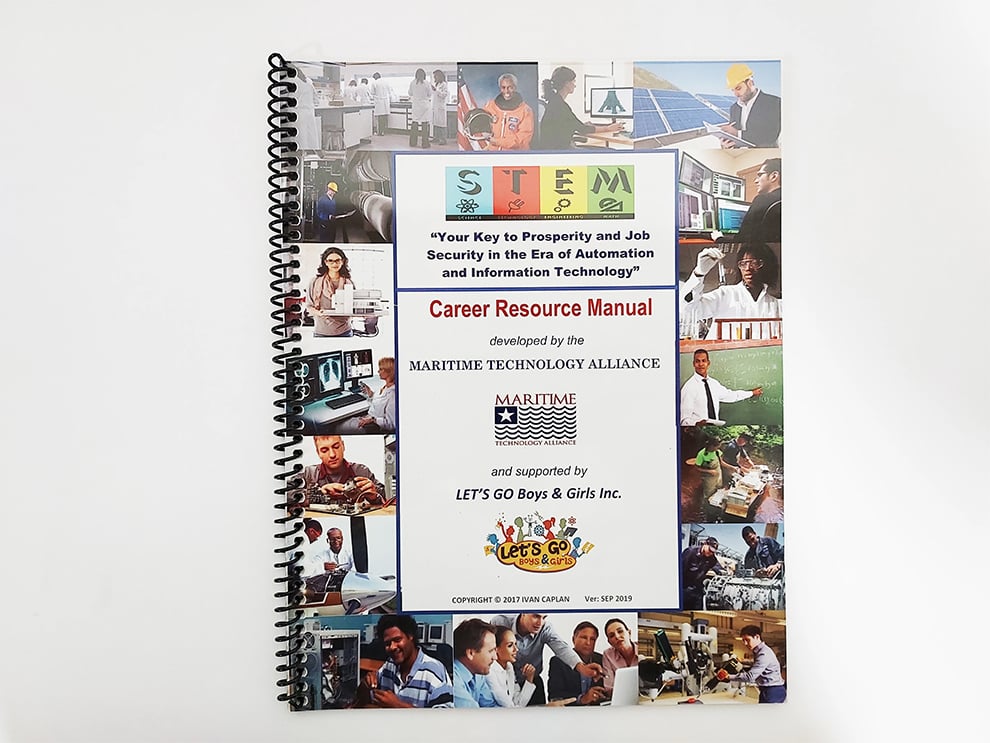
Build lie-flat instructional references for onboarding, clinical procedures, and lab protocols that readers consult while working.
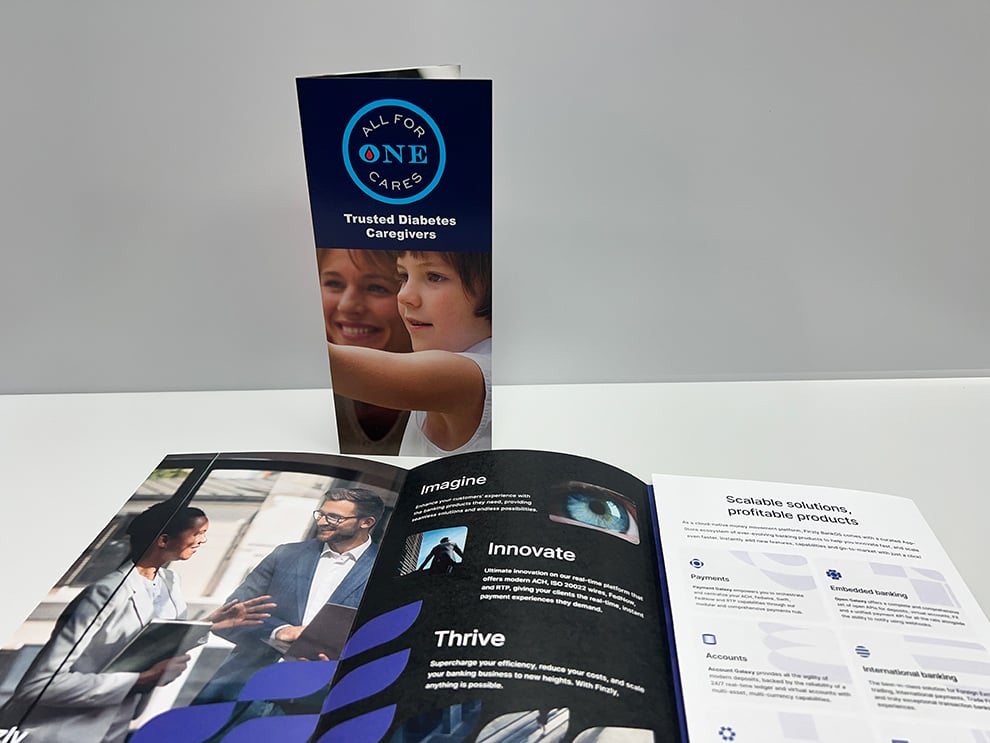
Distill a longer publication into a folded summary for lobbies, recruiting events, and community outreach.
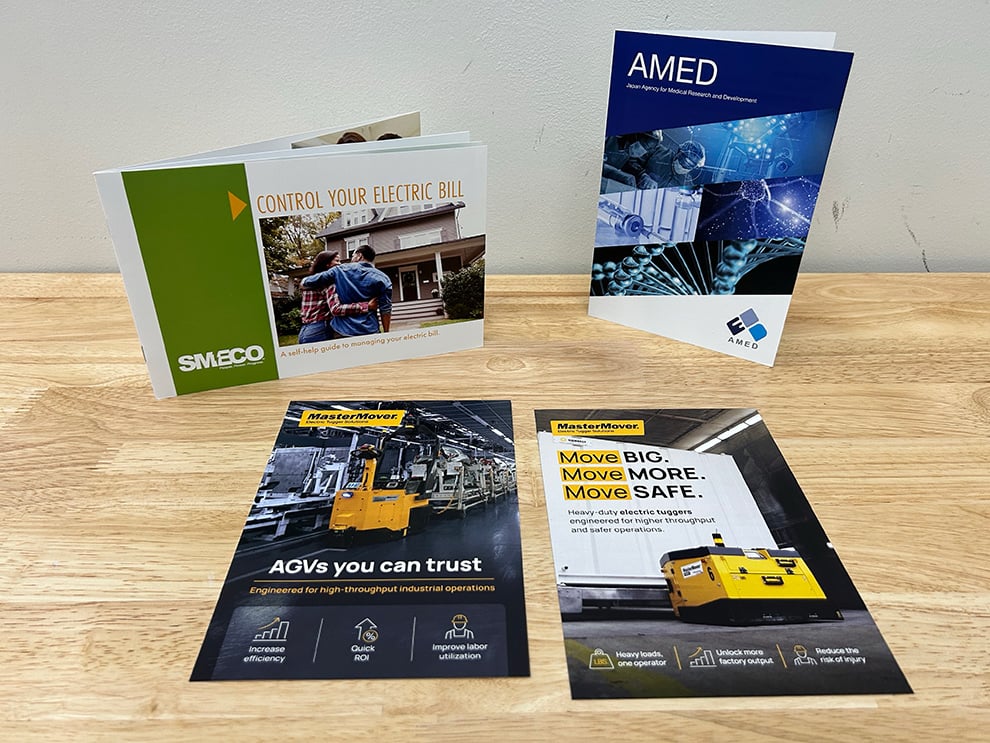
Review the broader range of Heritage print production when the book belongs to a larger communications program.
If the cover and interior files are finished and the live Store configuration fits the book, pricing and ordering can happen online now. If the project is a $2,000 or greater opportunity with unresolved files, spine setup, versions, or timing, submit a Custom Quote and Heritage will review those items before deciding whether to accept and schedule the work. In both cases the aim is a Durham publication that looks intentional in the hand, backed by a delivery commitment Heritage has evaluated before making it.
In perfect bound production, the interior dictates the cover. The number of pages and the thickness of the chosen paper combine to produce the spine width, and that measurement determines where the front cover ends, where the back cover begins, and whether any spine type will fit. A cover approved before the interior is locked may need to be rebuilt.
The binding edge also shapes interior layout. Because a glued spine does not open flat, text, page numbers, tables, and images positioned too close to the gutter become hard to read. Margins near the bound side should be generous, and images that cross from one page to the next deserve a careful check. Paper opacity matters when dense text or full-color images print on both sides of the sheet.
Color reproduction and file preparation complete the plan. Fonts, bleeds, image resolution, and page order are confirmed at the electronic proof stage, which every order passes through before printing. For a recurring annual report, catalog, or proceedings volume, Heritage can reference the previously approved trim size, paper, cover construction, and color targets so the next edition starts from a known baseline.
Durham buyers usually fall into one of two situations: the book is fully designed and print-ready, or production questions remain. The route follows from that distinction, not from the size of the organization.
When the live Perfect Bound Store configuration matches the specification and both cover and interior files are complete, the Self-Directed Online Store is the direct path. The buyer selects the available options, uploads the artwork, and completes the purchase. The Store carries a $750 total order minimum, which may be met by combining eligible products, and it does not include design assistance or an assigned Project Coordinator. Heritage still reviews the files, issues the required electronic proof for approval, and applies standard quality control.
A new Commercial Printing opportunity of $2,000 or more may qualify for a Storefront Custom Quote when the job needs file preparation, cover and spine setup, specification guidance, or multiple-version coordination. The form is a request rather than an acceptance; Heritage assigns a Project Coordinator only after it accepts the quote and the order is in hand. If a conference, grant deadline, or distribution date is fixed, state it at the start so Heritage can judge feasibility against the real production sequence and raise alternatives early.
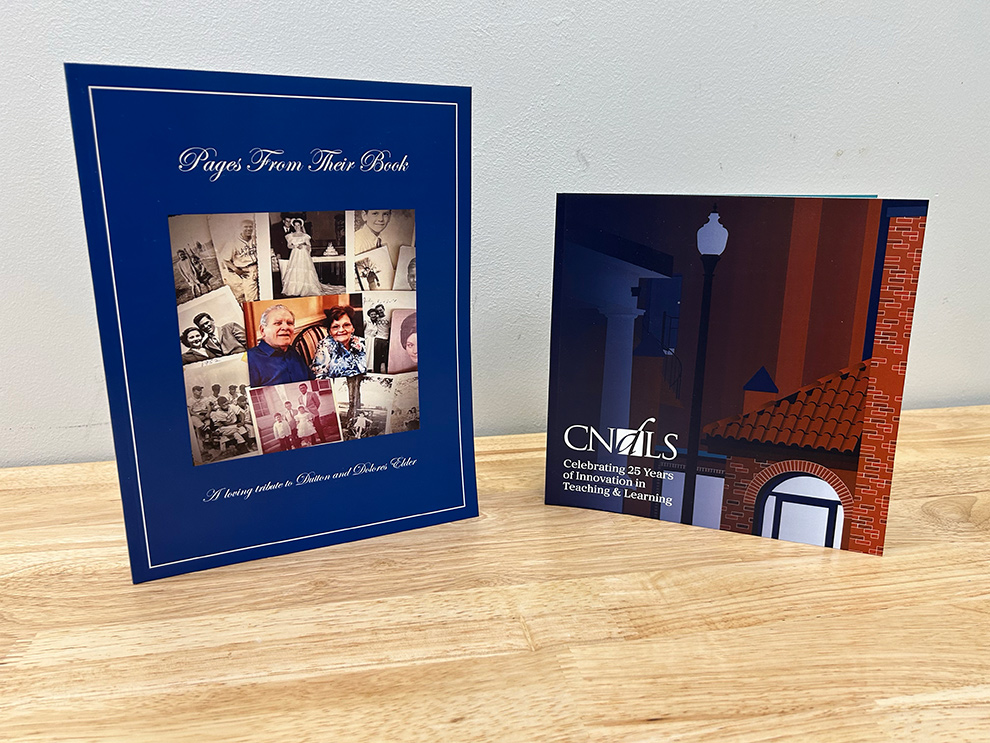
Publications with enough pages and paper thickness to form a stable glued spine are the natural candidates. In Durham that often means research reports, annual and foundation reports, program and course catalogs, symposium proceedings, directories, clinical education guides, and portfolios meant to be kept rather than skimmed once. A thin program or a short newsletter may lack the thickness the construction needs, so Heritage looks at the full specification before confirming the format.
Generally no. The glued spine holds the pages in a conventional book shape, so the book can be read and paged through normally but will not fold back or rest fully flat the way a plastic coil document does. For that reason, layouts should keep text, numbering, and important images comfortably clear of the bound edge, and anyone who needs a hands-free working reference should consider coil binding instead.
Perfect binding gathers the interior pages, roughens and glues them along one edge, and attaches a single wraparound cover before the three open sides are trimmed square. The result is the familiar paperback book form with a flat spine, a continuous cover, and clean edges. It is chosen when a multi-page piece should present as a finished volume rather than a folded and stapled booklet.
Pick based on thickness and presentation. Saddle stitching staples folded sheets along the fold and works well for thinner pieces, where a glued spine would be too narrow to be practical. Perfect binding suits thicker publications that benefit from a square spine, a wraparound cover, and a book-like appearance. Page count, paper weight, finished size, and how the piece will be handled decide the matter, not the visual preference alone.
Plastic coil wins whenever the document is used while open. Training manuals, laboratory protocols, procedure references, and workbooks benefit from pages that lie flat or fold completely back so the reader can write, follow steps, or keep a single page in view. Perfect binding is the better choice when the piece is read, presented, shelved, or mailed and a finished book appearance matters more than lie-flat handling.
The spine width is the combined thickness of the bound interior pages plus the cover, so page count and paper caliper are the controlling inputs. Switching to a heavier text stock or adding a section of pages makes the spine wider; cutting pages makes it narrower. Because the cover file is built to that exact dimension, Heritage recommends locking the page count and paper before the cover is treated as final.
Only when the finished spine is wide enough for the type to read cleanly. A thicker interior usually leaves room for a title and organization name; a slim book may not, and squeezing small type onto a narrow spine tends to look crowded or drift off center. Heritage confirms the usable spine dimension after the page count and paper are set, and then advises whether spine copy, a simple rule, or a blank spine serves the cover best.
You are checking the production file, not the printed color. Every commercial printing order Heritage produces, including an Online Store purchase, receives an electronic proof that must be approved before printing begins. Use it to confirm spelling, page sequence, page numbers, cover placement, bleeds, and visible layout. Screen calibration and press conditions differ, so the electronic proof should not be read as a promise of the finished ink color on paper.
Yes, for qualifying Custom Quote commercial printing work of $2,000 or more, as an additional-cost option. The Physical Production Color Proof is printed on the same production printer and the same paper or material planned for the final run, so it shows real color rather than a screen approximation. It adds production time to the schedule, and once you approve it, that proof governs color for the run unless another agreement states otherwise. It cannot be added to a Self-Directed Online Store order.
Yes, for work Heritage has produced, the approved trim size, paper, cover construction, color targets, and other production details can be referenced when the next edition is ordered. That gives a recurring annual report, course catalog, or proceedings volume a stable starting point while content or quantity changes, though a different page count still calls for a fresh spine measurement. If several versions run at once, label each file clearly, state the quantity for each, and name who approves each one so the editions stay separated through production and delivery.
Yes, when a live Perfect Bound configuration matches your specification and your cover and interior artwork are complete and print-ready. The Self-Directed Online Store lets you choose from the available options and purchase without design help or an assigned Project Coordinator. The order must reach the $750 total minimum, which can include other eligible Store products. Heritage still performs a production review, sends the required electronic proof, and applies normal quality control before the book prints.
A new commercial printing opportunity valued at $2,000 or more that still needs production support before it can run. Common triggers include unprepared files, a cover that needs spine setup, open paper or size questions, production-oriented layout help, or several versions that must be coordinated. Submitting the form only starts the request. Should Heritage accept it and assign the order, a Project Coordinator then becomes your direct phone-and-email contact for that work.
Send the date first, then the facts that drive the schedule: quantity, current page count, whether the cover is final, the status of interior files, any versions, and which approvals are still pending. Heritage weighs those details against the required proofing, binding, and finishing steps and current capacity, then tells you whether the date is workable or where an alternative is needed. Accepted commitments are taken seriously, and constraints are raised early rather than discovered late.
Heritage Signs & Displays created new museum signage for the Military Women’s Memorial in Arlington, VA. The project included custom signs, wall wraps, dimensional letters, and standoff-mounted displays to honor the legacy of U.S. servicewomen and the donors who supported the memorial. The updated interior features impactful designs, including a "Our Legacy" wall display and panels showcasing historical contributions and artwork, creating a transformative tribute to women in the U.S. Armed Forces.
Heritage Signs & Displays' collaboration with The Gathery to brand Union Market in Arlington, VA, for Indeed's "Ready to Work" job fair. The project included custom event displays, wall graphics, window graphics, and wayfinding signs, creating an immersive and visually appealing environment. The branding enhanced the venue, reflected the event's mission, and provided a seamless experience for attendees.