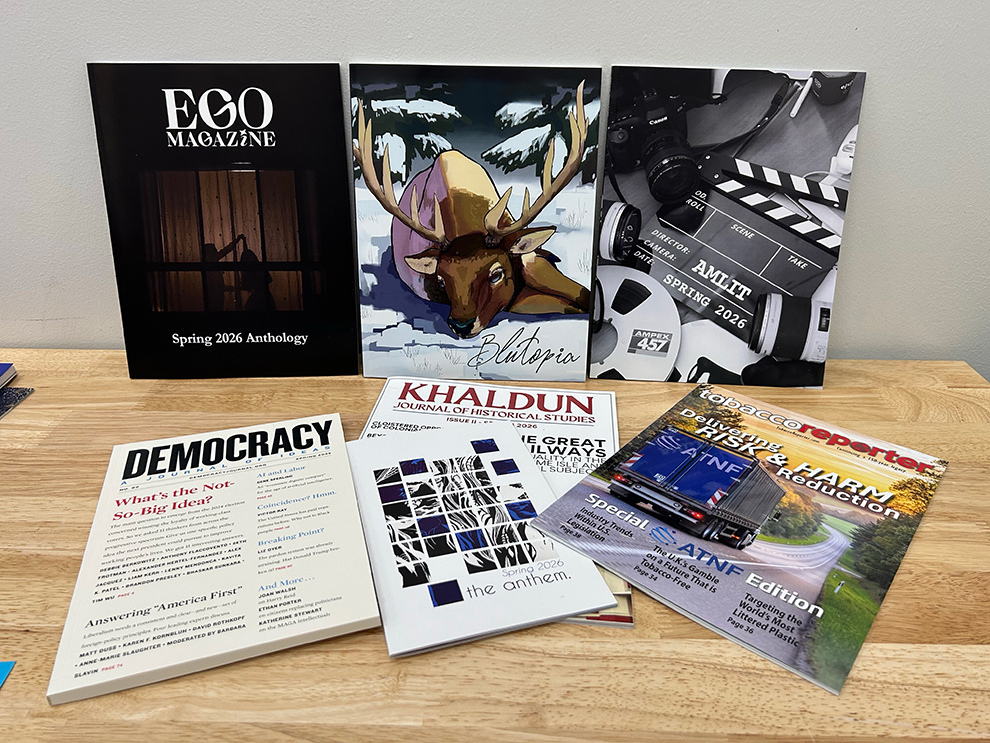
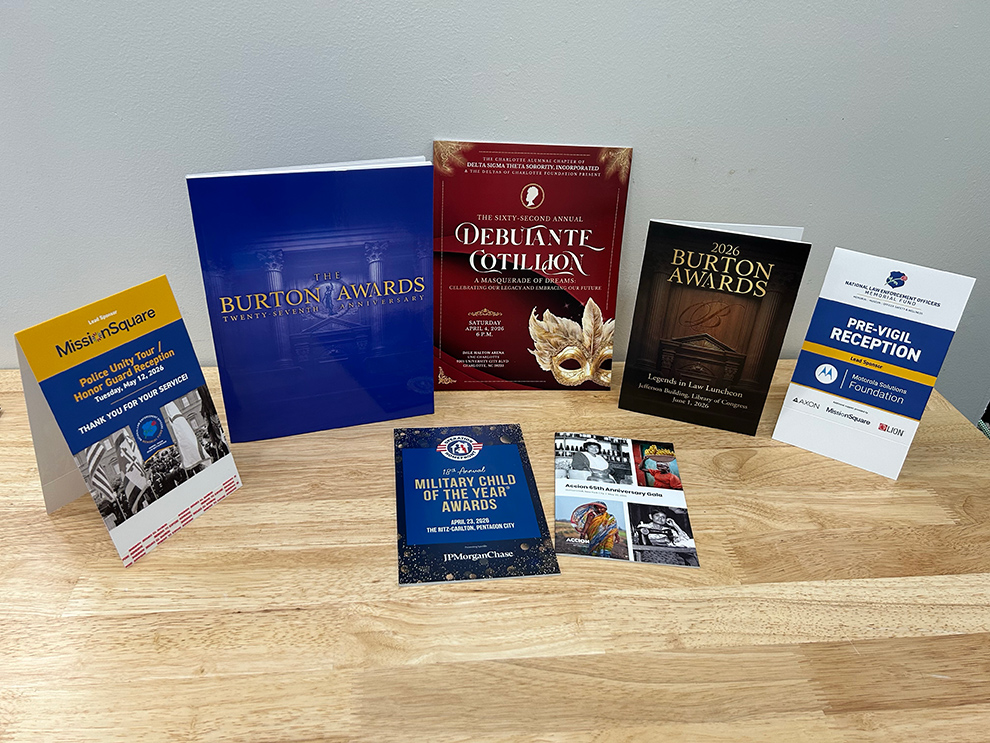
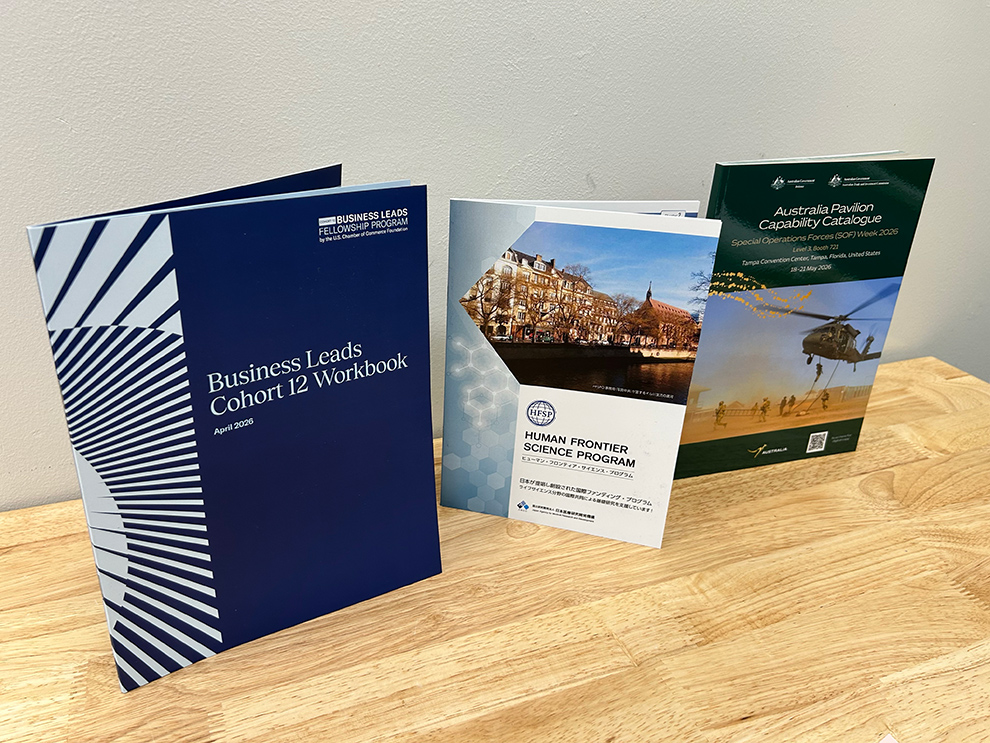
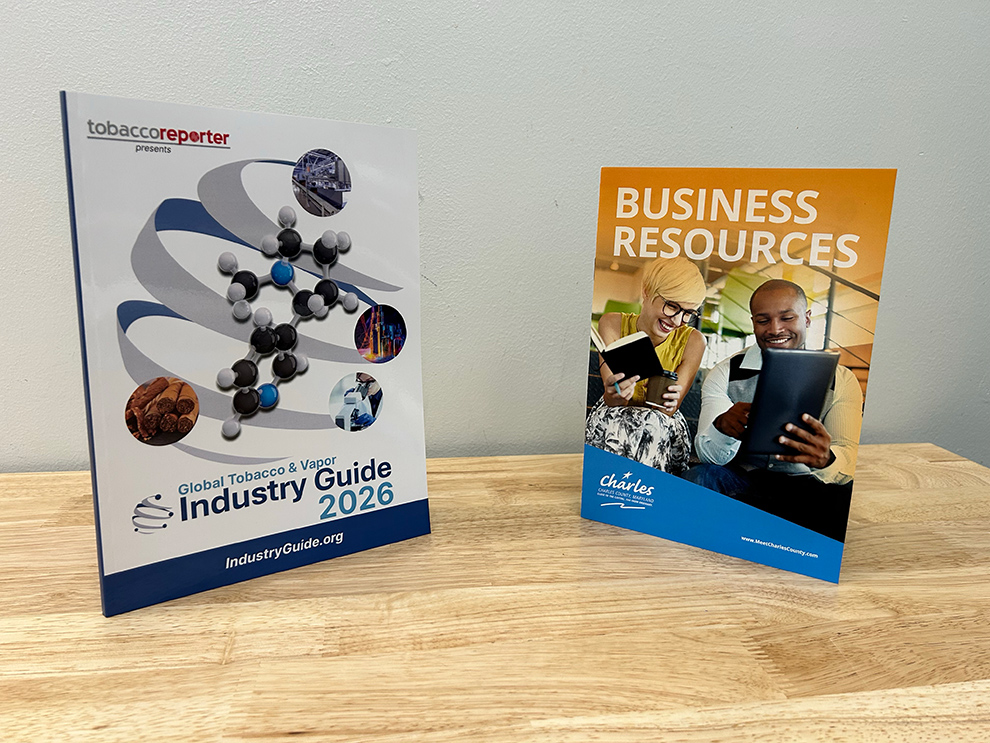
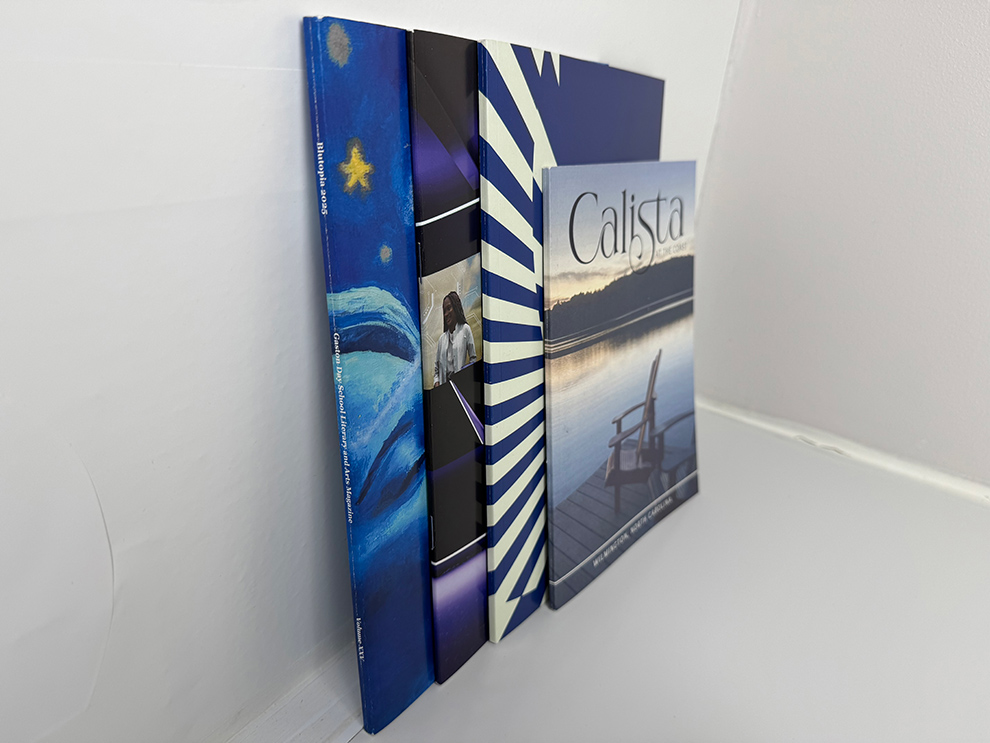
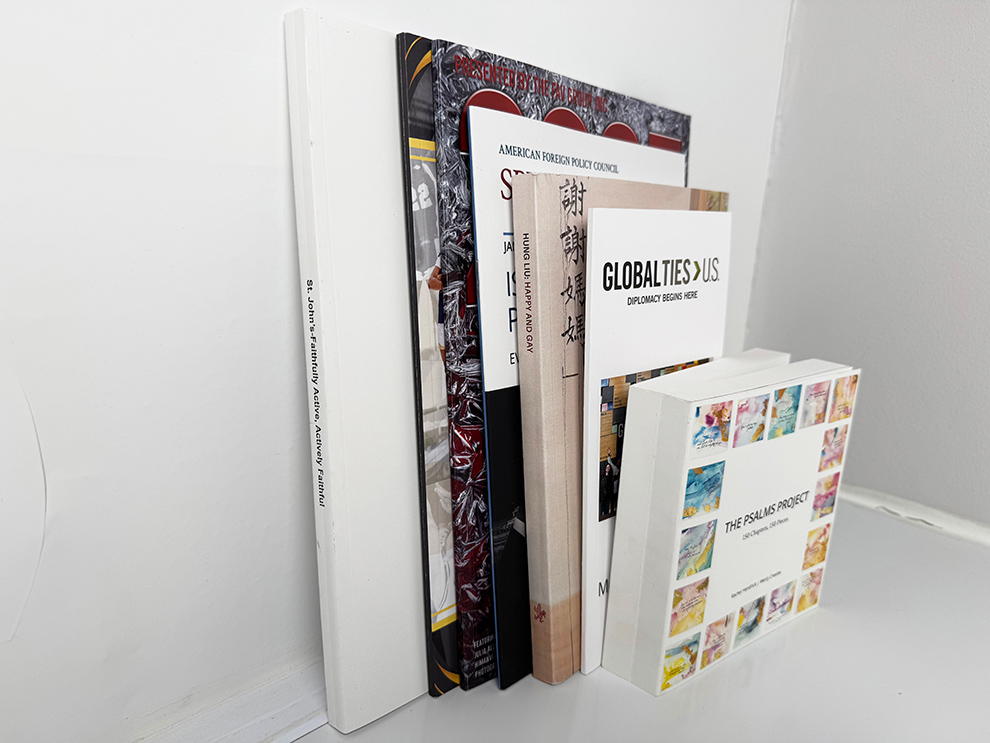
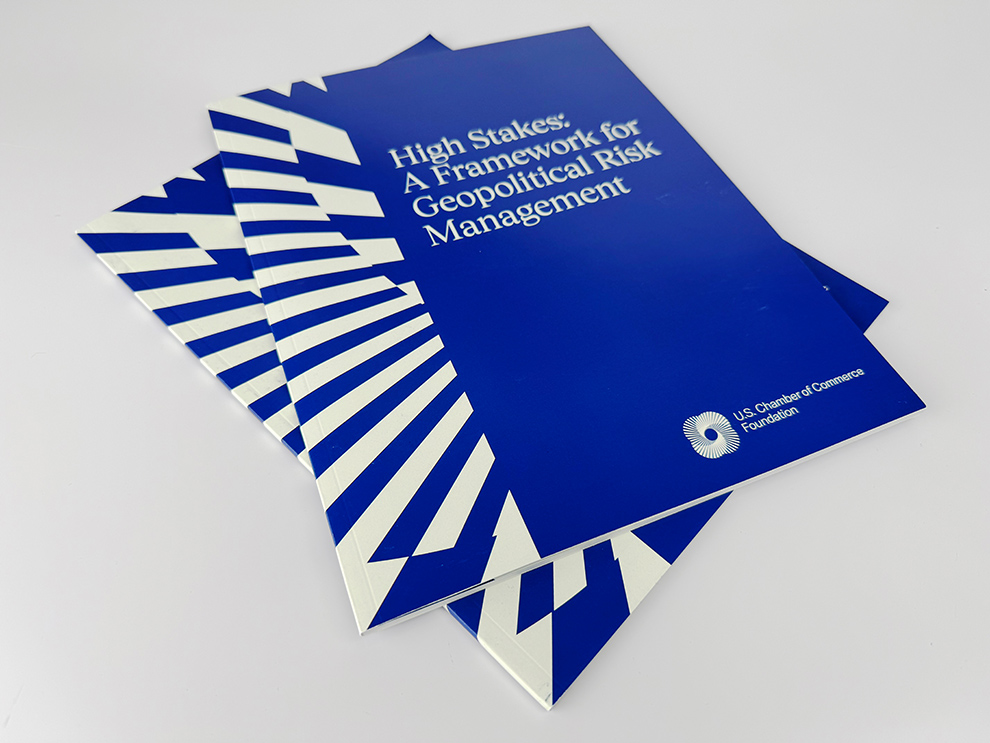
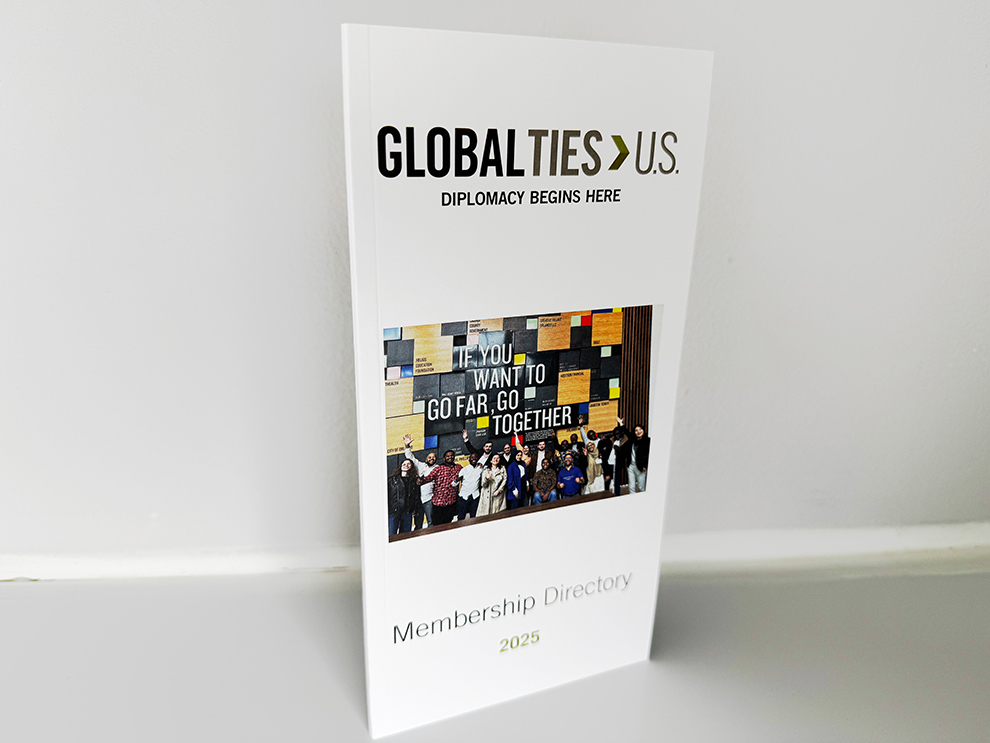
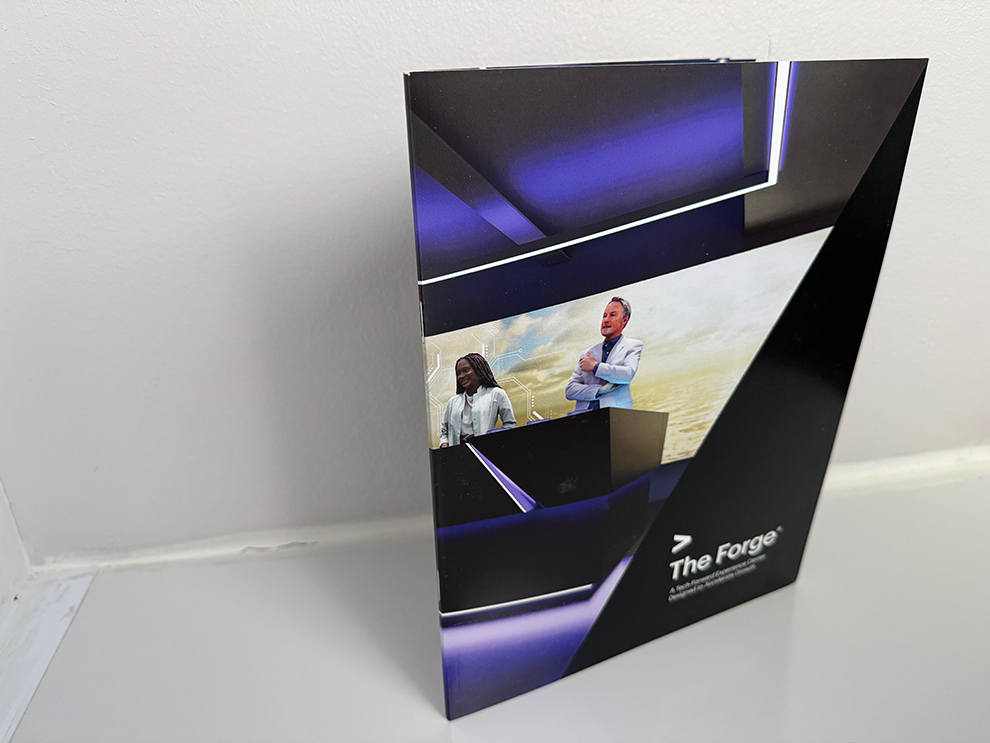
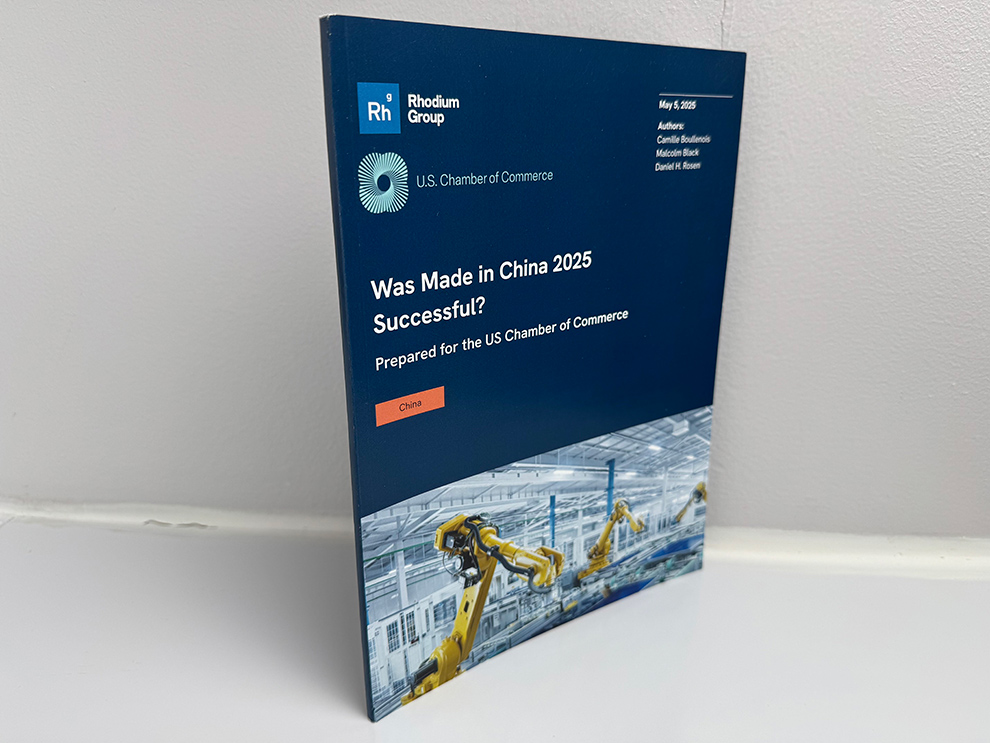
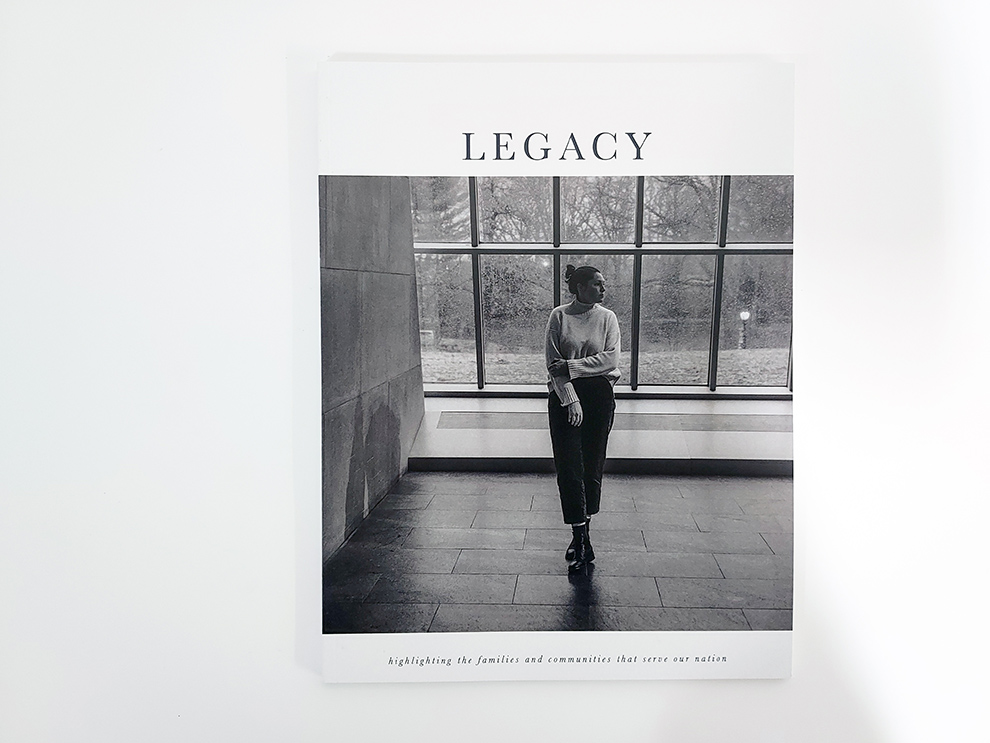
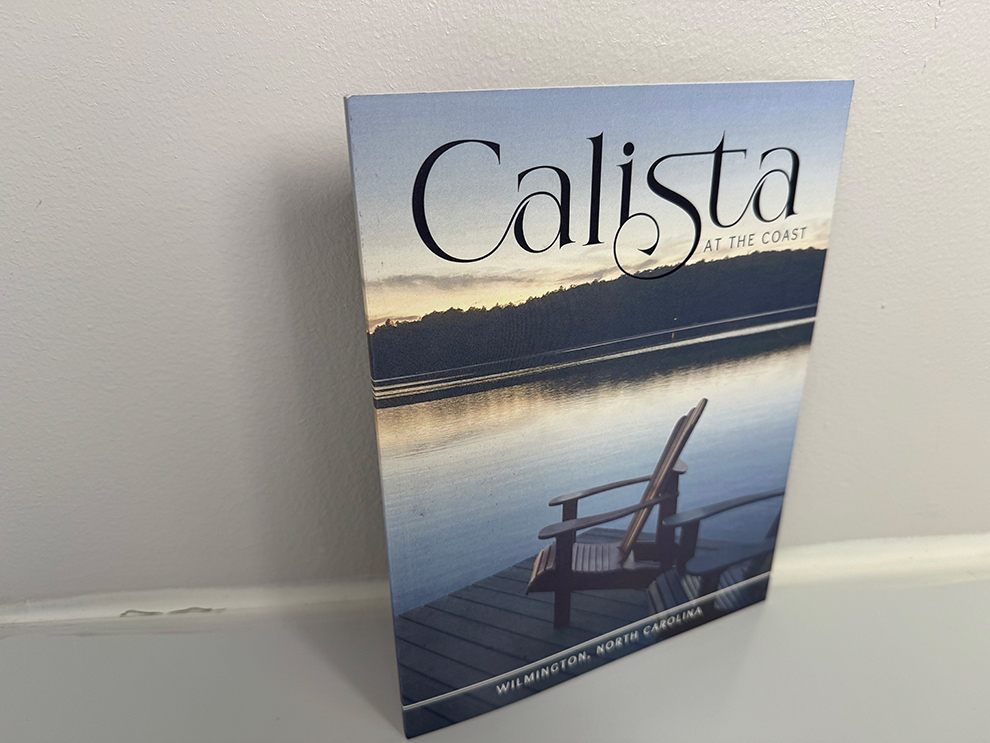
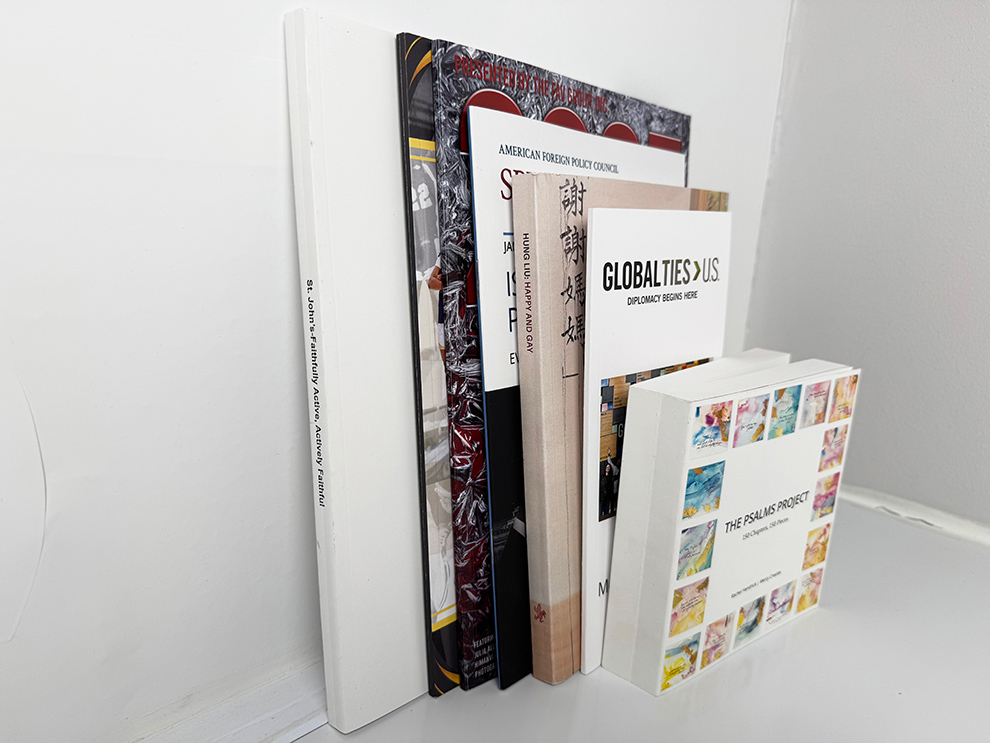
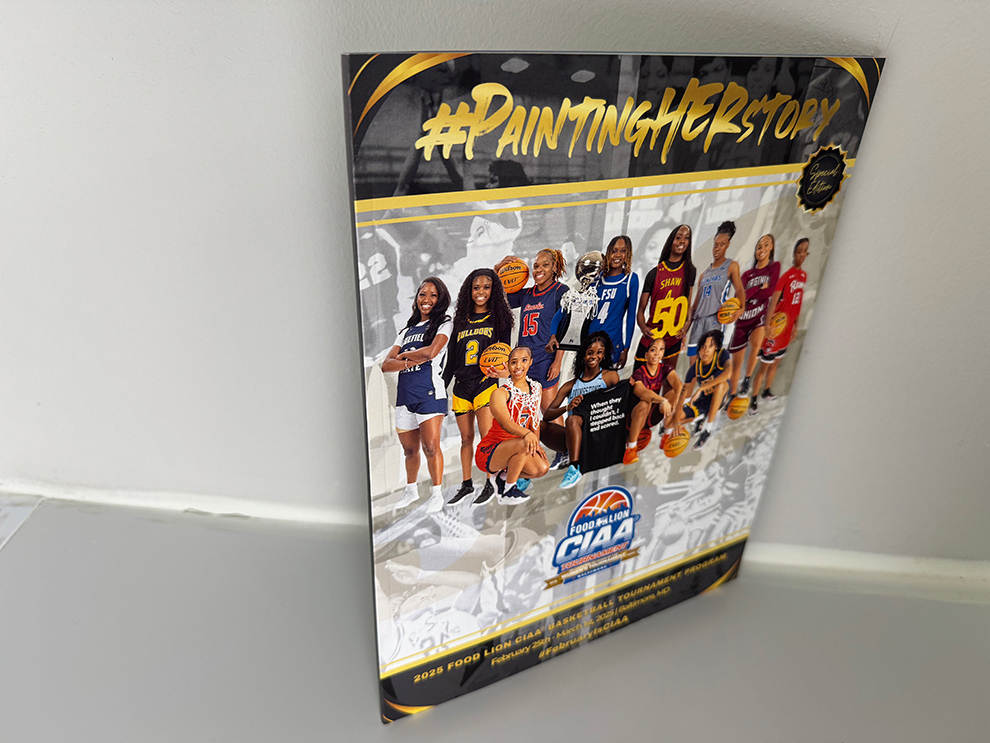
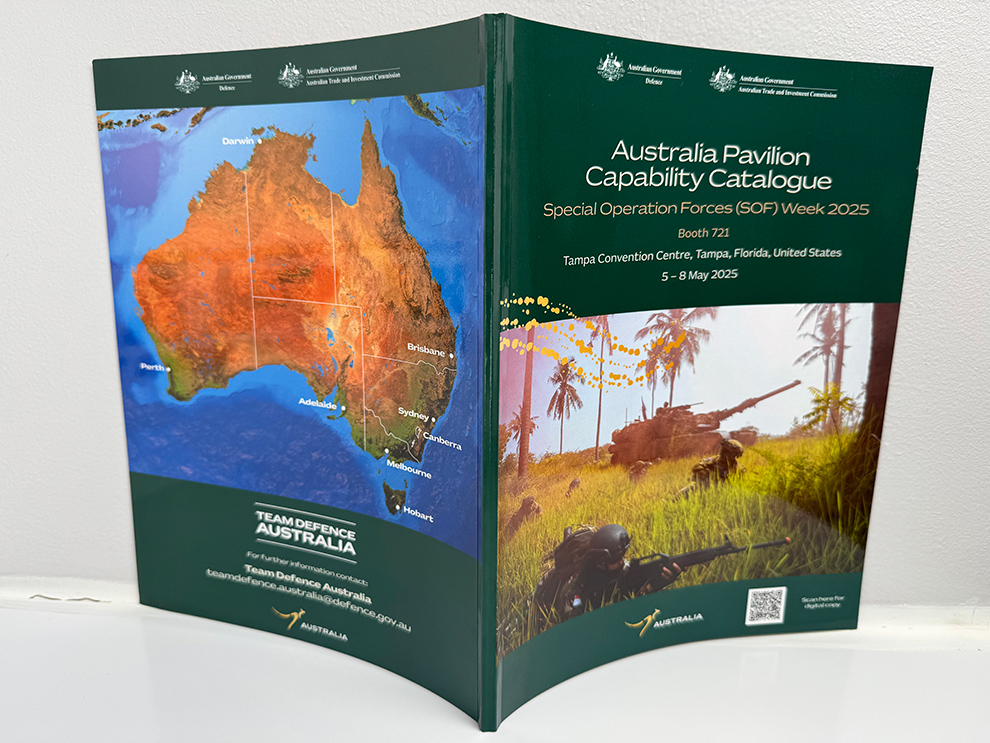
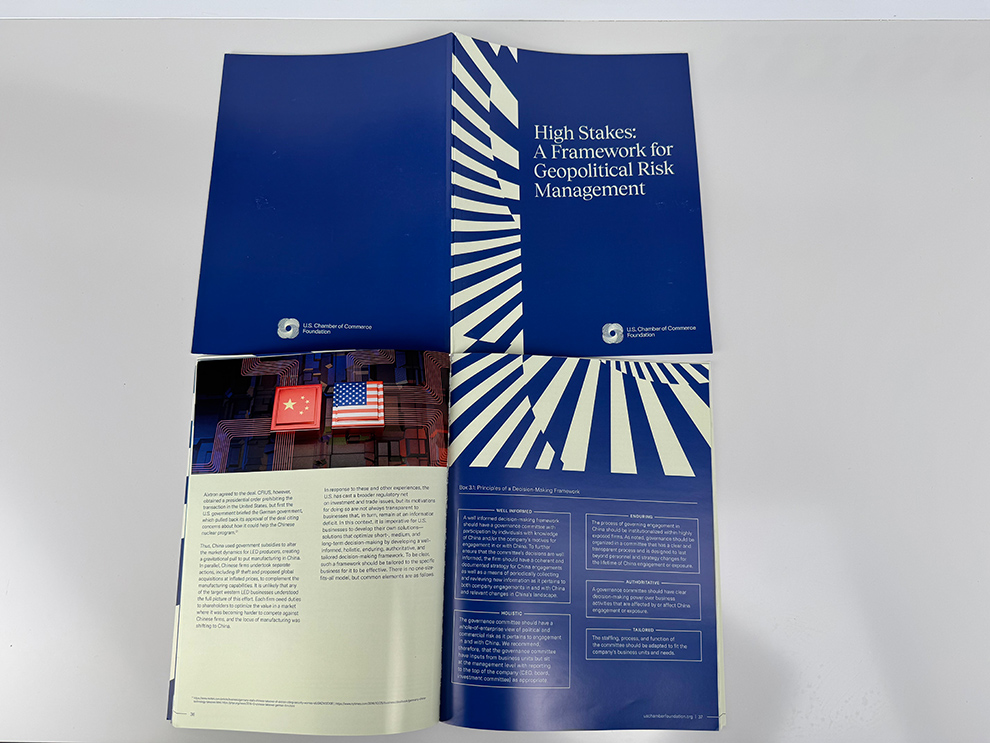
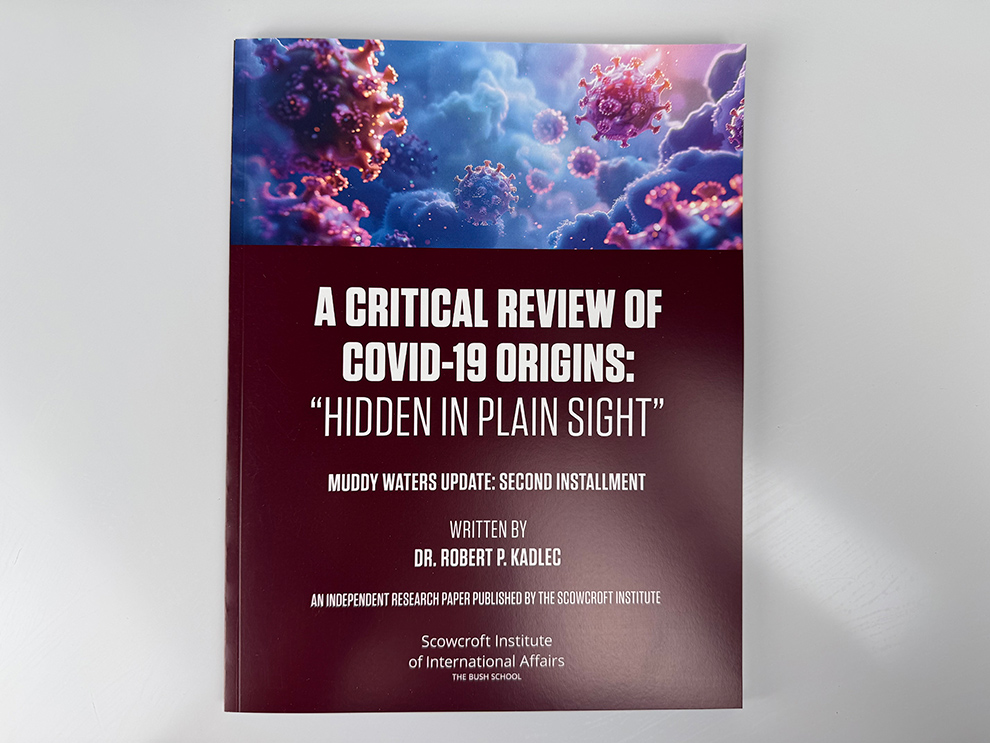
A product catalog sent to distributors, a foundation report delivered to donors, or a commemorative book presented at an anniversary dinner carries a message before anyone reads a word. Perfect binding supports that first impression with a square spine, cleanly trimmed edges, and a single cover that wraps the front, spine, and back, giving a multi-page publication the look and feel of a finished book.
Heritage produces perfect bound books for Spartanburg, SC organizations that need something sturdier than a stapled booklet and more polished than a stack of clipped pages. Manufacturers and suppliers along the Upstate corridor, colleges, healthcare groups, professional firms, churches, and civic organizations often choose the format for catalogs, annual reports, yearbooks, policy books, program guides, and other publications meant to be kept.
Page count and paper thickness set the spine, the spine shapes the cover file, and the interior layout has to respect the bound edge. Heritage reviews those relationships, confirms the electronic proof with the client before printing, and plans delivery around the approved order. When the details line up, the finished book looks intentional from cover to cover.
Heritage began as a printing company in 1977, before it expanded into signs and displays, and perfect binding still draws on that original discipline. Imposition, interior printing, cover printing, spine measurement, gluing, trimming, and inspection each depend on the step before, so Heritage confirms specifications early rather than discovering a mismatch at the bindery.
Spartanburg, SC clients receive the same practices Heritage applies to every commercial-printing order. Color management keeps logos, product photography, and brand colors consistent between interior and cover. Quality control checks page order, trim, and spine alignment. An electronic proof goes to the client for approval before printing, and retained job records make the next edition easier to match.
Timing receives honest evaluation. Heritage weighs quantity, page count, file readiness, proofing, and current capacity before accepting a date, and names any constraint while there is still room to adjust. For qualifying Custom Quote orders, a Project Coordinator becomes the direct phone-and-email contact once Heritage has accepted the quote and assigned the work. A veteran-owned, family-led culture treats that accepted commitment as a promise to keep.
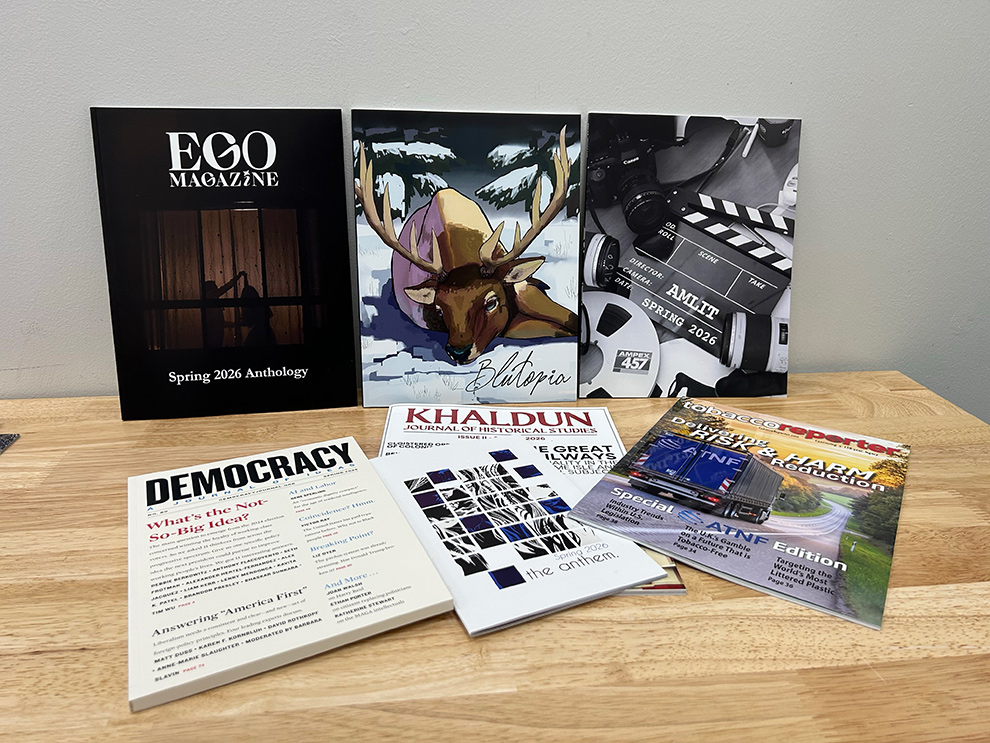
Perfect binding earns its place when a publication needs to stand on a shelf, stack on a table, or be handed across a desk and read as a finished book. The adhesive-bound square spine, wraparound cover, and three trimmed edges signal permanence, which suits catalogs, reports, histories, and reference books meant to stay in circulation.
Other constructions serve other jobs better. A plastic coil book opens fully flat and folds back on itself, the stronger option for training manuals, shop procedures, and anything consulted while hands are busy. Saddle stitching folds sheets and staples them through the center, often the sensible choice for thin programs, newsletters, and short brochures. Perfect binding needs enough finished thickness to form a proper square spine, so a very thin piece is usually a poor candidate.
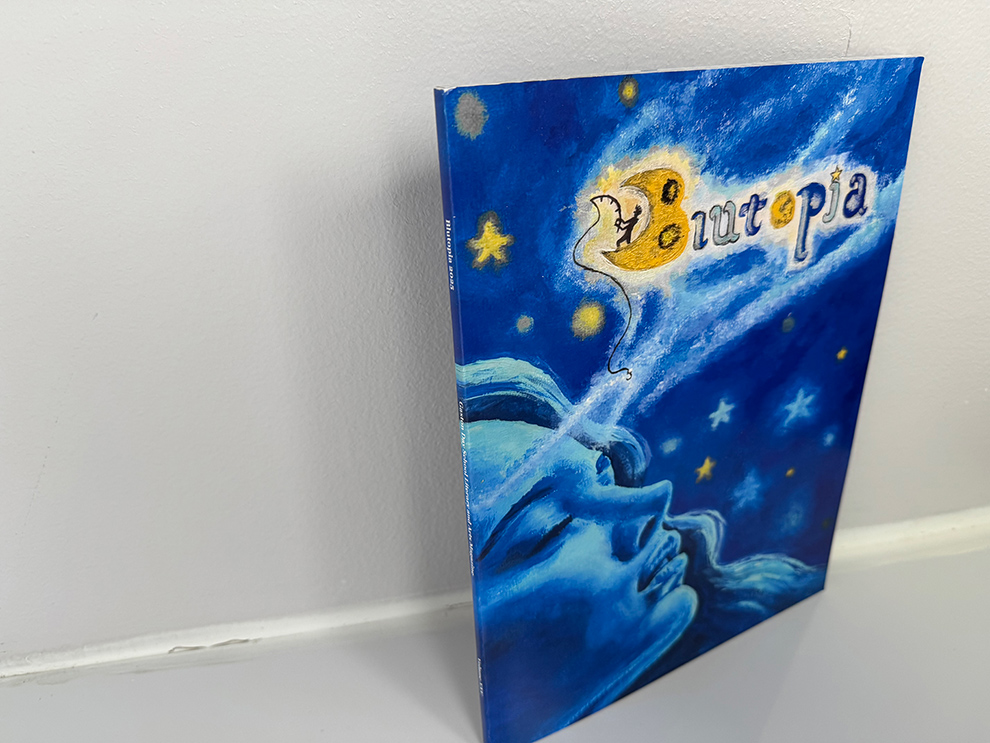
Spine lettering follows the same logic. A title can print on the spine when the finished width supports legible type, and that width grows with page count and paper caliper. Heritage evaluates the full specification, including trim size, paper, cover stock, and reader behavior, before recommending a construction for a Spartanburg publication.
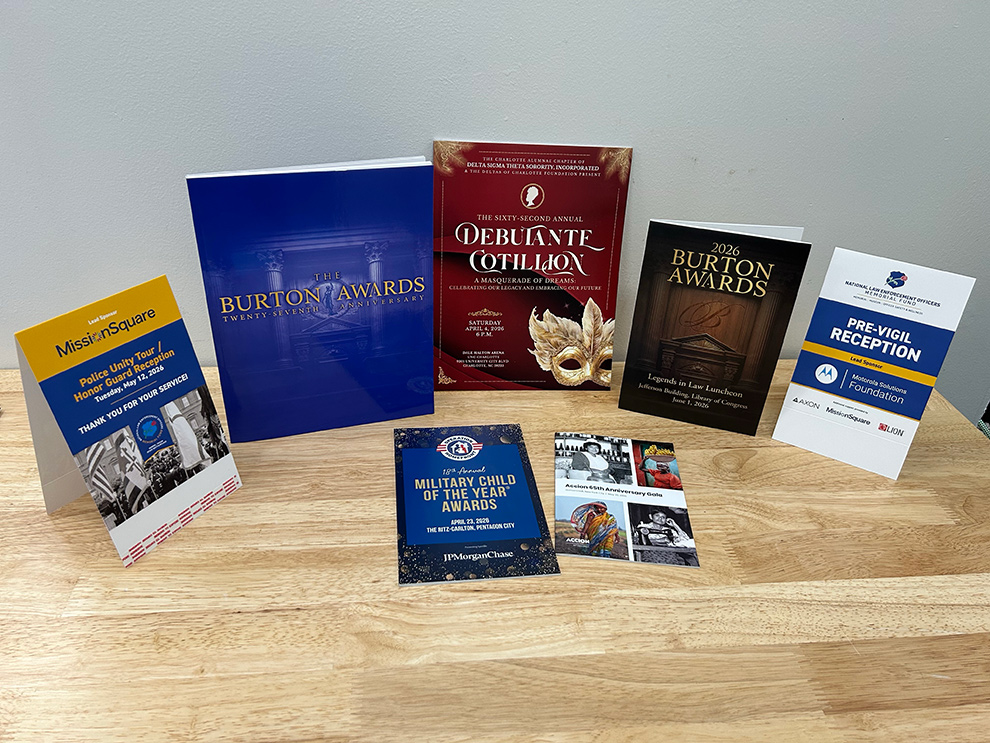
A perfect bound book often ships alongside other printed pieces. These related Heritage capabilities give Spartanburg, SC organizations a starting point when the publication is one part of a catalog launch, member communication, training rollout, or mailing.
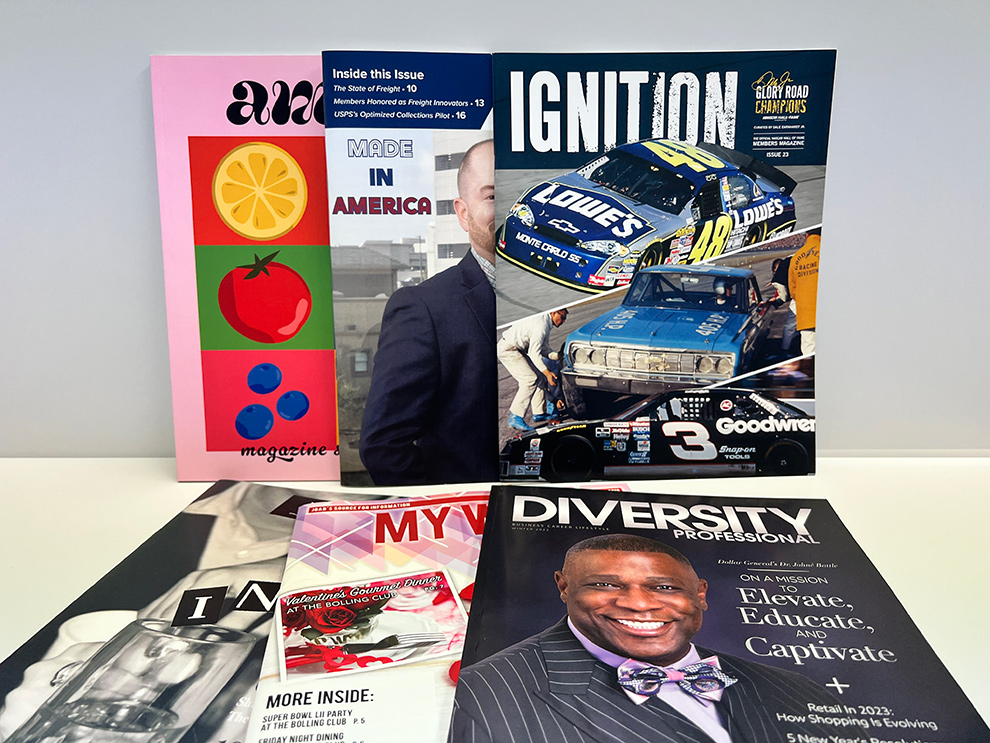
Turn a quarterly or member publication into a predictable recurring run with specifications that carry from one issue to the next.
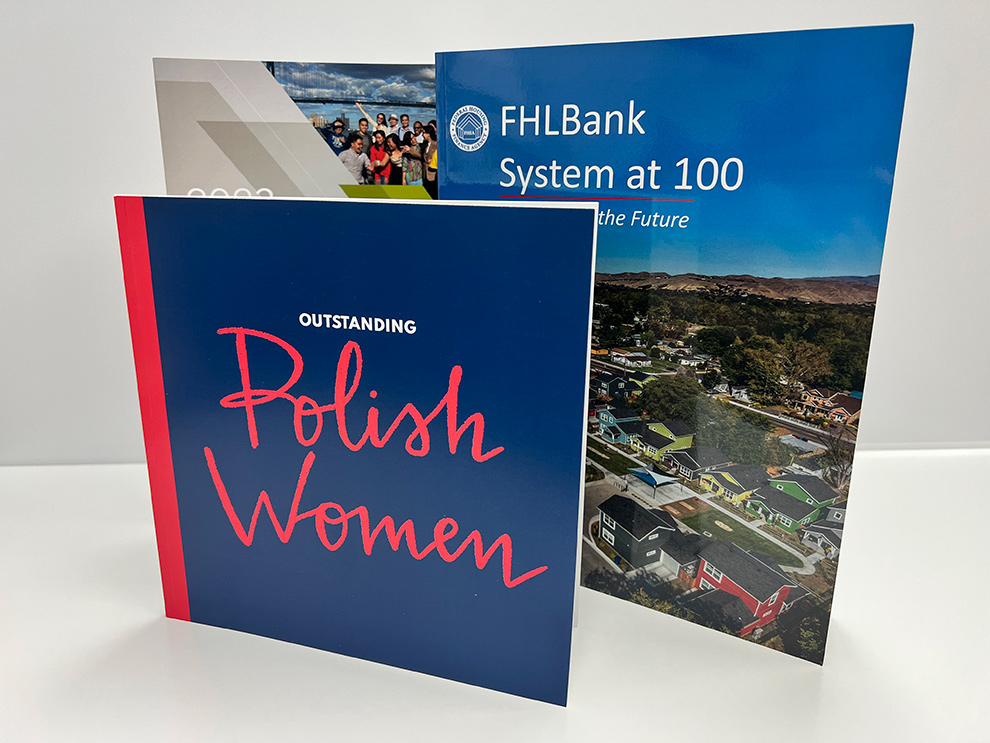
Choose a saddle-stitched or lighter format when the page count or budget does not call for a square spine.
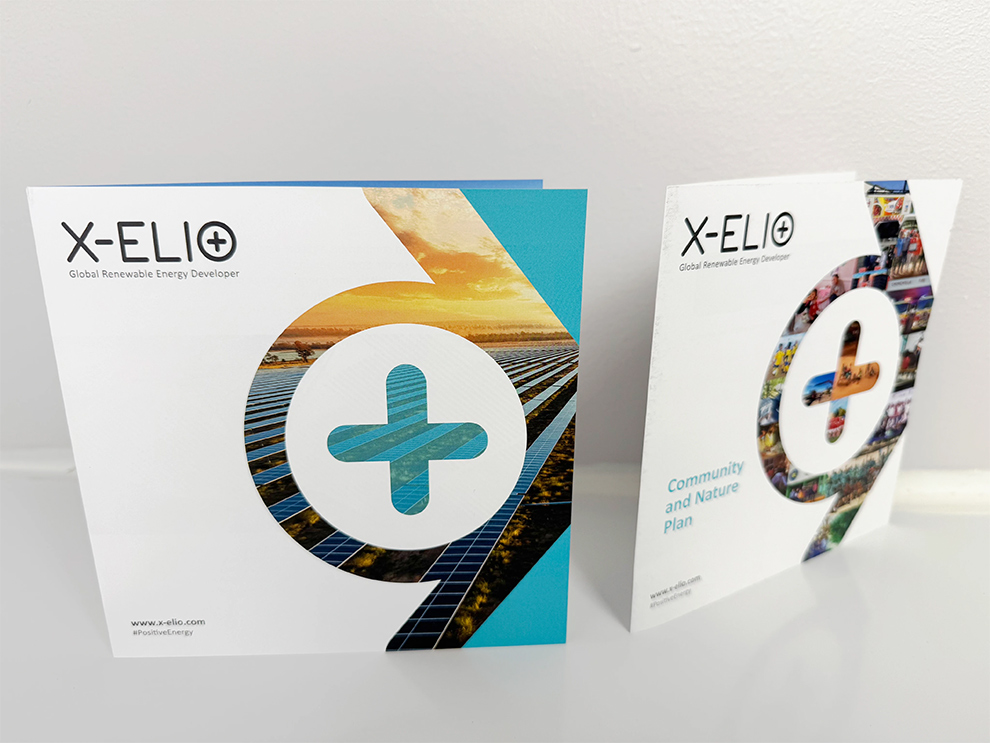
Hold a bound report together with loose exhibits, pricing sheets, or a business card for a sales call or board session.
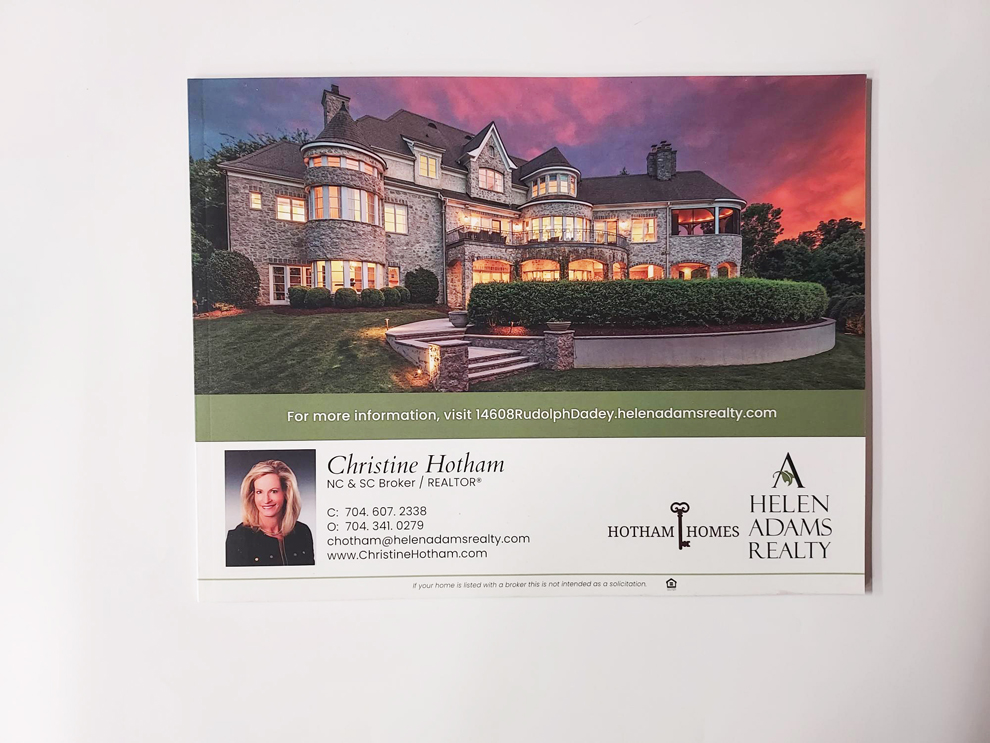
Address, sort, and mail a completed print run when the audience is spread across the Upstate or beyond.
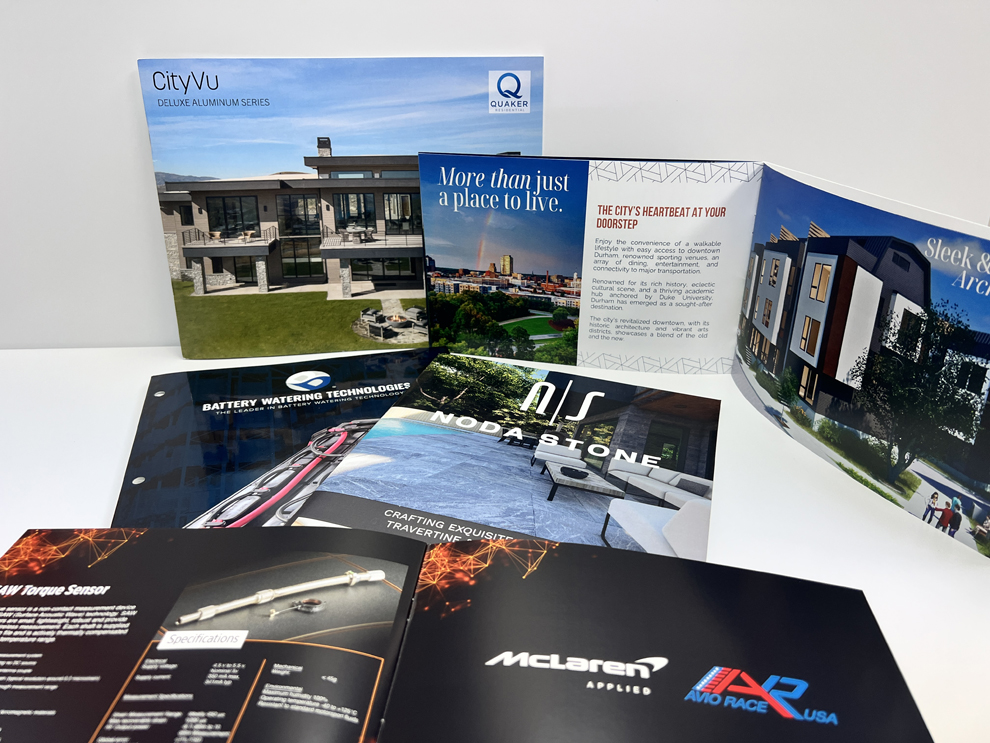
Produce the sell sheets, postcards, and handouts that often travel alongside a catalog or report.
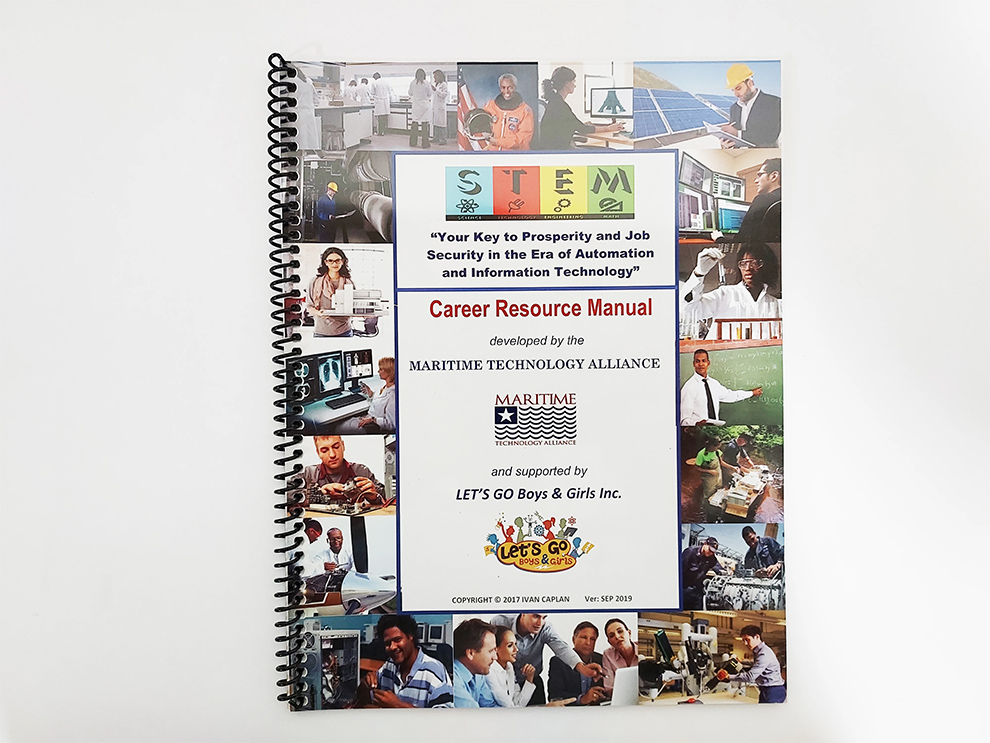
Build coil-bound, lie-flat instructional materials for onboarding, safety, and procedure reference.
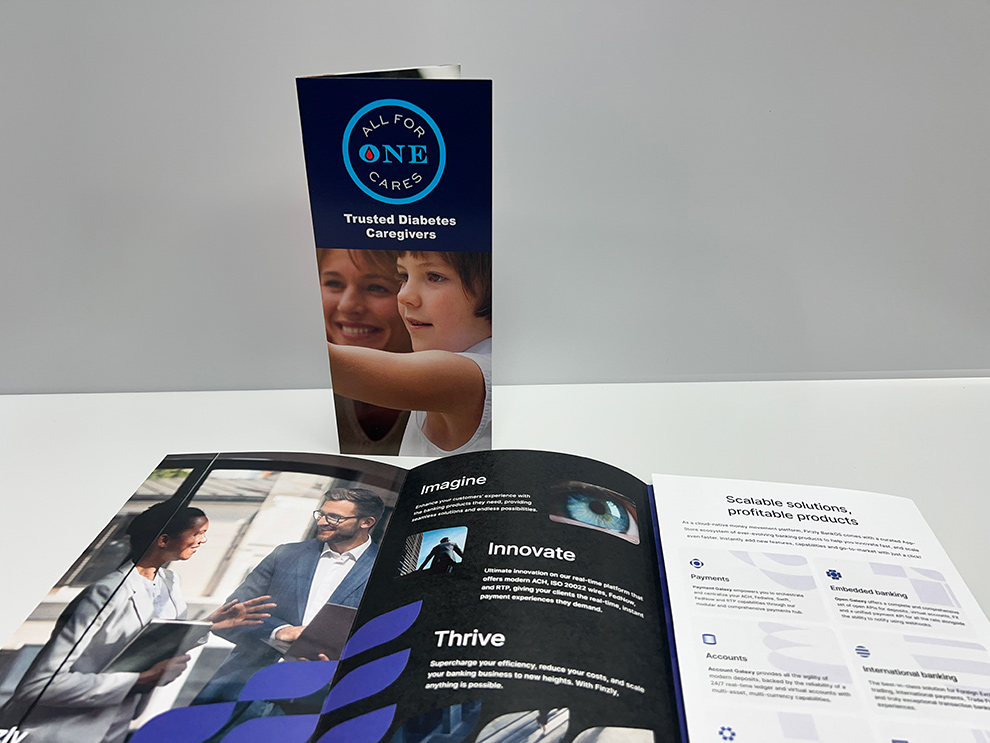
Summarize the key message in a folded piece that fits a rack, an envelope, or a display table.
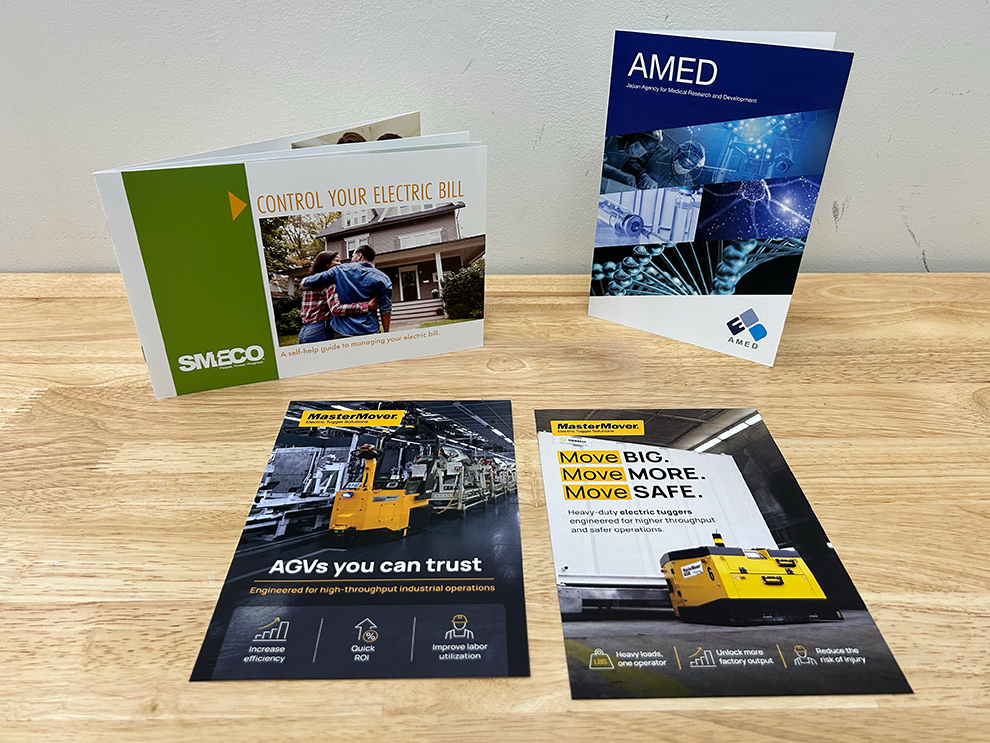
Review the broader range of Heritage print production when a book is one piece of a larger program.
Spartanburg, SC organizations with print-ready files and a specification the Store already offers can price and order a perfect bound book online. If a $2,000 or larger publication still has open questions about files, spine setup, versions, paper, or timing, submit a Custom Quote and Heritage will review the details before accepting and scheduling the work.
The cover for a perfect bound book cannot be finished until the interior is final. Spine width is calculated from page count and paper caliper, and the cover file must include that spine panel between the front and back. Adding a late section, changing text stock, or cutting pages changes the measurement, and an outdated cover shows as a misaligned spine.
Interior pages need the bound edge in mind. Because the glued spine holds pages in a curve rather than lying flat, text that runs too close to the gutter becomes harder to read, and images that cross the spine lose detail where the pages meet. Generous inner margins, consistent page numbering, and bleed on edge-to-edge artwork help the interior reproduce cleanly after trimming.
Paper and color decisions complete the plan. Heavier or more opaque text stock reduces show-through, while cover stock and coating affect durability, feel, and how color sits on the page. Print-ready files with embedded fonts, correct dimensions, and the agreed page order shorten proof review. For repeat editions, Heritage can reference the approved specifications from the prior run as a known baseline.
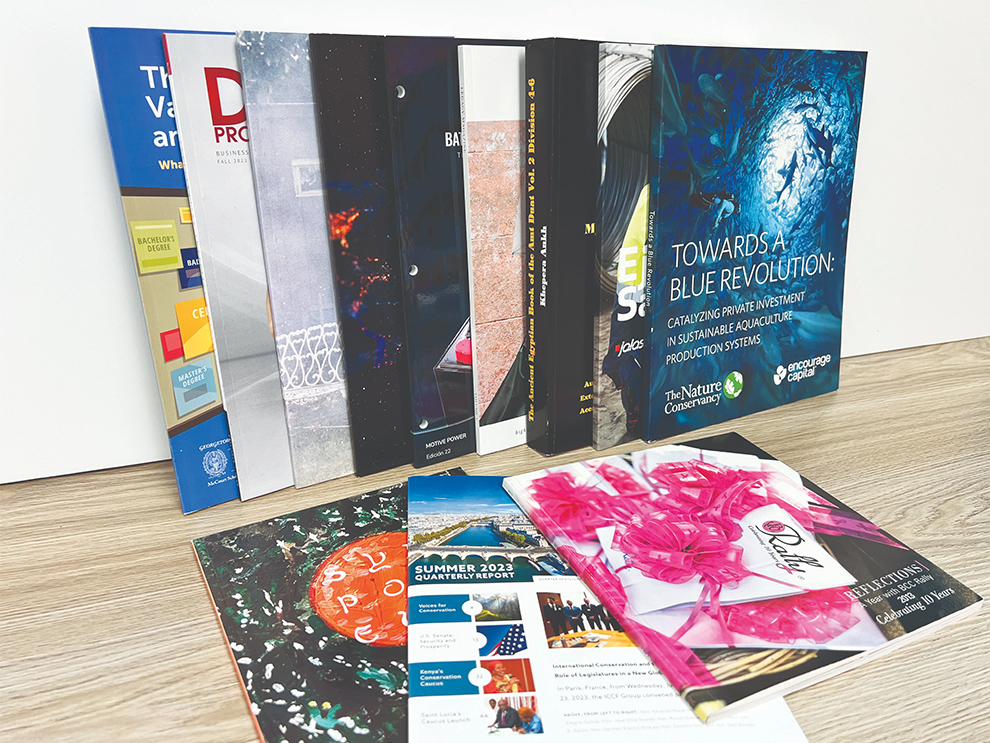
Start with the state of the files. When the live Perfect Bound configuration in the Heritage Online Store matches the required size, page count, and paper, and the cover and interior artwork are print-ready, the Self-Directed Online Store is the direct path. The customer selects options, uploads artwork, and pays online against a $750 minimum that more than one eligible product can satisfy. Layout help, a physical color proof, and an assigned Project Coordinator are not included, but Heritage still reviews files, sends an electronic proof for approval, and applies normal quality control.
A new Commercial Printing opportunity of $2,000 or more may qualify for Custom Quote when the job still needs production support, such as cover and spine setup, file preparation, specification guidance, or coordination of several versions. The form is a request, not an order. If Heritage accepts the quote and assigns the work, a Project Coordinator becomes the direct phone-and-email contact. Qualifying orders may also add a paid Physical Production Color Proof, run on the production printer and planned paper, which extends the schedule and governs final color once approved.
Share any fixed date, such as a dealer meeting, commencement, or donor event, with the first submission so Heritage can weigh feasibility before accepting the order.
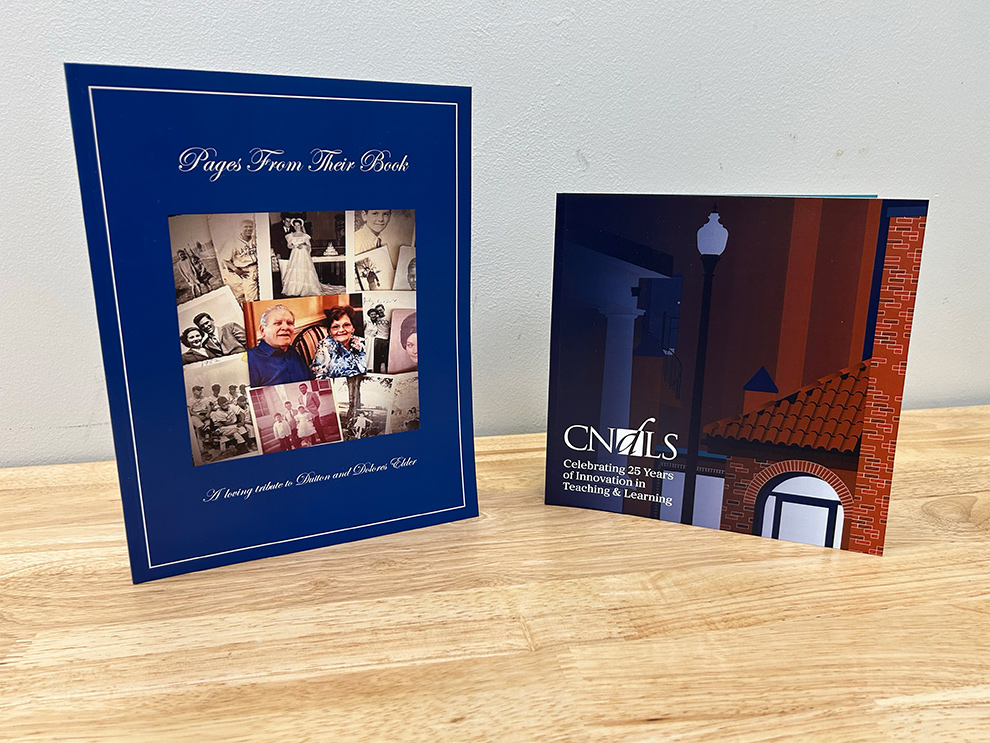
Publications with enough pages to form a square spine and a reason to be kept are the usual candidates: catalogs, annual reports, commemorative histories, policy books, program guides, directories, and yearbooks. The same title in a shorter edition may be better served by saddle stitching, so Heritage evaluates page count, paper, finished size, and intended handling rather than relying on the publication type alone.
Perfect binding gathers the printed interior pages, roughens or notches the spine edge, and applies a flexible adhesive that bonds the pages to a wraparound cover. After the glue sets, the book is trimmed on the remaining three sides, leaving a flat square spine and clean edges. The result is the familiar paperback construction used for books, reports, and catalogs.
Generally no, not without being held. The adhesive spine is designed to keep the book in a conventional closed form, so pages open in a curve and tend to close when released. That behavior is acceptable for reading and presentation but limits usefulness for hands-free reference. If readers need pages to lie flat or fold back, plastic coil is the better construction.
Choose plastic coil when the document will be used actively rather than displayed. Training manuals, operator guides, workbooks, and anything consulted while someone is working benefit from pages that lie flat and fold back completely. Perfect binding delivers a more finished look for the shelf or the presentation table but cannot match that lie-flat behavior.
Saddle stitching suits thinner publications. Printed sheets are folded and fastened through the center with wire staples, which works well for programs, newsletters, short catalogs, and brochures that lack the thickness to form a glued spine. Once page count and paper build real bulk, a saddle-stitched piece can resist closing neatly, and perfect binding becomes the more appropriate construction.
Spine width is set by the total thickness of the bound interior, which comes mainly from the number of pages and the caliper of the text stock, with cover stock and binding method contributing to the final measurement. A heavier paper or an added section widens the spine; a lighter stock or trimmed content narrows it. Heritage calculates the measurement from the final specification so the cover panel is sized correctly.
There is no single fixed number, because legibility depends on the type size, the font, and how much of the width the lettering needs. Spine text works when the finished thickness leaves comfortable room above and below the characters; on a narrow spine, even small type can look cramped or drift off center during binding. Confirm the final page count and paper first, then decide whether spine lettering is worth including.
Yes. Every perfect bound order, including an Online Store purchase, proceeds to printing only after the client approves an electronic proof. Review it for typos, page sequence, numbering, margins near the binding edge, cover placement, and spine panel alignment. The proof confirms the production file, not finished color; a screen cannot reproduce how ink will sit on the selected paper, so color decisions should not rest on the monitor alone.
Yes, when the live Perfect Bound configuration offers the size, page count, and paper you need and your cover and interior files are complete and print-ready. The Store is self-directed: you choose options and complete the purchase without design assistance or an assigned Project Coordinator. Orders must reach the $750 total minimum, which can include other eligible products. Heritage still reviews the files, sends an electronic proof for approval, and applies normal quality control before printing.
A new Commercial Printing opportunity valued at $2,000 or more may qualify for Custom Quote when it needs production support the Store does not provide, such as spine and cover setup, file repair, specification guidance, production-oriented layout, or management of multiple versions. Submitting the form starts a review; it does not confirm acceptance, scheduling, or a contact. If Heritage accepts the quote and assigns the order, a Project Coordinator becomes the direct phone-and-email contact for the remainder of the job.
The option is available for qualifying $2,000 or larger Custom Quote work and is not offered through the Self-Directed Online Store. It is produced at an additional cost on the production printer, using the paper or material planned for the final run, so it shows how color and coverage will actually print. Because it adds production time, it should be requested early. Once the client approves it, the physical proof governs final production color unless a different agreement controls.
Yes. For repeat editions, Heritage can reference the approved trim size, text and cover stocks, color targets, binding details, and other job records from the previous run so the new edition begins on a known footing. Content, page count, and quantity can still change, and any change in page count or stock requires a fresh spine calculation and cover check. For versioned runs, label each file and quantity clearly so the editions stay separate through proofing and packaging.
Start with the date, then the quantity, current page count, file status, and any approvals still pending. Heritage compares those facts against proofing, production steps, materials, and available capacity to determine whether the timing is realistic. If it is, Heritage holds itself to the accepted commitment; if it is not, Heritage says so early and proposes a workable alternative such as a reduced first quantity or a revised schedule. Delivery to Spartanburg is planned as part of the accepted order, not assumed.
Heritage Signs & Displays created new museum signage for the Military Women’s Memorial in Spartanburg, SC. The project included custom signs, wall wraps, dimensional letters, and standoff-mounted displays to honor the legacy of U.S. servicewomen and the donors who supported the memorial. The updated interior features impactful designs, including a "Our Legacy" wall display and panels showcasing historical contributions and artwork, creating a transformative tribute to women in the U.S. Armed Forces.
Heritage Signs & Displays' collaboration with The Gathery to brand Union Market in Spartanburg, SC, for Indeed's "Ready to Work" job fair. The project included custom event displays, wall graphics, window graphics, and wayfinding signs, creating an immersive and visually appealing environment. The branding enhanced the venue, reflected the event's mission, and provided a seamless experience for attendees.